The Lord Is My Chef Sunday Music by Fr. Nick F. Lalog II, 29 November 2020
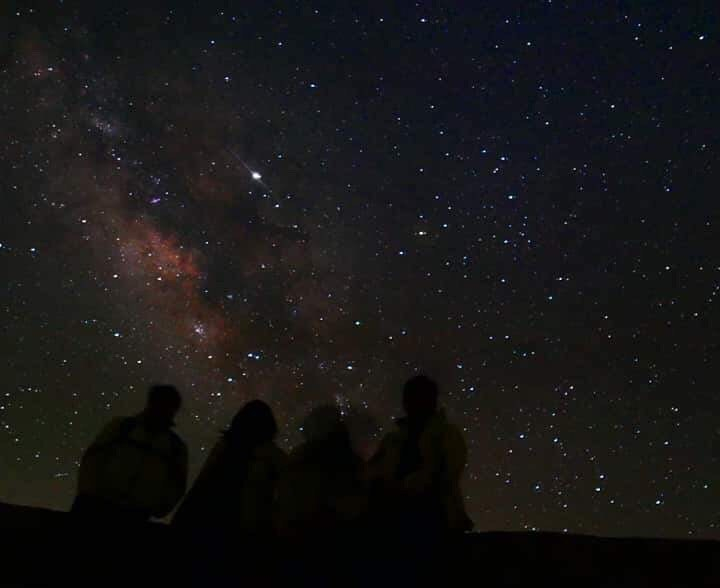
Photo by author, Advent Week I, 29 November 2020.
I have been thinking of a song that speaks of darkness and light that best describes the Season of Advent. As I surfed YoutTube song with words like “night” and “darkness”, I stumbled upon this old classic and everyone’s favorite (those in our generation) with its unmistakable opening:
Hello, darkness my old friend...
Advent is from the Latin adventus that means coming or arrival. It is the start of the new year in our Church calendar made up of four Sundays meant to prepare us spiritually for Christmas.
This year, it is hoped that we take the Advent Season seriously by praying more, reflecting our lives and examining our conscience so we can have a meaningful Christmas this 2020 that will surely be bleak and dark due the pandemic.
And that is why I immediately felt Paul Simon’s The Sound of Silence as the perfect music this first Sunday of Advent when darkness is all around us with the pandemic and other calamities while also deep within each of us is another darkness like an illness or somebody with a serious ailment in the family, a lost job, or even death of a beloved.
In the bible, darkness is the realm of evil like when Jesus was betrayed by Judas on that Thursday evening at Gethsemane; however, with the coming of Jesus, darkness has become also the best time to believe in light! See how Jesus was born on the darkest night of the year, Christmas eve, to bring light to the world; likewise, it was during the darkness of the first day of the week when Jesus also rose from the dead on Easter.
It is in silence where we learn to be patient and vigilant, two virtues becoming so rare in our world that has come to live 24/7 in artificial lights many think to be the real thing.
Patience and vigilance are both fruits of prayer and expressions of our faith when we bear all pains and sufferings wide awake because we believe God is leading us to something good, something better and brighter.
In this song written by Paul Simon and first recorded with Art Garfunkel in 1965, we find silence that represents prayer and reflections helping us find the realities of life amid the many darkness surrounding us or even encroaching within us.
In restless dreams I walked alone
Narrow streets of cobblestone
'Neath the halo of a street lamp
I turned my collar to the cold and damp
When my eyes were stabbed by the flash of a neon light
That split the night
And touched the sound of silence

And in the naked light I saw
Ten thousand people, maybe more
People talking without speaking
People hearing without listening
People writing songs that voices never share
And no one dared
Disturb the sound of silence
I have always loved these two stanzas, citing them in my teachings and sharing with students and young people to explain to them the value of silence and to befriend the many darkness we have in life. It is a paradox, a part of life’s mystery when we actually find its light and understanding in darkness which is also our starting point in clearing and dealing with all these darkness around and within us.
After the Lord’s supper on Holy Thursday, we find in the gospel how he brought his three apostles with him to Gethsemane to accompany him pray in agony while awaiting his betrayer. Jesus asked the three apostles to watch with him, to pray with him.
This Advent, Jesus is asking us to watch and pray with him so we remain focused in God, not to the neon gods we have made to overcome the many darkness of life.
If darkness is the realm of evil in the bible, silence is the realm of trust: even if life may be dark when we cannot see clearly, we go on in silence because we believe somebody sees better than us, leading us to light and better days.
Enjoy this classic again with family and friends. Have a blessed Sunday!
Uploaded by antonino davi at YouTube, 23 October 2012.
The Lord Is My Chef Sunday Recipe for the Soul by Fr. Nicanor F. Lalog II
First Sunday of Advent, Cycle B, 29 November 2020
Isaiah 63:16-17, 19; 64:2-7  +  1 Corinthians 1:3-9  +  Mark 13:33-37
Photo by Atty. Polaris Grace Rivas-Beron at the summit of Mt. Sinai, May 2019.
A blessed happy new year to everyone as we begin today the new liturgical year of our Church calendar with the first Sunday of Advent. From the Latin word adventus for “coming”, Advent is a time meant to prepare us spiritually for Christmas.
And with all the problems and sufferings we have been going through this 2020 with the pandemic still around us in this joyous season of Christ’s coming, we hope that we make this Advent Season more serious so we may have a more meaningful Christmas, prepared for 2021 (see our recent blog, https://lordmychef.com/2020/11/23/surely-there-will-be-christmas-2020/)!
Like Lent, though in a less penitential mode, Advent is a time to pray and reflect on our lives and if possible, go to confessions to cleanse our hearts so Jesus may come and rest there like when he was born on a manger in Bethlehem more than 2000 years ago.
Our first reading today beautifully sets the mood for Advent 2020 in the midst of COVID-19 with a prayer so true with each one of us:
You, Lord, are our father, our redeemer you are named forever. Why do you let us wander, O Lord, from your ways, and harden our hearts so that we fear you not? Return for the sake of your servants, the tribes of your heritage. Oh, that you would rend the heavens and come down, with the mountains quaking before you…
Isaiah 63:16-17, 19
Photo by author, Advent 2019.
Advent is for new beginnings, for coming again.
Year 2020 is without doubt very difficult for everyone but it teaches us in the most unique way the essentials in life like God, family, friends, true self, and things like kindness, respect, thoughtfulness, simplicity, presence, and other niceties we have taken for granted for so long. It is about time that we recover these specially in Advent which is the season of new beginnings when we start anew in life.
And where do we start?
Right where we are, here in our darkness in the pandemic and within our hearts, far from God by beginning to pray anew to him so he may finally come and return to us!
The words by Prophet Isaiah in the first reading are so perfect at this time as if these were written only recently, expressing our true sentiments within: that we are sorry for having drifted far from Jesus and from others all these years, so focused with things and gadgets than with God and persons.
Our hearts have been too hard, distant from God and each other, so cold and so dark that we have become so insensitive, callous and numb or even without any conscience at all that in the midst of a pandemic, there are some who can still utter lies and malice with their hands also tainted with blood and corruption.
It is so sickening but, the more we pray and listen to our inner selves, we also find how this darkness has slowly encroached on us too, happening at different levels right in our own family circles, in our community, and even in our church maybe!
On bended knees, we humbly admit our need for God to intervene now – to rend the heavens – and bring us back to our senses and unto him, so we may finally find rays of hope, even a glimmer of light in this darkness we are into.
As we pray for the Lord’s advent or coming, we need to strive to be vigilant on our part as we patiently await him right in our hearts in this night of the pandemic and chaos going on.
Jesus said to his disciples: “Be watchful! Be alert! You do not know when the time will come. Watch, therefore; you do not know when the lord of the house is coming, whether in the evening, or at midnight, or at cockcrow, or in the morning. May he not come suddenly and find you sleeping. What I say to you, I say to all: ‘Watch!'”
Mark 13:33, 35-37
Photo by author, Red Wednesday, 25 November 2020.
Though we live in darkness, we belong to Christ who is light himself!
Everywhere in the world, except Down Under perhaps, the Season of Advent always falls in that time of the year when the nights are longer and most of all, darkest as in winter experienced in the western hemisphere, including Europe.
In fact, Christmas Eve is the darkest night of the year, the date Christ was born to bring light and be the light of the world.
See how Jesus used the night as the time of the return of the “lord of the house” (who is himself, too) when everything is dark and difficult.
For the young generation today, it may mean nothing at all as they have grown accustomed to our 24/7 world where work continues into the night like during the day with offices and stores opened and public transportation readily available.
During the time of Jesus and even 30 years ago, we rarely travelled nor even went out past six in the evening because of the many dangers at night like criminal elements lurking for their preys and simply the difficult situation of seeing clearly the roads ahead. In the bible, darkness is the realm of evil and sin like Jesus being betrayed by Judas after their last supper while in Genesis, we find how in darkness was nothing but chaos until God created everything.
And there lies the good news of the night, of darkness, and of Advent: Jesus Christ as the light himself of the world comes to save us at night! It was before dawn when Jesus walked the waters of the Sea of Galilee to save his apostles while being tossed by giant waves in their small boat. It was also in the darkness of the night when Jesus rose from the dead on Easter Sunday.
Yes, we all live in the night when darkness envelops us, even our hearts and very lives with so many problems and crises happening but we never lose hope, we never lose sight of that glimmer of light for we do not belong to the night but to Jesus Christ, the light of the world.
Photo by author, Red Wednesday, 25 November 2020.
Advent is patient waiting for the Lord’s coming.
Night is the time when it is best to believe in the light. As one poet had said, “The darkest nights produce the brightest stars.” But, another unknown poet had also said that “Only the brave who dare to walk the darkest of nights shall see the brightness of the stars above.”
Our lives may be in darkness or even dark itself these days but we celebrate the Sunday Eucharist today even if the the Lord’s coming may be delayed because we know deep in our hearts that “God is faithful, and by him you were called to fellowship with his Son, Jesus Christ our Lord” (1Cor.1:9).
One thing we need to pray for this season are patience and vigilance in awaiting his return during this darkness.
Patience is a virtue becoming so rare these days when everything is rushed as we live in a world of “instants” like instant gratification and, yes! — even instant vaccine against COVID-19 without us realizing its deep implications of calls for changes in the way of living and doing things in the world as individuals and as nations. From the Latin “patior” which is to bear all pains, patience is also believing that something better will happen in every sufferings we patiently endure.
Likewise, vigilance is more than being awake and prepared for any eventuality but an active waiting for someone or something by taking risks due also to a firm belief something better will come out of trying situations.
Patience and vigilance go together for both are fruits of real and hard prayer, expressions of deep faith in God.
Photo by author, Advent 2019.
On this first Sunday of Advent with clouds still turning dark with rains that have never stopped drenching us these past weeks, we continue to celebrate the Eucharist thanking God for our long-term faith in Christ’s Second Coming.
When we look back to those past nine months of darkness in this pandemic worsened by recent calamities and a clueless government since January, we actually gone far than we have expected.
Why? Because we have never lost hope from the little glimmers of lights God has sent us since the lockdown in March! We have survived and slowly, many of us are finding life’s deeper meanings and realities in God our Father.
Notice how in every patient waiting for Christ’s Second Coming in the midst of the many darkness in life, the Lord actually comes nearer to us, albeit slowly and unnoticeably?
That’s the beauty of Advent, new beginnings always happening for those patiently waiting in the Lord.
Let us be on guard during these long nights of darkness when temptations are strongest and so appealing. Like at the garden of Gethsemane, Jesus wants us to “watch” with him by praying to the Father so we may remain faithful and focused on him alone to soon find life in the dead of the night. Amen.
The Lord Is My Chef Breakfast Recipe for the Soul by Fr. Nicanor F. Lalog II
Tuesday, Memorial of Our Lady of Sorrows, 15 September 2020
1 Corinthians 12:12-14, 27-31     || + ||     John 19:25-27
“Mater Dolorosa” also known as “Blue Madonna” (1616) by Carlo Dolci. Photo from Wikimedia Commons.
Glory and praise to you, Lord Jesus Christ, in giving us the Blessed Virgin Mary to be our Mother too, to join us and accompany us in this life journey especially when there are pains and sufferings like when she stood by you at the foot of the Cross on that Good Friday.
As we celebrate the Memorial of Our Lady of Sorrows, we remember also and pray for all the women in our lives, specially our mother and sisters, the wife of every spouse, our teachers, the nuns, and all those women who somehow “completed” our lives.
Because of the Blessed Virgin Mary, the word “woman” became so noble and wonderful again after it was marred by sin with the fall of the first woman, Eve.
But what is so striking with Mary and the word “woman” is how she was addressed in that word in the fourth gospel, beginning at the wedding feast at Cana (John 2:4) that comes to full circle at the foot of the cross.
When Jesus saw his mother and the disciple there whom he loved, he said to his mother, “Woman, behold, your son.” Then he said to the disciple, “Behold, your mother.” And from that hour the disciple took her into his home.
John 19:26-27
Lord Jesus and Mother Mary, I pray for all the women of the world, especially for those who stood by their men and children in times of trials and sufferings.
There at your crucifixion where everything was so sad with the stark realities of human sufferings and death, Mary and the other women present gave some breath of life and hope to the scene.
Photo of painting from stswithuns.org.uk.
With those faithful women led by the Blessed Mother around you at the foot of the Cross, your Passion O Lord, had a peaceful and calming ending, leading to your joyful and glorious Resurrection.
Their love and devotion, and compassion remained intact before you, O Lord after you had died. Is this also the reason you first appeared to women too on Easter? Beautiful.
These are exactly the same things the many women in the world and in our lives do when our chips are down like during this pandemic.
It is always the women who bring out the extra jolts and sparks needed to restart our lives, to jumpstart us when we are all down and desperate. Like your Mother Mary, Lord, most women are our greatest sources of inner strength and courage, and faith to forge on in this life.
How sad that we often forget to thank them and worst, neglect to recognize their presence and dignity as persons. May we imitate you, dear Jesus that in your dying moments, you remembered to entrust your mother to your beloved disciple to look after her.
O dearest Mother Mary, our Lady of Sorrows, please pray for the women we love, the women we have forgotten, the women we have used and abused for their kindness to us; so many women are crying in pain alone, some of them have been mourning for a long time after losing a beloved child or husband, a friend and a sibling, parents and those dearest to them. Soothe their pains, our Lady of Sorrows, a great woman of faith, woman of calmness, a woman for everyone. Amen.
Lawiswis Ng Salita ni P. Nicanor F. Lalog II, Ika-24 ng Agosto 2020
Larawan kuha ng may-akda sa Pulilan, Bulacan, Enero 2020.
Ang sabi nila
buhay ay parang isang pelikula
tayong lahat ang bida at artista;
kaya lalo nang malaking pelikula
at tiyak patok sa takilya
pelikula ng ating republika!
Siyempre, lahat ay pabida
gusto umeksena
hindi lang sa Palasyo at Kongreso
pati na rin sa mga paseo basta matao.
Ang nakakatawa pero bumebenta
lalo na sa mga tanga
mga artista nagpipilit sa pulitika
mga pulitiko umaarte, nagpapabebe!
Dating pelikula ng ating republika
makasaysayan at makahulugan
maituturing na isang sining
nababanaagan maningning na liwanag
 katulad din ng pinilakang tabing
kapupulutan ng mga ginintuang aral
mga talastasan at eksena
mula sa mga aninong gumagalaw;
nang magdeklara ng Martial Law
nagsimula rin ang kasalaulaan
ng pamahalaan maging sa sinehan
kung saan mga hubad na katawan
 pinagpipistahan, kunwari'y film festival
ang totoo ay karnabal.
Nagwakas din at nagsara ang tabing
ng malagim na yugto ng kasaysayan natin
bagong simula ang dokyu ng EDSA
kinalaunan naging trahedya
pelikula ng republika, naging telenovela at komedya
nang maupo tunay na artista ng masa,
nagreyna sa media at chika
puro artista, kaya dumagsa na rin sila
naging zarzuela pelikula ng ating republika
naglabo-labo at moro-moro, gumulo nang gumulo
kaya heto tayo horror na nakakatakot
nakapangingilabot kadiliman
at kasamaang bumabalot parang bangungot
hugot sa isang eksena ng pelikula na sana'y matapos na.
Ngunit kung titingnan
mga pelikulang horror walang laman
puro kabobohan at katangahan
dinaraan lang sa gulatan
hanggang maging katatawanan.
Hindi ba't ganyang-ganyan
ating lipunan at pamahalaan
isang malaking pelikulang katatakutan
na puro kabalastugan at kahangalan?
Kaya aking payong kaibigan,
sa susunod na halalan
tanggihan, huwag nang pagbigyan
mga artista sa pulitika,
mga pulitiko na payaso!
The Lord Is My Chef Sunday Recipe for the Soul by Fr. Nicanor F. Lalog II
Week XIX, Cycle A in Ordinary Time, 09 August 2020
1 Kings 19:9, 11-13 >><}}}*> Romans 9:1-5 >><}}}*> Matthew 14:22-33
Photo by Mr. Raffy Tima of GMA-7 News, Batanes, 2018.
I have always loved the sea and lately my thoughts have always been about the beach as I miss it so much after COVID-19 had robbed us of our summer vacation.
In ancient time, the sea evoked fear because it was largely unknown that even in the bible, it is the symbol of evil and its powers over man. That is why our gospel today is very significant when Jesus walked on water to show God’s greater power over evil and sin.
And like our gospel last week, our story today tells us a lot more about Jesus walking on water in the midst of a storm to reveal himself and most of all, his desire to meet us his disciples.
Place and location as non-verbal communication of one’s presence
Every meeting and encounter presupposes locations or places, a locus; but, everything is “levelled up” or elevated in Jesus in whom things do not remain in the physical level.
Proxemics is the non-verbal communication that refers to places and location, its nearness and orientation. How we arrange our furnitures, designate the rooms and sections in our homes, offices, schools and every building we stay and gather communicate and reveal who we are.
For example, Catholic homes are easily identified in having a grotto at the garden, an altar of the Sacred Heart or any saint at the sala, and the Last Supper painting in the dining hall.
But for Jesus, a place or a location is more than the physical site because in him, proxemics takes on a deeper dimension and higher meaning when we meet him in situations and places. That is why after feeding the more than five thousand people last week, he ordered the Twelve to cross the Sea of Galilee (which is actually a lake) ahead of him while he dismissed the crowds.
After doing so, he went up on the mountain by himself to pray. When it was evening he was there alone. Meanwhile the boat, already a few miles offshore, was being tossed about by the waves, for the wind was against it. during the fourth watch of the night, he came toward them, walking on the sea. When the disciples saw him walking on the sea they were terrified. “It is a ghost,” they said, and they cried out in fear. At once Jesus spoke to them, “Take courage, it is I; do not be afraid.”
Matthew 14:23-27
Photo by author, Sea of Galilee at Capernaum where Jesus used to preach, May 2019.
Crossing to Jesus, crossing with Jesus
I love that scene very much, of Jesus getting his disciples into the boat to precede him to the other side of the lake while he dismissed the crowds. Again, St. Matthew never bothered to tell us why Jesus sent the Twelve ahead of him as he stayed behind, dismissing the crowds and later praying alone at night atop the mountain.
Let us now reflect the proxemics or non-verbal communication of our gospel scene this Sunday.
We need to cross to the other side to meet Jesus.
To meet Jesus Christ, we always have to “cross to the other side” by leaving our “comfort zones”.
More than going to the other side of the lake physically, we have to move over to unchartered areas of life, be bold and daring to try new things, new situations in order to mature and find fulfillment by meeting Jesus Christ.
And sometimes, we really have to literally cross the sea or get to the other side of the country or the world to find our self and meet Christ.
Fifteen years ago I went on vacation to Toronto for some soul-searching as I went through a burn-out. While serving at St. Clement Parish, I met many Filipinos serving as lectors, choir members, catechists and volunteers.
Graph shared by sugarindustryfoundationinc.org.ph.
They would always confess to me with both a sense of pride and little shame that they never went to Mass regularly when in the Philippines and now in Canada, they were amazed at how God had brought them there to be involved in parish activities and be closer to Jesus than ever!
As I listened to their stories, I realized the many sacrifices and hardships they have to endure in that vast and cold country with no one to turn to except God. If given the chance, many of them admitted they would return to the Philippines for there is no place like home!
Though I have found so many things I have been searching for in my initial three months of stay there on top of other opportunities given me, I still felt empty. That raging storm within continued. As I prayed and reflected guided by an old, Polish priest who claimed to have been the student of St. John Paul II, I saw myself more, eventually leading me to God anew who refreshed my vocation that I finally decided to go back home after six months of my supposed to be one year leave.
Sometimes in life, we need to get away from our comfort zone, cross to the other side, especially when life becomes so artificial. Jesus invites us to go ahead and cross to the other side of the lake or sea to experience life at its “raw” so we can feel again our souls within and desire him anew until we finally meet him wherever we may be in the world.
It is when we are at the other side of the sea in the midst of a storm when Jesus comes, immediately answering our cries for help – At once Jesus spoke to them, “Take courage; it is I” – because when we are reduced to emptiness and nothingness, then our faith kickstarts again. Faith, like love, is always an encounter with God.
Try going to the other side, leave your comfort zone to meet Jesus and finally have meaning and direction in life!
Silence is the presence of God.
In the first reading we have heard that beautiful story of Elijah meeting God at the mouth of a cave — not in the strong and heavy wind nor earthquake nor fire like Moses before him.
After the fire, there was a tiny whispering sound. When he heard this, Elijah hid his face in his cloak and went and stood at the entrance of the cave.
1 Kings 19:12-13
Silence is the place of the presence of God because silence is his language too. Wherever there is silence, we can surely find and meet God there.
That is why Jesus wants us to cross to the other side, to be silent and listen to him.
Photo by author, crossing the Lake of Galilee, May 2019.
In his silence, God teaches us that except for sin, he never considers everything as being finished; everything is a “work-in-progress” even if he seems to be silent that some think he must be absent or even dead.
The world thrives in noise, loud talks, and screams with each voice trying to dominate another resulting in cacophony of sounds. Shakespeare’s Hamlet said it well when he told Polonius what he was reading were “Words, words, words” — nonsense!
Some people like those in power think that the more words they say, the more meaningful their thoughts and ideas become. Worst, they thought that using foul and filthy language make them so natural and credible, not realizing the more they look stupid with their crazy thoughts and ideas not even clowns and comedians would ever attempt to imitate.
But when our words come from deep silence, they come with power and meaning, touching everyone’s heart and inner core.
That is when silence becomes fullness, not emptiness or mere lack of noise and sound.
Like when our medical frontliners and medical experts spoke with one voice last week airing their thoughts about the pandemic — we were all moved and reawakened to realize how we have been going about with our lives almost forgetting them these past five months!
What a tragedy at how our officials in government and Congress reacted negatively, feeling hurt deep inside with the painful truth of how they have been irresponsible from the beginning. Sapul!
Pico Iyer wrote in a TIME magazine essay 30 years ago that “silence is the domain of trust”.
True. The most trustful people are the most silent; those who speak a lot trust no one and most likely, cannot be trusted too.
Jesus invites us to cross to the other side to be silent and learn to trust him. It is only then when we can meet him. In silence.
Photo by Mr. Raffy Tima of GMA-7 News, Manila Bay with Mt. Samat’s Cross at the background, April 2020.
Jesus meets us in darkness.
Jesus asks us to cross to the other side of the lake or sea like his disciples in order to meet us in darkness. This is a paradox because Jesus is the light of the world.
But, note the most notable moments in his life happened in darkness: he was born on the darkest night of the year, he died when darkness covered the whole city of Jerusalem, and he rose from the dead when it was still dark on the first day of the week.
Jesus had overcome darkness! So, what happened to Peter in this episode after being called by Jesus to walk on water too?
Jesus said, “Come.” Peter got out of the boat and began to walk on the water toward Jesus. But when he saw how strong the wind was he became frightened; and, beginning to sink, he cried out, “Lord, save me!”
Matthew 14:29-30
Imagine how everything was going so well with Peter doing another crossing while crossing the lake! But when he saw how strong the wind was he became frightened; and, beginning to sink, he cried out, “Lord, save me!”
Jesus calls us into the dark so that we only look for him and upon finding him, focus on him alone. Peter saw the strong wind, not the stronger and powerful Jesus walking on water, that fear overtook him.
That’s the whole point of St. Paul in our second reading today: he was telling the Romans how some people in Israel trusted more in their physical descent from Abraham than in God’s promise of salvation fulfilled in Jesus they have refused to see and recognize as the Christ (Rom.9:1-5).
When in the dark, be silent and still for Jesus is near! Keep your sights at him, not on anything else. Problem in darkness is not God but us who follow other lights or have become delusional.
Photo by Mr. Jim Marpa, 2019.
That is the tragedy we are into as a nation while crossing to the other side of the sea of pandemic in just one boat when our officials see only themselves as always being right. Worst, they all want to be on the stage with all the lights on them as they speak and sing in cacophony like psychopaths.
All the more we must hold on tight, trust and focus in Jesus who is “now here”, not “nowhere” for he will never allow us to perish.
Let us trust Jesus overcoming all these evil, leading us to the shore. Amen.
A blessed rainy Sunday to you and your loved ones!
The Lord Is My Chef Breakfast Recipe for the Soul by Fr. Nicanor F. Lalog II
Monday, Week XVIII, Year II in Ordinary Time, 03 August 2020
Jeremiah 28:1-17 >>><)))*> >><)))*> ><)))*> Matthew 14:22-36
Photo by Mr. Raffy Tima of GMA-7 News before a storm in Batanes, 2018.
God our Father, we come to you again fervently asking for your guidance and protection as the threats of COVID-19 infections are getting closer to home. More and more are getting sick and we could feel them so strongly for they are no longer statistics we read and see in news but persons we know very well in our home and community.
Thank you very much that finally, our government leaders have listened to the calls of medical experts to go on at least two weeks of quarantine to reassess our response to the pandemic.
In this quarantine period, we pray that we learn to value again silence and hiddenness that we have taken for granted in our 24-hour world of media and noise.
So many times, we have taken for granted things that are not seen, that are invisible and hidden, that we ourselves also hide in evil and sin, convincing ourselves nobody would know or “see” it.
And so, we try deceiving others with our false claims of knowledge and competencies like Hananiah and other false prophets among us who give false hopes to people who are eventually misled from you and from one another.
To the prophet Hananiah the prophet Jeremiah said: Hear this, Hananiah! The Lord has not sent you, and you have raised false confidence in this people. For this, says the Lord, I will dispatch you from the face of the earth; this very year you shall die, because you have preached rebellion against the Lord.
Jeremiah 28:15-16
In this time of modified enhanced community quarantine again, teach us O Lord Jesus to deepen our faith in you so that we may remain focused on you alone in moments of storms when it is so difficult to recognize you, when it is easier to “see” and “believe” the powers of the unseen winds like Simon Peter in today’s gospel.
Let us befriend your holy silence and stillness again, sweet Jesus, because in you, the most significant are always the most hidden too. Amen.
The Lord Is My Chef Sunday Recipe for the Soul by Fr. Nicanor F. Lalog II
Week XVIII, Cycle A in Ordinary Time, 02 August 2020
Isaiah 55:1-3 >><}}}*> Romans 8:35, 37-39 >><}}}*> Matthew 14:13-21
Remember our reflection last Sunday? Of how parables teach us that “less is always more” because to have the kingdom of God – Jesus Christ himself – we have to learn to appreciate the little things in life?
Beginning this Sunday until August 16, our gospels will start telling us who is Jesus Christ by showing us his powers and abilities that are exactly opposite the way we see and understand them. This new series of stories are so relevant to us in this time of pandemic, giving us wonderful insights into God’s ways of responding to our human situations.
St. Matthew now leads us with Jesus to the wilderness after teaching us in parables to experience his power in transforming us like the five loaves and two fish to feed more than five thousand people.
Multi-layered story of the multiplication of bread
All four evangelists have recorded this story of Jesus Christ’s multiplication of the loaves of bread with their particular focus and stress, showing us that it truly happened and was a major event in the Lord’s ministry.
Very unique with St. Matthew’s version of this miracle story – which has not one but two! – is his economy of words in narrating it like a straight news as if it were a developing story or a “breaking news” unfolding before us, calling us to follow its updates and details due to its multi-layered meanings.
When Jesus heard of John the Baptist, he withdrew in a boat to a deserted place by himself. The crowds heard of this and followed him on foot from their towns. When he disembarked and saw the vast crowd, his heart was moved with pity for them, and he cured their sick. When it was evening, the disciples approached him and said, “This is a deserted place and it is already late; dismiss the crowds so they can go to the villages and buy food for themselves.” Jesus said to them, “There is no need for them to go away; give them some food yourselves.” But they said to him, “Five loaves and two fish are all we have here.” Then he said, “Bring them here to me,” and he ordered the crowds to sit down on the grass. Taking the five loaves and the two fish, and looking up to heaven, he said the blessing, broke the loaves, and gave them to the disciples, who in turn gave them to the crowds. They all ate and were satisfied, and they picked up the fragments left over — twelve wicker baskets full. Those who ate were about five thousand men, not counting women and children.
Matthew 14:13-21
Photo from iStock/Studio-Annika.
The consolation of Jesus.
Our situation in this time of the corona pandemic is so similar with that of Jesus. With the increasing number of COVID-19 cases, it has finally hit us hard, so close to home with news of those we know getting infected and worst, dying from this disease.
Like Jesus upon hearing the death of John the Baptist, we are all saddened that we wish to withdraw away from everyone.
We want to mourn but there are more people in need of our presence and help in this time of pandemic like the countless medical frontliners and health workers who must be so tired – even sick, physically and emotionally – by now with the growing number of COVID-19 patients and yet have chosen to remain in their posts.
And there are still the other casualties of this pandemic like those who have lost their jobs, those evicted from their rented apartments, those stranded and separated from their loved ones, those begging for food, and those afflicted with other sickness going through dialysis and physical therapy.
Jesus knows so well the “wilderness” we are all going through and he is right here with us, one with us in our sufferings, in our fears and anxieties, and in our exhaustion.
To be one with us is consolation, from the Latin “con” or with + “solare” or alone, to be one with somebody feeling alone.
Jesus did not remove our pains and sufferings, even our death; he joined us to be one with us in these that he can call us to “Come to me, all you who labor and are burdened, and I will give your rest. Take my yoke upon you… For my yoke is easy and my burden light” (Mt.11:28-30, 14th Sunday, 05 Jul 2020).
Compassion of Jesus.
Still with Christ’s reaction of being “moved with pity” at the sight of the crowds who have followed him to the wilderness, we find something more deeper with his being one with us, in consoling us that he had forgotten all about himself, his tired body that he went on to heal the sick among them.
To be moved with pity is more than a feeling of the senses but a response of his total person.
You respond for help, you reply to a call.
Ever wondered why we have the “responsorial psalm” after the first reading in the Mass? Because those words from the Psalms express our total assent and commitment to God, involving our total self like body, mind, heart and soul.
Photo by Dra. Mai B. Dela Peña, Carmel Monastery, Israel, 2016.
God cannot suffer because he is perfect.
That is why he became human like us in Jesus Christ to be one with our suffering and death so that we would one with him in his glorious Resurrection.
In the wilderness, Jesus stayed with the people, not allowing them to leave as suggested by the Twelve because he was moved with pity with the crowd because he wanted to suffer with them.
That is compassion, literally means to “suffer with” from cum + patior. Here in the wilderness, Jesus showed his compassion for the people which will reach its highest point in giving himself on the Cross on Good Friday.
Have we “responded” to God’s call to serve, to a call of duty, and to a plea for help from the poor? Have we truly given ourselves to somebody without ever thinking our own comfort or rewards? Or, are we running away from his Cross?
What a shame in this time of pandemic there are some among us who rejoice at the losses of others like the Twelve who wanted the crowd to be sent home because they were afraid of responsibilities, of taking care of the suffering people.
Consolation and compassion are the two most needed from each of us in this time of crisis.
Our scarcity mentality, the God of plenty.
We now come to the miracle of the feeding of five thousand. According to the late Fr. Henri Nouwen, this story is an example of our “scarcity mentality” when we think of not having enough, of finding what we have as too little, always looking for more; hence, our tendency to hoard everything.
The Twelve were thinking more of themselves, afraid they could go hungry with the five loaves of bread and two fish they have. They were so afraid of difficulties ahead of them in their situation where to find and how to feed those great number of people.
They were focused on what was lacking than on what they have, and who was with them, Jesus Christ! They were hungry for food in the stomach than for food to the soul unlike the crowds who have followed Jesus.
Worst of all, the Twelve got “mad” upon seeing the crowds who have followed them to the wilderness when in fact, it was Jesus who needed most to rest to mourn John’s death!
But through all these, Jesus patiently bore the people’s woes and the Twelve’s selfishness to teach them all in a very nice way something so essential in our response to every human suffering and extreme situation: opening and entrusting our selves totally to God.
And that was actually the greatest miracle that happened that day.
In doing it, Jesus simply asked the Twelve what they have, never asking how much they have or its condition. Just whatever they have to give everything to Jesus like those five loaves and two fish that he took, and while looking up to heaven, blessed and broke the loaves, and gave them to the Twelve to distribute to the crowd.
And everyone was satisfied with a lot of left overs too!
Matthew nor any of the other Evangelists ever explained how it happened because it does not really matter at all. What is most important is what are we willing to give up to Jesus so he can transform us into better persons.
That is what we continue to do this day in every celebration of the Holy Eucharist- whatever we have, even not the best or the worst and littlest we have, when given to Jesus becomes holy and multiplied!
The power of God is immense, without doubt. But, in this miracle of the feeding of five thousand, Jesus is showing us that his power is not meant to satisfy our material or bodily needs but our deepest desires that lead to our fulfillment in him as prophesied by Isaiah in the first reading.
Why spend your money for what is not bread; your wages for what fails to satisfy? Heed me, and you shall eat well, you shall delight in rich fare. Come to me heedfully, listen, that you may have life.
Isaiah 55:2-3
Amid the pandemic worsened by our government officials’ inanities, irresponsibilities, and sheer lack of compassion with us in this wilderness, the Lord assures us today that he is with us for “nothing can separate us from the love of Christ” (Second Reading) if we are willing to give him all that we have.
It is our spiritual transformation first that leads us to our material blessings. We can all have it if we are willing to give everything to Jesus and believe in him always. What do you have for miracles to happen?
A blessed August ahead for you!Amen.
Photo by Dra. Mai B. Dela Peña, Carmel, Israel, 2016.
The Lord Is My Chef Breakfast Recipe for the Soul by Fr. Nicanor F. Lalog II
Tuesday, Week XVII, Year II in Ordinary Time, 28 July 2020
Jeremiah 14:17-22 >>><)))*> >><)))*> ><)))*> Matthew 13:36-43
God our merciful Father, today we pray for our countrymen blinded by the many evils happening in our land today. For those who continue to defend the cycle of murders and killings to weed us out of criminals and addicts, for those who defend the blasphemies uttered against you and jokes against everyone, for those who continue to deny something is terribly wrong among our leaders.
We pray for them all, Lord. Open their eyes and their ears to the many sufferings around us: the cries of mothers losing a child, the pains of fathers losing their jobs, the frustrations of young people in finding a job, and the alienation of a nation lost in a circus where clowns are running the government.
Like your Prophet Jeremiah whom you have asked to tell your people in Judah and Israel how their sins have caused all their miseries and sufferings, enlighten us more to wake up our nation to the truth we have turned away from you.
Let my eyes stream with tears day and night, without rest, over the great destruction which overwhelms the virgin daughter of my people, over her incurable wound. If I walk into the field, look! Those slain by the sword; if I enter the city, look! Those consumed by hunger. Why have you struck us a blow that cannot be healed? We wait for peace, to no avail; for a time of healing, but terror comes instead. We recognize, O Lord, our wickedness, the guilt of our fathers; that we have sinned against you. Is it not you alone, O Lord, our God, to whom we look?
Jeremiah 14:17-18, 19-20, 22
Show us the way, the path back to you, O Lord.
We have become the weeds among the wheat, trying to ruin everything.
We have become callous and numb with our sins, too, that others cannot believe our calls for conversion and renewal.
Renew us, O Lord, so we may listen more to your words that will guide us to recovery and conversion. Amen.
Photo by author, Sonnen Berg Mountain View, Davao City, August 2018.
The Lord Is My Chef Breakfast Recipe for the Soul by Fr. Nicanor F. Lalog II
Wednesday, Feast of St. Mary Magdalene, 22 July 2020
2 Corinthians 5:14-17 >><}}}*> >><}}}*> >><}}}*> John 20:1-2, 11-18
Painting by Giotto of the Risen Lord Jesus Christ appearing to St. Mary Magdalene from commons.wikimedia.org.
Dearest Lord Jesus Christ:
Today as I prayed on the feast of your beloved Saint Mary Magdalene, my sights were focused on your beautiful exchange of names on that Easter morning at your tomb.
It is so lovely and so deep, and very personal for all of us whom you love so much despite our many sins like St. Mary Magdalene.
When she had said this, she turned around and saw Jesus there, but did not know it was Jesus. Jesus said to her, “Woman, why are you weeping? Whom are you looking for?” She thought it was the gardener and said to him, “Sir, if you carried him away, tell me where you laid him, and I will take him.” Jesus said to her, “Mary!” She turned and said to him in Hebrew, “Rabbouni,” which means Teacher.
John 20:14-16
You called her by her name, “Mary” and she called you by your title “Rabbouni” – what a beautiful scene of two people loving each other so deeply, so truly! You – humbly and lovingly accepting the sinner, and she – submitting herself to you as disciple.
You have expelled seven demons from her, you have known her so well even her darkest secrets and sins, and despite all these knowledge, Lord Jesus, the more you have loved her that you called her by the sweetest word she could ever hear in her life, “Mary”.
The same with us, sweet Jesus: every day you call us by our names, each one of us as a person, an individual, a somebody not just a someone. You love us so much in spite and despite of everything. We are not just a number or a statistic to you but a person with whom you relate personally.
From Google.
Help us to realize this specially when darkness surrounds us, when self-doubts and mistrust abound in us without realizing your deep trust in us, in our ability to rise again in you and follow you.
Teach me to trust you more and love you more like St. Mary Magdalene, to give and offer my self to you totally as yours, calling you “Rabbouni” or Teacher and Master.
Let me give up whatever I still keep to myself, whatever I refuse to surrender so that I may enjoy the intimacy you offer me as a friend, a beloved, and a family in the Father.
What a joy indeed to be like St. Mary Magdalene, fully known and fully loved by you, dear Jesus.
May I learn to know and love others too like you so I may proclaim you to them. Amen.
The Lord Is My Chef Sunday Recipe for the Soul by Fr. Nicanor F. Lalog II
Week XVI, Cycle A in Ordinary Time, 19 July 2020
Wisdom 12:13, 16-19 >><}}}*> Romans 8:26-27 >><}}}*> Matthew 13:24-43
Our Lord Jesus Christ invites us today to join him into a different kind of journey that would take us deep into God’s mystery in our very selves through the parables he has started to tell us last Sunday.
Recall, dear readers, that parables constitute the heart of the Lord’s preaching.
We have defined these as simple stories with deep realities that must be cracked open through prayers and reflections to get its meaning. From the French para bolein that literally means “along the path”, a parable is likewise a bridge that leads us into something unknown to us before.
In itself, a parable is a journey calling us to walk through it into our inner selves to discover the many inner beauties that lie within us but we take for granted. Ultimately, as we discover these giftedness within us, we then uncover God dwelling within us.
This is the reason why Jesus would always tell his audience after narrating his parables that “Whoever has ears ought to hear” (Mt.13:43) to insist on them to go deeper inside themselves for their meaning.
And that is when we are transformed, when our lives are changed into true disciples of Jesus Christ.
Greatness in littleness
First thing we notice in the three parables of Jesus today is his insistence on the coming of the kingdom of heaven or kingdom of God through him as the mysterious seed.
This kingdom of heaven is used interchangeably with “kingdom of God” that Jesus would always speak of in his entire ministry until his crucifixion is not according to our understanding of a kingdom: it is not about a territorial domain or the exercise of power over subjects using force.
St. John Paul the Second expressed it beautifully by declaring the person of Jesus Christ himself is the kingdom of God. No wonder, Christ would always liken himself and the kingdom of God with the seed being sown.
It is always good. It is for everyone as the sower scatters the seeds everywhere. And it is always small like Jesus who was born like any infant so fragile and even poor like most of us. He is like the seed we take for granted from which comes forth all kinds of plants like trees, big and small.
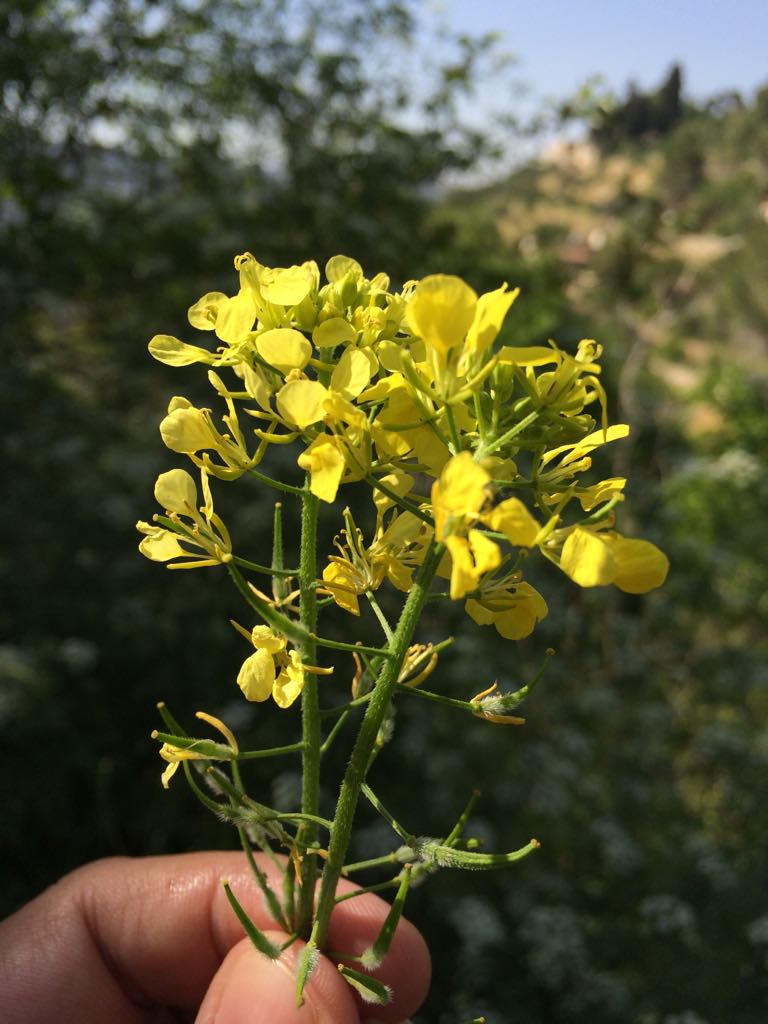
Flowers of a mustard plant from which seeds are taken. Photo by author, Israel, 2017.
Or most specially, like those seeds that turn into crops of wheat and shrubs like the mustard with leaves and branches where birds may dwell that describe the first two parables today.
Jesus then added a third parable of the yeast mixed into flour that leavened the dough into a bread.
Like him our Lord, we his disciples are also like the small seeds packed with great possibilities in God.
In all these three parables today, there is that element of smallness, of littleness that remind us how everything that is great always starts small.
When we come to think of this, we realize how we embarked on this great mission of making Jesus Christ known: it started like a small spark within us, perhaps from a single word we have heard or read, a simple inspiration by God through the most ordinary persons and situation.
Not only in things regarding our spiritual lives but even our personal lives when we recall those humble beginnings of our family and of our business.
Like a little seed or yeast, they just grew!
Now we are surprised, even amazed, how we have changed, how we have grown. Of how we are now reaping the fruits of our labors and sacrifices.
Most of all, how we have known and experienced Jesus Christ who fulfills our lives.
Weeds among the wheat
But not all days are bright and sunny. There are dark clouds that hover above us bringing storms and heavy rains that lead into floodings. A lot often in life, the darkest nights turn out to be the longest nights too.
And this is the meaning of Christ’s main parable for today.
Jesus proposed another parable to the crowds, saying: “The kingdom of heaven may be likened to a man who sowed good seeds in his field. While everyone was asleep his enemy came and sowed weeds all through the wheat, and then went off. When the crop grew and bore fruit, the weeds appeared as well. The slave of the householder came to him and said, ‘Master, did you not sow good seed in your field? Where have the weeds come from?’ He answered, ‘An enemy has done this.’ His slaves said to him, ‘Do you want us to go and pull them up?’ He replied, ‘No, if you pull up the weeds you might uproot the wheat along with them. Let them grow together until harvest; then at harvest time I will say to the harvesters, ‘First collect the weeds and tie them in bundles for burning; but gather the wheat into my barn.'”
During my prayer periods this past week, I have been filled with anger and disappointments at how things are going on in our country and even in my personal life. It pains me so much why at this time of the pandemic when we have to go through all these bad things.
Last Friday morning before our daily Mass, we discovered the glasses shattered in our windows near the office door and at the side door of the church. There were scratches outside indicating attempts to unlock the doors inside and steal from the church.
After the Mass, I grew more angry as we inspected the damages, thinking so negatively harsh against whoever tried to burglarize us.
By night time during prayers, I remembered Victor Hugo’s Les Miserables where Valjean was caught by the police stealing silver from the good bishop who had welcomed him into his rectory with food and accommodations. Instead of pinning him down for his crime, the bishop told the police he had given Valjean the silver found in his bag, even chastising him he had left behind the other silver candlesticks he had asked to take!
The wheatfield owner in our parable and the good bishop of Les Miserables are both the merciful God mentioned by the author of the Book of Wisdom in our first reading today:
But though you are master of might, you judge with clemency, and with much lenience you govern us; for power, whenever you will, attends you. And you taught your people, by these deeds, that those who are just must be kind; and you gave your children good ground for hope that you would permit repentance for their sins.
Wisdom 12:18-19
Think of our parents and elders, our mentors or those we look up to for their wisdom gifted with wonderful insights in life called perspicacity which means “a penetrating discernment… a clarity of vision or intellect which provides a deep understanding and insight.”
Being perspicacious or having perspicacity like the wheatfield owner or the good bishop of Les Miserable means having a deeper wisdom that one can keenly see and understand things beyond ordinary perception following a long process of silent reflections in life.
Many times, our sights can be limited that we do not see the other repercussions and even ramifications of our decisions on certain situations. There are times we think only of finding solutions, of winning the battle but not the war.
It is also along this line that Jesus added the third parable: the yeast is mixed with the flour to leaven the dough.
We are like the yeast who have to mix with others, including the evil ones to become bread that will feed the world.
We are the wheat, the mustard seed, the yeast thrown into the world to make a difference in Christ! We are not the ones who will change the world but Jesus Christ, the mysterious seed, the yeast in the dough who grows and effects the changes in us and among us.
Parables as inner journey in Christ Jesus
With Jesus living and nurturing within us, that is when we become fruitful like the wheat and mustard plant or leavened bread that we are able to feed more people who would eventually become bearers his in the future. That is how the kingdom of heaven comes into this world, when God is seen and felt by everyone through us
This we achieve in prayers as St. Paul reminds us in the second reading. It is not just reciting our basic prayers as Christians including the novenas we love to collect and follow through. The kind of prayer that St. Paul speaks here is a prayer guided by God’s Holy Spirit who perfectly knows God’s will.
Photo by Dr. Mylene A. Santos of kids she’s teaching on the values of health, education and nature at Katmon Harbor Nature Sanctuary, Infanta, Quezon.
Brothers and sisters: The Spirit comes to the aid of our weakness for we do not know how to pray as we ought, but the Spirit himself intercedes with inexpressible groanings.
Romans 8:26
In this time of too much weeds among the wheat, of so many evil and sins prevailing over us, we can feel frustrated at times that make it so difficult for us to pray.
Sometimes, the evil and sins, or the plain sufferings we go through in our own family, in our community or at work and in school can be so overwhelming that we feel our prayers are useless, that God is not listening at all to us.
Then we stop praying, we stop journeying within even with weeds among the wheat. How can the flour be leavened if the yeast is not mixed with the dough to become bread or cake.
Remain in the Lord!
Pulling out the weeds will not solve the problem; worst, it may endanger us all too in the process that we become like our enemies in the end. Never lose hope in God who knows very well of the presence and source of weeds. Sometimes, these pains and sufferings from evils we go through from others may actually lead us to our being fruitful!
Evil and sins are a parable in themselves that can teach us so well in life if we handle them with prayers.
Photo by Dr. Mylene A. Santos, Infanta, Quezon, May 2020.
Praying in the Holy Spirit is when we spend time with Jesus to reflect and crack open his words that come to us in the Sacred Scriptures and ordinary events in daily life through long hours of silent meditation and contemplation.
The more we dive into God’s mysteries in the parables he sends us in daily living, the more we see the beauty and wonder of life because our horizons are widened and get clearer.
Praying into our parables in life is like looking into a telescope or binoculars that enable us to see something distant within reach.