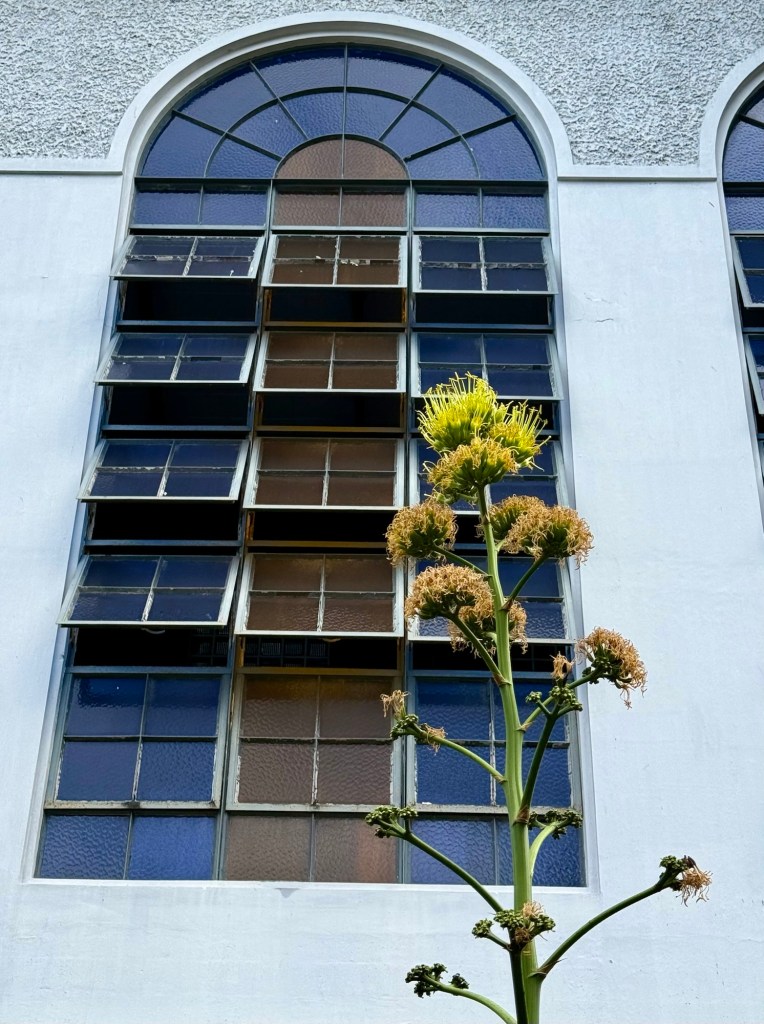
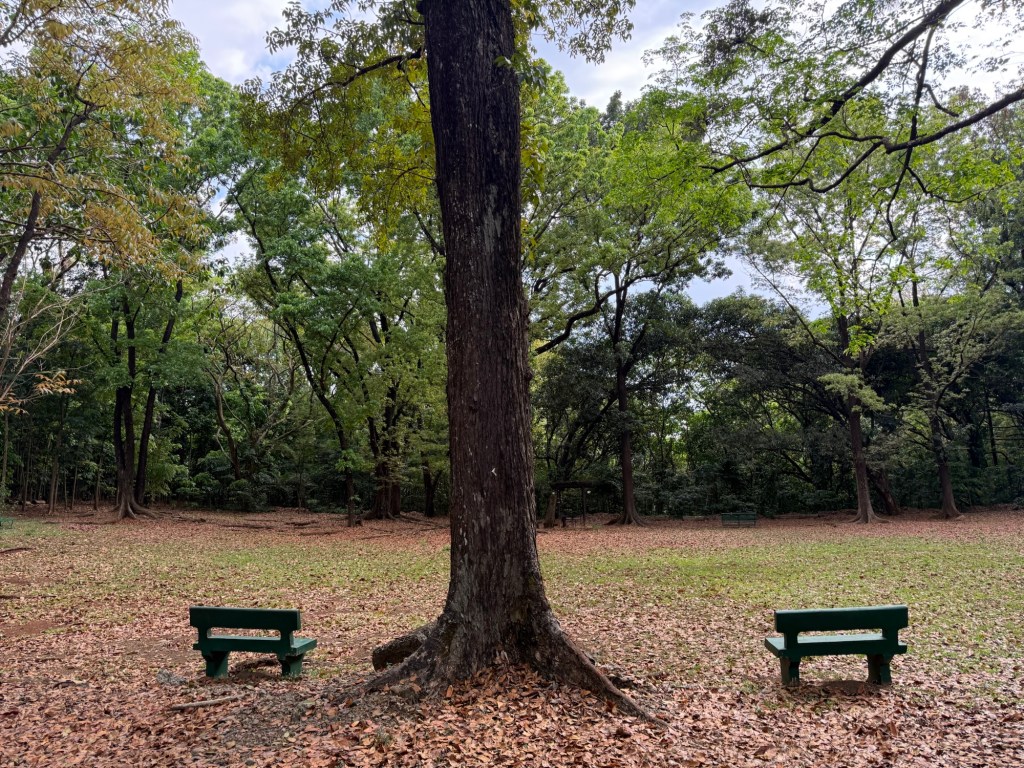
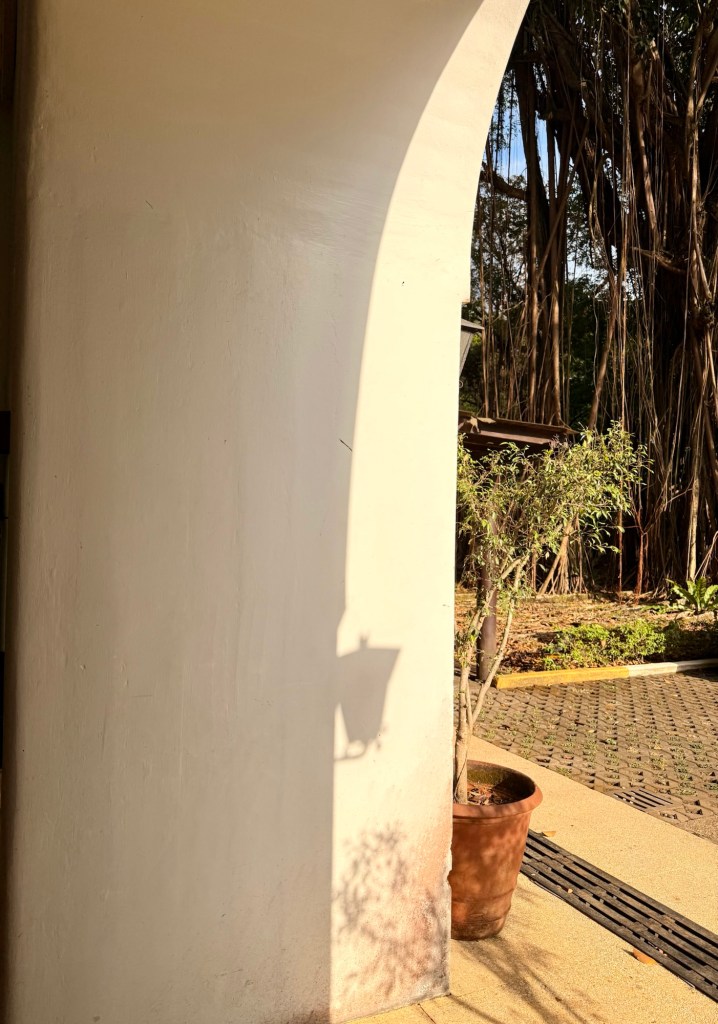
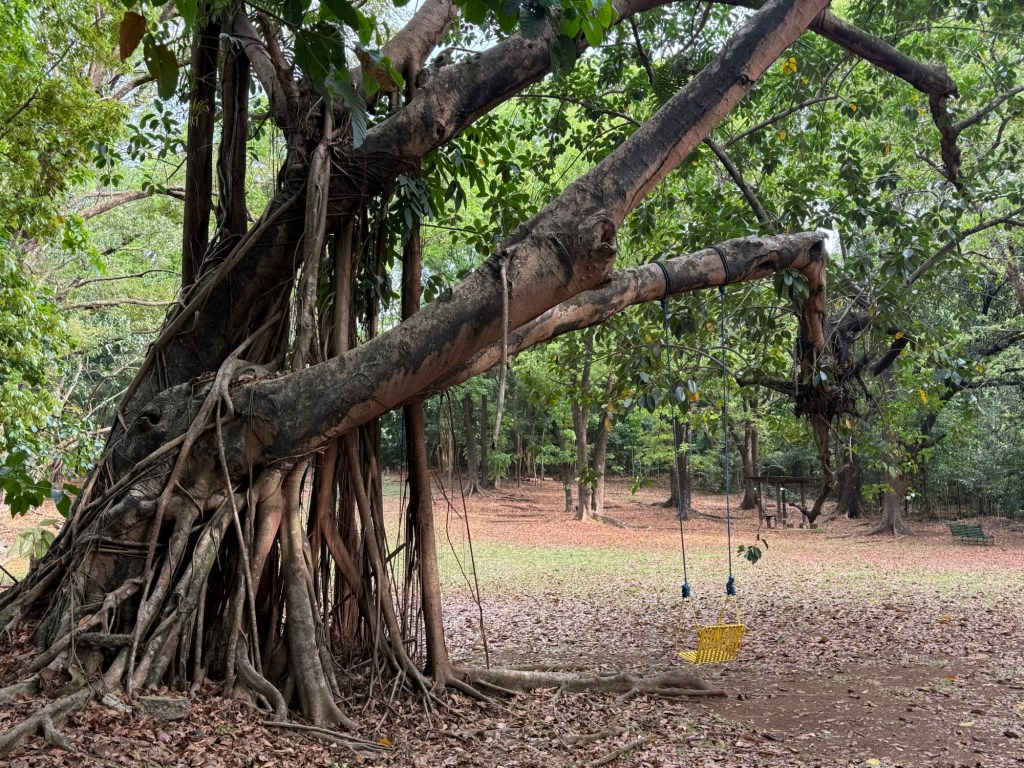
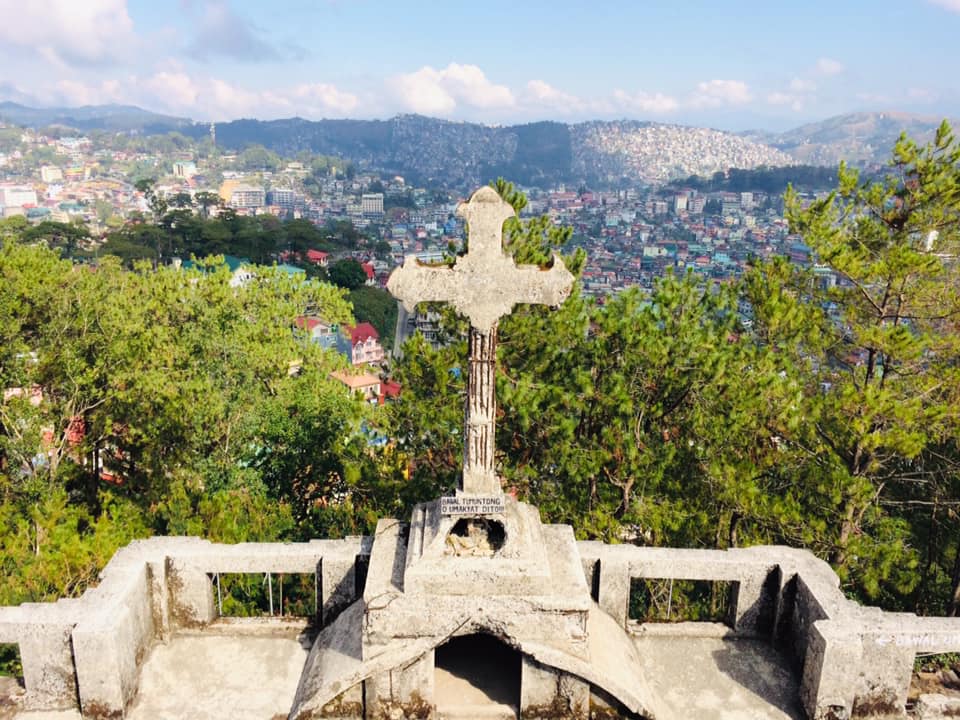
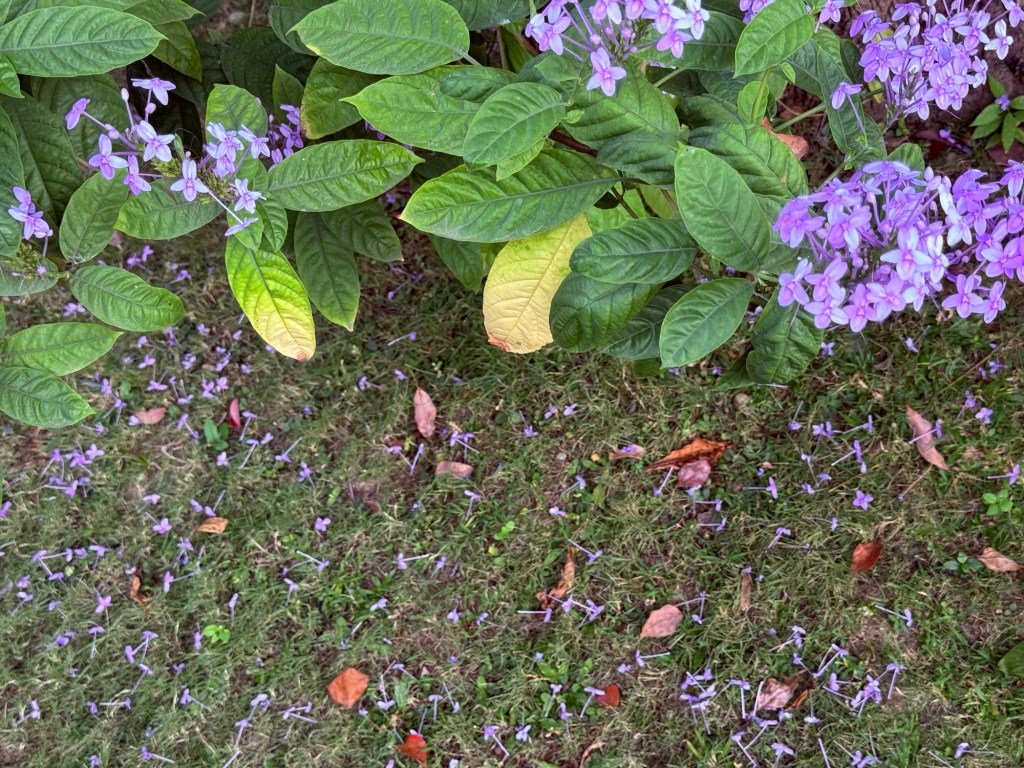
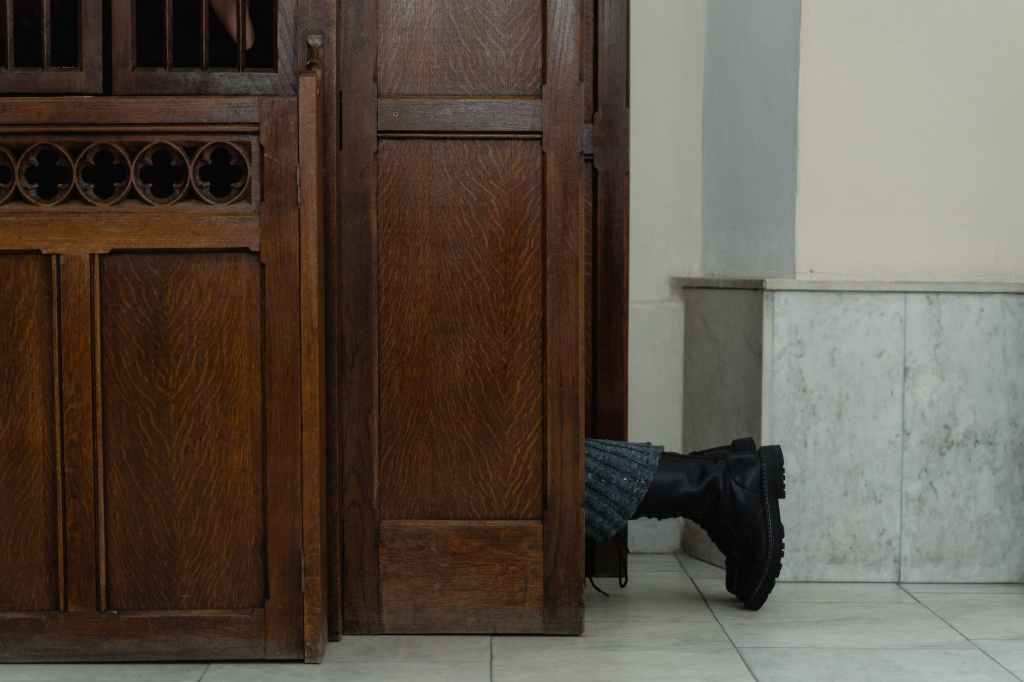
Quiet Storm by Fr. Nicanor F. Lalog II, 20 August 2026
How amazing,
O Lord Jesus
that when it is already
evening, when darkness is
all around us,
that is when you are
actually inside us,
if we could just open
our hearts and eyes of faith
then we shall see you
truly our Light
glowing within,
bringing warmth and
joy.
Many times in our darkness
we lose sight
not only of you,
Lord Jesus but also
of our self
that away from you
we lose our identity
and let our job
and tasks define us
or worst,
our possessions and achievements
as well as pains and hurts;
we cave into our darkness
within not seeing
your wounded handed
touching me
holding me
unmindful of your
holding me,
loving me.
When things get dark
and we can’t see anything
teach me Jesus
to listen to your
silence
to feel your presence
sense your movements
follow your steps
waiting
trusting
self-emptying.
Most of all,
Jesus,
help me emulate your Mother
our Mother too,
Mary most holy,
to remain focused on you
cusping you in my palms
when all is dark
holding on to your words
believing they shall be
fulfilled when I remain
and stay with you
there on the Cross.
Amen.
Lord My Chef Sunday Recipe for Soul by Fr. Nicanor F. Lalog II
Seventeenth Sunday in Ordinary Time, Cycle A, 26 July 2026
1 Kings 3:5, 7-12 ><}}}*> Romans 8:28-30 ><}}}*> Matthew 13:44-52
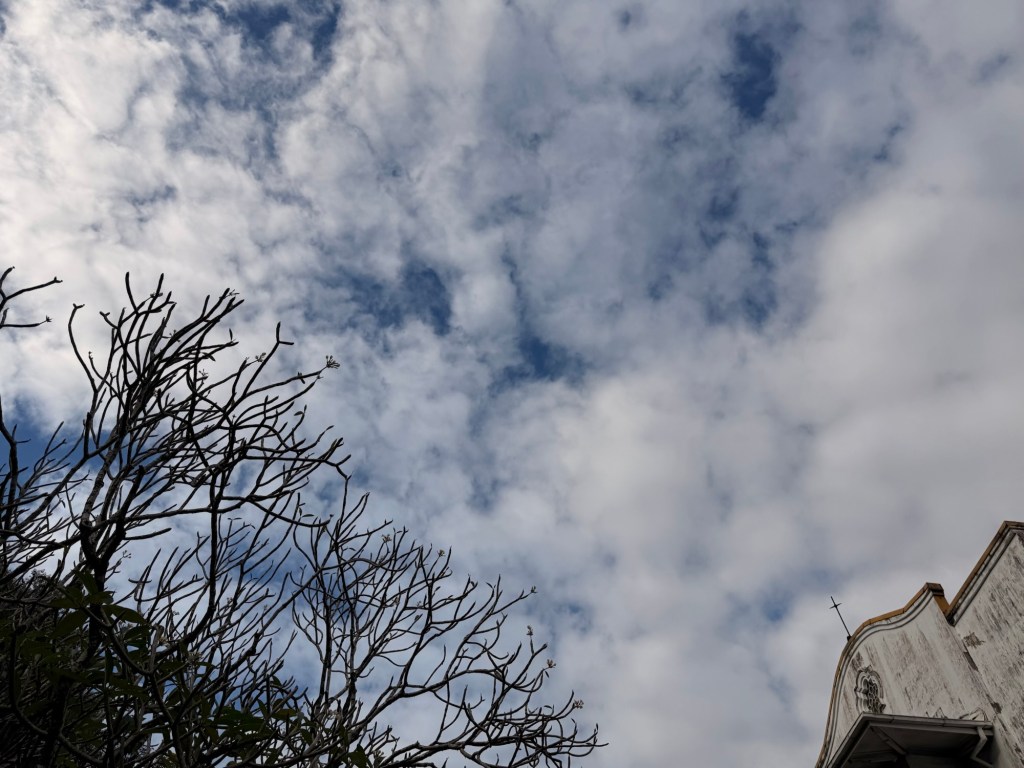
Photo by author, Anvaya Cove, Morong, Bataan, 20 July 2026.
We now come to the final installment of the last three parables by Jesus that began two Sundays ago that speak of the mystery of the kingdom of heaven, its unfolding and demands from us his disciples.
There are a total of seven parables in Matthew 13 known as discourse in parables which started with the parable of the sower until last Sunday where Jesus repeatedly told his listeners that included us today that “whoever has ears ought to hear”; now at its final installment, Jesus asks us after explaining everything, “Do you understand all these things?”
“Do you understand all these things?” They answered “Yes.” And he replied, “Then every scribe who has been instructed in the kingdom of heaven is like the head of a household who brings from the storeroom both the new and the old” (Matthew 13:51-52).
Photo by author, Anvaya Cove, Morong, Bataan, 20 July 2026.
From the French word parabolein for “along the road/path”, parables are stories taken from daily life that offer us deep, profound lessons and realities especially about God and his loving presence among us, of the coming of his kingdom in Jesus Christ. Unfortunately, most of us dismiss them because they are so plain and simple. Or ordinary, not realizing that the deepest truths in life actually come from the simplest aspects of daily living. That is why Jesus kept reminding everyone to always listen, not just hear.
Listening is more intentional, deliberate and conscious, leading to understanding which is an internalization of the lessons and message said. Our Filipino translation shows this so well: to listen is makinig while to hear is madinig or marinig.
Makinig demands attention while dinig is passive, indicating more of the surface level of sounds and words, not really minding the meaning and context. That is why, listening is more reliable, more certain than hearing that has no intention of understanding at all what is meant by being said.
Photo by author, “St. Joseph Protector of the Child Jesus”, 20 March 2024.
Listening leads to knowing and understanding the what, where, when, how and why of events and things of the story or lessons. When there is understanding, relationship happens because more than the facts and details we listen to, we encounter persons. Pope Leo XIV beautifully said this in his first Lenten Message in February that “listening is the first sign of our willingness to enter into a relationship.”
Now we see the intention of Jesus in teaching in parables which is to have a personal relationship with us his listeners and disciples. Moreover, the very act of listening leading to understanding is a process of formation and transformation which is the bigger picture of Jesus teaching in parables – that we may be transformed in him especially when he asked today, “Do you understand all these things?”
Again, its Filipino translation reveals its true meaning and inner dynamics, Nauunawaan ba ninyo ang mga ito? To understand is maunawaan, from the root word una or first in order.
More than knowing, to understand or maunawaan is to realize which is the first of all others because that is the most essential, the most important. “To understand all these things” is not a question of human intelligence that is often short and lacking, and unreliable. “To understand all these things” is a spiritual intelligence, of the humble and lowly, the child-like whom Jesus praised the other week in our weekday gospel (15th week, Wednesday, 15 July 2026, Mt.11:25-27).
Jesus asks us this Sunday “do you understand all these things” to stress that the kingdom of heaven which is actually the person of Christ himself is a treasure beyond price like that treasure found by a man in the field or that precious pearl a trader had found that we are willing to renounce everything to have and possess him!
Understanding the parables of Jesus is finding “God first” before anything or anybody else. In the first reading, we find why King Solomon is the wisest person of all because when asked by God for any gift, he asked for “an understanding heart to judge your people and to distinguish right from wrong” (1Kings 3:9) which delighted God so much. The fear of the Lord is the beginning of wisdom indeed!
God is the first One we must always desire, think and search in life. Without God, we only come in vicious circles of addictions and emptiness and meaninglessness. It is no surprise at all that the most corrupt and vicious people are also the ones who disregard God, who live as if there is no eternity. Without God, we are reduced to mere creatures meant to just eat and survive. Nothing else. That is why some people do not mind at all looking stupid (mukhang tanga at tunay na tanga), without any self respect because only matter matters for them like money (mukhang pera) and things like power or popularity.
With God, we find meaning and direction in everything in life as St. Paul tells us in the second reading, “Brothers and sisters: We know that all things work for good for those who love God, who are called according to his purpose” (Rom. 8:28).
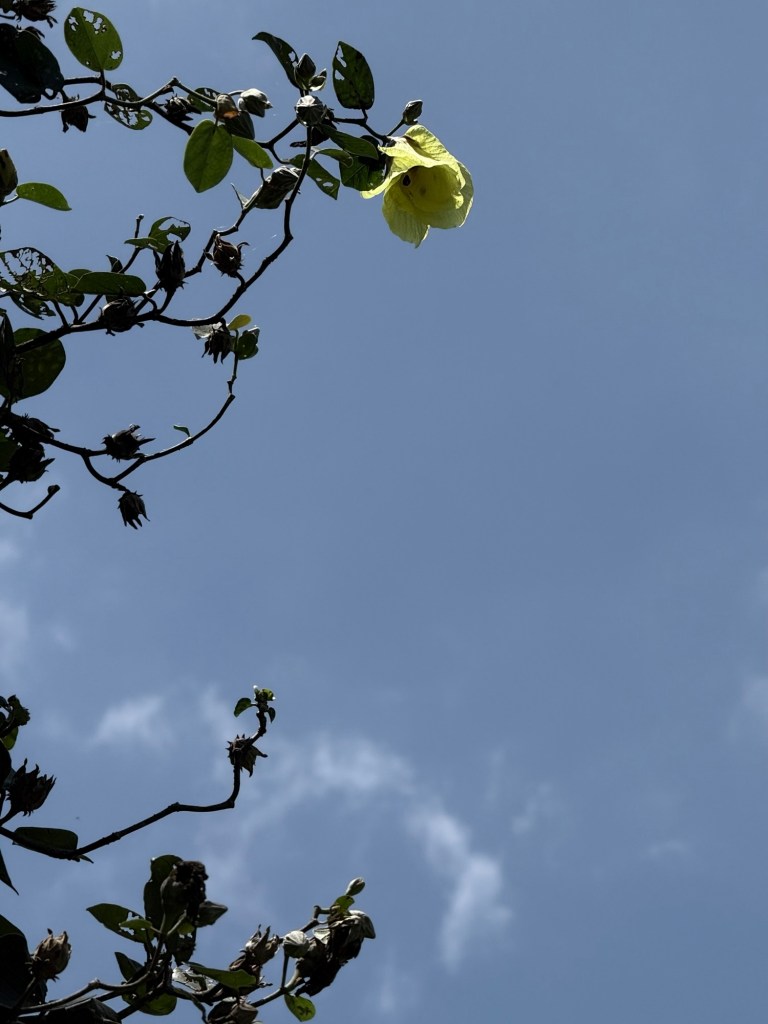
Photo by author, flower of a Balibago Tree, Anvaya Cove Resort, Bataan, 21 July 2026.
“All things”… including trials and tribulations for they make us stronger and better persons. When we look back to our past, we see there are more things we have to be thankful to God than be sorry and have regrets. Many times, our past failures and sufferings and tears have become our gateway to our victory and comfort and joy.
Understanding the parables of Jesus and of life in general is actually a movement into getting closer to Christ, of being “every scribe who has been instructed in the kingdom of heaven is like the head of a household who brings from the storeroom both the new and the old” (Mt. 13:52).
Here we find the coming into full circle of Christ’s discourse in parables: from listening to understanding which is a process of communion and oneness with the Master, Jesus whose very Person is the kingdom of heaven.
Looking back to these past three Sundays of listening and understanding the various parables of Jesus, we find a remarkable stage in his teachings that bring us closest to him, leading us for the next route of his itinerary which is actually an inner journey into our hearts where he alone dwells. Amen. A blessed week ahead of listening and understanding Jesus among the people we meet and happenings we experience.
*Happy Feast Day to all Lolos and Lolas for today is the feast of Sts. Joachim and Anne, parents of the the Blessed Virgin Mary, grandparents of Jesus Christ.
Lord My Chef Daily Recipe for Soul by Fr. Nicanor F. Lalog II
Wednesday in the Sixteenth Week of Ordinary Time, Year II
Feast of St. Mary Magdalene, 22 July 2026
2 Corinthians 5:14-17     <*{{{{><  + ><}}}}*>     John 20:1-2, 11-18
“Christ’s Appearance to Mary Magdalene”, painting in 1835 by Russian painter Alexander Andreyevich Ivanov now hanging at the Russian Museum in St. Petersburg; from en.wikipedia.org.
"I have seen the Lord!"
(John 20:18)
What a joy must have been
for St. Mary Magdalene to
proclaim to the Apostles your rising,
your appearance to her,
Lord Jesus.

Most joyous of all,
Lord is how you have called her
by name, "Mary!"
On the first day of the week, Mary of Magdalene came to the tomb early in the morning, while it was still dark, and saw the stone removed from the tomb. Mary stayed outside the tomb weeping. And as she wept, she bent over into the tomb and saw two angels in white sitting there, one at the head and one at the feet where the Body of Jesus had been. And they said to her, “Woman, why are you weeping?” She said to them, “They have taken by Lord, and I don’t know where they laid him.” When she had said this, she turned around and saw Jesus there, but did not know it was Jesus (John 20:1, 11-14).
Many times Lord Jesus
I feel like St. Mary Magdalene
on that very early morning
of Easter:
feeling lost or
distant from you
who seem to be missing
or taken away from me;
but so often,
like St. Mary Magdalene,
we fail to recognize you
with our eyes because
we picture you so differently
to who you really are.
Many times our
sight fails
that is why most often,
you call us
by name;
unfortunately in this age
of social media and so many
other distractions in life,
 we fail to hear nor even
listen to your voice
because we are afraid of silence
as we are so afraid
of the truth -
that you love us so much
that is why you have forgiven our sins.
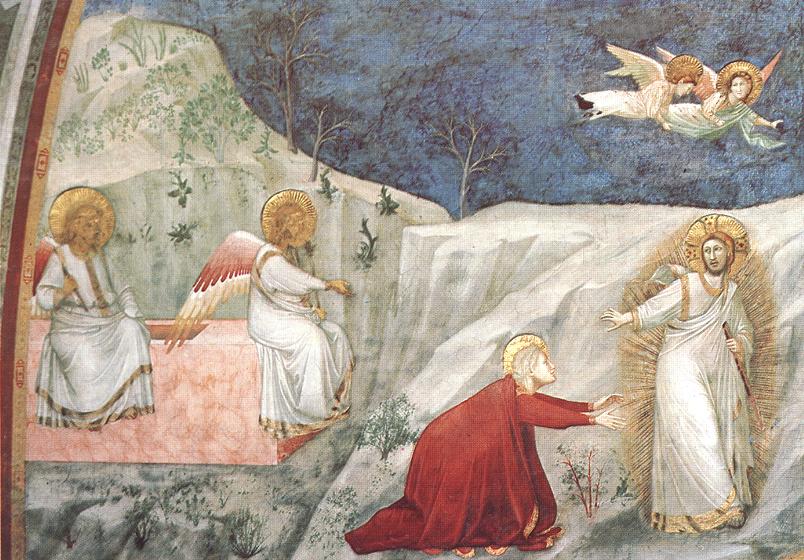
Jesus said to her, “Mary!” She turned and said to him in Hebrew, “Rabbouni,” which means Teacher. Jesus said to her, “Stop holding on to me, for I have not yet ascended to the Father. But go to my brothers and tell them, ‘I am going to my Father and your Father, to my God and your God.’” Mary of Magdalene went and announced to the disciples, “I have seen the Lord,” and then reported what he told her (John 20:16-18).
“Noli me tangere” (touch me not) fresco in the Lower Basilica of St. Francis Assisi Church in Italy painted by Giotto de Bondone in the 13th century from commons.wikimedia.org.
Everyday you
come to us,
Jesus,
calling us by name
like Mary Magdalene -
someone you personally know,
with all of our sins
and most kept secrets
in our hearts,
in our past.
If we could just be patient
like St. Mary Magdalene
in picking the pieces of our lives,
of converting daily,
of transcending the scars
of sins of our past,
then we shall hear
and joyously listen
to your voice
spoken in a whisper,
so sweet,
so reassuring
 of your real presence,
most of all
filled with tenderness
because you love us
immensely,
Jesus.
If we could just listen
to your voice, Jesus,
then like St. Mary Magdalene,
we can proclaim too
with joyful enthusiasm
to other disciples
"I have seen the Lord!"
spreading you love
and good news of salvation.
Amen.
From Facebook, April 2021: “There is an urgency to announce the Joy, the joy of the Risen Lord!”
Lord My Chef Recipe for Holy Saturday, 04 April 2026
Photo by author, Sacred Heart Novitiate, Novaliches, QC, 20 March 2026.
A blessed Holy Saturday to you.
One of the most unforgettable scenes of COVID-19 pandemic when it started in the summer of 2020 was like what we have every Holy Saturday – empty streets with everyone away.
And silent.
What a blessed Holy Saturday we have again today like six years ago as we are in the midst of another worldwide crisis in oil prices due to the US-Israeli war against Iran, inviting us to rediscover the beauty and value of silence.
Because holiness is found in silence, the very language of God.
In the Bible, silence always precedes God’s appearances and revelations:
From the Book of Genesis in the story of creation when there was nothing – therefore, silent – to John’s gospel that said, “In the beginning was the word” to indicate there was only silence until “the word became flesh” (Jn.1:1, 14) in Jesus Christ who was totally silent during his growing up years in Nazareth and later frequently went into deserted places to rest and pray in silence during his ministry.
Photo by author, Sacred Heart Novitiate, Novaliches, QC, 20 March 2026.
Here we find in Jesus that holiness is first found in silence and in rest, when we listen more to God to do his will.
On that first Holy Saturday when Jesus was buried in a tomb, the whole creation came to full circle.
See how after completing creation, God rested on the seventh day and made it holy (Gen.2:3) while Jesus was laid to rest on the seventh day too after completing his mission of salvation.
Silence and rest always go together.
This we vividly find in our Filipino word for rest which is magpahinga that literally means “to be breathed on”, to be filled with God which is what holiness is all about.
Like in the creation of the first man who was breathed on by God to be alive, Jesus breathed on his disciples locked in the upper room after greeting them with peace twice on the evening of Easter.
Silence is not being quiet, not an emptiness when we shut off all sounds and noise.
Silence is actually a fullness, of trying to listen to all sounds and noise in order to distinguish which to listen to. It is in silence when we hear our true selves, when we understand and feel others and most especially become one in God.
That is why when we rest, we return to Eden, like the garden where Jesus was buried.
Now in the place where he had been crucified there was a garden, and in the garden a new tomb, in which no one had yet been buried. So they laid Jesus there because of the Jewish preparation day; for the tomb was close by(John 19:41-42).
Photo by author, Sacred Heart Novitiate, Novaliches, QC, 20 March 2026.
What a lovely image of God’s rest and silence in Eden and of Jesus laid to rest at a tomb in a garden because to rest in silence is to stop playing God as we return to him as his image and likeness again.
Today let us cultivate anew the practice of silence, of listening to the various sounds around us and within us and most of all, trying to listen to the most faint, the softest sound that is often the voice of God within us, reassuring us that in the midst of his silence, he never leaves us, that with him we are rising again to new life like Jesus Christ.
Let us be like those women who rested on the sabbath when Jesus was laid to rest. That like them, we may trust God more by being true to ourselves even in the midst of this oil crisis.
Photo by author, Sacred Heart Novitiate, Novaliches, QC, 20 March 2026.
The women who had come from Galilee with him followed behind, and when they had seen the tomb and the way in which his body was laid in it, they returned and prepared spices and perfumed oils. Then they rested on the sabbath according to the commandment(Luke 23:55-56).
Imagine the more difficult situation those women were into during that time. But they dared to rest in silence in the Lord. Unlike us today worried only with prices of oil and other goods, without threats at all to our lives.
Silence is the domain of trust; people afraid of silence are afraid to trust.
Perhaps that explains why almost everyone is glued with their cellphones or stuck with earphones and EarPods to have each one’s own world, unmindful of others.
On the other hand, the most trusting people are the silent ones. And always, the most loving ones too.
Let us pray:
Help us to be silent today,
O God our Father
as we remember your Son Jesus Christ’s
Great Silence – Magnum Silentium –
when he was “crucified, died and was buried;
he descended to the dead and on the third day he rose again.”
Breathe on us your Spirit of life and joy,
O God as we rest in you,
listening to your voice within us
so that we may follow always Jesus Christ's
path to Easter in the Cross.
Amen.
Photo by author, Sacred Heart Novitiate, Novaliches, QC, 20 March 2026.
40 Shades of Lent by Fr. Nicanor F. Lalog II
First Sunday in Lent-A, 22 February 2026
Genesis 2:7-9, 3:1-7   +   Romans 5:12-19   +   Matthew 4:1-11
Photo from earth.com.
We now live in a world so noisy with many voices competing for our attention. Everybody is talking including cars and elevators, phones and gadgets and apps with names Siri and Alexa. So often, it is from these competing voices come our temptations in life, too.
In his first Lenten Message, Pope Leo XIV invites us to listen more to the word of God in order to be converted anew to Him. He said it so well that “The willingness to listen is the first way we demonstrate our desire to enter into a relationship with someone.”
Very true! And the question this first Sunday in Lent asks us is, whose voice do I follow? Because the voice we listen most is likely the one we prefer or love most – in fact, it could be the voice of the one we keep a relationship with!
That is the tragic truth of the story of the fall of Adam and Eve in the first reading today – they listened more to the voice of the devil signified by the serpent than to God who warned them not to eat the forbidden fruit.
And that continues to happen every day in our lives! That is why to sin is not merely to turn away from God but actually a refusal to love because sin is rejecting a relationship with God to whom we must listen to. This we see today in Matthew’s version of the temptations of Christ in the desert.
At that time Jesus was led by the Spirit into the desert to be tempted by the devil. He fasted for forty days and forty nights, and afterwards he was hungry. The tempter approached and said to him, “If you are the Son of God, command that these stones become loaves of bread.” He said in reply, “It is written: One does not live by bread alone, but by every word that comes forth from the mouth of God” (Matthew 4:1-4).
Detail of “The Temptation of Jesus According to St. Matthew” on the wall of St. Mark’s Cathedral in Venice, Italy. Photo from psephizo.com.
Right at the start, Jesus made it clear by quoting the Sacred Scriptures, the word of God, that “One does not live by bread alone, but by every word that comes forth from the mouth of God.”
Jesus, the Word who became flesh to live among us tells us clearly today that same truth. God’s word is life when He created everything by just speaking. Any voice that leads to destruction is from the devil, the father of fake news. And the devil’s biggest lie we must always avoid is making and having things easily. See how until now every fake news is always about “instants” like instant food and health, instant solution to everything without realizing its sinful effects as well as side effects that may actually harm us more.
Listening is an art because it teaches us to be patient, to wait and most of all, to persevere which leads us to perfection and excellence. Haste always makes waste. When we listen, we become patient, choosing to wait than take shortcuts or get instants that avoid difficulties and hardships like gambling to be wealthy without working, or cheating to pass exams without learning as well as freedom without responsibilities.
Then the devil took him to the holy city, and made him stand on then parapet of the temple, and said to him, “If you are the Son of God, throw yourself down. For it is written: ‘He will command is angels concerning you’ and ‘with their hands they will support you, lest you dash your foot against a stone.'” Jesus answered him, “Again, it is written, You shall not put the Lord your God to the test” (Matthew 4:5-7).
Photo by author, Domiican Hills, Baguio City, January 2019.
More than an art, listening is a virtue because it demands silence which is a fullness wherein we are able to listen and distinguish every voice and sound so that we may choose which to listen to and follow.
The word “listen” is the palindrome of “silent” – we listen best in silence to hear God, others and our very selves.
When we learn to be silent, we also become more trusting because when we trust, we speak less and listen more. The most silent people are the also the most trusting. When we trust, we wait and avoid shortcuts and instants.
The voice of God stirs our inner self, not just our senses because His voice leads us to deeper realities and meanings in life. Remember that Jesus eventually fed more than five thousand people from just five loaves of bread and two pieces of fish when He saw them already prepared inside their hearts and soul; when Jesus felt them more open to God than to the world, then He gave them bread and fish for their stomach.
Notice how the devil’s temptation to Jesus continues among us with those voices calling us to overly assert ourselves, to be influencers and clout chasers or content creators to be praised and followed by everyone when actually is all about wealth and money, and of course, power. It is the voice of control and manipulation. How sad that many of us gobble their lies completely, consuming everything, filling ourselves even with trash.
The voice of God calls us to sacrifice, to bear pains and sufferings not to be overburdened in life but for us to see God especially among those mostly in need like the poor and marginalized. Often, the voice of God is the softest and tiniest in our hearts calling us to simply trust Him by doing the simplest things like smiling to strangers, easing the pain of those lonely and sad, giving bread to the poor and hungry. Listening to the silence of God enables us to trust Him more that we learn to share and forget ourselves. Then, we grow and mature truly as persons.
Then the devil took him up to a very high mountain, and showed him all the kingdoms of the world in their magnificence, and he said to him, “All these I shall give you, if you will prostrate yourself and worship me.” At this, Jesus said to him, “Get away, Satan! It is written: The Lord, your God, shall you worship and him alone shall you serve.” Then the devil left him and, behold, angels came and ministered to him (Matthew 4:8-11).
Again, we go back to Pope Leo XIV’s Lenten Message about listening as “the first way we demonstrate our desire to enter into a relationship with someone.”
Don’t you feel sad at the sight of today’s everyday life where everyone has something in their ears, whether the tiny earpods or the headset/headphone?
What used to be insane like talking by one’s self has now become a status symbol as everyone looks crazy speaking by themselves through modern devices amid a crowd while walking or seated anywhere conversing to somebody at the other end of their lines unmindful, oblivious of the persons around them. May sariling mundo.
Many these days have created their own worlds and universe with them at its center through our new Baal, the cellphone – the very first thing everyone is looking for after waking up and the last thing in everyone’s hand before sleeping. How sad many among us today practically live in social media. What is most tragic is that all these modern means of communications were invented to bring us closer together when in fact, the more we have grown apart from each others! We are not only polarized as people but even separated from God.
The third temptation of the devil to Jesus continues with us today with all those voices telling us to forget God and morality and truth so that we become popular by being viral and trending. It is the biggest scam and fake news of all by the devil – of us being the “master” to rule and have world with all of its luxuries and power. The voice seems harmless, as if asserting our true selves but actually destroys our being and relationships with God, with others and eventually with our very selves.
Lent is an inside journey into our hearts, of finding Jesus anew inside our hearts where He dwells. St. Paul tells us in the second reading how Jesus brought us back to God, to grace and salvation.
Lord Jesus Christ, help us not to harden our hearts today so that we may listen anew to Your voice within us to find our way back to God, to peace and to fulfillment in ourselves and in one another.Amen. Have a blessed week ahead!
Photo by author, Carmel of the Holy Family Monastery, Guiguinto, Bulacan, 22 January 2026.
40 Shades of Lent by Fr. Nicanor F. Lalog II
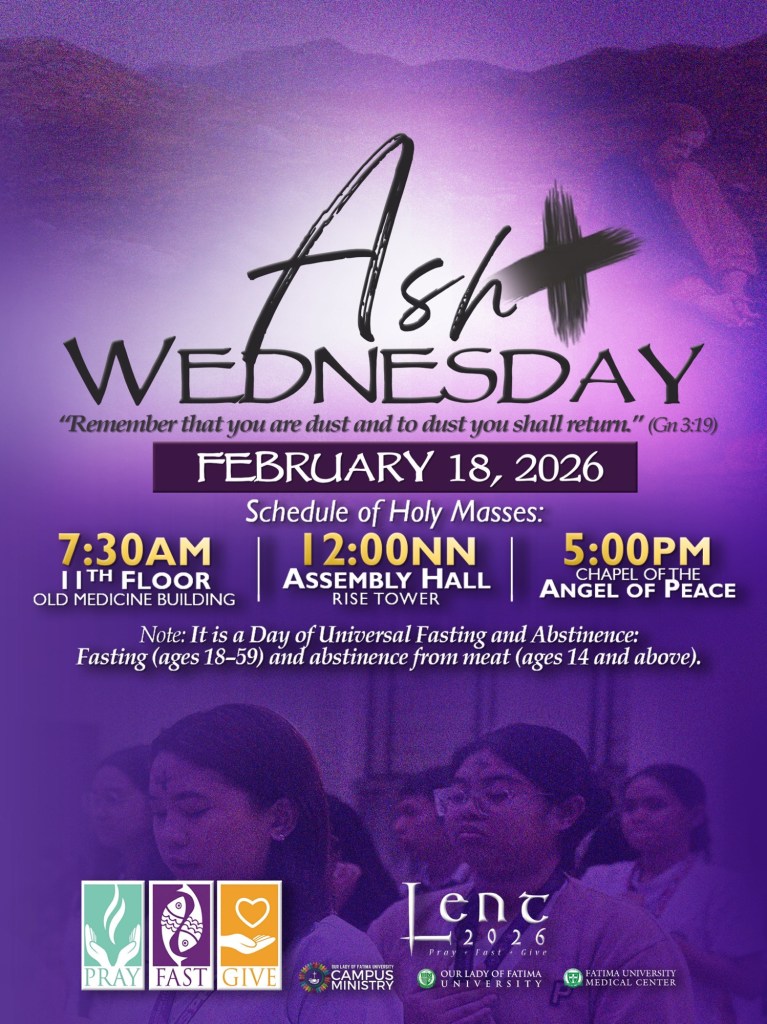
Ash Wednesday, 18 February 2026
Joel 2:12-18 +++ 2 Corinthians 5:20-6:2 +++ Matthew 6:1-6, 16-18
Thank you,
merciful Father
for personally calling us
to return to you this Lent
as we mark its start with
Ash Wednesday;
thank you, Father
in sending us your Son
Jesus Christ our Lord
to lead us back to you,
reminding us of your
abiding presence despite
our turning away from you;
thank you for his Vicar,
Pope Leo XIV in guiding us
in this Lenten journey into
our inner selves,
into our hearts
to find you,
to rest in you,
and to remain in you.
“Even now, says the Lord, return to me with your whole heart, with fasting, and weeping, and mourning; rend your hearts, not your garments, and return to the Lord, your God” (Joel 2:12-13).
Rend my heart,
dear Jesus,
that I may start listening
anew to your words,
in listening to your silence
to lead me into conversion;
rend my heart,
O Lord,
that I may always listen
to you in my brothers
and sisters' pleas for help
amid their many pains
and suffering because
I have been numb to them,
unmindful of their presence;
rend my heart,
Jesus so you may be my core
not easily swayed by
that little gadget the cellphone
that had become the modern baal
of our time
we unconsciously follow
and obey
instead of you,
Lord.
Rend my heart,
dear Jesus,
that I may truly fast
by emptying myself
of my pride and sins
so that you may fill me
with your humility,
justice,
and love;
rend my heart,
O Lord,
that I may "hunger" more
for your values
and "thirst" for your
 love and mercy
by "disarming our language,
avoiding harsh words
and rash judgment,
refraining from slander";
render my heart,
Jesus,
 so I may fast my tongue,
"striving to measure our words,
cultivate kindness
and respect
 so that words of hatred
may give way
 to words of hope and peace."
Rend my heart,
dearest Jesus,
so that my listening
and fasting may lead into
the common good,
into a communion
of your disciples
attentive to God and
to the least among us;
rend my heart,
Lord Jesus Christ
not only to cleanse my conscience
but also to enhance
the quality of my relationships
and dialogue with each other
 in the power
of the Holy Spirit.
Rend my heart,
Lord Jesus Christ
to help me find my way back
to the Father
in you,
through you,
and with you.
Amen.
*Prayer based
on Pope Leo XIV's
first Lenten Message,
https://press.vatican.va/content/salastampa/en/bollettino/pubblico/2026/02/13
40 Shades of Lent by Fr. Nicanor F. Lalog II
Ash Wednesday, 18 February 2026
Joel 2:12-18 +++ 2 Corinthians 5:20-6:2 +++ Matthew 6:1-6, 16-18
Lent is often portrayed as a journey of 40 days towards Easter starting today, Ash Wednesday. But deeper than a journey in time, it is a journey into the Father that starts in our hearts, deep within each one of us.
It is the season when we are invited to take time to look inside our hearts to see our true selves as sinful in order to meet God dwelling right inside us. The Prophet Joel in the first reading sets this tone of inner journey of conversion perfectly when he voiced out God’s call, speaking to us personally especially in this modern age:
“Even now, says the Lord, return to me with your whole heart, with fasting, and weeping, and mourning; rend your hearts, not your garments, and return to the Lord, your God” (Joel 2:12-13).
Photo by author, Buendia Ave., Makati City, 09 February 2026.
Very often, we are concerned about our external appearance, of how we look to other people but God sees what is in our hearts, of what is really inside us. And the path inside us is to cleanse ourselves thoroughly of the dirt and smudges of sin; hence, the imposition of ashes on our forehead.
Ash has long been a cleansing agent. Long before these modern kitchen stoves and gadgets of today, we used firewood for cooking that blackened the bottom of cooking wares. There were no Scotch Brite nor dishwasher at that time so we would mix ashes and cleanser soap then with steel wool and eskoba, we scrubbed them on the dirty kaldero and kawali until they were sparklingly beautiful again.
It is the very imagery of that cleaning of darkened pots with ash and soap the priest conveys to us when he says “Repent and believe in the gospel” while putting those ashes on our foreheads.
To repent is more than being sorry and admitting our sins but also a firm resolve to change our sinful ways, to be converted by following Jesus Christ in his Cross, by being more loving like him. In his first Lenten Message, Pope Leo XIV reminds us that “Every path to conversion begins by allowing the word of God to touch our hearts and welcoming it with a docile spirit.” He proposes three specific ways in doing this: listening, fasting and together.
Listening. The Holy Father reminds us so beautifully that “The willingness to listen is the first way we demonstrate our desire to enter into a relationship with someone.”
So true! But, so sad, too is the fact whom do we listen more these days? We live in a mass-mediated culture with so many young people practically living in the social media, taking and believing everything they read and see on their screen as the “gospel” truth that have only misled so many of us into various forms of miseries like emptiness, alienation from self and others, and even deaths.
Pope Leo explains that “Our God is one who seeks to involve us. Even today he shares with us who is in his heart. Because of this, listening to the word in the liturgy teaches us to listen to the truth of reality… In order to foster this inner openness to listening, we must allow God to listen as he does.” This is precisely the call of Jesus to us in the gospel when he repeatedly spoke of “God seeing you in secret” – God is always listening to us but do we listen to him?
In order to truly listen to God, first we must learn his language which is silence. See how the word “silent” is a palindrome of “listen” which is the reason why we have two ears so that we may listen more than speak. Remember also the shape of our ears – when placed together they form a heart because listening is not letting the words pass through the other ear nor keep in one’s head to understand but meant to bring down into our hearts so we can be more loving and kind, leading to oneness and bonding with the other persons.
Here we can adopt the suggestions of the CBCP that we fast this Lent on social media: no more cellphones before sleep and after waking up; limit social media and streaming time; observe device-free meals and gatherings; replace screen time with prayer and making time to be with others personally.
Photo by author, Sacred Heart Novitiate, Novaliches, QC, March 2025.
Fasting. According to Pope Leo, “fasting is a concrete way to prepare ourselves to receive the word of God.” He explains that “because it involves the body, fasting makes it easier to recognize what we ‘hunger’ for and what we deem necessary for our sustenance. Moreover, it helps us identify and order our ‘appetites,’ keeping our hunger and thirst for justice alive and freeing us from complacency.”
Again, let us use our Filipino language in understanding fasting and abstinence as well. Fasting is linked with abstaining from food. For us Filipinos, the most common practice of fasting and abstinence is avoiding meat like no meat on Fridays; meat in Filipino is laman. Therefore, when we say “no meat” it literally means walang laman which means empty in Filipino. It is when we are empty of ourselves that we become filled with God and his word, eventually of others especially the sick and suffering.
In a very interesting way, Pope Leo XIV invites us beginning this Lent to fast with our “tongue”: “Let us begin by disarming our language, avoiding harsh words and rash judgment, refraining from slander and speaking ill of those who are not present and cannot defend themselves. Instead, let us strive to measure our words and cultivate kindness and respect in our families, among our friends, at work, in social media, in political debates, in the media and in Christian communities. In this way, words of hatred will give way to words of hope and peace.”
Together. Finally, the Holy Father sums up that listening and fasting must both lead to the common good, the unity of peoples because “conversion refers not only to one’s conscience, but also to the quality of our relationships and dialogue. It means allowing ourselves to be challenged by reality and recognizing what truly guides our desires” not only as a community but especially in our “thirst for justice and reconciliation”.
Again, our Filipino word for listening says it all: pakikinig leads to pagniniig or intimacy which is oneness, communion, and bonding. True conversion leads to communion that begins with reconciliation as St. Paul called on us today in the second reading, “We implore you on behalf of Christ, be reconciled to God. Behold, now is a very acceptable time; behold, now is the day of salvation (1Cor. 5:20,6:2).”
As we receive the ash on our foreheads today, let us have moments of silence to listen to God’s voice we have stifled in our hearts, let us fast from talking and scrolling, and together we help each other to truly journey inside our true selves to meet God this Lent. To meet God is to die into one’s self, one’s sins, one’s selfishness as well dying literally speaking which the old formula of imposition of ash solemnly declares, “Remember that you are dust, and to dust you shall return.”
Let’s face it: it is the reality of death that we have often tried to deny and escape in life that have kept our hearts consumed with all these distractions in modern life that have led us into sins and meaninglessness. Let us start anew today in Christ Jesus to find ourselves and God within our hearts. Amen. A blessed Ash Wednesday to you!
Lord My Chef Daily Recipe for the Soul by Fr. Nicanor F. Lalog II
Wednesday, Memorial of Our Lady of Lourdes & World Day of Sick,
11 February 2026
Isaiah 66:10-14     ><}}}}*> + ><}}}}*> + ><}}}}*>     John 2:1-11
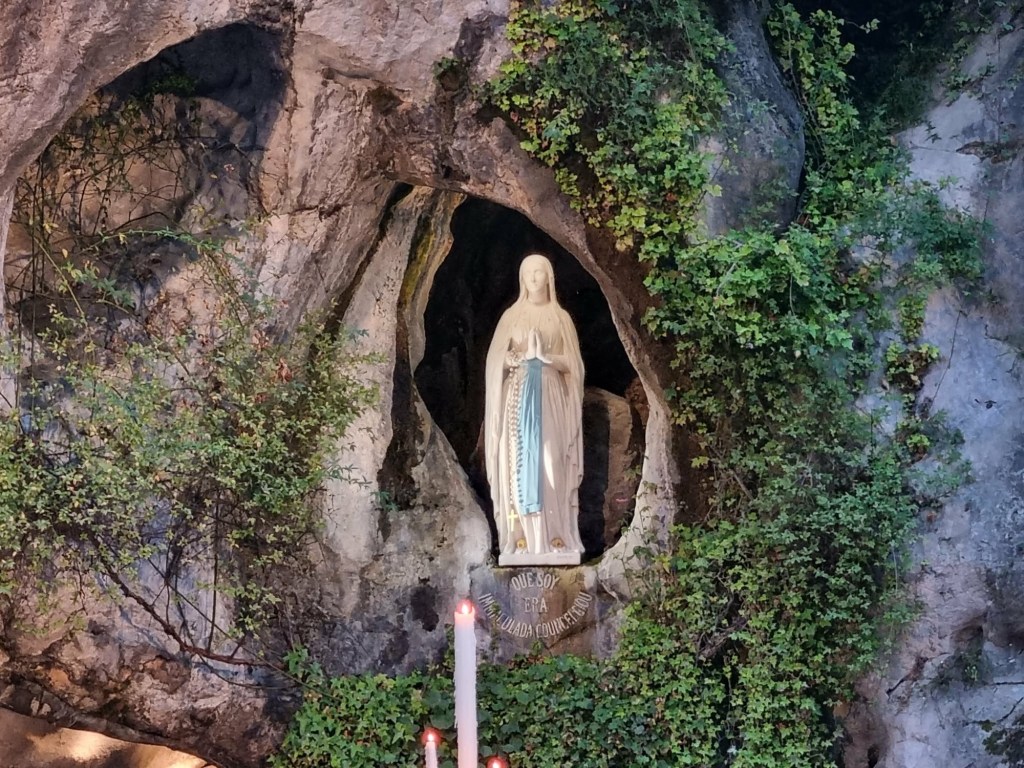
Photo by Architect Philip Santiago, Lourdes, France, October 2025.
Praise and glory to you O God,
our loving and merciful Father
who has given us a wonderful
and most kind Mother in Mary
the Blessed Virgin through
Jesus Christ your Son.
From the beginning
since Jesus Christ began his ministry
to our present time,
the Blessed Virgin Mary
has always been with Jesus
showing us your great signs
of presence,
of generosity,
and of life
first anticipated
at the wedding feast at Cana.
On the third day there was a wedding in Cana in Galilee, and the mother of Jesus and his disciples were also invited to the wedding. When the wine ran short, the mother of Jesus said to him, “They have no wine.” Jesus said to her, “Woman, how does your concern affect me? My hour has not yet come.” His mother said to the servers, “Do whatever he tells you.” Jesus told them, “Fill the jars with water” (John 2:1-5, 7).
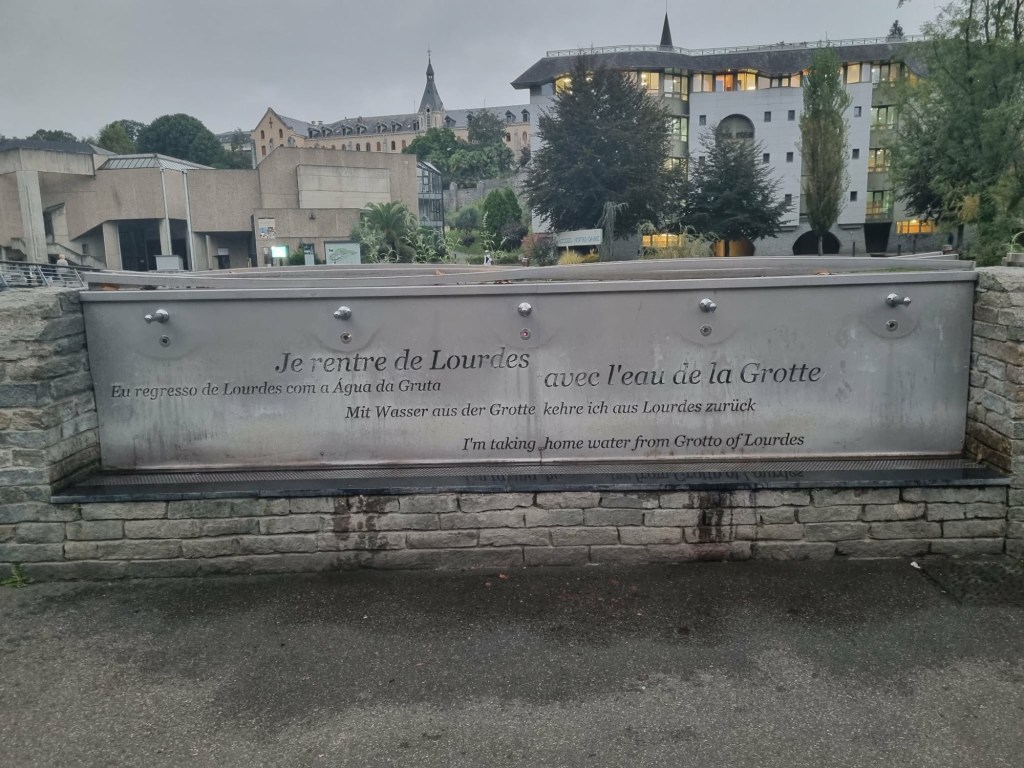
Photo by Architect Philip Santiago, Lourdes, France, October 2025.
How wonderful
to recall and meditate
 on this first miracle of Jesus
of turning water into wine
 at the wedding feast at Cana
 through the intercession
 of his Mother,
 the Blessed Virgin Mary.
Through Mary,
 your abundant blessings,
 O God, have continued
to overflow upon us
 even after she is now
with you and Jesus
 as Queen
of heaven and earth.
How true were your words
 to the Prophet Isaiah
 that you shall send Israel a mother
 who shall comfort us,
 a mother in whom you shall
 spread prosperity and blessings
 (Isaiah 66:10-14).
How lovely that
more than 1800 years after Cana,
another miracle happened anew
using the same element of water
through Mary in Lourdes, France;
how amazing in both Cana
and Lourdes, Jesus asserted
water as the primordial element
 of life and symbol of humanity;
most amazing Lord Jesus
that since that miracle at Cana,
your life continues to overflow
upon us through Mary your
Mother and our Mother too
in Lourdes, France.
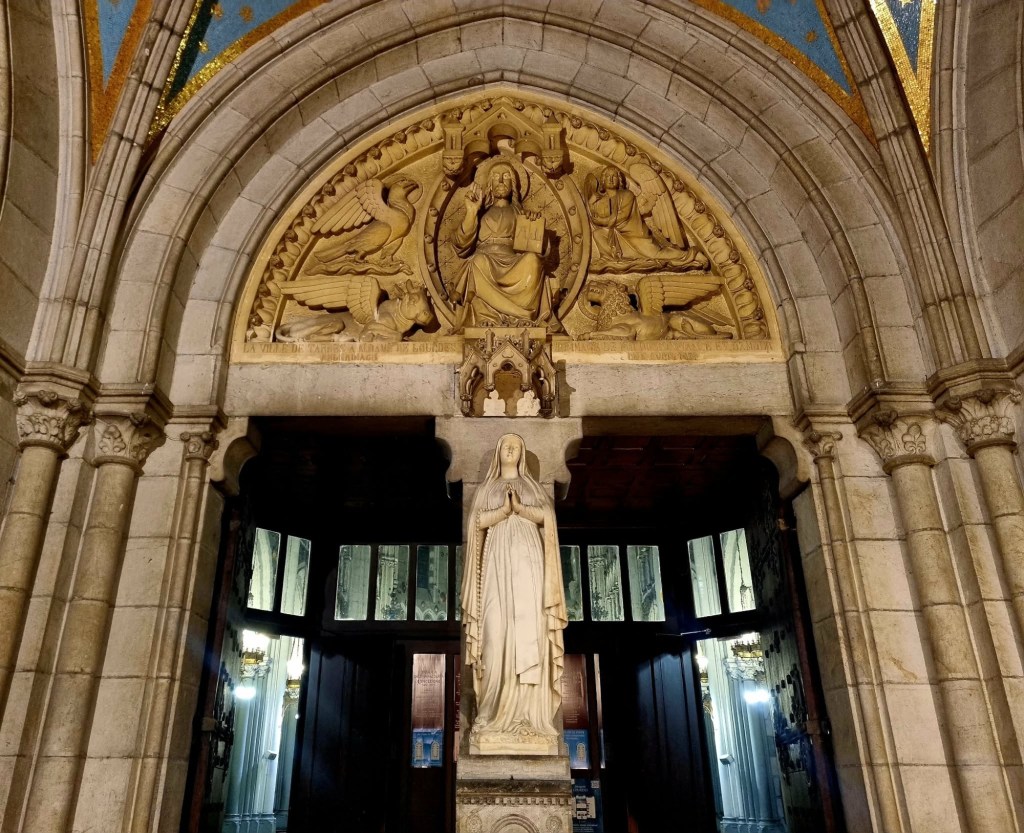
Photo by Architect Philip Santiago, Lourdes, France, October 2025.
Like the servers at Cana,
Mary told the young St. Bernadette
at Lourdes to dig on earth
so water may burst forth as spring,
like life coming out of the womb of the earth;
until now, that spring has been
the source of many healings
and other miracles
among generations of peoples
from all walks of life and nations;
these waters of Lourdes
remain as symbols
of fruitfulness and of healing,
of maternity in Mary
who cares most to us
and the sick
in Jesus our Savior.
Give us the grace,
dear Jesus
the gifts of purity
and cleanliness
in our hearts
so that we may become
like Mary at Cana and Lourdes,
a vessel of your healing
and compassion
especially for the sick
of the world.
Grant us,
dear Jesus,
the gift of listening
and docility like the servers
in Cana and
St. Bernadette in Lourdes
to always "do whatever
you tell us."
Amen.
Photo by Architect Philip Santiago, Lourdes, France, October 2025.
Lord My Chef Daily Recipe for the Soul by Fr. Nicanor F. Lalog II
Wednesday, Memorial of St. Thomas Aquinas, Priest & Doctor of the Church, 28 January 2026
2 Samuel 7:4-7     <*[[[[><  +++  ><]]]]*>     Mark 4:1-20
Photo by Nikola u010cedu00edkovu00e1 on Pexels.com
"May tainga ang lupa,
may pakpak ang balita."

A Filipino saying
to express how news
and rumors travel so fast
because "The soil (or land)
has ears, news has wings."
It sounds funny, Lord Jesus
that this saying came to my mind
upon hearing your parable that
started with your words "Hear this!
A sower went out..."
and ended, "Whoever has ears
to hear ought to hear"
(Mark 4:3, 9).
What an art you
have endowed each of us
Lord with two ears
so that we may listen and
hear twice than speak;
how lovely you have shaped
our ears that when put
together, they look like a heart
and yet, we rarely listen at all
to you and with others.
Make us like the good soil,
Jesus: open to receive your words,
open to welcome your many
possibilities, open to simply
be ourselves so that you may
transform us like the seeds
that grew and produced fruits.
Remind us, Lord Jesus,
like David by Nathan that
far more better than buildings
on land is our hearts where you
desire most to dwell;
may our hearts remain
your temple planted on
good, firm soil that it may
be felt alive always.
Teach us to imitate
your great Saint Thomas Aquinas
we remember today: that we
may cultivate to prepare
our hearts and minds
to become like the good soil
so that your seeds of the Gospel
may grow and bear fruit
for your greater glory.
Amen.
Lord My Chef Daily Recipe for the Soul by Fr. Nicanor F. Lalog II
Friday in the First Week of Advent, 05 December 2025
Isaiah 29:17-24     ><))))*> + ><))))*> + ><))))*>     Matthew 9:27-31
I love your words today,
Lord Jesus Christ:
"Do you believe
that I can do this?"
(Matthew 9:28)
How amazing is this story,
so Advent because the season
calls us to believe,
to wait,
even to see you Jesus
even we cannot see
anything at all!
How can two blind men
follow you except by
merely listening,
even listen intently
when we who can see
cannot see you,
refuse to follow you,
refuse to believe you?
Like those two blind men,
we tell you today that
"Yes, Lord, we believe
you can make us see again."
Please do so.
Make it quick.
For we are so blinded
by the world's playful lights
including its darkness
so romanticized
that many drift
away from you.
Amen.