Lord My Chef Daily Recipe for Soul by Fr. Nicanor F. Lalog II
Wednesday, Twenty-Fourth Week in Ordinary Time, 16 September 2026
Memorial of Sts. Cornelius, Pope, and Cyprian, Bishop, Martyrs
1 Corinthians 12:31-13:13     <*((((><  +  ><))))*>     Luke 7:31-35
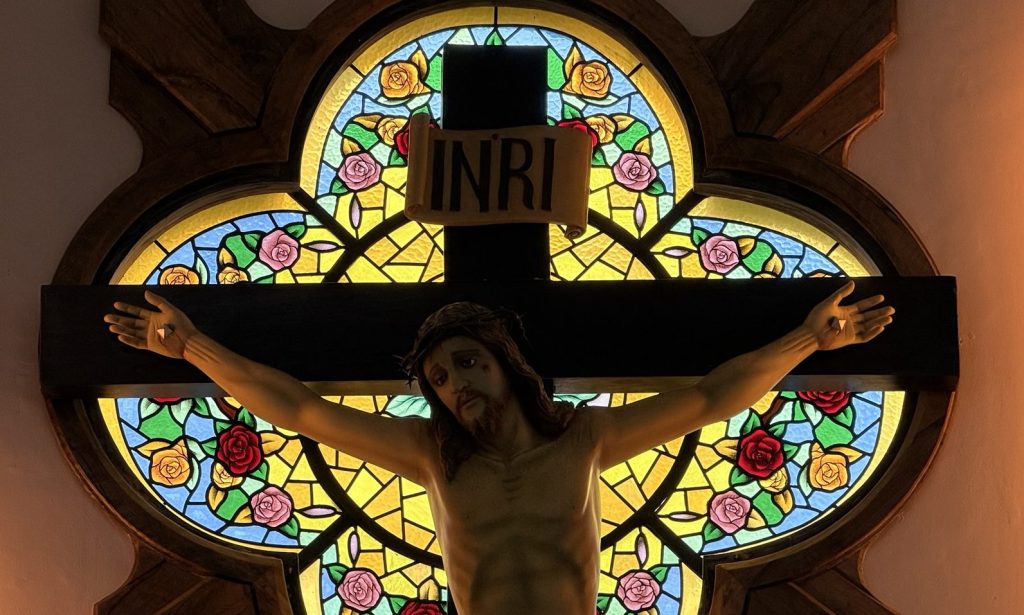
Photo by a friend in Seabrook, Washington, 06 September 2026.
Love never fails.
In other translations,
love never ends.
How lovely,
Lord Jesus;
and so challenging
because many times
I think of at least an end
to "loving" like when Peter
asked you last Sunday
"how many times must I forgive
my brother who sins to me...
is it seven times?"

When you said it is
"seventy times seven" -
that is clearly what love
that never fails.
As I pray to you,
I realized every age,
every generation in
history always thinks
itself as the worst,
almost hopeless
like during this time in
our lives not only in the world
but in our own country:
everything is chaos and disordered,
injustice and corruption are
the norms followed ironically
in this predominantly Christian
nation where money not
only talks but even shouts.
But, here we are still
Jesus: alive and kicking,
fighting and surviving,
eagerly awaiting our
new dawn of salvation
in you, Jesus;
grant me patience
and perseverance to keep
loving especially when it seems
to be no longer feasible
and even not doable;
like Sts. Cornelius and Cyprian
during their time,
it was not persecution per se
that was the problem
but divisions among early
Christians especially in the
refusal of some in forgiving
and readmitting apostates to
to the faith; dear Jesus,
teach us to be flexible,
more loving than legalistic
like your former Pope St. Cornelius
and his friend St. Cyprian the bishop
who both insisted those who denied
their faith while facing persecution
may be forgiven and be readmitted;
it was clearly choosing to be more
loving than to be legalistic.
Teach me,
Jesus, to learn to read
the signs of the times
and most specially your
divine will in dealing with the
many complicated issues we
now face in our being Christians.
May in everything
we let love prevail for wherever there
is love, you are always there, Lord
because that is when we have
communion and oneness in
you.
Amen.
Lord My Chef Daily Recipe for Soul by Fr. Nicanor F. Lalog II
Thursday, Twenty-third Week in Ordinary Time, Year II, 10 September 2026
1 Corinthians 8:1-7, 11-13     ><]]]]’> + ><]]]]’> + ><]]]]’>     Luke 6:27-38
Photo by author, San Juan, La Union, 08 January 2026.
It is again that most difficult part
of your gospel,
Lord Jesus,
our least favorite
of your teachings -
“love your enemies.”
Forgive us, Lord
because the mere thought of
"enemies" turn us off right away;
it is wrong but human as we are,
there is always that
feeling of revulsion,
of getting even with those
who have hurt us
or wronged us;
but, we realize too
how in the long run
it is pure foolishness
of keeping that grudge against
our enemies because
as St. Paul tells us also today,
"knowledge inflates with pride,
but love builds up."
Your teaching
for us to love
our enemies
is not really
about our strength
and willpower,
Jesus but in our likeness
with God,
"Be merciful,
just as also your
Father is merciful."
Help us,
Jesus,
to pray more
intensely,
to surrender more wholly
to you so that we can
let flow towards others
the mercy you have
showered us.
Amen.
Photo by author, Anvvaya Cove, Morong, Bataan, 21 July 2026.
Lord My Chef Sunday Recipe for Soul by Fr. Nicanor F. Lalog II
Twenty-Third Sunday in Ordinary Time, Cycle A, 06 September 2026
Ezekiel 33:7-9  ><}}}}*> Romans 13:8-10  ><}}}}*> Matthew 18:15-20
From Facebook post by Marvin Germo, 04 September 2026.
Thanks be to God for Alex Eala – not only an excellent tennis player, a bright and intelligent lady but most of all, most kind and humble of all.
Her recent landing on the front page of New York Times that prides itself with the motto “All the News Fit to Print” in its 175 years of existence cemented Eala’s stardom. That’s real influence no blog stats nor Hollywood walk of fame could match.
Side by side with the major events and newsmakers in the world, the editors of New York Times featured Eala on their front page not entirely because of her prowess and grit in tennis but of her expressions of love, community and unity of Filipinos – a far, far cry from news coming from our forsaken country of calamities and crooks in government. Eala – along with other athletes like EJ Obienna – are the only good news we now have, with her practically a walking gospel like St. Paul in today’s second reading.
Brothers and sisters: Owe nothing to anyone, except to love one another; for the one who loves another has fulfilled the law (Romans 13:8).
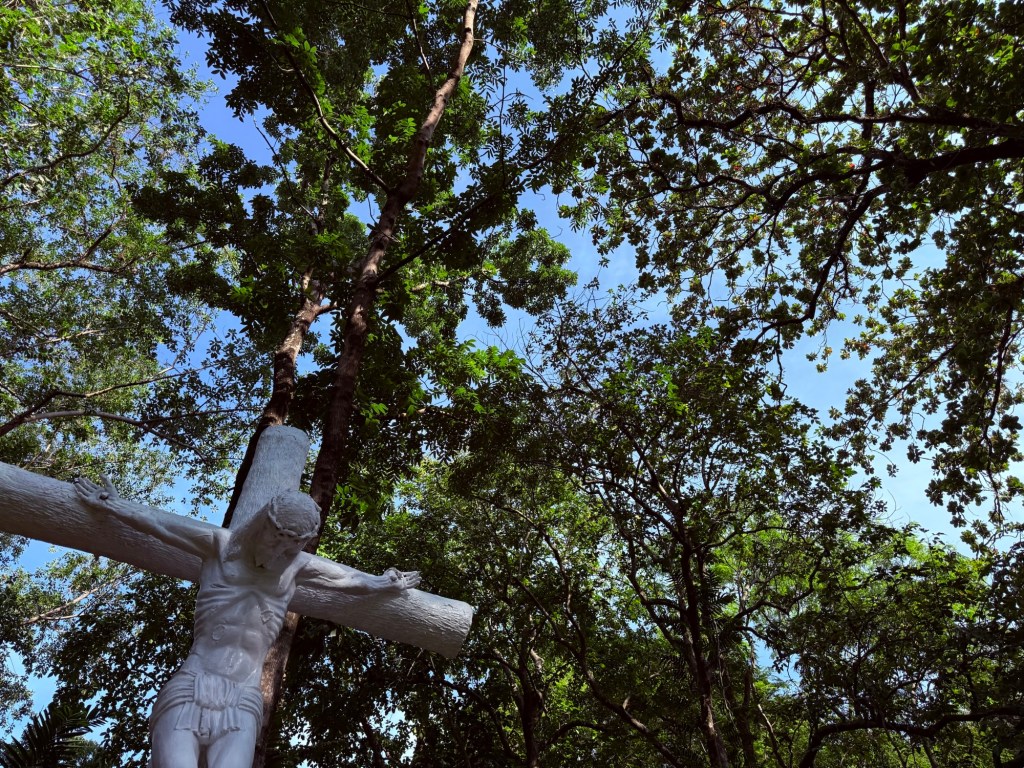
Photo by author, St. Paul Spiritual & Renewal Center, Bgy. Tanyawak, Alfonso, Cavite, 19 August 2026.
What kind of love is Paul exhorting the Romans then and us today? For St. Paul, love is the self-sacrificing love that Jesus showed us when he offered himself for us on the cross.
Recall last Sunday St. Paul reminded us “to offer your bodies as a living sacrifice” (Rom. 12:1) like Jesus. In that same chapter, he spoke of not retaliating or seeking vengeance while in the following chapter we now have, he expounded the themes of obedience to authority and a sort of social responsibilities like justice (Rom. 13:1-7).
And while justice demands we pay off our debts and other dues to one another, to the state and public officials, it is a totally different scenario when it comes to love. For St. Paul, love is the imitation of Jesus Christ, a love that can never be measured at all and even be demanded and decreed.
Love is not a possession that anyone can receive nor give in an exactly measured quantity like a pound or a kilogram of love. St. Mother Teresa said the measure of love is when you love without measure. It is either you love or do not love! And when we do not love, then we sin which is a refusal to love.
That sin can only be repaired and corrected by love.
Therefore, to overcome sin, you have to love more!
That is why we hear Jesus teaching us today the importance of fraternal correction based on love not anything else.
Jesus said to his disciples: “If your brother sins against you, go and tell him his fault between you and him alone. If he listens to you, you have won over your brother. If he does not listen, take one or two other along with you, so that every fact may be established on the testimony of two or three witnesses. If he refuses to listen to them, tell the church. If he refuses to listen to the church, then treat him as you would a Gentile or a tax collector” (Matthew 18:15-17).
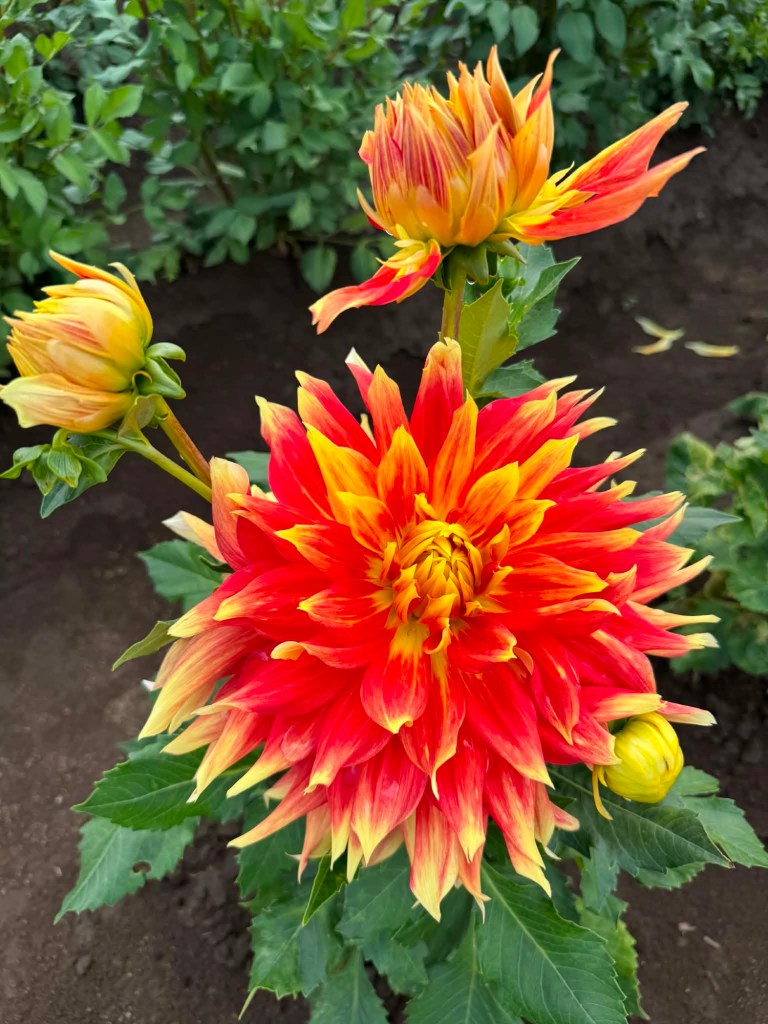
Photo by a friend in Swan Island Dahlia Farm, Canby, Oregon, 29 August 2026.
Jesus is now heading to Jerusalem to fulfill his mission. Along the way, he taught his disciples important lessons about the Church he had just established upon Peter, the Rock, while at Caesarea Philippi the other Sunday.
For three Sundays beginning today, Jesus will touch on three moral issues we face with seeming complexity in our modern time like fraternal correction, forgiving, and work. These are crucial because they are expressions of mutual love for one another. Most of all, it is in these realms we fall into “sin of omission” particularly with fraternal correction as we tend to detach ourselves from others when they are committing sin. By distancing from them or refusing to make a clear stand against evil, we unconsciously allow sin to persist.
The dark side of the sin of omission lies in that tendency within us to not care at all with those into serious sins when we separate and distance from them, even telling them “bahala ka na sa buhay mo…pinili mo iyan, pagdusahan mo.”
Fraternal correction is the antidote to sins of omission because it is about keeping our relationships intact as family, friends, brothers and sisters in Jesus Christ who becomes truly present in the world among us when we live in harmony because “where two or three are gathered together in my name, there am I in the midst of them” (Mt. 18:20).
This is the good news of Eala, whether she wins or loses a match, she speaks of love and kindness. And she has been consistent with it!
From Facebook, 04 September 2026.
Since the Old Testament, God had already insisted on this moral precept as his children that we look after one another like a sentinel – a watchman or a guard – as he told the Prophet Ezekiel in the first reading.
At that time, the enemies of Judah were closely approaching their borders that they designated watchmen as their first line of defense. Failure by these watchmen to warn the people – as it turned out later – could spell disaster for the kingdom.
The same thing is true with us. We are all interrelated with each other. One rotten tomato can spoil the whole batch like allowing corruption in every form to continue as well as electing corrupt officials into office. How sad we have not learned our lessons; maybe not until we have sank deep into flood…
We cannot be indifferent and be mere bystanders amid the evil and sins happening around us perpetrated especially by those closest to us. It is not enough either that we do no wrong on others yet allow those into corruption to continue with their evil doings. Fraternal correction is an expression of our love – for God and for others. We correct those into sin because of love, not because we are better or holier.
St. Paul beautifully declared in 2 Corinthians 5:14, “Caritas Christi urget nos” – the love of Christ urges, impels us – to love more especially in these times of calamities and disunity in the country.
Photo by a friend, Swan Island Dahlia Farm, Canby, Oregon, 29 August 2026.
This love of Jesus Christ the Lord himself described as “new commandment” at his last supper (Jn.13:34) is a love rooted in God himself, a love that “levels up” every disciple into the mystical plane of existence.
Recall those moments you have truly loved without strings attached, unselfish and selfless: that is when we realize that love is a debt we can never pay off because love is a gift from God, something that is never exhausted nor depleted. In fact, we realize that we too can love like Jesus Christ!
God does not “order” nor “command” us in the strict sense to love him. He asks for our love because he loves us, because he is love. When we love, we fulfill the commandments of God, we live in peace and harmony with one another like in heaven. That is why it is only love that will remain in heaven where there will be no more fraternal corrections. Most of all, love can never be paid off as a debt because love is all that shall remain to become our very person in Christ. Amen.Have a blessed, loving week!
Lord My Chef Daily Recipe for Soul by Fr. Nicanor F. Lalog II
Monday, Twenty-Second Week in Ordinary Time, Year II, 31 August 2026
1 Corinthians 2:1-5     <*((((><  +  ><))))*>    Luke 4:16-30
Photo by author, St. Paul Spiritual & Renewal Center, Bgy. Tanyawak, Alfonso, Cavite, 19 August 2026.
Teach me Lord
to "know nothing except
Jesus Christ crucified" like St. Paul,
not just "looked intently at you"
like your folks in Nazareth
when you preached in your synagogue;
it is not enough to just look
intently at you,
imitating you and your manners
and style but not your life,
your self-sacrifice on the Cross;
what a shame in this age of social media
we speak and preach about you
merely to chase clout for ourselves
using sublimity of words
or persuasive words of wisdom
used by demagogues and
influencers for followers
and shameful profits.
Help us realize,
Jesus, that our faith
rests on the power of God
best shown in your Crucifixion,
not in our personality
nor eloquence in speech
nor being savvy with new
technologies that blind us from
the realities of life
like love and sacrifice,
kindness and patience,
justice and truth.
Amen.
Photo by author, St. Michael Retreat House, Antipolo City, 16 June 2026.
Quiet Storm by Fr. Nicanor F. Lalog II, 20 August 2026
Photo by author, Anvaya Resort, Bataan, 21 July 2026.
Let me come home to you, Lord God:
to gaze in your loving eyes anew,
be wrapped around with your tight embrace
without being judged nor blamed.
Let me come home to you, Lord God:
with nothing at all,
to be poor of material wealth and
rich in Spirit and virtues,
empty of pride,
filled with your humility and
simplicity
so scarce of everything
abundant in you and your love.
Let me come home to you, Lord God:
no longer afraid of the dark and
everything not yet known and seen,
nor terrified of great waves of tasks
and duties,
of strong winds like what people think
and say about me because in you alone
is my certainty as well as safety and security.
Photo by author, Pundaquit, San Antonio, Zambales, 15 May 2025.
Let me come home to you, Lord God:
to be nourished by your words
that give life and meaning,
to be quenched of my thirst with your
living water that restores my being,
cleanses me of my sins and shame.
Let me come home to you, Lord God:
to rest in you,
be at home in you
because you are my origin,
my root
my home
my peace
my destination in this long journey
in life for you are
my Lord
and my God.
Amen.
Photo by author, San Juan, La Union, 09 January 2026.
Of all the months in the year, August has the most beautiful name of all but sadly most maligned as a “ghost month”: from the Latin augustus that signifies reverence or to hold someone in high regard, august as an adjective means “respected and impressive” like when we say “in this august hall of men and women” of science or faith.
Yes, it was also taken from the name of the Roman emperor Augustus Caesar but like the rest of the months and days of each year, it is always a blessed one.
No day nor date nor time is malas because these each day is a gift from God who is all good. Nothing bad can come from God.
Moreover, when God became human like us in the coming of Jesus Christ, life has become holy, filled with God, debunking those ancient beliefs of the Divine being seen in various cosmic forces. Pope Benedict explained this so well in his second encyclical:
Photo by a friend in Washington, 28 July 2026.
In this regard a text by Saint Gregory Nazianzen is enlightening. He says that at the very moment when the Magi, guided by the star, adored Christ the new king, astrology came to an end, because the stars were now moving in the orbit determined by Christ[2]. This scene, in fact, overturns the world-view of that time, which in a different way has become fashionable once again today. It is not the elemental spirits of the universe, the laws of matter, which ultimately govern the world and mankind, but a personal God governs the stars, that is, the universe; it is not the laws of matter and of evolution that have the final say, but reason, will, love—a Person. And if we know this Person and he knows us, then truly the inexorable power of material elements no longer has the last word; we are not slaves of the universe and of its laws, we are free. In ancient times, honest enquiring minds were aware of this. Heaven is not empty. Life is not a simple product of laws and the randomness of matter, but within everything and at the same time above everything, there is a personal will, there is a Spirit who in Jesus has revealed himself as Love[3]. (#5, Spe Salvi by Pope Benedict XVI, 30 November 2007)
That’s quite a volume but so lucid, so true, so beautiful. Especially this part: “It is not the elemental spirits of the universe, the laws of matter, which ultimately govern the world and mankind, but a personal God governs the stars, that is, the universe; it is not the laws of matter and of evolution that have the final say, but reason, will, love—a Person.”
This is the whole meaning of the recent Sunday gospel of Jesus walking on water: God in total control of this world.
“Christ Walking On Water” painting by Julius Servus von Klever (1880) from commons.wikipedia.org.
It is this Person of Jesus Christ why so many great men and women then and now have abandoned their previous ways of life to lead holy lives even in the face of death.
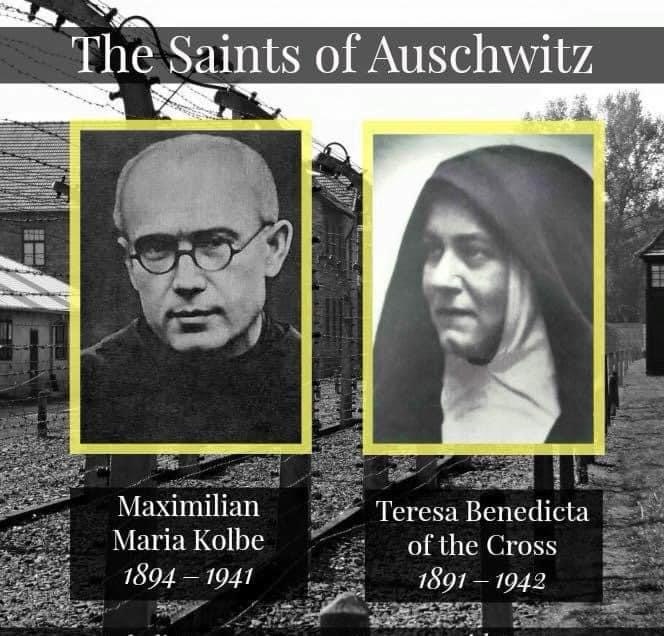
Very interesting in this modern time are two great saints we celebrate on this month of August, St. Teresa Benedicta of the Cross (August 09) and St. Maximilian Kolbe (August 14) who died at the gas chambers of Auschwitz during the Second World War.
St. Teresa Benedicta is the German philosopher Edith Stein. She came from a prosperous Jewish family gifted with a great mind becoming one of the first female university student and later professor in Germany.
An associate of the famed Edmund Husserl of the philosophical method of phenomenology, St. Teresa Benedicta became an atheist during her teenage years; but, upon further studies and prayer, converted into Catholicism, becoming a Carmelite nun where she adopted her new name. She wrote that “Those who seek truth seek God, whether they realize it or not“.
She actually had all the chances to leave for South America and then to Switzerland to escape the Nazis but opted to stay in their monastery in the Netherlands with her younger sister Rosa who had also converted as Catholic and joined the Third Order Carmelite. When they were arrested on August 2, 1942, she told her, “Come, Rosa… we go for our people.”
Photo from FB page of Scott Hahn, 09 August 2024.
St. Teresa Benedicta honored her Jewish roots by dying among them as a martyr of Christ, one who had “learned to live in God’s hands” according to Sr. Josephine Koeppel, OCD, a translator of much of her works.
According to various accounts, St. Teresa Benedicta showed great inner strength by encouraging her fellow prisoners to have faith in God while helping in looking after the small children when their mothers were so distressed to do so. One woman who survived the war wrote: “Every time I think of her sitting in the barracks, the same picture comes to mind: a Pieta without the Christ.”
Dying ahead of her in Auschwitz on August 14, 1941 was St. Maximilian Kolbe, a Franciscan priest who was arrested for his writings against the evil Nazis. It was actually his second time to be arrested.
When a prisoner had escaped from the camp, authorities rounded up ten men to die in exchange of the lone escapee. Fr. Kolbe volunteered to take the place of a married man with children. They were all tortured and starved in order to die slowly in pain.
A devotee of the Blessed Virgin Mary, St. Maximilian was injected with carbolic acid on the eve of the Assumption after guards found him along with three other prisoners still alive, without any signs of fear like screaming but silently praying.
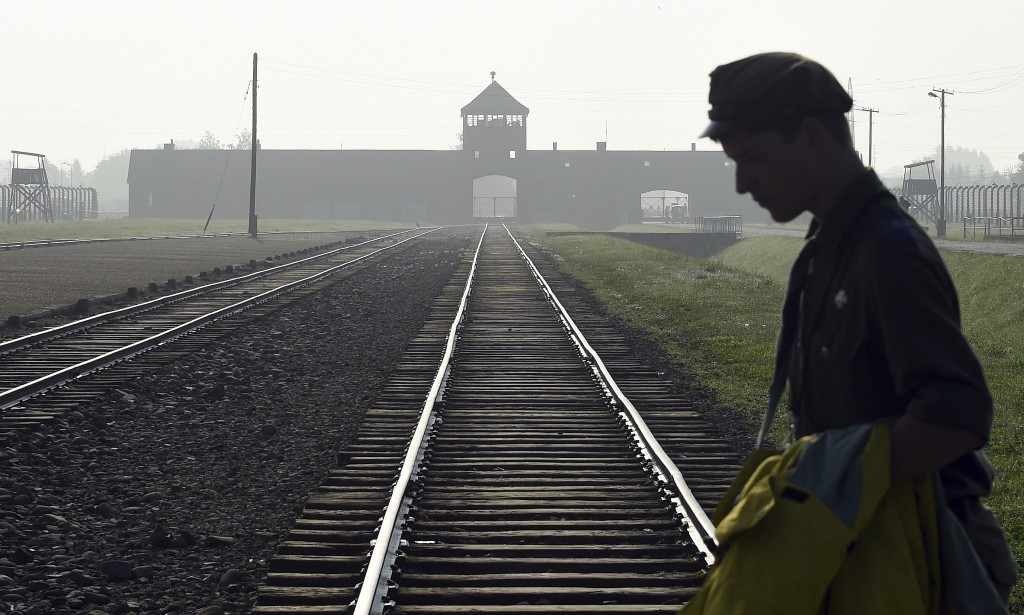
Photo of Auschwitz from Google.
We no longer have gas chambers but atrocities against human life continue in our time, hiding in the pretext of science and laws with some like the wokes exaggerating the truth they believe or follow in the name of inclusivity and various rights.
And yet, there are men and women, young and old alike including those not yet born in their mother’s womb are hunted and killed both for profits and for convenience to correct what many perceived as excesses and wrongs in the society like the grim drug war of the past administration.
Or those corrupt government officials and despicable politicians, from the highest offices down to the barangay behind the flood control scam that are all ghost projects that have submerged vast areas and communities into floods.
The Nazi officers and soldiers of Auschwitz of the past and those involved in the flood control scam as well as the tokhang drug war remind us the true “ghosts” and evil spirits of our time sowing hatred and deaths are people who may be well-dressed, even educated in the best schools, and come from devout or “normal” families. They sow evil every day without choosing any particular month, blindly following orders without much thinking and reflections or introspection. These people entrusted with positions and power are mostly the ones who bring ghosts into our lives causing so much miseries among our people especially the poor ones. Many times, they insist on following or speaking the truth – a truth so empty of the person of Jesus Christ who is “the way and the truth and the life” (Jn.14:6).
Photo by author, 21 July 2026.
I have always believed that the opposite of love is not hatred but hopelessness – without hope, people will just destroy everything for the sake of wealth and power.
Saints have shown us that with much love in our hearts in Jesus Christ, we are also filled with his hopes for better, holier days and months.
By the lives of the many great saints of August, or of any other month for that matter, we are reminded that holiness is not being sinless but being filled with God, being converted daily to the truth of Jesus Christ by allowing that holiness to spill over and flow onto others with our lives of authenticity expressed in charity and mercy, kindness and justice, humility and openness with one another. As St. Paul had written, “Do not conform yourself to this age but be transformed by the renewal of your mind, that you may discern what is the will of God, what is good and pleasing and perfect” (Rom.12:2).
And so, discard those thoughts of a ghost month and let us keep every month an august time and space for our good deeds to make Christ’s loving presence felt among us. A blessed week to everyone!
Lord My Chef Daily Recipe for Soul by Fr. Nicanor F. Lalog II
Friday in the Seventeenth Week of Ordinary Time, Year II, 31 July 2026
Memorial of St. Ignatius of Loyola, Priest
Photo by author, Sacred Heart Novitiate, Novaliches, Quezon City, 20 March 2024.
Glory and praise
to you, O God our loving
Father for the gift of
St. Ignatius of Loyola
who taught us that
"Man is created
to praise, reverence,
and serve God our Lord,
and by this means
to save his soul"
(First Principle and Foundation,
Spiritual Exercises #23).
Photo by author, Sacred Heart Novitiate, Novaliches, Quezon City, 20 March 2024.
How sad,
dear God,
that the most painful
truth is that you are most
often rejected by us
who assume to know you most,
too familiar with you and
your ways like what
our two readings reveal today:
Jeremiah was rejected
by your people
led by their priests
after speaking your words
to them to change their evil
ways lest their Temple lie in ruins
like in Shiloh along with
other disasters God was planning
to punish them (Jeremiah 26:4, 7-9);
in the gospel,
Jesus went home to Nazareth
but "the people took offense
at him" for his mighty
words and deeds
(Matthew 13:57-58).
Photo by author, Sacred Heart Novitiate, Novaliches, Quezon City, 20 March 2024.
Two scenarios,
same message
of rejecting you,
O God because we
believe more in our selves,
in our ideas and understanding
of who you are than believing
your very person in
Jesus Christ;
teach us, O Lord,
to be empty always
so that you may fill us
with your love
like St. Ignatius
who taught us to
pray and contemplate
to attain your love:
"Take, Lord,
and accept
all my liberty,
my memory,
my understanding,
and my entire will,
all that I have and possess.
Thou hast given all to me.
To Thee, O Lord, I return it.
All is Thine,
dispose of it wholly
according to Thy will.
Give me Thy love
and Thy grace,
for this is sufficient
for me"
(#234, Spiritual Exercises).

All for your greater glory,
O Lord.
Amen.
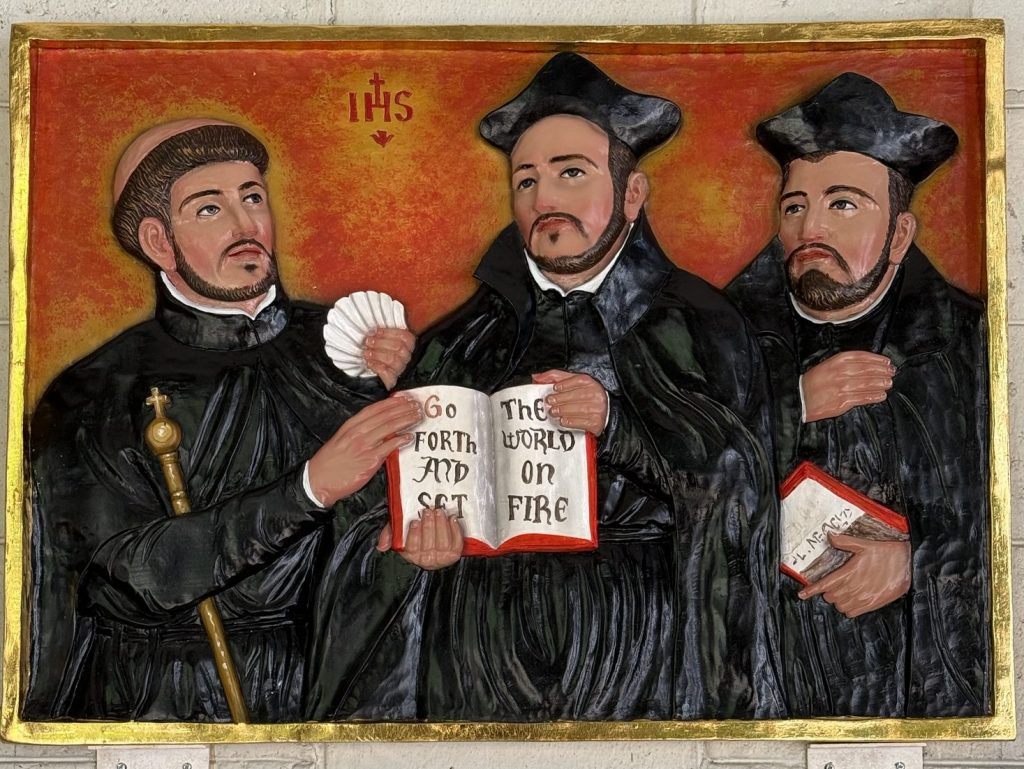
Photo by author, the three core group of the Society of Jesus founded by St. Ignatius of Loyola at the middle, St. Francis Xavier at his right, and St. Peter Faber at his left; frame at the facade of Sacred Heart Novitiate, Novaliches, Quezon City, 20 March 2024.
Lord My Chef Sunday Music by Fr. Nicanor F. Lalog II, 19 July 2026
Photo by author, San Juan, La Union, 09 January 2026.
Our readings this Sunday are so lovely and refreshing, yet so true and realistic with what’s happening around us. Jesus Christ’s parable of weeds among the wheat proves what we have already known as we aged – “we live in an imperfect world, that there will always be diseases and sickness, failures and death along with scammers and criminals, liars and idiots, suckers and ungrateful and traitors among us” (https://lordmychef.com/2026/07/18/our-inexpressible-groanings/).
And yes, we all want to change the world but God cautions us because many times, the solution we find to life’s and world’s many problems create bigger problems:
But though you are master of might, you judge with clemency, and with much lenience you govern us; for power, whenever you will, attends you. And you taught your people, by these deeds, that those who are just must be kind; and you gave your children good ground for hope that you would permit repentance for their sins (Wisdom 12:18-19).
It is a very tall order, most difficult of all, calling us to become holy and patient like God because any change in the world has to start in our selves. That is why we remember this Sunday Eric Clapton’s version of that 1996 collaboration by Tommy Sims, Gordon Kennedy and Wayne Kirkpatrick “Change the World.”
According to Kennedy, they wrote the lyrics and music to “Change the World” over a span of one year. It was first recorded by country singer Wynonna Judd in February 1996 then by Clapton in October of the same year with the famous R&B artist Kenneth “Babyface” Edmonds as producer when the song was chosen as soundtrack music to the movie Phenomenon starring John Travolta. Aside from winning accolades from critics and awards including the 1997 Grammy for Song of the Year, Record of the Year, and Best Male Pop Vocal Performance, “Change the World” is also one of Clapton’s best-selling hit in his entire career.
It is the music and melody of “Change the World” that is most captivating of all – soulful and reverberates deep inside any lover so in love with a woman to which Clapton has always been so famous (or notorious) like his 1971 hit “Layla” but on a different level and genre. “Change the World” is closer to Clapton’s “Tears in Heaven” which he composed after the death of his four year-old son in 1991. Both songs represent for us a new character and dimension in Clapton unfolding as one of music’s foremost forces up to this time.
Clapton’s distinctive guitar-playing virtuoso in “Change the World” echoes so St. Paul’s words in this Sunday’s second reading of how the Holy Spirit within us “intercedes with inexpressible groanings” (Rom. 8:26); according to St. Paul, we do not know how to pray which is so true that is why it is the Spirit who helps us pray to God. It means that God knows so well what’s going on inside us, when we are so loss for words not only in expressing our feelings and desires but most often, we could not even understand why things are going on – like the trials and difficulties we go through, the injustices that happen.
Many times we are tempted to ask where is God amid all these sufferings we go through in life as individuals and as a nation; but, we know deep in our hearts, God is with us, within us and knows so well everything that is happening. And he is in complete control.
That is why we sigh or groan when we could not contain what’s inside us, just like Clapton’s somber yet so relaxingly confident guitar bass lines in “Change the World” he had divinely woven with the lyrics that express wishful longings of him getting better, being the best person for his beloved.
If I could reach the stars
Pull one down for you
Shine it on my heart
So you could see the truth

That this love I have inside
Is everything it seems
But for now I find
It's only in my dreams

And I can change the world
I will be the sunlight in your universe
You would think my love was really something good
Baby, if I could change the world

If I could be king
Even for a day
I'd take you as my queen
I'd have it no other way

And our love would rule
In this kingdom we have made
'Til then I'd be a fool
Wishing for the day

And I can change the world
I would be the sunlight in your universe
You would think my love was really something good
Baby, if I could change the world
Baby, if I could change the world

I could change the world
I would be the sunlight in your universe
You would think my love was really something good
Baby, if I could change the world
Baby, if I could change the world
Baby, if I could change the world
Even the music video evokes the parable of weeds among the wheat, of how Clapton remains undisturbed by the crowd in the terminal while singing, reminding us that changing the world begins in our being changed first into our best person as more loving, more kind, more patient. Have a blessed week ahead!
Lord My Chef Daily Recipe for Soul by Fr. Nicanor F. Lalog II
Monday in the Fifteenth Week of Ordinary Time, Year II, 13 July 2026
Isaiah 1:10-17     ><))))*> + ><))))*> + ><))))*>     Matthew 10:34-11:1
Photo by Ms. Gretchen B. Ira in Washington DC, July 2018.
God our loving Father,
as we head on to our work
or for some to school for their
classes this Monday,
enlighten us on what particular
good we have to learn doing
beginning today.
Wash yourselves clean! Put away your misdeeds from before my eyes; cease doing evil; learn to do good. Make justice your aim, redress the wronged, hear the orphan’s plea, defend the widow (Isaiah 1:16-17).
Forgive us,
in our causing you
our Father with so many
heartbreaks as we live in sinful ways,
forgetting totally how your love
for us looked like;
we have retreated to mere
habits,
routine,
and appearances
in fulfilling our prayers
and worship along with our
many rites and rituals
that are empty of any love
at all for you
and for others.
Guide me,
dearest Father
in your Son Jesus Christ
on how I must relate with
the modern world
so alienated
from you with
so many practices
and actions
disguising as just
and fair
but actually selfish
and self-serving
that leave us
empty
and bothered,
lacking in peace.
Amen.
Lord My Chef Sunday Music by Fr. Nicanor F. Lalog II, 05 July 2026
Fourteenth Sunday in Ordinary Time, Cycle A
Photo by Ms. Marivic Tribiana on Facebook, 17 April 2020 following fire in Tondo,Manila.
Our gospel this Sunday is short but one of the most loved words by our Lord Jesus Christ often quoted even in some popular songs and music: “Come to me, all you who labor and are burdened, and I will give you rest. Take my yoke upon you and learn from me, for I am meek and humble of heart; and you will find rest for your selves. For my yoke is easy, and my burden is light” (Matthew 11:28-30).
Everyday Jesus calls us to come to him, to learn from him, to experience lightness in life not heaviness of compulsion and duty as most people would think of his demands. However, it is not a kind of R&R we all aspire every weekend at the beach or a mountain resort. Christ calls us today to come to him and learn from him on how to have a steady, realistic, day-to-day approach to life lived in his company, lived in love for one another as brother and sister (https://lordmychef.com/2026/07/04/learning-from-jesus-2/).
And that is why we remembered and chose this beautiful song from 1969 by The Hollies, “He Ain’t Heavy, He’s My Brother.”
...The road is long
With many a winding turn
That leads us to who knows where, who knows where
But I'm strong
Strong enough to carry him
He ain't heavy, he's my brother

… So on we go
His welfare is of my concern
No burden is he to bear
We'll get there

… For I know
He would not encumber me
He ain't heavy, he's my brother
Most captivating with this song is its opening music of a harmonica that stirs ones soul superbly balanced with a bass guitar that perfectly filled the rhythm and melody until Allan Clarke burst with the opening lines that give you a picture right away of the song meaning – love for one another as brothers and sisters.
Composed by Bobby Scott and Bob Russell who was then dying of lymphoma cancer, the song was recorder earlier by another American artist; The Hollies’ guitarist Tony Hicks heard it while searching for songs to record for their group. Hicks found the demo tape of Scott and Russell too slow, asked permission to make it a little upbeat by adding an orchestra with the young Elton John playing the piano. It became an instant hit both in Britain and the US, spawning other versions until now.
More than its beautiful music and lyrics, the ballad is so appealing because of its message of love. It is interesting to know that the phrase “he ain’t heavy, he is my brother” is the motto of the Boys Town children’s home founded in 1917 by Fr. Edward Flanagan in Omaha, Nebraska. The following year, Fr. Flanagan saw a boy carrying up a set of stairs another resident stricken with polio, wearing braces; Fr. Flanagan asked the boy if it was heavy and was told, “he ain’t heavy, Father; he is my brother.” The phrase got stuck and became the motto of Boys Town that inspired this beautiful song. (Pope Leo XIV recently declared Fr. Flanagan “Venerable” as his cause for beatification moves closer to realization.)
In today’s gospel, this is precisely the yoke Jesus is telling us that is his, light and easy: love. Everything becomes light when seen and done in love, with love. Without love, everything becomes heavy due to sadness; hence, the need for more love as the last three stanzas tell us with the long road ahead filled with more pains and sufferings.
… If I'm laden at all
I'm laden with sadness
That everyone's heart
Isn't filled with the gladness
Of love for one another
… It's a long, long road
From which there is no return
While we're on the way to there
Why not share?

… And the load
Doesn't weigh me down at all
He ain't heavy, he's my brother

… He's my brother
He ain't heavy, he's my brother
He ain't heavy, he's my brother
Amen. May you have a lighter week in Christ this week with this music.