Our inexpressible groanings

Lord My Chef SundayRecipe for Soul by Fr. Nicanor F. Lalog II
Sixteenth Sunday in Ordinary Time, Cycle A, 19 July 2026
Wisdom 12:13, 16-19 ><))))*> Romans 8:26-27 ><))))*> Matthew 13:24-43
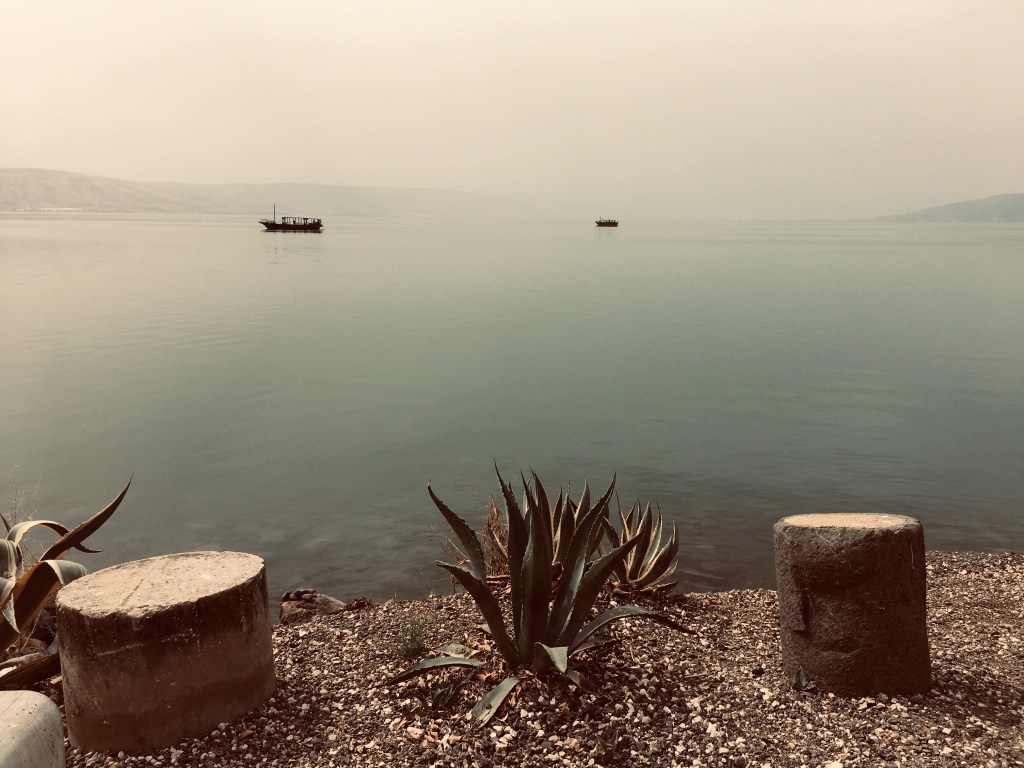
Photo by author, Lake of Galilee, the Holy Land, May 2017.

Before reflecting on the second set of parables by Jesus this Sunday, let us take a brief stop at the very short second reading from St. Paul’s Letter to the Romans; it is so lovely and we cannot resist reflecting on the word “groaning” by the great Apostle.

Last Sunday, St. Paul said “We know all creation is groaning in labor pains even until now… we also groan within ourselves as we await for adoption, the redemption of our bodies” (Rom. 8:22,23). And then this Sunday, he spoke again of “groaning”:

Brothers and sister: The Spirit comes to the aid of our weakness; for we do not know how to pray as we ought, but the Spirit himself intercedes with inexpressible groanings. And the one who searches hearts knows what is the intention of the Spirit, because he intercedes for the holy ones according to God’s will (Romans 8:26-27).

To groan or to sigh according to Mr. Webster is a deep, prolonged sound made involuntarily in response to pain, grief or frustration. We have a very picturesque translation of those words in Filipino which is magbuntung-hininga that many of our old folks frowned upon because it is a sign of surrendering, of giving up.
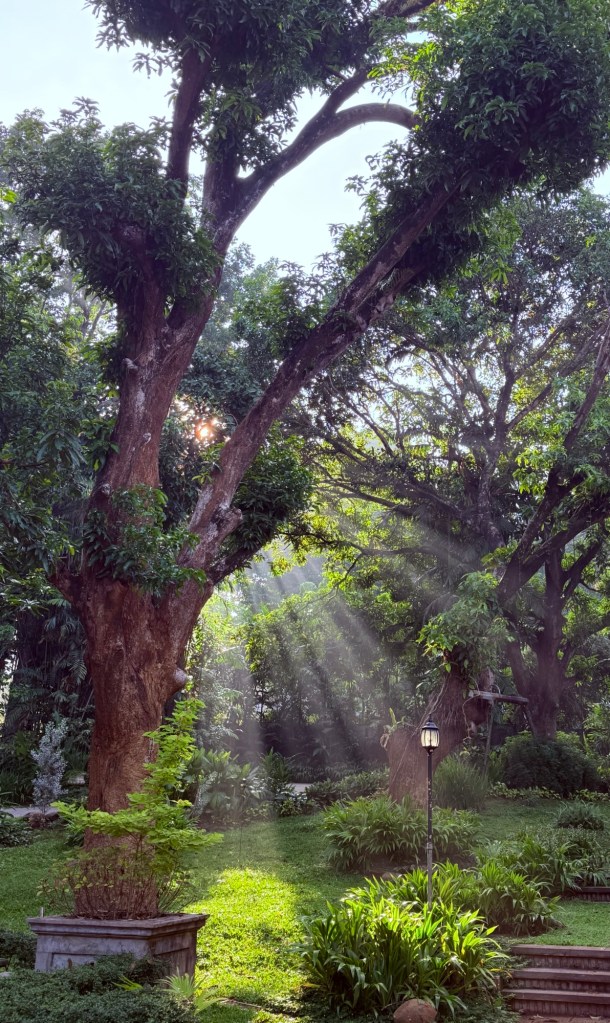
Photo by author, St. Michael Retreat House, Antipolo City, 16 June 2026.

Is it bad? Not at all. Even Jesus sighed at the disbelief among the Jews with him (Mk.8:12). To groan, to sigh is to be fully human and even Christian if we go by the line of thought of St. Paul last week and this Sunday.

Groaning for him is the most profound spiritual response to brokenness. That is why I love our Filipino word magbuntung-hininga that evokes an image of digging deep inside – halukayin – for breath to breathe and forge on in life. It is like gulping a handful of air to breathe before taking a plunge or meeting head on a difficult situation in life. It is actually a kind of spirituality, an expression of holiness of surrendering everything to God, of letting go and letting God.

St. Paul spoke of three kinds of groaning: the first two we heard last Sunday, creation groaning and believers groaning as we have cited earlier. Creation groaning means the world is subject to decay while Christians groan inwardly, bearing all pains and hardships in clear hopes of redemption in Christ.

This Sunday, St. Paul spoke anew of “inexpressible groaning”, of sighing because it is too deep for words that the Holy Spirit within us is doing all the expressions of our deepest feelings. It is the one fact of life we often forget when in deep trials and tribulations: that the Holy Spirit is already within us in all our weaknesses. Actually, we do not have to come before God with perfect words, clear thoughts or settled hearts when praying because he knows everything we are going through. Simply be still for God is with us.

And this my friends is the very meaning of Jesus Christ’s second set of parables this Sunday, the weeds among the wheat.

Jesus proposed another parable to the crowds, saying: “The kingdom of heaven may be likened to a man who sowed good seed in his field. While everyone was asleep his enemy came and sowed weeds all through the wheat, and then went off. When the crop grew and bore fruit, the weeds appeared as well… His slaves said to him, ‘Do you want us to go and pull them up?’ He replied, “No, if you pull up the weeds you might uproot the wheat along with them. Let them grow together until harvest; then at harvest time I will say to the harvesters, “First collect the weeds and tie them in bundles for burning; but gather the wheat into my barn” (Matthew 13:24-26, 28-30).
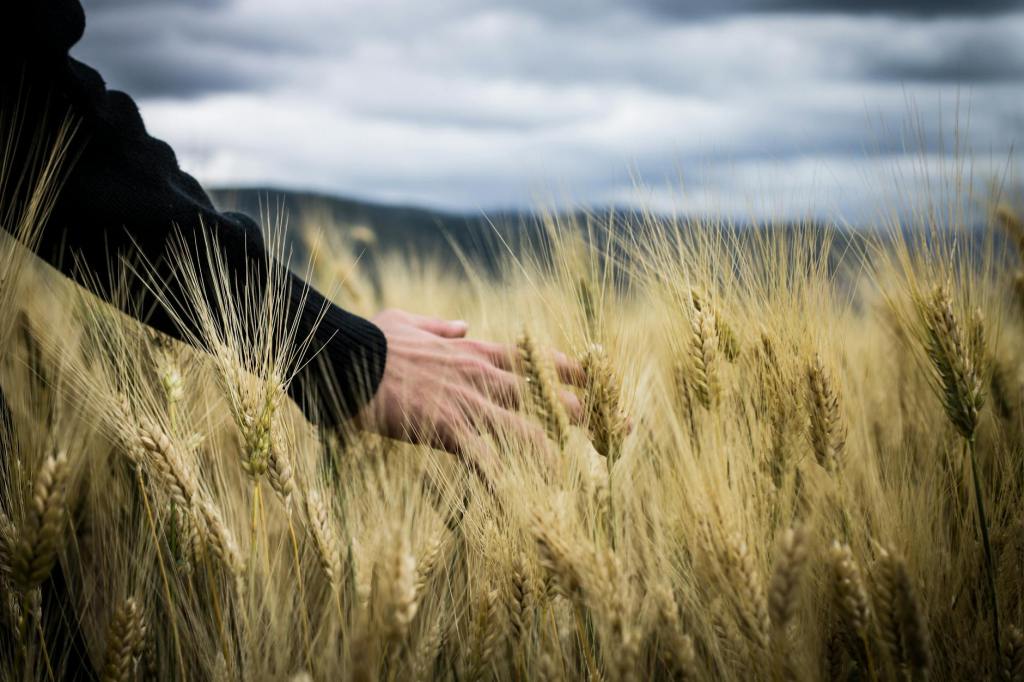
Photo by Giuseppe Russo on Pexels.com

We live in an imperfect world, of weeds growing among the wheat. There will always be diseases and sickness, failures and death along with scammers and criminals, liars and idiots, suckers and ungrateful and traitors among us. Add to these all the other woes we have in life like that ongoing war in the Middle East that have kicked up gas prices so high like drones and missiles. Hayyyy…!

And we ask, where is God?

How could God allow all these things to happen like when a poor, hardworking motorcycle taxi rider in Caloocan City trying to make ends meet died after being stabbed with an ice pick then robbed by his passenger still at large?

We wonder as a nation how long do we have to bear all the stupidities and idiosyncrasies of those corrupt, evil people in government even in the church when the majority of us have to suffer at the consequences of their excesses and abuses?

The author of the Book of Wisdom reflected on these realities thousands of years ago and had asked the same questions we ask today. He invites us to prayerfully reflect God’s goodness and kindness:

But though you are master of might, you judge with clemency, and with much lenience you govern us; for power, whenever you will, attends you. And you taught your people, by these deeds, that those who are just must be kind; and you gave your children good ground for hope that you would permit repentance for their sins (Wisdom 12:18-19).
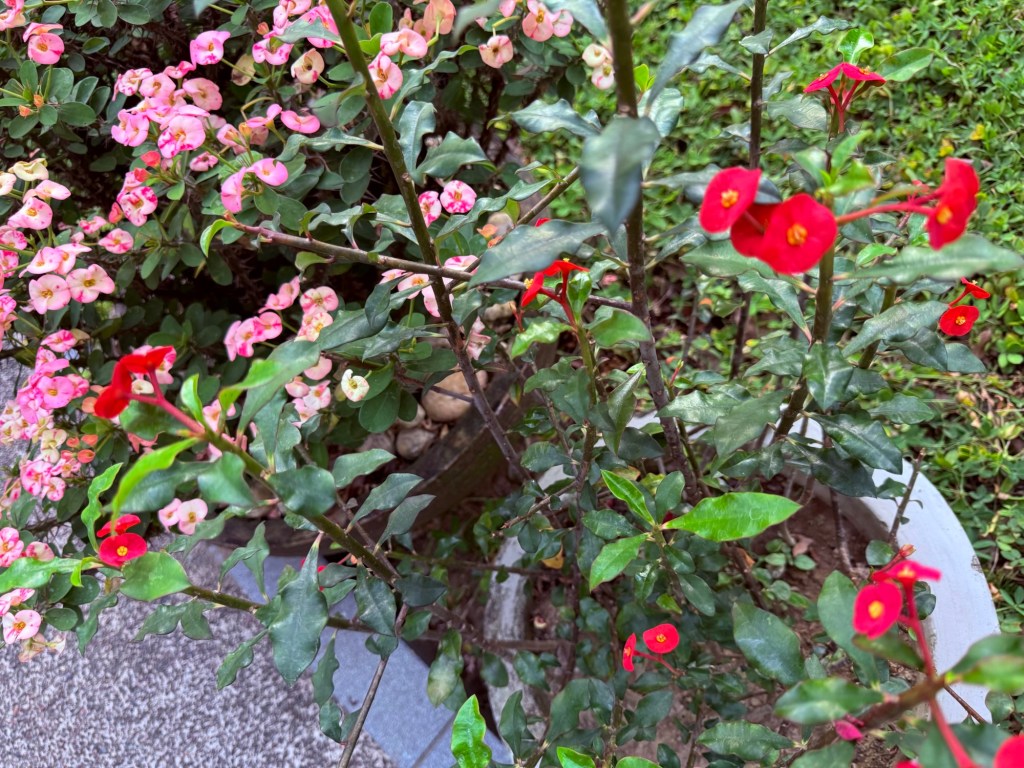
Photo by author, Carmel of the Holy Family Monastery, Guiguinto, Bulacan, 21 January 2026.

Despite the weeds – the evil men and women who seem to always prevail – the author of Wisdom in his reflections reminds us to be like God, “the just must be kind.”

It is a very tall order, even difficult but we have to give it a chance because we have seen and proven that many times our human response to the evils and injustices happening end up becoming more brutal like the wars happening right now. Many times, human solutions actually create bigger problems.

That is why all three readings this Sunday tell us to be patient, to dive deeper in prayer where the Holy Spirit enlightens us clearly.

Photo from inquirer.net, Pandacan Church fire, 11 July 2020.

We have seen and experienced in recent years that indeed, “where sin increased, grace abounded all the more” (Rom. 5:20) like with those two good men in the NBI testifying at the impeachment of the Vice-President or of that most decent lawyer from Cebu, Atty. Amando Virgil Ligutan smashing all the lies and grandstanding of her lawyers. Every day we experience grace after grace of deliverance from all dangers through people including strangers who have helped us kindly.

That is why we have to go back to this Sunday’s second reading where St. Paul reminds us that even when we cannot say what is happening within us, the Holy Spirit is praying in us and for us. There are more things happening in us that we have to be thankful with than be sorry or complain about.

Let go of all those negative feelings and thoughts; life is already difficult, don’t make it harder. Instead, may we come to Jesus and learn from him to be patient like God who “gave us good ground for hope that you would permit repentance for their sins” (Wis.12:19).

Let us cultivate our hearts – the field where the seeds are sown that despite the weeds they shall still bear fruit with good works and peace for everyone.

Our classes in the University have begun recently; every time I celebrate Mass with our students, I always remind them these things which I hope may help you too: study hard, work harder, pray hardest. May you have a Holy Spirit-filled week ahead. Amen.

Our interconnectedness in God’s abundance: the parable of life

Lord My Chef Sunday Recipe for Soul by Fr. Nicanor F. Lalog II
Fifteenth Sunday in Ordinary Time, Cycle A, 12 July 2026
Isaiah 55:10-11 ><}}}}*> Romans 8:18-23 ><}}}}*> Matthew 13:1-23
Photo by author, Lake of Galilee, the Holy Land, May 2019.

Matthew’s opening lines in today’s gospel present us a beautiful image of God’s abundance we often take for granted just like the parables of Jesus that remind us of our interconnectedness as brothers and sisters.

On that day, Jesus went out of the house and sat down by the sea. Such large crowds gathered around him that he got into a boat and sat down, and the whole crowd stood along the shore. And he spoke to them at length in parable, saying: “A sower went out to sow” (Matthew 13:1-3).

For the next three Sundays beginning today, all our gospel readings are taken from this 13th chapter of Matthew known as the “Discourse in Parables” that forms one whole unit of the Lord’s teachings in parables.

From the French word parabolein or “along the way”, a parable is a simple story often taken from ordinary things and events in life that offers valuable lessons about life; but, because it is a story taken from ordinary things and events, a parable is often taken for granted.

Many times we only realize later that the most profound realities in life are those found in most ordinary like God who comes to us daily in simplest ordinary things and people and events we take for granted or even refuse to recognize.

Our Filipino word for parable which is talinghaga captures this very well. From the phrase natataling hiwaga that means “tied mystery”: tali is a rope or a tie that binds things together like mystery or hiwaga. Hence, we have talinghaga for parable that indicate how a mystery is tied with the ordinary and simple things and persons and events.

That is the purpose of Jesus in teaching us in parables: that we may learn to find the hidden truths and mysteries of life in the most ordinary things. His teaching in parables is a continuation as well as a deepening of his call to us last Sunday to “come to him and learn from him” so that we may find rest and fulfillment in him.

Photo by author, Lake of Galilee, the Holy Land, May 2019.

What I find amazing in our gospel scene this Sunday is how Jesus was by the shore of the Lake of Galilee yet, his parable is about the sower.

Why not narrate something about the life of fishermen or fish vendors?

Photo by author, Lake of Galilee, the Holy Land, May 2017.

Again, let us situate ourselves in Matthew’s opening line, “On that day, Jesus went out of the house and sat down by the sea.”

Imagine the scene, it was early morning, the sun had just risen, and people were starting to go about their usual lives when they heard Jesus teaching while seated on a boat perhaps owned by Peter. More than the parable of the sower itself, Matthew is showing us in this scene the very parable of our life that the whole world is God’s.

Every pilgrim to the Holy Land can attest to this unique beauty of the Lake of Galilee that is so lovely, so peaceful and yes, divine. It tells us of God’s superabundance in all of his creation, interconnecting us as brothers and sisters in him our Father.

This is the same parable and truth of life that God had spoken through the Prophet Isaiah in the first reading:

Thus says the Lord: Just as from the heavens the rain and snow come own and do not return there until they have watered the earth, making it fertile and fruitful, giving seed to the one who sows and bread to the one who eats, so shall my word be that goes forth from my mouth; my word shall not return to me void, but shall do my will, achieving the end for which I sent it (Isaiah 55:10-11).

Nothing happens by accident in life; God knows everything. And the good news is, he gives everything that is good like the sower. Not just the seeds but the bread we eat, the water we drink, even the very breath we breathe.

Moreover, there is the connectedness of everything in God’s superabundance like that of the rain and snow making the earth fertile and fruitful, giving seed to the sower so that there would be bread for everyone, even clothes to wear.

Painting by Van Gogh, “The Sower on Sunset” from wikipedia.org.

God is the Sower always coming to us, tending us, sowing us with seeds that are absolutely good. It does not really matter what kind of soil receives the seed that even the pathway becomes a conduit in feeding the birds of the air!

The seed is definitely good because God is good. In all instances where the seed had fallen, we find God the Sower himself moving in each step of our life. Observe how in this image of the sower moving from his home to his field, it shows us also the journey of the word and the purpose of God in our life. There is no problem with the seed that is so fecund and definitely efficacious as God had told Isaiah that “my word shall not return to me void, but shall do my will, achieving the end for which I sent it.”

Photo by Nikola on Pexels.com

If ever the word is not fruitful, it is due to our poor disposition as listeners or recipients. That is why St. Paul reminds us in the second reading of how we must responsibly be true to our call and role as disciples of Christ. It is a process we have to be patient but must be consistent. What we are working for is not just for this time or for one’s self or society or country: we have to see the whole reality of life from here to eternity in Christ’s work of salvation is for all. We are all interconnected so that whatever good we do will always bear fruit, “some a hundred or sixty or thirtyfold.”

Photo by author, St. Michael Retreat House, Antipolo City, 16 June 2026.

This Sunday, in this beautiful scene by the Lake of Galilee, or right there on your comfortable seat or wherever you are, Jesus is asking, “where do I see myself in this wide picture and chain of events?” What have I done with the “word”, the “seed” Jesus had sown in me?

In this age of relativism worsened by social media that have blurred reality with algorithms manipulating the way we see and understand truth and reality, the more we have become empty and alienated from one’s self and one another despite the abundance of material things.

How sad that despite the worldwide connections we now have, the more we have been detached from each other, even from one’s self and ultimately from God so that indeed, many of us “look but do not see and hear but do not listen or understand” (v.13) because we have taken life in the ordinary things for granted. We live in Facebook or social media where everything has to be spectacular, even “imeldific” or at least, enhanced if not AI-generated. This Sunday, let’s get real. Enough with fakes and AI’s. Amen. Have a blessed, fruitful week ahead everyone!

Human gestures made divine

Lord My Chef Daily Recipe for the Soul by Fr. Nicanor F. Lalog II
Monday in the Fourteenth Week of Ordinary Time, Year II, 06 July 2026
Hosea 2:16,17-18, 21-22 <*((((>< + ><))))*> Matthew 9:18-26
Photo by Mr. Vigie Ongleo somewhere in Colorado, 03 June 2026.
So many things are happening
in your gospel passage today,
Lord Jesus, involving three key
persons you have healed with
crowds at the background;
what I like most,
dear Jesus
are the gestures involved:
the official came forward
and knelt before you
and you rose
and followed him;

the sick woman
came up behind you
and touched your cloak
you turned around
to declare her
her faith had saved her;

in the official's home,
you drove away the crowd
making a commotion,
then you came to take
his daughter's hand
laying dead on her bed
and she was brought back to life.
How amazing
Lord Jesus
that you never fail
to respond positively
to our human gestures
of coming forward to you,
of coming behind you,
and being still before you;
in you, Jesus,
our human gestures
have become so divine,
the ordinary
so sublime
like the sharing of meal
in your name.

While Jesus was speaking, an official came forward, knelt down before him, and said, “My daughter has just died. But come, lay your hand on her, and she will live.” Jesus rose and followed him, and so did his disciples. A woman suffering hemorrhages for twleve years came up behind him and touched the tassel on his cloak. She said to herself, “If only I can touch his cloak, I shall be cured.” Jesus turned around and saw her, and said, “Courage, daughter! Your faith has saved you.” And from that hour the woman was cured. When Jesus arrived at the official’s house house and … When the crowd was put out, he came and took her by hand, and the little girl arose (Matthew 9:18-21, 25).

Bless us, 
Lord Jesus,
to follow you in
the desert of emptiness
to be able to listen to you
and most especially respond
to you "in right and justice,
in love and mercy,
in fidelity" (Hosea 2:16, 21)
that we may remain
in your loving
relationship
always.
Amen.
Photo by author, St. Michael Retreat House, Antipolo City, 16 June 2026.

Learning from Jesus

Lord My Chef Sunday Recipe for the Soul by Fr. Nicanor F. Lalog II
Fourteenth Sunday in Ordinary Time-A, 05 July 2026
Zechariah 9:9-10 ><}}}}*> Romans 8:9, 11-13 ><}}}}*> Matthew 11:25-30
Photo by author, Sacred Heart Novitiate, Novaliches, QC, 20 March 2024.

What a refreshing gospel we have today with Jesus asking us to come to him to find rest, four weeks after being moved with pity at the sight of the crowd who were like sheep without a shepherd that he called and sent his Twelve Apostles to bring them his good news of salvation (June 14).

The following two Sundays he taught us of our work in harvesting the abundant harvest by being brave and gracious, and hospitable (June 21, 28).

This Sunday, Jesus wraps up his teachings on our work after he himself was rejected by his own folks because he knows very well ours is a difficult mission (June 21) as he praised the little ones who have accepted him like the poor and marginalized.

At that time Jesus exclaimed: “I give praise to you, Father, Lord of heaven and earth, for although you have hidden these things from the wise and the learned you have revealed them to little ones… Come to me, all you who labor and are burdened, and I will give you rest. Take my yoke upon you and learn from me, for I am meek and humble of heart; and you will find rest for your selves. For my yoke is easy, and my burden is light” (Matthew 11:25, 28-30).

Photo by author, Sacred Heart Novitiate, Novaliches, QC, 20 March 2024.

What are the lessons Jesus is asking us to learn from him, especially in these troubled times of ours when the corrupt and idiots reign supremely simply because they are more in number?

See how difficult it is to be a Christian these days when you hear and see all over social media all kinds of inanities and stupidities happening everywhere like callous politicians acting as clowns with a massive crowd of idiots parroting the words of their cult leaders masquerading as religious men. Or the two couples who climbed atop the Empire State Building in New York for a performance of unfurling a banner calling for more love in the world, with the man pretending to propose to the woman who turned out to be his wife for several months already.

From #philstar via FB, 02 July 2026.

Haynaku! Juice colored!

Everything is so exhausting. The only good news we have these days is again our very own Alex Eala “smoking” the grass at Wimbledon. And perhaps the President going to Vancouver to inaugurate the newest Jollibee there with the Canadian Prime Minster enjoying a more joyful chicken joy. Sanaol!

But, amid all these dismal happenings, Jesus is here with us calling us to his side, to experience his warmth, to learn from him how we can feel light amid all these heavy burdens around us.

Notice how with the social media all over us with its bad news that it has become so easy to feel lumbered with all the contradictions in our lives plus see the various needs we feel missing in our relationships that it has become our past time to worry and feel so burdened most of the time.

Jesus promises us this Sunday that following him brings lightness not heaviness of compulsion and duty as most people would think of his demands. However, it is not a kind of R&R we all aspire every weekend at the beach or a mountain resort.

Christ calls us today to come to him and learn from him on how to have a steady, realistic, day-to-day approach to life lived in his company.

First lesson Jesus is teaching us to learn from him today is to rejoice always.

Photo by author, St. Michael Retreat House, Antipolo City, 16 June 2026.

Being joyful is more than being happy; to rejoice is to have our heart smiling because deep down inside we are assured that no matter what happens in life, even if worse comes to worst, Jesus remains with us and would never ever abandon us. That’s because he is not like a stern master without any love and concern for his slaves.

Jesus is the fulfillment of the first reading calling us to rejoice because he is the king who had come, “a just savior is he, meek, and riding on an ass, on a colt, the foal of an ass” (Zec.9:9).

Recall Jesus Christ’s triumphant entry to Jerusalem on Palm Sunday riding an ass so that he could be at eye-level with everyone in the city unlike riding a horse that is so high and even menacing in stature.

Imagine the setting of this Sunday gospel: Jesus was lamenting at how his fellow Jews have rejected him despite his many miracles but at the same time, he was rejoicing, praising the Father in sending him the poor and outcasts of their society as his first believers and followers. Yes, Jesus was hurting for being rejected but he found more reasons to rejoice than sulk. Why waste energy on the negative when there are a lot of good things happening?

Rejoicing means looking beyond the physical and temporal things; rejoicing is being a visionary who sees opportunities behind every problem and issues at hand. Rejoicing is seeing grace than curse, focusing more on Christ than the problems. Indeed,“every gising is a blessing” because every morning we wake up, God assures us of his immense love for us, that he believes in us, and is sending us on a mission to share that joy of living. And believing in him!

Photo by author, July 2011.

Second lesson Jesus is teaching us to learn from him this Sunday is to surrender, to set aside our personal agenda so that we can take up his yoke that is easy and burden that is light.

One reason we cannot rejoice is our refusal to give up our many yokes and burdens that are mostly much ado about nothing at all.

Let go and let God!

Surrendering is daily dying to one’s self to rise to new life in Christ which leads us to the third lesson Jesus wants us to learn from him this Sunday:

Live in solidarity with Christ empowered by the Holy Spirit as St. Paul tells us in the second reading.

Brothers and sisters: You are not in the flesh; on the contrary you are in the spiritr, if only the Spirit of God dwells in you. Consequently, brothers and sisters, we are not debtors to the flesh to live according to flesh. For if you ive according to the flesh, you will die, but if by the spirit you put to death the deeds of the body, you will live (Romans 8:9, 12-13).

Solidarity with Christ is the opposite of solidarity with the old humanity with Adam enslaved to sin which is not just body versus soul nor should flesh be understood as sexual immorality; solidarity with Christ is life in the Holy Spirit that results in eternal life in God. It is a choice we make daily, of whether we shall heed Christ’s call to come to him and learn from him who is meek and humble of heart. Solidarity with Christ is living in the love of Christ.

The good news is, Jesus gives us all the grace we need to love and choose him, to learn from him even if many times we fall and stumble because of our heavy burdens due to sin. This Sunday and every day, make the right choice. Choose Jesus, chose love to be light, choose life. Amen. Have a blessed, light and joyful week ahead.

Photo by Mr. Vigie Ongleo somewhere in Colorado, 03 June 2026.

Brave. And gracious. Like Alex Eala.

Lord My Chef Sunday Recipe for the Soul by Fr. Nicanor F. Lalog II
Twelfth Sunday in Ordinary Time, Cycle A, 21 June 2026
Jeremiah 20:10-13 ><}}}}*> Romans 5:12-15 ><}}}}*> Matthew 10:26-30
BERLIN, GERMANY – JUNE 18: Alexandra Eala of the Philippines reacts to defeating Elena Rybakina of Kazakhstan in the second round on Day Four of the 2026 Berlin Tennis Open at LTTC Rot-Weiß e.V. on June 18, 2026 in Berlin, Germany. (Photo by Robert Prange/Getty Images)

God has a most amazing way of consoling us Filipinos when everything is so dismal in the country, sending us athletes who uplift our spirits and make us proud as a nation. In the not so distant past we have had Manny Pacquiao and Olympic gold medalists Hidilyn Diaz and Carlos Yulo cheering us up.

And now, we have the lovely but tenacious and gritty Alex Eala who just made history anew this week with her two upset wins in the ongoing Berlin Tennis Open when she prevailed over WTA number 2 Elena Rybakin Thursday then Friday crushed number eight Elina Svitolina. (Update: Eala lost to Linda Noskova last night.)

Watch her interviews in both victories where Eala mentioned her being “brave” in her games as she described too both matches filled with “grace” – so very much like this Sunday’s gospel where Jesus mentioned thrice the need to be brave!

Jesus said to the Twelve: “Fear no one. Nothing is concealed that will not be revealed, nor secret that will not be known… And do not be afraid of those who kill the body but cannot kill the soul… So do not be afraid” (Matthew 10:26, 28, 31).

Photo by Dra. Mylene A. Santos, MD, in Ericeira, Portugal, 16 June 2026.

After choosing and sending his Twelve Apostles last Sunday, Jesus reminds them including us today of the need to have courage in working in the Lord’s “abundant harvests” because the good news goes directly against the ways of the world.

This we have learned at the start of this year in the Lord’s sermon on the mount where he taught us the Beatitudes last February 1, fourth Sunday in Ordinary Time. Though the Beatitudes like being poor, being hungry and thirsty are not to be taken literally, they still run contrary to the ways of world of power and wealth, fame and convenience.

As the world advances in science and technology, the more it veers away from God and do away with morals that in the process, the Church has always faced many contradictions, some with violent reactions even persecutions for her stance against abortion and population control, divorce and same-sex marriage and other anti-life measures now so widespread through the social media.

It is not only difficult and painful for the Church as an institution but most especially for each of us disciples of Christ that we can easily identify with the Prophet Jeremiah in the first reading.

Of the four major prophets, Jeremiah was the youngest and the only one sent by God to his own people to prophesy. That is why it was so painful for Jeremiah to experience in the hands of his own folks and kin being maligned and rejected, and betrayed just like most of us today!

Jeremiah said: “I hear the whisperings of many: ‘Terror on every side! Denounce! Let us denounce him!’ All those who were my friends are on the watch for any misstep of mine. ‘Perhaps he will be trapped; then we can prevail, and take our vengeance on him.’ But the Lord is with me, like a mighty champion… Sing to the Lord, praise the Lord, for he has rescued the life of the poor from the power of the wicked!” (Jeremiah 20:10-11, 13)

Like Jeremiah, we have complained and even cried to God many times for our sufferings in doing his will to be just and fair, kind and merciful, even charitable; and like him, we could not resist God’s call and mission despite the pains and hurts because we too felt “duped” and “seduced” by the Lord (Jer.20:7) as we felt deep inside us his love and protection. Like all the saints who suffered much in witnessing the gospel, we felt deep inside God as our very strength as we pray more to forge on in the difficult mission of doing his works.

Photo by author, Our Lady of Fatima University, Valenzuela City, 10 June 2026.

When Jesus asks us to “fear no one”, he is inviting us to primarily fear God most of all for he knows everything and will judge us in the end. It is a kind of reverential fear, not the kind of fear of a slave to a master of being reprimanded and punished.

To “fear no one” and “be not afraid” do not mean that we disregard our fears of being hurt or killed physically and emotionally; it is call to have courage which is facing our fears. Having no fears in life is not normal. As we say in the province, yung walang takot sira tuktok!

To fear the Lord means to recognize the sanctity of life, the blessedness of every person. See Eala’s attitude of being magnanimous in victory and in defeat as she would always praise and recognize the talents and greatness of her opponents. In her we find the truth that the “fear of the Lord is the beginning of wisdom” – that every person is a subject to be loved and cherished, not an object or thing to be used or possessed, without feelings and dignity.

Photo by author, Our Lady of Fatima University, Valenzuela City, 10 June 2026.

This is the tragedy exposed by the recent deaths of the two Ateneo athletes, and it involves almost all UAAP members these past decades who have given more priorities in winning trophies above all, forgetting the value of every person. True enough, it is a secret slowly becoming known.

Likewise, to be not afraid of those who kill the body but cannot kill the soul is to recognize the soul in each one of us, of Christ’s indwelling within us, enabling us to overcome every obstacle in life.

It is like being a pencil: remember the inside is more essential than the outside. That is our identity as God’s beloved child.

Our physical strength actually draws much of its power and stamina from our inner core than merely from our bones and muscles. Hence, the need for prayers and meditation, for conditioning to realize our giftedness and value.

When this happens, the third call of Jesus becomes automatic which is to be not afraid because we are worth more than many sparrows or anything else in this world.

Why? Because God is gracious!

To recognize our fears and vulnerabilities as well as weaknesses is in itself courage, fearing no one except God who alone heals us. Most of all, who alone is our strength in our weaknesses. Let us not be afraid in this life to do what is good, to stand for what is right and just, to proclaim the gospel of Christ’s salvation because God is gracious especially to those who abide in him through Christ. Amen. Have a blessed week ahead! And say a prayer for Alex Eala.

Photo by author, St. Michael Retreat House, Antipolo City, 16 June 2026.

Love covers a multitude of sins

Lord My Chef Daily Recipe for the Soul by Fr. Nicanor F. Lalog II
Friday, Eighth Week, Memorial of St. Paul VI, Pope, 29 May 2026
1 Peter 4:7-13 ><))))*> + ><))))*> + ><))))*> Mark 11:11-25
Photo by author, 05 May 2019, Jerusalem, Israel.
As we come to  nearly closing
the month of May,
your Prince of Apostles,
St. Peter leaves us with
beautiful reminders so timely
and appropriate in this period
of darkness and evil:

Beloved: The end of all things is at hand. Therefore, be serious and sober-minded so that you will be able to pray. Above all, let your love for one another be intense, because love covers a multitude of sins (1Peter 4:7-8).

How lovely,
how powerful,
and so true
are your words to us
today through St. Peter:
we are living at the end of all
things and still,
here we are living as if
there is no end,
as if there is no death,
as if there is no judgment.

We have become so bad,
so dismal is the world
like that fig tree you have cursed,
Lord Jesus: so delightful in the eyes
but fruitless like us,
especially the rich and powerful
among us like our lawmakers
and public officials
so affluent,
dressed in fineries
without any benefit at all
for the society they have abused;
oh yes,
even our church is like
the temple of Jerusalem that
has become a den of thieves
than a house of prayer
when priests and bishops are
more concerned with money
and clout,
with self,
leaving You Jesus trapped
inside the Tabernacle.
Teach us conversion,
Jesus:
give us strength and will
to turn away from evil,
to closely examine our selves
for all our sins when we have
refused to love;
love can truly cover a multitude
of sins because when we truly love,
that is when we turn away from sin,
when we return to You, Jesus
found in the least
and taken for granted among us;
may our love for You through
one another be constant
because wherever there is love,
there is God;
when there is love,
there is no sin.
May we be
witnesses of Your love
dear Jesus
in this world so wounded by
sins and evil;
like your servant Pope St. Paul VI,
may we witness Your love
in our daily lives
caring for those in the margins,
for those sufferings
and especially for those
who are weak.
Amen.
Photo by author, May 2017, in Ein Karem, Israel near the Church of the Visitation.

When ordinary means extraordinarily

Lord My Chef Daily Recipe for the Soul by Fr. Nicanor F. Lalog II
Tuesday, Memorial of St. Philip Neri, Priest, 26 May 2026
1 Peter 1:18-25 ><))))*> + ><))))*> + ><))))*> Mark 10:32-45
Photo by author, somewhere in Batangas, 15 May 2022.
God our loving Father,
as we slowly move into Ordinary Time
in our Church calendar that began yesterday,
delete from our thoughts,
from our orientations,
from our consciousness
the idea of anything called "ordinary"
as something less important,
less in value because it is
usual,
plain
and simple.
Ordinary.
Make us realize the word "ordinary"
implies orderliness
and regularity,
from the Latin root that
literally means "rule."
Make us realize, 
O Lord,
that the ordinary days,
the ordinary people,
and whatever we refer to as ordinary
actually make up the bulk of our lives
with You, O God,
the Supreme Ordinary of our lives!
Make us realize that whoever
or whatever we deem as ordinary
is the rule of the day -
so, let us stop
taking them for granted
like leading our lives in You,
according to Your will,
witnessing Jesus Christ
who had come to show us
the value and dignity
of our being human
because it is the path,
the rule to fulfillment,
to life and to meaning
as St. Philip Neri
realized early in his life
in turning away from a life
of ease and comfort
by embracing
then priesthood.

Jesus said, “Amen, I say to you, there is no one who has given up house or brothers or sisters or mother or father or children or land for my sake and for the sake of the Gospel who will not receive a hundred times more now in this present age: houses and brothers and sisters and mothers and children and lands, with persecutions, and eternal life in the age to come” (Mark 10:29-30).

Photo by author, Cabo de Roca, Pundaquit, San Antonio, Zambales, 15 May 2025.
Finally,
teach me,
dear Jesus,
to have this regularity of life,
of having order in my life
that begins and ends in You
because you have come to make me
and everyone truly special
by being closer to the Father
through one another. Amen.

Mary our model & companion in mission

Lord My Chef Daily Recipe for the Soul by Fr. Nicanor F. Lalog II
Monday, Memorial of Mary, Mother of the Church, 25 May 2026
Acts 1:12-14 ><}}}}*> + ><}}}}*> + ><}}}}*> John 19:25-34
Icon of Mary “Mater Ecclesiae” (Mother of the Church) in St. Peter’s Square from opusdei.org.
Praise and glory to you,
God our loving Father
in bringing us this far:
it is almost June,
half-way through 2026
as we begin Ordinary Time
with the closing of Easter Season
yesterday, Pentecost Sunday;
thank you most of all
to Jesus Your Son now seated
at Your right in heaven
in giving us His Mother
the Blessed Virgin Mary
whom we honor this Monday
as Mother of the Church.
From the very beginning,
from His birth to His public ministry
until His Crucifixion,
Mary has always been with Jesus
so that when He sent the Holy Spirit
as He had promised on that Pentecost Sunday
in Jerusalem, Mary was present with
the disciples praying in the Upper Room:
"All these devoted themselves
with one accord to prayer,
together with some women,
and Mary the mother of Jesus,
and his brothers" (Acts 1:12).
What a beautiful image 
of the church on its very first day,
as Your Body, O Lord Jesus,
gathered in prayer with Mary
Your Mother whom You have entrusted
to Your beloved disciple at the cross:
"When Jesus saw his mother
and the disciple there whom he loved,
he said to his mother,
'Woman, behold your son.'
Then he said to the disciple,
'Behold, your mother'"
(John 19:26-27).
Photo by author, Sacred Heart Novitiate, Novaliches, QC, March 2024.
As we resume today
Ordinary Time,
may we imitate Mary
Your Mother, O Lord Jesus,
in being a faithful disciple,
open to welcome
and accept You,
saying "Yes" to Your will
like at the Annunciation;
let our faith in You be firm
like hers at the wedding at Cana
when she told You immediately
how the newly-weds have ran out
of wine, instructing the servants
to do whatever "he tells you";
most of all, like Mary,
let us remain intimate with You,
Jesus in prayers,
her most important trait
as Your faithful and model disciple.
Teach us, dear Jesus,
to be like Mary Your Mother,
deeply absorbed in You
in prayers;
her standing at the Cross
was not a result of a spur in the moment
but the fruit of her long,
vibrant prayer life
centered in You her Son;
unlike us, we come and pray
to You only when we are
going through trials and difficulties
but when everything is going well
in life, we hardly remember You, Lord,
nor pray at all.
All her life,
Mary lived in prayer,
in communion and oneness
in You, Jesus
that is why when the Church
was born on Pentecost,
Mary was there.
She has always been
with us as our Mother
and companion in mission,
appearing many times like
in Fatima, Portugal in 1917
to remind us to return to you,
Lord Jesus Christ;
let us be like Mary
in her discipleship that
is essentially
a prayer life.
Amen.
From cbcpnews.net, National Shrine of Our Lady of Fatima, Valenzuela City, 13 October 2022.

Jesus our Light

Lord My Chef Sunday Recipe by Fr. Nicanor F. Lalog II
Third Sunday in Ordinary Time, Cycle A, 25 January 2026
Isaiah 8:23-9:3 ><}}}}*> 1 Corinthians 1:10-13.17 ><}}}}*> Matthew 4:12-23
Photo by author, sunrise at the Lake of Galilee, the Holy Land, May 2019.

More than a month ago at the Midnight Mass of Christmas we have heard this Sunday’s first reading, that beautiful prophecy by Isaiah fulfilled in Jesus Christ’s coming.

First the Lord degraded the land of Zebulun and the land of Naphtali; but in the end he has glorified the seaward road, the land west of Jordan, the district of the Gentiles. Anguish has taken wing, dispelled is darkness: for there is no gloom where but now there was distress. The people who walked in darkness have seen a great light; upon those who dwelt in the land of gloom a light has shone (Isaiah 8:23-9:1).

When Jesus heard that John had been arrested, he withdrew to Galilee. He left Nazareth and went to live in Capernaum by the sea, in the region of Zebulun and Naphtali, that what had been said through Isaiah the prophet might be fulfilled… (Matthew 4:12-14).

As we move forward into Ordinary Time, we hear anew one of the most beautiful promises in the Old Testament of how the coming of the Christ is the “breaking of dawn of salvation” as Zechariah sang in his Benedictus after naming his son “John” when light bursts forth to dispel the darkness that had enveloped us for a long time.

Photo by author, sunrise at the Lake of Galilee, the Holy Land, May 2017.

Notice that it is those who live and walk in darkness literally and figuratively speaking are always the first to come forward into the light like the people in Galilee at that time, especially the towns of Zebulun and Naphtali who were actually names of Jacob’s two other sons. Their tribes settled in that area of Galilee that was at the border with other pagan countries always subjected to wars and conflicts with foreigners. Their lands were literally in the dark, never at peace as if forsaken.

Here lies the good news of this Sunday: after hearing the news of John’s arrest, Jesus launched his public ministry. Notice how plain and simple was Matthew’s narration, “When Jesus heard that John had been arrested” – it was another period of darkness for the people with rampant violence and injustice. However, it was not totally dark at all: see how Jesus withdrew to Galilee; Christ’s “withdrawing” to Galilee was not something negative but actually more of a positive development. Jesus chose to begin his ministry in that forsaken province of Galilee to show his love and concern for the people long forgotten. Remember how at that time that Jerusalem was the center of everything, something like an “imperial Manila” we call these days.

Here we find again that imagery of Jesus like in his birth that happened during the darkest night of the year that 30 years later, he chose to go to the darkest region of Israel to bring light of salvation to everyone. Jesus comes to us most in moment of darkness in our lives! When we are troubled by sins and problems, never lose that spark within for Christ had come, is coming and continues to come to us! Matthew mentioned this prophecy of Isaiah of the great light shining in the land of gloom not really for his readers then and now to remember what God had done in the past but to make us all aware always that God continues to send us his Son Jesus in these dark moments of our lives. In telling us how Jesus began his ministry by withdrawing to Galilee in the land of Zebulun and Naphtali, Matthew wants us to be aware of what God has done for us, of giving us Jesus, the true Light of the world right into the many darkness we are going through in life today.

More than the news overseas that we have heard like wars and the breaking apart of world peace and order with America suddenly flexing its muscles to remind everyone they are still great and powerful or the very frustrating corrupt lawmakers of the country, we are all in some form of being in the midst of darkness in our personal lives too like a sick loved one or a problematic brother or sister.

Photo by author, San Juan, La Union, 08 January 2026.

God has delivered us from slaveries of sin and selfishness in Christ’s coming and presence among us. Surely there would always be darkness and shadows in our lives this 2026 but Jesus is telling us today in his withdrawing to Galilee after hearing John’s arrest that we need to get out of our own darkness! There is no more darkness in Christ’s coming; it is us who have darkened our lives with our selfish interests like the quarrels and animosities against one another that St. Paul warned against in the second reading.

Every time we destroy our unity, our oneness, we plunge ourselves into darkness. Whenever we refuse to bow down, when we refuse to give way, when we refuse to forgive even forgo or let go of others inanities, we go back to darkness. Inasmuch as Jesus Christ is the great light who shone on the many darkness of our lives, he is calling us like the first four disciples to bring his light to others.

Was it really that easy for the brothers Simon and Andrew, especially brothers James and John to immediately leave behind their livelihood and father so easily for Jesus? Not really. Matthew need not go into details about their call and conversion because most likely, they went through the same stages we have gone through or going through right now as we pray and reflect about our life direction. Like us today, Simon and Andrew, James and John experienced burn out, searching for meaning in life that after listening to the words of Jesus, they felt and saw him as the light enlightening everything for them. They saw in Jesus their lives and very person getting clearer that they decided to follow him and become fishers of men.

How far are we willing to repent and be converted in the light of Christ to start anew living in the land of loving God, self, and others?

Photo by author, Bolinao, Pangasinan, 19 April 2022.

I have always loved sunrise. Though sunsets are more colorful and dramatic like a spectacular show called palabas in Filipino, sunrise is different: it is more of paloob, an inside movement that is subtle yet intense when light steals into shadows as the sun is gradually breaking open the darkness to reveal what is unseen.

That is why our Filipino term for sunrise is more evocative of its deeper meaning as pagbubukang liwayway which literally means breaking of dawn. Every morning person (madrugeño in Spanish) knows so well those feelings of being up before sunrise, of exactly catching the breaking of dawn that is always joyful and liberating with a certain kind of lightness and relief from deep within because another day is given us.

Maybe it is a carry over with my having worked for three years in the graveyard shift covering the police beat while still working at GMA News in the late 1980’s. But more recently, I feel that imagery of coming forward into the light resonates most after a good confession when we deeply realize God’s immense love, that God is not that really angry at all with us because of our sins, that there is a bright light to always look forward in this life amid all the darkness and shadows enveloping us.

Today is the National Bible Sunday. It is when we prayerfully read the Sacred Scriptures everyday that we see the light of Christ in our selves, in our lives. The more we pray the Scriptures, the more we are enlightened, the more we are filled with the light of Christ that enables us to see too his light on the face of those we meet daily. Let us step out of our darkness in life this Sunday and everyday to henceforth experience and share Christ. Amen. Have a blessed, enlightening week ahead!

Representing Jesus well

Lord My Chef Sunday Recipe, 06 July 2025
Fourteenth Sunday in Ordinary Time, Cycle C
Isaiah 66:10-14 ><}}}*> Galatians 6:14-18 ><}}}*> Luke 10:1-12
Photo by author, Atok, Benguet, 27 December 2024.

Finally, we hit the fourteenth Sunday in Ordinary Time with Luke as our guide after a month of Solemnities.

We are at the turning point in the gospel of Luke – chapter 9 and first half of chapter 10 – where Jesus was identified by Peter as the Messiah (9:20) while Jesus for the first time made known his coming pasch (9:22). From this point on, Luke tells us of how Jesus “resolutely determined to journey to Jerusalem” (9:51) to fulfill his mission as they took a detour from a Samaritan town that had refused them passage (9:53). After this scene comes our gospel this Sunday.

At that time the Lord appointed seventy-two others whom he sent ahead of him in pairs to every town and place he intended to visit. He said to them, “The harvest is abundant but the laborers are few; so ask the master of harvest to send out laborers for his harvest. Go on your way; behold, I am sending you like lambs among wolves. Carry no money bag, no sack, no sandals; greet no one along the way. Into whatever house you enter, first say, ‘Peace to this household’… Stay in the same house and eat and drink what is offered to you, for the laborer deserves his payment. Do not move about from one house to another. Whatever town you and enter and they welcome you, eat what is set before you, cure the sick in it and say to them, ‘The kingdom of God is at hand for you.'” (Luke 10:1-5, 7-9)

First thing we notice about discipleship according to Jesus is that it is never easy, “behold, I am sending you like lambs among wolves.” Disciples need to be “resolutely determined” in the mission like Jesus, focused only on Jesus.

Early in his teachings during the Sermon on the Plain, Jesus enunciated in his Beatitudes the contradictions of his life and teachings to the ways of the world his followers have to imitate. Hence, his list of “do’s” and “don’ts” of discipleship in today’s gospel.

Do’s: greet peace every household they entered; stay in same house; eat and drink whatever is offered; cure the sick; and proclaim “the kingdom of God is at hand.”

Don’ts: no money, no sack, no sandals, no greetings along the way, and do not move about from one house to another.

Notice there are five do’s and five don’ts. And there are only two “do’s” that require speaking: to greet every household with peace and then the other is to proclaim to everyone the kingdom of God is at hand (10:5, 9) which is the sum of discipleship in Christ.

Photo by author, Sacred Heart Novitiate, Novaliches, QC, 20 March 2025.

“Into whatever house you enter, first say, ‘Peace to this household'”…

The only valuable we as disciples of Christ must have is peace that we have to offer generously to everyone.

Peace is the work of the Holy Spirit, a sign of the coming of the Kingdom of God as the angels proclaimed on Christmas, “on earth peace to those on whom his favor rests” (Lk. 2:14). Most of all, peace is the fruit of Easter that the Risen Lord offered his disciples upon seeing them on that evening, “Peace be with you” (Jn.20:19).

Vatican II defined peace “is not merely the absence of war… but the fruit of love which goes beyond what justice can provide” (Gaudium et Spes 78). Peace is something we all have to work and strive for, entailing wounds and sacrifices for us to achieve it by cooperating with the grace of Jesus Christ in overcoming sin and evil. It is a process that never stops, calling for perseverance and daily conversion on our part.

Peace comes when we disciples are open for Christ, for others, and for change and transformation. That is why Jesus insisted us his disciples not to bring anything material that may influence our dealings with others, especially with those who are poor.

The great irony of our time is that the more we have grown affluent with wealth and material things, the more we have become empty in meaning and directions in life. So many are disturbed, longing for peace but could not have it because we the disciples are also lost in the things and the ways of the world.

Photo by author, Sacred Heart Novitiate, Novaliches, QC, 20 March 2025.

“…cure the sick in it and say to them, ‘The kingdom of God is at hand for you.'”

In the Luminous Mysteries of the Holy Rosary introduced by St. John Paul in 2002 is its third mystery, the proclamation of the Kingdom of God.

It is truly a mystery of light because Jesus is the Kingdom of God! To proclaim the coming of the Kingdom of God is to proclaim the coming of Jesus Christ in our midst. When John the Baptist’s disciples asked Jesus if he was the One they were waiting for or had to wait for another, Jesus said in reply, “Go and tell John what you have seen and heard: the blind regain their sight, the lame walk, lepers are cleansed, the deaf hear, the dead are raised, the poor have the good news proclaimed to them” (Lk.7:22).

Where there is healing, there is new life, there is proclamation of the good news, there is Jesus Christ! Proclaiming the Kingdom of God is representing Jesus in our lives, in our mission.

From vaticannews.va

In the previous chapter and scenes before our gospel this Sunday, Jesus asked his disciples what people said about him, the very same gospel we have last Sunday during the Solemnity of Sts. Peter and Paul.

Recall how Jesus was mistaken for John the Baptist, Elijah and Jeremiah or one of the prophets.

That’s the problem we still have today: many followers of Jesus do not represent him well that people are lost at who he really is! And it first happens right in the Sunday Eucharist as noted by a Facebook group called Catholic Fortress in its series this past week.

Many reacted positively for the series that was really good and timely for us priests and ministers at the altar who have unconsciously abused the Mass, unknowingly deviating from Christ himself who could no longer be found and experienced by the people. Truly the Mass is about Jesus; but, when it becomes like a showbiz with so many ek-ek and palabas by the priest, the servers and ministers and the choir, then it leads us away from Jesus who is paloob or inside our hearts.

In 400 AD, St. Augustine wrote the first manual for catechism called De Catechizandis De Rudibus (On Instructing Beginners) detailing, step by step the many things to consider and lessons to teach people being prepared for Baptism. From a simple request by his deacon named Deogratias, St. Augustine came up with an entire book on how to catechize with a final lesson that is the heart of his book when he wrote, “Remember, the catechist is the lesson himself.”

The same thing is very true with us priests and altar ministers and every disciple of Jesus Christ! Do we have Jesus Christ or not especially in the celebration of the Holy Mass where we proclaim the Kingdom of God is at hand and share peace with everyone?

How can there be peace of Christ among us when priests fail to love first of all Jesus in prayers as reflected in his love for the people by preparing for the Mass so that the sick and the burdened may experience Jesus – not an actor or actress of a telenovela no matter how popular it may be?

Where is the Kingdom of God when people have to bear the tantrums and antics and hangups of their priest as they already have so much burdens in life? Or, when people have a hard time tightening their belts and the priest keeps on asking for collections without any reports?

Where is the Kingdom of God when priests play favorites among the parishioners and servers, when some support Pride Movement and corrupt officials?

How can there be peace when all we have in the Mass is clapping of hands that we never have time to listen to God speaking to us in silence?

Photo by author, St. Joseph’s Chapel of the Order of Friars, Tagaytay City, 17 January 2025.

This Sunday, Jesus invites us to examine our faith journey in him if we are still following him or somebody else.

Let us pray for that grace to represent Jesus well always in our lives as priests and laity alike that we truly become the Body of Christ, his presence on earth.

It is the relationships that we have with God that matters in discipleship which Isaiah likened to that of a mother and child in the first reading. This finds it fulfillment when like St. Paul in the second reading, it is Christ’s Cross that we carry in ourselves – not bags nor money nor self and fame. Amen. Fr. Nicanor F. Lalog II, Our Lady of Fatima University, Valenzuela City.