The definitive question of all

Lord My Chef Sunday Recipe for Soul by Fr. Nicanor F. Lalog II
Twenty-first Sunday in Ordinary Time, Cycle A, 23 August 2026
Isaiah 22:19-23 ><}}}}*> Romans 11:33-36 ><}}}}*> Matthew 16:13-20

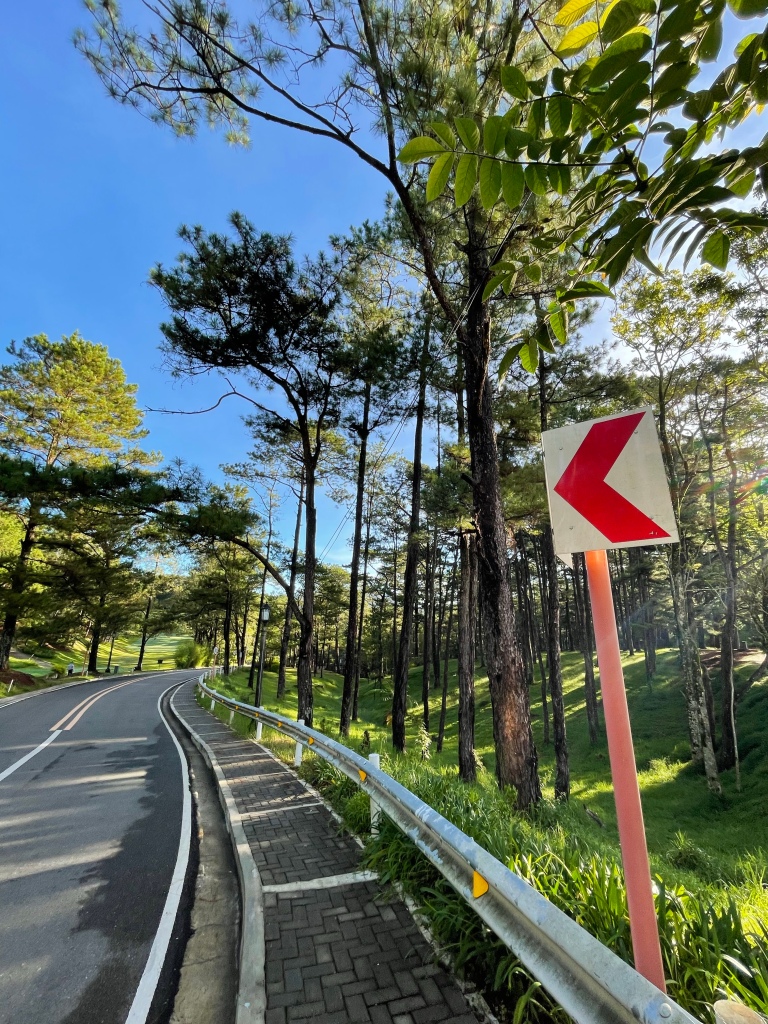
Photo by Ann H on Pexels.com

Last Saturday at the Solemnity of the Assumption, we reflected on the need to ask the right – and difficult – questions in our life like Mary. It does not really matter if we don’t get answers right away because along the way, God reveals and shows us himself and his plans for us if we keep asking him with our questions.

That is why this Sunday as Jesus continued to travel into pagan territory, he asks us like his disciples along the way his most definitive question of all, “who do you say that I am?”

Jesus went into the region of Caesarea Philippi and he asked his disciples, “Who do people say that the Son of Man is?” They replied, “Some say John the Baptist, others Elijah, still others Jeremiah, or one of the prophets.” He said to them, “But who do you say that I am?” (Matthew 16:13-15)
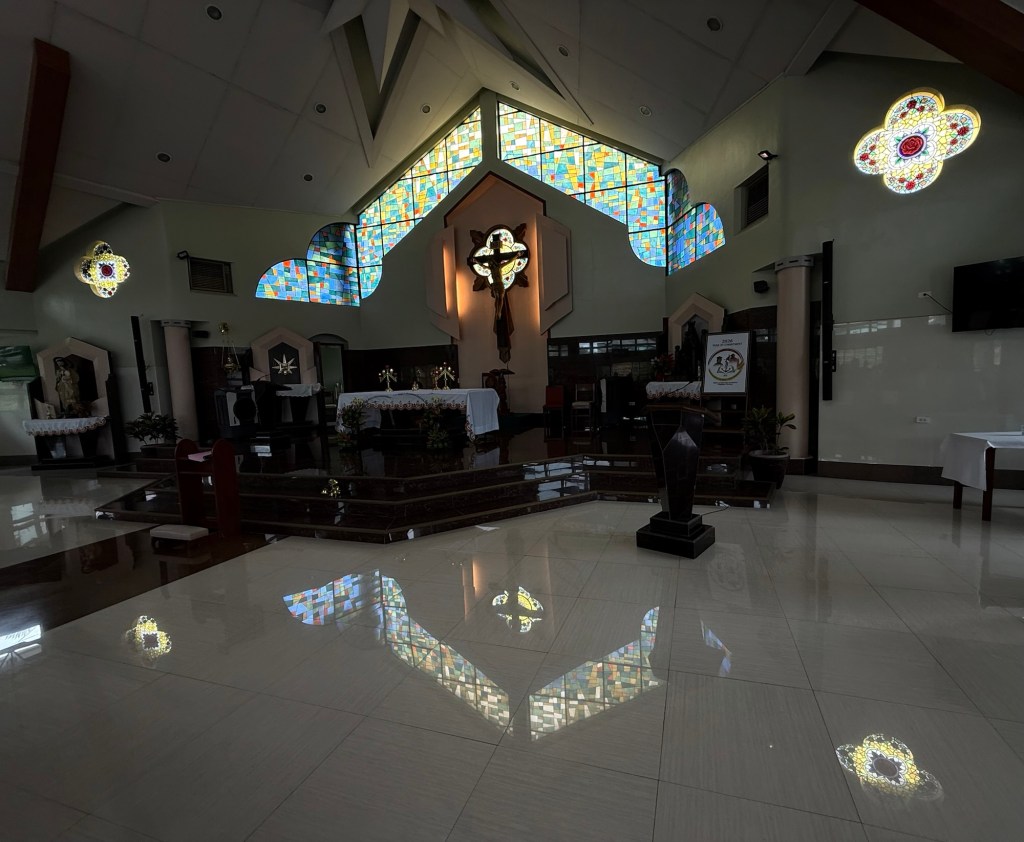
Photo by author, St. Paul Spiritual & Renewal Center, Bgy. Tanyawak, Alfonso, Cavite, 18 August 2026.

After healing the possessed daughter of a Canaanite woman last week in the district of Tyre and Sidon, Jesus and his disciples reached Caesarea Philippi that used to be the summer capital of the Roman officials in northern Israel. It had an abundant supply of water that is why the Romans built many buildings including a temple to one of their major goddesses.

Imagine such an affluent backdrop for Christ’s intensive “lecture series” about discipleship to the Twelve: first, he surveyed them what the people were saying “who the Son of Man is” before asking them directly, “but who do you say that I am?”.

In 2009, the British-American author and inspirational speaker on business leadership Simon Sinek published his book Start with Why because the question why helps us clear motivation in every undertaking we make. Starting with why is to get to the very core, the raison d’etre of our business or plan or project.

However, we are not only dealing with projects in life; life itself is our very project too which is addressed by the question who. Actually, Sinek’s model of starting with why is anchored on persons and relationships that are directly concerned with the who because every why is sustained by a who. No project nor plan nor business nor whatever endeavor by humans would continue without persons addressed by the question who!
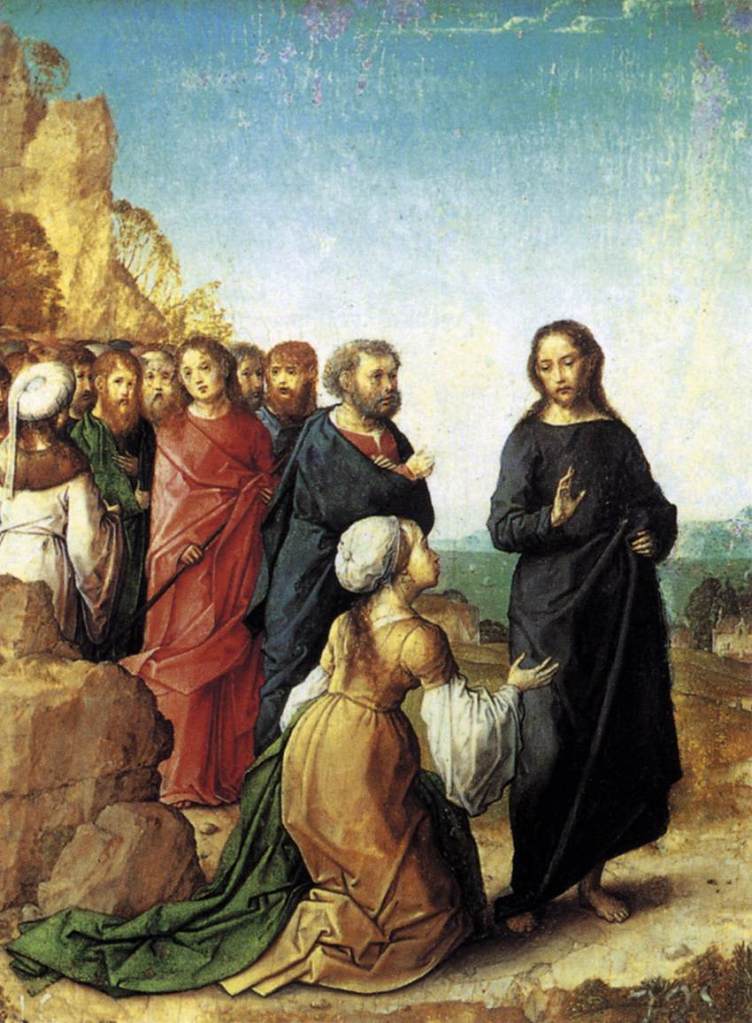
A painting of “The Canaanite Woman asks for healing for her daughter” by Spanish painter Juan de Flandes ca. 1500 as part of the 47 small panels of paintings commissioned by Queen Isabella I of Castile; from commons.wikimedia.org.

More than a person, who is a relationship, a meaning for us to continue with our why like in fulfilling our mission in Jesus, in answering his call to follow him.

As a continuation of our reflection last Sunday about faith and intimacy in the Lord, clarifying who is Jesus Christ for us deepens that faith and intimacy we have in him.

It is only when we are clear and convinced with who is Jesus shall we become clearly convinced with our call and mission in him by finding him among everyone and whatever circumstances we may get into in life. Even in our human relationships.

Relationships and friendships, marriages and ties are shattered and broken these days not merely because of infidelity and betrayals which start to happen the moment we take our beloved for granted. We betray one another not when we speak against them or turn against them; it all starts the moment we no longer recognize them as a beloved, our loved one or friend.

Would you exchange a family member or a friend for any amount of money or thing or property? Or your wife or husband for another better looking woman or man?

Photo by author, St. Paul Spiritual & Renewal Center, Bgy. Tanyawak, Alfonso, Cavite, 18 August 2026.

Normally, we deal with every question first with our minds like when the apostles gave Jesus varied answers of leading religious figures like John the Baptist and the prophets as what the people thought of him. But, it took on a different dimension when Jesus asked “But who do you say that I am?” that is pointed into our hearts.

And here we find a remarkable quality – sometimes deficiency – of Peter. He was always baring his heart and soul; he easily opens us what’s in him and clearly here as Jesus later explained, Peter allowed the Spirit to speak from his heart, “You are the Christ, the Son of the living God.”

Notice in Peter’s response we find traces of Sinek’s starting with why. Peter with his his brother Andrew and fishing partners James and John were the first disciples called by Jesus, following him longest than the rest of the Twelve. For Peter, more than finding in Jesus the answers to his starting question of why about life, he had remained with Christ primarily of the who he is to him. Despite that he would waver on this many times, he remained faithful to Jesus with his own martyrdom.

See that in Matthew’s account, Peter said the words “You are the Christ, the Son of the living God” while Mark and Luke merely reported Peter as saying “You are the Messiah/Christ” (Mk.8:29 and Lk.9:20). Peter saying Jesus as “Son of the living God” reveals something deeper in who is Jesus for him as he speaks of a relationship. Not just details and facts.

Most likely, Peter must have experienced something so deep as in “living”, so alive like when he saw that miraculous catch of fish before being called to become fisher of men. It was an experience that Paul describes to us in the second reading, of having experienced personally the “depth of the riches and wisdom of God” (Rom.11:33).
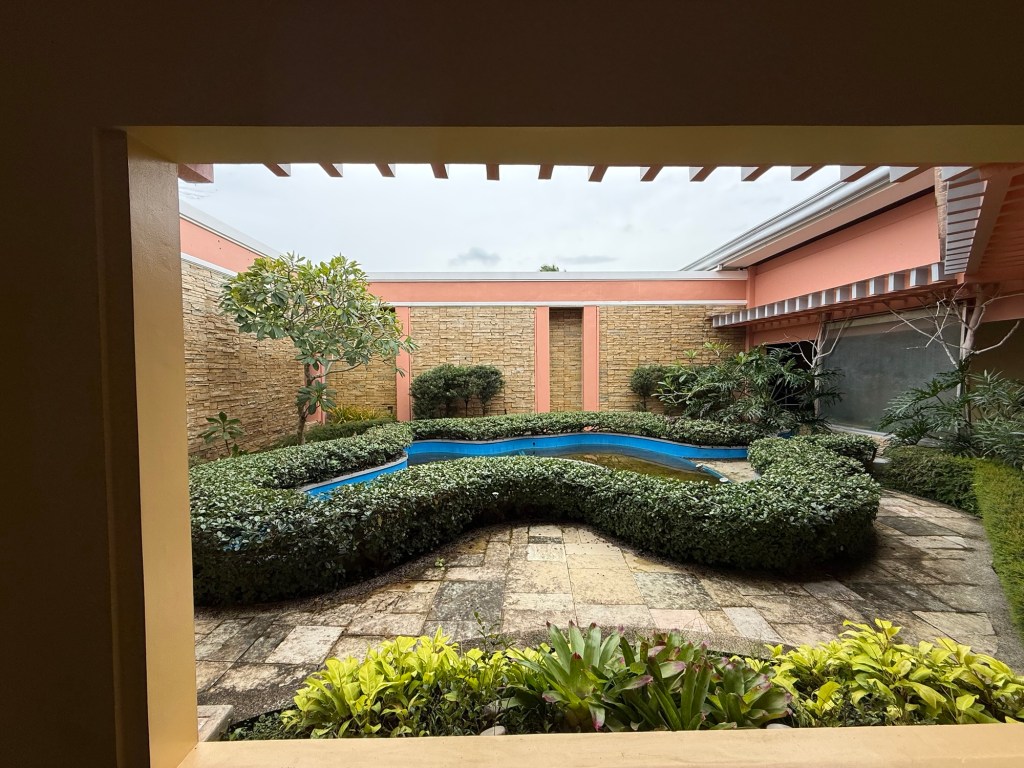
Photo by author, St. Paul Spiritual & Renewal Center, Bgy. Tanyawak, Alfonso, Cavite, 18 August 2026.

That is how we are with those most dearest to us – there are things so deep for words, so profound realities we have experienced that we have come to be so convinced, so in love with someone we follow or regard. Someone like “a peg in a sure spot” as God described Eliakim to Shebna according to Isaiah (22:23).

More than the why of doing, the who leads us to our being. And the more we get to know Jesus, the more we also get to know who we are. Our identity as a person does not depend on what social media portray or what others say. The more we get to know Jesus, the more we get to know ourselves, the more we become at home with our weaknesses and failures, sins and shortcomings.

Photo by author, St. Paul Spiritual & Renewal Center, Bgy. Tanyawak, Alfonso, Cavite, 18 August 2026.

This may sound simplistic: all these problems we have about school violence, degradation of our moral values as a nation that perpetuate in office corrupt and inept officials while destroying our environment with our disregard for proper disposal of waste and garbage, may be due to our disregard for who is Jesus to us.

The question who connects us with God and everyone. And with our very self. How sad that in this age of too much digitization, we have been so focused on techniques of doing like what and how, forgetting being, the focus of who.

From Caesarea Philippi which is up north, Jesus and his disciples would take a U-turn down towards Jerusalem that is their true destination. After this scene comes the Transfiguration of Jesus and the triple predictions of Jesus of his coming passion, death and resurrection. Let us know who Jesus is so that we can follow him more closely as his disciples. Amen. A blessed, hopefully warmer and drier week ahead to everyone!

Asking the right question

Lord My Chef Daily Recipe for Soul by Fr. Nicanor F. Lalog II
Saturday, Nineteenth Week in Ordinary Time, Year II
Solemnity of the Assumption of the Blessed Virgin Mary, 15 August 2026
Revelation 11:19; 12:1-6, 10 ><}}}*> 1 Corinthians 15:20-27 ><}}}*> Luke 1:39-56
Photo by Ann H on Pexels.com

One significant lesson I learned in journalism and in life is that we are known by the questions we ask, not by our answers that are often wrong. When we ask the right question – especially if it is not misleading to our own assumptions – the problem or issue at hand is already half solved. 

It doesn’t really matter if we don’t get answers right away; many times the answers to our questions come or “unfold” as we move on in life. Some answers come to us later in life or after the death of a loved one. Or, maybe they would be answered in the afterlife.

Just keep asking. As one newspaper says, be an inquirer.

But, why start our reflection on asking question on this Solemnity of the Assumption of the Blessed Virgin Mary?

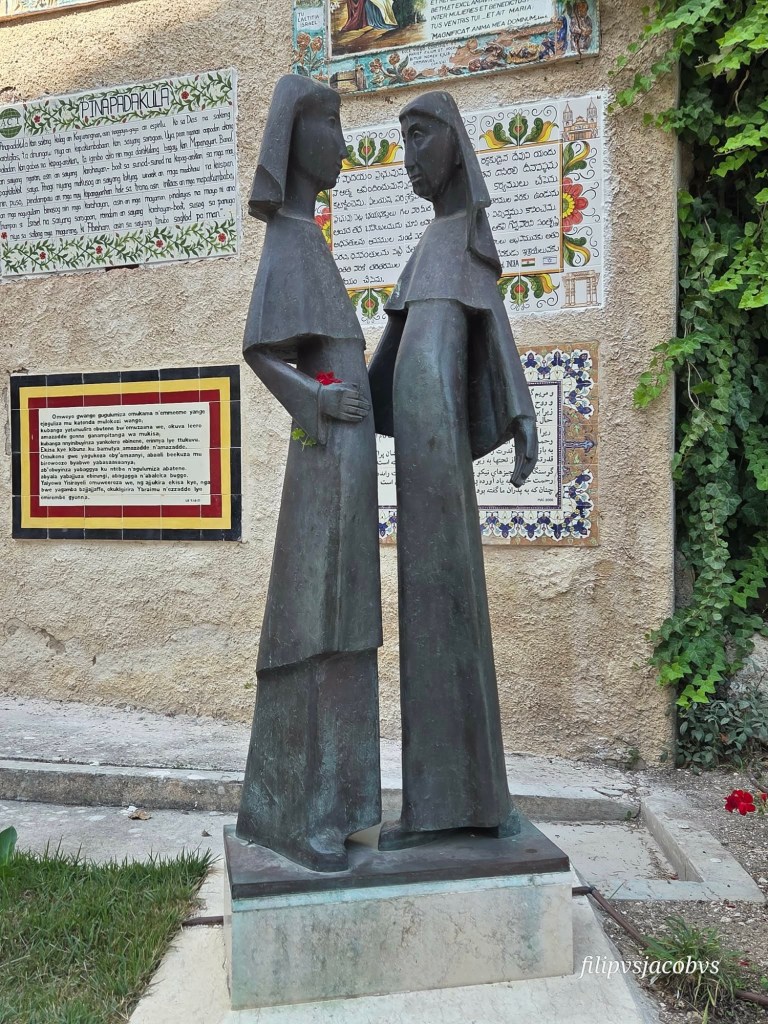
Photo by Ar. Philip Santiago, Church of the Visitation, Israel, 2024.

I was struck by how Elizabeth greeted Mary in her visitation with a question:

“And how does this happen to me that the mother of my Lord should come to me?” (Luke 1:43)

Actually, before Elizabeth asked that question at the Visitation, Mary was the first to ask the difficult question after the Annunciation to her by Archangel Gabriel, “How can this be, since I have no relations with a man?” (Lk.1:34).

In saying “yes” to God’s invitation at the Annunciation all the way to following Jesus to the Calvary and awaiting the coming of the Holy Spirit at Pentecost, Mary is the model disciple of the Lord, the “doer of the Word” in whom we see all that we can become through the power of God despite our human doubts and weaknesses. And many questions.

When Jesus was born, Mary must have so many questions but rather “kept all these things , reflecting on them in her heart” (Lk.2:19). Then when Jesus was thirteen years and got lost in Jerusalem after their pilgrimage, Mary asked anew a difficult question to him, “Son, why have you done this to us? Yur father and I have been looking for you with great anxiety” (Lk.2:48).

“The Finding of the Saviour in the Temple” painting by William Holman Hunt (1860), from en.wikipedia.org.

Mary asked the difficult questions always. And most likely, she had kept so many other questions in her heart especially when Jesus suffered, died and was buried. She was never afraid to ask questions to God because she believed, constantly seeking the truth who is her Son Jesus Christ.

On this solemnity of Mary’s assumption when we are reminded of the supreme truth of our own resurrection and assumption into heaven at the end of time when Christ comes again, we are likewise encouraged to keep asking the important questions we are often afraid to ask and confront in life like, would I make it to heaven? Or, the perennial question we ask if there is really God or if there is really heaven and hell and purgatory? 

See how the most essential questions in life that we ask albeit with fear or hesitations pertain to things of the soul, of eternity, of spirituality. These are questions that spring from our inner deeper self that indicate our origin who is God that even the greatest scientists throughout history admitted and respected like Albert Einstein.

Very often, the answers to these questions unfold in our hearts, in our lives, in the present moment. That is why Mary responded to Elizabeth’s question and praise with a song praising God for all his wondrous works she had experienced and realized in her life:

Photo by a friend in Washington. 28 July 2026.

And Mary said: “My soul proclaims the greatness of the Lord; my spirit rejoices in God my Savior… He has mercy on those who fear him in every generation. He has shown the strength of his arm, and has scattered the proud in their conceit. He has cast down the mighty from their thrones and has lifted up the lowly. He has filled the hungry with good things, and the rich he has sent away empty. He has come to the help of his servant Israel for he has remembered his promise of mercy, the promise he made tonour fathers, to Abraham and his children forever” (Luke 1:46-47, 50-55).

The Magnificat is the summary of the Christ Mary carried in her womb and heart throughout her life that she is referred to as the Ark of the New Covenant as seen by John in heaven in the first reading.

The Magnificat as a song of the Blessed Mother was borne out of long reflections and hard questionings about self and the world in the light of God’s works. Mary like Paul in the second reading experienced God’s saving power in Jesus because both were so open to the working of the Holy Spirit, searching deep within by constantly examining, asking the right questions.

That is why silence is important in every prayer period when we learn to completely trust God especially when our questions are very unsettling, even disturbing.

As a priest for 28 years and hospital chaplain these past five years, I have noticed older people along with those sick and dying spending a lot of their time asking about eternity. That’s why many of them go to confession so often. It must be difficult and amazing at the same time. Sometimes when I look into their eyes, there seems to be an intensity that they could pierce through dark clouds and thick curtains that maybe, just maybe, enable them to catch a glimpse of eternity that result in a remarkable peace within them that we too can feel.

It is when we ask the difficult, essential questions that we are able to arrive at the real truth about life and our very self that ultimately lead us to God and to heaven in Jesus Christ.

“The Assumption of the Virgin” painting by Italian Titian (1516-1518) from en.wikipedia.org.

The assumption of Mary is part of Christ’s gospel. And the good news is that it is a truth and reality we can arrive at here and now, not later when we die for God loves us so much as Paul tells us in the second reading.

In being the first and model disciple of Jesus, Mary is also the first to reap the fruits of Christ’s resurrection by being assumed into heaven body and soul, free of any pains and sorrows in her “death”.

We too rejoice with Mary in celebrating this Solemnity of her Assumption into heaven, hoping and trusting that eventually all our pains and sufferings shall pass away when we die, when Jesus comes again at the end of time to assume us body and soul into heaven in perfect union with God our Father in him, with him, and through him.

Before ending this reflection, we find it most opportune to remind everyone to stop the practice of keeping a little ash of their beloved’s cremated remains in their pendants or in their homes. This is contrary to our teaching on the resurrection of the dead, of the dogma of the Assumption of Mary. It is because of this assurance that we too like Mary shall be assumed into heaven body and soul that the remains of the dead shall be preserved intact in utmost respect and care according to the norms of the Church. Not the crazy beliefs propagated by movies and crematories primarily for profits. Most of all, exorcists have been reminding us too of the negative effects to the dead and to the living by keeping their ashes no matter how little they may be. God bless everyone!

Photo by author, St. Michael Retreat House, Antipolo City, 16 June 2026.

Stop “overthinking” to be a good Samaritan

Lord My Chef Sunday Recipe, 13 July 2025
Fifteenth Sunday in Ordinary Time, Cycle C
Deuteronomy 30:10-14 ><}}}*> Colossians 1:15-20 ><}}}*> Luke 10:25-37
Photo by author, Katmon Nature Sanctuary & Beach Resort, Infanta, Quezon, 17 March 2023.

Jesus continues his journey to Jerusalem with his disciples, teaching us with some important things “to do” following the questions of some people along the way.

Last Sunday Jesus taught us the five do’s and five don’ts of discipleship; today, he teaches us what we must do to inherit eternal life with the parable of the good Samaritan.

There was a scholar of the law who stood up to test Jesus and said, “Teacher, what must I do to inherit eternal life?” Jesus said to him, “What is written in the law? How do you read it?” He said in reply, “You shall love the Lord, your God, with all your heart, with all your being, with all your strength, and with all your mind, and your neighbor as yourself.” He replied to him, “You have answered correctly; do this and you will live.” But because he wished to justify himself, he said to Jesus, “And who is my neighbor?” Jesus replied, “A man fell victim to robbers as he went down from Jerusalem to Jericho.” (Luke 10:25-30)

First thing we notice is our similarity with the scholar of the law who already knew the answer to the question “what must I do to inherit eternal life?” We know deep in our hearts the answer and like in the gospel, we have felt Jesus affirming us many times like the lawyer. But, Jesus wants us to revisit his parable of the Good Samaritan this Sunday to realize its meaning as we continue to imitate the lawyer with the same question “who is my neighbor?”

But because he wished to justify himself, 
he said to Jesus,
"And who is my neighbor?"
Photo by author, Grand Canyon Woods, Batangas, March 2025.

The Filipino translation gives us a better picture of the lawyer justifying himself, “Sa hangad ng eskriba na huwag siyang lumabas na kahiya-hiya, tinanong niya uli si Jesus, ‘Sino naman ang aking kapwa?'”

See how Jesus did not give a straightforward answer but situated the lawyer including us today into something very concrete so that we stop thinking more and start feeling more. That was the problem with the scholar of the law and with us today: we analyze everything that we have become “over thinkers” but not necessarily “critical thinkers”. We know so many things about our faith but, we still ask for more clarifications because we think more than feel more.

As a chaplain giving recollections and talks to our students, I have seen many young people today are over thinkers but not critical thinkers. I always remind them that critical thinking is about comprehension and analysis of data and information gathered. Over thinking is different. It is not of the mind but of the heart because overthinking is lack of trust. It is a vice when we worry a lot – over think – because we lack trust with others and with ourselves. And ultimately with God!

Photo by author, Camp John Hay, Baguio City, 12 July 2023.

The scholar of the law was overthinking when he asked “who is my neighbor?” because for them at that time, their neighbors were just their fellow Jews. Sad to say, until now our society remains stratified into categories of people like ice cream – the old rich and famous as “all-time favorites”, the recent rich and popular as “flavor of the month” and the ordinary folks as “dirty ice cream” or sorbetes cheaply sold in carts pushed usually by old men.

Of course we know everyone is our neighbor or whoever needs us. But the problem with this all-encompassing view is that it leads us to casuistic argumentation, a kind of over thinking like when we start citing exceptions and excuses or alibis. That is why Jesus used the characters of a priest and Levite who were examples of holiness vis-a-vis a Samaritan who was an enemy of the Jews at that time.

The priest and the Levite passed by the victim of robbery to maintain the Jewish purity law of not touching a corpse to perform their tasks and duties in the temple, both were “overthinking” of their rites and rituals than the dying person. Holiness for Jesus is beyond names and titles but more of the heart seeing and feeling the other person like the Samaritan who alone acted out of his good naturedness as a person, even beyond giving first aid to the robbery victim.

From forbes.com, 2019.

Many times we are like the priest and Levite when we come up with many arguments like “do I not have any other obligation” or “does it really fall on me personally” and so on and so forth when confronted in real life with some people so badly injured or in need of attention.

We overthink with what would happen if we personally get involved with somebody in trouble that people these days are more quick in pulling out cellphones to record an accident and mishap instead of doing something to help.

We over think like the lawyer in the gospel, forgetting to feel more of the other person. That is why in answering his question, Jesus threw it back to him him in another form that is more personal and experiential, “Which of these three, in your opinion, was neighbor to the robbers’ victim?”

Photo by author, 2019.

St. Therese of the Child Jesus wrote in her journal more than a hundred years ago, “I have understood that true greatness is found not in the name but in the soul.”

Beautiful! If we would just look more into our heart, into our soul, we find Jesus, we find our true self, and we find everyone our neighbor to be loved and respected, cared and understood. This is what Moses is telling us in the first reading that the Lord and his commandment are right there in our hearts.

That is exactly what the scholar of the law felt after hearing the story of the good Samaritan that he forgot all labels and categories, answering Jesus’ question with, “The one who treated him with mercy.” There is no need to justify ourselves, of who we are, or even ask who is our neighbor. Everyone is our neighbor because everyone is a brother and sister in Christ; hence, no need to ask that question at all!

But, there is still something deeper to this. When Jesus ended their conversation with the instruction to “Go and do likewise”, the Lord is telling us this Sunday that whenever we encounter a person in need of help, regardless of who she/he is, let us put ourself in that person’s place for it is them – not us – who shall recognize us whether we acted as neighbor to them, or saw them as neighbor!

Photo by Mr. Chester Ocampo, UST Senior High School Building, 2019.

Recall those moments we were down when those dearest to us abandoned us and of all people, the least we expected were the ones who acted as neighbor to us. It is when we are down and low when we come to recognize our neighbor, not when we are up and able, when we feel proud asking what must I do to gain eternal life.

Stop all these over thinking. Simply remember and find Jesus in every person who is the “image of the invisible God” who “reconciled all things for him”(Col.1:15, 20) for he alone is our truest neighbor always present when needed most. Amen. Have a blessed week ahead, everyone! Fr. Nicanor F. Lalog II, Our Lady of Fatima University, Valenzuela City (lordmychef@gmail.com).

Lent is asking God “how”?

40 Shades of Lent by Fr. Nicanor F. Lalog II
Solemnity of the Annunciation of the Lord, 25 March 2025
Isaiah 7:10-14;8:10 + Hebrews 10:4-10 + Luke 1:26-38
“Cestello Annunciation” by Botticelli painted in 1490; from en.wikipedia.org.
As we journey towards Easter,
we thank you dear God our Father
for the gift of this Solemnity of the
Annunciation of the birth of Jesus
to the Blessed Virgin Mary,
teaching us how the Christ
came into this world with the
Blessed Virgin Mary's attitude
and example worth emulating
as our companion in this Lenten journey
when she asked Archangel Gabriel,
"How can this be,
since I have no relations
with a man?"
(Luke 1:34).
Photo by author, Our Lady of the Poor, Sacred Heart Novitiate, Novaliches, QC, 17 March 2025.
Many times in life,
we live as if there is no God,
with us not only playing like you,
O God but actually acting truly
as God.
We live our lives according to
our own ways, to our own standards,
to our own thinking that most often
lead to more disasters,
more problems and worst,
broken self and broken relationships;
we feel we know better than you
than anyone.
Teach us, Jesus,
to be humble like your Mother,
the Blessed Virgin Mary:
in her asking
Archangel Gabriel
"How can this be",
she had already expressed her
acceptance of the Father's invitation
to be your Mother;
many times,
we refuse to even listen
to God’s plan for us as we
we rarely or have stopped
praying at all
so unlike Mary who must
have been at prayer
when Gabriel came.
In her asking "How
can this be?",
Mary was already setting aside
her own plans in life
to give way to God's plan;
in asking "How
can this be?", Mary showed us
the beauty of prayer
as a relationship where there
is true freedom and openness
to God in you, Jesus.
Forgive us Jesus
when we act like King Acaz
so hypocrite,
pretending not to test you
when in fact we have already
decided on our own
without considering you
at all.
.
How, O Lord,
can we truly change our ways
to follow God’s plans
and most unique ways
for nothing is impossible
in him?
Amen.
Photo by author, Our Lady of the Poor, Sacred Heart Novitiate, Novaliches, QC, 17 March 2025.

From fear of the Lord to love of God and neighbors

The Lord Is My Chef Sunday Recipe for the Soul by Fr. Nicanor F. Lalog II
Thirty-first Sunday in Ordinary Time, Cycle B, 03 November 2024
Deuteronomy 6:2-6 ><}}}}*> Hebrews 7:23-28 ><}}}}*> Mark 12:28-34
Photo by author, river at the back of Nagsasa Cove, San Antonio, Zambales, 19 October 2024.

Jesus finally entered Jerusalem to fulfill His mission as we also enter the last four Sundays of our liturgical year before entering the season of Advent in preparation for Christmas.

Two Sundays ago we reflected the atmosphere of fear among the Apostles and the crowd following Jesus to Jerusalem after He had made known to them for the third time His coming Passion, Death, and Resurrection. This Sunday our readings invite us to look into that feeling of fear we often experience.

Fear can be negative in nature when we experience a threat to our safety whether there is a clear and present danger from a person or animal hurting us, or when our imagination runs wild with ghosts or a snake underneath the bed at night.

Positive fear is actually the reverence we experience due to a sense of awe often associated with our relationships like with our parents and relatives, teachers and superiors, or any person who seem to amaze us. We fear them not because they threatened us but actually inspired us with their presence, dignity and grace, intelligence and kindness among other things. This kind of fear we experienced in childhood then slowly matured and blended with trust, translated into adoration of the persons so unforgettable to us, influencing us in many ways that we have come to love them eventually, especially God. This is what the Bible and catechism books refer to as “fear of the Lord”.

Photo by author, Mount Sinai, Egypt, May 2019.

Moses spoke to the people, saying: “Fear the Lord, your God, and keep, throughout the days of your lives, all his statutes and commandments which I enjoin on you, and thus have long life. Hear, O Israel! The Lord is our God, the Lord alone! Therefore, you shall love the Lord, your God, with all your heart, and with all your soul, and with all your strength. Take to heart these words which I enjoin on you today” (Deuteronomy 6:2, 4-6).

This “fear of the Lord” that Moses and later the prophets instilled among the Israelites was expressed in faithfulness and obedience to the Laws so that for them, being holy or upright was obedience to the Laws.

This “fear of the Lord” is not about God overpowering man to keep him in bondage. In giving the Ten Commandments, God first entered into a relationship or covenant with the chosen people based on friendship, trust, and love. See here that positive aspect of fear, of reverence like our fear of parents and elders as well as those seemed larger than us including our crushes and first love when we revered them by showing them love and respect.

This “fear of the Lord” then becomes a passing from fear to love that leads us to maturity as persons. And believers. Then lovers and followers not only of those significant people in our lives but most especially of God!

One of the scribes came to Jesus and asked him, “Which is the first of all the commandments?” Jesus replied, “The first is this: Hear, O Israel! The Lord your God is Lord alone! You shall love the Lord your God with all your heart, with all your soul, with all your mind, and with all your strength. The second is this: You shall love your neighbor as yourself. There is no other commandment greater than these” (Mark 12:28-31).

Photo of author, Mount Sinai, Egypt, May 2019.

Unlike the tricky questions posed by His enemies, this one from a scribe was so unique with his calm attitude that invites everyone including us to join in the discussion. One can feel his sincerity in seeking out the truth he felt (rightly so!) only Jesus can answer.

Many times, we feel the same way like that scribe so convinced in asking Jesus, ready to follow Him only if we are clarified which is the first to follow in life in order to mature from fear to love.


"Which is the first of all the commandments?"

Like that scribe, many times we feel confused in our lives, in our faith with the many laws and traditions we were told since childhood to follow; hence, we ask “which is the first of the commandments” that really matter most in life.

Such moments in our life is a grace from the Holy Spirit because in asking “the first of the commandments” is not to determine a hierarchy nor a list of which ones to be prioritized and dismissed; the “first” commandment means the absolutely capital that is always binding on all. The “first” commandment is the one to which all others are subjected without being cancelled or considered least nor optional. The “first” commandment is the very essence of all commandments present in each commandment. It is actually a search for the First Principle who is God Himself!

That is why Jesus quoted verbatim Deuteronomy 6:4-5, the opening words of their best known prayer Shema every pious Jew knows by heart, “Hear, O Israel! The Lord is our God, the Lord alone! Therefore, you shall love the Lord, your God, with all your heart, and with all your soul, and with all your strength.”

Similar to His manner of answering the question about divorce last month, Jesus did not answer the scribe’s question by making reference to a code of laws but instead recited the Shema that encapsulates maturity and deepening of faith in God who is One, with no other except Him. The Shema also shows how our personal God relates with us His people, bonding in a covenant like husband and wife that is reciprocal, exclusive, and total love “with all your heart, with all your soul, with all your mind, with all your strength.”

This “first” commandment is also a relationship that flows to our relationships with one another we rightly call as neighbors. See how Jesus added a “second” commandment not as in a hierarchy making it less important but as an expression of the essential “first” commandment of all the scribe understood well when he affirmed, “Well said teacher… and to love your neighbor as yourself is worth more than all burnt offerings and sacrifices” (Mk.12:32, 33).

For the Jews, their neighbors were their fellow Jews and those aliens residing in their land as found in the Book of Leviticus; but, in this scene, we find Jesus bringing that whole notion of neighbors for everyone, regardless of color and status in life, or of gender, or beliefs.

Jesus makes known to us this Sunday His mission of salvation is for all, for everyone. Most of all, Jesus tells us this Sunday that He is the fulfillment of the Law that many during His time and sadly until now have misread as mere letters to be followed, failing to find the face of God in every law inscribed on every person.

Photo by author, view from Jerusalem Temple, May 2019.

How interesting that each face has two cheeks, both essential, both as the first commandment: love of God is love of neighbor. To profess and practice this faith in God that started in fear and matured into love finding Him in everyone as our neighbor is to be “not far from the kingdom of God” (Mk.12:34).

Friends, let us not fear asking Jesus which is the “first” of the commandments like that scribe.

Keep asking Him until we find Jesus “first” in our trials and tribulations, darkness and confusions, failures and emptiness.

Keep asking Him until we find Jesus “first” on those people who burden us, those who hurt us, those who judge us, those who refuse to listen to us, those who dictate on us.

Keep asking Him until we find Jesus even in programs and plans we could not understand or that are downright crazy.

That is what to truly love God and to love everyone. It is difficult but we have Jesus as our high-priest “who has passed through the heavens” leading us closer to the kingdom of God. Amen. Have a lovely November!

Photo by author, Pundaquit Mountains, San Antonio, Zambales off Nagsasa Cove, 19 October 2024.

Have you…?

The Lord Is My Chef Daily Recipe for the Soul by Fr. Nicanor F. Lalog II
Friday, Memorial of St. Francis of Assisi, 04 October 2024
Job 38:1, 12-21, 40:3-5 <*{{{{>< + ><}}}}*> Luke 10:13-16
Photo by Ms. Marissa La Torre Flores in Switzerland, August 2024.
As we celebrate today the
memorial of St. Francis of Assisi
in the light of our first reading
from the Book of Job,
You open our eyes anew
O God our loving Father
into your unfathomable mystery
of majesty and love for us.

Like Job,
we ask many questions
not really because we complain
to You but simply we have no one else
to turn to; we have so many questions
in life and we are willing to wait if ever
there would be any answer at all
but one thing for sure,
we are certain You have all the answers.
Be patient with our many whys, 
O God, for we have no any reply
to any of your single question
"Have you ever in your lifetime commanded
the morning and shown the dawn its place...?
Have you entered into the sources
of the sea, or walked about in the depths
of the abyss?
Have the gates of death been shown to you,
or have you seen the gates of darkness?
Have you comprehended the breadth
of the earth? Tell me if you know all"
(Job 38:12, 16-18).
Like St. Francis of Assisi,
give us the grace to dare follow
your Son Jesus Christ not only
in humility and poverty
but most especially in His Cross;
forgive us, Father
and let us do away with all the
"sentimentality" cultivated by
nature lovers including "new agers"
on St. Francis' love for nature
rooted in Christ's sufferings and
commitment to a poor and simple life.
Like Job
and St. Francis who
lovingly embraced Jesus with
His Cross, may we also realize our
"smallness" before you, O Lord
in our trials and sufferings to experience
at the same time the joy and glory
in comprehending the "breadth
and length
and height
and depth"
of Christ's love
that surpasses knowledge
so that we may be filled with
your fullness,
dear God
(Ephesians 3:18).
Amen.
Photo by Ms. Marissa La Torre Flores in Switzerland, August 2024.

Where?

The Lord Is My Chef Daily Recipe for the Soul by Fr. Nicanor F. Lalog II
Tuesday in the Seventh Week of Ordinary Time, Year II, 21 May 2024
James 4:1-10 ><))))*> + ><))))*> + ><))))*> Mark 9:30-37
Photo by author, September 2020.
"Beloved:
Where do the wars and
where do the conflicts
among you come from?"
(James 4:1)
What a beautiful question
to ponder upon on this
second day of Ordinary Time,
Lord Jesus: the "where",
the origin,
the source,
the root
of our many desires
in life;
ultimately,
the question You have asked
Your disciples "What were
you arguing about on the
way?" (Mark 9:33)

leads also to the same
question of James of
"where".
Many times, 
O Lord, we presume
and insist we are on the
right tracks,
on the right path
following the world
even if deep inside
we know we are lost,
we have gone astray,
that we are on the wrong
bearings in life
because we merely
follow the rest that like
everybody, we end up
lost and more confused
than ever.

You covet but do not possess. You kill and envy but you cannot obtain; you fight and wage war. You do not possess because you do not ask. You ask but do not receive, because you ask wrongly, to spend it on your passions.

James 4:2-3
Teach us, Jesus,
to bravely ask ourselves
from "where" are we coming from
in everything we are doing,
saying, and pursuing;
help us to be sincere
and humble of our "where"
wherever it may be;
most of all,
let us ask too
"where" we are going to
"where" do we want to be.

During these 33 to 34 weeks
in Ordinary Time,
let us find,
our bearing in YOU, Jesus
so that our "where" from
and "where" to would only
be YOU.
Amen.
Photo by Mr. Vigie Ongleo, Sagada, Mt. Province, 2014.

When we “miss communication”

The Lord Is My Chef Easter Recipe for the Soul by Fr. Nicanor F. Lalog II
Wednesday in the Sixth Week of Easter, 08 May 2024
Acts 17:15, 22-18:1 <*((((>< + ><))))*> John 16:12-15
Photo by Ekaterina Belinskaya on Pexels.com
Your words today,
Lord Jesus remind us
in the most amusing way
our state of miscommunication:

When they heard about resurrection of the dead, some began to scoff, but others said, “We should like to hear you on this some other time.” And so Paul left them.

Acts 17:32-33
Many times in life
we are like the Athenians of old,
so proud of what
we know,
of what we believe,
of what we
hold on as true
without having them tested;
we refuse to open
our minds and our hearts
to truly listen
to the other person,
especially to You,
dear Jesus;
help us realize
that we cannot know
the whole truth
and everything in this life
and world
in an instant;
help us realize
how truth unfolds
in time
in persons;
most of all,
help us realize
we do not know
that much.

Jesus said to his disciples: “I have much more to tell you, but you cannot bear it now. But when he comes, the Spirit of truth, he will guide you to all truth. He will not speak on his own, but he will speak what he hears, and will declare to you the things that are coming.

John 16:12-13
Teach us to be patient
and humble, Jesus,
to listen with our hearts,
to reach out and wait
for the other person;
teach us to have that
sense of wonder like a child,
eager to learn,
always asking questions
without getting right away
the answers to them
because many times in life,
the answers
we seek are found right within
our questions,
right in our hearts
where You dwell.
Amen.

Jesus appeared

The Lord Is My Chef Easter Recipe for the Soul by Fr. Nicanor F. Lalog II
Friday, Feast of Sts. Philip & James, Apostles, 03 May 2024
1 Corinthians 15:1-8 ><}}}}*> Psalms 19:2-3, 4-5 ><}}}}*> John 14:6-14
Photo by author, Sacred Heart Novitiate, Novaliches, QC, 20 March 2024.
Thank You, dear Jesus
in coming to us,
most especially calling us
to know You
and be close with You
like Your Apostles
Philip and James the Less
whose feast we celebrate
today.

that he appeared to Cephas, then to the Twelve. After that he appeared to more than five hundred brothers and sisters at once, most of whom are still living, though some have fallen asleep. After that he appeared to James, then to all the Apostles. Last of all, as to one born abnormally, he appeared to me.

1 Corinthians 15: 5-8
Like Philip and James the Less,
we are Your apostles too:
we may not have met You
personally in that particular time,
but we have seen You so many times
when You appeared to us on many
occasions in our lives;
You appeared as people we love,
as people who love us,
as strangers with good hearts
who live in You
and Your words;
You appeared to us
in many circumstances
both good and bad,
most especially in dismal ones;
You appear to us always when
we are near You in prayers,
in good works,
in state of grace;
You appear to us
when we are not distant from You
due to sins.
Like Philip and James the Less,
let us grow in intimacy with You,
dear Jesus in prayers
and good works;
like Philip,
let us keep on asking You
questions, let us keep on
searching for You and the Father;
like James,
let us be silent
to listen to other voices
to hear You speaking
to us always
like in the Council of Jerusalem;
let us be like James Your cousin
as reconcilers of people
in You,
not dividers
for it is when we are
in communion,
when we are one as
disciples when You truly
appear to us.
Amen.
Jesus teaching his Twelve Apostles painting by Frenchman James Tissot (1836-1902), from GettyImages.