Lord My Chef Daily Recipe for the Soul by Fr. Nicanor F. Lalog II
Tuesday in the Thirteenth Week of Ordinary Time, Year II
Memorial of the First Martyrs of Rome, 30 June 2026
Rembrandt’s famous painting “The Storm on the Sea of Galilee” (1633) stolen from a museum in Boston in 1990 and still has not been found yet. From en.wikipedia.org.
For the longest time,
Lord Jesus,
I cannot understand
this episode in the gospel today:
As Jesus got into a boat, his disciples followed him. Suddenly a violent storm came up on the sea, so that the boat was being swamped by waves; but he was asleep. They came and woke him, saying, “Lord, save us! We are perishing!” He said to them, “Why are you terrified, O you of little faith” Then he got up, rebuked the winds and the sea, and there was great calm (Matthew 8:23-26).
You were more surprised
perhaps even astonished,
Jesus,
with your disciples' fears
than with the storm;
and it continues to happen
these days of so many storms
that siege us endlessly
not only as a Church but
also as individuals;
You are more surprised,
Jesus,
with our reactions to every
danger and terror that come our way
because those are the moments
we drift away from you,
when we distrust you,
when we rely more on our selves
or on others
than with you.
What must terrify us most
are not the violent storms that hit us
but when we doubt your presence
in our midst, Lord Jesus;
the most terrifying thing
in this life,
in this world
is when we play gods,
when we turn to other gods,
when we turn away from you
in sin and evil
like what Amos lamented
in the first reading:
"I brought upon you such upheaval
as when God overthrew Sodom
and Gomorrah:
you were like a brand plucked
from the fire;
yet you returned not to me,
says the Lord"
(Amos 4:11).
Like the first martyrs of
the Church in Rome,
may we remain faithful to you,
Jesus even to the point of death
for indeed,
the saddest plight
and worst tragedy
that can happen to anyone
is to turn away from you
who is life and fulfillment.
Amen.
Painting of the First Martyrs of Rome executed on orders by Roman Emperor Nero in year 64 AD; image from Pinterest.com
Lord My Chef Sunday Music by Fr. Nicanor F. Lalog II, 21 June 2026
Photo by author, St. Michael Retreat House, Antipolo City, 16 June 2026.
A blessed happy Father’s Day to all the dads this third Sunday of June, the 12th in Ordinary Time of the Church calendar when we heard Jesus telling us in the gospel today to “fear no one” for he is our strength in this journey in life (https://lordmychef.com/2026/06/20/brave-and-gracious-like-alex-eala/).
At the end of our Masses this Sunday before blessing the fathers present, we reminded them of this call by Jesus to fear no one especially their wife – huwag matakot – to tell them they are not doing the laundry today because it is a Father’s Day. Assure them you will do it tomorrow…
But kidding aside, it is only now that I am 61 years old, a senior citizen, that I have truly realized and felt how difficult it must be in being a dad or an “unwed” Father like me, a priest.
My father died on my mom’s 61st birthday, 17 June 2000; it was the eve of Father’s Day making it so painful especially for mommy died in 2024.
Every morning whenever I face the mirror preparing for a Mass or a class and I see my wrinkles and white hair so similar with my dad’s, I do not just remember him: very often I reflect and imagine those many sacrifices he had for us, for me in all those years until he died suddenly of a heart attack on mom’s birthday in year 2000. I try hard imagining the many moments he had spent praying, thinking about his next moves to keep us safe and secured and comfortable.
It is only now that he is gone that I have felt his great love for us all, silently carrying all that tremendous weight of fatherhood on his shoulders, without ever complaining to us about life’s difficulties nor spoke of his problems and difficulties he was going through all those years.
Every dad is like Jesus Christ not just telling but assuring his family to have no fear, to be not afraid because he had everything covered.
Like Ely Buendia of Eraserheads when he wrote “Huwag Kang Matakot” in 1999 at the birth of his son Eon.
Huwag kang matakot
'Di mo ba alam, nandito lang ako
Sa iyong tabi?
'Di kita pababayaan kailanman

At kung ikaw ay mahulog sa bangin
Ay sasaluhin kita

Huwag kang matakot na matulog mag-isa
Kasama mo naman ako
Huwag kang matakot na umibig at lumuha
Kasama mo naman ako

Huwag kang matakot (huwag kang matakot), ah-ah-ah-ah
Huwag kang matakot
Dahil ang buhay mo'y walang katapusan
Makapangyarihan ang pag-ibig
Na hawak mo sa 'yong kamay
Buendia narrates the typical joyful tasks of every father to his child in always being present especially in difficult situations starting with sleeping alone as a child, falling and later getting hurt in the game of love. And life.
Very amusing too are the lines of how a father would always be present, loving and supporting his child even if it is foolish:
Huwag kang matakot na magmukhang tanga
Kasama mo naman ako
Huwag kang matakot sa hindi mo pa makita
Kasama mo naman ako
Huwag kang matakot (huwag kang matakot), ah-ah-ah-ah
Fatherhood is about facing all fears because of love. And that is why Jesus taught us to call God “Father” because like every dad, God gives us life, protects this gift of life and if ever we lost it to sin and mistakes, he restores this life so we live anew. Blessed happy Father’s Day again!
From YouTube.com. This is the best link we can find with clear sound.
Lord My Chef Sunday Recipe for the Soul by Fr. Nicanor F. Lalog II
Twelfth Sunday in Ordinary Time, Cycle A, 21 June 2026
Jeremiah 20:10-13 ><}}}}*> Romans 5:12-15 ><}}}}*> Matthew 10:26-30
BERLIN, GERMANY – JUNE 18: Alexandra Eala of the Philippines reacts to defeating Elena Rybakina of Kazakhstan in the second round on Day Four of the 2026 Berlin Tennis Open at LTTC Rot-Weiß e.V. on June 18, 2026 in Berlin, Germany. (Photo by Robert Prange/Getty Images)
God has a most amazing way of consoling us Filipinos when everything is so dismal in the country, sending us athletes who uplift our spirits and make us proud as a nation. In the not so distant past we have had Manny Pacquiao and Olympic gold medalists Hidilyn Diaz and Carlos Yulo cheering us up.
And now, we have the lovely but tenacious and gritty Alex Eala who just made history anew this week with her two upset wins in the ongoing Berlin Tennis Open when she prevailed over WTA number 2 Elena Rybakin Thursday then Friday crushed number eight Elina Svitolina. (Update: Eala lost to Linda Noskova last night.)
Watch her interviews in both victories where Eala mentioned her being “brave” in her games as she described too both matches filled with “grace” – so very much like this Sunday’s gospel where Jesus mentioned thrice the need to be brave!
Jesus said to the Twelve: “Fear no one. Nothing is concealed that will not be revealed, nor secret that will not be known… And do not be afraid of those who kill the body but cannot kill the soul… So do not be afraid” (Matthew 10:26, 28, 31).
Photo by Dra. Mylene A. Santos, MD, in Ericeira, Portugal, 16 June 2026.
After choosing and sending his Twelve Apostles last Sunday, Jesus reminds them including us today of the need to have courage in working in the Lord’s “abundant harvests” because the good news goes directly against the ways of the world.
This we have learned at the start of this year in the Lord’s sermon on the mount where he taught us the Beatitudes last February 1, fourth Sunday in Ordinary Time. Though the Beatitudes like being poor, being hungry and thirsty are not to be taken literally, they still run contrary to the ways of world of power and wealth, fame and convenience.
As the world advances in science and technology, the more it veers away from God and do away with morals that in the process, the Church has always faced many contradictions, some with violent reactions even persecutions for her stance against abortion and population control, divorce and same-sex marriage and other anti-life measures now so widespread through the social media.
It is not only difficult and painful for the Church as an institution but most especially for each of us disciples of Christ that we can easily identify with the Prophet Jeremiah in the first reading.
Of the four major prophets, Jeremiah was the youngest and the only one sent by God to his own people to prophesy. That is why it was so painful for Jeremiah to experience in the hands of his own folks and kin being maligned and rejected, and betrayed just like most of us today!
Jeremiah said: “I hear the whisperings of many: ‘Terror on every side! Denounce! Let us denounce him!’ All those who were my friends are on the watch for any misstep of mine. ‘Perhaps he will be trapped; then we can prevail, and take our vengeance on him.’ But the Lord is with me, like a mighty champion… Sing to the Lord, praise the Lord, for he has rescued the life of the poor from the power of the wicked!” (Jeremiah 20:10-11, 13)
Like Jeremiah, we have complained and even cried to God many times for our sufferings in doing his will to be just and fair, kind and merciful, even charitable; and like him, we could not resist God’s call and mission despite the pains and hurts because we too felt “duped” and “seduced” by the Lord (Jer.20:7) as we felt deep inside us his love and protection. Like all the saints who suffered much in witnessing the gospel, we felt deep inside God as our very strength as we pray more to forge on in the difficult mission of doing his works.
Photo by author, Our Lady of Fatima University, Valenzuela City, 10 June 2026.
When Jesus asks us to “fear no one”, he is inviting us to primarily fear God most of all for he knows everything and will judge us in the end. It is a kind of reverential fear, not the kind of fear of a slave to a master of being reprimanded and punished.
To “fear no one” and “be not afraid” do not mean that we disregard our fears of being hurt or killed physically and emotionally; it is call to have courage which is facing our fears. Having no fears in life is not normal. As we say in the province, yung walang takot sira tuktok!
To fear the Lord means to recognize the sanctity of life, the blessedness of every person. See Eala’s attitude of being magnanimous in victory and in defeat as she would always praise and recognize the talents and greatness of her opponents. In her we find the truth that the “fear of the Lord is the beginning of wisdom” – that every person is a subject to be loved and cherished, not an object or thing to be used or possessed, without feelings and dignity.
Photo by author, Our Lady of Fatima University, Valenzuela City, 10 June 2026.
This is the tragedy exposed by the recent deaths of the two Ateneo athletes, and it involves almost all UAAP members these past decades who have given more priorities in winning trophies above all, forgetting the value of every person. True enough, it is a secret slowly becoming known.
Likewise, to be not afraid of those who kill the body but cannot kill the soul is to recognize the soul in each one of us, of Christ’s indwelling within us, enabling us to overcome every obstacle in life.
It is like being a pencil: remember the inside is more essential than the outside. That is our identity as God’s beloved child.
Our physical strength actually draws much of its power and stamina from our inner core than merely from our bones and muscles. Hence, the need for prayers and meditation, for conditioning to realize our giftedness and value.
When this happens, the third call of Jesus becomes automatic which is to be not afraid because we are worth more than many sparrows or anything else in this world.
Why? Because God is gracious!
To recognize our fears and vulnerabilities as well as weaknesses is in itself courage, fearing no one except God who alone heals us. Most of all, who alone is our strength in our weaknesses. Let us not be afraid in this life to do what is good, to stand for what is right and just, to proclaim the gospel of Christ’s salvation because God is gracious especially to those who abide in him through Christ. Amen. Have a blessed week ahead! And say a prayer for Alex Eala.
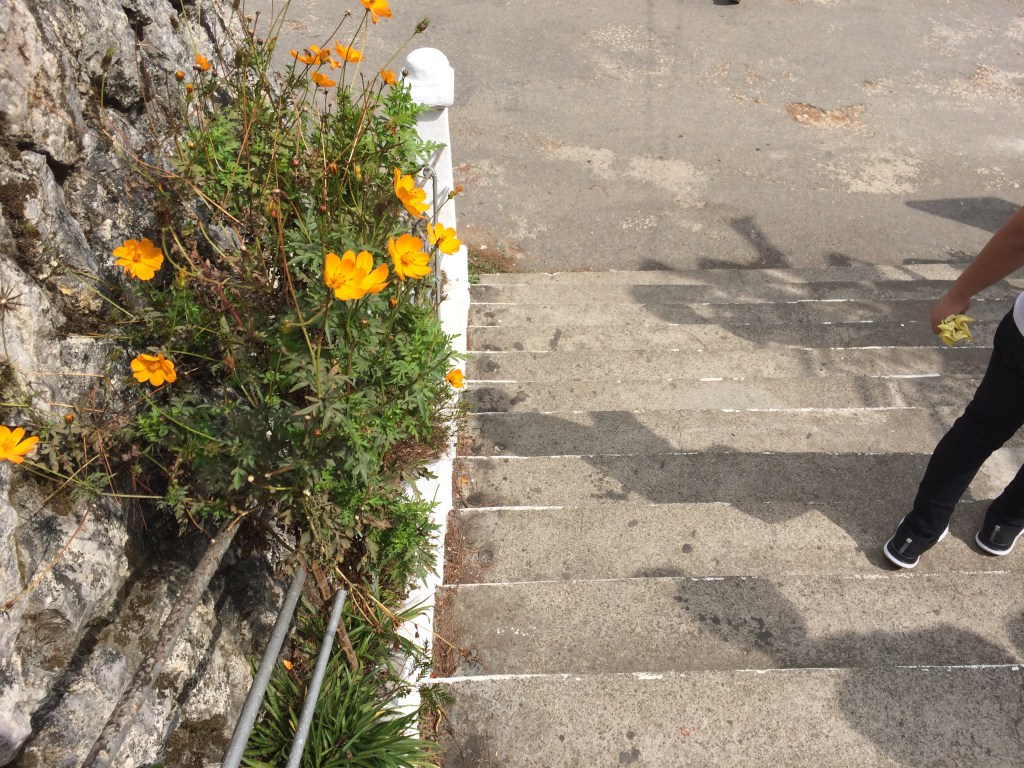
Photo by author, St. Michael Retreat House, Antipolo City, 16 June 2026.
Lord My Chef Daily Recipe for the Soul, 17 October 2025
Friday, Memorial of St. Ignatius of Antioch, Bishop & Martyr
Romans 4:1-8     <*{{{{><  +  ><}}}}*>     Luke 12:1-7
Your words,
O Lord Jesus
this Friday
are so lovely,
so comforting
especially in this time
when many fear ageing,
suffering, and death.
I tell you, my friends, do not be afraid of those who kill the body but after that can do no more. I shall show you whom to fear. Be afraid of the one who after killing has the power to cast into Gehenna; yes, I tell you, be afraid of that one (Luke 12:4-5).
How I wish
I could hug you, Jesus,
lean on you
while relishing your
calling us "my friends"
not to be afraid of those
who kill the body;
more than trusting you,
let me live in you, Jesus
like Abraham as explained
by St. Paul in the first reading
who deeply trusted God in
everything; deepen my consciousness
as a senior citizen that life
does not end in the grave
because the soul persists
even after death;
thank you also
for the gift of hair
though it had thinned
and turned gray,
now sparse and perhaps
easier for the Father to count
and remember but most of
all as signs of his love
and care for me;
let me not be afraid,
Jesus, for I am worth
more than the sparrows.
St. Ignatius of Antioch
whose feast we celebrate
today, pray for us modern
people so afraid of pain
and suffering and death:
pray for us to be like you -
to accept death, even
pursue death which is
our rebirth to new life.
Amen.

Fr. Nicanor F. Lalog II
Our Lady of Fatima University
Valenzuela City
(lordmychef@gmail.com)
Lord My Chef Daily Recipe for the Soul, 12 August 2025
Tuesday in the Nineteenth Week of Ordinary Time, Year I
Deuteronomy 31:1-8     <*((((>< + ><))))*>     Matthew 18:1-5, 10, 12-14
Photo by author, the Grotto in Baguio City, February 2019.
How I love your words today,
Lord Jesus Christ;
we all remain little children
after all; though like the Twelve
we often debate on "who is the
greatest", in the end, we remain
that little child you called
and placed in their midst.

Yes, Jesus,
we remain like children -
weak and fearful
especially in old age
when we prefer to remain
in our "comfort zones" yet,
like Moses in Jordan,
time catches on us when we
have to go - whether for good
or not - with our many transitions
in life.
Then Moses summoned Joshua and in the presence of all Israel said to him, “Be brave and steadfast… It is the Lord who marches before you; he will be with you and will never fail or forsake you. So do not fear or be dismayed” (Deuteronomy 31:7, 8).
Lord Jesus,
as I age and get old and weak,
the more I doubt,
the more I am afraid than ever;
indeed,
we all remain
 like little children
before you;
fill me with more courage
to step forward in you
when my sight grows dim,
my muscles ache
 and joints weaken
in life's journey;
teach me to trust more
the younger generation as they
take charge from us in this life;
let me be more silent
and deeply aware of your presence
in life's many transitions
that continue to happen
as we advance in age;
deepen our faith and hope
in you, Lord
for you march ahead of us,
never forsaking us,
nor failed us.
Amen.

Fr. Nicanor F. Lalog II
Our Lady of Fatima University
Valenzuela City
(lordmychef@gmail.com)
Photo by author, Tam-Awan Village in Baguio City, February 2019.
Lord My Chef Daily Recipe for the Soul by Fr. Nicanor F. Lalog II
Tuesday in Fifth Week of Easter, 20 May 2025
Acts 14:19-28     ><))))*> + ><))))*> + ><))))*>     John 14:27-31
Photo by author, Cabo da Roca Villas, Pundaquit, San Antonio, Zambales, 14 May 2025.
Jesus said to his disciples, “Peace be with you; my peace I give to you. Not as the world gives do I give it to you. Do not let your hearts be troubled or afraid” (John 14:27).
Come, Lord Jesus!
Come and let me search peace
in you,
not in the world that is uncertain
and always dependent,
transactional in nature;
you know it, Lord,
how often like your disciples at the
Last Supper,
I look for peace in the world,
in things and in what people
say and approve
that peace remains elusive;
you know very well too,
Jesus,
my fears and anxieties
that I give into the peace of the
world that is quick and easier;
give me courage,
Jesus, to look for peace
in you here in my heart,
to trust in you,
not afraid to love totally
even to get hurt
because it is the path
to your peace.

Like Paul and Barnabas
after being stoned and rejected
by their fellow Jews,
they never backed out from
preaching your good news, Lord;
instead, so true to your words
at the Last Supper not to let our hearts
troubled or afraid,
they asserted,
"It is necessary for us to undergo
many hardships to enter
the Kingdom of God" (Acts 14:22).
Grant us, O Lord,
the same faith
and courage and
trust in you
in order to finally
find your lasting peace.
Amen.
Photo by author, Cabo da Roca Villas, Pundaquit, San Antonio, Zambales, 14 May 2025.
The Lord Is My Chef Daily Recipe for the Soul by Fr. Nicanor F. Lalog II
Simbang Gabi-5 Homily, 20 December 2024
Isaiah 7:10-14     <*((((><  +  ><))))*>     Luke 1:26-38
Photo by Mr. Boy Cabrido, National Shrine of Our Lady of Mt. Carmel, QC, 16 December 2024.
Last Monday at the start of Simbang Gabi, one of our priests became viral when at the recessional of their Mass while the choir was joyfully singing “Pasko na! Pasko na!”, he sarcastically sang “Hindi pa! Hindi pa!”
Many people laughed at the viral video with some commenting that Father was right because it wasn’t Christmas yet while a liturgist advised choirs to check the many choices of Advent songs now available online. But, sad to say, the people missed the whole point of the incident.
What our brother-priest did was not funny at all in putting to shame his own choir members and most of all, in destroying the solemnity of the Mass.
And the problem was not really the choir at all but the priest himself. What the priest did at the end of the Mass was a self-indictment of his lack of formation for his choir members and of any dialogue at all.
Photo by author, Advent in previous parish, 2018.
Advent is a dialogue between God and humans that led to the presence of God among us in Jesus Christ on Christmas. It is a process that continues in our own time as we are all called to be open to God and with others for dialogue like Mary in the annunciation of Christ’s birth by Archangel Gabriel.
Dialogue is more than conversing to improve relationships among people in a community or organization but a way of being with others as opposed to a way of thinking through issues and problems only. Dialogue is being present with others, of giving one’s self to feel and listen and experience the other person.
Luke shows us in his second Christmas story today how this true meaning of dialogue between God and Mary happened.
In the sixth month, the angel Gabriel was sent from God to a town of Galilee called Nazareth, to a virgin betrothed to a man named Joseph, of the house of David, and the virgin’s name was Mary. And coming of her, he said, “Hail, full of grace! Then Lord is with you.” But she was greatloy troubled at what was said and pondered what sort of greeting this might be. Then the angel said to her, “Do not be afraid, Mary, for you have found favor with God… But Mary said to the angel, “How can this be, since I have no relations with a man?” And the angel said to her in reply, “The Holy spirit will come upon you, and the power of the Most High will overshadow you. Therefore the child to be born will be called holy, the Son of God. And behold, Elizabeth, your relative, has also conceived a son in her old age, and this is the sixth month for her who was called barren; for nothing will be impossible for God” (Luke 1:26-30, 34-37).
“Cestello Annunciation” by Botticelli painted in 1490; from en.wikipedia.org.
See the artistry and genius of Luke as a storyteller. Yesterday he presented to us the annunciation of the birth of John the Baptist to his father Zechariah while incensing the Holy of Holies in the temple of Jerusalem.
Notice the great differences in the flow of conversations and dialogue in the two annunciations narrated by Luke. Both Zechariah and Mary were troubled at the coming of the angel. And who would not be in a such unprecedented event? However, there is one minute detail we find in Luke’s narration of the two annunciations that reveal something so big and deep in meaning.
According to Luke, “Zechariah was troubled by what he saw, and fear came upon him” (Lk. 1:12) while Mary “was greatly troubled at what was said and pondered what sort of greeting this might be” (Lk. 1:29). Both were troubled which is normal but their reactions differed so great with Zechariah becoming proud while Mary was humbled.
I believe that it was more than their age and differences in social status that Zechariah was simply “troubled” while Mary was “greatly troubled” but it was largely due to their dispositions and openness to God.
Zechariah was proud of his stature and of his intelligence, trying to take hold and control of everything that is why he was seized with fear. When he told the angel, “How shall I know this? For I am an old man, and my wife is advanced in years” (Lk.1:18), Zechariah was troubled and fearful because he felt challenged as a priest much respected in the community, choosing to stand proud of his position and intelligence as if having a child is all an effort of man and woman alone! There was no dialogue as Zechariah was proud that is why he was made mute by the angel. He had forgotten all about God!
Photo by author, Basilica of the Annunciation, Nazareth, Israel, May 2019.
Compare Mary’s reaction to the annunciation, “But she was greatly troubled at what was said and pondered what sort of greeting this might be.”
Luke always portrayed Mary as the listener and doer of the word, the one who ponders at the words spoken to her not only by the angel here but later at the birth of Jesus those spoken by the shepherds, then by Simeon at the Presentation and by Jesus Himself at the wedding in Cana. Mary has always been open to dialogue, to feeling the other person conversing with her. She was not concerned only with the news and information but with the persons involved.
In that sense, there is her remarkable humility and great courage at the same time. True humility is not really about being submissive but most of all being filled with courage, not with fear. Mary as the very young virgin from a poor family in a town nobody gave importance stood fearless before the angel as she took hold of herself to ponder on the words spoken to her. Despite the very unprecedented moment with an angel, Mary had that inner engagement with the words she had just heard without any violent reactions.
Photo by author, December 2018.
Unlike Zechariah, Mary was the one actually in control of herself and of her emotions. The Jedi Master Yoda of Star Wars said it so well, “fear leads to anger, anger leads to destruction”. Zechariah was afraid of losing power and control but Mary was not bothered at all. In fact, she faced the challenge head on, reflecting deep in her what is this going on? Am I awake, is this a dream would most likely be the words playing in her mind and heart. Mary had presence as she tried to feel the angel and later God that no wonder, Jesus came to her womb and we have Christmas!
The humility and courage of Mary became more evident when she said to the angel, “How can this be, since I have no relations with a man?”
She was not afraid at all to be become the Mother of God! There was already her willingness to submit, as if telling the angel, “OK let’s do it but tell me how?” whereas Zechariah was argumentative, trying to escape responsibilities? Such was the attitude too of Ahaz in the first reading, denying he won’t test God when in fact he had already aligned with other kings in the region as he feared the invading enemies near his borders.
It was at this moment when the good news became most closest to us through Mary when the angel explained of the coming of the Holy Spirit, of how the power of God would overshadow her, assuring her that nothing is impossible with God.
How wonderful is this scene for us to emulate Mary so that we experience Christmas daily in our lives, not only of God coming but being present in us and among us. Can we dare to be open before God like Mary? Have a blessed Friday!
Photo by author, Fatima Avenue, Valenzuela City, December 2024.
The Lord Is My Chef Daily Recipe for the Soul by Fr. Nicanor F. Lalog II
Friday in the Thirty-Second Week of Ordinary Time, Year II, 15 November 2024
Memorial of St. Albert the Great, Bishop & Doctor of the Church
2 John 4-9     <*{{{{><  +++  ><}}}}*>     Luke 17:26-37
Photo by author, 20 August 2024, St. Scholastica Retreat House, Tagaytay City.
Another short letter
for our first reading today,
Jesus but filled with wonder
and power that impacts our
daily life: help us to keep your love
Lord! The words of your beloved
disciple are strikingly so true to us
these days:
Anyone who is so “progressive” as not to remain in the teaching of the Christ does not have God; whoever remains in the teaching has the Father and the Son (2 John 9).
Forgive us, dear Jesus,
with our so many excuses
and alibis along with our
endless arguments
for the sake of being modern
and progressive
to be excused from your only
law and command which is
to love;
let us love always
for to love is live in your presence;
without love,
there is disorder and sin,
and fear;
with love,
there is true freedom
to be who we truly are
as children of the Father.

Therefore,
open our eyes
that we may consider the wonders
of your laws,
O Lord
(Psalm 119:18).
Amen.
Photo by author, Cathedral of St. Catherine of Alexandria, Dumaguete City, Negros Or., 07 November 2024.
The Lord Is My Chef Sunday Recipe for the Soul by Fr. Nicanor F. Lalog II
Thirty-first Sunday in Ordinary Time, Cycle B, 03 November 2024
Deuteronomy 6:2-6 ><}}}}*> Hebrews 7:23-28 ><}}}}*> Mark 12:28-34
Photo by author, river at the back of Nagsasa Cove, San Antonio, Zambales, 19 October 2024.
Jesus finally entered Jerusalem to fulfill His mission as we also enter the last four Sundays of our liturgical year before entering the season of Advent in preparation for Christmas.
Two Sundays ago we reflected the atmosphere of fear among the Apostles and the crowd following Jesus to Jerusalem after He had made known to them for the third time His coming Passion, Death, and Resurrection. This Sunday our readings invite us to look into that feeling of fear we often experience.
Fear can be negative in nature when we experience a threat to our safety whether there is a clear and present danger from a person or animal hurting us, or when our imagination runs wild with ghosts or a snake underneath the bed at night.
Positive fear is actually the reverence we experience due to a sense of awe often associated with our relationships like with our parents and relatives, teachers and superiors, or any person who seem to amaze us. We fear them not because they threatened us but actually inspired us with their presence, dignity and grace, intelligence and kindness among other things. This kind of fear we experienced in childhood then slowly matured and blended with trust, translated into adoration of the persons so unforgettable to us, influencing us in many ways that we have come to love them eventually, especially God. This is what the Bible and catechism books refer to as “fear of the Lord”.
Photo by author, Mount Sinai, Egypt, May 2019.
Moses spoke to the people, saying: “Fear the Lord, your God, and keep, throughout the days of your lives, all his statutes and commandments which I enjoin on you, and thus have long life. Hear, O Israel! The Lord is our God, the Lord alone! Therefore, you shall love the Lord, your God, with all your heart, and with all your soul, and with all your strength. Take to heart these words which I enjoin on you today” (Deuteronomy 6:2, 4-6).
This “fear of the Lord” that Moses and later the prophets instilled among the Israelites was expressed in faithfulness and obedience to the Laws so that for them, being holy or upright was obedience to the Laws.
This “fear of the Lord” is not about God overpowering man to keep him in bondage. In giving the Ten Commandments, God first entered into a relationship or covenant with the chosen people based on friendship, trust, and love. See here that positive aspect of fear, of reverence like our fear of parents and elders as well as those seemed larger than us including our crushes and first love when we revered them by showing them love and respect.
This “fear of the Lord” then becomes a passing from fear to love that leads us to maturity as persons. And believers. Then lovers and followers not only of those significant people in our lives but most especially of God!
One of the scribes came to Jesus and asked him, “Which is the first of all the commandments?” Jesus replied, “The first is this: Hear, O Israel! The Lord your God is Lord alone! You shall love the Lord your God with all your heart, with all your soul, with all your mind, and with all your strength. The second is this: You shall love your neighbor as yourself. There is no other commandment greater than these” (Mark 12:28-31).
Photo of author, Mount Sinai, Egypt, May 2019.
Unlike the tricky questions posed by His enemies, this one from a scribe was so unique with his calm attitude that invites everyone including us to join in the discussion. One can feel his sincerity in seeking out the truth he felt (rightly so!) only Jesus can answer.
Many times, we feel the same way like that scribe so convinced in asking Jesus, ready to follow Him only if we are clarified which is the first to follow in life in order to mature from fear to love.
"Which is the first of all the commandments?"
Like that scribe, many times we feel confused in our lives, in our faith with the many laws and traditions we were told since childhood to follow; hence, we ask “which is the first of the commandments” that really matter most in life.
Such moments in our life is a grace from the Holy Spirit because in asking “the first of the commandments” is not to determine a hierarchy nor a list of which ones to be prioritized and dismissed; the “first” commandment means the absolutely capital that is always binding on all. The “first” commandment is the one to which all others are subjected without being cancelled or considered least nor optional. The “first” commandment is the very essence of all commandments present in each commandment. It is actually a search for the First Principle who is God Himself!
That is why Jesus quoted verbatim Deuteronomy 6:4-5, the opening words of their best known prayer Shema every pious Jew knows by heart, “Hear, O Israel! The Lord is our God, the Lord alone! Therefore, you shall love the Lord, your God, with all your heart, and with all your soul, and with all your strength.”
Similar to His manner of answering the question about divorce last month, Jesus did not answer the scribe’s question by making reference to a code of laws but instead recited the Shema that encapsulates maturity and deepening of faith in God who is One, with no other except Him. The Shema also shows how our personal God relates with us His people, bonding in a covenant like husband and wife that is reciprocal, exclusive, and total love “with all your heart, with all your soul, with all your mind, with all your strength.”
This “first” commandment is also a relationship that flows to our relationships with one another we rightly call as neighbors. See how Jesus added a “second” commandment not as in a hierarchy making it less important but as an expression of the essential “first” commandment of all the scribe understood well when he affirmed, “Well said teacher… and to love your neighbor as yourself is worth more than all burnt offerings and sacrifices” (Mk.12:32, 33).
For the Jews, their neighbors were their fellow Jews and those aliens residing in their land as found in the Book of Leviticus; but, in this scene, we find Jesus bringing that whole notion of neighbors for everyone, regardless of color and status in life, or of gender, or beliefs.
Jesus makes known to us this Sunday His mission of salvation is for all, for everyone. Most of all, Jesus tells us this Sunday that He is the fulfillment of the Law that many during His time and sadly until now have misread as mere letters to be followed, failing to find the face of God in every law inscribed on every person.
Photo by author, view from Jerusalem Temple, May 2019.
How interesting that each face has two cheeks, both essential, both as the first commandment: love of God is love of neighbor. To profess and practice this faith in God that started in fear and matured into love finding Him in everyone as our neighbor is to be “not far from the kingdom of God” (Mk.12:34).
Friends, let us not fear asking Jesus which is the “first” of the commandments like that scribe.
Keep asking Him until we find Jesus “first” in our trials and tribulations, darkness and confusions, failures and emptiness.
Keep asking Him until we find Jesus “first” on those people who burden us, those who hurt us, those who judge us, those who refuse to listen to us, those who dictate on us.
Keep asking Him until we find Jesus even in programs and plans we could not understand or that are downright crazy.
That is what to truly love God and to love everyone. It is difficult but we have Jesus as our high-priest “who has passed through the heavens” leading us closer to the kingdom of God. Amen. Have a lovely November!
Photo by author, Pundaquit Mountains, San Antonio, Zambales off Nagsasa Cove, 19 October 2024.
40 Shades of Lent by Fr. Nicanor F. Lalog II
Solemnity of St. Joseph, Spouse of the BVM, 19 March 2024
2 Samuel 7:4-5, 12-14, 16 ><}}}*> Romans 4:13, 16-18, 22 ><}}}*> Matthew 1:16, 18-21, 24
Photo by author, Sacred Heart Novitiate, Novaliches, QC, 20 March 2023.
How lovely,
O God our Father
that after reflecting yesterday on
connections and reconnecting,*
we celebrate today the Solemnity of
St. Joseph, the most chaste spouse
of the Blessed Virgin Mary
who gave the name Jesus to your Son
in fulfillment of your promise to David;
always regarded not only as chaste but
most of all with gifted with the virtue of silence
the world needs so badly these days,
St. Joseph witnessed in his holy life
that it is in silence when we make
the strongest connections with
one's self,
with others,
and with you, O God
because silence is the domain of trust;
The most trusting people
like St. Joseph
are also the most trusting.
Joseph her husband, since he was a righteous man, yet unwilling to expose her to shame, decided to divorce her quietly. Such was his intention when, behold, the angel of the Lord appeared to him in a dream…
Matthew 1:19-20
In this world
so filled with many voices
including those spoken by machines and robots
that compete for our attention,
the more we have become fearful
of silence because we are afraid of the truth!

To be silent is to be truthful
like St. Joseph who embraced
and welcomed the whole truth,
Jesus Christ;
grant us the same grace, Lord,
you gave St. Joseph to silently
in face and embrace the truth
that can be discomforting
especially when it it is contrary
to our plans and desires;
let us not hide in silence
our festering anger that
sooner or later may explode
that could scatter all our
plans and relationships.
Amen.

St. Joseph,
pray for us!
Photo by author, Sacred Heart Novitiate, Novaliches, QC, 20 March 2023.