Lawiswis ng Salita ni P. Nicanor F. Lalog II, Ika-11 ng Nobyembre 2026
Ang aming Patron sa Bukawe, Bulacan.
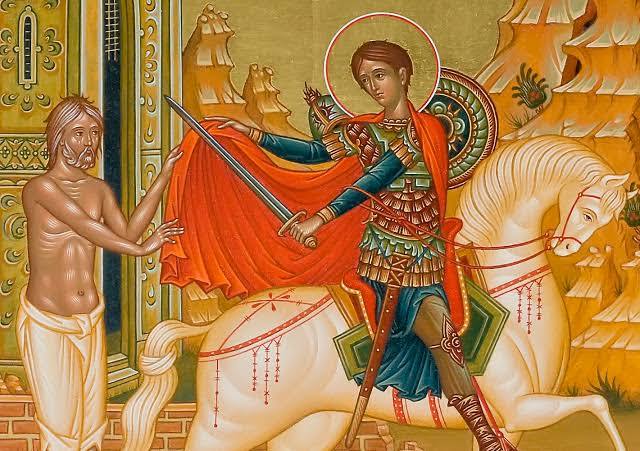
Mula pa sa aming pagkabata doon sa bayan ng Bukawe sa Bulacan palaging nilalarawan kabutihan ng aming Patron mahal San Martin ng Tours sa France kung paano niyang hinati kanyang kapa upang damitan ang giniginaw na dukhang matanda nakasalubong niya sa daan.
Kinagabihan kanyang napanaginipan Panginoong Jesus sa kanyang paanan tangan-tangan kapang ibinigay sa matandang tinulungan, katunayan ng kanyang turo ano mang kabutihan ang inyong gawin sa maliliit ay siya rin ninyong ginagawa sa Kristo na sa atin nakipanahan.
Nguni't hindi lamang iyon ang hiwaga ng kapa ng ating Patrong mahal na dating kawal, sanay sa mga digmaan: nang siya ay mabinyagan, hinasa niya kanyang isipan sa mga aral ng pananampalataya dinalisay sa pananalangin upang lubos mapaangkin sa Panginoon natin.
Upang maging mataimtim sa kanyang pananalangin, nagtutungo si San Martin sa kagubatan at hinuhubad suot niyang kapa tanda ng kababaang-loob sa Panginoon, sinasampay, sinasabit sa mga halaman upang sakali man siya ay hanapin madali siyang tuntunin sa kapa niyang nakabitin.
"Chapele" sa wikang Pranses ang salitang salin ng "kapa" na siyang pinagmulan ng "kapilya" na isang munting pook-dalanginan tulad ng tinutunguhan ni San Martin noon upang Diyos ay makapisan; pagnilayan at tularan kaugalian nitong si San Martin ng Tours hinubad kanyang "kapa" sagisag ng kapangyarihan at katanyagan upang maramtan ng kabanalan ni Kristo-Jesus na "hinubad kanyang pagiging katulad ng Diyos upang mamuhay bilang alipin tulad natin" (Fil.2:7)!
Lord My Chef Sunday Recipe for Soul by Fr. Nicanor F. Lalog II
Solemnity of All Saints, 01 November 2026
Revelation7:2-4, 9-14  ><}}}}*>  1 John 3:1-3  ><}}}}*>  Matthew 5:1-12
Thousands of people arrive to pray at the graves of their relatives at a cemetery during the annual observance of All Saint’s Day in Manila on November 1, 2019. Photo by Ted Aljibe, AFP.
The way we Filipinos say goodbyes illustrates vividly – with a dash of some humor – the theology of our celebrations of All Saints Day and All Souls Day we collectively call as Undas.
When we are in a party or any gathering, we never say we are leaving like alis na ako that sounds rude, or layas na ako that is tinged with anger while diyan na kayo could mean burning of one’s bridges, a sort of total separation.
Normally, we say goodbyes either by saying tutuloy na po ako or mauna na po ako. The po is optional but both are the most kind and accepted way of telling everuyone we are leaving. our hosts we are leaving. Tutuloy na ako literally in English is “I’m coming in”when you are actually going out to leave while mauna na po ako means I’m going first or will go ahead of everybody whereas no one is following you especially the host.
But here are the twists in these Filipino goodbyes: both indicate our being Christians, of our deeply ingrained religiosity no matter how hard some would deny. Whenever we say tutuloy na ako, mauna na ako, we unconsciously or subconsciously express our hunger and thirst for heaven, for eternal life.
To say tutuloy na ako is to express that basic truth we all die with one final destination which is heaven in eternal life.
To say mauuna na ako is an affirmation of our other famous maxim about death, una-una lang yan, that nobody knows who’s going to die among us next.
Every time we bid goodbye to anyone, we express this holy desires to be in heaven, to be with God, to be like all the Saints we celebrate on this first day of November.
When Jesus saw the crowds, he went up the mountain, and after he had sat down, his disciples came to him. He began to teach them, saying: “Blessed are those who hunger and thirst for righteousness for they will be satisfied” (Matthew 5:1-2, 6).
Photo by author, Baguio City, July 2018.
In this time of faith in a mass-mediated culture that thrives in promoting pleasures and merry-making alongside with overflowing food and drinks while more others are starving and dying in hunger and still more are without potable water to drink, we find the fourth beatitude a rarity.
Notice how bacchanalian our generation has become with all the food apps and restaurants offering a plethora of food and drinks so glorified in social media called “food porn”, a prostitution of food and drinks. How sad so many people has become so insensitive in posting all their food in social media without any deference for the poor who could barely make ends meet for a decent meal thrice daily. See how so few among us Catholics really fast or go on abstinence every Ash Wednesday and Good Friday with all of our excuses and alibis.
Photo by author, side entrance to Church of Beatitudes, the Holy Land, May 2019.
Very sad.
Hence, Jesus called “blessed” those who hunger and thirst for righteousness because it is an affirmation of our faith in him who told the devil in the wilderness that “man does not live by bread alone but by every that comes forth from the mouth of God” (Mt.2:4). To hunger and thirst for righteousness is to value more the soul than the body. It is an appetite for the sacred and for things of deeper value and importance than those that are fleeting and superficial like food and drinks and other pleasures including those that bloat our egos.
Blessed are those who hunger and thirst for righteousness because it is a desire to be holy first of all, a desire for God himself, a desire for heaven. Righteousness for the Jews is holiness which is the observance of God’s Laws and Commandments. But, problem with this frame of mind as we have seen since the other Sunday is the tendency to be legalistic, to see more the Laws than the person that ultimately, fails to see God in one another.
Holiness is being filled with God like the souls already in heaven called Saints. They are holy because they have been purified of their sins and therefore filled with God as John tells us in his vision of heaven of great multitudes wearing white robes washed in the Blood of the Lamb.
But for us still on earth, still battling with sin and evil, holiness is being filled with God but not sinless. And because we are filled with God, we strive always to work alongside with Christ, bearing all the pains and sufferings he bore first for us for the sake of righteousness, of justice and peace. In this world when conformity to whatever “everyone is doing” is the rule of the game like corruption, dishonesty, and infidelity, being hungry and thirsty with the poor and suffering is our strongest signs of protest and resistance against the prevailing evils of our time. Being hungry and thirsty for righteousness is also being hungry and thirsty for the Kingdom of God because that is a sharing in Christ’s Passion and Death leading to his glorious Resurrection.
Photo from bloomberg.com of a homeless man in New York City during a fashion week in summer 2019.
The most difficult daily struggle we all contend with is our hunger and thirst, our most basic instincts for the most basic needs of food and water in order to live; without food and water, we grow weak and die. However, hunger and thirst tend us to overindulge with food and drinks because these readily give us pleasures, making us forget the more essential things in life.
That is why the need for some forms of sacrifices like abstinence and fasting not only with food and drinks but anything that gives us pleasure and comfort so that we learn to desire for higher things like God, holiness and virtues.
The fourth beatitude is most timely in a world that has become so consumerist where only matter matters with everything reduced to pera pera lang with God slowly being deleted from daily life scenes. See how our world has become like showbiz with all the glitz and glamor with everything for show or palabas that despite the abundance we now enjoy not only in food and drinks but almost everything, the more we have become empty and alienated within.
Blessed are you if you hunger and thirst for righteousness because it is a grace reminding you of that fact many forget that the world and everything here passes. Being hungry and thirsty for righteousness is having God in your heart, of experiencing his love, of working to love others so that they too may experience God because they have been so hungry and thirsty for love and kindness, care and concern from others.
What do you hunger and thirst for these days?
How sad that with all these technologies we now have meant to bring us closer with one another have actually brought us apart. Worst of all, the very technologies meant to work for us now enslave us, becoming not only the gods of many but masters too. Blessed are you in your hunger and thirst for God because he alone in Christ Jesus can truly satisfy us here and hereafter. Dwell in the love of God in Jesus Christ John tells us in the second reading like the saints who have gone ahead of us, resisting all evils and temptations to sin for only the Lord satisfies us. Amen. A blessed All Saints’ Day to you!
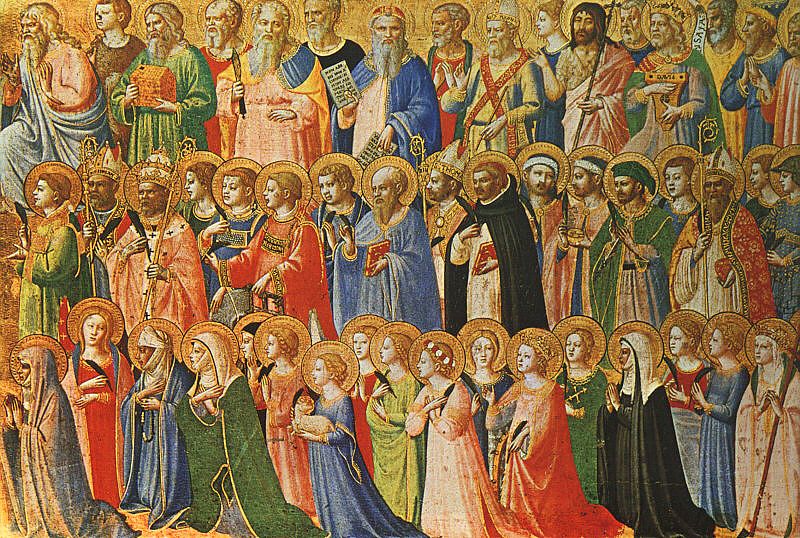
A panel of Fra Angelico’s painting (1423-24) “The Forerunners of Christ with Saints and Martyrs” from wikipedia.
Lord My Chef Daily Recipe for Soul by Fr. Nicanor F. Lalog II
Wednesday, Twenty-Fifth Week in Ordinary Time, Year II
Feast of St. Padre Pio of Pietrelcina, 23 September 2026
Proverbs 30:5-9     <*((((><  +  ><))))*>     Luke 9:1-6
Your words today,
dear God our Father
are so comforting and
reassuring of your loving
presence; however,
you teach us also too
to completely trust you
so that we may be comforted
and reassured,
thereby learn
when enough is
really enough.
Two things I ask of you, deny them not to me before I die: Put falsehood and lying far from me, give me neither poverty nor riches; provide me only with the food I need; lest, being full, I deny you, saying, “Who is the Lord?” Or, being in want, I steal, and profane the name of my God (Proverbs 30:7-9).
Teach me to be content
with whatever there is for me,
not desiring more than I need
so that I remain open for you
and your work,
for you O Lord is more than enough;
teach me to learn to stop
in pursuing whatever
I set my eyes or heart on when
it is causing more harm than
joy and wellness for it is only
in following you enough is enough;
teach me, Lord,
to be like St. Padre Pio
in leading a simple life,
just praying,
hoping and not worrying
for you O Lord is more than
enough.
Amen.
Lord My Chef Daily Recipe for Soul by Fr. Nicanor F. Lalog II
Friday, Twenty-first Week in Ordinary Time, Year II, 28 August 2026
Memorial of St. Augustine, Bishop & Doctor of the Church
1 Corinthians 1:1-9     <*((((><  +  ><))))*>     Matthew 24:42-51
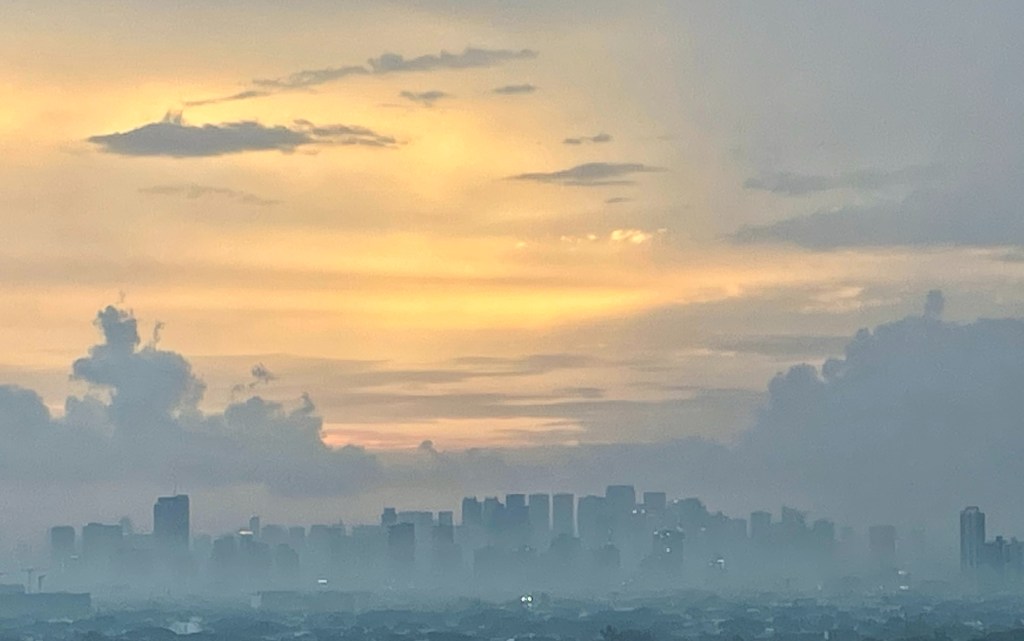
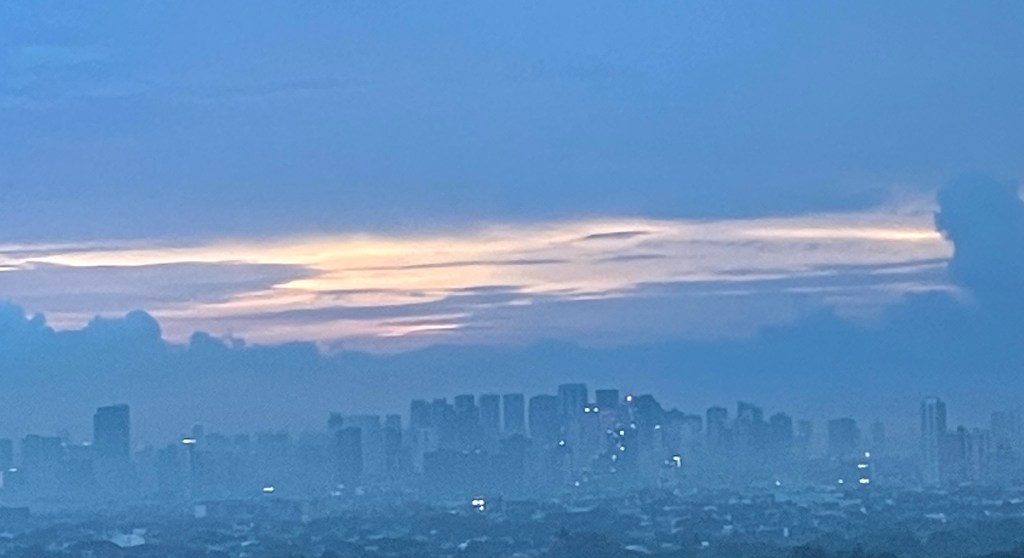
Photo by author, view from Antipolo City of the Ortigas Center, August 2022.
Lord Jesus Christ,
help me to be wise like
St. Augustine whose feast
we celebrate today:
like him through your grace
O Lord, help me overcome
my worldly desires by
lovingly embracing your Cross;
keep my heart aflame
and restless with your love, Jesus,
lit with your truth and wisdom
ready to welcome you when you
return any moment.
Jesus said to his disciples: Stay awake! For you do not know on which day your Lord will come (Matthew 24:42).
Photo by author, view from Antipolo City of the Ortigas Center, August 2022.
Make me wise enough,
Jesus to be foolish in following you,
in embracing your Cross;
keep me sensible like
the wise virgins lit with
your love and presence in my heart
sustained with that deep,
personal relationship rooted
in prayer like an oil
keeping the fire burning
in every lamp;
at the same time,
make me a fool like St. Paul,
a fool for you, O Christ,
believing and relying
in the power of your Cross.
Amen.
Photo by author, view from Antipolo City of the Ortigas Center, August 2022.
Lord My Chef Daily Recipe for Soul by Fr. Nicanor F. Lalog II
Thursday, Twenty-first Week in Ordinary Time, Year II, 27 August 2026
Memorial of St. Monica, Married Woman
1 Corinthians 1:1-9     <*((((><  +  ><))))*>     Matthew 24:42-51
Photo of St. Monica from the cover of the book “St. Monica Club: How to Wait, Hope and Pray For Your Fallen-away Loved Ones” by Maggie Green, Sophia Institute Press, 2019.
Today we pray
Lord Jesus for all mothers -
especially those alone
and widowed,
the elderly and sick mothers,
those with disabilities,
young mothers,
single mothers,
those mothers silently
crying in pain due to
unfaithful, irresponsible husband
or wayward children:
for all mothers praying hard
for their husband and children
like St. Monica...
How lovely are the words
of St. Paul today to the Corinthians,
so appropriate on this Memorial
of St. Monica,
mother of St. Augustine:
I give thanks to my God always on your account for the grace of God bestowed on you in Christ Jesus, that in him you were enriched in every way, with all discourse and all knowledge, as the testimony to christ was confirmed among you, so that you are not lacking in any spiritual gift as you wait for the revelation of our Lord Jesus Christ (1 Corinthians 1:4-7).
Photo by author, Anvaya Resort, Morong, Bataan, 21 July 2026.
Thank you, too,
Lord Jesus,
 for the gift
of our mothers,
in bestowing upon them
every spiritual blessing
as well as physical strength,
strong will,
and fighting spirit
who have guided us with their
enlightenment,
hard work
and perseverance;
for their immense love
and sacrifices beginning
in our life journey in their womb
up to our adulthood;
they have always been there
with us,
believing in us,
hoping we get better
physically,
mentally,
emotionally,
and spiritually
like St. Monica in her love
for St. Augustine and
his father.
Bless all mothers today,
Jesus:
like St. Monica
console them in experiencing
the transformation of their
children;
we pray also for all
departed mothers;
reward them with your
gift of eternal peace.
Amen.
Of all the months in the year, August has the most beautiful name of all but sadly most maligned as a “ghost month”: from the Latin augustus that signifies reverence or to hold someone in high regard, august as an adjective means “respected and impressive” like when we say “in this august hall of men and women” of science or faith.
Yes, it was also taken from the name of the Roman emperor Augustus Caesar but like the rest of the months and days of each year, it is always a blessed one.
No day nor date nor time is malas because these each day is a gift from God who is all good. Nothing bad can come from God.
Moreover, when God became human like us in the coming of Jesus Christ, life has become holy, filled with God, debunking those ancient beliefs of the Divine being seen in various cosmic forces. Pope Benedict explained this so well in his second encyclical:
Photo by a friend in Washington, 28 July 2026.
In this regard a text by Saint Gregory Nazianzen is enlightening. He says that at the very moment when the Magi, guided by the star, adored Christ the new king, astrology came to an end, because the stars were now moving in the orbit determined by Christ[2]. This scene, in fact, overturns the world-view of that time, which in a different way has become fashionable once again today. It is not the elemental spirits of the universe, the laws of matter, which ultimately govern the world and mankind, but a personal God governs the stars, that is, the universe; it is not the laws of matter and of evolution that have the final say, but reason, will, love—a Person. And if we know this Person and he knows us, then truly the inexorable power of material elements no longer has the last word; we are not slaves of the universe and of its laws, we are free. In ancient times, honest enquiring minds were aware of this. Heaven is not empty. Life is not a simple product of laws and the randomness of matter, but within everything and at the same time above everything, there is a personal will, there is a Spirit who in Jesus has revealed himself as Love[3]. (#5, Spe Salvi by Pope Benedict XVI, 30 November 2007)
That’s quite a volume but so lucid, so true, so beautiful. Especially this part: “It is not the elemental spirits of the universe, the laws of matter, which ultimately govern the world and mankind, but a personal God governs the stars, that is, the universe; it is not the laws of matter and of evolution that have the final say, but reason, will, love—a Person.”
This is the whole meaning of the recent Sunday gospel of Jesus walking on water: God in total control of this world.
“Christ Walking On Water” painting by Julius Servus von Klever (1880) from commons.wikipedia.org.
It is this Person of Jesus Christ why so many great men and women then and now have abandoned their previous ways of life to lead holy lives even in the face of death.
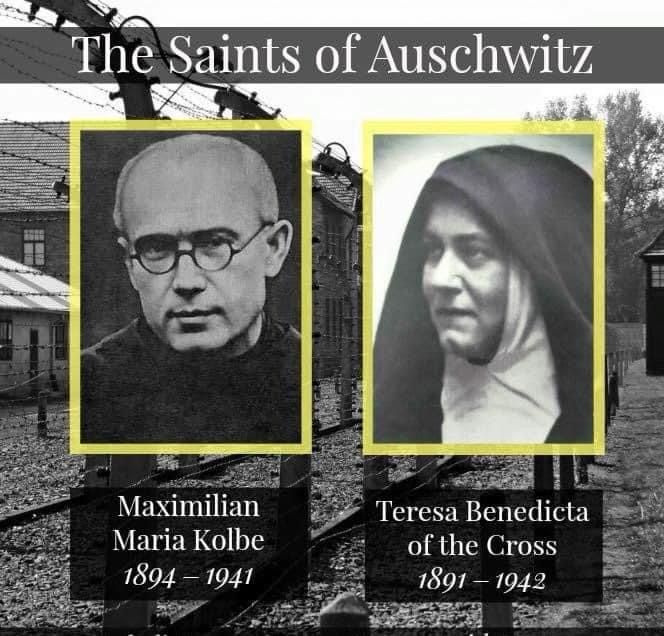
Very interesting in this modern time are two great saints we celebrate on this month of August, St. Teresa Benedicta of the Cross (August 09) and St. Maximilian Kolbe (August 14) who died at the gas chambers of Auschwitz during the Second World War.
St. Teresa Benedicta is the German philosopher Edith Stein. She came from a prosperous Jewish family gifted with a great mind becoming one of the first female university student and later professor in Germany.
An associate of the famed Edmund Husserl of the philosophical method of phenomenology, St. Teresa Benedicta became an atheist during her teenage years; but, upon further studies and prayer, converted into Catholicism, becoming a Carmelite nun where she adopted her new name. She wrote that “Those who seek truth seek God, whether they realize it or not“.
She actually had all the chances to leave for South America and then to Switzerland to escape the Nazis but opted to stay in their monastery in the Netherlands with her younger sister Rosa who had also converted as Catholic and joined the Third Order Carmelite. When they were arrested on August 2, 1942, she told her, “Come, Rosa… we go for our people.”
Photo from FB page of Scott Hahn, 09 August 2024.
St. Teresa Benedicta honored her Jewish roots by dying among them as a martyr of Christ, one who had “learned to live in God’s hands” according to Sr. Josephine Koeppel, OCD, a translator of much of her works.
According to various accounts, St. Teresa Benedicta showed great inner strength by encouraging her fellow prisoners to have faith in God while helping in looking after the small children when their mothers were so distressed to do so. One woman who survived the war wrote: “Every time I think of her sitting in the barracks, the same picture comes to mind: a Pieta without the Christ.”
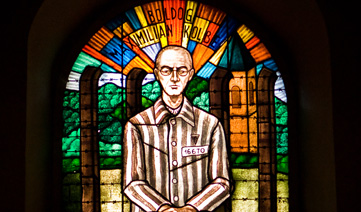
Dying ahead of her in Auschwitz on August 14, 1941 was St. Maximilian Kolbe, a Franciscan priest who was arrested for his writings against the evil Nazis. It was actually his second time to be arrested.
When a prisoner had escaped from the camp, authorities rounded up ten men to die in exchange of the lone escapee. Fr. Kolbe volunteered to take the place of a married man with children. They were all tortured and starved in order to die slowly in pain.
A devotee of the Blessed Virgin Mary, St. Maximilian was injected with carbolic acid on the eve of the Assumption after guards found him along with three other prisoners still alive, without any signs of fear like screaming but silently praying.
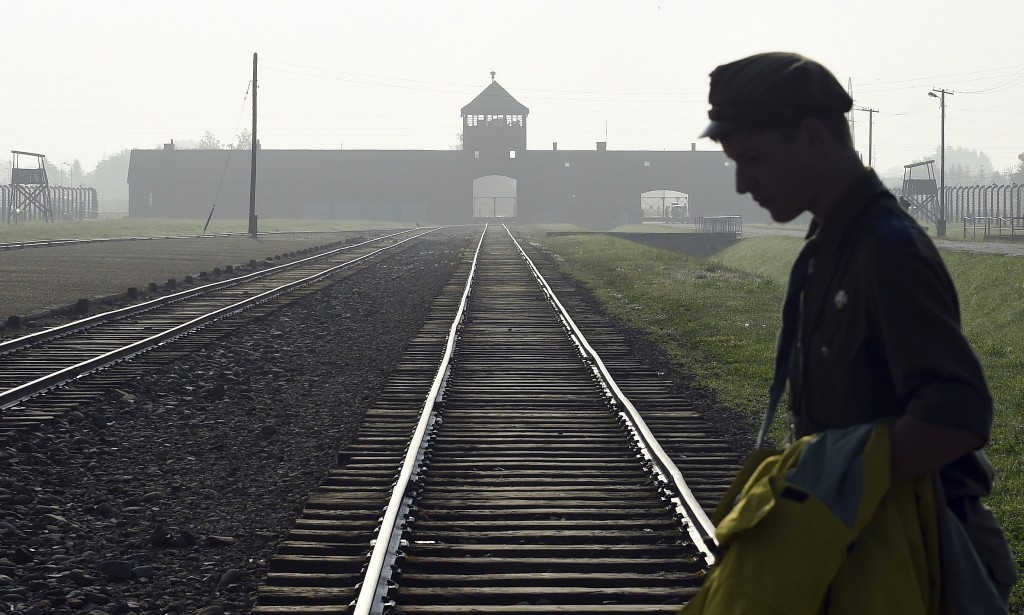
Photo of Auschwitz from Google.
We no longer have gas chambers but atrocities against human life continue in our time, hiding in the pretext of science and laws with some like the wokes exaggerating the truth they believe or follow in the name of inclusivity and various rights.
And yet, there are men and women, young and old alike including those not yet born in their mother’s womb are hunted and killed both for profits and for convenience to correct what many perceived as excesses and wrongs in the society like the grim drug war of the past administration.
Or those corrupt government officials and despicable politicians, from the highest offices down to the barangay behind the flood control scam that are all ghost projects that have submerged vast areas and communities into floods.
The Nazi officers and soldiers of Auschwitz of the past and those involved in the flood control scam as well as the tokhang drug war remind us the true “ghosts” and evil spirits of our time sowing hatred and deaths are people who may be well-dressed, even educated in the best schools, and come from devout or “normal” families. They sow evil every day without choosing any particular month, blindly following orders without much thinking and reflections or introspection. These people entrusted with positions and power are mostly the ones who bring ghosts into our lives causing so much miseries among our people especially the poor ones. Many times, they insist on following or speaking the truth – a truth so empty of the person of Jesus Christ who is “the way and the truth and the life” (Jn.14:6).
Photo by author, 21 July 2026.
I have always believed that the opposite of love is not hatred but hopelessness – without hope, people will just destroy everything for the sake of wealth and power.
Saints have shown us that with much love in our hearts in Jesus Christ, we are also filled with his hopes for better, holier days and months.
By the lives of the many great saints of August, or of any other month for that matter, we are reminded that holiness is not being sinless but being filled with God, being converted daily to the truth of Jesus Christ by allowing that holiness to spill over and flow onto others with our lives of authenticity expressed in charity and mercy, kindness and justice, humility and openness with one another. As St. Paul had written, “Do not conform yourself to this age but be transformed by the renewal of your mind, that you may discern what is the will of God, what is good and pleasing and perfect” (Rom.12:2).
And so, discard those thoughts of a ghost month and let us keep every month an august time and space for our good deeds to make Christ’s loving presence felt among us. A blessed week to everyone!
Lord My Chef Daily Recipe for Soul by Fr. Nicanor F. Lalog II
Friday, Nineteenth Week in Ordinary Time, Year II
Memorial of St. Maximilian Kolbe, Priest & Martyr, 14 August 2026
O God our loving Father,
help us to always remember -
our origins and beginnings,
our past especially
the people who had cared
and nurtured us,
our parents and siblings,
relatives and friends,
those who gave us
the breaks and sparks
to begin our great journeys in life,
the people who stood by
when we were down
and nobody believed us:
dear God,
remind us always
of the basic fact,
of the principle and foundation
of our being:
that we came from you
and shall return to you.
Forgive us,
Lord God,
in forgetting you always,
in forgetting others,
in forgetting
we are nothing without you;
touch us,
nudge us if needed
whenever we forget
you and our lowly beginnings;
let us not be amazed
by our feats
and abilities.
But you were captivated by your own beauty, you used your renown to make yourself a harlot, and you lavished your harlotry on every passer-by, whose own you became. Yet I will remember the covenant I made with you when you were a girl, and I will set up an everlasting covenant with you, that you may remember and be covered with confusion, and that you may be utterly silenced for shame when I pardon you for all you have done, says the Lord God (Ezekiel 16:15, 60-63).
Photo of Auschwitz from internet.
As we celebrate today
the Memorial of your most
faithful servant
St. Maximilian Kolbe
who offered himself not just
once for a fellow prisoner in
Auschwitz for he had
dedicated himself to you
entirely before World War II
began,
may we remember
the lessons that led
to the Holocaust;
like St. Maximilian Kolbe
may we continue to remember
your covenant in Jesus Christ
by making a stand against
injustice and immorality,
in defending life especially
at its weakest points,
and most of all,
in remembering
the equal dignity of every person
created in your image and likeness;
like what Jesus told
the Pharisees,
let us go back
to Paradise,
let us return to you,
O God,
as our Lord and Master
alone,
not ourselves,
nor our pride and convenience,
nor anyone
nor their flimsy,
modern thoughts
and ideas;
like St. Maximilian Kolbe,
may we have the courage
to always stand forward
for what is true
and good
and holy.
Amen.
Lord My Chef Daily Recipe for Soul by Fr. Nicanor F. Lalog II
Friday in the Seventeenth Week of Ordinary Time, Year II, 31 July 2026
Memorial of St. Ignatius of Loyola, Priest
Photo by author, Sacred Heart Novitiate, Novaliches, Quezon City, 20 March 2024.
Glory and praise
to you, O God our loving
Father for the gift of
St. Ignatius of Loyola
who taught us that
"Man is created
to praise, reverence,
and serve God our Lord,
and by this means
to save his soul"
(First Principle and Foundation,
Spiritual Exercises #23).
Photo by author, Sacred Heart Novitiate, Novaliches, Quezon City, 20 March 2024.
How sad,
dear God,
that the most painful
truth is that you are most
often rejected by us
who assume to know you most,
too familiar with you and
your ways like what
our two readings reveal today:
Jeremiah was rejected
by your people
led by their priests
after speaking your words
to them to change their evil
ways lest their Temple lie in ruins
like in Shiloh along with
other disasters God was planning
to punish them (Jeremiah 26:4, 7-9);
in the gospel,
Jesus went home to Nazareth
but "the people took offense
at him" for his mighty
words and deeds
(Matthew 13:57-58).
Photo by author, Sacred Heart Novitiate, Novaliches, Quezon City, 20 March 2024.
Two scenarios,
same message
of rejecting you,
O God because we
believe more in our selves,
in our ideas and understanding
of who you are than believing
your very person in
Jesus Christ;
teach us, O Lord,
to be empty always
so that you may fill us
with your love
like St. Ignatius
who taught us to
pray and contemplate
to attain your love:
"Take, Lord,
and accept
all my liberty,
my memory,
my understanding,
and my entire will,
all that I have and possess.
Thou hast given all to me.
To Thee, O Lord, I return it.
All is Thine,
dispose of it wholly
according to Thy will.
Give me Thy love
and Thy grace,
for this is sufficient
for me"
(#234, Spiritual Exercises).

All for your greater glory,
O Lord.
Amen.
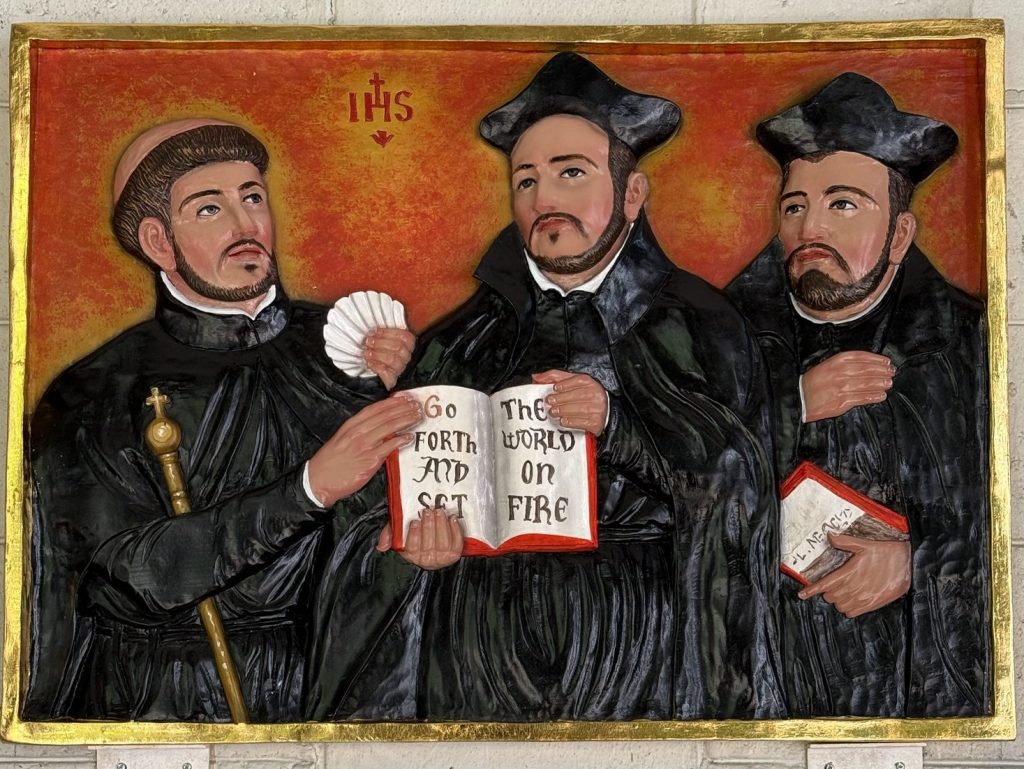
Photo by author, the three core group of the Society of Jesus founded by St. Ignatius of Loyola at the middle, St. Francis Xavier at his right, and St. Peter Faber at his left; frame at the facade of Sacred Heart Novitiate, Novaliches, Quezon City, 20 March 2024.
Lord My Chef Daily Recipe for the Soul by Fr. Nicanor F. Lalog II
Monday, Memorial of Sts. John Fisher & Thomas More, Martyrs, 22 June 2026
2 Kings 17:5-8, 13-15, 18     <*((((>< + ><))))*>     Matthew 7:1-5
Photo by author, Malolos Cathedral, June 2019.
Teach us,
O Lord, to pray
and persevere like
Sts. John Fisher
and Thomas More
to always have the same
wisdom and courage
to serve our country well
by remaining your faithful servants
first; in this world so advanced
in science and technology,
many have veered away from
you, God our Father;
we have come to worship so many idols:
our bloated egos with all kinds
of selfish thoughts and ideas
we hide as rights and freedom;
our body that we adore,
more like vanity than health;
other personalities we blindly follow
and imitate; relationships and habits
that take precedence over you,
O Lord.
May the fall of Israel to Assyria
in the first reading remind us today
to always examine the "plank" in our
eyes Jesus spoke of in the gospel,
of how modern things may be blinding us,
leading us away from you, God
who is our life and meaning.
Amen.
Photo by author, St. Michael Retreat House, Antipolo City, 16 June 2026.
Lord My Chef Daily Recipe for the Soul, 01 November 2025
Saturday, Solemnity of All Saints
Revelation 7:2-4, 9-24 ><]]]'> 1 John 3:1-3 ><]]]'> Matthew 5:1-12
Thousands of people arrive to pray at the graves of their relatives at a cemetery during the annual observance of All Saint’s Day in Manila on November 1, 2019. Millions of Filipinos flocked to cemeteries to visit and pray at the graves of their loved ones to mark the holiday. Photo by Ted Aljibe, AFP.
Many are amused even some of us Filipinos why all roads lead to cemeteries during this time of the year to celebrate the Solemnity of All Saints when remembering our departed loved ones actually falls on the following day, November 2.
There’s nothing wrong with this tradition except that people forget celebrating Mass on All Saints’ Day which is the essence of the feast ranked as a Solemnity, the highest in our liturgy. Offer a Mass first for your departed loved ones on November 1 before going to the cemetery!
More than the close connections of All Saints’ Day and All Souls’ Day in its theology and tradition, our celebration of these two feasts collectively referred to as Undas is the classic tension of our experiences of heaven on earth, of the here and not yet, of the mixture of joy and sadness within us when we remember our dead best expressed in our grief and mourning.
When Jesus saw the crowds, he went up the mountain, and after he had sat down, his disciples came to him. He began to teach them, saying: “Blessed are the poor in spirit, for theirs is the kingdom of heaven. Blessed are they who mourn, for they will be comforted” (Matthew 5:1-4).
From forbes.com, 2019.
In a world that thrives and promotes so much fun and merry-making, our second beatitude is difficult to understand or even grasp in this time of faith in a mass-mediated culture.
What is “blessed” with grieving and mourning or crying when you have lost a loved one, like a parent or a child or a friend?
Pope Benedict XVI explained in his book “Jesus of Nazareth” there are two kinds of mourning that the gospels offer us exemplified by the two most extreme of the Apostles, Judas Iscariot who betrayed Jesus and, Simon Peter who denied the Lord thrice (pp.86-89).
Photo by author, Church of St. Anne, Jerusalem, Israel, May 2017.
This first kind of mourning as shown by Judas Iscariot is when one has lost hope, succumbing to the miseries of losing a beloved and becomes mistrustful of love that leads to self-destruction. It is the worst kind of mourning that eats away and destroys man within just like Judas Iscariot who hanged himself (see Matt. 27:3-5).
The second kind of mourning according to Pope Benedict XVI that Jesus must be referring to as “blessed” in his Beatitudes which leads to salvation is when the mourning is caused by an encounter with the truth that leads to conversion like what happened to Simon Peter when he was struck by the gaze of Jesus that he burst into healing tears and cleansed his soul to enable him to begin anew in his life in the Lord (see Lk.22:60-61,62).
This will have its lovely conclusion eight days after Easter before Jesus ascended into heaven when he asked Simon Peter thrice, “Do you love me?” (Jn.21:15ff.) to remind him of that episode that eventually pushed him to follow Christ unreservedly “by taking care of his sheep”. Guided by these thoughts of Pope Benedict XVI, let us see reflect the blessedness of weeping…
Blessed are those who weep because that means they have love in their hearts. Deaths and bad news that befall our loved ones sadden us, even jolt us with deep pain that move us to console them, to suffer with them, and to be one with them by reconnecting with them and their loved ones like when we go to a funeral or a wake.
This did not happen with Judas Iscariot. The little love he had in his heart when he realized his sin was completely wiped out when he chose to surrender totally to evil, finding no more hope for forgiveness and reconciliation with Jesus.
Photo by Mr. Jay Javier, September 2024.
Never lose hope in Jesus. Seek that love in your heart. Seek Jesus in that tiny voice telling you to always come home to him. Do not be shy nor ashamed of your loss and failure. Keep that fire of love in Jesus burning.
Do not let grief overcome and consume you, wiping out the embers of love left in your heart with the loss of a loved one. Life goes on in Jesus and in that same love we have in our hearts that surprisingly even grows deeper as we move on after the death of a loved one.
In the recent ghost projects scam by government and elected officials, we too felt the pain of loss too in the billions of pesos stolen from us. We are deeply affected because we love the Philippines; let us keep that love for the country burning within us by taking concrete steps against corruption while preventing opportunists from plunging us into chaos.
Blessed are those who weep because more than the love they have in their hearts, they have been loved first of all. We weep and grieve the death of a beloved family member or relative or friend because of the love they have given us, of the kindness they have shown us, and the care they have lavished upon us.
Simon Peter did not merely have love in his heart; he was so loved by Christ!
Luke dramatically described to us how Peter’s eyes met the merciful and loving eyes of Jesus while he was denying the Lord. It must have struck him so hard that immediately he felt contrition for his sin, feeling strongly the need to reform himself and reconnect with the Lord. He could not let the imperfect love he has in his heart to just go to waste that is why when he wept bitterly on that Holy Thursday evening, it was not the end but the beginning of another chapter in his beautiful story of love for Jesus. It was precisely what he meant when he told Jesus at Tiberias, “Lord, you know everything; you know that I love you” (Jn.21:17) – that despite his weaknesses and failures, he loves Jesus, he tries so hard to love Jesus in his little ways.
There’s a saying that “If you have love in your heart, you have been blessed by God; if you have been loved, you have been touched by God.” We are blessed in mourning our departed loved ones because through them, we felt being touched by God. That is why we have to move on after every death – so we may love more those left around us for them to feel God’s loving touch too!
Residents of Hagonoy Bulacan walk their way to flooded portions of premise surrondings St. Anne Parish as they protest this was following exposes of flood control anomalies. The Bulacan has been under scrutiny for receiving multi million worth of flood control projects but still suffers severe flooding. (Photo by Michael Varcas)
Blessed are those who mourn because that is when we actually stand for what is true and good, for what is just and right.
When we weep, it does not mean we have lost; in fact, even in the face of apparent loss like Jesus on the Cross, mourning is the most firm expression of our belief in what is right and just, and what is true and good.
According to Pope Benedict, this blessed mourning that leads to salvation is found at the death of Jesus Christ where his Mother, the Blessed Virgin Mary stood by the foot of his Cross with the beloved disciple and other women (Ibid.,p. 87). At the Cross, Mary showed us that mourning is blessed because it is the strongest expression of our solidarity with Christ, of our going against evil and sin.
In this world when conformity to whatever “everyone is doing” is the rule of the game like corruption, dishonesty, infidelity, and lies, mourning and weeping with the victims of oppression and persecution and corruption too can be our strongest signs of protest and resistance against the prevailing evils of our time. When we weep and mourn for victims of violence and evil, that is when we become God’s instruments of his comfort to his people, when we strengthen them in their pains and sufferings.
To comfort means “to strengthen” – from the Latin cum fortis, “with strength”. When we mourn and stand by those weeping and suffering, we are blessed because that is when we resolve to live and love more like Christ on the Cross.
Photo by Dra. Mai B. Dela Peña, Mt. Carmel, Israel, 2015.
What are your griefs today?
Blessed are you in your weeping not only in having love in your heart but most of all, for being loved. Dwell in the love of God in Jesus Christ like the saints who have gone ahead of us, resisting all evils and temptations to sin for the Lord comforts us his people always. Amen.A blessed All Saints’ Day to you! Fr. Nicanor F. Lalog II, Our Lady of Fatima University, Valenzuela City
*This is based on our previous blog in 2022. Salamuch.