Coming home

Quiet Storm by Fr. Nicanor F. Lalog II, 20 August 2026
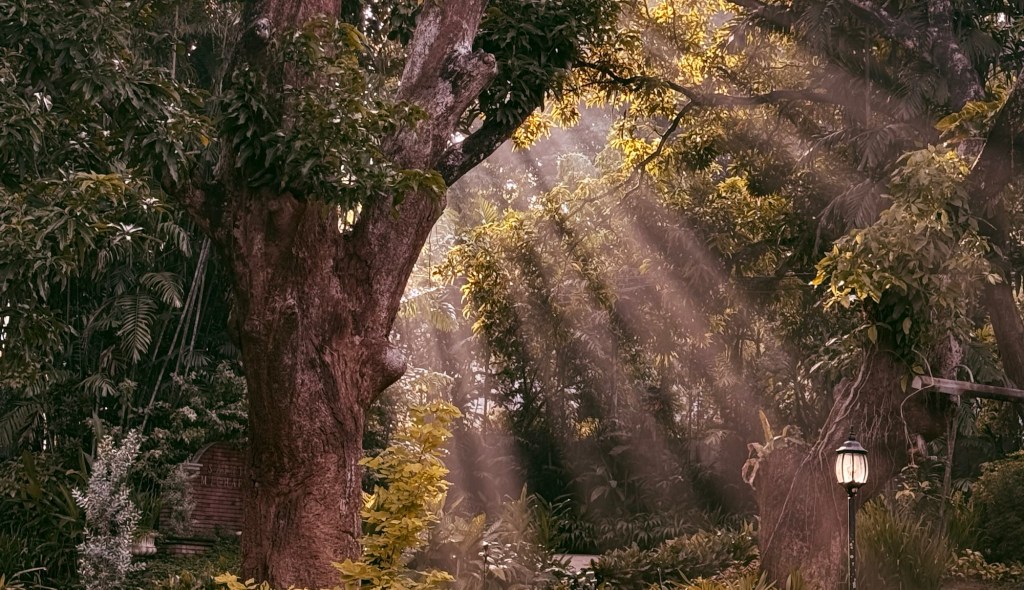
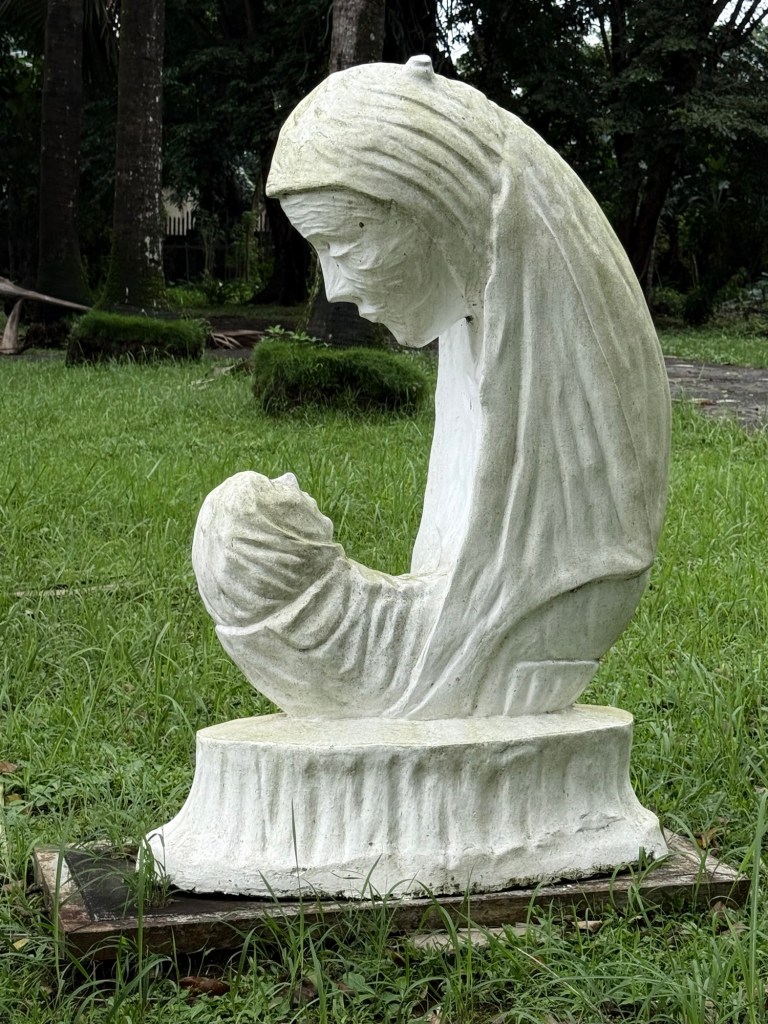
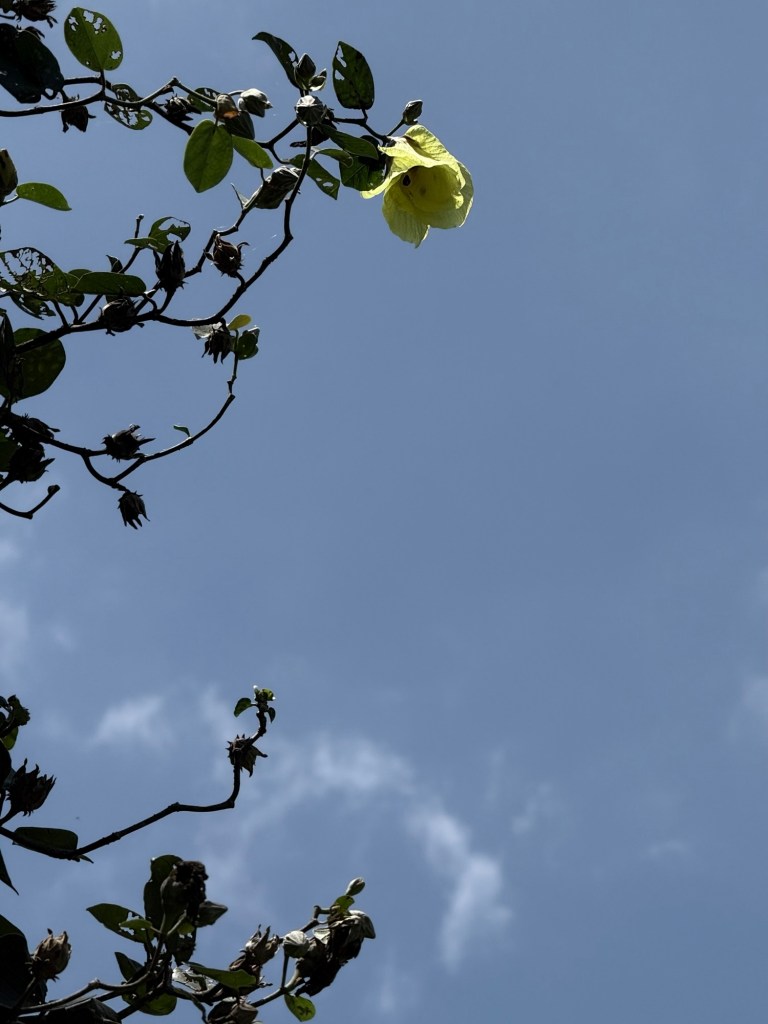
Photo by author, Anvaya Resort, Bataan, 21 July 2026.
Let me come home to you, Lord God:
to gaze in your loving eyes anew,
be wrapped around with your tight embrace
without being judged nor blamed.
Let me come home to you, Lord God:
with nothing at all,
to be poor of material wealth and
rich in Spirit and virtues,
empty of pride,
filled with your humility and
simplicity
so scarce of everything
abundant in you and your love.
Let me come home to you, Lord God:
no longer afraid of the dark and
everything not yet known and seen,
nor terrified of great waves of tasks
and duties,
of strong winds like what people think
and say about me because in you alone
is my certainty as well as safety and security.
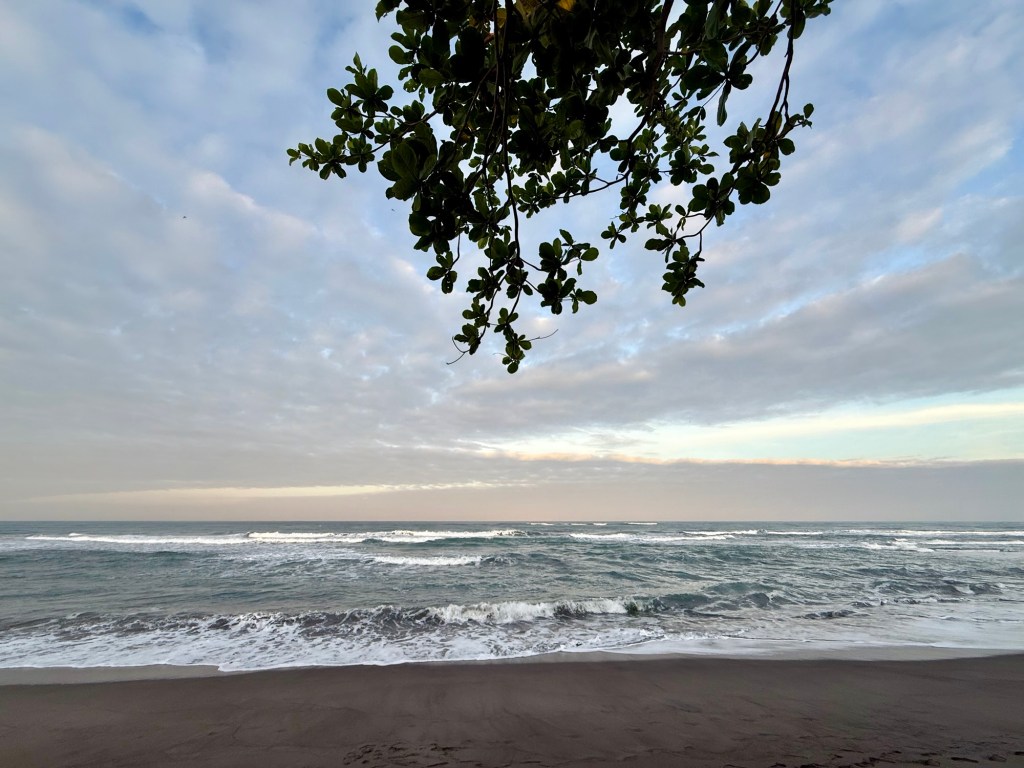
Photo by author, Pundaquit, San Antonio, Zambales, 15 May 2025.
Let me come home to you, Lord God:
to be nourished by your words
that give life and meaning,
to be quenched of my thirst with your
living water that restores my being,
cleanses me of my sins and shame.
Let me come home to you, Lord God:
to rest in you,
be at home in you
because you are my origin,
my root
my home
my peace
my destination in this long journey
in life for you are
my Lord
and my God.
Amen.
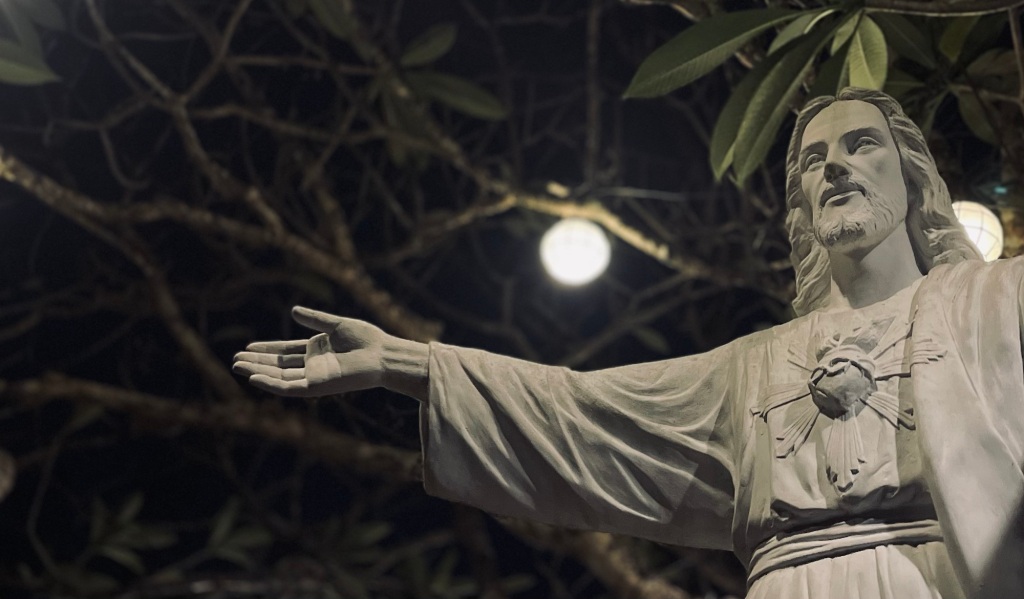
Photo by author, San Juan, La Union, 09 January 2026.

August month, not ghost month

Quiet Storm by Fr. Nicanor F. Lalog II, 19 August 2026
Photo by Boris Pavlikovsky on Pexels.com

Of all the months in the year, August has the most beautiful name of all but sadly most maligned as a “ghost month”: from the Latin augustus that signifies reverence or to hold someone in high regard, august as an adjective means “respected and impressive” like when we say “in this august hall of men and women” of science or faith.

Yes, it was also taken from the name of the Roman emperor Augustus Caesar but like the rest of the months and days of each year, it is always a blessed one.

No day nor date nor time is malas because these each day is a gift from God who is all good. Nothing bad can come from God.

Moreover, when God became human like us in the coming of Jesus Christ, life has become holy, filled with God, debunking those ancient beliefs of the Divine being seen in various cosmic forces. Pope Benedict explained this so well in his second encyclical:

Photo by a friend in Washington, 28 July 2026.

In this regard a text by Saint Gregory Nazianzen is enlightening. He says that at the very moment when the Magi, guided by the star, adored Christ the new king, astrology came to an end, because the stars were now moving in the orbit determined by Christ[2]. This scene, in fact, overturns the world-view of that time, which in a different way has become fashionable once again today. It is not the elemental spirits of the universe, the laws of matter, which ultimately govern the world and mankind, but a personal God governs the stars, that is, the universe; it is not the laws of matter and of evolution that have the final say, but reason, will, love—a Person. And if we know this Person and he knows us, then truly the inexorable power of material elements no longer has the last word; we are not slaves of the universe and of its laws, we are free. In ancient times, honest enquiring minds were aware of this. Heaven is not empty. Life is not a simple product of laws and the randomness of matter, but within everything and at the same time above everything, there is a personal will, there is a Spirit who in Jesus has revealed himself as Love[3]. (#5, Spe Salvi by Pope Benedict XVI, 30 November 2007)

That’s quite a volume but so lucid, so true, so beautiful. Especially this part: “It is not the elemental spirits of the universe, the laws of matter, which ultimately govern the world and mankind, but a personal God governs the stars, that is, the universe; it is not the laws of matter and of evolution that have the final say, but reason, will, love—a Person.”

This is the whole meaning of the recent Sunday gospel of Jesus walking on water: God in total control of this world.

“Christ Walking On Water” painting by Julius Servus von Klever (1880) from commons.wikipedia.org.

It is this Person of Jesus Christ why so many great men and women then and now have abandoned their previous ways of life to lead holy lives even in the face of death.

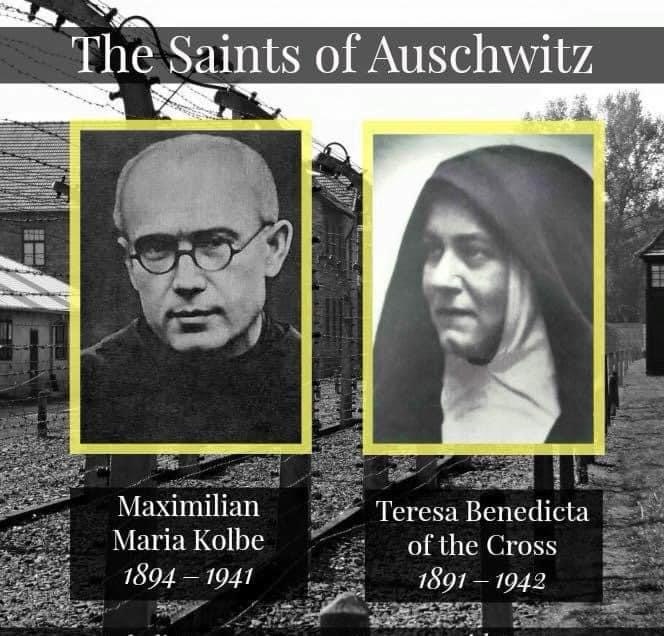
Very interesting in this modern time are two great saints we celebrate on this month of August, St. Teresa Benedicta of the Cross (August 09) and St. Maximilian Kolbe (August 14) who died at the gas chambers of Auschwitz during the Second World War.

St. Teresa Benedicta is the German philosopher Edith Stein. She came from a prosperous Jewish family gifted with a great mind becoming one of the first female university student and later professor in Germany.

An associate of the famed Edmund Husserl of the philosophical method of phenomenology, St. Teresa Benedicta became an atheist during her teenage years; but, upon further studies and prayer, converted into Catholicism, becoming a Carmelite nun where she adopted her new name. She wrote that “Those who seek truth seek God, whether they realize it or not“.

She actually had all the chances to leave for South America and then to Switzerland to escape the Nazis but opted to stay in their monastery in the Netherlands with her younger sister Rosa who had also converted as Catholic and joined the Third Order Carmelite. When they were arrested on August 2, 1942, she told her, “Come, Rosa… we go for our people.”

Photo from FB page of Scott Hahn, 09 August 2024.

St. Teresa Benedicta honored her Jewish roots by dying among them as a martyr of Christ, one who had “learned to live in God’s hands” according to Sr. Josephine Koeppel, OCD, a translator of much of her works.

According to various accounts, St. Teresa Benedicta showed great inner strength by encouraging her fellow prisoners to have faith in God while helping in looking after the small children when their mothers were so distressed to do so. One woman who survived the war wrote: “Every time I think of her sitting in the barracks, the same picture comes to mind: a Pieta without the Christ.”

Dying ahead of her in Auschwitz on August 14, 1941 was St. Maximilian Kolbe, a Franciscan priest who was arrested for his writings against the evil Nazis. It was actually his second time to be arrested.

When a prisoner had escaped from the camp, authorities rounded up ten men to die in exchange of the lone escapee. Fr. Kolbe volunteered to take the place of a married man with children. They were all tortured and starved in order to die slowly in pain.

A devotee of the Blessed Virgin Mary, St. Maximilian was injected with carbolic acid on the eve of the Assumption after guards found him along with three other prisoners still alive, without any signs of fear like screaming but silently praying.

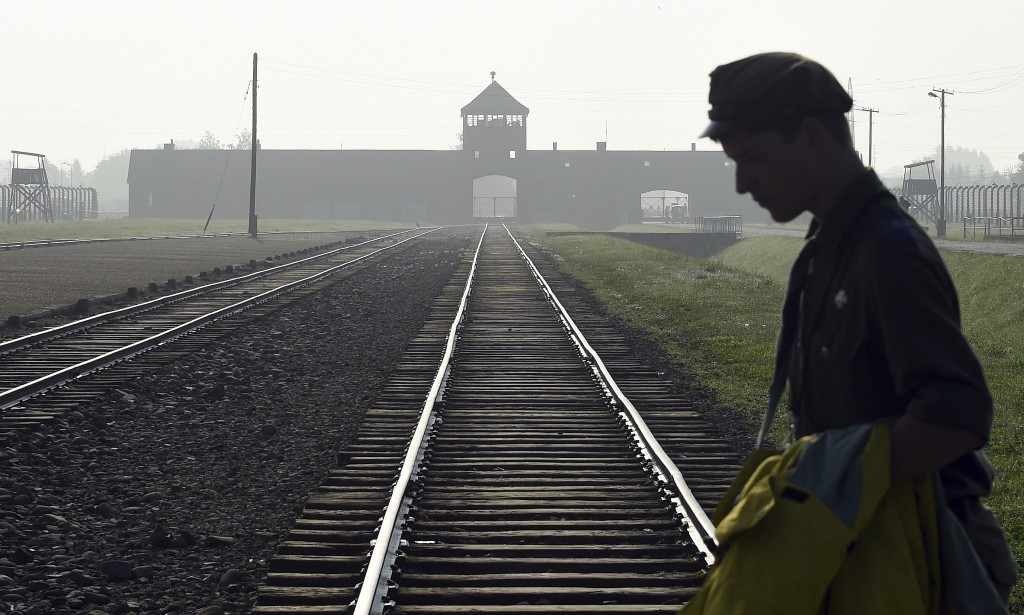
Photo of Auschwitz from Google.

We no longer have gas chambers but atrocities against human life continue in our time, hiding in the pretext of science and laws with some like the wokes exaggerating the truth they believe or follow in the name of inclusivity and various rights.

And yet, there are men and women, young and old alike including those not yet born in their mother’s womb are hunted and killed both for profits and for convenience to correct what many perceived as excesses and wrongs in the society like the grim drug war of the past administration.

Or those corrupt government officials and despicable politicians, from the highest offices down to the barangay behind the flood control scam that are all ghost projects that have submerged vast areas and communities into floods.

The Nazi officers and soldiers of Auschwitz of the past and those involved in the flood control scam as well as the tokhang drug war remind us the true “ghosts” and evil spirits of our time sowing hatred and deaths are people who may be well-dressed, even educated in the best schools, and come from devout or “normal” families. They sow evil every day without choosing any particular month, blindly following orders without much thinking and reflections or introspection. These people entrusted with positions and power are mostly the ones who bring ghosts into our lives causing so much miseries among our people especially the poor ones. Many times, they insist on following or speaking the truth – a truth so empty of the person of Jesus Christ who is “the way and the truth and the life” (Jn.14:6).

Photo by author, 21 July 2026.

I have always believed that the opposite of love is not hatred but hopelessness – without hope, people will just destroy everything for the sake of wealth and power.

Saints have shown us that with much love in our hearts in Jesus Christ, we are also filled with his hopes for better, holier days and months.

By the lives of the many great saints of August, or of any other month for that matter, we are reminded that holiness is not being sinless but being filled with God, being converted daily to the truth of Jesus Christ by allowing that holiness to spill over and flow onto others with our lives of authenticity expressed in charity and mercy, kindness and justice, humility and openness with one another. As St. Paul had written, “Do not conform yourself to this age but be transformed by the renewal of your mind, that you may discern what is the will of God, what is good and pleasing and perfect” (Rom.12:2).

And so, discard those thoughts of a ghost month and let us keep every month an august time and space for our good deeds to make Christ’s loving presence felt among us. A blessed week to everyone!

Postscript to Jesus calling us, “come to me”

Quiet Storm by Fr. Nicanor F. Lalog II, 08 July 2026

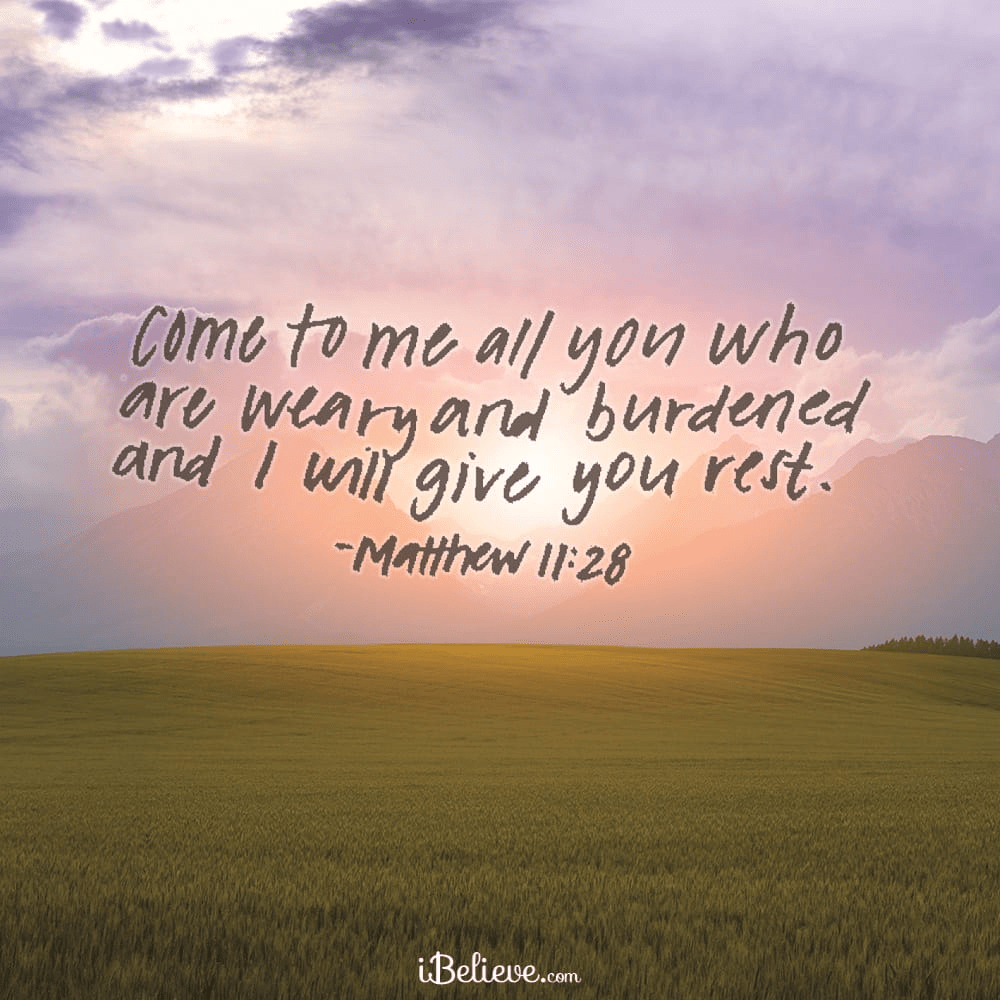
It has been three days since Sunday when we heard Jesus calling us to “Come to me, all you who labor and are burdened, and I will give you rest. Take my yoke upon you and learn from me, for I am meek and humble of heart; and you will find rest for your selves. For my yoke is easy, and my burden is light” (Mt.11:28-30).

It is one of the shortest and most memorable passage in the gospel but, how do we really come to Jesus in order to rest and feel light?

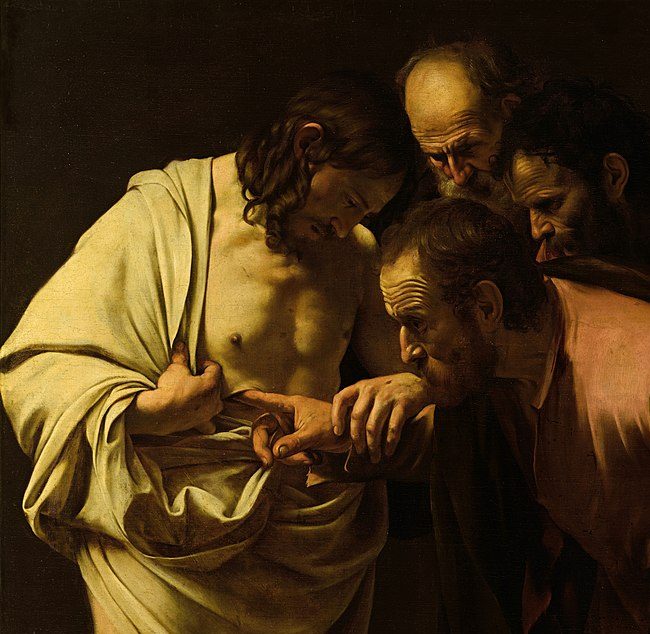
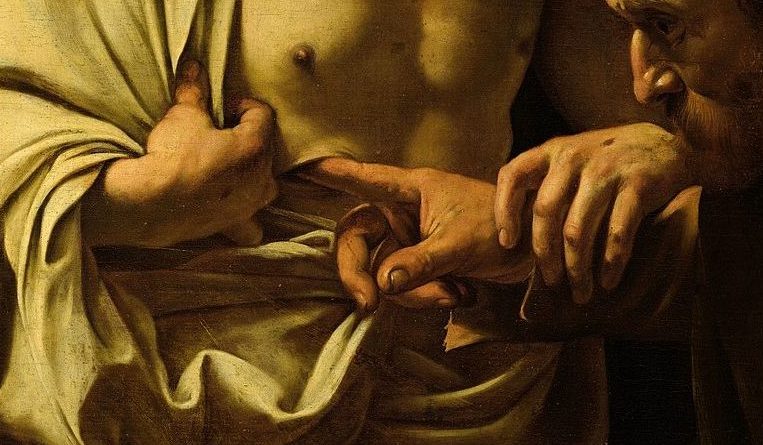
The good news is, it is Jesus who actually comes to us first, inviting us to come to him to find rest and feel light. Exactly like at the meeting of the Risen Lord and Thomas the Apostle eight days after Easter as narrated to us by John. You will recall that last Friday was the Feast of St. Thomas the Apostle (June 3) when I presented in my homily Caravaggio’s painting called The Incredulity of Thomas done in 1602. This is the second time I have used a painting by this renowned Italian painter said to be the favorite of the late Pope Francis too.

Photo of painting by Caravaggio, “The Incredulity of Thomas” via wikipedia.commons.org.

Thomas “refused” to believe the Apostles’ news to him that Jesus had risen, saying that “Unless I see the mark of the nails in his hands and put my finger into the nail marks and put my hand into his side, I will not believe” (Jn.10:25).

Many times we are like Thomas, a Didymus, with a twin in life like doubt and certainty, belief and unbelief, darkness and light.

Like Thomas, we say unconsciously that “Unless I see the mark of the nails in his hands and put my finger into the nail marks and put my hand into his side, I will not believe” (Jn.10:25) because it is when we are suffering, when we are in darkness, when we are in doubt when we truly search and long for God and Jesus.

It is not that Thomas nor we could not believe that Jesus had risen or doubted Christ at all; actually, Thomas believed in Jesus that is why he came on the eighth day to await the Lord’s coming in the same manner that we still pray despite our “doubts”.

 Now a week later, his disciples were again inside and Thomas was with them. Jesus came, although the doors were locked, and stood in their midst and said, “Peace be with you.” Then he said to Thomas, “Put your finger here and see my hands, and bring your hand and put it into my side, and do not be unbelieving, but believe.” Thomas answered and said to him, “My Lord and my God!” (John 20:26-28)

Photo of painting by Caravaggio, “The Incredulity of Thomas” via wikipedia.commons.org.

See the artistry of Caravaggio in this painting, that characteristic play of light and darkness emanating from Jesus, illuminating Thomas and his elder Apostles Peter and John.

All darkness in life are diminished, even vanished completely when we bring everything and everyone in the light of Jesus Christ who comes to us to enlighten us, to illumine us from many darkness we go through in life like Thomas on that night of the eighth day of Easter.

But, there is more to the light of Christ that we can see in this Caravaggio painting.

Amid its stillness and silence, one could feel deeply Jesus Christ’s words last Sunday – come to me – echoed softly, personally, lovingly to Thomas. And to each one of us today.

Photo of painting by Caravaggio, “The Incredulity of Thomas” via wikipedia.commons.org.

John tells us that Jesus simply said to Thomas to “Put your finger here and see my hands, bring your hand and put it into my side, and do not be unbelieving, but believe.” Thomas answered and said to him, “My Lord and my God” (Jn.20:27-28).

Okay, fine… it is just my imagination or my contemplation that I heard Christ’s words last Sunday echoed in this scene, “come to me and I will give you rest” but, there is something so beautiful and deeply personal with Jesus in saying or implying those same words here. You can hear it so close, so near you, not from afar especially when you consider its Filipino translation of “Lumapit kayo sa akin” or the informal “Halikayo at lumapit sa akin” that both indicate a separation of even a few feet away from Jesus who is calling us.

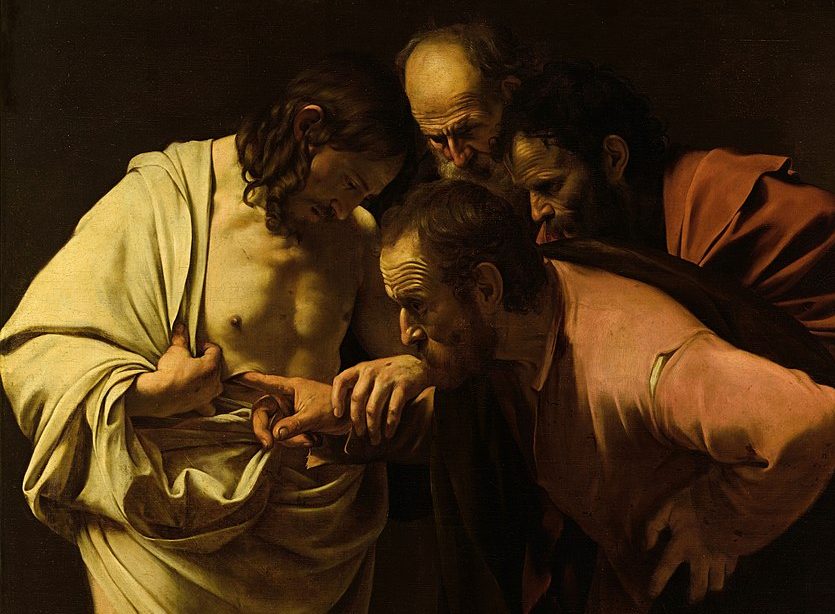
See the proximity of the four people in this painting. That is how close Jesus gets to us whenever he comes to us, inviting us to come to him in order to find rest especially in those dark moments in our lives, when we feel hurt and abandoned. When we are so stressed out as seen in those wrinkles on the foreheads of the three apostles!

Contrast their images to the serenity of Jesus. Most of all, see also the hands of Jesus, of how his left hand with the nail wound visible moving aside his garment so that Thomas and his companions may see further his pierced side.

Whenever Jesus comes to us, calling us to come to him to show us his wounds from the cross to remind us that before all our pains and hurts came, he was there first to suffer and be wounded and died for us.

And he has come to us again, calling us to come to him because he had risen, assuring us that all our wounds like his will heal eventually! That is when we experience rest. And being light in life.

But, what I love most in this painting is the way Caravaggio depicted the Risen Lord holding the hand of Thomas while probing into his side wound:

Photo of painting by Caravaggio, “The Incredulity of Thomas” via wikipedia.commons.org.

How lovely! Caravaggio must be in the highest heaven when he painted this part.

Remember when Thomas dared to say unless he sees the nail marks in the Lord’s hands and put his hand at his side, he would not believe?

Jesus knew it so well not only with Thomas but with each one of us, of our being a Didymus, always with a twin of doubt so that he does not merely appear but touches us to experience deeply, personally his loving presence through his wounds.

See how Caravaggio depicted the left hand of Jesus again with the mark of nail holding the very hand of Thomas, directing his finger into his pierced side. You could feel the sure grip as well as gentleness of the Lord’s hand in leading the finger of Thomas into his pierced side wound. So dramatic as if it is not enough for Jesus to being present but most of all, experienced as closest at possible.

Jesus touches us always, literally and figuratively by holding our wounded selves to experience his wounded self too. He does not only call us in words but leads us with his total self.

Christ’s invitation for us to “come to him” remains personal and personalized. Not mass produced like what is happening these days where speed and reach are the main considerations, not the person.

While writing this piece yesterday, one of the blogs I follow came out with a new article exactly about last Sunday’s gospel scene, claiming that if God texts us today, these very words to “come to me” by Jesus would be his “text message” to us (https://thedevotionalguy.blog/2026/07/07/if-god-sent-you-a-text/).

I believe so. Because text messages have become the closest things we can have of anyone in these days of social media. However, if ever you receive that text message from Jesus, run outside to meet him personally for surely, he had come. Amen. God bless you.
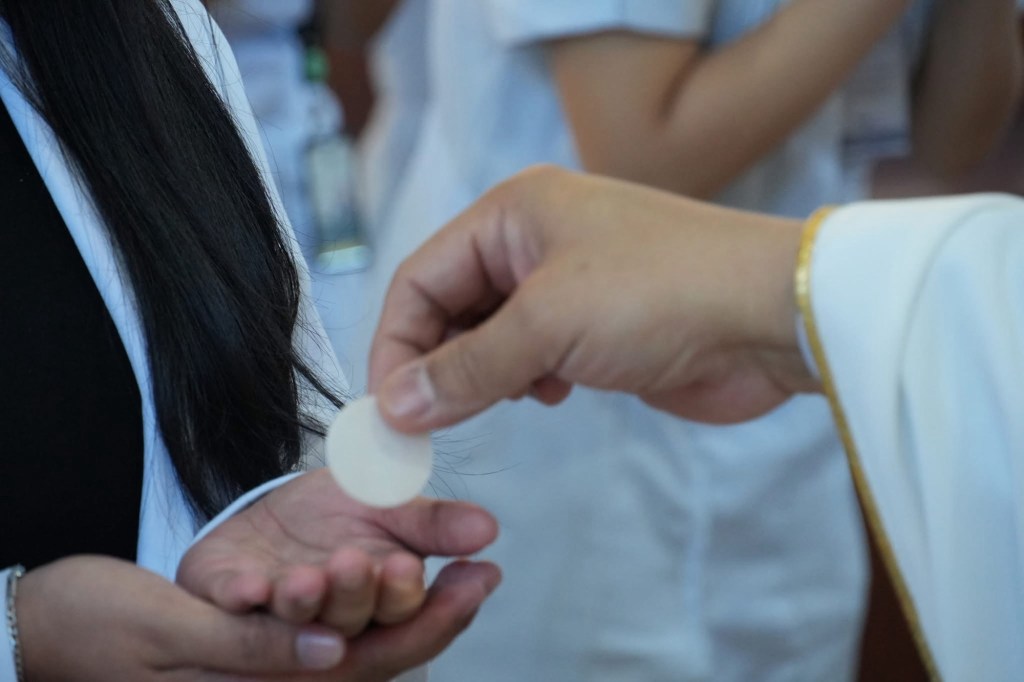
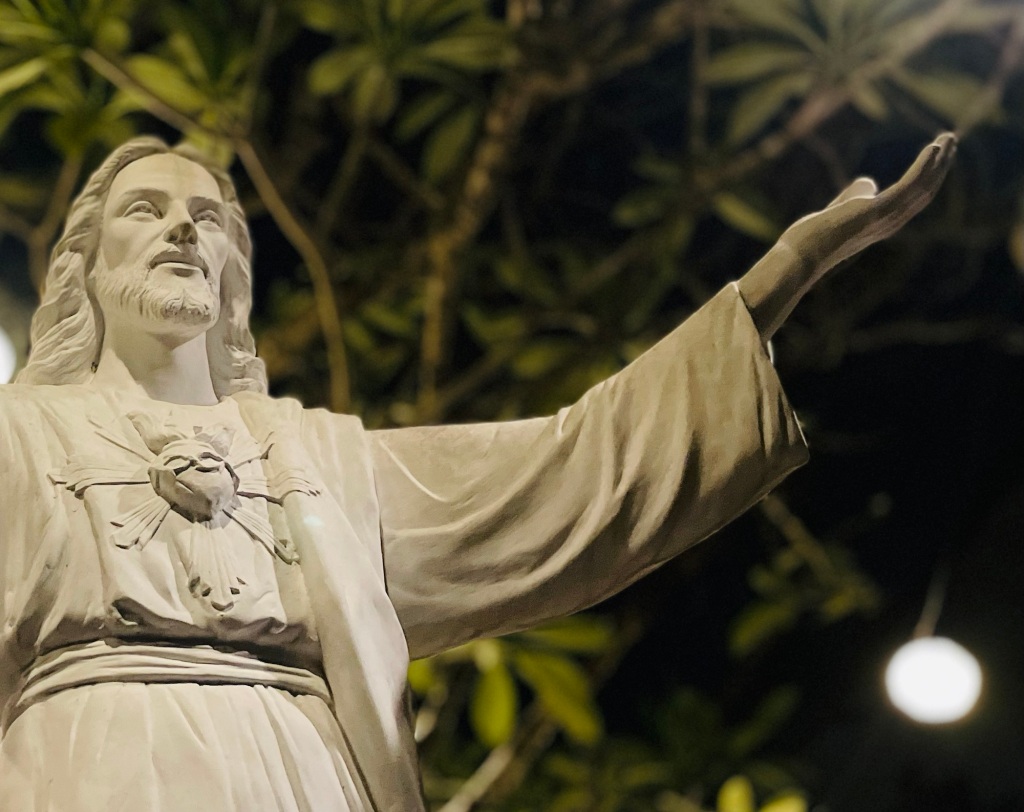
Photo by author, St. Michael Retreat House, Antipolo City, 16 June 2026.

Ikaw ba ang binubuhat o nagbubuhat?

Lawiswis ng Salita ni P. Nicanor F. Lalog II, Ika-2 ng Hulyo 2026
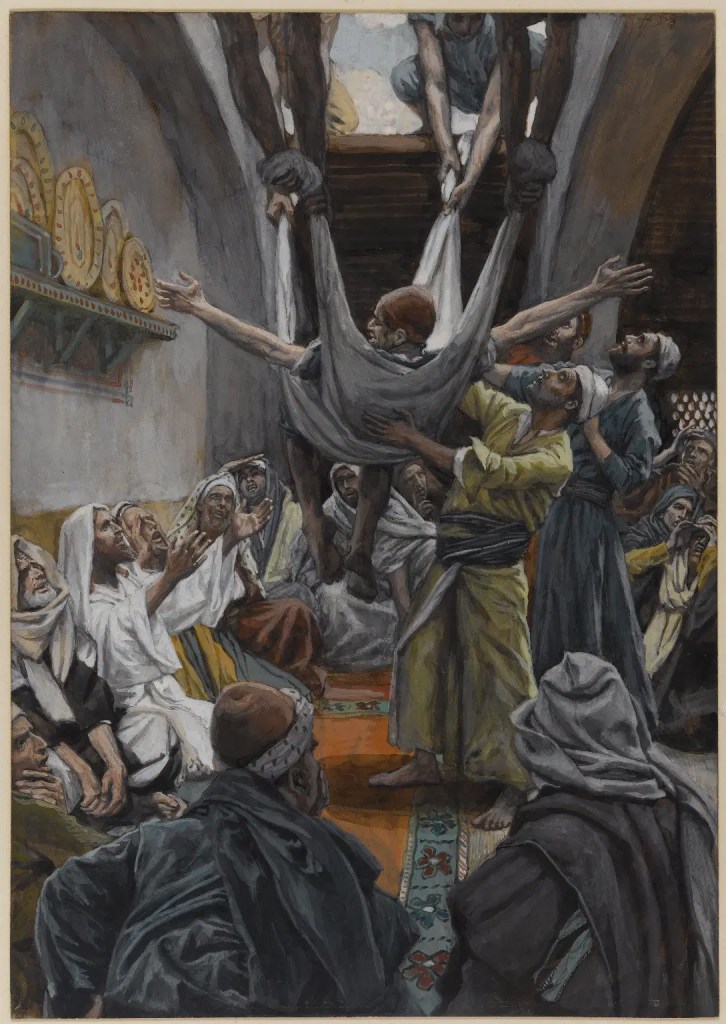
Painting ni James Tissot, “The Palsied ManLet Down through the Roof” mula sa brooklynmuseum.org.
Marami na akong napakinggang
kuwento
kahawig nitong nasa ebanghelyo
isang paralitikong nakaratay
sa kanyang higaan
buhat-buhat ng apat na kaibigan;
nakamamangha sinabi at ginawa
ni Jesus sa paralitiko
lakasan kanyang loob
at pinatatawad na
kanyang mga kasalanan.
Pagmasdan paanong nadama
at natanto ni Jesus bigat na dala-dala
ng paralitikong nakaratay
sa kanyang higaan buhat naman
ng mga kaibigan.
Tayo ang paralitikong pinatawad
at pinagaling; nakaratay sa banig,
paralisado,
hindi makagalaw,
nakabilanggo sa maraming
takot at pangamba
bunsod ng mga nakaraang
pagkakasala at pagkakamali;
hindi makausad
hindi makahakbang pasulong
sa buhay,
nananatili sa kahapon at
madilim na nakaraan
kaya hindi mabanaagan
liwanag sa kapaligiran
sariling kagagawan
kanyang pagkaparalisa na
sadyang napakabigat kaya
kapatawaran sa kanyang kasalanan
iginawad at binitiwan ni Jesus.
Kay gandang pagmasdan
eksena at larawan
kung paanong binakbak ng
kanyang mga kaibigan bubong
ng bahay upang paralitiko
ay maihugos sa tapat ng kinaroonan
ni Jesus: isang paghahayag ng
katotohanan sa ating mga
naparalisa sa hindi mapatawad na kasalanan,
hindi malampasang kabiguan at
kamalian o kasawian sa nakaraan
kinakailangang magpakababa
tanggapin kamalian at kasalanan
upang maranasan kapatawaran
at kapanatilihan ni Jesus na ating
Tagapagligtas.
(Tingnan Mt.9:1-8; Mk.2:1-12; at Lk.5:17-26)
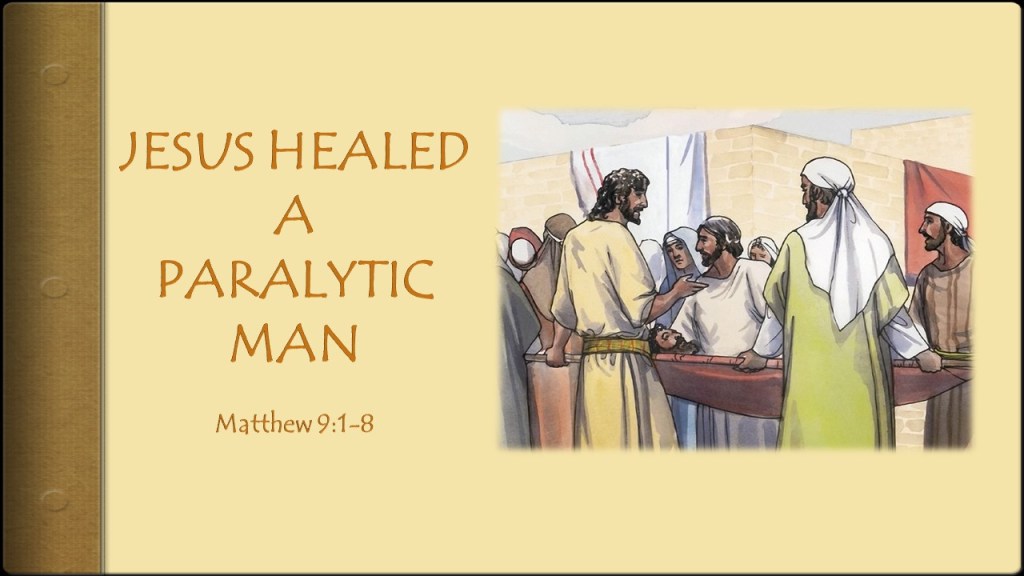
Illustration from parentandchildbiblereading.com.
Sa kabilang dako naman,
akin din napakinggan
maraming kuwento at hinaing
ng mga katulad nitong
apat na kaibigan
na bumubuhat sa higaan
ng paralitiko:

Katulad nilang apat,
tayo man ay mayroong binubuhat
 na paralitiko,
isang pasanin
alagain
at intindihin
 kung inyong mamarapatin
at ipagpapaumanhin
ngunit iyon ang masaklap na
katotohanang dapat nating tanggapin
at lunukin;
Diyos ay nagagalak
tiyak nagpapasalamat
sa mga kaibigan
kapatid at kaanak
buhat-buhat paralitikong
nakaratay sa banig
manhid
at walang pakialam
sa pasanin ng mga
nagmamahal sa kanya;
nagagalit,
naiinis,
hindi lang minsan
nakaisip na sumuko
at lisanin,
bitiwan buhat na paralitiko
ngunit pinili pa rin
tiisin
at manatili
sa pasanin
dahil na rin sa busilak
ng kanilang loobin.
“The Paralytic of Capernaum Lowered from the Roof”, a 5th/6th century Mosaic at Sant’ Apollinare Nuovo, Ravenna, Italy; from christian.art.
Kung ikaw ang binubuhat
na paralitiko,
gumising sa katotohanan
ikaw ay minamahal
at pinahahalagahan
huwag na hintayin
pamilya at kaibigan
ikaw ay tuluyang iwanan!

Kung ikaw ang nagbubuhat
sa paralitiko,
pagsumakitan mo na kanyang kalagayan
mahirap gisingin nagtutulug-tulugan;
iyong pagmamalasakit
at pagmamahal hindi man
kilalanin at suklian
sa buhay na ito,
hahantong pa rin ito
sa iyong kapakanan
at kabutihan
dahil si Jesus palaging
kapiling at kasama natin
pinagagaan ating mga pasanin.

“Lumapit kayo sa akin,
kayong lahat na napapagal
at nabibigatan sa inyong pasanin,
at kayo’y pagpapahingahin ko.
Pasanin ninyo aking pamatok,
at mag-aral kayo sa akin;
ako’y maamo at mababang-loob,
at makasusumpong kayo ng kapahingahan
para sa inyong kaluluwa.
Sapagkat maginhawang dalhin ang
aking pamatok,
at magaan ang pasaning ibibigay ko
sa inyo.”
(Mt.11:28-30)
Larawan kuha ng may-akda, St. Michael Retreat House, Antipolo City, 16 Hunyo 2026.

Gaano kadalas ang minsan?

Lawiswis ng Salita ni P. Nicanor F. Lalog II, Ika-18 ng Nobyembre 2025
Larawan mula sa starforallseasons.com

Hindi ko po napanood ang pelikulang iyan noong 1982 pero usap-usapan dahil daw sa sobrang ganda lalo ng aming mga mommy at tita na libang na libang sa Betamax. First year college ako noon at sa sobrang sikat ng pelikulang iyan, isang drayber ang nagpinta sa jeepney niyang nasasakyan ko patungong Recto ng signage na “gaano kadulas ang minsan?”

Pero iba po ang kuwento ko sa inyo. Hindi pelikula o pakuwela kungdi sa Bibliya.

Naalala ko ang pelikulang iyan dahil sa Unang Pagbasa sa Misa ngayong araw ng Martes mula sa ikalawang aklat ng Macabeo kung saan ang isang nobenta anyos na Hudyo, si Eleazar ay hinimok ng kanyang mga kaibigan na kunwari ay kumain ng baboy upang hindi siya patayin ng mga paganong mananakop.

Mas gusto ko ang salin sa Ingles nang sabihin ni Eleazar sa kanyang mga kababayan na patayin na lang siya ngayon din kesa magkunwari pa. Aniya ano ang mabuting halimbawa ang maiiwan niya sa mga kabataan kung sa kanyang katandaan ay magtataksil siya sa Diyos sa pagkain ng ipinagbabawal.

“At our age it would be unbecoming to make such a pretense… should I thus pretend for the sake of a brief moment of life, they would be led astray by me, while I would bring shame and dishonor on my old age” (2 Maccabees 6:24, 25).

Ito yung nagustuhan kong sinabi ni Eleazar, should I thus pretend for the sake of a brief moment of life?”

Iyon yung matindi sa sinabi niya, pretend for the sake of a brief moment of life.

Magkukunwari o magsisinungaling ba ako maski minsan sandali sa buhay ko?

Hindi ba kadalasan iyan ang palusot natin mula pa noong panahon nina Eba at Adan marahil? Minsan lang naman titikim… minsan lang naman gagawin… minsan lang naman nagkamali o nagkasala.

Totoo naman minsan-minsan ay sablay ating mga desisyon at nasasabi. Hindi rin maiwasan minsan minsan ang pagkakasala at pagkakamali. Pero, iyon nga ang punto ni Eleazar marahil upang ating pagnilayan, gaano kadalas ang minsan?

Yung minsan-minsan na iyan ang nakakatakot dahil madalas ang minsan katumbas ay wala ng wakas. Minsan ka lang magkamali o magkasala o magkunwari, maaring ikawasak o gumuho at maglaho lahat ng ating mga plano at pangarap na ilang taong pinagpagalan at pinagpagurang mabuti. Kadalasan, marami sa ating mga sablay sa buhay ay dahil lang sa binale-walang minsan.

Mapapatawad tayo ng Diyos sa ating mga kasalanan pati ng ating mga kapwa tao subalit, yung minsang pagkakamali o pagkakasala ay hindi na maibabalik ang dating kaayusan. Madalas yang minsang pagkakamali o pagkakasala ay mayroong tinatawag kong “irreversible consequences”.

Larawan ni Vincenzo Malagoli sa Pexels.com

Kapag ikaw ay nakapatay o maski nga lang masangkot sa krimen ng murder, siguradong maiiba ang takbo ng iyong buhay. Tiyak iyon, kahit na ika’y matapagtago at hindi makulong dahil habang buhay kang uusigin ng iyong konsiyensiya. Iyang minsan lang na pagkakamali dala ng init ng ulo o kalasingan ay hindi na mababago ng gaano mang kataimtim na pagsisisi dahil hindi na maibabalik ang buhay na nawala.

Ikalawang halimbawa na palagi kong sinasabi sa mga kabataan noon pa man na mayroong irreversible consequences ay ang mabuntis ng wala sa panahon. Patatawarin kayo ng Diyos maging ng inyong mga magulang ngunit kapwa ang babae at lalake maiiba na takbo ng buhay pagkatapos ng minsang pangyayari. Mapanagutan man o hindi.

LAOAG CITY, PHILIPPINES – MAY 08: A dog walks past campaign posters supporting presidential candidate Ferdinand “Bongbong” Marcos Jr. in a residential neighborhood on May 08, 2022 in Laoag City, Philippines. The son and namesake of ousted dictator Ferdinand Marcos Sr., who was accused and charged of amassing billions of dollars of ill-gotten wealth as well as committing tens of thousands of human rights abuses during his autocratic rule, has mounted a hugely popular campaign to return his family name to power. Ferdinand “Bongbong” Marcos Jr. enjoys a wide lead in opinion polls against his main rival, Vice President Leni Robredo, owing to a massive disinformation campaign that has effectively rebranded the Marcos dictatorship as a “golden age.” Marcos is running alongside Davao city Mayor Sara Duterte, the daughter of outgoing President Rodrigo Duterte who is the subject of an international investigation for alleged human rights violations during his bloody war on drugs. (Photo by Lauren DeCicca/Getty Images)

Ikatlong halimbawa naisip ko ngayon lang ay ang maling pagboto sa bawat halalan.

Isang lingkod ng simbahan ang nagtanong sa akin na pagtitiisan na lang daw ba natin ang kasalukuyang pangulo gayong sinabi na ng kapatid nitong siya ay adik?

Bagamat batid kong siya ay DDS, pinagsikapan ko pa ring pagpaliwanagan. Sabi ko sa kanya, sila lang ang magtitiis, hindi kami kasi sila lang ang bumoto sa tambalang BBM at Sara noon.

Hindi sila nakinig sa sinasabi at paliwanag nating iba ang kandidato sa pagkapangulo at bise nito.

Ganyan kako ang demokrasya, parang pag-aasawa: hindi ka nakinig sa paliwanag ng iba, tapos nagkamali ka sa iyong pinili – aba, pagtiiisan mo. Minsan ka lang nga gumawa ng desisyon ngunit hindi mo sinuring mabuti ni pinagdasalan, pagdusahan mo. Ganun talaga. Kaya hindi uubra ang pagpapababa sa kasalukuyang pangulo na katulad ng sinasabi ng ilan na magdiborsiyo ang mag-asawa dahil minsan lang nagkamali.

Huwag tayong palilinlang sa minsan. May kasabihan sa Ingles na the devil is in the details: nasa mumunting bagay o detalye ang demonyo na mismong uri ng ating minsan na madalas ituring lang naman.

Pag-aralang mabuti mga bagay-bagay lahat na may kinalaman sa pagpapasya na makaka-apekto sa takbo ng buhay natin. Hindi maaring sabihin minsan lang dahil kung madalas ang minsan-minsan, bisyo na iyan!

Pagnilayan po natin yung minsan… gaano kadalas yung ating minsan na sa atin ay nagpahamak? Salamuch kaibigan. God bless!

larawan mula sa inquirer.net.

What impresses Jesus?

Quiet Storm by Fr. Nicanor F. Lalog II, 11 September 2025
Photo by author, Sacred Heart Novitiate, Novaliches, QC, 2023.

Of course, there is no need for us to impress Jesus Christ for he loves us so immensely beyond measure. However, I have realized this week in my prayers that the Lord is most impressed with us when we are in our weakest.

It has been recurring in my prayers several times with the latest in this Wednesday’s gospel, “Raising his eyes toward his disciples Jesus said: ‘Blessed are you who are poor, for the Kingdom of God is yours’” (Luke 6:20).

I just love that scene of Jesus looking up to his disciples, looking up to us because normally we humans are the ones who look up to God his Father where he is seated to his right in heaven. When we pray, we sometimes raise our hands reaching up to God.

There is something so beautiful and wonderful when the Sacred Scriptures tell us of Jesus looking up to us. What an honor and a privilege! Because that happens when we are weakest, most flawed, and dirty with sin.
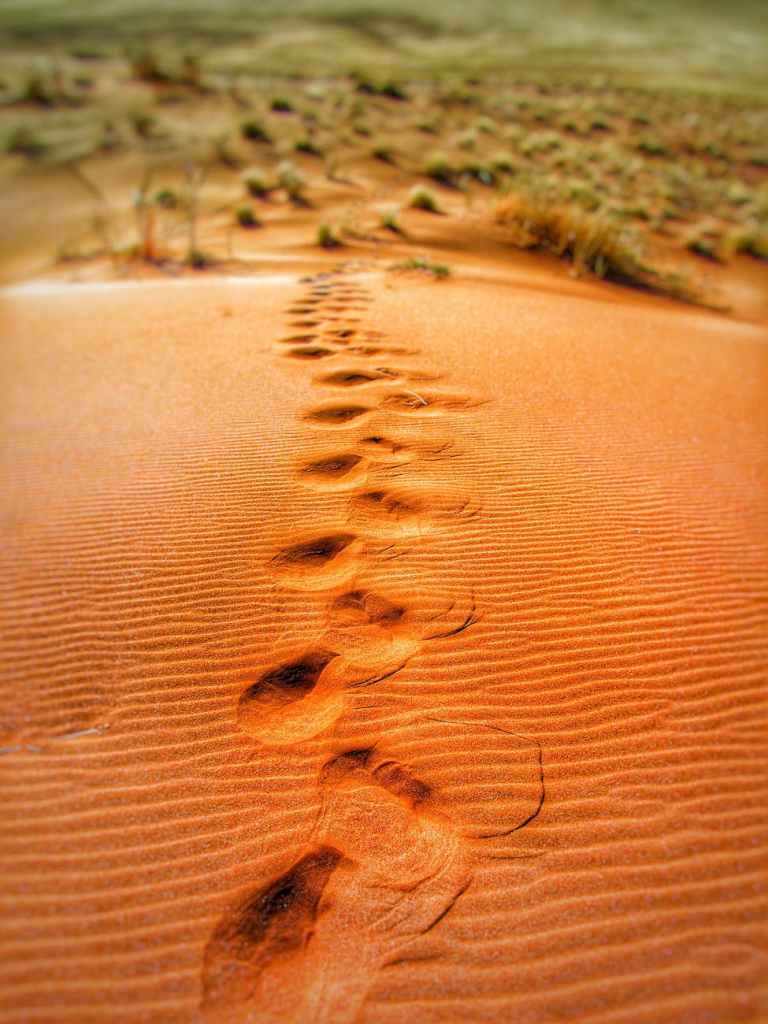
Imagine being there at that scene of the sermon on the plain and Jesus had to raise his eyes toward his disciples: he must have been at a lower position than them. This scene will have its fullness in the washing of the disciples’ feet after their Last Supper on Holy Thursday.

We who could no longer bow that low to clean and wash our feet as well as trim our toenails know this so well. Imagine all the dirt and flaws Jesus must have seen in the disciples’ feet that evening. Not a word was heard from Jesus. He teased no one nor complained of the dirt and unsightly things he must have seen too. Jesus simply bore everything because he loved them so much.

Photo from Our Lady of Fatima University website, June 2025.

Jesus continues to look up to us every time we receive him in our hands during the Holy Communion. That is why I always tell the people especially our students to be very solemn during that occasion when the Son of God most powerful, all-knowing in his simplest form and sign as a thin wafer, enters us body and blood. It is the most perfect time to pray to Jesus, to tell him everything and most of all, to listen to him because that is when he is right inside our body, when he is down inside us, we above him.

Jesus does not need our triumphs and “goodness” because they all came from him actually. What he does not have is what we have a lot- the negative things like sins, hurts and bitterness, anger and resentment festering deep inside us for a long time. Those are the thing Jesus want from us, the very things he is most “impressed” with us that we are able to live with those burdens for so long. But, he is most impressed with us in the truest sense when we are able to surrender these to him because that’s when we are blessed and filled in him.

Raising his eyes toward his disciples Jesus said: “Blessed are you who are poor, for the Kingdom of God is yours. Blessed are you who are now hungry, for you will be satisfied. Blessed are you who are now weeping, for you will laugh. Blessed are you when people hate you, and when they exclude and insult you, and denounce your name as evil on account of the Son of Man” (Luke 6:20-22).

Photo by author, Sacred Heart Novitiate, Novaliches, QC, 2023.

In this age of affluence brought about by technological advances, being poor and hungry, being maligned and weeping are things to be avoided at all costs. With people so fascinated with money and wealth, fame and power, being poor and hungry for God, weeping and being maligned for what is true and good and just are not impressive at all, even foolish.

But, look at the effect of those shameless social media posts by “nepo babies” of their crass lifestyle sustained by ill-gotten wealth at the expense of the poor – they have all been bashed relentlessly in the country leading to more evidence of corruption among government officials and law-makers while in Indonesia and Nepal, these same practices have sparked social unrest and upheavals recently!

For so long, many have wished to be rich and wealthy, to have all the money to buy good food and drinks, build mansions filled with expensive cars and adorn themselves with signature clothes and jewelries in the belief they can impress others. Maybe with their fellows with the same benighted souls but more often, they only bred jealousies and envies that led to vicious circles of corruption and crimes in the name of having more money.

In truth, no one is impressed with material things because people who feel good only with possessions are actually the most pitiable ones for they could not see their own value as a person. To be able to see one’s value as a person despite one’s sins and weaknesses is the beginning of being truly human.

Recall the Lord’s parable of the Pharisee and the publican praying at the temple: the publican who stayed at the back beating his chest so contrite for his sins went home blessed according to Jesus than the Pharisee who boasted of his own righteousness. “Magpakatotoo ka!” screamed a soda commercial not too long ago but still echoes so true these days.

Jesus is not impressed with what we have done nor achieved but with what we have become – that amid all the beatings and pains of life with all of our shortcomings and sins, we forge on with life, persevering in faith, filled with hope that Christ is our salvation. What impresses Jesus Christ most in us is what we lack because that is when he can be closest to us, one in us. See yourself the way Jesus sees you – as a person, loved and cared for. Regardless of what. Let me end this with a prayer wrapped in a song which I have always loved because it sounds like Jesus speaking to me, so impressed with me despite of everything.

From YouTube.com