Lord My Chef Daily Recipe for Soul by Fr. Nicanor F. Lalog II
Friday, Twenty-third Week in Ordinary Time, Year II, 11 September 2026
1 Corinthians 9:16-19, 22-27     <*((((>< + ><))))*>     Luke 6:39-42
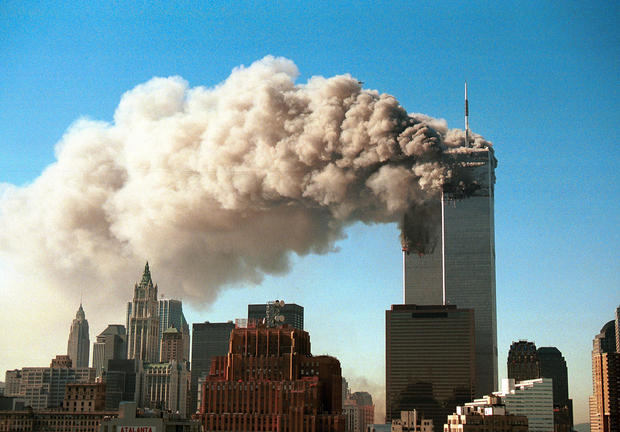
NEW YORK – SEPTEMBER 11, 2001: (SEPTEMBER 11 RETROSPECTIVE) Smoke pours from the twin towers of the World Trade Center after they were hit by two hijacked airliners in a terrorist attack September 11, 2001 in New York City. (Photo by Robert Giroux/Getty Images)
It has been twenty-five years,
Lord Jesus,
when the beginning year
of the new century
was marred by senseless deaths
from terrorist attacks in various
US cities; more than the images
are the indescribable
pains and hurts
that still remain not only among
friends and families of those
who have died but also
for the whole world
that has ever been more
in precarious situations
ever since; today,
we are stunned by
news from tech experts
of how AI could actually
wipe out the human race
in the next ten years
like in the movies?!
Photo by a friend in Washington State, 28 July 2026.
Twenty-five years into
the new millennium,
peace and fulfillment
remain elusive not only
for the world
but for each of us humans
because we have gone astray
from you, O Lord;
we have worshipped the
new gods of technology -
gadgets and social media
that leave us more empty
and lost and enslaved
by our endless wants
and make-believe realities.
Now more than ever
we need to imitate St. Paul,
to be with discipline,
with virtues and principles
not with algorithms:
Every athlete exercises discipline in every way. They do it to win a perishable crown, but we, an imperishable one. Thus, I do not run aimlessly; I do not fight as if I were shadowboxing. No, I drive my body and train it, for fear that, after having preached to others, I myself should be disqualified (1 Corinthians 9:25-27).
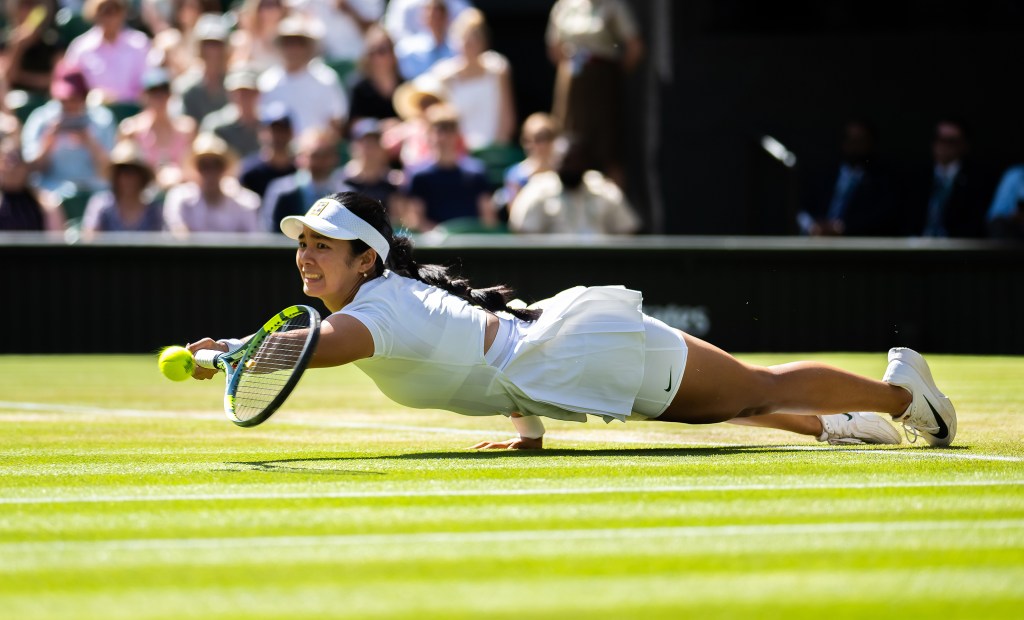
Believed to be the best photo of the tennis season, Alexander Eala in Wimbledon photographed by WTA’s Robert Prange, a.k.a. Jimmie48.
Teach us to be truly
your "disciples" -
followers,
ones who follow,
ones with discipline
not whims nor impulses;
it is only with discipline
can we truly look and
confront our true selves
to become better persons
than seeing what's wrong
with others; teach us
discipline, Jesus,
that we may strive
to trust you more
and reach out to you
for help and grace because
we are weak in ourselves;
let our soul and heart
yearn only for you,
Lord, for in you
we find true peace
and fulfillment.
Amen.
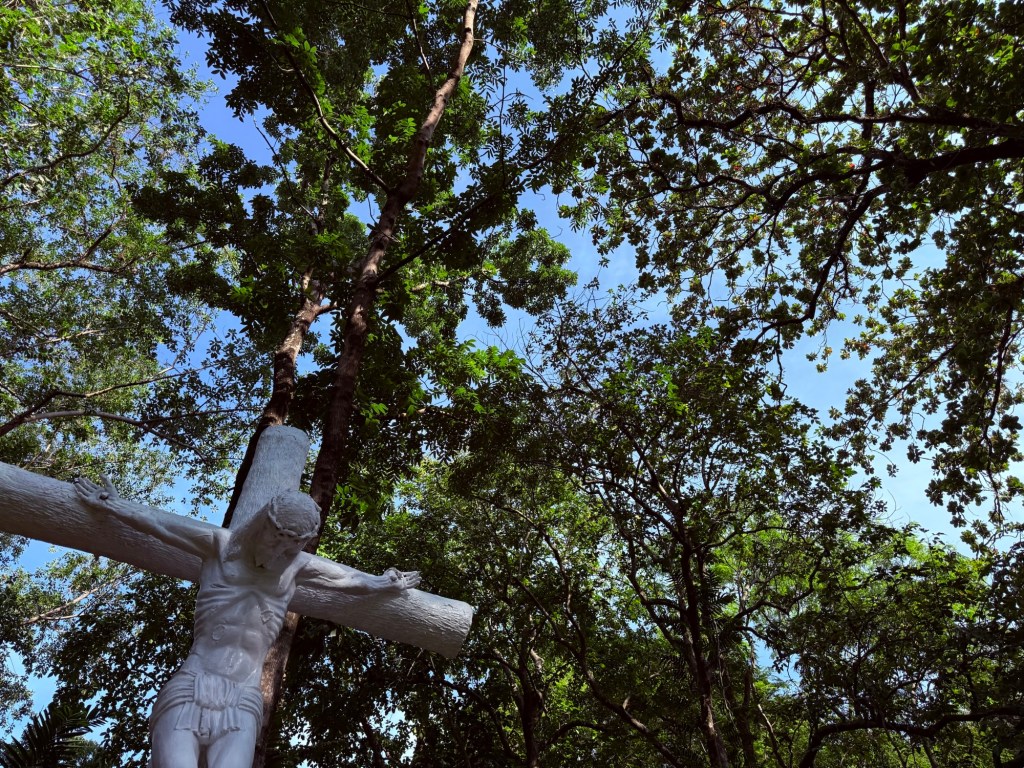
Photo by author, St. Michael Retreat Center, Antipolo City, 21 July 2026.
Lord My Chef Daily Recipe for Soul by Fr. Nicanor F. Lalog II
Friday in the Fifteenth Week of Ordinary Time, Year II, 17 July 2026
Isaiah 38:1-6, 21-22, 7-8; 38:10-12, 16    <*((((><  +  ><))))*>     Matthew 12:1-8
Photo by author, sunrise at Camp John Hay, Baguio City, 19 November 2018.
God our loving Father,
I thank you for this wonderful
Friday and most of all,
for your moving words
from King Hezekiah,
the very same words
in our hearts especially
for those like me who have
reached senior year,
or may be going through
many difficulties in life
that make us all realize
our mortality
and finiteness.
Father,
we are all afraid of death,
of dying,
of the pain of getting sick,
of the process so hurtful
in all aspects; but, like
King Hezekiah in the first reading,
what really makes us worry
with death is the unfinished work
you have given us,
the sadness of what shall
happen to those we shall leave behind
not because we believe so much
in ourselves but more because
we know we have not finished
your work; forgive us for those
moments we have procrastinated
your work, for those times we
balked and dilly dallied to your
commands, or to those times
we refused to follow you;
hear our pleas like your
faithful King Hezekiah
knocking at heaven’s door:
Once I said: “In the noontime of life I must depart! To the gates of the nether world I shall be consigned for the rest of my years… Like a swallow I utter shrill cries; I moan like a dove. My eyes grow weak, gazing heavenward: O Lord, I am in straits; be my surety” (Isaiah 38:10, 14).
Photo by Mr. Howie Severino, Taal Lake, Batangas, 13 November 2018.
O Lord our God
most loving,
our life and meaning
who desires most mercy
than sacrifice for
you are the Lord of sabbath
(Matthew 12:7-8),
like King Hezekiah and
Bob Dylan in this modern time
we "knock at heaven's
door" for those in great need
at these very moment
like the disciples of Jesus
so hungry while crossing a field
of grain on a sabbath
and picked the heads of grain
and ate them; heal those so sick
 not only in body but also in mind,
heart and soul;
ease their pains and sorrows;
and should we reach the final end,
welcome us into your heavenly
kingdom; but still, as we
hope against hope,
heal us by turning back
the clock of time
for us to fulfill your
assigned task and
mission.
Amen.
*While praying last night, we remembered Bob Dylan’s iconic “Knocking At Heaven’s Door” that he wrote as soundtrack of the 1973 film “Pat Garrett and Billy the Kid”. It became a worldwide hit after its release and had been covered by other artists like Eric Clapton, Randy Crawford and Guns N’ Roses.
“Knocking At Heaven’s Door” is praying hard to God when at the point of death. Like Hezekiah in the first reading, it is the baring of one’s soul to God, begging for his mercy that if possible be allowed to live a little longer. In this song, we find the lyrics and music elegantly and nobly simple, so characteristic of Dylan’s songs that earned him awards outside the music circle like journalism’s Pulitzer Prize special citation in 2008 and the recent Nobel Prize in Literature in 2016 “for having created new poetic expressions within the great American music tradition” (wikipedia).
In our prayer last night, we realized as we age that we fear death and its other daily manifestations like separation and other lifestyle shifts because of being sorry for not having done much in life that if given another chance, we might after all finish our mission like King Hezekiah in the first reading today. Knocking at heaven’s door is one of life’s most powerful prayer as it always “moves” God in the sense he grants our prayers not because he changes his mind but because we have finally surrendered to him and his Divine Will. Likewise, it reminds us to be faithful to our calling always so that when God calls us to death, we can let go easily.
Bob Dylan captured this so well citing the final scene of the movie for which he composed “Knocking At Heaven’s Door” when the frontier lawman was about to die, he gave or “surrendered” to his wife – Mama – his badge and gun because he had finished his job.
[Intro]
Ooh, ooh
Ooh, ooh

[Verse 1]
Mama, take this badge off of me
I can’t use it anymore
It’s getting dark, too dark to see
I feel I’m knockin' on heaven’s door

[Chorus]
Knock, knock, knockin' on heaven’s door
Knock, knock, knockin' on heaven’s door
Knock, knock, knockin' on heaven’s door
Knock, knock, knockin' on heaven's door

[Verse 2]
Mama, put my guns in the ground
I can’t shoot them anymore
That long black cloud is coming down
I feel I’m knockin' on heaven’s door

[Chorus]
Knock, knock, knockin' on heaven’s door
Knock, knock, knockin' on heaven’s door
Knock, knock, knockin' on heaven’s door
Knock, knock, knockin' on heaven's door
A blessed weekend everyone. Handle life with prayer always.
40 Shades of Lent by Fr. Nicanor F. Lalog II
Third Sunday in Lent, Cycle A, 08 March 2026
Exodus 17:3-7  +++  Romans 5:1-2, 5-8  +++  John 4:5-42
Photo by author, an old well somewhere in the desert of Egypt, May 2019.
We continue our lenten journey from the wilderness of temptations of Jesus to the high mountain of his transfiguration. As we have claimed since Ash Wednesday, life is a daily Lent, an inner journey that takes us into different directions that surprise us like this Sunday when Jesus entered an “enemy territory” and even spoke with a Samaritan woman!
It is a very long story but a lovely one with so many layers filled with inexhaustible meanings for us today.
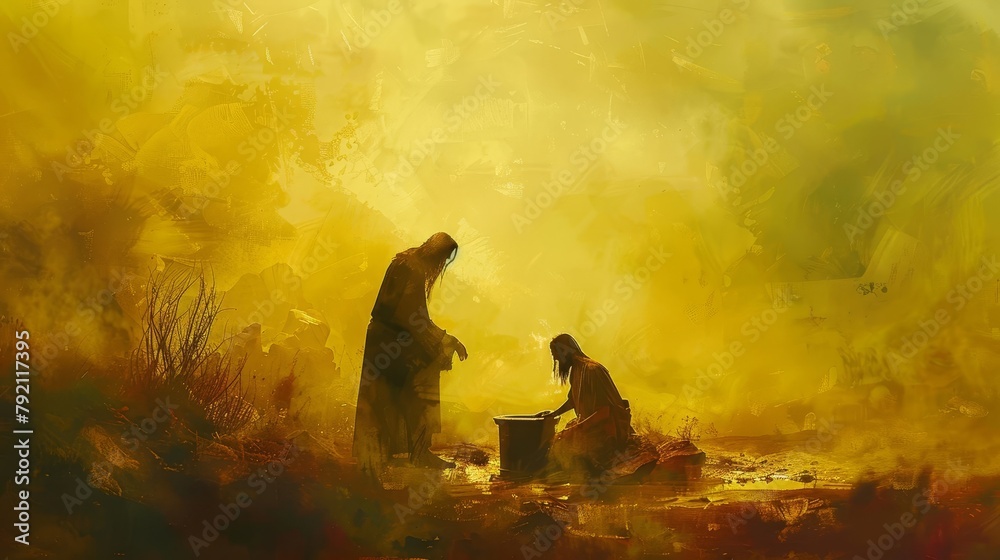
Jesus came to a town of Samaria called Sychar, near the plot of land thart Jacob had given to his son Joseph. Jacob’s well was there. Jesus, tired from his journey, sat down there at the well. It was about noon. A woman of Samaria came to draw water. Jesus said to her, “Give me a drink.” His disciples had gone into the town to buy food. the Samaritan woman said to him, “How can you, a Jew, ask me, a Samaritan woman, for a drink?” (For Jews use nothing in common with Samaritans.) Jesus answered and said to her, “If you knew the gift of God and who is saying to you, ‘Give me a drink,’ you would have asked him and he would have given you living water” (John 4:5-10).
Jesus and Samaritan Woman, AI-illustration from stock.adobe.com.
Imagine Jesus going into “enemy territory”. That’s how much Jesus loves us. He goes directly where we are most empty and dark, even tired and exhausted, lost and alienated, perhaps when we are deep into sin like that Samaritan woman who had to fetch water at noon to avoid the Marites, the gossipers speaking about her sixth husband.
It is very clear that what we have here is more than a geographical setting but a revelation of God’s immense love (and thirst) sending Jesus for us all especially the sinners and those neglected by the society, living in the margins like women and children, the poor and the elderly.
We are that Samaritan woman always hiding from everyone even from ourselves, hoping the decay and wounds within us can be hidden or simply be gone. And that is why like that Samaritan woman, we keep on going back to our “well” of comfort and false securities and affirmations to draw “water” that would quench our deeper longings and desire in the heart like mercy and forgiveness
Jesus knew the Samaritan woman was coming at that time. In engaging her into a conversation, the woman opened up and realized her deeper needs she had always been disregarding or setting aside for a long time, hoping there could be a perfect time to fix everything in her.
With Jesus, every day is a perfect day. He does not beat around the bush. He talks straight but never judgmental, calling a spade a spade. No need to soften the impact as we are wont in doing and saying. That is why our responsorial psalm today says it so well, “If today you hear the voice of the Lord, harden not your hearts.”
Let Jesus come into your heart. Don’t be afraid to speak openly. Complain like the Israelites in the wilderness in the first reading. Was it wrong? Not really. Like us, the Israelites complained to God not because we are mad at him but actually because we believe in him. We know he alone can do something to our situation and problem. He alone can quench our thirst not just for water but inner thirst.
Photo by author, Third Week of Lent 2019, Parokya ni San Juan Apostol at Ebanghelista, Bagbaguin, Sta. Maria, Bulacan.
The woman left her water jar and went into the town… (John 4:28)
This is what the Samaritan woman realized in conversing with Jesus: more than the waters of pretensions and false affirmations of friends, the alibis and rationalizations we make, the noise we cover the truths within us, the well will eventually dry up until finally we have to confront and face our true selves in Christ right there in our hearts.
Why wait when we can do it now, this Lent?
Going back in the first reading, we see our situation: our inner longings that deep inside we cry out to God because we believe only him can hear us and satisfy us.
Have you realized this inverse proportionality with God? We come to God because we have nothing, convinced that only God can give what we need. God comes to us always especially when we foolishly believe we have everything that is actually nothing because he knows so well only him can fulfill us.
God knows this so well. As St. Paul tells us in the second reading, “For Christ, while we are still helpless, died at the appointed time for the ungodly. Indeed, only with difficulty does one die for a just person, though perhpas for a good person one might even find courage to die. But God proves his love for is in that while we were still sinner Christ died for us” (Rom.5:6-8).
This Sunday, we have come to celebrate this Eucharist believing only Jesus can fulfill our deepest longings in life. Let us leave our jars that hide our many pretensions and false securities, our doubts and dilly-dallying in life. Empty yourself in Jesus, let him fill you for he is the Living Water.
The water in the well invites us to confront our true selves – no alibis, no ifs nor buts. Be our true self to realize we are an empty jar. Which kind of water you wish to be filled with, of the world or of Christ? Have a blessed week and let us pray:
Lord Jesus Christ,
you have given me with a jar
filled with fresh,
living water
I have wasted for so long
to be filled with the
world's water of fame
and wealth and power;
You know everything about me,
Jesus: forgive me,
refresh me in your love
and mercy,
in your words and
loving presence;
fill me with yourself
the only Living Water
that may flow and be
shared with others
so thirsty
and untidy
with sin.
Amen.
Quiet Storm by Fr. Nicanor F. Lalog II, 15 January 2026
Photo by Ar. Philip Santiago, Basilica of the Annunciation, Israel, October 2025.
Two priests and a former nun personally known to me died in our diocese last Sunday. It was also the birthdate of the late Bishop Cirilo Almario, Jr. whom I had remembered in my two early morning Masses on that Sunday, January 11, 2026.
In those two Masses too I mentioned in my homily the retreat I facilitated first week of January with my friends about “ageing gracefully” – my own realizations since joining their ranks as senior citizens last March.
Let me elaborate those two points I have shared with them and in my homily last Sunday.
From forbes.com.
First, let us embrace our being old. Stop saying “when we get old”, pagtanda natin because we are already old. Period. Matanda na tayo.
We cannot reverse our ageing process and it is useless to have all these cosmetic manipulations like dyeing our hair black or stretching our sagging skin and removing those wrinkles.
Embrace old age. It is beautiful and wonderful because it is so good. Our Filipino word for “old” says it all – matanda – which ironically so many women hate to hear as they stress that kalabaw lang ang tumatanda. That is not true.
Our word matanda is from the root word tanda which means “sign” that is why an old person is rightly called matanda because he/she is a sign of God’s goodness, a sign of God’s mercy and love, a sign of God’s beauty and majesty.
Moreover, a matanda is a sign of wisdom and grace that is why when we were young boys, we wanted to be old by putting our dad’s eyeglasses or taste his cigarettes and beer while girls put on their mom’s make up and high heeled shoes. How funny that when we are already old, we resist to accept the fact that we strive to look young again, sometimes ending up as nagmumurang kamatis.
Photo by Mr. Jim Marpa, 2019.
Technically speaking, “old” is actually harsh. Old is something about a past phase that has ran its course like being outdated. Luma in Filipino that connotes stale, passe, lacking relevance and sadly, useless. Just for display purposes. As a person, that is the one we refer to as walang pinagkatandaan. Or huklubang matanda.
To be more specific, the better English term referring to ageing gracefully is ancient that exudes with a sense of timeliness, of being perpetually relevant like the ancient ruins in Rome, Athens, and Jerusalem. Actually, some biblical experts have wanted to rename the “Old Testament” as “Ancient Testament” following this line of thinking.
Photo by author, Ephesus, Turkiye, November 2025.
Things and even persons can rightly be referred to as ancient because of their beauty still intact that inspires us and makes us wonder about life itself. They are not just old sites nor old persons that remind us of the past long gone but ancient because still lovely, “still full of sap and green” as the psalmist extolled the seniors of his time.
Persons who age gracefully like ancient sites stir our inner selves with deeper beauty and realities of life that eyes cannot see. That is perhaps the reason these days many senior men and women are so “in” and considered as attractive.
It is the same wisdom realized by St. Augustine when he wrote about God, “Late have I loved you, O Beauty ever ancient, ever new, late have I loved you. You were within me, but I was outside, and it was there that I searched for you.”
Being ancient -whether as a person or a thing – is something of the inside we must turn to not outside like our skin and physical body. From that inside realization and acceptance of being senior or elderly we experience the grace of ageing because we experience God still present in us, in fact loving us more as he makes as a sign or tanda of his loving presence.
Ageing gracefully is a modern virtue we need to cultivate in this age of instants that glorify youthfulness equated with usefulness. That is why when Pope Benedict XVI resigned from the Papacy in 2013, the more I have come to love and admire him. In his resignation, he taught us the importance of embracing and lovingly accepting our old age when we can no longer adequately perform our many tasks in office even in life itself. It was not a failure nor a surrender in the negative sense but more of a deep courage and trust in God that we accept our being weak and ready to come to him soon.
Photo by author, Pundaquit, San Antonio, Zambales, May 2025.
This brings me to my second realization since turning sigisty years old last year: corollary to embracing old age is accepting death. That is why, as seniors, let us stop saying and thinking of our coming death because we are already dying. Huwag na nating isipin yung “kapag namatay ako” dahil namamatay na nga tayo.
Being senior is doing away with those bucket lists, of thinking about things to do, places to visit before we die. We are already dying and hence, whatever you can do, do it now. There could be no more tomorrow. All we have is the present moment. Anything could happen to us, for better and for worse.
Ageing gracefully is coming to terms with life which leads us to coming to terms with death. Yes, this is easier said than done, but slowly, I am learning and loving it!
Photo by author, Bucharest, Romania, November 2025.
One of the reasons that made me decide to become a priest in the early 1990’s was the conviction that I have felt so deeply God’s love for me as a person in the many experiences I have gone through in life. I felt at that time that by becoming a priest, I could convince more people about the truth and existence of this loving God we have.
I still hold on to that but a year after turning sigisty, becoming sigisty-one in March 22, another fascinating realization I have had is how wonderful this life is. Now that I am old, the more I can boldly claim with conviction that it is good to be alive. Masarap pa rin ang mabuhay! Maganda ang buhay maski mahirap!
Accepting and embracing our ageing, our getting weak, our failing memory are all kinds of dying. And in that midst that we actually live fullest and meaningfully. I don’t know if I can write any further because I ain’t dead yet but… just in case, it was worth the trip. Amen. May you have a fruitful and fulfilling weekend ahead.
Lord My Chef Daily Recipe for the Soul by Fr. Nicanor F. Lalog II
Monday, First Week in Ordinary Time, Year II, 12 January 2026
1 Samuel 1:1-8     <*((((><  +  ><))))*>     Mark 1:14-20
Photo by author, San Juan, La Union, 09 January 2026.
After John had been arrested, Jesus came to Galilee proclaiming the Gospel of God: “This is the time of fulfillment. The Kingdom of God is at hand. Repent, and believe in the Gospel” (Mark 1:14-15).
Thank you dear Jesus
for this brand new week,
for this start of Ordinary Time
in our liturgical calendar;
how wonderful to remind us
it is the time of fulfillment,
of completion and wholeness
in you, O Lord because it is only
in you lies our fulfillment.
Teach us to open our hearts
and souls to your call, Jesus
like the brothers Peter and Andrew,
James and John,
your first disciples;
was it really that quick and easy
for them to leave everything behind
including the father of James
and John just to follow you?

Yes, dear Jesus,
like them,
we felt incredulous
and even fearful with your call,
not only last year
but even this year;
in fact, as we begin
our Ordinary Time this Monday,
the more I felt your calling
continues everyday
because without you
we shall never be complete.
Like Hannah,
our lives will never be complete
and fulfilled without having you
that may take several forms
like a child for Hannah;
many times Lord we wonder
why we cannot have what we
are specifically praying for
like Hannah who has become
a subject of ridicule by others
for being barren and childless;
but, inasmuch as your call continues
for us, then you hereby assure us too
of your continuing works in our
many deficiencies if we can only
be patient and persevering in you
in awaiting your calls.
Amen.
Photo by author, San Juan, La Union, 09 January 2026.
Lord My Chef Daily Recipe for the Soul, 20 October 2025
Monday in the Twenty-Ninth Week of Ordinary Time, Year I
Romans 4:20-25     <*((((><  +  ><))))*>     Luke 12:13-21
Photo by author, Jerusalem, May 2017.
Someone in the crowd said to Jesus, “Teacher, tell my brother to share the inheritance with me.” He replied to him, “Friend, who appointed me as your judge and arbitrator?” (Luke 12:13-14)
Lord Jesus,
I felt I am
that "someone in the crowd"
asking you to tell my brother
to share the inheritance with me
and honestly,
I felt so stunned
with your answer.

I was shocked
and surprised,
could not speak a word
to explain to you my side
of the story
but wholly,
I felt so liberated.
I felt so free,
finally.
Because your reply
was so reassuring,
with you even calling me
a "friend".
How foolish for us
to be so engaged with
material pursuits in life
that never truly give us
fulfillment
except success
which is so relative;
so true are your words,
Jesus:
"one's life does not
consist of possessions."
Lord Jesus,
teach me to let go
of my many possessions
that actually possess me
and make me unfree;
instead of possessions,
let me have relationships -
with you in others;
like Abraham,
give me the grace
to know you
so that in knowing you,
I may value the truest
treasure
that remains
forever
and ever.
Amen.
Quiet Storm by Fr. Nicanor F. Lalog II, 05 February 2025
Photo by author, Cathedral of St. Catherine of Alexandria, Dumaguete City, 07 November 2024.
Discipline is a word so misunderstood these days that too often, it is frowned upon or even feared by many. In this age of so much “freedom” without any regard to “responsibility”, discipline has become its main casualty.
Discipline has very interesting origins. From the Latin verb discere which is to learn or to follow, its noun is disciplina for teaching or learning from which came the word discipulus for disciple, a follower or a pupil. Hence, a person of discipline is one who follows or obeys teachings.
The more disciplined a person is,
the more free a person becomes!
As we have mentioned at the start, due to the wrong perception of “freedom” these days as the ability to do whatever one wants, many see discipline as suppression of freedom. But what is most true is its opposite – the more disciplined a person is, the more free the person becomes!
Photo by author, sunrise at St. Paul Spirituality Center, Pico, La Trinidad, Benguet, 06 January 2025.
When we discipline ourselves in every aspect of our lives like in food and drink intake, in using our time wisely, in budgeting our money and resources among other things, the more we become free to many other things in life. Remove discipline and do whatever you like in your life, eventually you become “unfree” because definitely you will miss your responsibilities and obligations like studies in school and duties at home and the office.
Freedom is never absolute. It has always been limited to choosing and doing what is good. When freedom is abused, it can lead us into being not free at all.
Likewise, some people think discipline is temporary and optional. Many believe that discipline is just for kids and young people who ought to follow their parents and elders. What about adults following their superiors and those above them in the natural and social hierarchy of things and relationships? This perhaps explain the reason why there is a growing complaint against young people lacking respect to elders and those in authority.
Discipline is a life-long process, the one sure thing we would need even rely upon so much as we age and get old. Discipline is imposed and taught in our younger age so that we would mature, grow and develop as persons. It is a lifelong process, a habit, a good that we keep on doing until we die. Or, even if we get old and sick, discipline is our North Star, the Polaris within ourselves especially when everything is dark, when we seem lost in life. Discipline enables us to succeed and be fulfilled in life. Find any bum and surely you shall find no discipline at all; but, you can never find a successful person without any discipline.
“Jesus Unrolls Book In the Synagogue” painting by James Tissot (1886-1894), brooklynmuseum.org
Our Lord Jesus Christ is the most perfect example of a disciplined person, of leading a disciplined life. All evangelists tell us how Jesus always went to the synagogue on a sabbath to worship and to preach. Most of all, Jesus always prayed early in the morning or later in the evening in some deserted place. These were all forms of discipline He must have learned from His parents Mary and Joseph who were both portrayed in the gospels as devout Jews, both with high degrees of discipline in life even before Christ was born.
Prayer after all is a discipline, something we have to cultivate that leads to a loving relationship with God and with others too! And here we find the deeper reality of discipline which is not just a human effort and endeavor. Discipline is the work of God, His gift and grace to each one of us to have fulfillment in life
Discipline is not just a human effort;
discipline is the work of God too!
Brothers and sisters: You have also forgotten the exhortation addressed to you as children: My son, do not disdain the discipline of the Lord or lose heart when reproved by him; for whom the Lord loves, he disciplines; he scourges every son he acknowledges. Endure your trials as “discipline”… At the time, all discipline seems a cause not for joy but for pain, yet later it brings the peaceful fruit of righteousness to those who are trained by it (Hebrews 12:5-7, 11).
Photo by author, St. Scholastica Spirituality Center, Tagaytay, August 2024.
How I wish parents would still use that analogy by the author of the Letter to the Hebrews regarding discipline. When we were growing up, our parents would always explain to us after scolding us due to misdemeanor or a mistake that it was to discipline us in doing what is right or what is good.
This is something so evident these days, when you hear the older folks saying how life was more orderly before because of discipline unlike today. And one may find this lack of discipline everywhere – in public places not only home, including in churches. Partly to be blamed for that is us, the older folks who have stopped teaching discipline to kids and the youth.
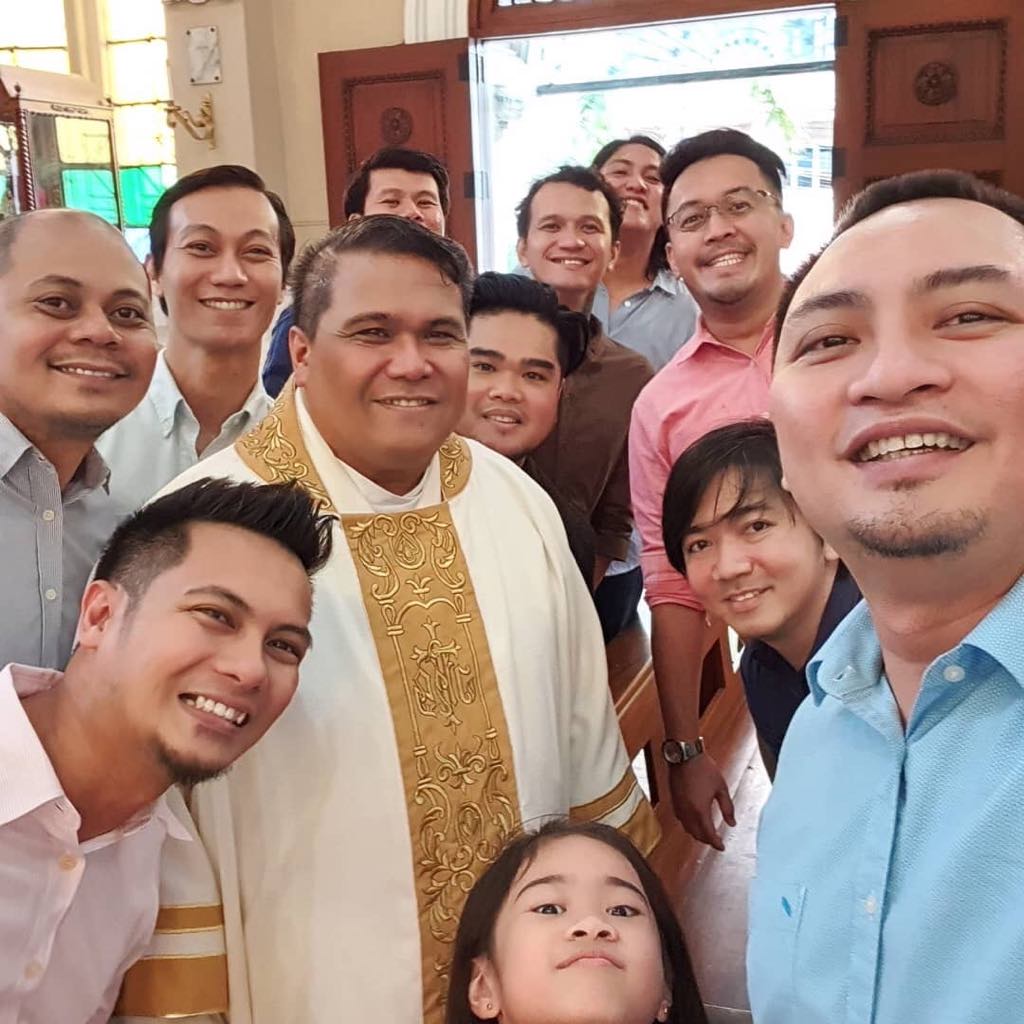
Lately I have been seeing many of my former students in elementary and high school. I have always known many of them hated me when in school because I was a strict teacher (and priest). Including many of our teachers too! That is why whenever we talked about their school days, I always asked them to forgive me for making their lives so difficult as I demanded excellence and precision in their studies and most of all, discipline at all times like cleanliness in their clothing and bearing, order and silence in classrooms, and of course, proper decorum inside the church.
At the wedding of one of my former student with his classmates in January 2020.
Surprisingly, they always ended up thanking me for the discipline I have taught and instilled in them that according to them led to their success in both their personal and professional life. Many of them have their family of their own now with some living overseas. It brings me so much joy with some tears when they tell me how they have taught their own children of the discipline I drilled in them about studies and reading, of prayer, and of simply being the very best for God in everything. It is the same thing with some of our teachers who have remained some of my dearest friends today with some living and working abroad. In fact, they claimed that it was my “terroristic discipline” that greatly prepared them for their lives and work in foreign lands and cultures.
We need to discipline ourselves for God’s grace to work in us. And remember, grace builds on nature – that’s the beauty of discipline: the more we practice it, the more blessed we become! It is a built-in app or program God has installed in each of us. Use it extensively by switching it on always. In case there’s a glitch, still, switch it on and surely it would work. As always. Have a disciplined week ahead.
The Lord Is My Chef Daily Recipe for the Soul by Fr. Nicanor F. Lalog II
Monday, Memorial of St. Blaise, Bishop & Martyr, 03 February 2025
Hebrews 11:32-40     ><))))*>  +  ><))))*>  +  ><))))*>     Mark 5:1-20
Photo by author, Atok, Benguet, 27 December 2024.
Thank you,
dear Father in heaven
for making me feel your
proverbial pat on the shoulder
this Monday:
while the author of the Letter
to the Hebrews wrote of the
heroes and heroines of Old Testament
to remind us of their incredible deeds,
great hardships and sufferings that
led to their giving up their lives
for the sake of their faith,
you remind me too, dear God,
  of my own sufferings and trials in life
far more greater and fulfilling than theirs
not on my own account but in Jesus' name.
The world was not worthy of them. They wandered about in deserts and on mountains, in caves and in crevices in the earth. Yet all these, though approved because of their faith, did not receive what had been promised. God had foreseen something better for us, so that without us they should not be made perfect (Hebrews 11:38-40).
You have rewarded so well all
those great men and women in
the Old Testament but they have to
wait until Jesus Christ's coming for
the fulfillment of your promise to them
in his life, death, and resurrection;
in Jesus, every simplest deed of
self denial and sacrifice lead to
fulfillment like in his exorcism of
that possessed man in Gerasenes
who "had been dwelling among the tombs,
and no one would restrain him any longer,
even with a chain" (Mark 5:3);
only Jesus was able to restore him to
fullness in life, just like with
everyone of us today.

Every miraculous healing by any saint,
any martyrdom is a celebration of
Christ's power over sin and evil,
a proverbial pat on our shoulder
for letting God,
and letting go.
Amen.

St. Blaise,
Bishop and Martyr,
Pray for us.
Photo by author, Mt. Olis, Atok, Benguet, 27 December 2024.
The Lord Is My Chef Sunday Recipe for the Soul by Fr. Nicanor F. Lalog II
Feast of the Presentation of the Lord, 02 February 2025
Malachi 3:1-4  ><}}}}*>  Hebrews 2:14-18  ><}}}}*>  Luke 2:22-40
“Presentation at the Temple” painting by Italian Renaissance artist Andrea Mantegna done around 1455; Mary holding Baby Jesus while St. Joseph at the middle looks on the bearded Simeon. The man at the right is said to be a self-portrait of the artist while the woman at the back of Mary could be his wife. Photo from wikipedia.org.
We take a break from our regular Sunday cycle of readings today being the second of February, the Feast of the Presentation of Jesus at the Temple which is also 40 days after His birth. That is why it is technically the end of Christmas when Joseph and Mary left Bethlehem to bring Jesus to the Temple in Jerusalem.
The Presentation of Jesus at the Temple is one of the earliest major feasts celebrated by the Church in Jerusalem in the third century that reached Rome 300 years later with the designation as the Purification of Mary. Years later as it spread to France, it came to be known as Chandeleur, or Candlemas in English speaking countries and Candelaria in Spanish when the blessing of candles with a short procession was incorporated into its liturgy due to that part of Simeon’s Canticle calling Jesus as the “light of the world” (gentiles). Following the reforms of Vatican II in 1969, St. Paul VI brought it back to its original title as the “Feast of the Presentation of the Lord” due to its Christological emphasis while retaining the traditional rite of the blessing of candles and short procession into the church.
In the Eastern Churches, this Feast is called the Encounter or the meeting of Jesus with the two elderly Simeon and Anna who were both promised by God to witness the coming of His promised salvation before they died.
One thing remains clear in its long history of celebrating the Lord’s Presentation is the beautiful assurance and sign of Jesus Christ’s presence among us enlightening us, lighting our paths, meeting us most especially in our old age as our fulfillment in life.
Now there was a man in Jerusalem whose name was Simeon. This man was righteous and devout, awaiting the consolation of Israel, and the Holy Spirit was upon him. It had been revealed to him by the Holy Spirit that he should not see death before he had seen the Christ of the Lord. He came in the Spirit into the temple; and when the parents brought in the child Jesus to perform the custom of the law in regard to him, he took him into his arms and blessed God, saying: “Now, Master, you may let your servant go in peace, according to your word, for my eyes have seen your salvation, which you prepared in sight of all the peoples, a light for revelation to the Gentiles, and glory for your people Israel” (Luke 2:25-32).
Presentation in the Temple painting by Fra Angelico from fineartamerica.com.
For our reflection, let us identify ourselves with Simeon as we dwell on his actions and words in that momentous Presentation of the Lord in the Temple.
From our long gospel account this Sunday, we get a picture of Simeon as an old man; however, not just chronologically speaking in age but also in his feeling isolated and weak deep inside, waiting for so long in faith and in hope for the coming of the Christ who would bring salvation and peace to a troubled world and a troubled self like us. Let us now reflect on Simeon’s action:
"he took him into his arms and blessed God"
(Luke 2:28)
Photo from crossroadinitiative.com.
Look at the artistry of Luke as a storyteller and a physician who knew so well how people felt when approaching death whether due to an illness or old age like Simeon and Anna. See how Luke had assembled in one scene the two old people meeting the eternally young Son of God in the temple as if telling us not only to meet Jesus Christ but also to take Him into our arms to embrace and carry Him!
To embrace and carry the Infant Jesus like Simeon and Anna is a call for us to transform and level up our way of looking at old age as a reality we must accept and appreciate than hide or avoid with many illusory tactics that only make it more difficult and leave us more fearful.
Be proud of your grey or white hair like George Clooney and Meryl Streep. Don’t be ashamed of those wrinkles for they are our badges of the many wars and battles we have fought in life, regardless whether we have won or lost. One thing is clear though and that is we are still alive. Laugh it off when our memory fails, when we get slow in everything because life is not a race nor a competition but an art that is perfected as we age.
Taking to carry Baby Jesus like Simeon and Anna is embracing old age called “ageing gracefully” – a modern virtue that calls us to deepen our prayer life as we realize and accept the fact that it is now our “boarding time” for the final Encounter with the Lord in eternity.
In my previous parish assignment, there were three elderly men I have become friends with until their death. As they declined in their health, they came to me so often and later called for me to hear their Confessions whenever they would suddenly remember sins they have committed when they were younger. It must have been a unique grace from God to have that “Simeon moment” of carrying and embracing Jesus to be cleansed and purified before they have died. And I am convinced in my four years as a hospital chaplain that everyone is gifted with this “Simeon moment” to carry Jesus just before our final Encounter with Him in the afterlife. To carry Jesus is to cultivate a spiritual life centered in prayer like Simeon and Anna and those three friends I had.
Inversely, the young are blessed too with “Simeon moment” when like Mary and Joseph they share the Christ in them with those who are old and weak by accompanying them, understanding them, and bearing with them in their old age. It is only after we have “taken” the Child Jesus into our hands to hold and carry and embrace can we sing praise to God like Simeon:
"Now, Master, you may let your servant
go in peace, according to your word,
for my eyes have seen your salvation"
(Luke 2:29-30)
A painting of Simeon with the Child Jesus from the dailyprayerblog.blogspot.com
To age gracefully by carrying and embracing the Infant Jesus like Simeon is realizing deep within us that getting old and weak is also part of our celebration of life because that is when we enter Life Himself and when we also let Him enter us completely.
How did Simeon recognize it was the Savior that the two poor couple with a pair of turtledoves or pigeons were presenting in the temple that day?
Long before Joseph and Mary came to offer Jesus at the temple that day, Simeon had already entered into God’s presence in his long period of waiting through prayers and sacrifices. When Mary and Joseph came to the temple to present Jesus, God entered Simeon through the Holy Spirit to recognize the coming of the awaited Christ. Simeon’s prayerful singing of his praise to God while holding the Infant Jesus on that day was the fulfillment and expression of his long fidelity to God, of his being attuned to the Divine presence and promptings all his life.
In this age of instants, nobody waits anymore because many think that waiting is empty, a weakness and a poverty. A waste of time and energy.
The Fourth Joyful Mystery portrayed in the Presentation Chapel of the Basilica of the National Shrine of the Immaculate Conception in Washington DC.
But Simeon shows us the exact opposite in his Canticle. It is in our waiting for God amidst the darkness and nothingness when Jesus really comes like that day in the temple. God is most present and closest with us when all we can do is cry “Lord” or “Jesus” because His very name is already His presence. If we keep that in mind like Simeon, we will surely find and embrace Jesus wherever, whenever.
As we celebrate the Jubilee of Hope this 2025, let us be reminded of Simeon along with the Prophetess Anna who were both Pilgrims of Hope who never lost sight of Christ in the midst of their long waiting. The first and second readings this Sunday assure us that God is coming, God has come in Jesus amid our many darkness and nothingness, weakness and decline.
Like Simeon and Anna, let us await to approach Jesus always for He alone matters most in this life found within us, among our family and friends and the people around us, expressed in love and mercy, kindness and forgiveness, and joy. Just be patient and wait, Jesus will appear for you to take Him and embrace Him in your arms like Simeon. Tell that to Jesus now with your other deep longings and you will not be disappointed. Amen.
Photo by author, sunrise bursting through thick fogs over Taal Lake in Bgy. Dayap Itaas, Laurel, Batangas, 17 January 2025.
The Lord Is My Chef Daily Recipe for the Soul by Fr. Nicanor F. Lalog II
Simbang Gabi-8 Homily, 23 December 2024
Malachi 3:1-4, 23-24     <'[[[[><  +  ><]]]]'>     Luke 1:57-66
Photo by author, Church of St. John the Baptist, the Holy Land, May 2019.
We are now in our penultimate day of our Simbang Gabi. I love that word “penultimate” so often found in the sports page that means second to the last of the series.
From the Latin prefix pen- meaning “almost” + ultimatum for “last”, penultimate literally means “almost last” which gives a sense of fulfillment and of completion – exactly how we feel this eighth day of Simbang Gabi that is almost over with everything already fulfilled in our readings and prayers for Christmas.
When the time arrived for Elizabeth to have her child she gave birth to a son. Her neighbors and relatives heard that the Lord had shown his great mercy toward her, and they rejoiced with her. When they came on the eighth day to circumcise the child, they were going to call him Zechariah after his father, but his mother said in reply, “No. He will be called John.” But they answered her, “There is no one among your relatives who has this name.” So they made signs, asking his father… He asked for a tablet and wrote, “John is his name.” Immediately, his mouth was opened, his tongue freed, and he spoke blessing God. All who heard these things took them to heart, saying, “What, then, will this child be?” For surely the hand of the Lord was with him (Luke 1:57-62, 63-64, 66).
Painting of “Saint Luke Drawing the Virgin” by Flemish painter Roger van der Weyden (1400-1464); photo from en.wikipedia.org.
See again the artistry and advocacy of Luke as an evangelist and a journalist. We can imagine the scene, experience the joy and excitement of the event in the tight-knit community with all the wonderful elements of a drama in real life.
Leading the scene is Elizabeth, the priest’s wife barren for years and beyond hope now gives birth to a son, creating excitement and gossip among the many Marites. Then Zechariah the priest who was silenced for nine months due to his doubts with the good news announced to him by the angel finally spoke praising God, filled with gratitude and wonder. And of course, the uzis (usiseros), the neighbors who shared in the joy and for a good reason and intentions wanted the baby named after his father.
That’s when Luke showed his skillful mastery of weaving together a wonderful piece of tapestry clearly designed by God that surprised everyone, including us today. “When they came on the eighth day to circumcise the child, they were going to call him Zechariah after his father, but his mother said in reply, “No. He will be called John.” But they answered her, “There is no one among your relatives who has this name.” So they made signs, asking his father… He asked for a tablet and wrote, “John is his name.” Immediately, his mouth was opened, his tongue freed, and he spoke blessing God.“
Again, notice another minute detail mentioned by Luke when he called Elizabeth “his mother”.
Photo by author, Church of St. John the Baptist, the Holy Land, May 2019.
Of the four evangelists, Luke is the one who gave a lot of emphasis on the role of women in the society, especially the ancient Jewish one that was strongly patriarchal.
In the Visitation story yesterday, it was only Luke who had written a scene in the whole Bible with two women together conversing and in very positive mood. Women were so rarely put together in one scene especially in the Old Testament, a sort of what we may call as “gender bias” because women were always at odds with each other, even quarreling. Except for the Book of Ruth where we find two women not only in a single scene but a whole book and yet very pronounced there how it was Naomi the mother-in-law always portrayed in control or leading, always speaking while Ruth was silent, giving an impression of being so lovely yet very soft even submissive to elders and men.
Luke wrote the Visitation scene to clarify all these gender bias of their world then that persists even to our own time. Luke made a loud and clear statement in putting together Elizabeth and Mary in this one scene, an old, barren woman and a virgin, unmarried maiden both so blessed by God with infants in their wombs. Not only men are called by God to a special mission but most especially women who give birth. Elizabeth and Mary represent all the women of the world to remind everyone for all time that they are created in the image and likeness of God, with same dignity as men who must be respected at all times as indwelling of the Holy Spirit.
Notice how throughout the scene from the annunciation to Zechariah and the Visitation, the wife of Zechariah was referred to by her name Elizabeth but, when controversy arose about the name to give her son, Luke emphatically wrote “his mother” to show that she has every right over her son, reaching its climax when Zechariah affirmed the mother as he wrote “John is his name.”
Think of those moments in your life when there are reversal of roles and suddenly God threw you – catapulted you – to a major role in life you only entertained in your wishful thinking and daydreaming because you have given them up, you have surrendered it due to a very long time of being disappointed like Elizabeth or Zechariah?
Think of those times when you realized, when you felt being at the center of attention for a good reason because you are good, you are so blessed, you did the right thing? How do you feel of the grace of God?
Think of those times when you did something so good that prompted others to “prepare the way of the Lord” like John the Baptist, when people around you were wondering what else you would achieve because clearly, God is with you?
On this penultimate day to Christmas, take time to speak God from your heart as you prepare for the fulfillment of His promise to you. I tell you, claim it now whatever you are asking God for Christmas. Remember what the angel told Mary at the annunciation, “nothing will be impossible for God.” Dare to open yourself to God, create a space within you for Him alone and let Him lead you like Zechariah whose name means “God remembers”, Elizabeth which means “God has promised” and John, “God is gracious.”
On this penultimate day to Christmas, we are assured God is gracious because God remembers His promise always. Amen. Have a blessed week ahead.
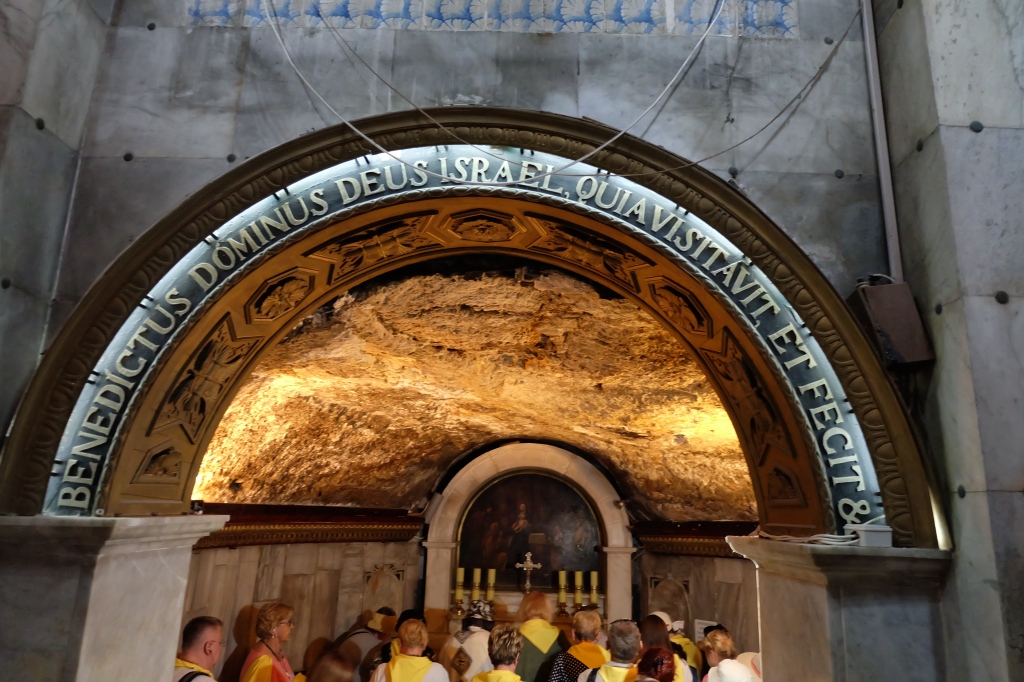
Photo by author, birthplace of St. John the Baptist underneath the Church of St. John the Baptist, the Holy Land, May 2019.