Quiet Storm by Fr. Nicanor F. Lalog II, 20 August 2026
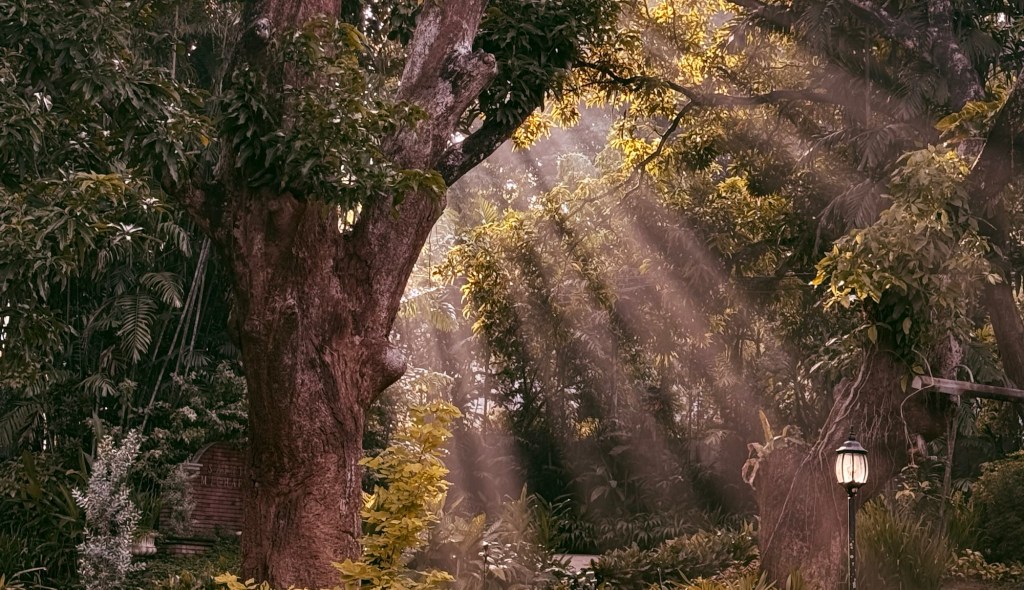
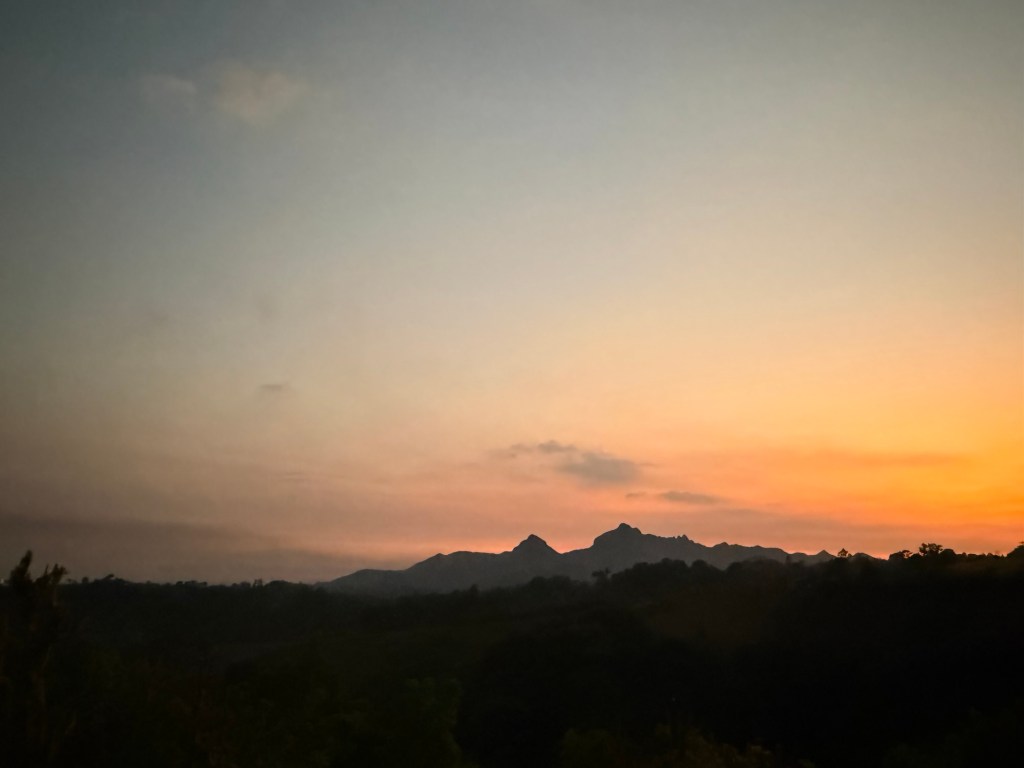
How amazing, O Lord Jesus that when it is already evening, when darkness is all around us, that is when you are actually inside us, if we could just open our hearts and eyes of faith then we shall see you truly our Light glowing within, bringing warmth and joy.
Many times in our darkness we lose sight not only of you, Lord Jesus but also of our self that away from you we lose our identity and let our job and tasks define us or worst, our possessions and achievements as well as pains and hurts; we cave into our darkness within not seeing your wounded handed touching me holding me unmindful of your holding me, loving me.
When things get dark and we can’t see anything teach me Jesus to listen to your silence to feel your presence sense your movements follow your steps waiting trusting self-emptying.
Most of all, Jesus, help me emulate your Mother our Mother too, Mary most holy, to remain focused on you cusping you in my palms when all is dark holding on to your words believing they shall be fulfilled when I remain and stay with you there on the Cross. Amen.
Quiet Storm by Fr. Nicanor F. Lalog II, 20 August 2026
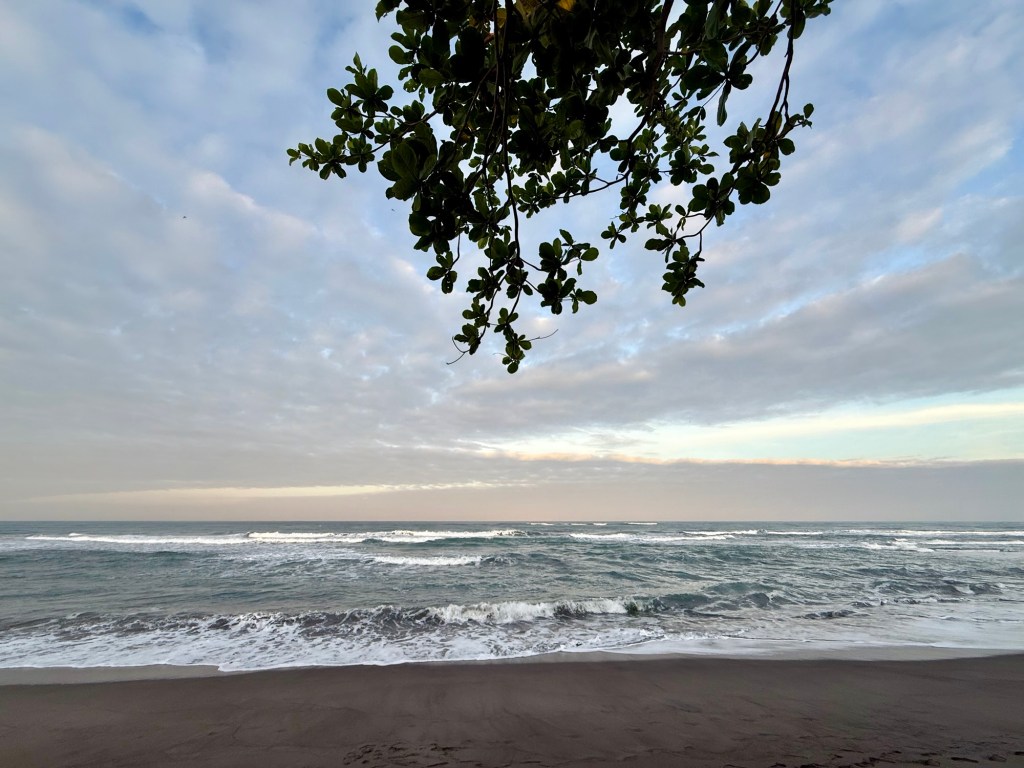
Photo by author, Anvaya Resort, Bataan, 21 July 2026.
Let me come home to you, Lord God: to gaze in your loving eyes anew, be wrapped around with your tight embrace without being judged nor blamed.
Let me come home to you, Lord God: with nothing at all, to be poor of material wealth and rich in Spirit and virtues, empty of pride, filled with your humility and simplicity so scarce of everything abundant in you and your love.
Let me come home to you, Lord God: no longer afraid of the dark and everything not yet known and seen, nor terrified of great waves of tasks and duties, of strong winds like what people think and say about me because in you alone is my certainty as well as safety and security.
Photo by author, Pundaquit, San Antonio, Zambales, 15 May 2025.
Let me come home to you, Lord God: to be nourished by your words that give life and meaning, to be quenched of my thirst with your living water that restores my being, cleanses me of my sins and shame.
Let me come home to you, Lord God: to rest in you, be at home in you because you are my origin, my root my home my peace my destination in this long journey in life for you are my Lord and my God. Amen.
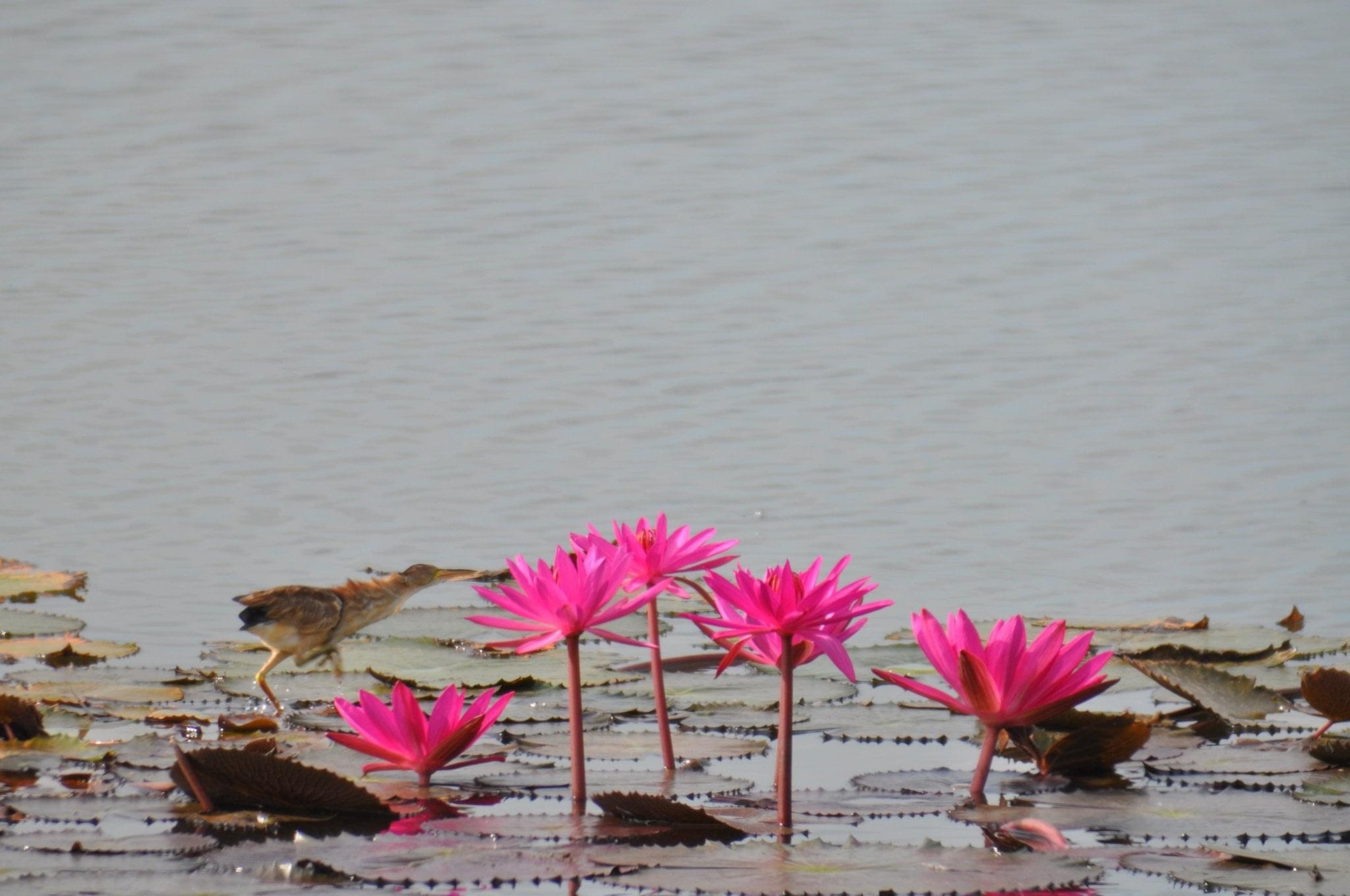
Photo by author, San Juan, La Union, 09 January 2026.
Lord My Chef Sunday Recipe for Soul by Fr. Nicanor F. Lalog II Eighteenth Sunday in Ordinary Time, Cycle A, 02 August 2026 Isaiah 55:1-3 ><}}}}*> Romans 8:35, 37-39 ><}}}}*> Matthew 14:13-21
Photo by author, Anvaya Cove Resort, Morong, Bataan 21 July 2026.
Salamuch July, hello August! Though this eighth month of the year is named after the Roman emperor Augustus, August actually came from the Latin word augustus meaning venerable; used as an adjective, it describes something as majestic and grand like when we say “august halls” or “august chambers” of power and justice.
So, please stop demonizing August as “ghost month” which is a pagan belief. For us Christians who affirmed last Sunday to Jesus that we have “understood” very well his parables, Matthew challenges us this August not only how well we have understood the parables on the kingdom of heaven but most especially how much do we know and love and trust Jesus the Christ.
Photo by a friend living in Washington state, 28 July 2026.
From the shores of Galilee, Matthew now brings us to the wilderness with Jesus where he fed more than five thousand people from a few loaves of bread and pieces of fish.
When he disembarked and saw the vast crowd, his heart was moved with pity for them, and he cured their sick. When it was evening, the disciples approached him and said, “This is a deserted place and it is already late; dismiss the crowds so that they can go to the villages and buy food for themselves.” Jesus said to them, “There is no need for them to go away; give them some food yourselves.” But they said to him, “Five loaves and two fish are all we have here.” Then he said, “Bring them here to me,” and he ordered the crowds to sit down on the grass. Taking the five loaves and the two fish, and looking up to heaven, he said the blessing, broke the loaves, and gave them to the disciples, who in turn gave them to the crowds. They all ate and were satisfied, and they picked up the fragments left over – twelve wicker baskets full (Matthew 14:15-20).
See again that distinctive detail Matthew shares with us when Jesus saw the crowds who have followed him and his disciples to the other side of the lake: his heart was moved with pity for them, and he cured their sick. That is how great is the love of Jesus for each of us. He is always moved with pity which is more than a feeling but of actually doing something, even a miracle for us like in this scene in the wilderness.
Life is a wilderness. So vast and uncertain. But, lovely and beautiful. Not really august but grand and majestic, so difficult to explain, often ambiguous, largely mysterious. Even captivating. That is why it is always good to be alive even if life is difficult.
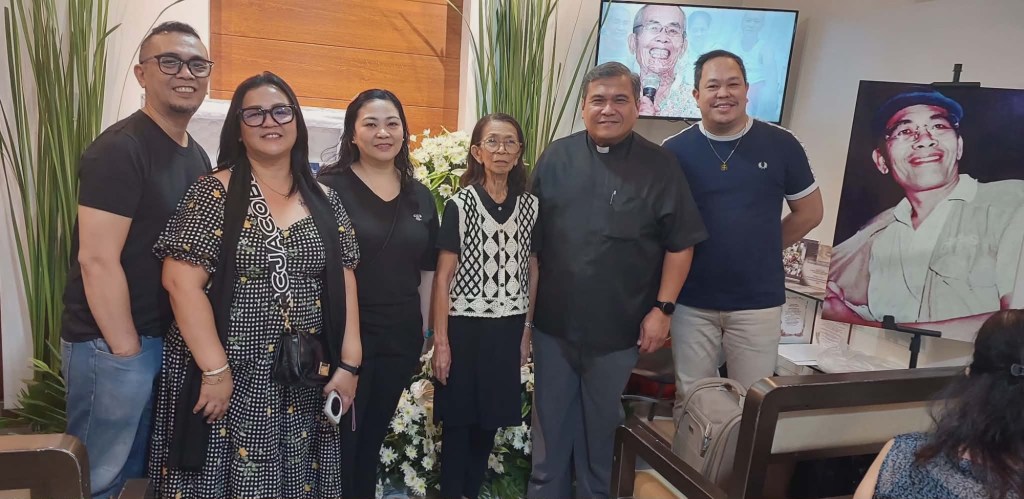
Last Thursday I officiated at the funeral Mass of another best friend from our minor (high school) seminary. In fact, Jonas was my classmate way back in second grade who partly inspired me to become a priest. He is my second best friend after Gil also from the seminary whom I have accompanied spiritually in life and at their deathbeds. Before going to his funeral at prayer in my room, I asked God if I would still have friends alive to attend my own funeral?
The mystery deepened after we have laid Jonas to his final resting place when a few hours later his mother-in-law – the mother of his widow – died too! Imagine the devastation to my friend’s wife who has not rested yet after taking care of him for a month in the hospital then her mother died too? And to their only child just starting her career as a medical doctor?
Photo by a friend living in Washington state, 28 July 2026.
Many times Jesus teases us.
Or seduces us as the Prophet Jeremiah insisted on how God lured him to following him despite the many hurts and pains he had to go through but could not turn away from him because he had grown to loving him so much too.
Like the people who followed Jesus to the wilderness, we gather every Sunday to listen to his words and share in his Body and Blood because we have felt so empty in life that only him could fulfill us.
But, that is so easy to claim as we can readily profess our faith in God, in Jesus Christ but it is different when it is borne out of a wilderness experience like the disciples.
How many times have we felt like them thinking more of our selves than others when in a difficult situation, telling Jesus to send the people home because it was getting late and dark; most of all, so that they could get food for themselves?
It was easy for the crowd to just come to Jesus and think only of themselves but not with the disciples – like our parents, our kuya or ate, our superiors, or those people we look up to with responsibilities over us. That is why be kind with those in positions too. So easy to accuse them of their shortcomings and worst, to spread gossips when we do not realize the enormous weight they carry on their shoulders.
The equation becomes different and heaviest when Jesus tells us to “give them some food yourselves”. It is scary because at that moment Jesus asks us too of “what do you have” which we already knew beforehand as too little. Not enough. Just five loaves of bread and three pieces of fish.
Recall those moments you knew so well your limits, you capacity. And that’s when you start regretting why you have accepted the position or why have you volunteered at all or perhaps why become a priest or why got married?
Photo by author, Anvaya Cove Resort, Morong, Bataan 21 July 2026.
Life is a wilderness that looks so lovely with its sunrise and sunsets but in between, it is so difficult. Because it is in the wilderness of this life when we truly come face to face with the harsh realities of our insecurities and inadequacies, scarcity and emptiness.
But Jesus shows us today that wilderness too becomes our grace-filled moment when he asks us to bring to him whatever little we have. It is the crucial point, turning point when we have to choose between turning to Jesus and trusting his instructions or retreating to our selves, to what we have or believing more to what the world offers.
Let us choose to radically believe in Jesus by surrendering to him whatever we have.
Photo by Mr. Nicko Timbol, OLFU Campus Ministry, 25 October 2025.
This is actually an extension of his question last Sunday, “Do you understand all these things?”
As we have reflected last week, to understand in Filipino is “maunawaan” from the root word “una” which is to be first. To understand the parables of the kingdom of heaven is to entrust ourselves to Jesus completely, to surrender even the little that we have, including our fears and insecurities.
That is why in the first reading God tells us through Isaiah to “come to him” to eat the true bread and drink true water fulfilled in Jesus Christ his Son. To understand all these things is to be convinced that in this life, only God suffices. He alone in Jesus Christ can fulfill our deepest desires and longings like peace and joy, love and hope, all the real reasons for living. Not things. Or even persons and relationships that do not last, often manipulative because not rooted in Christ.
This Sunday, let us not be ashamed of the little that we have, the worst that we have. For as long as we have Jesus, there is nothing that we cannot accomplish nor be fulfilled. St. Paul said so well in the second reading, nothing – not even death – can separate us from the love of God in Christ Jesus our Lord (Rom. 8:39). Amen. Have a blessed august month fulfilled in Christ!
Quiet Storm by Fr. Nicanor F. Lalog II, 08 July 2026
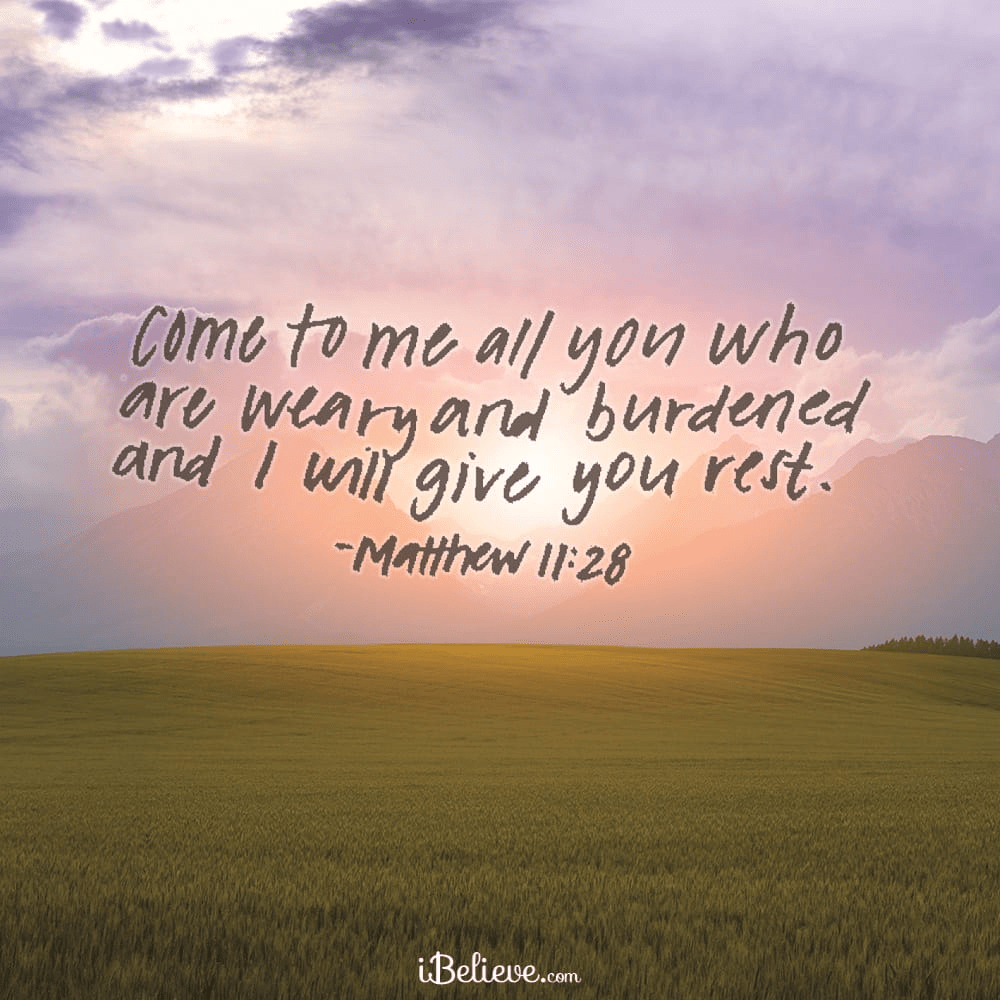
It has been three days since Sunday when we heard Jesus calling us to “Come to me, all you who labor and are burdened, and I will give you rest. Take my yoke upon you and learn from me, for I am meek and humble of heart; and you will find rest for your selves. For my yoke is easy, and my burden is light” (Mt.11:28-30).
It is one of the shortest and most memorable passage in the gospel but, how do we really come to Jesus in order to rest and feel light?
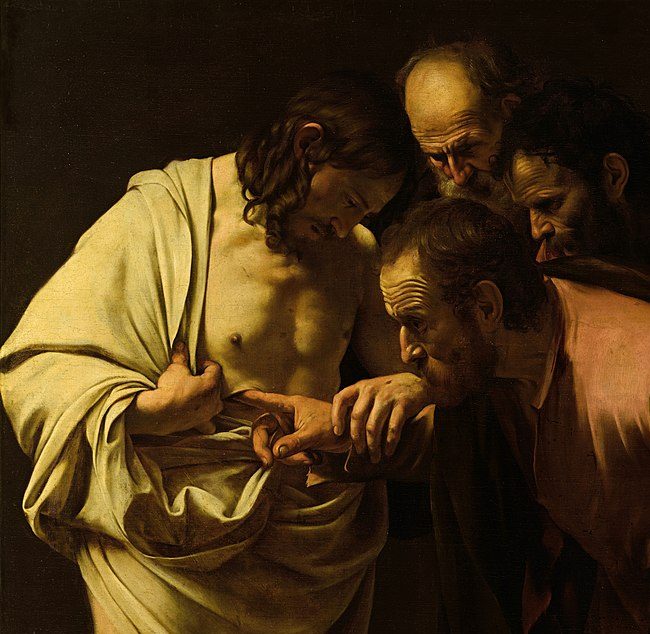
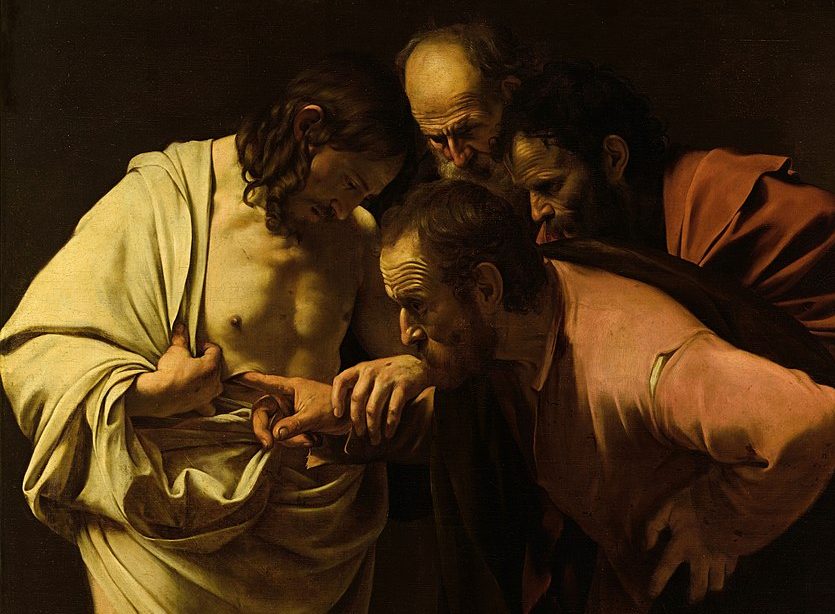
The good news is, it is Jesus who actually comes to us first, inviting us to come to him to find rest and feel light. Exactly like at the meeting of the Risen Lord and Thomas the Apostle eight days after Easter as narrated to us by John. You will recall that last Friday was the Feast of St. Thomas the Apostle (June 3) when I presented in my homily Caravaggio’s painting called The Incredulity of Thomas done in 1602. This is the second time I have used a painting by this renowned Italian painter said to be the favorite of the late Pope Francis too.
Photo of painting by Caravaggio, “The Incredulity of Thomas” via wikipedia.commons.org.
Thomas “refused” to believe the Apostles’ news to him that Jesus had risen, saying that “Unless I see the mark of the nails in his hands and put my finger into the nail marks and put my hand into his side, I will not believe” (Jn.10:25).
Many times we are like Thomas, a Didymus, with a twin in life like doubt and certainty, belief and unbelief, darkness and light.
Like Thomas, we say unconsciously that “Unless I see the mark of the nails in his hands and put my finger into the nail marks and put my hand into his side, I will not believe” (Jn.10:25) because it is when we are suffering, when we are in darkness, when we are in doubt when we truly search and long for God and Jesus.
It is not that Thomas nor we could not believe that Jesus had risen or doubted Christ at all; actually, Thomas believed in Jesus that is why he came on the eighth day to await the Lord’s coming in the same manner that we still pray despite our “doubts”.
Now a week later, his disciples were again inside and Thomas was with them. Jesus came, although the doors were locked, and stood in their midst and said, “Peace be with you.” Then he said to Thomas, “Put your finger here and see my hands, and bring your hand and put it into my side, and do not be unbelieving, but believe.” Thomas answered and said to him, “My Lord and my God!” (John 20:26-28)
Photo of painting by Caravaggio, “The Incredulity of Thomas” via wikipedia.commons.org.
See the artistry of Caravaggio in this painting, that characteristic play of light and darkness emanating from Jesus, illuminating Thomas and his elder Apostles Peter and John.
All darkness in life are diminished, even vanished completely when we bring everything and everyone in the light of Jesus Christ who comes to us to enlighten us, to illumine us from many darkness we go through in life like Thomas on that night of the eighth day of Easter.
But, there is more to the light of Christ that we can see in this Caravaggio painting.
Amid its stillness and silence, one could feel deeply Jesus Christ’s words last Sunday – come to me – echoed softly, personally, lovingly to Thomas. And to each one of us today.
Photo of painting by Caravaggio, “The Incredulity of Thomas” via wikipedia.commons.org.
John tells us that Jesus simply said to Thomas to “Put your finger here and see my hands, bring your hand and put it into my side, and do not be unbelieving, but believe.” Thomas answered and said to him, “My Lord and my God” (Jn.20:27-28).
Okay, fine… it is just my imagination or my contemplation that I heard Christ’s words last Sunday echoed in this scene, “come to me and I will give you rest” but, there is something so beautiful and deeply personal with Jesus in saying or implying those same words here. You can hear it so close, so near you, not from afar especially when you consider its Filipino translation of “Lumapit kayo sa akin” or the informal “Halikayo at lumapit sa akin” that both indicate a separation of even a few feet away from Jesus who is calling us.
See the proximity of the four people in this painting. That is how close Jesus gets to us whenever he comes to us, inviting us to come to him in order to find rest especially in those dark moments in our lives, when we feel hurt and abandoned. When we are so stressed out as seen in those wrinkles on the foreheads of the three apostles!
Contrast their images to the serenity of Jesus. Most of all, see also the hands of Jesus, of how his left hand with the nail wound visible moving aside his garment so that Thomas and his companions may see further his pierced side.
Whenever Jesus comes to us, calling us to come to him to show us his wounds from the cross to remind us that before all our pains and hurts came, he was there first to suffer and be wounded and died for us.
And he has come to us again, calling us to come to him because he had risen, assuring us that all our wounds like his will heal eventually! That is when we experience rest. And being light in life.
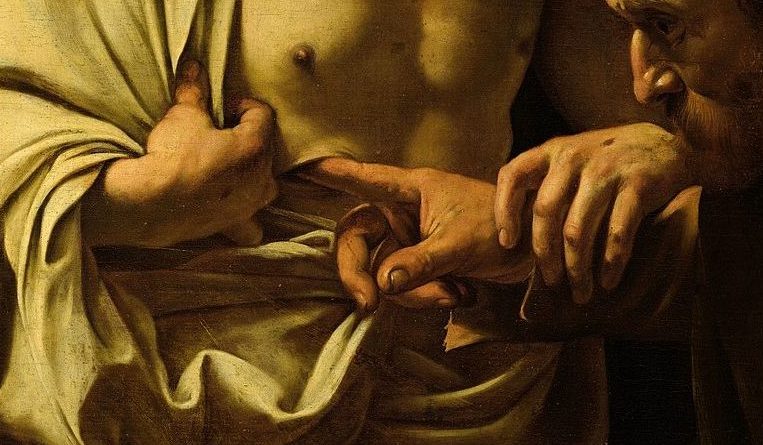
But, what I love most in this painting is the way Caravaggio depicted the Risen Lord holding the hand of Thomas while probing into his side wound:
Photo of painting by Caravaggio, “The Incredulity of Thomas” via wikipedia.commons.org.
How lovely! Caravaggio must be in the highest heaven when he painted this part.
Remember when Thomas dared to say unless he sees the nail marks in the Lord’s hands and put his hand at his side, he would not believe?
Jesus knew it so well not only with Thomas but with each one of us, of our being a Didymus, always with a twin of doubt so that he does not merely appear but touches us to experience deeply, personally his loving presence through his wounds.
See how Caravaggio depicted the left hand of Jesus again with the mark of nail holding the very hand of Thomas, directing his finger into his pierced side. You could feel the sure grip as well as gentleness of the Lord’s hand in leading the finger of Thomas into his pierced side wound. So dramatic as if it is not enough for Jesus to being present but most of all, experienced as closest at possible.
Jesus touches us always, literally and figuratively by holding our wounded selves to experience his wounded self too. He does not only call us in words but leads us with his total self.
Christ’s invitation for us to “come to him” remains personal and personalized. Not mass produced like what is happening these days where speed and reach are the main considerations, not the person.
While writing this piece yesterday, one of the blogs I follow came out with a new article exactly about last Sunday’s gospel scene, claiming that if God texts us today, these very words to “come to me” by Jesus would be his “text message” to us (https://thedevotionalguy.blog/2026/07/07/if-god-sent-you-a-text/).
I believe so. Because text messages have become the closest things we can have of anyone in these days of social media. However, if ever you receive that text message from Jesus, run outside to meet him personally for surely, he had come. Amen. God bless you.
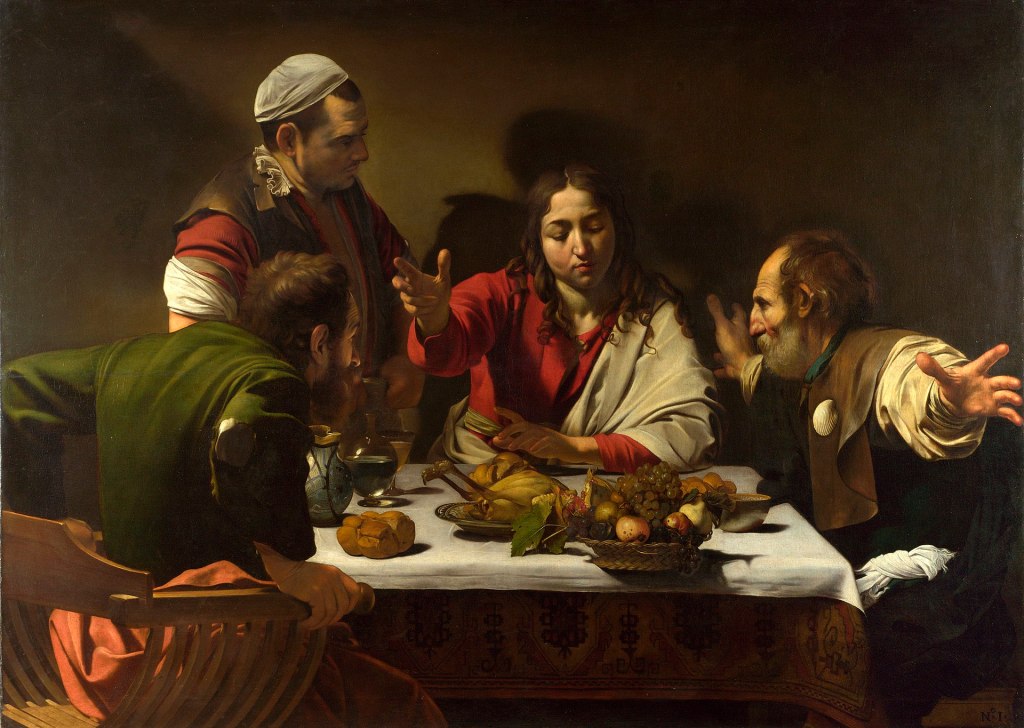
Photo by author, St. Michael Retreat House, Antipolo City, 16 June 2026.
Sampung buwan na 'kong hindi natutulog Kasi naman, ang ingay ng aming kapitbahay 'Pag gabi, disco house at videoke Kaya't sorry na lang kung wala sa aking sarili Mahal kita, pero miss na miss na miss ko na
Ang aking kama at ang malupit kong unan Ba't 'di ka na lang sumama? Hihiga tayo at kakanta
I have always loved the Eraserheads whose songs are like vintage wines that get better with age like Kamasupra from their thrid studio album considered as the best Pinoy rock album, “Cutterpillow” released in 1995.
See the genius and artistry of Ely Buendia in composing Kamasupra, a witty play of words and ideas, of the bed we call kama in Filipino and that bible of erotica Kama Sutra from ancient India.
More than a furniture, the bed is also an altar of the highest order in every home where we perform our final acts as humans at the end of each day – of retiring and of dreaming while entrusting ourselves, consciously or unconsciously to God. In the same manner, it is on our bed where we also desecrate our very selves and those dearest to us.
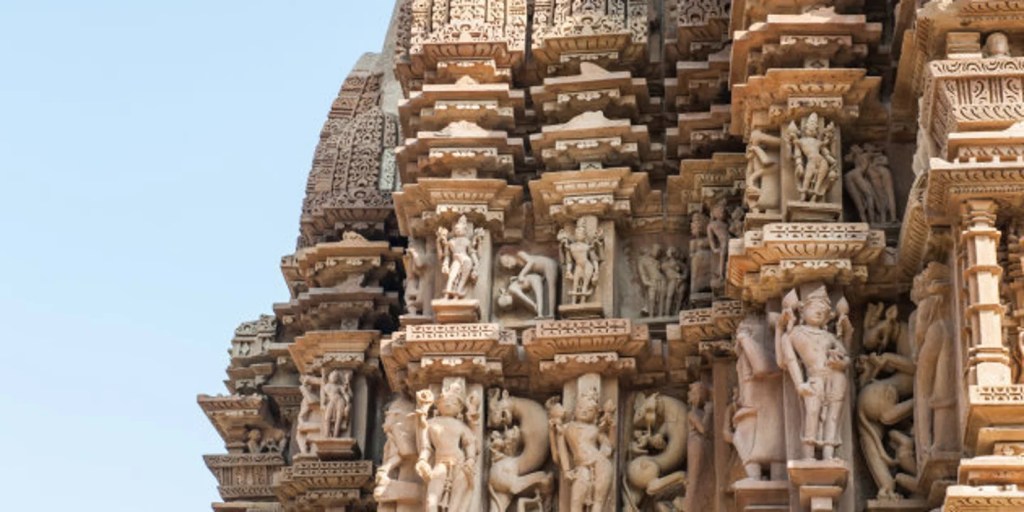
Photo from LightRocket via Getty Images Erotic sculptures of the Khajuraho group of monuments, part of the UNESCO World Heritage Sites in India.
Please. There’s nothing bastos with both Kamasupra and Kama Sutra; both speak of the joys and sanctity of our relationships, of our being with our loved ones in bed that leads us to eternity as every old and dying person would tell you.
I know. I have met so many of them being a chaplain in a hospital for five years now. Whether in our home or in the hospital, the bed is always the final step board of every soul going to eternity.
Whenever I would bless the master’s bedroom in a new home, I say a prayer of blessing on the couple’s bed and before sprinkling it with Holy Water, I ask them to first bless it so that they would feel its sanctity as an altar where they give themselves to each other completely.
Hence, only them the husband and wife can sleep in that bed and nobody else, not even the children.
I do the same ritual of blessings in the other rooms of the children, praying that they would find rest of body and soul in their bed with a strict reminder that no visitors can stay inside their bedroom because it is sacred. Period.
This is most true for the bed of every priest. Notice how in most parish rectories and convents of nuns you find the sign “Private” to indicate no visitors allowed in their private quarters.
The priest’s bedroom and bed are literally his “inner sanctum” where only he and Jesus can be together at all times. Usually in silence too.
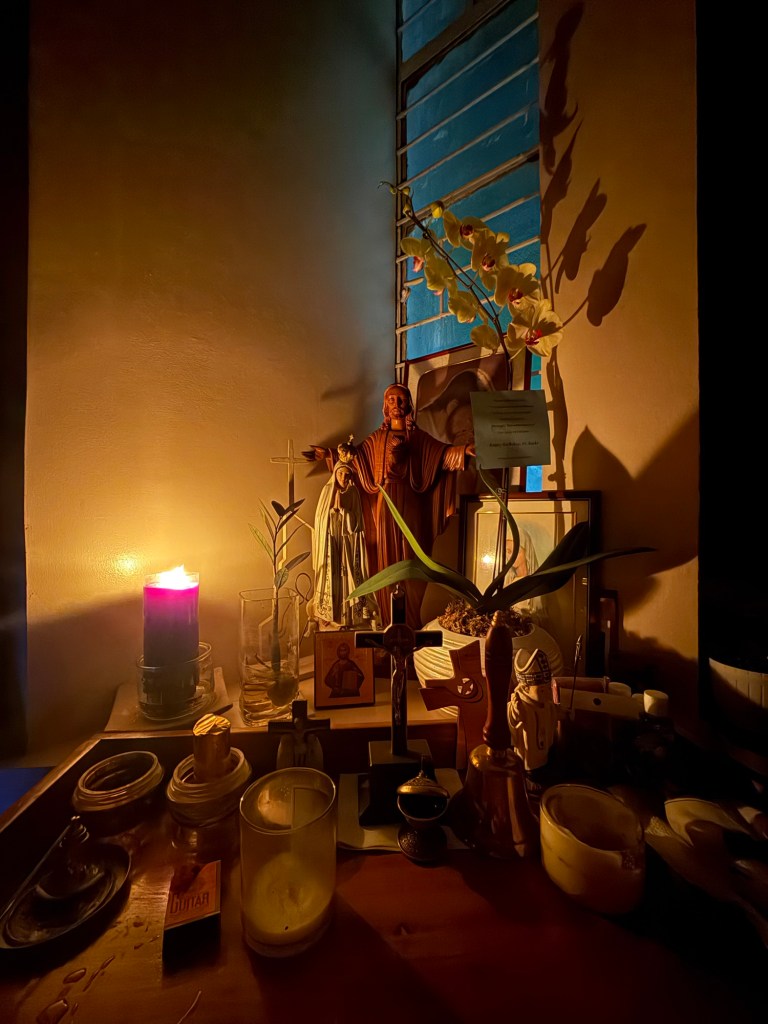
That is why I tell young priests to first have an altar in their bedroom where they could pray first thing in the morning and just before hitting the sack. Next to our breviary, the bed is the priest’s most beloved and blessed partner in life.
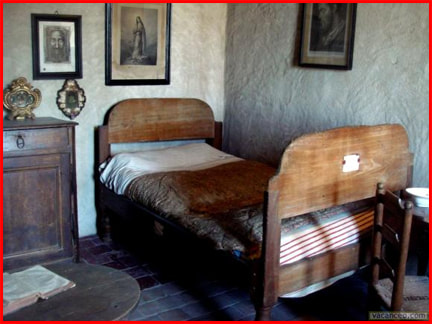
Most of all, the priest’s bed should always be “celibate” too like himself – that is, single-size only. No need to have big beds nor expensive ones because a priest’s bed is a reflection of his vows in the ministry – celibacy, poverty, and obedience.
Photo by author, personal altar in my bedroom.
Some of my most memorable images and experiences as a priest happened when I accompanied two elderly priests of our diocese in their deathbeds.
First was Msgr. Macario Manahan who died on 16 March 2014, the Second Sunday in Lent that year. I was by his side when he died that Sunday afternoon as he lived near my previous parish assignment. The second priest was Msgr. Vicente Manlapig who was confined in our hospital where I serve as chaplain. He died a few hours after my last visit to him on a Sunday morning, 26 February 2023, the Second Sunday in Lent.
Yes. They both died in Lent that is why since 2023, I have kept on telling people that life is a daily Lent, a preparation for Easter.
Bed of St. John Marie Vianney, Patron of all priests; from devotiontoourlady.com
It was at their deathbeds when I strongly realized that our bed is also our altar especially when we get sick and old, where we shall celebrate the Holy Sacrifice of the Mass, where we meet and receive Jesus Christ in the Holy Viaticum when too weak to celebrate the Eucharist.
It is on the bed of a dying priest I have felt deeply and truthfully the vocation in the priesthood – of how we were called by Jesus to become his priest that in the end he shall be calling us again as his priest to join him eternally.
And there in our bed comes the painful truth of how when we were young and strong we were called to do everything for Jesus and his Church, often lording it over the flock, so powerful as if like a god until all of a sudden without any warning, we just find ourselves already old or sick and weak, bedridden.
That’s when we hear anew Christ our Eternal Priest calling us, this time not to do anything at all but simply hang there on the cross with him like the two thieves at the Calvary.
That is when in our deathbeds we priests call on Christ anew like Dimas, the good thief, admitting all sins and faults while confessing our faith in Jesus.
The priest’s bed is where the priest cultivates his intimacy with Jesus too – his very celibacy and purity, his poverty and simplicity, as well as his docility and obedience not only to his bishop but ultimately to God.
Because it is also on that bed where the priest wages all kinds of battle in his life and ministry until the end, where the devil begins and ends all temptations to displace Christ from the side of the priest.
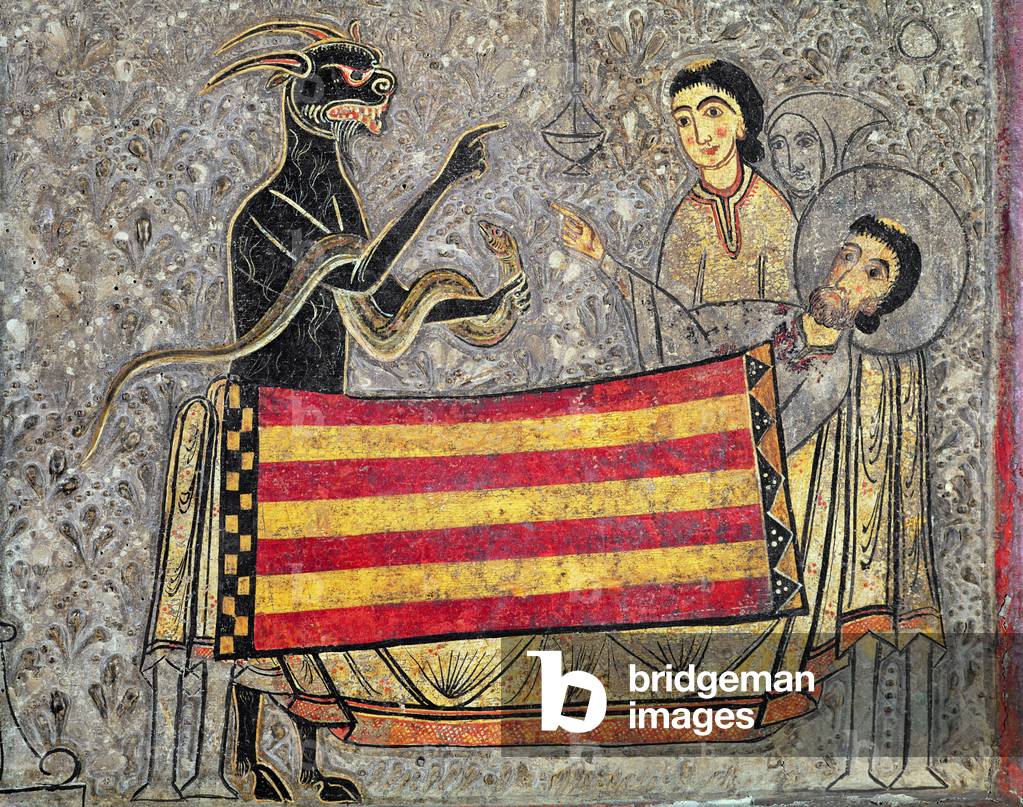
The Death of St. Martin of Tours, detail from an altar frontal from the Church of Saint Martin in Chia, 1150-1200 (tempera on panel) by Johannes Pintor, Ribagorça Workshop (fl.1150-1200); Museu Nacional d’Art de Catalunya, Barcelona, Spain ; (add.info.: Saint Martin on his deathbed, covered with a blanket in the colours and stripes of Aragon, rebukes the devil;).
It is said that when St. Martin of Tours, our patron saint in Bocaue, Bulacan, was dying in Candes (France) surrounded by his disciples, the devil appeared at his bed side, trying to claim his soul. Having lived a life of intense spiritual warfare, most likely some of it in his own bed, St. Martin rebuked the devil with his firm faith in Jesus Christ. The devil vanished and St. Martin died on November 11, 397 AD.
Every night towards the end of our Compline, we pray Simeon’s Canticle, the Nunc Dimittis (Lk.2:29-32) with an antiphon that goes like this: “Protect us, Lord, as we stay awake; that awake we may keep watch with Christ and asleep rest in his peace.” We then close our prayers with the final words, “May the Lord grant us a restful sleep and a peaceful death. Amen.”
It does not really matter whether one is a priest or not. Most of all if your bed is comfortable or not. What is important is that on that bed we are at peace with ourselves, with others and most of all, with God. So, keep your bed sacred at all times.
Quiet Storm by Fr. Nicanor F. Lalog II, 30 April 2026
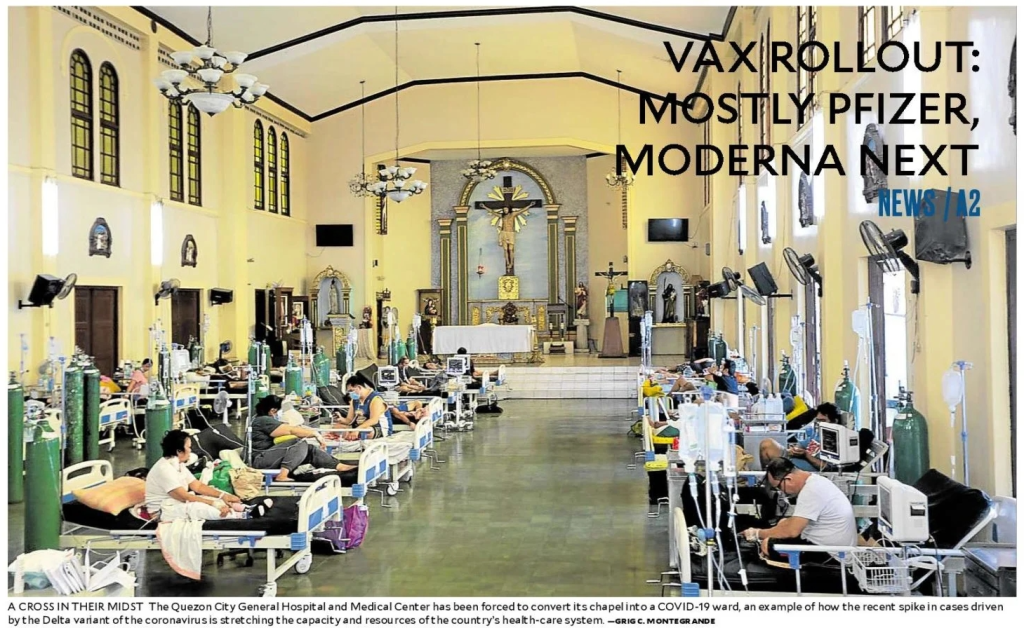
This front-page photo of the Philippine Daily Inquirer on August 20, 2021 is my favorite shot taken during the COVID pandemic coverage by the local media. It is worth a thousand words indeed.
I remembered this photo last month before the Holy Week when a friend and former colleague in GMA News texted me about the death of her former staff member. Her message read, “please pray for the soul of ____ who had lost the battle with cancer.”
It is perhaps one of the most widely used template in announcing a death, lost a battle. In my 28 years as a priest, it is only now as a senior citizen that I have reflected about that most common text I receive whenever somebody dies after a lingering illness. Or battle.
Since turning “sigisty-one” years old last March, I have considered it as grace that the more I have now become aware of the reality of my mortality, the more I have become more filled with hope in life too.
Despite death becoming so real this time as I really feel ageing through weakening of muscles, diminishing stamina, failing memory, and most especially of the onset of comorbidities like diabetes, the more I am most convinced that life is beautiful, always good to be alive. Every gising indeed is a blessing!
This is not an attempt to romanticize or make death palatable. I know. This is easier said than done. Memento mori is a reality like the sword of Damocles literally above us daily, not just a fashion fad we put on our t-shirt or some on their skin as a tattoo.
We all shall die. What is scary is the process of dying, not death itself which we shall not feel because we are already dead. Dying is a defeat, a loss when all we have is bitterness and anger, unforgiveness and resentments because that is when we resign and stop living, losing life by default.
Death is a loss as in a battle when we deny its reality, its being a fact and part of life that we have refused to look beyond it that is fuller and eternal.
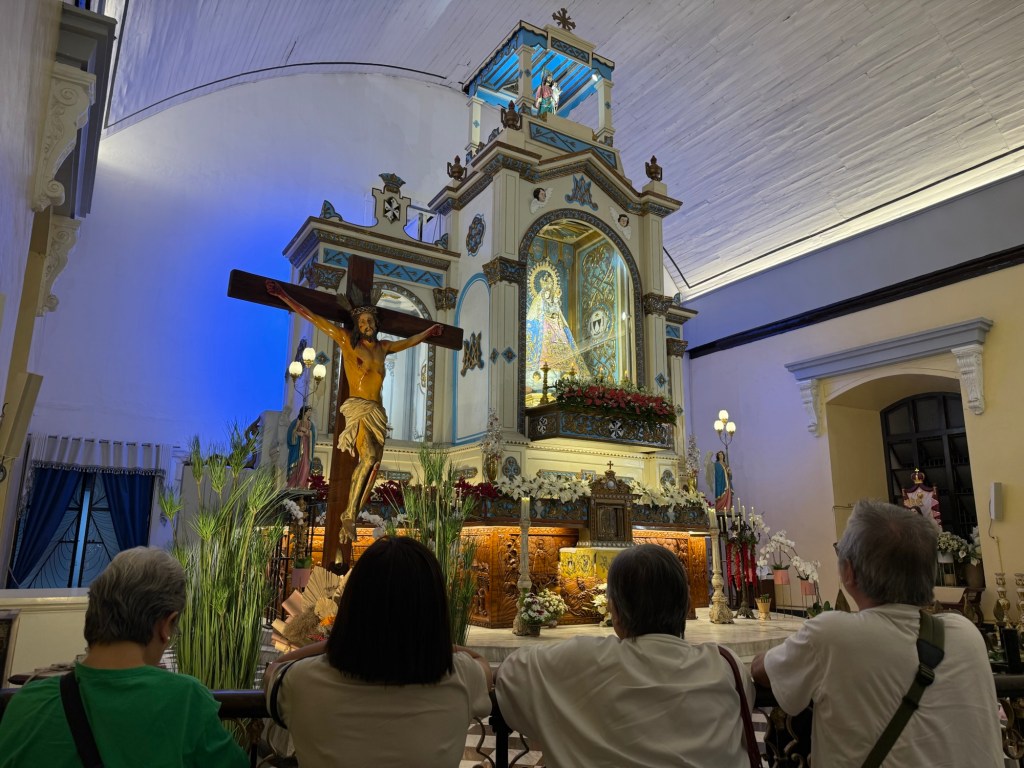
Photo by author, Manaoag Basilica, 09 January 2026.
But, when we have love and forgiveness, contrition and acceptance, death turns into a victory. And life. Especially when we have Jesus Christ.
In Jesus, every death and its other faces of poverty, losses, failures, sufferings and sickness are all a gain, a true wealth, a victory because these lead us to fulfillment not just happiness; fruitfulness not only success in life because death leads us to the hereafter.
Recall Luke’s beautiful account of the road to Emmaus when Jesus joined the two disciples walking at the opposite direction, leaving Jerusalem late afternoon of Easter. They did not recognize Jesus during their journey because their eyes were fixated on what happened on Good Friday; their eyes would only be opened after Jesus broke bread with them in their home in Emmaus. It is when we are broken like bread that we experience the fullness and meaning of life. (See https://lordmychef.com/2026/04/18/leaving-disbelieving/)
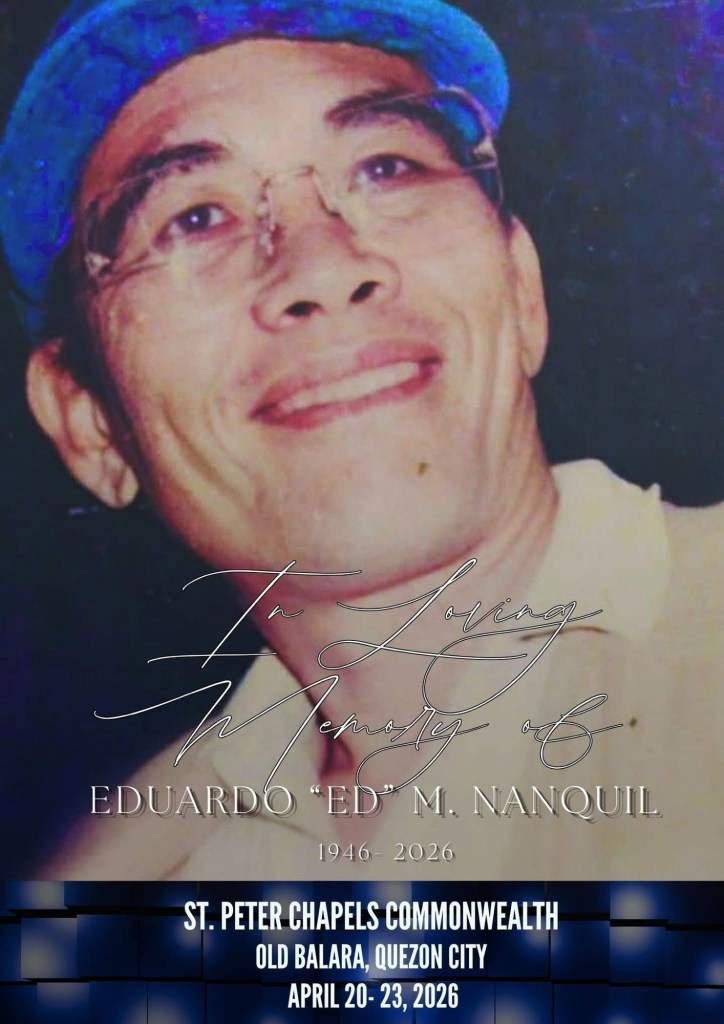
Photo from Sel Nanquil-Darilag.
I recently went to the wake of former RPN-9 reporter Ed Nanquil who “battled” prostate cancer for sometime until dementia hit him two years ago that abruptly cut off our communications.
Despite my busy schedule that week, I made sure to come to his wake to offer Mass as a final tribute and gratitude to Ed who was very instrumental in my becoming a priest.
We last met in 1993 at the WPD headquarters in UN Avenue, Manila. It was our seminary break and I have come to join my former GMA News cameraman Jun Fronda in his graveyard shift duty when Ed approached me that night at the lobby of the police headquarter.
“Totoo pala ang chismis na nagpapari ka,” Ed calmly told me in his characteristic genteel voice.
I looked at him and laughed, telling him how I have been used to that comment. As we talked about my vocation, I told Ed how I felt God playing a big joke on me: first, when he made me a TV reporter when I do not have the broadcast voice at all, explaining that I applied as a news writer but by God’s grace, I was catapulted to being a reporter. And secondly, how God brought me back to the seminary to become a priest who would be preaching, singing and chanting a lot when my voice has remained small and sintonado!
That was when Ed told me that “many times, the things we hate and do not like in ourselves are exactly what God likes in us.” Whoa! It was the tipping point in my vocation story as I felt Ed was an angel sent by God to assure me He wanted me to become a priest, that I have to stop doubting Him and His call despite my many weaknesses and limitations. And sins.
That night at his wake, as I blessed the remains of Ed, I silently thanked him, and whispered to him he had not lost his battles with cancer and dementia. I have become a priest partly because of him who had taught me along the way how to battle with my many doubts of self and of God.
Photo from Sel Nanquil-Darilag.
When we refer to death as a battle we have lost, it means more of the grief of losing a beloved because the truth is the opposite: it is when we die that we win the war in life with the many lives we have touched and won over who would continue to live and touch others too in the process.
For those battling with cancer and other sickness, as well as those hurdling so many obstacles and trials in this life, especially those “lumalaban ng patas”, God is with us always. Our battle had long been won by Jesus Christ. We just have to be present. Do not lose by default. Accept. And “surrender” like St. Paul:
…the time of my departure is at hand. I have competed well; I have finished the race; I have kept the faith. From now on the crown of righteousness awaits me, which the Lord, the just judge, will award to me on that day, and not only to me, but to all who have longed for his appearance (2 Timothy 4:6b-8).
May we have the same courage of St. Paul in life. And in death. To live forever and ever. Amen.
Photo by author, Don Bosco Batulao, Batangas, 08 April 2026
Lord My Chef Sunday Recipe for the Soul by Fr. Nicanor F. Lalog II Third Sunday of Easter, Cycle A, 19 April 2026 Acts 2:14, 22-23 ><}}}*> 1Peter 1:17-21 ><}}}*> Luke 24:13-35
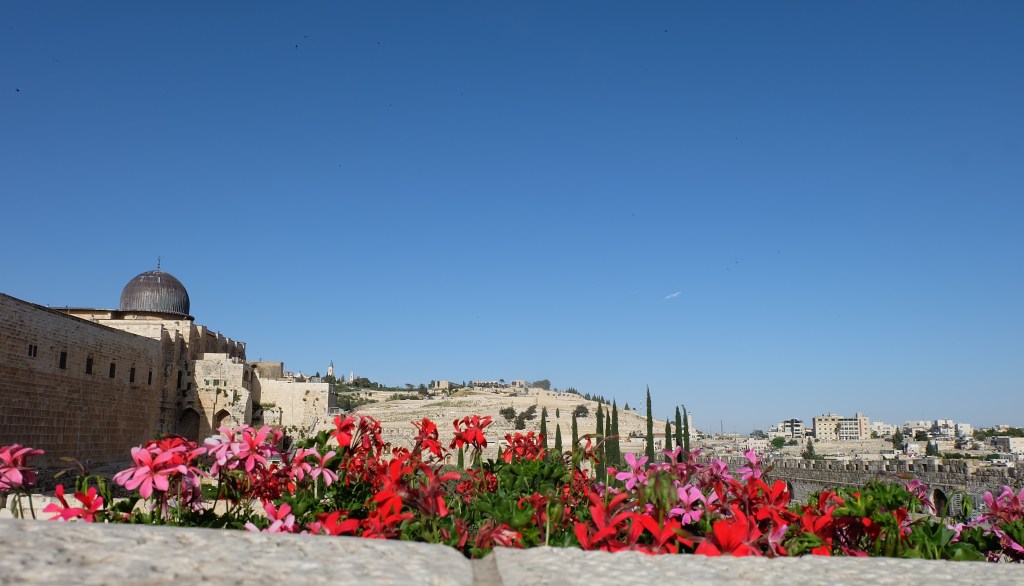
Photo by author, view from Jerusalem Temple, May 2019.
We heard last Sunday Jesus Christ’s coming to his disciples on the evening of Easter and a second time eight days later when Thomas was present, reminding us how Easter is a story of coming and believing, of believing and coming.
This Sunday we find an opposite movement and direction in the two disciples leaving Jerusalem in disbelief at the death and resurrection of Jesus Christ.
That very day, the first day of the week, two of Jesus’ disciples were going to a village seven miles from Jerusalem called Emmaus, and they were conversing about all things that had occurred. And it happened that while they were conversing a debating, Jesus himself drew near and walked with them, but their eyes were prevented from recognizing him (Luke 24:13-16).
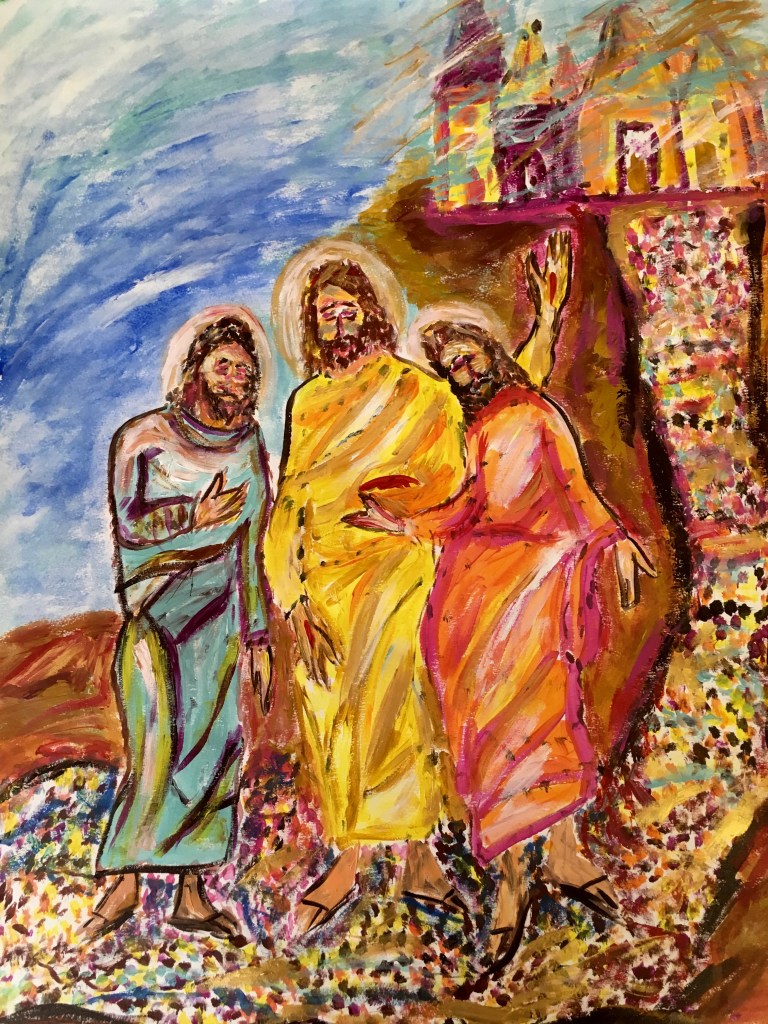
“The Road to Emmaus” painting by Ronald Raab, CSC, from ronaldraab.com.
Easter is also about leaving in disbelief. Not necessarily because of not believin like Thomas last Sunday.
Cleopas and the other disciple were leaving Jerusalem in disbelief which our Filipino language adequately express in “hindi makapaniwala” and “matay ko mang isipin” that both indicate a strong sense of belief with a dash of doubt because the story, the event, or the very person involved is beyond comprehension.
Or, bigger than reality like Jesus Christ and his very mystery of love for us.
Many times, we could not believe how good and loving God can be to us, so personal, so real and true but how can it be he “allows” bad things to happen to us or in the world.
Like the two disciples going home to Emmaus, we walk away from God to distance from him and everything and everyone to find our selves and see the real picture of what is going on when times are rough for us.
Those are the times we silently tell ourselves “this could not be happening” especially when it is so difficult, so unbelievable simply because – we believe. Hence, our usual litany of striving to be good, of serving the poor and needy, of going to Mass every Sunday, of always praying…
Look back in our many experiences in life when we could have died or have lost more or could have been a total wreck. Amazingly, despite our being in the opposite direction in life, consciously or unconsciously, that is when we feel more blessed. That’s when we are able to declare with conviction, “hindi ako pinabayaan ng Diyos, napaka-buti ng Diyos, and binigay niya pa rin ang lahat”. This is what the first reading reminds us of Peter’s speech before the Jews at Pentecost, at how God never left us, sending us Jesus Christ as fulfillment of his promise to Abraham and David.
Modern painting of the road to Emmaus from the internet.
Like in the road to Emmaus, Jesus journeys with us in the opposite direction only to bring us back to Jerusalem filled with joy by reminding us how everything that happens in our lives, Jesus had gone through the same sufferings too as foreshadowed and explained in the Sacred Scriptures.
Here we are reminded of the importance of personal prayer which is more than the mere recitation of prayers but having a relationship in God who never leaves nor abandons us.
Most of all, here we are reminded too of how the Sunday Eucharist opens ourselves to Christ’s reality and loving presence among us as experienced by the two disciples after Jesus had broken bread with them. It is called a Holy Communion because in that “breaking of bread”, we share in our common experiences of suffering and death. That we are not alone. Most of all, that we too like others rise to new life in Jesus Christ who suffered, died, and rose to life first for us.
It can happen that our eyes too are prevented from recognizing Jesus like Cleopas and companion on the road to Emmaus because of our many fixations in life like that blessings can only be in positive things like good health, security like steady income, a rising career or a profitable business and endeavor.
But, experience has taught us so many times that blessings are not only found in good things but even in bad or negative ones like sickness, failures, losses and death. And when we look back, they were not really that bad at all because it was in our failures and losses, sickness and deaths when we realized and learned most in life.
Notice how Luke succinctly narrated the breaking of bread in the home of Cleopas in Emmaus, it was so swift unlike the building up of drama along the road to Emmaus. It was so simple because that’s how things happen in life too – so quick that the simplest things and gestures, even so bad can suddenly become so loaded with meanings that we realize God’s loving presence in us.
“Supper at Emmaus” by renowned painter Caravaggio. See the emotion depicted by Caravaggio with his trademark of masterful play of light and shadows. At the center is the Risen Lord blessing the bread that caught the two disciples who are seated in disbelief, one outstretching his arms and the others pushing back in his chair. The third character in the painting is the innkeeper unaware of the significance of the gesture of Jesus. It was at this instance that the two disciples recognized Christ as the travelling man with them to Emmaus.
During the COVID pandemic, on the first Sunday of lockdown when there was no public Mass, I started a motorized procession of the Blessed Sacrament in my former parish by mounting our big monstrance on the roof of a parishioner’s truck. I announced the route of our procession during our online Mass that Sunday and people waited.
What an amazing sight of the people’s deep faith in God as they knelt and bowed before the Blessed Sacrament whether on the main highway or the inside streets. Some were crying while everyone was deep in prayer.
There lies the great mystery of Easter: Jesus need not appear to us in person because as he vanishes in the Blessed Sacrament, that is when we recognize him!
In the most simple gestures of the Mass under the most simple signs of bread and wine, Jesus vanishes from our outward view and through this vanishing our interior or inner recognition opens up that we “see” him in the many instances he had touched us especially in our “heart-breaking” experiences in the past, our Emmaus road.
Photo by Ms. Anne Ramos, 22 March 2020, Bagbaguin, Sta. Maria, Bulacan.
We know with certainty that “it is the Lord” – Dominus est – present in every breaking of bread because part of the Easter mystery tells us deep within that it is only in his vanishing that he truly becomes recognizable to us. That is why we have to stop all those “theatrics” in our liturgy as noted by many netizens this past Holy Week and Easter. Unknown to many priests and their alalays, the more we have gimmicks in the Mass or even in our sacred spaces, the more we “displace” and remove Christ.
After an hour every Sunday, we leave the Mass and go back to our usual way of life, facing life’s many challenges. Peter reminds us in the second reading to hold on to that “faith and hope in God” who gave us Jesus Christ, “the spotless unblemished lamb.”
Let us not forget this mystery of Easter that, the more Jesus vanishes, the more we recognize him because Jesus is more than enough than anybody or anything else especially when we in our Emmaus experience. Let us pray like Cleopas and companion “Stay with us, Lord” so we may show him in our witnessing especially when we could not find him in others. Amen.
From Facebook, 21 April 2021: “There is an urgency to announce the Joy, the joy of the Risen Lord.”
40 Shades of Lent by Fr. Nicanor F. Lalog II Friday in the First Week of Lent, 27 February 2026 Ezekiel 18:21-28 + + + Matthew 5:20-26
Photo by Dra. Mylene A. Abad Santos, MD, February 2021.
Thank you, dear Father for the first week of Lent about to end; much is still to be desired to be closer to you, to be faithful to you, to be one in you; teach me in your Son Jesus to go beyond the letters of your laws, to go beyond the minimum requirements, to go beyond of what is asked of us in order to be more loving to others in you:
Jesus said to his disciples: “I tell you, unless your righteousness surpasses that of the scribes and Pharisees, you will not enter into the Kingdom of heaven” (Matthew 5:20).
Photo by Dra. Mylene A. Abad Santos, MD, February 2021.
Teach us to be holy or righteous like you; make us whole, to be different and be radical by going back to you our very roots of being and existence; instead taking the path of supremacy especially when we are angry that we are unafraid of breaking away from others, insisting on what is right than on what is good, let us be reconciled with you in others and in our very selves where peace remains the best to have.
To go beyond than what is required is to be humble and gentle like you, dear Jesus, caring more for people and relationships than on being right which often is not the case; holiness or righteousness is confronting and accepting our limitations so that your infinite power of love and mercy may work in us and through us, Lord Jesus.
Photo by Dra. Mylene A. Abad Santos, MD, February 2021.
Lent is going beyond the ordinary because it is about choosing you, Lord above all else always: you never condemn us letting go and forgetting of our past sins when we choose to finally live in your presence doing your will; however, let us not be complacent in your presence, Lord for our good record can be undone completely when we refuse to love you in others.
O Lord Jesus, you have given me with so much chances to become better; help me to remain in you so I can also give more chances more mercy and more love to others lost and trying to find you. Amen.
40 Shades of Lent by Fr. Nicanor F. Lalog II Thursday after Ash Wednesday, 19 February 2026 Deuteronomy30:15-20 +++ Luke 9:22-25
Can my life, or life itself be separated from you, my God?
Then he said to all, "If anyone wishes to come after me, he must deny himself and take up his cross daily and follow me. For whoever wishes to save his life will lose it, but whoever loses his life for my sake will save it" (Luke 9:23-24).
As I immerse myself to your words today, Jesus, I remember so many occasions when I was younger always trying to save my life, simply clinging to my life, or asserting my life, that's when I lost in every count: it seems to me now that when we are young - and strong - we choose ourselves more, insist on ourselves, even shouting deep within "It's my life"...!
Sad truth is, we lost always as we felt most empty, no direction, no meaning in life. When life is too cushy, without any problems and challenges, that is when life is deep in serious trouble. It is not even life at all but felt like death!
But, Lord, I remember too that since I took that dive, when I thought less of my self, when I started following you, of losing my life for your sake, that was when I found meaning and fullness in life, when I truly save my life; it was a bumpy road, Lord - you know it very well how many times I stopped along the way to choose my own path, even dared leaving you but you were always there waiting for me, walking with me even in the opposite direction just to bring me back to you to gain my life in you.
Glory and praise to you, Lord Jesus! Your words are not just a rhetoric, nor a poetic overstatement of a guru or a teacher but actualizing words of the Son of God, our Savior and Messiah; you have given me with so much and I have given you so little; teach me to give more of myself to you so that I can give myself to others by giving more of you in loving service.
Let me choose you always, Jesus, for life itself cannot be separated from you who is life yourself. Amen.
Quiet Storm by Fr. Nicanor F. Lalog II, 15 January 2026
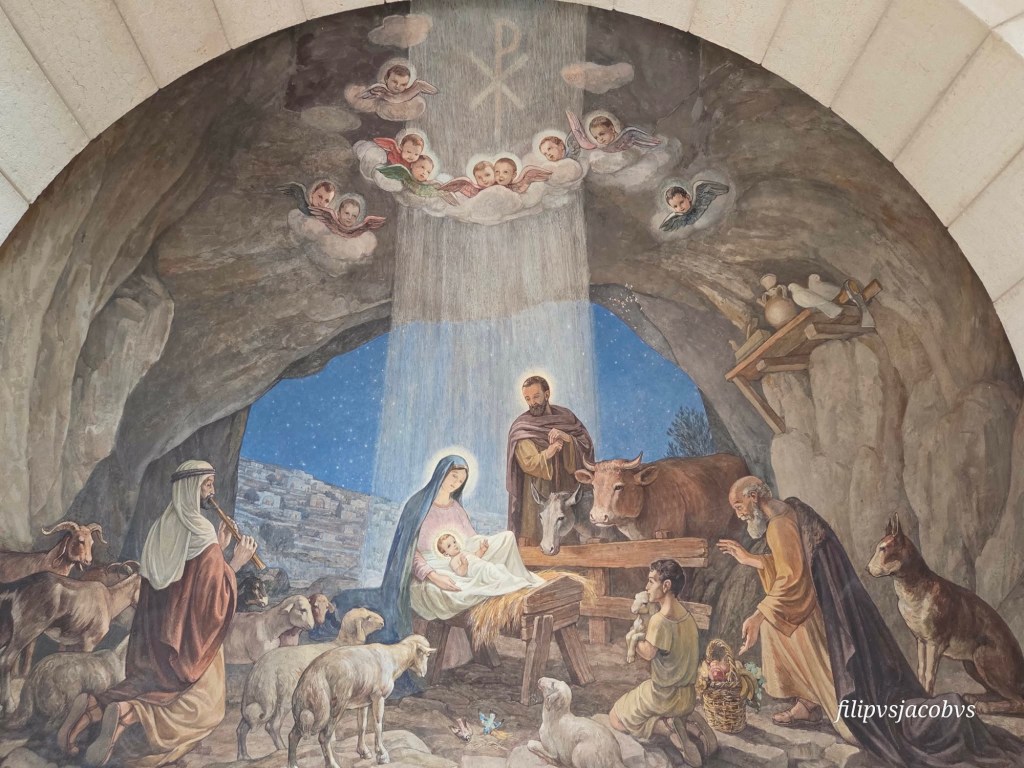
Photo by Ar. Philip Santiago, Basilica of the Annunciation, Israel, October 2025.
Two priests and a former nun personally known to me died in our diocese last Sunday. It was also the birthdate of the late Bishop Cirilo Almario, Jr. whom I had remembered in my two early morning Masses on that Sunday, January 11, 2026.
In those two Masses too I mentioned in my homily the retreat I facilitated first week of January with my friends about “ageing gracefully” – my own realizations since joining their ranks as senior citizens last March.
Let me elaborate those two points I have shared with them and in my homily last Sunday.
From forbes.com.
First, let us embrace our being old. Stop saying “when we get old”, pagtanda natin because we are already old. Period. Matanda na tayo.
We cannot reverse our ageing process and it is useless to have all these cosmetic manipulations like dyeing our hair black or stretching our sagging skin and removing those wrinkles.
Embrace old age. It is beautiful and wonderful because it is so good. Our Filipino word for “old” says it all – matanda – which ironically so many women hate to hear as they stress that kalabaw lang ang tumatanda. That is not true.
Our word matanda is from the root word tanda which means “sign” that is why an old person is rightly called matanda because he/she is a sign of God’s goodness, a sign of God’s mercy and love, a sign of God’s beauty and majesty.
Moreover, a matanda is a sign of wisdom and grace that is why when we were young boys, we wanted to be old by putting our dad’s eyeglasses or taste his cigarettes and beer while girls put on their mom’s make up and high heeled shoes. How funny that when we are already old, we resist to accept the fact that we strive to look young again, sometimes ending up as nagmumurang kamatis.
Photo by Mr. Jim Marpa, 2019.
Technically speaking, “old” is actually harsh. Old is something about a past phase that has ran its course like being outdated. Luma in Filipino that connotes stale, passe, lacking relevance and sadly, useless. Just for display purposes. As a person, that is the one we refer to as walang pinagkatandaan. Or huklubang matanda.
To be more specific, the better English term referring to ageing gracefully is ancient that exudes with a sense of timeliness, of being perpetually relevant like the ancient ruins in Rome, Athens, and Jerusalem. Actually, some biblical experts have wanted to rename the “Old Testament” as “Ancient Testament” following this line of thinking.
Photo by author, Ephesus, Turkiye, November 2025.
Things and even persons can rightly be referred to as ancient because of their beauty still intact that inspires us and makes us wonder about life itself. They are not just old sites nor old persons that remind us of the past long gone but ancient because still lovely, “still full of sap and green” as the psalmist extolled the seniors of his time.
Persons who age gracefully like ancient sites stir our inner selves with deeper beauty and realities of life that eyes cannot see. That is perhaps the reason these days many senior men and women are so “in” and considered as attractive.
It is the same wisdom realized by St. Augustine when he wrote about God, “Late have I loved you, O Beauty ever ancient, ever new, late have I loved you. You were within me, but I was outside, and it was there that I searched for you.”
Being ancient -whether as a person or a thing – is something of the inside we must turn to not outside like our skin and physical body. From that inside realization and acceptance of being senior or elderly we experience the grace of ageing because we experience God still present in us, in fact loving us more as he makes as a sign or tanda of his loving presence.
Ageing gracefully is a modern virtue we need to cultivate in this age of instants that glorify youthfulness equated with usefulness. That is why when Pope Benedict XVI resigned from the Papacy in 2013, the more I have come to love and admire him. In his resignation, he taught us the importance of embracing and lovingly accepting our old age when we can no longer adequately perform our many tasks in office even in life itself. It was not a failure nor a surrender in the negative sense but more of a deep courage and trust in God that we accept our being weak and ready to come to him soon.
Photo by author, Pundaquit, San Antonio, Zambales, May 2025.
This brings me to my second realization since turning sigisty years old last year: corollary to embracing old age is accepting death. That is why, as seniors, let us stop saying and thinking of our coming death because we are already dying. Huwag na nating isipin yung “kapag namatay ako” dahil namamatay na nga tayo.
Being senior is doing away with those bucket lists, of thinking about things to do, places to visit before we die. We are already dying and hence, whatever you can do, do it now. There could be no more tomorrow. All we have is the present moment. Anything could happen to us, for better and for worse.
Ageing gracefully is coming to terms with life which leads us to coming to terms with death. Yes, this is easier said than done, but slowly, I am learning and loving it!
Photo by author, Bucharest, Romania, November 2025.
One of the reasons that made me decide to become a priest in the early 1990’s was the conviction that I have felt so deeply God’s love for me as a person in the many experiences I have gone through in life. I felt at that time that by becoming a priest, I could convince more people about the truth and existence of this loving God we have.
I still hold on to that but a year after turning sigisty, becoming sigisty-one in March 22, another fascinating realization I have had is how wonderful this life is. Now that I am old, the more I can boldly claim with conviction that it is good to be alive. Masarap pa rin ang mabuhay! Maganda ang buhay maski mahirap!
Accepting and embracing our ageing, our getting weak, our failing memory are all kinds of dying. And in that midst that we actually live fullest and meaningfully. I don’t know if I can write any further because I ain’t dead yet but… just in case, it was worth the trip. Amen. May you have a fruitful and fulfilling weekend ahead.