Lord My Chef Daily Recipe for Soul by Fr. Nicanor F. Lalog II
Monday, Twenty-Second Week in Ordinary Time, Year II, 31 August 2026
1 Corinthians 2:1-5     <*((((><  +  ><))))*>    Luke 4:16-30
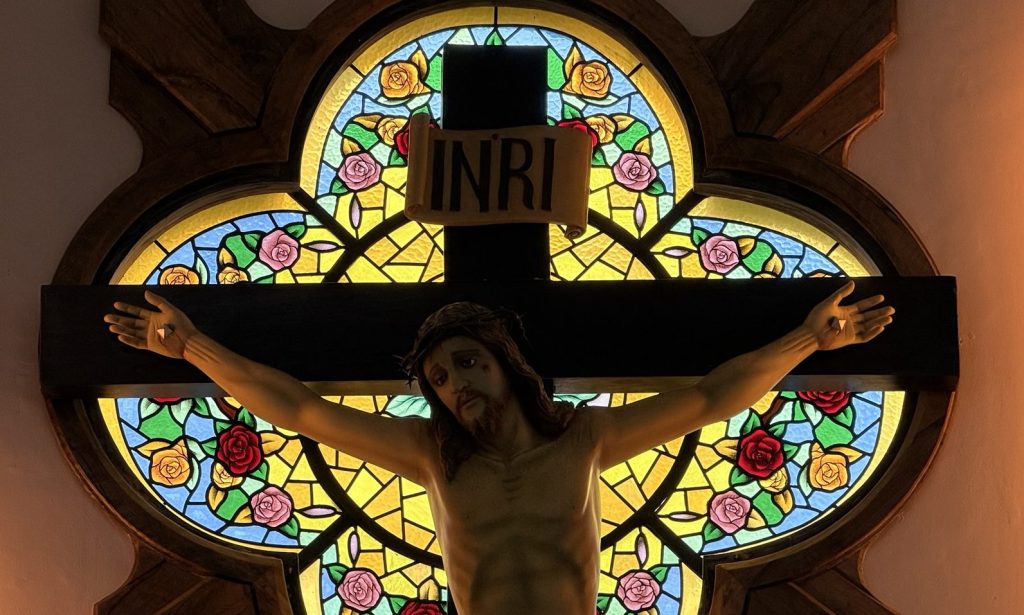
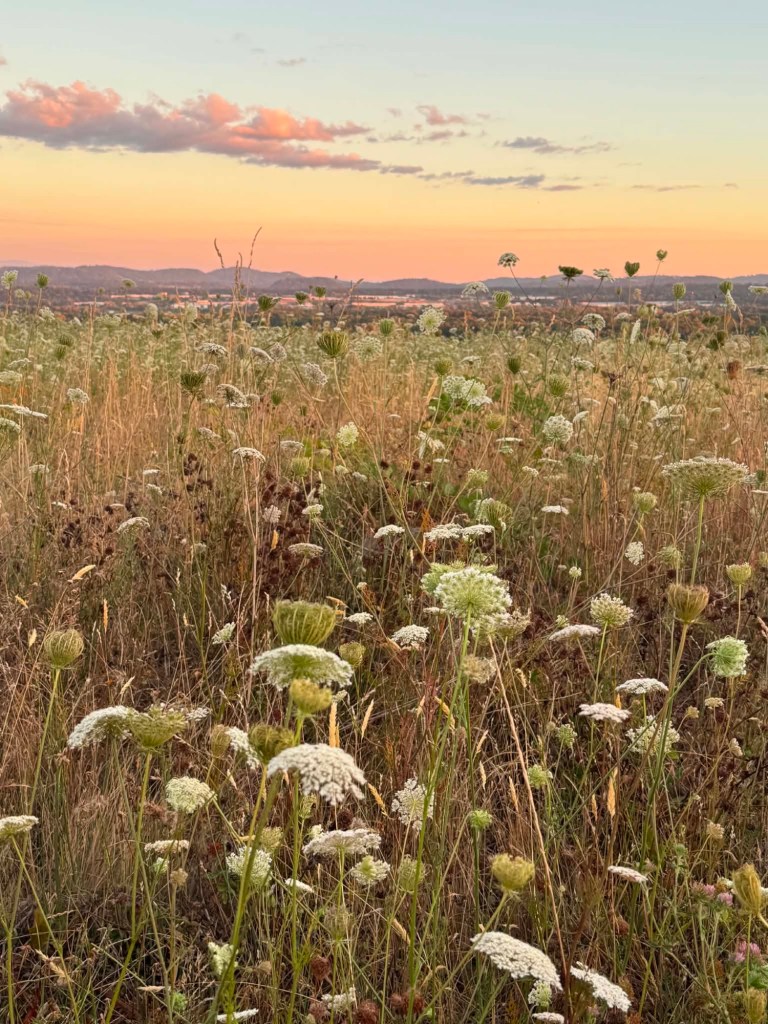
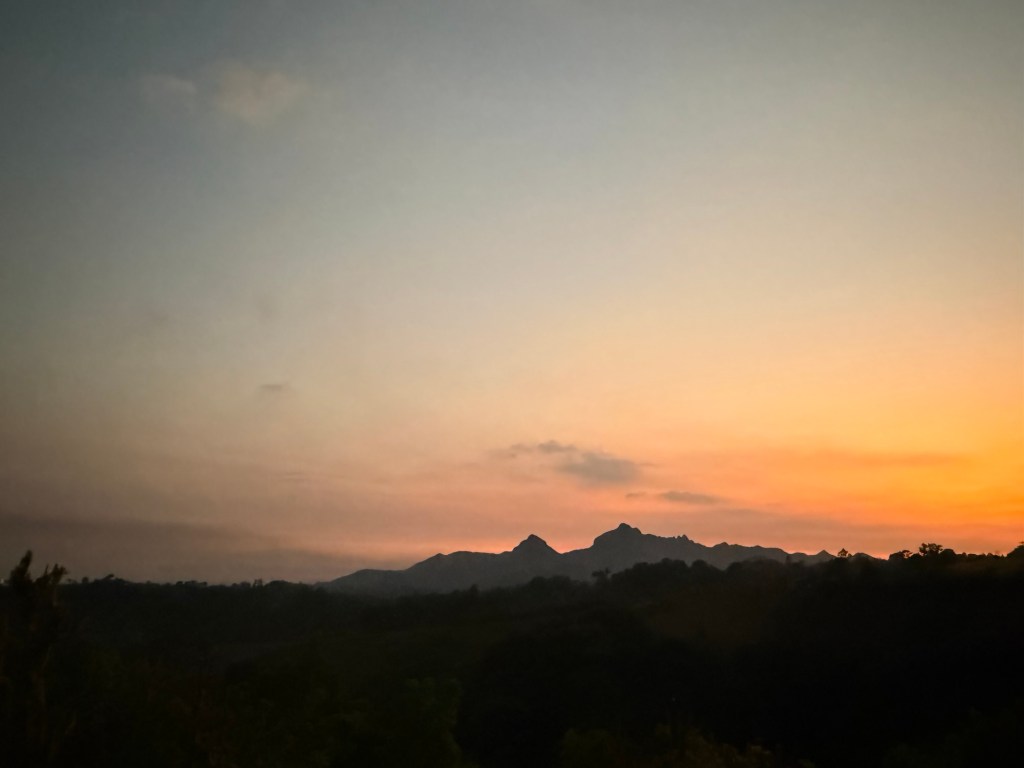
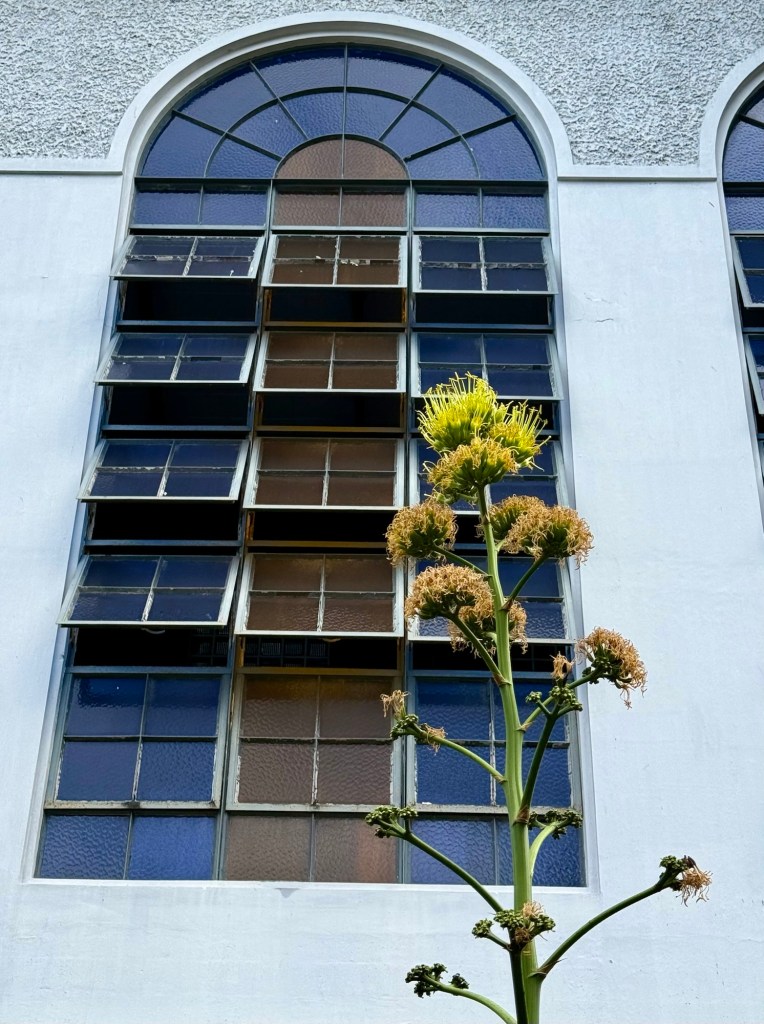
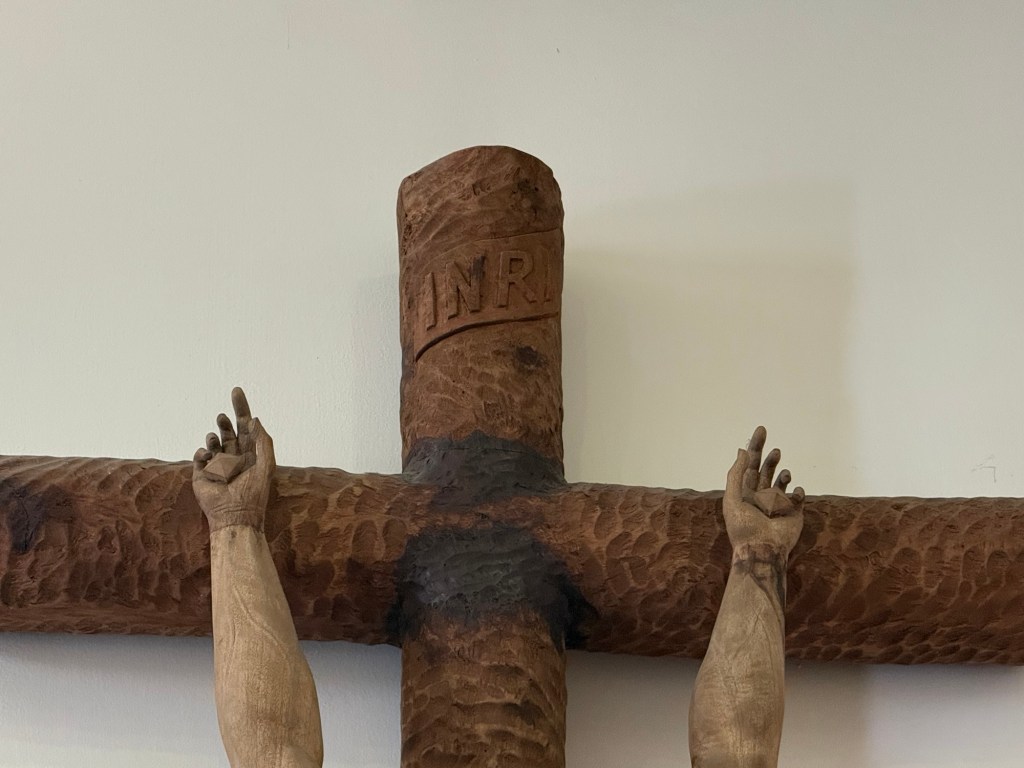
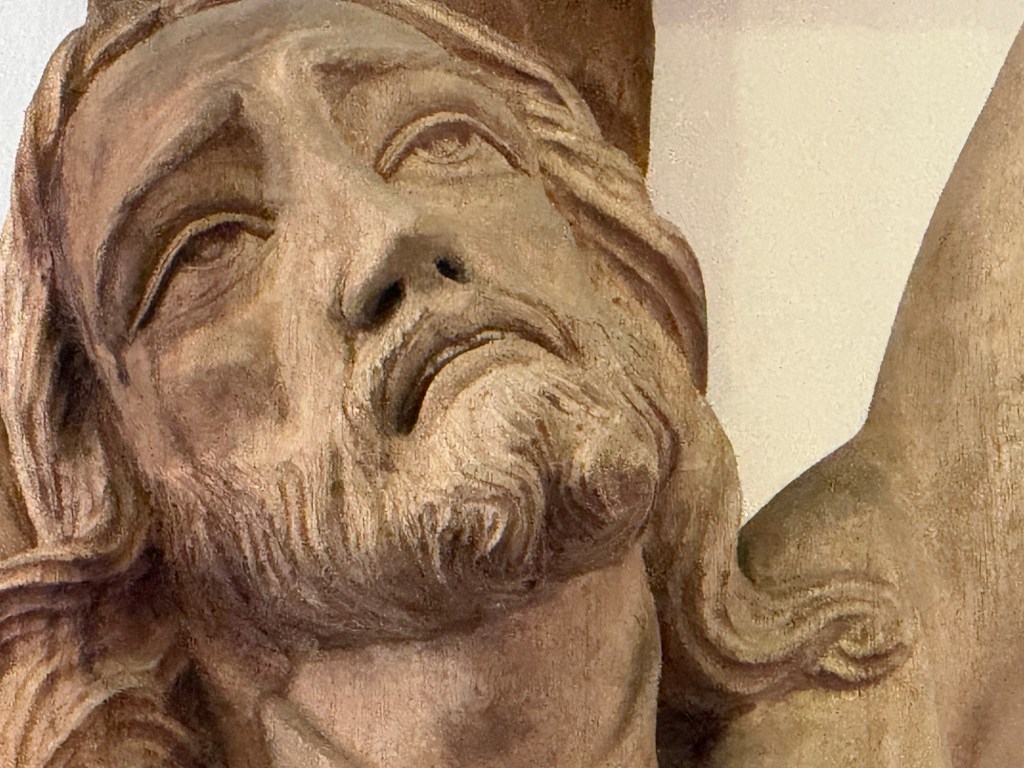
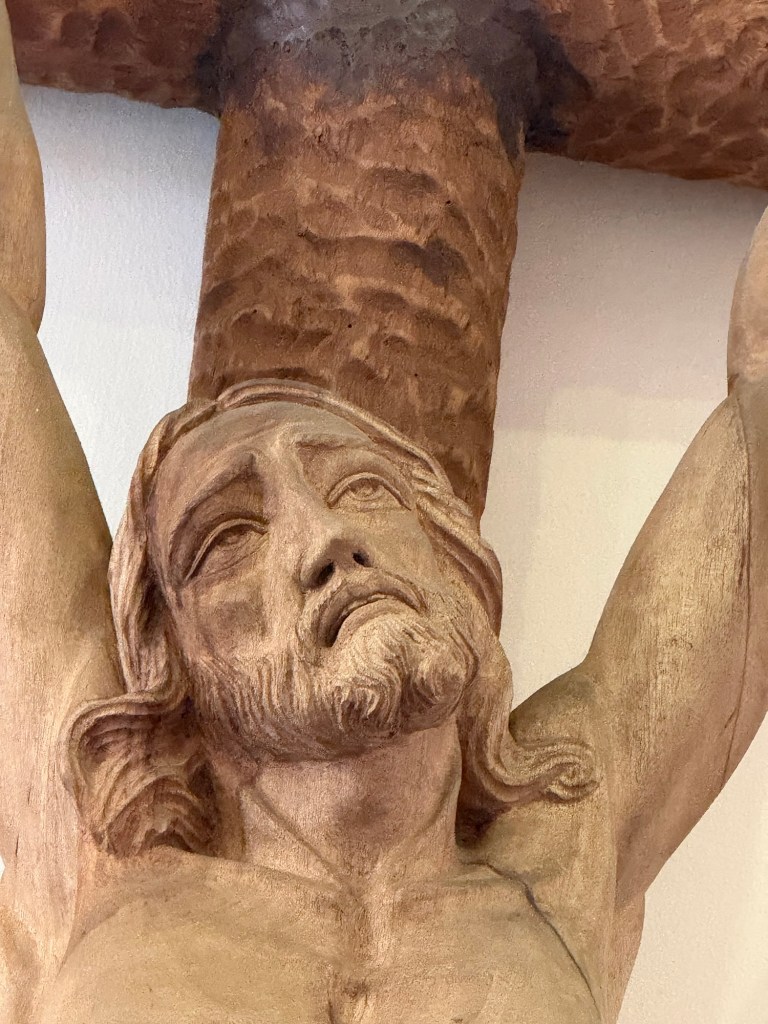
Photo by author, St. Paul Spiritual & Renewal Center, Bgy. Tanyawak, Alfonso, Cavite, 19 August 2026.
Teach me Lord
to "know nothing except
Jesus Christ crucified" like St. Paul,
not just "looked intently at you"
like your folks in Nazareth
when you preached in your synagogue;
it is not enough to just look
intently at you,
imitating you and your manners
and style but not your life,
your self-sacrifice on the Cross;
what a shame in this age of social media
we speak and preach about you
merely to chase clout for ourselves
using sublimity of words
or persuasive words of wisdom
used by demagogues and
influencers for followers
and shameful profits.
Help us realize,
Jesus, that our faith
rests on the power of God
best shown in your Crucifixion,
not in our personality
nor eloquence in speech
nor being savvy with new
technologies that blind us from
the realities of life
like love and sacrifice,
kindness and patience,
justice and truth.
Amen.
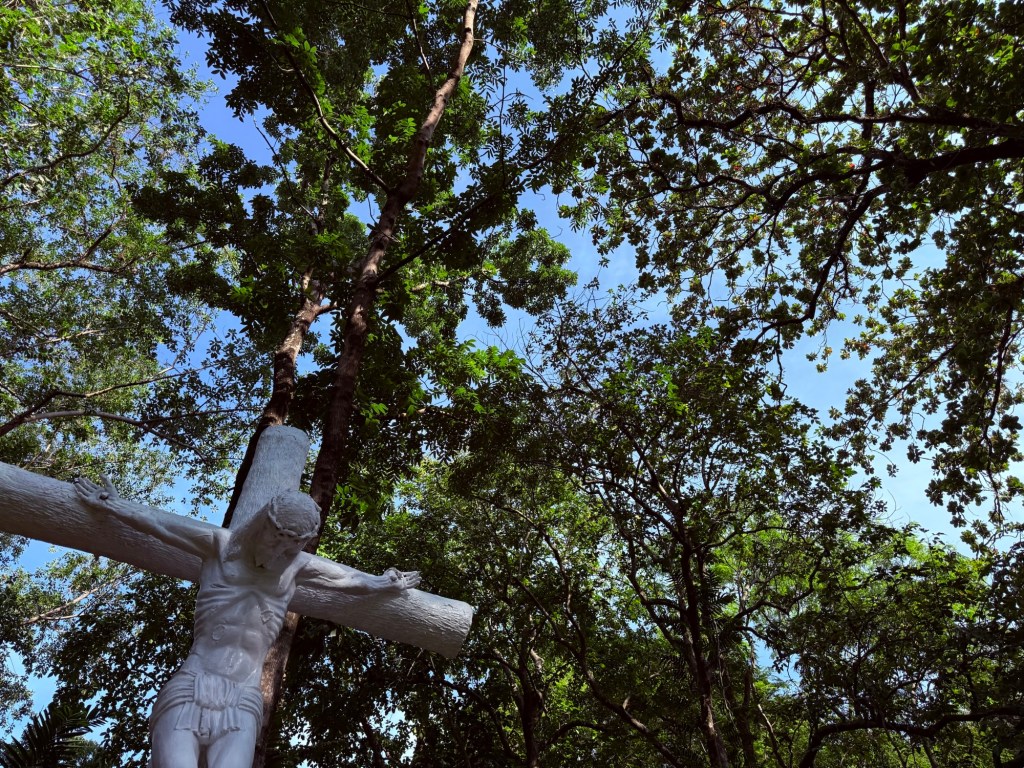
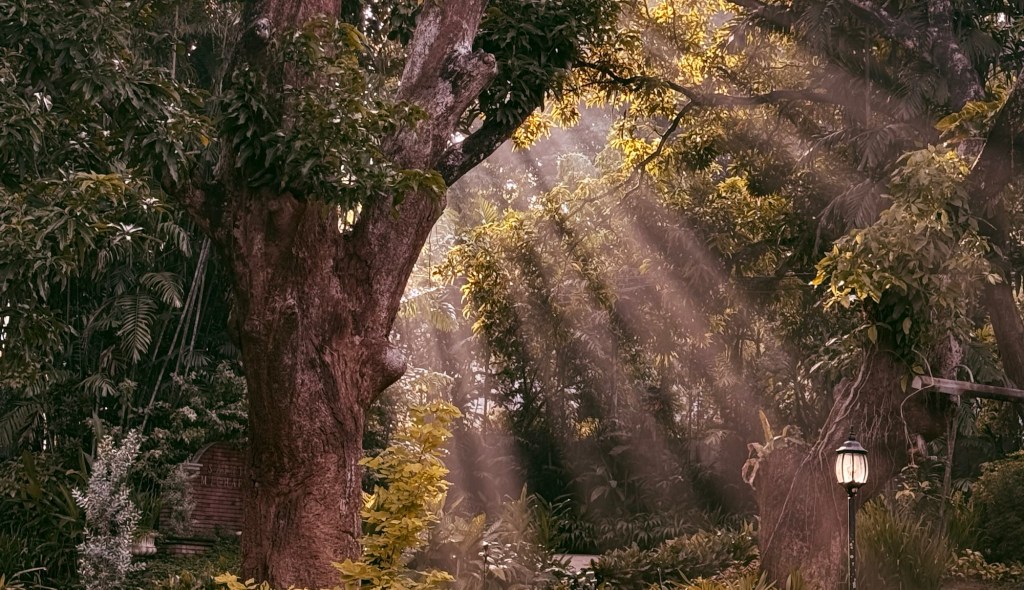
Photo by author, St. Michael Retreat House, Antipolo City, 16 June 2026.
Lord My Chef Daily Recipe for Soul by Fr. Nicanor F. Lalog II
Saturday, Nineteenth Week in Ordinary Time, Year II
Solemnity of the Assumption of the Blessed Virgin Mary, 15 August 2026
Revelation 11:19; 12:1-6, 10 ><}}}*> 1 Corinthians 15:20-27 ><}}}*> Luke 1:39-56
One significant lesson I learned in journalism and in life is that we are known by the questions we ask, not by our answers that are often wrong. When we ask the right question – especially if it is not misleading to our own assumptions – the problem or issue at hand is already half solved.
It doesn’t really matter if we don’t get answers right away; many times the answers to our questions come or “unfold” as we move on in life. Some answers come to us later in life or after the death of a loved one. Or, maybe they would be answered in the afterlife.
Just keep asking. As one newspaper says, be an inquirer.
But, why start our reflection on asking question on this Solemnity of the Assumption of the Blessed Virgin Mary?
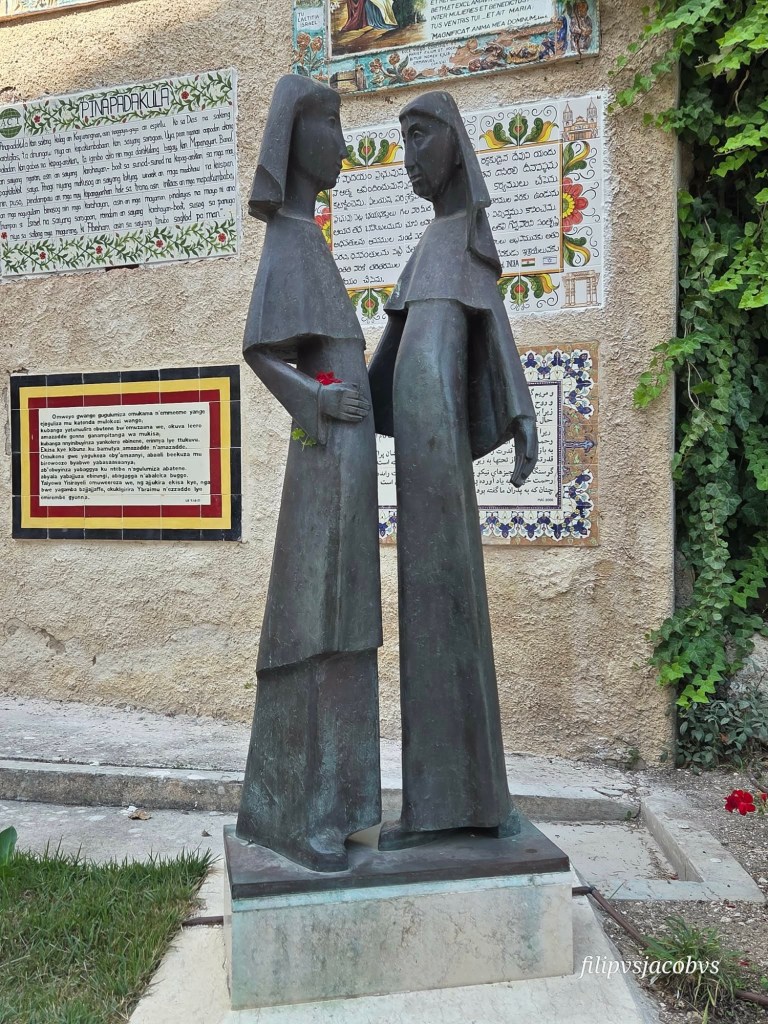
Photo by Ar. Philip Santiago, Church of the Visitation, Israel, 2024.
I was struck by how Elizabeth greeted Mary in her visitation with a question:
“And how does this happen to me that the mother of my Lord should come to me?” (Luke 1:43)
Actually, before Elizabeth asked that question at the Visitation, Mary was the first to ask the difficult question after the Annunciation to her by Archangel Gabriel, “How can this be, since I have no relations with a man?” (Lk.1:34).
In saying “yes” to God’s invitation at the Annunciation all the way to following Jesus to the Calvary and awaiting the coming of the Holy Spirit at Pentecost, Mary is the model disciple of the Lord, the “doer of the Word” in whom we see all that we can become through the power of God despite our human doubts and weaknesses. And many questions.
When Jesus was born, Mary must have so many questions but rather “kept all these things , reflecting on them in her heart” (Lk.2:19). Then when Jesus was thirteen years and got lost in Jerusalem after their pilgrimage, Mary asked anew a difficult question to him, “Son, why have you done this to us? Yur father and I have been looking for you with great anxiety” (Lk.2:48).
“The Finding of the Saviour in the Temple” painting by William Holman Hunt (1860), from en.wikipedia.org.
Mary asked the difficult questions always. And most likely, she had kept so many other questions in her heart especially when Jesus suffered, died and was buried. She was never afraid to ask questions to God because she believed, constantly seeking the truth who is her Son Jesus Christ.
On this solemnity of Mary’s assumption when we are reminded of the supreme truth of our own resurrection and assumption into heaven at the end of time when Christ comes again, we are likewise encouraged to keep asking the important questions we are often afraid to ask and confront in life like, would I make it to heaven? Or, the perennial question we ask if there is really God or if there is really heaven and hell and purgatory?
See how the most essential questions in life that we ask albeit with fear or hesitations pertain to things of the soul, of eternity, of spirituality. These are questions that spring from our inner deeper self that indicate our origin who is God that even the greatest scientists throughout history admitted and respected like Albert Einstein.
Very often, the answers to these questions unfold in our hearts, in our lives, in the present moment. That is why Mary responded to Elizabeth’s question and praise with a song praising God for all his wondrous works she had experienced and realized in her life:
Photo by a friend in Washington. 28 July 2026.
And Mary said: “My soul proclaims the greatness of the Lord; my spirit rejoices in God my Savior… He has mercy on those who fear him in every generation. He has shown the strength of his arm, and has scattered the proud in their conceit. He has cast down the mighty from their thrones and has lifted up the lowly. He has filled the hungry with good things, and the rich he has sent away empty. He has come to the help of his servant Israel for he has remembered his promise of mercy, the promise he made tonour fathers, to Abraham and his children forever” (Luke 1:46-47, 50-55).
The Magnificat is the summary of the Christ Mary carried in her womb and heart throughout her life that she is referred to as the Ark of the New Covenant as seen by John in heaven in the first reading.
The Magnificat as a song of the Blessed Mother was borne out of long reflections and hard questionings about self and the world in the light of God’s works. Mary like Paul in the second reading experienced God’s saving power in Jesus because both were so open to the working of the Holy Spirit, searching deep within by constantly examining, asking the right questions.
That is why silence is important in every prayer period when we learn to completely trust God especially when our questions are very unsettling, even disturbing.
As a priest for 28 years and hospital chaplain these past five years, I have noticed older people along with those sick and dying spending a lot of their time asking about eternity. That’s why many of them go to confession so often. It must be difficult and amazing at the same time. Sometimes when I look into their eyes, there seems to be an intensity that they could pierce through dark clouds and thick curtains that maybe, just maybe, enable them to catch a glimpse of eternity that result in a remarkable peace within them that we too can feel.
It is when we ask the difficult, essential questions that we are able to arrive at the real truth about life and our very self that ultimately lead us to God and to heaven in Jesus Christ.
“The Assumption of the Virgin” painting by Italian Titian (1516-1518) from en.wikipedia.org.
The assumption of Mary is part of Christ’s gospel. And the good news is that it is a truth and reality we can arrive at here and now, not later when we die for God loves us so much as Paul tells us in the second reading.
In being the first and model disciple of Jesus, Mary is also the first to reap the fruits of Christ’s resurrection by being assumed into heaven body and soul, free of any pains and sorrows in her “death”.
We too rejoice with Mary in celebrating this Solemnity of her Assumption into heaven, hoping and trusting that eventually all our pains and sufferings shall pass away when we die, when Jesus comes again at the end of time to assume us body and soul into heaven in perfect union with God our Father in him, with him, and through him.
Before ending this reflection, we find it most opportune to remind everyone to stop the practice of keeping a little ash of their beloved’s cremated remains in their pendants or in their homes. This is contrary to our teaching on the resurrection of the dead, of the dogma of the Assumption of Mary. It is because of this assurance that we too like Mary shall be assumed into heaven body and soul that the remains of the dead shall be preserved intact in utmost respect and care according to the norms of the Church. Not the crazy beliefs propagated by movies and crematories primarily for profits. Most of all, exorcists have been reminding us too of the negative effects to the dead and to the living by keeping their ashes no matter how little they may be. God bless everyone!
Photo by author, St. Michael Retreat House, Antipolo City, 16 June 2026.
Lord My Chef Daily Recipe for Soul by Fr. Nicanor F. Lalog II
Thursday in the Eighteenth Week of Ordinary Time, Year II
Feast of the Transfiguration of the Lord, 06 August 2026
2 Peter 1:16-19     <*{{{{><  +  ><}}}}*>     Matthew 17:1-9
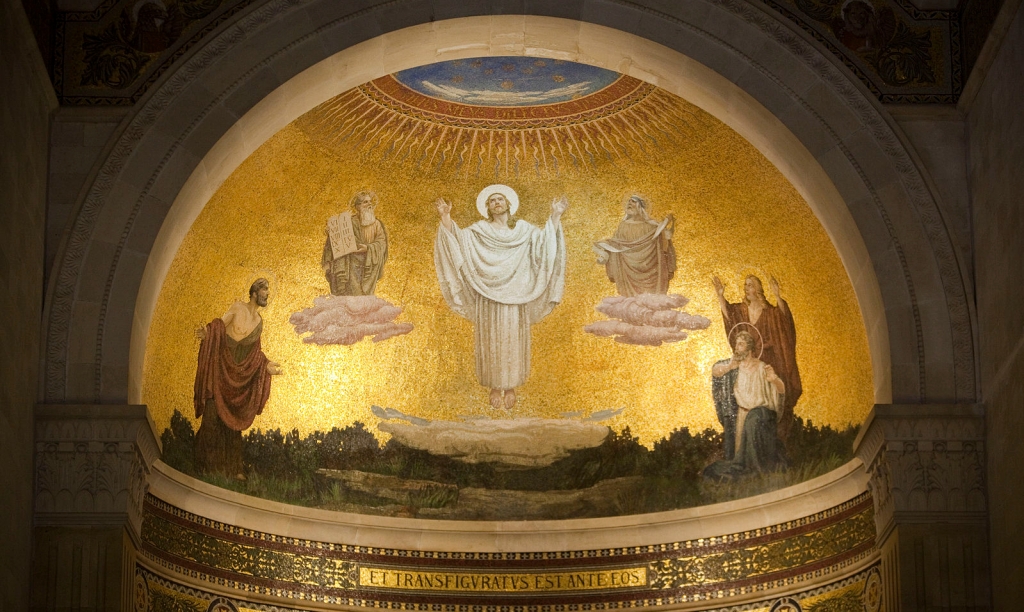
Mosaic inside the Basilica of the Transfiguration on Mt. Tabor, Israel; photo from commons.wikimedia.org.
The face is a reflection of what is in the heart and soul of every person. No amount of cosmetics and beauty procedures can ever bring out that glow and radiance of anyone’s face beaming with joy and fulfillment, peace and contentment coming from the heart.
This direct correlation of the face and the heart is called countenance – an indication of someone’s depth – or shallowness – of inner transformation due to deep spirituality, of communion with God. This is most evident on those we find whose face looks younger than one’s age that we often describe as malalim or deep, or magaling magdala ng problema. Another favorite Filipino expression of a person’s countenance is when we find somebody as madaling makagaanan ng loob – a person we meet for the first time yet we feel so light and easy with, we feel at home with him or her. In the same manner, we sense or notice something negative and unpleasant like rotting inside a person despite having good features like flawless skin or aquiline nose and beautiful eyes, we still find him or her so chaka or ugly.
Countenance is what young people call as “uma-aura” when they pose for FB or IG from “aura” or spirit within evoked and projected by one’s face that cannot be manipulated nor faked.
Jesus took Peter, James, and his brother, John, and led them up a high mountain by themselves. And he was transfigured before them; his face shone like the sun and his clothes became white as light (Matthew 17:1-2).
Painting of the Transfiguration by Italian artist Duccio di Buoninsegna between 1308 and 1311 from commons.wikimedia.org.
What a beautiful expression by Matthew, “his (Jesus’) face shone like the sun” at his transfiguration primarily because deep inside him is his complete and perfect union in the Father. Jesus always insisted on this reality within him, of his perfect communion in the Father from which also flows his total obedience that reached its highest point at his Passion and Death on the Cross, his own Pasch or exodus.
Try recalling unexpected moments in your life when God’s presence was so clear to you like a light shining from within; it could be those moments you have overcome a major obstacle in life or simply when you felt so loved while in some forms of darkness in life. Like the three apostles, during those moments we felt so overwhelmed by God’s glory and majesty that we felt like remaining in that state of comfort and certainty and consolation. Most often, these occurred during or after some trying times or occasions.
There on Mount Tabor in his transfiguration, we are shown that Christ’s glory cannot be separated from the Cross. His majesty and triumph shall come from his pasch. And so are we his disciples. That is why the voice heard by the apostles said, “This is my beloved Son, with whom I am well-pleased; listen to him”. From now on after his transfiguration, Jesus would be speaking thrice of his coming Passion, Death and Resurrection as he heads toward Jerusalem. All his lessons after Mount Tabor are about our participation in his paschal mysteries.
Do we listen at all? How’s our facial expression when we dwell on his conditions of discipleship? Is there a spark within us, a light shining through? Or, do we experience a “blackout”?
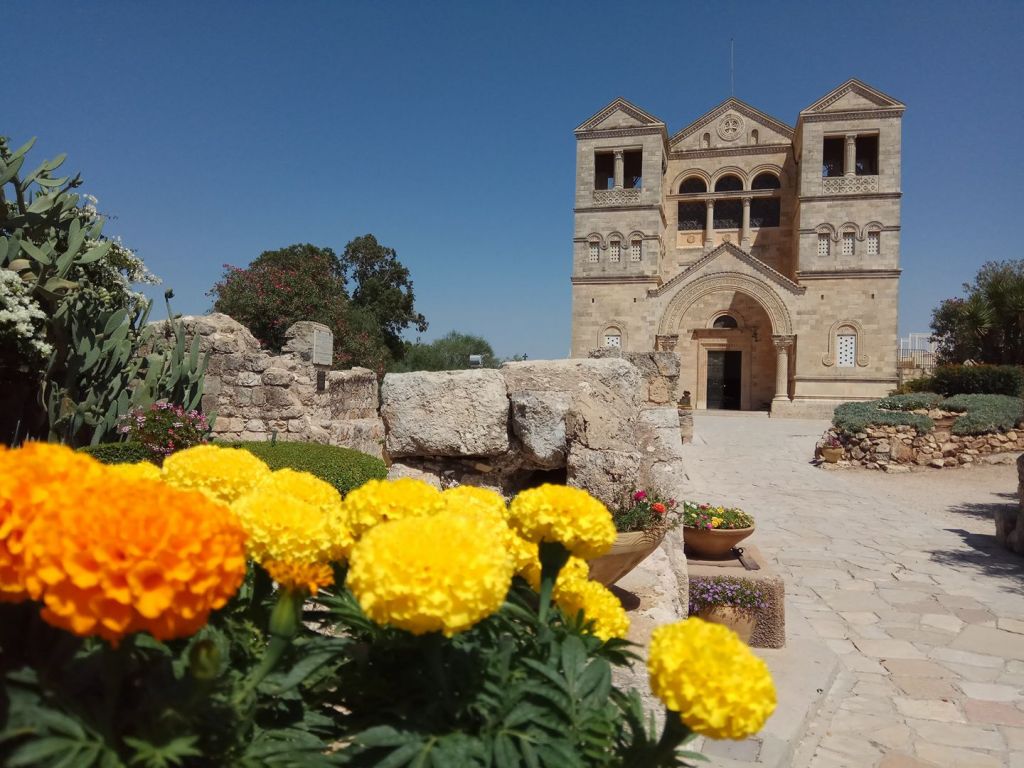
Photo from custodia.org of Basilica of the Transfiguration on Mt. Tabor, Israel.
Every second Sunday in Lent, we hear the same gospel of Christ’s transfiguration in preparation for Easter; this August 6 is the 18th week in Ordinary Time and we celebrate the Feast of Transfiguration to help us sustain in following Jesus in the last 16 weeks of the year.
During this time especially August when everything seems to slow down with life getting a bit difficult, the Transfiguration of Jesus calls us to never lose sight of the Cross of Good Friday as our path to glorious transfiguration in Christ. It is a process we have to patiently and persevere to go through in life.
The apostles learned and embraced all these lessons in a process slowly with the guidance of the Holy Spirit after Pentecost. That is why Jesus told them to come down from Tabor to continue their journey to Jerusalem to fulfill his mission. Through them we have believed despite our not having seen Jesus that is how he would appear as “Lord” on the mountain that we the faithful are climbing to participate in the ultimate manifestation of his return at the end of time.
To journey with Christ, listening and obeying his voice is something of the inside, of the heart. Not of the outside like places. The light of Christ does not remain still, continuously drawing us forward unto him, right into our hearts.
Life is a daily ascent to Mount Tabor, often when nights are long and dark, when the temptation to follow the artificial lights of the world and modernisms offering shortcuts to fulfillment and meaning are so tempting.
Photo from iStockphoto.com of Mount Tabor in Israel where Jesus is believed to have transfigured.
St. Peter warns us in the first reading that “we did not follow cleverly devised myths when we made known to you the power and coming of our Lord Jesus Christ… we possess the prophetic message that is altogether reliable. You will do well to be attentive to it, as a lamp shining in a dark place, until day dawns and the morning star rises in your hearts” (2Pt.1:16, 19).
The path to glory is the path of the Cross of Jesus, right in our hearts when we are willing to forgive and understand, when we are more loving and kind, when we are empty of pride and filled with Jesus always. May the light of Christ shine on us, on our face. Let us pray:
Show me your face,
Jesus by dwelling right here
in my heart,
filling me with your
love and kindness,
justice and truth,
mercy and forgiveness;
show me your face,
Jesus by showing me
Moses too that I may love
your laws and commandments
that often I see as burdensome
not realizing they actually lead
to true freedom to love and be
faithful to you, Lord;
sow me your face,
Jesus by showing me too
Elijah, your powerful prophet
taken to heaven body and soul
by a chariot because he believed
in your words Lord;
show me your face,
Jesus that my face may
shine with your light
while I transfigure in you.
Amen.
Lord My Chef Daily Recipe for the Soul by Fr. Nicanor F. Lalog II
Friday in the Thirteenth Week of Ordinary Time, Year II
Feast of St. Thomas, Apostle, 03 July 2026
Ephesians 2:19-22     <*{{{{>< + ><}}}}*>     John 20:24-29
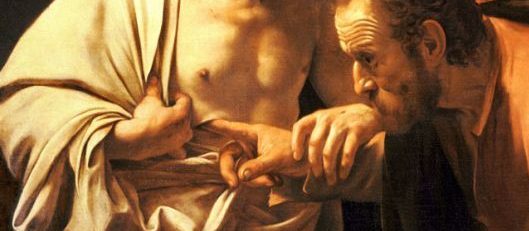
Photo of painting by Caravaggio, “The Incredulity of Thomas” via wikipedia.commons.org.
Thank you,
dear Jesus
for this first Friday in July 2026,
the feast of your Apostle Thomas
called Didymus:
some say due to his having
the twin of faith and doubt
but most likely also our
very own twin because
like him,
deep within us
are many "dark places"
that need to be enlightened
by your light.
Thomas called Didymus, one of the Twelve, was not with them when Jesus came. so the other disciples said to him, “We have seen the Lord.” But Thomas said to them, “Unless I see the mark of the nails in his hands and put my finger into the nail marks and put my hand into his side, I will not believe.” Now a week later, disciples were again inside and Thomas was with them. Jesus came, although the doors were locked, and stood in their midst and said, “Peace be with you.” Then he said to Thomas, “Put your finger here and see my hands, and bring your hand and put it into my side, and do not be unbelieving, but believe.” Thomas answered and said to him, “My Lord and my God!” (John 20:24-28)
Every day
you also come to us,
Lord Jesus
amid the many darkness
around us,
often in our locked doors
of doubts and disbelief,
cynicism and pessimism,
grief and hopelessness;
many times we think
we infer
we rationalize
that your Resurrection
and presence are just too good
to be true!

So many things within us
resist a faith too easy to claim
or put into effect just to believe
you; enlighten the many "dark places"
within us that we have become
so skeptical these days:
our government and church
are just like so similarly plagued
with corruption and evil
that are sadly allowed
or tolerated,
justice utterly lacking with
evil doers seem to be more
favored than law-abiding ones
with all these persisting because
many are oblivious to the
darkness and disorder going on.
Where are you,
Jesus in all of our mess
in life as individuals,
as a nation,
as a church,
as a family
that we most often
doubt than believe?
Photo by author, St. Michael Retreat House, Antipolo City, 16 June 2026.
Guide my hand,
lead my finger into your
wounds,
dear Jesus
that I may experience
you Risen;
let me experience your
coming and loving presence
amid our darkness
and woundedness;
let me not seek you
Jesus in spectacular things
in feel-good situations
but like Thomas
in touching your wounds
in that dark room
be enlivened with your
inner light of peace
and assurance that
more than your miracle
of rising from the dead
is the reality of living,
of life coming out
from real death.
Grant me that spark of
faith like in Thomas
while touching your wounds,
Lord Jesus
so that a glimmer of hope
within me may finally glow
and grow as I follow you,
my Lord and
my God.
Amen.
Sampung buwan na 'kong hindi natutulog
Kasi naman, ang ingay ng aming kapitbahay
'Pag gabi, disco house at videoke
Kaya't sorry na lang kung wala sa aking sarili
Mahal kita, pero miss na miss na miss ko na

Ang aking kama at ang malupit kong unan
Ba't 'di ka na lang sumama? Hihiga tayo at kakanta
I have always loved the Eraserheads whose songs are like vintage wines that get better with age like Kamasupra from their thrid studio album considered as the best Pinoy rock album, “Cutterpillow” released in 1995.
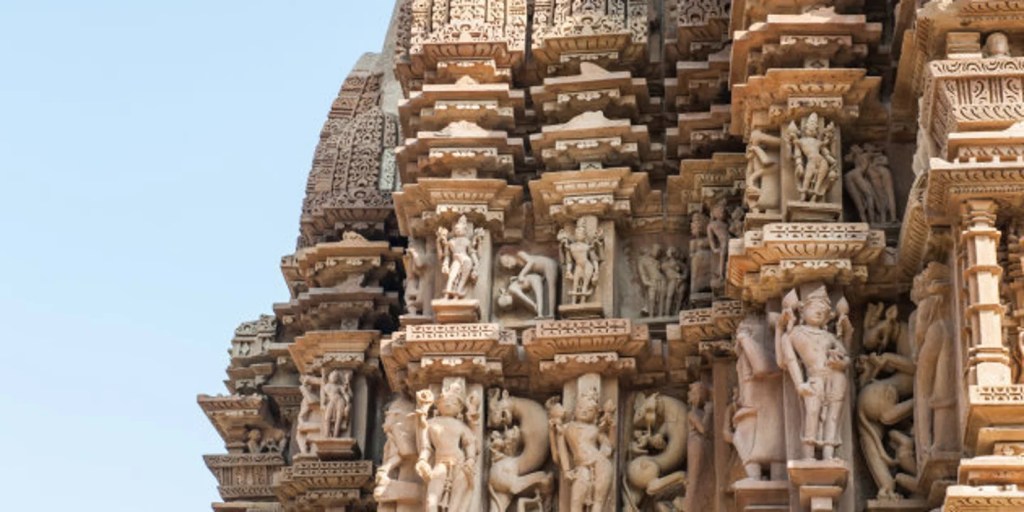
See the genius and artistry of Ely Buendia in composing Kamasupra, a witty play of words and ideas, of the bed we call kama in Filipino and that bible of erotica Kama Sutra from ancient India.
More than a furniture, the bed is also an altar of the highest order in every home where we perform our final acts as humans at the end of each day – of retiring and of dreaming while entrusting ourselves, consciously or unconsciously to God. In the same manner, it is on our bed where we also desecrate our very selves and those dearest to us.
Photo from LightRocket via Getty Images Erotic sculptures of the Khajuraho group of monuments, part of the UNESCO World Heritage Sites in India.
Please. There’s nothing bastos with both Kamasupra and Kama Sutra; both speak of the joys and sanctity of our relationships, of our being with our loved ones in bed that leads us to eternity as every old and dying person would tell you.
I know. I have met so many of them being a chaplain in a hospital for five years now. Whether in our home or in the hospital, the bed is always the final step board of every soul going to eternity.
Whenever I would bless the master’s bedroom in a new home, I say a prayer of blessing on the couple’s bed and before sprinkling it with Holy Water, I ask them to first bless it so that they would feel its sanctity as an altar where they give themselves to each other completely.
Hence, only them the husband and wife can sleep in that bed and nobody else, not even the children.
I do the same ritual of blessings in the other rooms of the children, praying that they would find rest of body and soul in their bed with a strict reminder that no visitors can stay inside their bedroom because it is sacred. Period.
This is most true for the bed of every priest. Notice how in most parish rectories and convents of nuns you find the sign “Private” to indicate no visitors allowed in their private quarters.
The priest’s bedroom and bed are literally his “inner sanctum” where only he and Jesus can be together at all times. Usually in silence too.
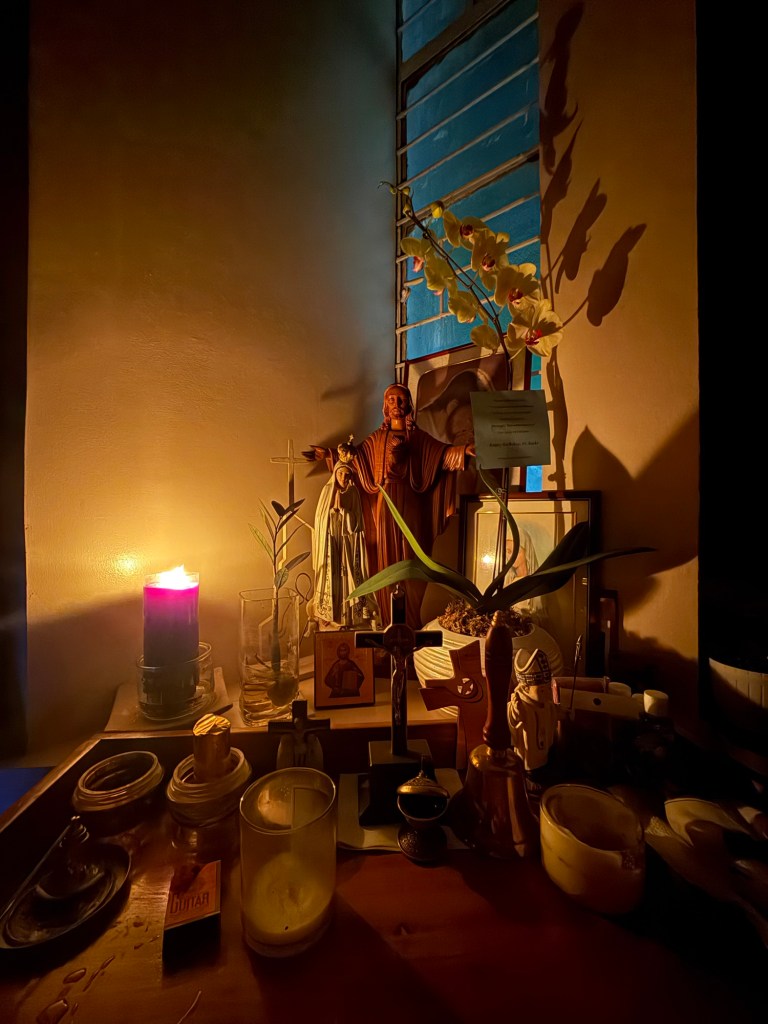
That is why I tell young priests to first have an altar in their bedroom where they could pray first thing in the morning and just before hitting the sack. Next to our breviary, the bed is the priest’s most beloved and blessed partner in life.
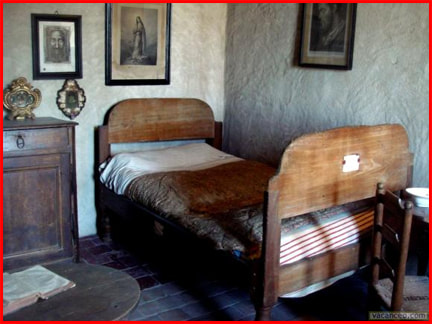
Most of all, the priest’s bed should always be “celibate” too like himself – that is, single-size only. No need to have big beds nor expensive ones because a priest’s bed is a reflection of his vows in the ministry – celibacy, poverty, and obedience.
Photo by author, personal altar in my bedroom.
Some of my most memorable images and experiences as a priest happened when I accompanied two elderly priests of our diocese in their deathbeds.
First was Msgr. Macario Manahan who died on 16 March 2014, the Second Sunday in Lent that year. I was by his side when he died that Sunday afternoon as he lived near my previous parish assignment. The second priest was Msgr. Vicente Manlapig who was confined in our hospital where I serve as chaplain. He died a few hours after my last visit to him on a Sunday morning, 26 February 2023, the Second Sunday in Lent.
Yes. They both died in Lent that is why since 2023, I have kept on telling people that life is a daily Lent, a preparation for Easter.
Bed of St. John Marie Vianney, Patron of all priests; from devotiontoourlady.com
It was at their deathbeds when I strongly realized that our bed is also our altar especially when we get sick and old, where we shall celebrate the Holy Sacrifice of the Mass, where we meet and receive Jesus Christ in the Holy Viaticum when too weak to celebrate the Eucharist.
It is on the bed of a dying priest I have felt deeply and truthfully the vocation in the priesthood – of how we were called by Jesus to become his priest that in the end he shall be calling us again as his priest to join him eternally.
And there in our bed comes the painful truth of how when we were young and strong we were called to do everything for Jesus and his Church, often lording it over the flock, so powerful as if like a god until all of a sudden without any warning, we just find ourselves already old or sick and weak, bedridden.
That’s when we hear anew Christ our Eternal Priest calling us, this time not to do anything at all but simply hang there on the cross with him like the two thieves at the Calvary.
That is when in our deathbeds we priests call on Christ anew like Dimas, the good thief, admitting all sins and faults while confessing our faith in Jesus.
The priest’s bed is where the priest cultivates his intimacy with Jesus too – his very celibacy and purity, his poverty and simplicity, as well as his docility and obedience not only to his bishop but ultimately to God.
Because it is also on that bed where the priest wages all kinds of battle in his life and ministry until the end, where the devil begins and ends all temptations to displace Christ from the side of the priest.
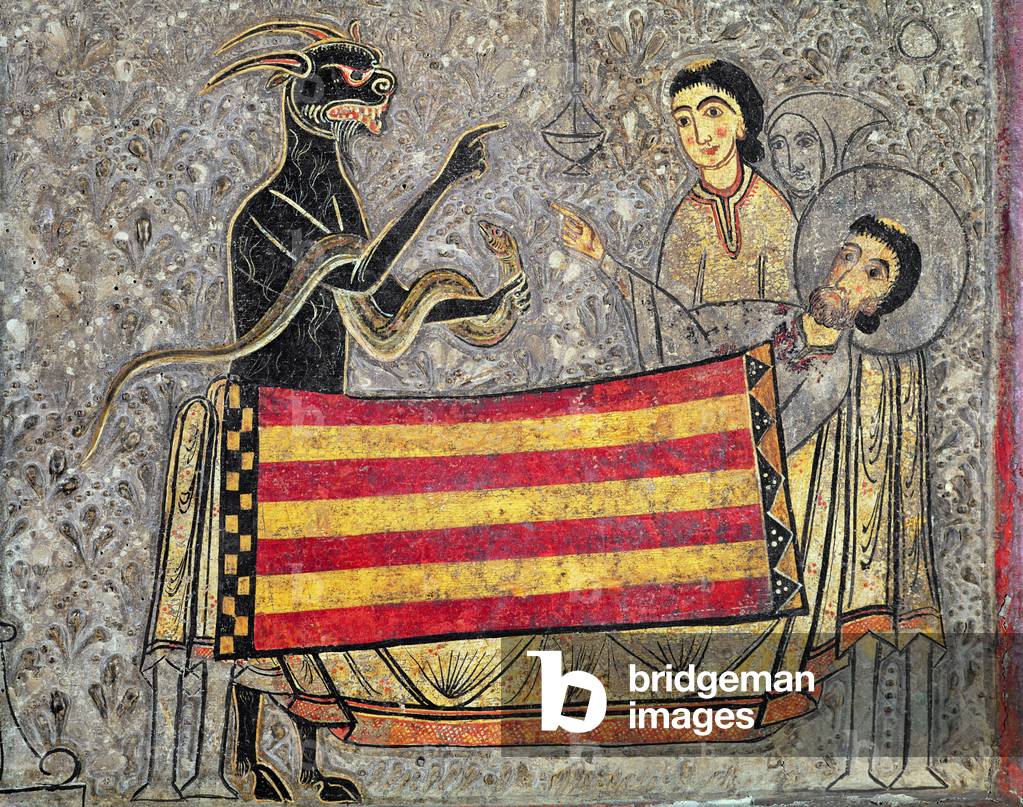
The Death of St. Martin of Tours, detail from an altar frontal from the Church of Saint Martin in Chia, 1150-1200 (tempera on panel) by Johannes Pintor, Ribagorça Workshop (fl.1150-1200); Museu Nacional d’Art de Catalunya, Barcelona, Spain ; (add.info.: Saint Martin on his deathbed, covered with a blanket in the colours and stripes of Aragon, rebukes the devil;).
It is said that when St. Martin of Tours, our patron saint in Bocaue, Bulacan, was dying in Candes (France) surrounded by his disciples, the devil appeared at his bed side, trying to claim his soul. Having lived a life of intense spiritual warfare, most likely some of it in his own bed, St. Martin rebuked the devil with his firm faith in Jesus Christ. The devil vanished and St. Martin died on November 11, 397 AD.
Every night towards the end of our Compline, we pray Simeon’s Canticle, the Nunc Dimittis (Lk.2:29-32) with an antiphon that goes like this: “Protect us, Lord, as we stay awake; that awake we may keep watch with Christ and asleep rest in his peace.” We then close our prayers with the final words, “May the Lord grant us a restful sleep and a peaceful death. Amen.”
It does not really matter whether one is a priest or not. Most of all if your bed is comfortable or not. What is important is that on that bed we are at peace with ourselves, with others and most of all, with God. So, keep your bed sacred at all times.
Quiet Storm by Fr. Nicanor F. Lalog II, 30 April 2026
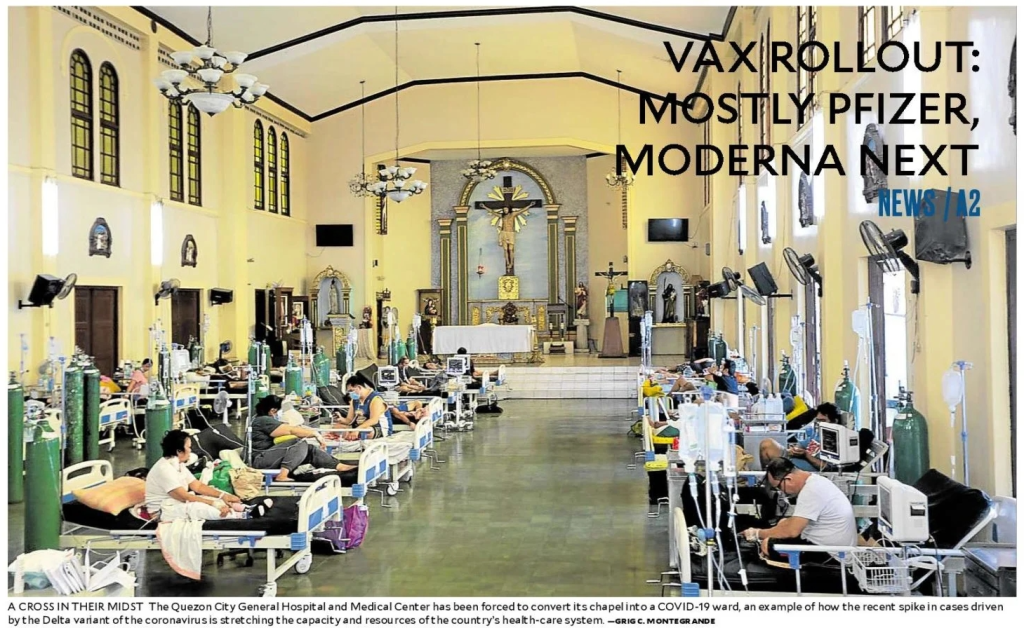
This front-page photo of the Philippine Daily Inquirer on August 20, 2021 is my favorite shot taken during the COVID pandemic coverage by the local media. It is worth a thousand words indeed.
I remembered this photo last month before the Holy Week when a friend and former colleague in GMA News texted me about the death of her former staff member. Her message read, “please pray for the soul of ____ who had lost the battle with cancer.”
It is perhaps one of the most widely used template in announcing a death, lost a battle. In my 28 years as a priest, it is only now as a senior citizen that I have reflected about that most common text I receive whenever somebody dies after a lingering illness. Or battle.
Since turning “sigisty-one” years old last March, I have considered it as grace that the more I have now become aware of the reality of my mortality, the more I have become more filled with hope in life too.
Despite death becoming so real this time as I really feel ageing through weakening of muscles, diminishing stamina, failing memory, and most especially of the onset of comorbidities like diabetes, the more I am most convinced that life is beautiful, always good to be alive. Every gising indeed is a blessing!
This is not an attempt to romanticize or make death palatable. I know. This is easier said than done. Memento mori is a reality like the sword of Damocles literally above us daily, not just a fashion fad we put on our t-shirt or some on their skin as a tattoo.
We all shall die. What is scary is the process of dying, not death itself which we shall not feel because we are already dead. Dying is a defeat, a loss when all we have is bitterness and anger, unforgiveness and resentments because that is when we resign and stop living, losing life by default.
Death is a loss as in a battle when we deny its reality, its being a fact and part of life that we have refused to look beyond it that is fuller and eternal.
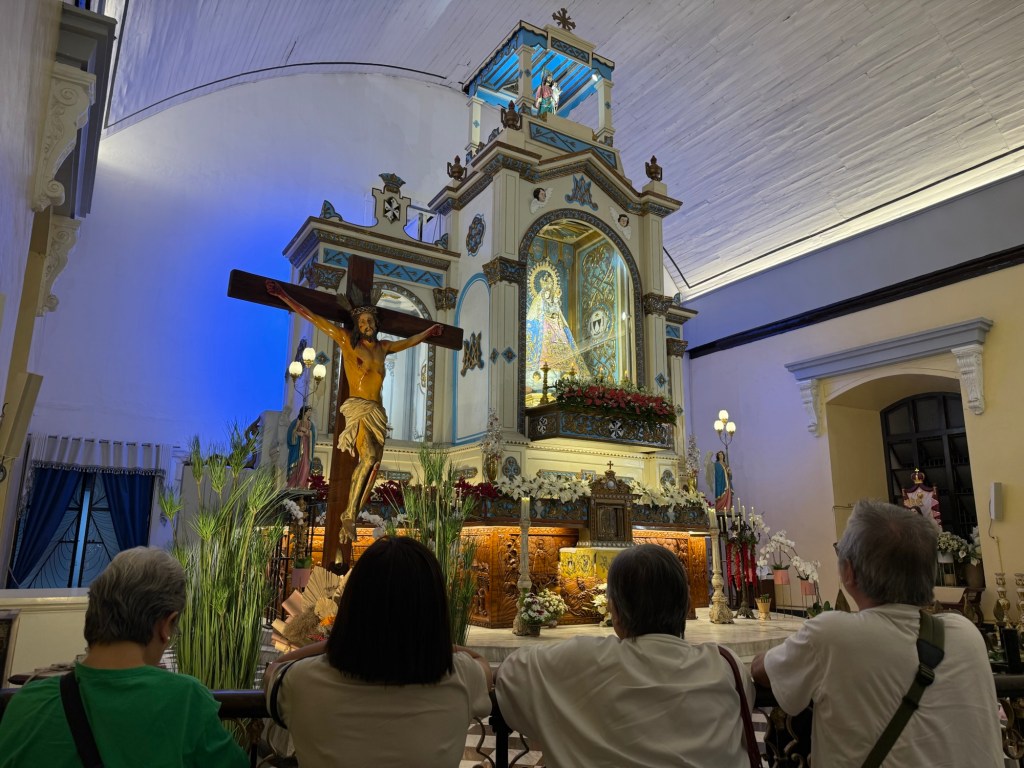
Photo by author, Manaoag Basilica, 09 January 2026.
But, when we have love and forgiveness, contrition and acceptance, death turns into a victory. And life. Especially when we have Jesus Christ.
In Jesus, every death and its other faces of poverty, losses, failures, sufferings and sickness are all a gain, a true wealth, a victory because these lead us to fulfillment not just happiness; fruitfulness not only success in life because death leads us to the hereafter.
Recall Luke’s beautiful account of the road to Emmaus when Jesus joined the two disciples walking at the opposite direction, leaving Jerusalem late afternoon of Easter. They did not recognize Jesus during their journey because their eyes were fixated on what happened on Good Friday; their eyes would only be opened after Jesus broke bread with them in their home in Emmaus. It is when we are broken like bread that we experience the fullness and meaning of life. (See https://lordmychef.com/2026/04/18/leaving-disbelieving/)
Photo from Sel Nanquil-Darilag.
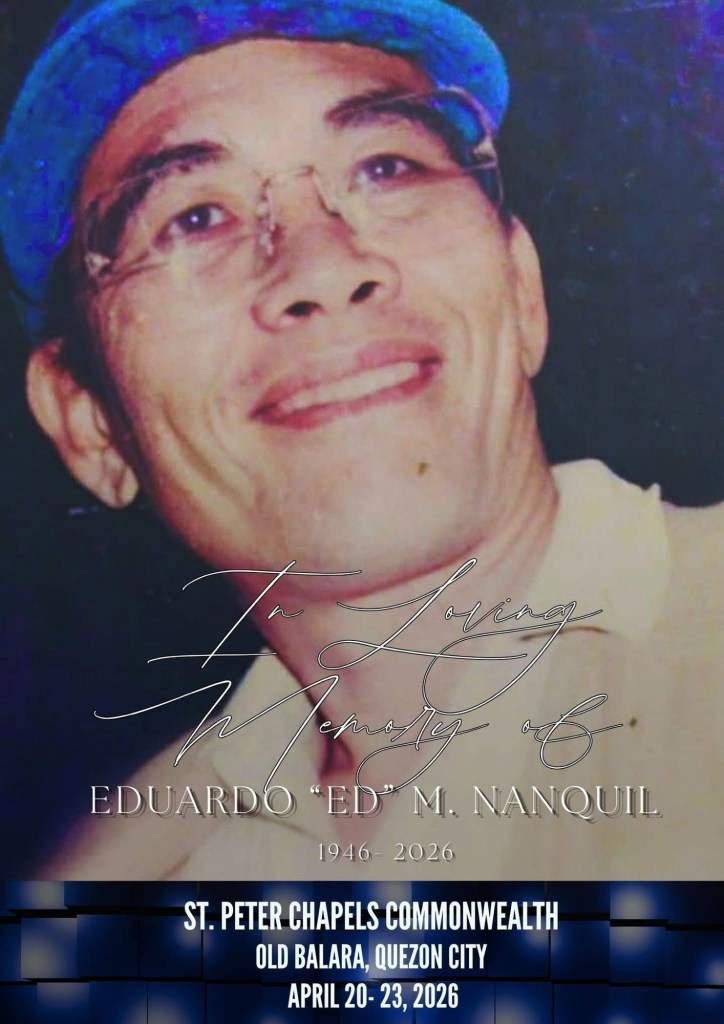
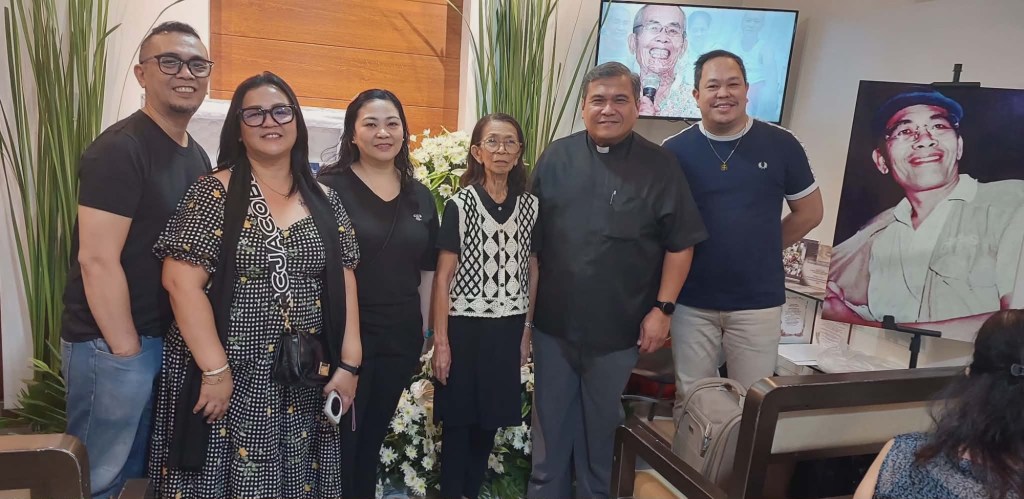
I recently went to the wake of former RPN-9 reporter Ed Nanquil who “battled” prostate cancer for sometime until dementia hit him two years ago that abruptly cut off our communications.
Despite my busy schedule that week, I made sure to come to his wake to offer Mass as a final tribute and gratitude to Ed who was very instrumental in my becoming a priest.
We last met in 1993 at the WPD headquarters in UN Avenue, Manila. It was our seminary break and I have come to join my former GMA News cameraman Jun Fronda in his graveyard shift duty when Ed approached me that night at the lobby of the police headquarter.
“Totoo pala ang chismis na nagpapari ka,” Ed calmly told me in his characteristic genteel voice.
I looked at him and laughed, telling him how I have been used to that comment. As we talked about my vocation, I told Ed how I felt God playing a big joke on me: first, when he made me a TV reporter when I do not have the broadcast voice at all, explaining that I applied as a news writer but by God’s grace, I was catapulted to being a reporter. And secondly, how God brought me back to the seminary to become a priest who would be preaching, singing and chanting a lot when my voice has remained small and sintonado!
That was when Ed told me that “many times, the things we hate and do not like in ourselves are exactly what God likes in us.” Whoa! It was the tipping point in my vocation story as I felt Ed was an angel sent by God to assure me He wanted me to become a priest, that I have to stop doubting Him and His call despite my many weaknesses and limitations. And sins.
That night at his wake, as I blessed the remains of Ed, I silently thanked him, and whispered to him he had not lost his battles with cancer and dementia. I have become a priest partly because of him who had taught me along the way how to battle with my many doubts of self and of God.
Photo from Sel Nanquil-Darilag.
When we refer to death as a battle we have lost, it means more of the grief of losing a beloved because the truth is the opposite: it is when we die that we win the war in life with the many lives we have touched and won over who would continue to live and touch others too in the process.
For those battling with cancer and other sickness, as well as those hurdling so many obstacles and trials in this life, especially those “lumalaban ng patas”, God is with us always. Our battle had long been won by Jesus Christ. We just have to be present. Do not lose by default. Accept. And “surrender” like St. Paul:
…the time of my departure is at hand. I have competed well; I have finished the race; I have kept the faith. From now on the crown of righteousness awaits me, which the Lord, the just judge, will award to me on that day, and not only to me, but to all who have longed for his appearance (2 Timothy 4:6b-8).
May we have the same courage of St. Paul in life. And in death. To live forever and ever. Amen.
Photo by author, Don Bosco Batulao, Batangas, 08 April 2026
Lord My Chef Recipe for Holy Saturday, 04 April 2026
Photo by author, Sacred Heart Novitiate, Novaliches, QC, 20 March 2026.
A blessed Holy Saturday to you.
One of the most unforgettable scenes of COVID-19 pandemic when it started in the summer of 2020 was like what we have every Holy Saturday – empty streets with everyone away.
And silent.
What a blessed Holy Saturday we have again today like six years ago as we are in the midst of another worldwide crisis in oil prices due to the US-Israeli war against Iran, inviting us to rediscover the beauty and value of silence.
Because holiness is found in silence, the very language of God.
In the Bible, silence always precedes God’s appearances and revelations:
From the Book of Genesis in the story of creation when there was nothing – therefore, silent – to John’s gospel that said, “In the beginning was the word” to indicate there was only silence until “the word became flesh” (Jn.1:1, 14) in Jesus Christ who was totally silent during his growing up years in Nazareth and later frequently went into deserted places to rest and pray in silence during his ministry.
Photo by author, Sacred Heart Novitiate, Novaliches, QC, 20 March 2026.
Here we find in Jesus that holiness is first found in silence and in rest, when we listen more to God to do his will.
On that first Holy Saturday when Jesus was buried in a tomb, the whole creation came to full circle.
See how after completing creation, God rested on the seventh day and made it holy (Gen.2:3) while Jesus was laid to rest on the seventh day too after completing his mission of salvation.
Silence and rest always go together.
This we vividly find in our Filipino word for rest which is magpahinga that literally means “to be breathed on”, to be filled with God which is what holiness is all about.
Like in the creation of the first man who was breathed on by God to be alive, Jesus breathed on his disciples locked in the upper room after greeting them with peace twice on the evening of Easter.
Silence is not being quiet, not an emptiness when we shut off all sounds and noise.
Silence is actually a fullness, of trying to listen to all sounds and noise in order to distinguish which to listen to. It is in silence when we hear our true selves, when we understand and feel others and most especially become one in God.
That is why when we rest, we return to Eden, like the garden where Jesus was buried.
Now in the place where he had been crucified there was a garden, and in the garden a new tomb, in which no one had yet been buried. So they laid Jesus there because of the Jewish preparation day; for the tomb was close by(John 19:41-42).
Photo by author, Sacred Heart Novitiate, Novaliches, QC, 20 March 2026.
What a lovely image of God’s rest and silence in Eden and of Jesus laid to rest at a tomb in a garden because to rest in silence is to stop playing God as we return to him as his image and likeness again.
Today let us cultivate anew the practice of silence, of listening to the various sounds around us and within us and most of all, trying to listen to the most faint, the softest sound that is often the voice of God within us, reassuring us that in the midst of his silence, he never leaves us, that with him we are rising again to new life like Jesus Christ.
Let us be like those women who rested on the sabbath when Jesus was laid to rest. That like them, we may trust God more by being true to ourselves even in the midst of this oil crisis.
Photo by author, Sacred Heart Novitiate, Novaliches, QC, 20 March 2026.
The women who had come from Galilee with him followed behind, and when they had seen the tomb and the way in which his body was laid in it, they returned and prepared spices and perfumed oils. Then they rested on the sabbath according to the commandment(Luke 23:55-56).
Imagine the more difficult situation those women were into during that time. But they dared to rest in silence in the Lord. Unlike us today worried only with prices of oil and other goods, without threats at all to our lives.
Silence is the domain of trust; people afraid of silence are afraid to trust.
Perhaps that explains why almost everyone is glued with their cellphones or stuck with earphones and EarPods to have each one’s own world, unmindful of others.
On the other hand, the most trusting people are the silent ones. And always, the most loving ones too.
Let us pray:
Help us to be silent today,
O God our Father
as we remember your Son Jesus Christ’s
Great Silence – Magnum Silentium –
when he was “crucified, died and was buried;
he descended to the dead and on the third day he rose again.”
Breathe on us your Spirit of life and joy,
O God as we rest in you,
listening to your voice within us
so that we may follow always Jesus Christ's
path to Easter in the Cross.
Amen.
Photo by author, Sacred Heart Novitiate, Novaliches, QC, 20 March 2026.
Lord My Chef Sunday Music by Fr. Nicanor F. Lalog II, 29 March 2026
Photo by author, St. Ildephonse Parish, Tanay, Rizal, January 2021.
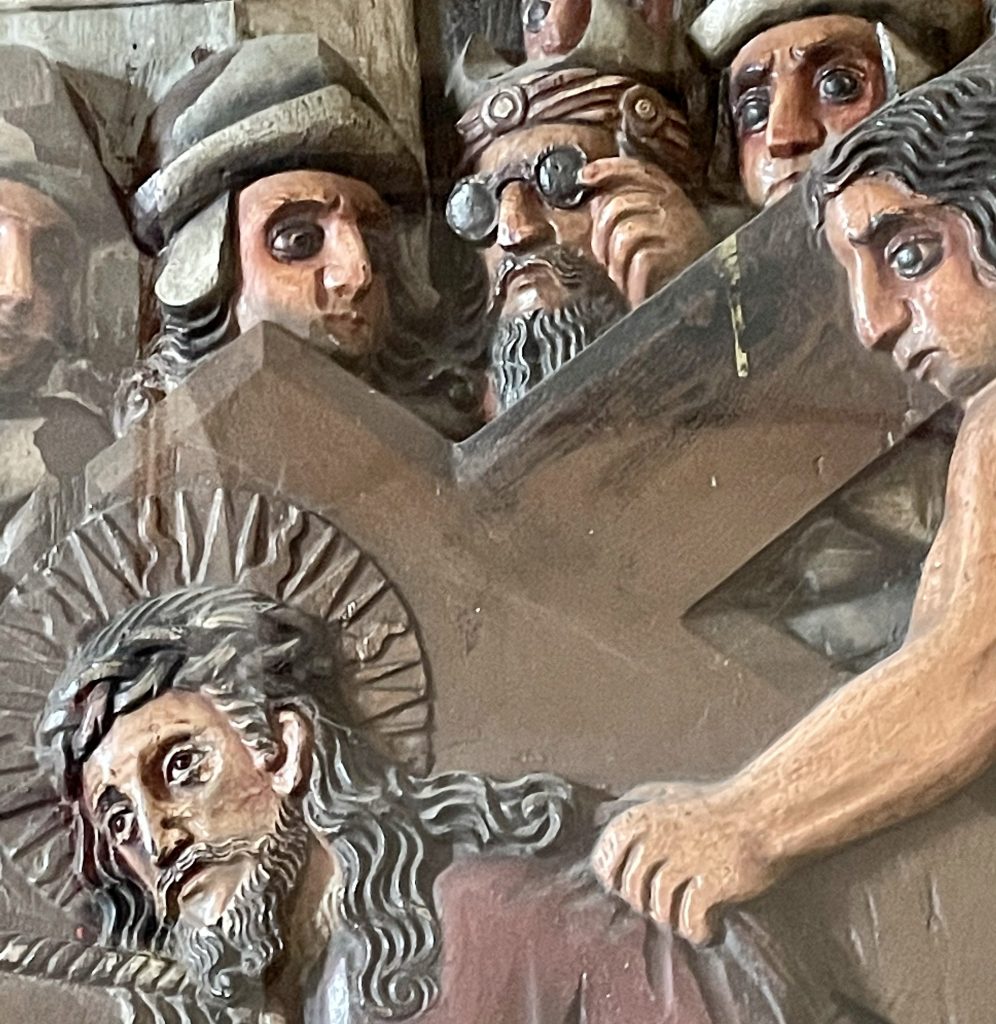
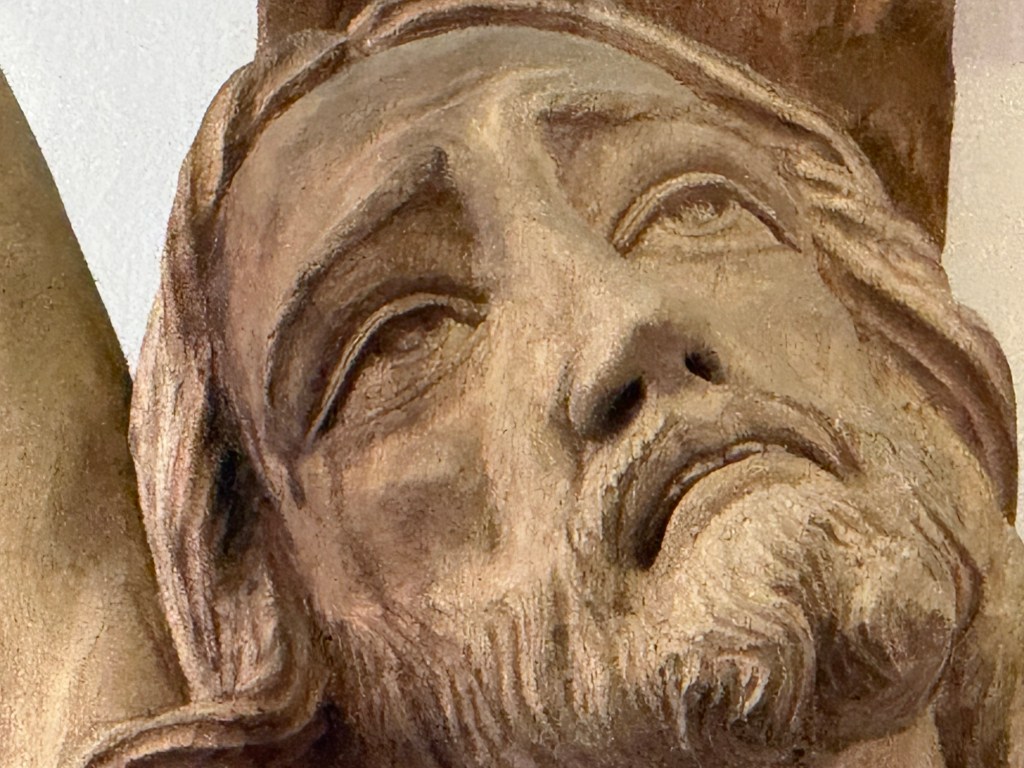
If you have a lot of cash to spend for a unique Holy Week just outside Metro Manila, I suggest you visit St. Ildephonse Parish in Tanay, Rizal and look for the Seventh Station of the Cross when Jesus fell for the second time on his way to the Calvary.
You won’t miss it as you enter the main door immediately to your left. Done by local artisans in 1785, these huge woodcarvings depict one of the most unique Stations of the Cross in the world where soldiers and characters including Jesus Christ have Malay features of brown complexion, large and round eyes, and “squared” body features. Everything was given a local taste to make the Station so Filipino like the soldier leading them blowing a carabao horn for a tambuli while another carried a bolo instead of a sword.
But, the most astonishing of all is a man so prominently portrayed at the middle wearing sunglasses, looking far outside. Yes, the dude wore shades!
Photo by author, St. Ildephonse Parish, Tanay, Rizal, January 2021.
Historians we consulted told us smoked glasses have been available in the Philippines during that time courtesy of Chinese traders. According to the catechists and volunteers we talked to while at the parish, they were told by their elders that man with sunglasses is the high priest Caiaphas who led the Sanhedrin trial of Jesus who declared him guilty of blasphemy in claiming himself to be the Christ, the Son of God.
But, why wear shades? Was it because he refused to see and accept the truth that Jesus indeed is the Christ, the Son of God just like us today who wear all kinds of colored glasses presenting our own image God too far from who he really is. Or, as my kinakapatid Dindo Alberto (+) who was my roadtrip companion at that time said it shows that rock and roll had long been in existence since the time of Jesus Christ, the real Superstar.
I believe Kuya Dindo that is why I prepared two rock and rollin’ music this Holy Week for you to listen and reflect while driving on your way to a visita iglesia to pray and be with family and friends.
I have always loved The Smiths since college especially when NU107 came out at the other end of the FM band in the late 80’s. Heaven Knows I’m Miserable Now remains one of my personal anthems since it first came out in 1984.
When I was assigned as chaplain here at the Our Lady of Fatima University in Valenzuela in 2021, I was surprised to hear some of our college students singing and posting on their socmed There Is A Light that Never Goes Out – kids so young almost like my own pamangkins! And that’s one thing I like most with the Gen Zs and Millennials who also love and embrace our music and artists because they are simply the best. Period.
A week after Ash Wednesday last February 24, I used There Is A Light That Never Goes Out by The Smiths in my monthly spiritual talk to our employees at the University and the Fatima University Medical Center as a fitting music and guide in our 40-day journey of Lent which is more of an inner journey into our hearts to find Jesus Christ, the Light who never goes out amid life’s many darkness. Moreover, Jesus is the Light who never goes out as he restores our sight from the blindness we go through like in the healing of the man born blind that was the gospel last March 15, fourth Sunday in Lent. See how its lyrics also apply either to Jesus speaking to us or to anyone seeking Jesus.
Take me out tonight
Where there's music and there's people
And they're young and alive
Driving in your car
I never, never want to go home
Because I haven't got one
Anymore

Take me out tonight
Because I want to see people
And I want to see life
Driving in your car
Oh please, don't drop me home
Because it's not my home, it's their home
And I'm welcome no more
Of course, composer Johnny Marr and lyricist-vocalist Morissey may have other meanings behind this song considered as their finest but still, it speaks about finding hope that leads us to believe in ourselves, in others and in God. In this mass-mediated world that declares to see is to believe, Jesus tells us the other way around, believe that you may see!
When we believe, then we truly “see” and that is when we love, love, and still love until it hurts even unto death because that is when we find meaning in life and everything. And everyone.
And if a double-decker bus
Crashes into us
To die by your side
Is such a heavenly way to die
And if a ten tonne truck
Kills the both of us
To die by your side
Well, the pleasure,
the privilege is mine
Jesus Christ did just that that is why we have Good Friday; he rose from the dead at Easter and since then, has remained the Light who never goes out, lighting our paths in this time of many darkness in life.
Photo by author, Sacred Heart Novitiate, Novaliches, QC, 20 March 2026.
Sometimes, sunglasses help us see clearly as they filter distracting lights and contrasts that blur our vision with the naked eyes. And so, here is our second rock n’ roll song for Holy Week, Bruno Mars and Lady Gaga’s Die With A Smile which we used also in our employees’ Lenten recollection at the University and Hospital last February 24.
Aside from the striking contrast of The Smiths’ There Is A Light That Never Goes Out that represented the punk, alternative, dark side in me, Die With A Smile represented the 1970’s funky groove I grew up with. And that is why I love and follow Bruno Mars: aside from having a Filipino blood in his Pinay mother, his experiments with music strongly rooted in the 1970’s make us from the older generation feel so welcomed and relate so well with him and his message of faithful love until the end of time.
Along with its lyrics that speak from the heart, the melody and great combination of the voices and talents of Bruno and Lady Gaga make Die With A Smile so lovingly touching, even mesmerizing that make you think of the only one you truly love most that you want to spend the rest of your life with until the end of the world – to die with a smile.
Ooh
I, I just woke up from a dream
Where you and I had to say goodbye
And I don't know what it all means
But since I survived, I realized

Wherever you go, that's where I'll follow
Nobody's promised tomorrow
So I'ma love you every night like it's the last night
Like it's the last night

If the world was ending, I'd wanna be next to you
If the party was over and our time on Earth was through
I'd wanna hold you just for a while and die with a smile
If the world was ending, I'd wanna be next to you
Holy Week remind us of our only one true and first love of all – God. We call this the Holy Week in Filipino as mga Mahal na Araw from the word mahal that means mahalaga or important and essential. That is why another word for love in Filipino is pagmamahal, literally to give importance. Not just pag-ibig which is more about liking as ibig means.
In these days of rising costs of fuels and commodities, anything expensive is described too as mahal in Filipino because they are so important and essential. Like the ones we love. Holy Week is mga Mahal na Araw, the holiest days when Jesus Christ expressed his deepest love – pagmamahal – for each of one of us by dying on the Cross because everyone is loved so immensely by God.
Again, Jesus was the first to have “died with a smile” because he offered his very self completely and freely, willingly for us because he loves us. And he had promised that he shall come again at the end of time. Are we willing to wait for him by loving truly those persons he had entrusted to us in this life?
Until our next music, have a blessed Holy Week and most blessed Easter everyone!
40 Shades of Lent by Fr. Nicanor F. Lalog II
Fifth Sunday in Lent, Cycle A, 22 March 2026
Ezekiel 37:12-14  +++  Romans 8:8-11  +++  John 11:1-45
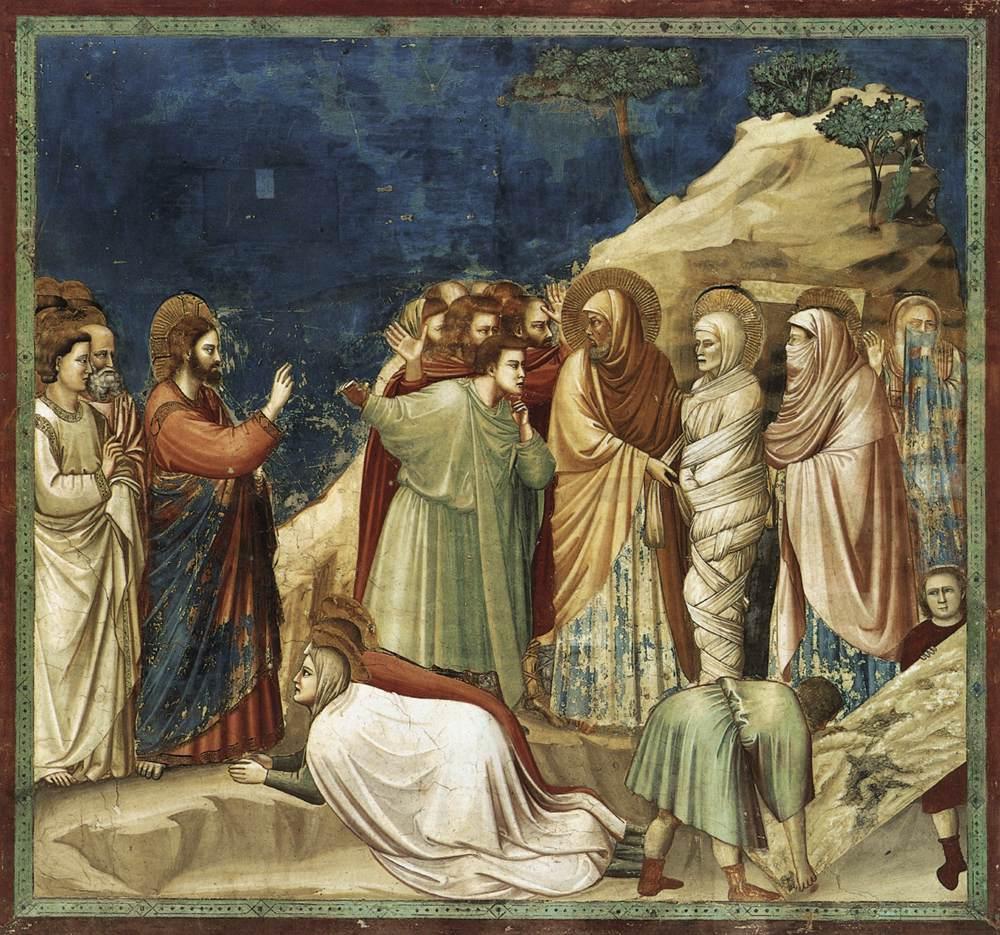
“The Raising of Lazarus” by Italian painter and architect Giotto di Bondone (1266-1337), fresco inside the Scrovegni Chapel in Padua, Italy via commons.wikimedia.org.
We now come to the final Sunday of our Lenten journey into Easter with John still as our guide telling us Jesus Christ’s raising to life of his friend Lazarus who had been dead for four days.
The raising of Lazarus is a prelude for the greatest sign of all by Jesus as the Christ – his Resurrection at Easter after his Passion and Death on good Friday. Though very long, it is a lovely story that speaks of Jesus Christ’s deep friendship with us by being most present in our most painful suffering of all which is death of a loved one as well as our many “deaths” in life.
And like in every true friendship, Jesus invites us like the sisters of Lazarus, Martha and Mary, to believe in him.
When Martha heard that Jesus was coming, she went to meet him; but Mary sat at home. Martha said to Jesus, “Lord, if you had been here, my brother would have not died. But even now I know that whatever you ask of God, God will give you.” Jesus said to her, “Your brother will rise.” Martha said to him, “I know he will rise, in the resurrection on the last day.” Jesus told her, “I am the resurrection and the life, whoever believes in me, even if he dies, will live, and everyone who lives and believes in me will never die. Do you believe this?” She said to him, “Yes, Lord. I have come to believe that you are the Messiah, the Son of God, the one who is coming into the world” (John 11:20-27).
When Mary came to where Jesus was and saw him, she fell at his feet and said to him, “Lord, if you had been here, my brother would not have died.” When Jesus saw her weeping and the Jews who had come with her weeping, he became perturbed and deeply troubled… (John 11:32-33).
Jesus said, “Take away the stone.” Martha, the dead man’s sister, said to him, “Lord, by now there will be a stench; he has been dead for four days.” Jesus said to her, “Did I not tell you that if you believe you will see the glory of God?” (John 11:39-40)
“The Raising of Lazarus”, 1311 painting by Duccio de Buoninsegna from commons.wikimedia.org
“Lord, if you had been here, my brother would not have died.” We are all like Martha and Mary who believed in Jesus Christ. Both expressed to Jesus their faith in him, of believing in him and his powers.
To believe is the starting point of every relationship. With God and with others.
It usually begins in our mind, in our intellect. We believe because we know and have learned their names and backgrounds, their likes and dislikes, and a host of others things. We can truly be friends with others even by believing only with our intellect that is why we understand their predicament and situations, the way they react. Almost everything, we know and have known that we are still the best of friends. Including with God.
Martha exemplified that kind of believing.
Martha is good. If she is the same “Martha, Martha” mentioned by Luke whom Jesus visited, she was well meaning like most of us.
She believed in Jesus. In God. In the scriptures when she told Jesus she knew Lazarus would rise along with all the dead in the resurrection on the last day.
Jesus never argued because it was good. Same with us.
Our friends do not argue nor break away from us with our kind of believing. After all it is reasonable and sane. But, believing from the mind, from the intellect is not enough. For a more intimate and engaging relationship in friendship, believing has to deepen and take root in our heart.
Believing leads to love.
Whatever kind of love, it starts in believing.
We love because we believe as we have claimed last Sunday.
But, believing and loving do not stop there.
How deeply, how truly we believe indicate how deeply, how truly we love.
Photo by author, Sacred Heart Novitiate, Novaliches, QC, 20 March 2026.
Without any intentions of comparing and pitting the two sisters against each other on who is better, John presents to us where believing leads us.
Like Martha, Mary expressed how she believed in Jesus and his powers by telling him “Lord, if you had been here, my brother would not have died.”But it was not merely coming from her mind, from her head, from what she knew of Jesus but more of how she felt with Jesus.
Notice at the start of this long story (verse 2) how John described Mary as the one who anointed Jesus – six days after this raising of Lazarus – with perfumed oil and dried his feet with her hair as expression of her faith and love for the Lord on his burial. Getting some help from Luke’s account again, we find Mary’s level of believing as deeper and matured when she chose to seat at the Lord’s feet to listen to his teachings when he came to visit them.
Mary came to Jesus with her total self – unashamed to weep in front of the Lord. She spoke no words, showed no clues of her “theology” like Martha’s faith seeking understanding by studying the scriptures.
It was Mary’s heart that spoke to Jesus that he was “perturbed” twice and “deeply troubled” seeing her. Even the Jews with her felt the Lord so moved by her that led us to the final scene of this beautiful story.
Feel the revelations at the cave where Lazarus was buried:
When Jesus asked the stone removed from the cave, Martha stepped in. And it was reasonable of her. We do it so often in various occasions like in funerals and deathbeds.
That was when Jesus reminded her, “Did I not tell you that if you believe you will see the glory of God?”
Everybody fell dead silent.
Jesus then prayed aloud briefly to the Father, shouting for Lazarus to come out – alive, still covered with cloth. End of scene.
What’s next?
You tell me. Tell me how much you believe Jesus, how much you love Jesus. And how much you love like Jesus especially when everything, everyone is dead, dead silent, dead still for many reasons.
Photo by author, Sacred Heart Novitiate, Novaliches, QC, 20 March 2026.
How much do we believe in Jesus, the resurrection and life?
Think of our many deaths in life. Not only in losing a beloved but our very own deaths – when we were buried and dead to sin and failures, disappointments and losses like the Israelites thrown into exile that Ezekiel the Prophet described in the first reading. What a beautiful imagery of God raising us to life, opening our graves of sins and failures, weaknesses and darkness, breathing into us his spirit, now better. Or maybe still struggling in life.
Believing in Jesus is believing like Martha and Mary most especially, unashamedly pouring out our pains and griefs to Jesus, baring our battered hearts and souls to him because we have felt, we have experienced his very passion and death in our own life, with those we love and serve.
In these trying times, Jesus invites us to believe more than ever in him by believing also with those severely affected by the hard times like the jeepney drivers and minimum wage earners. Let us try to live in spirit as St. Paul reminds us in the second reading by feeling their struggles, their fears, their sufferings so that they may not cry, “Lord, if you were here our families would have not gone hungry, would have not died” because we his disciples were here for them.
That is believing in Jesus the resurrection and life – being present with those suffering and dying. Solidarity.
Jesus is not asking us to think nor understand their pains and miseries. He is asking us to feel within us their pains and miseries so that like Mary we can bring Jesus to them and raise them to new life. Let us pray:
Lord Jesus Christ,
before all these pains and
sufferings came to me,
you were there first
to suffer and die for me
on the Cross.
Let me love you more
by loving others
especially those also
in pain and suffering.
Amen.
40 Shades of Lent by Fr. Nicanor F. Lalog II
Wednesday, Second Week in Lent, 04 March 2026
Jeremiah 18:18-20     + + +     Matthew 20:17-28
Photo by author, Ephesus, Turkiye, November 2025.
How lovely is our scene
today, Lord Jesus,
of you walking towards Jerusalem:
it must have been so dusty
and dirty at that time;
I won't be surprised at all
at how everybody must be
thinking of reaching home,
finding a place for comfort
and ease but here you are,
Lord, reminding the Twelve
and us today of your coming
passion, death and resurrection.
How amazing, Jesus
that as we follow you,
walking with you in this
journey and mission,
you remind us of our own
sufferings but unfortunately,
thoughts of glory seep into our
minds like that day when
the mother of James and John
made that request of honor and
prestige by your side;
the same thing is very true
during the time of Jeremiah
the Prophet: he was there in the
heat and dirt of the city of
Jerusalem, proclaiming God's
words of conversion and there,
just like today, are the voices
and thoughts of us thinking of doing
away with pain and suffering,
of insisting on our own thoughts
and desires for fame and glory
without realizing the more
essential realities in life.
O dear Jesus,
let me continue to walk
your path of the Cross,
let me remain in your journey
of Lent,
of life
by your side,
forgetting my self,
taking my cross,
and following you alone.
You have given me
with so much, Jesus
and I have given so little;
take whatever I still keep
to myself when I thought I
have surrendered completely
to you; let me see what you see,
love whom you love,
care for those you care
as we continue together
in this road to Jerusalem.
Amen.
Photo by Ar. Philip Santiago, Jerusalem, October 2025.