Lord My Chef Daily Recipe for Soul by Fr. Nicanor F. Lalog II
First Friday, Thirty-first Week in Ordinary Time, Year II, 06 Novvember 2026
Philippians 3:17-14:1     ><]]]]'> + ><]]]]'> + ><]]]]'>     Luke 16:1-8
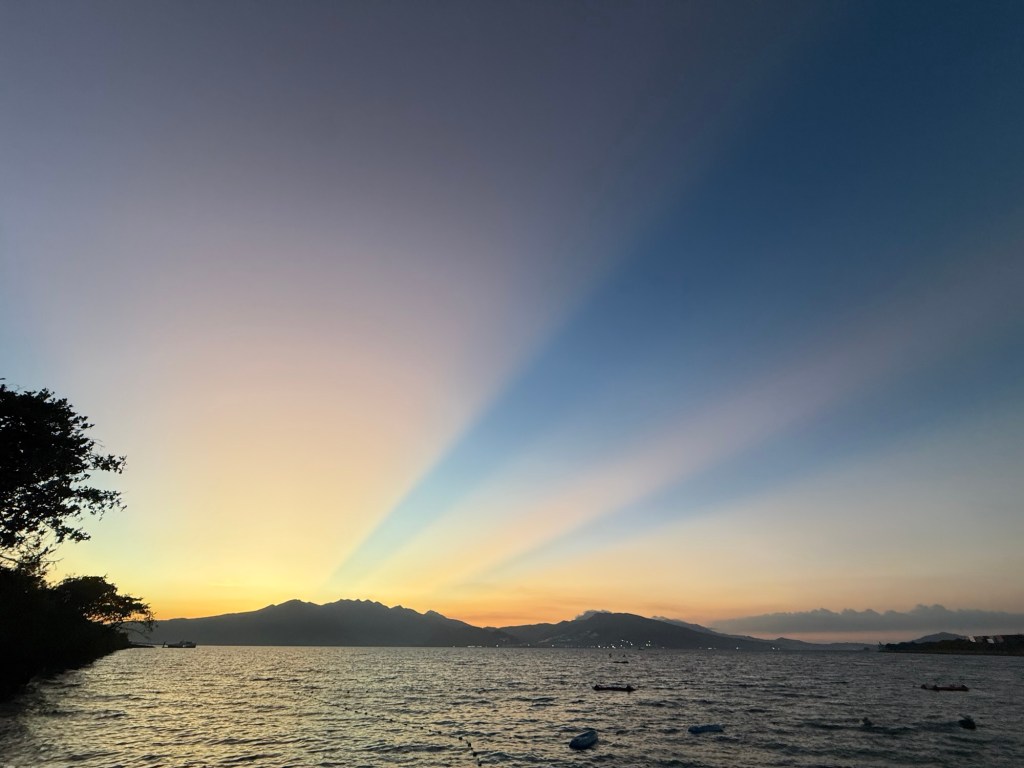
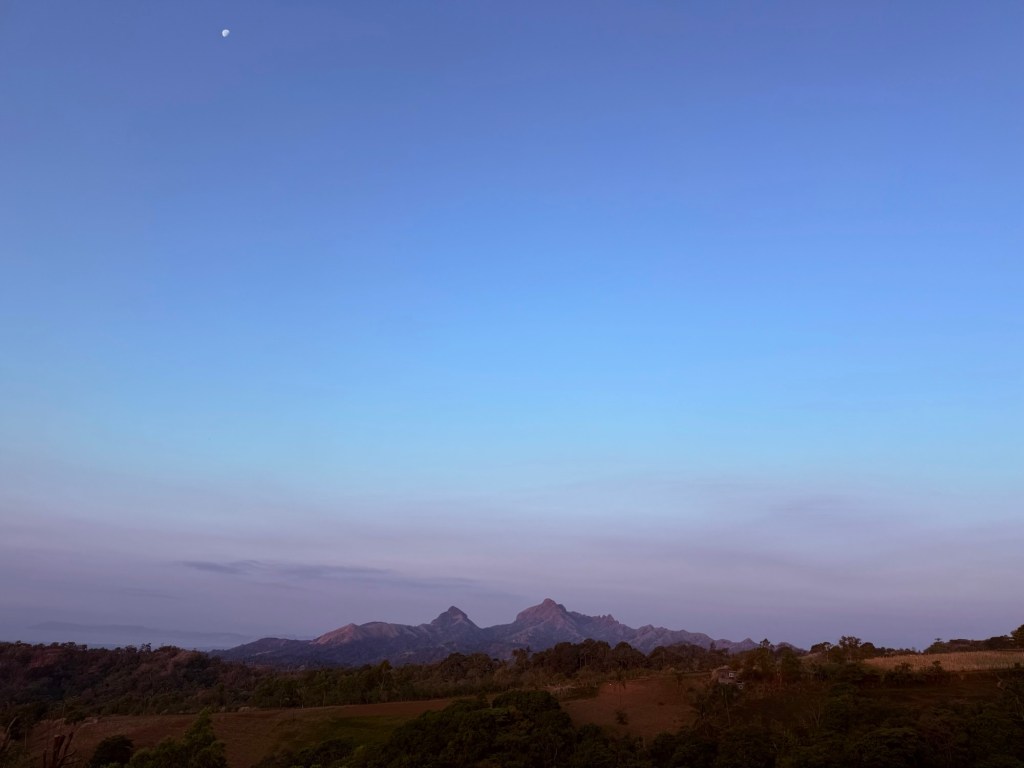
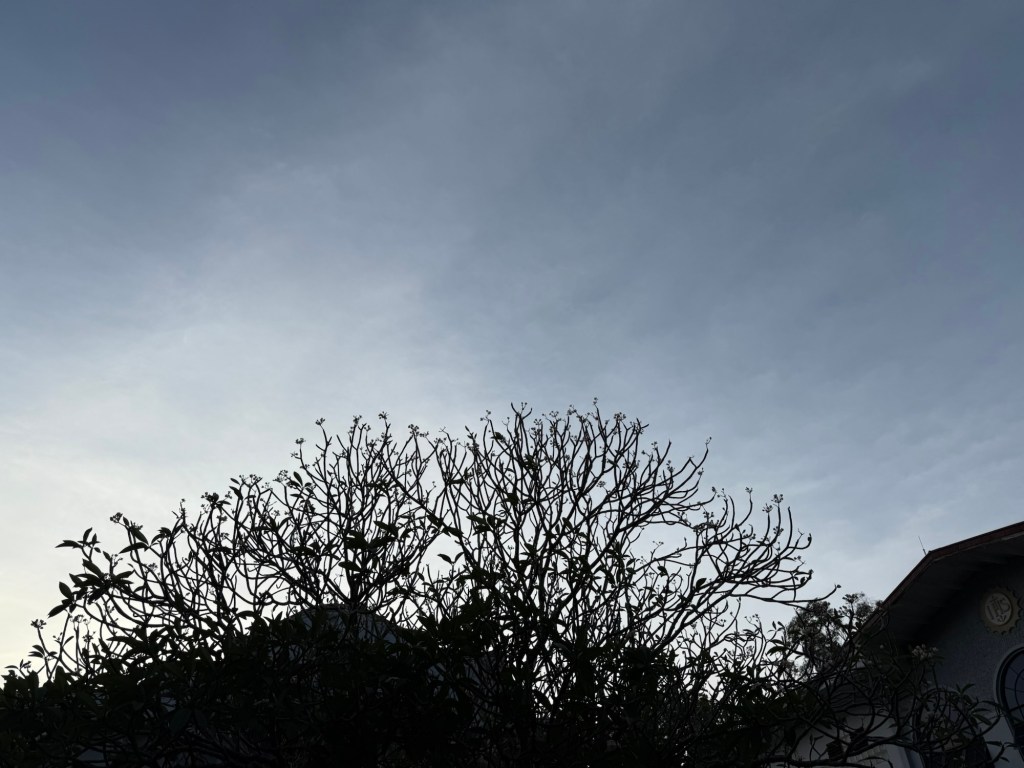
Photo by author, sunset at Subic Bay, 02 November 2026.
Praise and glory to you,
Lord Jesus Christ
in reminding me today
through St. Paul
to find directions
in my life to heaven,
our true home.
Join with others in being imitators of me, brothers and sisters, and observe those who thus conduct themselves according to the model you have in me. For many, as I have often told you and now tell you even in tears, conduct themselves as enemies of the cross of Christ. Their end is destruction. Their God is their stomach; their glory is in their “shame.” Their minds are occupied with earthly things. But our citizenship is in heaven, and from it we also await a savior; the Lord Jesus Christ (Philippians 3:17-20).
Give me,
O Jesus,
the courage
and clarity to truly
examine my life
and confront myself
with the kind of direction
I am truly taking my life
seen in what occupies
my heart and attention,
in what I really
hunger and thirst for
that bring me closer
or away from you,
Lord.
Most of all,
awaken in me,
Jesus, your light
that I may always be wise
like that steward
in thinking ahead
to do what is good,
what is right
in dealing with others
because the way we treat others
show the kind of pathway
and direction we are following -
are we alone on a highway
concerned with one's self
or with others on a two way street
of respect and justice,
kindness and care,
love and understanding?
Amen.
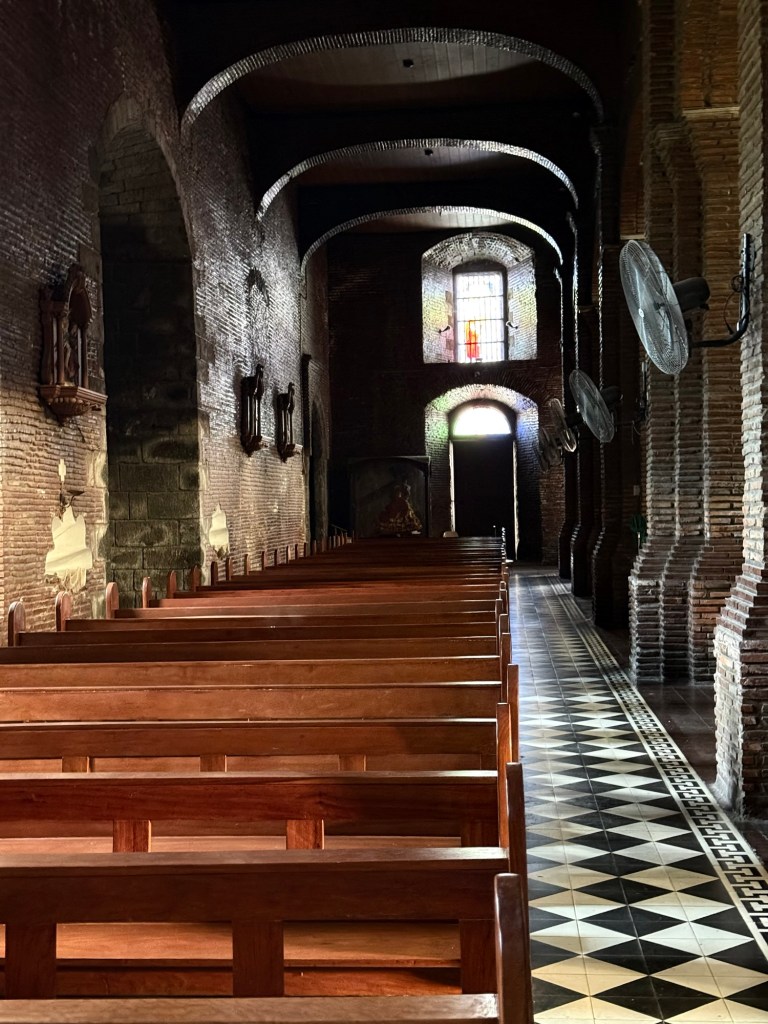
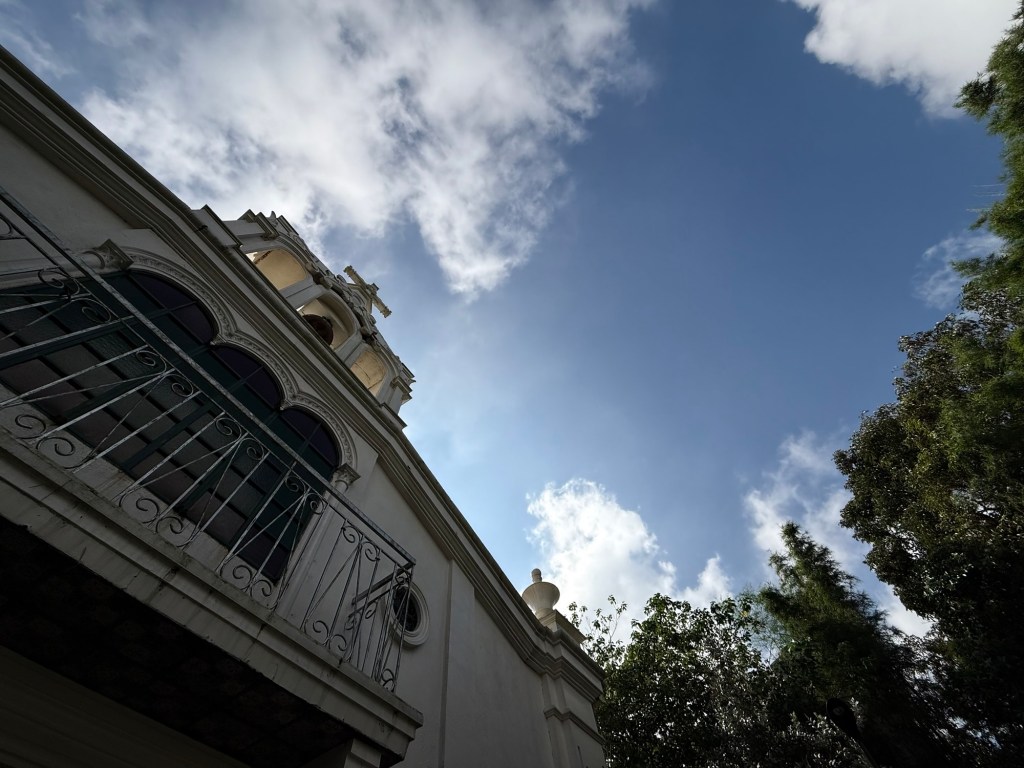
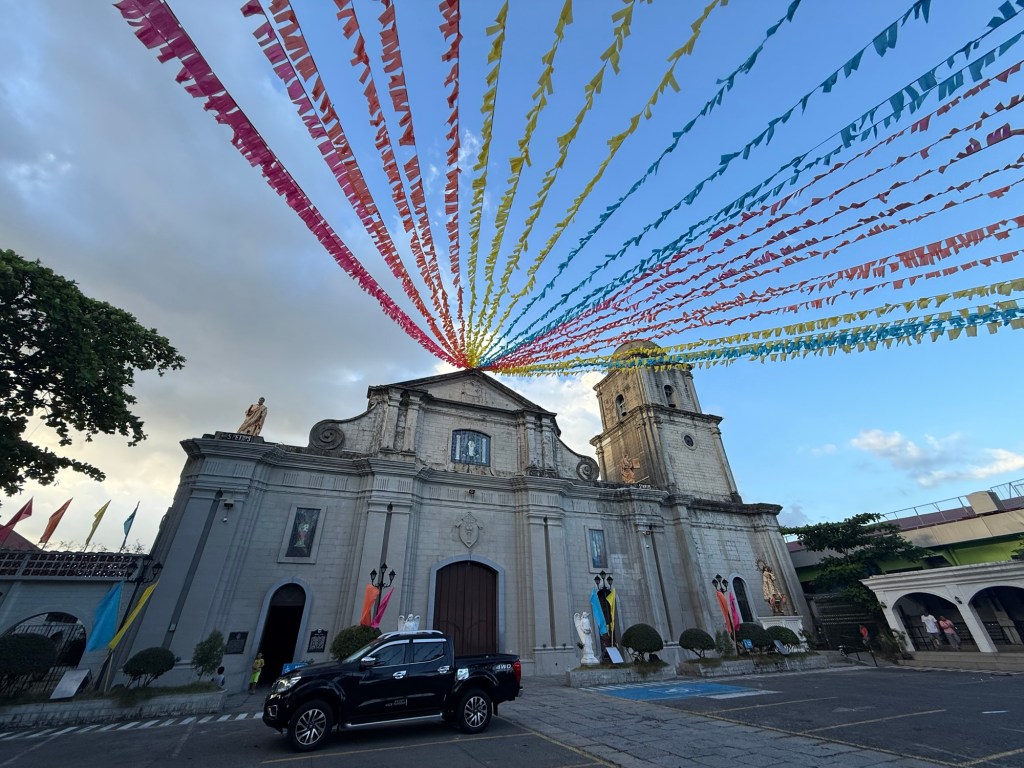
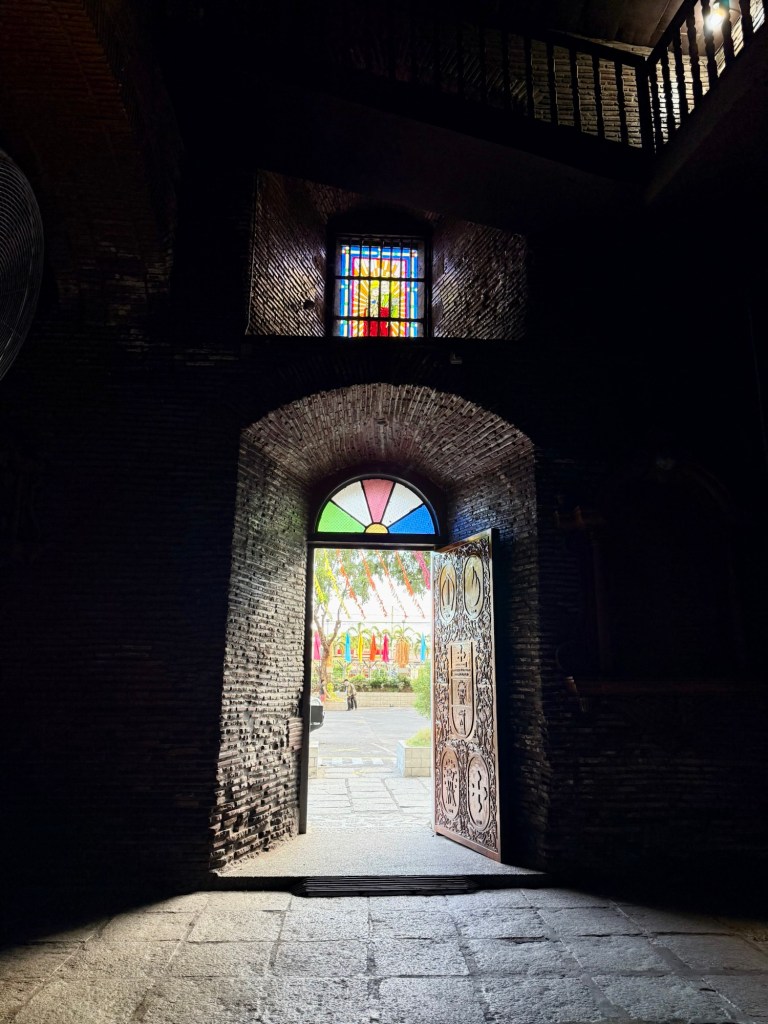
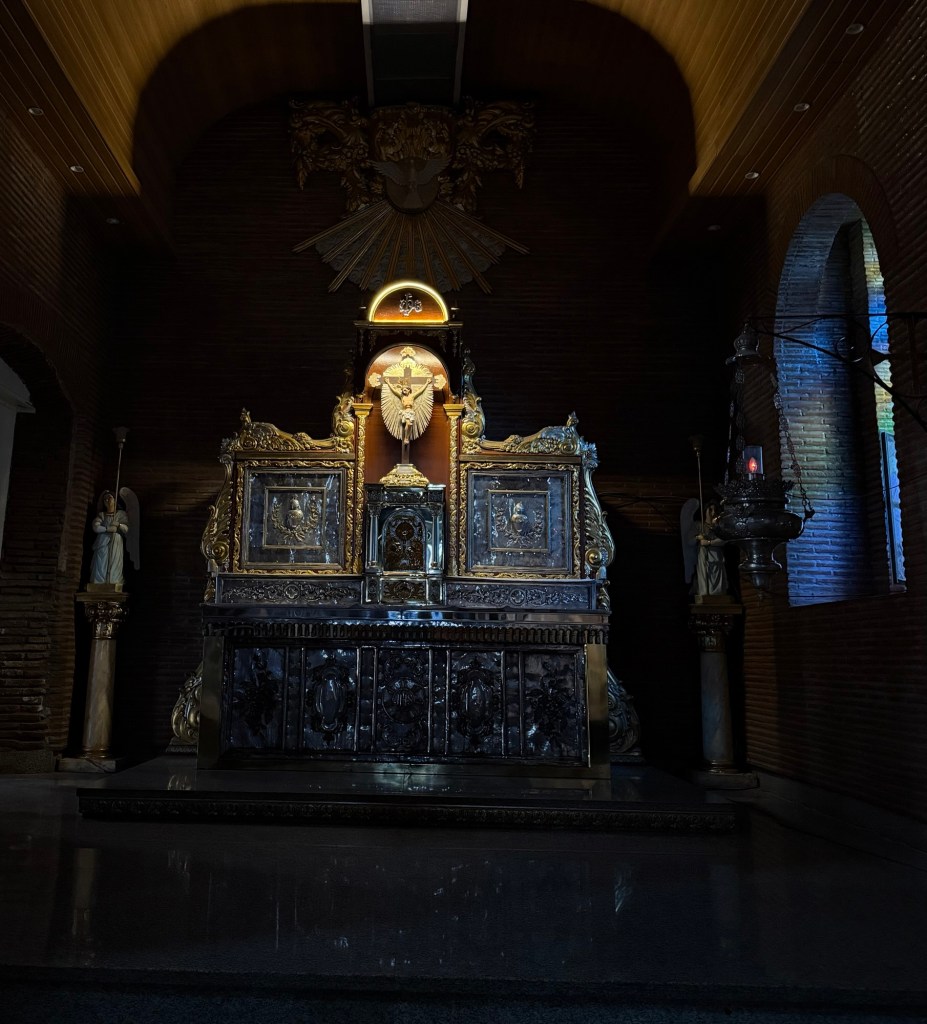
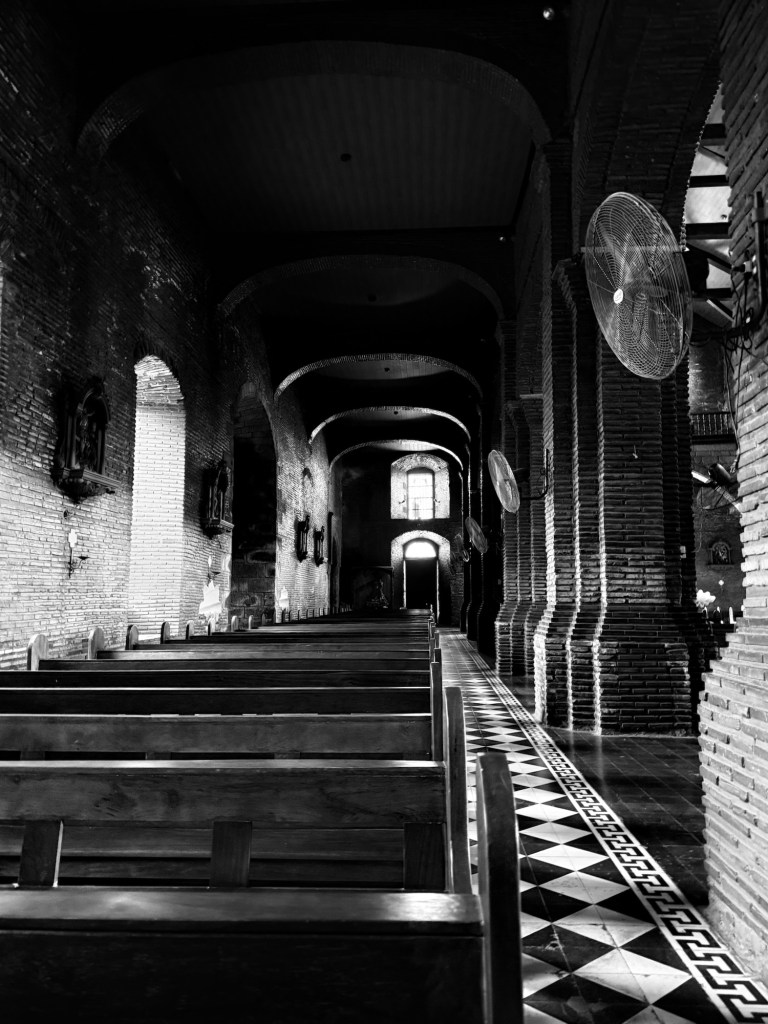
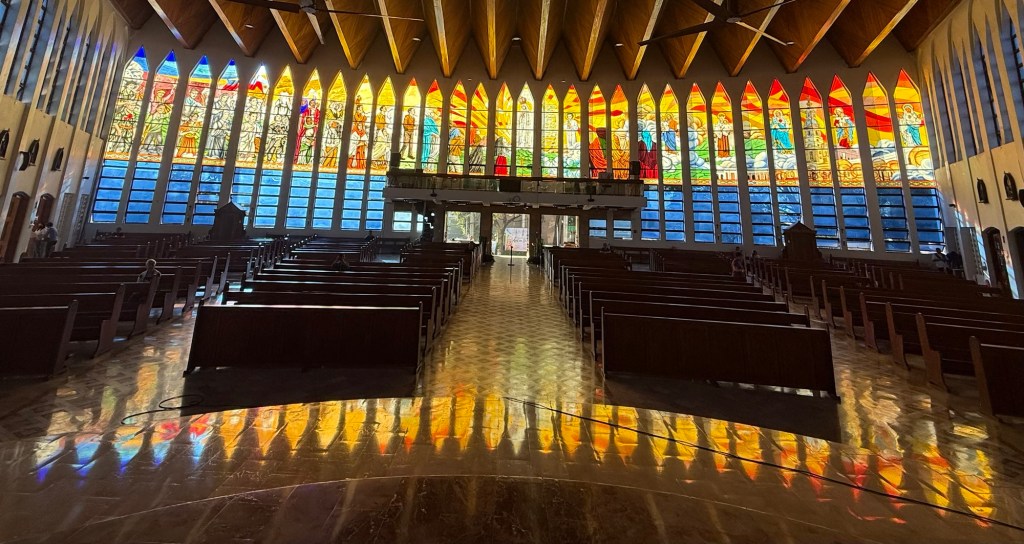
Photo by author, Cathedral Parish of Our Lady of Pillar, Imus, Cavite, 27 October 2026.
Lord My Chef Daily Recipe for Soul by Fr. Nicanor F. Lalog II
Thursday, Thirty-first Week in Ordinary Time, Year II, 05 November 2026
Philippians 3:3-8     ><))))*> + ><))))*> + ><))))*>     Luke 15:1-10
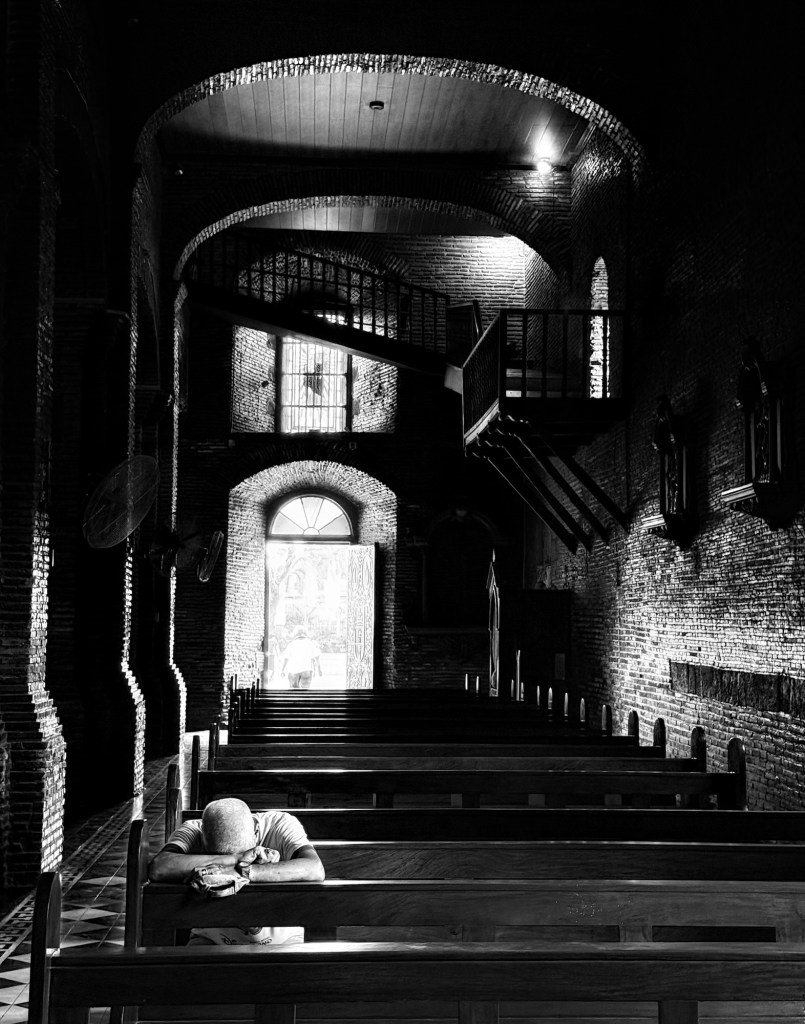
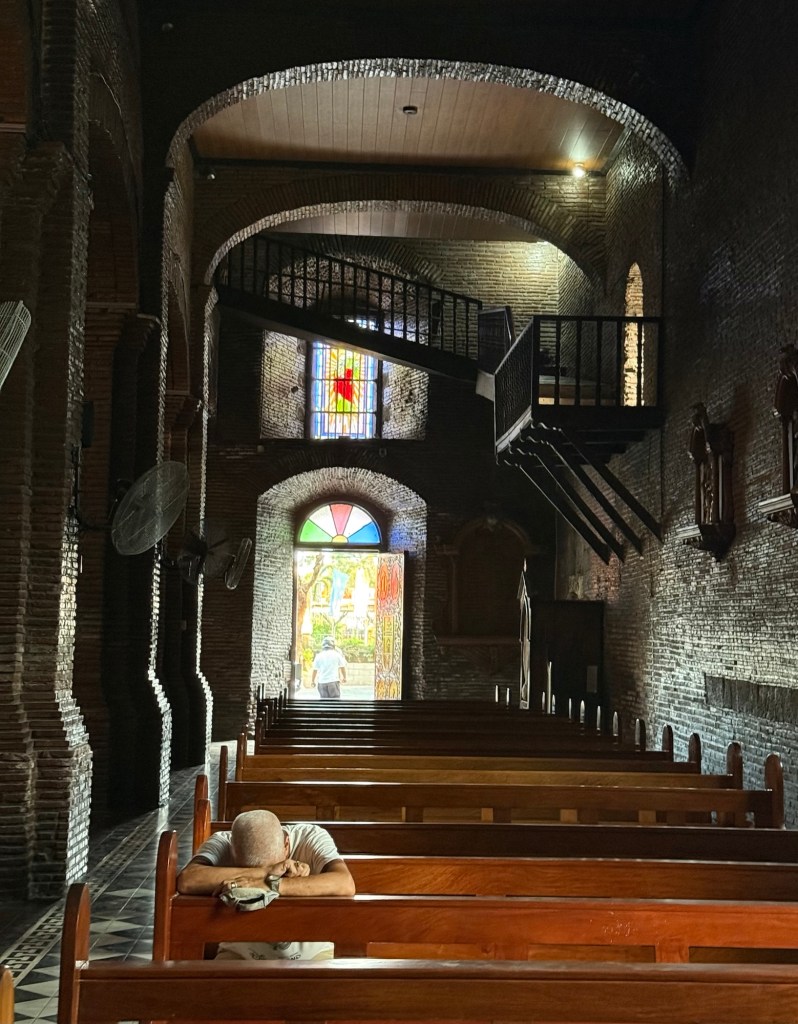
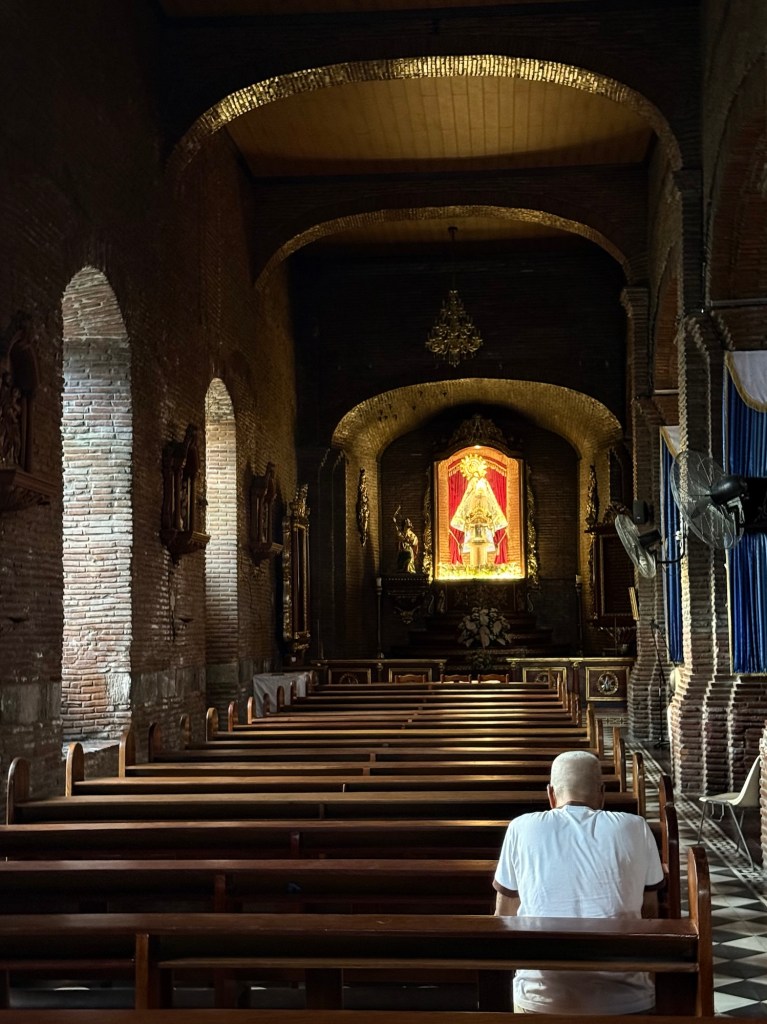
Photo by author, a man lost in prayer inside Our Lady of Pillar Cathedral, Imus, Cavite, 27 October 2026.
"Win some,
lose some"
is how gamblers
view life,
not just gambling;
but, unlike gambling,
Jesus assures us that to
bet everything in him,
to lose everything in him
is always a sure win.
But whatever gains I had, these I have come to consider a loss because of Christ. More than that, I even consider everything as a loss because of the supreme good of knowing Christ Jesus my Lord (Philippians 3:7-8).
So Jesus addressed this parable to them, “What man among you having a hundred sheep and losing one of them would not leave the ninety-nine in the desert to go after the lost one until he finds it?” … “Or what woman having ten coins and losing one would not light a lamp and sweep the house, searching carefully until she finds it?” (Luke 15:3-4, 8)
Lord Jesus,
teach me to learn to let go,
to lose some or even a lot,
to let go of what I have
in order to have you
in those persons and things
the world regards as the least
for indeed, it is in losing
when we truly gain,
in letting go
that we truly have,
and in dying
that we live
in you.
Amen.
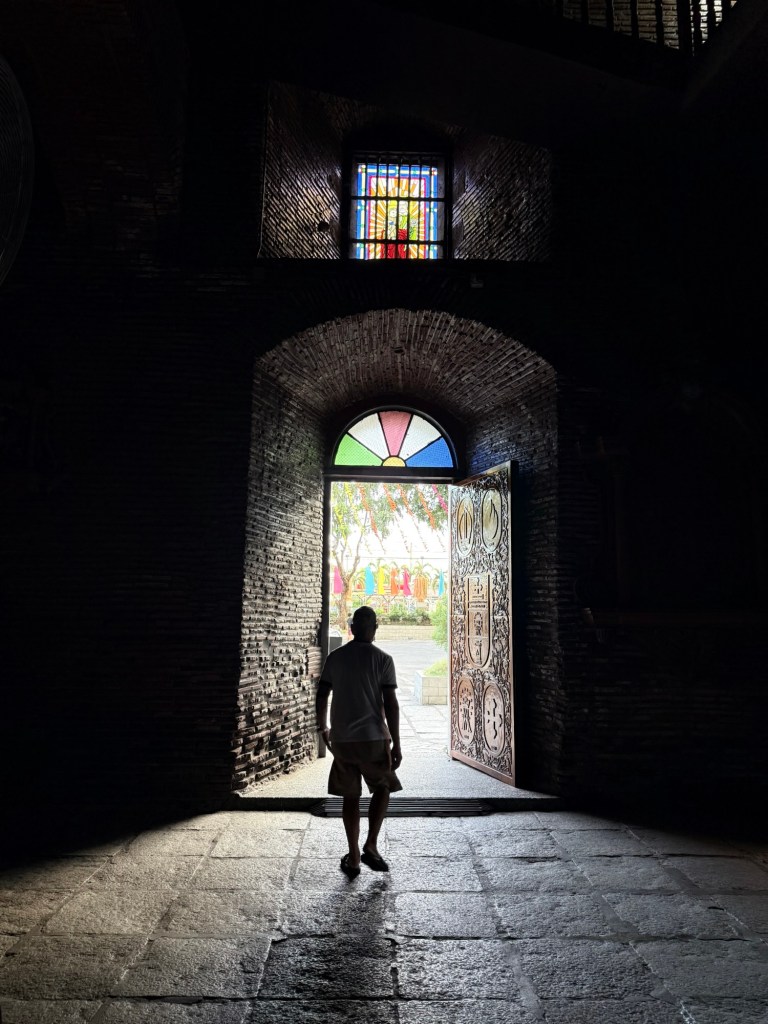
Photo by author, same man leaving fulfilled, gaining God after getting lost in prayer, Our Lady of Pillar Cathedral, Imus, Cavite, 30 October 2026.
Quiet Storm by Fr. Nicanor F. Lalog II, 04 November 2026
Photo by author, Chapel of Our Lady of Ephesus, Bella Rose Gardens, Silang, Cavite, 07 October 2026.
One of the frequently asked question (FAQ) people ask us priests during Undas is why only the name of their departed is mentioned or written for the Mass intentions and prayers for souls?
It is very amusing observing how they wonder of not having the need to write the complete names of their departed loved ones, wary their Mass intentions and prayers might go to somebody else.
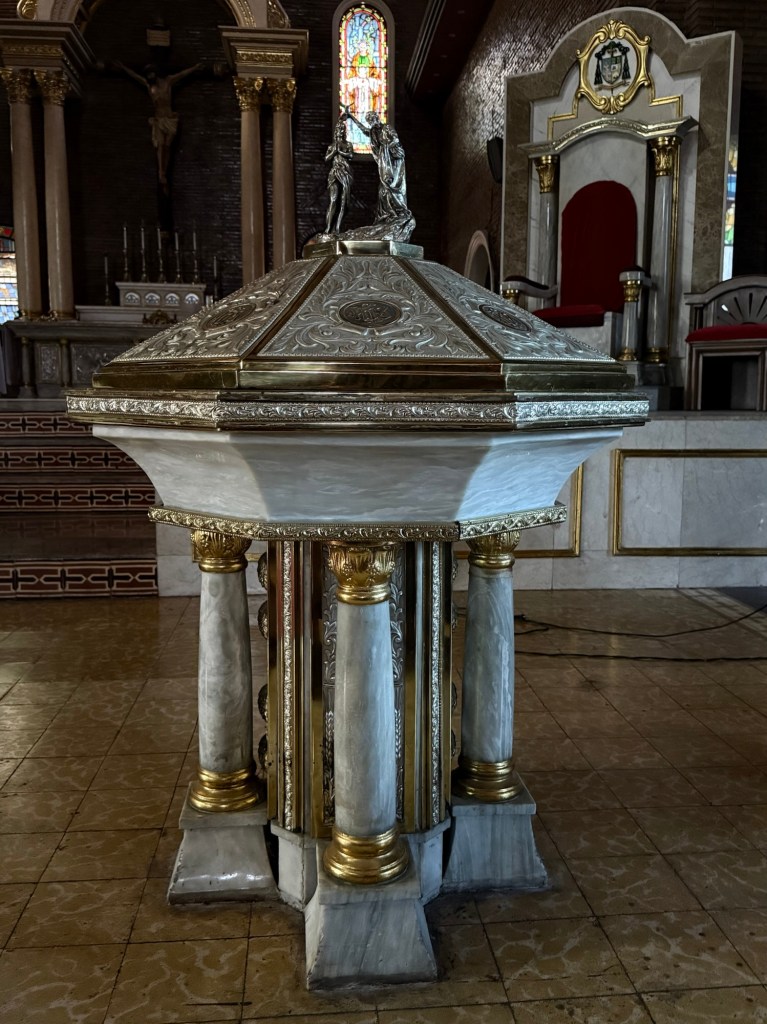
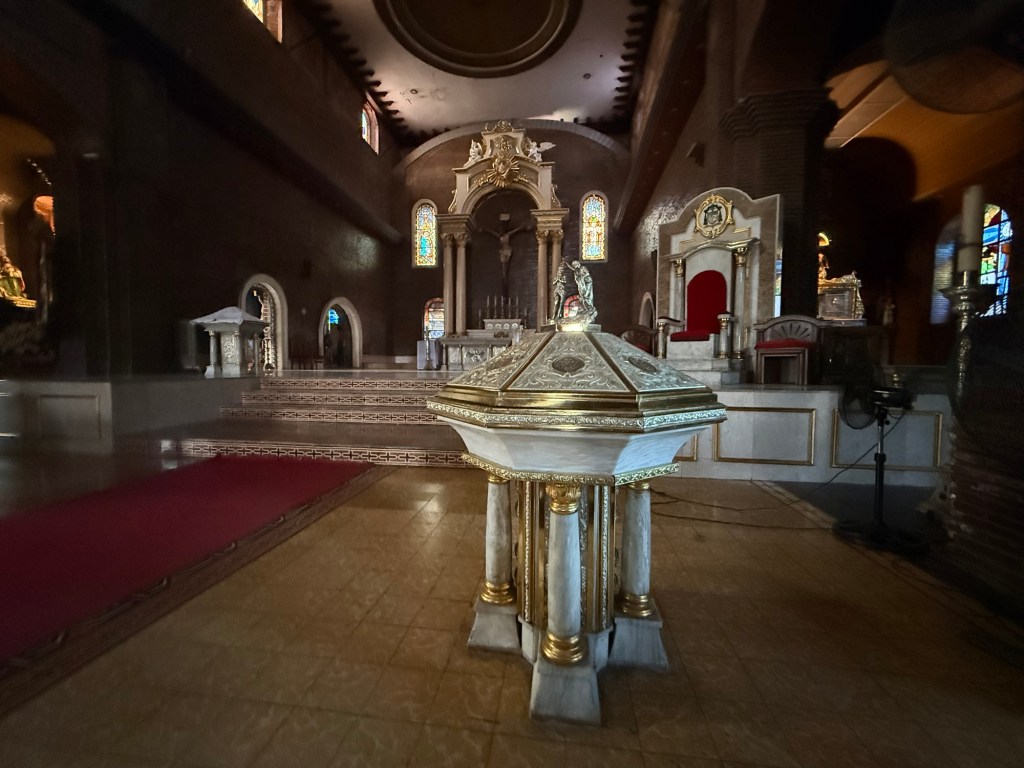
Photo by author, baptismal font, Cathedral of Our Lady of Pillar, Imus, Cavite, 27 October 2026.
First of all, God knows in his infinite knowledge and wisdom our intentions for our departed loved ones. Most of all, when we were baptized, the priest did not mention our family names because as baptized Christians, we are God’s beloved children. Therefore, we only have one family in God whom we call “Our Father.”
In the Old Testament, there is one short verse I have loved so much since high school seminary taught to us by our teacher now Msgr. Narsing Sampana that has guided me in life especially when feeling so low and lost,
But now, thus says the Lord… “Fear not, for I have redeemed you; I have called you by name; you are mine… Because you are precious in my eyes and glorious, and because I love you…” (Isaiah 43:1, 4).
It is very sad how these days how parents think more of most unique names to give their children than check the calendar of saints or the Bible so that kids may have holy role models in growing up. For the Jews as we see in the Bible, names are not only for identification of the person; the name is also the mission of the person like Jesus that means “God saves” or John, “God is gracious”.
Names are most special because they express and deepen our relationships. We know very well that indeed, the most sweet thing to hear is our name being called because it is more than being recognized but most of all a sign of being valued and remembered.
But, names have deep spiritual meanings too as our invisible lines and connections with each other, whether in this life or eternal life. That’s because names have innate value. And power.
Photo by author, sunset at Subic, 02 November 2026.
We not only feel good being called in our own name but we feel our heart is changed, like mellowed and gladdened specially when we call the name of someone dear to us, or simply we are nice with. That is why is very important when we pray for others, we also mention their names, making us grow closer with them.
I only realized this now I am old with longer lists of names to pray for. It was my mother who taught me that whenever I pray, I always mention the names so God would know whom to bless! We were still two siblings then living in Project 7 when Mommy taught us with these exact words for prayer right after we have put on our kulambo:
Thank you very much God for today:
Please bless my Daddy Will and Mommy Cory,
my sister Meg and I, Nick. Amen.
Later on came my second sister Bing-Bing came and she was added to our list of names to mention in prayer every night. When Bing was learning to speak and it was her turn to learn to pray, Mommy added another prayer just for her, “God, give me patatas” because she loved potatoes in nilaga, pochero, afritada including those little cubes in menudo!
My list of names to pray for grew as our family grew: our bunso also my only brother Willy Boie came in 1973 and in 1995 Meg married Dino my bayaw. They have four children – Katrina Andrea, Fabiola, Dymphna, and Thomas. Will also had a daughter whom I baptized in my first and only parish, Catherine Darla. All of them had nannies whom I prayed for too, just like Mommy’s caregivers until she died in 2024.
Photo by author, Cathedral of Our Lady of Pillar, Imus, Cavite, 27 October 2026.
During our 30-day retreat in Cebu, our Jesuit guide Fr. Arthur Shea (+) told us that mentioning the names of those persons we pray for make our prayers truly personal, assuring us that something beautiful happens within us whenever we mention the names of people we pray for. That’s very true.
The most effective prayer is always those most personal when we specify the people with their names and the intentions we pray for. Even if they do not know us because prayers change and transform people, not situations; when people are transformed, relationships improve, peace and harmony happen among us. Mentioning the name of people we pray for is practical as it lessens the anger and negativities we have against any person. Most of all, it is difficult to pray for people we hate and thus, mentioning their names not only make our prayers effective but also affective.
The same is true with people we do not know at all but still pray for like the anonymous drivers who transport us, the vendors and bakers who provide us with all kinds of goods and others who provide us with the goods and services we need daily. When we pray for specific peoples like the the sick, the prisoners in jail especially the innocent ones, and yes, the corrupt government officials, we learn to think more of other people, to see more outside of ourselves and search for those in the margins and forgotten whom God loves so much.
When I was in first year theology in 1993, I was so overjoyed in the historic meeting in Oslo, Norway of Israeli PM Yitzhak Rabin (later assassinated) and the late PLO Chairman Yasser Arafat because I have been praying for peace in Israel since I re-entered the seminary. It convinced me that God answers prayers no matter how simple or complicated it may be. Though peace remains elusive in that part of the world, I still pray for the people in Israel and the Middle East especially after I had visited the Holy Land thrice and now with the war still going on there.
Beloved: First of all, I ask that supplications, prayers, petitions, and thanksgiving be offered for everyone, for kings and for all in authority, that we may lead a quiet and tranquil life in all devotion and dignity (1 Timothy 2:1-2).
When we pray for one another as St. Paul tells Timothy, that is when we begin to identify everyone and find our relationships with them as brothers and sisters whom we must love and respect to make this world a better place to live in. It all begins in our hearts because when we pray, we make a space in our hearts for other people. Then God comes as we find in Jesus Christ’s healing of the centurion’s servant (Lk.7:1-10). See how in this version by Luke the Jews “approached Jesus and strongly urged him to come, saying, ‘He deserves to have you do this for him, for he loves our nation and he built the synagogue for us.’ And Jesus went with them” (Lk.7: 4-6). Jesus answered their prayers because he must have been so surprised with their attitude toward the pagan because finally, they saw not differences but similarities as persons believing in God.
When we mention names of people, that is when we recognize them as one of us too, making our prayers effective and affective as change and miracles begin to happen. Whether in this life or in eternity, for sure. Let us pray for one another. Amen.
Photo by author, Bella Rose Gardens, Silang, Cavite, 07 October 2026.
Quiet Storm by Fr. Nicanor F. Lalog II, 03 November 2026
A week before Undas,
we went to Imus, Cavite;
it was my first time and in obedience
to my late mother's instruction,
we went to pray at the Cathedral Parish of
Our Lady of the Pillar.
According to tradition,
Saint James the Greater was discouraged
at his preaching of the Gospel in Spain
with very few converts;
the Blessed Mother who was still then
living in Jerusalem
appeared to him via bilocation
at the banks of Ebro River
in Zaragoza, Spain
while standing on a jasper column.
Mary gave the pillar to Saint James
with the instruction to build
a chapel in her honor there
that became the Cathedral-Basilica of Zaragoza,
considered as the first Marian apparition
in history that happened on the year 40,
second day of January.
Saint James eventually won many converts
and returned to Jerusalem where he was martyred
in the year 44 to become the first
among the Apostles to shed blood
for the Gospel.
His remains were later
translated back to Spain,
reaching its final destination
in the now famous Santiago de Compostela.
I have always wanted to go on a pilgrimage
to Santiago de Compostela in Spain
but it seems God has other plans for me;
while praying there at Imus,
it just dawned upon me that we can always
do that pilgrimage to any holy site
first in our hearts,
in our own
hallowed
hiddenness.
Right inside this
beautiful Cathedral in Imus
after praying,
I felt taking my iPhone
to observe the steps,
the internal camino
of many other pilgrims
coming there only with
their hearts for Jesus
with Mary.

Like this man silently,
intensely
praying.
I have realized that
hiddenness is a sacred presence
where each of us can be all by one’s self
focused on God
who is the root of our being and existence.

According to St. John Paul II,
God created man
first to be alone with Him.
And that is how it will be
to each of us in the end:
we die alone.
With God in Jesus.

We all have this gift of hiddenness
within whenever we desire to be still,
for some “me” time
to rediscover
and find
one’s self anew.
“In our society we are inclined to avoid hiddenness. We want to be seen and acknowledged. We want to be useful to others and influence the course of events. But as we become visible and popular, we quickly grow dependent on people and their responses and easily lose touch with God, the true source of our being. Hiddenness is the place of purification. In hiddenness we find our true selves” (Fr. Henri Nouwen).
Hiddenness is the passageway
to the great gifts of silence and stillness
that lead us to the deeper truths
and realities of life,
of self,
ultimately
of God.
Silence is the language of God;
 silence precedes very communication by God
something we have refused to learn
about communication that is why
we quarrel a lot,
misunderstanding each other always.

We never dialogue
nor communicate
but simply talk, talk, and talk
without silence in order to listen
to others.
Hiddenness is God’s mode of presence
that cannot be captured
nor described in human terms.
That is why He is hidden.
It is not that God is hiding from us
but He is inviting us
to be intimately close with Him
to exclusively
and personally
experience Him,
be filled with Him.
It was the same thing
Jesus did on Easter,
remaining hidden
before finally appearing to Mary Magdalene
whom He stopped from touching Him
to signal her
and us today
of the new level of relating
with the Risen Lord in hiddenness.

In all Easter stories,
we are told how the disciples fell silent
whenever Jesus appeared to them.
In Emmaus,
after the breaking of bread,
the two disciples finally recognized Jesus
who immediately vanished
because Jesus wanted them
and us today
to follow Him personally
in His hiddenness
to find Him
and ourselves too.
Appearances,
 images
 and noise
 are fleeting.

 The most significant moments
 and insights we have in life
 are those that come from our long periods of silence,
 of prayers and soul-searching.
This November
as we continue to remember
 all those who have left us in this world,
let us keep its sacred origins
in the hiddenness of our hearts:
  All Saints Day
 for those souls already in heaven
 and All Souls’ Day
 for those who have departed
 but still being purified in the purgatory.

 Both invite us to “hide” in prayers,
 in silent remembering
 to experience God
 and our departed loved ones
 in the most intimate and personal manner
 without the gadgets and things
 that numb us of their presence.
 Amen.
 Have a blessed
and meanigful
All Saints’ and All Souls’ Days!
Lord My Chef Sunday Recipe for Soul by Fr. Nicanor F. Lalog II
Solemnity of All Saints, 01 November 2026
Revelation7:2-4, 9-14  ><}}}}*>  1 John 3:1-3  ><}}}}*>  Matthew 5:1-12
Thousands of people arrive to pray at the graves of their relatives at a cemetery during the annual observance of All Saint’s Day in Manila on November 1, 2019. Photo by Ted Aljibe, AFP.
The way we Filipinos say goodbyes illustrates vividly – with a dash of some humor – the theology of our celebrations of All Saints Day and All Souls Day we collectively call as Undas.
When we are in a party or any gathering, we never say we are leaving like alis na ako that sounds rude, or layas na ako that is tinged with anger while diyan na kayo could mean burning of one’s bridges, a sort of total separation.
Normally, we say goodbyes either by saying tutuloy na po ako or mauna na po ako. The po is optional but both are the most kind and accepted way of telling everuyone we are leaving. our hosts we are leaving. Tutuloy na ako literally in English is “I’m coming in”when you are actually going out to leave while mauna na po ako means I’m going first or will go ahead of everybody whereas no one is following you especially the host.
But here are the twists in these Filipino goodbyes: both indicate our being Christians, of our deeply ingrained religiosity no matter how hard some would deny. Whenever we say tutuloy na ako, mauna na ako, we unconsciously or subconsciously express our hunger and thirst for heaven, for eternal life.
To say tutuloy na ako is to express that basic truth we all die with one final destination which is heaven in eternal life.
To say mauuna na ako is an affirmation of our other famous maxim about death, una-una lang yan, that nobody knows who’s going to die among us next.
Every time we bid goodbye to anyone, we express this holy desires to be in heaven, to be with God, to be like all the Saints we celebrate on this first day of November.
When Jesus saw the crowds, he went up the mountain, and after he had sat down, his disciples came to him. He began to teach them, saying: “Blessed are those who hunger and thirst for righteousness for they will be satisfied” (Matthew 5:1-2, 6).
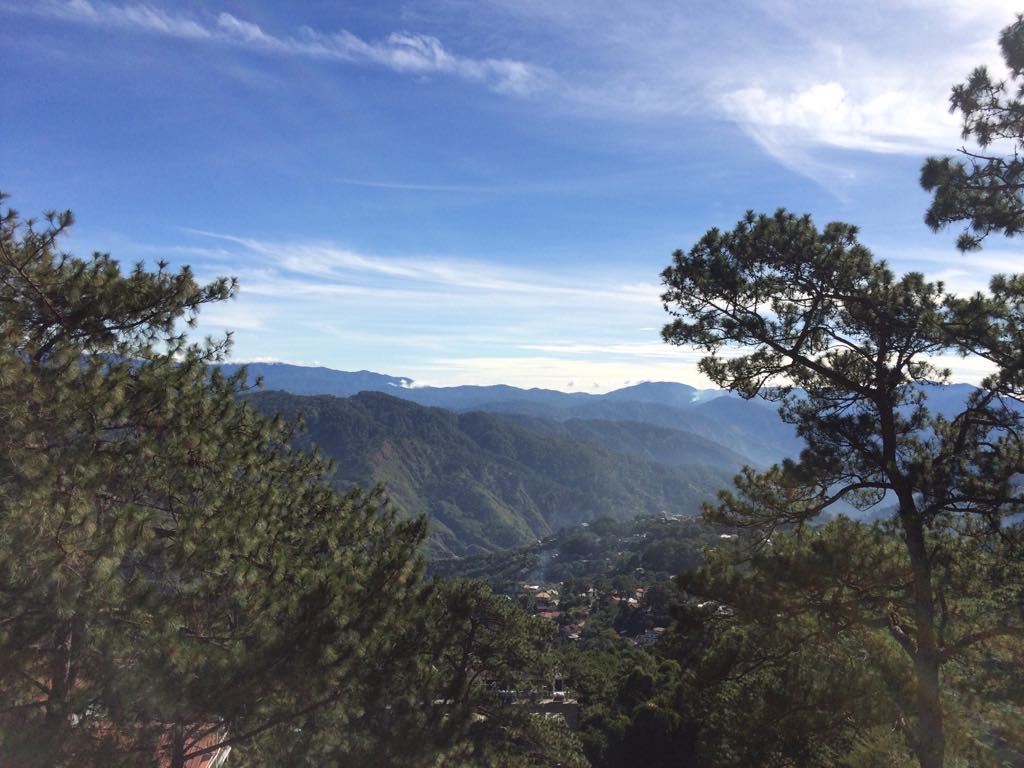
Photo by author, Baguio City, July 2018.
In this time of faith in a mass-mediated culture that thrives in promoting pleasures and merry-making alongside with overflowing food and drinks while more others are starving and dying in hunger and still more are without potable water to drink, we find the fourth beatitude a rarity.
Notice how bacchanalian our generation has become with all the food apps and restaurants offering a plethora of food and drinks so glorified in social media called “food porn”, a prostitution of food and drinks. How sad so many people has become so insensitive in posting all their food in social media without any deference for the poor who could barely make ends meet for a decent meal thrice daily. See how so few among us Catholics really fast or go on abstinence every Ash Wednesday and Good Friday with all of our excuses and alibis.
Photo by author, side entrance to Church of Beatitudes, the Holy Land, May 2019.
Very sad.
Hence, Jesus called “blessed” those who hunger and thirst for righteousness because it is an affirmation of our faith in him who told the devil in the wilderness that “man does not live by bread alone but by every that comes forth from the mouth of God” (Mt.2:4). To hunger and thirst for righteousness is to value more the soul than the body. It is an appetite for the sacred and for things of deeper value and importance than those that are fleeting and superficial like food and drinks and other pleasures including those that bloat our egos.
Blessed are those who hunger and thirst for righteousness because it is a desire to be holy first of all, a desire for God himself, a desire for heaven. Righteousness for the Jews is holiness which is the observance of God’s Laws and Commandments. But, problem with this frame of mind as we have seen since the other Sunday is the tendency to be legalistic, to see more the Laws than the person that ultimately, fails to see God in one another.
Holiness is being filled with God like the souls already in heaven called Saints. They are holy because they have been purified of their sins and therefore filled with God as John tells us in his vision of heaven of great multitudes wearing white robes washed in the Blood of the Lamb.
But for us still on earth, still battling with sin and evil, holiness is being filled with God but not sinless. And because we are filled with God, we strive always to work alongside with Christ, bearing all the pains and sufferings he bore first for us for the sake of righteousness, of justice and peace. In this world when conformity to whatever “everyone is doing” is the rule of the game like corruption, dishonesty, and infidelity, being hungry and thirsty with the poor and suffering is our strongest signs of protest and resistance against the prevailing evils of our time. Being hungry and thirsty for righteousness is also being hungry and thirsty for the Kingdom of God because that is a sharing in Christ’s Passion and Death leading to his glorious Resurrection.
Photo from bloomberg.com of a homeless man in New York City during a fashion week in summer 2019.
The most difficult daily struggle we all contend with is our hunger and thirst, our most basic instincts for the most basic needs of food and water in order to live; without food and water, we grow weak and die. However, hunger and thirst tend us to overindulge with food and drinks because these readily give us pleasures, making us forget the more essential things in life.
That is why the need for some forms of sacrifices like abstinence and fasting not only with food and drinks but anything that gives us pleasure and comfort so that we learn to desire for higher things like God, holiness and virtues.
The fourth beatitude is most timely in a world that has become so consumerist where only matter matters with everything reduced to pera pera lang with God slowly being deleted from daily life scenes. See how our world has become like showbiz with all the glitz and glamor with everything for show or palabas that despite the abundance we now enjoy not only in food and drinks but almost everything, the more we have become empty and alienated within.
Blessed are you if you hunger and thirst for righteousness because it is a grace reminding you of that fact many forget that the world and everything here passes. Being hungry and thirsty for righteousness is having God in your heart, of experiencing his love, of working to love others so that they too may experience God because they have been so hungry and thirsty for love and kindness, care and concern from others.
What do you hunger and thirst for these days?
How sad that with all these technologies we now have meant to bring us closer with one another have actually brought us apart. Worst of all, the very technologies meant to work for us now enslave us, becoming not only the gods of many but masters too. Blessed are you in your hunger and thirst for God because he alone in Christ Jesus can truly satisfy us here and hereafter. Dwell in the love of God in Jesus Christ John tells us in the second reading like the saints who have gone ahead of us, resisting all evils and temptations to sin for only the Lord satisfies us. Amen. A blessed All Saints’ Day to you!
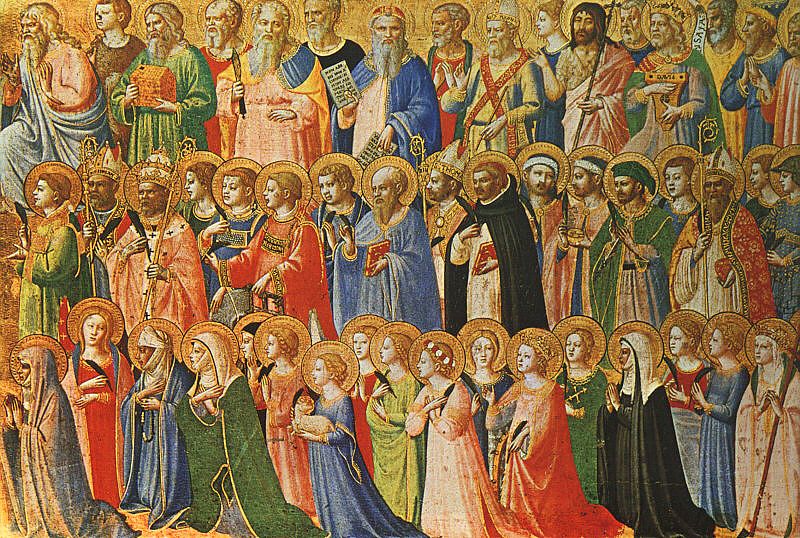
A panel of Fra Angelico’s painting (1423-24) “The Forerunners of Christ with Saints and Martyrs” from wikipedia.
Lord My Chef Sunday Recipe for Soul by Fr. Nicanor F. Lalog II
Thirtieth Sunday in Ordinary Time, Cycle A, 25 October 2026
Exodus 22:20-26  ><}}}}*>  1 Thessalonians 1:5-10  ><}}}}*>  Matthew 22:34-40
Photo by author, Don Bosco Batulao Retreat House, Batangas, April 2026.
A few months before the death of Pope Francis last year, a controversy arose among some people regarding St. Augustine’s teaching “Love and do what you like” when they overstretched its meaning as if one can do anything that may hurt others in the process.
St. Augustine never meant we can do whatever we like; most of all, the learned Saint had extensively taught on the need to distinguish “love” from a disordered one. When he said “Love and do what you like”, St. Augustine meant the kind of love that Jesus had taught his disciples at the Last Supper, love that is willing to offer one’s life for another. It is a love rooted in God that enables one to see more completely one’s self and others so that when we love, everything changes in our being so that our every doing is because of love and out of love. When we truly love, the sky is the limit in every good deed we can do for God through others.
This we find in today’s gospel when Jesus answers another test from his enemies at the temple area.
When the Pharisees heard that Jesus had silenced the Sadducees, they gathered together, and one of them, a scholar of the law, tested him by asking, “Teacher, which commandment in the law is the greatest?” He said to him, “You shall love the Lord, your God, with all your heart, with all your soul, and with all your mind. This is the greatest and the first commandment. The second is like it: You shall love your neighbor as yourself. The whole law and the prophets depend on these two commandments” (Matthew 22:34-40).
Photo by Ar. Philip Santiago, Jerusalem, September 2024.
Unlike last Sunday’s encounter with the disciples of the Pharisees and Herodians, today’s testing of Jesus is “mild”, seemingly honest because many Jews were confused at that time with the so many laws they have to observe.
From the Ten Commandments given by God to Moses at Mount Sinai, they have dissected these into more than 600 precepts that they wondered if there was any single law which touched the core of people’s relationship with God. Perhaps that is where the malice in this test lies: the Pharisees wanted to know if there would be a simpler approach by Jesus that they felt impossible especially with their very legalistic frame of minds.
But Jesus surprised them anew in the way he addressed the question by first citing the Book of Deuteronomy when he answered, “You shall love the Lord, your God, with all your heart, with all your soul, and with all your mind. This is the greatest and the first commandment.” They knew it very well by heart but what was new and probably troubling for them was when Jesus followed up with “The second is like it: You shall love your neighbor as yourself.”
First of all, the scholar of the law was asking Jesus to pick the one most important of all commandments at the core of their relationship with God and with their life in general. They were hoping for a simplistic approach, a sort of panacea and shortcut. Instead of reducing the hundreds of laws into just one, Jesus gave them two commandments that are actually one and inseparable: love of God and love of others. They are like the cheeks of the human face best expressed in Filipino: Ang pag-ibig ay katulad ng isang mukha na mayroong dalawang pisngi; walang tao na iisa ang pisngi. Isang mukha, dalawang pisngi palagi.
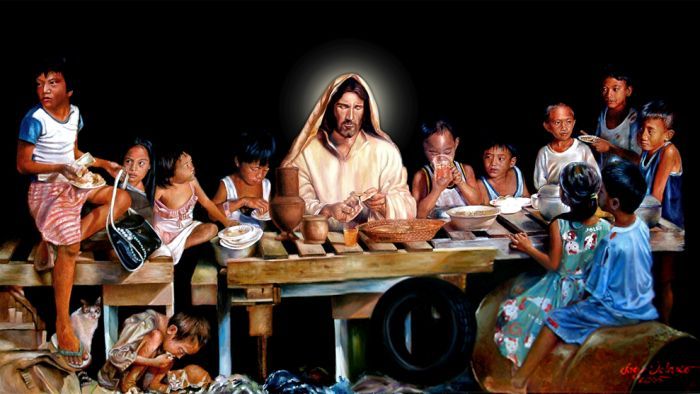
“Hapag ng Pag-Asa” painting by the late Joey Velasco.
Most troubling for the enemies of Jesus was actually this other “face” of love of God: for them, the term neighbor was limited only to their fellow Jews which Jesus addressed in his parable of the good Samaritan found only in Luke’s gospel. In linking love of God with love of neighbor, Jesus reminded his enemies and listeners including us today of what the whole bible has been saying that religious observance is not enough like fasting, alms-giving and other ritual observances in the temple or synagogue, or church, and home.
One cannot love God without loving one’s brothers and sisters at the same time. No one can just love for God’s sake, to please God or observe his commandments. One must go further than the letters of the laws because one seeks, finds and loves God in others. In the following chapter after this episode we find Jesus identifying himself with the poor, the hungry and thirsty, the naked, the sick and prisoners and aliens so that whatever we do unto them, we do unto him too (Mt.25:31-46)!
Hence, we have our first reading from Exodus God telling Moses to remind the people to be kind to strangers and foreigners for they were aliens too in Egypt before; that they should never oppress nor molest the poor and widows nor charge interests in loans, warning them of how he would listen to the cries of the oppressed.
More than teaching us the most important commandment of all, Jesus is inviting us to a new approach to life and to our relationships with God and with others in love. He is not disregarding the laws and commandments because their absence means presence of evil and sin as we have seen recently in France. Clearly, the looters and vandals in the many rallies there are those who believe they can do whatever they like without any sense of what is right and wrong.
Photo by author, Bran Castle in Romania, Novvember 2025.
This is what St. Paul is reminding the Thessalonians and us today in the second reading: Christianity is really difficult to understand and appreciate by people then and now without love at all.
In answering the scholar of the law, Jesus revealed the truth of this immense love of God already present in us which enables us to see even beyond persons and things. When he said that the greatest and first commandment is to love God with all of our heart, and mind, and soul or total self and that the second is to love others as you love yourself, Jesus is revealing to us one of the most profound truths we fail to recognize and even reject so often.
Our love for God and for others unfold first in us, in our love for our self. We cannot love God unless we love and accept who we are – whatever is good and bad in us. Many times, some of us hate ourselves that we change even our gender, manipulate our appearances, fantasize on so many what ifs and wishful thinkings. The key to loving God totally is to first love our very self; Jesus became human like us to show us that is good to be human. It is only when we have come to embrace and accept wholly our gift of self can we give ourselves to God totally and to others. What I am to myself becomes what I am to others and vice versa. And together we all go to God as he comes to us—in love especially in the midst of all these shadows and darkness of things happening in our country and around the world. May we lead others to God by finding them first in us. Amen. Have a blessed week ahead.
Lord My Chef Daily Recipe for Soul by Fr. Nicanor F. Lalog II
Friday, Twenty-Eighth Week in Ordinary Time, Year II, 16 October 2026
Ephesians 1:11-14     ><))))*> + ><))))*> + ><))))*>     Luke 12:1-7
Photo by author, Bella Rosa Gardens, Silang, Cavite, 07 October 2026.
What's happening in the world,
Lord where everyone seems to thrive
in chaos?
Trash talks like cussings,
making fun of other people's
disabilities, smart shaming and
body shaming are so glorified and
imitated especially in social media;
many have no more sense of shame at all,
stretching their rights without any regard
for their responsibilities nor rights of others
that we are like in that gospel scene today:
At that time, so many people were crowding together that they were trampling one another underfoot. Jesus began to speak, first to his disciples, “Beware of the leaven – that is, hypocrisy – of the Pharisees (Luke 12:1).
Photo by author, Bella Rosa Gardens, Silang, Cavite, 07 October 2026.
Are we not like those
people crowding together,
already trampling just to hear you
speak, Jesus?
Give us the wisdom,
awaken us from our glorification of
everything that is crass and low,
giving only emphasis on the body
forgetting about the soul,
its dignity and value
along with virtues:
"I tell you,
 my friends,
do not be afraid of those
who kill the body
but after that can do no more"
(Luke 12:4).
Photo by author, Bella Rosa Gardens, Silang, Cavite, 07 October 2026.
Let us see St. Paul's
alternative vision for the world
in which God's plan is to restore
all things in you, Christ;
let us see more the love and
mercy you have lavished upon us
when you suffered and died
on the Cross to save us,
rising from the dead on the third day
to reconcile us to the Father
and with everyone;
how consoling that we are
not our own,
that despite the chaos
and darkness all over us these days,
"In Christ we were also chosen,
destined in accord with purpose of
the one who accomplishes all things
according to the intention of his will...
were sealed with the Holy Spirit"
(Ephesians 1:11, 13).
How lovely are
these words, Lord!
May we be like St. Paul
in proclaiming to this sick and dark world
that there is an alternative,
better vision of the world
from the Father
in Christ Jesus.
Give us the courage to work on this,
to cooperate with your grace in
showing the world
life is so beautiful!
Amen.
Lord My Chef Daily Recipe for Soul by Fr. Nicanor F. Lalog II
Thursday, Twenty-Eighth Week in Ordinary Time, Year II, 15 October 2026
Ephesians 1:1-10     ><))))*> + ><))))*> + ><))))*>     Luke 11:47-54
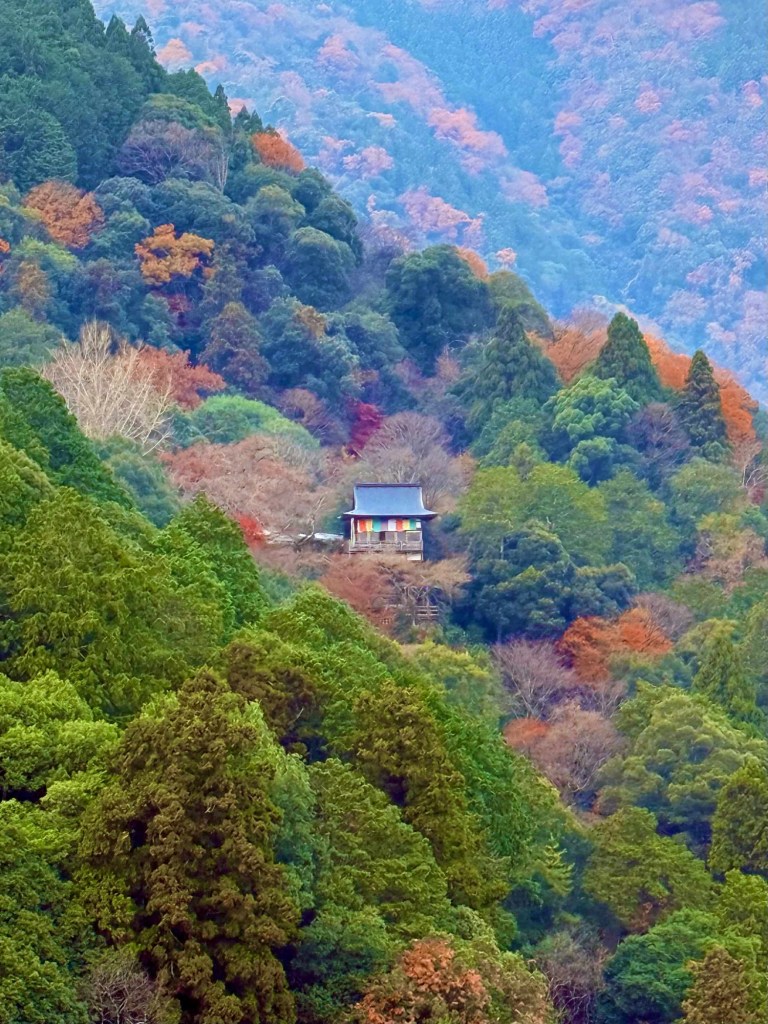
Photo by Ms. Kei Abad in Kyoto, Japan, October 2025.
Glory and praise to you,
O God our loving Father in
Jesus Christ our Lord!

Your words today through
St. Paul are so reassuring
and soothing amid all the many
sad things going on in the world,
in our country, in our family,
and in ourn very selves:
… grace to you and peace from God our Father and the Lord Jesus Christ. Blessed be the God and Father of our Lord Jesus Christ, who has blessed us in Christ with every spiritual blessing in the heavens, as he chose us in him, before the foundation of the world, to be holy and without blemish before him (Ephesians 1:2-4).
What a magnificent prayer of blessing,
a tremendous outpouring of blessing
from you, Father,
of your loving plan for each one of us,
of your grand design of love
inviting us to an open-hearted
relationship of life and joy,
not with our rigid and defensive
approaches like the scribes and
Pharisees in the gospel.
True blessedness is found
only in you, Lord God,
not in our imposed rigidity
that prevents us from truly
opening to you to be led back
anew in Christ Jesus.
Teach us to have the faith
and openness of St. Teresa of Avila
who dared to disturb the complacency
of her contemporaries,
immersing herself in deep prayers
to listen attentively
in order to follow you closely
and courageously in the path
of reforming the Carmelites
during her time;
in doing so,
she led the way in reforming
their lives by being open to you,
O God and thus allowed the richness
of your grace to touch her heart and
those of her companions and followers.
Amen.
St. Teresa of Avila,
let nothing disturb us,
pray for us to completely
trust in God.
Amen.
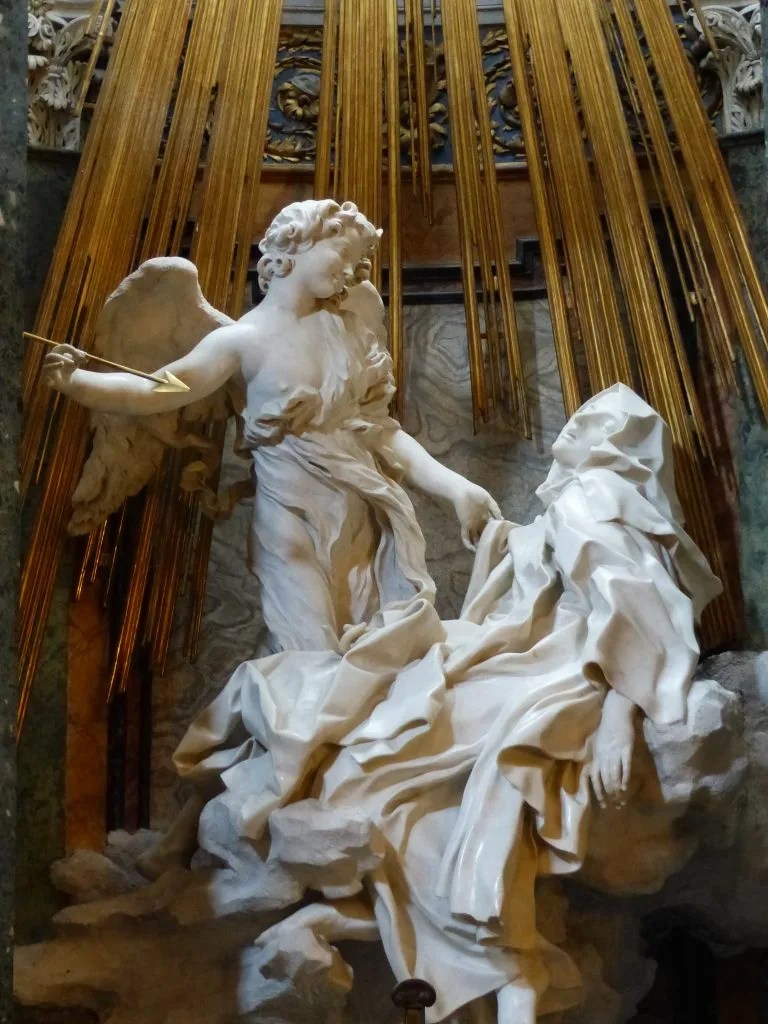
The Ecstasy of Saint Teresa (1645 and 1652), a sculpture by renowned Italian artist Bernini now in Cornaro Chapel at the Santa Maria della Vittoria in Rome based on St. Teresa’s vision of an angel who drove the point of a golden arrow repeatedly through her heart that caused an indescribable happiness and pain in her. The memory of this experience would inspire her for the rest of her life, becoming the motivation in her lifelong desire to identify with sufferings of Jesus expressed in her prayer, “Lord, either let me suffer or let me die.” Photo from artnet.com.
Lord My Chef Daily Recipe for Soul by Fr. Nicanor F. Lalog II
Wednesday, Twenty-Eighth Week in Ordinary Time, Year II, 14 October 2026
Memorial of St. Callistus, Pope and Martyr
Galatians 5:18-25     ><]]]]'> + ><]]]]'> + ><]]]]'>     Luke 11:42-46
Photo by author, Sacred Heart Novitiate, Novaliches, QC, March 2024.
Be my everything,
Jesus: it is not enough
I follow you because along
the way, I can still stop and roam
around, following my many desires,
the restless longings of my heart
for selfish interests;
teach how to imitate St. Paul
in "crucifying my flesh with its
passions and desires" (Galatians 5:24).
But,
what is to crucify my flesh
with its passions and desires?

Simply let me focus on you alone,
Jesus, making you the measure of
everything I shall do,
to search for you in everyone I meet,
to bring you out with everyone I meet;
to see more the bigger picture
of life by resisting the works
of the flesh like "immorarilty,
impurity, licentiousness, idolatry,
sorcery, hatreds, rivalry, jealousy,
outbursts of fury, acts of selfishness,
dissensions, factions, occasions of envy,
drinking bouts, orgies, and the like"
(Galatians 5:19-21).


Keep me aware,
Jesus,
that as my desires for comfort and ease
are bottomless,
I shall never be satisfied within
if I see more the things than the persons,
or give much emphasis on my self
than others like the sick and suffering;
let me search for the bigger pictures
of life's many realities like your
plans for eternity so that I may strive more
to crucify my flesh with its passions
and desires by forgetting my little self
I always inflate to look larger than others;
may I give the chance for the Holy Spirit
to win me over, bearing fruits of
“love, joy, peace, patience, kindness,
generosity, faithfulness, gentleness,
self-control" (Galatians 5:22-23).
Amen.
Photo by author, Chapel of Our Lady of Ephesus, Bella Rosa Gardens, Silang, Cavite, 07 October 2026.
Lord My Chef Daily Recipe for Soul by Fr. Nicanor F. Lalog II
Tuesday, 109th Anniversary of Last Apparition of Blessed Virgin Mary at Fatima
Isaias 61:9-11  ><}}}}*>  Galatians 4:4-7  ><}}}}*>  Luke 11:27-28
From Pinterest.
We remember today the 109th anniversary of the Blessed Virgin Mary’s last appearance at Cova da Iria in Fatima, Portugal when the “Miracle of the Sun” happened before a crowd of 70,000 people.
It was the sixth and last apparition of the Blessed Mother to the three children – Sr. Lucia and her cousins St. Francisco and St. Jacinta Marta – that began on May 13, 1917. According to sworn accounts by many witnesses and attested by many journalists in their reports, it was past noon at about 1:30 PM when the Sun “danced” or zigzagged in the sky and then careened to the Earth while emitting radiant colors that lasted for about ten minutes. It was on this date when the Blessed Mother introduced herself to the three children as the Lady of the Rosary, telling them how World War I would soon end, that “People must amend their lives and ask pardon for their sins. They must not offend our Lord any more, for He is already too much offended!”
During her last interview in 1957 while already a cloistered Carmelite nun, Sr. Lucia revealed how during that last apparition to them (her two cousins have died in 1919 and 1920 during the flu pandemic), the Blessed Virgin Mary looked very sad and never smiled to indicate the gravity and seriousness of her messages to them.
Amid the many interpretations of the events of October 13, 1917, Fatima has remained so popular and very significant to this day because of its truth and relevance to our own situation and experiences from the not-so-distant-past. Three things I wish to share with you today:
From wikimedia.org.
First is to see the last apparition of October 13, 1917 not as the final one but the beginning of the unfolding of more revelations and realizations for us. Fatima is not about the end of the world but actually a new beginning for the world.
Very often, many people have always seen Fatima as a sign of the end of the world, of worldwide catastrophe that have instilled more of fear and even controversies that included doubts of the Vatican allegedly not fully revealing the Third Secret despite assurances from the visionary herself, Sr. Lucia who said before her death in 2005 that all Fatima Secrets have been fully revealed. It must also be kept in mind that after October 13, 1917, Sr. Lucia continued to receive private visions while in the convent as a nun in 1925 through the 1930’s.
The Blessed Mother appeared in Fatima not to scare us but to inspire us to turn away from sins, to be converted and be holy so that the world may truly find peace in Jesus her Son. Fatima’s main messages are hope and joy for the world, not fear and confusion.
Every ending, every destruction imply new beginning, new arising. That’s the meaning of Isaiah’s vision in the first reading, of how the destruction of Jerusalem with all its ruins shall usher in a better city, a blessed nation to be known and recognized by other nations. In the same manner, the last apparition at Fatima in 1917 was meant to usher in new hopes for us to become better persons who will build stronger families and more vibrant church communities.
Unfortunately, it is still far from being realized even 109 years ago have passed as we have not yet learned or heed its lessons. In that case, we and not God nor Jesus nor the Blessed Mother are to be blamed at why we are going through all these difficulties and miseries we are into in this modern age. Let us make today the beginning of our conversion and transformation in Christ Jesus with the help of the Blessed Mother, that simple Virgin of Nazareth who obediently accepted God’s will to bring forth into the world our Lord and Savior Jesus Christ (second reading).
It is in this aspect where we wish to propose our second reflection for 109th anniversary of the last apparition at Fatima by confronting our true selves. If Jesus were with us today, he would have surely reminded us anew that his mother and brothers and sisters are those who listen and do his words (gospel).
Being Christian is more than a name or rites and rituals, even sacraments but more of witnessing Christ especially right inside our home, in our very family. It was in her last apparition at Fatima when the Blessed Mother revealed to the three children how the devil has been working, infiltrating every family and the church to mislead parents and priests into serious, grave sins like the rising incidents of divorce and separation of many couples as well as the continuing reports of sexual abuses by members of the clergy.
At Fatima 109 years ago today, the Blessed Mother invited us to focus more in revealing God’s will as experienced and prayed in the the Sacred Scriptures than wasting our time with politics and other worldly debates that often disregard the dignity of every person. Fatima is about our daily conversion from our sins, of choosing always what is good and just and charitable, not selfish and self-serving interests. This is very evident with the two elements that prevailed on that day: rains and the Sun.
The rains have soaked wet the people and the whole area for two days, October 12-13, signifying the call for inner cleansing and purification of our hearts and person. And when the Sun “danced”, the people were astonished how their clothes were dried along with the whole surroundings as if it had not rained the previous day after witnessing the spectacular display of colors and light. Let Jesus cleanse and purify us into better persons who witness his gospel always.
And thirdly, on this 109th anniversary of our Lady’s final apparition in Fatima, let us keep in mind the word “guidance” which stands for:
God
U and
I
DANCE for life.
Like the dancing Sun on that day 109 years ago today, Jesus invites us to “dance” in life, following the steps and the way of the Cross like his Blessed Mother who remained with him until his death. Amen.Our Lady of Fatima, Pray for us.
Photo by author, National Shrine of Our Lady of Fatima, Valenzuela City, 25 February 2026.