Chosen to be fruitful

Lord My Chef Sunday Recipe for Soul by Fr. Nicanor F. Lalog II
Twenty-Seventh Sunday in Ordinary Time, Cycle A, 04 October 2026
Isaiah 5:1-7 ><}}}}*> Philippians 4:6-9 ><}}}}*> Matthew 21:33-43
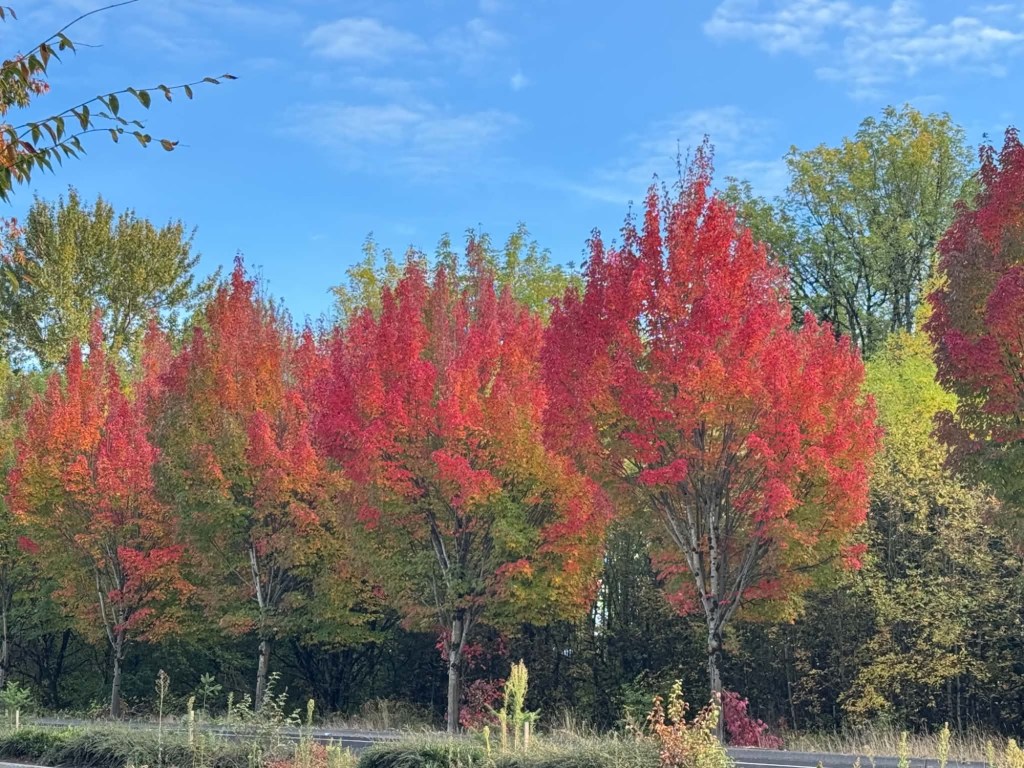
Photo by a friend in Washngton State, 01 October 2026.

A friend recently sent me this photo of the start of autumn that brought back memories of my vacation on two occasions in the States and Canada during that most wonderful season. It even made me wondered lately why God did not give us four seasons like in other countries.

I know. It is kind of crazy and weird, even stupid especially at how a Chinese friend who took his priestly formation at UST twenty years ago used to tell me the Philippines is a paradise where we can work and play all year round unlike them who have to work hard for six months to stock food and wood because the other half of the year is so cold that they have to stay indoors most of the time. Until now he is all praises to our country so blessed abundantly in resources and natural wonders.

And indeed! Our country is a paradise – so blessed, so beautiful, so rich. And yet so poor and miserably mismanaged by us all that we perfectly fit in the first reading and gospel this Sunday:

Let me now sing of my friend, my friend’s song concerning his vineyard. My friend had a vineyard on a fertile hillside; he spaded it, cleared it of stones and planted the choicest vines; within it he built a watchtower, and hewed out a wine press. Then he looked for the crop of grapes, but what it yielded was wild grapes (Isaiah 5:1-2).

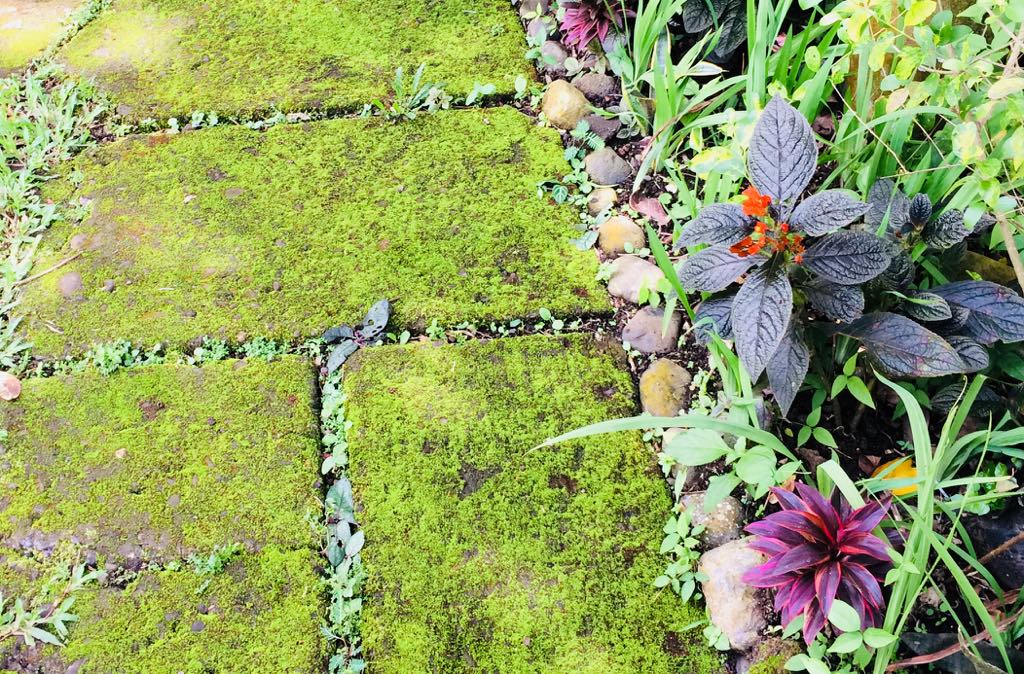
Photo by author, Pundaquit, San Antonio, Zambales, 14 May 2025.

Our country is exactly that wonderful vineyard planted by the Lord with its vast, fertile lands and long coastlines with lush greeneries of plains and mountains and despite all these, we import much of our food like rice and vegetables and fruits including fish like galunggong, even pig skins for chicharon! Like Isaiah, we ask what happened to our country?

For Isaiah, the vineyard represented Israel as the chosen people of God, so loved and cared but produced bitter fruit with their repeated infidelity and sins against God that went on until the coming of Jesus who used the same imagery into a parable of the kingdom of heaven so applicable to our own time.
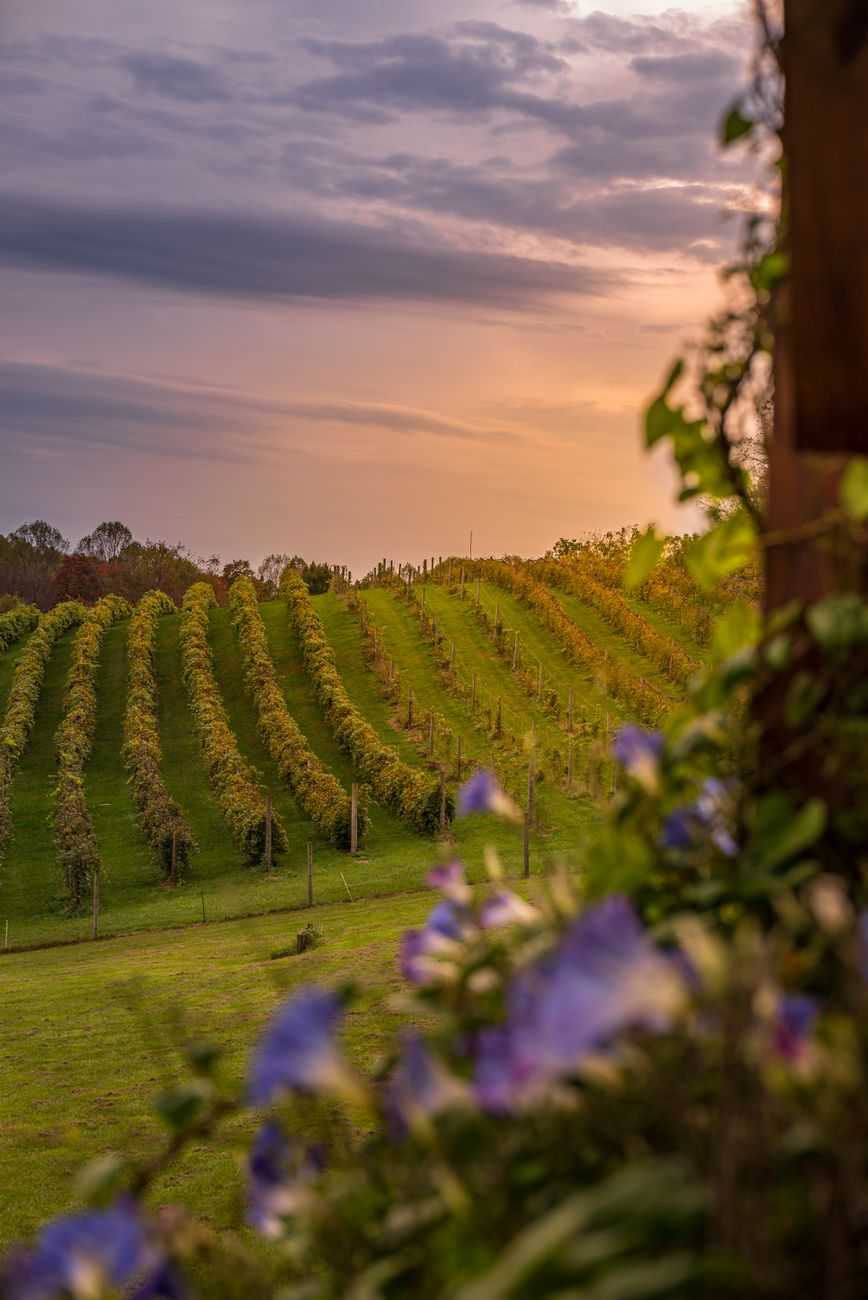
Photo by Chris F on Pexels.com

Jesus said to the chief priests and the elders of the people: “Hear another parable. There was a landowner who planted a vineyard, put a hedge around it, dug a wine press in it, and built a tower. Then he leased it to tenants and went on a journey. When vintage time drew near, he sent his servants to the tenants to obtain his produce. But the tenants seized the servants and one they beat, another they killed, and a third they stoned. Again he sent other servants, more numerous than the first ones, but they treated them in the same way. Finally, he sent his son to them, thinking, ‘They will respect my son.’ But when the tenants saw the son, they said to one another, ‘This is the heir. Come, let us kill him and acquire his inheritance.’ They seized him, threw him out of the vineyard, and killed him (Matthew 21:33-39).

Jesus was still in the temple area where his enemies have gathered to seek ways of putting him under arrest. His parable of the wicked tenants is so similar with Isaiah’s that speaks too at the same time of ourselves and of our time, of how we have become like those wicked tenants taking the “vineyard” as totally ours. Like those tenants, we have claimed and possessed on our own this very life as “mine” and therefore, “owner” with every right to do whatever we want like have abortion, take contraceptives, have casual sex, even decide which gender to choose!

We have “overstretched” our rights without any regard at all to others and to environment. Consciously or unconsciously, we have deleted God from life that we have become relativistic without absolute morals and morality because we have made ourselves the measure and standards of everyone and everything – because, we own the “vineyard”.

Photo by Dra. Carol Reyes-Santos, MD, in Southern California, October 2023.

Then we wonder like Isaiah why we harvest bitter, wild grapes of broken relationships and emptiness despite the plethora of technologies and gadgets we now have? Or, like the chief priest and elders so angrily telling Jesus how the wicked tenants must be punished for usurping the vineyard and putting the owner’s son to death when in fact we are them?

Jesus said to them, “Did you never read in the Scriptures: The stone that the builders rejected has become the cornerstone; by the Lord has this been done, and it is wonderful in our eyes? Therefore, I say to you, the kingdom of God will be taken away from you and given to a people that will produce its fruit” (Matthew 21:40-43).

Here now lies the good news this Sunday: in Isaiah’s parable of the vineyard, God is distinct from the vineyard but in Christ’s parable, we are the vineyard of the Lord because Jesus is one with us being the Son of the owner sent to gather his share of produce.

Jesus promises us today of better produce to be shared and enjoyed not only in eternity but right here in this life for we are the Lord’s vineyard called to be fruitful. As a continuation of last Sunday’s parable of the two sons, Jesus gives us today the chance to make that wise and good decision of finally doing what is right, just and good. Of finally obeying the Father as St. Paul beautifully reminds us in the second reading to be like him, an imitator of Christ becoming someone who could be imitated by others as witnesses of Jesus, striving for “whatever is pure, whatever is lovely, whatever is gracious” (Phil. 4:8).

Recent news of how a group of ordinary people on board a flight from Dubai to Tel Aviv prevented the crash of their plane is a remarkable story of taking care of the Lord’s vineyard, of how it always bear good fruits. The so-called heroes of FlyDubai were all very ordinary like us; what enabled them to be heroes was their being true and faithful in their responsibilities like the mother who went to attend to her daughter in the toilet and became the first to notice trouble in the cockpit; the Indian captain who for many years of flying had always thought of the lives depending on him who struggled to rise and opened his cockpit door to be helped by men who knew nothing about flying and martial arts except the need to save lives by stabilizing the plane and subduing the terrorist co-pilot.

It was a story like the parables today and last Sunday of how people chose to uphold what is good, what is right, what is just. They are heroes not because of any special skills nor talents but were simply faithful in life, most likely always present for their families and friends, clients and patients. And to God ultimately.

Isaiah and Jesus invites us this Sunday to look into ourselves, at how we have tended and cared for our lives, for others in this vineyard of the Lord. Think of those many occasions we have wasted God’s blessings like our talents not put into use or never harnessed, health taken for granted and loved ones we have ignored and refused to love. Let us grab this opportunity of taking care of the Lord’s vineyard he had entrusted to us to be fruitful. It is us who benefit most in these fruits meant to make us better here and hereafter. Amen. Have a blessed week ahead!

Photo by Ms. Kei Abad in Japann, October 2025.

“Seduced” by God

Lord My Chef Sunday Recipe for Soul by Fr. Nicanor F. Lalog II
Twenty-Second Sunday in Ordinary Time, Cycle A, 30 August 2026
Jeremiah 20:7-9 ><}}}}*> Romans 12:1-2 ><}}}}*> Matthew 16:21-27
Photo by author, St. Paul Spiritual & Renewal Center, Bgy. Tanyawak, Alfonso, Cavite, 19 August 2026.

In this Sunday’s readings we see a very human side of Jeremiah and Peter, of their ambivalence in their relationship with God following their calls to be a prophet and an apostle respectively.

Here we find why it is very crucial to have a personal answer to Christ’s question last Sunday, “But who do you say that I am?” (Mt.16:15) because as both have experienced, it is not that easy serving God. Fulfilling the Divine mission is never a bed of roses but actually being crucified like Christ. Jeremiah and Peter give us good reasons – and very comforting ones about intimacy with the Lord in fulfilling his mission entrusted to us.

Let’s take Jeremiah first.

You duped me, O Lord, and I let myself be duped; you were too strong for me, and you triumphed. All the day I am an object of laughter; everyone mocks me. whenever I speak, I must cry out, violence and outrage is my message; the word if the Lord has brought me derision and reproach all the day (Jeremiah 20:7-8).

Photo by author, Malagos Nature Park, Davao City, August 2018.

In the older translations, Jeremiah cried “You seduced me, O Lord” or “You enticed me, O Lord.” That’s what I meant in our previous reflection on intimacy when the Canaanite woman “engaged” Jesus into a conversation to persuade him in healing her daughter.

Here in Jeremiah we find that strong engagement of God and man.

Have you ever wondered in immense awe within while examining our “yes” to God in following him, in accepting his invitation to do his mission that many times we sigh deeply, asking, “why did I say yes?” or “bakit ba ako sumunod pa?”

There is always that feeling like Jeremiah that we were “catapulted” by God without any warning at all into difficult situations in life like speaking contrary to what most people are thinking and saying and following, “All the day I am an object of laughter; everyone mocks me… the word of the Lord has brought me derision and reproach all the day” (Jer.20:7,8).

Recall those times when you have suffered while in the service of God that like Jeremiah in another part of his book cried, “should good be repaid with evil?” (Jer.18:20) when his own folks plotted against him for speaking the truth and about justice.

Many times we have experienced it to be so unfair with God that we who speak and do what is good are the ones on the distaff side of life, the ones maligned and seen as bad than those who thrive in evil. Just look at our corrupt officials and their enablers even in the church!

It is very sad and even confusing. Ako ba mali? Ako ba may problema?

But that’s nothing compared with what Peter felt after Jesus told the disciples that he shall suffer greatly in the hands of the elders, chief priests, and scribes in Jerusalem, that he would die but rise again on the third day:

Then Peter took Jesus aside and began to rebuke him, “God forbid, Lord! No such thing shall ever happen to you.” He turned and said to Peter, “Get behind me, Satan! You are an obstacle to me. You are thinking not as God does, but as human beings do” (Matthew 16:22-23).

Photo by author, Petra in Jordan, May 2019.

Jesus and the disciples were still in Caesarea Philippi; Peter had just been praised by Jesus in identifying him as “the Christ, the Son of the living God.” Then, suddenly, Jesus made the first prediction of his coming passion, death, and resurrection.

If we were there, we would have reacted the same way as Peter most likely.

When Jesus called us to follow him, he knew all our flaws and weaknesses like Peter and Jeremiah.

According to biblical scholars, of the four major prophets, Jeremiah was the youngest and most sensitive of all. Maramdamin. Or, even, balat-sibuyas, onion-skinned. While Peter on the other hand was very impulsive and outspoken like in this instance.

Think of your own personality.

And there lies the great mystery: why of all people me, or I am the one called to serve, called to do this work of the Lord when we could just be plain and simple like the rest.

When we were in high school seminary, one of the movies we watched on Betamax was “Oh God!” starring John Denver and George Burns as God. John asked God who suddenly appeared inside his car why call him to preach about him and not Billy Graham with many followers.

Recall those times when you asked God the same question when there are far more better persons in the world than you to become a priest or nun or servant.

Photo by author, pilgrims waiting to enter Ascension site of Christ in Jerusalem, May 2019.

“God does not call the qualified but qualifies his call.”

Very often, the devil tempts us to turn away from God in such situations we feel unqualified to do his work. Notice that when Jesus turned to Peter saying “Get behind me, Satan!”, it was reminiscent of his temptations in the wilderness.

Trust God and his words, focus in him alone not in yourself whois weak and imperfect. Discipleship is more of thinking of God and his ways, not of our self and our way. It is not easy and will never be easy because it is about people and God and self, of being not of doing or techniques that is with things and materials.

Discipleship is thinking like God and relationships leading to eternity, of asking “who” not “what” or “how much” as humans mostly do, so concerned with solving problems and finding solutions without or little concern for persons.

Discipleship is slow process and tedious, calling for more patience and perseverance in Christ that is opposite the way of the world that has to be fast and efficient, economical and cost-effective like turning stones into bread.

Photo by author, RISE Tower, Our Lady of Fatima University, Valenzuela City, 14 June 2026

Discipleship is about being fruitful, relying more on God, sacrificing and letting go, forgiving and helping while humans think about success measured in having more wealth and fame and power.

It is normal to be so eager-beaver and impulsive sometimes like Peter or sensitive like Jeremiah; human as we are, lovingly serving others in Christ can take an enormous toll on us.

What is important is that we keep that passion within, that fire burning in our heart like Jeremiah while choosing to lead a moral life as St. Paul tells us to “offer our bodies as a living sacrifice, holy and pleasing to God” (Rom.12:1).

This Sunday Jesus reminds us to get Satan behind us always, to think in God’s ways that is always difficult as he promises to come again “with his angels in his Father’s glory, and then he will repay everyone according to his conduct” (Mt. 16:27). Amen. Let us pray for a better weather this week, pray harder for those affected by the rains and floods and those in Nepal.

Easter is Jesus, our home, our cornerstone

Lord My Chef Sunday Recipe for the Soul by Fr. Nicanor F. Lalog II
Fifth Sunday of Easter, Cycle A, 03 May 2026
Acts 6:1-7 ><}}}}*> 1Peter 2:4-9 ><}}}}*> John 14:1-12
Photo from Our Lady of Fatima University official page at FB.

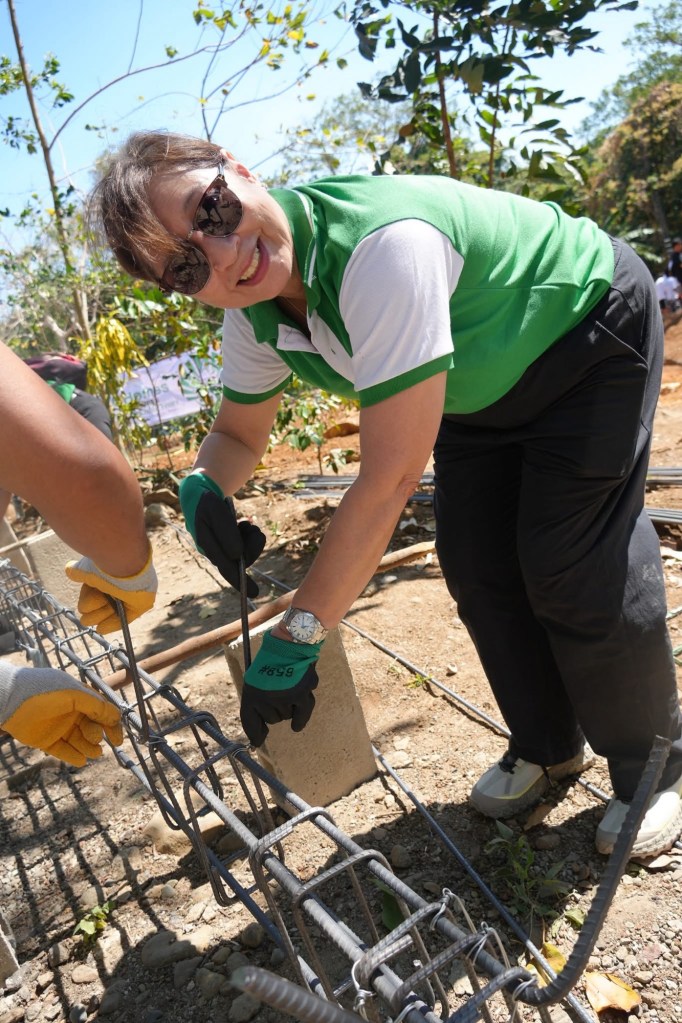
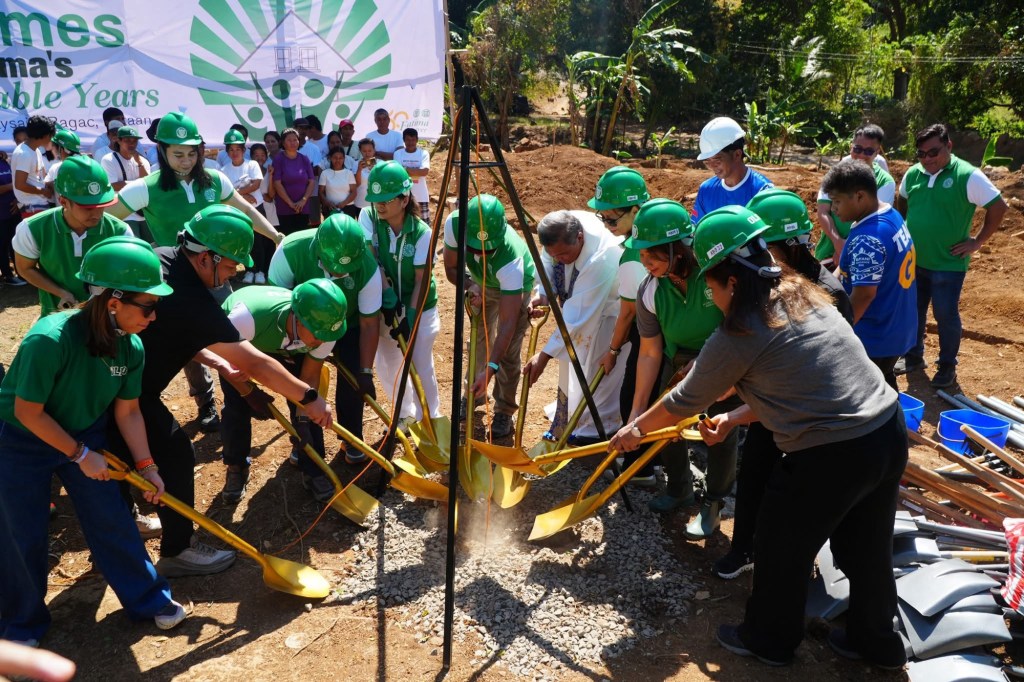
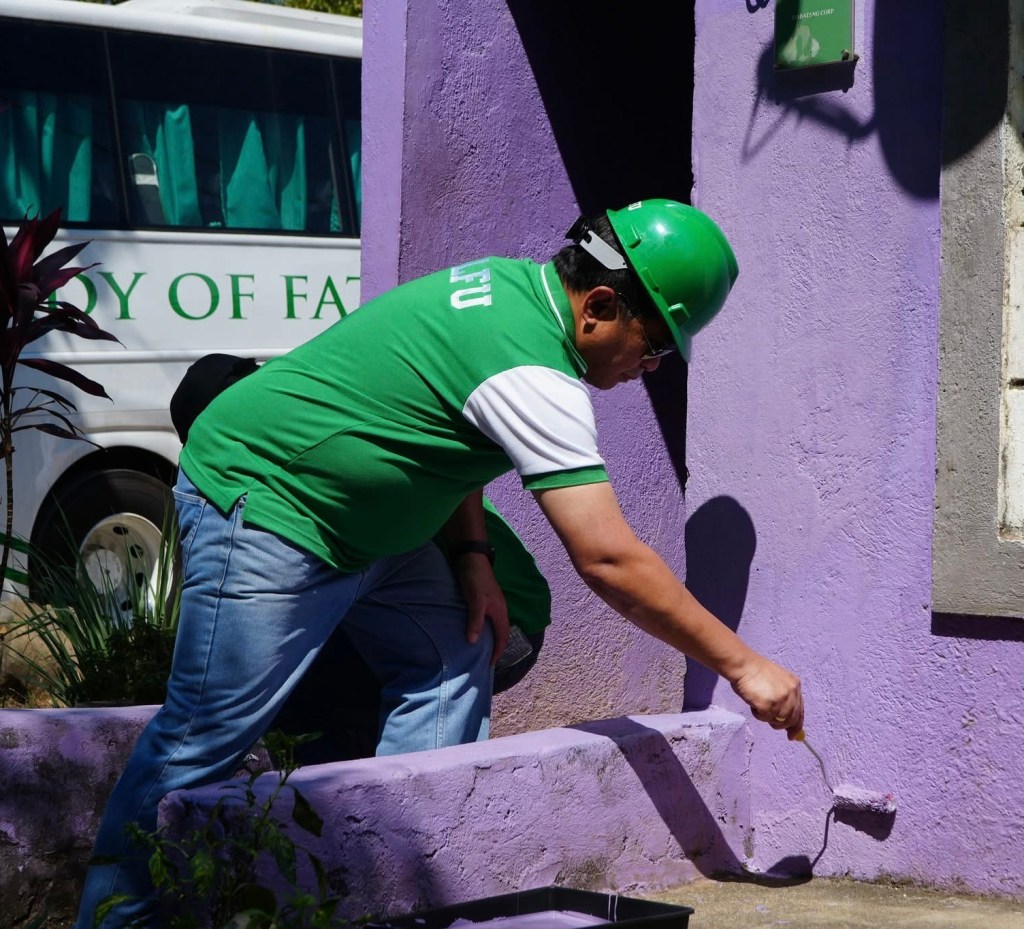
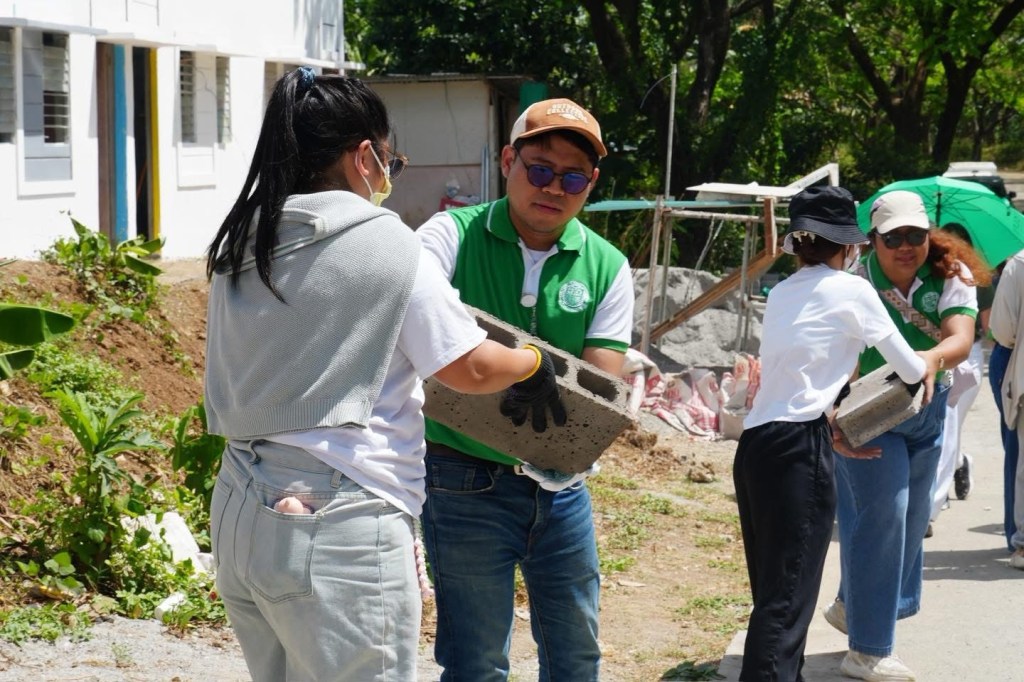
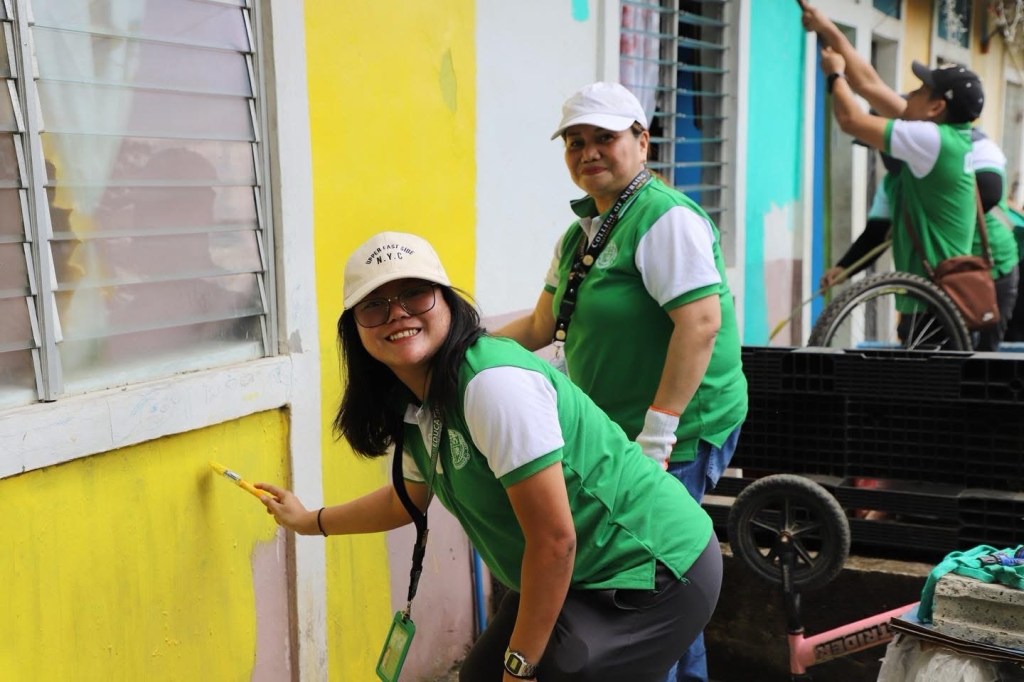
We are celebrating our 60th foundation anniversary at the Our Lady of Fatima University (OLFU) and the Fatima University Medical Center (FUMC) next year. As part of our year-long celebrations beginning last February, we are building 60 homes in two Gawad Kalinga sites in Bagac, Bataan and Trece-Martirez, Cavite.

It is the second time we have embarked on the same project when our administrators, faculty and employees as well as students volunteered to build and delivered 50 homes through GK too ten years ago in celebration of our golden anniversary.

Our University President Dra. Caroline Santos-Enriquez explained that it is not enough for us to provide our people with good, quality education we have always strived in the last 60 years when many are without a home because when people have homes of their own, they are filled with hopes and that is when they truly start to dream for a better future.

Such a desire in having one’s own home is deeply rooted in the Bible. Jesus Christ’s third beatitude in his sermon on the mount, “Blessed are the meek, for they will inherit the land” (Mt.5:5) refers to the longing of the Israelites not only for their own homeland but also for their own homes too.

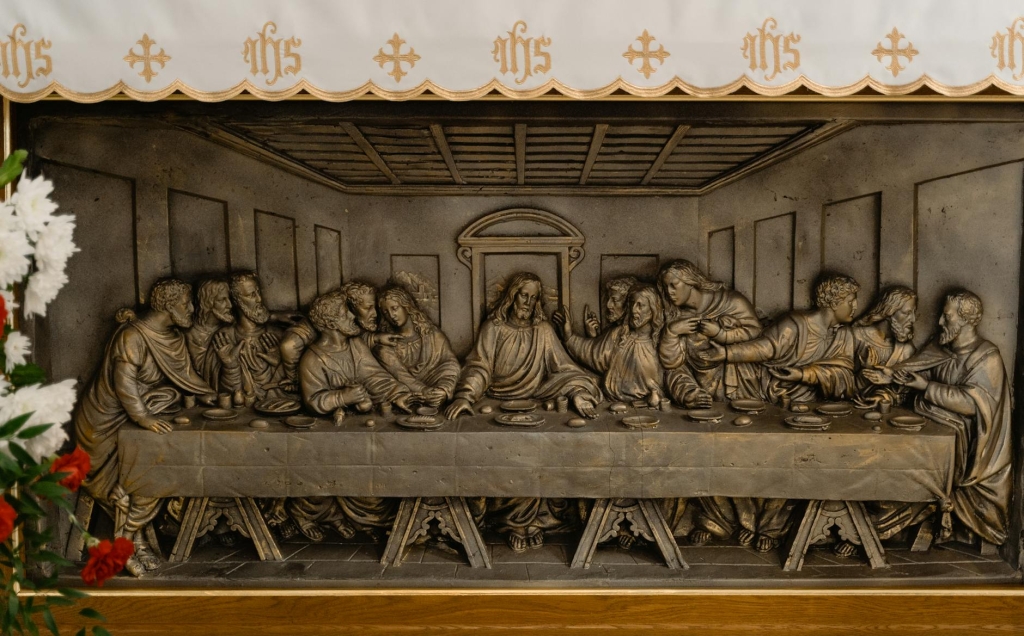
That is why at his last supper, he mentioned something so similar to that aspiration of his disciples but this time on a deeper level.

Jesus said to his disciples, “Do not let your hearts be troubled. You have faith in God; have faith also in me. In my Father’s house there are many dwelling places. If there were not, would I have told you that I am going to prepare a place for you? And if I go and prepare and prepare a place for you, I will come back again and take you to myself, so that where I am you also may be. Where I am going you know the way” (John 14:1-4).

Photo by MART PRODUCTION on Pexels.com

It is very interesting that in the Hebrew language, the name they use to commonly address God is HaShem written as השם for “The Name” because they cannot utter the word YHWH or Yahweh as we pronounce written as יהוה which is so sacred for the Jewish people.

Now take a look at the first letter of HaShem shaped like a house, השם while its third last letter looks like a door or a small “n” in our english alphabet. It is the same shape of the letter Yod they use to write YHWH – יהוה.

According to a spiritual writer I have read, God’s very name connotes a house, a home and a door that imply “relationships”. Remember last Sunday when Jesus introduced himself as the “gate” through whom the shepherd and his sheep pass through?

Jesus now deepens this lesson he taught us last Sunday as he moved to its next scene which is his last supper.

Imagine the silent stillness of the room heavy with emotion.

With lamps flickering in the evening light, we feel the ebb and flow of intimacy and uncertainty just like in our own homes during times of crisis.

And in the midst of it all is Jesus speaking with comforting assurance.

“Do not let your hearts be troubled. You have faith in God; have faith also in me.” 

What is troubling you at this very moment or lately these past days or weeks?

Many times, what really troubles us most is the fear of being left out, of being alone. That is why money and sickness as well as death trouble us a lot. We are afraid of having nobody by our side not only to defend and comfort us but simply be with us. Here we find the value of having our own home where we feel safe and secured with loved ones.

Being left out, being alone is perhaps the deepest pain one could ever have. That is why we are troubled when people we love and care for threaten us of walking away from us to be on their own. Every time a beloved leaves us by choice or by circumstances, whenever we feel “apart” from others and separated, we feel losing a part of very selves because each one is also our part. Jesus came, suffered and died for us on the Cross so that in his Resurrection, we would never be apart from him and everyone anymore, here on earth and hereafter.

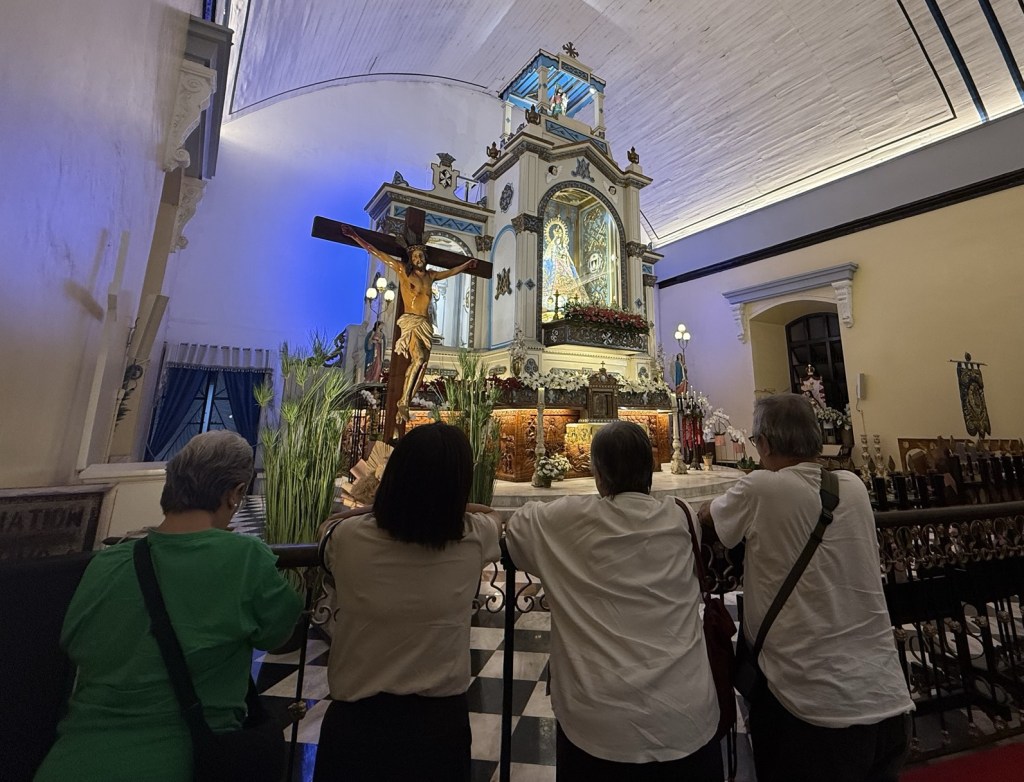
Photo by author, Manaoag Basilica, Pangasinan, 09 January 2026.

Jesus assures us today of his presence among us, of being with us and in us – a relationship so personal like having our own home and dwelling place in heaven. But, are we ready and willing to walk his path, to stand by his truth and live his life?

Vis-a-vis the things that trouble us, what is our deepest yearning at the moment? Are we still in the same level with Philip relying more on the physical and material aspects of relationships?

In my previous post after my annual retreat, I have mentioned to you my dear friends of my decision to rest a little from my daily blogs. Not really as a respite from my busy schedules but more of finding Jesus anew. During that retreat in March, I realized the thing that most bothered me lately was being far from God. I have been praying to blog, not for God.

Many times, we serve God in others without really being centered in Him, without any relationship at all with Him in Christ Jesus. And we priests are often guilty of it, of too much ministry without Jesus that lead us to burnout and exhaustion, most especially the lack of love for others. Anything especially relationships without Jesus eventually dies naturally because he indeed life himself.

Photo by author, Sacred Heart Novitiate, Novaliches, QC, 20 March 2026.

The Apostles realized this early in the Church as we have heard in the first reading that they assigned seven deacons to serve the Greek-speaking converts to Christianity lest they forget Jesus Christ in prayers.

The same is true with us. It can happen that we feel we are doing God’s work, following his will but we are not in him in Christ. That is why Jesus clarified with Thomas: his very person is the way the truth and the life. And that is because he is the “cornerstone” of our very lives as explained by Peter in the second reading.

We are the “living stones” who make up the Church, the mystical body of Christ both visible and invisible. As God’s “chosen people” and “royal priesthood”, we have a deep spiritual bonding in Christ nourished and sustained in our prayers and liturgy. As disciples of Christ, we move visibly adjusting and innovating in our ways like the Apostles by remaining focused on the person of Jesus who is our everything.

Going back to our housing project at OLFU at FUMC, I was amazed at the faith of some of our recipients of the new homes we’re building in Trece-Martirez, Cavite who came to see me after the groundbreaking ceremonies. They told me how for so many years they prayed together as families to have their own homes and now it is slowly becoming a reality; hence, if I could bless – finally – their images of the Virgin Mary, Sacred Heart and Divine Mercy they have kept in their rented homes for many years.

They were so thankful for the blessing but, unknown to them, I felt more blessed in them as I felt God reassuring me that whatever troubles me in life, Jesus places great trust in us in continuing his mission here on earth. Let us remain in him and hold on to his words, “Amen, amen, I say to you, whoever believes in me will do the works that I do, and will do greater ones than these, because I am going to the Father.” A blessed week ahead to everyone! Amen.

This is the time of fulfillment

Lord My Chef Daily Recipe for the Soul by Fr. Nicanor F. Lalog II
Monday, First Week in Ordinary Time, Year II, 12 January 2026
1 Samuel 1:1-8 <*((((>< + ><))))*> Mark 1:14-20
Photo by author, San Juan, La Union, 09 January 2026.

After John had been arrested, Jesus came to Galilee proclaiming the Gospel of God: “This is the time of fulfillment. The Kingdom of God is at hand. Repent, and believe in the Gospel” (Mark 1:14-15).

Thank you dear Jesus
for this brand new week,
for this start of Ordinary Time
in our liturgical calendar;
how wonderful to remind us
it is the time of fulfillment,
of completion and wholeness
in you, O Lord because it is only
in you lies our fulfillment.
Teach us to open our hearts
and souls to your call, Jesus
like the brothers Peter and Andrew,
James and John,
your first disciples;
was it really that quick and easy
for them to leave everything behind
including the father of James
and John just to follow you?

Yes, dear Jesus,
like them,
we felt incredulous
and even fearful with your call,
not only last year
but even this year;
in fact, as we begin
our Ordinary Time this Monday,
the more I felt your calling
continues everyday
because without you
we shall never be complete.
Like Hannah,
our lives will never be complete
and fulfilled without having you
that may take several forms
like a child for Hannah;
many times Lord we wonder
why we cannot have what we
are specifically praying for
like Hannah who has become
a subject of ridicule by others
for being barren and childless;
but, inasmuch as your call continues
for us, then you hereby assure us too
of your continuing works in our
many deficiencies if we can only
be patient and persevering in you
in awaiting your calls.
Amen.
Photo by author, San Juan, La Union, 09 January 2026.

Our living family tree

Lord My Chef Simbang Gabi Recipe for the Soul by Fr. Nicanor F. Lalog II
Wednesday, Simbang Gabi-II, 17 December 2025
Genesis 49:2, 8-10 <*[[[[>< + ><]]]]*> Matthew 1:1-17
Photo by author, December 2023.

Next to the Belen and the Parol, the Christmas Tree stands out as the third leading sign of Christmas especially in our country. Though it was first introduced by the German Lutherans in the 16th century, we Catholics have adopted it too with the Vatican having a giant Christmas Tree every year lighted at St. Peter’s Square in Rome.

The Christmas Tree invites us to remember Jesus who was born in Bethlehem is the true Tree of Life, as it “depicted the tree of paradise and the Christmas light or candle which symbolized Christ, the Light of the world” (Book of Blessings, page 443). Remember also that since ancient time especially among the Anglo-Saxons, trees symbolize our relationships as family and kin that is why we have “family trees” that trace our roots.

And that is what a genealogy is all about.

Photo by author, December 2022.

Matthew along with John opened his gospel account with the origin of Jesus; both felt the need to present right away to their specific audience where the Christ came from. John traced it to eternity as the Word (Logos) while Matthew whose followers were mostly Jewish converts to Christianity presented Jesus as the fulfillment of God’s promise in the Old Testament through their two main personalities, Abraham and David.

The book of the genealogy of Jesus Christ, the son of David, the son of Abraham. Abraham became the father of Isaac, Isaac the father of Jacob, Jacob the father of Judah and his brothers. Judah became the father of Perez and Zerah, whose mother was Tamar (Matthew 1:1-3).

Every year we hear this gospel proclaimed on December 17 which is also the start of the second and final phase of Advent when all our readings and prayers direct our attention to the first Christmas that happened more than 2000 years ago.

For Matthew, it all started with God’s promises to Abraham, the father of all nations and to David, the greatest King of Israel whose royal lineage made the Christ a King, in fact the King of Kings. What is most interesting in Matthew’s genealogy is the fact that with each of those names that sound so funny for many of us today was a true person just like us – so human and so imperfect, even sinful except the Blessed Virgin Mary. Matthew did not sanitize nor photoshop the personalities in the Lord’s genealogy because that is the Good News: it is good to be human that is why the Son of God became one of us in everything as a human being except sin.

This year, I wish to reflect on just one person, Judah.

Jacob called his sons and said to them: “Assemble and listen, sons of Jacob, listen to Israel, your father. You, Judah, shall your brothers praise – your hand on the neck of your enemies; the sons of your father shall bow down to you. Judah, like a lion’s whelp, you have grown up on prey, my son… The scepter shall never depart from Judah, or the maqce from between his legs, while tribute is brought to him, and he receives the people’s homage” (Genesis 49:2, 8-9, 10).

This is the second Christmas me and my siblings are celebrating without both our parents. Our mother died May 2024. Though it was so heavy and difficult for us, everything moved so fast that year. So unlike this 2025.

Photo by author, December 2020.

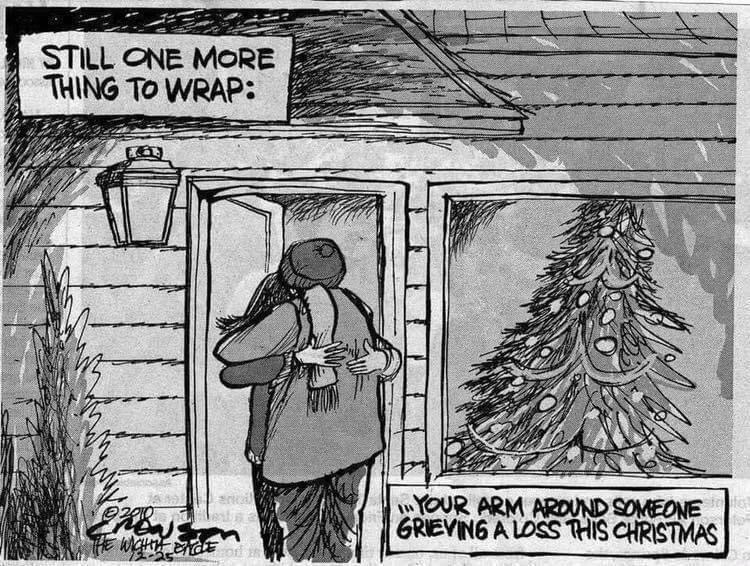
We never get used to deaths in the family; the pain becomes most painful as we move through the years especially during Christmas as if our Belen would never be complete without a St. Joseph and a Mama Mary. Of course, Christmas and life itself is all about Jesus Christ but it is a different reality and story celebrating this most joyful season without parents. Especially for a priest like me. (No drama intended.)

That is why I felt so drawn in my prayers to Judah in Matthew’s genealogy as one of the great, great, great grandfather of Jesus Christ.

In the first reading, we have Jacob nearing death while they were all in Egypt courtesy of his eleventh son Joseph who rose to power after being sold there by his brothers. Though my mother never gave such speeches when she was nearing death, all her life she used to tell us similar things when we were growing up, of how after she and dad would be gone that I must look after my two sisters and only brother, that we would not quarrel and be loving one another always. I think such habilin as we say in Filipino is common among us Pinoys along with the usual passing on or entrusting of family and properties to the eldet, either the kuya or ate.

But that’s not the case in our first reading because Judah was not the eldest of Jacob’s children with her first wife Leah. Judah was their fourth son with three elder brothers – Reuben, Simeon and Levi with a sister named Dinah. Judah also had six half-brothers from their father’s concubines or later wives: Dan, Napthali, Gad, Asher, Joseph, and Benjamin.

Rembrandt’s 1660 painting of “Judah and Tamar” via en.wikimedia.org

Why was Judah the one anointed by Jacob to lead his family and not the elder sons as it is the norm among Jewish and even Filipino families?

This is where the story gets most interesting: Judah’s Kuya Reuben fell from grace because he had sex with their father’s concubine Bilha whose sons were Dan and Napthali while his Diko Simeon and Sangko Levi were disqualified from leading the family after their bloody revenge for the rape of their sister Dinah.

However, that does not mean Judah was clean and honorable at all!

Matthew told us in his genealogy of Jesus that Judah’s sons Perez and Zerah (twins) were born through Tamar who was actually the wife of Judah’s eldest son Er who died without having any son. As per Jewish tradition, Judah’s second son Onan married Tamar but refused to have a son with her that he “spilled his seed” to the ground – that is, he masturbated! It angered God that he took Onan (that is why masturbation is sinful and also known as “onanism” from Onan).

After losing his two sons because of Tamar, Judah refused to give his third and youngest son Shelah to marry her. So, Tamar devised the plan of pretending a prostitute, luring Judah into bed and have her pregnant with the twins Perez and Zerah. Read Genesis 38 for the full story!

Of Jacob’s sons, Joseph was the most eligible to lead and continue Jacob’s family lineage and not Judah had no credentials at all to speak of as a great man leading his brothers, eventually becoming the father of the Jewish nation from whose name came the word “Judaism”.

“Patriarch Judah”, a Russian Orthodox painting in 1654 from en.wikipedia.org.

Remember too that Judah was totally silent and timid unlike Reuben when his elder brothers planned of killing Joseph because of jealousy; it was him, however, who thought of selling Joseph into slavery to Egypt to make some money.

Judah’s only saving grace came after more than twenty years when Joseph was already a powerful man in Egypt demanded to have Jacob’s youngest son Benjamin as his slave in exchange for them to purchase foodstuff during the famine (Gen. 42). Judah pleaded for Benjamin’s life that Joseph finally revealed himself as their lost brother after he could no longer contain his tears and joy in being reunited with his brothers anew.

Despite all these shady past of Judah, God chose him to continue the family lineage of his father Jacob from whom the Messiah, Jesus came.

Like Judah, we are not the perfect son or daughter, brother or sister in the family.

Like Judah, we are not most qualified for being the favored one or anointed one in the family or in the organization. There is always somebody better than us.

But God’s works in mysterious ways, in ways so different from our own ways. As the saying goes, God does not call the qualified but qualifies his calls. Likewise, God writes straight in crooked lines.

The Simbang Gabi invites us not only to look forward to the birth of the Messiah; in these nine days of prayers and reflections, we also look back to our past to face and embrace, admit and own those shades of darkness in our lives.

Matthew’s genealogy reminds us today that this family tree of faith in Jesus extends down the generations and includes us today. Feel and experience, most of all, celebrate that joy of belonging to God’s living family tree where every branch, every member is loved and cared for. God believes in us that he entrusted to us his Son Jesus Christ. That’s Christmas – God becoming human, infant and weak like us, entrusting himself to our care and love and protection.

This Simbang Gabi, let us remember our family members and other persons who made us feel belonging in this living family tree of Jesus. Let us also pray for those lost family members and friends that Jesus wants us to draw near to his living family tree with our friendship and warmth, forgiveness and acceptance. As you light your Christmas tree tonight, do not forget to share the light and warmth of Jesus Christ, our Tree of Life. Amen. Have a blessed Wednesday!

From Facebook, December 2023.

Coming together to God

Lord My Chef Daily Recipe for the Soul, 20 November 2025
Thursday in the Thirty-Third Week of Ordinary Time, Year I
1 Maccabees 2:15-29 ><]]]]'> + ><]]]]'> + ><]]]]'> Luke 19:41-44
Photo by author, ruins of the ancient city of Ephesus in Turkiye, 03 November 2025.

God the Lord has spoken and summoned the earth… “Gather my faithful ones before me, those who have made a covenant with me by sacrifice” … “Offer to God praise as your sacrifice and fulfill your vows to the Most High; Then call upon me in time of distress; I will rescue you and you shall glorify me” (Psalm 50:1, 5, 14-15).

Yes, God our loving Father,
I could hear your call
and here I am before you,
coming to you
to praise
and worship you
not only with gifts
but with my total self
to serve you;
thank you in calling me
among your "faithful ones"
despite my sins and weaknesses.
Give me the courage
and strength, O God,
of Mattathias
and his brothers
and followers
to not only stand for what
is true and good in your eyes
but even for a time,
to flee to the mountains
to retreat into my self
to find you by leaving everything
in order to live according
to your will and plans;
let me not be stubborn
like your old city of Jerusalem
who rejected your Son Jesus Christ
that he wept over her coming
destruction.
Let me come today
with your other faithful ones
to glorify your name,
O God our Father
in Christ Jesus.
Amen.
Photo by author, ruins of the ancient city of Ephesus in Turkiye, 03 November 2025.

Blessed desolation

Lord My Chef Daily Recipe for the Soul, 10 October 2025
Friday in the Twenty-Seventh Week of Ordinary Time, Year I
Joel 1:13-15; 2:1-2 <*((((>< + ><))))*> Luke 11:15-26
Photo by Mr. Raffy Tima of GMANews in Batanes, 05 October 2018.
Your words today
are so powerful, Jesus:
the Prophet Joel called it
"the Day of the Lord"...

Let all who dwell in the land tremble, for the day of the Lord is coming; yes, it is near, a day of darkness and of gloom, a day of clouds and somberness! Like dawn spreading over the mountains, a people numerous and mighty! Their like dawn has not been from of old, nor will it be after them, even to the years of distant generations (Joel 2:1-2).

What a moment
of blessed desolation,
Lord: tangible darkness
everywhere that comes from
within, that feeling of being
afraid because you are calling me
to return to you, O Lord;
it is a blessed desolation
because despite the darkness
and emptiness, you are here
within me, Lord when
your darkness is light,
your emptiness is fullness;
it is blessed desolation for
in the stillness and silence
of losing everything,
you are present, Lord,
within me
in every crisis,
in every turmoil
extending your hand
to make me experience
your power - "the finger of God"
that make realize all good things
come only from you
and nothing bad could ever
come from you as some in the crowd
accused Jesus.
Let your day, 
O Lord, come!
It is not enough that
we do not sin
but we must always
be filled with your Spirit,
always in your state of grace
so that there is no space for
evil to return and occupy us;
let us not be complacent
with your presence
and friendship, Jesus:
renew us daily in you
so we revere you daily,
ever ready 
to follow you.
Amen.

Fr. Nicanor F. Lalog II
Our Lady of Fatima University
Valenzuela City
(lordmychef@gmail.com)
Photo by Mr. Raffy Tima of GMANews, 27 October 2018.

Presence of Jesus

Lord My Chef Daily Recipe for the Soul, 04 September 2025
Thursday in the Twenty-Second Week of Ordinary Time, Year I
Colossians 1:9-14 <*((((>< + ><))))*> Luke 5:1-11
Photo by Mr. Raffy Tima of GMA7 News in Batanes, September 2018.
Today's gospel story
of your first meeting with
Simon reminds me
of how your presence
made a difference in my life
when I finally said "yes"
to your call
to give my vocation
to the priesthood
a second chance in 1991
when I resigned from my job
to enter the seminary again;
it was pure joy at first that later
became more intense,
more deep and wonderful
as the going got tough and rough;
it was never easy following you,
Jesus but you have never forsaken me
since then until now though many times
I have balked and even backed out
from you as you kept telling me
those same words you told Simon,
"Do not be afraid" (Luke 5:10).
Fill me, Jesus,
"with the knowledge of God's will
through all spiritual wisdom
and understanding to walk
in a manner worthy of the Lord,
so as to be fully pleasing,
in every good work
bearing fruit nd growing
in the knowledge of God"
(Colossians 1:9-10);
teach me to trust you more
by surrendering, giving up
my total self to you
so that I may continue
casting my net into the deep;
though I have given up a lot,
I still feel I have not given up
that much of myself to you -
take away from me, Jesus
whatever I still hold on deep inside,
help me surrender
myself to you totally so that
I may know you more clearly,
love you more dearly,
follow you most closely daily
for it is in your presence
when I am most fulfilled.
Amen.
From Pexels.com.

The trouble with us.

Lord My Chef Daily Recipe for the Soul, 21 August 2025
Thursday, Memorial of St. Pius X, Pope
Judges 11:29-39 <*((((>< + ><))))*> Matthew 22:1-14
Photo by Mr. Vigie Ongleo, Virginia, August 2021.
Oh how true are your words,
dear God our Father
these past days
of how clearly we make
life more difficult;
Monday you showed us
in the Book of Judges how
problem is with us always
when we repeatedly turn away
from you in sin and despite your
mercy and forgiveness,
we still refuse to rectify our
mistakes to lead an orderly life;
today, the Lord Jesus Christ's
parable speaks again of our folly,
of the trouble with us
when we take you
and your calls for granted,
refusing to come to you,
to celebrate life 
in you
with you:

“The Kingdom of heaven may be likened to aking who gave a wedding feast for his son. He dispatched his servants to summon the invited guests to the feast, but they refused to come. A second time time he sent other servants, saying, ‘Tell those invited: “Behold, I have prepared a banquet, my caleves and fattened cattle are killed, and everything is ready; come to the feast.”” Some ignored the invitation and went away , one to his farm, another to his business. The rest laid hold of his servants, mistreated them, and killed them. The king was enraged and sent his troops, destroyed those murderers, and burned their city” (Matthew 22:2-6).

On the other hand,
we waste and destroy
every opportunity
you give us to be with you,
to make a difference in life
with many of us
making it close to you
in answering your calls
but unfortunately
could not keep up with the mission:

“The servants went out into the streets and gathered all they found, bad and good alike, and the hall was filled with guests. But when the king came in to meet the guests he saw a man there not dressed in a wedding garment. He said to him, ‘My friend, how is it that you came in here without a wedding garment?’ But he was reduced to silence. Then the king said to his attendants, ‘Bind his hands and feet, and cast him into the darkness outside, where there will be wailing and grinding of teeth.’ Many are invited, but few are chosen” (Matthew 22:10-14).

Teach us to be aware
of your presence, Lord;
teach us to be conscious
of your precious gift of call;
teach us to remember always
the gladness and joy of
being invited to the wedding feast
to be one with you,
to work for you,
to do your will,
to be chosen
and choose
to remain in you
to renew all things
in Christ
like St. Pius X.
Amen.
Fr. Nicanor F. Lalog II
Our Lady of Fatima University
Valenzuela City
lordmychef@gmail.com

Seeing ourselves as Jesus sees us

Lord My Chef Sunday Recipe, Fr. Nicanor F. Lalog II
Solemnity of Sts. Peter & Paul, Apostles, 29 June 2025
Acts 12:1-11 ><}}}}*> 2 Timothy 4:6-8, 17-18 ><}}}}*> Matthew 16:13-19
St. Peter’s Square at the Vatican in Rome.

We enter today the 13th week in Ordinary Time with a fourth celebration on a Sunday of another Solemnity, that of Saints Peter and Paul, the two pillars of the Church Jesus Christ established over 2000 years ago.

Sts. Peter and Paul were men of diverse backgrounds with Peter the fisherman, impulsive and so human while Paul the Pharisee was an intellectual converted by an encounter with Jesus on the road to Damascus. Both were flawed as persons yet so loved and called by the Lord – Peter as first leader of his church and Paul as its first missionary to the Gentiles. Their Solemnity reminds us of Christ’s call for us to build his Body, his Church here on earth.

While this celebration is about the two great apostles of Jesus, our readings direct us to God’s goodness and grace in his actions on behalf of the church founded by Christ. Its focus is on God, not ourselves.

Statues of Sts. Peter & Paul, st. Peter’s Basilica, Rome; photos from opusdei.org

Being an apostle of Jesus is not about doing great things or being so good but more of encountering and keeping faith in Christ our Lord. By recognizing ourselves as the church – the Body of Christ as we have reflected last Sunday, all of our actions are indeed God’s actions on behalf of the church because it is through us that the proclamation of the Gospel of Jesus’ death and resurrection is continued and completed in this age.

What is essential is we constantly enter into a conversation with Jesus in prayer not only to tell him things but most especially for us to realize how he sees us!

When Jesus went into the region of Caesarea Philippi he asked his disciples, “Who do people say that the Son of Man is?” They replied, “Some say John the Baptist, others Elijah, still others Jeremiah or one of the prophets.” He said to them, “But who do you say that I am?” Simon Peter said in reply, “You are the Christ, the Son of the living God.” Jesus said to him in reply, “Blessed are you, Simon son of Jonah. For flesh and blood has not revealed this to you, but my heavenly Father. And so I say to you, you are Peter, and upon this rock I will build my church, and the gates of the netherworld shall not prevail against it” (Matthew 16:13-18).

Photo by author at Caesarea, Israel, May 2017.

What really happened at Caesarea Philippi was a close encounter of the apostles with Jesus, especially Simon whom would he called as Peter on that day on.

Very often in most reflections and commentaries, we are told to answer the question of Jesus like Peter in our most personal way not based from what we have read or heard: “who do you say I am?”

Of course, what else can we say but imitate Peter’s answer that seems to be the most correct answer.

But, is it really the best answer? Not really.

Paul later in his many writings will declare similar answers but far more better like when he said “For me to live is Christ, and to die is gain” (Phil.1:21).

Jesus is telling us something else in this scene, as if asking us too, would you want to know “who do I say you are?” What the Lord is actually telling us in this scene is the fact that he knows us so well inasmuch as he knows himself perfectly because he is God. In fact, he had said there was no need for him to have human testimony as the Christ (Jn. 2:25; 5:34).

Photo by author, Sea of Galilee, Israel, May 2019.

What I see more at Caesarea Philippi is Jesus Christ’s omniscience as God who knows everything – even that early he already knew Peter would deny him thrice, that Judas Iscariot would betray him, so on and so forth.

Jesus knows everything about us but he chose to love and believe in us that despite and in spite of everything he knew that could go wrong with us later in life, of how we would fall into sin over and over, STILL – he calls us, he sends us on a mission because he believes in us, he loves us.

Many times in life, we forget the truth about the saints who are just like us, ordinary people with many weaknesses and flaws, imperfections and even idiosyncrasies. What made them stand out and did all those great feats for the Lord was because they were able to see themselves the way Jesus sees them.

That’s the very core of the story at Caesarea Philippi – Jesus made the apostles felt especially Peter how valuable they were, how they were all loved, of how Jesus saw them as his ambassadors later when he returns to the Father.

Bass relief of St. Peter at the Malolos Cathedral, 2019.

Jesus had no need of knowing what people were saying about him because he knew himself so well aside from the fact he surely knew what they were saying about him. Actually, the answers the apostles gave him were for them to know and think about why people wrongly perceived Jesus.

Most of all, Jesus had no need to know what everyone of us is saying about who he is because, again, he knows himself perfectly. Whatever answer others would have given about him would have been surely appreciated and praised by Jesus. What matters most for everyone to realize is the fact that despite Christ’s foreknowledge of Peter’s fall and weaknesses, he still dared to call him to head his church. The same holds true with everyone of us. Jesus wants us to continue building his Body, his church here on earth, to make Jesus more present in us in this world so dark and lost searching for meaning except in Christ.

The same thing is true with Paul when Jesus called him on the road to Damascus to persecute the first Christians. Jesus knew everything Paul was doing; most of all, Jesus knew that even when converted, Paul would still be stubborn and insistent, would eventually quarrel with other disciples like Peter, Barnabas and John Mark but still, Jesus called him and even set him aside for a special mission to the Gentiles.

Bass relief of St. Paul at Malolos Cathedral 2019.

Again in his experiences, Paul saw how Jesus loved and trusted him that even he were the worst of all the apostles of the Lord, he was given such great task of proclaiming the gospel to the ends of the earth at that time. That is why in our second reading we find Paul giving up his whole life in the service of Jesus after experiencing Christ’s tremendous love for him.

Like Peter and Paul, we are all gifted with the same faith in Christ Jesus who challenges us to accept the same mission to continue in this modern time of proclaiming his gospel of love and mercy, of building up his Body the church so that there would be a more humane and just society here on earth as Vatican II envisioned (Lumen Gentium).

Many times when God works in us and through us, we could not believe it as happening like Peter when set free from prison by an angel at night. There are times we are resigned with our situations, of being deserving of the many hardships and sufferings without realizing that there are more bad things we deserve to suffer in this life but Jesus spared us because he believes in us that he sends us to some more missions for him.

Lord Jesus Christ,
thank you for still calling me,
sending me to a mission
despite my many flaws
and imperfections;
thank you for trusting me,
believing me;
let me see myself the way
you see me as someone
worth loving and trusting.
Amen.

St. Peter and St. Paul,
pray for us!