Learning to pray to our Father with Mary our Mother

Lord My Chef Daily Recipe for Soul by Fr. Nicanor F. Lalog II
Wednesday, Twenty-Seventh Week in Ordinary Time, Year II
Memorial of Our Lady of Rosary, 07 October 2026
Acts 1:12-14 <*{{{{>< + ><}}}}*> Luke 11:1-4
Photo by author, Sacred Heart Novitiate, Novaliches, Quezon City, March 2024.

After leaving the minor seminary in 1982, I felt my priestly vocation anew in 1990 while working as a reporter at GMA News. And one of the stumbling blocks that delayed me in finally deciding to give it another try had something to do with the Holy Rosary: I could not believe if God was really calling me to become a priest because I did not pray the Rosary. Fact is, I did not like the Rosary at all while in high school seminary because it was repetitive and too long to pray.

All the priests I consulted during that time clarified that the Rosary is a devotion that is distinct from the priesthood, that it is not a determinant whether one has a priestly vocation or none at all. Eventually, I resigned from GMA News, went back to the seminary in 1991, becoming a priest in 1998 along with my six classmates.

And I must confess, I still did not have that devotion with the Holy Rosary until I was assigned to a parish of my own in 2011. It was a devotion that did not happen instantly but slowly in 2016 as demands in the ministry grew, I felt the need for more prayers aside from our Liturgy of the Hours and daily meditations before the Blessed Sacrament. It was during the COVID pandemic when I found myself praying the Holy Rosary daily until I literally fell in love with it becoming an integral part of my prayer life. It was a coming into full circle for me, from being a big question mark before, now the Rosary has become an essential response to my priesthood.

The Rosary of the Virgin Mary… still remains, at the dawn of this third millennium, a prayer of great significance, destined to bring forth a harvest of holiness. It blends easily into the spiritual journey of the Christian life, which, after two thousand years, has lost none of the freshness of its beginnings and feels drawn by the Spirit of God to “set out into the deep” (duc in altum!) in order once more to proclaim, and even cry out, before the world that Jesus Christ is Lord and Saviour, “the way, and the truth and the life” (Jn 14:6), “the goal of human history and the point on which the desires of history and civilization turn” (St. John Paul II, Rosarium Virginis Mariae, Introduction).

Photo from canningliturgicalarts.com, painting of the Battle of Lepanto Bay with our Lady of Victory or Rosary.

On this Memorial of the Our Lady of the Rosary that had its origins in after Pope St. Pius V attributed to it the victory of the Christians forces agains the Ottoman Turks at Lepanto Bay in 1571, countless devotees worldwide will pray the words that Jesus taught his disciples.

Jesus was praying in a certain place, and when he had finished, one of his disciples said to him, “Lord, teach us to pray just as John taught his disciples.” He said to them, “When you pray, say: Father, hallowed be your name, your Kingdom come…” (Luke 11:1-2).

It is one of the most beautiful requests by the Apostles to our Jesus Christ, “Lord, teach us to pray as John taught his disciples.” Who else can teach so well how to pray even us today but Jesus, the Son of God?

In calling God Our Father, Jesus taught us the basic truth of every prayer that it is never alone nor solitary but always implies a community, a family — that we are all called and gathered to be one in God. It is a prayer that is all about relationship with the Father, reliance on the Father, faith in the Father.

Again, we read St. John Paul reflecting on the nature of the Holy Rosary that at every mystery starts with the Our Father:

After listening to the word and focusing on the mystery, it is natural for the mind to be lifted up towards the Father. In each of his mysteries, Jesus always leads us to the Father, for as he rests in the Father’s bosom (cf. Jn 1:18) he is continually turned towards him. He wants us to share in his intimacy with the Father, so that we can say with him: “Abba, Father” (Rom 8:15; Gal 4:6). By virtue of his relationship to the Father he makes us brothers and sisters of himself and of one another, communicating to us the Spirit which is both his and the Father’s. Acting as a kind of foundation for the Christological and Marian meditation which unfolds in the repetition of the Hail Mary, the Our Father makes meditation upon the mystery, even when carried out in solitude, an ecclesial experience (#32, Rosarium Virginis Mariae).

Painting by El Greco, “Pentecostes” (1597) from commons.wikimedia.org.

This communitarian aspect of the Our Father we see in the first reading during the Pentecost when the disciples gathered at the Cenacle room in Jerusalem praying with the Blessed Virgin Mary who is our constant reminder of the importance and need to pray always to God our Father.

Next to Jesus, his Mother taught us in her later apparitions to bring all our needs before the Father who loves us so much – especially those trials and sufferings and challenges we face each day because it is in prayer that we truly find our connections.

Notice how the disciples in asking Jesus to teach them how to pray that they mentioned “just as John taught his disciples” because they must have noticed a big difference in their ministry, of John’s connection with his disciples. The Twelve must have felt this connection with Jesus missing that they asked him to teach them how to pray too.

Here lies the gift and challenge of every prayer: it leads to our “connectedness” with God. Both the Rosary and the Our Father are learned by rote and spoken by heart but – do we pray with the heart? What is the our connection with prayer in general, with the Rosary and with the Our Father? Is it an expression, a witness, something that happens only with others as in a community or when we have time or, something deeper and personal?

The Blessed Cardinal Fulton Sheen who was beatified recently used to teach that it is in our prayer life that we become like Jesus Christ. It is most true with the Holy Rosary:

The contemplation of Christ has an incomparable model in Mary. In a unique way the face of the Son belongs to Mary. It was in her womb that Christ was formed, receiving from her a human resemblance which points to an even greater spiritual closeness. No one has ever devoted himself to the contemplation of the face of Christ as faithfully as Mary. The eyes of her heart already turned to him at the Annunciation, when she conceived him by the power of the Holy Spirit. In the months that followed she began to sense his presence and to picture his features. When at last she gave birth to him in Bethlehem, her eyes were able to gaze tenderly on the face of her Son, as she “wrapped him in swaddling cloths, and laid him in a manger” (Lk2:7) (#10, Rosarium Virginis Mariae).

By praying the Holy Rosary, may we learn through Mary to contemplate the face of Jesus Christ so we may be faithful to our call and mission especially in this 24/7 world of continuous action and noise that have left many of us empty and without meaning in life, no connections and so scattered in life. Amen. God bless you with Mary our Mother!
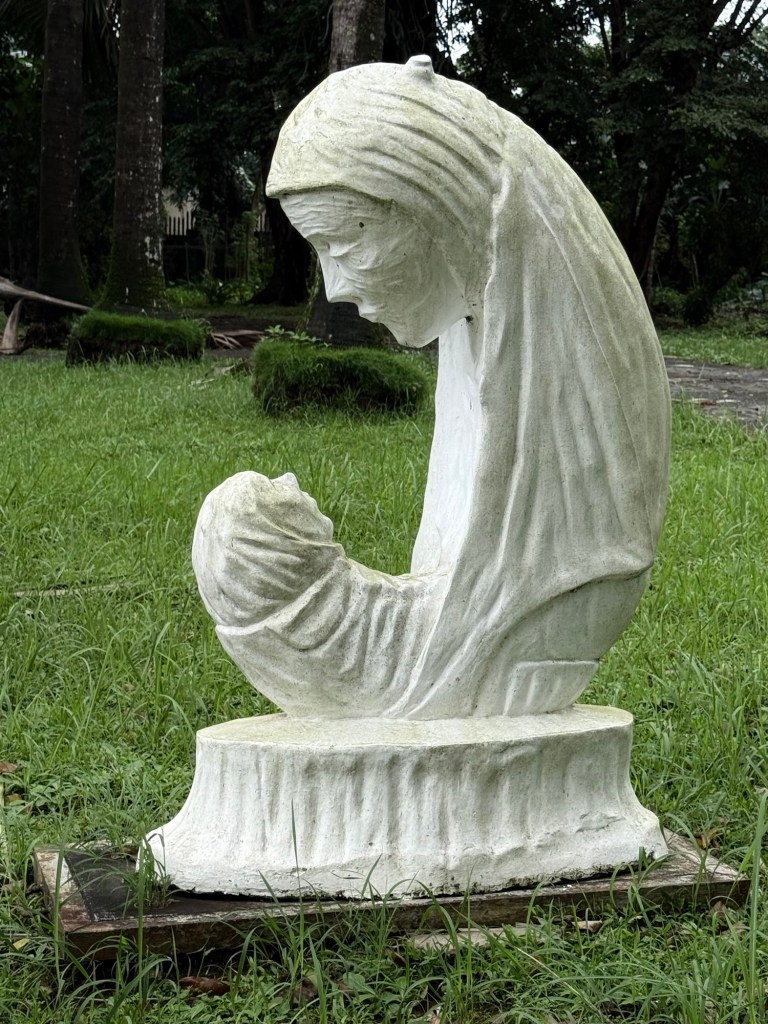
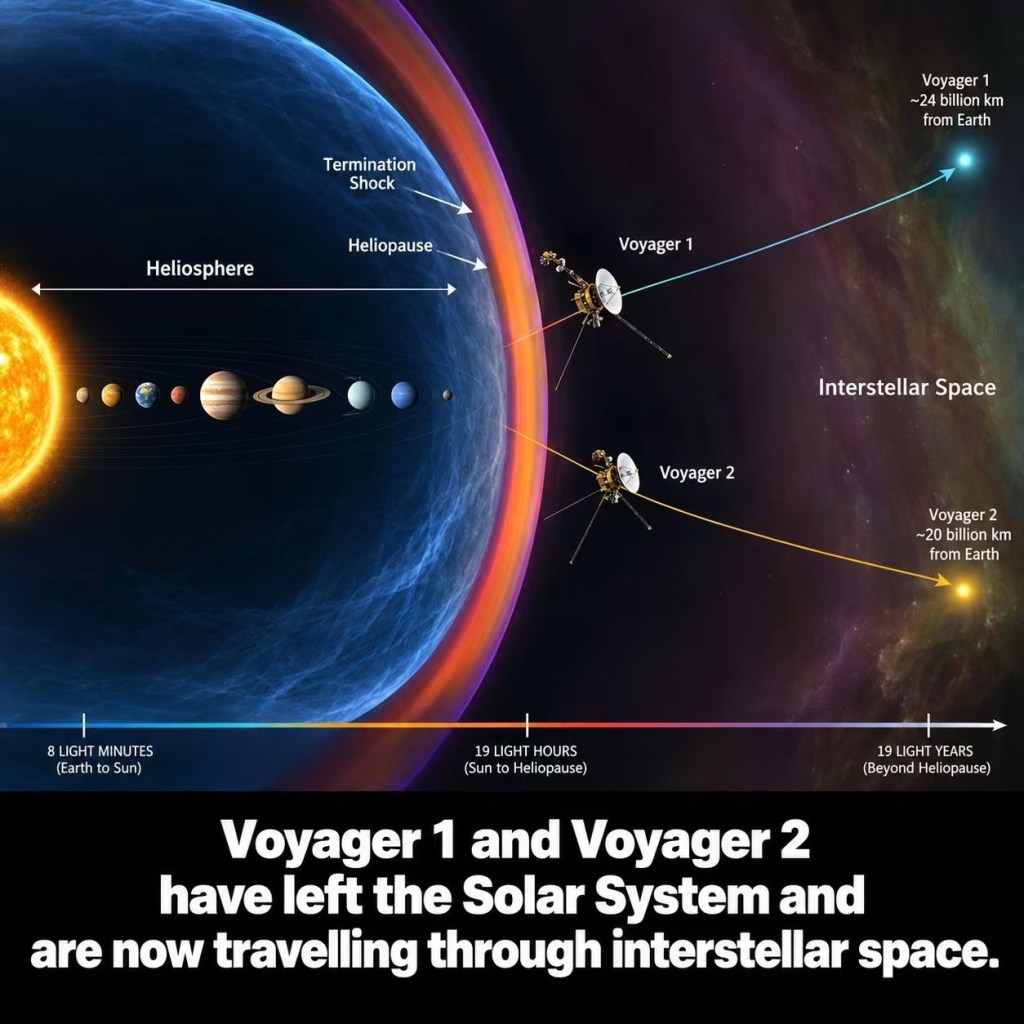
Photo by author, St. Paul Spiritual & Renewal Center, Bgy. Tanyawak, Alfonso, Cavite, 19 August 2026.

The space between us

Quiet Storm by Fr. Nicanor F. Lalog II, 06 October 2026

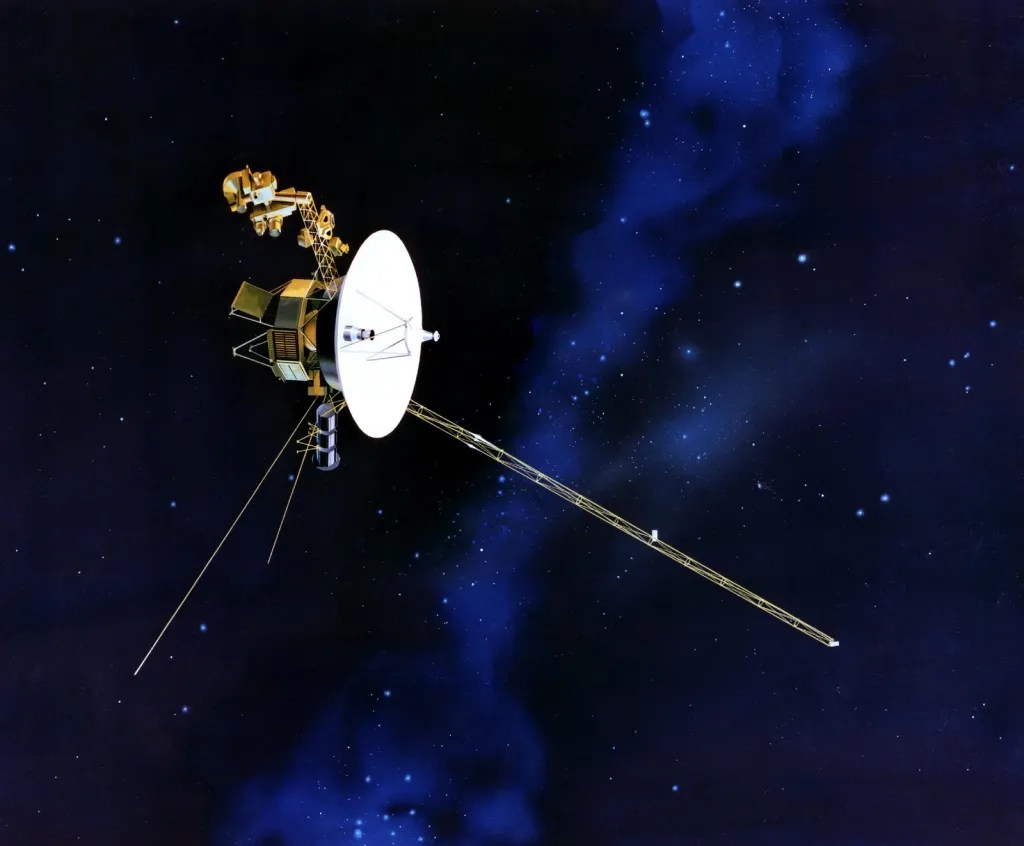
While preparing my homily yesterday for the second day of the novena in honor of the 109th apparition of the Blessed Virgin in Fatima, Portugal, I came across this interesting piece of information in my Facebook feeds about the two American space probes, Voyager 1 and Voyager 2 having “left” our solar system and now the farthest man-made objects from planet Earth.

According to NASA, Voyager 1 had covered about 25.6 billion kilometers as of August 2026 since its launch September 5, 1977 – that’s 49 years and two months ago!

Its travel speed is expected to slow down due to some intergalactic forces which would take time for me to understand and explain; nonetheless, NASA engineers say it would continue sending data from deep space to planet Earth until 2036.

From NASA.gov.

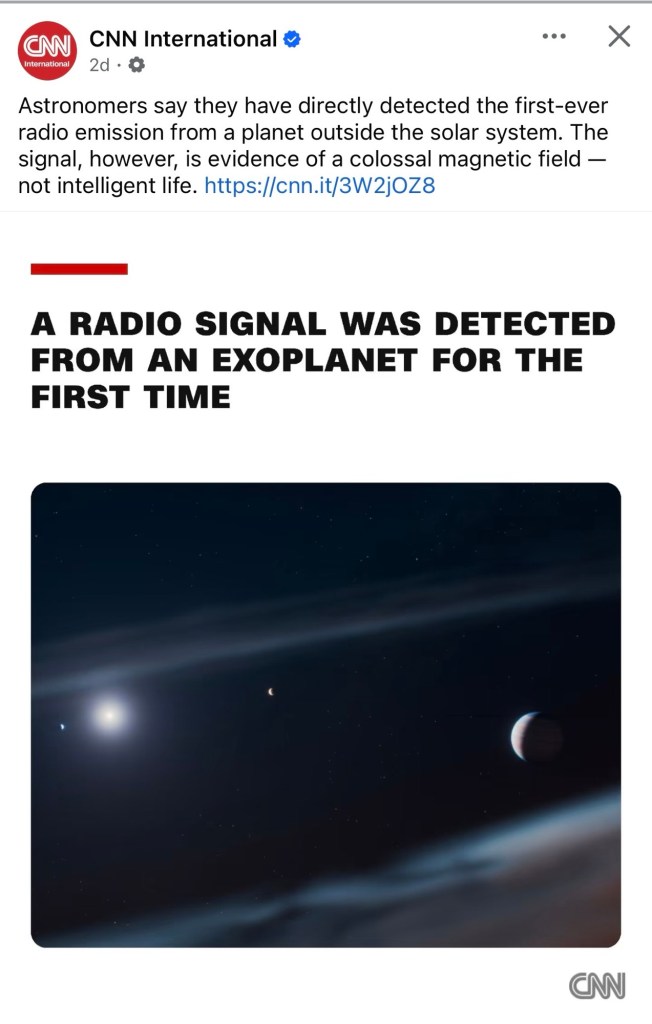
Meanwhile, also found this report yesterday that scientists have detected for the first time a radio signal from an “exoplanet” – a planet outside our Solar System; however, it is not from an intelligent life or some alien but from “a colossal magnetic field”.

These are very interesting bits of information from space science that show us how far we have advanced technologically. You could just imagine where our latest technologies would bring us! Fact is, all these techs and gadgets we now enjoy were science fiction to us when we were growing up like phones capable of sending videos anywhere, anytime.

From Facebook, 05 October 2026.

What I like most in these developments is that great wonder of how vast is this universe indeed – so unimaginable. The more they prove to us the existence of an all-knowing, all-powerful God. Here we find science actually corroborating the truth that the Bible has been telling us of who made the heavens above us.

And the good news is, in this vast universe, our God is not only omniscient and omnipotent but most of all, all-loving God who chose to love and care for us earthlings in this tiny planet called Earth.

In an apparent conspiracy by the universe in my favor as I prepared my homily yesterday for the Fatima novena, my laptop suddenly alerted me after lunch of a new article on space travel but this time from a spiritual writer I follow at WordPress.com called The Devotional Guy by Rainer Bantau!

As I read Rainer’s thoughts on the relationships of faith and science fiction, what caught my attention was this part of his blog, of how would you explain Christianity to an alien?

What happens when someone encounters Christianity who has absolutely no Christian context?

Imagine trying to explain the Gospel to someone who looks at you and says:

“Wait. You believe the Creator of the universe became one of His creatures?”

Suddenly, Christianity sounds pretty astonishing again. We’ve heard the story so many times that we forget how completely outrageous and beautiful it actually is.

When humanity rebels against the God who created it, God doesn’t walk away. Instead, He enters our world.

Love takes on flesh as grace meets us in our mess. Just as death appears to win, Jesus walks out of the grave.

That’s not small. It’s cosmic. (https://thedevotionalguy.blog/2026/10/05/going-to-space/).

Photo by a friend at Seabrook, Washington, 06 September 2026.

Let us read anew these words by The Devotional Guy: “When humanity rebels against the God who created it, God doesn’t walk away. Instead, He enters our world. Love takes on flesh as grace meets us in our mess. Just as death appears to win, Jesus walks out of the grave. That’s not small. It’s cosmic.”

So lovely! But, sadly too, considering the great amounts of money and time and talents humans have spent sending people and objects into space to detect life forms outside our planet, we still ask the same question of the scribe to Jesus, “who is my neighbor?”

There was a scholar of the law who stood up to test Jesus and said, “Teacher, what must I do to inherit eternal life?” Jesus said to him, “What is written in the law? How do you read it?” He said in reply, “You shall love the Lord, your God, with all your heart, with all your being, with all your strength, and with all your mind, and your neighbor as yourself.” He replied to him, “You have answered correctly; do this and you will live.” But because he wished to justify himself, he said to Jesus, “And who is my neighbor?” Jesus replied, “A man fell victim to robbers as he went down from Jerusalem to Jericho” (Luke 10:25-30).

How sad that while we are awed by the vastness of the universe that envelop us whether at night or at daytime, here we are separated by an equally great space often with those supposed to be closest to us like family and friends and colleagues at home or anywhere.

Photo by Mr. Chester Ocampo, 2019.

As a chaplain giving recollections and talks to our students, I have seen many young people today are over thinkers but not critical thinkers.

I remind them that critical thinking is about comprehension and analysis of data and information gathered.

Over thinking is different. It is a vice when we worry a lot – over think – because we lack trust with others and with ourselves. And ultimately with God!

The scholar of the law was overthinking when he asked “who is my neighbor?” because for them at that time, their neighbors were just their fellow Jews. Until now we think the same way, putting people into categories like ice cream with the old rich and famous as “all-time favorites”, the popular as “flavor of the month” and the ordinary folks as “dirty ice cream” cheaply sold in carts.

Over thinking happens when we forget to feel more the other person, when we feel different from them instead of being same kin from which the word kind came from. A kind person is one who treats you as one of his kin, and kind.

From forbes.com, 2019.

St. Therese of the Child Jesus whose feast we celebrated recently wrote in her journal more than a hundred years ago, “I have understood that true greatness is found not in the name but in the soul.”

If we look more into our heart, into our soul, we find Jesus, we find our true self, and we find everyone our neighbor to be loved and respected, cared and understood.

Twenty years ago there was a popular TV series called The X-Files of two good looking detectives handling cases of paranormal of paranormal nature like aliens and other out-of-this-world things. Its famous line says “The truth is out there.”

Nope. The truth is not out there. It is right here inside our heart, always longing for the ultimate truth that leads to eternal life, beyond this vast universe.

That truth is a person, our Savior Jesus Christ dwelling in our hearts, leading us back to heaven by first being a neighbor to everyone. After all, greater than the stars we marvel above us, we are a universe in ourselves, a vast network of interrelated galaxies of immense beauty so closely within our reach. Amen.

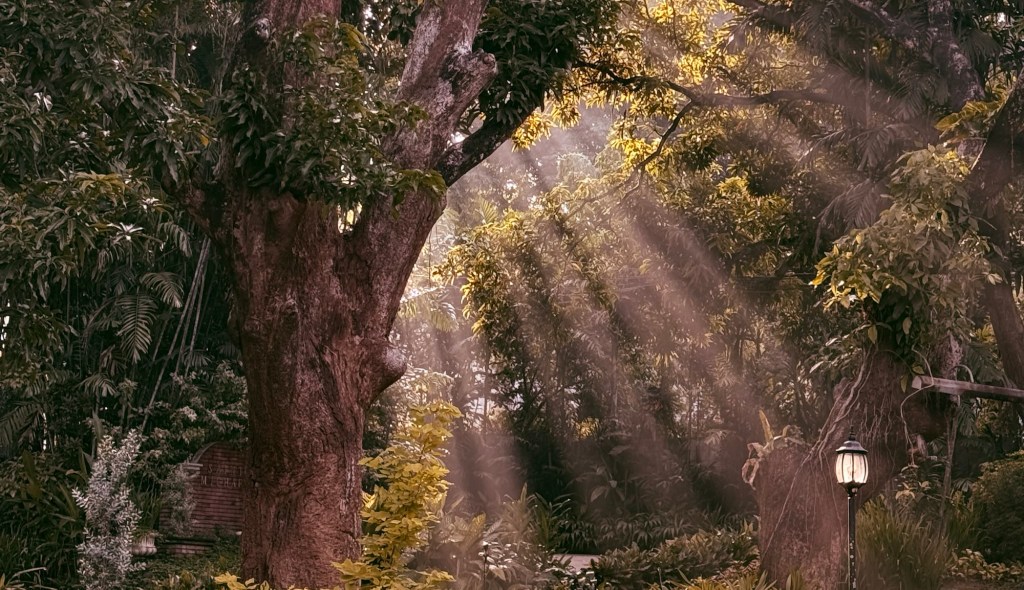
Photo by author, St. Michael Retreat House, Antipolo city, 21 July 2026.

Chosen to be fruitful

Lord My Chef Sunday Recipe for Soul by Fr. Nicanor F. Lalog II
Twenty-Seventh Sunday in Ordinary Time, Cycle A, 04 October 2026
Isaiah 5:1-7 ><}}}}*> Philippians 4:6-9 ><}}}}*> Matthew 21:33-43
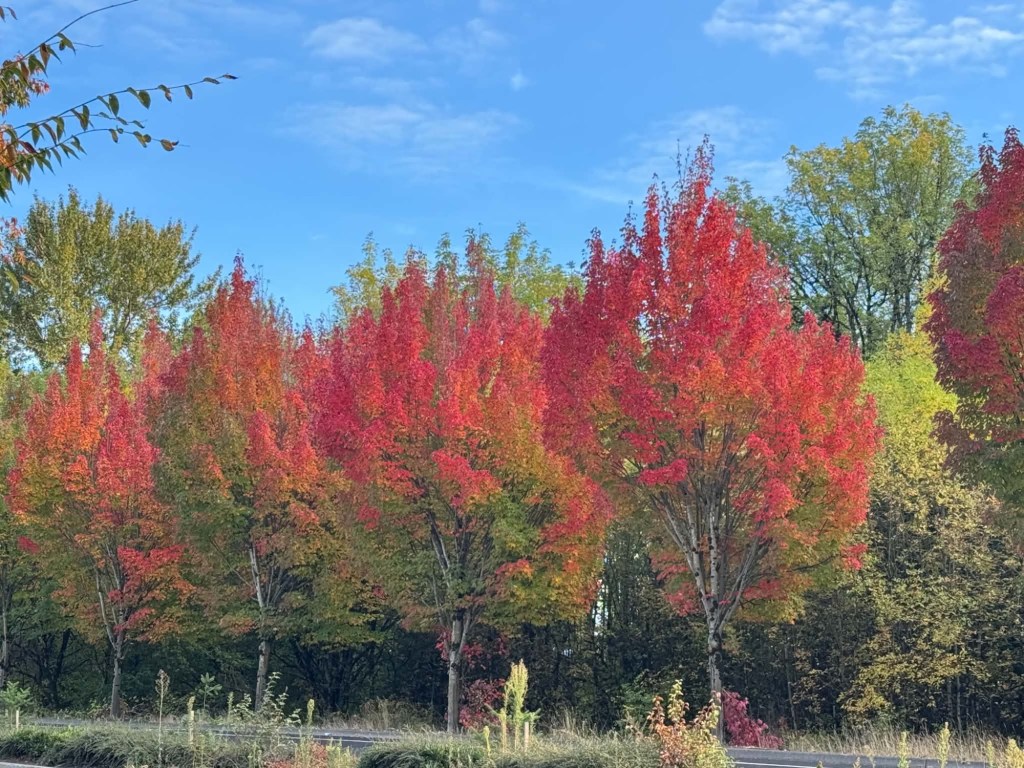
Photo by a friend in Washngton State, 01 October 2026.

A friend recently sent me this photo of the start of autumn that brought back memories of my vacation on two occasions in the States and Canada during that most wonderful season. It even made me wondered lately why God did not give us four seasons like in other countries.

I know. It is kind of crazy and weird, even stupid especially at how a Chinese friend who took his priestly formation at UST twenty years ago used to tell me the Philippines is a paradise where we can work and play all year round unlike them who have to work hard for six months to stock food and wood because the other half of the year is so cold that they have to stay indoors most of the time. Until now he is all praises to our country so blessed abundantly in resources and natural wonders.

And indeed! Our country is a paradise – so blessed, so beautiful, so rich. And yet so poor and miserably mismanaged by us all that we perfectly fit in the first reading and gospel this Sunday:

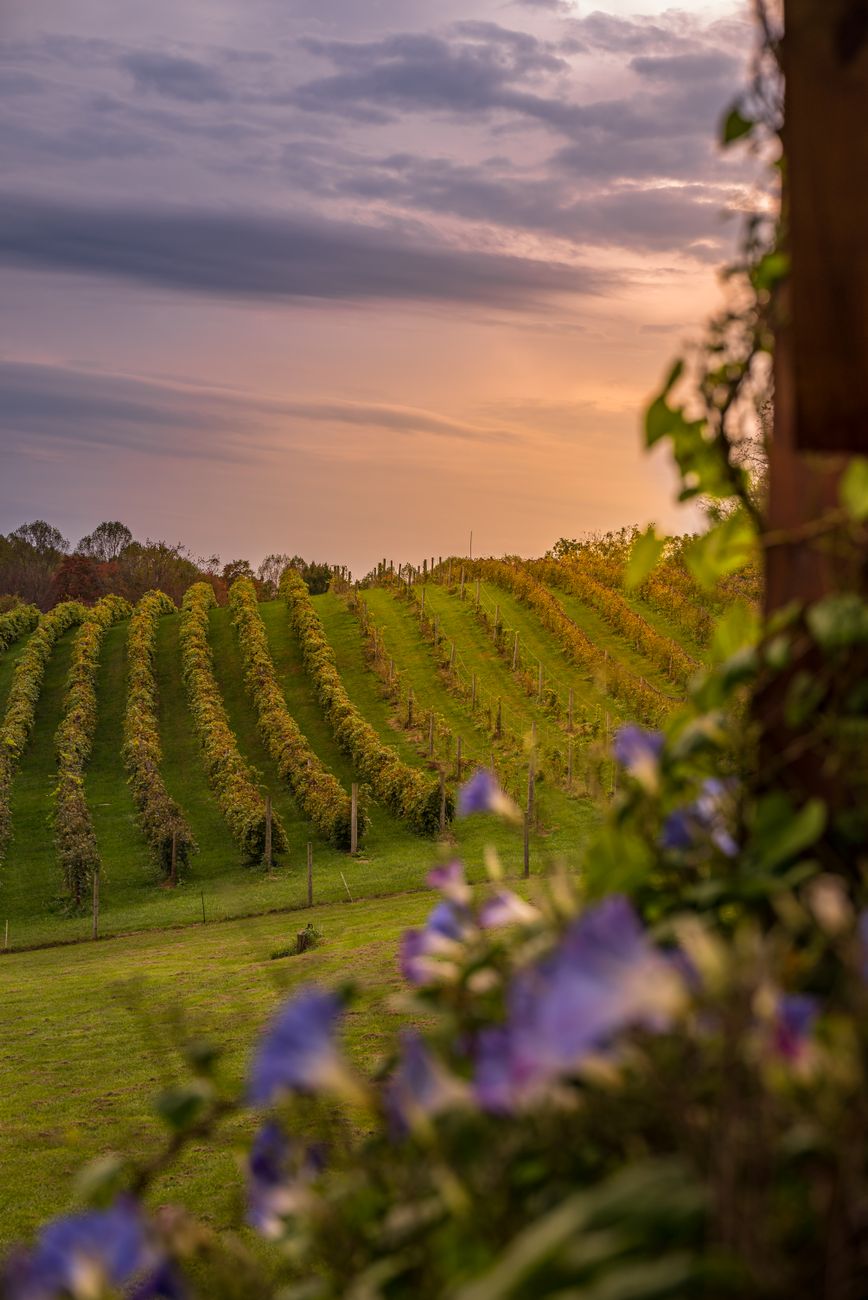
Let me now sing of my friend, my friend’s song concerning his vineyard. My friend had a vineyard on a fertile hillside; he spaded it, cleared it of stones and planted the choicest vines; within it he built a watchtower, and hewed out a wine press. Then he looked for the crop of grapes, but what it yielded was wild grapes (Isaiah 5:1-2).

Photo by author, Pundaquit, San Antonio, Zambales, 14 May 2025.

Our country is exactly that wonderful vineyard planted by the Lord with its vast, fertile lands and long coastlines with lush greeneries of plains and mountains and despite all these, we import much of our food like rice and vegetables and fruits including fish like galunggong, even pig skins for chicharon! Like Isaiah, we ask what happened to our country?

For Isaiah, the vineyard represented Israel as the chosen people of God, so loved and cared but produced bitter fruit with their repeated infidelity and sins against God that went on until the coming of Jesus who used the same imagery into a parable of the kingdom of heaven so applicable to our own time.

Photo by Chris F on Pexels.com

Jesus said to the chief priests and the elders of the people: “Hear another parable. There was a landowner who planted a vineyard, put a hedge around it, dug a wine press in it, and built a tower. Then he leased it to tenants and went on a journey. When vintage time drew near, he sent his servants to the tenants to obtain his produce. But the tenants seized the servants and one they beat, another they killed, and a third they stoned. Again he sent other servants, more numerous than the first ones, but they treated them in the same way. Finally, he sent his son to them, thinking, ‘They will respect my son.’ But when the tenants saw the son, they said to one another, ‘This is the heir. Come, let us kill him and acquire his inheritance.’ They seized him, threw him out of the vineyard, and killed him (Matthew 21:33-39).

Jesus was still in the temple area where his enemies have gathered to seek ways of putting him under arrest. His parable of the wicked tenants is so similar with Isaiah’s that speaks too at the same time of ourselves and of our time, of how we have become like those wicked tenants taking the “vineyard” as totally ours. Like those tenants, we have claimed and possessed on our own this very life as “mine” and therefore, “owner” with every right to do whatever we want like have abortion, take contraceptives, have casual sex, even decide which gender to choose!

We have “overstretched” our rights without any regard at all to others and to environment. Consciously or unconsciously, we have deleted God from life that we have become relativistic without absolute morals and morality because we have made ourselves the measure and standards of everyone and everything – because, we own the “vineyard”.

Photo by Dra. Carol Reyes-Santos, MD, in Southern California, October 2023.

Then we wonder like Isaiah why we harvest bitter, wild grapes of broken relationships and emptiness despite the plethora of technologies and gadgets we now have? Or, like the chief priest and elders so angrily telling Jesus how the wicked tenants must be punished for usurping the vineyard and putting the owner’s son to death when in fact we are them?

Jesus said to them, “Did you never read in the Scriptures: The stone that the builders rejected has become the cornerstone; by the Lord has this been done, and it is wonderful in our eyes? Therefore, I say to you, the kingdom of God will be taken away from you and given to a people that will produce its fruit” (Matthew 21:40-43).

Here now lies the good news this Sunday: in Isaiah’s parable of the vineyard, God is distinct from the vineyard but in Christ’s parable, we are the vineyard of the Lord because Jesus is one with us being the Son of the owner sent to gather his share of produce.

Jesus promises us today of better produce to be shared and enjoyed not only in eternity but right here in this life for we are the Lord’s vineyard called to be fruitful. As a continuation of last Sunday’s parable of the two sons, Jesus gives us today the chance to make that wise and good decision of finally doing what is right, just and good. Of finally obeying the Father as St. Paul beautifully reminds us in the second reading to be like him, an imitator of Christ becoming someone who could be imitated by others as witnesses of Jesus, striving for “whatever is pure, whatever is lovely, whatever is gracious” (Phil. 4:8).

Recent news of how a group of ordinary people on board a flight from Dubai to Tel Aviv prevented the crash of their plane is a remarkable story of taking care of the Lord’s vineyard, of how it always bear good fruits. The so-called heroes of FlyDubai were all very ordinary like us; what enabled them to be heroes was their being true and faithful in their responsibilities like the mother who went to attend to her daughter in the toilet and became the first to notice trouble in the cockpit; the Indian captain who for many years of flying had always thought of the lives depending on him who struggled to rise and opened his cockpit door to be helped by men who knew nothing about flying and martial arts except the need to save lives by stabilizing the plane and subduing the terrorist co-pilot.

It was a story like the parables today and last Sunday of how people chose to uphold what is good, what is right, what is just. They are heroes not because of any special skills nor talents but were simply faithful in life, most likely always present for their families and friends, clients and patients. And to God ultimately.

Isaiah and Jesus invites us this Sunday to look into ourselves, at how we have tended and cared for our lives, for others in this vineyard of the Lord. Think of those many occasions we have wasted God’s blessings like our talents not put into use or never harnessed, health taken for granted and loved ones we have ignored and refused to love. Let us grab this opportunity of taking care of the Lord’s vineyard he had entrusted to us to be fruitful. It is us who benefit most in these fruits meant to make us better here and hereafter. Amen. Have a blessed week ahead!

Photo by Ms. Kei Abad in Japann, October 2025.

Rebuild, repair, create in God

Lord My Chef Daily Recipe for the Soul, 24 September 2025
Wednesday, Twenty-Fifth Week in Ordinary Time, Year I
Ezra 9:5-9 <*((((>< + ><))))*> Luke 9:1-6
Residents of Hagonoy Bulacan walk their way to flooded portions of premise surrondings St. Anne Parish as they protest this was following exposes of flood control anomalies. Bulacan province has been under scrutiny for receiving multi million worth of flood control projects but still suffers severe flooding. (Photo by Michael Varcas)
God our loving Father,
today I feel like Ezra,
praying filled with
shame
sadness
and hopes
at how we can
rebuild,
repair
and create
in you something good
for our country.

“My God, I am too ashamed and confounded to raise my face to you, O my God, for our wicked deeds are heaped up above our heads and our guilt reaches up to heaven… And now, but a short time ago, mercy came to us from the Lord our God, who left us a remnant and gave us a stake in his holy place; thus our God has brightened our eyes and given us relief in our servitude… in our servitude our God has not abandoned us; Thus he has given us new life to raise again the house of our God and restore its ruins, and has granted us a fence in Judah and Jerusalem” (Ezra 9:6, 8, 9).

Like Israel of Ezra's time,
your know so well,
God our Father
how our country
the Philippines
had always been guilty
of putting into power
corrupt and evil men and women
without any respect for you and
your people especially the poor
and suffering;
as a nation, we have always
been fragmented
not only among each other
but within ourselves,
doing things contrary
to your precepts
that corruption in government
had sunk deeper
into wholesale looting
of government money and resources
at the expense of the poor
and suffering.
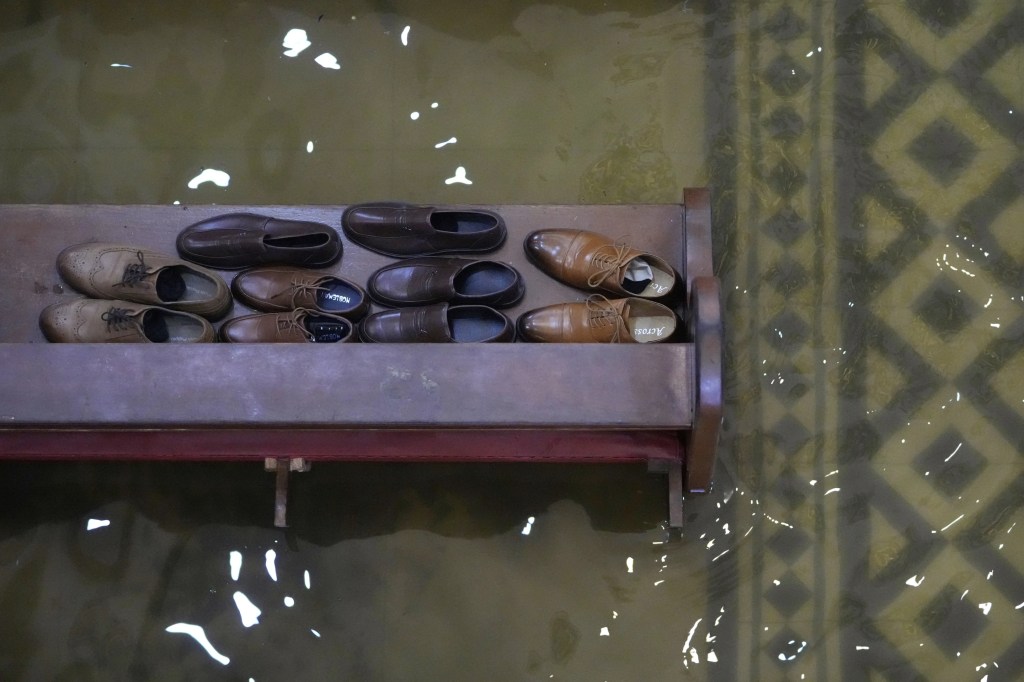
Scene at a wedding inside the flooded Barasoain Church in Malolos City, 22 July 2025; photo by Aaron Favila of Associated Press.
We are all angry.
Very angry, God our Father
for the shameless
people tasked to provide
us with infrastructures
and services that are
either non-existent or
substandard
because they have
looted the funds!

But, help us,
Lord,
how we shall go from
here in
rebuilding our nation,
our government,
our institutions
including the Church
where some parishes
as well as priests
are beneficiaries
of the stolen money;
how can we repair
not only the buildings
but the lives of those
destroyed and humiliated
and how can we create
a more just
and humane
society in Christ Jesus
so that this systematic
corruption
is finally
put into end.
Amen.
Photo by author, 08 August 2025.
Fr. Nicanor F. Lalog II
Our Lady of Fatima University
Valenzuela City
(lordmychef@gmail.com)