The space between us

Quiet Storm by Fr. Nicanor F. Lalog II, 06 October 2026

While preparing my homily yesterday for the second day of the novena in honor of the 109th apparition of the Blessed Virgin in Fatima, Portugal, I came across this interesting piece of information in my Facebook feeds about the two American space probes, Voyager 1 and Voyager 2 having “left” our solar system and now the farthest man-made objects from planet Earth.

According to NASA, Voyager 1 had covered about 25.6 billion kilometers as of August 2026 since its launch September 5, 1977 – that’s 49 years and two months ago!

Its travel speed is expected to slow down due to some intergalactic forces which would take time for me to understand and explain; nonetheless, NASA engineers say it would continue sending data from deep space to planet Earth until 2036.

From NASA.gov.

Meanwhile, also found this report yesterday that scientists have detected for the first time a radio signal from an “exoplanet” – a planet outside our Solar System; however, it is not from an intelligent life or some alien but from “a colossal magnetic field”.

These are very interesting bits of information from space science that show us how far we have advanced technologically. You could just imagine where our latest technologies would bring us! Fact is, all these techs and gadgets we now enjoy were science fiction to us when we were growing up like phones capable of sending videos anywhere, anytime.

From Facebook, 05 October 2026.

What I like most in these developments is that great wonder of how vast is this universe indeed – so unimaginable. The more they prove to us the existence of an all-knowing, all-powerful God. Here we find science actually corroborating the truth that the Bible has been telling us of who made the heavens above us.

And the good news is, in this vast universe, our God is not only omniscient and omnipotent but most of all, all-loving God who chose to love and care for us earthlings in this tiny planet called Earth.

In an apparent conspiracy by the universe in my favor as I prepared my homily yesterday for the Fatima novena, my laptop suddenly alerted me after lunch of a new article on space travel but this time from a spiritual writer I follow at WordPress.com called The Devotional Guy by Rainer Bantau!

As I read Rainer’s thoughts on the relationships of faith and science fiction, what caught my attention was this part of his blog, of how would you explain Christianity to an alien?

What happens when someone encounters Christianity who has absolutely no Christian context?

Imagine trying to explain the Gospel to someone who looks at you and says:

“Wait. You believe the Creator of the universe became one of His creatures?”

Suddenly, Christianity sounds pretty astonishing again. We’ve heard the story so many times that we forget how completely outrageous and beautiful it actually is.

When humanity rebels against the God who created it, God doesn’t walk away. Instead, He enters our world.

Love takes on flesh as grace meets us in our mess. Just as death appears to win, Jesus walks out of the grave.

That’s not small. It’s cosmic. (https://thedevotionalguy.blog/2026/10/05/going-to-space/).

Photo by a friend at Seabrook, Washington, 06 September 2026.

Let us read anew these words by The Devotional Guy: “When humanity rebels against the God who created it, God doesn’t walk away. Instead, He enters our world. Love takes on flesh as grace meets us in our mess. Just as death appears to win, Jesus walks out of the grave. That’s not small. It’s cosmic.”

So lovely! But, sadly too, considering the great amounts of money and time and talents humans have spent sending people and objects into space to detect life forms outside our planet, we still ask the same question of the scribe to Jesus, “who is my neighbor?”

There was a scholar of the law who stood up to test Jesus and said, “Teacher, what must I do to inherit eternal life?” Jesus said to him, “What is written in the law? How do you read it?” He said in reply, “You shall love the Lord, your God, with all your heart, with all your being, with all your strength, and with all your mind, and your neighbor as yourself.” He replied to him, “You have answered correctly; do this and you will live.” But because he wished to justify himself, he said to Jesus, “And who is my neighbor?” Jesus replied, “A man fell victim to robbers as he went down from Jerusalem to Jericho” (Luke 10:25-30).

How sad that while we are awed by the vastness of the universe that envelop us whether at night or at daytime, here we are separated by an equally great space often with those supposed to be closest to us like family and friends and colleagues at home or anywhere.

Photo by Mr. Chester Ocampo, 2019.

As a chaplain giving recollections and talks to our students, I have seen many young people today are over thinkers but not critical thinkers.

I remind them that critical thinking is about comprehension and analysis of data and information gathered.

Over thinking is different. It is a vice when we worry a lot – over think – because we lack trust with others and with ourselves. And ultimately with God!

The scholar of the law was overthinking when he asked “who is my neighbor?” because for them at that time, their neighbors were just their fellow Jews. Until now we think the same way, putting people into categories like ice cream with the old rich and famous as “all-time favorites”, the popular as “flavor of the month” and the ordinary folks as “dirty ice cream” cheaply sold in carts.

Over thinking happens when we forget to feel more the other person, when we feel different from them instead of being same kin from which the word kind came from. A kind person is one who treats you as one of his kin, and kind.

From forbes.com, 2019.

St. Therese of the Child Jesus whose feast we celebrated recently wrote in her journal more than a hundred years ago, “I have understood that true greatness is found not in the name but in the soul.”

If we look more into our heart, into our soul, we find Jesus, we find our true self, and we find everyone our neighbor to be loved and respected, cared and understood.

Twenty years ago there was a popular TV series called The X-Files of two good looking detectives handling cases of paranormal of paranormal nature like aliens and other out-of-this-world things. Its famous line says “The truth is out there.”

Nope. The truth is not out there. It is right here inside our heart, always longing for the ultimate truth that leads to eternal life, beyond this vast universe.

That truth is a person, our Savior Jesus Christ dwelling in our hearts, leading us back to heaven by first being a neighbor to everyone. After all, greater than the stars we marvel above us, we are a universe in ourselves, a vast network of interrelated galaxies of immense beauty so closely within our reach. Amen.

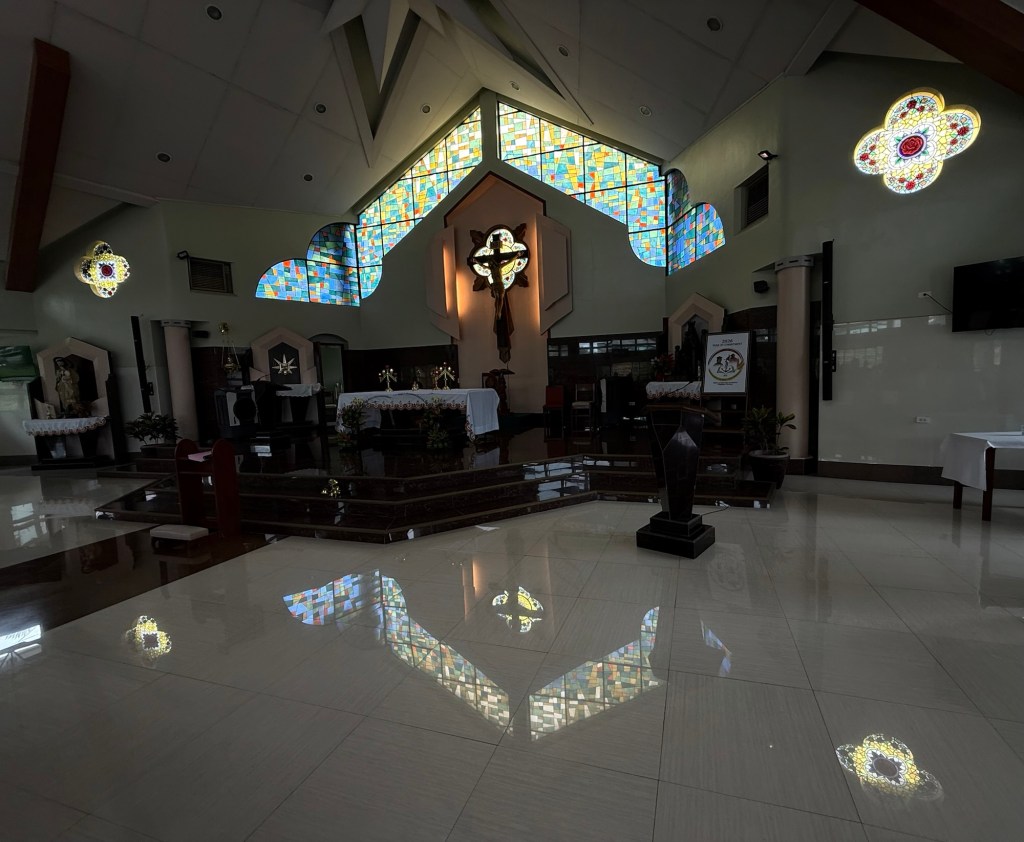
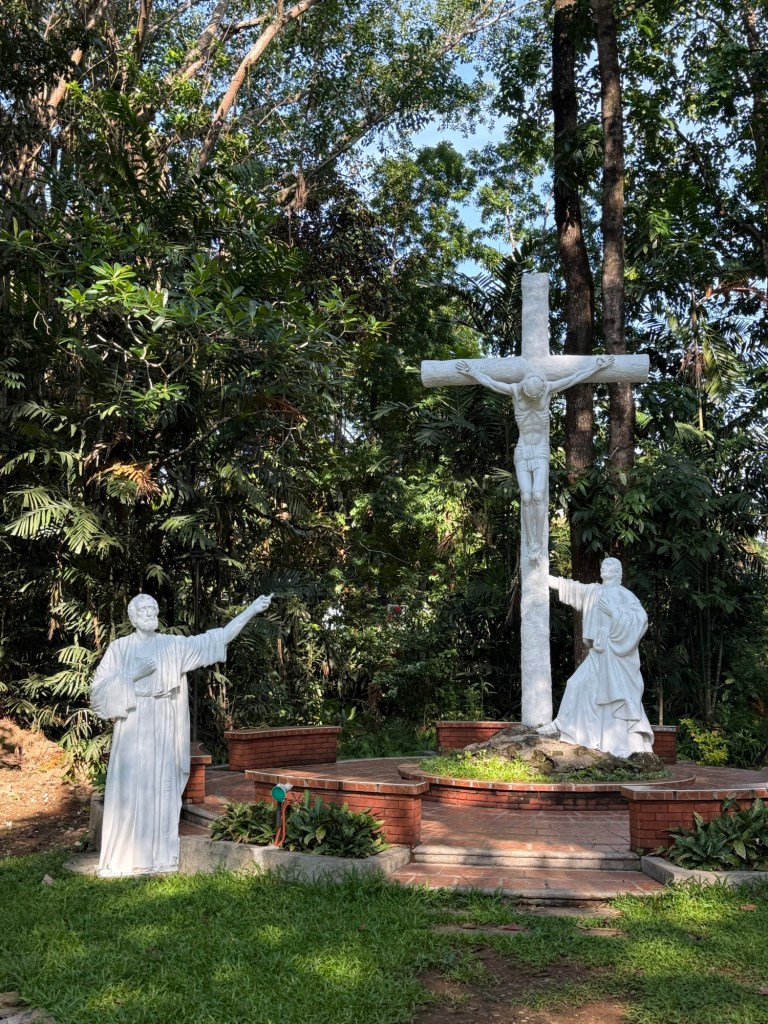
Photo by author, St. Michael Retreat House, Antipolo city, 21 July 2026.

Doing the work of God

Lord My Chef Sunday Recipe by Fr. Nicanor F. Lalog II
Twenty-Fifth Sunday in Ordinary Time, Cycle A, 20 September 2026
Isaiah 55:6-9 ><}}}}*> Philippians 1:20-24, 27 ><}}}}*> Matthew 20:1-16
Photo by a friend at Seabrook, Washington, 06 September 2026

From fraternal correction to forgiving those who sin, Jesus continued teaching his disciples on their way to Jerusalem about some important aspects of living together as a community of disciples, his Church he had founded on Peter the Rock while in Caesarea Philippi five Sundays ago.

Today we hear Jesus teaching us about “work” – another issue in our time that has become so complicated as more employees and workers assert to the point of overextending their rights and privileges without any consideration to others.

We have a Tagalog word for that, pananaghili.

It may sound so beautiful but it is so negative in meaning. Pananaghili is an ill-feeling of envy and jealousy toward another person’s better lot like success, possession, or pleasures like when we complain of others more compensated in doing less or nothing when we did all the work. Exactly like the parable of Jesus this Sunday:

Jesus told his disciples this parable: “The kingdom of heaven is like a landowner who went out at dawn to hire laborers for his vineyard. After agreeing with them for the usual daily wage, he sent them into his vineyard. Going out about nine o’clock, he saw others standing idle in the marketplace, and he said to them, ‘You too go into my vineyard, and I will give what is just.’ So they went off. And he went out again around noon, and around three o’clock, and did likewise. Going out about five o’clock, the landowner found others standing around and said to them… ‘You too go into my vineyard.’ When it was evening the owner of the vineyard said to his foreman, ‘Summon the laborers and give them their pay, beginning with the last and ending with the first… So when the first came, they thought that they would receive more, but each of them also got the usual wage. And on receiving it they grumbled agains the landowner… ” (Matthew 20:1-6, 7-8, 10).

Photo by Mr. Raffy Tima, Batanes, September 2018.

Let us return to that Tagalog word pananaghili which often starts at home when we feel being “cheated” by a sibling, when a brother or a sister getting more favors because we feel our parents play favorites. Well, sometimes our pananaghili may be valid with a lot of basis, and sometimes nothing at all except a feeling of entitlement on our part.

But, here is the point that work is lined up with fraternal correction and forgiving: our attitude toward work always result in our kind of relationships with one another and ultimately with God.

Jesus reminds us anew to level up ourselves in looking at all these things especially work. Notice that at the start of his parable, Jesus clarified that work is something to be seen in the realm of the kingdom of heaven, always in relation with God.

Actually, work is always a call and gift from God that is why we must always be grateful by being responsible in our work. This is best expressed by another Tagalog word, hanap-buhay for work not just trabajo. Hanap-buhay literally means to “search life” or life’s meaning. Work is not just trabajo from the Spanish trabajar tinged with that curse in the Old Testament after the fall of Adam and Eve when God said “by the sweat of your face shall you get bread to eat” (Gen.3:19).

Photo by author, RISE Tower, Our Lady of Fatima University, Valenzuela City, August 2025.

In the New Testament, right here in this parable, Jesus shows us that work is a sharing, a participating in the work of God. The whole earth is God’s vineyard we are cultivating, we are harnessing. Here we find the interrelationships of man and creation, of environment we all have to care for. In our work, it is God whom we please and seek. We do not work simply to eat and survive; we work to reflect God in whom we are all created in his own image and likeness which is love.

That is why Isaiah invites us in the first reading to seek the Lord, to call upon God while he is near even in our work, in our ministry, in our duties and responsibilities wherever we may be. And when, where do we feel closest to God?

I find it very striking that most often, there is only a hairline difference when we are closest and farthest from God that happens in the realm of sin. What a paradox that we feel God closest when we are most contrite of our sins, and God farthest when we are deep in sin.

Sometimes sin is not that bad at all: when our conscience is bothered with an evil we have done, we become aware of God’s presence, whether near or far. The mere fact we are bothered by our conscience, that is God so near us. Like what the workers hired first felt – they could not outrightly complain to the landowner directly that they just grumbled. Sounds like us, is it not?

This is the purpose of Christ’s parable this Sunday: to bother our selves to examine our nearness and distance from God that is most clear in the area of our work where we are most challenged to be responsible and faithful. See how the landowner representing God confronted one of those workers grumbling against him:

‘My friend, I am not cheating you. Did you not agree with me for the usual daily wage? Take what is yours and go. What if I wish to give this last one then same as you? Or am I not free to do as I wish my own money?’ (Matthew 20:13-15)

Photo by Mr. Jim Marpa, June 2019.

Remember what we reflected last Sunday: when we sin we not only transgress against another person but firstly with God that it is useless to compare our sins with others that we simply have to forgive because we all sin against God.

In our work whether at home or in the office or wherever, we complain a lot of God being unfair, that we deserve more when in fact God is most just. We forget that truth and reality that God has been most generous with us always. Problems happen the moment we start thinking of being superior than others, of being entitled, assuming a lot of things in our own favor.

Although we cannot deny the fact of many unfair practices happening especially in our country, it all leads to each one’s fidelity to God: if we are truly the disciples of Christ called Christians, whether as an employer or employee, justice must prevail all the time among us. That is why the Church through Pope Leo XIII issued in 1891 Rerum Novarum for the protection of the rights of workers especially women following the excesses of the Industrial Revolution. Historians agree Rerum Novarum is one of the most important document ever produced in the past century with most impact that gave the world the principles of just and living wage, eight hour shifts, private ownership among others.

This Sunday, all our readings affirm God’s words through the Prophet Isaiah that “my thoughts are not your thoughts, nor are your ways my ways”, calling us to rise above our very selves in the service of one another for the glory of God.

Retired Chief Justice Artemio Panganiban expressed this perfectly last week when he reminded the senators to not just see the impeachment proceedings in the eyes of laws but most of all to serve justice to the people. His words apply not only to the senators but to everyone especially those with direct impact to the lives of the majority of people so loaded with too much sufferings from the horrendous traffic to poor basic services. Like St. Paul, retired Chief Justice Panganiban seemed to be telling everyone to “conduct yourselves in a way worthy of the gospel of Christ” especially those in government. Amen. Have a blessed week ahead.

The definitive question of all

Lord My Chef Sunday Recipe for Soul by Fr. Nicanor F. Lalog II
Twenty-first Sunday in Ordinary Time, Cycle A, 23 August 2026
Isaiah 22:19-23 ><}}}}*> Romans 11:33-36 ><}}}}*> Matthew 16:13-20
Photo by Ann H on Pexels.com

Last Saturday at the Solemnity of the Assumption, we reflected on the need to ask the right – and difficult – questions in our life like Mary. It does not really matter if we don’t get answers right away because along the way, God reveals and shows us himself and his plans for us if we keep asking him with our questions.

That is why this Sunday as Jesus continued to travel into pagan territory, he asks us like his disciples along the way his most definitive question of all, “who do you say that I am?”

Jesus went into the region of Caesarea Philippi and he asked his disciples, “Who do people say that the Son of Man is?” They replied, “Some say John the Baptist, others Elijah, still others Jeremiah, or one of the prophets.” He said to them, “But who do you say that I am?” (Matthew 16:13-15)

Photo by author, St. Paul Spiritual & Renewal Center, Bgy. Tanyawak, Alfonso, Cavite, 18 August 2026.

After healing the possessed daughter of a Canaanite woman last week in the district of Tyre and Sidon, Jesus and his disciples reached Caesarea Philippi that used to be the summer capital of the Roman officials in northern Israel. It had an abundant supply of water that is why the Romans built many buildings including a temple to one of their major goddesses.

Imagine such an affluent backdrop for Christ’s intensive “lecture series” about discipleship to the Twelve: first, he surveyed them what the people were saying “who the Son of Man is” before asking them directly, “but who do you say that I am?”.

In 2009, the British-American author and inspirational speaker on business leadership Simon Sinek published his book Start with Why because the question why helps us clear motivation in every undertaking we make. Starting with why is to get to the very core, the raison d’etre of our business or plan or project.

However, we are not only dealing with projects in life; life itself is our very project too which is addressed by the question who. Actually, Sinek’s model of starting with why is anchored on persons and relationships that are directly concerned with the who because every why is sustained by a who. No project nor plan nor business nor whatever endeavor by humans would continue without persons addressed by the question who!

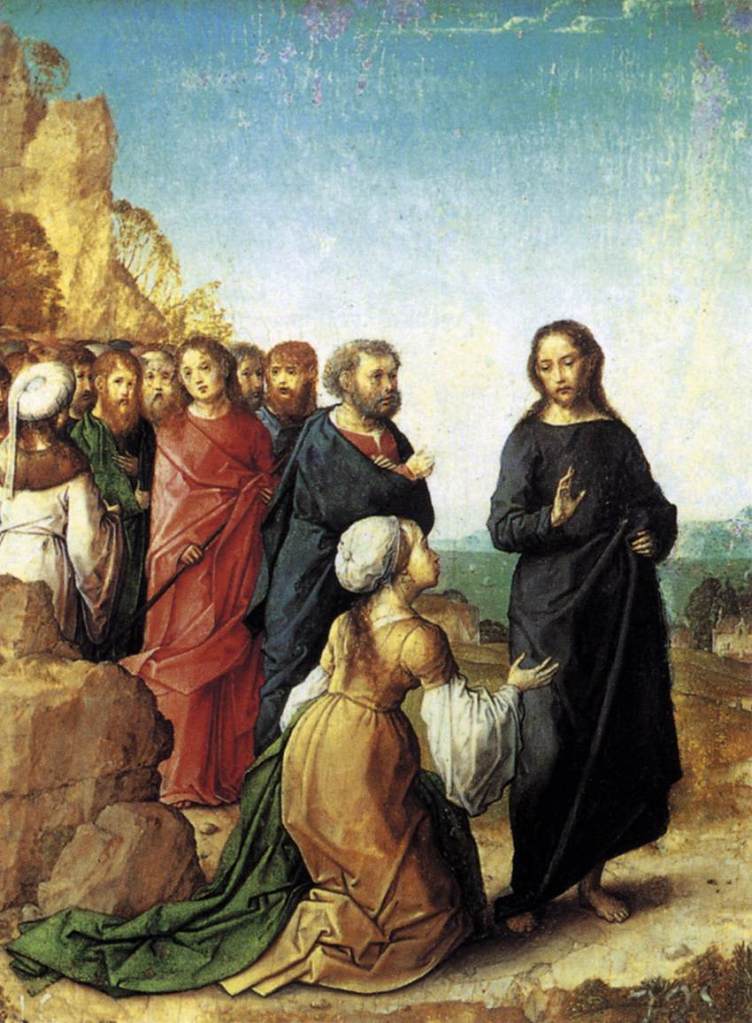
A painting of “The Canaanite Woman asks for healing for her daughter” by Spanish painter Juan de Flandes ca. 1500 as part of the 47 small panels of paintings commissioned by Queen Isabella I of Castile; from commons.wikimedia.org.

More than a person, who is a relationship, a meaning for us to continue with our why like in fulfilling our mission in Jesus, in answering his call to follow him.

As a continuation of our reflection last Sunday about faith and intimacy in the Lord, clarifying who is Jesus Christ for us deepens that faith and intimacy we have in him.

It is only when we are clear and convinced with who is Jesus shall we become clearly convinced with our call and mission in him by finding him among everyone and whatever circumstances we may get into in life. Even in our human relationships.

Relationships and friendships, marriages and ties are shattered and broken these days not merely because of infidelity and betrayals which start to happen the moment we take our beloved for granted. We betray one another not when we speak against them or turn against them; it all starts the moment we no longer recognize them as a beloved, our loved one or friend.

Would you exchange a family member or a friend for any amount of money or thing or property? Or your wife or husband for another better looking woman or man?

Photo by author, St. Paul Spiritual & Renewal Center, Bgy. Tanyawak, Alfonso, Cavite, 18 August 2026.

Normally, we deal with every question first with our minds like when the apostles gave Jesus varied answers of leading religious figures like John the Baptist and the prophets as what the people thought of him. But, it took on a different dimension when Jesus asked “But who do you say that I am?” that is pointed into our hearts.

And here we find a remarkable quality – sometimes deficiency – of Peter. He was always baring his heart and soul; he easily opens us what’s in him and clearly here as Jesus later explained, Peter allowed the Spirit to speak from his heart, “You are the Christ, the Son of the living God.”

Notice in Peter’s response we find traces of Sinek’s starting with why. Peter with his his brother Andrew and fishing partners James and John were the first disciples called by Jesus, following him longest than the rest of the Twelve. For Peter, more than finding in Jesus the answers to his starting question of why about life, he had remained with Christ primarily of the who he is to him. Despite that he would waver on this many times, he remained faithful to Jesus with his own martyrdom.

See that in Matthew’s account, Peter said the words “You are the Christ, the Son of the living God” while Mark and Luke merely reported Peter as saying “You are the Messiah/Christ” (Mk.8:29 and Lk.9:20). Peter saying Jesus as “Son of the living God” reveals something deeper in who is Jesus for him as he speaks of a relationship. Not just details and facts.

Most likely, Peter must have experienced something so deep as in “living”, so alive like when he saw that miraculous catch of fish before being called to become fisher of men. It was an experience that Paul describes to us in the second reading, of having experienced personally the “depth of the riches and wisdom of God” (Rom.11:33).

Photo by author, St. Paul Spiritual & Renewal Center, Bgy. Tanyawak, Alfonso, Cavite, 18 August 2026.

That is how we are with those most dearest to us – there are things so deep for words, so profound realities we have experienced that we have come to be so convinced, so in love with someone we follow or regard. Someone like “a peg in a sure spot” as God described Eliakim to Shebna according to Isaiah (22:23).

More than the why of doing, the who leads us to our being. And the more we get to know Jesus, the more we also get to know who we are. Our identity as a person does not depend on what social media portray or what others say. The more we get to know Jesus, the more we get to know ourselves, the more we become at home with our weaknesses and failures, sins and shortcomings.

Photo by author, St. Paul Spiritual & Renewal Center, Bgy. Tanyawak, Alfonso, Cavite, 18 August 2026.

This may sound simplistic: all these problems we have about school violence, degradation of our moral values as a nation that perpetuate in office corrupt and inept officials while destroying our environment with our disregard for proper disposal of waste and garbage, may be due to our disregard for who is Jesus to us.

The question who connects us with God and everyone. And with our very self. How sad that in this age of too much digitization, we have been so focused on techniques of doing like what and how, forgetting being, the focus of who.

From Caesarea Philippi which is up north, Jesus and his disciples would take a U-turn down towards Jerusalem that is their true destination. After this scene comes the Transfiguration of Jesus and the triple predictions of Jesus of his coming passion, death and resurrection. Let us know who Jesus is so that we can follow him more closely as his disciples. Amen. A blessed, hopefully warmer and drier week ahead to everyone!

Our strained relationships

Lord My Chef Daily Recipe for Soul by Fr. Nicanor F. Lalog II
Wednesday, Nineteenth Week in Ordinary Time, Year II, 12 August 2026
Ezekiel 9:1-7; 10:18-19, 22 <*((((>< + ><))))*> Matthew 18:15-20
Photo by author, Tam-Awan Village, Baguio City, January 2019.
"If your brother 
sins against you...."
I feel you speaking to me
directly today,
Lord Jesus;
you know so well how
often my brothers
and sisters sin against me;
let's not included those times
I am the one who sinned against
them but why is it,
Lord,
it is different when a brother
or a sister sins against me?
There is the deep hurt
because he is a brother
or a sister - there is
a relationship,
a bond,
a trust
that is broken;
sometimes unintentionally
that they seemed to have not
minded at all,
or overlooked that makes it
more painful actually;
but, how shall I approach
him or her?

So often it becomes
the source of more problems
because,
simply,
they would claim they have
no intentions of hurting us
or never thought what they
did to us or say to us was
wrong;
and when we approach them,
they do not seems to care at all.
With so much platforms
in expressing our thoughts and
feelings,
the more
we have become detached
from each other,
the more we are fragmented,
the more our relationships
are strained.
Give us the courage
and wisdom,
and tact as well
to speak with a brother
or sister who sins against us;
more than restoring our ties,
may you dwell anew
dear Jesus amid us
so that more than seeing each
other, may we see you
and share you
to create a sacred ground
between us because,
"For where two or three
are gathered together
in my name,
there am I
in the midst of them"
(Matthew 18:20).
Amen.
Photo by author, Sonnen Berg Mountain View, Davao City, August 2018.

Understanding the parables, getting close to Jesus

Lord My Chef Sunday Recipe for Soul by Fr. Nicanor F. Lalog II
Seventeenth Sunday in Ordinary Time, Cycle A, 26 July 2026
1 Kings 3:5, 7-12 ><}}}*> Romans 8:28-30 ><}}}*> Matthew 13:44-52
Photo by author, Anvaya Cove, Morong, Bataan, 20 July 2026.

We now come to the final installment of the last three parables by Jesus that began two Sundays ago that speak of the mystery of the kingdom of heaven, its unfolding and demands from us his disciples.

There are a total of seven parables in Matthew 13 known as discourse in parables which started with the parable of the sower until last Sunday where Jesus repeatedly told his listeners that included us today that “whoever has ears ought to hear”; now at its final installment, Jesus asks us after explaining everything, “Do you understand all these things?”

“Do you understand all these things?” They answered “Yes.” And he replied, “Then every scribe who has been instructed in the kingdom of heaven is like the head of a household who brings from the storeroom both the new and the old” (Matthew 13:51-52).

Photo by author, Anvaya Cove, Morong, Bataan, 20 July 2026.

From the French word parabolein for “along the road/path”, parables are stories taken from daily life that offer us deep, profound lessons and realities especially about God and his loving presence among us, of the coming of his kingdom in Jesus Christ. Unfortunately, most of us dismiss them because they are so plain and simple. Or ordinary, not realizing that the deepest truths in life actually come from the simplest aspects of daily living. That is why Jesus kept reminding everyone to always listen, not just hear.

Listening is more intentional, deliberate and conscious, leading to understanding which is an internalization of the lessons and message said. Our Filipino translation shows this so well: to listen is makinig while to hear is madinig or marinig.

Makinig demands attention while dinig is passive, indicating more of the surface level of sounds and words, not really minding the meaning and context. That is why, listening is more reliable, more certain than hearing that has no intention of understanding at all what is meant by being said.

Photo by author, “St. Joseph Protector of the Child Jesus”, 20 March 2024.

Listening leads to knowing and understanding the what, where, when, how and why of events and things of the story or lessons. When there is understanding, relationship happens because more than the facts and details we listen to, we encounter persons. Pope Leo XIV beautifully said this in his first Lenten Message in February that “listening is the first sign of our willingness to enter into a relationship.”

Now we see the intention of Jesus in teaching in parables which is to have a personal relationship with us his listeners and disciples. Moreover, the very act of listening leading to understanding is a process of formation and transformation which is the bigger picture of Jesus teaching in parables – that we may be transformed in him especially when he asked today, “Do you understand all these things?”

Again, its Filipino translation reveals its true meaning and inner dynamics, Nauunawaan ba ninyo ang mga ito? To understand is maunawaan, from the root word una or first in order.

More than knowing, to understand or maunawaan is to realize which is the first of all others because that is the most essential, the most important. “To understand all these things” is not a question of human intelligence that is often short and lacking, and unreliable. “To understand all these things” is a spiritual intelligence, of the humble and lowly, the child-like whom Jesus praised the other week in our weekday gospel (15th week, Wednesday, 15 July 2026, Mt.11:25-27).

Jesus asks us this Sunday “do you understand all these things” to stress that the kingdom of heaven which is actually the person of Christ himself is a treasure beyond price like that treasure found by a man in the field or that precious pearl a trader had found that we are willing to renounce everything to have and possess him!

Understanding the parables of Jesus is finding “God first” before anything or anybody else. In the first reading, we find why King Solomon is the wisest person of all because when asked by God for any gift, he asked for “an understanding heart to judge your people and to distinguish right from wrong” (1Kings 3:9) which delighted God so much. The fear of the Lord is the beginning of wisdom indeed!

God is the first One we must always desire, think and search in life. Without God, we only come in vicious circles of addictions and emptiness and meaninglessness. It is no surprise at all that the most corrupt and vicious people are also the ones who disregard God, who live as if there is no eternity. Without God, we are reduced to mere creatures meant to just eat and survive. Nothing else. That is why some people do not mind at all looking stupid (mukhang tanga at tunay na tanga), without any self respect because only matter matters for them like money (mukhang pera) and things like power or popularity.

With God, we find meaning and direction in everything in life as St. Paul tells us in the second reading, “Brothers and sisters: We know that all things work for good for those who love God, who are called according to his purpose” (Rom. 8:28).

Photo by author, flower of a Balibago Tree, Anvaya Cove Resort, Bataan, 21 July 2026.

“All things”… including trials and tribulations for they make us stronger and better persons. When we look back to our past, we see there are more things we have to be thankful to God than be sorry and have regrets. Many times, our past failures and sufferings and tears have become our gateway to our victory and comfort and joy.

Understanding the parables of Jesus and of life in general is actually a movement into getting closer to Christ, of being “every scribe who has been instructed in the kingdom of heaven is like the head of a household who brings from the storeroom both the new and the old” (Mt. 13:52).

Here we find the coming into full circle of Christ’s discourse in parables: from listening to understanding which is a process of communion and oneness with the Master, Jesus whose very Person is the kingdom of heaven.

Looking back to these past three Sundays of listening and understanding the various parables of Jesus, we find a remarkable stage in his teachings that bring us closest to him, leading us for the next route of his itinerary which is actually an inner journey into our hearts where he alone dwells. Amen. A blessed week ahead of listening and understanding Jesus among the people we meet and happenings we experience.

*Happy Feast Day to all Lolos and Lolas for today is the feast of Sts. Joachim and Anne, parents of the the Blessed Virgin Mary, grandparents of Jesus Christ.

Father & son, Master & disciple

Lord My Chef Daily Recipe for Soul by Fr. Nicanor F. Lalog II
Thursday in the Fourteenth Week of Ordinary Time, Year II, 09 July 2026
Hosea 11:1-4, 8-9 <*((((>< + ><))))*> Matthew 10:7-15
Photo by Mr. Vigie Ongleo in Colorado, 03 June 2026.
I have not really known you,
Lord my God;
grant me the grace of intimacy,
like that of a son and a Father
as my life and my mission;
You have nurtured me, O God
as your own son
but I did not recognize you
that later in life,
I followed my doubts,
my false securities
and negatives thoughts
than you.

Thus says the Lord: When Israel was a child I loved him, out of Egypt I called my son. The more I called them, the farther they went from me, sacrificing to the Baals and burning incense to idols. Yet it was I who taught Ephraim to walk, who took them in my arms; I drew them with human cords, with bands of love; I fostered them like one who raises an infant to his cheeks, yet, though I stooped to feed my child, they did not know that I was their healer (Hosea 11:1-4).

Forgive me,
merciful Father;
though I pray always
while striving to be holy,
the more I stray from you
because my love for you is
superficial as seen too in my
skin-deep interpersonal relationships
because your love experiences
are forgotten as I give more
emphasis on my shortcomings,
expectations,
and "returns".
Let me get closer to you,
Father in the love of your Son
Jesus Christ so that my
brokenness may be healed;
set me free from my many
imprisonment with sin
so that I can go
make the proclamation
that "the Kingdom
of heaven is at hand"
by letting me
"cure the sick,
raise the dead,
cleanse lepers,
and drive out demons"
(Matthew 10:7-8);
remind me always of your immense
love for me poured by
Christ on the Cross
so that I may "give
without cost"
(Matthew 10:8)
except that I am doing
your most Holy Will;
and lastly, let me
trust you completely
so that I am not bothered
with so many things for
the journey
except Jesus,
only Jesus,
always Jesus.
Amen.
Photo by Mr. Vigie Ongleo in Colorado, 03 June 2026.

Our house: our relationships, our faith.

Lord My Chef Daily Recipe for the Soul by Fr. Nicanor F. Lalog II
Thursday in the Twelfth Week of Ordinary Time, Year II, 25 June 2026
12 Kings 24:8-17 <*((((>< + ><))))*> Matthew 7:21-29
Photo by author, Cantacuzino Castle, Busteni, Romania, 05 November 2025.
Lord Jesus Christ,
I have learned your words 
early on that "Not everyone who says to me,
'Lord, Lord,' will enter the Kingdom
of heaven" (Matthew 7:21);
in the same manner,
I have memorized too
your parable on house:
"Everyone who listens to these words
of mine and acts on them will be like
a wise man who built his house on rock.
The rain fell, the floods came, 
and the winds blew and buffeted the house.
But it did not collapse; it had been
built solidly on rock.
And everyone who listens to these
words of mine but does not act
on them will be like a fool who built
his house on sand. The rain fell,
the floods came, and the winds blew
and buffeted the house. And it collapsed
and was completely ruined"
(Matthew 7:24-27).
Photo by author, Cantacuzino Castle, Busteni, Romania, 05 November 2025.
Unfortunately,
Lord Jesus,
I have not taken your
words into my heart;
so many times I have relied more
from the words of others,
from my own knowledge
colored by my fears
and doubts
that many times
I have fallen into sin;
many times I call out to you,
"Lord. Lord"
but my life is so far
from you
and your ways;
I have been so foolish
like King Jehoiachin of Judah
who abandoned you
to follow other strange gods
that soon enough,
his kingdom fell into
the hands of the Babylonians,
suffering a worse fate
than Israel before.
Help me to cleanse
my house,
my very self
to renew and strengthen
my ties and relationships
in the Father
through you, Jesus
in the Holy Spirit;
help me to remain in you,
always seeking your will
in my decisions
and plans in life
especially amid the fast
changing pace of life
these days.
May I always seek your face
in every new situation
I come into.
Amen.
Photo by author, St. Michael Retreat House, Antipolo City, 16 June 2026.

Why pray?

Lord My Chef Daily Recipe for the Soul by Fr. Nicanor F. Lalog II
Thursday in the Eleventh Week of Ordinary Time, Year II, 18 June 2026
Sirach 48:1-14 ><]]]]'> + ><]]]]'> + ><]]]]'> Matthew 6:7-15
Photo by author, St. Michael Retreat House, Antipolo City, 16 June 2026.
As we move deeper into Ordinary Time,
your words today Lord Jesus Christ
are so appropriate and timely,
answering our perennial question,
"why pray?"

Jesus said to his disciples: “In praying, do not babble like the pagans, who think that they will be heard because of their many words. Do not be like them. Your Father knows what you need before you ask him” (Matthew 6:7-8).

Actually,
our question becomes more
pressing: why pray at all if
the Father knows what we need
before we ask him?
Thank you dear Jesus
in giving us the grace to pray
despite our questions on the need
to pray; indeed, the Father knows
very well our needs even before
we pray but we need to pray because
we do not know what the Father needs from us.
Teach us to be like the Father's
two great prophets,
Elijah and Elisha
who prayed deeply in their lives
to know and follow the plans
and will of God;
most of all,
like Elijah and Elisha,
may we realize that prayer
is primarily a relationship,
a friendship in you, O Lord;
you do not need our prayers,
Jesus but we need you so much;
without you, we are nothing;
without prayer therefore, we die
for it is prayer that sustains us in you.
Amen.
Photo by author, St. Michael Retreat House, Antipolo City, 16 June 2026.

“Somebody”, “People Are People” (1984) by Depeche Mode

Lord My Chef Sunday Music by Fr. Nicanor F. Lalog II, 14 June 2026
Photo by author, Atok, Benguet, 27 December 2024.

We just felt ourself in the ’80s with two of Depeche Mode’s 1984 hits, “Somebody” and “People Are People” while preparing our homily last week based on this Sunday’s gospel where Jesus was “was moved with pity” upon seeing the crowd “troubled and abandoned like a sheep without a shepherd”, telling his disciples that “The harvest is abundant but the laborers are few; so ask the master of the harvest to send our laborers for his harvest” (Matthew 9:36-38).

My dear friends, we are both the “abundant harvest” and the “laborers” referred by Christ: what we need in this world are people who care and understand others, people who are kind and understanding, most of all loving like him our Good Shepherd. See how Jesus asked us to pray for more laborers, not for more money or food or medicines. Not even gadgets and material things. What we need are persons willing to journey with us in this life, to accompany us especially when days are dark and stormy (https://lordmychef.com/2026/06/13/we-are-the-lords-harvest-and-laborers-too/).

First we remembered was Depeche Mode’s “Somebody” with its unique intro where you hear something that sounds like a heartbeat amid some noise of people or crowd until the vocals come in with that pulsating sound going on until the end. The mood is very intense and deeply intimate, composed and recorded by Martin Gore said to have gone naked in the studio recording of the song “to achieve a more intimate ambience.”

[Verse 1]
I want somebody to share, share the rest of my life
Share my innermost thoughts, know my intimate details
Someone who'll stand by my side and give me support
And in return, she'll get my support
She will listen to me when I want to speak
About the world we live in and life in general
Though my views may be wrong, they may even be perverted
She'll hear me out and won't easily be converted
To my way of thinking, in fact, she'll often disagree
But at the end of it all, she will understand me

Setting aside its romantic meaning, we find “Somebody” speaking to us the very thoughts of Jesus in praying for “laborers” not things to address the needs of people feeling troubled and abandoned. When people are down and lost in life, feeling troubled and abandoned, where do we focus more, to their woes and problems or their very person?

Try thinking of the people you consider as “heaven sent” who helped you in your darkest moments: they are that “somebody” like you who shared your brokenness and most of all brought out your giftedness as a person. Think of that “somebody” who have seen your being an “abundant harvest”, affirming your uniqueness and sharing in your imperfections.

From YouTube.com

As we tried to feel this lovely ballad, we could also feel inside the intensity of Depeche Mode’s other 1984 hit released from the same album with “Somebody” called “People Are People”.

Also written by Gore, “People Are People” is Depeche Mode’s greatest hit showcasing their genre as electronic synth-pop band.

Typical of most British bands of the 1980’s, Depeche Mode shared in this song their call for equality among peoples, directly opposing racism and discrimination, war and violence. Its music video features scenes from a battleship firing its cannons indicating their opposition to war and violence.

People are people, so why should it be?
You and I should get along so awfully
People are people, so why should it be?
You and I should get along so awfully

So, we're different colors and we're different creeds
And different people have different needs
It's obvious you hate me, though, I've done nothing wrong
I've never even met you, so what could I have done?

I can't understand
What makes a man
Hate another man
Help me understand

Both songs by Depeche Mode, “Somebody” and “People Are People” remind us of the value of every person as God’s abundant harvest, each one of us a gift to be cherished and valued always. Likewise, both songs imply our being brothers and sisters entrusted to each one for God’s greater glory, not ours. Amen. Happy listening.

From Youtube.com