Lord My Chef Daily Recipe for Soul by Fr. Nicanor F. Lalog II
Tuesday, Twenty-third Week in Ordinary Time, Year II
Feast of the Nativity of the Blessed Virgin Mary, 08 September 2026
Romans 8:28-30     ><}}}}*> + ><}}}}*> + ><}}}}*>     Matthew 1:18-23
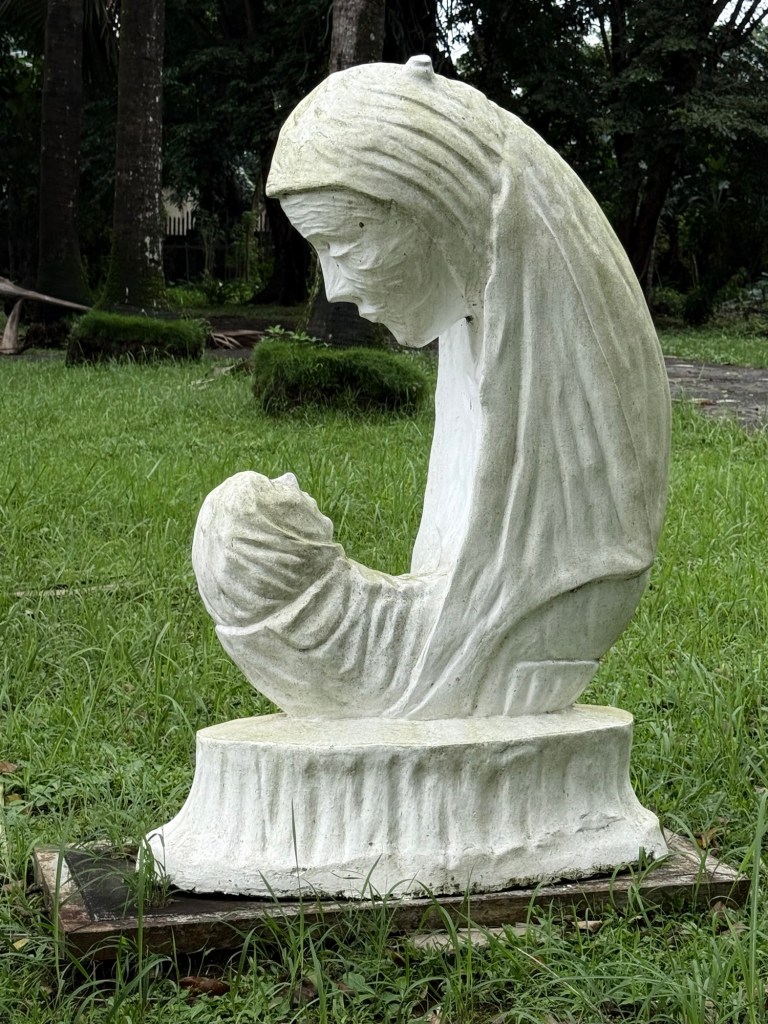
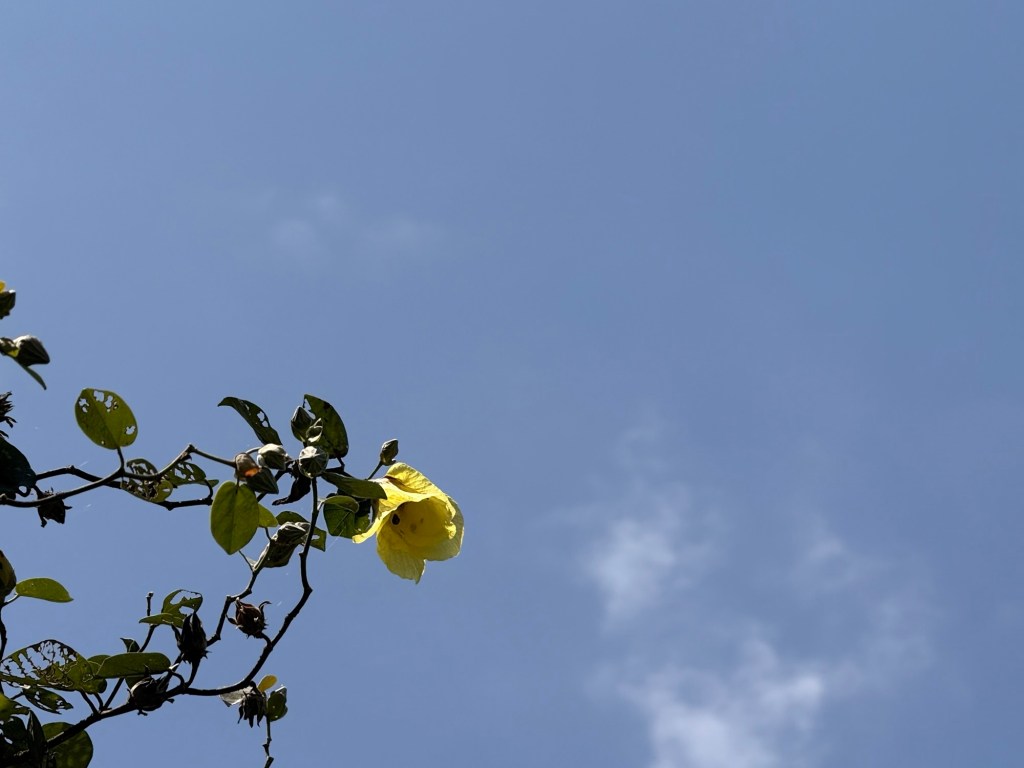
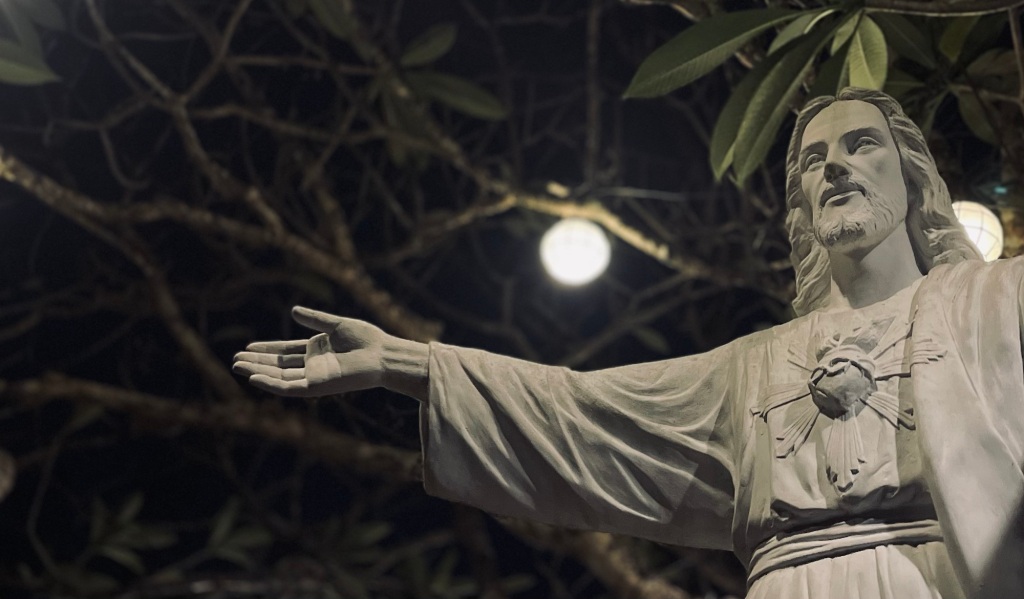
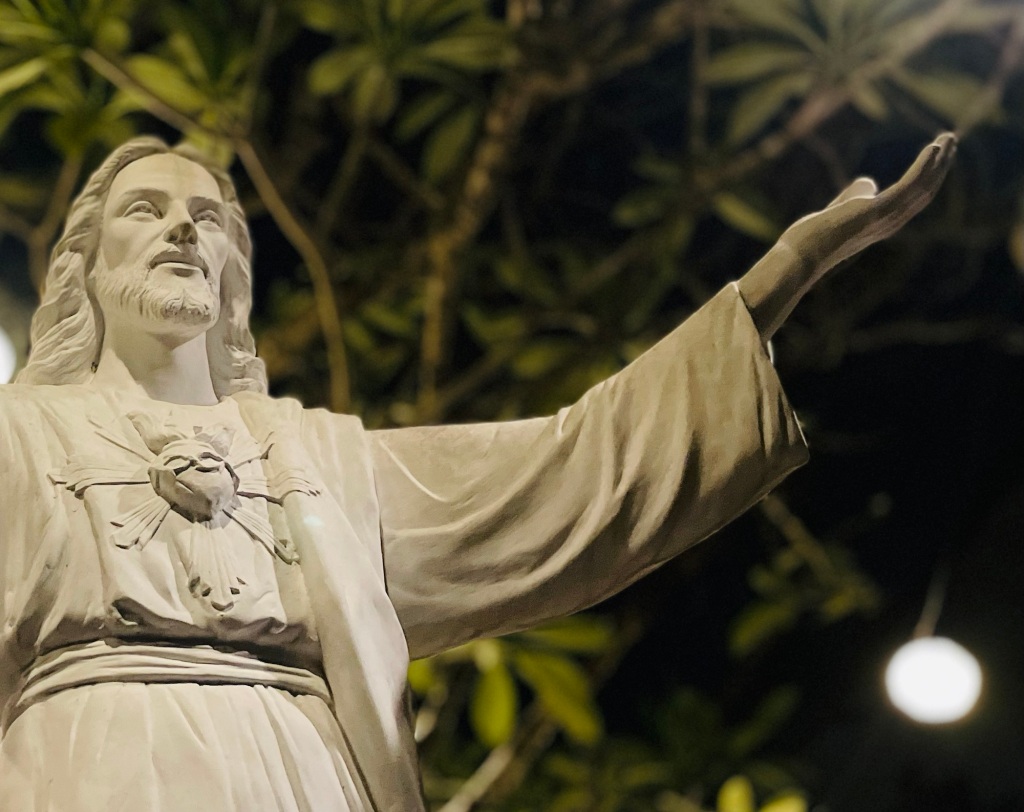
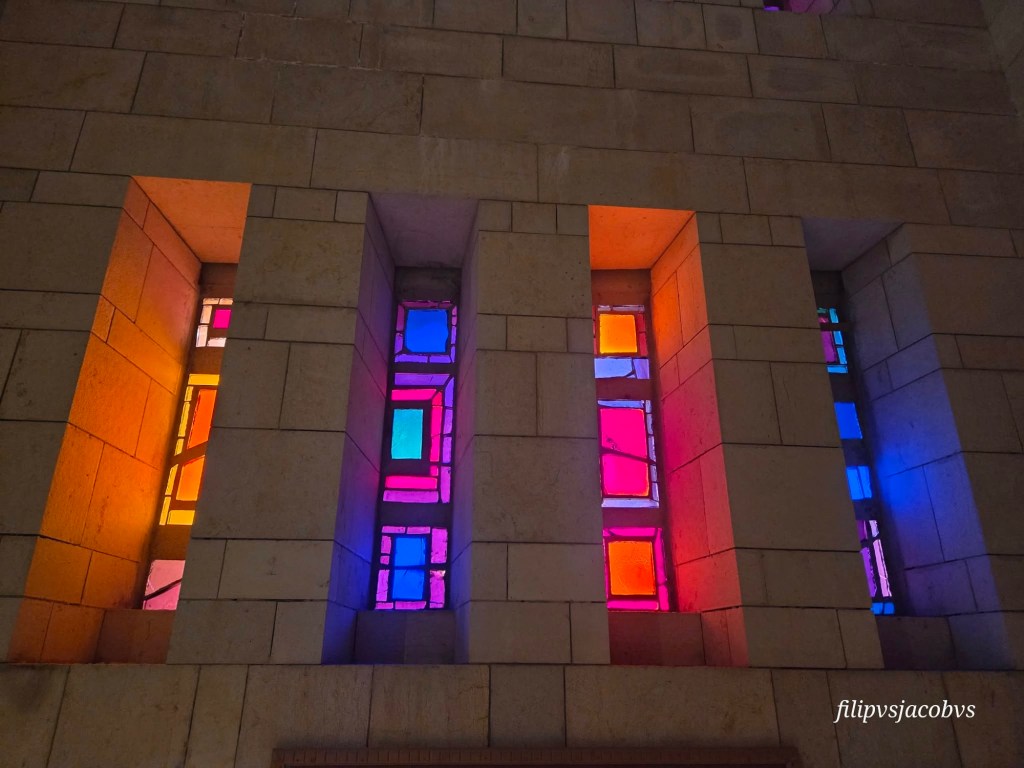
Photo by author, St. Paul Spiritual & Renewal Center, Bgy. Tanyawak, Alfonso, Cavite, 19 August 2026.
It is the Feast of the Nativity
of the Blessed Virgin Mary but
your words, O Lord Jesus,
spoke more about St. Joseph
your foster father.
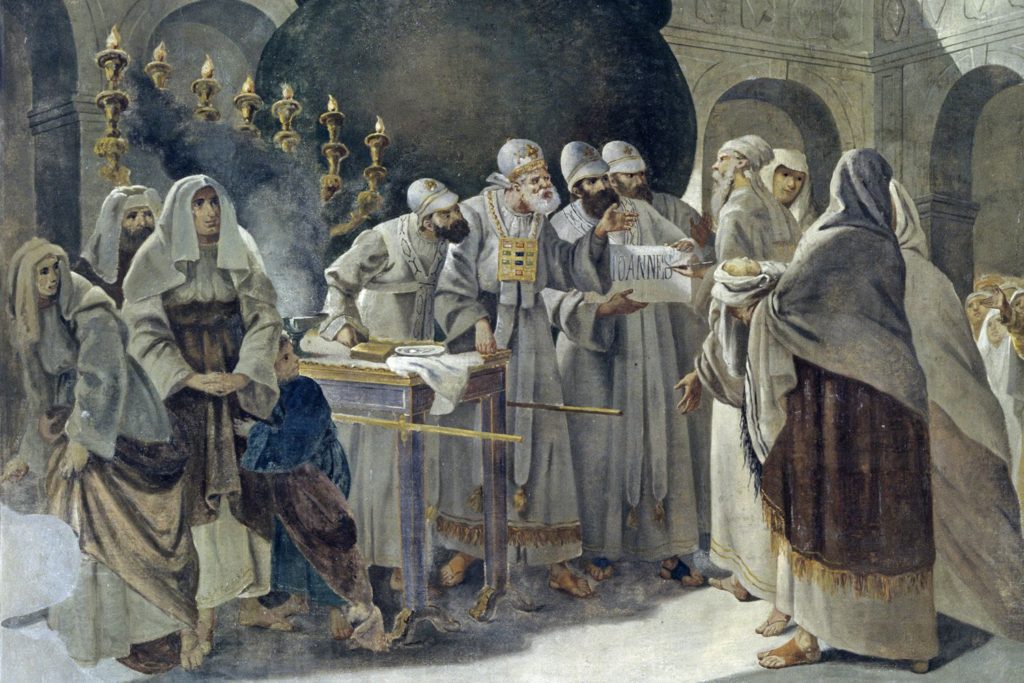
Now this is how the birth of Jesus Christ came about. When his mother Mary was betrothed to Joseph, but before they lived together, she was found with child through the Holy Spirit. Joseph her husband, since he was a righteous man, yet unwilling to expose her to shame, decided to divorce her quietly. Such was his intention when, behold, the angel of the Lord appeared to him in a dream…. (Matthew 1:18-20).
Thank you,
dear Jesus for being
like us,
for coming like us
in all of our human
vulnerabilities:
birth is always a grace
from the Father
lest we forget;
in your coming to us,
Jesus, you have showed
how Mary and Joseph
faced not only their toughest
tests but most of all
their vulnerabilities
they gladly embraced
that you finally came
among us!
Mary humbly submitted
to being your Mother,
entrusting everything to God
who sent an angel to explain
everything to Joseph so
Christmas would happen;
how amazing that Mary's
pregnancy was revealed
to Joseph while he was asleep,
when he was most vulnerable,
without full control;
Mary on the other hand
submitted her full control
to God when your birth was
announced -
what a beautiful lesson for us
to remember on her birthday
on the need for us to embrace
our vulnerabilities
because as St. Paul assured us,
"We know that all things work
for good for those who love God,
who are called according
to his purpose"
(Romans 8:28).
O blessed Mother Mary,
pray for us to be more
trusting in your Son Jesus,
submitting ourselves wholly
to his will by embracing
our vulnerabilities,
becoming fully human
and blessed to share
Christ like you and Joseph.
Amen.
Lord My Chef Daily Recipe for Soul by Fr. Nicanor F. Lalog II
Monday, Nineteenth Week in Ordinary Time, Year II
Feast of St. Lawrence, Deacon & Martyr, 10 August 2026
2 Corinthians 9:6-10     ><]]]]'> + ><]]]]'> + ><]]]]'>     John 12:24-26
Photo by author, Anvaya Cove, Morong, Bataan, 21 July 2026.
Lord Jesus,
teach me to be a cheerful giver:
teach me to be like St. Lawrence
your deacon and martyr we honor
today who gave himself totally
and cheerfully to you because
he felt strongly the overflowing
abundance of your grace
and blessings to him;
many times we are reluctant
to give our time, treasures,
and talents because we feel
always lacking;
open our very selves
to find you and your blessings
within so that
we freely give and share
whatever we have
to continue serving in your name;
most of all,
teach me to give more of myself
like a grain of wheat that dies
and produces much fruit in you.
Amen.

St. Lawrence, Martyr and Deacon,
pray for us!
“Martyrdom of St. Lawrence, Deacon” by Hipolito de Rioja (16th c.) from commons.wikimedia.org
Lord My Chef Daily Recipe for Soul by Fr. Nicanor F. Lalog II
Tuesday in the Fifteenth Week of Ordinary Time, Year II
Memorial of St. Camillus de Lellis, Priest, 14 July 2026
Isaiah 7:1-9     ><))))*> + ><))))*> + ><))))*>      Matthew 11:20-24
Photo by author, Baguio City, 18 July 2018.
I feel hurt,
ashamed,
and very sad
with today's gospel,
Lord Jesus when you said:
Jesus began to reproach the towns where most of his mighty deeds had been done, since they had not repented. “Woe to you, Chorazin! Woe to you, Bethsaida! For if the mighty deeds done in your midst had been done in Tyre and Sidon, they would long ago have repented in sackcloth and ashes” (Matthew 11:20-21).
I feel hurt,
ashamed,
and sad Lord because
I could feel you still
lamenting these days:
we have been so numb
and callous,
indifferent or cynical,
or miserably ungrateful
in recognizing your love
and mercy,
kindness and generosity
for all the blessings
your pour upon us
through our parents
and siblings and family,
teachers and classmates,
and everybody around us;
even the hardships
and trials that have come
our way you have used
for our own good,
by which we have grown
and matured.
How sad indeed
that we have failed to
recognize and meet you,
Jesus in your coming to us
with all your blessings
in our lives; instead,
we complain and
focus more on what
we do not have
than on what we have.
Grant us the grace
of gratitude, Jesus:
to see our own limitations
that we have to look up to
you always and trust you,
to find you among the sick
and lowly like St. Camillus;
grant us also the grace
to desire to begin anew,
to find you in our lives,
to go back to you,
to thank you,
to follow you,
to love you.
Amen.
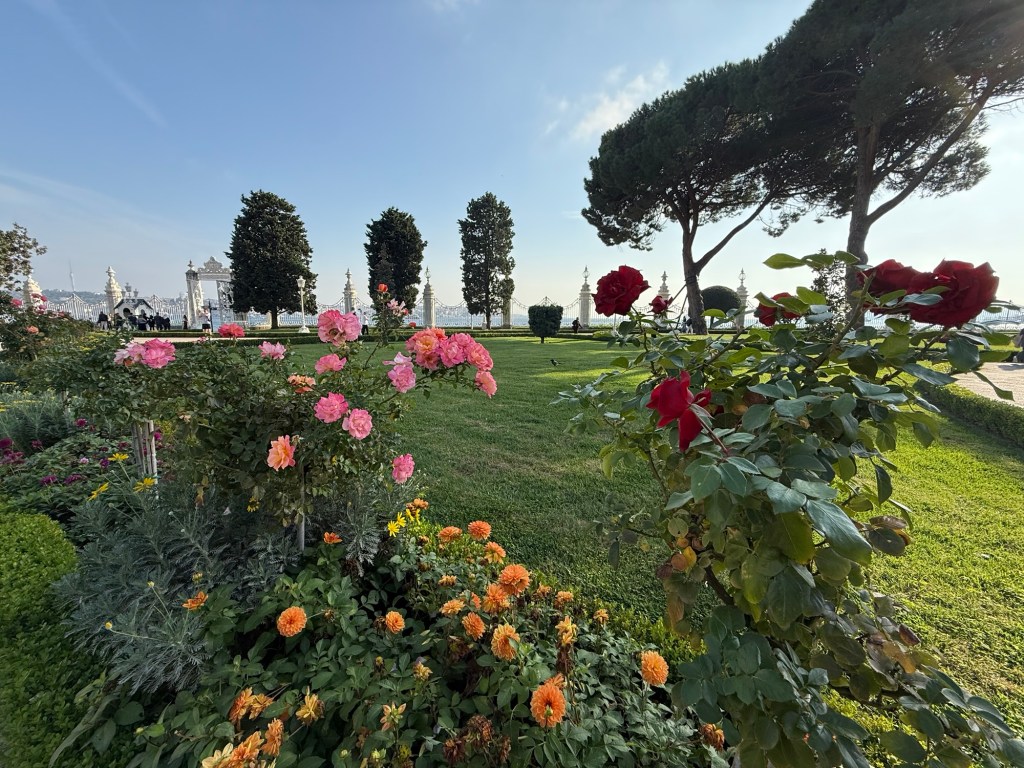
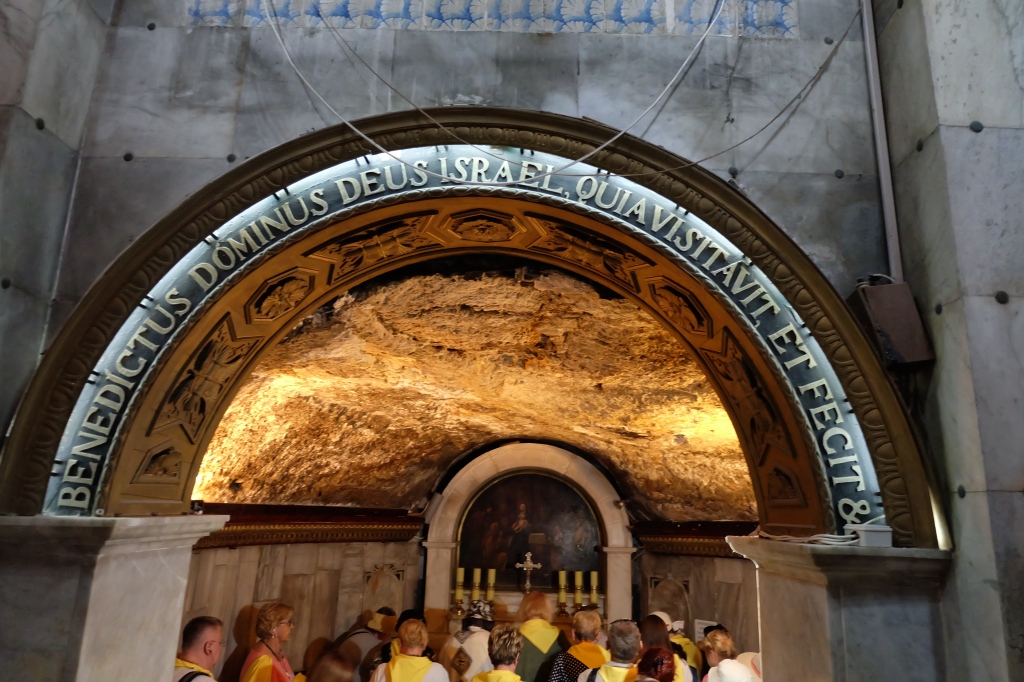
Photo by author, Dolmabahce Palace, Istanbul, Turikiye, Novembert 2025.
Lord My Chef Sunday Recipe for the Soul by Fr. Nicanor F. Lalog II
Fourteenth Sunday in Ordinary Time-A, 05 July 2026
Zechariah 9:9-10 ><}}}}*> Romans 8:9, 11-13 ><}}}}*> Matthew 11:25-30
Photo by author, Sacred Heart Novitiate, Novaliches, QC, 20 March 2024.
What a refreshing gospel we have today with Jesus asking us to come to him to find rest, four weeks after being moved with pity at the sight of the crowd who were like sheep without a shepherd that he called and sent his Twelve Apostles to bring them his good news of salvation (June 14).
The following two Sundays he taught us of our work in harvesting the abundant harvest by being brave and gracious, and hospitable (June 21, 28).
This Sunday, Jesus wraps up his teachings on our work after he himself was rejected by his own folks because he knows very well ours is a difficult mission (June 21) as he praised the little ones who have accepted him like the poor and marginalized.
At that time Jesus exclaimed: “I give praise to you, Father, Lord of heaven and earth, for although you have hidden these things from the wise and the learned you have revealed them to little ones… Come to me, all you who labor and are burdened, and I will give you rest. Take my yoke upon you and learn from me, for I am meek and humble of heart; and you will find rest for your selves. For my yoke is easy, and my burden is light” (Matthew 11:25, 28-30).
Photo by author, Sacred Heart Novitiate, Novaliches, QC, 20 March 2024.
What are the lessons Jesus is asking us to learn from him, especially in these troubled times of ours when the corrupt and idiots reign supremely simply because they are more in number?
See how difficult it is to be a Christian these days when you hear and see all over social media all kinds of inanities and stupidities happening everywhere like callous politicians acting as clowns with a massive crowd of idiots parroting the words of their cult leaders masquerading as religious men. Or the two couples who climbed atop the Empire State Building in New York for a performance of unfurling a banner calling for more love in the world, with the man pretending to propose to the woman who turned out to be his wife for several months already.
From #philstar via FB, 02 July 2026.
Haynaku! Juice colored!
Everything is so exhausting. The only good news we have these days is again our very own Alex Eala “smoking” the grass at Wimbledon. And perhaps the President going to Vancouver to inaugurate the newest Jollibee there with the Canadian Prime Minster enjoying a more joyful chicken joy. Sanaol!
But, amid all these dismal happenings, Jesus is here with us calling us to his side, to experience his warmth, to learn from him how we can feel light amid all these heavy burdens around us.
Notice how with the social media all over us with its bad news that it has become so easy to feel lumbered with all the contradictions in our lives plus see the various needs we feel missing in our relationships that it has become our past time to worry and feel so burdened most of the time.
Jesus promises us this Sunday that following him brings lightness not heaviness of compulsion and duty as most people would think of his demands. However, it is not a kind of R&R we all aspire every weekend at the beach or a mountain resort.
Christ calls us today to come to him and learn from him on how to have a steady, realistic, day-to-day approach to life lived in his company.
First lesson Jesus is teaching us to learn from him today is to rejoice always.
Photo by author, St. Michael Retreat House, Antipolo City, 16 June 2026.
Being joyful is more than being happy; to rejoice is to have our heart smiling because deep down inside we are assured that no matter what happens in life, even if worse comes to worst, Jesus remains with us and would never ever abandon us. That’s because he is not like a stern master without any love and concern for his slaves.
Jesus is the fulfillment of the first reading calling us to rejoice because he is the king who had come, “a just savior is he, meek, and riding on an ass, on a colt, the foal of an ass” (Zec.9:9).
Recall Jesus Christ’s triumphant entry to Jerusalem on Palm Sunday riding an ass so that he could be at eye-level with everyone in the city unlike riding a horse that is so high and even menacing in stature.
Imagine the setting of this Sunday gospel: Jesus was lamenting at how his fellow Jews have rejected him despite his many miracles but at the same time, he was rejoicing, praising the Father in sending him the poor and outcasts of their society as his first believers and followers. Yes, Jesus was hurting for being rejected but he found more reasons to rejoice than sulk. Why waste energy on the negative when there are a lot of good things happening?
Rejoicing means looking beyond the physical and temporal things; rejoicing is being a visionary who sees opportunities behind every problem and issues at hand. Rejoicing is seeing grace than curse, focusing more on Christ than the problems. Indeed,“every gising is a blessing” because every morning we wake up, God assures us of his immense love for us, that he believes in us, and is sending us on a mission to share that joy of living. And believing in him!
Photo by author, July 2011.
Second lesson Jesus is teaching us to learn from him this Sunday is to surrender, to set aside our personal agenda so that we can take up his yoke that is easy and burden that is light.
One reason we cannot rejoice is our refusal to give up our many yokes and burdens that are mostly much ado about nothing at all.
Let go and let God!
Surrendering is daily dying to one’s self to rise to new life in Christ which leads us to the third lesson Jesus wants us to learn from him this Sunday:
Live in solidarity with Christ empowered by the Holy Spirit as St. Paul tells us in the second reading.
Brothers and sisters: You are not in the flesh; on the contrary you are in the spiritr, if only the Spirit of God dwells in you. Consequently, brothers and sisters, we are not debtors to the flesh to live according to flesh. For if you ive according to the flesh, you will die, but if by the spirit you put to death the deeds of the body, you will live (Romans 8:9, 12-13).
Solidarity with Christ is the opposite of solidarity with the old humanity with Adam enslaved to sin which is not just body versus soul nor should flesh be understood as sexual immorality; solidarity with Christ is life in the Holy Spirit that results in eternal life in God. It is a choice we make daily, of whether we shall heed Christ’s call to come to him and learn from him who is meek and humble of heart. Solidarity with Christ is living in the love of Christ.
The good news is, Jesus gives us all the grace we need to love and choose him, to learn from him even if many times we fall and stumble because of our heavy burdens due to sin. This Sunday and every day, make the right choice. Choose Jesus, chose love to be light, choose life. Amen. Have a blessed, light and joyful week ahead.
Photo by Mr. Vigie Ongleo somewhere in Colorado, 03 June 2026.
Lord My Chef Daily Recipe for the Soul by Fr. Nicanor F. Lalog II
Wednesday in the Twelfth Week of Ordinary Time,
Solemnity of the Birth of John the Baptist, 24 June 2026
Isaiah 49:1-6 ><}}}}*> Acts 13:22-26 ><}}}}*> Luke 1:57-66, 80
View of a decorated Christmas tree and tower of the Franciscan Monastery of St Saviour locally also known as San Salvador monastery in the Christian Quarter Old city East Jerusalem
Six months from now we celebrate Christmas because today is the birthday of the Lord’s cousin and precursor, St. John the Baptist; but, before we rejoice at the fast approaching Christmas, let us reflect first on the joy of John’s parents, relatives and local folks following his birth.
When the time arrive for Elizabeth to have her child she gave birth to a son. Her neighbors and relatives heard that the Lord had shown his great mercy toward her, and they rejoiced with her (Luke 1:57-58)
It was indeed a great celebration for everyone in the hill country of Judah when John was born: his parents were both old and his mother Elizabeth was already barren when she conceived John.
Both parents were from the priestly family, very prominent with a great lineage. Most likely, they were the envy of their relatives and neighbors in practically having every good thing in life except a child to inherit and propagate their good name and wealth; when John was born, God gave them more than a child – here was the precursor of the Messiah, the promised Elijah who returned to prepare the way of the Lord Jesus Christ!
Photo by author, May 2019, Church of St. John the Baptist, Ein Karem, Israel.
It was a joy that did not come easily, with much pains and sufferings and self-doubts along the way that took a long time of waiting too.
This birth of John teaches us that behind every joy is always a great deal of sufferings, doubts, and darkness in life.
Imagine the inner turmoil within Zechariah when the angel appeared to him announcing the birth of John while incensing the Holy of Holies on the most important Jewish feast: he doubted the angel’s good news not because he had lost faith in God but simply got “tired” with God.
Zechariah was having a sort of tampo as we call it in Filipino because God did not seem to listen to his prayers for a son.
It happens with us when we have turned indifferent in our faith even with God when he seems not to care at all to our prayers and requests that we keep on failing the board exam or gets denied repeatedly in our job or visa applications. We still pray with our lips not with our heart just for the sake of praying without really believing in its efficacy, if God listens to us at all.
Or like Elizabeth who went into a self-imposed silence, withdrawing from public view during her pregnancy with John because she felt herself so unworthy of God’s blessing.
Today, the birth of John the Baptist teaches us that every disciple as a precursor of Christ is an image of God’s Suffering Servant prophesied by Isaiah:
Though I thought I had toiled in vain, and for nothing, uselessly, spent my strength, yet my reward is with the lord, my recompense is with my God (Isaiah 49:4).
Photo by author of the site believed to be the birthplace of St. John the Baptist at the side of the Church of St. John the Baptist in Ein Karem, Israel, May 2019.
There are actually three songs of the Suffering Servant in the Book of Isaiah that prefigure Jesus Christ who suffered and died and rose again on the third day. However, it is widely believed and interpreted that in the second song of the Suffering Servant we heard today, the Servant referred to is John the Baptist.
Although John recognized Jesus as the promised Christ during his baptism at Jordan, he was the first to suffer and die a martyr when thrown into prison for speaking the truth against Herod’s taking of his brother’s wife Herodias. There we find that image of God’s Suffering Servant in John’s mission and ministry, reminding us of the great difficulties and dangers in preparing the way of the Lord.
We are all a John the Baptist and a Zechariah and Elizabeth rolled into one like the Suffering Servant for we are all a forerunner of Jesus Christ.
Photo by author, St. Michael Retreat House, Antipolo City, 16 June 2026.
Many times we too have felt like them in doubting our efforts in witnessing Christ and his gospel, when these seemed to have gone in vain especially today when the world is trying hard to delete God from every aspect of life.
Witnessing the gospel of Christ, speaking and fighting for what is true and good, for what is just and fair, even in simply being human and decent can already be strenuous, exhausting and often discouraging.
There are times we feel ineffective, even at the losing end only to realize later how our little efforts have actually contributed in making God’s kingdom to truly come with our life of mission and witnessing Christ because like the Suffering Servant, we have felt deep within us the certainty of God working in us, most especially of him being the Almighty One.
We have proven many times God prevails, how good always triumphs for it is when we are weak that we are strongest in Christ as St. Paul declared in one of his writings.
The next time you feel so down in life, in your mission whether in your personal life or family, in your work or in your apostolate and ministry, have a heart: like Zechariah and Elizabeth keep focused on the Lord for Christ surely comes. Rejoice in all your efforts, though little even insignificant for you and for others, they are God working in us.
Keep in mind too the meaning of the names of our main personalities today: Elizabeth in Hebrew is “God promised” while Zechariah is “God remembered” while John means “God is gracious”. Indeed, God is gracious all the time because he always remembers his promise to us. Amen.May God bless you abundantly today like Zechariah and Elizabeth!
Painting of Zechariah giving name to his son John by Italian painter Riccardo Cessi (1892) from commons.wikimedia.org.
Lord My Chef Sunday Recipe for the Soul by Fr. Nicanor F. Lalog II
Twelfth Sunday in Ordinary Time, Cycle A, 21 June 2026
Jeremiah 20:10-13 ><}}}}*> Romans 5:12-15 ><}}}}*> Matthew 10:26-30
BERLIN, GERMANY – JUNE 18: Alexandra Eala of the Philippines reacts to defeating Elena Rybakina of Kazakhstan in the second round on Day Four of the 2026 Berlin Tennis Open at LTTC Rot-Weiß e.V. on June 18, 2026 in Berlin, Germany. (Photo by Robert Prange/Getty Images)
God has a most amazing way of consoling us Filipinos when everything is so dismal in the country, sending us athletes who uplift our spirits and make us proud as a nation. In the not so distant past we have had Manny Pacquiao and Olympic gold medalists Hidilyn Diaz and Carlos Yulo cheering us up.
And now, we have the lovely but tenacious and gritty Alex Eala who just made history anew this week with her two upset wins in the ongoing Berlin Tennis Open when she prevailed over WTA number 2 Elena Rybakin Thursday then Friday crushed number eight Elina Svitolina. (Update: Eala lost to Linda Noskova last night.)
Watch her interviews in both victories where Eala mentioned her being “brave” in her games as she described too both matches filled with “grace” – so very much like this Sunday’s gospel where Jesus mentioned thrice the need to be brave!
Jesus said to the Twelve: “Fear no one. Nothing is concealed that will not be revealed, nor secret that will not be known… And do not be afraid of those who kill the body but cannot kill the soul… So do not be afraid” (Matthew 10:26, 28, 31).
Photo by Dra. Mylene A. Santos, MD, in Ericeira, Portugal, 16 June 2026.
After choosing and sending his Twelve Apostles last Sunday, Jesus reminds them including us today of the need to have courage in working in the Lord’s “abundant harvests” because the good news goes directly against the ways of the world.
This we have learned at the start of this year in the Lord’s sermon on the mount where he taught us the Beatitudes last February 1, fourth Sunday in Ordinary Time. Though the Beatitudes like being poor, being hungry and thirsty are not to be taken literally, they still run contrary to the ways of world of power and wealth, fame and convenience.
As the world advances in science and technology, the more it veers away from God and do away with morals that in the process, the Church has always faced many contradictions, some with violent reactions even persecutions for her stance against abortion and population control, divorce and same-sex marriage and other anti-life measures now so widespread through the social media.
It is not only difficult and painful for the Church as an institution but most especially for each of us disciples of Christ that we can easily identify with the Prophet Jeremiah in the first reading.
Of the four major prophets, Jeremiah was the youngest and the only one sent by God to his own people to prophesy. That is why it was so painful for Jeremiah to experience in the hands of his own folks and kin being maligned and rejected, and betrayed just like most of us today!
Jeremiah said: “I hear the whisperings of many: ‘Terror on every side! Denounce! Let us denounce him!’ All those who were my friends are on the watch for any misstep of mine. ‘Perhaps he will be trapped; then we can prevail, and take our vengeance on him.’ But the Lord is with me, like a mighty champion… Sing to the Lord, praise the Lord, for he has rescued the life of the poor from the power of the wicked!” (Jeremiah 20:10-11, 13)
Like Jeremiah, we have complained and even cried to God many times for our sufferings in doing his will to be just and fair, kind and merciful, even charitable; and like him, we could not resist God’s call and mission despite the pains and hurts because we too felt “duped” and “seduced” by the Lord (Jer.20:7) as we felt deep inside us his love and protection. Like all the saints who suffered much in witnessing the gospel, we felt deep inside God as our very strength as we pray more to forge on in the difficult mission of doing his works.
Photo by author, Our Lady of Fatima University, Valenzuela City, 10 June 2026.
When Jesus asks us to “fear no one”, he is inviting us to primarily fear God most of all for he knows everything and will judge us in the end. It is a kind of reverential fear, not the kind of fear of a slave to a master of being reprimanded and punished.
To “fear no one” and “be not afraid” do not mean that we disregard our fears of being hurt or killed physically and emotionally; it is call to have courage which is facing our fears. Having no fears in life is not normal. As we say in the province, yung walang takot sira tuktok!
To fear the Lord means to recognize the sanctity of life, the blessedness of every person. See Eala’s attitude of being magnanimous in victory and in defeat as she would always praise and recognize the talents and greatness of her opponents. In her we find the truth that the “fear of the Lord is the beginning of wisdom” – that every person is a subject to be loved and cherished, not an object or thing to be used or possessed, without feelings and dignity.
Photo by author, Our Lady of Fatima University, Valenzuela City, 10 June 2026.
This is the tragedy exposed by the recent deaths of the two Ateneo athletes, and it involves almost all UAAP members these past decades who have given more priorities in winning trophies above all, forgetting the value of every person. True enough, it is a secret slowly becoming known.
Likewise, to be not afraid of those who kill the body but cannot kill the soul is to recognize the soul in each one of us, of Christ’s indwelling within us, enabling us to overcome every obstacle in life.
It is like being a pencil: remember the inside is more essential than the outside. That is our identity as God’s beloved child.
Our physical strength actually draws much of its power and stamina from our inner core than merely from our bones and muscles. Hence, the need for prayers and meditation, for conditioning to realize our giftedness and value.
When this happens, the third call of Jesus becomes automatic which is to be not afraid because we are worth more than many sparrows or anything else in this world.
Why? Because God is gracious!
To recognize our fears and vulnerabilities as well as weaknesses is in itself courage, fearing no one except God who alone heals us. Most of all, who alone is our strength in our weaknesses. Let us not be afraid in this life to do what is good, to stand for what is right and just, to proclaim the gospel of Christ’s salvation because God is gracious especially to those who abide in him through Christ. Amen. Have a blessed week ahead! And say a prayer for Alex Eala.
Photo by author, St. Michael Retreat House, Antipolo City, 16 June 2026.
40 Shades of Lent by Fr. Nicanor F. Lalog II
Wednesday, Solemnity of the Annunciation of the Lord, 25 March 2026
Isaiah 7:10-14, 8:10  +++  Hebrews 10:4-10  +++  Luke 1:26-38
“Cestello Annunciation” by Botticelli painted in 1490; from en.wikipedia.org.
A friend informed me last Monday of the death of a former classmate in elementary named Nilo; his brother Mar had sent me a message asking me if I could possibly celebrate Mass at his wake: “A long time ago we met in a Mass in our Barrio chapel when you approached us and greeted ‘kumusta, Nilo, classmate!’ And I never forgot that smile on his face after you acknowledged him. Nilo was so happy with your coming to him… we will greatly appreciate if you can celebrate Mass for him in his wake.”
I was so touched with the message and despite my toxic schedule this week, I promised to come today to offer a Mass for Nilo.
That’s why while praying over today’s Solemnity of the Annunciation, I realized how in every greeting we also bring Jesus Christ, of how we make him present in others too.
In the sixth month, the angel Gabriel was sent from God to a town of Galilee called Nazareth, to a virgin betrothed to a man named Joseph, of the house of David, and the virgin’s name was Mary. And coming of her, he said, “Hail, full of grace! Then Lord is with you.” (Luke 1:26-28)
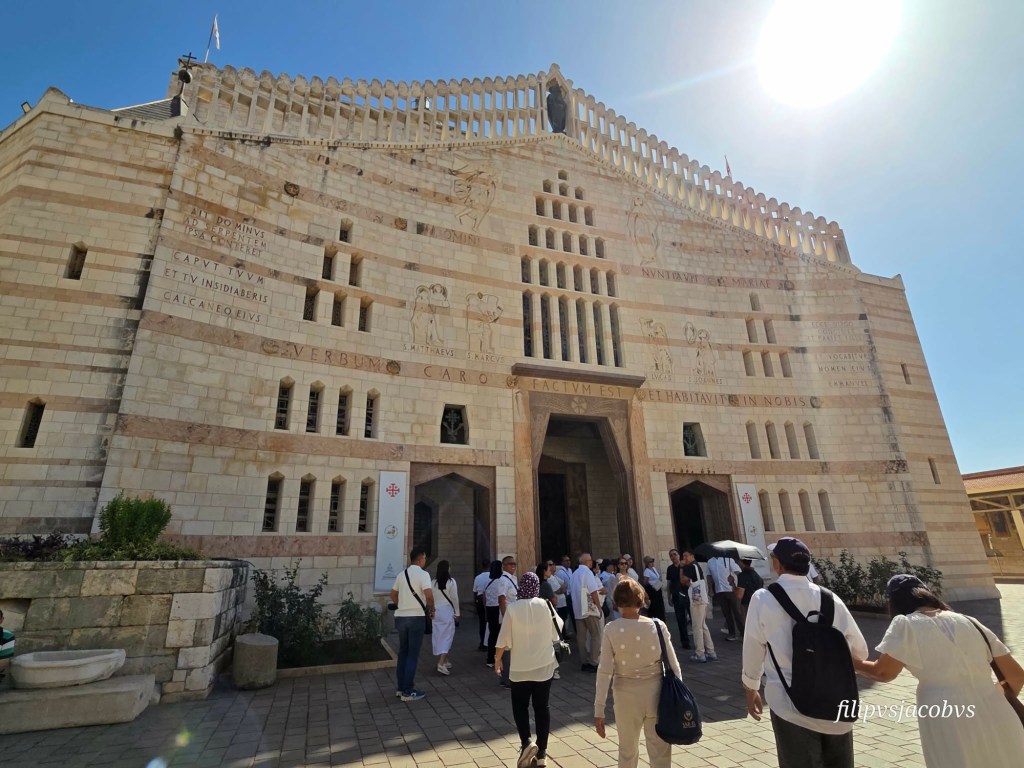
Photo by Ar. Philip Santiago, Annunciation Basilica in Nazareth, October 2025.
The Solemnity of the Annunciation of the Lord often falls in Lent, adding more meaning in our inner journey into our hearts to meet Christ in this blessed season.
Notice how in our Sunday and daily readings we find God greeting us, inviting us to come to him to set things right in our lives (Is.1:18). Here is a God so loving, pointing out our sins but never judging us but actually believing in us that we could change and be converted to become better persons.
The past three weeks have been so tiring but fulfilling for me as a university chaplain giving recollection and hearing confession later in our various university campuses. First thing I tell every penitent is how God is so happy with us when we come to the sacrament of reconciliation because he has long been waiting for us. God rejoices because we finally welcome him in our lives!
Though it could be painful and shameful to confess our many sins, it is actually the sign of grace working in us too because the moment we change our sinful ways, then we grow! When we see our sins, our weaknesses and limitations as humans yet still forge on in life to become better persons, to achieve greater things for others, that is God working in us.
That is why Luke tells us today how the angel greeted Mary during the annunciation using the Greek words “kaire” which is to rejoice and “charis” or “karis” for grace: “Hail (or rejoice), full of grace! The Lord is with you” (Lk.1:28).
This is actually unusual because Jews greet each other with “shalom” for peace; why did Luke use kaire?
Because wherever and whenever there is grace, surely there is rejoicing like in those beautiful gospel stories we have heard the past three Sundays this Lent: the Samaritan woman, the healing of the man born blind, and the raising to life of Lazarus who had been dead for four days. In all these instances, it was Jesus Christ who came on his own to bring grace to everyone that everybody rejoiced.
Photo by Ar. Philip Santiago, Annunciation Basilica in Nazareth, October 2025.
Lent is the time to get real, to stop pretending. It is the time for us to finally admit our own limitations and weaknesses in order to create a space in our hearts and in our lives to let God fill us, to let God possess us. That is the purpose of the lenten practice of fasting.
Mary became the Mother of Jesus Christ not because of any special qualities in herself but simply because God is so good, so loving. Despite her fears and questions, she welcomed the angel Gabriel by saying “yes” to God’s plan of giving birth to the Messiah and Savior of mankind.
Can we be like Mary who said yes and allowed God’s power to “hover over us” to renew our lives in welcoming Jesus Christ?
This was the problem of Isaiah with King Ahaz in the first reading who pretended to refusing God in asking for signs of his presence when actually he had already entered into alliances with other pagan kings in the region as the Babylonians were closing in them; he had doubted God already. Hence, Isaiah’s prophecy to insist that God is our protector: “Listen, O house of David! Is it not enough for you to weary men, must you also weary my God? Therefore the Lord himself will give you this sign: the virgin shall be with child, and bear a son, and shall name him Emmanuel: God is with us” (Is.7:13-14; 8:10).
How sad that in this modern time when we rely more with our science and technology, we have not only shut out God from our lives but we have even refused to welcome him in his coming to us, asking us to open ourselves anew to him and his powers and plans. We have not only become impersonal but worst, we seem to have chosen death more than life, darkness than light. Just check on the news going on everywhere and we see how heartless we have become.
The late American spiritual writer and monk Thomas Merton rightly said, “We live in a time of no room, which is the time of the end. The time when everyone is obsessed with lack of time, lack of space, with saving time, conquering space… The primordial blessing, ‘increase and multiply’ has suddenly become a hemorrhage of terror… In the time of the end there is no longer room for the desire to go on living. Why? Because they are part of a proliferation of life that is not fully alive, it is programmed for death” (Raids on the Unspeakable, pp. 70-72).
What a tragedy in our modern time when we are supposed to be more intelligent with so many inventions, more affluent with so many money, more real with everything being shown in social media, the more we are empty and lost. Our communications are all mass mediated, no more person to person that is warm, so filled with life that is vibrant and dynamic giving us so much reasons to believe, to love, to hope in life and the future.
The Solemnity of the Lord reminds us today of God’s coming among us like one of us in everything except sin. In Christ’s coming through the Blessed Virgin Mary, we are reminded how each one of us is a sign of God’s presence and coming. Every time we greet one another, every time we reach out to others in love and kindness, every time we are one with others especially the marginalized and neglected, we do the will of God (second reading) and become an Emmanuel, a God-is-with-us. Amen.
Photo by author, Sacred Heart Novitiate, Novaliches, QC, 20 March 2026.
Lord My Chef Daily Recipe for the Soul by Fr. Nicanor F. Lalog II
Monday, Memorial of Sts. Timothy and Titus, 26 January 2026
2 Timothy 1:1-8     <*{{{{><  +  ><}}}}*>     Mark 3:22-30
Photo by author, Carmel of the Holy Family Monastery, Guiguinto, Bulacan, 23 January 2026.
Let me not be ashamed
of witnessing,
of testifying for you,
Lord Jesus Christ;
let me not be ashamed
of you, Jesus
in this time when things of God
and of virtues and holiness
are looked down upon
as old fashioned,
so conservative,
fill me with your
"grace, mercy, and peace",
Lord like what St. Paul prayed
for his disciple Timothy.
For this reason, I remind you to stir into flame the gift of God that you have through the imposition of my hands. For God did not give us a spirit of cowardice but rather of power and love and self-control. So do not be ashamed of your testimony to our Lord…(2 Timothy 1:6-8).
As I prayed
St. Paul's letter to Timothy,
I felt as if those very words
were spoken too to me
by you, Jesus - thank you so much,
Lord!
I feel shy but so encouraged
too because indeed
everything we have is a pure
grace from you, Jesus;
even our calling is a gift
you have freely given us,
Jesus; that is why,
grant me the courage
not to be ashamed to proclaim
your truth always; grant me the
courage not to be ashamed
to witness your love and mercy
and justice with others
especially those with less
in life.
Amen.
Photo by author, Carmel of the Holy Family Monastery, Guiguinto, Bulacan, 23 January 2026.
Quiet Storm by Fr. Nicanor F. Lalog II, 15 January 2026
Photo by Ar. Philip Santiago, Basilica of the Annunciation, Israel, October 2025.
Two priests and a former nun personally known to me died in our diocese last Sunday. It was also the birthdate of the late Bishop Cirilo Almario, Jr. whom I had remembered in my two early morning Masses on that Sunday, January 11, 2026.
In those two Masses too I mentioned in my homily the retreat I facilitated first week of January with my friends about “ageing gracefully” – my own realizations since joining their ranks as senior citizens last March.
Let me elaborate those two points I have shared with them and in my homily last Sunday.
From forbes.com.
First, let us embrace our being old. Stop saying “when we get old”, pagtanda natin because we are already old. Period. Matanda na tayo.
We cannot reverse our ageing process and it is useless to have all these cosmetic manipulations like dyeing our hair black or stretching our sagging skin and removing those wrinkles.
Embrace old age. It is beautiful and wonderful because it is so good. Our Filipino word for “old” says it all – matanda – which ironically so many women hate to hear as they stress that kalabaw lang ang tumatanda. That is not true.
Our word matanda is from the root word tanda which means “sign” that is why an old person is rightly called matanda because he/she is a sign of God’s goodness, a sign of God’s mercy and love, a sign of God’s beauty and majesty.
Moreover, a matanda is a sign of wisdom and grace that is why when we were young boys, we wanted to be old by putting our dad’s eyeglasses or taste his cigarettes and beer while girls put on their mom’s make up and high heeled shoes. How funny that when we are already old, we resist to accept the fact that we strive to look young again, sometimes ending up as nagmumurang kamatis.
Photo by Mr. Jim Marpa, 2019.
Technically speaking, “old” is actually harsh. Old is something about a past phase that has ran its course like being outdated. Luma in Filipino that connotes stale, passe, lacking relevance and sadly, useless. Just for display purposes. As a person, that is the one we refer to as walang pinagkatandaan. Or huklubang matanda.
To be more specific, the better English term referring to ageing gracefully is ancient that exudes with a sense of timeliness, of being perpetually relevant like the ancient ruins in Rome, Athens, and Jerusalem. Actually, some biblical experts have wanted to rename the “Old Testament” as “Ancient Testament” following this line of thinking.
Photo by author, Ephesus, Turkiye, November 2025.
Things and even persons can rightly be referred to as ancient because of their beauty still intact that inspires us and makes us wonder about life itself. They are not just old sites nor old persons that remind us of the past long gone but ancient because still lovely, “still full of sap and green” as the psalmist extolled the seniors of his time.
Persons who age gracefully like ancient sites stir our inner selves with deeper beauty and realities of life that eyes cannot see. That is perhaps the reason these days many senior men and women are so “in” and considered as attractive.
It is the same wisdom realized by St. Augustine when he wrote about God, “Late have I loved you, O Beauty ever ancient, ever new, late have I loved you. You were within me, but I was outside, and it was there that I searched for you.”
Being ancient -whether as a person or a thing – is something of the inside we must turn to not outside like our skin and physical body. From that inside realization and acceptance of being senior or elderly we experience the grace of ageing because we experience God still present in us, in fact loving us more as he makes as a sign or tanda of his loving presence.
Ageing gracefully is a modern virtue we need to cultivate in this age of instants that glorify youthfulness equated with usefulness. That is why when Pope Benedict XVI resigned from the Papacy in 2013, the more I have come to love and admire him. In his resignation, he taught us the importance of embracing and lovingly accepting our old age when we can no longer adequately perform our many tasks in office even in life itself. It was not a failure nor a surrender in the negative sense but more of a deep courage and trust in God that we accept our being weak and ready to come to him soon.
Photo by author, Pundaquit, San Antonio, Zambales, May 2025.
This brings me to my second realization since turning sigisty years old last year: corollary to embracing old age is accepting death. That is why, as seniors, let us stop saying and thinking of our coming death because we are already dying. Huwag na nating isipin yung “kapag namatay ako” dahil namamatay na nga tayo.
Being senior is doing away with those bucket lists, of thinking about things to do, places to visit before we die. We are already dying and hence, whatever you can do, do it now. There could be no more tomorrow. All we have is the present moment. Anything could happen to us, for better and for worse.
Ageing gracefully is coming to terms with life which leads us to coming to terms with death. Yes, this is easier said than done, but slowly, I am learning and loving it!
Photo by author, Bucharest, Romania, November 2025.
One of the reasons that made me decide to become a priest in the early 1990’s was the conviction that I have felt so deeply God’s love for me as a person in the many experiences I have gone through in life. I felt at that time that by becoming a priest, I could convince more people about the truth and existence of this loving God we have.
I still hold on to that but a year after turning sigisty, becoming sigisty-one in March 22, another fascinating realization I have had is how wonderful this life is. Now that I am old, the more I can boldly claim with conviction that it is good to be alive. Masarap pa rin ang mabuhay! Maganda ang buhay maski mahirap!
Accepting and embracing our ageing, our getting weak, our failing memory are all kinds of dying. And in that midst that we actually live fullest and meaningfully. I don’t know if I can write any further because I ain’t dead yet but… just in case, it was worth the trip. Amen. May you have a fruitful and fulfilling weekend ahead.
Lord My Chef Simbang Gabi Recipe for the Soul by Fr. Nicanor F. Lalog II
Saturday, Simbang Gabi-V, 20 December 2025
Isaiah 7:10-14     <*((((><  +  ><))))*>     Luke 1:26-38
Basilica of the Annunciation in Nazareth, Israel; photo by Ar. Philip Santiago, October 2025.
On this fifth day of our Simbang Gabi we hear the second Christmas story by Luke, telling us how six months after announcing to Zechariah the coming of their son John, the angel Gabriel went to Nazareth to announce the birth of our Savior Jesus Christ to the Blessed Virgin Mary who was betrothed to St. Joseph. Unlike Zechariah who doubted the angel’s message, Mary was more open with her response by asking how it would all take place.
And the angel said to her in reply, “The Holy Spirit will come upon you, and the power of the Most High will overshadow you. Therefore the child to be born will be called holy, the Son of God” (Luke 1:35).
We reflected the other day how Matthew ended his story of the genealogy of Jesus Christ with Mary to show her as the new beginning of everything in the world. Through Mary’s giving birth to Jesus, we now share with Him one common origin in faith who is God as our Father so that despite our many sins and failures, we are given with a fresh start, new opportunities in life daily. Luke bolsters this today with his account of the annunciation of the birth of Jesus to Mary.
Photo by Ar. Philip Santiago, Annunciation Basilica in Nazareth, October 2025.
As a Jew, Mary must be totally aware of the words of the angel about herself being “overshadowed by the Most High” like in the Old Testament stories of God’s presence in the cloud during their journey in the wilderness after their exodus from Egypt. Even Moses could not enter the tent when “the cloud covered it and the glory of the Lord filled the tabernacle” (Ex.40:34-38).
To be filled and overshadowed by the presence of God is to be to be possessed by God and eventually to be transformed by God.
Remember how in the movie “The Ten Commandments” when the face of Moses was transformed after meeting God. In the New Testament, the three synoptic gospels record a similar incident of God’s presence in a cloud hovering with Jesus during His transfiguration at Mount Tabor witnessed by Peter, James and John. The two great prophets of Israel were there, Elijah and Moses conversing with Jesus when a cloud overshadowed them with a voice declaring “this is my beloved Son, listen to Him.” Matthew, Mark and Luke tell us how the apostles were all terrified at the sight of the Transfiguration.
And we can also surmise how terrifying it must be to experience God’s presence, to be filled with God. But that is how grace works!
Photo by Ar. Philip Santiago, Annunciation Basilica in Nazareth, October 2025.
At the start of our Simbang Gabi we have reflected how under the light of Christ we are able to see our sinfulness and weaknesses that sometimes we feel so sorry for ourselves but that is actually when grace works in us – the moment we change our sinful ways, then we grow!
When we see our limitations as humans yet still forge on in life to achieve greater things, to become better persons, that is God working in us. That is why Luke tells us today how the angel greeted Mary during the annunciation using the Greek words “kaire” which is to rejoice and “charis” or “karis” for grace: “Hail (or rejoice), full of grace! The Lord is with you” (Lk.1:28).
This is actually unusual because Jews greet each other with “shalom” for peace; why did Luke use kaire? Because wherever and whenever there is grace, surely there is rejoicing like in our Third Sunday of Advent called Gaudete Sunday: we rejoice because the Lord who is pure grace is near!
The late American spiritual writer and monk Thomas Merton rightly said, “We live in a time of no room, which is the time of the end. The time when everyone is obsessed with lack of time, lack of space, with saving time, conquering space… The primordial blessing, ‘increase and multiply’ has suddenly become a hemorrhage of terror… In the time of the end there is no longer room for the desire to go on living. Why? Because they are part of a proliferation of life that is not fully alive, it is programmed for death” (Raids on the Unspeakable, pp. 70-72).
Photo by Ar. Philip Santiago, Annunciation Basilica in Nazareth, October 2025.
Advent is the time to get real, to stop pretending. Advent is the time for us to finally admit our own limitations, to create a space in our hearts and in our lives to let God fill us, to let God possess us.
Can we, like Mary allow God’s power “hover over us” to renew our lives in welcoming Jesus Christ? This was the problem of Isaiah with King Ahaz in the first reading who pretended to refusing God giving signs of his presence when actually he had already entered into alliances with other pagan kings in the region as the Babylonians were closing in them; that is why Isaiah uttered the prophecy to insist that God is our protector: “Listen, O house of David! Is it not enough for you to weary men, must you also weary my God? Therefore the Lord himself will give you this sign: the virgin shall be with child, and bear a son, and shall name him Emmanuel” (Is.7:13-14).
Let me end this reflection by inviting you dear friends to pray for Fr. Flavie Villanueva, an SVD priest so active in caring for the poor especially the orphans left by victims of tokhang. He was recently awarded the Ramon Magsaysay Award considered as Asia’s equivalent of Nobel Peace Prize for his works for the poor.
Yes, he had a very dark past, being a former drug dependent but God used that chapter in his life to make him turn around and become a missionary priest. Fr. Flavie had never hidden nor sanitized his dark past because it was during those years when he also found the light and grace of God’s love and mercy for him. Perhaps, he is most effective in his works among the poor and the addicts precisely because he used to be one of them! He is now under attack for his works by the dark elements of the past administration, the most decadent in our history.
From Facebook via Political Insight Today, 18 December 2025.
Fr. Flavie is no Virgin Mary but like her, he opened his heart to God who eventually overshadowed him with His powers to do all these great things for the poor who now feel Christ’s presence.
Recall now the many instances in our lives where we have learned our most important lessons in life and most surely, these were also the moments we have faced many hardships and sufferings but, instead of being down, these have inspired us and transformed us into better persons.
Let us imitate Mary in saying yes to God – “Behold I am the handmaid of the Lord. May it be done to me according to your word!” Let us open our hearts to God so the Holy Spirit may hover on us to fill us with Jesus Christ we can share with others broken like us. Amen. A blessed weekend everyone!