Quiet Storm by Fr. Nicanor F. Lalog II, 20 August 2026
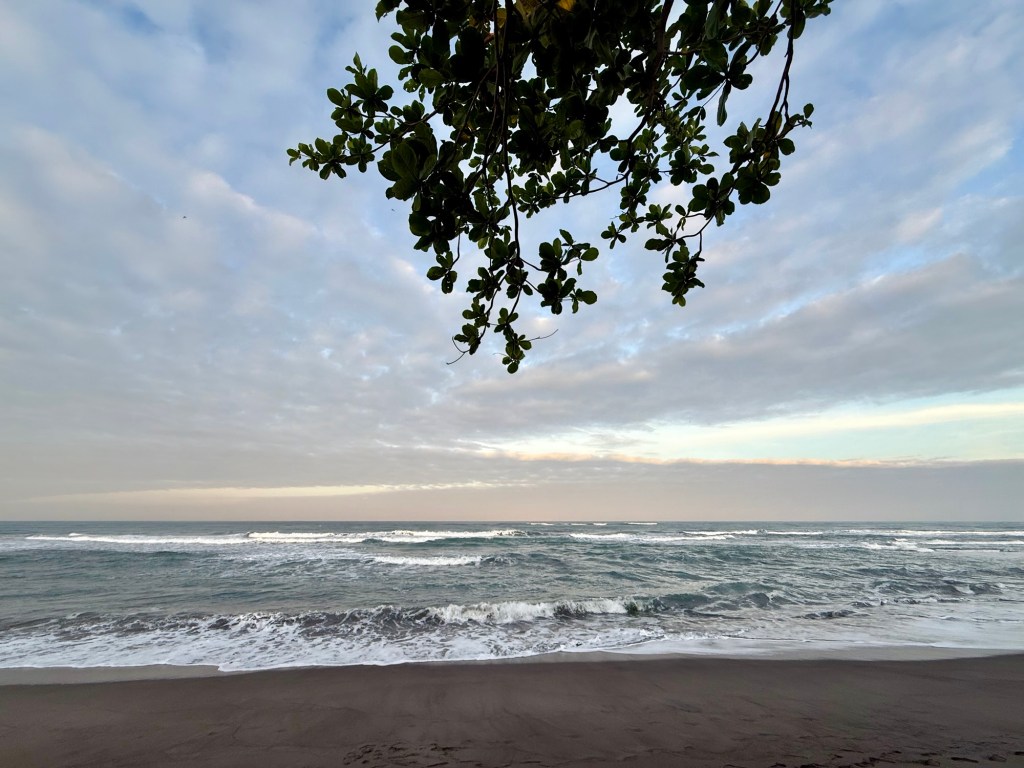
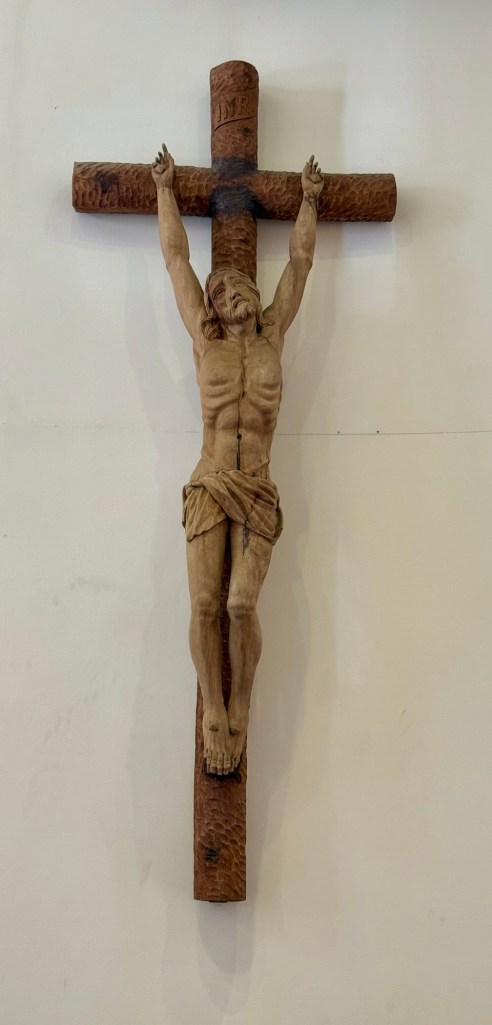
Photo by author, Anvaya Resort, Bataan, 21 July 2026.
Let me come home to you, Lord God:
to gaze in your loving eyes anew,
be wrapped around with your tight embrace
without being judged nor blamed.
Let me come home to you, Lord God:
with nothing at all,
to be poor of material wealth and
rich in Spirit and virtues,
empty of pride,
filled with your humility and
simplicity
so scarce of everything
abundant in you and your love.
Let me come home to you, Lord God:
no longer afraid of the dark and
everything not yet known and seen,
nor terrified of great waves of tasks
and duties,
of strong winds like what people think
and say about me because in you alone
is my certainty as well as safety and security.
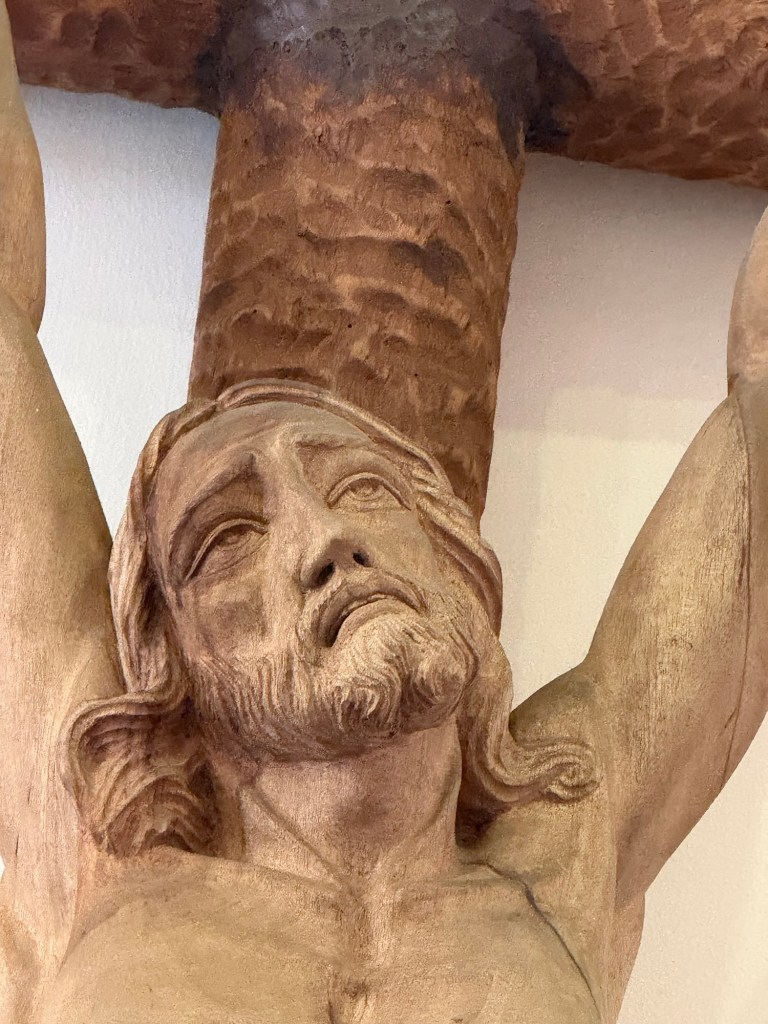
Photo by author, Pundaquit, San Antonio, Zambales, 15 May 2025.
Let me come home to you, Lord God:
to be nourished by your words
that give life and meaning,
to be quenched of my thirst with your
living water that restores my being,
cleanses me of my sins and shame.
Let me come home to you, Lord God:
to rest in you,
be at home in you
because you are my origin,
my root
my home
my peace
my destination in this long journey
in life for you are
my Lord
and my God.
Amen.
Photo by author, San Juan, La Union, 09 January 2026.
40 Shades of Lent by Fr. Nicanor F. Lalog II
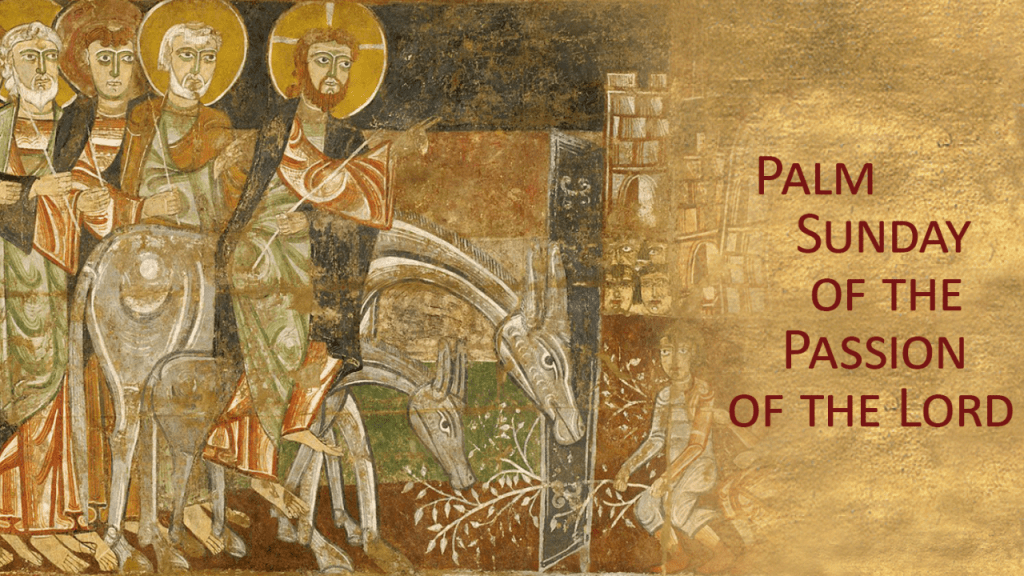
Palm Sunday of the Lord's Passion, Cycle A, 29 March 2026
Isaiah 50:4-7  +++  Philippians 2:6-11  +++  Matthew 27:11-54
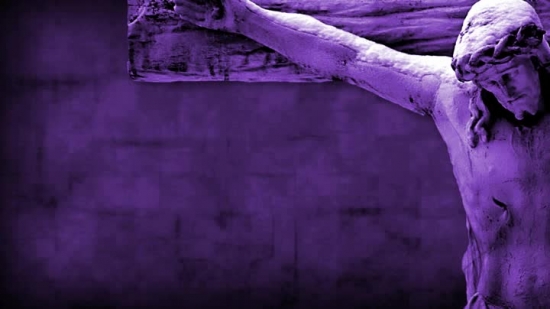
From influencemagazine.com.
We begin today the Holy Week with Palm Sunday of the Lord’s Passion. Its long name is derived from the two celebrations that developed separately in Jerusalem and Rome during the first one thousand years of Christianity, one of the oldest in our liturgy.
As early as the fourth century, Christians in Jerusalem celebrated Palm Sunday at the city gate with a procession led by its bishop followed by people holding palms reenacting Christ’s entry into Jerusalem. Meanwhile in Rome, the Pope ushered the Holy Week with the proclamation of the long gospel account from the Lord’s Supper to his Passion, Death and Burial. Eventually in the 12th century, Jerusalem’s practice of a palm procession with the blessing of palms added by the French in year 800 reached Rome and was celebrated separately. After more than a 1600 years, it was only in Vatican II when the two celebrations from Jerusalem and Rome were merged into one that we now have its official designation as Palm Sunday of the Lord’s Passion.
From vaticannews.va
It is a beautiful story of how two distinct practices in Jerusalem and Rome, of two contrasting liturgies mirrored our different and unique journeys into the mystery of God in Jesus Christ’s Passion, Death, and Resurrection.
And I love that contrast because our life is filled too with many contrasts that make it so beautiful and meaningful.
Contrast is when we compare differences between two or more things in order to highlight distinctive features like light and shadows, or pains and joys that make us see life fullest. Contrasts many times are a grace from God when he works in disguise among us, within us, as he writes straight crooked lines in our lives that eventually lead us to him and be fulfilled.
All our readings today present us with many contrasts that enable us to find and welcome Jesus coming to us like that Sunday in Jerusalem in the midst of our pain and sufferings, joys and fears. Three things I wish to reflect this Sunday.
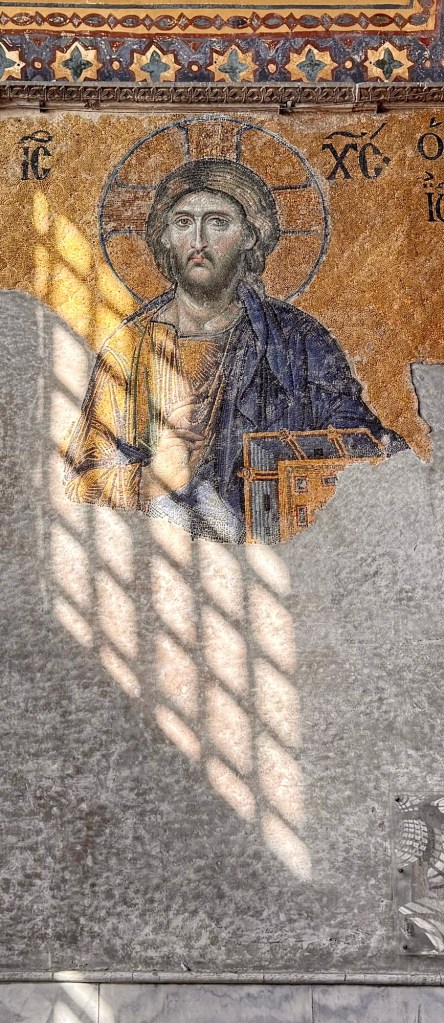
Photo by author, Hagia Sophia, Turkiye, November 2025.
First contrast we find is the wisdom of God and the folly of man.
Read the longer version of the gospel from Matthew 26:14-27:66 and you find the many contrasts presented by the evangelist to highlight God’s wisdom in Jesus and man’s folly among the Jewish people led by their priests and elders, Pontius Pilate, and even with the prince of Apostles, Simon Peter!
At his trial before the Sanhedrin at the house of the high priest Caiaphas, Jesus was so comp-composed, silently listening to the many false accusations against him, and then shocked when he admitted amnd declared his being the Christ indeed (Mt.26:57-68)! And while all these were going inside the house of Caiaphas, outside was Peter denying Jesus thrice when asked of his being a disciple (vv.69-75)!
Again we see this glaring contrast of God’s wisdom in Christ and man’s folly in Pilate as Jesus remained silent during trial, answering briefly only when necessary that have put his enemies at the defensive posture (Mt.27:11-14). And how foolish they were in choosing to set free a known criminal in order to crucify the Christ (vv.21-26) which continues to these days in our own country as we keep on electing corrupt and inept people into office.
The most tragic of all is how some people while professing to be Christians are like those mob in Jerusalem still defending a known murderer now facing trial for crimes against humanity who had cursed God several times, made fun of women including those raped and under whose administration happened rampant and shameless corruption and decadence.
How sad that despite our supposed to be many advancements in science and technology that have completely altered our way of living and way of thinking, we have actually become more lost and empty than ever. Like Pilate and the Jewish people of that time with their elders, the more we assert our supposed to be superior knowledge on everything, the more we sink into emptiness and meaninglessness.
Let us not be blinded with our intelligence that have sent men to space and moon and shrunk the globe into a village but have made us grow more apart from each other; open our eyes and our hearts in Jesus Christ who is the truth because he is the only way in life.
Photo by author, Sacred Heart Novitiate, Novaliches, QC, 20 March 2026.
Second contrast we find is that true power is in weakness not in strength.
Everybody at the trial and crucifixion of Jesus were at their own kind of “power play” especially the soldiers with the Jewish leaders and their cabal of followers (Mt.27:27-44). Imagine the very act of stripping Jesus or anyone for that matter of clothes – it is the most brazen display of power over someone. Not contented with that, they mocked Jesus while unconsciously recognizing him truly as king with the sign placed above his head, “This is Jesus, the King of the Jews” (v.37). They would confirm this later at the death of Jesus when they declared “Truly, this was the Son of God!” (v.54).
At his trial and sentencing until his crucifixion, Jesus showed that true power lies in weakness and surrender as St. Paul eloquently expressed in the second reading today, “Christ Jesus, though he was in the form of God, did not regard equality with God something to be grasped. Rather he emptied himself” (Phil.2:6-7).
How sad the whole world is now plunged into a great disaster without any clear sight of an end in the war launched by the US and Israel against Iran. Who’s really winning? Despite the sophisticated and powerful weapons of the US and Israel, how come Iran still continues to launch many missile attacks against its neighbors and worst of all, control a supposed to be tiny strait that had sent fuel prices beyond reach of Tomahawk missiles!
Let’s look into our own lives, in those moments we “power tripped” against others: what happened? Have we really won over them or, are we now suffering its dire consequences, even paying the price of our too much pride and display of power and strength? Jesus shows us in his triumphal entry into Jerusalem until his Passion and Death, true power is in weakness and surrender. It is the only path to Easter because it is the path of life and love which we shall see next.
Photo by author, Sacred Heart Novitiate, Novaliches, QC, 20 March 2026.
Third contrast we have seen in the passion of the Lord: life symbolized by blood is for love and caring, not for vengeance nor convenience. Not even a solution to a problem.
At the trial of Jesus, when Pilate felt at a loss that he could not set Christ free, he decided to wash his hands to free himself of any responsibility for his death: “I am innocent of this man’s blood. Look it to yourselves.” And the whole people said in reply, “His blood be upon us and upopn our children” (Mt.27:25-26).
It was the height of human arrogance and pride, of folly and insensitivity that sadly happens right in our homes, in our schools and offices, in the society and even in the church maybe.
Instead of using technology and the sciences for the care and preservation of human life symbolized by blood, these have actually objectified persons into things, from contraceptives to abortions, genetic manipulation and gender redefinition. We have become so impersonal that people are seen more in economic andn utilitarian terms especially infants and children as well as the sick and elderly, the most vulnerable ones among us. Worst, criminals and others labeled as misfits are disposed like things either through judicial or extrajudicial killings. So heartless.
See the contrast presented by Matthew in this aspect when at the Last Supper, Jesus “took a cup, gave thanks, and gave it to them saying, ‘Drink from it, all of you, for this is my blood of the covenant which will be shed on behalf of many for the forgiveness of sins'” (Mt.26:27-28).
Life is precious because it is vulnerable that is why God became human in Jesus Christ like us in everything except sin. Right after his birth, he faced the murderous threats of a king and now an adult, he offered himself freely to die on the Cross because he loved us so much so that we too may finally be able to love again like him as willed by God since the beginning.
Isaiah’s Song of the Suffering Servant in the first reading showed this contrast of Yahweh’s servant fulfilled in Christ Jesus of how he valued life so much, of bearing all pains and hurts because of love.
In his triumphal entry into Jerusalem up to his Passion and Death, Jesus showed us so many contrasts for us to see the bigger picture of life itself, of one another as brother and sister, of God who loves us so much. Take time to examine every contrast in life for God is surely in there, even sometimes in disguise. Amen. Have a blessed Holy Week ahead!
40 Shades of Lent by Fr. Nicanor F. Lalog II
Thursday after Ash Wednesday, 19 February 2026
Deuteronomy30:15-20     +++     Luke 9:22-25
Can my life,
or life itself be separated
from you, my God?
Then he said to all,
"If anyone wishes to come after me,
he must deny himself
and take up his cross daily
and follow me.
For whoever
wishes to save his life
will lose it,
but whoever loses his life
for my sake will save it"
(Luke 9:23-24).
As I immerse myself to your
words today, Jesus,
I remember so many occasions
when I was younger always
trying to save my life,
simply clinging to my life,
or asserting my life,
that's when I lost in every count:
it seems to me now that when
we are young - and strong -
we choose ourselves more,
insist on ourselves,
even shouting deep within
"It's my life"...!
Sad truth is,
we lost always as we
felt most empty,
no direction,
no meaning
in life.
When life is too cushy,
without any problems and
challenges,
that is when life is
deep in serious trouble.
It is not even life at all
but felt like death!
But, Lord,
I remember too
that since I took that dive,
when I thought less of my self,
when I started following you,
of losing my life for your sake,
that was when I found meaning
and fullness in life,
when I truly save my life;
it was a bumpy road, Lord -
you know it very well
how many times I stopped along
the way to choose my own path,
even dared leaving you but
you were always there waiting
for me, walking with me even
in the opposite direction just to
bring me back to you
to gain my life in you.
Glory and praise to you,
Lord Jesus!
Your words are not
just a rhetoric,
nor a poetic overstatement
of a guru or a teacher
but actualizing words of
the Son of God,
our Savior and Messiah;
you have given me with so much
and I have given you so little;
teach me to give more of myself
to you so that I can give myself to
others by giving more of you in
loving service.
Let me choose you always,
Jesus, for life itself cannot be
separated from you
who is life yourself.
Amen.
Quiet Storm by Fr. Nicanor F. Lalog II, 15 January 2026
Photo by Ar. Philip Santiago, Basilica of the Annunciation, Israel, October 2025.
Two priests and a former nun personally known to me died in our diocese last Sunday. It was also the birthdate of the late Bishop Cirilo Almario, Jr. whom I had remembered in my two early morning Masses on that Sunday, January 11, 2026.
In those two Masses too I mentioned in my homily the retreat I facilitated first week of January with my friends about “ageing gracefully” – my own realizations since joining their ranks as senior citizens last March.
Let me elaborate those two points I have shared with them and in my homily last Sunday.
From forbes.com.
First, let us embrace our being old. Stop saying “when we get old”, pagtanda natin because we are already old. Period. Matanda na tayo.
We cannot reverse our ageing process and it is useless to have all these cosmetic manipulations like dyeing our hair black or stretching our sagging skin and removing those wrinkles.
Embrace old age. It is beautiful and wonderful because it is so good. Our Filipino word for “old” says it all – matanda – which ironically so many women hate to hear as they stress that kalabaw lang ang tumatanda. That is not true.
Our word matanda is from the root word tanda which means “sign” that is why an old person is rightly called matanda because he/she is a sign of God’s goodness, a sign of God’s mercy and love, a sign of God’s beauty and majesty.
Moreover, a matanda is a sign of wisdom and grace that is why when we were young boys, we wanted to be old by putting our dad’s eyeglasses or taste his cigarettes and beer while girls put on their mom’s make up and high heeled shoes. How funny that when we are already old, we resist to accept the fact that we strive to look young again, sometimes ending up as nagmumurang kamatis.
Photo by Mr. Jim Marpa, 2019.
Technically speaking, “old” is actually harsh. Old is something about a past phase that has ran its course like being outdated. Luma in Filipino that connotes stale, passe, lacking relevance and sadly, useless. Just for display purposes. As a person, that is the one we refer to as walang pinagkatandaan. Or huklubang matanda.
To be more specific, the better English term referring to ageing gracefully is ancient that exudes with a sense of timeliness, of being perpetually relevant like the ancient ruins in Rome, Athens, and Jerusalem. Actually, some biblical experts have wanted to rename the “Old Testament” as “Ancient Testament” following this line of thinking.
Photo by author, Ephesus, Turkiye, November 2025.
Things and even persons can rightly be referred to as ancient because of their beauty still intact that inspires us and makes us wonder about life itself. They are not just old sites nor old persons that remind us of the past long gone but ancient because still lovely, “still full of sap and green” as the psalmist extolled the seniors of his time.
Persons who age gracefully like ancient sites stir our inner selves with deeper beauty and realities of life that eyes cannot see. That is perhaps the reason these days many senior men and women are so “in” and considered as attractive.
It is the same wisdom realized by St. Augustine when he wrote about God, “Late have I loved you, O Beauty ever ancient, ever new, late have I loved you. You were within me, but I was outside, and it was there that I searched for you.”
Being ancient -whether as a person or a thing – is something of the inside we must turn to not outside like our skin and physical body. From that inside realization and acceptance of being senior or elderly we experience the grace of ageing because we experience God still present in us, in fact loving us more as he makes as a sign or tanda of his loving presence.
Ageing gracefully is a modern virtue we need to cultivate in this age of instants that glorify youthfulness equated with usefulness. That is why when Pope Benedict XVI resigned from the Papacy in 2013, the more I have come to love and admire him. In his resignation, he taught us the importance of embracing and lovingly accepting our old age when we can no longer adequately perform our many tasks in office even in life itself. It was not a failure nor a surrender in the negative sense but more of a deep courage and trust in God that we accept our being weak and ready to come to him soon.
Photo by author, Pundaquit, San Antonio, Zambales, May 2025.
This brings me to my second realization since turning sigisty years old last year: corollary to embracing old age is accepting death. That is why, as seniors, let us stop saying and thinking of our coming death because we are already dying. Huwag na nating isipin yung “kapag namatay ako” dahil namamatay na nga tayo.
Being senior is doing away with those bucket lists, of thinking about things to do, places to visit before we die. We are already dying and hence, whatever you can do, do it now. There could be no more tomorrow. All we have is the present moment. Anything could happen to us, for better and for worse.
Ageing gracefully is coming to terms with life which leads us to coming to terms with death. Yes, this is easier said than done, but slowly, I am learning and loving it!
Photo by author, Bucharest, Romania, November 2025.
One of the reasons that made me decide to become a priest in the early 1990’s was the conviction that I have felt so deeply God’s love for me as a person in the many experiences I have gone through in life. I felt at that time that by becoming a priest, I could convince more people about the truth and existence of this loving God we have.
I still hold on to that but a year after turning sigisty, becoming sigisty-one in March 22, another fascinating realization I have had is how wonderful this life is. Now that I am old, the more I can boldly claim with conviction that it is good to be alive. Masarap pa rin ang mabuhay! Maganda ang buhay maski mahirap!
Accepting and embracing our ageing, our getting weak, our failing memory are all kinds of dying. And in that midst that we actually live fullest and meaningfully. I don’t know if I can write any further because I ain’t dead yet but… just in case, it was worth the trip. Amen. May you have a fruitful and fulfilling weekend ahead.
Quiet Storm by Fr. Nicanor F. Lalog II, 07 July 2025
Photo by author.
For the first time in 25 years since daddy’s passing, I did not deliver any homily during his death anniversary Mass in our home last June 17, 2025. My sisters readily agreed when I told them after the gospel proclamation “hindi na ako mag-homily at baka maiyak lang tayo.”
It was the second time we celebrated daddy’s death anniversary after mommy’s passing last May 7, 2024 but, it was only at that time when I truly felt the deeper realities of both parents being gone, of being “ulilang lubos”.
Perhaps that’s because we have been preoccupied for over two decades with mommy’s grief when dad passed away right on her 61st birthday before dawn of June 17, 2000. We were at a loss how to pacify her with such a surreal date for the two most loving couple we have known first hand. During my dad’s wake, we have to warn everybody not to mention anything about mom’s birthday.
From then on, mommy practically stopped celebrating her birthday even when she turned 70, 75, and 80 as we threw small gatherings at home for her siblings and friends but she would always remind us all not to forget it was also daddy’s death anniversary.
That is why I have always dreaded the days approaching June 17 because I felt sad for her. I thought after her death last year, it would be different because we would no longer see mommy sad on her birthday mourning dad’s death. I told myself, “hindi na malulungkot si mommy… hindi na rin kami malulungkot.”
But I was wrong.
Hindi na nga malungkot ang mommy ko ngayon pero ako naman ang malungkot – malungkot na malungkot. Noon ngang araw ng Linggo bago mag-June 17, naalala ko ang mommy at daddy bigla kaya naluha ako sa bahagi ng Ama Namin noong aming Misa sa Dambana.Wala na sila dito. Iyon una ko nadama, ulila na nga kami at saka pa lamang naisip ko magkasama na sila sa buhay na walang hanggan.
Indeed, the pains of losing our loved ones never decrease through time but actually increase. Those pains will remain until we are reunited with them in death and eternity.
There are pains in life meant to remain, that cannot be removed like a hole or a scar in our hearts not to burden nor hurt us but to uplift us actually. These wounds keep us in persevering in love to keep our relationships alive with those left behind after the deaths of our loved ones like parents or children. These wounds enable our hearts to sing of faith, hope and love in God all merciful who would one day unite us all together as one family after our days on this earth. These pains make us see the very thin line separating us from eternity, telling us that life goes on among us even after death. They open our eyes to see beyond, to have visions of the future.
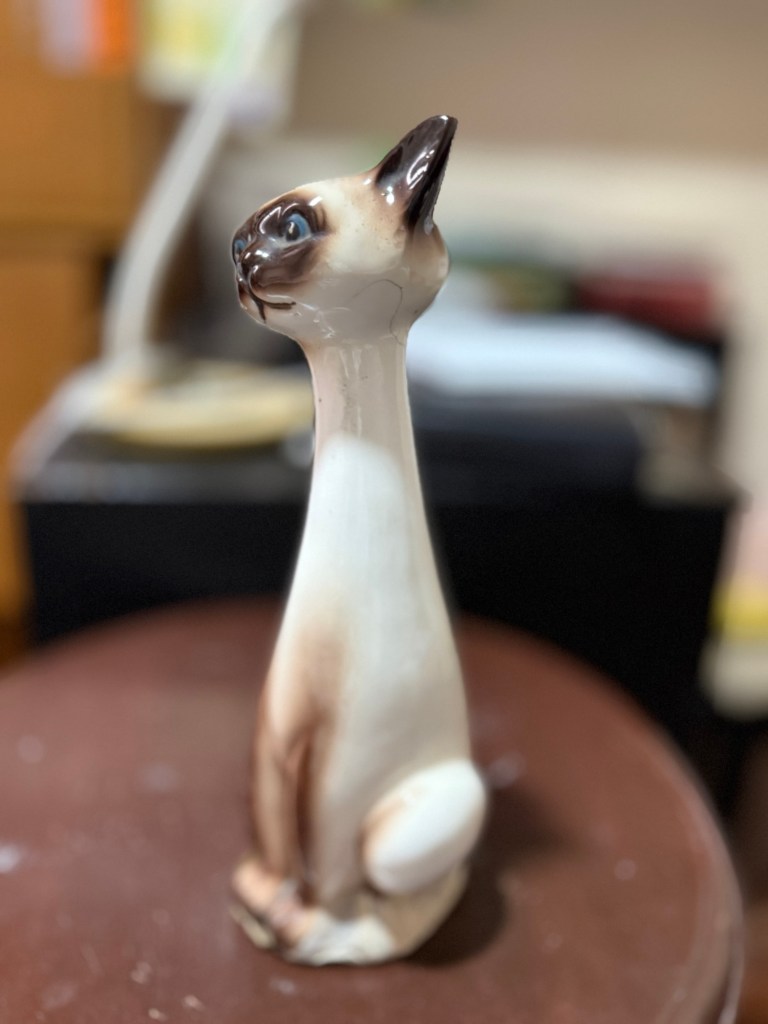
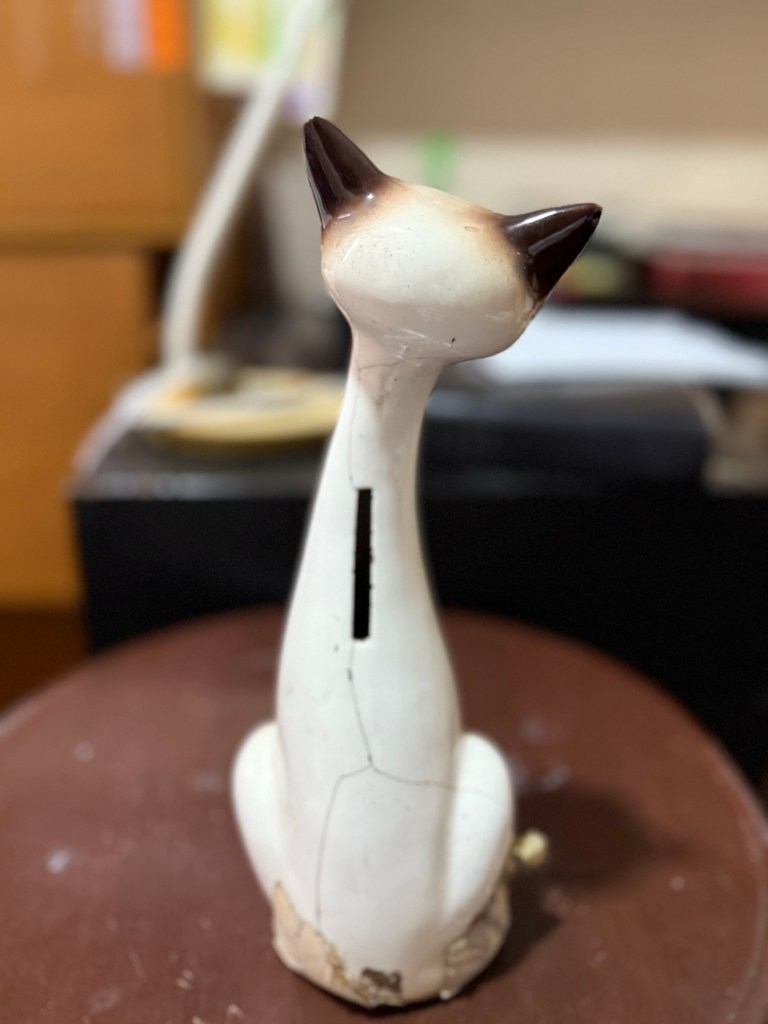
Photo by author, my mom’s kitty bank, 10.5 inches to the tip of ears.
While these things were running through me during our family dinner that night, my brother presented to me mommy’s “kitty bank” which is older than I am, 61 years old. It is one of her most cherished possessions she truly took great care as far as I can remember.
I have been thinking about it recently if it were still around though I never had any interest with it when growing up as a child except that I enjoyed counting the rare coins inside mostly dating back to the American occupation with the usual designs of the US flag and an eagle.
That evening on dad’s 25th death anniversary that could have been mom’s 86th birthday if she were still alive today, I felt a very strong attraction with that “kitty bank” whose face seemed to be speaking to me.
Photo by author, my mom’s kitty bank, circa 1964.
As I held it closer to see its many fissures and tapes following the wear and tear of over 60 years, I saw mommy again, of how she loved us and life so much, especially cats, dogs and fish, and most of all, plants- being a certified tita herself. Our house may be small but mommy lovingly took care of her pets and plants, always talking with them even after having a stroke.
Like the cat with its nine lives, death is never the end but the prelude to new life or, more lives hereafter.
And that is the nobility and giftedness of every mother – even after they are gone, they continue to bring forth and nurture life. God bless everyone… and the cats.
Lord My Chef Daily Recipe for the Soul by Fr. Nicanor F. Lalog II'
Monday in the Fifth Week of Easter, 19 May 2025
Acts 14:5-18     ><]]]]'> + ><]]]]'> + ><]]]]'>     John 14:21-26
Photo by author, Cabo da Roca Villas, Pundaquit, San Antonio, Zambales, 15 May 2025.
Your words today, O Lord
are very amusing:
in the first reading we have
the people at Lystra insisted
on making Paul and Bernabas
as "gods" after they have healed
a crippled man from birth
while in the gospel we felt you
personally speaking to us too
along with your disciples at the Last Supper
of how in our love for you and with
each other that we become divine
like you.
Judas, not the Iscariot, said to him, “Master, then what happened that you will reveal yourself to us and not to the world?” Jesus answered and said to him, “Whoever loves me will keep my word, and my Father will love him, and we will come to him and make our dwelling with him” (John 14:22-24).
How lovely,
dear Jesus are your words:
you never left us,
you continue to speak to us
in the Holy Spirit
you sent to enlighten
our minds and our hearts
so we may continue to love you
in one another;
more than a feeling as
most people believe these days,
love is a response to a loving,
meaningful relationship in you;
love is our deeper connection
with you and with each other;
without love,
we are mere humans,
not persons,
without relationships,
most of all,
without meaning
and direction in life.

Let us love,
love, and love more,
Jesus so we may find and
recognize you in ourselves
and in others,
especially the weakest
and poorest among us.
Amen.
Photo by author, Cabo da Roca Villas, Pundaquit, San Antonio, Zambales, 15 May 2025.