Quiet Storm by Fr. Nicanor F. Lalog II, 20 August 2026
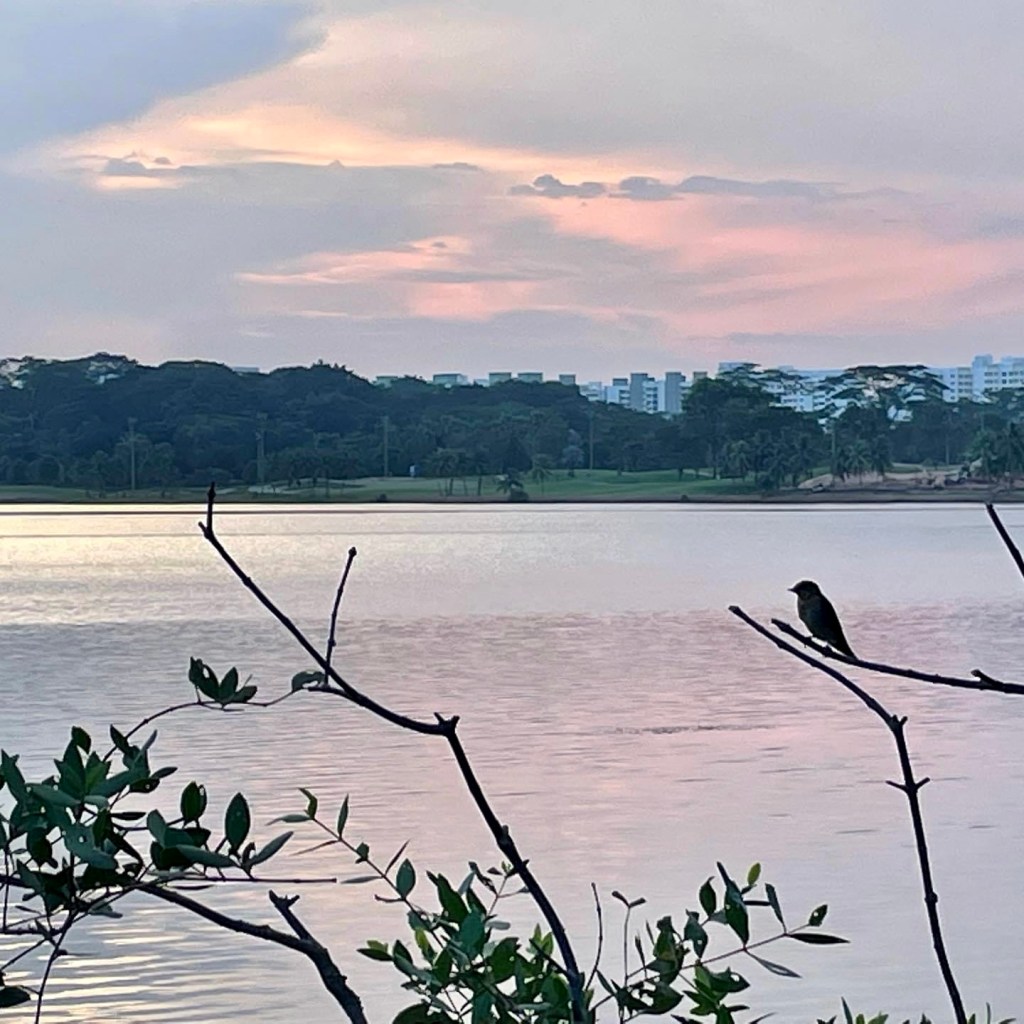
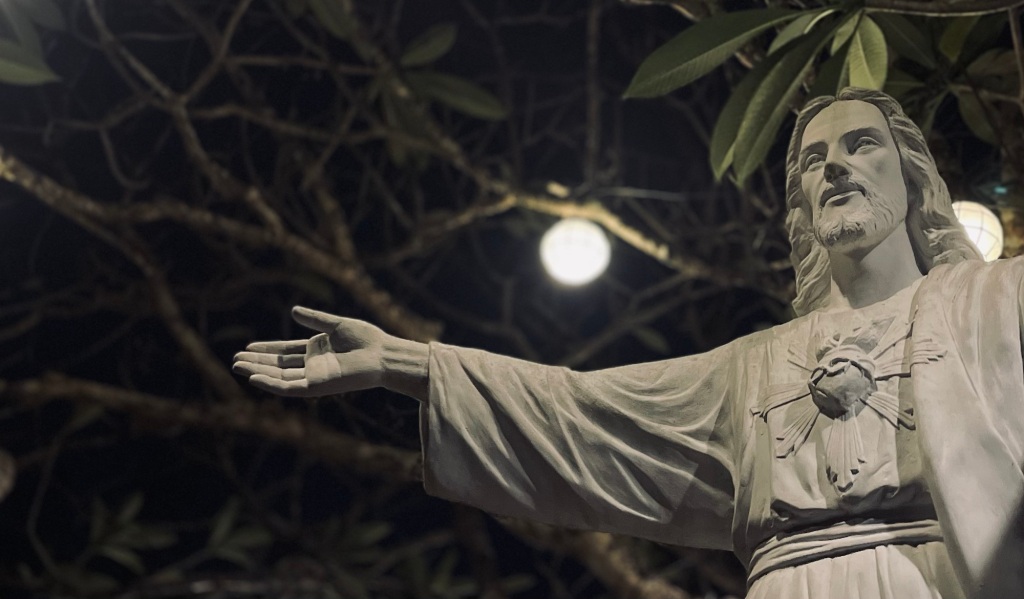
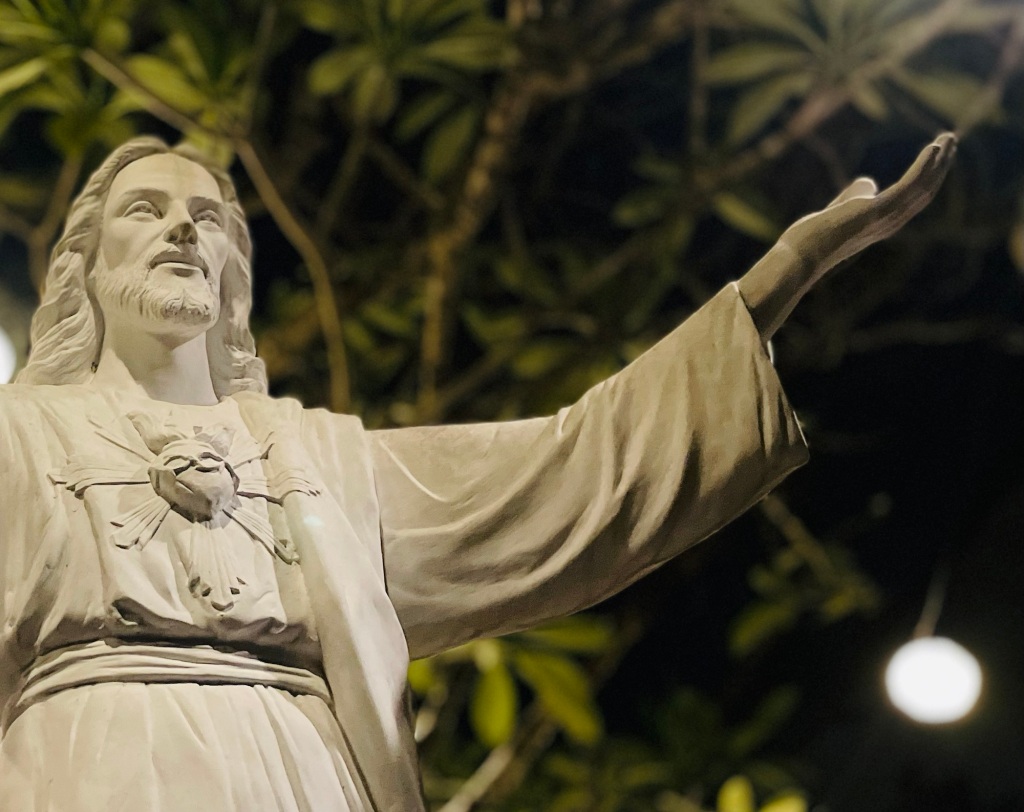
Photo by author, Anvaya Resort, Bataan, 21 July 2026.
Let me come home to you, Lord God:
to gaze in your loving eyes anew,
be wrapped around with your tight embrace
without being judged nor blamed.
Let me come home to you, Lord God:
with nothing at all,
to be poor of material wealth and
rich in Spirit and virtues,
empty of pride,
filled with your humility and
simplicity
so scarce of everything
abundant in you and your love.
Let me come home to you, Lord God:
no longer afraid of the dark and
everything not yet known and seen,
nor terrified of great waves of tasks
and duties,
of strong winds like what people think
and say about me because in you alone
is my certainty as well as safety and security.
Photo by author, Pundaquit, San Antonio, Zambales, 15 May 2025.
Let me come home to you, Lord God:
to be nourished by your words
that give life and meaning,
to be quenched of my thirst with your
living water that restores my being,
cleanses me of my sins and shame.
Let me come home to you, Lord God:
to rest in you,
be at home in you
because you are my origin,
my root
my home
my peace
my destination in this long journey
in life for you are
my Lord
and my God.
Amen.
Photo by author, San Juan, La Union, 09 January 2026.
Lord My Chef Sunday Recipe for Soul by Fr. Nicanor F. Lalog II
Fifteenth Sunday in Ordinary Time, Cycle A, 12 July 2026
Isaiah 55:10-11 ><}}}}*> Romans 8:18-23 ><}}}}*> Matthew 13:1-23
Photo by author, Lake of Galilee, the Holy Land, May 2019.
Matthew’s opening lines in today’s gospel present us a beautiful image of God’s abundance we often take for granted just like the parables of Jesus that remind us of our interconnectedness as brothers and sisters.
On that day, Jesus went out of the house and sat down by the sea. Such large crowds gathered around him that he got into a boat and sat down, and the whole crowd stood along the shore. And he spoke to them at length in parable, saying: “A sower went out to sow” (Matthew 13:1-3).
For the next three Sundays beginning today, all our gospel readings are taken from this 13th chapter of Matthew known as the “Discourse in Parables” that forms one whole unit of the Lord’s teachings in parables.
From the French word parabolein or “along the way”, a parable is a simple story often taken from ordinary things and events in life that offers valuable lessons about life; but, because it is a story taken from ordinary things and events, a parable is often taken for granted.
Many times we only realize later that the most profound realities in life are those found in most ordinary like God who comes to us daily in simplest ordinary things and people and events we take for granted or even refuse to recognize.
Our Filipino word for parable which is talinghaga captures this very well. From the phrase natatalinghiwaga that means “tied mystery”: tali is a rope or a tie that binds things together like mystery or hiwaga. Hence, we have talinghaga for parable that indicate how a mystery is tied with the ordinary and simple things and persons and events.
That is the purpose of Jesus in teaching us in parables: that we may learn to find the hidden truths and mysteries of life in the most ordinary things. His teaching in parables is a continuation as well as a deepening of his call to us last Sunday to “come to him and learn from him” so that we may find rest and fulfillment in him.
Photo by author, Lake of Galilee, the Holy Land, May 2019.
What I find amazing in our gospel scene this Sunday is how Jesus was by the shore of the Lake of Galilee yet, his parable is about the sower.
Why not narrate something about the life of fishermen or fish vendors?
Photo by author, Lake of Galilee, the Holy Land, May 2017.
Again, let us situate ourselves in Matthew’s opening line, “On that day, Jesus went out of the house and sat down by the sea.”
Imagine the scene, it was early morning, the sun had just risen, and people were starting to go about their usual lives when they heard Jesus teaching while seated on a boat perhaps owned by Peter. More than the parable of the sower itself, Matthew is showing us in this scene the very parable of our life that the whole world is God’s.
Every pilgrim to the Holy Land can attest to this unique beauty of the Lake of Galilee that is so lovely, so peaceful and yes, divine. It tells us of God’s superabundance in all of his creation, interconnecting us as brothers and sisters in him our Father.
This is the same parable and truth of life that God had spoken through the Prophet Isaiah in the first reading:
Thus says the Lord: Just as from the heavens the rain and snow come own and do not return there until they have watered the earth, making it fertile and fruitful, giving seed to the one who sows and bread to the one who eats, so shall my word be that goes forth from my mouth; my word shall not return to me void, but shall do my will, achieving the end for which I sent it (Isaiah 55:10-11).
Nothing happens by accident in life; God knows everything. And the good news is, he gives everything that is good like the sower. Not just the seeds but the bread we eat, the water we drink, even the very breath we breathe.
Moreover, there is the connectedness of everything in God’s superabundance like that of the rain and snow making the earth fertile and fruitful, giving seed to the sower so that there would be bread for everyone, even clothes to wear.
Painting by Van Gogh, “The Sower on Sunset” from wikipedia.org.
God is the Sower always coming to us, tending us, sowing us with seeds that are absolutely good. It does not really matter what kind of soil receives the seed that even the pathway becomes a conduit in feeding the birds of the air!
The seed is definitely good because God is good. In all instances where the seed had fallen, we find God the Sower himself moving in each step of our life. Observe how in this image of the sower moving from his home to his field, it shows us also the journey of the word and the purpose of God in our life. There is no problem with the seed that is so fecund and definitely efficacious as God had told Isaiah that “my word shall not return to me void, but shall do my will, achieving the end for which I sent it.”
If ever the word is not fruitful, it is due to our poor disposition as listeners or recipients. That is why St. Paul reminds us in the second reading of how we must responsibly be true to our call and role as disciples of Christ. It is a process we have to be patient but must be consistent. What we are working for is not just for this time or for one’s self or society or country: we have to see the whole reality of life from here to eternity in Christ’s work of salvation is for all. We are all interconnected so that whatever good we do will always bear fruit, “some a hundred or sixty or thirtyfold.”
Photo by author, St. Michael Retreat House, Antipolo City, 16 June 2026.
This Sunday, in this beautiful scene by the Lake of Galilee, or right there on your comfortable seat or wherever you are, Jesus is asking, “where do I see myself in this wide picture and chain of events?” What have I done with the “word”, the “seed” Jesus had sown in me?
In this age of relativism worsened by social media that have blurred reality with algorithms manipulating the way we see and understand truth and reality, the more we have become empty and alienated from one’s self and one another despite the abundance of material things.
How sad that despite the worldwide connections we now have, the more we have been detached from each other, even from one’s self and ultimately from God so that indeed, many of us “look but do not see and hear but do not listen or understand” (v.13) because we have taken life in the ordinary things for granted. We live in Facebook or social media where everything has to be spectacular, even “imeldific” or at least, enhanced if not AI-generated. This Sunday, let’s get real. Enough with fakes and AI’s. Amen. Have a blessed, fruitful week ahead everyone!
Lord My Chef Sunday Recipe for the Soul by Fr. Nicanor F. Lalog II
Twelfth Sunday in Ordinary Time, Cycle A, 21 June 2026
Jeremiah 20:10-13 ><}}}}*> Romans 5:12-15 ><}}}}*> Matthew 10:26-30
BERLIN, GERMANY – JUNE 18: Alexandra Eala of the Philippines reacts to defeating Elena Rybakina of Kazakhstan in the second round on Day Four of the 2026 Berlin Tennis Open at LTTC Rot-Weiß e.V. on June 18, 2026 in Berlin, Germany. (Photo by Robert Prange/Getty Images)
God has a most amazing way of consoling us Filipinos when everything is so dismal in the country, sending us athletes who uplift our spirits and make us proud as a nation. In the not so distant past we have had Manny Pacquiao and Olympic gold medalists Hidilyn Diaz and Carlos Yulo cheering us up.
And now, we have the lovely but tenacious and gritty Alex Eala who just made history anew this week with her two upset wins in the ongoing Berlin Tennis Open when she prevailed over WTA number 2 Elena Rybakin Thursday then Friday crushed number eight Elina Svitolina. (Update: Eala lost to Linda Noskova last night.)
Watch her interviews in both victories where Eala mentioned her being “brave” in her games as she described too both matches filled with “grace” – so very much like this Sunday’s gospel where Jesus mentioned thrice the need to be brave!
Jesus said to the Twelve: “Fear no one. Nothing is concealed that will not be revealed, nor secret that will not be known… And do not be afraid of those who kill the body but cannot kill the soul… So do not be afraid” (Matthew 10:26, 28, 31).
Photo by Dra. Mylene A. Santos, MD, in Ericeira, Portugal, 16 June 2026.
After choosing and sending his Twelve Apostles last Sunday, Jesus reminds them including us today of the need to have courage in working in the Lord’s “abundant harvests” because the good news goes directly against the ways of the world.
This we have learned at the start of this year in the Lord’s sermon on the mount where he taught us the Beatitudes last February 1, fourth Sunday in Ordinary Time. Though the Beatitudes like being poor, being hungry and thirsty are not to be taken literally, they still run contrary to the ways of world of power and wealth, fame and convenience.
As the world advances in science and technology, the more it veers away from God and do away with morals that in the process, the Church has always faced many contradictions, some with violent reactions even persecutions for her stance against abortion and population control, divorce and same-sex marriage and other anti-life measures now so widespread through the social media.
It is not only difficult and painful for the Church as an institution but most especially for each of us disciples of Christ that we can easily identify with the Prophet Jeremiah in the first reading.
Of the four major prophets, Jeremiah was the youngest and the only one sent by God to his own people to prophesy. That is why it was so painful for Jeremiah to experience in the hands of his own folks and kin being maligned and rejected, and betrayed just like most of us today!
Jeremiah said: “I hear the whisperings of many: ‘Terror on every side! Denounce! Let us denounce him!’ All those who were my friends are on the watch for any misstep of mine. ‘Perhaps he will be trapped; then we can prevail, and take our vengeance on him.’ But the Lord is with me, like a mighty champion… Sing to the Lord, praise the Lord, for he has rescued the life of the poor from the power of the wicked!” (Jeremiah 20:10-11, 13)
Like Jeremiah, we have complained and even cried to God many times for our sufferings in doing his will to be just and fair, kind and merciful, even charitable; and like him, we could not resist God’s call and mission despite the pains and hurts because we too felt “duped” and “seduced” by the Lord (Jer.20:7) as we felt deep inside us his love and protection. Like all the saints who suffered much in witnessing the gospel, we felt deep inside God as our very strength as we pray more to forge on in the difficult mission of doing his works.
Photo by author, Our Lady of Fatima University, Valenzuela City, 10 June 2026.
When Jesus asks us to “fear no one”, he is inviting us to primarily fear God most of all for he knows everything and will judge us in the end. It is a kind of reverential fear, not the kind of fear of a slave to a master of being reprimanded and punished.
To “fear no one” and “be not afraid” do not mean that we disregard our fears of being hurt or killed physically and emotionally; it is call to have courage which is facing our fears. Having no fears in life is not normal. As we say in the province, yung walang takot sira tuktok!
To fear the Lord means to recognize the sanctity of life, the blessedness of every person. See Eala’s attitude of being magnanimous in victory and in defeat as she would always praise and recognize the talents and greatness of her opponents. In her we find the truth that the “fear of the Lord is the beginning of wisdom” – that every person is a subject to be loved and cherished, not an object or thing to be used or possessed, without feelings and dignity.
Photo by author, Our Lady of Fatima University, Valenzuela City, 10 June 2026.
This is the tragedy exposed by the recent deaths of the two Ateneo athletes, and it involves almost all UAAP members these past decades who have given more priorities in winning trophies above all, forgetting the value of every person. True enough, it is a secret slowly becoming known.
Likewise, to be not afraid of those who kill the body but cannot kill the soul is to recognize the soul in each one of us, of Christ’s indwelling within us, enabling us to overcome every obstacle in life.
It is like being a pencil: remember the inside is more essential than the outside. That is our identity as God’s beloved child.
Our physical strength actually draws much of its power and stamina from our inner core than merely from our bones and muscles. Hence, the need for prayers and meditation, for conditioning to realize our giftedness and value.
When this happens, the third call of Jesus becomes automatic which is to be not afraid because we are worth more than many sparrows or anything else in this world.
Why? Because God is gracious!
To recognize our fears and vulnerabilities as well as weaknesses is in itself courage, fearing no one except God who alone heals us. Most of all, who alone is our strength in our weaknesses. Let us not be afraid in this life to do what is good, to stand for what is right and just, to proclaim the gospel of Christ’s salvation because God is gracious especially to those who abide in him through Christ. Amen. Have a blessed week ahead! And say a prayer for Alex Eala.
Photo by author, St. Michael Retreat House, Antipolo City, 16 June 2026.
Lord My Chef Daily Recipe for the Soul, 20 October 2025
Monday in the Twenty-Ninth Week of Ordinary Time, Year I
Romans 4:20-25     <*((((><  +  ><))))*>     Luke 12:13-21
Photo by author, Jerusalem, May 2017.
Someone in the crowd said to Jesus, “Teacher, tell my brother to share the inheritance with me.” He replied to him, “Friend, who appointed me as your judge and arbitrator?” (Luke 12:13-14)
Lord Jesus,
I felt I am
that "someone in the crowd"
asking you to tell my brother
to share the inheritance with me
and honestly,
I felt so stunned
with your answer.

I was shocked
and surprised,
could not speak a word
to explain to you my side
of the story
but wholly,
I felt so liberated.
I felt so free,
finally.
Because your reply
was so reassuring,
with you even calling me
a "friend".
How foolish for us
to be so engaged with
material pursuits in life
that never truly give us
fulfillment
except success
which is so relative;
so true are your words,
Jesus:
"one's life does not
consist of possessions."
Lord Jesus,
teach me to let go
of my many possessions
that actually possess me
and make me unfree;
instead of possessions,
let me have relationships -
with you in others;
like Abraham,
give me the grace
to know you
so that in knowing you,
I may value the truest
treasure
that remains
forever
and ever.
Amen.
Lord My Chef Daily Recipe for the Soul, 18 August 2025
Monday, Twentieth Week in Ordinary Time, Year I
Judges 2:11-19     <*((((><  +  ><))))*>     Matthew 19:16-22
Photo by Mr. Vigie Ongleo, Virginia, USA, August 2021.
Your words today,
O God our Father
are so disheartening
not only because after
a week of joyful stories of
Moses and Joshua and the
Israelites finally nearing the
Promised Land,
we begin work and classes
this Monday with the distaff
side of Israel's history,
of their low point of being
repeatedly attacked and
defeated by their enemies.

But more sad
and disheartening is the fact
that low point in their history
was also their low point in their
faith in you -
it was all due to their repeated
falling into sin of idolatry,
of worshipping false gods
instead of you alone.
Whenever the Lord raised up judges for them, he would be with the judge and save them from the power of their enemies as long as the judge lived; it was thus the Lord took pity on their distressful cries of affliction under their oppressors. But when the judge died, they would relapse and do worse than their ancestors, following other gods in service and worship, relinquishing none of their evil practices or stubborn conduct (Judges 2:18-19).
And that is the painful
truth of the story,
of the fact still true
among us today:
the problem,
the trouble
are all with us.

Yes, Lord,
many times we are like
your people during that
time of the judges:
you keep on saving us
from troubles of our own making
but once we are able to rebound
in life, we go back to our old ways
of sins and self-centeredness,
forgetting you and your love;
we do not have the false gods
of old like Baal
but we keep on turning
away from you, Lord,
worshipping
fame and wealth,
power and control,
comfort and safety;
though through all these
you keep on coming to save us,
giving us all the chances
to be better in Jesus Christ your Son,
we are like the young man
in the gospel who can't let go
of our many possessions,
choosing to leave sad
than follow Jesus empty
but filled with love and
and meaning in life.
Help us fix this
trouble in us, Lord.
Amen.
Lord My Chef Sunday Recipe for the Soul, 03 August 2025
Eighteenth Sunday in Ordinary Time, Cycle C
Ecclesiastes 1:2; 2:21-23 ><}}}*> Colossians 3:1-5, 9-11 ><}}}*> Luke 12:13-21
Photo by author, Sacred Heart Novitiate, Novaliches, QC, March 2024.
Our gospel this Sunday is very interesting as it is similar with what we have heard last July 20, the sixteenth Sunday when Jesus visited the home of Martha who asked him, “Lord, do you not care that my sister has left me by myself to do the serving? Tell her to help me” (Lk.10:40).
Compare that with our gospel today:
Someone in the crowd said to Jesus, “Teacher, tell my brother to share the inheritance with me.” He replied to him, “Friend, who appointed me as your judge and arbitrator?” Then he said to the crowd, “Take care to guard against all greed, for though one may be rich, one’s life does not consist of possessions” (Luke 12:13-15).
Photo by author, PDDM Chapel, Araneta Ave., QC, August 2024.
“Tell my sister…tell my brother.”
How funny we waste energy complaining to Jesus about others when he is not interested at all because he is actually most interested with us! In Martha’s home and in this scene, the Lord shows us that he came here for each of us personally, as if telling us to stop all those pointing to others because each one of us will definitely be dealt with individually, personally by him in the end. But, are we ready like that rich man in the parable?
That is why Luke tells us this amusing anecdote in the journey of Jesus to Jerusalem to remind us anew that in the spirit of Christ’s teaching last week on prayer, he is most concerned with our relationship with God our Father – not with our petty quarrels on money and inheritance or politics. We have to stop that “holier-than-thou” attitude, of being sanctimonious pointing at others without looking deep into ourselves, “Why do you notice the splinter in your brother’s eye, but do not perceive the wooden beam in your own eye?” (Mt.7:1,3).
This Sunday, we hear one of Jesus Christ’s many warnings against relying on wealth, possession and even status for our well-being and security. He invites us to look deep into ourselves than look at others.
Photo by author, Sacred Heart Novitiate, Novaliches, QC, March 2024.
“Take care to guard against all greed, for though one may be rich, one’s life does not consist of possessions.”
A very tough warning from Jesus that sends chills down our spine. It is always easier to point at others than look into ourselves in responding to him, on what is to be “rich in the sight of God” we are all struggling with, though, admittedly many of us truly aspire to be.
There are so many anxieties and other feelings within each of us that push us against the words of Jesus not only here. And Jesus knows very well how we turn to many things other than God for our security and well-being like the rich man in the parable he told the crowd.
We call that “security blanket” which we use to cover ourselves that often temporarily relieves us of our fears and anxieties but ultimately gives us away in the end like that rich man in the parable. He thought he would be safe and secured by building a bigger barn for his “bountiful harvest” that year that would sustain all his needs. But, that night he was taken by the Lord and died, leaving everything behind him.
We can easily identify with that rich man in the parable who portrays what each of us harbors in the depth of our hearts of never having enough. Palaging kulang, palaging bitin at kapos ano man mayroon tayo. We are always afraid that what we have may not be enough that we want to increase, to have more of whatever we think gives us security and well-being in the face of life’s many exigencies and unpredictability.
But, when is enough really enough? In this age of affluence, we have totally forgotten about the value of contentment, of relying more to God than to ourselves. It is not really a question of what we have but of our attitude in what we have, no matter how much or how less that may be.
Of course, we need to be prudent and wise in responsibly planning for our future but Jesus tells us in this parable that what really matters in life is our relationship with God expressed in the Our Father last week. What we need to store in our “barn” is not material things but more of spiritual values like love, kindness, compassion, fidelity, mercy and compassion.
Jesus is inviting us today to examine and clean out of our “barn” to make room for God who alone matters in the end. Let God be the only possession we have who possesses us in the end – not our cellphones and gadgets nor our popularity nor negatives feelings like bitterness we have kept so long in our hearts.
Qoheleth in the first reading is neither promoting cynicism nor any negative thoughts about life but simply warned us of the great “sorrow and grief” of too much focus on things of the world that vanish like vapor. The reason we work so hard, fulfilling many tasks and obligations is not merely to earn a living and have nice homes, wonderful vacations here and abroad, education of children and better retirement; we work because we want to have fullness of life. That is why I prefer the Pilipino word for “work” – hanap buhay that literally means “to search life” because we work to find the meaning of life. But, what happens if we become enslaved by our jobs and professions while our possessions eventually possess us that in the process, we lost our very selves and those dearest to us in our relationships?
Fullness of life can only be found in God through Jesus who gave us himself totally on the Cross we receive every Mass in the Eucharist. That is why beginning this Sunday and in the next three weeks, we find Luke presenting to us various teachings of Jesus on the way to Jerusalem with a stress on the need to always consider the End, that is, God himself who alone gives us fullness of life. St. Paul speaks of this in the second reading that amid our many concerns in life, let us be focused into things of heaven that are eternal, not of earth that are passing.
Last Friday I read a beautiful story of a man taking care of his critically sick mother that he fell asleep by her side. When he woke up, she was gone forever. He checked their CCTV and saw how in her final moments, the mother saw her son not properly covered that she used all her remaining strength to pull the blanket over him. Then she closed her eyes and died peacefully. It was her final act of love: she tucked her son in bed the day he was born, she tucked him the day she died.
We reflected last Sunday that prayer changes us not the situations. This Sunday, let us pray to Jesus to help us clean and clear our “barn” of worldly things to make more room for God in ourselves to become better persons. And – beginning today – for us to stop pointing at others, asking Jesus to check on them; instead. let us focus on our personal transformation into Christ as better disciples and witnesses. Amen. Have a blessed week ahead! Fr. Nicanor F. Lalog II, Our Lady of Fatima University, Valenzuela City (lordmychef@gmail.com).
Lord My Chef Sunday Recipe by Fr. Nicanor F. Lalog II
Fourth Sunday in Easter, Cycle C, 11 May 2025
Acts 13:14, 43-52 ><}}}}*> Revelation 7:9, 14-17 ><}}}}*> John 10:27-30
The new Pope, Leo XIV, appears on the balcony of St. Peter’s Basilica, 09 May 2025; photo from vaticannews.va
What a lovely fourth Sunday in Easter also known as “Good Shepherd Sunday” when we are blessed with a new Pope – Leo XIV – who will shepherd us into this modern time. Truly, Jesus Christ our Good Shepherd knows us so well that he did not make us wait long in having a new Pope in this troubled time.
Jesus said: “My sheep hear my voice; I know them, and they follow me. I give them eternal life, and they shall never perish” (John 10:27-28).
“I know them.” How lovely are these words of Jesus to us, his “sheep” especially for those going through a lot of trials and difficulties, for those feeling lost and empty, for those about to give up on life.
Let us dwell on his words “I know them”.
For the Jews and in the Bible, knowing is more of the heart than of the mind. Knowing a person is not just knowing one’s name but most of all of being in a personal relationship, an affinity with the person.
In declaring “I know them”, Jesus affirms how he personally regards each one as somebody dear to him, somebody close to him. We are all a somebody, a someone to Jesus whom he personally loves and cares for.
This we have seen among the people we have met in Lent like the apostles Peter, James and John during the transfiguration, the prodigal son, the woman caught in adultery. Or during the Holy Week like Judas who betrayed the Lord, Peter who denied Jesus thrice, Dimas the thief, the centurion who believed in him after his death on the Cross, John and the Blessed Mother at the foot of the Cross. They were all in their most difficult situations in life yet Jesus knew them so well that he assured them of his loving presence, lifting them up to move on with life.
Recall also the people we met this Easter Season like Mary Magdalene and companions early in the morning later followed by Peter and the beloved disciple who all found the tomb empty, the disciples at the upper room with locked doors that evening of Easter, the two disciples on the road to Emmaus, Thomas Didymus, the disciples led by Peter at breakfast with Jesus at the shore of Lake Tiberias. In their most joyous moments in life amid the darkness and emptiness, the doubts and unbelief or blindness following Easter, they were accompanied and joined by the Risen Lord to ensure and assure them that indeed he is alive and will always be with them.
In the same manner, think also of those moments in your own life of darkness and emptiness, whether negatively or positively, for better or for worse… who remained standing by your side?
Jesus. Only Jesus. And always Jesus. Because he knows us so well.
Jesus is truly the Good Shepherd who knows us so well even in these modern times where there are more vehicles and traffic, more disruptions to life yet he continues to shepherd us like the many shepherds still in many countries in Europe and the Middle East.
And that makes this passage most touching and refreshing because though times may have changed, Jesus has remained personally committed with each one of us. He keeps on looking for us, searching us, following us. Loving us most of all. But, are we present in Jesus?
Notice the four verbs in this short gospel we have today: ascribed to Jesus are the verbs “know” and “give” while to us the sheep, “hear” and “follow” where problems always happen. Do we “follow” what we “hear”? “To hear” is to recognize the authority and importance of the speaker’s words; it is to enter into a communion with him, to put oneself in his guidance, to “follow” him as his disciple.
Jesus speaks to us daily but nobody cares because right after waking up, most of us today look for our cellphone than pray! We are more interested with the “likes” and “followers” we have garnered from our previous posts. We are more enthralled with the seductive voices and images of social media that feed on our ego and senses, giving us false feelings of security and acceptance. We would rather be consumers than disciples who are called to sacrifice like the shepherd.
Photo of a sheep’s fleece by Dra. Mylene A. Santos, MD, 2022.
Though life has become more affluent these days, it has ironically become more empty and lost without direction because we just keep on having and possessing, consuming and ingesting everything the world offers that leave us guilty and empty because we cannot experience any sense of fulfillment and meaning.
How ironic that amid this pandemic of “obesity”, we fill ourselves mostly with trash and poison, literally and figuratively speaking that we feel so lost more than ever with so much time wasted and sadly, life and relationships thrown away. Everything has become more of the mind than of the heart with persons being commodified as things, everything seen in monetary terms, so utilitarian in nature.
Only Jesus “knows” us so well that is why only he “gives eternal life” as Peter exclaimed in this Saturday gospel in the third week of Easter, “Master, to whom shall we go? You have the words of eternal life. We have come to believe and we are convinced that you are the Holy One of God” (Jn.6:68-69).
Unlike anybody, Jesus is the Son of God sent to gather us, to save us and to bring us closer to the Father so that no one among us shall perish. That is the plan of God fulfilled by Christ which we must continue like the apostles as we have heard in the first reading when Paul and Barnabas preached the Gospel of Jesus to the gentiles.
This Sunday, Jesus our Good Shepherd assures us, wherever we may be – in darkness and emptiness, or under the dark clouds of a thunderstorm, under a thatched roof of misery – that he knows us so well. He loves us.
Feel the warmth of Christ’s loving heart this Sunday by being present with your loved ones, the people you know so well like Jesus. Let us pray:
Lord Jesus,
you are our Good Shepherd
and we are your sheep;
only you know us so well,
only you can give us eternal life,
only you can keep us safe
not to be snatched by anyone
like the corrupt and shallow candidates
running for office again this election;
give us the wisdom, courage and faith
to follow you and stand by you
like those elders in white garments
seen by John in his vision of heaven
in the second reading;
let us vote wisely,
let us not waste that power
you shared with us.
Amen.
The Lord Is My Chef Daily Recipe for the Soul by Fr. Nicanor F. Lalog II
Wednesday in the Thirty-Third Week of Ordinary Time, Year II, 20 November 2024
Revelation 4:1-11         <*((((><  +  ><))))*>         Luke 19:11-28
Photo by author, sunrise in Dumaguete City, 11 November 2024.
How lovely are your words
these past days, dear Lord,
of Bartimaeus gaining his sight
and Zacchaeus being raised in his
stature before you in his conversion.

We are Bartimaeus and Zacchaeus!

Grant us, Jesus vision more than sight
to see beyond material things
so that we may aspire always to rise
above our many shortness in life.
Open our hearts and our minds like John
to experience a vision of God,
of heaven amid all the darkness
and sufferings in this life.
I, John, had a vision of an open door to heaven, and I heard the trumpetlike voice that had spoken to me before, saying, “Come up here and I will show you what must happen afterwards” (Revelation 4:1).
You are beyond descriptions,
God our Father like what John saw
in his vision; teach us to submit
ourselves to You in prayer and silence
than manipulate who You really are
so beyond understanding!
“He replied, ‘I tell you, to everyone who has, more will be given, but from the one who has not, even what he has will be taken away. Now as for those enemies of mine who did not want me as their king, bring them here and slay them before me.'” After Jesus had said this, he proceeded on his journey up to Jerusalem (Luke 19:26-28).
Like Zacchaeus yesterday,
he realized that to rise in one's stature
is actually to go down,
to be humble
to allow Jesus raise us up
in His loving mercy;
take away our worldly thoughts
about "Jerusalem"
and learn to lose ourselves in You,
Jesus, to truly see
the glory awaiting us
in You.
Amen.
Photo by author, Bohol Sea from Salum Dive Resort, Dauin, Negros Or., 10 November 2024.
The Lord Is My Chef Daily Recipe for the Soul by Fr. Nicanor F. Lalog II
Wednesday in the Twenty-fifth Week of Ordinary Time, Year II, 25 September 2024
Proverbs 30:5-9     <*((((><  +  ><))))*>     Luke 9:1-6
Photo by author, Sacred Heart Novitiate, Novaliches, QC, 20 March 2024.
Jesus said to them, “Take nothing for the journey, neither walking stick, nor sack, nor food, nor money, and let no one take a second tunic” (Luke 9:3).
Lord Jesus,
bless me to continue
in this journey with You,
in You,
taking nothing
but You;
at first,
I could not believe
it to be true
that many times,
I doubted,
taking so many things with me
in this journey;
but, as we walk farther,
Lord, the more I realized,
that indeed,
I need to take nothing.
The farther we journey,
Jesus, the more I take
and bring,
the more difficult,
the slower I move;
so true that the truly
rich among us is the one
whose who needs least in life;
grant me the grace,
O Lord,
the grace of integrity,
of wholeness
and harmony between my
inner self and
 outward behavior;
like the author of the Proverbs,
"give me neither poverty nor
riches; provide me only with the food
I need; lest being full,
I deny you or being in want,
I steal, and profane the name
of my God"
(30:9).
Amen.
The Lord Is My Chef Sunday Recipe for the Soul by Fr. Nicanor F. Lalog II
Twentieth Sunday in Ordinary Time, Cycle B, 18 August 2024
Proverbs 9:1-6 ><}}}}*> Ephesians 5:15-20 ><}}}}*> John 6:51-58
Photo by author, James Alberione Center, QC, 15 August 2024.
It is our fourth consecutive Sunday listening to the sixth chapter of John’s gospel that opened with the miraculous feeding by Jesus of more than five thousand people in a deserted place; Jesus fled from there, went back in Capernaum where people caught with Him and disciples as He began three Sundays ago His “Bread of Life” discourse now getting deeper while the drama among the crowd is heating up.
From murmuring last Sunday about Jesus who said “I am the bread that came down from heaven” (Jn.6:41), the people today quarreled among themselves after Jesus said “I am the living bread that came down from heaven; whoever eats this bread will live forever; and the bread that I will give is my flesh for the life of the world” (Jn. 6:51).
Photo by author, James Alberione Center, QC, 15 August 2024.
Notice the beautiful contrast of reactions by people to Jesus: from murmuring last Sunday, they sank deep into quarreling while Jesus leveled up to “the living bread from heaven” from merely “the bread from heaven” last week. For us to live well, we have to eat well by having Jesus Himself as our food and drink.
The Jews quarreled among themselves, saying, “How can this man give us his flesh to eat?” Jesus said to them, “Amen, amen, I say to you, unless you eat the flesh of the Son of Man and drink his blood, you do not have life within you. Whoever eats my flesh and drinks my blood has eternal life, and I will raise him on the last day. For my flesh is true food, and my blood is true drink. Whoever eats my flesh and drinks my blood remains in me and I in him. Just as the living Father sent me and I have life because of the Father, so also the one who feeds on me will have life because of me” (John 6:52-57).
Photo by Ms. Ria De Vera in Banff, Alberta, Canada, 07 August 2024.
Eating is the most common human activity anywhere, any time. Human life basically revolves around eating as we have seen since time immemorial how we have progressed following our search for food. We work to feed ourselves and loved ones. Without food, we die. Food is so essential that there is always food to share in our gatherings.
That is why Jesus chose the bread and wine as the signs of His living presence among us in the Holy Eucharist He established during the Last Supper on Holy Thursday. In the Eucharist, Jesus elevated the most ordinary human activity of eating as most sublime and Divine. In the Holy Mass, we share in Christ’s Body and Blood so we too may share our very selves with one another.
When Jesus said in Capernaum that the bread He is giving is His own flesh with His blood as drink, He was already preparing the people for the Eucharist while at the same time teaching them that eating is not everything. We have to eat well to live well. When tempted by the devil in the wilderness, Jesus right away taught us to remember that man does not live by bread alone but with every word from God. At the start of this discourse last August 04, Jesus challenged the people, “Do not work for the food that perishes but for the food that endures for eternal life, which the Son of Man will give you” (Jn.6:27).
Photo by Ms. Ria De Vera in Banff, Alberta, Canada, 07 August 2024.
Many times, we get so used in our many activities that unconsciously, we miss life itself as we punish ourselves with exhaustion and sickness as well as emptiness.
Food is not just something that fills our stomach but must also lead into our heart and soul. Observe any cuisine and you get a taste of the culture and people it represents, even with strong hints of its geographical origin. In the first reading we find how the Book of Proverbs personified Wisdom as God to remind us that though He is transcendent and so above us, God is easily accessed even in the most ordinary instances like eating.
Wisdom has built her house, she has set up her seven columns; she has dressed her meat, mixed her wine, yes, she has spread her table. She has sent out her maidens; she calls from the heights out over the city: “Let whoever is simple turn in here; to him who lacks understanding, I say, Come, eat of my food, drink of the wine I have mixed! Forsake foolishness that you may live; advance in the way of understanding” (Proverbs 9:1-6).
How lovely is that part of God calling us to come like Jesus in the gospel when He said “come to me all who are burdened” or when He ordered to “let the children come to me”. Is it not the same thing we say when we are about to eat, to come and get it?
Sadly these days, we seem to have retrogressed in our manner of eating. Social media rightly labeled it as “food porn” when we are flooded with everything about food and drinks minus its deeper meanings. Food is sadly seen in its material aspect that eating is more on filling the stomach, forgetting the soul because we have totally forgotten God and the people around us. No wonder that despite the growing food production and plethora of food we have these days, many still starve while the rest of us remain lost in life, more sick.
Photo by Ms. Ria De Vera in Banff, Alberta, Canada, 07 August 2024.
See, my dear friends, the great coincidence on the very Sunday Jesus began his bread of life discourse, it was also the opening of the Paris Olympics with a mockery of the Last Supper that led us into a kind of “quarrel” as organizers and their supporters insisted it wasn’t the Last Supper at all despite the clear indications and proofs.
“How can this man give us his flesh to eat?” Suddenly, we heard anew that same question by the people in Capernaum to Jesus reechoed in the Olympics at the capital city of the Church’s so-called “eldest daughter”, France. Of course, we know this bread of life discourse by Jesus refers to the Holy Eucharist and surely, the many defenders of the Paris Olympics are aware for many of them are Catholics. But, Jesus must have willed this gospel be proclaimed at this time coinciding with the Olympics for us to evaluate anew our faith in Him because at the very core of this bread of life discourse is the mystery of faith.
“How can this man give us his flesh to eat?” In the gospel of Luke, we find a similar question by Mary at the Annunciation that is filled with faith, “How can this be?” (Lk.1:34); but today, like in Capernaum as exemplified by the Paris Olympics, that question is a renewed refusal to believe in the words of Jesus Christ. Worst of all as we noted earlier in our perceptions of food and eating these days, that question shows modern man’s insistence on everything material, totally disregarding our spiritual nature.
Photo by Ms. Ria De Vera in Banff, Alberta, Canada, 07 August 2024.
Like in Capernaum, many people today who refuse to believe Christ’s words resort to malicious and insidious arguments that it becomes useless to really converse with them as they would rather insist on their grossly material understanding and perception of life these days. Many prefer to quarrel these days than accept life’s many mysteries not merely seen nor tasted by the senses but experienced and realized through faith in God.
Life for them has become merely material which in Greek is bios as in biology. There is another Greek word for life which is zoe that refers to the eternal, divine life of God that Jesus repeatedly used in our gospel today.
Like last Sunday, Jesus did not engage Himself into debating with the crowd in Capernaum by simply repeating the words living and life to emphasize the total acceptance of Him – Body and Blood – in faith: “I am the living bread… my flesh for the life of the world. Just as the living Father sent me and I have life because of the Father, so also the one who feeds on me will have life because of me.” These are the very same words too, life and living that Jesus would mention before His Passion and Death as well as after His Resurrection because eating His flesh and drinking His blood is to share in His life that is also the fullness of life. It is only in Christ Jesus can we find fulfillment in life. Let us pray:
Lord Jesus Christ,
help me watch carefully
how I live, not as a fool
but as wise as St. Paul taught
us today in his letter to the Ephesians;
let us not be intoxicated
with life's pleasures and worldly pursuits
but let us be filled with the Holy Spirit.
Amen.