Lord My Chef Daily Recipe for Soul by Fr. Nicanor F. Lalog II
Wednesday, Twenty-Sixth Week in Ordinary Time, Year II
Memorial of St. Jerome, Priest & Doctor of the Church, 30 September 2026
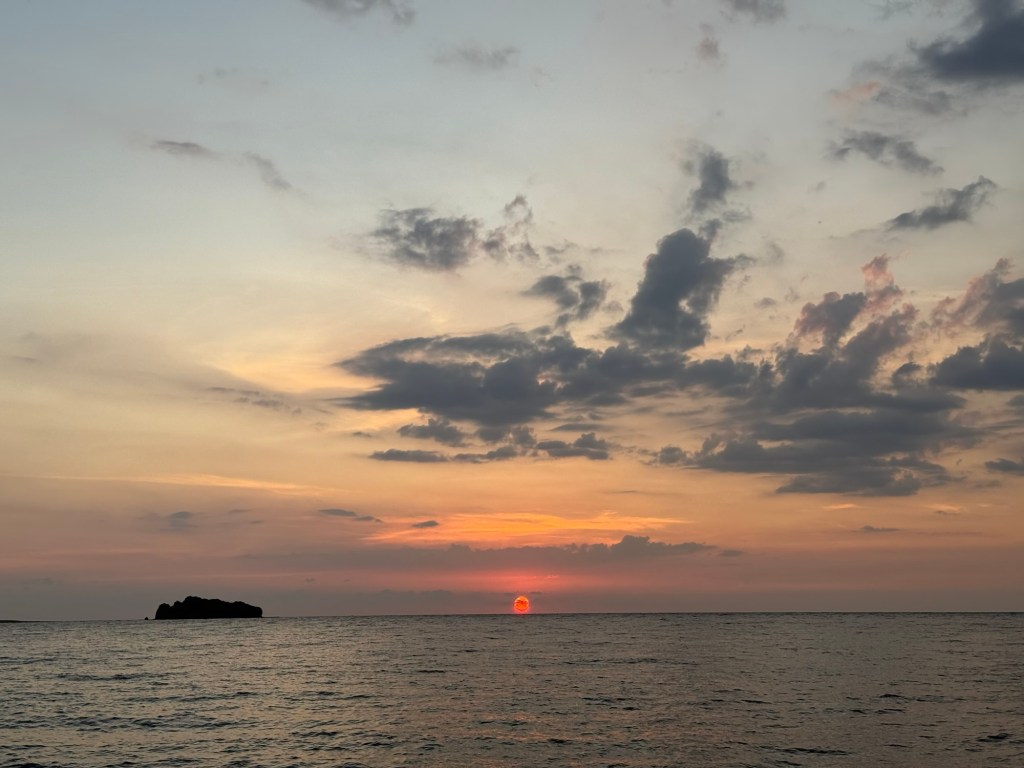
Photo by author, Cabo de Roca, Pundaquit, San Antonio, Zambales, 15 May 2025.
Many times in life
I see myself like Job,
Lord: at a loss at how
things are happening with
me; I cannot complain but
deep I know that in this life,
good is rewarded,
evil is punished;
but, how does one explain
when bad things happen to
good people?
Like Job,
I have no claims to
holiness but deep inside
I am convinced
of my innocence
in many occasions
that I ask,
I wonder,
I "protest"
of the difficulties
and sufferings I am going
through.
How must I approach,
you, Lord?

You are all powerful,
you can do anything;
should you come near me,
I see you not;
should you pass by,
I am now aware of your coming;
should you seize me,
what can I say nor do
(Job (9:11-12).
Even though I were right, I could not answer him, but should rather beg for what was due to me. If I appealed to him and he answered my call, I could nhot believe that he would hearken to my words (Job 9:15-16).
Truth is,
many times I really
do not and would never
understand for sure
the things happening
to me except that I just
have to trust you more
like Job.

Or St. Jerome
who went through many
ordeals in his life
largely due to his own
making with his kind
of temperament.
What matters is that
unlike the three would-be
disciples in the gospel today,
Job,
St. Jerome,
and hopefully me,
your lowly servant Lord,
will simply follow you
even if we never
understand why
and how things are
turning out
in my life.

Let me approach
you, Lord,
the way St. Jerome
had shown
and taught us:
by praying your Words,
the Sacred Scriptures
where you speak directly
to us in the most personal manner.
Amen.
Photo by author, Cabo de Roca, Pundaquit, San Antonio, Zambales, 14 May 2025.
Lord My Chef Daily Recipe for Soul by Fr. Nicanor F. Lalog II
Tuesday, Twenty-Second Week in Ordinary Time, Year II
World Day of Prayer for Care of Creation, 01 September 2026
Wisdom 13:1-9 ><}}}}*> Colossians 1:15-20 ><}}}}*> Matthew 8:23-27
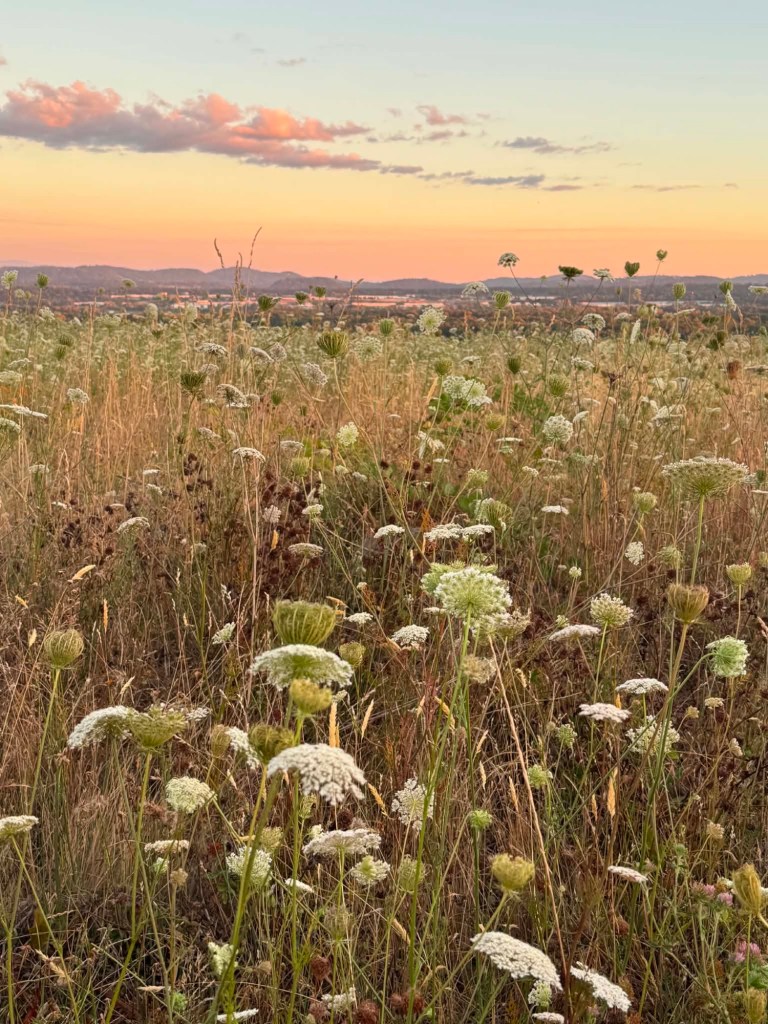
Photo by a friend in Washington, 28 July 2026.
Thank you dear God
for this brand new month of
September when we dedicate
its first day as prescribed by
Pope Francis to be a
World Day of Prayer for
Care of Creation:
how timely on this first of
September 2026 we are still
reeling from the devastations
of many natural calamities
not only here in the Philippines
but from throughout the world -
from the powerful earthquake in
Colombia to the catastrophic
collapse of glaciers in the Himalayas
that swept entire villages in Nepal,
Tibet, and China where thousands
are still missing while death tolls
continue to rise.
World climate is indeed changing
but still many refuse to believe it,
refusing to change lifestyles as told
by Pope Francis in "Laudato Si"
in order to curb our consumption
to lessen adverse impact to the environment;
worst of all is how men and women
especially those in our government
are deeply into shameless corruption
destroying nature, altering its flow
that turned calamity into criminality
leading to losses in lives and properties
as well as thousands of productive hours;
indeed, many people worship money,
seeing nature more as a source of wealth
without recognizing you as its Creator:
For all men were by nature foolish who were in ignorance of God, and who from the good things seen did not succeed in knowing him who is, and from studying the works did not discern the artisan… But doomed are they, and in dead things are their hopes, who termed gods things made by human hands (Wisdom 13:1, 10).
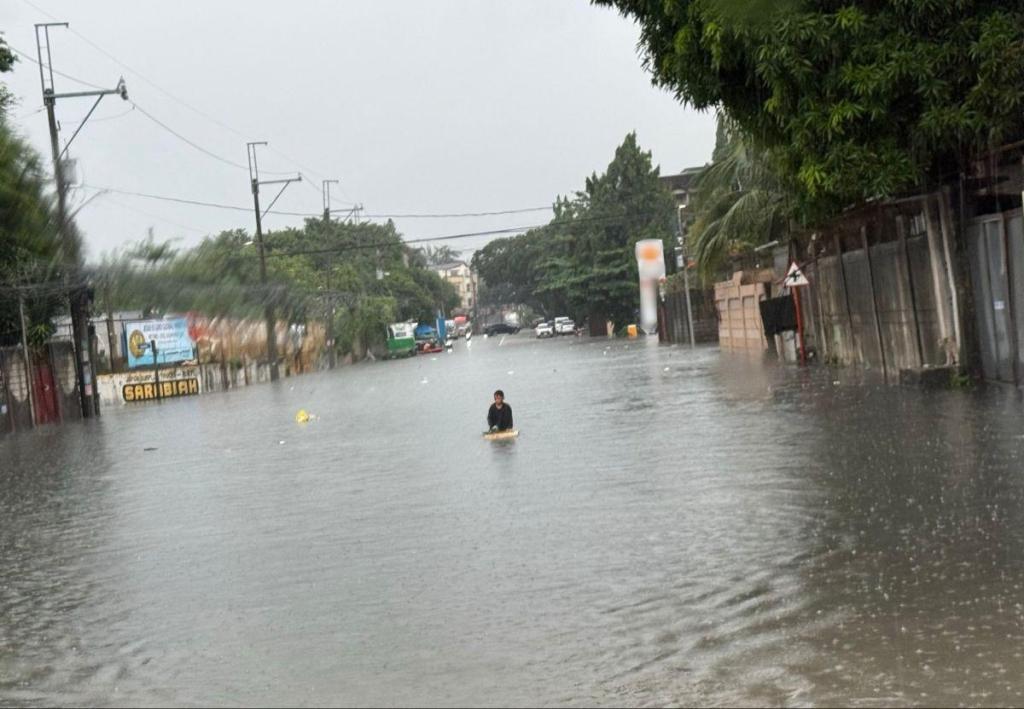
Photo by Ms. Bernadette Reyes, flood in Sto. Domingo, QC, GMA News, 29 August 2026.
Let us care for your creation,
Lord for it is actually caring
for ourselves and for one another;
we only have one home we call
Earth you have entrusted to us;
for many years,
nature have taken cared of all
our needs but offered it no care at all;
let us realize that this Earth
and everything in it
is a reflection of your goodness
and love for us
with Jesus Christ's coming,
"in him all things hold together"
(Colossians 1:17);
let us find, dear God,
 in every beauty of  nature
your majesty and mercy
so we may be kinder not only
with your Creation
but especially
with one another
through Jesus your Son
who alone can restore
order in this nature we have
so destroyed due to our
greed and selfishness;
let us not only pray
to care for Creation
but most especially
find Christ in every storm
in life so we may care most
of all for one another
in whom we find you
dear God
who loves us immensely.
Amen.
Rembrandt’s famous painting “The Storm on the Sea of Galilee” (1633) stolen from a museum in Boston in 1990 and still has not been found yet. From en.wikipedia.org.
Lord My Chef Daily Recipe for Soul by Fr. Nicanor F. Lalog II
Monday, Twenty-Second Week in Ordinary Time, Year II, 31 August 2026
1 Corinthians 2:1-5     <*((((><  +  ><))))*>    Luke 4:16-30
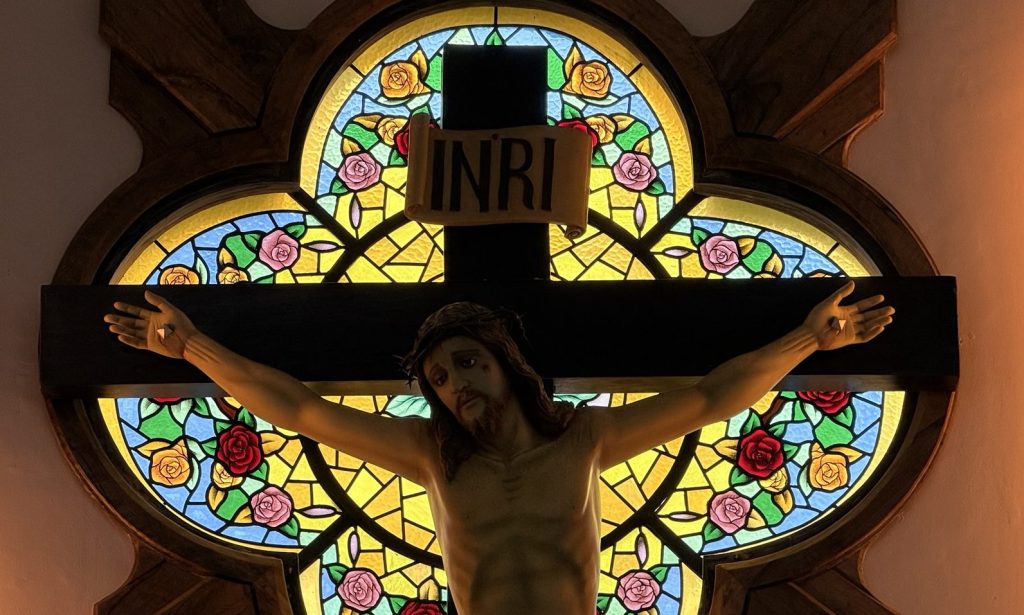
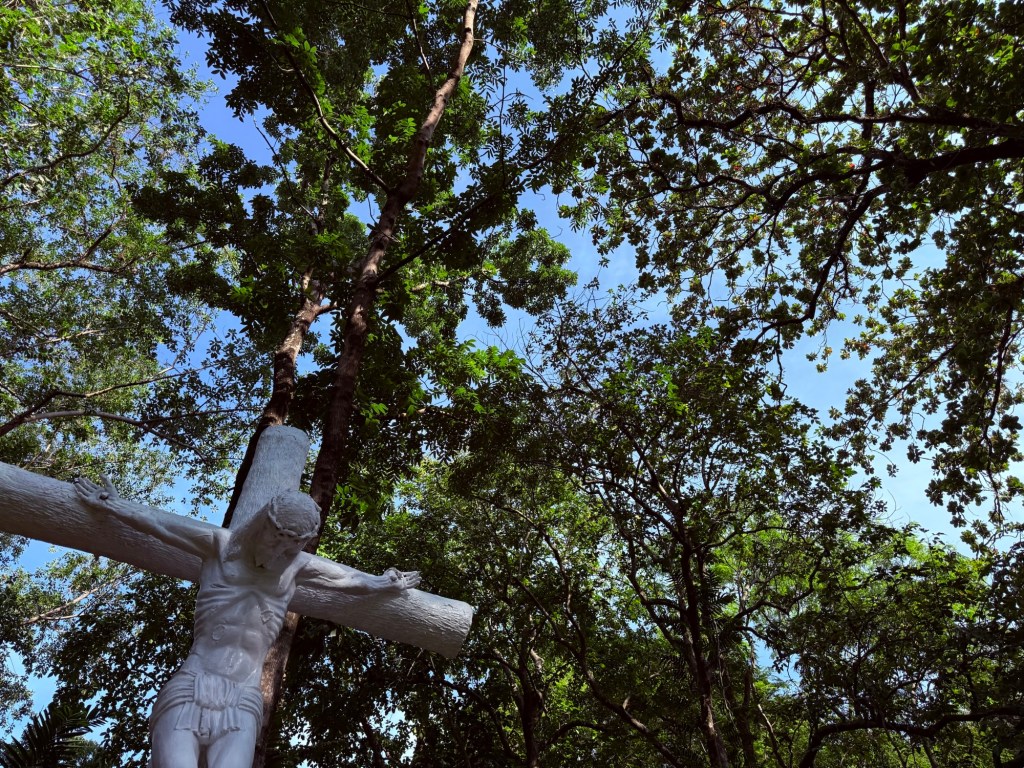
Photo by author, St. Paul Spiritual & Renewal Center, Bgy. Tanyawak, Alfonso, Cavite, 19 August 2026.
Teach me Lord
to "know nothing except
Jesus Christ crucified" like St. Paul,
not just "looked intently at you"
like your folks in Nazareth
when you preached in your synagogue;
it is not enough to just look
intently at you,
imitating you and your manners
and style but not your life,
your self-sacrifice on the Cross;
what a shame in this age of social media
we speak and preach about you
merely to chase clout for ourselves
using sublimity of words
or persuasive words of wisdom
used by demagogues and
influencers for followers
and shameful profits.
Help us realize,
Jesus, that our faith
rests on the power of God
best shown in your Crucifixion,
not in our personality
nor eloquence in speech
nor being savvy with new
technologies that blind us from
the realities of life
like love and sacrifice,
kindness and patience,
justice and truth.
Amen.
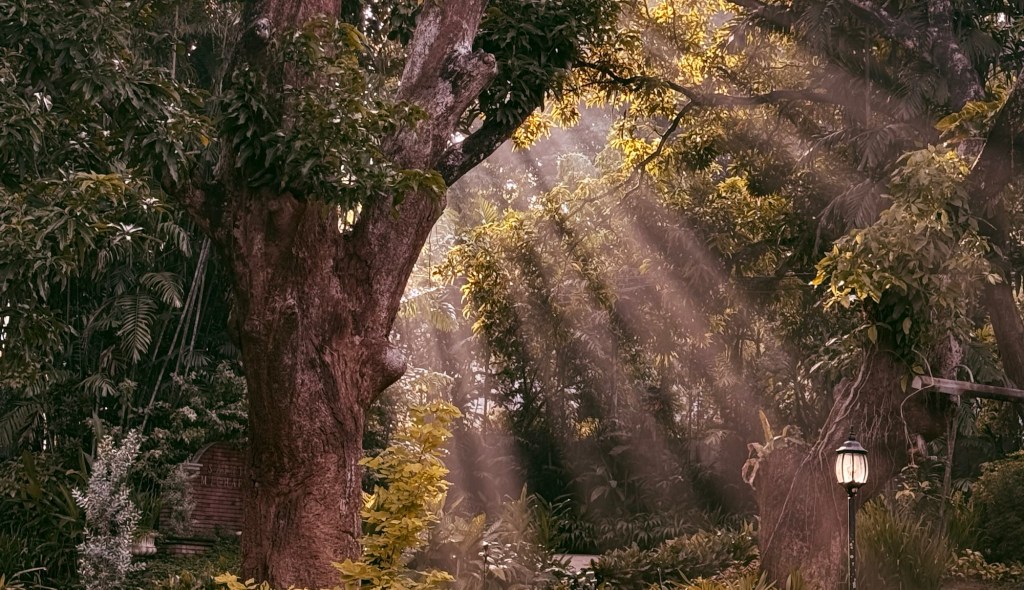
Photo by author, St. Michael Retreat House, Antipolo City, 16 June 2026.
Quiet Storm by Fr. Nicanor F. Lalog II, 20 August 2026
How amazing,
O Lord Jesus
that when it is already
evening, when darkness is
all around us,
that is when you are
actually inside us,
if we could just open
our hearts and eyes of faith
then we shall see you
truly our Light
glowing within,
bringing warmth and
joy.
Many times in our darkness
we lose sight
not only of you,
Lord Jesus but also
of our self
that away from you
we lose our identity
and let our job
and tasks define us
or worst,
our possessions and achievements
as well as pains and hurts;
we cave into our darkness
within not seeing
your wounded handed
touching me
holding me
unmindful of your
holding me,
loving me.
When things get dark
and we can’t see anything
teach me Jesus
to listen to your
silence
to feel your presence
sense your movements
follow your steps
waiting
trusting
self-emptying.
Most of all,
Jesus,
help me emulate your Mother
our Mother too,
Mary most holy,
to remain focused on you
cusping you in my palms
when all is dark
holding on to your words
believing they shall be
fulfilled when I remain
and stay with you
there on the Cross.
Amen.
Isang linggo na akong masayang nagpapaulan sa aking araw-araw na walking dito sa amin.
Natutuwa ako dahil kay dami kong naaalala masasayang karanasan ng paliligo sa ulan noong bata pa kami tulad ng pagtatampisaw sa tubig, pagtapat sa mga alulod ng lahat ng mga bahay at ngumanganga ng nakatingala sa langit para inumin ang ulan.
Mula sa Instagram.
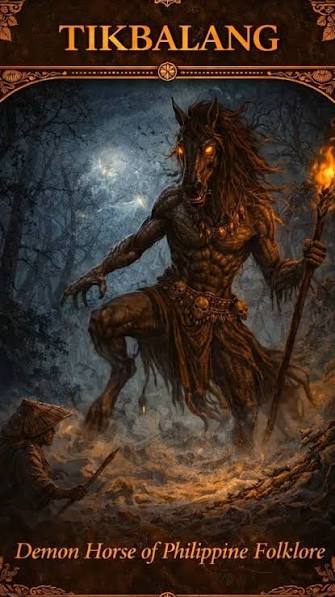
Isa sa mga sumagi sa aking alaala na paksa ng usapan naming magpipinsan tuwing umuulan at tirik din ang araw ay kung totoo nga na mayroon daw kinakasal na tikbalang – isang uri ng halimaw na parang tao kung maglakad ngunit mukha at anyong kabayo.
Ngayong matanda na ako, napag-isipan ko na totoo nga ito at hindi lang basta kalokohan. Nabatid ko na lamang iyan ngayong tag-ulan nang ilang ulit na umulan habang mainit ang sikat ng araw.
Unang tikbalang na tingin kong kinakasal kapag umuulan habang umaaraw ang mga local officials natin gaya ng mga mayor, tapos ang mga senador, kongresista, at mga upisyal ng DPWH. Yung mga sangkot sa ghost project flood scam noong isang taon.
Halimaw ang mga iyon.
Siyempre, sigurado mayroon ding mga tikbalang sa iba pang mga sangay at ahensiya ng pamahalaan na nagpapasasa sa kaban ng bayan habang hindi alintana hirap at pagdurusa ng mga mamamayan lalo na kapag umuulan.
Kundangan naman kasi, marami sa ating mamamayan mahilig mag-alaga at makipagkaibigan sa mga tikbalang, yung mga nakikinabang na negosyante at contractor.
Higit sa lahat, mga mamamayan mismo na bumoboto sa mga corrupt na upisyal.
Sila ang mga kabiyak – asawa – ng mga tikbalang na iyan. Partner in crime. Eka nga, it takes two to tango. Marami sila. Asawa at bisita. Ang iba ninong at ninang.
Nakakasawa nang manood ng mga reels at posts ng mga binaha at pa-shout out shout out pa kay mayor. Puro hinagpis sa social media kesyo palala ng palala na raw ang baha sa kanilang lugar, walang ginagawa mga mayor.
Ang tanong ay, ano nangyari bakit kada eleksiyon binoboto nila mga bulok na yan? Taun-taon pala silang pinahihirapan tuwing tag-ulan tapos minsan sa anim na taon tuwing eleksiyon nakakalimutan kawalanghiyaan at kawalang-silbi ng mga iyan?
Kasalan sa binaha na Simbahan ng Barasoain, kuha ni G. Aaron Favila ng Associated Press, 22 Hulyo 2025.
Walang kinakasal na mag-isa. Tayong mga mamamayan ang asawa, ang kabiyak ng mga tikbalang!
Karamihan din kasi sa atin ay tikbalang. Takot mag-isip, takot manindigan sa tama at katotohanan. At ang hirap sa atin, palaging humahanap ng ibang masisisi maliban sa sarili.
Katulad ng isang matandang ginang na kabatian ko kasi tuwing umaga sa aking paglalakad nadaraanan ko siya sa harapan ng kanyang apartment.
Noong Huwebes ng umaga sa gitna ng ulan habang ako ay naglalakad, sabi niya sa akin bakit daw ako nag-eexercise pa umuulan na?
Kumaway lang ako sa kanya at hindi na sumagot kasi nagdidilig siya noon ng halaman gamit ang lagadera.
Kawalan naman ng galang kung sinagot ko siya ng bakit po kayo nagdidilig ng halaman e umuulan?
Kulang sa pagninilay at pag-iisip? Mas malamang.
Ganyan tayo mga Pinoy, mema. Memasabi lang kadalasan na hindi pinag-iisipan.
Pero maganda at nakatutuwa sinasabi sa isang post sa Facebook buhat sa news report na nabawasan na pagbaha sa Marikina dahil sa mahusay na flood control projects doon ng lokal na pamahalaan pagkaraan ng tatlong taon.
Marami nang lungsod at bansa nagpatunay na maaring maibsan pinsala ng baha kung sadyang pag-aaralan at tunay na hahanapan ng lunas ng mga matitinong tao na may malasakit sa kapwa. At takot sa Diyos. Mangyayari lamang iyan kung boboto tayo ng mga upisyal ng pamahalaan na mayroong malasakit sa paglilingkod. Hindi suwapang. Hindi tikbalang.
Sa kabila ng mga makabagong teknolohiya, parang nabobobo mga tao ngayon: noong bata kami basta signal number 2 ang bagyo, automatic wala nang klase sa elementary at high school.
Bakit gayon na lamang ang pag-asa at pagtutok lalo ng mga magulang sa LGU kung may pasok o wala?
Sapantaha ko diyan ay mas grade conscious ngayon mga magulang kesa mga anak nila na tuwang tuwa naman tuwing suspendido ang klase.
Pakiwari ko tuwing umuulan, maraming tao natatakot maninindigan na pati pagpasok sa paaralan ay inaasa sa mga kinauukulan. Kaya ang gulo ng buhay ngayon!
Noong Martes wala palang klase pero pumasok ako;kinabukasan wala ulit pasok kaya nagpaulan ako at naisip ko magkapareho ang LGU at carwash: kapag nag-announce ng walang pasok mga mayor dahil sa masamang panahon, kadalasan umaaraw, maganda ang panahon. Magpa-carwash ka, pagkaaalis na pagkaalis mo, papatak ang ulan!
Sa tuwing umuulan doon nasusubok ating pananampalataya sa Diyos at kapwa, nahahasa ating kakayanang magpasya ng wasto sa pamamagitan ng masusing pag-iisip at pagninilay ng mga bagay bagay. Higit sa lahat, sa tag-ulan lumalabas likas nating kabutihan. O kawalan nito. Walang pakialam sa iba. Kung saan-saan tinatapon mga basura. Palaging iba may kasalan liban sa sarili.
Hanga ako doon sa mga nagpapacarwash maski umuulan. Wala silang pakialam sa lagay ng panahon kungdi sa lagay ng kanilang sasakyan!
Iyon ang dapat: tingnan natin at suriin ating sarili hindi lagay ng panahon o ibang tao labas sa atin. Siguradong babagyo at uulan na kasabay nito ang mga pagbaha. Bakit tila nagugulat at nagugulantang pa tayo kapag nangyari na mga ito? Pagmasdan: kung gaano katagal sina mayor sa puwesto, ganoon katagal na rin ang baha. Kailangan pa bang i-memorise yan? Parang basura yan – babalik sa atin!
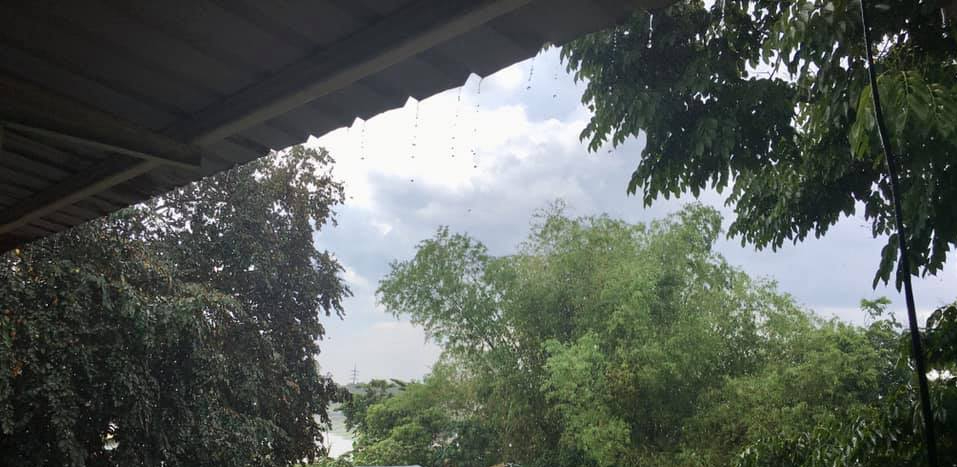
Kuha ng may-akda, Huwebes Santo, umuulan habang umaaraw sa Bagbaguin, Sta. Maria, Bulacan, 09 Abril 2020.
Balikan natin yung kasabihang mayroong kinakasal na tikbalang tuwing sabay na umuulan at sumisikat ang araw. Natukoy natin mga tikbalang, sino kanilang kabiyak o asawa, pati ninong at ninang hanggang sa mga bisita.
Heto ngayon: hindi ba kapag may kasalan, palagi mayroong pari?
Sino ang tumatayong pari kapag may kinakasal na tikbalang?
E di mga pari din. Mga kasama at kapatid naming pari. Ilan lang naman sila.
Noong isang taon ko pa ito gustong sabihin pero sinasaalang-alang ko aking pagkapari at mga kapatid sa kaparian. Pero, kailangang sabihin.
Isang taon makalipas pumutok ang ghost project scam sa mga flood controls na ang epicenter ay lalawigan ng Bulakan, mismong sa lungsod ng Malolos, hindi maikakaila Katoliko karamihan ng mga tikbalang.
At mga paring Katoliko nagkakasal sa kanila. Mayroon din ilang mga pastor at ministro nagkakasal sa mga tikbalang tuwing umuulan habang umaaraw. May ibang sekta nga nag-aalaga talaga ng mga tikbalang.
Larawan mula sa Facebook post ni Dr. Tony Leachon, “KLEPTOPIROSIS: When Corruption Becomes a Public Health Crisis”, 08 Agosto 2025.
Ilan ang mga pari na humingi ng donasyon sa mga corrupt na upisyales para sa kung anu anong mga pagawain sa simbahan? Hindi ba iyan ay malinaw na pakikipag-kaibigan at kung tutuusin pakikipag-sabwatan sa mga tikbalang?
Ilang parokya pulitiko pinageermano sa kanilang pista kahit hindi taga-roon sa kanila dahil lang sa konting halaga?
Katulad ng malawakang pagbaha, hindi nating kailangang tumingin sa malayo. Lalo na kaming mga pari at lingkod sa simbahan. Kasama kami at kung tutuusin napakalaki at napakabigat ng pananagutan namin lalo sa Diyos na kasama kami sa kasal ng mga tikbalang na iyan.
Gayon pa man, mas marami pa rin sa aming mga pari ang tunay na lumalaban, naninindigan sa katarungan at katotohanan na hindi kailanman nagpauto sa mga tikbalang at kanilang mga galamay sa simbahan.
Sa susunod na umuulan kasabay na sikat ang araw, subukan nating magpaulan at hayaang dumampi sa ating bumbunan, sa ating mukha ang patak ng ulan upang mapaalalahanang mayroong Diyos na higit na makapangyarihan dapat nating sundin at paglingkuran lamang. Hindi mga tikbalang.
At sinabi niya sa kanila, “Kung gayon, ibigay ninyo sa Cesar ang sa Cesar, at sa Diyos ang sa Diyos” (Mateo 22:21).
Sa kahuli-hulihan, ano man ang panahon, higit pa rin palagi ang Panginoong Diyos sa lahat na siyang tanging pinagmumulan ng lahat ng ating kinakailangan at pagpapala. Ito palagi dapat naming panindigang mga pari, umulan man nang umaaraw. Amen.
Larawan kuha ni Michael Varcas ng Philippine Star sa Hagunoy, Bulacan sa isinagawang rally ng mga taga-Parokya ni Sta. Ana sa pangunguna ng kanilang Kura Paroko P. Rodel Ponce laban sa flood control scam noong Setyembre 2025.
Lord My Chef Sunday Recipe for Soul by Fr. Nicanor F. Lalog II
Eighteenth Sunday in Ordinary Time, Cycle A, 02 August 2026
Isaiah 55:1-3 ><}}}}*> Romans 8:35, 37-39 ><}}}}*> Matthew 14:13-21
Photo by author, Anvaya Cove Resort, Morong, Bataan 21 July 2026.
Salamuch July, hello August! Though this eighth month of the year is named after the Roman emperor Augustus, August actually came from the Latin word augustus meaning venerable; used as an adjective, it describes something as majestic and grand like when we say “august halls” or “august chambers” of power and justice.
So, please stop demonizing August as “ghost month” which is a pagan belief. For us Christians who affirmed last Sunday to Jesus that we have “understood” very well his parables, Matthew challenges us this August not only how well we have understood the parables on the kingdom of heaven but most especially how much do we know and love and trust Jesus the Christ.
Photo by a friend living in Washington state, 28 July 2026.
From the shores of Galilee, Matthew now brings us to the wilderness with Jesus where he fed more than five thousand people from a few loaves of bread and pieces of fish.
When he disembarked and saw the vast crowd, his heart was moved with pity for them, and he cured their sick. When it was evening, the disciples approached him and said, “This is a deserted place and it is already late; dismiss the crowds so that they can go to the villages and buy food for themselves.” Jesus said to them, “There is no need for them to go away; give them some food yourselves.” But they said to him, “Five loaves and two fish are all we have here.” Then he said, “Bring them here to me,” and he ordered the crowds to sit down on the grass. Taking the five loaves and the two fish, and looking up to heaven, he said the blessing, broke the loaves, and gave them to the disciples, who in turn gave them to the crowds. They all ate and were satisfied, and they picked up the fragments left over – twelve wicker baskets full (Matthew 14:15-20).
See again that distinctive detail Matthew shares with us when Jesus saw the crowds who have followed him and his disciples to the other side of the lake: his heart was moved with pity for them, and he cured their sick. That is how great is the love of Jesus for each of us. He is always moved with pity which is more than a feeling but of actually doing something, even a miracle for us like in this scene in the wilderness.
Life is a wilderness. So vast and uncertain. But, lovely and beautiful. Not really august but grand and majestic, so difficult to explain, often ambiguous, largely mysterious. Even captivating. That is why it is always good to be alive even if life is difficult.
Last Thursday I officiated at the funeral Mass of another best friend from our minor (high school) seminary. In fact, Jonas was my classmate way back in second grade who partly inspired me to become a priest. He is my second best friend after Gil also from the seminary whom I have accompanied spiritually in life and at their deathbeds. Before going to his funeral at prayer in my room, I asked God if I would still have friends alive to attend my own funeral?
The mystery deepened after we have laid Jonas to his final resting place when a few hours later his mother-in-law – the mother of his widow – died too! Imagine the devastation to my friend’s wife who has not rested yet after taking care of him for a month in the hospital then her mother died too? And to their only child just starting her career as a medical doctor?
Photo by a friend living in Washington state, 28 July 2026.
Many times Jesus teases us.
Or seduces us as the Prophet Jeremiah insisted on how God lured him to following him despite the many hurts and pains he had to go through but could not turn away from him because he had grown to loving him so much too.
Like the people who followed Jesus to the wilderness, we gather every Sunday to listen to his words and share in his Body and Blood because we have felt so empty in life that only him could fulfill us.
But, that is so easy to claim as we can readily profess our faith in God, in Jesus Christ but it is different when it is borne out of a wilderness experience like the disciples.
How many times have we felt like them thinking more of our selves than others when in a difficult situation, telling Jesus to send the people home because it was getting late and dark; most of all, so that they could get food for themselves?
It was easy for the crowd to just come to Jesus and think only of themselves but not with the disciples – like our parents, our kuya or ate, our superiors, or those people we look up to with responsibilities over us. That is why be kind with those in positions too. So easy to accuse them of their shortcomings and worst, to spread gossips when we do not realize the enormous weight they carry on their shoulders.
The equation becomes different and heaviest when Jesus tells us to “give them some food yourselves”. It is scary because at that moment Jesus asks us too of “what do you have” which we already knew beforehand as too little. Not enough. Just five loaves of bread and three pieces of fish.
Recall those moments you knew so well your limits, you capacity. And that’s when you start regretting why you have accepted the position or why have you volunteered at all or perhaps why become a priest or why got married?
Photo by author, Anvaya Cove Resort, Morong, Bataan 21 July 2026.
Life is a wilderness that looks so lovely with its sunrise and sunsets but in between, it is so difficult. Because it is in the wilderness of this life when we truly come face to face with the harsh realities of our insecurities and inadequacies, scarcity and emptiness.
But Jesus shows us today that wilderness too becomes our grace-filled moment when he asks us to bring to him whatever little we have. It is the crucial point, turning point when we have to choose between turning to Jesus and trusting his instructions or retreating to our selves, to what we have or believing more to what the world offers.
Let us choose to radically believe in Jesus by surrendering to him whatever we have.
Photo by Mr. Nicko Timbol, OLFU Campus Ministry, 25 October 2025.
This is actually an extension of his question last Sunday, “Do you understand all these things?”
As we have reflected last week, to understand in Filipino is “maunawaan” from the root word “una” which is to be first. To understand the parables of the kingdom of heaven is to entrust ourselves to Jesus completely, to surrender even the little that we have, including our fears and insecurities.
That is why in the first reading God tells us through Isaiah to “come to him” to eat the true bread and drink true water fulfilled in Jesus Christ his Son. To understand all these things is to be convinced that in this life, only God suffices. He alone in Jesus Christ can fulfill our deepest desires and longings like peace and joy, love and hope, all the real reasons for living. Not things. Or even persons and relationships that do not last, often manipulative because not rooted in Christ.
This Sunday, let us not be ashamed of the little that we have, the worst that we have. For as long as we have Jesus, there is nothing that we cannot accomplish nor be fulfilled. St. Paul said so well in the second reading, nothing – not even death – can separate us from the love of God in Christ Jesus our Lord (Rom. 8:39). Amen. Have a blessed august month fulfilled in Christ!
Lord My Chef Daily Recipe for Soul by Fr. Nicanor F. Lalog II
Monday in the Fifteenth Week of Ordinary Time, Year II, 13 July 2026
Isaiah 1:10-17     ><))))*> + ><))))*> + ><))))*>     Matthew 10:34-11:1
Photo by Ms. Gretchen B. Ira in Washington DC, July 2018.
God our loving Father,
as we head on to our work
or for some to school for their
classes this Monday,
enlighten us on what particular
good we have to learn doing
beginning today.
Wash yourselves clean! Put away your misdeeds from before my eyes; cease doing evil; learn to do good. Make justice your aim, redress the wronged, hear the orphan’s plea, defend the widow (Isaiah 1:16-17).
Forgive us,
in our causing you
our Father with so many
heartbreaks as we live in sinful ways,
forgetting totally how your love
for us looked like;
we have retreated to mere
habits,
routine,
and appearances
in fulfilling our prayers
and worship along with our
many rites and rituals
that are empty of any love
at all for you
and for others.
Guide me,
dearest Father
in your Son Jesus Christ
on how I must relate with
the modern world
so alienated
from you with
so many practices
and actions
disguising as just
and fair
but actually selfish
and self-serving
that leave us
empty
and bothered,
lacking in peace.
Amen.
Lord My Chef Sunday Recipe for Soul by Fr. Nicanor F. Lalog II
Fifteenth Sunday in Ordinary Time, Cycle A, 12 July 2026
Isaiah 55:10-11 ><}}}}*> Romans 8:18-23 ><}}}}*> Matthew 13:1-23
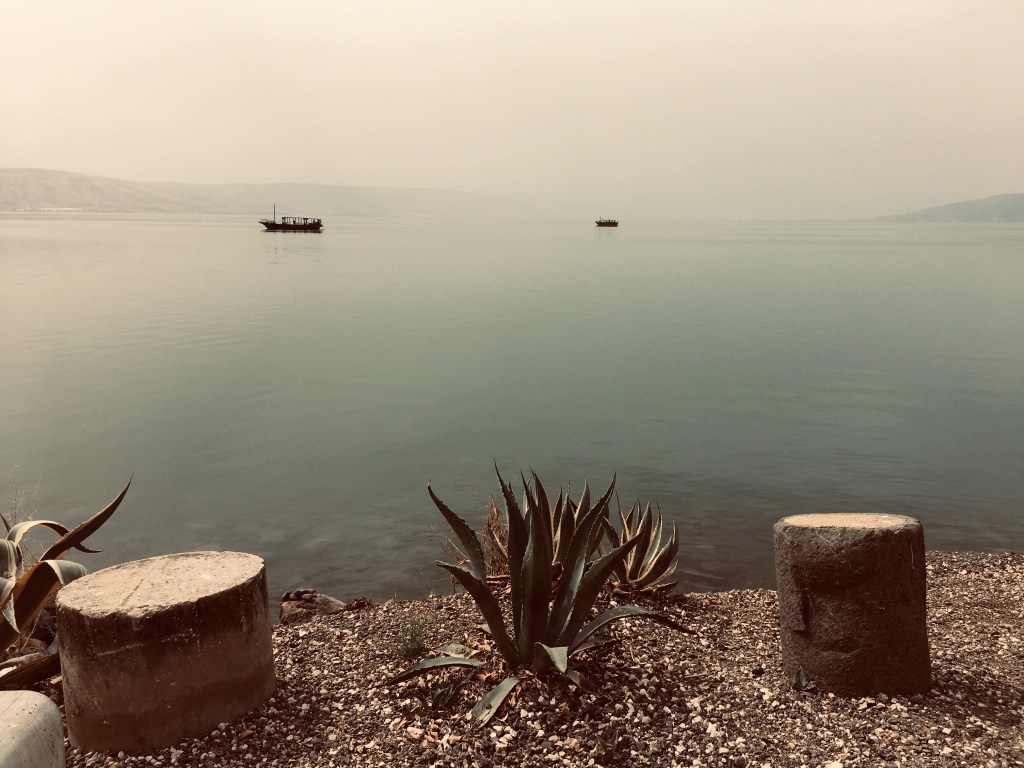
Photo by author, Lake of Galilee, the Holy Land, May 2019.
Matthew’s opening lines in today’s gospel present us a beautiful image of God’s abundance we often take for granted just like the parables of Jesus that remind us of our interconnectedness as brothers and sisters.
On that day, Jesus went out of the house and sat down by the sea. Such large crowds gathered around him that he got into a boat and sat down, and the whole crowd stood along the shore. And he spoke to them at length in parable, saying: “A sower went out to sow” (Matthew 13:1-3).
For the next three Sundays beginning today, all our gospel readings are taken from this 13th chapter of Matthew known as the “Discourse in Parables” that forms one whole unit of the Lord’s teachings in parables.
From the French word parabolein or “along the way”, a parable is a simple story often taken from ordinary things and events in life that offers valuable lessons about life; but, because it is a story taken from ordinary things and events, a parable is often taken for granted.
Many times we only realize later that the most profound realities in life are those found in most ordinary like God who comes to us daily in simplest ordinary things and people and events we take for granted or even refuse to recognize.
Our Filipino word for parable which is talinghaga captures this very well. From the phrase natatalinghiwaga that means “tied mystery”: tali is a rope or a tie that binds things together like mystery or hiwaga. Hence, we have talinghaga for parable that indicate how a mystery is tied with the ordinary and simple things and persons and events.
That is the purpose of Jesus in teaching us in parables: that we may learn to find the hidden truths and mysteries of life in the most ordinary things. His teaching in parables is a continuation as well as a deepening of his call to us last Sunday to “come to him and learn from him” so that we may find rest and fulfillment in him.
Photo by author, Lake of Galilee, the Holy Land, May 2019.
What I find amazing in our gospel scene this Sunday is how Jesus was by the shore of the Lake of Galilee yet, his parable is about the sower.
Why not narrate something about the life of fishermen or fish vendors?
Photo by author, Lake of Galilee, the Holy Land, May 2017.
Again, let us situate ourselves in Matthew’s opening line, “On that day, Jesus went out of the house and sat down by the sea.”
Imagine the scene, it was early morning, the sun had just risen, and people were starting to go about their usual lives when they heard Jesus teaching while seated on a boat perhaps owned by Peter. More than the parable of the sower itself, Matthew is showing us in this scene the very parable of our life that the whole world is God’s.
Every pilgrim to the Holy Land can attest to this unique beauty of the Lake of Galilee that is so lovely, so peaceful and yes, divine. It tells us of God’s superabundance in all of his creation, interconnecting us as brothers and sisters in him our Father.
This is the same parable and truth of life that God had spoken through the Prophet Isaiah in the first reading:
Thus says the Lord: Just as from the heavens the rain and snow come own and do not return there until they have watered the earth, making it fertile and fruitful, giving seed to the one who sows and bread to the one who eats, so shall my word be that goes forth from my mouth; my word shall not return to me void, but shall do my will, achieving the end for which I sent it (Isaiah 55:10-11).
Nothing happens by accident in life; God knows everything. And the good news is, he gives everything that is good like the sower. Not just the seeds but the bread we eat, the water we drink, even the very breath we breathe.
Moreover, there is the connectedness of everything in God’s superabundance like that of the rain and snow making the earth fertile and fruitful, giving seed to the sower so that there would be bread for everyone, even clothes to wear.
Painting by Van Gogh, “The Sower on Sunset” from wikipedia.org.
God is the Sower always coming to us, tending us, sowing us with seeds that are absolutely good. It does not really matter what kind of soil receives the seed that even the pathway becomes a conduit in feeding the birds of the air!
The seed is definitely good because God is good. In all instances where the seed had fallen, we find God the Sower himself moving in each step of our life. Observe how in this image of the sower moving from his home to his field, it shows us also the journey of the word and the purpose of God in our life. There is no problem with the seed that is so fecund and definitely efficacious as God had told Isaiah that “my word shall not return to me void, but shall do my will, achieving the end for which I sent it.”
If ever the word is not fruitful, it is due to our poor disposition as listeners or recipients. That is why St. Paul reminds us in the second reading of how we must responsibly be true to our call and role as disciples of Christ. It is a process we have to be patient but must be consistent. What we are working for is not just for this time or for one’s self or society or country: we have to see the whole reality of life from here to eternity in Christ’s work of salvation is for all. We are all interconnected so that whatever good we do will always bear fruit, “some a hundred or sixty or thirtyfold.”
Photo by author, St. Michael Retreat House, Antipolo City, 16 June 2026.
This Sunday, in this beautiful scene by the Lake of Galilee, or right there on your comfortable seat or wherever you are, Jesus is asking, “where do I see myself in this wide picture and chain of events?” What have I done with the “word”, the “seed” Jesus had sown in me?
In this age of relativism worsened by social media that have blurred reality with algorithms manipulating the way we see and understand truth and reality, the more we have become empty and alienated from one’s self and one another despite the abundance of material things.
How sad that despite the worldwide connections we now have, the more we have been detached from each other, even from one’s self and ultimately from God so that indeed, many of us “look but do not see and hear but do not listen or understand” (v.13) because we have taken life in the ordinary things for granted. We live in Facebook or social media where everything has to be spectacular, even “imeldific” or at least, enhanced if not AI-generated. This Sunday, let’s get real. Enough with fakes and AI’s. Amen. Have a blessed, fruitful week ahead everyone!
Lord My Chef Daily Recipe for Soul by Fr. Nicanor F. Lalog II
Thursday in the Fourteenth Week of Ordinary Time, Year II, 09 July 2026
Hosea 11:1-4, 8-9     <*((((><  +  ><))))*>     Matthew 10:7-15
Photo by Mr. Vigie Ongleo in Colorado, 03 June 2026.
I have not really known you,
Lord my God;
grant me the grace of intimacy,
like that of a son and a Father
as my life and my mission;
You have nurtured me, O God
as your own son
but I did not recognize you
that later in life,
I followed my doubts,
my false securities
and negatives thoughts
than you.
Thus says the Lord: When Israel was a child I loved him, out of Egypt I called my son. The more I called them, the farther they went from me, sacrificing to the Baals and burning incense to idols. Yet it was I who taught Ephraim to walk, who took them in my arms; I drew them with human cords, with bands of love; I fostered them like one who raises an infant to his cheeks, yet, though I stooped to feed my child, they did not know that I was their healer (Hosea 11:1-4).
Forgive me,
merciful Father;
though I pray always
while striving to be holy,
the more I stray from you
because my love for you is
superficial as seen too in my
skin-deep interpersonal relationships
because your love experiences
are forgotten as I give more
emphasis on my shortcomings,
expectations,
and "returns".
Let me get closer to you,
Father in the love of your Son
Jesus Christ so that my
brokenness may be healed;
set me free from my many
imprisonment with sin
so that I can go
make the proclamation
that "the Kingdom
of heaven is at hand"
by letting me
"cure the sick,
raise the dead,
cleanse lepers,
and drive out demons"
(Matthew 10:7-8);
remind me always of your immense
love for me poured by
Christ on the Cross
so that I may "give
without cost"
(Matthew 10:8)
except that I am doing
your most Holy Will;
and lastly, let me
trust you completely
so that I am not bothered
with so many things for
the journey
except Jesus,
only Jesus,
always Jesus.
Amen.
Photo by Mr. Vigie Ongleo in Colorado, 03 June 2026.
Quiet Storm by Fr. Nicanor F. Lalog II, 08 July 2026
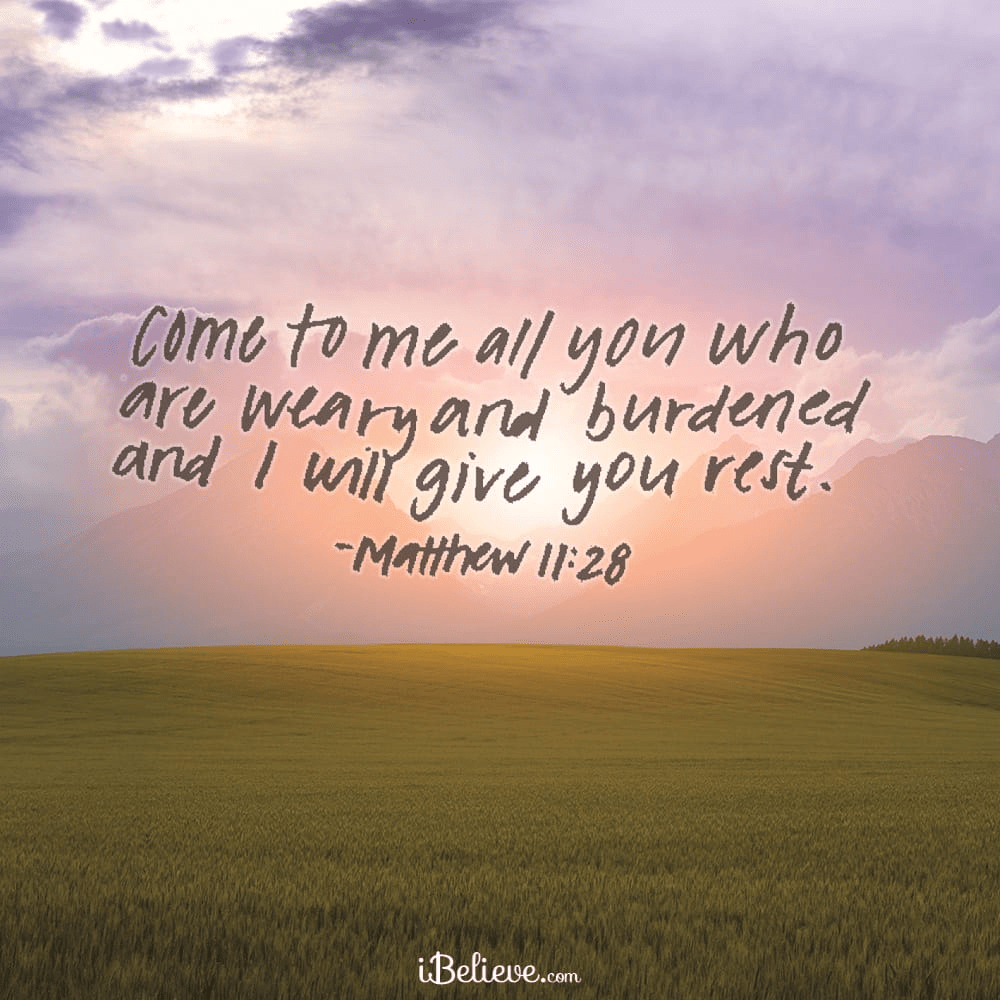
It has been three days since Sunday when we heard Jesus calling us to “Come to me, all you who labor and are burdened, and I will give you rest. Take my yoke upon you and learn from me, for I am meek and humble of heart; and you will find rest for your selves. For my yoke is easy, and my burden is light” (Mt.11:28-30).
It is one of the shortest and most memorable passage in the gospel but, how do we really come to Jesus in order to rest and feel light?
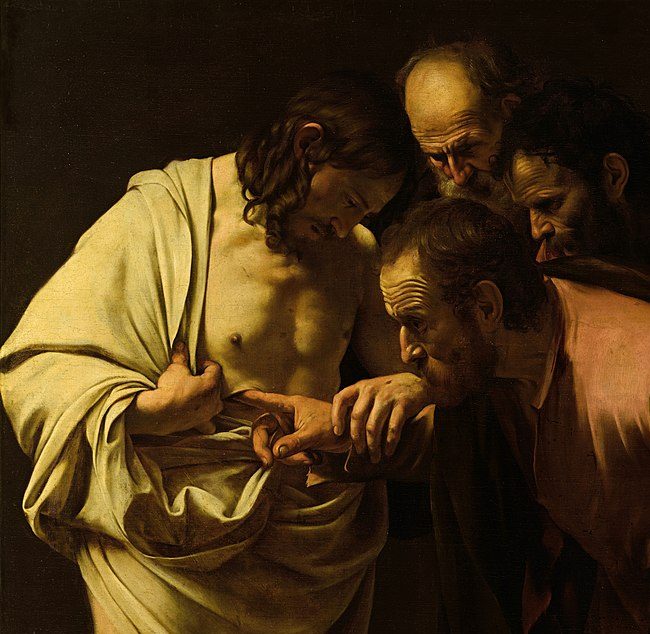
The good news is, it is Jesus who actually comes to us first, inviting us to come to him to find rest and feel light. Exactly like at the meeting of the Risen Lord and Thomas the Apostle eight days after Easter as narrated to us by John. You will recall that last Friday was the Feast of St. Thomas the Apostle (June 3) when I presented in my homily Caravaggio’s painting called The Incredulity of Thomas done in 1602. This is the second time I have used a painting by this renowned Italian painter said to be the favorite of the late Pope Francis too.
Photo of painting by Caravaggio, “The Incredulity of Thomas” via wikipedia.commons.org.
Thomas “refused” to believe the Apostles’ news to him that Jesus had risen, saying that “Unless I see the mark of the nails in his hands and put my finger into the nail marks and put my hand into his side, I will not believe” (Jn.10:25).
Many times we are like Thomas, a Didymus, with a twin in life like doubt and certainty, belief and unbelief, darkness and light.
Like Thomas, we say unconsciously that “Unless I see the mark of the nails in his hands and put my finger into the nail marks and put my hand into his side, I will not believe” (Jn.10:25) because it is when we are suffering, when we are in darkness, when we are in doubt when we truly search and long for God and Jesus.
It is not that Thomas nor we could not believe that Jesus had risen or doubted Christ at all; actually, Thomas believed in Jesus that is why he came on the eighth day to await the Lord’s coming in the same manner that we still pray despite our “doubts”.
Now a week later, his disciples were again inside and Thomas was with them. Jesus came, although the doors were locked, and stood in their midst and said, “Peace be with you.” Then he said to Thomas, “Put your finger here and see my hands, and bring your hand and put it into my side, and do not be unbelieving, but believe.” Thomas answered and said to him, “My Lord and my God!” (John 20:26-28)
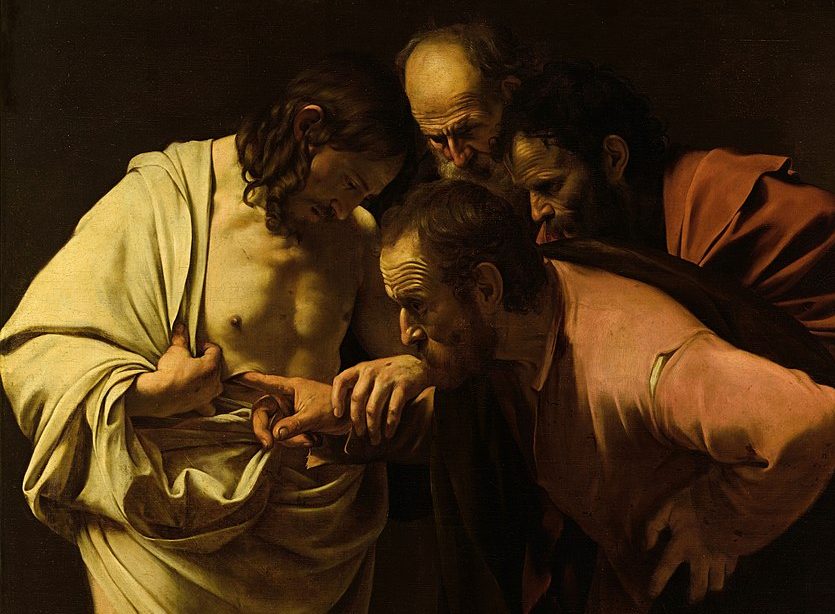
Photo of painting by Caravaggio, “The Incredulity of Thomas” via wikipedia.commons.org.
See the artistry of Caravaggio in this painting, that characteristic play of light and darkness emanating from Jesus, illuminating Thomas and his elder Apostles Peter and John.
All darkness in life are diminished, even vanished completely when we bring everything and everyone in the light of Jesus Christ who comes to us to enlighten us, to illumine us from many darkness we go through in life like Thomas on that night of the eighth day of Easter.
But, there is more to the light of Christ that we can see in this Caravaggio painting.
Amid its stillness and silence, one could feel deeply Jesus Christ’s words last Sunday – come to me – echoed softly, personally, lovingly to Thomas. And to each one of us today.
Photo of painting by Caravaggio, “The Incredulity of Thomas” via wikipedia.commons.org.
John tells us that Jesus simply said to Thomas to “Put your finger here and see my hands, bring your hand and put it into my side, and do not be unbelieving, but believe.” Thomas answered and said to him, “My Lord and my God” (Jn.20:27-28).
Okay, fine… it is just my imagination or my contemplation that I heard Christ’s words last Sunday echoed in this scene, “come to me and I will give you rest” but, there is something so beautiful and deeply personal with Jesus in saying or implying those same words here. You can hear it so close, so near you, not from afar especially when you consider its Filipino translation of “Lumapit kayo sa akin” or the informal “Halikayo at lumapit sa akin” that both indicate a separation of even a few feet away from Jesus who is calling us.
See the proximity of the four people in this painting. That is how close Jesus gets to us whenever he comes to us, inviting us to come to him in order to find rest especially in those dark moments in our lives, when we feel hurt and abandoned. When we are so stressed out as seen in those wrinkles on the foreheads of the three apostles!
Contrast their images to the serenity of Jesus. Most of all, see also the hands of Jesus, of how his left hand with the nail wound visible moving aside his garment so that Thomas and his companions may see further his pierced side.
Whenever Jesus comes to us, calling us to come to him to show us his wounds from the cross to remind us that before all our pains and hurts came, he was there first to suffer and be wounded and died for us.
And he has come to us again, calling us to come to him because he had risen, assuring us that all our wounds like his will heal eventually! That is when we experience rest. And being light in life.
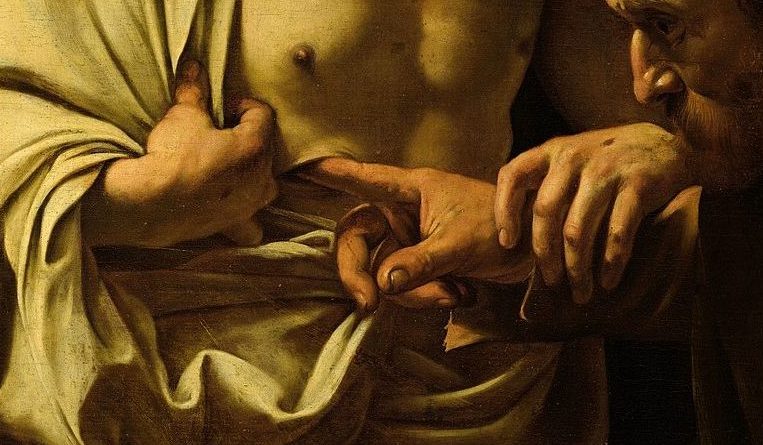
But, what I love most in this painting is the way Caravaggio depicted the Risen Lord holding the hand of Thomas while probing into his side wound:
Photo of painting by Caravaggio, “The Incredulity of Thomas” via wikipedia.commons.org.
How lovely! Caravaggio must be in the highest heaven when he painted this part.
Remember when Thomas dared to say unless he sees the nail marks in the Lord’s hands and put his hand at his side, he would not believe?
Jesus knew it so well not only with Thomas but with each one of us, of our being a Didymus, always with a twin of doubt so that he does not merely appear but touches us to experience deeply, personally his loving presence through his wounds.
See how Caravaggio depicted the left hand of Jesus again with the mark of nail holding the very hand of Thomas, directing his finger into his pierced side. You could feel the sure grip as well as gentleness of the Lord’s hand in leading the finger of Thomas into his pierced side wound. So dramatic as if it is not enough for Jesus to being present but most of all, experienced as closest at possible.
Jesus touches us always, literally and figuratively by holding our wounded selves to experience his wounded self too. He does not only call us in words but leads us with his total self.
Christ’s invitation for us to “come to him” remains personal and personalized. Not mass produced like what is happening these days where speed and reach are the main considerations, not the person.
While writing this piece yesterday, one of the blogs I follow came out with a new article exactly about last Sunday’s gospel scene, claiming that if God texts us today, these very words to “come to me” by Jesus would be his “text message” to us (https://thedevotionalguy.blog/2026/07/07/if-god-sent-you-a-text/).
I believe so. Because text messages have become the closest things we can have of anyone in these days of social media. However, if ever you receive that text message from Jesus, run outside to meet him personally for surely, he had come. Amen. God bless you.
Photo by author, St. Michael Retreat House, Antipolo City, 16 June 2026.