Lord My Chef Daily Recipe for Soul by Fr. Nicanor F. Lalog II
Wednesday in the Sixteenth Week of Ordinary Time, Year II
Feast of St. Mary Magdalene, 22 July 2026
2 Corinthians 5:14-17     <*{{{{><  + ><}}}}*>     John 20:1-2, 11-18
“Christ’s Appearance to Mary Magdalene”, painting in 1835 by Russian painter Alexander Andreyevich Ivanov now hanging at the Russian Museum in St. Petersburg; from en.wikipedia.org.
"I have seen the Lord!"
(John 20:18)
What a joy must have been
for St. Mary Magdalene to
proclaim to the Apostles your rising,
your appearance to her,
Lord Jesus.

Most joyous of all,
Lord is how you have called her
by name, "Mary!"
On the first day of the week, Mary of Magdalene came to the tomb early in the morning, while it was still dark, and saw the stone removed from the tomb. Mary stayed outside the tomb weeping. And as she wept, she bent over into the tomb and saw two angels in white sitting there, one at the head and one at the feet where the Body of Jesus had been. And they said to her, “Woman, why are you weeping?” She said to them, “They have taken by Lord, and I don’t know where they laid him.” When she had said this, she turned around and saw Jesus there, but did not know it was Jesus (John 20:1, 11-14).
Many times Lord Jesus
I feel like St. Mary Magdalene
on that very early morning
of Easter:
feeling lost or
distant from you
who seem to be missing
or taken away from me;
but so often,
like St. Mary Magdalene,
we fail to recognize you
with our eyes because
we picture you so differently
to who you really are.
Many times our
sight fails
that is why most often,
you call us
by name;
unfortunately in this age
of social media and so many
other distractions in life,
 we fail to hear nor even
listen to your voice
because we are afraid of silence
as we are so afraid
of the truth -
that you love us so much
that is why you have forgiven our sins.
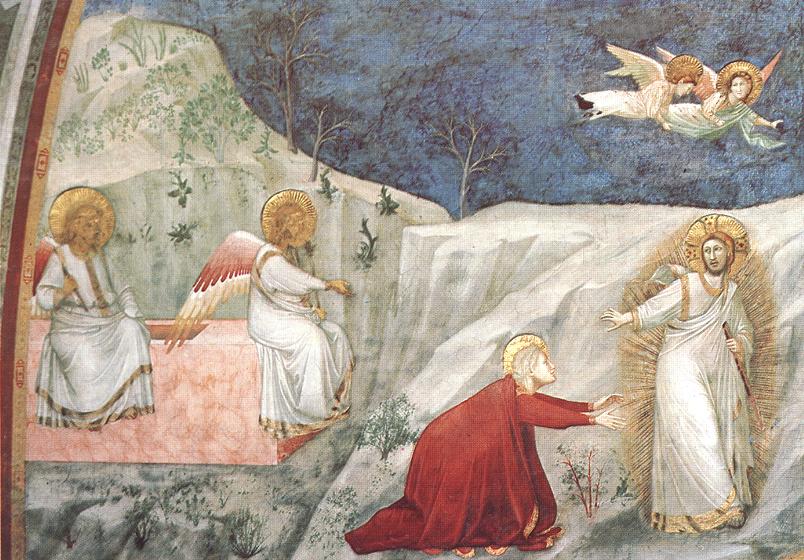
Jesus said to her, “Mary!” She turned and said to him in Hebrew, “Rabbouni,” which means Teacher. Jesus said to her, “Stop holding on to me, for I have not yet ascended to the Father. But go to my brothers and tell them, ‘I am going to my Father and your Father, to my God and your God.’” Mary of Magdalene went and announced to the disciples, “I have seen the Lord,” and then reported what he told her (John 20:16-18).
“Noli me tangere” (touch me not) fresco in the Lower Basilica of St. Francis Assisi Church in Italy painted by Giotto de Bondone in the 13th century from commons.wikimedia.org.
Everyday you
come to us,
Jesus,
calling us by name
like Mary Magdalene -
someone you personally know,
with all of our sins
and most kept secrets
in our hearts,
in our past.
If we could just be patient
like St. Mary Magdalene
in picking the pieces of our lives,
of converting daily,
of transcending the scars
of sins of our past,
then we shall hear
and joyously listen
to your voice
spoken in a whisper,
so sweet,
so reassuring
 of your real presence,
most of all
filled with tenderness
because you love us
immensely,
Jesus.
If we could just listen
to your voice, Jesus,
then like St. Mary Magdalene,
we can proclaim too
with joyful enthusiasm
to other disciples
"I have seen the Lord!"
spreading you love
and good news of salvation.
Amen.
From Facebook, April 2021: “There is an urgency to announce the Joy, the joy of the Risen Lord!”
Lord My Chef Sunday Recipe for the Soul by Fr. Nicanor F. Lalog II
Pentecost Sunday-A, 24 May 2026
Acts 2:1-11  ><}}}}*>  1 Corinthians 12:3-7, 12-13  ><}}}}*>  John 20:19-23
Photos from cnn.com, 15 May 2025.
One of the reels I love watching in Instagram is Yuji Belleza, a young Japanese who speaks different languages, going around Europe talking to all kinds of people by speaking their native tongues.
What I like most with him is his openness to learn many things not just words and languages from those he interviews in his popular Instagram reels. It is precisely what Luke is telling us this Solemnity of the Pentecost: more than language facility, the most important in the spread and growth of the Church then and now is “openness” of Christ’s disciples.
When the time for Pentecost was fulfilled, they were all in one place together. And suddenly there came from the sky a noise like a strong driving wind, and it filled the entire house in which they were. Then there appeared to them tongues of fire, which parted and came to rest on each of them. And they were all filled with the Holy Spirit and began to speak in different tongues, as te Spirit enabled them to proclaim. Now there were devout Jews from every nation under heaven staying in Jerusalem. At this sound, they gathered in a large crowd, but they were confused because each one heard them speaking in his own language. They were astounded, and in amazement they asked, “Are not all these people who are speaking Galileans?” (Acts 2:1-7)
From pinterest.com.
From the Greek word pente for 50, Pentecost is a Jewish feast celebrated fifty days after the ratification of their covenant with God by Moses in Sinai; eventually, it became a feast of their first harvests upon entering the Promised Land that it was like a new beginning in life for them.
And rightly so for us Christians too. The Church started to spread from Jerusalem on that Pentecost Sunday to become the largest in the world today. More than a feast we remember today fifty days after Easter, Pentecost is an event we recognize and affirm to be happening daily in our lives as disciples of Jesus Christ.
Like the popular Japanese linguist Yuji on Instagram, we too experience “being at home” abroad when we find countrymen, people who speak our native tongue. Thank God for the millions of Filipinos spread around the world that you can surely meet anywhere, anytime you go abroad.
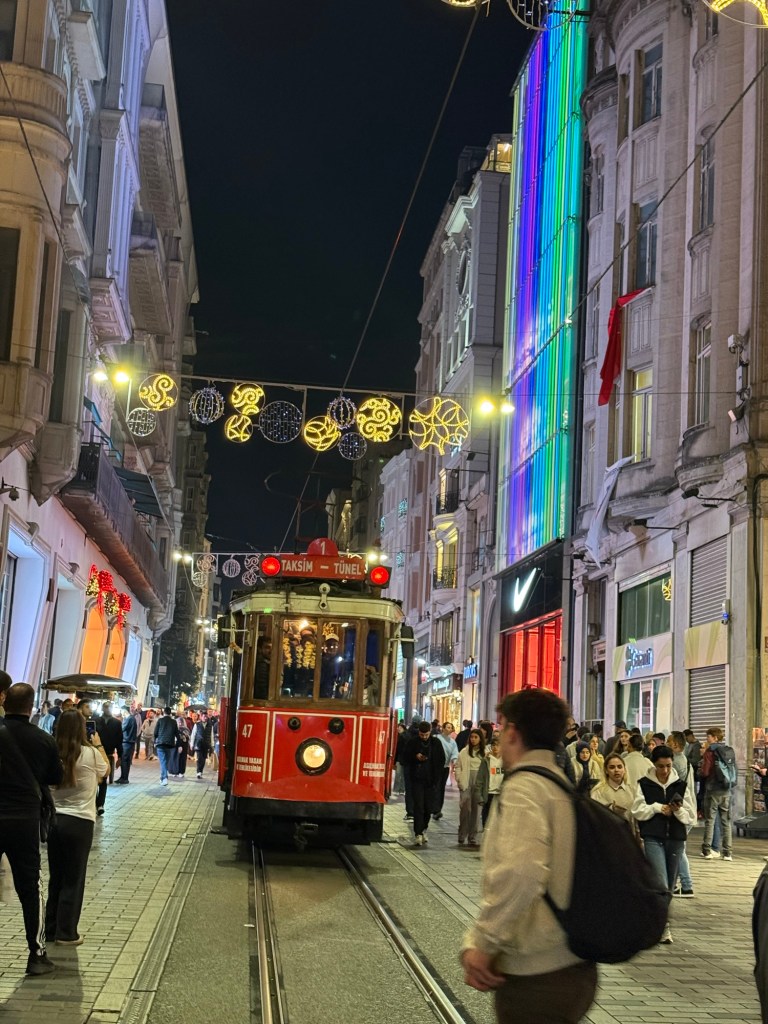
Photo by author, Istanbul, Turkiye, 31 October 2025.
Last year we went to Turkiye and found a Catholic church run by Franciscans near our hotel in Istanbul. We went early to introduce ourselves to the pastor, hoping we could concelebrate the Mass with him. The Irish pastor gladly welcomed us, telling us that the choir and lectors in charge that Sunday were Filipinos. Sure enough after the Mass, they all followed us to the sacristy to make mano and of course, picture picture!
You know that feeling of being “home” – safe and secured, peaceful and joyful upon finding someone who speaks your own language in a foreign land with different culture and language. And weather!
Many times God comes to us in a similar way – speaking and feeling exactly like us but, unfortunately, we disregard his words and instructions because we have our own agenda and plans until finally we realize in the end after losing everything how we should have listened and obeyed him.
On the other hand, there is also that feeling of being home even abroad when you are able to communicate and understand foreigners using only sign languages while uttering some words like you are in a charades game. Despite our many differences, there are those feelings of safety and peace, of forging on in our journey because understanding is always possible by simply being open. We can even communicate with deaf mutes for as long as we are open and creative. And patient too.
Many times, God communicates with us in the same manner – through signs but problem is we do not have the interest to engage with him because we have other plans in life so that when things go wrong, there is always that sigh of missed opportunities in disregarding God.
Pentecost asks us how open are we to God and others as disciples of Christ?
Photo from shutterstock.com
From last Sunday’s upward shift for us to rise in our relationships with God and one another, Pentecost shows us its downward movement to open ourselves to the leading of Holy Spirit to become one in our relationships despite our many differences.
Matthew told us last Sunday that when Jesus ascended into heaven, some of his disciples were still doubting him. Today, Luke tells us how all those doubts were finally cleared at the descent of the Holy Spirit who emboldened the disciples with wisdom and knowledge, courage and perseverance to proclaim Christ’s gospel to all nations despite the persecutions and other difficulties that followed.
Painting by El Greco, “Pentecostes” (1597) from commons.wikimedia.org.
Pentecost continues in our present time when we shatter those walls and locked doors of pride, selfishness and conceit, opening ourselves to the daily coming of the Holy Spirit. Luke used a simple word in his story that can help us have that attitude of openness to the Holy Spirit.
The word is devout – in Filipino it is “deboto” connoting a person so closed with his religious beliefs like “Catolico cerrado.”
But, devout as used by Luke means a person with a “good heart, ready to believe, and then act openly and with courage” (Timothy Clayton, Exploring Advent with Luke; page 125).
Only Luke used the word devout in the Sacred Scriptures when in his gospel he described Simeon as “righteous and devout” (Lk.2:25) who sang the Nunc Dimittis during the presentation of Jesus at the temple. He then used it thrice in the Acts as we have heard today of the “devout Jews” staying in Jerusalem on that Pentecost day when the Holy Spirit came (2:5); then “the devout men who buried” the first martyr Stephen (8:2), and finally calling Ananias a “devout observer of the law” whom God instructed to pray over and heal Saul of his blindness after meeting Jesus on the road to Damascus (22:12).
More than being faithful to God and the Catholic faith, a devout person is one who is always open to the promptings of the Holy Spirit like Simeon and Anna awaiting the coming of the Messiah at the temple. Moreover, a devout person is one who makes happen the plans of God like Ananias who at first hesitated with Jesus in taking in Saul.
Our Filipino Missal used an interesting translation of Luke’s devout as palasamba sa Diyos that literally means one who worships God often. Or, someone who prays always.
Openness happens in prayers because that is when we become rooted in God, when we allow him to form us like the clay in the potter’s hand. More than the recitation and expression of ourselves in words, prayer is entering a relationship with God whom we call “Abba” as St. Paul explained in the second reading. That explains too why the Holy Spirit came on that Pentecost while the disciples with Mary were at prayer.
When we have prayer life, we grow in our sensitivity of God in others that we learn to become respectful, fair and just, and kind. Thus, we promote peace and goodwill with others too.
This Pentecost Sunday, let us allow the Holy Spirit to work in us by focusing more on Jesus than in ourselves in our many devotions and practices filled with pomp and pageantry that only divide us disciples of Christ
Let us open ourselves to Jesus by being devout in the truest sense wherein we are more open with persons especially the poor and disadvantaged than with things and numbers in measuring development as a nation like the GDP/GNP and infrastructures.
Yes, Jesus is now seated at the right hand of the Father in heaven but he remains with us here in this life, in this world in the Holy Spirit, day in, day out through us making Pentecost a reality daily. Amen. Have a blessed week ahead.
Lord My Chef Sunday Recipe for the Soul by Fr. Nicanor F. Lalog II
Solemnity of the Ascension of the Lord, Cycle A, 17 May 2026
Acts 1:1-11  ><}}}}*>  Ephesians 1:17-23  ><}}}}*>  Matthew 28:16-20
Photo by author, Sacred Heart Novitiate, Novaliches, QC, 18 March 2026.
The past week is probably the most ugliest we ever have as a nation in recent years when power-hungry lawmakers seized power in the senate just to keep their cabals away from the legitimate powers of the legislature and international court.
Sorry for mentioning that this Sunday.
However, I hope you also find consolation in our celebration today of the Solemnity of the Ascension of Jesus who invites us to examine the true meaning of “power” that was mentioned four times in the three readings we have heard:
But you will receive power when the Holy Spirit comes upon you, and you will be my witnesses in Jerusalem, throughout Judea and Samaria, and to the ends of the earth (Acts 1:8).
and what is the surpassing greatness of his power for us who believe, in accord with the exercise of his great might, which he worked in Christ, raising him from the dead and seating him at his right hand in the heavens, far above every principality, authority, power, and dominion, and every name that is named not only in this age but also in the one to come (Ephesians 1:19-21).
Then Jesus approached and said to them, “All power in heaven and on earth has been given to me. Go, therefore, and make disciples of all nations, baptizing them in the name of the Father, and of the Son, and of the Holy Spirit, teaching them to observe all that I have commanded you. And behod, I am with always, until the end of the age” (Matthew 28:18-20).
Photo by author, Sacred Heart Novitiate, Novaliches, QC, 20 March 2026.
How timely that we reflect this Sunday the “power” claimed by Jesus Christ as given to him and now shared with us his disciples after returning to heaven.
As Jesus concludes his earthly existence with his Ascension, let us go back to his ministry to reflect the different aspects of his power that we must imitate as his disciples.
First we find in Jesus is the power of prayer. He was always in prayer that even his disciples were so impressed and asked him to “teach them how to pray”. More than the words to say in praying, Jesus taught us the very attitude in praying: it is not forcing ourselves to God but submitting ourselves to God we call Father by recognizing one another as brothers and sisters.
Prayer for Jesus is power because it is primarily a relationship with God expressed in our relationship with each other. His ascension need not be taken literally as if Jesus was like a rocket launched into space; his ascension is more like a “leveling up” in his relationships with us and the the Father. For us to ascend like Jesus Christ through prayer means for us to be “lighter” by letting go of our selves, of our pride.
Prayer is power because it leads us to self-emptying (kenosis) that we become more loving and respectful of others, not manipulative; truthful and honest, not liars; and, more just and respectful of laws.
The more we pray, the more we see God and others as brothers and sisters that we work for peace and unity, not divisions and chaos because ultimately, prayer is power as it makes us find life not death as Jesus exemplified on the Cross.
Photo by author, Manaoag, Pangasinan, 09 January 2026.
Simultaneous with the power of prayer, we find in Christ the power of love and respect for persons.
It is one of his radical teachings, an integral part of his gospel of salvation of loving one another as he had loved us, of giving up one’s life for a friend, of finding God on the face of every one. Even among enemies!
It is power because when we love and respect every person, that is when we establish the kingdom of heaven here on earth. Love and respect for persons as power is prayer in action through our loving service for others.
Clearly, it is one power we lack so much in the country especially in government when officials are deep into corruption. Its most tragic part is at how people mostly the poor have allowed corruption to persist because they themselves could not love and respect their very selves, refusing to see beyond the material world. For them, man lives to eat. Then die. They would not even raise up their heads to look high above the clouds to dream and dare in life, to believe and hope in God.
Photo by author, Sacred Heart Novitiate, Novaliches, QC, 20 March 2026.
Because sadly, many refuse to recognize the very power of Christ which is the Cross.
Because of the Cross, there is Easter. And then Ascension.
Without the Cross, nothing.
That is why for many life has become more of a mess, empty without meaning because they believe power is strength and force, of control and manipulation. Most of all, of subjugation.
Christ showed us in his Cross that life is always larger than what we see or even perceive as it is. Life is so wide and vast, so high and so deep we can never hold nor contain. Or even understand and explain.
Life is meant to be lived not solved at all. We hear it often said, “let go, let God.” Notice in this saying how the single letter “d” leads to the transition, transformation. That small letter “d” stands for our little daily deaths.
It is here we find the power of the Cross: when we surrender and submit, the world opens, we see more options, we see more life; when we suffer and cry, when we get hurt and bruised, we learn to stop and wait until healing comes and then we are renewed.
Most of all, when we experience those little deaths in taking our cross, in dying on the Cross of Jesus, that is when we find our greater self, when we experience Christ in us who had conquered sin and death because he is life himself. That is when we find true power because that is when we rise and ascend in Christ.
Events happening lately in our country and in the world, and most especially in our very lives do not look so nice and good. Even dismal. But, Jesus reminds us this Sunday of his true powers that enable to rise, to ascend in him. Most of all, he promised to be with us always. As we come nearer to the closing of Easter Season, let us ask anew ourselves and him how we can live out this new level of relationship in him, with him and through him. Let us wait in prayers to discover too his powerful answer. Amen.
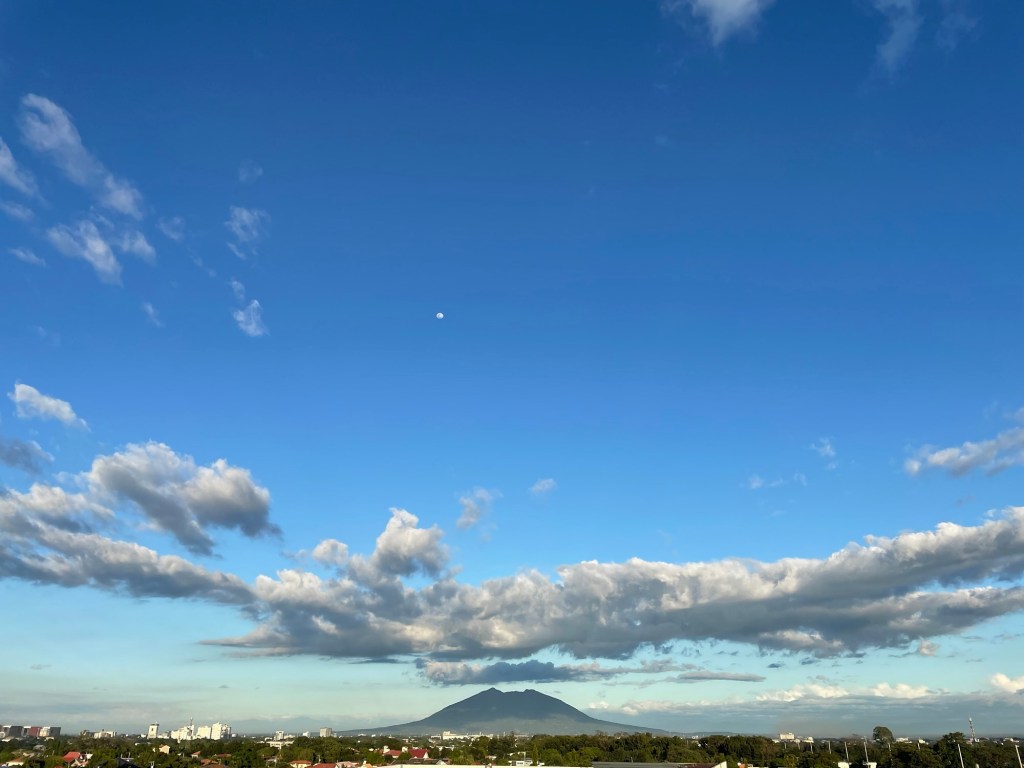
Photo by author, Mt. Arayat from Angeles City, Pampanga, October 2024.
Lord My Chef Daily Recipe for the Soul by Fr. Nicanor F. Lalog II
Tuesday in the Sixth Week of Easter, 12 May 2026
Acts 16:22-34     ><))))*> + ><))))*> + ><))))*>     John16:5-11
Photo by Ms. JJ JImeno of GMA-News, 27 May 2019 of a man who seem to have lost his head while praying inside the oratory of the UP Parish in QC.
"What must I do?"
Many times I find myself
in the same situation as the prison
guard of Paul and Silas asking
the same question,
"What must I do to be saved?"
How funny that the prisoners were
Paul and Silas but it turned out that
after the earthquake shook the prison,
it was the guard
who was the one really "imprisoned" -
just like me in the many times
I have been busy "guarding"
and "keeping" things
around me I believe keep order;
there are times I find myself
so imprisoned to my duties
and responsibilities,
fears and apprehensions,
endless concerns and worries
that I could no longer
find myself,
my family,
my friends,
and even God.
What must I do, Jesus?
Help me find
my way back home
to you,
Jesus.
Amen.
Commuters hang from the back of a jeepney as it travels along a road in Manila, the Philippines, on Sunday, April 9, 2017. Photographer: Veejay Villafranca/Bloomberg via Getty Images
Lord My Chef Sunday Music by Fr. Nicanor F. Lalog II, 10 May 2026
Photo by author, 07 February 2026.
Jesus wrapped up this Sunday his teachings about relationships with the commandment to love one another. Five times he repeated the word “love” in our short gospel this Sunday to highlight its centrality in every relationship.
Without love, no relationship will ever mature and grow.
More than a feeling, love is a decision, a choice we make, day in, day out. As such, it cannot be defined but simply described.
And being a Mothers’ Day this Sunday, we find Christ’s description of keeping his commandment to love is exactly the kind of love every mom exemplifies to us captured by the 1986 song Coming Around Again by one of our favorites, Ms. Carly Simon.
Baby sneezes
Mommy pleases
Daddy breezes in
So good on paper
So romantic
But so bewildering

I know nothing stays the same
But if you're willing to play the game
It's coming around again
So don't mind if I fall apart
There's more room in a broken heart (broken heart)

You pay the grocer
You fix the toaster
You kiss the host goodbye
Then you break a window
Burn the soufflé
Scream a lullaby

I know nothing stays the same
But if you're willing to play the game
It's coming around again
So don't mind if I fall apart
There's more room in a broken heart

And I believe in love
But what else can I do
I'm so in love with you
Photo by author, August 2024.
Written by Ms. Simon in 1986 as soundtrack for the dramatic comedy film “Heartburn” starring Meryl Streep and Jack Nicholson, the song captures the very essence of its writer Nora Ephron’s fictionalized account of her tumultuous marriage and divorce with her first husband Carl Bernstein, the famous reporter who unearthed the Watergate scandal with fellow Washington Post journalist Bob Woodward. It is a very touching movie with great performances by Streep and Nicholson perfect for this Mothers’ Day too.
Mothers are the best examples of the love Jesus is speaking of in the gospel today that Simon portrayed in her song Coming Around Again.
It is the love that mothers affirm over and over again despite the pains and hurts inflicted by their husband and children; it is the faithful love of every mom even if others are unfaithful; most of all, it is the love that remembers and never forgets, always forgiving, kind and understanding expecting nothing in return.
Yes, it sounds like in a movie like “Heartburn” but it is still so true as we have experienced with our own mother!
That is why I like that part when Simon declared:
I know nothing stays the same
But if you're willing to play the game
It's coming around again
So don't mind if I fall apart
There's more room in a broken heart (broken heart)
The love Jesus is commanding us is the very same love mothers exemplify: they are so aware “nothing stays the same” with unfaithful husband, ungrateful children yet, they keep on loving because it is “coming around again”. Most of all, because they “believe in love”.
And I believe in love
But what else can I do
I'm so in love with you
Without love, humanity will go extinct.
Because of love, as proven by mothers, we have learned that every tragedy, every suffering and problem we go through leads to happy ending primarily because we discover something in ourselves and in someone beyond far more important than any situation or plight we may be into.
In that song and movie, you will find how love is the source of constant deep joy when we are suffering especially in silence. It is here we find the coming around in fullness of love in Jesus: his promised revelation of himself to those who keep on loving despite and in spite of everything. (See also our homily this Sunday, https://lordmychef.com/2026/05/09/easter-is-making-jesus-present-in-our-love/)
Here now is Ms. Carly Simon with Coming Around Again that was included in her 1987 album of the same title. Don’t forget to hug your mom today, to thank her and greet her with a happy mother’s day!
Lord My Chef Sunday Recipe by Fr. Nicanor F. Lalog II
Sixth Sunday of Easter, Cycle A, 10 May 2026
Acts 8:5-8, 14-17 ><}}}*> 1 Peter 3:15-18 ><}}}*> John 14:15-21
Photo by author, Bucharest, Romania, November 2025.
Jesus wraps up this Sunday his Last Supper discourse into its very meaning of love as basis of our relationships in him who is both our “gate” as the Good shepherd (April 26) and our “home” (May 3). It was at his Last Supper when Jesus gave his new commandment of love that is why Holy Thursday is also known as Maundy Thursday from the Latin mandatum for “command.”
Jesus said to his disciples: “If you love me, you will keep my commandments… In a little while the world will no longer see me, but you will see me, because I live and you will live. On that day you will realize that I am in my Father and you are in me and I in you. Whoever has my commandments and observes them is the one who loves me. And whoever loves me will be loved by my Father, and I will love him, and reveal myself to him” (John14:15, 19-21)
See how Jesus mentioned the word “love” five times in our short gospel this Sunday.
Love is the basis of every relationship; without love, any relationship will not last, will not grow, will not mature and deepen into what it is meant to be.
This is most true in our relationship as disciples of Christ wherein love is more than a feeling but a decision, a choice we make daily in favor of Jesus through the persons around us like your spouse and children, our parents, and fellow disciples. And mothers!
Photo by author, June 2024.
Happy Mothers’ Day to every mom especially those in their sick bed, those widowed, and those who gone ahead of us to eternity.
Mothers are the best examples of the love Jesus is speaking of in the gospel today.
It is the love we affirm despite the pains and hurts of misunderstanding from people we love; it is the love calling us to remain faithful even if others are not; it is the love that remembers and never forgets; it is the love that forgives, that cares and understands without asking anything in return.
It is a love that unfolds, like a process going through stages that calls us to be patient as St. Paul described it in one of his letters. That is why Jesus promised to send the Holy Spirit later to his disciples to understand better his lessons and mission for them.
See how in the first reading we have a glimpse of the kind of love of Jesus calling us – the conversion of the people of Samaria: first was Philip coming to them like preparing the ground for the gospel in them and when they seem to be ready, Peter and John arrived to pray over them to receive the fullness of the Holy Spirit. More than to show us how the Holy Spirit works, the story is all about the love that bound the early Church together especially when the persecution begun.
I prefer the word “unfolding” in describing love wherein slowly there is the sort of “unveiling” of the cover of the face because love is more than a concept and thought or experience: love is a person as John wrote in his first letter, Deus caritas est, God is love (1Jn.4:8).
It is the title of the first encyclical by Pope Benedict XVI who wrote that true love involves transformation wherein the lover seeks to become like his beloved, moving from selfish desires known as eros into the self-sacrificial and other-centered love called agape, the Greek word used by John in writing his account of the Last Supper.
Photo by author, March 2018.
The love that Jesus is calling us is that love of his on the Cross we make present in the Eucharist, that even though we repeat it over and over daily, we never get fed up because something is happening in us, there is something changing, making us better, more matured, more loving that we keep coming back to the Holy Mass to listen to his words and receive him Body and Blood under the signs of the bread and wine.
Every true love is always a person. This is the reason why those who love persevere and forge into every obstacle, fight for their love, bear all pains because we find our fulfillment in being with our beloved, whether physically or spiritually. The mode does not really matter because true love touches our very personhood always.
Here lies the beauty of Albert Camus’ 1947 novel The Plague that had a sort of rediscovery during the 2020 COVID pandemic where he wrote that “A loveless world is a dead world, and always there comes an hour when one is weary of prisons, of one’s work, and of devotion to duty, and all one craves for is a loved face, the warmth and wonder of a loving heart.”
Our Lady of Fatima University-GawadKalinga in Bagac, Bataan.
Without love, humanity will go extinct.
Because of love, every tragedy, every suffering and problem we go through leads to happy ending primarily because we discover something in ourselves and in someone beyond far more important than any situation or plight we may be into.
And that is the joy of the love of Jesus Christ when God is revealed in us in his love when we love like him. It is Jesus Christ whom we “sanctify as Lord in our hearts” (1Pt.3:15) is the one we imitate and follow, the one we see and, most of all, the only one we must share when we love, when we serve.
I know, these are easier said than done.
Specially when we who love are not loved by those we love. Or taken for granted, even forgotten.
Again, let us return to that love of mothers that is most closest to the love of Jesus Christ, a love so willing to give up one’s self in spite and despite of everything.
One of the hardest things many of us go through like priests and nuns, the eldest in the family and the newly widowed or anyone looked up to as someone without a problem: very often people forget us or take us for granted including those supposed to be closest to us, thinking we are fine or doing great without any hint of the sufferings we are going through.
But, it is a source of constant deep joy while suffering in silence, God’s grace is always overflowing because Jesus is within each one of us who believes in him and tries hard to keep his commandments.
We just have to do our part, to keep on believing in Jesus, loving Jesus, and most of all, keeping his commandments because Jesus is the “explanation to anyone who asks us for a reason for our hope” (1Pt.3:15).
We are about to close the Easter Season in two weeks: next Sunday will be the Solemnity of the Lord’s Ascension and after that the Pentecost Sunday. This Last Supper scene perfectly captures the very kind of love Jesus is asking us – a love so personal like his, a love that unfolds and grows deeper as we love more despite the pains and sufferings, and a love that often looks absurd to others and even to us because it is not physical. And beyond logic.
Jesus invites us to continue to be his loving presence in this selfish world, where everyone demands of deserving so many perks in life. Let us do away with that expression “dasurv ko” this or that. Let us pray for more love to conquer all. Don’t forget to hug or remember your mom this Mothers’ Day. Have a blessed Sunday and keep cool and hydrated too! Amen.
Lord My Chef Daily Recipe by Fr. Nicanor F. Lalog II
Friday in the Fifth Week of Easter, 08 May 2026
Acts 15:22-31     <*((((><  +  ><))))*>     John 15:12-17
Photo by author, Sacred Heart Novitiate, March 2024.
Thank for reminding
me today, Jesus,
that we are friends:
"I no longer call you slaves,
because a slave does not know
what his master is doing.
I have called you friends,
because I have told you everything
I have heard from the Father"
(John 15:15).
Forgive me, Jesus,
in being so caught up
in the hustle and bustle
of daily life,
of the ministry,
doing so many things for you
that I forget you have called
us friends,
not slaves.
How lovely
it is, Lord, to be
called as your friend,
that we are called and chosen
to be friends in order to love
like how you have loved us;
teach me to have that attitude
of your Apostles at the early
stage of your Church
who decided
"not to place any burden
beyond" (Acts 15:28)
your command to love
one another;
many times,
we forget that we are friends
loving one another like you
because unconsciously
we have made you into an earthly master
so demanding for results from us
that in turn made us a slave driver
to everyone.
Let us never forget
that truth that we are friends,
Lord Jesus in you,
that we too must be a friend
to everyone.
Amen.
Lord My Chef Daily Recipe by Fr. Nicanor F. Lalog II
Thursday in the Fifth Week of Easter, 07 May 2026
Acts 15:7-21     ><)))*> + ><)))*> + ><)))*>     John 15:9-11
Photo by author, Anvaya Cove, Bataan, May 2023.
Let me abide in you,
Jesus,
our true vine;
let me abide in you,
so that my joy
may be complete
in you,
Jesus.
More than mere
happiness when our lips
express our good feelings,
joy comes from the heart,
deep down there where
we feel wholeness,
security,
contentment,
and assurance of
being one in you,
Jesus,
our way,
our truth,
our life.
Joy is fulfillment
in you, Jesus,
in standing by your truth,
bearing all pains of
being misunderstood,
of fighting for what is
right and just,
most of all,
of simply loving
beyond measure
by seeing you on the
face of those different
from us like during
the Council of Jerusalem
in the first reading.
Today,
we debate a lot,
Jesus, without even
facing each other,
throwing insults,
invectives and
threats in social media;
true discussions result
in joy, unity and
magnanimity,
not anger
and animosity;
grant us the grace
to seek you, Jesus,
in our discussions of
everything that are often
centered on our own
selfish interests;
make us open to others
and to you, Jesus,
so that our joy
may be complete
in you by adhering
to your gospel of life
and love.
Amen.
Sampung buwan na 'kong hindi natutulog
Kasi naman, ang ingay ng aming kapitbahay
'Pag gabi, disco house at videoke
Kaya't sorry na lang kung wala sa aking sarili
Mahal kita, pero miss na miss na miss ko na

Ang aking kama at ang malupit kong unan
Ba't 'di ka na lang sumama? Hihiga tayo at kakanta
I have always loved the Eraserheads whose songs are like vintage wines that get better with age like Kamasupra from their thrid studio album considered as the best Pinoy rock album, “Cutterpillow” released in 1995.
See the genius and artistry of Ely Buendia in composing Kamasupra, a witty play of words and ideas, of the bed we call kama in Filipino and that bible of erotica Kama Sutra from ancient India.
More than a furniture, the bed is also an altar of the highest order in every home where we perform our final acts as humans at the end of each day – of retiring and of dreaming while entrusting ourselves, consciously or unconsciously to God. In the same manner, it is on our bed where we also desecrate our very selves and those dearest to us.
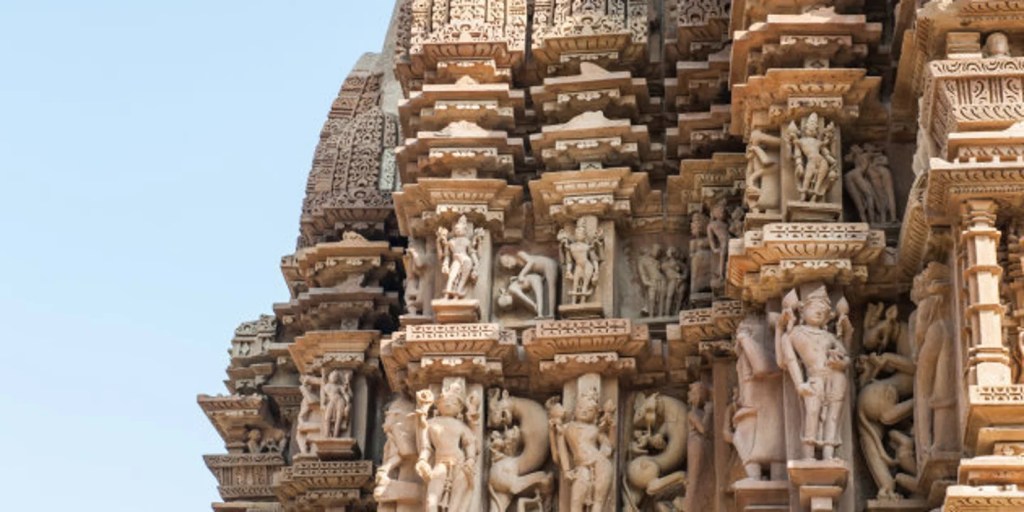
Photo from LightRocket via Getty Images Erotic sculptures of the Khajuraho group of monuments, part of the UNESCO World Heritage Sites in India.
Please. There’s nothing bastos with both Kamasupra and Kama Sutra; both speak of the joys and sanctity of our relationships, of our being with our loved ones in bed that leads us to eternity as every old and dying person would tell you.
I know. I have met so many of them being a chaplain in a hospital for five years now. Whether in our home or in the hospital, the bed is always the final step board of every soul going to eternity.
Whenever I would bless the master’s bedroom in a new home, I say a prayer of blessing on the couple’s bed and before sprinkling it with Holy Water, I ask them to first bless it so that they would feel its sanctity as an altar where they give themselves to each other completely.
Hence, only them the husband and wife can sleep in that bed and nobody else, not even the children.
I do the same ritual of blessings in the other rooms of the children, praying that they would find rest of body and soul in their bed with a strict reminder that no visitors can stay inside their bedroom because it is sacred. Period.
This is most true for the bed of every priest. Notice how in most parish rectories and convents of nuns you find the sign “Private” to indicate no visitors allowed in their private quarters.
The priest’s bedroom and bed are literally his “inner sanctum” where only he and Jesus can be together at all times. Usually in silence too.
That is why I tell young priests to first have an altar in their bedroom where they could pray first thing in the morning and just before hitting the sack. Next to our breviary, the bed is the priest’s most beloved and blessed partner in life.
Most of all, the priest’s bed should always be “celibate” too like himself – that is, single-size only. No need to have big beds nor expensive ones because a priest’s bed is a reflection of his vows in the ministry – celibacy, poverty, and obedience.
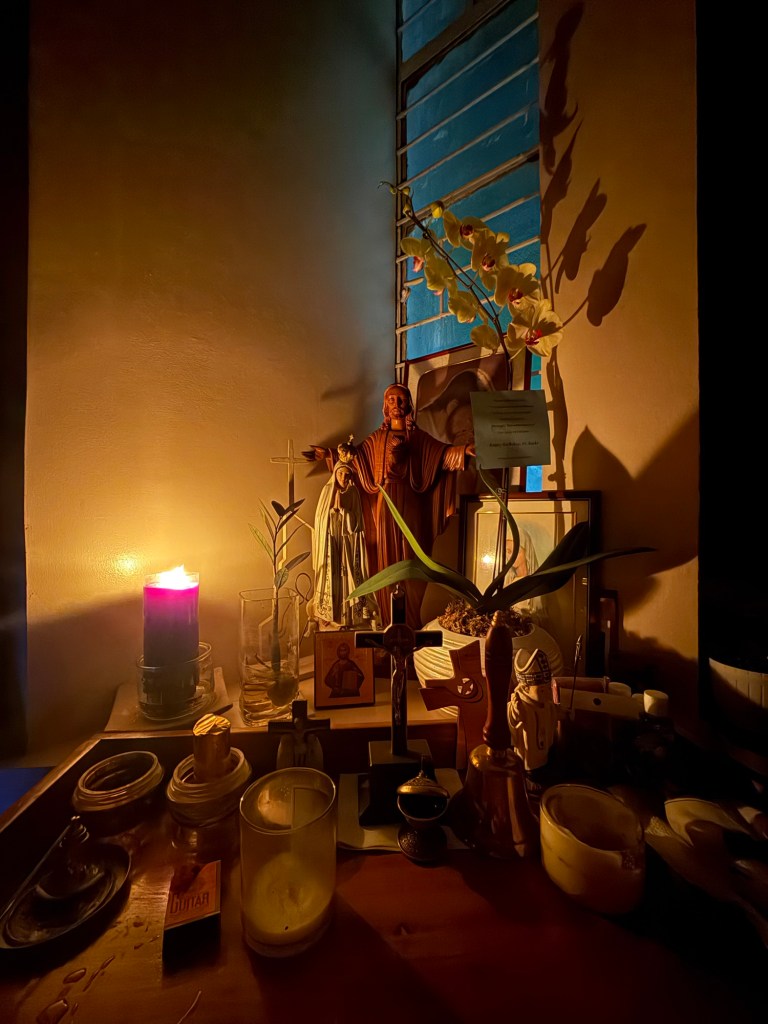
Photo by author, personal altar in my bedroom.
Some of my most memorable images and experiences as a priest happened when I accompanied two elderly priests of our diocese in their deathbeds.
First was Msgr. Macario Manahan who died on 16 March 2014, the Second Sunday in Lent that year. I was by his side when he died that Sunday afternoon as he lived near my previous parish assignment. The second priest was Msgr. Vicente Manlapig who was confined in our hospital where I serve as chaplain. He died a few hours after my last visit to him on a Sunday morning, 26 February 2023, the Second Sunday in Lent.
Yes. They both died in Lent that is why since 2023, I have kept on telling people that life is a daily Lent, a preparation for Easter.
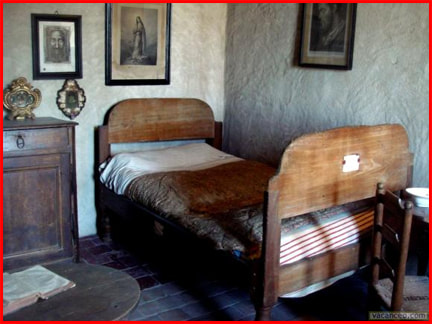
Bed of St. John Marie Vianney, Patron of all priests; from devotiontoourlady.com
It was at their deathbeds when I strongly realized that our bed is also our altar especially when we get sick and old, where we shall celebrate the Holy Sacrifice of the Mass, where we meet and receive Jesus Christ in the Holy Viaticum when too weak to celebrate the Eucharist.
It is on the bed of a dying priest I have felt deeply and truthfully the vocation in the priesthood – of how we were called by Jesus to become his priest that in the end he shall be calling us again as his priest to join him eternally.
And there in our bed comes the painful truth of how when we were young and strong we were called to do everything for Jesus and his Church, often lording it over the flock, so powerful as if like a god until all of a sudden without any warning, we just find ourselves already old or sick and weak, bedridden.
That’s when we hear anew Christ our Eternal Priest calling us, this time not to do anything at all but simply hang there on the cross with him like the two thieves at the Calvary.
That is when in our deathbeds we priests call on Christ anew like Dimas, the good thief, admitting all sins and faults while confessing our faith in Jesus.
The priest’s bed is where the priest cultivates his intimacy with Jesus too – his very celibacy and purity, his poverty and simplicity, as well as his docility and obedience not only to his bishop but ultimately to God.
Because it is also on that bed where the priest wages all kinds of battle in his life and ministry until the end, where the devil begins and ends all temptations to displace Christ from the side of the priest.
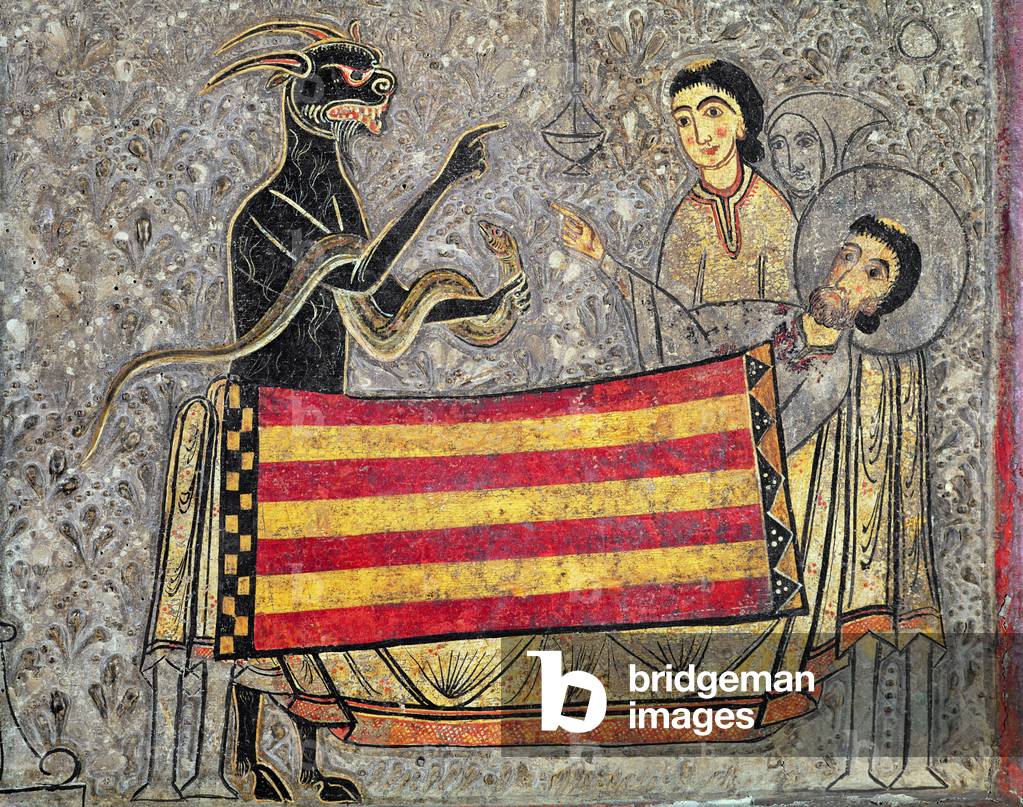
The Death of St. Martin of Tours, detail from an altar frontal from the Church of Saint Martin in Chia, 1150-1200 (tempera on panel) by Johannes Pintor, Ribagorça Workshop (fl.1150-1200); Museu Nacional d’Art de Catalunya, Barcelona, Spain ; (add.info.: Saint Martin on his deathbed, covered with a blanket in the colours and stripes of Aragon, rebukes the devil;).
It is said that when St. Martin of Tours, our patron saint in Bocaue, Bulacan, was dying in Candes (France) surrounded by his disciples, the devil appeared at his bed side, trying to claim his soul. Having lived a life of intense spiritual warfare, most likely some of it in his own bed, St. Martin rebuked the devil with his firm faith in Jesus Christ. The devil vanished and St. Martin died on November 11, 397 AD.
Every night towards the end of our Compline, we pray Simeon’s Canticle, the Nunc Dimittis (Lk.2:29-32) with an antiphon that goes like this: “Protect us, Lord, as we stay awake; that awake we may keep watch with Christ and asleep rest in his peace.” We then close our prayers with the final words, “May the Lord grant us a restful sleep and a peaceful death. Amen.”
It does not really matter whether one is a priest or not. Most of all if your bed is comfortable or not. What is important is that on that bed we are at peace with ourselves, with others and most of all, with God. So, keep your bed sacred at all times.
Lord My Chef Daily Recipe for the Soul by Fr. Nicanor F. Lalog II
Tuesday in the Fifth Week of Easter, 05 May 2026
Acts 14:19-28     ><]]]]'> + ><]]]]'> + ><]]]]'>     John 14:27-31
Photo by author, Cabo da Roca Villas, Pundaquit, San Antonio, Zambales, 15 May 2025.
What really
is your kind of peace,
Lord Jesus?
Jesus said to his disciples: “Peace I leave with you; my peace I give to you. Not as the world gives do I give it to you. Do not let your hearts be troubled or afraid” (John 14:27).
I have told you
last Sunday, Lord,
what troubles me:
the fear of being alone,
of being left out;
even if the world
gives me money,
and people with all
kinds of relationships,
I am troubled because
everything
and everyone passes;
only you remain,
Lord.

St. Teresa said it so well:
Let nothing disturb you,
Let nothing frighten you,
All things are passing away;
God never changes.
Patience obtains all things
Whoever has God lacks nothing;
God alone suffices.
Photo by Dean Mon Macatangga, Our Lady of Fatima University-Valenzuela City, 16 May 2024.
Your peace, Lord Jesus,
is not found outside us
but within us –
right in our hearts
where we allow you to dwell,
to reign in us
amid all our trials and sufferings
so we continue to forge on
in this life.
Grant us,
dear Jesus,
the courage and wisdom
you have given
Paul and Barnabas who,
despite the physical harm
and emotional distresses
they went through,
they never wavered
in their mission of proclaiming
your Gospel
because they have you in their hearts.
That is your peace, Jesus:
not an absence of trials
and sufferings,
of storms and darkness
and other troubles
but your very presence
in our hearts
where you reign supreme,
filling us with your
humility,
justice,
and love.
Amen.