
Lord My Chef Sunday Recipe for the Soul by Fr. Nicanor F. Lalog II
Pentecost Sunday-A, 24 May 2026
Acts 2:1-11  ><}}}}*>  1 Corinthians 12:3-7, 12-13  ><}}}}*>  John 20:19-23

One of the reels I love watching in Instagram is Yuji Belleza, a young Japanese who speaks different languages, going around Europe talking to all kinds of people by speaking their native tongues.
What I like most with him is his openness to learn many things not just words and languages from those he interviews in his popular Instagram reels. It is precisely what Luke is telling us this Solemnity of the Pentecost: more than language facility, the most important in the spread and growth of the Church then and now is “openness” of Christ’s disciples.
When the time for Pentecost was fulfilled, they were all in one place together. And suddenly there came from the sky a noise like a strong driving wind, and it filled the entire house in which they were. Then there appeared to them tongues of fire, which parted and came to rest on each of them. And they were all filled with the Holy Spirit and began to speak in different tongues, as te Spirit enabled them to proclaim. Now there were devout Jews from every nation under heaven staying in Jerusalem. At this sound, they gathered in a large crowd, but they were confused because each one heard them speaking in his own language. They were astounded, and in amazement they asked, “Are not all these people who are speaking Galileans?” (Acts 2:1-7)

From the Greek word pente for 50, Pentecost is a Jewish feast celebrated fifty days after the ratification of their covenant with God by Moses in Sinai; eventually, it became a feast of their first harvests upon entering the Promised Land that it was like a new beginning in life for them.
And rightly so for us Christians too. The Church started to spread from Jerusalem on that Pentecost Sunday to become the largest in the world today. More than a feast we remember today fifty days after Easter, Pentecost is an event we recognize and affirm to be happening daily in our lives as disciples of Jesus Christ.
Like the popular Japanese linguist Yuji on Instagram, we too experience “being at home” abroad when we find countrymen, people who speak our native tongue. Thank God for the millions of Filipinos spread around the world that you can surely meet anywhere, anytime you go abroad.
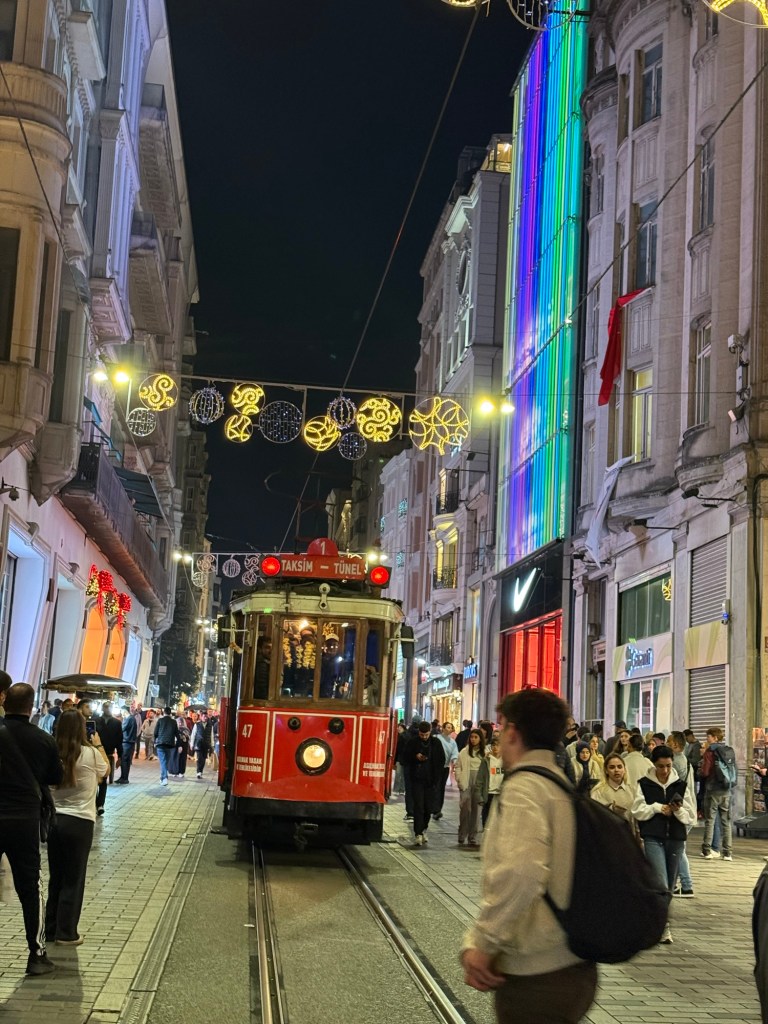
Last year we went to Turkiye and found a Catholic church run by Franciscans near our hotel in Istanbul. We went early to introduce ourselves to the pastor, hoping we could concelebrate the Mass with him. The Irish pastor gladly welcomed us, telling us that the choir and lectors in charge that Sunday were Filipinos. Sure enough after the Mass, they all followed us to the sacristy to make mano and of course, picture picture!
You know that feeling of being “home” – safe and secured, peaceful and joyful upon finding someone who speaks your own language in a foreign land with different culture and language. And weather!
Many times God comes to us in a similar way – speaking and feeling exactly like us but, unfortunately, we disregard his words and instructions because we have our own agenda and plans until finally we realize in the end after losing everything how we should have listened and obeyed him.
On the other hand, there is also that feeling of being home even abroad when you are able to communicate and understand foreigners using only sign languages while uttering some words like you are in a charades game. Despite our many differences, there are those feelings of safety and peace, of forging on in our journey because understanding is always possible by simply being open. We can even communicate with deaf mutes for as long as we are open and creative. And patient too.
Many times, God communicates with us in the same manner – through signs but problem is we do not have the interest to engage with him because we have other plans in life so that when things go wrong, there is always that sigh of missed opportunities in disregarding God.
Pentecost asks us how open are we to God and others as disciples of Christ?

From last Sunday’s upward shift for us to rise in our relationships with God and one another, Pentecost shows us its downward movement to open ourselves to the leading of Holy Spirit to become one in our relationships despite our many differences.
Matthew told us last Sunday that when Jesus ascended into heaven, some of his disciples were still doubting him. Today, Luke tells us how all those doubts were finally cleared at the descent of the Holy Spirit who emboldened the disciples with wisdom and knowledge, courage and perseverance to proclaim Christ’s gospel to all nations despite the persecutions and other difficulties that followed.

Pentecost continues in our present time when we shatter those walls and locked doors of pride, selfishness and conceit, opening ourselves to the daily coming of the Holy Spirit. Luke used a simple word in his story that can help us have that attitude of openness to the Holy Spirit.
The word is devout – in Filipino it is “deboto” connoting a person so closed with his religious beliefs like “Catolico cerrado.”
But, devout as used by Luke means a person with a “good heart, ready to believe, and then act openly and with courage” (Timothy Clayton, Exploring Advent with Luke; page 125).
Only Luke used the word devout in the Sacred Scriptures when in his gospel he described Simeon as “righteous and devout” (Lk.2:25) who sang the Nunc Dimittis during the presentation of Jesus at the temple. He then used it thrice in the Acts as we have heard today of the “devout Jews” staying in Jerusalem on that Pentecost day when the Holy Spirit came (2:5); then “the devout men who buried” the first martyr Stephen (8:2), and finally calling Ananias a “devout observer of the law” whom God instructed to pray over and heal Saul of his blindness after meeting Jesus on the road to Damascus (22:12).
More than being faithful to God and the Catholic faith, a devout person is one who is always open to the promptings of the Holy Spirit like Simeon and Anna awaiting the coming of the Messiah at the temple. Moreover, a devout person is one who makes happen the plans of God like Ananias who at first hesitated with Jesus in taking in Saul.
Our Filipino Missal used an interesting translation of Luke’s devout as palasamba sa Diyos that literally means one who worships God often. Or, someone who prays always.
Openness happens in prayers because that is when we become rooted in God, when we allow him to form us like the clay in the potter’s hand. More than the recitation and expression of ourselves in words, prayer is entering a relationship with God whom we call “Abba” as St. Paul explained in the second reading. That explains too why the Holy Spirit came on that Pentecost while the disciples with Mary were at prayer.
When we have prayer life, we grow in our sensitivity of God in others that we learn to become respectful, fair and just, and kind. Thus, we promote peace and goodwill with others too.
This Pentecost Sunday, let us allow the Holy Spirit to work in us by focusing more on Jesus than in ourselves in our many devotions and practices filled with pomp and pageantry that only divide us disciples of Christ
Let us open ourselves to Jesus by being devout in the truest sense wherein we are more open with persons especially the poor and disadvantaged than with things and numbers in measuring development as a nation like the GDP/GNP and infrastructures.
Yes, Jesus is now seated at the right hand of the Father in heaven but he remains with us here in this life, in this world in the Holy Spirit, day in, day out through us making Pentecost a reality daily. Amen. Have a blessed week ahead.

