To err is human, to forgive, divine.

Lord My Chef Sunday Recipe for Soul by Fr. Nicanor F. Lalog II
Twenty-fourth Sunday in Ordinary Time, Cycle A, 13 September 2026
Sirach 27:30-28:7 ><}}}}*> Romans 14:7-9 ><}}}}*> Matthew 18:21-35
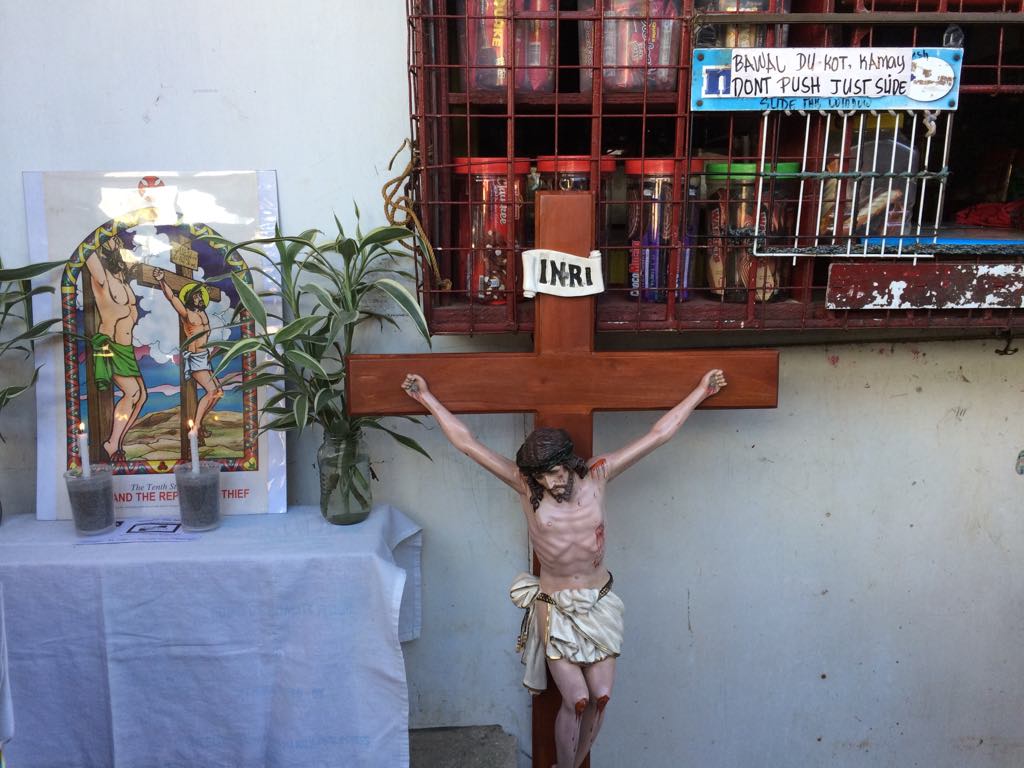
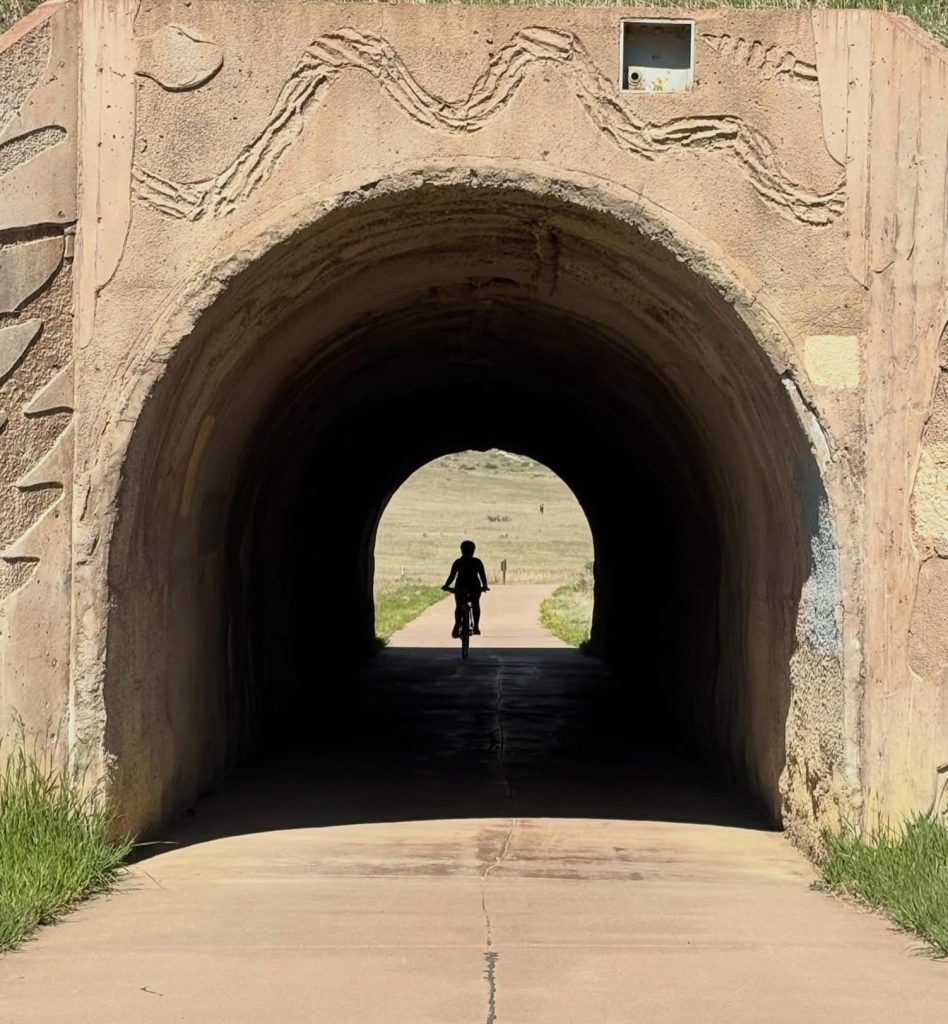
Photo by a friend in Seabrook, Washington, 06 September 2026.

You must have heard that quote so often, “To err is human, to forgive is divine” from the English writer Alexander Pope’s 1711 poem An Essay on Criticism where he originally wrote “To err is human, to forgive, divine.”

For many it has become a cliche because it is so difficult to forgive. Especially if it has to be done repeatedly. It is among the hardest teachings of Jesus Christ along with the love of enemies, of doing good to those who hate us, and lending without expecting anything back.

In a sense, forgiving is the twin teaching of fraternal correction which Jesus taught us last Sunday; the more difficult it becomes when the wrong done is against us that we feel much like Peter in asking Jesus how many times must we forgive:

Peter approached Jesus and asked him, “Lord, if my brother sins against me, how often must I forgive him? As many as seven times?” Jesus answered, “I say to you, not even seven times but seventy-seven times (Matthew 18:21-22).

NEW YORK – SEPTEMBER 11, 2001: (SEPTEMBER 11 RETROSPECTIVE) Smoke pours from the twin towers of the World Trade Center after they were hit by two hijacked airliners in a terrorist attack September 11, 2001 in New York City. (Photo by Robert Giroux/Getty Images)

Like fraternal correction, forgiving is a major concern in this modern time when the means and forms of evil have become sophisticated like terrorism and online scams that unfortunately happen not only on the world stage but right into our personal lives and relationships too.

We have all experienced being pushed to the limits as our patience is exhausted when a beloved is the one sinning against us that is both unacceptable and most unkind of all especially if the sin is committed repeatedly, prompting us to ask God like Peter how many times must we forgive our brother or sister. The figure “seven times” given by Peter is not the literal number but refers to the very many times we have forgiven somebody to wear out our patience.

What Peter was asking was a freedom from calculation of repeatedly forgiving one who repeatedly sins because that kind of forgiveness does not come naturally to any of us humans. Repeatedly forgiving someone who repeatedly sins is most difficult because it abuses our very person, our being Christian.

And there lies the bigger problem and difficulty about repeatedly forgiving someone who repeatedly sins who most often is dearest to us like your husband or wife, our parents or one of your children or a sibling.

The truth is, inasmuch as we ask like Peter so often how many times we must forgive our loved ones, the crux of the problem in forgiving is actually deep inside our hearts we still love them that we just forgive and forgive them. That is the mystery, the most baffling of all: why do we keep on forgiving somebody who keeps on sinning. Recall St. Paul’s words last Sunday “to owe no one except the debt of love” so that the more we love, we realize we can love like Jesus after all because forgiving is actually the work of God in us, with us, and through us in Christ.

Jesus answered, “I say to you, not seven times but seventy-seven times. That is why the kingdom of heaven may be likened to a king who decided to settle accounts with his servants. When he began the accounting, a debtor was brought before him who owed him a huge amount… Moved with compassion the master of that servant let him go and forgave him the loan. When that servant had left, he found one of his fellow servants who owed him a much smaller amount… Instead, he had him in prison until he paid back the debt. His master summoned him and said to him, “You wicked servant! I forgave you your entire debt because you begged me to. Should you not have had pity on your fellow servant, as I had pity on you? Then in anger his master handed him over to the torturers until he should pay back the whole debt. So will my heavenly Father do to you, unless each of you forgives his brother from his heart” (Matthew 18:22-24, 27-28, 30, 32-35).

St. John Paul II meeting and forgiving his assassin Mehmet Agca in prison two years after the failed assassination attempt to his life at St. Peter’s Square, 13 May 1981.

Jesus explains in his parable that forgiving is actually a work of God, divine in nature as Alexander Pope tells us in his famous line “to err is human, to forgive, divine.”

We forgive because we are forgiven beloved. Jesus grounds this teaching not in willpower but in being like God the master in his parable, “Should you not have had pity on your fellow servant, as I had pity on you?”

Jesus knows us so well as humans, sinful and weak who could not generate forgiveness and mercy out of nothing; it is very clear in his parable that we simply have to let flow towards others something of the forgiveness and mercy we have already received from the Father through him. Ben Sirach stressed this in our first reading, reminding us that our own capacity to receive forgiveness from God is bound up with our willingness to forgive those who have sinned against us.

Worthy of keeping in mind too that Jesus tells at the onset of his parable that forgiving is about the kingdom of heaven, not of this world wherein our debt to God is beyond measure like that servant. While we may argue that we are better than those criminals in jails or those corrupt officials now either sick to stand trial or have fled, it is pointless to compare and “measure” our sins because every sin is not only against another person but to God himself – the Perfect One who is love himself.

Photo from Pinterest.

When we forgive, that is when we level up our existence, when we live in Christ as St. Paul says in the second reading because our lives belong to God and to one another, not as the world tells us to control our lives and be masters of the universe. It is when we forgive that we are truly a church, a body of believers Jesus founded on Peter in Caesarea Philippi because that is when we live and die in Christ, becoming his vessels of mercy and forgiveness.

Most of all, it is in forgiving that we become truly free as a human, when we break free from the past hurts and grievances that pin us down, preventing us from moving forward in life. When we refuse to forgive those who have wronged us, we actually yield to their power and control. Hence, in all practicality, it is always best to forgive.

But there is something most deep and true about forgiving which clearly manifests our own mortality and rootedness in God who is our origin and end, “Remember your last days, set enmity aside; remember death and decay, and cease from sin!” (Sir. 28:6)

This Sunday, we are reminded to check and be aware of any resentments and anger we may still be carrying as we refuse to forgive lest we end like that unforgiving servant. Take this time to forgive for life is really too short to waste in keeping those grudges. Amen. Have a blessed week ahead!


Photo by a friend in Seabrook, Washington, 06 September 2026.

Our strained relationships

Lord My Chef Daily Recipe for Soul by Fr. Nicanor F. Lalog II
Wednesday, Nineteenth Week in Ordinary Time, Year II, 12 August 2026
Ezekiel 9:1-7; 10:18-19, 22 <*((((>< + ><))))*> Matthew 18:15-20
Photo by author, Tam-Awan Village, Baguio City, January 2019.
"If your brother 
sins against you...."
I feel you speaking to me
directly today,
Lord Jesus;
you know so well how
often my brothers
and sisters sin against me;
let's not included those times
I am the one who sinned against
them but why is it,
Lord,
it is different when a brother
or a sister sins against me?
There is the deep hurt
because he is a brother
or a sister - there is
a relationship,
a bond,
a trust
that is broken;
sometimes unintentionally
that they seemed to have not
minded at all,
or overlooked that makes it
more painful actually;
but, how shall I approach
him or her?

So often it becomes
the source of more problems
because,
simply,
they would claim they have
no intentions of hurting us
or never thought what they
did to us or say to us was
wrong;
and when we approach them,
they do not seems to care at all.
With so much platforms
in expressing our thoughts and
feelings,
the more
we have become detached
from each other,
the more we are fragmented,
the more our relationships
are strained.
Give us the courage
and wisdom,
and tact as well
to speak with a brother
or sister who sins against us;
more than restoring our ties,
may you dwell anew
dear Jesus amid us
so that more than seeing each
other, may we see you
and share you
to create a sacred ground
between us because,
"For where two or three
are gathered together
in my name,
there am I
in the midst of them"
(Matthew 18:20).
Amen.
Photo by author, Sonnen Berg Mountain View, Davao City, August 2018.

Our incurable wound, grievous bruise

Lord My Chef Daily Recipe for Soul by Fr. Nicanor F. Lalog II
Tuesday in the Eighteenth Week of Ordinary Time, Year II
Memorial of St. John Mary Vianney, Priest, 04 August 2026
Jeremiah 30:1-2, 12-15, 18-22 <*{{{{>< + ><}}}}*> Matthew 15:1-2, 10-14
Photo by a friend in Washington. 28 July 2026.
Your words today, 
O Lord sound harsh
but I do not mind at all
because you speak as an
honest friend who truly loves
and cares for me;
you speak the truth always
that hurts us because every
mess we are into this life is
a result of our own making,
of our pride and sinfulness
like Israel and Judah
conquered and banished
from their own country
by the Assyrians and the Babylonians:

Thus says the Lord, the God of Israel: Incurable is your wound, grievous your bruise; There is none to plead your cause, no remedy for your running sore, no healing for you. All your lovers have forgotten you, they do not seek you. I struck you as an enemy would strike, punished your cruelly; Why cry out over your wound? Your pain is without relief. Because of your guilt, your numerous sins, I have done this to you (Jeremiah 30:12-15).

Today we also celebrate the feast
of our Patron Saint,
John mary Vianney,
your most holy priest
who bore so much pains
and sufferings not because
of his sins but by the sins of many
around him; we your priests,
O God, have sinned a lot
against you, O God,
through your people,
the flock you have entrusted
to us: we have hurt them so bad
their wounds are incurable,
their bruise so grievous with some
leaving the Church;
forgive us, Lord for being too
far from the heart of your Son
Jesus, the Good Shepherd;
cleanse our hearts and make us
realize priesthood is victimhood
like Jesus; let us bear the wounds
inflicted to us by the sheep rather
than us wounding them.
Deep within your harsh 
words today, Lord,
we feel your deep desire
to heal us,
to free us,
and to renew us;
cleanse our hearts,
Lord, your priests,
purify us to bear all pains
for your people,
to be truly prophetic
so that your people may
realize you are in their midst
and eventually be like you
in Christ Jesus.
Amen.
Photo by author, 2012.

God our only hope

Lord My Chef Daily Recipe for Soul by Fr. Nicanor F. Lalog II
Tuesday in the Seventeenth Week of Ordinary Time, Year II, 28 July 2026
Jeremiah 14:17-22 ><))))*> + ><))))*> + ><))))*> Matthew 13:36-43
Photo by author, Anvaya Cove Resort, Morong, Bataan, 21 July 2026.
Your words today
are so tender,
so loving,
most merciful of all:

Let my eyes stream with tears day and night, without rest, over the great destruction which overwhelms the virgin daughter of my people, over her incurable wound. If I walk out into the field, look! those slain by the sword; if I enter the city, look! those consumed by hunger. Even the prophet and the priest forage in a land they know not (Jeremiah 14:17-18).

Photo by author, Anvaya Cove Resort, Morong, Bataan, 21 July 2026.
Many times
it is so easy for us your
people to complain about you
being far and distant
even nowhere
when we are deep
into sufferings
not realizing
you are the first
to be so deeply hurt
with our
plight and woes;
many times because of our bloated
egos and self-centeredness,
we could not feel your being one
with our hurts and pains in life
that usually are caused by our
own sins and stubbornness
as Jeremiah lamented,
"We recognize,
O Lord, our wickedness,
the guilt of our fathers;
that we have sinned
against you"
(Jeremiah 14:20).
Photo by author, Anvaya Cove Resort, Morong, Bataan, 21 July 2026.
And despite 
all our sins,
you remain with us,
loving us,
forgiving us,
blessing us
for you alone can give life,
can promise a better tomorrow,
because you alone is our hope
when everything is dark
and dried.

Among the nations’ idols is there any that gives rain? Or can the mere heavens send showers? Is it not you alone, O Lord, our God, to whom we look? You alone have done all these things (Jeremiah 14:22).

Keep us radiant
in our hopes in you,
Jesus when everything
seems to be ruined
and lost,
when weeds seem to
have taken over the wheat;
you always have the last
say in everything
when all we can shout
is a firm Amen!
Photo by author, Anvaya Cove Resort, Morong, Bataan, 21 July 2026.

Learning from Jesus

Lord My Chef Sunday Recipe for the Soul by Fr. Nicanor F. Lalog II
Fourteenth Sunday in Ordinary Time-A, 05 July 2026
Zechariah 9:9-10 ><}}}}*> Romans 8:9, 11-13 ><}}}}*> Matthew 11:25-30
Photo by author, Sacred Heart Novitiate, Novaliches, QC, 20 March 2024.

What a refreshing gospel we have today with Jesus asking us to come to him to find rest, four weeks after being moved with pity at the sight of the crowd who were like sheep without a shepherd that he called and sent his Twelve Apostles to bring them his good news of salvation (June 14).

The following two Sundays he taught us of our work in harvesting the abundant harvest by being brave and gracious, and hospitable (June 21, 28).

This Sunday, Jesus wraps up his teachings on our work after he himself was rejected by his own folks because he knows very well ours is a difficult mission (June 21) as he praised the little ones who have accepted him like the poor and marginalized.

At that time Jesus exclaimed: “I give praise to you, Father, Lord of heaven and earth, for although you have hidden these things from the wise and the learned you have revealed them to little ones… Come to me, all you who labor and are burdened, and I will give you rest. Take my yoke upon you and learn from me, for I am meek and humble of heart; and you will find rest for your selves. For my yoke is easy, and my burden is light” (Matthew 11:25, 28-30).

Photo by author, Sacred Heart Novitiate, Novaliches, QC, 20 March 2024.

What are the lessons Jesus is asking us to learn from him, especially in these troubled times of ours when the corrupt and idiots reign supremely simply because they are more in number?

See how difficult it is to be a Christian these days when you hear and see all over social media all kinds of inanities and stupidities happening everywhere like callous politicians acting as clowns with a massive crowd of idiots parroting the words of their cult leaders masquerading as religious men. Or the two couples who climbed atop the Empire State Building in New York for a performance of unfurling a banner calling for more love in the world, with the man pretending to propose to the woman who turned out to be his wife for several months already.

From #philstar via FB, 02 July 2026.

Haynaku! Juice colored!

Everything is so exhausting. The only good news we have these days is again our very own Alex Eala “smoking” the grass at Wimbledon. And perhaps the President going to Vancouver to inaugurate the newest Jollibee there with the Canadian Prime Minster enjoying a more joyful chicken joy. Sanaol!

But, amid all these dismal happenings, Jesus is here with us calling us to his side, to experience his warmth, to learn from him how we can feel light amid all these heavy burdens around us.

Notice how with the social media all over us with its bad news that it has become so easy to feel lumbered with all the contradictions in our lives plus see the various needs we feel missing in our relationships that it has become our past time to worry and feel so burdened most of the time.

Jesus promises us this Sunday that following him brings lightness not heaviness of compulsion and duty as most people would think of his demands. However, it is not a kind of R&R we all aspire every weekend at the beach or a mountain resort.

Christ calls us today to come to him and learn from him on how to have a steady, realistic, day-to-day approach to life lived in his company.

First lesson Jesus is teaching us to learn from him today is to rejoice always.

Photo by author, St. Michael Retreat House, Antipolo City, 16 June 2026.

Being joyful is more than being happy; to rejoice is to have our heart smiling because deep down inside we are assured that no matter what happens in life, even if worse comes to worst, Jesus remains with us and would never ever abandon us. That’s because he is not like a stern master without any love and concern for his slaves.

Jesus is the fulfillment of the first reading calling us to rejoice because he is the king who had come, “a just savior is he, meek, and riding on an ass, on a colt, the foal of an ass” (Zec.9:9).

Recall Jesus Christ’s triumphant entry to Jerusalem on Palm Sunday riding an ass so that he could be at eye-level with everyone in the city unlike riding a horse that is so high and even menacing in stature.

Imagine the setting of this Sunday gospel: Jesus was lamenting at how his fellow Jews have rejected him despite his many miracles but at the same time, he was rejoicing, praising the Father in sending him the poor and outcasts of their society as his first believers and followers. Yes, Jesus was hurting for being rejected but he found more reasons to rejoice than sulk. Why waste energy on the negative when there are a lot of good things happening?

Rejoicing means looking beyond the physical and temporal things; rejoicing is being a visionary who sees opportunities behind every problem and issues at hand. Rejoicing is seeing grace than curse, focusing more on Christ than the problems. Indeed,“every gising is a blessing” because every morning we wake up, God assures us of his immense love for us, that he believes in us, and is sending us on a mission to share that joy of living. And believing in him!

Photo by author, July 2011.

Second lesson Jesus is teaching us to learn from him this Sunday is to surrender, to set aside our personal agenda so that we can take up his yoke that is easy and burden that is light.

One reason we cannot rejoice is our refusal to give up our many yokes and burdens that are mostly much ado about nothing at all.

Let go and let God!

Surrendering is daily dying to one’s self to rise to new life in Christ which leads us to the third lesson Jesus wants us to learn from him this Sunday:

Live in solidarity with Christ empowered by the Holy Spirit as St. Paul tells us in the second reading.

Brothers and sisters: You are not in the flesh; on the contrary you are in the spiritr, if only the Spirit of God dwells in you. Consequently, brothers and sisters, we are not debtors to the flesh to live according to flesh. For if you ive according to the flesh, you will die, but if by the spirit you put to death the deeds of the body, you will live (Romans 8:9, 12-13).

Solidarity with Christ is the opposite of solidarity with the old humanity with Adam enslaved to sin which is not just body versus soul nor should flesh be understood as sexual immorality; solidarity with Christ is life in the Holy Spirit that results in eternal life in God. It is a choice we make daily, of whether we shall heed Christ’s call to come to him and learn from him who is meek and humble of heart. Solidarity with Christ is living in the love of Christ.

The good news is, Jesus gives us all the grace we need to love and choose him, to learn from him even if many times we fall and stumble because of our heavy burdens due to sin. This Sunday and every day, make the right choice. Choose Jesus, chose love to be light, choose life. Amen. Have a blessed, light and joyful week ahead.

Photo by Mr. Vigie Ongleo somewhere in Colorado, 03 June 2026.

Love covers a multitude of sins

Lord My Chef Daily Recipe for the Soul by Fr. Nicanor F. Lalog II
Friday, Eighth Week, Memorial of St. Paul VI, Pope, 29 May 2026
1 Peter 4:7-13 ><))))*> + ><))))*> + ><))))*> Mark 11:11-25
Photo by author, 05 May 2019, Jerusalem, Israel.
As we come to  nearly closing
the month of May,
your Prince of Apostles,
St. Peter leaves us with
beautiful reminders so timely
and appropriate in this period
of darkness and evil:

Beloved: The end of all things is at hand. Therefore, be serious and sober-minded so that you will be able to pray. Above all, let your love for one another be intense, because love covers a multitude of sins (1Peter 4:7-8).

How lovely,
how powerful,
and so true
are your words to us
today through St. Peter:
we are living at the end of all
things and still,
here we are living as if
there is no end,
as if there is no death,
as if there is no judgment.

We have become so bad,
so dismal is the world
like that fig tree you have cursed,
Lord Jesus: so delightful in the eyes
but fruitless like us,
especially the rich and powerful
among us like our lawmakers
and public officials
so affluent,
dressed in fineries
without any benefit at all
for the society they have abused;
oh yes,
even our church is like
the temple of Jerusalem that
has become a den of thieves
than a house of prayer
when priests and bishops are
more concerned with money
and clout,
with self,
leaving You Jesus trapped
inside the Tabernacle.
Teach us conversion,
Jesus:
give us strength and will
to turn away from evil,
to closely examine our selves
for all our sins when we have
refused to love;
love can truly cover a multitude
of sins because when we truly love,
that is when we turn away from sin,
when we return to You, Jesus
found in the least
and taken for granted among us;
may our love for You through
one another be constant
because wherever there is love,
there is God;
when there is love,
there is no sin.
May we be
witnesses of Your love
dear Jesus
in this world so wounded by
sins and evil;
like your servant Pope St. Paul VI,
may we witness Your love
in our daily lives
caring for those in the margins,
for those sufferings
and especially for those
who are weak.
Amen.
Photo by author, May 2017, in Ein Karem, Israel near the Church of the Visitation.

Pride of Place

Lord My Chef Sunday Recipe for the Soul, 26 October 2025
Thirtieth Sunday in Ordinary Time, Cycle C
Sirach 35:12-14, 16-18 ><}}}}*> 2 Timothy 4:6-8, 16-18 ><}}}}*> Luke 18:9-14
Photo by author, Alberione Center, Araneta Ave., QC, 11 September 2025.

We got our inspiration anew for this Sunday’s reflection from the blog of Sr. Renee Yann, RSM whom we follow at WordPress (https://lavishmercy.com/2025/10/18/pride-of-place-2/). Her blogs are so wonderfully written with reflections so deep, inspiring and uplifting.

In her recent blog, Sr. Renee tells of their parishioner they fondly called “Mamie” who sat on the same seat in their church they called “Pride of Place” for forty years until her death. And for a good reason. Despite her many trials and sufferings in life, Mamie never failed in helping those in need in their community.

Photo by author, Carmel of the Holy Family Monastery, Guiguinto, Bulacan, 25 September 2025.

As told by Sr. Renee’s dad, Mamie had always sat in the same pew through the Depression as she struggled to keep her grocery opened; after the death of her husband in an accident, Mamie never missed their Sunday Masses seated at the same spot – in fact, she was at the same pew on a Sunday Mass when her son was killed at Pearl Harbor. It was actually their community who “proudly awarded” the seat as a “pride of place” to Mamie following her life of Christian witnessing.

“Pride of Place” isn’t always something physical like a pew in church. More often it’s a moral or spiritual position that’s granted to us by others after we pay moral dues. These dues include trustworthiness, sacrifice, contribution, and wisdom…“Pride of Place” doesn’t come automatically with power or position.  It comes with respect. Unfortunately, not every parent, boss, teacher, pastor, elder, president, or champion deserves it.  It must be earned and kept as a trust. (https://lavishmercy.com/2025/10/18/pride-of-place-2/).

The story reminded me of our own “pride of place” in the church, of people always occupying the same pew or spot during the Mass that they are amazed how we priests get to know them simply with their “seating arrangement” like their coming late or being absent!

Photo by author, Carmel of the Holy Family Monastery, Guiguinto, Bulacan, 25 September 2025.

But, what struck me most with Sr. Renee’s piece is the spiritual meaning of “pride of place” which refers actually not to where we sit but where we stand. That standing is more than physical but spiritual and moral in nature. Where we stand is about our stance or conviction not only on issues but about our faith and relationship with God expressed in our dealings with others exactly what our gospel tells us this Sunday.

“Two people went to the temple area to pray; one was a Pharisee and the other was a tax collector. The Pharisee took up his position and spoke this prayer to himself, ‘O God, I thank you that I am not like the rest of humanity — greedy, dishonest, adulterous —- or even like this tax collector. I fast twice a week, and I pay tithes on my whole income.’ But the tax collector stood off at a distance and would not even raise his eyes to heaven but beat his breast and prayed, ‘O God, be merciful to me a sinner.’ I tell you, the latter went home justified, not the former; for whomever exalts himself will be humbled, and the one who humbles himself will be exalted” (Luke 18:10-14).

Painting by French artist James Tissot, “The Pharisee and the Tax Collector” (1886-1894) from commons.wikimedia.org.

For the second straight Sunday, we hear another teaching of Jesus about faith expressed in prayers in another parable only Luke has.

Last Sunday we reflected that to persist in prayer is not about wearing God down but of allowing our hearts to clarify our desires until we silently surrender to what God knows is best for us which is salvation or “justification”. See how we find that word again – justified – as the key to this parable at its end when Jesus declared that it was the prayer of the publican that was heard for “he went home justified”.

The object of every prayer is God because prayer is a relationship, not just a ritual. To be filled with God is what holiness is, not being sinless. In fact, holiness is finding our sinfulness before God. And that is the essence of our parable this Sunday.

That is why Jesus directs our attention in the “where” when we pray – not just the location when we pray but our “place” in that relationship with God who is our very foundation. When all we see is our self in prayer like in any relationship, it means it is a monologue, a one-way street. Worst, it is an indication of the absence of God, even of others because the pray-er is so preoccupied with his or her very self!

Photo by the author at the Wall of Jerusalem, May 2017.

The Pharisee was clearly not in God even if he were in front of the temple. His very self was very far from God and all he had was his bloated ego. He may be a very pious person but not really good at all for he has no space for God and for others. He is a very closed man without any room for others. Remember, Luke said that “Jesus addressed this parable to those who were convinced of their own righteousness and despised everyone else” (Lk.18:9).

The tax collector, on the other hand, may be physically far outside the temple but was the one actually nearest to God with his self-acceptance and admission of sins, of his need for God. He was closest to God because he was more open with God and with others by admitting his true self.

Prayer is more than entering a church or a prayer room, or finding our most suitable spot or space to pray. Prayer is being one with God, one in God. Prayer is losing our very self in God. The question now is, “where are we when we pray?

I have always loved this photo by friend from GMANews, Ms. JJ Jimeno who took this while she was praying inside the UP-Diliman Adoration Chapel in May 2019; she aptly captioned it as “losing one’s head in prayer.” True!

First, we become one with God in prayer when we admit our sinfulness, when we confess our sins to him, and own them without any “ifs” and “buts”. God always comes to those who truly open themselves to him by emptying themselves of their sins and inadequacies.

The tax collector was justified in his prayer more than the Pharisee because in confessing his sins, he admitted his need for God. He knew very well his place, so unlike the Pharisee who felt God owes him so much!

Second, we are in God in prayer when we are humble and have the conviction to leave everything behind and go down with God into the lowest point because one is so confident of the efficacy of prayer like what Ben Sirach tells us in the first reading.

The one who serves God willingly is heard; his petition reaches the heaven. The prayer of the lowly pierces the clouds; it does not rest till it reaches its goal (Sirach 35:16-17).

Most often in life, friendships and relationships are kept when we are willing to take the lower stance, not necessarily admitting fault or guilt in any misunderstanding because being lowly indicates the person’s need for the other person and of one’s love to work on that relationship despite its fragility. I tell couples that when they quarrel, the first who must first make the move to greet the other person is not the guilty one but the one with most love and self to give.

Third, we are in God in prayer when there is an offering daily of one’s self to God. It is not enough to be lowly and sorry for our sins in prayer. It has to be sustained because prayer is a discipline like any sport as St. Paul tells us in the second reading, calling us to persevere and endure until the end for Jesus Christ “who shall award us with the crown of righteousness in heaven.”

We are all sinners forgiven and beloved by God. When we find our right place in God in prayer, then we also find him. And meet him. Amen. Have a blessed week ahead into November! Fr. Nicanor F. Lalog II, Our Lady of Fatima University, Valenzuela City (lordmychef@gmail.com)

Photo by author, Carmel of the Holy Family Monastery, Guiguinto, Bulacan, 25 September 2025.

Slaves of righteousness

Lord My Chef Daily Recipe for the Soul, 22 October 2025
Wednesday, Memorial of St. John Paul II, Pope
Romans 6:12-18 <*{{{{>< + ><}}}}*> Luke 12:39-48
God our loving Father,
thank you for the unique grace
of having lived during the
pontificate of St. John Paul II:
what a tremendous blessing
from you to grace us with St. John Paul II
as our Pope who had overcome
so many difficulties and struggles
in life personally by being orphaned
at a very young age from his mother
then from his father and later
from his only beloved brother,
not to mention his coming from Poland,
a country exploited by foreign powers
and subjected to communism
for the longest time.
In his entire life, Lord, 
you have always shown
your loving presence in him
and destined him to be your sign
in this most difficult period in history
when men and women gravely challenged you
with so many evil and sins,
including by some priests you have called to serve.
St. John Paul II
showed us in his life
consistent with his teachings
and writings the need for us to be
your slave of righteousness,
a slave of love and goodness,
a slave of Christ:

Do you not know that if you present yourselves to someone as obedient slaves, you are slaves of one you obey, either of sin, which leads to death, or of obedience which leads to righteousness? But thanks be to God that, although you were once slaves of sin, you have become obedient from the heart to the pattern of teaching to which you were entrusted. Freed from sin, you have becomes slaves of righteousness (Romans 6:16-18).

Let us grow in obedience
to you, Jesus like your great Pope,
St. John Paul II who lived and
served us with great examples of
his life waging war against
the many evils of our time,
standing for what is true and good,
your voice in this wilderness,
telling us to "be not afraid" to love
and serve the weakest among us
while awaiting your return like
in your parable today.
Amen.

Feeling God

Lord My Chef Daily Recipe for the Soul, 15 July 2025
Tuesday, Memorial of St. Bonaventure, Bishop & Doctor of the Church
Exodus 2:1-15 ><))))*> + ><))))*> + ><))))*> Matthew 11:20-24
Photo by Ms. Jo Villafuerte, Atok, Benguet, 03 September 2019.
Sometimes I wonder
O God how it feels to be
in front of you,
of what to feel when you are
so like us humans - sadly
frustrated,
exasperated.

Jesus began to reproach the towns where most of his mighty deeds had been done, since they had not repented. “Woe to you, Chorazin! Woe to you, Bethsaida! For if the mighty deeds done in your midst had been done in Tyre and Sidon, they would long ago have repented in sackcloth and ashes” (Matthew 11:20-21).

Forgive us, dear Jesus
when we are so callous
and numb before you,
not feeling you at all
because we are so absorbed
in our own pride and foolishness,
justifying our sinful ways
that we hardly feel you,
because we could not feel others
nor ourselves as our bloated egos
numbed our humanity; we have lost our
sense of sinfulness and could no longer
appreciate what is good and beautiful,
right and orderly; we have become like
those two Hebrews Moses caught fighting
each other that instead of feeling his care
and concern for them,
they felt separated he would kill
them like the Egyptian officer.
How true were the words
of our Saint for today,
the most pure Bonaventure
who wrote, "If you do not know
your own dignity and condition,
you cannot value anything
at its proper worth."
Help us realize Jesus 
how once mighty cities
like Chorazin, Bethsaida
and Capernaum remains in ruins
to these days, never to have
recaptured their old glory days
because since your time,
they never saw their dignity
and condition as your beloved
ones; let us not fall into ruins too
because of our unrepentance for
our sins. Amen.
Photo by author, Capernaum in Israel, May 2017.

Mystery of God, mystery of sin

40 Shades of Lent by Fr. Nicanor F. Lalog II
Fourth Sunday in Lent (Laetare Sunday), 30 March 2025
Joshua 5:9, 10-12 ++ 2 Corinthians 5:17-21 ++ Luke 15:1-3, 11-32
Photo by author, Chapel of Angel of Peace, RISE Tower, Our Lady of Fatima Un iversity, Valenzuela, 28 March 2025.

We enter the fourth Sunday in Lent today with shades of pink to “rejoice” not only because Easter is getting close but most of all for the joy of God’s immense love expressed in His mercy and forgiveness to us sinners.

Known as Laetare Sunday from the Latin entrance antiphon of the Mass calling us to “Rejoice!” as it is hoped that by this time, we feel nearer to God in our Lenten journey, having experienced His Mystery which our gospel presents today courtesy of Luke who invites us to enter the scene of the Parable of the Prodigal Son. Many times we find ourselves wrapped in God’s Mystery with a capital “M” while entangled too in that other mystery of sin with a small “m” as this parable shows us.

Tax collectors and sinners were all drawing near to listen to Jesus, but the Pharisees and scribes began to complain, saying, “This man welcomes sinners and eats with them.” So to them Jesus addressed this parable: “A man had two sons…” (Luke 15:1-3, 11).

Jesus came to make God closest to us as our breath. As a Mystery, God is neither a concept nor an idea we have to understand in order to have or grasp to be possessed. It is God Whom we let to possess and wrap us in His Mystery for He is totally transcendent yet so personal with each of us. We do not see Him but we feel and experience Him as all-encompassing like nature around us that can be so breath-taking and awesome yet cannot be totally captured even by cameras. God is like the presence of insects and birds in a forest we delightedly listen to but so difficult to find or see.

Photo by author, Chapel of Angel of Peace, RISE Tower, Our Lady of Fatima Un iversity, Valenzuela, 28 March 2025.

That’s God – all around us, all-encompassing. Unfortunately, we are like the youngest son, proud and feeling independent with the gall and guts to ask God for our share of everything to be on our own when we do not have anything at all.

And off we leave to live a prodigal life or “wasteful extravagance”, slaving ourselves for wealth and fame and power until we hit rock bottom when suddenly we find ourselves empty and lost, sick and even alone. That is when we remember to come “home”, to return to our roots where it all began who is God.

As we sank deep in despair, we find a glimmer of hope within us where God is, where God had never really left us, always awaiting our return right there in our heart. He has always been there though we never recognized Him. Actually, that very moment we realized we are down and out, that was when God immediately ran to meet us.

Now, that mystery with a small “m” called sin we hardly notice.

Photo by author, Sacred Heart Novitiate, Novaliches, QC, 17 March 2025.

See again Luke as master storyteller in this lovely parable he alone has. See how Luke presents in a most subtle manner the mystery of sin not only as a breaking away from God and a violation of laws but a complete refusal to love.

Feel the youngest son in his asking for his share of inheritance from his father and his leaving home was not simply a breaking away but a refusal to love, a refusal to live, a refusal to be with the father.

That happens when we sin.

We do not tell God and our family and friends that we don’t love them but our walking away from them tells that so clearly. However, as we refuse to love when we sin, that is also when we deny the love right in our hearts, that we cannot stop loving because whatever we take after we have left are actually the very love of God and of our family and friends!

There is nothing truly ours in this world and because of God’s Mystery, we never lose His gift of love within us that when things get worst in our lives, it is the same love that gives us the spark to hope and believe again. It was that love that the youngest son missed and realized despite all his dramas as he went home to his loving father just like us too.

On the other hand, the parable presents to us too another pernicious effect of sin as a mystery which is its direct effect to our personality. As a refusal to love, sin has a direct effect to our personality because every time we sin we become a less loving person that is a contradiction of our identity and nature.

Photo by author, Sacred Heart Novitiate, Novaliches, QC, 17 March 2025.

Its worst part happens when we take small sins for granted including the little decisions we make that do not seem to be evil or bad, even without any vice at all; notice how after sometime of repeatedly committing them, our personality is affected, making us a less loving person that eventually breaks out in the open and we freakout like the elder son or those people caught on cam doing all the crazy stuff in public.

He said to this father in reply, “Look, all these years I served you and not once did I disobey your orders; yet you never gave me even a young goat to feast on with my friends. But when your son returns who swallowed up your property with prostitutes, for him you slaughter the fattened calf” (Luke 15:29-30).

How often have we made the excuse para yun lang naman? That a little lying or cheating once won’t really matter, asking ano ba masama doon? (what’s bad/wrong)? as an excuse for things that seem to be not bad or sinful at all.

Recall the first Sunday of Lent, the temptation of Jesus, of how the devil is always in the details, tempting us with that device of increments, of apportioning to little things the big evil things, not showing us the whole picture like fake news peddled by demons.

A sin is always a sin, a refusal to love. Period. Whether we go big time in sins like the youngest son or small time in sins like his elder brother, sin is clearly a refusal to love that greatly affects our personality, our lives and that of others.

Photo by author, Sacred Heart Novitiate, Novaliches, QC, 17 March 2025.

We rejoice today for that great Mystery of God, of His immense love for each of us no matter how bad and how dark our sins are. God’s Mystery is His abounding love and mercy, forgiving our sins the moment we feel sorry for them.

He said to him, “My son, you are here with me always; everything I have is yours. But now we must celebrate and rejoice, because your brother was dead and has come to life again; he was lost and has been found” (Luke 15:31-32).

As I turned 60 last Saturday, the overwhelming feeling I have had inside me is that deep gratitude to God’s love for me. Everything is grace that all the more I pray, “Lord you have given me with so much but I have given so little; teach me to give more of myself, more of your love, more of you to others.”

This time, I pray it with deeper conviction as I see both with joy and fear the bright horizon ahead with a distant shore beyond. There’s no more time to waste as St. Paul had noted in the second reading, I feel life now more definitive, that God is so undeniably real. Like St. Paul, “we are ambassadors for Christ” with the mission to help people “reconcile to God” especially in this final journey in life. God reminds us today that like during the time of Joshua in the first reading, the Eucharist is our new Passover where we thank God for His abounding love and mercy for us in this life and beyond. Amen.

Photo by author, Sacred Heart Novitiate, Novaliches, QC, 17 March 2025.