Lawiswis ng Salita ni P. Nicanor F. Lalog II, Ika-11 ng Nobyembre 2026
Ang aming Patron sa Bukawe, Bulacan.
Mula pa sa aming pagkabata doon sa bayan ng Bukawe sa Bulacan palaging nilalarawan kabutihan ng aming Patron mahal San Martin ng Tours sa France kung paano niyang hinati kanyang kapa upang damitan ang giniginaw na dukhang matanda nakasalubong niya sa daan.
Kinagabihan kanyang napanaginipan Panginoong Jesus sa kanyang paanan tangan-tangan kapang ibinigay sa matandang tinulungan, katunayan ng kanyang turo ano mang kabutihan ang inyong gawin sa maliliit ay siya rin ninyong ginagawa sa Kristo na sa atin nakipanahan.
Nguni't hindi lamang iyon ang hiwaga ng kapa ng ating Patrong mahal na dating kawal, sanay sa mga digmaan: nang siya ay mabinyagan, hinasa niya kanyang isipan sa mga aral ng pananampalataya dinalisay sa pananalangin upang lubos mapaangkin sa Panginoon natin.
Upang maging mataimtim sa kanyang pananalangin, nagtutungo si San Martin sa kagubatan at hinuhubad suot niyang kapa tanda ng kababaang-loob sa Panginoon, sinasampay, sinasabit sa mga halaman upang sakali man siya ay hanapin madali siyang tuntunin sa kapa niyang nakabitin.
"Chapele" sa wikang Pranses ang salitang salin ng "kapa" na siyang pinagmulan ng "kapilya" na isang munting pook-dalanginan tulad ng tinutunguhan ni San Martin noon upang Diyos ay makapisan; pagnilayan at tularan kaugalian nitong si San Martin ng Tours hinubad kanyang "kapa" sagisag ng kapangyarihan at katanyagan upang maramtan ng kabanalan ni Kristo-Jesus na "hinubad kanyang pagiging katulad ng Diyos upang mamuhay bilang alipin tulad natin" (Fil.2:7)!
Lord My Chef Daily Recipe for Soul by Fr. Nicanor F. Lalog II
Tuesday, Memorial of St. Leo the Great, Pope & Doctor of Church, 10 November 2026
Titus 2:1-8, 11-14     ><))))*> + ><))))*> + ><))))*>     Luke 17:7-10
Fields of Hope by Moroka from Google.
Teach me,
Jesus, to serve
you freely,
without asking
anything in return
especially recognition
because it is my mission,
my response
to your call
as servant.
Jesus said to the Apostles: “Who among you would say to your servant who has just come in from plowing or tending sheep in the field, ‘Come here immediately and take your place at table’? would he not rather say to him, ‘Prepare something for me to eat’… Is he grateful to that servvant because he did what was commanded? So should it be with you. when you have done all you have been commanded, say, ‘We are unprofitable servants; we havve done what we are obliged to do'” (Luke 17:7-8,9-10).
In this world
where being recognized
in "likes" and "thumbs up"
are the currencies to live
even to exist,
our praises
and recognition
have become
so empty,
even "cringy"
because we know
it is a mere show,
an acting out or
a hypocrisy for others
to see; we have even become
lost on how we want to be
thanked because we are
confused also of what is to serve
with everyone keeping accounts
on our every move
like selfies and photos
in social media.
Your faithful servant,
St. Leo the Great whose
memorial we celebrate today
reminded us of our dignity
especially while serving
you, Jesus;
serving and being loved
and valued are not opposites
but actually go hand in hand
because true service
leads to freedom -
free to be one's self
and express freely what
one feels and believes,
free from what others say
or think
that eventually
fills us with joy
in having experienced
you Jesus in our service.
To serve freely,
therefore,
is simply to be good
as St. Paul reminded
Titus.
And us today.
Amen.
Lord My Chef Sunday Recipe for Soul by Fr. Nicanor F. Lalog II
Solemnity of All Saints, 01 November 2026
Revelation7:2-4, 9-14  ><}}}}*>  1 John 3:1-3  ><}}}}*>  Matthew 5:1-12
Thousands of people arrive to pray at the graves of their relatives at a cemetery during the annual observance of All Saint’s Day in Manila on November 1, 2019. Photo by Ted Aljibe, AFP.
The way we Filipinos say goodbyes illustrates vividly – with a dash of some humor – the theology of our celebrations of All Saints Day and All Souls Day we collectively call as Undas.
When we are in a party or any gathering, we never say we are leaving like alis na ako that sounds rude, or layas na ako that is tinged with anger while diyan na kayo could mean burning of one’s bridges, a sort of total separation.
Normally, we say goodbyes either by saying tutuloy na po ako or mauna na po ako. The po is optional but both are the most kind and accepted way of telling everuyone we are leaving. our hosts we are leaving. Tutuloy na ako literally in English is “I’m coming in”when you are actually going out to leave while mauna na po ako means I’m going first or will go ahead of everybody whereas no one is following you especially the host.
But here are the twists in these Filipino goodbyes: both indicate our being Christians, of our deeply ingrained religiosity no matter how hard some would deny. Whenever we say tutuloy na ako, mauna na ako, we unconsciously or subconsciously express our hunger and thirst for heaven, for eternal life.
To say tutuloy na ako is to express that basic truth we all die with one final destination which is heaven in eternal life.
To say mauuna na ako is an affirmation of our other famous maxim about death, una-una lang yan, that nobody knows who’s going to die among us next.
Every time we bid goodbye to anyone, we express this holy desires to be in heaven, to be with God, to be like all the Saints we celebrate on this first day of November.
When Jesus saw the crowds, he went up the mountain, and after he had sat down, his disciples came to him. He began to teach them, saying: “Blessed are those who hunger and thirst for righteousness for they will be satisfied” (Matthew 5:1-2, 6).
Photo by author, Baguio City, July 2018.
In this time of faith in a mass-mediated culture that thrives in promoting pleasures and merry-making alongside with overflowing food and drinks while more others are starving and dying in hunger and still more are without potable water to drink, we find the fourth beatitude a rarity.
Notice how bacchanalian our generation has become with all the food apps and restaurants offering a plethora of food and drinks so glorified in social media called “food porn”, a prostitution of food and drinks. How sad so many people has become so insensitive in posting all their food in social media without any deference for the poor who could barely make ends meet for a decent meal thrice daily. See how so few among us Catholics really fast or go on abstinence every Ash Wednesday and Good Friday with all of our excuses and alibis.
Photo by author, side entrance to Church of Beatitudes, the Holy Land, May 2019.
Very sad.
Hence, Jesus called “blessed” those who hunger and thirst for righteousness because it is an affirmation of our faith in him who told the devil in the wilderness that “man does not live by bread alone but by every that comes forth from the mouth of God” (Mt.2:4). To hunger and thirst for righteousness is to value more the soul than the body. It is an appetite for the sacred and for things of deeper value and importance than those that are fleeting and superficial like food and drinks and other pleasures including those that bloat our egos.
Blessed are those who hunger and thirst for righteousness because it is a desire to be holy first of all, a desire for God himself, a desire for heaven. Righteousness for the Jews is holiness which is the observance of God’s Laws and Commandments. But, problem with this frame of mind as we have seen since the other Sunday is the tendency to be legalistic, to see more the Laws than the person that ultimately, fails to see God in one another.
Holiness is being filled with God like the souls already in heaven called Saints. They are holy because they have been purified of their sins and therefore filled with God as John tells us in his vision of heaven of great multitudes wearing white robes washed in the Blood of the Lamb.
But for us still on earth, still battling with sin and evil, holiness is being filled with God but not sinless. And because we are filled with God, we strive always to work alongside with Christ, bearing all the pains and sufferings he bore first for us for the sake of righteousness, of justice and peace. In this world when conformity to whatever “everyone is doing” is the rule of the game like corruption, dishonesty, and infidelity, being hungry and thirsty with the poor and suffering is our strongest signs of protest and resistance against the prevailing evils of our time. Being hungry and thirsty for righteousness is also being hungry and thirsty for the Kingdom of God because that is a sharing in Christ’s Passion and Death leading to his glorious Resurrection.
Photo from bloomberg.com of a homeless man in New York City during a fashion week in summer 2019.
The most difficult daily struggle we all contend with is our hunger and thirst, our most basic instincts for the most basic needs of food and water in order to live; without food and water, we grow weak and die. However, hunger and thirst tend us to overindulge with food and drinks because these readily give us pleasures, making us forget the more essential things in life.
That is why the need for some forms of sacrifices like abstinence and fasting not only with food and drinks but anything that gives us pleasure and comfort so that we learn to desire for higher things like God, holiness and virtues.
The fourth beatitude is most timely in a world that has become so consumerist where only matter matters with everything reduced to pera pera lang with God slowly being deleted from daily life scenes. See how our world has become like showbiz with all the glitz and glamor with everything for show or palabas that despite the abundance we now enjoy not only in food and drinks but almost everything, the more we have become empty and alienated within.
Blessed are you if you hunger and thirst for righteousness because it is a grace reminding you of that fact many forget that the world and everything here passes. Being hungry and thirsty for righteousness is having God in your heart, of experiencing his love, of working to love others so that they too may experience God because they have been so hungry and thirsty for love and kindness, care and concern from others.
What do you hunger and thirst for these days?
How sad that with all these technologies we now have meant to bring us closer with one another have actually brought us apart. Worst of all, the very technologies meant to work for us now enslave us, becoming not only the gods of many but masters too. Blessed are you in your hunger and thirst for God because he alone in Christ Jesus can truly satisfy us here and hereafter. Dwell in the love of God in Jesus Christ John tells us in the second reading like the saints who have gone ahead of us, resisting all evils and temptations to sin for only the Lord satisfies us. Amen. A blessed All Saints’ Day to you!
A panel of Fra Angelico’s painting (1423-24) “The Forerunners of Christ with Saints and Martyrs” from wikipedia.
Lord My Chef Sunday Music by Fr. Nicanor F. Lalog II, 25 October 2026
Photo by author, Bram Castle, Romania, Novvember 2025.
Many people say love is blind but this Sunday’s gospel shows us how love can actually enable us to see better and clearer one another as brothers and sisters who must be loved and respected and cared for (https://lordmychef.com/2026/10/24/love-and-you-shall-see-2/).
And while preparing for our early morning Masses today, we just felt like humming the very lovely piano introduction to Melissa Manchester’s Through the Eyes of Love that was the theme of the 1978 movie Ice Castles starring Robby Benson and Lyn Holly-Johnson. One of their co-stars in that movie was Tom Skerritt who just died last Wednesday who played father to Johnson, an acctual former American figure skater.
In that romance movie, Benson and Johnson were high school sweethearts: he a hockey player while she, a figure skater. When she moved to another high school that offered her better options for her talent in figure skating, she met another man, dumping Benson in the process. They reunited after Johnson had a bad fall while practicing that left her partially blind; Benson took care of her, convincing her to practice anew to join a competition with him as her guide. Eventually she won in the competition with no one knowing her blindness until she tripped on the roses thrown at her by the fans after winning.
It is one of those unforgettable romantic movies we all fell in love with while in second year high school, especially its lovely theme sang by Manchester. Though it never became a hit, the song has endured all these years as one of the favorite songs in wedding receptions, often as the first dance of the couple. And why not with these realizations of someone who had experienced true love despite everything.
Please, don't let this feeling end
It's everything I am
Everything I want to be
I can see what's mine now
Finding out what's true since I found you
Looking through the eyes of love
Now, I can take the time
I can see my life
As it comes up shining now
Reaching out to touch you
I can feel so much since I found you
Looking through the eyes of love
When Jesus said in today’s gospel that the greatest and first commandment is to love God with all of our heart, and mind, and soul or total self and that the second is to love others as you love yourself, he also revealed to us one of the most profound truths we fail to recognize and even reject so often.
Our love for God and for others unfold first in us, in our love for our self. We cannot love God unless we love and accept who we are – whatever is good and bad in us. Many times, some of us hate ourselves that we change even our gender, manipulate our appearances, fantasize on so many what ifs and wishful thinkings.
The key to loving God totally is to first love our very self; Jesus became human like us to show us that is good to be human. It is only when we have come to embrace and accept wholly our gift of self can we give ourselves to God totally and to others. What I am to myself becomes what I am to others and vice versa. And together we all go to God as he comes to us—in love. Exactly how Johnson who had gone blind in the movie realized.
And now I do believe
That even in a storm
We'll find some light
Knowing you're beside me
I'm all right
Please, don't let this feeling end
It might not come again
And I want to remember
How it feels to touch you
How I feel so much since I found you
Looking through the eyes of love
Just like us in many instances, it is often in those trying moments we realize how much we are loved by God, never leaving us despite our many sins and failures. Imagine in this song Through the Eyes of Love Jesus is our beloved guiding us through our many blindness in life, enabling us to see persons and events in our lives more clearly that we succeed and most of all, become fruitful and fulfilled. Have a blessed week ahead filled with love!
Lord My Chef Sunday Recipe for Soul by Fr. Nicanor F. Lalog II
Thirtieth Sunday in Ordinary Time, Cycle A, 25 October 2026
Exodus 22:20-26  ><}}}}*>  1 Thessalonians 1:5-10  ><}}}}*>  Matthew 22:34-40
Photo by author, Don Bosco Batulao Retreat House, Batangas, April 2026.
A few months before the death of Pope Francis last year, a controversy arose among some people regarding St. Augustine’s teaching “Love and do what you like” when they overstretched its meaning as if one can do anything that may hurt others in the process.
St. Augustine never meant we can do whatever we like; most of all, the learned Saint had extensively taught on the need to distinguish “love” from a disordered one. When he said “Love and do what you like”, St. Augustine meant the kind of love that Jesus had taught his disciples at the Last Supper, love that is willing to offer one’s life for another. It is a love rooted in God that enables one to see more completely one’s self and others so that when we love, everything changes in our being so that our every doing is because of love and out of love. When we truly love, the sky is the limit in every good deed we can do for God through others.
This we find in today’s gospel when Jesus answers another test from his enemies at the temple area.
When the Pharisees heard that Jesus had silenced the Sadducees, they gathered together, and one of them, a scholar of the law, tested him by asking, “Teacher, which commandment in the law is the greatest?” He said to him, “You shall love the Lord, your God, with all your heart, with all your soul, and with all your mind. This is the greatest and the first commandment. The second is like it: You shall love your neighbor as yourself. The whole law and the prophets depend on these two commandments” (Matthew 22:34-40).
Photo by Ar. Philip Santiago, Jerusalem, September 2024.
Unlike last Sunday’s encounter with the disciples of the Pharisees and Herodians, today’s testing of Jesus is “mild”, seemingly honest because many Jews were confused at that time with the so many laws they have to observe.
From the Ten Commandments given by God to Moses at Mount Sinai, they have dissected these into more than 600 precepts that they wondered if there was any single law which touched the core of people’s relationship with God. Perhaps that is where the malice in this test lies: the Pharisees wanted to know if there would be a simpler approach by Jesus that they felt impossible especially with their very legalistic frame of minds.
But Jesus surprised them anew in the way he addressed the question by first citing the Book of Deuteronomy when he answered, “You shall love the Lord, your God, with all your heart, with all your soul, and with all your mind. This is the greatest and the first commandment.” They knew it very well by heart but what was new and probably troubling for them was when Jesus followed up with “The second is like it: You shall love your neighbor as yourself.”
First of all, the scholar of the law was asking Jesus to pick the one most important of all commandments at the core of their relationship with God and with their life in general. They were hoping for a simplistic approach, a sort of panacea and shortcut. Instead of reducing the hundreds of laws into just one, Jesus gave them two commandments that are actually one and inseparable: love of God and love of others. They are like the cheeks of the human face best expressed in Filipino: Ang pag-ibig ay katulad ng isang mukha na mayroong dalawang pisngi; walang tao na iisa ang pisngi. Isang mukha, dalawang pisngi palagi.
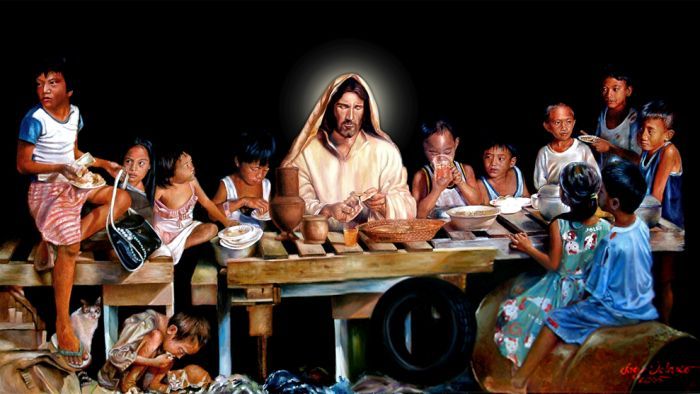
“Hapag ng Pag-Asa” painting by the late Joey Velasco.
Most troubling for the enemies of Jesus was actually this other “face” of love of God: for them, the term neighbor was limited only to their fellow Jews which Jesus addressed in his parable of the good Samaritan found only in Luke’s gospel. In linking love of God with love of neighbor, Jesus reminded his enemies and listeners including us today of what the whole bible has been saying that religious observance is not enough like fasting, alms-giving and other ritual observances in the temple or synagogue, or church, and home.
One cannot love God without loving one’s brothers and sisters at the same time. No one can just love for God’s sake, to please God or observe his commandments. One must go further than the letters of the laws because one seeks, finds and loves God in others. In the following chapter after this episode we find Jesus identifying himself with the poor, the hungry and thirsty, the naked, the sick and prisoners and aliens so that whatever we do unto them, we do unto him too (Mt.25:31-46)!
Hence, we have our first reading from Exodus God telling Moses to remind the people to be kind to strangers and foreigners for they were aliens too in Egypt before; that they should never oppress nor molest the poor and widows nor charge interests in loans, warning them of how he would listen to the cries of the oppressed.
More than teaching us the most important commandment of all, Jesus is inviting us to a new approach to life and to our relationships with God and with others in love. He is not disregarding the laws and commandments because their absence means presence of evil and sin as we have seen recently in France. Clearly, the looters and vandals in the many rallies there are those who believe they can do whatever they like without any sense of what is right and wrong.
Photo by author, Bran Castle in Romania, Novvember 2025.
This is what St. Paul is reminding the Thessalonians and us today in the second reading: Christianity is really difficult to understand and appreciate by people then and now without love at all.
In answering the scholar of the law, Jesus revealed the truth of this immense love of God already present in us which enables us to see even beyond persons and things. When he said that the greatest and first commandment is to love God with all of our heart, and mind, and soul or total self and that the second is to love others as you love yourself, Jesus is revealing to us one of the most profound truths we fail to recognize and even reject so often.
Our love for God and for others unfold first in us, in our love for our self. We cannot love God unless we love and accept who we are – whatever is good and bad in us. Many times, some of us hate ourselves that we change even our gender, manipulate our appearances, fantasize on so many what ifs and wishful thinkings. The key to loving God totally is to first love our very self; Jesus became human like us to show us that is good to be human. It is only when we have come to embrace and accept wholly our gift of self can we give ourselves to God totally and to others. What I am to myself becomes what I am to others and vice versa. And together we all go to God as he comes to us—in love especially in the midst of all these shadows and darkness of things happening in our country and around the world. May we lead others to God by finding them first in us. Amen. Have a blessed week ahead.
Lord My Chef Sunday Recipe for Soul by Fr. Nicanor F. Lalog II
Twenty-Seventh Sunday in Ordinary Time, Cycle A, 04 October 2026
Isaiah 5:1-7  ><}}}}*>  Philippians 4:6-9  ><}}}}*>  Matthew 21:33-43
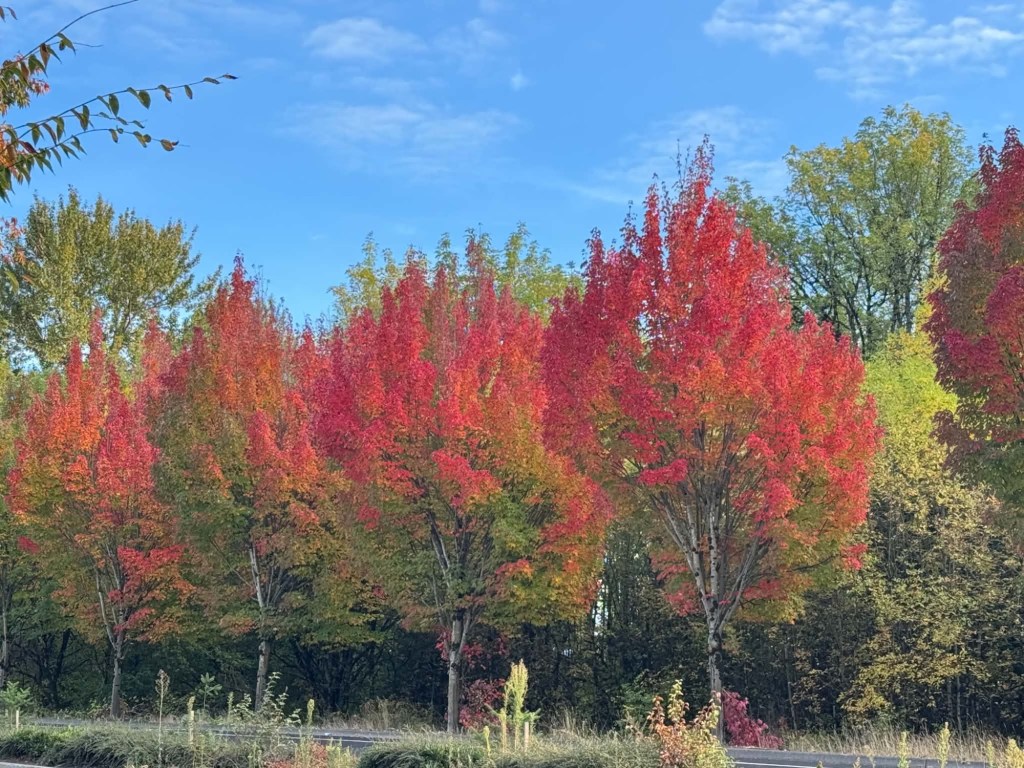
Photo by a friend in Washngton State, 01 October 2026.
A friend recently sent me this photo of the start of autumn that brought back memories of my vacation on two occasions in the States and Canada during that most wonderful season. It even made me wondered lately why God did not give us four seasons like in other countries.
I know. It is kind of crazy and weird, even stupid especially at how a Chinese friend who took his priestly formation at UST twenty years ago used to tell me the Philippines is a paradise where we can work and play all year round unlike them who have to work hard for six months to stock food and wood because the other half of the year is so cold that they have to stay indoors most of the time. Until now he is all praises to our country so blessed abundantly in resources and natural wonders.
And indeed! Our country is a paradise – so blessed, so beautiful, so rich. And yet so poor and miserably mismanaged by us all that we perfectly fit in the first reading and gospel this Sunday:
Let me now sing of my friend, my friend’s song concerning his vineyard. My friend had a vineyard on a fertile hillside; he spaded it, cleared it of stones and planted the choicest vines; within it he built a watchtower, and hewed out a wine press. Then he looked for the crop of grapes, but what it yielded was wild grapes (Isaiah 5:1-2).
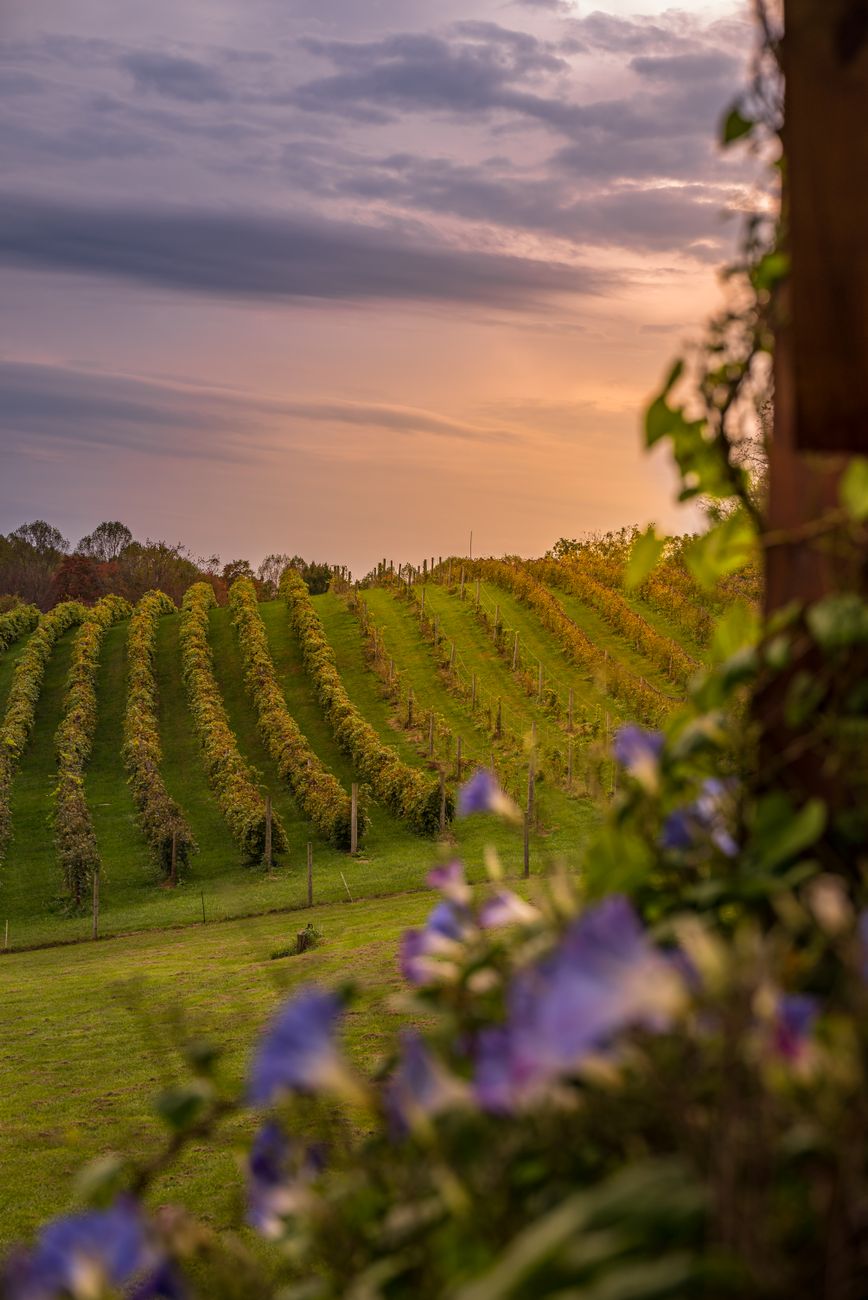
Photo by author, Pundaquit, San Antonio, Zambales, 14 May 2025.
Our country is exactly that wonderful vineyard planted by the Lord with its vast, fertile lands and long coastlines with lush greeneries of plains and mountains and despite all these, we import much of our food like rice and vegetables and fruits including fish like galunggong, even pig skins for chicharon! Like Isaiah, we ask what happened to our country?
For Isaiah, the vineyard represented Israel as the chosen people of God, so loved and cared but produced bitter fruit with their repeated infidelity and sins against God that went on until the coming of Jesus who used the same imagery into a parable of the kingdom of heaven so applicable to our own time.
Jesus said to the chief priests and the elders of the people: “Hear another parable. There was a landowner who planted a vineyard, put a hedge around it, dug a wine press in it, and built a tower. Then he leased it to tenants and went on a journey. When vintage time drew near, he sent his servants to the tenants to obtain his produce. But the tenants seized the servants and one they beat, another they killed, and a third they stoned. Again he sent other servants, more numerous than the first ones, but they treated them in the same way. Finally, he sent his son to them, thinking, ‘They will respect my son.’ But when the tenants saw the son, they said to one another, ‘This is the heir. Come, let us kill him and acquire his inheritance.’ They seized him, threw him out of the vineyard, and killed him (Matthew 21:33-39).
Jesus was still in the temple area where his enemies have gathered to seek ways of putting him under arrest. His parable of the wicked tenants is so similar with Isaiah’s that speaks too at the same time of ourselves and of our time, of how we have become like those wicked tenants taking the “vineyard” as totally ours. Like those tenants, we have claimed and possessed on our own this very life as “mine” and therefore, “owner” with every right to do whatever we want like have abortion, take contraceptives, have casual sex, even decide which gender to choose!
We have “overstretched” our rights without any regard at all to others and to environment. Consciously or unconsciously, we have deleted God from life that we have become relativistic without absolute morals and morality because we have made ourselves the measure and standards of everyone and everything – because, we own the “vineyard”.
Photo by Dra. Carol Reyes-Santos, MD, in Southern California, October 2023.
Then we wonder like Isaiah why we harvest bitter, wild grapes of broken relationships and emptiness despite the plethora of technologies and gadgets we now have? Or, like the chief priest and elders so angrily telling Jesus how the wicked tenants must be punished for usurping the vineyard and putting the owner’s son to death when in fact we are them?
Jesus said to them, “Did you never read in the Scriptures: The stone that the builders rejected has become the cornerstone; by the Lord has this been done, and it is wonderful in our eyes? Therefore, I say to you, the kingdom of God will be taken away from you and given to a people that will produce its fruit” (Matthew 21:40-43).
Here now lies the good news this Sunday: in Isaiah’s parable of the vineyard, God is distinct from the vineyard but in Christ’s parable, we are the vineyard of the Lord because Jesus is one with us being the Son of the owner sent to gather his share of produce.
Jesus promises us today of better produce to be shared and enjoyed not only in eternity but right here in this life for we are the Lord’s vineyard called to be fruitful. As a continuation of last Sunday’s parable of the two sons, Jesus gives us today the chance to make that wise and good decision of finally doing what is right, just and good. Of finally obeying the Father as St. Paul beautifully reminds us in the second reading to be like him, an imitator of Christ becoming someone who could be imitated by others as witnesses of Jesus, striving for “whatever is pure, whatever is lovely, whatever is gracious” (Phil. 4:8).
Recent news of how a group of ordinary people on board a flight from Dubai to Tel Aviv prevented the crash of their plane is a remarkable story of taking care of the Lord’s vineyard, of how it always bear good fruits. The so-called heroes of FlyDubai were all very ordinary like us; what enabled them to be heroes was their being true and faithful in their responsibilities like the mother who went to attend to her daughter in the toilet and became the first to notice trouble in the cockpit; the Indian captain who for many years of flying had always thought of the lives depending on him who struggled to rise and opened his cockpit door to be helped by men who knew nothing about flying and martial arts except the need to save lives by stabilizing the plane and subduing the terrorist co-pilot.
It was a story like the parables today and last Sunday of how people chose to uphold what is good, what is right, what is just. They are heroes not because of any special skills nor talents but were simply faithful in life, most likely always present for their families and friends, clients and patients. And to God ultimately.
Isaiah and Jesus invites us this Sunday to look into ourselves, at how we have tended and cared for our lives, for others in this vineyard of the Lord. Think of those many occasions we have wasted God’s blessings like our talents not put into use or never harnessed, health taken for granted and loved ones we have ignored and refused to love. Let us grab this opportunity of taking care of the Lord’s vineyard he had entrusted to us to be fruitful. It is us who benefit most in these fruits meant to make us better here and hereafter. Amen. Have a blessed week ahead!
Lord My Chef Daily Recipe for Soul by Fr. Nicanor F. Lalog II
Friday, Twenty-Fifth Week in Ordinary Time, Year II, 25 September 2026
Ecclesiastes 3:1-11     ><]]]]'> + ><]]]]'> + ><]]]]'>     Luke 9:18-22
I really wonder,
Lord, if you have "made
everything appropriate to its time,
and has put the timeless into
their hearts,
without men's ever discovering,
from beginning to end,
the work which God has done"
(Ecclesiastes 3:11),
then what time is it now
for me?

A time to weep or to laugh?
A time to mourn or to dance?
A time to scatter or to gather?
A time to be silent or to speak?
A time to love or to hate?
Despite our ingenuity
and intelligence,
we still could not figure out
what time it is,
Lord,
because we can never
know you God
unless we let go
of ourselves,
unless we return to you.

And that is why
Pete Seeger and the Byrds
added those chorus lines
before each stanza
from today's first reading:
To everything – turn, turn, turn There is a season – turn, turn, turn And a time to every purpose under heaven
Photo by author, Dominus Flevit Church outside Jerusalem, May 2017.
Let me turn,
turn, turn to you
always to experience
your time, dear Lord;
let me turn,
turn, turn to you
so I may see you like
Peter as you are
in today's gospel -
the Christ of God
(Luke 9:20),
the One who suffered
and died but rose again
for our salvation!
In your Passion and Resurrection
Jesus,
you have shown us
time is a dimension
for us to determine and measure
the passing of moments,
a reference point
to go back in the past,
to plan in the future,
to experience the present
that often escapes us;
may we learn from Richard Bach's
Jonathan Livingston Seagull the parting
words of the wise Chen after teaching
him how to fly higher than most seagulls:
"Friendships should depend on nothing
like time and space; remove time,
we have now, remove space, we have here;
don't you think between
now and here we could meet
once or twice?"
Teach us,
Lord Jesus
to return to you,
to turn away from sins
and evil to experience fullness
of time in your coming
in every here and now.
Amen.
Lord My Chef Daily Recipe for Soul by Fr. Nicanor F. Lalog II
Wednesday, Twenty-Fourth Week in Ordinary Time, 16 September 2026
Memorial of Sts. Cornelius, Pope, and Cyprian, Bishop, Martyrs
1 Corinthians 12:31-13:13     <*((((><  +  ><))))*>     Luke 7:31-35
Photo by a friend in Seabrook, Washington, 06 September 2026.
Love never fails.
In other translations,
love never ends.
How lovely,
Lord Jesus;
and so challenging
because many times
I think of at least an end
to "loving" like when Peter
asked you last Sunday
"how many times must I forgive
my brother who sins to me...
is it seven times?"

When you said it is
"seventy times seven" -
that is clearly what love
that never fails.
As I pray to you,
I realized every age,
every generation in
history always thinks
itself as the worst,
almost hopeless
like during this time in
our lives not only in the world
but in our own country:
everything is chaos and disordered,
injustice and corruption are
the norms followed ironically
in this predominantly Christian
nation where money not
only talks but even shouts.
But, here we are still
Jesus: alive and kicking,
fighting and surviving,
eagerly awaiting our
new dawn of salvation
in you, Jesus;
grant me patience
and perseverance to keep
loving especially when it seems
to be no longer feasible
and even not doable;
like Sts. Cornelius and Cyprian
during their time,
it was not persecution per se
that was the problem
but divisions among early
Christians especially in the
refusal of some in forgiving
and readmitting apostates to
to the faith; dear Jesus,
teach us to be flexible,
more loving than legalistic
like your former Pope St. Cornelius
and his friend St. Cyprian the bishop
who both insisted those who denied
their faith while facing persecution
may be forgiven and be readmitted;
it was clearly choosing to be more
loving than to be legalistic.
Teach me,
Jesus, to learn to read
the signs of the times
and most specially your
divine will in dealing with the
many complicated issues we
now face in our being Christians.
May in everything
we let love prevail for wherever there
is love, you are always there, Lord
because that is when we have
communion and oneness in
you.
Amen.
Lord My Chef Daily Recipe for Soul by Fr. Nicanor F. Lalog II
Thursday, Twenty-third Week in Ordinary Time, Year II, 10 September 2026
1 Corinthians 8:1-7, 11-13     ><]]]]’> + ><]]]]’> + ><]]]]’>     Luke 6:27-38
Photo by author, San Juan, La Union, 08 January 2026.
It is again that most difficult part
of your gospel,
Lord Jesus,
our least favorite
of your teachings -
“love your enemies.”
Forgive us, Lord
because the mere thought of
"enemies" turn us off right away;
it is wrong but human as we are,
there is always that
feeling of revulsion,
of getting even with those
who have hurt us
or wronged us;
but, we realize too
how in the long run
it is pure foolishness
of keeping that grudge against
our enemies because
as St. Paul tells us also today,
"knowledge inflates with pride,
but love builds up."
Your teaching
for us to love
our enemies
is not really
about our strength
and willpower,
Jesus but in our likeness
with God,
"Be merciful,
just as also your
Father is merciful."
Help us,
Jesus,
to pray more
intensely,
to surrender more wholly
to you so that we can
let flow towards others
the mercy you have
showered us.
Amen.
Photo by author, Anvvaya Cove, Morong, Bataan, 21 July 2026.
Lord My Chef Sunday Recipe for Soul by Fr. Nicanor F. Lalog II
Twenty-Third Sunday in Ordinary Time, Cycle A, 06 September 2026
Ezekiel 33:7-9  ><}}}}*> Romans 13:8-10  ><}}}}*> Matthew 18:15-20
From Facebook post by Marvin Germo, 04 September 2026.
Thanks be to God for Alex Eala – not only an excellent tennis player, a bright and intelligent lady but most of all, most kind and humble of all.
Her recent landing on the front page of New York Times that prides itself with the motto “All the News Fit to Print” in its 175 years of existence cemented Eala’s stardom. That’s real influence no blog stats nor Hollywood walk of fame could match.
Side by side with the major events and newsmakers in the world, the editors of New York Times featured Eala on their front page not entirely because of her prowess and grit in tennis but of her expressions of love, community and unity of Filipinos – a far, far cry from news coming from our forsaken country of calamities and crooks in government. Eala – along with other athletes like EJ Obienna – are the only good news we now have, with her practically a walking gospel like St. Paul in today’s second reading.
Brothers and sisters: Owe nothing to anyone, except to love one another; for the one who loves another has fulfilled the law (Romans 13:8).
Photo by author, St. Paul Spiritual & Renewal Center, Bgy. Tanyawak, Alfonso, Cavite, 19 August 2026.
What kind of love is Paul exhorting the Romans then and us today? For St. Paul, love is the self-sacrificing love that Jesus showed us when he offered himself for us on the cross.
Recall last Sunday St. Paul reminded us “to offer your bodies as a living sacrifice” (Rom. 12:1) like Jesus. In that same chapter, he spoke of not retaliating or seeking vengeance while in the following chapter we now have, he expounded the themes of obedience to authority and a sort of social responsibilities like justice (Rom. 13:1-7).
And while justice demands we pay off our debts and other dues to one another, to the state and public officials, it is a totally different scenario when it comes to love. For St. Paul, love is the imitation of Jesus Christ, a love that can never be measured at all and even be demanded and decreed.
Love is not a possession that anyone can receive nor give in an exactly measured quantity like a pound or a kilogram of love. St. Mother Teresa said the measure of love is when you love without measure. It is either you love or do not love! And when we do not love, then we sin which is a refusal to love.
That sin can only be repaired and corrected by love.
Therefore, to overcome sin, you have to love more!
That is why we hear Jesus teaching us today the importance of fraternal correction based on love not anything else.
Jesus said to his disciples: “If your brother sins against you, go and tell him his fault between you and him alone. If he listens to you, you have won over your brother. If he does not listen, take one or two other along with you, so that every fact may be established on the testimony of two or three witnesses. If he refuses to listen to them, tell the church. If he refuses to listen to the church, then treat him as you would a Gentile or a tax collector” (Matthew 18:15-17).
Photo by a friend in Swan Island Dahlia Farm, Canby, Oregon, 29 August 2026.
Jesus is now heading to Jerusalem to fulfill his mission. Along the way, he taught his disciples important lessons about the Church he had just established upon Peter, the Rock, while at Caesarea Philippi the other Sunday.
For three Sundays beginning today, Jesus will touch on three moral issues we face with seeming complexity in our modern time like fraternal correction, forgiving, and work. These are crucial because they are expressions of mutual love for one another. Most of all, it is in these realms we fall into “sin of omission” particularly with fraternal correction as we tend to detach ourselves from others when they are committing sin. By distancing from them or refusing to make a clear stand against evil, we unconsciously allow sin to persist.
The dark side of the sin of omission lies in that tendency within us to not care at all with those into serious sins when we separate and distance from them, even telling them “bahala ka na sa buhay mo…pinili mo iyan, pagdusahan mo.”
Fraternal correction is the antidote to sins of omission because it is about keeping our relationships intact as family, friends, brothers and sisters in Jesus Christ who becomes truly present in the world among us when we live in harmony because “where two or three are gathered together in my name, there am I in the midst of them” (Mt. 18:20).
This is the good news of Eala, whether she wins or loses a match, she speaks of love and kindness. And she has been consistent with it!
From Facebook, 04 September 2026.
Since the Old Testament, God had already insisted on this moral precept as his children that we look after one another like a sentinel – a watchman or a guard – as he told the Prophet Ezekiel in the first reading.
At that time, the enemies of Judah were closely approaching their borders that they designated watchmen as their first line of defense. Failure by these watchmen to warn the people – as it turned out later – could spell disaster for the kingdom.
The same thing is true with us. We are all interrelated with each other. One rotten tomato can spoil the whole batch like allowing corruption in every form to continue as well as electing corrupt officials into office. How sad we have not learned our lessons; maybe not until we have sank deep into flood…
We cannot be indifferent and be mere bystanders amid the evil and sins happening around us perpetrated especially by those closest to us. It is not enough either that we do no wrong on others yet allow those into corruption to continue with their evil doings. Fraternal correction is an expression of our love – for God and for others. We correct those into sin because of love, not because we are better or holier.
St. Paul beautifully declared in 2 Corinthians 5:14, “Caritas Christi urget nos” – the love of Christ urges, impels us – to love more especially in these times of calamities and disunity in the country.
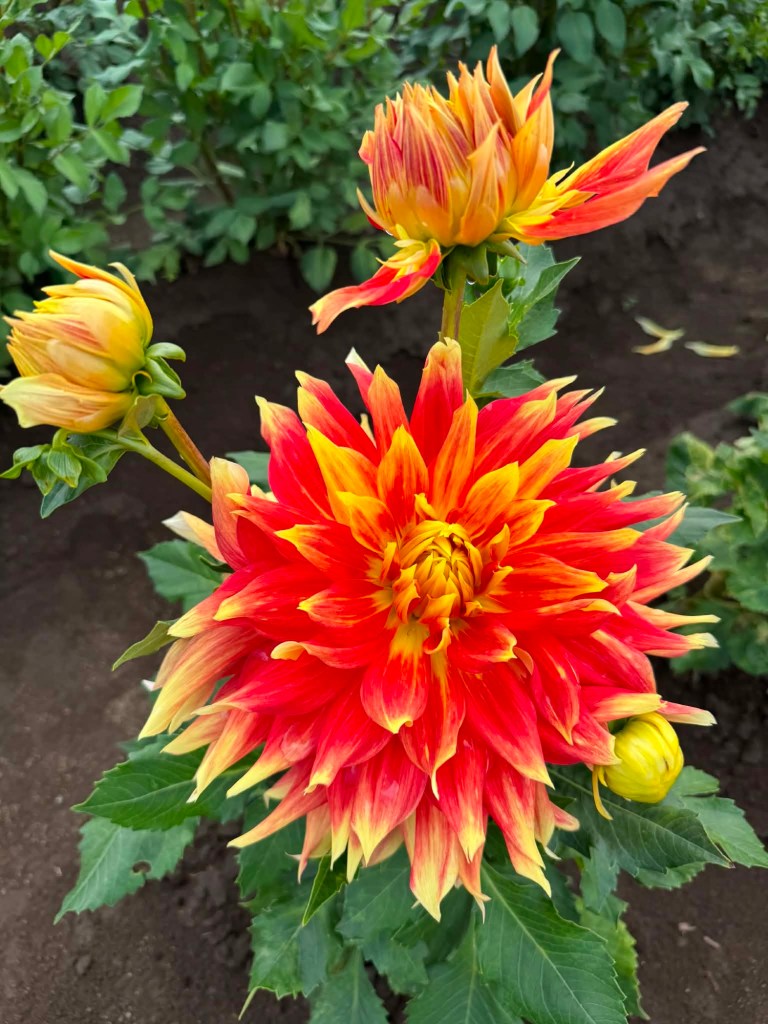
Photo by a friend, Swan Island Dahlia Farm, Canby, Oregon, 29 August 2026.
This love of Jesus Christ the Lord himself described as “new commandment” at his last supper (Jn.13:34) is a love rooted in God himself, a love that “levels up” every disciple into the mystical plane of existence.
Recall those moments you have truly loved without strings attached, unselfish and selfless: that is when we realize that love is a debt we can never pay off because love is a gift from God, something that is never exhausted nor depleted. In fact, we realize that we too can love like Jesus Christ!
God does not “order” nor “command” us in the strict sense to love him. He asks for our love because he loves us, because he is love. When we love, we fulfill the commandments of God, we live in peace and harmony with one another like in heaven. That is why it is only love that will remain in heaven where there will be no more fraternal corrections. Most of all, love can never be paid off as a debt because love is all that shall remain to become our very person in Christ. Amen.Have a blessed, loving week!