Lord My Chef Daily Recipe for Soul by Fr. Nicanor F. Lalog II
Friday, Nineteenth Week in Ordinary Time, Year II
Memorial of St. Maximilian Kolbe, Priest & Martyr, 14 August 2026
O God our loving Father,
help us to always remember -
our origins and beginnings,
our past especially
the people who had cared
and nurtured us,
our parents and siblings,
relatives and friends,
those who gave us
the breaks and sparks
to begin our great journeys in life,
the people who stood by
when we were down
and nobody believed us:
dear God,
remind us always
of the basic fact,
of the principle and foundation
of our being:
that we came from you
and shall return to you.
Forgive us,
Lord God,
in forgetting you always,
in forgetting others,
in forgetting
we are nothing without you;
touch us,
nudge us if needed
whenever we forget
you and our lowly beginnings;
let us not be amazed
by our feats
and abilities.
But you were captivated by your own beauty, you used your renown to make yourself a harlot, and you lavished your harlotry on every passer-by, whose own you became. Yet I will remember the covenant I made with you when you were a girl, and I will set up an everlasting covenant with you, that you may remember and be covered with confusion, and that you may be utterly silenced for shame when I pardon you for all you have done, says the Lord God (Ezekiel 16:15, 60-63).
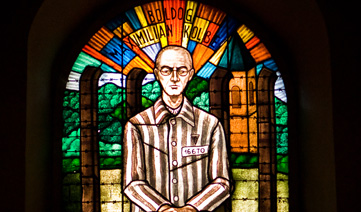
Photo of Auschwitz from internet.
As we celebrate today
the Memorial of your most
faithful servant
St. Maximilian Kolbe
who offered himself not just
once for a fellow prisoner in
Auschwitz for he had
dedicated himself to you
entirely before World War II
began,
may we remember
the lessons that led
to the Holocaust;
like St. Maximilian Kolbe
may we continue to remember
your covenant in Jesus Christ
by making a stand against
injustice and immorality,
in defending life especially
at its weakest points,
and most of all,
in remembering
the equal dignity of every person
created in your image and likeness;
like what Jesus told
the Pharisees,
let us go back
to Paradise,
let us return to you,
O God,
as our Lord and Master
alone,
not ourselves,
nor our pride and convenience,
nor anyone
nor their flimsy,
modern thoughts
and ideas;
like St. Maximilian Kolbe,
may we have the courage
to always stand forward
for what is true
and good
and holy.
Amen.
Lord My Chef Daily Recipe for the Soul by Fr. Nicanor F. Lalog II
Monday, Tenth Week in Ordinary Time, 08 June 2026
1 Kings 17:1-6     ><))))*> + ><))))*> + ><))))*>     Matthew 5:1-12
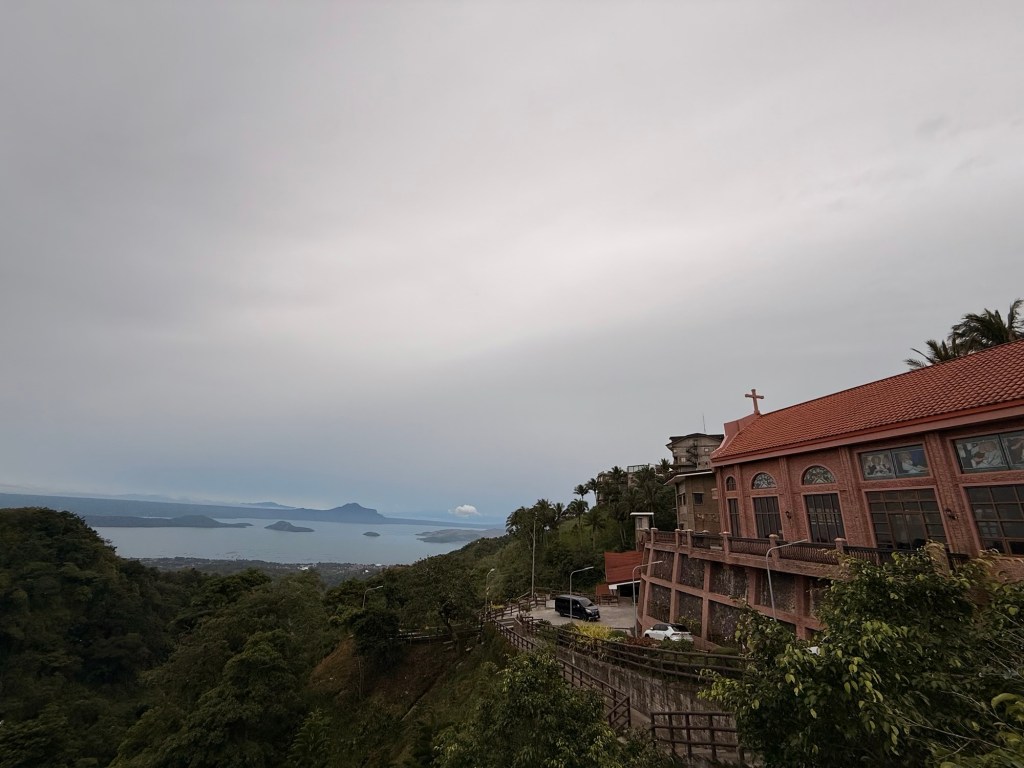
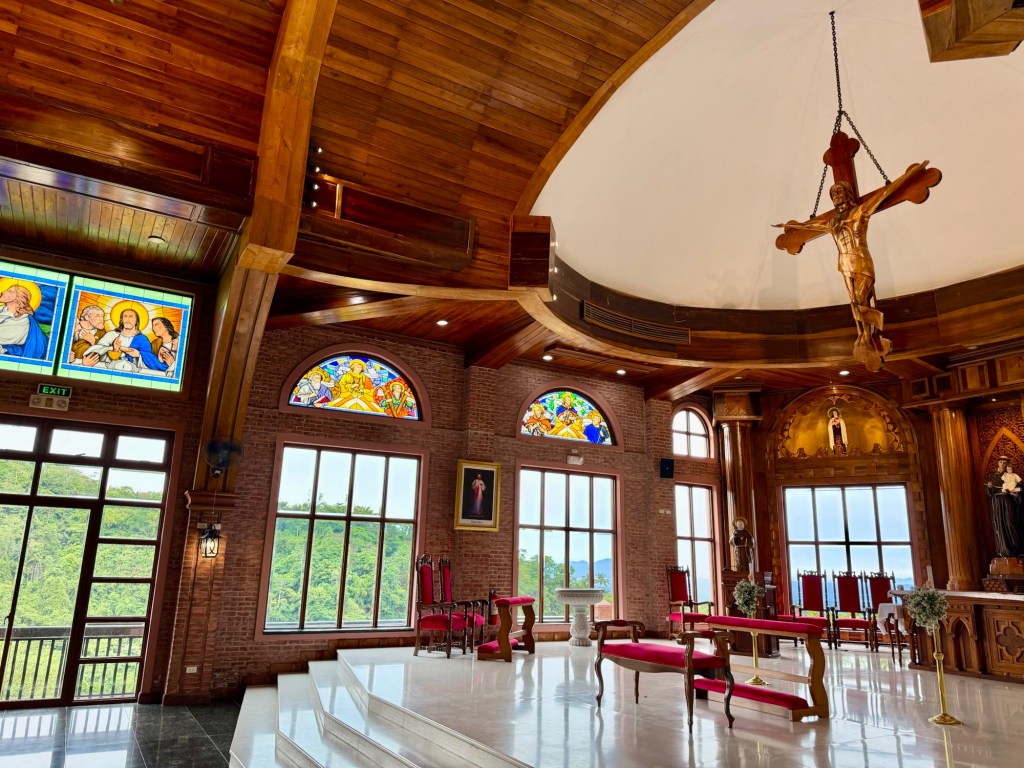
Photo by author, St. Anthony de Padua Chapel, D’Alta Tagaytay, Tagaytay City, 02 June 2026.
Today we begin to listen anew
to your wonderful story of love for
your people Israel during the time
of your great prophet Elijah,
during the reign of your unfaithful King Ahab
who married the pagan Jezebel;
on this gloomy Monday,
the setting is so unsettling even
for us as you pronounced a severe
drought over Israel for turning away
from you, in worshipping Baal.
God, our Father,
it is a story we keep on repeating:
we have so many baals these days -
from gadgets to every kind of foreign beliefs
to celebrities and people we idolize
down to our very selves with ego
so bloated by social media;
forgive us for turning away from you.
Many times,
when troubles happen,
we easily blame you, Lord
for being too far from us
when in fact we are the ones
who always turn away from you.
Make these drought
and dryness in our lives as grace-filled
moments; lead us back to you
even if we have to go through a desert
like Elijah; most of all, lead us back
to your word like a stream quenching
our thirst, washing away our dirt,
filling us with life.
Elijah the Tishbite, from Tishbe in Gilead, said to Ahab, “As the Lord, the god of Israel, lives, whom I serve, during these years there shall be no dew or rain except at my word” (1 Kings 17:1).
Let us re + member you always,
Lord:
inasmuch as you have made us back
as your part in Christ Jesus,
let us not forget to make you
a part also of our lives;
give us the "be attitude"
to be poor and open
for you, Lord
so that we may find life
and fulfillment anew.
Let us be near to you
again, Lord.
Amen.
Photo by author, St. Anthony de Padua Chapel, D’Alta Tagaytay, Tagaytay City, 02 June 2026.
Lord My Chef Sunday Recipe for the Soul by Fr. Nicanor F. Lalog II
Solemnity of the Most Holy Body & Blood of Christ-A, 07 May 2026
Deuteronomy 8:2-3, 3:14-16 ><}}}*> 1Corinthians 10:16-17 ><}}}*> John6:51-58
Photo from wikimedia.org of the nave with the classic altar of the Sta. Cruz Church in Manila.
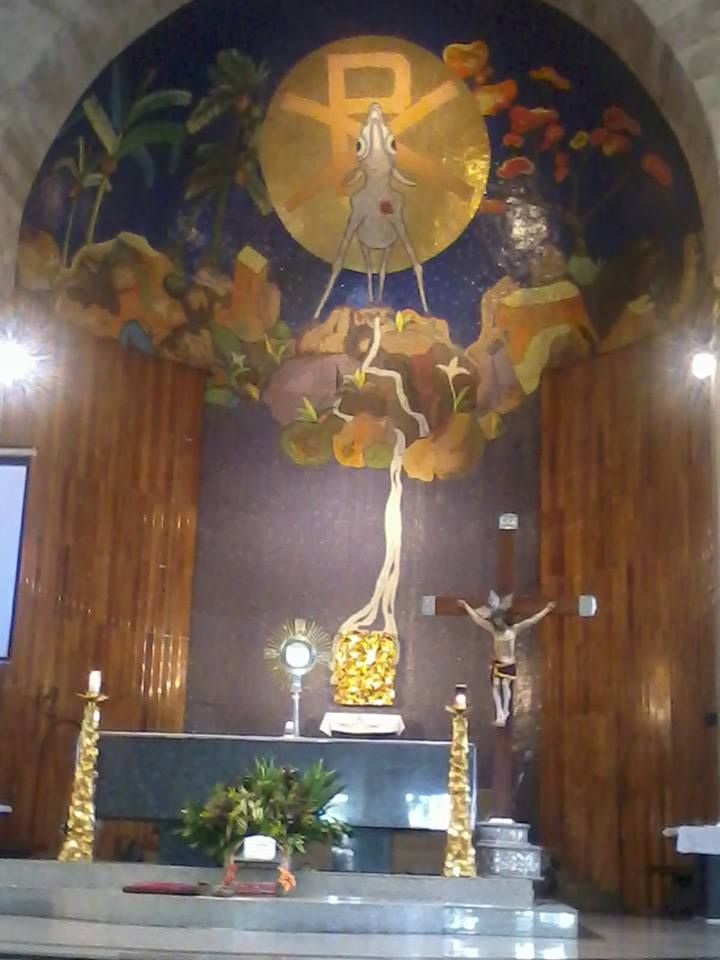
Of the many churches I have been to, the Sta. Cruz Church in Manila remains my favorite. Since childhood, I have always loved its beautiful apse of Byzantine glass mosaic of a sacrificial lamb symbolizing Jesus Christ whose blood flows like a river to the tabernacle amid a setting of mango, banana and fire trees.
Photo from Pinterest.com.
The mosaic gives that feeling of the divine presence that may be a contributing factor too in keeping the solemnity of the many successive Masses celebrated there daily.
After leaving the high school seminary in 1982 while in college at UST, I still went to Sta. Cruz church by taking the Love Bus to Escolta after which I would walk across the street to my dad’s barber for a haircut then lunch at Panciteria Ramon Lee. It remained my refuge whenever I found myself deep into sins and troubles, with problems and difficulties, feeling lost and empty especially later in life while working.
It had played a significant role in my vocation story and that is why I remembered it while reflecting this Sunday’s gospel on the Solemnity of the body and Blood of Christ.
More than a gift offered to us individually in the Eucharist, Jesus intends his Body and Blood “for the life of the world” like that sacrificial lamb depicted at the apse of the Sta. Cruz church.
Jesus said to the Jewish crowds: “I am the living bread that came down from heaven; whoever eats this bread will live forever; and the bread that I will give is my flesh for the life of the world” (John 6:51).
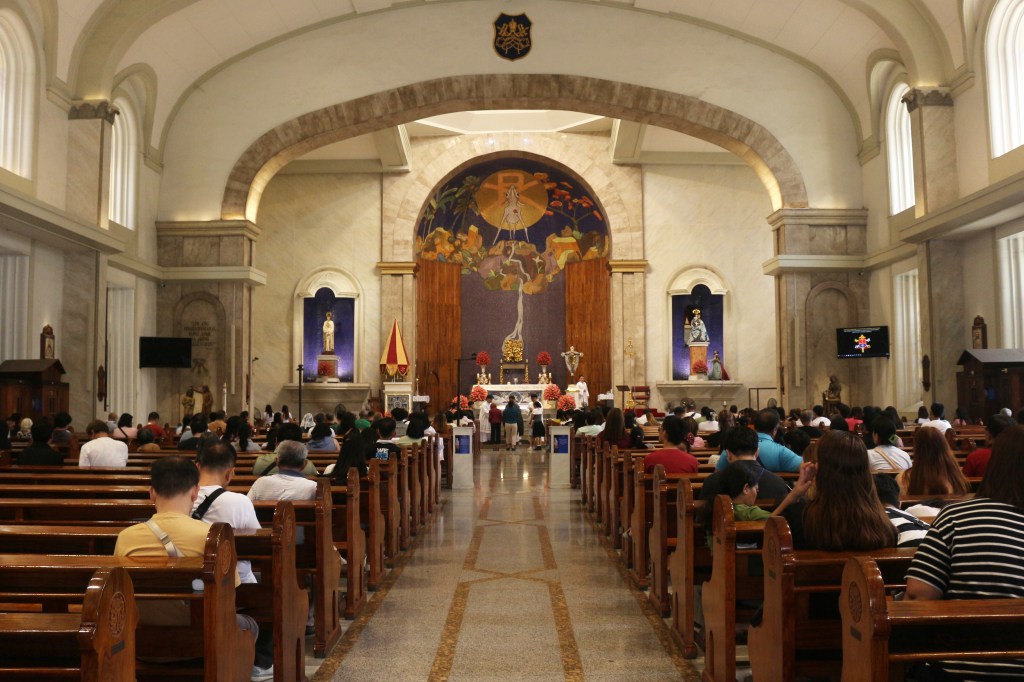
Photo by author, Chapel of St. Anthony De Padua, Alta D’Tagaytay Hotel, 02 June 2026.
On this Solemnity of the Body and Blood of Christ, we are invited to reflect on the meaning of the Holy Eucharist in our lives where the mystery of God in Three Persons, the Blessed Trinity we celebrated last week is revealed and becomes most real.
Faith in God is faith in the Incarnation of Jesus Christ present to us in the Eucharist under the signs of bread and wine. But, what does it mean really for us especially in the light of today’s gospel where Jesus said “and the bread that I will give is my flesh for the life of the world.” How can our individual life contribute in giving the life of the world, Jesus Christ himself?
In his encyclical letter Ecclesia de Eucharistia issued in 2003, St. John Paul II beautifully expressed that if Jesus can transform the bread and wine into his Body and Blood in every Eucharistic celebration, then he can transform us into better persons too.
So true! That is why the bestest time to pray is right after receiving Holy Communion because that is when Jesus Christ, Body and Blood, is present in our own body – speak to him in your most natural way. If you want, complain to him. Magsumbong ka rin sa kanya. Pour your heart out to Jesus who is Body and Blood inside you.
However, make sure too that you listen intently to him. When we listen to Jesus, we then enter into a relationship with him as we make him part of our lives as we too become part of his very life. That is when we are filled with his life which we in turn share with others and thus, give life to the world.
In the first reading we heard Moses calling us to “remember” not only those forty years in the wilderness by the Israelites but our own journey in the many desert of this life.
The word “remember” is from the root word “member” which means “part” plus the prefix “re” meaning again; to re + member a person and an incident is to make them a part of the present moment again which is the very commandment of Jesus at the Last Supper, “do this is remembrance of me.”
Now look: every week we go through our many exodus like in the first reading. We remember them especially at the start of every week because life is a daily exodus, of coming out from sickness into health, of darkness into light, of slavery into freedom, of sin into grace, of death into life. Yes, our many desert experiences in life were painful but they were all moments of grace too because that is when we realized that we do not live by bread alone, by material things alone – that we need God.
Hence, the first step for us experience this life of Christ as life for the world is to go back to the church, go back to the Holy Mass. These online Masses must be stopped. COVID pandemic is long gone.
The Mass presupposes actual presence because Christ is truly present with us in every celebration. We must learn anew to desire Jesus more in the Eucharist especially on Sundays.
In the Mass, we re-member Jesus in our lives after a week of busy activities and work; as we make Jesus a part of our lives anew, we see also ourselves needing much needed rest and comfort too in Jesus! Inasmuch as we re-member Jesus into our lives, it is actually us being re-membered into Christ who is also our food and drink to nourish us in this daily exodus in life.
Notice how in verse 14 Moses reiterated his call to the people to “remember” but this time what he told them including us today is “do not forget the Lord”: every Mass as our exodus is a way of casting off the temptation to live one’s life without God.
When we come to celebrate the Mass, especially when we are well disposed and prepared, we realize that we are always poor before God who alone can satisfy all our longings and needs.
To forget this is the sure path to catastrophe as many of us would attest.
With God, life; without God, no life.
This we find so clear with the Corinthians during the time of St. Paul that is why he addressed them in the interrogative tone:
Brothers and sisters: The cup of blessing that we bless, is it not a participation in the blood of Christ? The bread that we break, is it not a participation in the body of Christ? Because the loaf of bread is one, we, though many, are one body, for we all partake of the one loaf (1 Corinthians 10:16-17).
The Corinthians at that time were already well aware of how the Eucharist make the Church whose head is Jesus Christ. Hence, the need for a communion or “participation” which is the word used in our translation. St. Paul was reminding them of what they knew in faith, that is, a Holy Communion in Christ which they must put into practice. This communion among the Corinthians would be put into risk when quarrels and divisions plagued their community later that prompted St. Paul to write them a second letter.
As part of the Mass, the Communion is when we receive the Body and Blood of Christ; but, in a deeper sense, Communion is unity in charity. It is Jesus Christ becoming human like us in everything except sin so that we can become holy and divine like him. This mysterious exchange of ourselves with Jesus, in Jesus, and through Jesus happens in the Eucharist where we are nourished and filled with the life of Christ whenever we receive the Holy Communion. May we share this life we have gained in Christ with others by witnessing his Gospel to give life to this sick and dying world – like that sacrificial lamb at the apse of my favorite church in Sta. Cruz. Amen.Have a blessed week ahead.
Quiet Storm by Fr. Nicanor F. Lalog II, 21 August 2025
Photo by author, St. Joseph Chapel, St. Paul Center for Renewal, Alfonso, Cavite, 20 August 2025.
As we ended our annual clergy retreat today when we remembered in the Mass a saint, Pope Pius X and a hero, Benigno “Ninoy” S. Aquino Jr. , I wish to reflect on the word “remember”, a very lovely word worth remembering always.
From the prefix “RE” that connotes repetition as in again and the root “MEMBER” that means a part, to remember literally is to make someone or something a part again. What and who we remember are those gone and away from us, a history in the past. More than mere recalling of a person, event or thing, remembering is making those absent present.
Though the philosopher Martin Heidegger rightly claimed that we humans are “beings of forgetfulness,” God actually programmed us for remembering: from infancy to childhood, our parents drilled into us to remember our name and address, the names of people around us, of things, and everything as we grew. That is why the expression “kalimutan mo na yun” is the most useless piece of advice anyone can give. It is impossible to forget, whether it is so good or so bad. What we need is to harness the power of remembering, to continue learning from the past whether good or bad because whatever is remembered for all its worth is always the best teacher anyone can have.
Remembering is a power because it is a grace, a gift from God himself. When we remember, we not only time travel to the past but make it present in order to perfect us. The past cannot be changed anymore as insisted by Japanese writer Toshikazu Kawaguchi in his series of novels Before the Coffee Gets Cold.
Remembering changes the person, not the past. It is in remembering the bitter lessons of the past we learn most in life because that is when we experience healing and fulfillment. Hence, remembering is at the very core of George Santayana’s warning that whoever does not learn from history is condemned to repeat it. Remembering enables us to move on in life by finding our ways and ultimately our very selves anew especially when lost and confused.
Of God’s many gifts to us, remembering is the most unique because it is never lost at all. People who refuse to remember are the most difficult to deal with like politicians, crooks and low-lifers. And the more corrupt and evil people are, the more they are forgetful, remembering or knowing nothing at all!
God meant us to keep this gift of remembering to be always reasonable and just, or simply good and sane because it keeps us in touch with reality, making us grow and mature in his love. Actually, it is remembering that continues to operate among us despite our faltering memory or even with those afflicted with Alzheimer’s and dementia because remembering is more than keeping information and details like names of people but most of all of God’s interventions through persons and events in our lives individually and collectively that significantly made us experience joy and gladness so crucial for our growth and maturity, eventually in the achievement of our goals.
Photo by author.
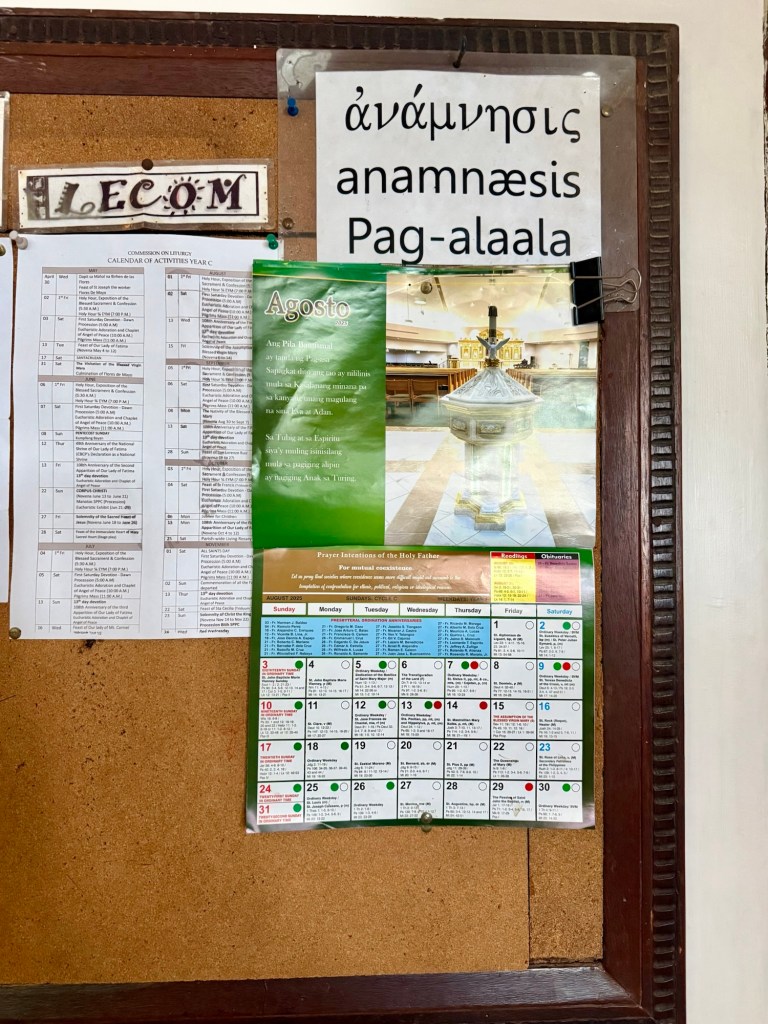
On the bulletin board of our sacristy at the National Shrine of Our Lady of Fatima in Valenzuela City is a laminated piece of bond paper with the Greek word “anamnesis” written in Greek.
It was personally printed and posted on Holy Thursday 2010 by the former rector and parish priest of the Fatima Shrine Msgr. Bart Santos now the Bishop of Iba, Zambales. I remember that so well because that was the first time I was assigned as an attached priest at the Fatima Shrine in June 2010 to June 2011 under Bishop Bart.
According to Bishop Bart who used to teach Sacred Scriptures in the seminary, he wanted to instill in all their servers of the Mass the value and meaning of the Eucharist as an anamnesis or remembering. I was so glad upon my return in February 2021 at the Fatima Shrine again as an attached priest while working full-time as chaplain at the Our Lady of Fatima University and the Fatima University Medical Center that the sign of Bishop Bart was still there – until now! I just hope the people here realize and still remember that word anamnesis as Bishop Bart had explained to them during the Holy Thursday Mass ten years ago.
Photo by author.
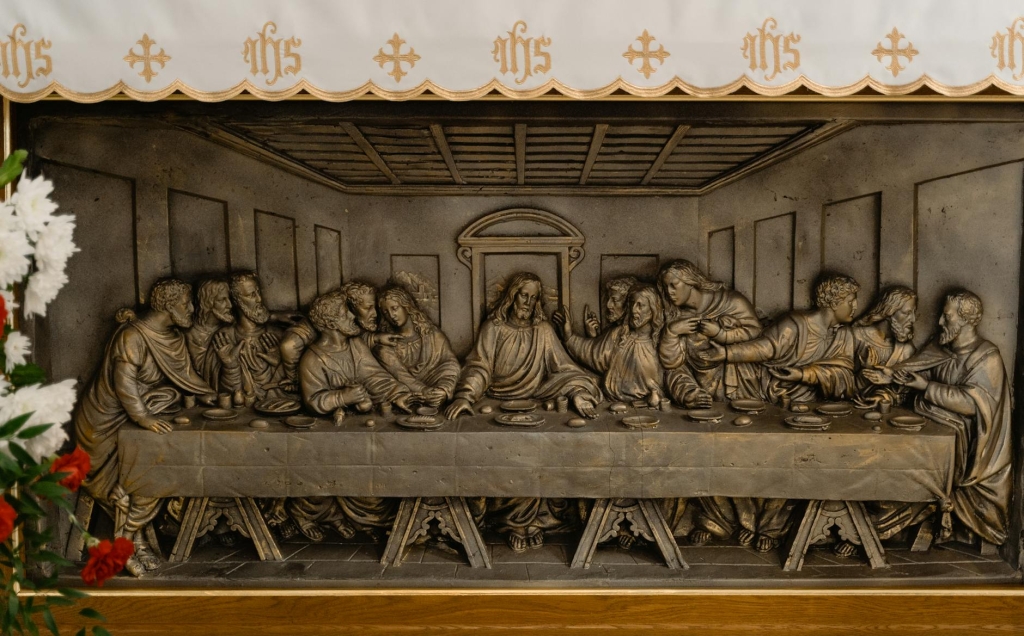
When everything seems dark in life with family and friends betraying us, when people we have helped turn against us, denying having known us, try remembering Jesus went through all these first at his Last Supper.
When you feel lost for directions in life, when you are into a burnout, when nothing seems to be working in your favor that you can’t find sparks of inspiration and zeal anymore, remember that first day when you embarked on this journey in life. Remember the people, the places and the things that bring you gladness and joy in pursuing your passion or fulfilling your mission. Most of all, remember when God called you to whatever mission he sent you.
Remembering is a form of stepping back to stop, to create a space and let God work in us as we have reflected last Monday (https://lordmychef.com/2025/08/18/steps-to-god/). This is what we need most in our selves and in our country as a people: the virtue of remembering, of making present the movements of God in our history. Ninoy Aquino did the supreme sacrifice of coming home in August 21, 1983 because he remembered the country he most loved; he remembered his call and mission to serve; he remembered the ideals and mission fought for by our heroes like Jose Rizal and Andres Bonifacio.
It is in remembering we remain anchored to our call and mission in life, both individually and communally. Without remembering, we cannot progress because we lack reference points of what we have covered, of where we are. That is why even the angels at Easter had to remind Mary Magdalene and companions, “He is not here; he has risen! Remember how he told you while he was still with you in Galilee…” (Lk.24:6). Most of all, let us remember always the words of Jesus at his Ascension so we may keep on pursuing our mission in him, “And remember that I am with you always until the end of time” (Matt. 28:20). May God bless you always!
Lord My Chef Daily Recipe for the Soul, 21 August 2025
Thursday, Memorial of St. Pius X, Pope
Judges 11:29-39     <*((((><  +  ><))))*>     Matthew 22:1-14
Photo by Mr. Vigie Ongleo, Virginia, August 2021.
Oh how true are your words,
dear God our Father
these past days
of how clearly we make
life more difficult;
Monday you showed us
in the Book of Judges how
problem is with us always
when we repeatedly turn away
from you in sin and despite your
mercy and forgiveness,
we still refuse to rectify our
mistakes to lead an orderly life;
today, the Lord Jesus Christ's
parable speaks again of our folly,
of the trouble with us
when we take you
and your calls for granted,
refusing to come to you,
to celebrate life
in you
with you:
“The Kingdom of heaven may be likened to aking who gave a wedding feast for his son. He dispatched his servants to summon the invited guests to the feast, but they refused to come. A second time time he sent other servants, saying, ‘Tell those invited: “Behold, I have prepared a banquet, my caleves and fattened cattle are killed, and everything is ready; come to the feast.”” Some ignored the invitation and went away , one to his farm, another to his business. The rest laid hold of his servants, mistreated them, and killed them. The king was enraged and sent his troops, destroyed those murderers, and burned their city” (Matthew 22:2-6).
On the other hand,
we waste and destroy
every opportunity
you give us to be with you,
to make a difference in life
with many of us
making it close to you
in answering your calls
but unfortunately
could not keep up with the mission:
“The servants went out into the streets and gathered all they found, bad and good alike, and the hall was filled with guests. But when the king came in to meet the guests he saw a man there not dressed in a wedding garment. He said to him, ‘My friend, how is it that you came in here without a wedding garment?’ But he was reduced to silence. Then the king said to his attendants, ‘Bind his hands and feet, and cast him into the darkness outside, where there will be wailing and grinding of teeth.’ Many are invited, but few are chosen” (Matthew 22:10-14).
Teach us to be aware
of your presence, Lord;
teach us to be conscious
of your precious gift of call;
teach us to remember always
the gladness and joy of
being invited to the wedding feast
to be one with you,
to work for you,
to do your will,
to be chosen
and choose
to remain in you
to renew all things
in Christ
like St. Pius X.
Amen.
Fr. Nicanor F. Lalog II
Our Lady of Fatima University
Valenzuela City
lordmychef@gmail.com
Lord My Chef Sunday Recipe for the Soul by Fr. Nicanor F. Lalog II
Solemnity of the Most Holy Body & Blood of Christ, Cycle C, 22 June 2025
Genesis 14:18-20 ><}}}}*> 1 Corinthians 11:23-26 ><}}}}*> Luke 9:11b-17
From the highest truth of our faith last Sunday which is the Blessed Trinity in one God, we now celebrate in the resumption of Sundays in Ordinary Time the Solemnity of the Most Holy Body and Blood of Christ.
This feast highlights our faith in God who truly exists and had come to us in Christ Jesus, the Second Person of the Holy Trinity. In Christ through the Sacrament of the Eucharist he established at the Last Supper, we are given the “taste” of heaven literally speaking under the signs of bread and wine that become his Body and Blood we share. This was his command on that Holy Thursday evening to always remember him as St. Paul tells us in the second reading, the oldest account of the institution of Eucharist:
Brothers and sisters: I received from the Lord what I also handed on to you, that the Lord Jesus, on the night he was handed over, took bread, and after he had given thanks, broke it and said, “This is my body that is for you. Do this in remembrance of me.” In the same way also the cup, after supper (1 Corinthians 11:23-25).
Two words I wish to share with you on this Solemnity of the Body and Blood of Christ.
First is the word “remembering” or to remember. A very common word we use often but perhaps never aware of its deeper meaning from its root word “member” which means a part. Literally, to remember means “to make part again”. When we remember a person, an event in life, a thing from the past or long gone or not with us, we make them a part of the present moment.
The Eucharist is the highest form of remembering because literally speaking, we make Jesus a member of our present moment. When we re-remember Jesus in the Eucharist, he truly comes to us in Body and Blood! Truly present with us, in us after receiving him in the Holy Communion. Whenever we remember a loved one or a friend long gone or not with us at the moment, all we have is a memory. They become a member of the present but only in the mind unlike Jesus truly present with us, in us, and before us in his words, in his Body and Blood and in one another celebrating the Eucharist.
Photo by author, Old Jerusalem seen from Church of Dominus Flevit, May 2017.
It is not magic but a work of faith, a gift through and through from God in Jesus Christ. By his dying on the Cross and Resurrection at Easter, Jesus superseded and transcended time and space, sharing with us that sacred reality.
St. John Paul II beautifully called that “cosmic reality” when he described in his encyclical Ecclesia De Eucharistia how he felt transported in time and space when the temporal becomes divine because of God’s true presence anywhere he celebrated the Eucharist. We too experience the same cosmic reality in every Mass we celebrate when we are properly disposed, especially the priest and the servers.
That is why I always demand the highest order from priests and servers in celebrating most solemnly as possible the Holy Mass. I can stand kids playing inside the church but what gets to my nerves are servers talking or moving unnecessarily during the Mass and worst of all, when lectors proclaim the word of God incoherently and wrongly. Lest we forget also the choir members feeling so magaling forgetting they are in the Mass not in a concert that they make it a show, forgetting all about God and the people.
What a tragedy when we priests and liturgical ministers are the ones who forget to re-member Jesus in the Eucharist with our too much attention to ourselves. Exactly like the Twelve in our gospel!
As the day was drawing to a close, the Twelve approached him and said, “Dismiss the crowd so that they can go to the surrounding villages and farms and find lodging and provisions; for we are in a deserted place here.” He said to them, “Give them some food yourselves.” They replied, “Five loaves and two fish are all we have, unless we ourselves go and buy food for all these people” (Luke 9:12-13).
Imagine that scene of how the Twelve have totally “forgotten” the more than five thousand people gathered there with them. They were just thinking of themselves because they were in a “deserted place”. What a disrespect!
Respect is lost and disregarded when there is no remembering of others, when we forget others. Respect is from two Latin words re (again) and specere (to look/see) from which the words spectacle and spectacular came from. Re + specere or “respect” means to look again in order to see!
The Twelve were just concerned with themselves, not only forgetting but without respect at all with the people they have failed or refused to recognize as humans too who get tired and hungry like them. As we have cited in earlier, this continues right in our eucharistic celebrations when priests and ministers celebrate unprepared, unmindful of the sanctity of the Mass.
Remembering is not merely “thinking” of others in our mind and memory.
Remembering is making others present in our very selves!
Remembering is making every-body a some-body by giving our very selves to them to be the Body of Christ. Unless we are able to truly share our very selves in person, in body and blood too, then every Mass will remain merely a rite or a ritual. Worst, an activity we just have to fulfill.
The Eucharist is the summit of our Christian life because of this aspect of remembering Jesus Christ that leads us into a true communion of sharing of persons and experiences, in our joys and sorrows, in our hopes and belief. When this happens, then every remembering becomes a thanksgiving too.
And that is our second word I wish to instill in you today – thanksgiving which is the meaning of the Greek word eucharistia.
When there is a real experience of each others’ presence in love and mercy, kindness and care, justice and fairness, gratitude flows naturally resulting in peace and harmony. It is the whole meaning of our first reading when the priest of God named Melchizidek who was also the king of Salem which means “peace” blessed Abram after winning in a battle.
This short scene is a story of remembering God’s goodness to Abram who thanked Melchizidek by giving him a tenth of everything he had won in the battle. In the Holy Mass, what do we really share from our very selves? Not just treasures but even our very time to give totally to Christ without texting.
Now we see the series and cycle of remembering and thanksgiving in sharing of gifts of self which the Body and Blood of Christ signify to us.
This coming Friday we shall celebrate the third consecutive Solemnity in the resumption of Ordinary Time with that of the Most Sacred Heart of Jesus, a reminder to us all to make Jesus present always in ourselves with others especially at this time the world has been deleting from its every aspect God.
Lord Jesus Christ,
transform me like the
bread and wine
into your Body and Blood
to be offered and shared
with others
especially those
in most need.
Amen.
40 Shades of Lent by Fr. Nicanor F. Lalog II
Wednesday, Third Week in Lent, 26 March 2025
Deuteronomy 4:1, 5-9     + + +     Matthew 5:17-19
Photo by author, Sacred Heart Novitiate, Novaliches, QC, 21 March 2025
“However, take care and be earnestly on your guard not to forget the things which your own eyes have seen, nor let them slip from your memory as long as you live, but teach them to your children and to your children’s children” (Deuteronomy 4:9).
God our loving Father,
you encompass the whole Earth
and universe where nothing
is hidden from you
nor escapes your notice
even the smallest of particles
in your whole creation
most especially us,
your beloved children,
that, though we are sinful,
you loved us beyond measure,
mindful of us always.
But, we are all beings
of forgetfulness.
easily forgetting even
your most recent blessings
as well as  intimacy and bond
with us in Jesus Christ your Son;
many times, we get distracted
by so many concerns we forget
you that we disregard one another
in love and kindness;
we easily forget your mercy and
forgiveness that we return to our
wayward life of sin quickly;
most of all, we turn away from you
as we refuse to love you when
we get impatient in life,
believing there could be
better and other ways to
fulfillment.
Direct us, dear God
into becoming more loving like you,
into desiring the Cross of
your Son Jesus Christ
for our love in him so that
we may never forget to love
you always in others
for it is in our love for one another
especially the weakest where
our greatness as a nation is recognized.
Amen.
Photo by author, Sacred Heart Novitiate, Novaliches, QC, 17 March 2025
Lawiswis ng Salita ni P. Nicanor F. Lalog II, Ika-27 ng Pebrero 2025
Larawan kuha ni G. Lorenzo Atienza, detalye ng dulong kaliwa na bahagi ng stained glass sa National Shrine ng Fatima, Valenzuela City na nagsasaad ng EDSA People Power, 25 Pebrero 2025.
Hinding hindi mabubura ninuman ang makasaysayang People Power Revolution ng Pebrero 1986. Ito ay kung hindi natin malilimutan at higit sa lahat kung ating lilinangin mga aral ng kauna-unahang mapayapang pag-aaklas sa buong mundo.
Katulad ng kalsadang EDSA na sagisag ngayon ng nabubulok nating bayan, malaki pa rin ang pag-asa na maaayos at mapatatatag ang diwa ng People Power 1986.
Kaya sa diwa nito, tama lamang at ipinag-adya na rin siguro ng Diyos na mayroong pasok ang mga tanggapan at paaralan tuwing Pebrero 25 mula noong isang taon sa ilalim ng Administrasyong BBM.
Bagaman ako ay nalungkot na hindi ito ginawang piyesta upisyal ng Pangulo, higit kong naunawaan kahapon ang magandang pagkakataon ibinigay pa nga ni BBM sa atin para sa EDSA 1986.
Nasobrahan tayo ng mga pagdiriwang noong sariwa pa ang EDSA 1986 hanggang sa naging palasak na lamang ito dahil sa pangingibabaw ng mga kasiyahan at mga kaartehan ng mga sumunod na taon. Sa isang banda, ang sarap ng EDSA Anniversary noong nakaupo pa si Tita Cory – yugyugan magdamag doon sa kanto ng EDSA at Ortigas.
At pagkatapos, lawa na.Logtu ng konti, sokpadoodle na sa otra kinabukasan.
Ano nangyari? Wala.
At ganun na lang ang EDSA Anniversaries nang mga sumunod na taon na mismo tayong mga beterano ay napagod na rin sa kawalan ng saysay ng mga programa at higit sa lahat, ng pagtataksil ng maraming pinuno noon na ipinaglaban, ipinagtanggol natin noon na iyon pala ay katulad lang din ng mga pinatalsik noong 1986.
Larawan kuha ni Pete Reyes kina Sr. Porfiria “Pingping” Ocariza (+) at Sr. Teresita Burias nananalangin upang pigilan mga kawal sasalakay sana noon sa mga rebelde sa Kampo Crame noong People Power 1986.
Pebrero 22 ng gabi ay nasa Aristocrat Restaurant kami sa kanto ng Quezon Ave. at EDSA para sa final deliberation ng mga hurado sa kauna-unahang USTetika Literary Contest ng Varsitarian ng UST.
Proyekto ng co-staffer namin at kaibigan na si G. Vim Nadera ang USTetika na mula sa salitang “aesthetic”. Bantog na guro at makata ngayon si Vim. Tuwang-tuwa ako noon na sinama niya ako hindi lamang para kumain at gumimik pagkatapos kungdi makadaupang-palad mga bigating pangalan sa panitikan tulad ng mga makata na sina Cirilo Bautista, Bienvenido Lumbrera, Alfredo Navarro Salanga na tunay ngang heavyweight, ang propesora naming si Ophelia Dimalanta na pangunahing babaeng-makata sa wikang Ingles at marami pang iba.
Nang malapit nang matapos ang pulong, binulungan kami ni Gng. Jesselyn Dela Cruz na umuwi na raw kami kaagad sabi ni Sir Felix Bautista na aming Publications Director sa Varsitarian at tagapagsalita noon ni Cardinal Sin. Malabo ang mga kuwento maliban sa kumalas na raw noon sina Enrile at Ramos kay Marcos. Yun lang. Baka raw magkagulo.
Siyempre, mga kabataang typical, wala kaming balak sumunod sa utos sa amin hanggang sa magulat kami nang aming baybayin ang Timog at Morato naghahanap ng club na sarado halos lahat habang dagsa mga sasakyan sa mga gasolinahan.
Hindi kami nabagabag kasi full tank ang kotse ng tatay ko noon kaya uminom pa rin kami nina Vim kina Dwight sa Sampaloc at saka umuwi. Kinabukasan pagkagising ko, araw ng Linggo, February 23, di ko malaman kung ako ay lasing sa mga balitang pinag-uusapan at napapakinggan sa radyo. Pagkaraan ng tanghalian, sumama kami ng kapatid ko si Meg na nooy second year college din sa UST sa mga kababaryo namin sakay ng isang trak ng bato papuntang EDSA para sumama sa People Power.
Mula sa wikipedia.org.
Dumating kami ni Meg at mga kasama sa EDSA bandang hapon. Parang sasabog sa tuwa aking dibdib na tila ako ay nanlalamig, naiiyak sa tuwa sa aking nakita: sarado EDSA-Cubao ilalim at puno ng mga tao hanggang sa abot-tanaw!
Ang saya-saya!
Walang bad trip noon! Peace man ang atmosphere. Dala namin ay mga pakwan para sa mga kawal. Doon kami pumuwesto sa gate ng Crame sa Santolan na Boni Serrano ngayon dahil kulang daw ang bantay doon.
Kinagabihan, dumating ang balita na baka raw kami salakayin ng mga tangke mula Malakanyang via Sta. Mesa direcho pa-Santolan. Tinipon kami ng mga law students ng UP at kinausap, binigyan ng numero sa telepono na maari naming tawagan kapag daw nagkadamputan.
Hala! Hinila ko sa tabi ko si Meg. Wag ka kako lalayo sa akin at naisip ko agad Daddy ko sa bahay. Mas takot ako sa kanyang galit kesa sa mga tangke ni Macoy!
Larawan kuha ni G. Boy Cabrido, pagkakamayan ng mga kawal at mga madre at pari sa EDSA noong People Power Revolution ng 1986.
Sa pagkaka-alala ko, walang natakot sa amin. Walang umatras habang pasa pasa kami ng bolpen at papel para nga sa mga numero na tatawagang mga abogado kapag kami nakulong.
Noon ko narinig biglang nagsalita at lumapit sa isang law student kapitbahay namin na suki ng mommy ko sa tindahan, si Mr. Tiongson.
Hindi ko matandaan pangalan niya pero kaibigan siya ng lola ko. Maginoong maginoo. Respetado sa aming barangay. Negosyante na gumagawa ng mga plastic art sa mga jeep na pampasahero noon. Palagi niya ako sinasama at ng mga anak niya sa pagbibisikleta sa mga looban ng Bocaue, Sta. Maria, at Marilao sa Bulacan noon.
Makisig at matipuno si Mr. Tiongson. Six footer siguro. Naka-salamin medyo kalbo ng konti pero balbas sarado. At malaki ang boses. Sabi ng lola ko, dati raw Huk na naging NPA si Mr. Tiongson pero tumiwalag na.
Sa gitna ng dilim ng gabi sa isang kalye sa Santolan, ito ang sinabi ni Mr. Tiongson sa mga taga-UP Law na tumayong mga namumuno sa amin sa kalyeng iyon: “ako na ang lulugar sa unahan. Laban namin ito na hindi na dapat umabot pa sa ganito kung kami ay nanindigan noon.”
Humanga ako sa mama lalo noon. Pero hindi ko naunawaan sinabi niya hanggang kahapon na lamang nang pumasok ako bilang chaplain dito sa Our Lady of Fatima University sa Valenzuela.
Larawan kuha ni G. Lorenzo Atienza, ang Canonically Crowned National Pilgrim Image of Fatima na tinanghal nina Ramos noon sa EDSA 1986 na nasa pangangalaga ngayon ng National Shrine of Fatima sa Valenzuela, 25 Pebrero 2025.
Bago ako magmisa sa aming kapilya kahapon habang nagdarasal, parang kislap ng liwanag na dumatal sa aking kamalayan mga sinabi ni Mr. Tiongson noong 1986 sa Santolan: hindi pa tapos ang laban ng EDSA 1986.
Laban natin ito. Kumupas man ito, bumaligtad at nagtaksil ang ilan, laban nating lahat ito na dapat ipagpatuloy, linangin at palalimin. Higit sa lahat, dalisayin sa panalangin dahil kulang ang EDSA 1986 kung wala sina Jesu-Kristo at kanyang Mahal na Ina, ang Birhen ng Fatima. Mula sa karanasan ni Mr. Tiongson na kapitbahay namin noon, hindi ko papayagan manghinayang ako sa huli na tinalikuran ko ang EDSA 1986 kaya balang araw ay malagay sa peligro mga susunod na saling-lahi.
Kahapon din ang unang guning-taon ng pagkaka-korona sa National Pilgrim Image ng Fatima na siyang imahen na tinanghal nina Ramos noong People Power sa EDSA ng 1986! Narito sa National Shrine of Fatima sa Valenzuela ang naturang imahen mula pa noong ika-17 ng Oktubre 1999, sa loob ng isang munting kapilya na maaring puntahan ng mga deboto at peregrino.
Tama lang mayroong pasok sa upisina at mga paaralan tuwing Pebrero 25 upang higit nating mapagnilayan muli ang diwa ng EDSA 1986, maisalaysay sa mga bata upang ipaunawa sa kanila ang kahalagahan at kahulugan ng tunay na kalayaan na batay sa pagtitiwala sa Diyos.
Hindi mabubura ang EDSA 1986 sa ating kasaysayan kung ipagpapatuloy natin ang kuwento at adhikain nito hanggang sa tayo ay magkaisa muli bilang sambayanan at mga alagad ni Kristo – kasama ni Maria, ang Birhen ng Fatima.
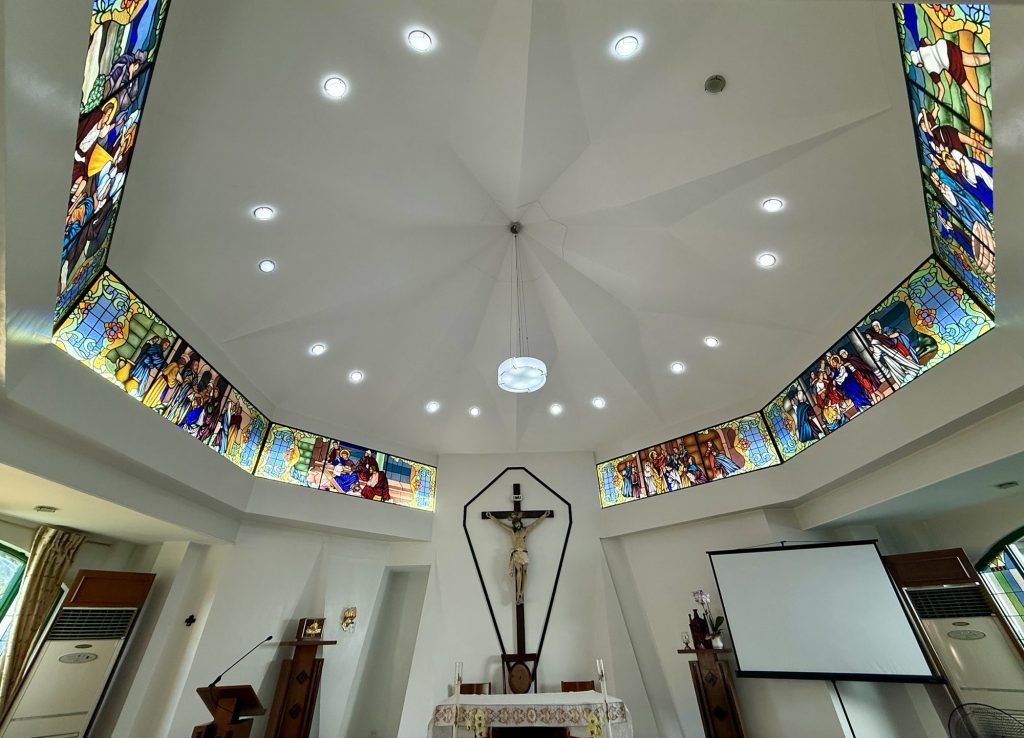
Larawan kuha ni Ka Ruben, bagong stained glass ng National Shrine of Fatima sa Valenzuela, Oktubre 2024; makikita sa dulong bahagi sa kaliwa ilang tagpo sa EDSA 1986.
I have reflected last Sunday that Pentecost is not just an event in the past but a daily coming of the Holy Spirit upon us, enlightening us of so many things in life we used to take for granted. Like the value of every person, especially when there is a death of a loved one.
In fact, death is a Pentecost when the Holy Spirit comes to remind us that we never – and can never – replace our departed loved ones. Every person is irreplaceable, especially family members. The sooner we realize this, the better for us to avoid those guilty feelings later that we should have been more loving and kind, that we should have said “I love you” more often because we never know for how long we can be with our loved ones. One thing is for sure: we do not replace our deceased loved ones but simply re-member them.
Photo by author, Bgy. Kaysuyo, Alfonso, Cavite, 27 April 2024.
The word “remember” is very interesting.
It is from the root word “member” or “part”. When we put the prefix “re” which means “again”, “remember” means to make a part again of the present moment.
Every time we remember a person or an event, we make them part of our present moment. And they are most real, most present when our re-membering happens in the context of a family or a community. Re-membering someone by one’s self surely does happen a lot but very often, it is more of looking back to the past, recalling the days we used to be together. But when we remember somebody as a family or a community, the one we remember is indeed re-membered in our present, becomes real in everyone around celebrating his/her memory. Something concrete happens and the joy is more intense, leading to freedom from past, from pains and hurts of losing a loved one.
That is when death becomes a Pentecost. When the Holy Spirit came down upon the Apostles and the Blessed Virgin Mary in Jerusalem 50 days after Easter, the Third Person of the Blessed Trinity did not come to replace Jesus. The Holy Spirit is a distinct Person of the Trinity in whose power all the followers and believers of Christ have been empowered to make Him present until now in our collective re-membering of Him in the Church and the Sacraments. In the Holy Spirit who comes to us daily, we overcome and transcend every death we go through in life, enabling us to re-member our departed loved ones by being a member of those left behind.
Photo by author, Sacred Heart Novitiate, Novaliches, QC, 18 March 2024.
Since mommy’s death, I have gone home thrice already. How I loved to walk inside her room, trying so hard to get those feelings or vibes when she was still alive I miserably miss most as the days moved on.
One thing I have noticed, though, is that strange feeling of our home suddenly so empty as in “kakalog-kalog” as we say in Tagalog. Mommy ko lang nawala sa amin pero parang nawala ang lahat sa bahay?
Now I know better why the mother is the light of the family or “ilaw ng tahanan” because after she had died, her light in our home was turned off that seemed to have made our home so dark, so light and hollowed. However, when we gathered as siblings together with our nieces and nephew and relatives, the warmth of our home returns as if mommy is with us , still with us.
That is when the Holy Spirit comes amid the darkness of every death. A Pentecost when we are reminded of those still with us who must band closer together to make our departed more present in our collective re-membering. No wonder, it was also the final instruction of Jesus to His disciples at their Last Supper when He told them as He gave them the chalice to “Do this in memory of me” or “in remembrance of me”. In Greek, it is called anamnesis which is more than remembering or recalling but making present, making a reality.
Photo by author, Sacred Heart Novitiate, Novaliches, QC, 20 March 2024.
And the reality is this – every person is valuable beyond measure.
So fragile too! Because we can easily lose them in a snap.
We realize and feel this most true in death when we experience deeply “someone like me” whom I love, whom I care for is gone because in every death of a beloved, a part of us dies too. Even if he/she is an enemy or somebody we are not in good terms with, we feel a loss within because for better or worst, the deceased made us feel our humanity.
It is said that “one life is too many.” Very true. Today God gives us the gift and power to re-member those not with us by connecting with those still living with us. Make that connection now and soon you too shall see the face we sorely miss together. Have a blessed remaining half-week!
Until now I still relish in delight,
Father that expression
I realized this Monday:
Lent is God always "now here"
and us people "nowhere";
your words today are about
your abiding presence among us,
of remembering and not forgetting,
of the ties that bind us together
of we your beloved children
and you our loving Father in
Christ Jesus our Brother.
Can a mother forget her infant, be without tenderness for the child of her womb? Even should she forget, I will never forget you.
Isaiah 49:15
Jesus answered the Jews, “My Father is at work until now, so I am at work… Amen, amen, I say to you, the Son cannot do anything on his own, but only what he sees the father doing; for what he does, the Son will do also. For the Father loves the Son and shows him everything that he himself does, and he will show him greater works than these, so that you may be amazed.
John 5:17, 19-20
How sad is the fact that
what we most often forget
and fail to remember is our
ties and relationships;
every sin,
every injustice,
every hurt
happens in the context
of our relationships disregarded:
with you God our Father,
we as brothers and sisters;
between husband and wife,
among siblings,
children with their parents,
parents with their kids;
persons of authority
with their subjects supposed
to protect and care for;
worst of all, Father,
we forget that marvelous truth
and reality of you always
finding ways to save us,
to free us,
to forgive us,
and to bless us
because we your beloved children!
Thus says the Lord: In a time of favor I answer you, on the day of salvation I help you; and I have kept you and given you as covenant to the people, to restore the land and allot desolate heritages, saying to the prisoners: Come out! To those in darkness: Show yourselves! Along the ways they shall find pasture, on every bare height shall their pastures be.
Isaiah 49:8-9
In this Season of Lent,
let us go back to our relationships
in you through Jesus with one another
for even if we forget our tasks and
responsibilities in life,
for as long as we remember
the ties that bond us together
then, we shall never forget,
will always remember,
to be present like you
"now here" never "nowhere"
filled with your love and
kindness for everyone.
Amen.