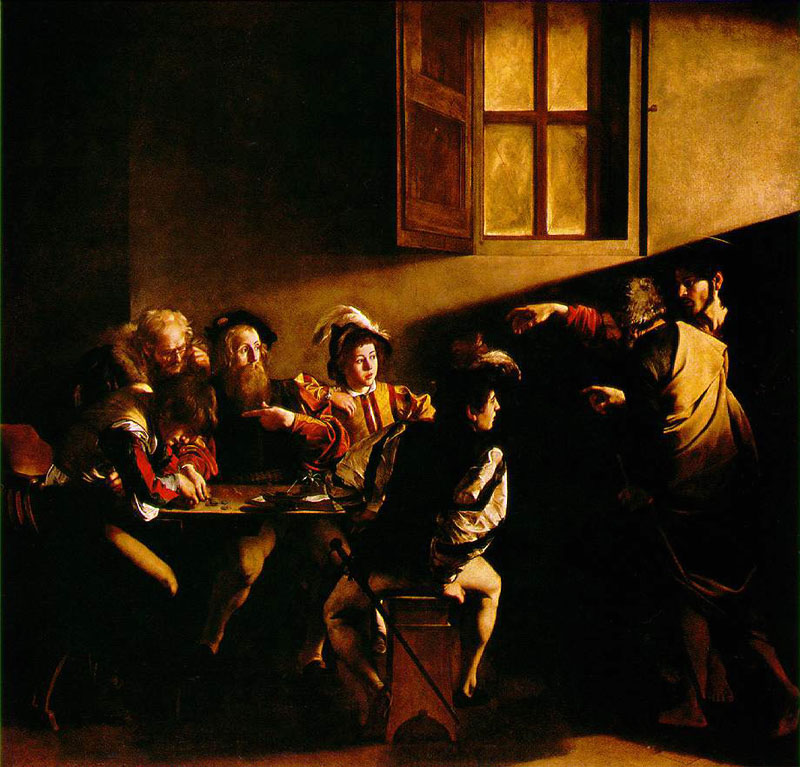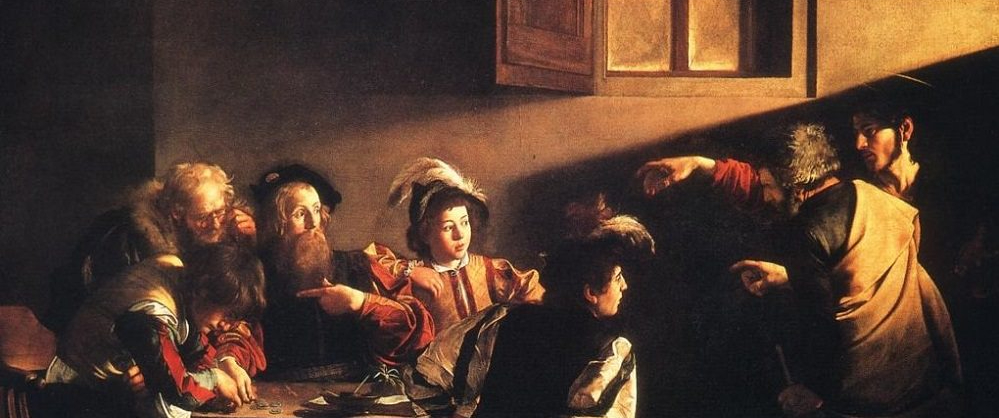
Lord My Chef Daily Recipe for Soul by Fr. Nicanor F. Lalog II Monday, Twenty-first Week In Ordinary Time, Year II Feast of St. Bartholomew, Apostle of the Lord Revelation 21:9-14 <*{{{{>< + ><}}}}*> John 1:45-51
St. Bartholomew depicted by Michelangelo at the Sistine Chapel holding in one hand a large knife said to have been used in skinning him alive with his own skin held by his other hand. Photo from Pinterest.
Thank you, God our loving Father for this Monday; though still gloomy with forecast of more rains like the past weeks, we rejoice in celebrating the Feast of St. Bartholomew, one of the amazing Apostles of Your Son Jesus Christ; he died a martyr after being skinned alive and crucified upside down like St. Peter; it must have been his most glorious achievement because after skinning him alive, his torturers must have seen and realized his faith was not that skin-deep: layers upon layers of skin they must have found only Jesus deeply ingrained in his very person!
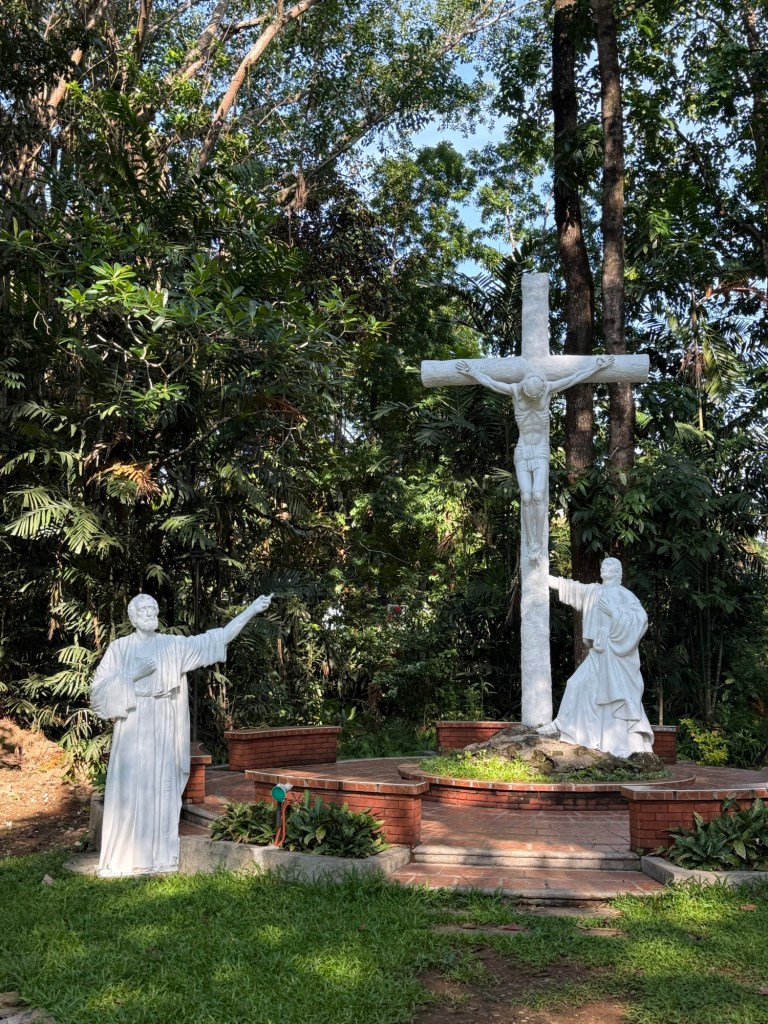
How lovely of St. Bartholomew known earlier as Nathanael his baring of his true self, that first layer of our person we often hide when he asked Philip if anyone good could come from Nazareth; truly as Jesus had said, there was no guile in him, so unlike us with so many masks and pretensions layered on our person.
Philip found Nathanael and told him, “We have found the one about whom Moses wrote in the law, and also the prophets, Jesus, son of Joseph, from Nazareth.” But Nathanael said to him, “Can anything good come from Nazareth?” Philip said to him, “Come and see.” Jesus saw Nathanael coming toward him and said of him, “Here is a true child of Israel. There is no duplicity in him.” (John 1:45-47)
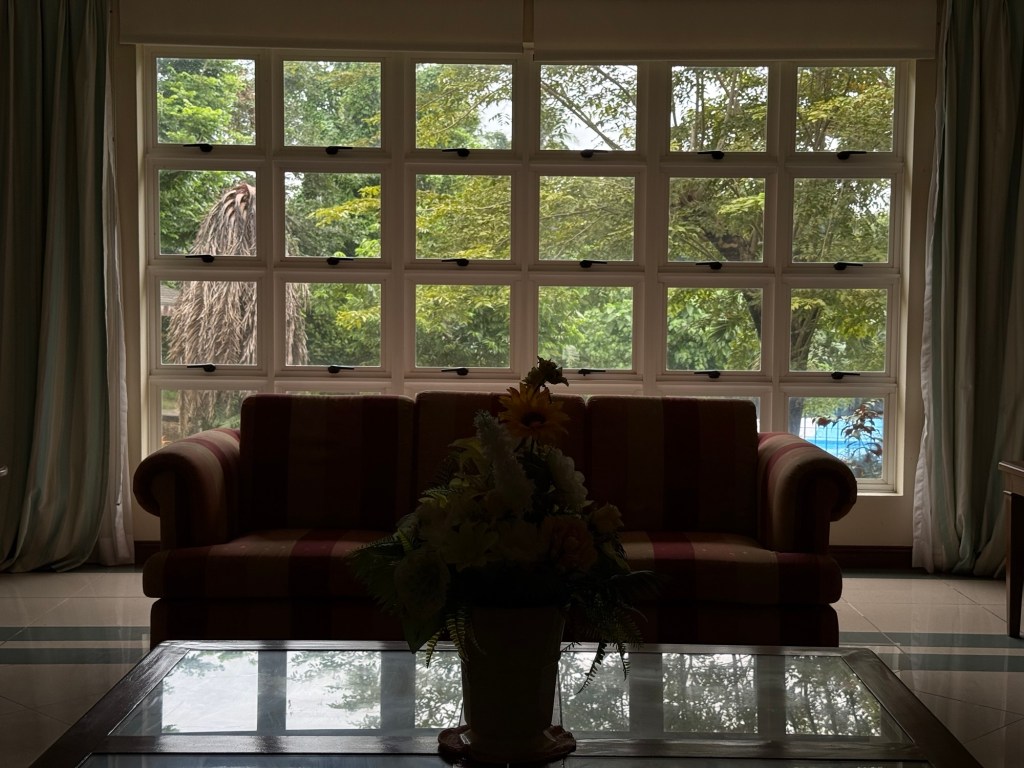
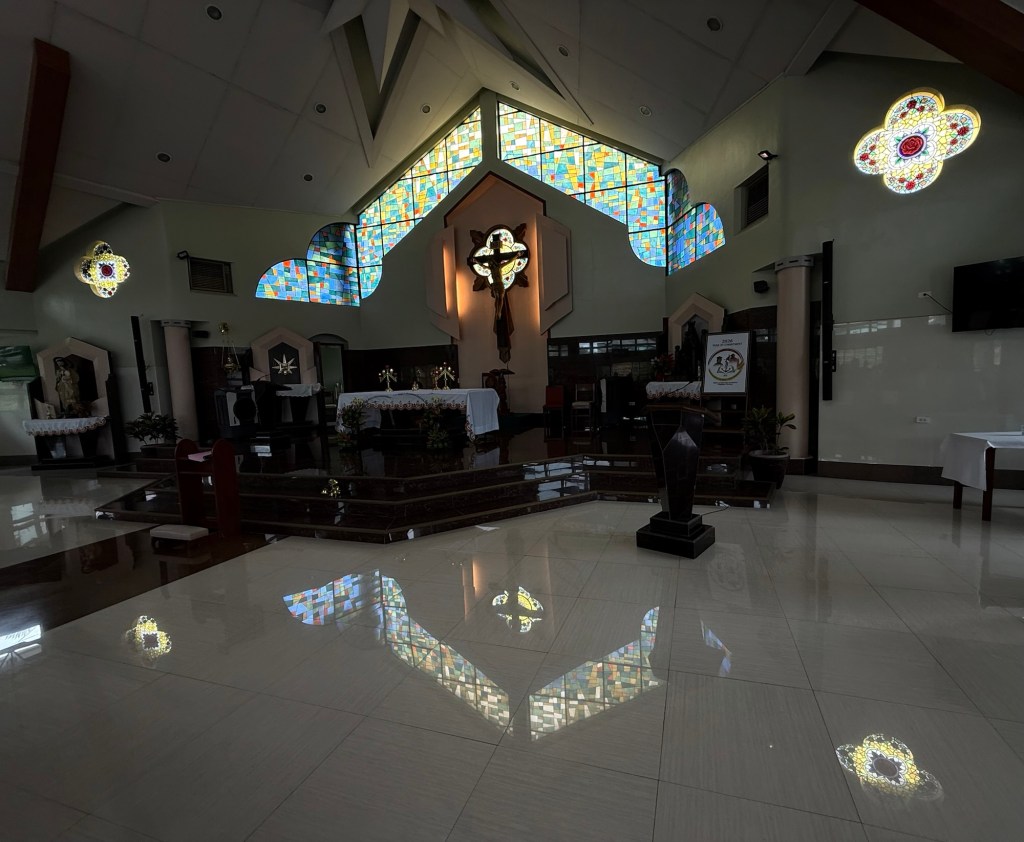
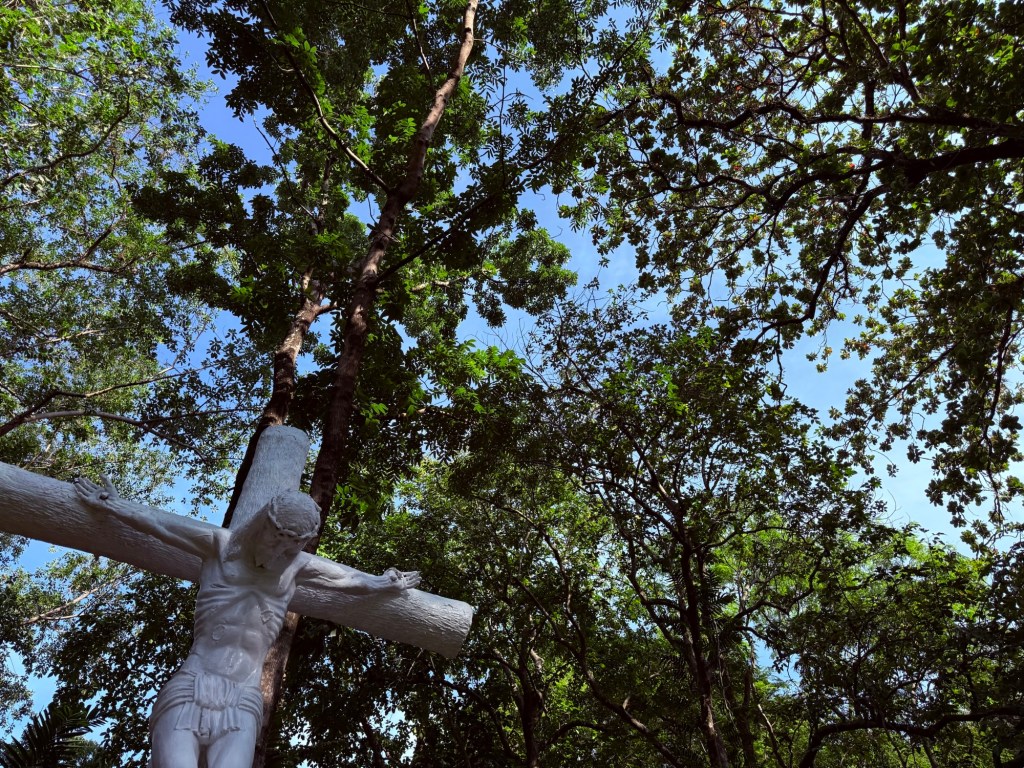
Photo by author, St. Paul Spiritual & Renewal Center, Bgy. Tanyawak, Alfonso, Cavite, 19 August 2026.
Everywhere in this life there are layers of everything: layers of clothing, layers of skin, layers of meaning, and layers of faith and knowledge of Jesus Christ who asked us yesterday "who do you say that I am?"
Teach me, Jesus to remove that first layer of covering myself with masks pretending to be somebody else as good; let me bare my true self before you, free and faithful in telling you what I feel, what I think like St. Bartholomew because you see everything beneath our many layers of covering.
Nathanael said to him, “How do you know me?” Jesus answered and said to him, “Before Philip called you, I saw you under the fig tree.” Nathanael answered him, “Rabbi, you are the Son of God; you are the king of Israel.” (John 1:48-49)
Photo by author, St. Paul Spiritual & Renewal Center, Bgy. Tanyawak, Alfonso, Cavite, 19 August 2026.
Most of lovely of all, dear Jesus is how you "see" us even from afar, especially whenever we are "under the fig tree"; you know very well our desire to see you too, to find you and to dwell in you; unless we are able to remove our layers of duplicity and guile, we shall never see your promise "you will see the heaven opened and the angels of God ascending and descending on the Son of Man" (John 1:51); thank you, dear Jesus for your loving gaze upon us despite our many sins and brokenness; help me to look at you too, to see you like St. Bartholomew as "truly the Son of God, the King of Israel." Amen.
Photo by author, St. Paul Spiritual & Renewal Center, Bgy. Tanyawak, Alfonso, Cavite, 19 August 2026.
Quiet Storm by Fr. Nicanor F. Lalog II, 08 July 2026
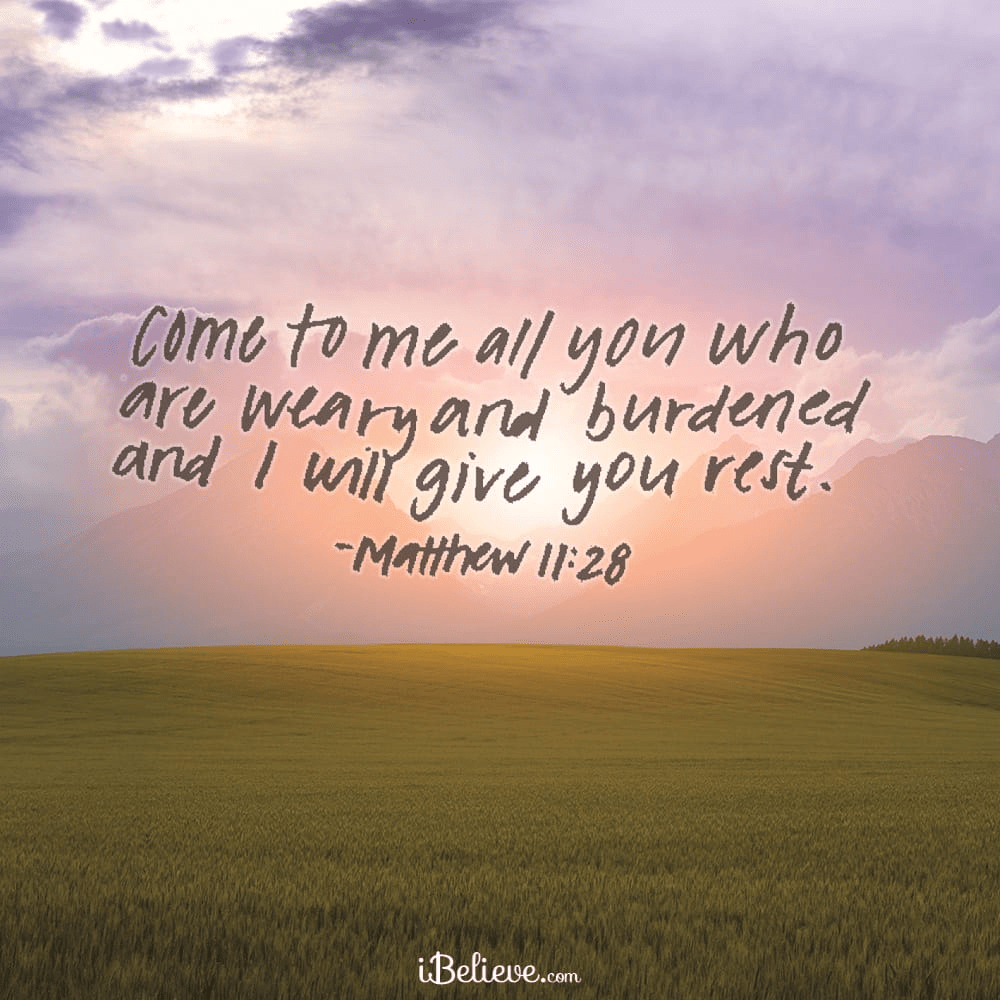
It has been three days since Sunday when we heard Jesus calling us to “Come to me, all you who labor and are burdened, and I will give you rest. Take my yoke upon you and learn from me, for I am meek and humble of heart; and you will find rest for your selves. For my yoke is easy, and my burden is light” (Mt.11:28-30).
It is one of the shortest and most memorable passage in the gospel but, how do we really come to Jesus in order to rest and feel light?
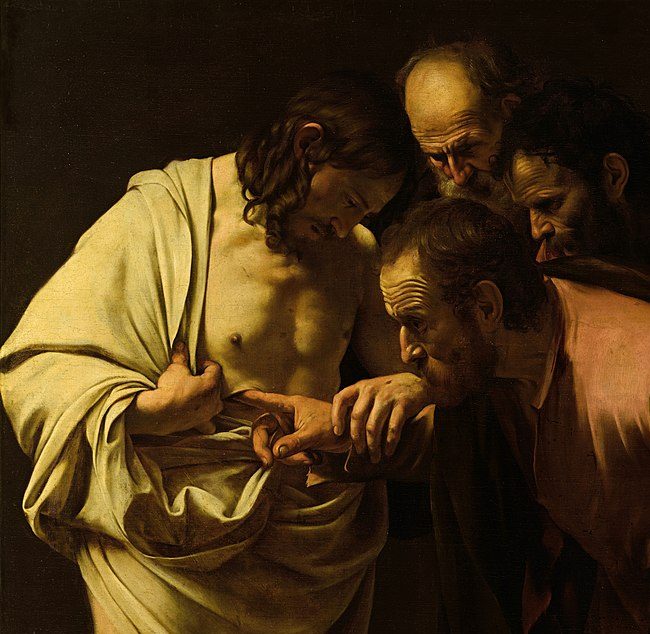
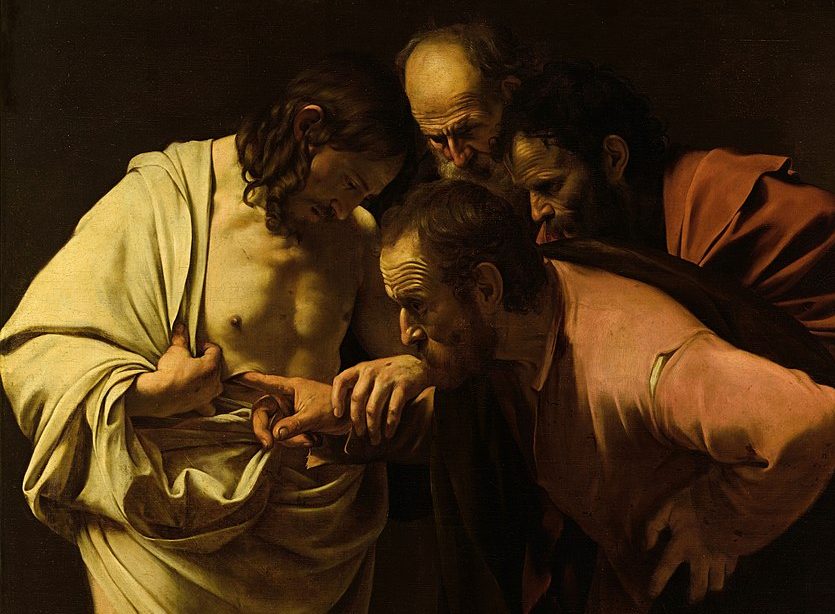
The good news is, it is Jesus who actually comes to us first, inviting us to come to him to find rest and feel light. Exactly like at the meeting of the Risen Lord and Thomas the Apostle eight days after Easter as narrated to us by John. You will recall that last Friday was the Feast of St. Thomas the Apostle (June 3) when I presented in my homily Caravaggio’s painting called The Incredulity of Thomas done in 1602. This is the second time I have used a painting by this renowned Italian painter said to be the favorite of the late Pope Francis too.
Photo of painting by Caravaggio, “The Incredulity of Thomas” via wikipedia.commons.org.
Thomas “refused” to believe the Apostles’ news to him that Jesus had risen, saying that “Unless I see the mark of the nails in his hands and put my finger into the nail marks and put my hand into his side, I will not believe” (Jn.10:25).
Many times we are like Thomas, a Didymus, with a twin in life like doubt and certainty, belief and unbelief, darkness and light.
Like Thomas, we say unconsciously that “Unless I see the mark of the nails in his hands and put my finger into the nail marks and put my hand into his side, I will not believe” (Jn.10:25) because it is when we are suffering, when we are in darkness, when we are in doubt when we truly search and long for God and Jesus.
It is not that Thomas nor we could not believe that Jesus had risen or doubted Christ at all; actually, Thomas believed in Jesus that is why he came on the eighth day to await the Lord’s coming in the same manner that we still pray despite our “doubts”.
Now a week later, his disciples were again inside and Thomas was with them. Jesus came, although the doors were locked, and stood in their midst and said, “Peace be with you.” Then he said to Thomas, “Put your finger here and see my hands, and bring your hand and put it into my side, and do not be unbelieving, but believe.” Thomas answered and said to him, “My Lord and my God!” (John 20:26-28)
Photo of painting by Caravaggio, “The Incredulity of Thomas” via wikipedia.commons.org.
See the artistry of Caravaggio in this painting, that characteristic play of light and darkness emanating from Jesus, illuminating Thomas and his elder Apostles Peter and John.
All darkness in life are diminished, even vanished completely when we bring everything and everyone in the light of Jesus Christ who comes to us to enlighten us, to illumine us from many darkness we go through in life like Thomas on that night of the eighth day of Easter.
But, there is more to the light of Christ that we can see in this Caravaggio painting.
Amid its stillness and silence, one could feel deeply Jesus Christ’s words last Sunday – come to me – echoed softly, personally, lovingly to Thomas. And to each one of us today.
Photo of painting by Caravaggio, “The Incredulity of Thomas” via wikipedia.commons.org.
John tells us that Jesus simply said to Thomas to “Put your finger here and see my hands, bring your hand and put it into my side, and do not be unbelieving, but believe.” Thomas answered and said to him, “My Lord and my God” (Jn.20:27-28).
Okay, fine… it is just my imagination or my contemplation that I heard Christ’s words last Sunday echoed in this scene, “come to me and I will give you rest” but, there is something so beautiful and deeply personal with Jesus in saying or implying those same words here. You can hear it so close, so near you, not from afar especially when you consider its Filipino translation of “Lumapit kayo sa akin” or the informal “Halikayo at lumapit sa akin” that both indicate a separation of even a few feet away from Jesus who is calling us.
See the proximity of the four people in this painting. That is how close Jesus gets to us whenever he comes to us, inviting us to come to him in order to find rest especially in those dark moments in our lives, when we feel hurt and abandoned. When we are so stressed out as seen in those wrinkles on the foreheads of the three apostles!
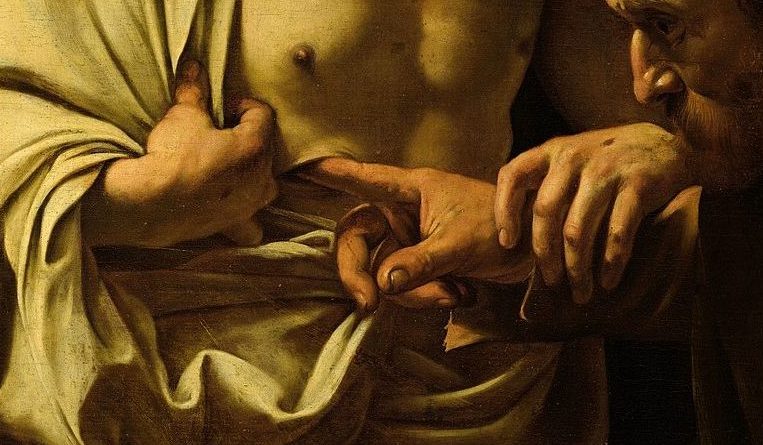
Contrast their images to the serenity of Jesus. Most of all, see also the hands of Jesus, of how his left hand with the nail wound visible moving aside his garment so that Thomas and his companions may see further his pierced side.
Whenever Jesus comes to us, calling us to come to him to show us his wounds from the cross to remind us that before all our pains and hurts came, he was there first to suffer and be wounded and died for us.
And he has come to us again, calling us to come to him because he had risen, assuring us that all our wounds like his will heal eventually! That is when we experience rest. And being light in life.
But, what I love most in this painting is the way Caravaggio depicted the Risen Lord holding the hand of Thomas while probing into his side wound:
Photo of painting by Caravaggio, “The Incredulity of Thomas” via wikipedia.commons.org.
How lovely! Caravaggio must be in the highest heaven when he painted this part.
Remember when Thomas dared to say unless he sees the nail marks in the Lord’s hands and put his hand at his side, he would not believe?
Jesus knew it so well not only with Thomas but with each one of us, of our being a Didymus, always with a twin of doubt so that he does not merely appear but touches us to experience deeply, personally his loving presence through his wounds.
See how Caravaggio depicted the left hand of Jesus again with the mark of nail holding the very hand of Thomas, directing his finger into his pierced side. You could feel the sure grip as well as gentleness of the Lord’s hand in leading the finger of Thomas into his pierced side wound. So dramatic as if it is not enough for Jesus to being present but most of all, experienced as closest at possible.
Jesus touches us always, literally and figuratively by holding our wounded selves to experience his wounded self too. He does not only call us in words but leads us with his total self.
Christ’s invitation for us to “come to him” remains personal and personalized. Not mass produced like what is happening these days where speed and reach are the main considerations, not the person.
While writing this piece yesterday, one of the blogs I follow came out with a new article exactly about last Sunday’s gospel scene, claiming that if God texts us today, these very words to “come to me” by Jesus would be his “text message” to us (https://thedevotionalguy.blog/2026/07/07/if-god-sent-you-a-text/).
I believe so. Because text messages have become the closest things we can have of anyone in these days of social media. However, if ever you receive that text message from Jesus, run outside to meet him personally for surely, he had come. Amen. God bless you.
Photo by author, St. Michael Retreat House, Antipolo City, 16 June 2026.
Lord My Chef Daily Recipe for the Soul by Fr. Nicanor F. Lalog II Friday in the Thirteenth Week of Ordinary Time, Year II Feast of St. Thomas, Apostle, 03 July 2026 Ephesians 2:19-22 <*{{{{>< + ><}}}}*> John 20:24-29
Photo of painting by Caravaggio, “The Incredulity of Thomas” via wikipedia.commons.org.
Thank you, dear Jesus for this first Friday in July 2026, the feast of your Apostle Thomas called Didymus: some say due to his having the twin of faith and doubt but most likely also our very own twin because like him, deep within us are many "dark places" that need to be enlightened by your light.
Thomas called Didymus, one of the Twelve, was not with them when Jesus came. so the other disciples said to him, “We have seen the Lord.” But Thomas said to them, “Unless I see the mark of the nails in his hands and put my finger into the nail marks and put my hand into his side, I will not believe.” Now a week later, disciples were again inside and Thomas was with them. Jesus came, although the doors were locked, and stood in their midst and said, “Peace be with you.” Then he said to Thomas, “Put your finger here and see my hands, and bring your hand and put it into my side, and do not be unbelieving, but believe.” Thomas answered and said to him, “My Lord and my God!” (John 20:24-28)
Every day you also come to us, Lord Jesus amid the many darkness around us, often in our locked doors of doubts and disbelief, cynicism and pessimism, grief and hopelessness; many times we think we infer we rationalize that your Resurrection and presence are just too good to be true!
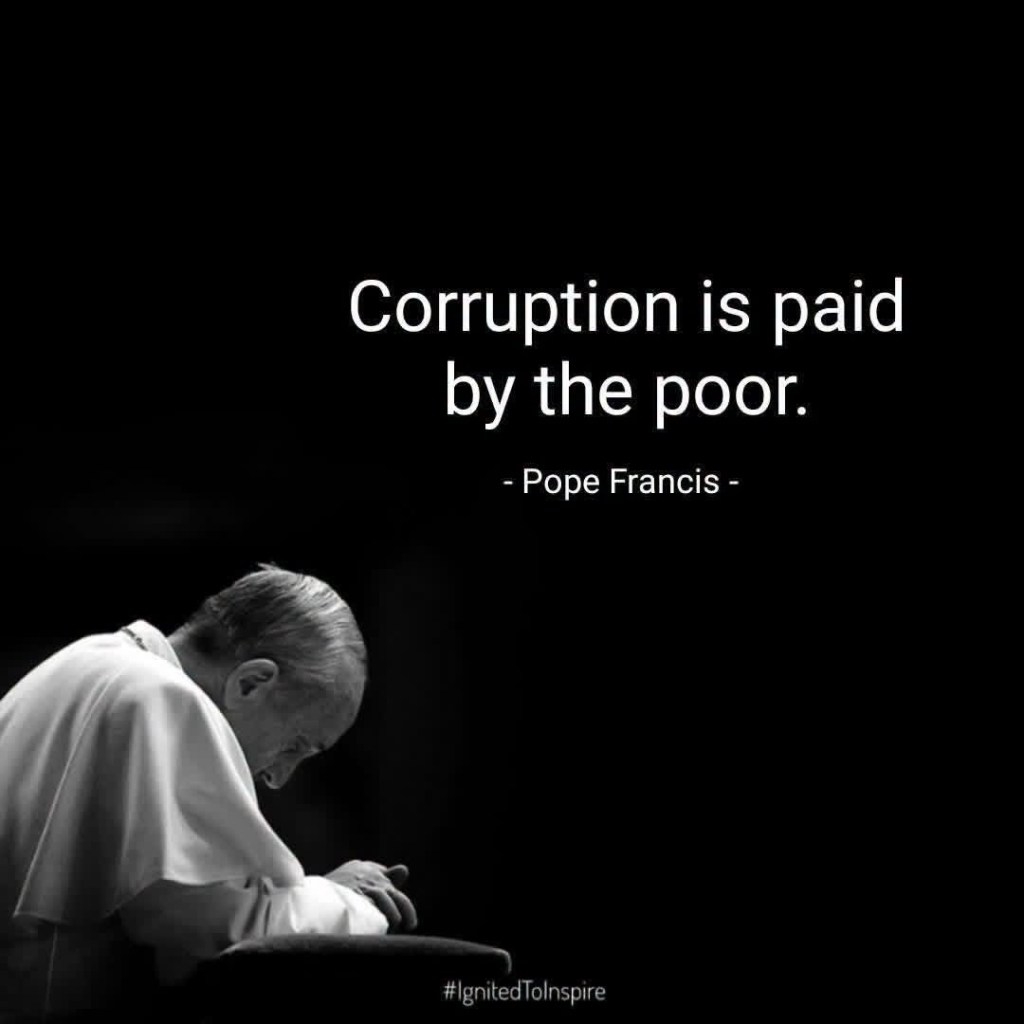
So many things within us resist a faith too easy to claim or put into effect just to believe you; enlighten the many "dark places" within us that we have become so skeptical these days: our government and church are just like so similarly plagued with corruption and evil that are sadly allowed or tolerated, justice utterly lacking with evil doers seem to be more favored than law-abiding ones with all these persisting because many are oblivious to the darkness and disorder going on.
Where are you, Jesus in all of our mess in life as individuals, as a nation, as a church, as a family that we most often doubt than believe?
Photo by author, St. Michael Retreat House, Antipolo City, 16 June 2026.
Guide my hand,
lead my finger into your
wounds,
dear Jesus
that I may experience
you Risen;
let me experience your
coming and loving presence
amid our darkness
and woundedness;
let me not seek you
Jesus in spectacular things
in feel-good situations
but like Thomas
in touching your wounds
in that dark room
be enlivened with your
inner light of peace
and assurance that
more than your miracle
of rising from the dead
is the reality of living,
of life coming out
from real death.
Grant me that spark of
faith like in Thomas
while touching your wounds,
Lord Jesus
so that a glimmer of hope
within me may finally glow
and grow as I follow you,
my Lord and
my God.
Amen.
Lord My Chef Daily Recipe for the Soul by Fr. Nicanor F. Lalog II Monday in the Thirteenth Week of Ordinary Time, Year II Solemnity of Sts. Peter and Paul, Apostles, 29 June 2026 Acts 12:1-11 ><}}}}*> 2 Timothy 4:6-8, 17-18 ><}}}}*> Matthew 16:13-19
Photo by Dra. Mylene A. Santos, MD, in Ericeira, Portugal, 16 June 2026.
Our readings today are a parable of the Church, of what we should be as the Body of Christ celebrating the Solemnity of St. Peter and St. Paul, the pillars of the Church. Most of all, both speak of that reality in our lives that life is a daily exodus from our selfish self.
We celebrate St. Peter and St. Paul together as pillars of the Church because they were able to overcome their great differences in personalities as well as their diverse cultural and social backgrounds to be won over by Jesus Christ in proclaiming his good news of salvation. Both eventually died as martyrs like Jesus.
Photo by author, Our Lady of Fatima University, Valenzuela City, 10 June 2026.
They displayed deep trust in the Lord whom they have come to know on a personal basis following a series of deep personal exodus through their daily conversion. Saints Peter and Paul did not become saints overnight; they went through a series of personal conversions, of abandonment of selves to God.
The churches in Europe need a lot of this exodus process like in Germany where some clergymen and laypeople refuse to accept the Vatican decision that homily is reserved only for the ordained ministers while a traditionalist group are threatening to ordain bishops and priests without Vatican approval. These are so unlike in the Church before when men and women who eventually became saints chose to suffer in silence than defy Church decisions that eventually through time were accepted.
There is always darkness and uncertainties in the Church, a kind of exodus we need to cross like in the experiences of Sts. Peter and Paul we heard in our first two readings today.
On the very night before Herod was to bring him to trial, Peter, secured by double chains, was sleeping between two soldiers, while outside the door guards kept watch on the prison. Suddenly the angel of the Lord stood by him and a light shone in the cell. He tapped Peter on the side and awakened him, saying, “Get up quickly.” The chains fell from his wrists. The angel said to him, “Put on your belt and your sandals.” He did so. Then he said to him, “Put on your cloak and follow me.” So he followed him out, not realizing that what was happening through the angel was real; he thought he was seeing a vision (Acts 12:6-9).
Photo by Mr. Lorenzo Atienza of the bass relief of St. Peter by artist Nick Lugue at the Malolos Cathedral, 12 June 2019.
How could Peter sleep soundly after being arrested and thrown into prison with two soldiers sandwiching him inside his cell while a host of other guards secured the area outside?
It is a very amusing story about our “prince of the Apostles” sleeping soundly so similar with St. Joseph who slept soundly too in a similar critical situation when he decided to silently leave Mary who was found pregnant with a child before they were married.
Both Joseph and Peter slept soundly under critical situations because of their complete trust and faith in God, of their abandonment of selves to God. We find it difficult to sleep when we have problems because we cannot decide decisively as we lack trust and faith in God, unlike Peter and Joseph.
But, Peter shows us another dimension of his trust in God – his total trust also in the Church, believing that they were all praying for him.
It is a beautiful imagery of the Church then and now, always in darkness during night time when Peter was imprisoned. And that is the parable of this scene: it is always a time of Exodus for us in the Church, of passing over from every trials and difficulties, always trusting our leaders, trusting our faithful and most of all, entrusting everything to God!
If there is one thing most needed these days in our Church especially in the Philippines is this attitude of being in an Exodus, of exiting from our imprisonment in partisan politics so that we can go back to our true mission and mandate of preaching Jesus Christ not only with our words but with our lives. We in the Church can be political without being partisan; the moment we become partisan, most likely we are no longer preaching Christ because we are already rooting for somebody else instead of God.
May we imitate Peter by abandoning everything to God in deep prayers, following God not our plans as symbolized by his putting on his belt and sandals as commanded by the angel.
Photo by Mr. Lorenzo Atienza of the bass relief of St. Paul by artist Nick Lugue at the Malolos Cathedral, 12 June 2019.
Life can only become a daily exodus when we learn to trust and abandon ourselves to God like St. Peter and St. Paul as we see also in his letter to Timothy:
I, Paul, am already being poured out like a libation, and the time of my departure is at hand. I have competed well; I have finished the race; I have kept the faith. The Lord stood by me and gave me strength, so that through me the proclamation might be completed and all the Gentiles might hear it. The Lord will rescue me from every evil threat and will bring me safe to his heavenly kingdom. To him be glory forever and ever. Amen. (2 Timothy 4:6-7, 17, 18)
Imagine the stress of being in prison but without any hint of duress on Paul while awaiting death as seen with his incomparable eloquence in writing, something very evident in all his letters where he always expressed his total abandonment of self to Christ, of his faith in God.
In this beautiful portion of his letter to Timothy, Paul reminds us that life as a daily exodus is to live our lives as a worship to God expressed in that opening line am already being poured out like a libation. A libation is a drink offered to gods in ancient Greece and Rome; as he approached death, Paul summarized here his entire life as an offering to God that we also see in his other writings.
That is the challenge of this solemnity to us, that we live our lives as a form of worship to God. Our very lives in itself are a prayer, always centered on God, something so foolish when we go by the standards of the world today that is all show – palabas – with nothing substantial inside because only money and fame matter. Paul was very much like Peter who lived their lives as prayers that like Christ in the end, both offered the highest offering of all, martyrdom.
Second thing we find in this excerpt from Paul’s letter to Timothy is the deeper meaning of death as a passage to heaven, an exodus: “The Lord will rescue me from every evil threat and will bring me safe to his heavenly kingdom” (v.18). Paul freely accepts his death, making it a blessing for others that we must emulate. Instead of having those bucket lists of things to do before dying, Paul is teaching us death comes in every present moment that we must always prepare for its happening so that the next generation may continue the good things we have started.
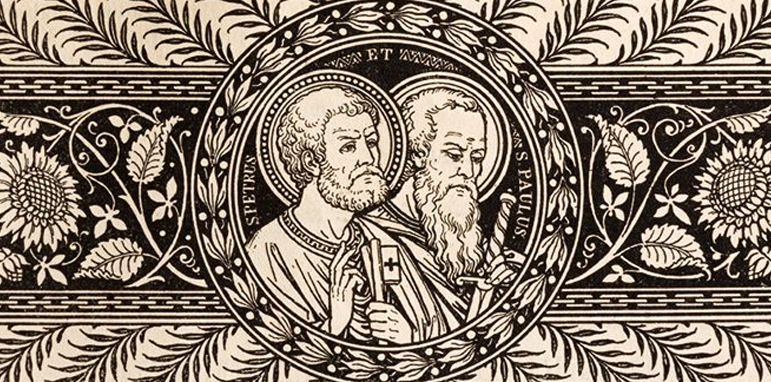
The lithography of Sts. Peter and Paul in Missale Romanum by unknown artist with initials F.M.S (19. cent.) printed by Typis Friderici Pustet. (Renáta Sedmáková | us.fotolia.com)
The key to unlocking how Peter and Paul achieved so much for God and for the Church lies in their personal relationship with Jesus Christ mirrored in their lives.
Many Christians are losing their faith and interest in the Church, leaving in great numbers because of the mixed signals we give them on what do we say who Jesus is. The Church grew in leaps and bounds during the time of Peter and Paul because both apostles shared the true Jesus Christ not only in their words but also in their deeds. They trustingly and humbly went through daily exodus beginning in their very selves in knowing Jesus Christ more clearly, loving him dearly, following him closely and witnessing him daily. May your Monday lead you a fulfilling exodus. Amen.

Lord My Chef Daily Recipe for the Soul by Fr. Nicanor F. Lalog II Thursday, Memorial of St. Barnabas, Apostle, 11 June 2026 Acts 11:21-26;13:1-3 <*{{{{>< + ><}}}}*> Matthew 10:7-13
Photo by Mr. Jim Marpa, Carigara Market, Leyte, June 2019.
Thank you, Lord Jesus for gift of being called and sent as your apostle like the Twelve in today's gospel; your call and sending continued after your Ascension up to these days as we celebrate the memorial of your St. Barnabas whose name means "son of encouragement"; teach us to be like him filled with the Holy Spirit and faith in God, searching for those in the worst situations in life like Saul at that time who was so ashamed to join the disciples because of his sinful past; like Barnabas, may we encourage others to hope and look forward to better days in you, Christ Jesus, to trust in your mercy and forgiveness, to take every moment a chance to be converted; how sad that in this world of a global village interconnected by the internet, more and more are getting discouraged than encouraged in life as the social media tend to present more of the dark, dismal side of life than its brighter and colorful and joyful realities found in you, Lord who is the kingdom of God right in our midst.
… and they sent Barnabas to Antioch. When he arrived and saw the grace of God, he rejoiced and encouraged them all to remain faithful to the Lord in firmness of heart, for he was a good man, filled with the Holy Spirit and faith… Then he went to Tarsus to look for Saul, and when he had found him he brought him to Antioch (Acts 11:22-24, 25-26).
We pray, dear Jesus that you send us more "Barnabas" or make us a "Barnabas" who rejoiced upon seeing your followers in Antioch whom you sent to Antioch where they were first called Christians; give us the courage like what Barnabas and Paul have when you have them set apart for a special mission; may we grow and move in your Spirit, Lord Jesus Christ, moving with you and moving to you, to follow your movement away from others we have been comfortable with in order to move where we may experience discomfort and be dislocated for the sake of your kingdom. Amen.
Photo by author, Ephesus in Turkiye, November 2025.
Lord My Chef Daily Recipe for the Soul, 28 October 2025 Tuesday, Feast of St. Simon & St. Jude, Apostles Ephesians 2:19-22 ><))))*> + ><))))*> + ><))))*> Luke 6:12-16
Photo by author, Sacred Heart Novitiate, Novaliches, QC, 20 March 2025.
Brothers and sisters: You are no longer strangers and sojourners, but you are fellow citizens with the holy ones and members of the household of God built upon the foundation of the Apostles and prophets, with Christ Jesus himself as the capstone. Through him the whole structure is held together and grows into a temple sacred in the Lord; in him you are also being built together into a dwelling place of God in the Spirit (Ephesians 2:19-22).
How lovely to hear those words of St. Paul in these times of great divisions among us not only in politics but in almost every topic! What is most painful, O Lord Jesus Christ is how some among us have become numb and callous of each other, unmindful of things they say especially of those suffering and in pain; with the little cellphone each of us holding so addictively the whole day, we have created our own self-centered world totally unmindful of others.
On this Feast of your two great Apostles, St. Simon and St. Jude who were poles apart in their differences as persons and backgrounds, may we realize that we are not "strangers and sojourners" but are" fellow citizens", and "members of the household of God" in you, Jesus Christ who is at the center of this household as cornerstone.
Help us, Lord Jesus, to imitate Sts. Simon and Jude who built up your Church, your household of God here on earth; fill our hearts with the zeal and ardent love for you and your Church like Simon called the Zealot: in this time when Catholics in the country are declining in numbers as well as in professing their faith, may we have the enthusiasm to make you known, Jesus, in our loving actions of witnessing; grant us also the strength, clarity and courage like that of St. Jude Thaddeus in dealing with the many contradictions of the world we live in today as Catholics and Christians: "But you, beloved, build yourselves up on your most holy faith; pray in the Holy Spirit; keep yourselves in the love of God; wait for the mercy of our Lord Jesus Christ unto eternal life. And convince some, who doubt..." (Jude 20-22).
Bless us, dearest Jesus, through the help St. Simon and St. Jude, to rediscover the beauty of our Christian faith and of our Catholic Church by working hard to build it up without tiring through our silent and peaceful witnessing of the Gospel. Amen. Fr. Nicanor F. Lalog II Our Lady of Fatima University Valenzuela City
Lord My Chef Daily Recipe for the Soul, 25 July 2025 Friday, Feast of St. James the Greater, Apostle 2 Corinthians 4:7-15 <*{{{>< + ><}}}*> Matthew 20:20-28
Something struck me while praying the gospel for today’s feast of St. James the Greater – of how his mother approached Jesus with a request for him and his brother James “that these two sons of mine sit, one at your right and the other at your left, in your Kingdom” (Mt. 20:21).
It must be a very interesting company that Jesus had organized during his ministry composed not only of the Twelve and other disciples but most likely with so many others too that included their families like the mother of James and John believed to be the beloved disciple of Jesus. Traditionally known as Salome, their mom could easily be the patroness of “stage mothers” that abound most especially in the Philippines!
But kidding aside, it must be wonderful to tag along with them in following Jesus where everyone is welcomed. It is a journey not meant to cover distances and places but actually an inner journey inside one’s self that we shall see in the life of James the Greater. It is a journey that begins right here in our heart when we too, like James leave everything to follow Jesus.
For astonishment at the catch of fish they had made seized him and all those with him, and likewise James and John, the sons of Zebedee, who were partners of Simon. Jesus said to Simon, “Do not be afraid; from now on you will be catching men.” When they brought their boats to the shore, they left everything and followed him (Luke 5:9-11).
Photo by author, San Juan, La Union, 26 July 2023.
It must have been difficult for James to leave everything including their father Zebedee and follow Jesus. See that in the description by Luke of their call by Jesus, James and John as well as the brothers Simon and Andrew were all “rich kids” with their own fishing boats with hired men as workers at that time!
Clearly, money was not a problem with James and his buddies; however, one thing was missing in them – meaning and direction in life which they found in Jesus while listening to his preaching and finally in that miraculous catch of fish. I have always felt that perhaps, Zebedee allowed his two sons to leave him and their business for the same reasons so that they mature in life and be more responsible. We find this trace of attitudes or sense of entitlement in the brothers James and John when they asked Jesus to rain fire upon a Samaritan village that have refused them passage on their way to Jerusalem (Lk.9:54-56). Hence, Jesus named them as Boanerges for “sons of thunder” (Mk.3:17) due to their temperament.
In following Jesus, James had to learn the hard way the process of formation and transformation in Jesus that began in his heart. All along their journey from the shores of Galilee to Jerusalem, James remained by the side of Jesus Christ, probably unaware of that inner journey taking place right inside his heart to truly become a part of God’s Kingdom by sharing in the Lord’s Passion, Death and Resurrection. He had seen and experienced along with the other Apostles the great powers of Jesus not only in preaching but most especially in calming the storms, walking on sea, exorcising evil spirits, healing all kinds of sickness, and even raising to life some who have died.
Most of all, James was privileged to have witnessed along with his brother John and Peter the two important stops in Jesus Christ’s journey to the Calvary: first, on Mount Tabor for the Transfiguration and second, at Gethsemane for the agony in the garden. In both events in the life of our Lord, James was a privileged witness of his coming glory and then of his passion and death. Our gospel today on his Feast is sandwiched between these two major events of the Transfiguration and Agony in the Garden as this is set shortly before Palm Sunday when Jesus entered Jerusalem that led to his sacred pasch.
Jesus said in reply, “You do not know what you are asking. Can you drink the chalice that I am going to drink?” They said to him, “We can.” He replied, “My chalice you will indeed drink, but to sit at my right and at my left, this is not mine to give but if for those for whom it has been prepared by my Father.” When the ten heard this, they became indignant of the two brothers. But Jesus summoned them and said, “You know that the rulers of the Gentiles lord it over them, and the great ones make their authority over them felt. But it shall not be also among you. Rather, whoever wishes to be great among you shall be your servant; whoever wishes to be first among you shall be your slave. Just so, the Son of Man did not come to be served but to serve and to give is life as a ransom for many” (Matthew 20:22-28).
Painting by El Greco, “Pentecostes” (1597) from commons.wikimedia.org.
It would only be after Easter and the Pentecost when all these major stops in James’ personal journey with Christ would become clear to him and the other Apostles. Eventually, he became the first Apostle to be martyred as Bishop of Jerusalem during the persecution by King Herod of Agrippa in 40 AD (Acts 12:1-2), fulfilling Christ’s words to him that he would indeed “drink from his chalice” to be with him in his Kingdom.
A thousand years later, devotion to James the Greater would spread far and wide in Spain after relics of his body were discovered in Santiago de Compostela. It is one of the world’s oldest and most popular pilgrimage site known as the Camino de Santiago de Compostela (the way of St. James).
Every year, pilgrims from all over the world do the camino from various points of Europe to the Cathedral of Santiago de Compostela where the Apostle’s body is buried as a spiritual hike or retreat and journey for spiritual growth.
Like James the Greater, the camino is more than the kilometers or miles covered but the journey within one’s self that leads to deeper faith in Christ by living out his gospel as portrayed in its marker and symbols of a staff and scroll of the gospel proclaimed by the Apostle .
A marker along the camino de Santiago de Compostela.
It is my fervent prayer that some day I will be able to do a camino de Santiago de Compostela but for the mean time, we strive to continue in following the steps of James the Greater in making that inner journey within one’s self, beginning in our heart by leaving our “boats” of security to remain always at the side of Christ even if he has to smoothen our rough edges as a person and cleanse us of our sins that prevent us in drinking his chalice to be one in his Kingdom. The key is to serve, not to be served as Jesus insisted.
Sometimes in life, we just have to make “sakay” as we used to say as in “sakay lang ng sakay” or “ride on, man, ride on” without really knowing where our trip would lead us.
James the Greater simply made “sakay” in Jesus without knowing Christ was already fulfilling his wish of “drinking from his chalice” which proved that, indeed, the longest journey in life is the distance between the mind and the heart (Dag Hammarskjold). Amen. Have a blessed weekend! Fr. Nicanor F. Lalog II, Our Lady of Fatima University, Valenzuela City (lordmychef@gmail.com).
*All photos from Camino de Santiago de Compostela courtesy of Fr. Jigs Sta. Rita.
Lord My Chef Daily Recipe for the Soul, 03 July 2025 Thursday, Feast of St. Thomas the Apostles Ephesians 2:19-22 <*{{{{>< + ><}}}}*> John 20:24-29
Caravaggio’s painting “The Incredulity of St. Thomas” (1602) from en.wikipedia.org.
Lord Jesus, teach me to be like you - so understanding, so caring, so loving to those who are doubting you like Thomas your Apostle; poor Thomas - he has been called "Doubting" when the evangelists simply referred to him as "Didymus" or twin; however, it is so lovely too to know that doubt and certainty are like twins because when we doubt, the more we seek and find the truth which Thomas did.
When I think of my own faith journey in you, Lord, many times I was worst than St. Thomas for I was not only doubting you but also hesitant in following you because of fears and mistrust, lack of confidence in my self, and simply self-centered. Could it be, Lord, that in each one of us is Thomas our twin - doubting, hesitating, indecisive, in following you?
Now a week later his disciples were again inside and Thomas was with them. Jesus came, although the doors were locked, and stood in their midst and said, “Peace be with you.” Then he said to Thomas, “Put your finger here and see my hands, and bring your hand and put it into my side, and do not be unbelieving, but believe.” Thomas answered and said to him, “My Lord and my God!” (John 20:26-28).
How nice of you, Lord Jesus to be so warm with Thomas on that night when you appeared again; instead of engaging Thomas into a debate or discussion, you called him, invited him to touch your wounds, to feel your scars; what an incredible courage, Lord Jesus to let us see and feel closely your wounds, to stare and look at your sufferings, to remember and imagine your lowest point in life if only to show us that it is the only way to glory; many times, we are afraid to admit even to ourselves and to others our wounds and hurts, preferring to keep them even hide them to keep our illusions of greatness.
May we find the graces of joy and warmth, love and kindness that fill our many wounds in life as a result of our following you, Lord Jesus for it is in our woundedness and hurts that we become "members of the household of God who are built together to be the dwelling place of God in the Spirit" (Ephesians 2:19, 22). Amen.
Fr. Nicanor F. Lalog II Our Lady of Fatima University Valenzuela City
Lord My Chef Sunday Recipe, Fr. Nicanor F. Lalog II Solemnity of Sts. Peter & Paul, Apostles, 29 June 2025 Acts 12:1-11 ><}}}}*> 2 Timothy 4:6-8, 17-18 ><}}}}*> Matthew 16:13-19
St. Peter’s Square at the Vatican in Rome.
We enter today the 13th week in Ordinary Time with a fourth celebration on a Sunday of another Solemnity, that of Saints Peter and Paul, the two pillars of the Church Jesus Christ established over 2000 years ago.
Sts. Peter and Paul were men of diverse backgrounds with Peter the fisherman, impulsive and so human while Paul the Pharisee was an intellectual converted by an encounter with Jesus on the road to Damascus. Both were flawed as persons yet so loved and called by the Lord – Peter as first leader of his church and Paul as its first missionary to the Gentiles. Their Solemnity reminds us of Christ’s call for us to build his Body, his Church here on earth.
While this celebration is about the two great apostles of Jesus, our readings direct us to God’s goodness and grace in his actions on behalf of the church founded by Christ. Its focus is on God, not ourselves.
Statues of Sts. Peter & Paul, st. Peter’s Basilica, Rome; photos from opusdei.org
Being an apostle of Jesus is not about doing great things or being so good but more of encountering and keeping faith in Christ our Lord. By recognizing ourselves as the church – the Body of Christ as we have reflected last Sunday, all of our actions are indeed God’s actions on behalf of the church because it is through us that the proclamation of the Gospel of Jesus’ death and resurrection is continued and completed in this age.
What is essential is we constantly enter into a conversation with Jesus in prayer not only to tell him things but most especially for us to realize how he sees us!
When Jesus went into the region of Caesarea Philippi he asked his disciples, “Who do people say that the Son of Man is?” They replied, “Some say John the Baptist, others Elijah, still others Jeremiah or one of the prophets.” He said to them, “But who do you say that I am?” Simon Peter said in reply, “You are the Christ, the Son of the living God.” Jesus said to him in reply, “Blessed are you, Simon son of Jonah. For flesh and blood has not revealed this to you, but my heavenly Father. And so I say to you, you are Peter, and upon this rock I will build my church, and the gates of the netherworld shall not prevail against it” (Matthew 16:13-18).
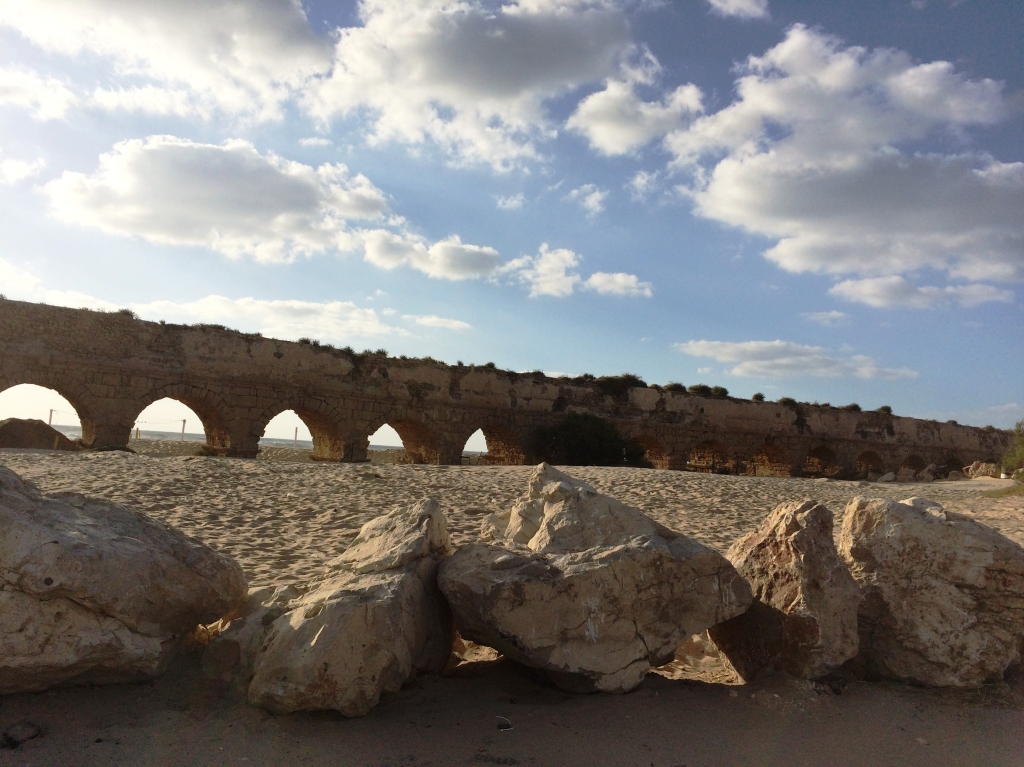
Photo by author at Caesarea, Israel, May 2017.
What really happened at Caesarea Philippi was a close encounter of the apostles with Jesus, especially Simon whom would he called as Peter on that day on.
Very often in most reflections and commentaries, we are told to answer the question of Jesus like Peter in our most personal way not based from what we have read or heard: “who do you say I am?”
Of course, what else can we say but imitate Peter’s answer that seems to be the most correct answer.
But, is it really the best answer? Not really.
Paul later in his many writings will declare similar answers but far more better like when he said “For me to live is Christ, and to die is gain” (Phil.1:21).
Jesus is telling us something else in this scene, as if asking us too, would you want to know “who do I say you are?” What the Lord is actually telling us in this scene is the fact that he knows us so well inasmuch as he knows himself perfectly because he is God. In fact, he had said there was no need for him to have human testimony as the Christ (Jn. 2:25; 5:34).
Photo by author, Sea of Galilee, Israel, May 2019.
What I see more at Caesarea Philippi is Jesus Christ’s omniscience as God who knows everything – even that early he already knew Peter would deny him thrice, that Judas Iscariot would betray him, so on and so forth.
Jesus knows everything about us but he chose to love and believe in us that despite and in spite of everything he knew that could go wrong with us later in life, of how we would fall into sin over and over, STILL – he calls us, he sends us on a mission because he believes in us, he loves us.
Many times in life, we forget the truth about the saints who are just like us, ordinary people with many weaknesses and flaws, imperfections and even idiosyncrasies. What made them stand out and did all those great feats for the Lord was because they were able to see themselves the way Jesus sees them.
That’s the very core of the story at Caesarea Philippi – Jesus made the apostles felt especially Peter how valuable they were, how they were all loved, of how Jesus saw them as his ambassadors later when he returns to the Father.
Bass relief of St. Peter at the Malolos Cathedral, 2019.
Jesus had no need of knowing what people were saying about him because he knew himself so well aside from the fact he surely knew what they were saying about him. Actually, the answers the apostles gave him were for them to know and think about why people wrongly perceived Jesus.
Most of all, Jesus had no need to know what everyone of us is saying about who he is because, again, he knows himself perfectly. Whatever answer others would have given about him would have been surely appreciated and praised by Jesus. What matters most for everyone to realize is the fact that despite Christ’s foreknowledge of Peter’s fall and weaknesses, he still dared to call him to head his church. The same holds true with everyone of us. Jesus wants us to continue building his Body, his church here on earth, to make Jesus more present in us in this world so dark and lost searching for meaning except in Christ.
The same thing is true with Paul when Jesus called him on the road to Damascus to persecute the first Christians. Jesus knew everything Paul was doing; most of all, Jesus knew that even when converted, Paul would still be stubborn and insistent, would eventually quarrel with other disciples like Peter, Barnabas and John Mark but still, Jesus called him and even set him aside for a special mission to the Gentiles.
Bass relief of St. Paul at Malolos Cathedral 2019.
Again in his experiences, Paul saw how Jesus loved and trusted him that even he were the worst of all the apostles of the Lord, he was given such great task of proclaiming the gospel to the ends of the earth at that time. That is why in our second reading we find Paul giving up his whole life in the service of Jesus after experiencing Christ’s tremendous love for him.
Like Peter and Paul, we are all gifted with the same faith in Christ Jesus who challenges us to accept the same mission to continue in this modern time of proclaiming his gospel of love and mercy, of building up his Body the church so that there would be a more humane and just society here on earth as Vatican II envisioned (Lumen Gentium).
Many times when God works in us and through us, we could not believe it as happening like Peter when set free from prison by an angel at night. There are times we are resigned with our situations, of being deserving of the many hardships and sufferings without realizing that there are more bad things we deserve to suffer in this life but Jesus spared us because he believes in us that he sends us to some more missions for him.
Lord Jesus Christ, thank you for still calling me, sending me to a mission despite my many flaws and imperfections; thank you for trusting me, believing me; let me see myself the way you see me as someone worth loving and trusting. Amen.
Lord My Chef Daily Recipe for the Soul by Fr. Nicanor F. Lalog II Wednesday, Memorial of St. Barnabas, Apostle, 11 June 2025 Acts 11:21-26, 13:1-3 <*{{{{>< + ><}}}}*> Matthew 10:7-13
Rains have started to pour, a good news to many and a bad news too to many more caught in jams, floods, and the worst of situations in life, especially at night. We pray, dear Jesus you send us more "Barnabas" whom you sent to Antioch where your followers were first called Christians.
… and they sent Barnabas to Antioch. When he arrived and saw the grace of God, he rejoiced and encouraged them all to remain faithful to the Lord in firmness of heart, for he was a good man, filled with the Holy Spirit and faith… Then he went to Tarsus to look for Saul, and when he had found him he brought him to Antioch (Acts 11:22-24, 25-26).
On this memorial of your Apostle Barnabas whose name means "son of encouragement", teach us to be like him filled with the Holy Spirit and faith in God, searching for those in the worst situations in life like Saul at that time who was so ashamed to join the disciples because of his sinful past; like Barnabas, may we encourage others to hope and look forward to better days in Christ, to trust in your mercy and forgiveness, to take every moment a chance to be converted; in this world that had shrunk into a global village, how sad that more and more are getting discouraged than encouraged when we look more into the dark dismal side of life than to its brighter and even colorful and joyful realities found in you, Lord, the kingdom of God in our midst. Amen.
*Photos by Ms. Ria De Vera in Delia, Alberta, Canada, 03 June 2025.