Lord My Chef Daily Recipe for Soul by Fr. Nicanor F. Lalog II Thursday in the Seventeenth Week of Ordinary Time, Year II, 30 July 2026 Memorial of St. Peter Chrysologus, Bishop & Doctor of the Church Jeremiah 18:1-6 <*((((>< + ><))))*> Matthew 13:47-53
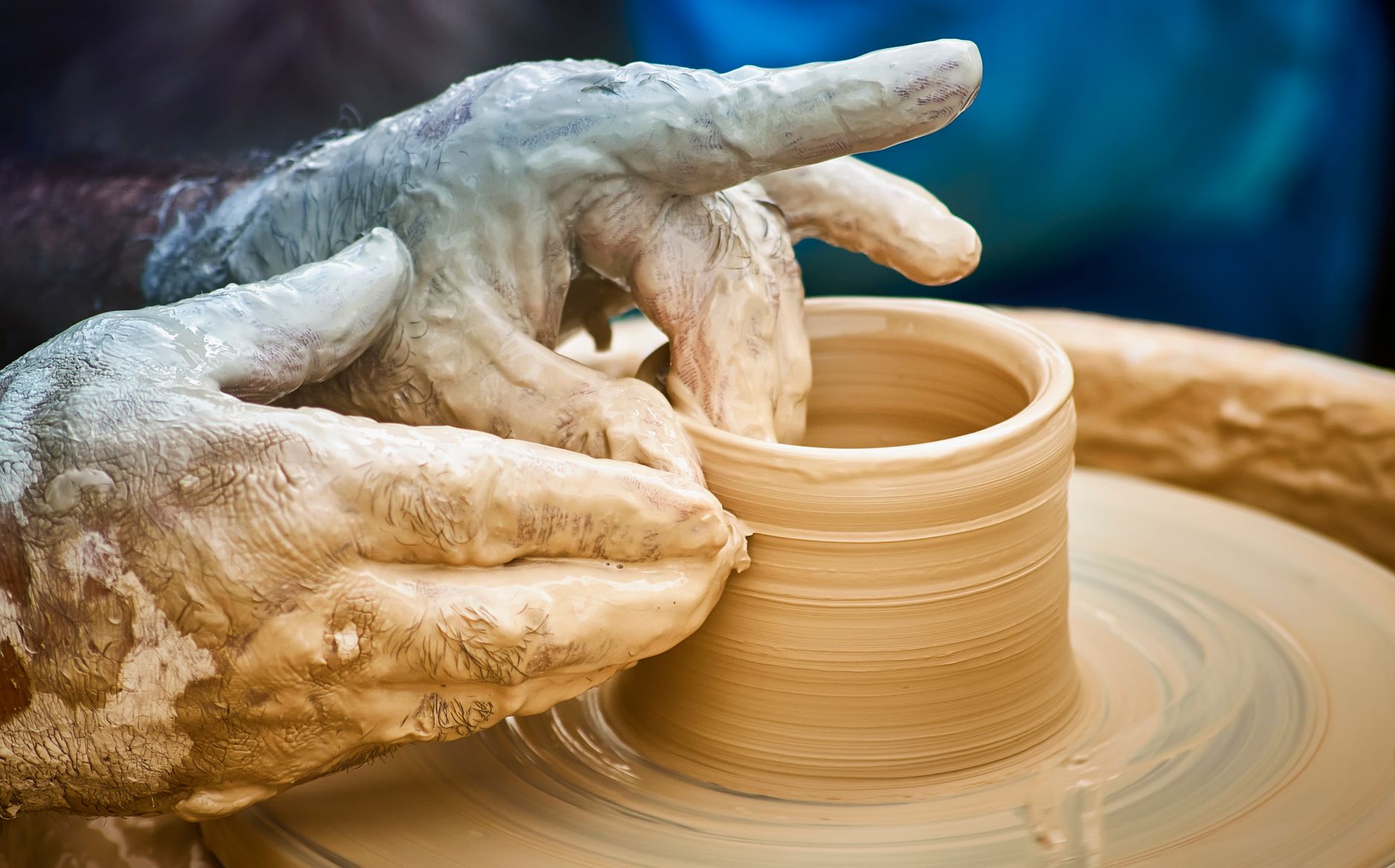
Help me deepen my relationship with you, God our loving Father by making me more sensitive to your touch, to your creative hands always forming me to a better self, a better person, a new creation in Jesus Christ daily; let me be still and pliant like the clay, O Lord, trusting you always.
Sometimes, your hands have to smash me, destroy me whenever like a clay I turn out badly; most of the time, those hands of yours Father exert the perfect pressure with the most delicate touch to keep perfecting me like a clay, transforming me into a beautiful work of art so unbelievable considering my origin of a simple lump of clay.
Oh, Lord, how easy it is like your disciples to answer you "Yes, we understand all these things" without really realizing the ongoing process of your hands shaping me like the clay.
One thing very clear with me, O God, is that whether I am smashed into a lump of clay anew or delicately turned into a beautiful pottery, these are both the works of your loving and creative hands; grant me the grace of patience to this tedious process of "trial and error" molding me like a clay pot; keep me "malleable" to the powers of your hands that sometimes are harsh, but often gentle and soft; and lastly, make my heart "pliable", to bend without breaking when the goings get so tough in bringing out the best in me for your greater glory. Amen.
40 Shades of Lent by Fr. Nicanor F. Lalog II Second Sunday in Lent, Cycle A, 01 March 2026 Genesis 12:1-4 +++ 2 Timothy 1:8-10 +++ Matthew 17:1-9
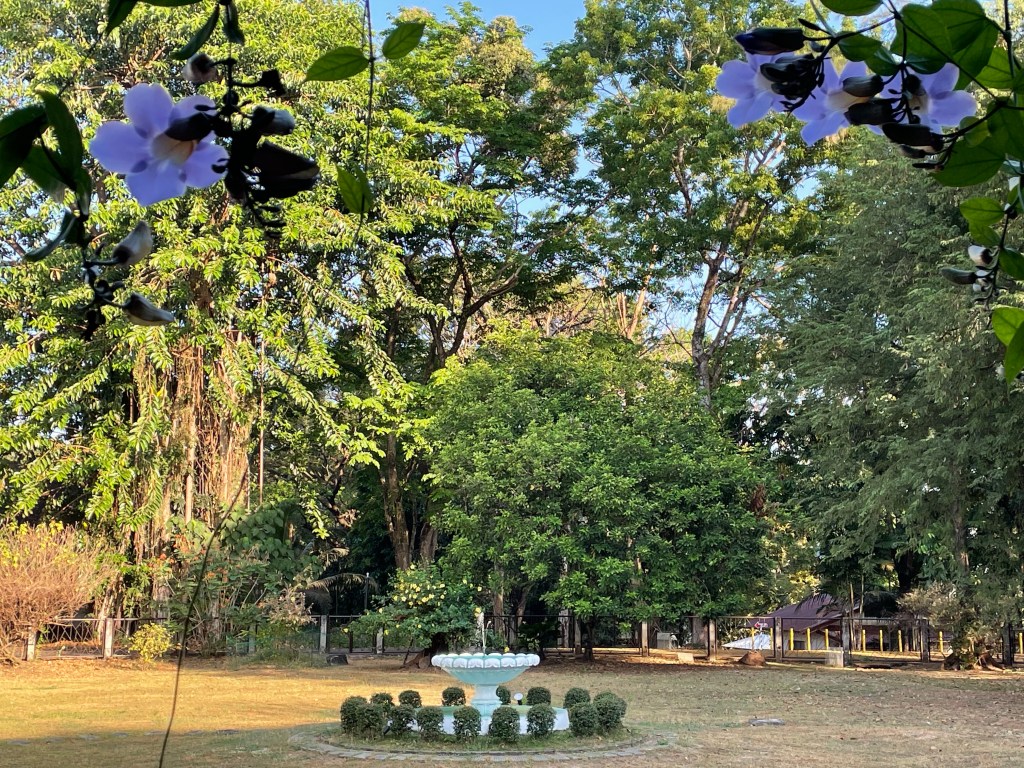
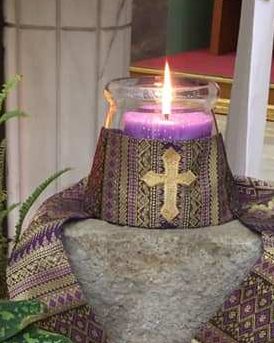
Photo by author, Sacred Heart Novitiate, Novaliches, QC, March 2023.
Despite the sweltering heat of summer, I have always loved the season of Lent when everything is subdued in liturgy – no Gloria nor Alleluia with the altar bare without flowers. It is during this season when we listen to a rich selection of readings from the Sacred Scriptures with music so solemn to guide us in our reflections and prayers to be converted and reconciled with God through one another especially those we have hurt or offended us.
That is why Lent is so beautiful because it is a call for transformation and transfiguration in Jesus Christ, when we are renewed as beloved children of God our Father. As we have reflected on Ash Wednesday, Lent is a coming home to God.
After six days Jesus took Peter, James, and John his brother, and led them up a high mountain by themselves. And he was transfigured before them; his face shone like the sun and his clothes became white as light. And behold, Moses and Elijah appeared to them, conversing with him. Then Peter said to Jesus in reply, “Lord, it is good that we are here. If you wish, I will make three tents here, one for you, one for Moses, and one for Elijah” (Matthew 17:1-4).
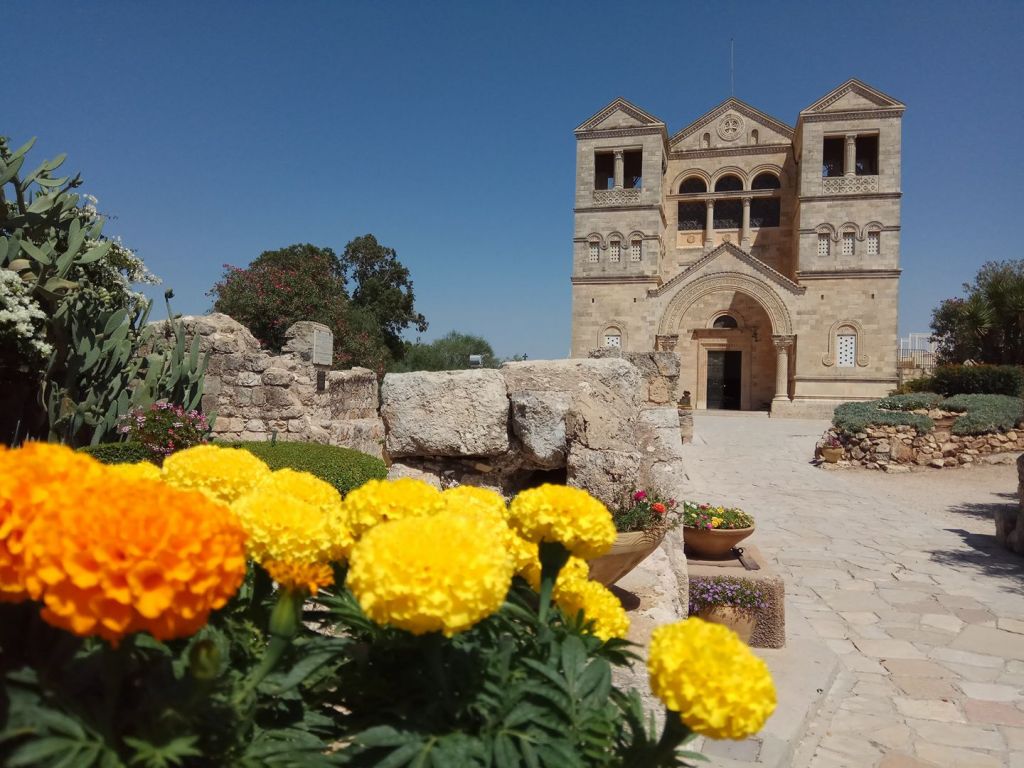
Church of the Transfiguration, Mount Tabor in Israel; photo from wikimedia.org.
Every second Sunday in Lent, we listen to the gospel account of Jesus Christ’s transfiguration at Mount Tabor that shows us the inseparability of the Cross and of the Resurrection, the tragedy of Good Friday and the glory of Easter Sunday.
Matthew, Mark and Luke shared the same event with minor variations in their respective account, agreeing on the basic details of the scene that happened on a high mountain six days after Jesus identified himself at Caesarea Philippi as the Christ or Messiah who shall suffer and die but rise again on the third day.
What I like most of the common details mentioned by the three evangelists in their accounts of the transfiguration were the words spoken by Peter to Jesus, “Lord, it is good that we are here.” So lovely.
Photo by author, Sacred Heart Novitiate, Novaliches, QC, March 2024.
Many times we are like Peter who tell Jesus the same words “Lord, it is good that we are here” without really knowing what we are saying. And surprisingly, we often speak these words to Jesus during those moments when we feel him most incomprehensible – hindi maintindihan just like during that scene at the transfiguration.
We have been saying since Ash Wednesday that “life is Lent” – a daily journey to God’s loving presence within us and among us. Life is a daily ascent, of coming close to God that is never easy.
We all struggle in our prayer life because prayer is stripping ourselves naked before God, confronting our true selves. That’s difficult but transformative, making us grow to become better persons.
So many of us could not even keep up with the Sunday Mass, God’s third commandment, “Remember to keep holy the Sabbath day.”
But, thanks be to God that there are moments of prayers and during the celebration of sacraments when we feel so high in the Lord’s presence we could not understand nor explain yet, feel so good to be there.
There were times when we truly heard Jesus telling us, teaching us how to overcome great temptations and trials in life that after being spared from all the troubles and sins, we felt so good to be there with the Lord.
Or, how can we forget those times we faced the most severe difficulties we have had in life when we have lost a loved one, or we have experienced defeat and failure, painful sufferings like sickness or betrayal when we felt so down, so empty and depleted but also felt the gentle touch of Jesus through the kindness of some strangers or faithful friends, inspiring us to rise and be not afraid to start anew in life, convinced that it is good to be there in the Lord.
Recall those times when it was the face of Jesus we saw on those familiar people or even strangers who shared with us the warmth of being welcomed, of being loved, of being forgiven that made us feel so good to be with the Lord.
Our most difficult moments, our most trying times are when we get better, when we mature and grow, when we are transformed in Jesus Christ. Many times, we hardly understand what is going on except that we believe and hold on to Jesus our Lord despite the many temptations that come our way to follow the ways of the world. But, experience have shown us that doing that is not good at all.
Photo by author, Lent 2021.
As we have reflected last Sunday, life is a Lent, a wilderness with so many voices competing for our attention. Many times we listen more to the voice of the devil that lure us into taking shortcuts and instant routes than follow the word of God that tells us to wait and persevere.
This Sunday, Matthew intensifies that call to us to listen to God’s call and voice when during the transfiguration a voice was heard saying, “This is my beloved Son, with whom I am well pleased; listen to him” (17:5).
After the transfiguration of Jesus, everything he shall be telling us is to forget ourselves, take up our cross and follow him.
St. Paul insists this to Timothy in our second reading today, to “bear our share of hardship for the gospel with the strength that comes from God” (2Tim.1:8). Likewise, the story of the call of Abram in the first reading reminds us of our same call from the same God to leave our comfort zones to a life of blessedness, of holiness.
It is always good to be with the Lord; and wherever he is, there we must always be (Jn.12:26). Jesus is always where there is love and kindness, mercy and justice, poverty and emptiness. Even death and darkness for that is when and where we are transformed and transfigured in Christ. That is why it is good that we are with him always. Let us pray:
Lord Jesus, there are so many things I do not understand in this life, especially when I have to be silent to be with you in prayer, to forget myself and carry my cross and follow you in the path of simplicity, kindness and service; but, one thing though is clear: it is when I am with you, even when I could not see clearly everything, that is when I feel peace and fulfillment within, when I feel so good to be here with you. Let me ramain in you, Jesus. Amen.
Church of the Transfiguration, Mount Tabor, Holy Land; from custodia.org.
Lord My Chef Sunday Recipe for the Soul by Fr. Nicanor F. Lalog II Third Sunday in Advent-A (Gaudete Sunday), 14 December 2025 Isaiah 35:1-6, 10 ><}}}}*> James 5:7-10 ><}}}}*> Matthew 11:2-11
Photo by author, December 2019.
Our churches are bursting in hues of pink this Third Sunday of Advent rejoicing not only in the fast approaching Christmas but most especially in the Lord’s Second Coming already happening in our midst.
Like John the Baptist in today’s gospel who was imprisoned at the time, we could feel in our own waiting for Jesus his saving presence in the many good things happening within us and around us.
When John the Baptist heard in prison of the works of the Christ, he sent his disciples to Jesus with the question, “Are you the one who is to come, or should we look for another?” Jesus said to them in reply, “Go and tell John what you hear and see: the blind regain their sight, the lame walk, lepers are cleansed, the deaf hear, the dead are raised, and the poor have the good news proclaimed to them” (Matthew 11:2-5).
Remember our reflection last Sunday of John’s preaching in the desert of Jordan signifying our own desert where amid the dryness and emptiness Jesus comes to us, Jesus is most present with us and in us. That is because more than an imagery of nothingness and death, the desert signifies too our intimacy with God. Many times in life, God brings us or allows us to get lost in our own desert to experience his intimacy with us, his immense love for us because when we are sufficient and strong, we rarely feel him nor even desire him. But, when we are like in a desert with nothing, that is when we long for God, and most especially feel him present.
That is why every prophet in the Bible including our Lord Jesus Christ frequented the desert and wilderness to show their intimacy and communion with God. The desert is thus transformed into a greenery filled with life like what Isaiah prophesied in the first reading today:
The desert and the parched land will exult; the steppe will rejoice and bloom. They will bloom with abundant flowers, and rejoice with joyful song. The glory of Lebanon will be given them, the splendor of Carmel and Sharon; they will see the glory of the Lord, the splendor of our God… Then will the eyes of the blind be opened, the ears of the deaf be cleared; then will the lame leap like a stag, then the tongue of the dumb will sing (Isaiah 35:1-2, 5-6).
See now the transformations found in our readings: in the last two Sundays we heard Isaiah speaking of the dried and barren desert but today he spoke of its transformation into a lush and verdant stretch of land; in the gospel we find John still in the desert, firm and unchanging in his preaching though his situation had changed a lot.
Last Sunday John was freely proclaiming the coming of the Christ in the desert as he sternly warned the Pharisees and Sadducees of their judgment; this Sunday, John was still in the desert but imprisoned awaiting death when he reproached King Herod in taking his brother Philip’s wife Herodias. But despite that clear danger daily hanging on his head, John was not disturbed at all as he patiently awaited the coming of the Messiah that he sent emissaries to Jesus to ask if he is already the Christ.
Here we find something so human in John the Baptist, so much like us when we sort of doubt ourselves not because we lack faith but simply we just want to be sure of what we are hearing, what we have seen, of what God is really doing.
Photo by author, December 2021.
Let it be clear: like John, most often we doubt ourselves not really God when things happen not according to our plans or expectations. Inasmuch as life is a mystery, God is more mysterious! Most of the time, we cannot understand his ways because he moves so differently, even unpredictably from what we know and expect.
Perhaps, John had a different scenario in his mind about the arrival of the Messiah like in the Old Testament tradition of judgment day, of action-packed events punishing evil people. Recall how called the Pharisees and Sadducees “You brood of vipers…Even now the ax lies at the root of the trees. Therefore every tree that does not bear good fruit will be cut down and thrown into the fire (Mt.3:10).
But something totally different was happening at that time as he heard while in prison – many people and their lives were being transformed. John realized something deeper than expected was going on in Judea and Galilee. And when his emissaries relayed to him the reply of Jesus, John realized that indeed the Christ he was proclaiming had arrived in Jesus. As a prophet well-versed with the scriptures, John found Jesus as the fulfillment of the prophecy by Isaiah when the blind can see, the lame can walk, dead are raised and the good news proclaimed to the poor.
It must have been a Nunc Dimittis experience of Simeon for John that soon enough, he died a martyr ahead of his Lord and Master Jesus Christ. John indeed prepared the way of the Lord in his birth and in his death, showing us the importance of patience in awaiting Christ and in experiencing the joy in his coming.
Be patient, brothers and sisters, until the coming of the Lord. See how the farmer waits for the precious fruit of the earth, being patient with it until it receives the early an the late rains. You too must be patient. Make your hearts firm, because the coming of the Lord is at hand (James 5:7-8).
Photo by author, December 2020
Before the COVID pandemic, my brother and I used to rest at Camp John Hay in Baguio where he would buy in one of the shops there a line of local and organic perfumes. His favorite scent was called “Patience” but one time when we went there, it had ran out of stock that he said wryly, “maski ba naman pabango na patience, wala na rin?”
So true! Patience seems to have been almost extinct in this age of instants. Nobody wants to be patient anymore especially if one can have almost everything instantly. Even during the time of the early church, people have been impatient in life that St. James wrote them on the importance of patience in our journey of faith, in awaiting the Lord’s return.
From the Latin word patior that means to suffer, patience is a kind of suffering, of bearing the pain of waiting especially over a long period of time that we doubt if it is still worth the waiting at all. But we fail to “see” or realize as St. James pointed out like the farmer that waiting is never passive nor empty; there is always something wonderful happening that we do not see like the germination, growth and blooming of crops and plants. The more patient we are, the more suffering in waiting, the greater always the joy that comes when our waiting is finally fulfilled!
Advent teaches us this third Sunday that we need to be patient for waiting itself is a holy ground where we experience God’s coming and intimacy. Though patience tests our limits, it transforms us too!
Think of the stalactites and stalagmites in caves formed millions of years by drops of water. Or the great natural wonders of earth that took thousands of years of formation, transformation. Most of all, our very selves. Who we are and what we are today are long years of patient efforts to be healthy or successful or simply be alive. And that’s a great reason to rejoice.
Photo by author, December 2020.
Patience is so difficult to practice like in our daily experiences of horrendous traffic everywhere but with patience, we arrive at our destination. Patience transforms us into better persons and disciples of Jesus, enabling us to rejoice no matter what is the situation we are into. It is in the midst of sufferings and waiting, of patience and impatience that Jesus calls us to experience his silent and steady presence resting upon us like the rains every farmer is so familiar with. Our joy is doubled, becoming a rejoicing when we practice patience in our endeavors, in life itself.
Let me end this reflection with a quotation I memorized as a child on the wall of our former family dentist’s office in Meycauayan, Bulacan that said:
Time is fast for people who rush; time is slow for people who wait; time is not for people who love.
The most loving persons are also the most patient ones. Always. And first among them is Jesus Christ who patiently awaits us to return to him so we can experience his joy. Amen. Have a joyful week ahead!
Lord My Chef Daily Recipe for the Soul, 28 August 2025 Thursday, Memorial of St. Augustine, Bishop & Doctor of the Church 1 Thessalonians 3:7-13 <*((((>< + ><))))*> Matthew 24:42-51
Photo by author, St. Paul Center for Renewal, Alfonso, Cavite, 20 August 2025.
Praise and glory to you, Lord Jesus Christ as you continue to touch us, comfort us, and inspire us with the words of St. Paul to the Thessalonians; yesterday he addressed them like a father encouraging them his children in faith; today he referred to them as "brothers and sisters" to "increase and abound in love".
Now may God himself, our Father, and our Lord Jesus direct our way to you, and may the Lord make you increase and abound in love for one another and for all, just as we have for you, so as to strengthen your hearts, to be blameless in holiness before our God and Father at the coming of our Lord Jesus with all his holy ones. Amen. (1Thessalonians 3:11-13)
What a beautiful lesson about our relationships as a community of your believers and followers, of how we must regard one another as children with love and care of a parent, respect and goodwill as brothers and sisters!
Most of all, of wishing everyone to "increase and abound in love for one another"!
This is something we rarely hear these days, wishing others to increase and abound in love for one another; all we hear are prayers and wishes for more material blessings not realizing the superiority of love above all gifts; to pray to increase and abound in love is the noblest prayer we can offer for anyone because it means to be holy, to be closest to God, to be like Christ; to increase and abound in love is exactly what St. Augustine, our saint today, preached, "Love and do what you will."
Like St. Augustine, let our love increase and abound so that we do nothing to displease you Lord and our neighbors; increase and abound us in love, Jesus so we may be transformed in you. Amen.
Fr. Nicanor F. Lalog II Our Lady of Fatima University Valenzuela City (lordmychef@gmail.com)
Photo by author, St. Paul Center for Renewal, Alfonso, Cavite, 20 August 2025.
Lord My Chef Daily Recipe for the Soul, 06 August 2025 Wednesday, Feast of Transfiguration of the Lord, Cycle C Daniel 7:9-10, 13-14 ><)))*> 2Peter 1:16-19 ><)))*> Luke 9:28-36
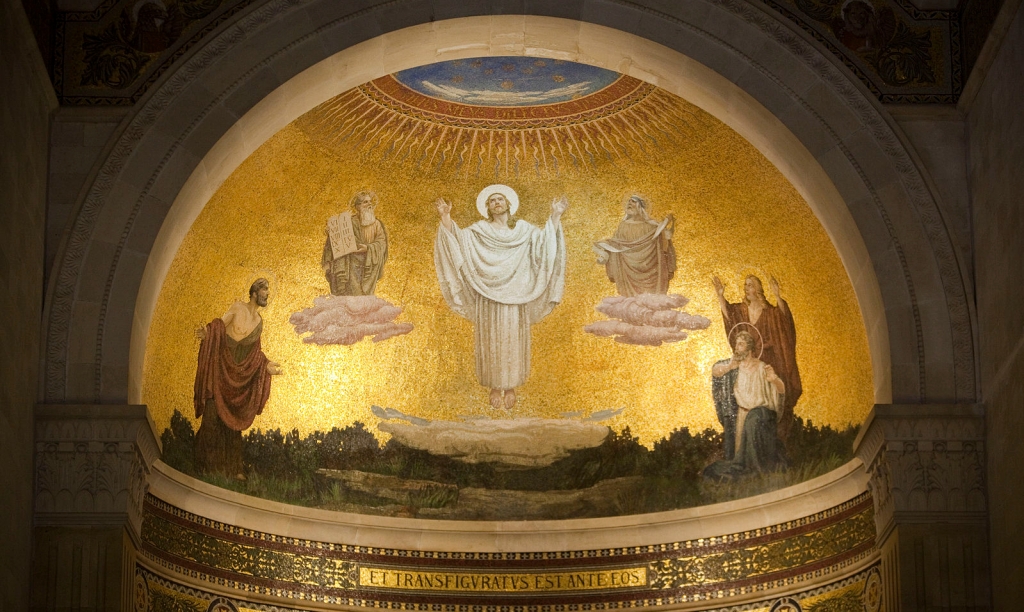
Apse of the Transfiguration Church at the Holy Land from wikimedia.org.
Jesus took Peter, John, and James and went up the mountain to pray. While he was praying his face changed in appearance and his clothing became dazzling white. And behold, two men were conversing with him, Moses and Elijah, who appeared in glory and spoke of his exodus that he was going to accomplish in Jerusalem (Luke 9:28-31).
Lord Jesus, I feel afraid in this scene; how difficult it must have been to the three Apostles privileged to join you up on Mount Tabor at your Transfiguration for it was not all glory - I could imagine the fear and sadness hearing Moses and Elijah speaking about your coming "exodus", your Passion, Death, and Resurrection. Why do you have to go through those sufferings and death? Why do you have to leave and depart from us?
Like Peter, I would have said the same to you, "Master, it is good that we are here; let us make three tents, one for you, one for Moses, and one for Elijah" so that we could just stay and remain up there in glory.
You know it so well, Jesus how when we are so wrapped in joy and glory and mystery, we hardly understand a thing except the experience of being overwhelmed, of finding you, of seeing you, and being with you; lead us down the mountain into life's daily realities where we you want us to bring that light to many others going through darkness in life.
We ourselves heard this voice come from heaven while we were with him on the holy mountain. Moreover, we possess the prophetic message that is altogether reliable. You will do well to be attentive to it, as to a lamp shining in a dark place, until day dawns and the morning star rises in your hearts (2 Peter 1:18-19).
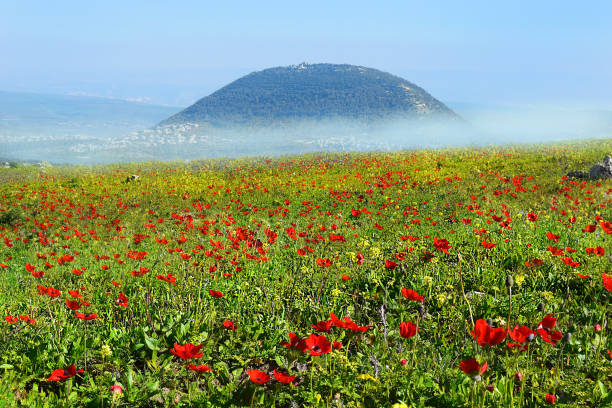
Spring blooming of poppies in Galilee near the Nazareth, against the background biblical Mount Tabor, Israel; photo from iStockphoto.com.
Enlighten our minds and our hearts, Jesus, like Peter to realize the deeper truths of your transfiguration and of our own transfiguration that begin always in a prayer life, an intimate relationship with you that gets clearer when we are in darkness, when with you at the Cross; let us take seriously every Mount Tabor experience proclaiming it as "altogether reliable" like Peter because we experienced you, we heard you and was with you; guide and strengthen us, Jesus when we are in darkness for that is when you transfigure us into yourself, when you speak to us of our own "departure"; most of all, keep us "attentive" to you in those dark moments to be like a "lamp shining in a dark place" (2 Peter 1:19). Amen.
Fr. Nicanor F. Lalog II Our Lady of Fatima University Valenzuela City (lordmychef@gmail.com)
Church of the Transfiguration, Mount Tabor, Holy Land; from custodia.org.
Lord My Chef Daily Recipe for the Soul, 25 July 2025 Friday, Feast of St. James the Greater, Apostle 2 Corinthians 4:7-15 <*{{{>< + ><}}}*> Matthew 20:20-28
Something struck me while praying the gospel for today’s feast of St. James the Greater – of how his mother approached Jesus with a request for him and his brother James “that these two sons of mine sit, one at your right and the other at your left, in your Kingdom” (Mt. 20:21).
It must be a very interesting company that Jesus had organized during his ministry composed not only of the Twelve and other disciples but most likely with so many others too that included their families like the mother of James and John believed to be the beloved disciple of Jesus. Traditionally known as Salome, their mom could easily be the patroness of “stage mothers” that abound most especially in the Philippines!
But kidding aside, it must be wonderful to tag along with them in following Jesus where everyone is welcomed. It is a journey not meant to cover distances and places but actually an inner journey inside one’s self that we shall see in the life of James the Greater. It is a journey that begins right here in our heart when we too, like James leave everything to follow Jesus.
For astonishment at the catch of fish they had made seized him and all those with him, and likewise James and John, the sons of Zebedee, who were partners of Simon. Jesus said to Simon, “Do not be afraid; from now on you will be catching men.” When they brought their boats to the shore, they left everything and followed him (Luke 5:9-11).
Photo by author, San Juan, La Union, 26 July 2023.
It must have been difficult for James to leave everything including their father Zebedee and follow Jesus. See that in the description by Luke of their call by Jesus, James and John as well as the brothers Simon and Andrew were all “rich kids” with their own fishing boats with hired men as workers at that time!
Clearly, money was not a problem with James and his buddies; however, one thing was missing in them – meaning and direction in life which they found in Jesus while listening to his preaching and finally in that miraculous catch of fish. I have always felt that perhaps, Zebedee allowed his two sons to leave him and their business for the same reasons so that they mature in life and be more responsible. We find this trace of attitudes or sense of entitlement in the brothers James and John when they asked Jesus to rain fire upon a Samaritan village that have refused them passage on their way to Jerusalem (Lk.9:54-56). Hence, Jesus named them as Boanerges for “sons of thunder” (Mk.3:17) due to their temperament.
In following Jesus, James had to learn the hard way the process of formation and transformation in Jesus that began in his heart. All along their journey from the shores of Galilee to Jerusalem, James remained by the side of Jesus Christ, probably unaware of that inner journey taking place right inside his heart to truly become a part of God’s Kingdom by sharing in the Lord’s Passion, Death and Resurrection. He had seen and experienced along with the other Apostles the great powers of Jesus not only in preaching but most especially in calming the storms, walking on sea, exorcising evil spirits, healing all kinds of sickness, and even raising to life some who have died.
Most of all, James was privileged to have witnessed along with his brother John and Peter the two important stops in Jesus Christ’s journey to the Calvary: first, on Mount Tabor for the Transfiguration and second, at Gethsemane for the agony in the garden. In both events in the life of our Lord, James was a privileged witness of his coming glory and then of his passion and death. Our gospel today on his Feast is sandwiched between these two major events of the Transfiguration and Agony in the Garden as this is set shortly before Palm Sunday when Jesus entered Jerusalem that led to his sacred pasch.
Jesus said in reply, “You do not know what you are asking. Can you drink the chalice that I am going to drink?” They said to him, “We can.” He replied, “My chalice you will indeed drink, but to sit at my right and at my left, this is not mine to give but if for those for whom it has been prepared by my Father.” When the ten heard this, they became indignant of the two brothers. But Jesus summoned them and said, “You know that the rulers of the Gentiles lord it over them, and the great ones make their authority over them felt. But it shall not be also among you. Rather, whoever wishes to be great among you shall be your servant; whoever wishes to be first among you shall be your slave. Just so, the Son of Man did not come to be served but to serve and to give is life as a ransom for many” (Matthew 20:22-28).
Painting by El Greco, “Pentecostes” (1597) from commons.wikimedia.org.
It would only be after Easter and the Pentecost when all these major stops in James’ personal journey with Christ would become clear to him and the other Apostles. Eventually, he became the first Apostle to be martyred as Bishop of Jerusalem during the persecution by King Herod of Agrippa in 40 AD (Acts 12:1-2), fulfilling Christ’s words to him that he would indeed “drink from his chalice” to be with him in his Kingdom.
A thousand years later, devotion to James the Greater would spread far and wide in Spain after relics of his body were discovered in Santiago de Compostela. It is one of the world’s oldest and most popular pilgrimage site known as the Camino de Santiago de Compostela (the way of St. James).
Every year, pilgrims from all over the world do the camino from various points of Europe to the Cathedral of Santiago de Compostela where the Apostle’s body is buried as a spiritual hike or retreat and journey for spiritual growth.
Like James the Greater, the camino is more than the kilometers or miles covered but the journey within one’s self that leads to deeper faith in Christ by living out his gospel as portrayed in its marker and symbols of a staff and scroll of the gospel proclaimed by the Apostle .
A marker along the camino de Santiago de Compostela.
It is my fervent prayer that some day I will be able to do a camino de Santiago de Compostela but for the mean time, we strive to continue in following the steps of James the Greater in making that inner journey within one’s self, beginning in our heart by leaving our “boats” of security to remain always at the side of Christ even if he has to smoothen our rough edges as a person and cleanse us of our sins that prevent us in drinking his chalice to be one in his Kingdom. The key is to serve, not to be served as Jesus insisted.
Sometimes in life, we just have to make “sakay” as we used to say as in “sakay lang ng sakay” or “ride on, man, ride on” without really knowing where our trip would lead us.
James the Greater simply made “sakay” in Jesus without knowing Christ was already fulfilling his wish of “drinking from his chalice” which proved that, indeed, the longest journey in life is the distance between the mind and the heart (Dag Hammarskjold). Amen. Have a blessed weekend! Fr. Nicanor F. Lalog II, Our Lady of Fatima University, Valenzuela City (lordmychef@gmail.com).
*All photos from Camino de Santiago de Compostela courtesy of Fr. Jigs Sta. Rita.
Lord My Chef Daily Recipe for the Soul by Fr. Nicanor F. Lalog II Friday in the Third Week of Easter, 09 May 2025 Acts 9:1-20 ><]]]]'> + ><]]]]'> + ><]]]]'> John 6:52-59
Photo by author, statue of St. Paul the Apostle, St. Paul Retreat Center, La Trinidad, Benguet, 06 January 2025.
Lord Jesus Christ, you are alive and always around us, present in each one of us that whatever we do to each one we also do unto you as you called on Paul before his conversion, "Saul, Saul, why are you persecuting me?" (Acts 9:4)
Enlighten our minds and our hearts, Lord Jesus for we are many times more than a Saul than a Paul; let us admit the times we "persecute" you in others like Saul when we speak ill of them especially in social media; though we may not be exactly like Saul with a sword and army of men, many times we "breathe with murderous threats" against others who are not like us in color and creed and outlook in life; with your grace of light Jesus, remove our blindness to the many forms of persecutions we undertake against one another especially in your name that until now we are so divided, "quarreling among ourselves" like those Jews in Capernaum.
Give us the courage, Jesus, to confront and change our behavior and attitudes that "persecute" others; help us to go back to you in our hearts to be converted and transformed in your Resurrected Body as better disciples despite the wounds we may have that are due to persecutions too have suffered; let the cycle of persecution stop in us so we may start a series of transformation in ourselves, in our homes, and in our community. Amen.
Photo by author, St. Paul Retreat Center, La Trinidad, Benguet, 06 January 2025.
The Lord Is My Chef Daily Recipe for the Soul by Fr. Nicanor F. Lalog II Tuesday, Feast of the Transfiguration of the Lord, 06 August 2024 Daniel 7:9-10, 13-14 ><}}}}*> 2 Peter 1:16-19 ><}}}}*> Mark 9:2-10
Photo from commons.wikimedia.org of mosaic inside the Basilica of the Transfiguration on Mt. Tabor, Israel.
Thank you very much, Lord Jesus, "in taking us always with You, apart from others by ourselves like Peter, James, and his brother John to a high mountain” (cf. Mark 9:2); many times You set us apart from others amid many darkness like that night on Mount Tabor just to be with You, to experience You; how ironic in this age of so much light everywhere with a world running 24/7, the more we are plunged in darkness that we feel lost and empty. Continue to invite us to detach from so much worldly attachments that are so irresistible due to social media and the glamor that come with them.
And he was transfigured before them, and his clothes became dazzling white, such as no fuller on earth could bleach them… Then a cloud came, casting a shadow over them; then from the cloud came a voice, “This is my beloved Son. Listen to him” (Mark 9:2-3, 7).
Like Peter, James, and John we also wonder at the meaning of your Passion and Death when You are the Christ? Why all the sufferings happening in us and among us with all the confusions and divisions going on?
Like Peter during the Transfiguration, we do not know what we are saying to you, Lord; whether we are filled with joy or burdened with sorrow, we speak without thinking much even if you know what is in our hearts. Open our hearts, dear Jesus, to always listen to You by remaining with You on the path to Your Cross; let us listen more than talk or click more without much reflections; two ears form the image of heart, never the mouth nor the lips. Let us heed Peter in his words today:
Moreover, we possess the prophetic message that is altogether reliable. You will do well to be attentive to it, as to lamp shining in a dark place, until day dawns and the morning star rises in your hearts (2 Peter 1:19).
Bring us back to your path of faith, Jesus; amidst all these noise and divisions of relativism and wokism, open our hearts by listening intently to your voice when all is dark and even dead or as it happens these days, blindingly so bright with artificial lights because for as long as we return to You, sin and failures become means for us to be changed and transformed - or transfigured when we rise in your Resurrection. Amen.
A 1311 painting of the Transfiguration by Italian artist Duccio di Buoninsegna from commons.wikimedia.org.
40 Shades of Lent by Fr. Nicanor F. Lalog II Sunday Recipe for the Soul, Lent II-B, 25 February 2024 Genesis 22:1-2, 9, 10-13, 15-18 ><}}}}*> Romans 8:31-34 ><}}}}*> Mark 9:2-10
Photo by Ms. Analyn Dela Torre, 12 February 2024 in Bgy. Caypombo, Santa Maria, Bulacan.
While praying our gospel this Second Sunday in Lent, the song Yesterday by the Beatles kept playing at the back of my mind, especially the first two stanzas that say:
Yesterday all my troubles seemed so far away. Now it looks as though they're here to stay. Oh, I believe in yesterday.
Suddenly, I'm not half the man I used to be. There's a shadow hanging over me. Oh, yesterday came suddenly.
Written by Paul McCartney and recorded by the Beatles in 1965, Yesterday is a sad love song about break up that greatly changed the lost lover who was “Suddenly, I’m not half the man I used to be.”
Beautiful music, beautiful lyrics on this beautiful Sunday with another beautiful gospel as Mark leads us from the wilderness last week to Mount Tabor with Jesus Christ and his three disciples whose experiences were like the Beatles in Yesterday.
Jesus took Peter, James, and John and led them up a high mountain apart by themselves. And he was transfigured before them, and his clothes became dazzling white, such as no fuller on earth could bleach them.
Mark 9:2-3
Basilica of the Transfiguration on Mt. Tabor, Israel from custodia.org.
See how the three apostles were overjoyed with the sight of Jesus transfigured, conversing with Moses and Elijah with Peter feeling so “high” that he offered to make three tents for them to remain there. It was the same experience of joy in the Beatles’ Yesterday when McCartney had that great feeling of being loved he thought would last forever.
But,both moments of joy were so brief with the transfiguration cut off immediately after Peter had spoken while McCartney felt his troubles came “suddenly”.
Like his account of Christ’s temptation last Sunday, Mark’s version of the transfiguration is so short unlike those by Matthew and Luke; however, Mark never lost attention to important details that showed the solemnity of the scene from start to finish despite a sudden shift in the mood as they went down the mountain.
As they were coming down from the mountain, he charged them not to relate what they had seen to anyone, except when the Son of Man had risen from the dead. So they kept the matter to themselves, questioning what rising from the dead meant.
Mark 9:9-10
For Mark, the transfiguration of Jesus led the disciples to deepen their faith in Jesus amid his growing mystery especially in the light of his oft-repeated Passion, Death and Resurrection, as if telling us of the many troubles ahead on the road to Easter.
Hence, it is no coincidence that like the transfiguration, Mark ended abruptly his gospel account when Mary Magdalene, Mary the mother of James and Salome saw an angel who spoke to them inside the empty tomb of Jesus very early on Easter: Then they went out and fled from the tomb, seized with trembling and bewilderment. They said nothing to anyone, for they were afraid (Mk. 16:8). Both in the transfiguration and in the Resurrection, the disciples were dared to reflect deeply on those events that later enabled them to make a firm response in their faith in Christ.
Mosaic inside the Basilica of the Transfiguration on Mt. Tabor, Israel from commons.wikimedia.org..
The same thing applies to us today. Many troubles lie ahead our lives, inviting us to follow Jesus more closely in prayers and reflections to find the meanings and lessons of life’s light and darkness, joy and sadness, triumph and defeat, even of death that keep on hovering above us, even enveloping us at times. We need to deepen our faith in God who had sent us his Son Jesus never stops doing to be our companion in this journey of life especially when we are passing through mountains and valleys, rivers and seas. In the song Yesterday, McCartney sang of our most common experience of having loved and lost yet taught us so much lessons in life. And music.
One thing was clear with the Apostles – and McCartney too – that even though troubles and problems were always with them along the way, they just lived through it and made the most out of them like the Church, including a classic love song!
How about us today, what is our faith response to the many darkness and light we have gone through in life’s journey?
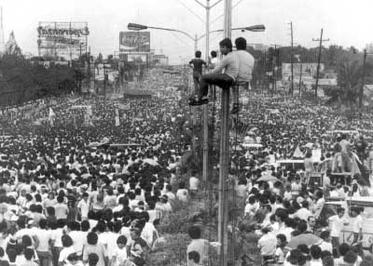
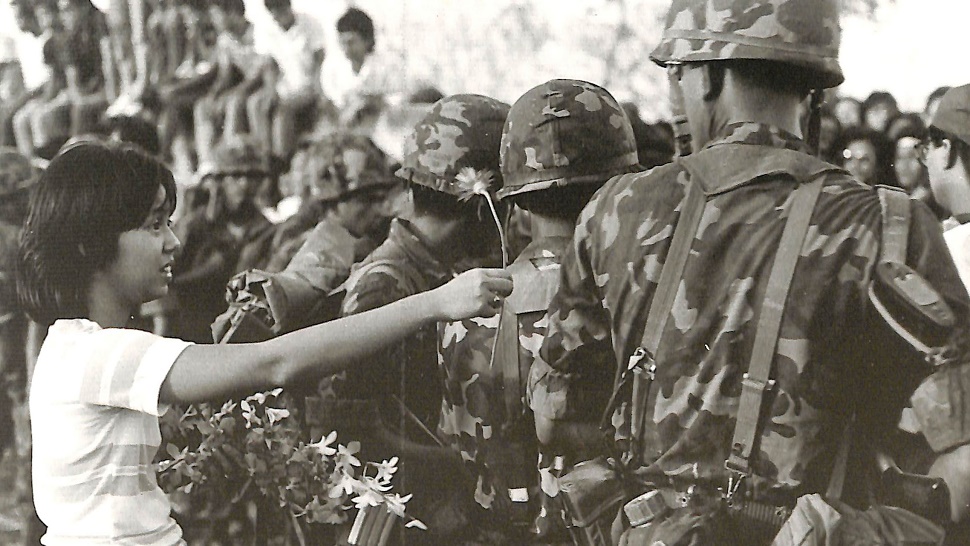
Photo by Roger Buendia/Presidential Museum and Library via esquiremag.ph.
It is always easy to blame others for our many woes in life as we fail to see our own moments of transfiguration. Jesus gifts us with a personal transfiguration event to make us better to be like him but, do we welcome or, run away from them?
Today is the 38th anniversary of the EDSA People Power Revolution when we must ask ourselves how we have personally responded to that great moment of grace from God, a transfiguration in itself, a pasch like the Lord’s. Have we truly valued EDSA 1986, until now?
How unfortunate that EDSA now stands for everything that is wrong with us, especially our wrong choices and wrong decisions in the past 38 years. EDSA invites us to examine our very selves as a Filipino and as a Christian, a disciple of Christ.
Photo from iStockphoto.com of Mount Tabor in Israel where Jesus is believed to have transfigured.
At his transfiguration, Jesus showed the inseparability of the mystery of the Cross and of his glory on Easter, the closeness of Mount Tabor with Golgotha. The mountain in the bible is always a coming to God, a communion in him.
Every nature lover knows very well the mountain is life itself, difficult to climb, easy to descend. Here now is the beautiful part of the gospel. And song Yesterday. Mountains surely change us but the choice is ours if we want to become better or bitter.
Set on what is believed to be Mount Tabor, the transfiguration was a passage, a foretaste of Christ’s pasch that not only brought him to his glory but transformed too the whole human race and the world itself. In the same manner, McCartney expressed poetically in Yesterday his transformation when “Suddenly, I’m not half the man I used to be.”
From en.wikipedia.org.
This is the good news of this Sunday: every mountain in life is a grace of transfiguration, of being better persons than before. We never come out – or down – the same persons every time we enter through whatever passages or climb any mountain in life. We are always changed, we always emerge different than who we were before after each passages we came through in life.
God gives us the grace and power to choose to be better and stronger, wiser and holier than bitter or resentful with every trials we hurdle in life. This was the experience of Abraham in the first reading when he completely trusted God who asked him to offer his son Isaac on a mountain. It was a very tough test for Abraham who waited in his old age to have a son only to be sacrificed later? But Abraham never doubted God that he still went up the mountain, and as he was about to sacrifice Isaac, an angel stopped him, telling him how God was so delighted with his faith and obedience that he was eventually blessed abundantly after.
Each of us is passing through different trials at this very moment. Many times we feel we suffer more than others, that our tests are tougher than the rest. It is useless and a waste of time to compare ourselves with others. One thing is clear: God does not stop doing something good for us in Jesus, ensuring we get better each day than yesterday. Let the words of St. Paul today assure us that “If God is for us, who can be against us? He who did not spare his own Son but handed him over for us all, how will he not give us everything else along with him? (Rom. 8:31-32)” Have a blessed week ahead, fellow traveler in Christ! Let us pray:
God our loving Father, thank you for the gift of this Season of Lent so we may experience more your Son Jesus Christ's coming to us in this journey of life, our companion amid the darkness and light and many troubles including the little deaths we experience in life; give us the faith and trust of Abraham to offer you those dearest to us because if ever you ask something from us, it is to make more room in ourselves for your abounding grace and gifts of transformation in Christ Jesus with Mary, our Lady of Fatima. Amen.
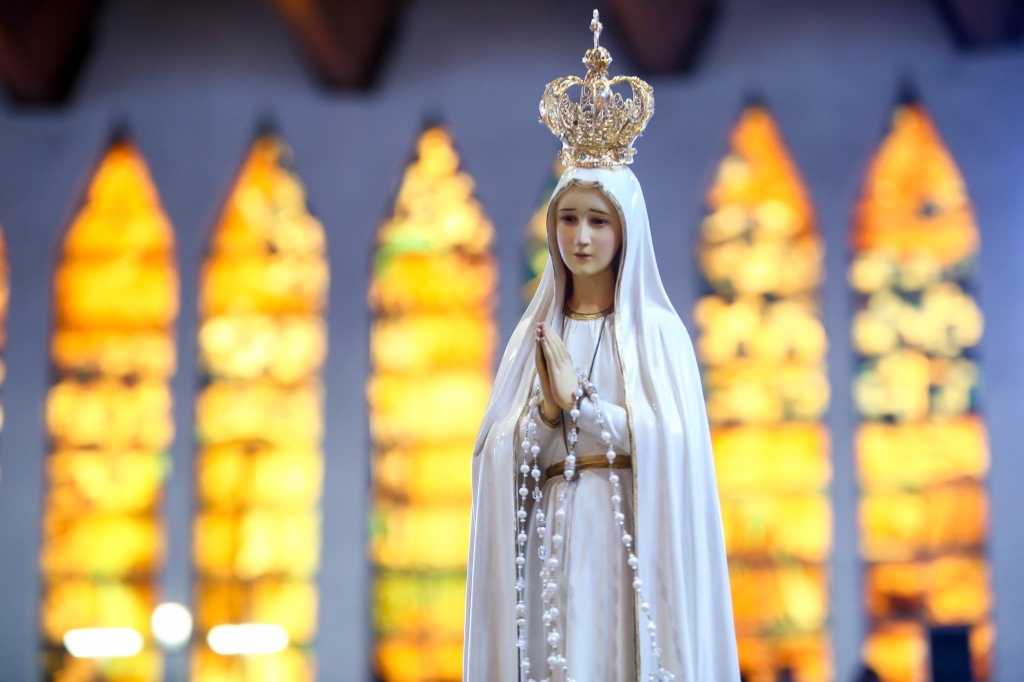
This Sunday, 25 February 2024, is also the Canonical Coronation of the National Pilgrim Image of Fatima here in Valenzuela City, the very image raised at EDSA in 1986. Photo from cbcp.net.
The Lord Is My Chef Sunday Recipe for the Soul by Fr. Nicanor F. Lalog II
Feast of the Transfiguration of the Lord, Cycle A, 06 August 2023
Daniel 7:9-10, 13-14 ><}}}*> 2 Peter 1:16-19 ><}}}*> Matthew 17:1-9
Photo of the mosaic inside the Basilica of the Transfiguration on Mt. Tabor, Israel (from commons.wikimedia.org).
Today we take a break from our gospel readings to celebrate the Feast of Transfiguration (August 06) that falls on a Sunday this year. The segue fits perfectly the series of parables we heard these past three Sundays that mentioned judgment day at the end of time.
Recall how Jesus interpreted his parables especially the separation of the weeds and wheat at harvest time as well as keeping the good fish caught in the net, throwing the bad ones that all evoke of judgement day in the end of time. For Matthew, the transfiguration of Jesus is exactly about the end of time when Christ’s glory is revealed at his Resurrection and ultimately in his Second Coming.
Jesus took Peter, James, and his brother, John, and led them up a high mountain by themselves. And he was transfigured before them; his face shone like the sun and his clothes became white as light.
Matthew 17:1-2
Mt. Tabor, believed to be the site of the Transfiguration of Jesus. Photo from iStockphoto.com.
In the Gospel according to Matthew, major events in the life of Jesus Christ mostly happened on a mountain: his temptation (Mt. 4:8), his inaugural teaching, the sermon on the mount (Mt. 5:1) and the sending of his apostles on their mission throughout the world until the end of time (Mt. 28:16).
Here at his transfiguration on top of the “high mountain” of Tabor we find glimpses of Christ’s explanation of the parable of the weeds among the wheat when he said that “the righteous will shine like the sun in the kingdom of their Father” (Mt. 13:43). See how this transfiguration of the elect at the end of time that was shown to Daniel in the first reading is expressed exactly in the same way as that of the face of Jesus on Mount Tabor that had “shone like the sun” as witnessed by the three apostles. Peter strongly attested to it later as we have heard in the second reading.
Last week in the daily readings from Exodus we have heard how the face of Moses also shone like the sun after he had conversed with God on Mount Sinai and every time he would see God at his tent called the dwelling in their journey in the desert. That is the context why Peter volunteered to build three tents for Jesus, Moses and Elijah during the transfiguration. The Jews have a celebration called feast of booths or tents they called sukkoth. The tent is the dwelling place of God in the wilderness that eventually became the temple of Jerusalem. It was the closest thing they have with God and with heaven. At the transfiguration of Jesus, the three apostles were enthralled at the experience and sight they did not want to go down because it was literally heaven, being with God. The transfiguration event itself for them was the fulfillment of their faith and everything in the Old Testament.
They would realize later that to dwell with God means to continue the journey in Christ, with Christ marked with many ascents and descents happening not just in space or physically but more of the interior kind. That is how we are transfigured, always inside. Right in our heart and soul. That was the deeper meaning of Moses entering God’s dwelling in the desert – of him being one in God, with God – that his face would shone after, prompting him to cover it because people were scared.
Photo from custodia.org, Basilica of the Transfiguration on Mt. Tabor, Israel.
Whatever is found on the face is always a reflection of what is in the heart and soul. No amount of cosmetics and beauty procedures can ever bring out that glow and radiance of anyone’s face beaming with joy and fulfillment, peace and contentment.
The face is the reflection of the depths – or shallowness – of one’s heart and soul. There is an English word used to describe this inner dynamics of the face – countenance. Any change in our countenance indicates something is being transformed within us as a result of our communion with God. That is why we describe some people even we do not know them as malalim or deep, or magaling magdala ng problema because of their countenance. In the same manner, we easily notice something rotting inside a person when despite one’s having good features like flawless skin or aquiline nose, beautiful eyes and the like. This is what the young people would call as “uma-aura” when they pose for FB or IG. Aura is the spirit within evoked by one’s face that cannot be manipulated.
The face of Jesus shone like the sun at his transfiguration primarily because deep inside him is his complete and perfect union in the Father. Jesus would always insist on this reality within him, his perfect communion in the Father from which also flows his total obedience which will reach its highest point at his Passion and Death on the Cross, his own Pasch or exodus.
There at Mount Tabor in his transfiguration, we are shown that Christ’s glory cannot be separated from the Cross. His majesty and triumph shall come from his pasch. And so are we his disciples. That is why the voice heard by the apostles said, “This is my beloved Son, with whom I am well-pleased; listen to him”. From now on, Christ would be speaking of his coming Passion, Death and Resurrection. All his lessons after Mount Tabor are about our participation in his paschal mysteries. Do we listen?
The apostles learned and embraced all these lessons in a process slowly with the guidance of the Holy Spirit after Pentecost. That is why Jesus told them to come down from Tabor to continue their journey to Jerusalem to fulfill his mission. Through them we have believed despite our not having seen Jesus that is how he would appear as “Lord” on the mountain that we the faithful are climbing to participate in the ultimate manifestation of his return at the end of time.
And there lies the good news of this Feast of Transfiguration happening in this dry month of August, often described as ghost month too. As we go through the last half of Ordinary Time’s remaining 17 weeks, may we continue to ascend in Christ, with Christ with his Cross in sharing his paschal mysteries in our daily lives. After the euphoria of Easter Season that had closed on Pentecost Sunday, we are reminded anew this sixth of August to never lose sigh of the Cross of Good Friday as our path to glorious transfiguration of Jesus Christ.
To journey with Christ, listening and obeying his voice is something of the inside and not just of space or place. Discipleship demands persistent practice of the Lord’s teachings and examples as we shall hear from the gospel these coming Sundays.
As COVID-19 virus wanes that we resume most of our activities minus the many protocols before while still being cautious and careful, may we face our inner issues in Christ and the Holy Spirit to be transfigured in him. Amen.Have a blessed week ahead. It is a Sunday, celebrate Mass with others in your Parish, pray for those still suffering from the effects of typhoon Egay and Falcon.
Painting of the Transfiguration by Italian artist Duccio di Buoninsegna between 1308 and 1311 from commons.wikimedia.org.