“Knocking On Heaven’s Door”

Lord My Chef Daily Recipe for Soul by Fr. Nicanor F. Lalog II
Friday in the Fifteenth Week of Ordinary Time, Year II, 17 July 2026
Isaiah 38:1-6, 21-22, 7-8; 38:10-12, 16 <*((((>< + ><))))*> Matthew 12:1-8
Photo by author, sunrise at Camp John Hay, Baguio City, 19 November 2018.
God our loving Father,
I thank you for this wonderful
Friday and most of all,
for your moving words
from King Hezekiah,
the very same words
in our hearts especially
for those like me who have
reached senior year,
or may be going through
many difficulties in life
that make us all realize
our mortality
and finiteness.
Father,
we are all afraid of death,
of dying,
of the pain of getting sick,
of the process so hurtful
in all aspects; but, like
King Hezekiah in the first reading,
what really makes us worry
with death is the unfinished work
you have given us,
the sadness of what shall
happen to those we shall leave behind
not because we believe so much
in ourselves but more because
we know we have not finished
your work; forgive us for those
moments we have procrastinated
your work, for those times we
balked and dilly dallied to your
commands, or to those times
we refused to follow you;
hear our pleas like your
faithful King Hezekiah
knocking at heaven’s door:

Once I said: “In the noontime of life I must depart! To the gates of the nether world I shall be consigned for the rest of my years… Like a swallow I utter shrill cries; I moan like a dove. My eyes grow weak, gazing heavenward: O Lord, I am in straits; be my surety” (Isaiah 38:10, 14).

Photo by Mr. Howie Severino, Taal Lake, Batangas, 13 November 2018.
O Lord our God
most loving,
our life and meaning
who desires most mercy
than sacrifice for
you are the Lord of sabbath
(Matthew 12:7-8),
like King Hezekiah and
Bob Dylan in this modern time
we "knock at heaven's
door" for those in great need
at these very moment
like the disciples of Jesus
so hungry while crossing a field
of grain on a sabbath
and picked the heads of grain
and ate them; heal those so sick
not only in body but also in mind,
heart and soul;
ease their pains and sorrows;
and should we reach the final end,
welcome us into your heavenly
kingdom; but still, as we
hope against hope,
heal us by turning back
the clock of time
for us to fulfill your
assigned task and
mission.
Amen.
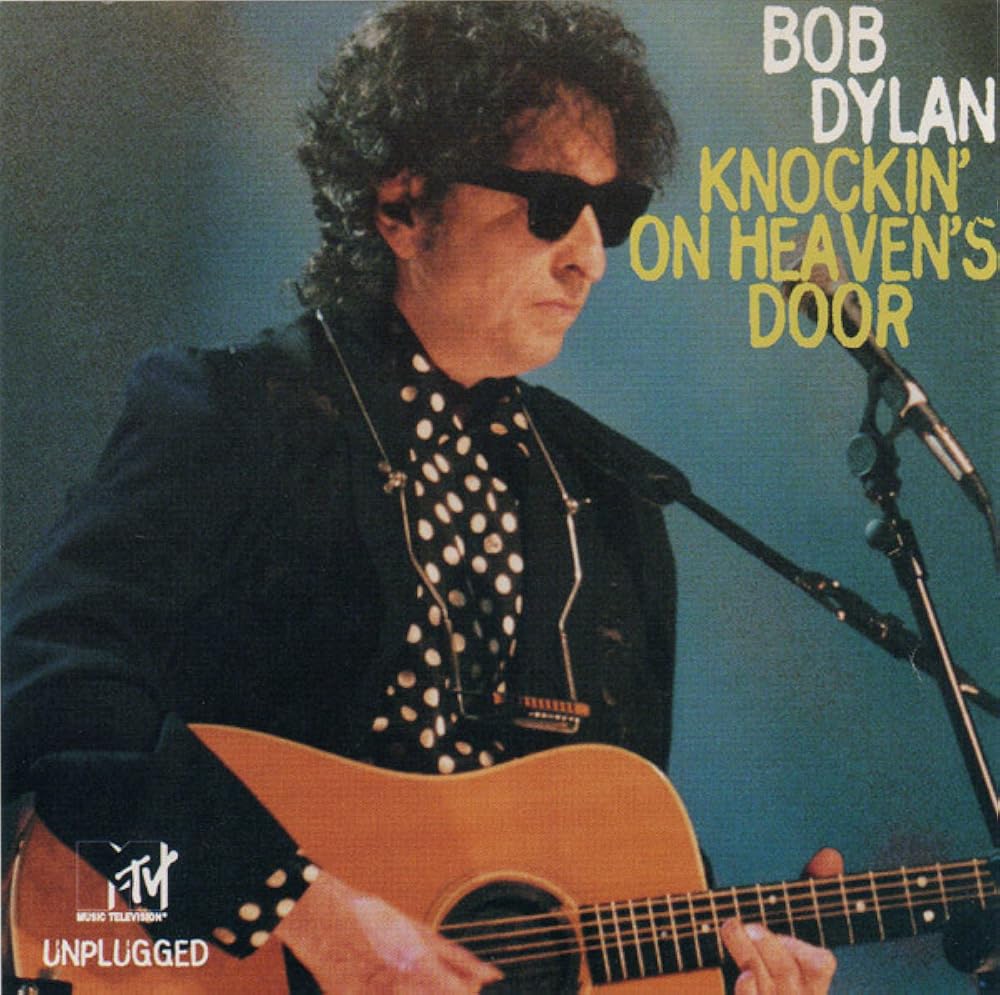
*While praying last night, we remembered Bob Dylan’s iconic “Knocking At Heaven’s Door” that he wrote as soundtrack of the 1973 film “Pat Garrett and Billy the Kid”. It became a worldwide hit after its release and had been covered by other artists like Eric Clapton, Randy Crawford and Guns N’ Roses.

“Knocking At Heaven’s Door” is praying hard to God when at the point of death. Like Hezekiah in the first reading, it is the baring of one’s soul to God, begging for his mercy that if possible be allowed to live a little longer. In this song, we find the lyrics and music elegantly and nobly simple, so characteristic of Dylan’s songs that earned him awards outside the music circle like journalism’s Pulitzer Prize special citation in 2008 and the recent Nobel Prize in Literature in 2016 “for having created new poetic expressions within the great American music tradition” (wikipedia).

In our prayer last night, we realized as we age that we fear death and its other daily manifestations like separation and other lifestyle shifts because of being sorry for not having done much in life that if given another chance, we might after all finish our mission like King Hezekiah in the first reading today. Knocking at heaven’s door is one of life’s most powerful prayer as it always “moves” God in the sense he grants our prayers not because he changes his mind but because we have finally surrendered to him and his Divine Will. Likewise, it reminds us to be faithful to our calling always so that when God calls us to death, we can let go easily.

Bob Dylan captured this so well citing the final scene of the movie for which he composed “Knocking At Heaven’s Door” when the frontier lawman was about to die, he gave or “surrendered” to his wife – Mama – his badge and gun because he had finished his job.

[Intro]
Ooh, ooh
Ooh, ooh

[Verse 1]
Mama, take this badge off of me
I can’t use it anymore
It’s getting dark, too dark to see
I feel I’m knockin' on heaven’s door

[Chorus]
Knock, knock, knockin' on heaven’s door
Knock, knock, knockin' on heaven's door

[Verse 2]
Mama, put my guns in the ground
I can’t shoot them anymore
That long black cloud is coming down
I feel I’m knockin' on heaven’s door

[Chorus]
Knock, knock, knockin' on heaven’s door
Knock, knock, knockin' on heaven's door

A blessed weekend everyone. Handle life with prayer always.

From YouTube.com

Promises, promises…

Lord My Chef Daily Recipe for Soul, 01 October 2025
Wednesday, Memorial of St. Therese of the Child Jesus
Nehemiah 2:1-8 <*{{{{>< + ><}}}}*> Luke 9:57-62
Photo by author, September 2019.
Promises, promises,
promises!
Forgive me, Lord Jesus
in making so many promises
to you for others
of great plans,
of grand designs,
of noble intentions
but never brought to
fulfillment due to
many excuses.
Many times,
I feel like those would-be
disciples in the gospel today,
coming to you,
offering to follow you
wherever you go but
when the road becomes
rough and steep, I leave you;
teach me to be like
St. Therese of the Child Jesus
to be simple,
to do my very best
with the little,
ordinary things
I can do.
Amen.
Photo by author, 01 October 2019.

God our anchor of hope

The Lord Is My Chef Daily Recipe for the Soul by Fr. Nicanor F. Lalog II
Tuesday, Memorial of St. Agnes, Virgin & Martyr, 21 January 2025
Hebrews 6:10-20 <'[[[[>< + ><]]]]'> Mark 2:23-28
Photo by author, Nagsasa Cove, San Antonio, Zambales, 19 October 2024.

Brothers and sisters: God is not unjust so as to overlook your work and the love you have demonstrated for his name by having served and continuing to serve the holy ones… This we have as an anchor of the soul, sure and firm, which reaches into the interior behind the veil, where Jesus entered on our behalf as forerunner, becoming high priest forever according to the order of Melchizedek (Hebrews 6:10,19-20).

What a beautiful passage,
so reassuring and timely in
this Ordinary Jubilee of 2025
with the theme of Hope;
in this world where promises
are often made to be broken
than kept, thank you dear Jesus
in assuring us of your keeping
your promises.
Like the anchor that keeps
a ship or a boat stable
while moored,
you O Lord Jesus Christ
as our anchor keeps us
filled with hope
because you never disappoint
like most humans.
Forgive us, dear Jesus,
when we anchor our hopes in
rituals and things like the Pharisees
who were so focused on the letters
about sabbath, forgetting its essence
as a good news, a break, a release
and freedom from the burdens of
work and time to be attentive to God
our very root and life.
Forgive us, dear Jesus,
when we are so afraid not to break
rules but we break persons,
we break promises to love
and to be kind with one another;
grant us the grace of courage
to persevere holding on to your promises
in the gospel like St. Agnes,
Virgin and Martyr
who opened herself to your Spirit
because you alone, O Christ
is able to "reach into the interior
behind the veil" of the temple into
the very presence of God in Heaven.
Grant us, O Lord, a true sabbath,
a break from our harsh judgments
of others based simply on
incomplete videos
and stories.
Amen.
Photo by author, Nagsasa Cove, San Antonio, Zambales, 19 October 2024.

Advent is fulfillment

The Lord Is My Chef Daily Recipe for the Soul by Fr. Nicanor F. Lalog II
Simbang Gabi-8 Homily, 23 December 2024
Malachi 3:1-4, 23-24 <'[[[[>< + ><]]]]'> Luke 1:57-66
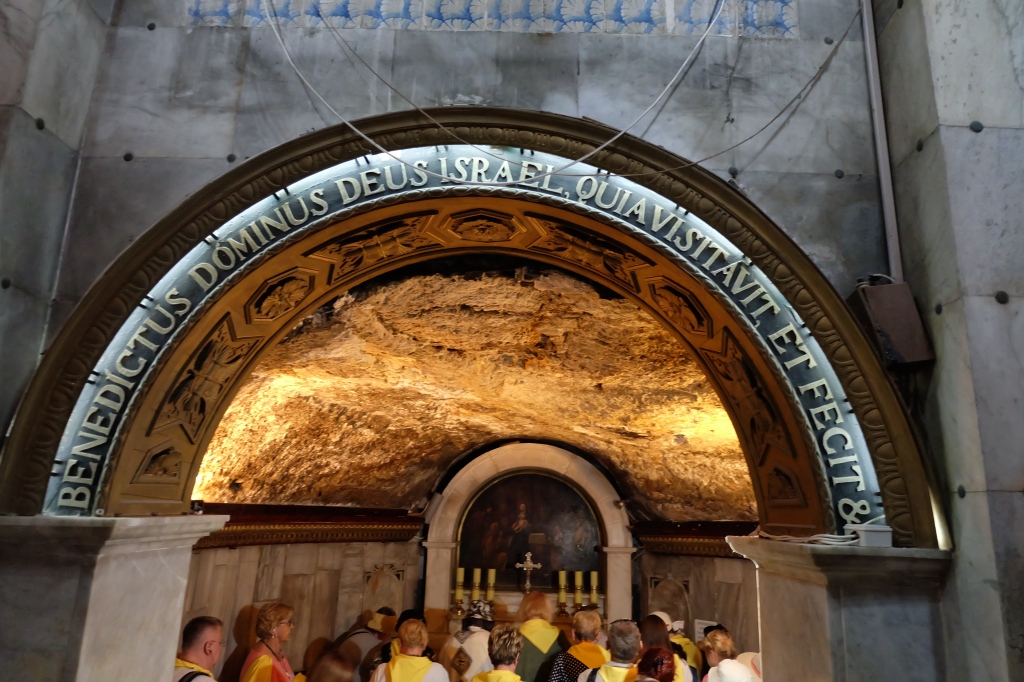
Photo by author, Church of St. John the Baptist, the Holy Land, May 2019.

We are now in our penultimate day of our Simbang Gabi. I love that word “penultimate” so often found in the sports page that means second to the last of the series.

From the Latin prefix pen- meaning “almost” + ultimatum for “last”, penultimate literally means “almost last” which gives a sense of fulfillment and of completion – exactly how we feel this eighth day of Simbang Gabi that is almost over with everything already fulfilled in our readings and prayers for Christmas.

When the time arrived for Elizabeth to have her child she gave birth to a son. Her neighbors and relatives heard that the Lord had shown his great mercy toward her, and they rejoiced with her. When they came on the eighth day to circumcise the child, they were going to call him Zechariah after his father, but his mother said in reply, “No. He will be called John.” But they answered her, “There is no one among your relatives who has this name.” So they made signs, asking his father… He asked for a tablet and wrote, “John is his name.” Immediately, his mouth was opened, his tongue freed, and he spoke blessing God. All who heard these things took them to heart, saying, “What, then, will this child be?” For surely the hand of the Lord was with him (Luke 1:57-62, 63-64, 66).

Painting of “Saint Luke Drawing the Virgin” by Flemish painter Roger van der Weyden (1400-1464); photo from en.wikipedia.org.  

See again the artistry and advocacy of Luke as an evangelist and a journalist. We can imagine the scene, experience the joy and excitement of the event in the tight-knit community with all the wonderful elements of a drama in real life.

Leading the scene is Elizabeth, the priest’s wife barren for years and beyond hope now gives birth to a son, creating excitement and gossip among the many Marites. Then Zechariah the priest who was silenced for nine months due to his doubts with the good news announced to him by the angel finally spoke praising God, filled with gratitude and wonder. And of course, the uzis (usiseros), the neighbors who shared in the joy and for a good reason and intentions wanted the baby named after his father.

That’s when Luke showed his skillful mastery of weaving together a wonderful piece of tapestry clearly designed by God that surprised everyone, including us today. “When they came on the eighth day to circumcise the child, they were going to call him Zechariah after his father, but his mother said in reply, “No. He will be called John.” But they answered her, “There is no one among your relatives who has this name.” So they made signs, asking his father… He asked for a tablet and wrote, “John is his name.” Immediately, his mouth was opened, his tongue freed, and he spoke blessing God.

Again, notice another minute detail mentioned by Luke when he called Elizabeth “his mother”.

Photo by author, Church of St. John the Baptist, the Holy Land, May 2019.

Of the four evangelists, Luke is the one who gave a lot of emphasis on the role of women in the society, especially the ancient Jewish one that was strongly patriarchal.

In the Visitation story yesterday, it was only Luke who had written a scene in the whole Bible with two women together conversing and in very positive mood. Women were so rarely put together in one scene especially in the Old Testament, a sort of what we may call as “gender bias” because women were always at odds with each other, even quarreling. Except for the Book of Ruth where we find two women not only in a single scene but a whole book and yet very pronounced there how it was Naomi the mother-in-law always portrayed in control or leading, always speaking while Ruth was silent, giving an impression of being so lovely yet very soft even submissive to elders and men.

Luke wrote the Visitation scene to clarify all these gender bias of their world then that persists even to our own time. Luke made a loud and clear statement in putting together Elizabeth and Mary in this one scene, an old, barren woman and a virgin, unmarried maiden both so blessed by God with infants in their wombs. Not only men are called by God to a special mission but most especially women who give birth. Elizabeth and Mary represent all the women of the world to remind everyone for all time that they are created in the image and likeness of God, with same dignity as men who must be respected at all times as indwelling of the Holy Spirit.

Photo by Pixabay on Pexels.com

Notice how throughout the scene from the annunciation to Zechariah and the Visitation, the wife of Zechariah was referred to by her name Elizabeth but, when controversy arose about the name to give her son, Luke emphatically wrote “his mother” to show that she has every right over her son, reaching its climax when Zechariah affirmed the mother as he wrote “John is his name.”

Think of those moments in your life when there are reversal of roles and suddenly God threw you – catapulted you – to a major role in life you only entertained in your wishful thinking and daydreaming because you have given them up, you have surrendered it due to a very long time of being disappointed like Elizabeth or Zechariah?

Think of those times when you realized, when you felt being at the center of attention for a good reason because you are good, you are so blessed, you did the right thing? How do you feel of the grace of God?

Think of those times when you did something so good that prompted others to “prepare the way of the Lord” like John the Baptist, when people around you were wondering what else you would achieve because clearly, God is with you?

On this penultimate day to Christmas, take time to speak God from your heart as you prepare for the fulfillment of His promise to you. I tell you, claim it now whatever you are asking God for Christmas. Remember what the angel told Mary at the annunciation, “nothing will be impossible for God.” Dare to open yourself to God, create a space within you for Him alone and let Him lead you like Zechariah whose name means “God remembers”, Elizabeth which means “God has promised” and John, “God is gracious.”

On this penultimate day to Christmas, we are assured God is gracious because God remembers His promise always. Amen. Have a blessed week ahead.

Photo by author, birthplace of St. John the Baptist underneath the Church of St. John the Baptist, the Holy Land, May 2019.

That precious, sweet “Yes”

The Lord Is My Chef Daily Recipe for the Soul by Fr. Nicanor F. Lalog II
Tuesday, Memorial of the Queenship of Mary, 22 August 2023
Isaiah 9:1-6   ><}}}}*> + ><}}}}*> + ><}}}}*>   Luke 1:26-30
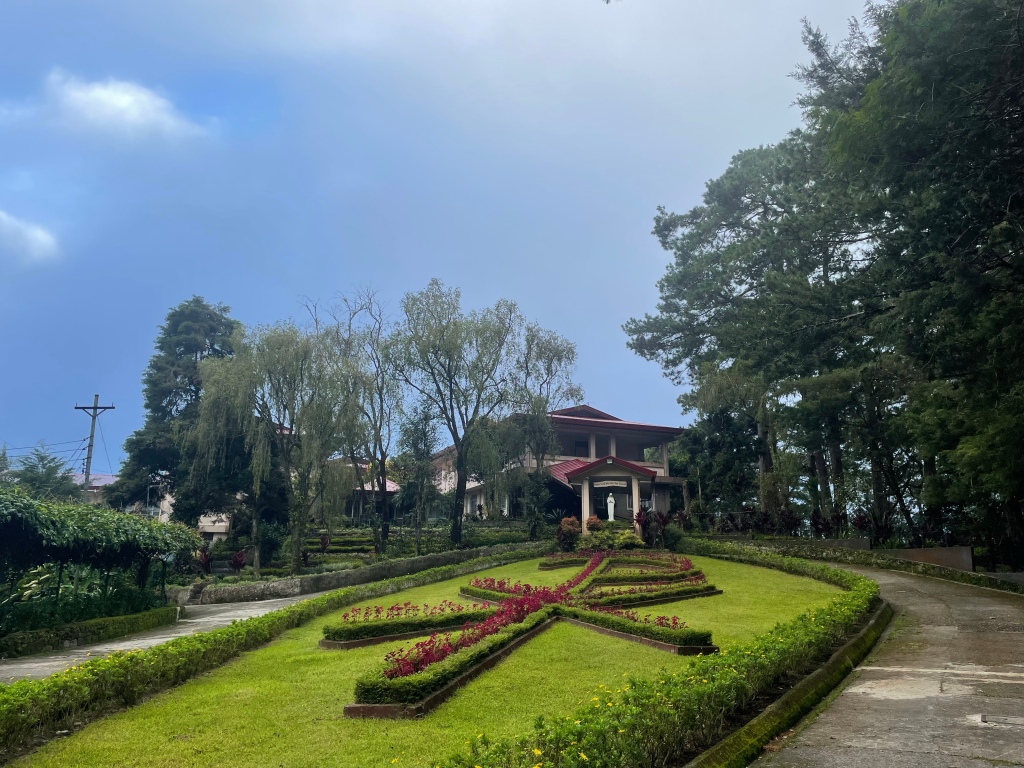
Photo by author, St. Scholastica Spirituality Center, Baguio City, 22 August 2023.

YES. Perhaps the most sweetest word we all wish to hear but also the most difficult word for us to say. We want others always saying “yes” to our requests and questions but we are so afraid, so hesitant telling it to others. Very often, we hide our “yes” in cloudy expressions like maybe, will try, or simply not say it all. Especially with God.

How funny that every vocation story of any priest and religious started with that simple “yes” – a “yes, Lord”! Or, “opo, Panginoon, susunod ako”!

Mary said, “Behold, I am the handmaid of the Lord. May it be done to me according to your word.” Then the angel departed from her.

Luke 1:38

How amazing that such a very simple word of three letters – yes – could be so powerful enough to change one’s life. Even history. And how could such a very short word with just one syllable be so difficult to say!

With every yes in life we hear, it becomes so sweet because we are affirmed. We feel valuable and precious when people say “yes” to us. However, we are very cautious in saying “yes” to others, especially to God and in the name or presence of God because when we say that “yes”, it becomes our very life.

Every “yes” becomes a commitment, a vow, a promise to keep. Not only for us priests and religious but everybody, especially husband and wife saying yes on their wedding day; doctors, lawyers and other professionals saying yes to uphold life, justice and freedom; children saying yes to obey their parents and teachers; everybody has to say a yes in different ways every day everywhere in many occasions and situations. Many times it looks so simple, sometimes it could mean life and death.

Photo by author, St. Scholastica Spirituality Center, Baguio City, 22 August 2023.

Every yes is precious and sweet because it is the beginning of love. That is why we need to affirm and stand with that yes day in, day out in our lives.

Like Mary, her “yes” to God did not happen just once but everyday in her life, reaching its highest point at the Cross when her Son Jesus Christ died. She must have had the most painful yet bittersweet yes too when she held Christ’s lifeless Body immortalized in Michaelangelo’s La Pieta.

But it was Mary’s yes that brought us Christmas and Easter, leading to Pentecost in the birth of our Church, and led her to heaven. That is why, we celebrate her Queenship today, a week after her Assumption.

O most Blessed Virgin Mary,
our Mother and Queen,
help us to say yes like you to God,
not once but every day in our lives;
pray for us to remain faithful in our yes
to him through our loved ones,
through his people and flock;
pray for us to keep our yes to God
simple like yours, trusting him always
even if our yes would lead us to the Cross
so that our yes would bring us also
to his presence in heaven.
Amen.
Photo by author, St.