“She’s Always A Woman To Me” (1977) by Billy Joel

Lord My Chef Sunday Music by Fr. Nicanor F. Lalog II, 15 November 2026
Photo by author, The Manila Club at BGC, June 2025.

A lot of great songs competed in our mind for this Sunday’s music we find so related with our Mass readings specially the first reading from the Book of Proverbs about a “perfect housewife” as example of diligence and virtue in preparing for the end of the world to happen at Jesus Christ’s Second Coming.

We chose Billy Joel’s 1977 song She’s Always A Woman as most apt to our Sunday readings than Barry Manilow’s 1974 Mandy and Dess’Ree’s 1994 You Gotta Be we featured here in July 2020 (https://lordmychef.com/2020/07/12/you-gotta-be-by-desree-1994/).

Aside from the fact that Billy Joel is one of our favorites, we find his writing this song in honor of his former wife and manager Elizabeth Weber so compelling, loaded with the best attributes of a “perfect housewife” mentioned in the Book of Proverbs that best describes too the two servants in the parable of Jesus who invested their master’s money that earned handsome profits. Though they separated later, Joel wrote this song to express his unconditional love and admiration for Weber, embracing both her fierce business drive in managing his professional career as a musician and her softer emotional side as his wife and beloved.

According to reports, people in the male-dominated music industry of that time labeled Weber as “cold”, even “ruthless” for her tough and uncompromising manner in negotiating Joel’s business deals. But Joel stood by his wife, defending her nature than change her nor apologize for her rough edges as a woman; hence, She’s Always A Woman:

She can kill with a smile, she can wound with her eyes
And she can ruin your faith with her casual lies
And she only reveals what she wants you to see
She hides like a child but she's always a woman to me
She can lead you to love, she can take you or leave you
She can ask for the truth but she'll never believe you
And she'll take what you give her as long as it's free
Yeah, she steals like a thief, but she's always a woman to me

Oh, she takes care of herself, she can wait if she wants
She's ahead of her time
Oh, and she never gives out and she never gives in
She just changes her mind

And she'll promise you more than the garden of Eden
Then she'll carelessly cut you and laugh while you're bleeding
But she'll bring out the best and the worst you can be
Blame it all on yourself 'cause she's always a woman to me

Mmm-mmm, mmm-mmm
Mmm-mmm, mmm-mmm-mmm-mmm

Oh, she takes care of herself, she can wait if she wants
She's ahead of her time
Oh, and she never gives out and she never gives in
She just changes her mind

She is frequently kind and she's suddenly cruel
But she can do as she pleases, she's nobody's fool
And she can't be convicted, she's earned her degree
And the most she will do is throw shadows at you
But she's always a woman to me

Mmm-mmm, mmm-mmm
Mmm-mmm, mmm-mmm-mmm-mmm

The 1977 album of Billy Joel, “The Stranger”, from which came the single “She’s Always A Woman To Me”; the album in 2020 was featured in Rolling Stone Magazine’s 500 Best Albums of All Time. Photo from billyjoel.com.

Joel as a musician is always a contrast for me without any definite label in his kind of music but he is such a genius he could blend into every genre so well and still remain the Billy Joel. A great story-teller in all his songs accompanied almost always by his venerable piano, Joel is deeply rooted in rock and roll with his catchy, lively tracks of pop but could dive deeper into hard rock like in his album Glass Houses and be so romantic in his love songs especially our personal hymn, Leave A Tender Moment Alone.

See this element of contrast in him so present in She’s Always A Woman that describes his former wife Weber.

And what is most amazing, they are all so true with us too, especially with our moms or every woman for that matter: She can kill with a smile, she can wound with her eyes while at the same time And she can ruin your faith with her casual lies. Check the many contrasts you can find and see them as so true! My unforgettable ones that remind me of my mom, a plain housewife are: She can ask for the truth but she’ll never believe you// And she’ll take what you give her as long as it’s free that is so funny and true with every mommy! Here is another trait of moms and wives I think, She is frequently kind and she’s suddenly cruel//But she can do as she pleases, she’s nobody’s fool//… And the most she will do is throw shadows at you.

Nobody’s perfect; what matters is we strive to become perfect, to become good and wise stewards of the Lord. Human love is imperfect; only God can love us perfectly. That’s why so often, we find our parents particularly mothers so difficult to explain in their attitudes with us because they love and care for us so much as Joel noted in his song:

And she'll promise you more than the garden of Eden
Then she'll carelessly cut you and laugh while you're bleeding
But she'll bring out the best and the worst you can be
Blame it all on yourself 'cause she's always a woman to me

We mentioned in our homily that the reading from Proverbs tells us not to seek perfection elsewhere than in faithfulness to everyday duties like most housewives, that we must all be humble handmaids of the Lord, humble servants of God in the fulfillment of the duties of our state which Jesus emphasized too in his parable of talents (https://lordmychef.com/2026/11/14/in-praise-of-housewives-models-for-watchful-waiting-in-the-lord/).

That is Joel’s message too in this beautiful tribute to his former wife Weber. It is now your turn to show that love to your mom or wife, sister and daughter. Hug and kiss them as you go to Mass this Sunday. And beginning today, be nice and kind to every woman and everyone for the end will surely come. God bless!


From YouTube.com.

“What A Fool Believes” (1978) by the Doobie Brothers

Lord My Chef Sunday Music by Fr. Nicanor F. Lalog II, 08 November 2026
Photo by author, Bucharest, Romania, November 2025.

We go funky this Sunday with the Doobie Brothers’ 1978 hit What A Fool Believes so related with the gospel on Jesus Christ’s parable of the ten virgins waiting for the arrival of the bridegroom: five were foolish, five were wise.

While praying over the parable with the Doobies’ music playing inside our head, we wondered why Jesus mentioned first the foolish, then the wise.

Answer: because most people in the time of Jesus even now are foolish! (See at how most of elected officials anywhere in the world are corrupt and inept put into office by fools like them! https://lordmychef.com/2026/11/07/being-wise-not-foolish/)

Being foolish like those five virgins who did not bring extra oil for their lamps is to live as if there is no God, that there is no final reckoning with God at the end of time, acting impiously with what the psalmist says, The fool says in his heart, “There is no God” (Psalm 14:1).

The fools are always the most self-centered, selfish people who think only of themselves, believing the world revolves around them, so foolishly convinced they are indispensable in life not realizing we would be better off without them actually. They may have lamps lighted for a while but are soon dimmed because inside they are empty and shallow, with nothing substantial really to keep their lamps. Exactly like that fool described in What A Fool Believes:

But what a fool believes he sees
No wise man has the power to reason away
What seems to be
Is always better than nothing
And nothing at all keeps sending him...

Composed by Kenny Loggins and Michael McDonald in 1978, What A Fool Believes is the usual story unrequited love of some men who develop illusions of being romantically involved in a relationship with a woman they have foolishly fallen in love with. It was first recorded by Loggins but it was McDonald’s version with The Doobie Brothers he had joined in 1975 who made it into the charts, giving them two Grammy awards in 1980 as Song of the Year and Record of the Year. In 2024, the song was inducted into the Grammy Hall of Fame becoming a certified classic.

Like the parable narrated by Jesus more than 2000 years ago with a dash of humor, What A Fool Believes teems with a lot of humor too set in the superb musicianship by The Doobie Brothers with McDonald on vocals with his most distinctive voice honed in his many recordings as one of the very talented session musicians of the famed Steely Dan composed of the late Walter Becker and Donald Fagen.

What A Fool Believes is very catchy and danceable driven by its syncopated rhythm of percussion and drum track with McDonald’s bouncy keyboard stabs and riffs, blending so perfectly into a smooth groove of soft-rock, jazz and blue-eyed soul music now labelled as yacht rock which we personally strongly dislike. Anyway, we are so glad that even the GenZ’s and Millennials love What A Fool Believes which is actually very intelligent music, from the lyrics to the instrumentations.

He came from somewhere back in her long ago
The sentimental fool don't see
Tryin' hard to recreate
What had yet to be created once in her life
She musters a smile
For his nostalgic tale
Never coming near what he wanted to say
Only to realize
It never really was

She had a place in his life
He never made her think twice
As he rises to her apology
Anybody else would surely know
He's watching her go

But what a fool believes he sees
No wise man has the power to reason away
What seems to be
Is always better than nothing
And nothing at all keeps sending him...

Somewhere back in her long ago
Where he can still believe there's a place in her life
Someday, somewhere, she will return

She had a place in his life
He never made her think twice
As he rises to her apology
Anybody else would surely know
He's watching her go

But what a fool believes he sees
No wise man has the power to reason away
What seems to be
Is always better than nothing
There's nothing at all
But what a fool believes he sees...

It seems the man here is someone we describe as hindi nakayanan his rejection by his beloved kaya bumigay at tuluyang nabaliw, living in that grand illusion of being once the boyfriend of the love of his life.

Like the ten virgins who fell asleep while awaiting the arrival of the bridegroom, we too fail and falter many times in life. But what distinguishes the wise from the foolish ones is that faith in Jesus Christ who sustains us and enables us to weather every storm in this life.

Let me end this with another round of praise and thanks to the great Alex Eala – not only for her athletic prowess but for her simplicity and humility, beauty and maturity when she said in her press conference yesterday after that cardiac game with Tereza Valentova that being tired is a blessing.

Very true!

We all get tired and Jesus assures us in his parable that’s fine like those ten virgins who fell asleep. What matters is we keep that fire burning within us by always having that extra oil in Jesus, always believing, always hoping and always loving as we strive to become better like Alex.

With some great music of course like What A Fool Believes by The Doobie Brothers.

From YouTube.com.

Being wise, not foolish

Lord My Chef Sunday Recipe for Soul by Fr. Nicanor F. Lalog II
Thirty-Second Sunday in Ordinary Time, Cycle A, 08 November 2026
Wisdom 6:12-16 ><}}}}*> 1Thessalonians 4:13-18 ><}}}}*> Matthew 25:1-13
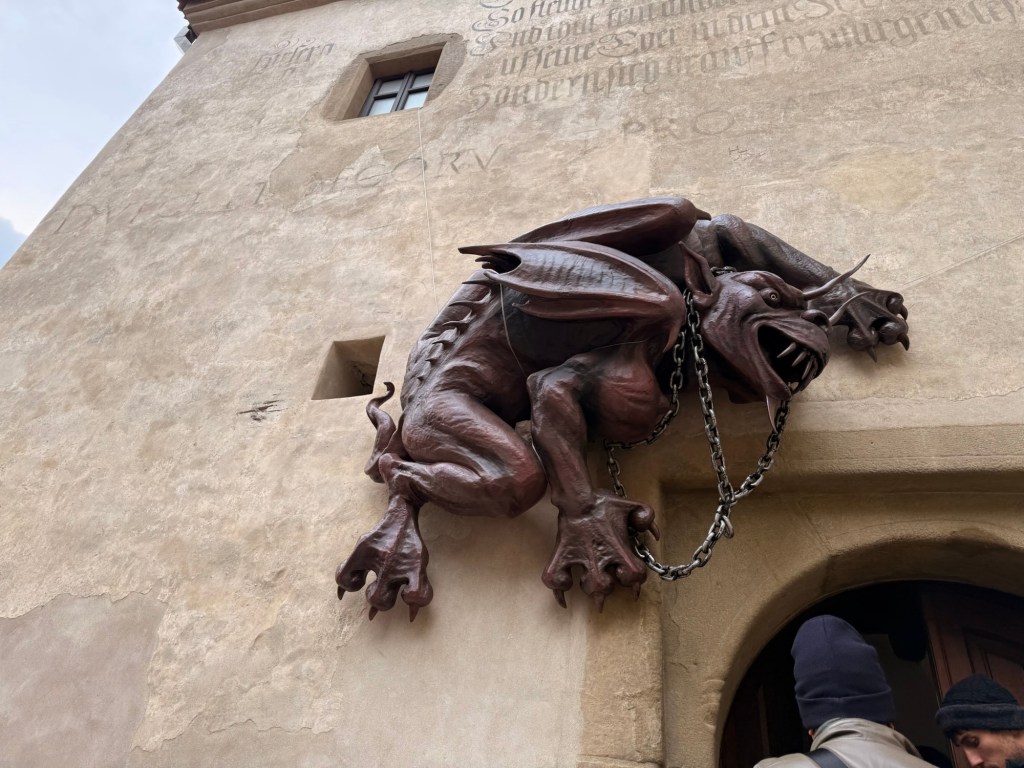
Photo by author, entrance to Bran Castle, aka, Dracula Castle, in Romania, November 2025.

As we enter into the penultimate month of 2026, notice how we show our complete folly in our Christian faith. Every year in November during Undas while we troop to cemeteries and churches to pray for our departed loved ones, there are still many who parade their children as vampires in complete ignorance of the true meaning of Halloween that is literally “hallowed evenin'” or holy evening. When what is truly wise is to dress their children as little saints, some parents imitate the benighted souls in the West celebrating horror and evil masked in trick or treat.

This cycle of folly is spread by some news media stories of buildings haunted by evil spirits while some schools with the most Catholic names encourage their students to submit scary stories of their paranormal experiences in their campus supposed to have been blessed and most likely where Masses are regularly celebrated. Most absurd and stupid of all is a hospital with the Blessed Virgin Mary as patroness having spooky Halloween decorations of bats and vampires at their ground floor offices and facilities.

These follies continue into December every year in the Metro Manila Film Festival that always feature a film or two dealing with either diabolic or irreverent themes at the time the whole Christendom is celebrating the birth of the Son of God who saved the world from evil and sin! All these on top of the complete commercialization of Christmas led by G-cash shamelessly advocating gift-giving in monetary terms.

Why all the “like” for what is low and gross, for social media contents that are lewd and obscene when we are supposed to be Christians who are wise?

Jesus told his disciples this parable: “The kingdom of heaven will be like ten virgins who took their lamps and went out to meet the bridegroom. Five of them were foolish and five were wise. The foolish ones, when taking their lamps, brought no oil with them, but the wise brought flasks of oil with their lamps. Since the bridegroom was long delayed, they all became drowsy and fell asleep (Matthew 25:1-5).

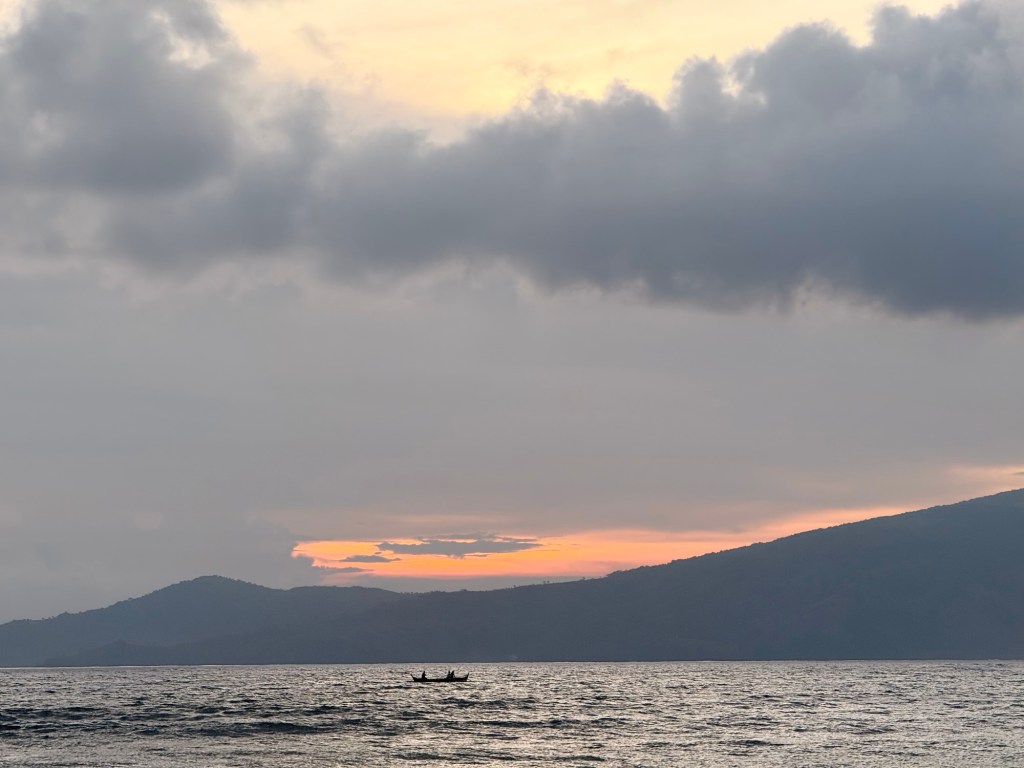
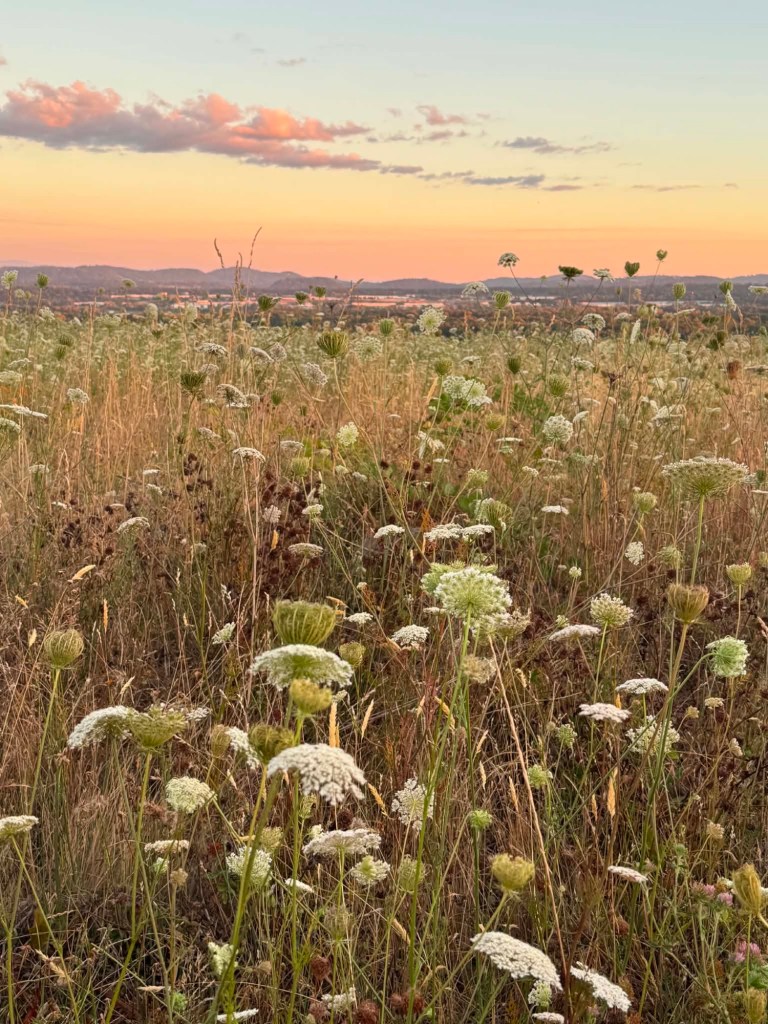
Photo by author, sunset at Subic Bay, 02 November 2026.

Sorry for the “rant” but this Sunday’s parable is very timely especially for us today if you examine why Jesus chose to mention first the foolish virgins and not the wise ones: is it because being foolish is one problem we all have, a sort of cancer or contagious disease afflicting everyone like during his time?

The kingdom of heaven will be like ten virgins who took their lamps and went out to meet the bridegroom. Five of them were foolish and five were wise.

Many times there are nuggets of truth in social media like those posts claiming the problem in the world today is that there are more foolish people than wise ones. What makes this reality so bad is how the foolish ones are often the most confident and noisy with the tragic result of having more followers who elect them into into politics or appoint to head government offices without any competencies at all.

Being foolish like those five virgins who did not bring extra oil for their lamps is to live as if there is no God, that there is no final reckoning with God at the end of time, acting impiously with what the psalmist says, The fool says in his heart, “There is no God” (Psalm 14:1).

The fools are always the most self-centered, selfish people who think only of themselves, believing the world revolves around them, so foolishly convinced they are indispensable in life not realizing we would be better off without them actually. They may have lamps lighted for a while but are soon dimmed because inside they are empty and shallow, with nothing substantial really to keep their lamps.

And what is the most substantial oil we need in our lamps, in this life that even if we drowse or fall asleep, we can still keep going through? God, of course!

Photo by author, sunset at Subic Bay, 02 November 2026.

Resplendent and unfading is wisdom, and she is readily perceived by those who love her, and found by those who seek her… For taking thought of her is the perfection of prudence, and whoever for her sake keeps vvigil shall quickly be free from care; because she makes her own rounds, seeking those worthy of her, and graciously appears to them in the ways, and meets them with all solicitude (Wisdom 6:12, 15-16).

How lovely is the author’s portrayal of wisdom as a person, the very person of God always present among us, so willing to be with us to help us in life. But, who searches her? Who really desires her?

To be wise is to desire God always. Without any desire for God and his holiness and attributes is complete folly. It is living only for the moment, living to eat and drink, then die. Without any desire for God is to not have any hope at all which is the opposite of love because without any hope, that is when we start destroying lives and things, exactly what those violent protesters did in Paris recently. Or anywhere else.

People without hope are like the foolish virgins in the parable who do not bring extra oil for their lamps because they see everything in darkness, who could not find things and life could still get better like those involved into extra-judicial killings, terrorisms and yes, leaders and nations who wage wars because they find the world so bad and evil that they have lost any hope for a better tomorrow, no room for dialogue and diplomacy that their only solution is to kill and annihilate others. So sad and tragic that these continue in our own time despite our being “modern” and advanced.

To think of wisdom, to desire God brings true freedom because that is when our mind and heart are no longer encumbered with concerns about worthless things in this life and world we keep on foolishly pursuing. The best part of it is that God is never far from those who truly seeks him!

Again, we congratulate and thank most of all, the great Alex Eala in her recent victories in Hong Kong especially in her interview after her match with Tereza Valentova when she said that being tired is a blessing.

Who does not get tired fighting in this cruel world?

Of course, we all get tired. Jesus tells us today that like those ten virgins, it is normal to fall asleep, to falter and fail sometimes. What makes the wise so unique from the foolish is that extra oil they have within, that glimmer of hope in the darkest nights of life fueled by our deep faith in God that there would always be something good in the battles we wage daily in life.

Here Alex Eala is the modern wise virgin with a lot of extra oil for her lamp, illumining the many dark areas in our lives especially of those those striving to live decently, patas na lumalaban sa buhay. Hindi korap!

Being wise is to believe in final judgement, in the resurrection of the dead at the end of time which nobody knows when would come. The wise simply goes on in life, living to the fullest, believing firmly in God, hoping fervently in him, and serving others in love like him as St. Paul reminds us the second reading.

Rest, my dear friends. It is a blessing to be tired, to fall asleep. Don’t forget to have that extra oil within always, Jesus Christ we receive in the Holy Eucharist to keep that fire burning to light us in the many darkness of life. Amen. God bless!

Time In A Bottle

Lord My Chef Sunday Recipe for Soul by Fr. Nicanor F. Lalog II
Twenty-Sixth Sunday in Ordinary Time, Year A, 27 September 2026
Ezsekiel 18:25-28 ><}}}}*> Philippians 2:1-11 ><}}}}*> Matthew 21:28-32
Photo by Joshua Woroniecki on Pexels.com

Yes, our Sunday reflection title is from that same 1972 Jim Croce classic, Time In A Bottle. It just popped out in my mind while praying for our Sunday homily – like last Tuesday when we remembered REM’s Everybody Hurts (https://lordmychef.com/2026/09/21/everybody-hurts/), Thursday Bob Dylan’s Blowing In The Wind (https://lordmychef.com/2026/09/23/blowing-in-the-wind-3/) and Friday with the Byrds’ Turn! Turn! Turn! (https://lordmychef.com/2026/09/24/turn-turn-turn-to-know-gods-time/).

It was a week of prayers aided by music I grew up with as it happens most of the time which I believe is part of my being old while unconsciously feeling fearful of the inevitable, death.

But, it isn’t morbid at all. I regard it as simply being realistic.

Like our liturgical calendar that is about to end in nine weeks on November 22 with the Solemnity of Christ the King followed the next Sunday after that on November 29 with the Season of Advent or the four Sunday preparation for Christmas!

Hence, all gospel accounts beginning this Sunday will focus on the coming end of time and the need for us to change our ways to make it to heaven, our final destination in this life.

Jesus said to the chief priests and elders of the people: “What is your opinion? A man had two sons. He came to the first and said, ‘Son, go out and work in the vineyard today.’ He said in reply, ‘I will not,’ but afterwards he changed his mind and went. The man came to the other son and gave the same order. He said in reply, ‘Yes, sir,’ but did not go. Which of the two did the father’s will.” They answered, “The first” (Mt.21:28-31).

Photo by author, Jerusalem as seen from the altar of Dominus Flevit Church, May 2017.

Jesus and his disciples have finally reached Jerusalem and this scene today is the day after Palm Sunday when he angrily drove away the traders and money changers in the Temple area that have prompted his enemies led by the elders and priests to come and questioned his authority.

Before giving his answer, Jesus asked them the origin of John’s authority to baptize, God or the people? They declined to answer because they have refused to recognize John’s baptism and that is why Jesus gave them a chance to change their minds and their hearts with this parable of the two sons. It was like Jesus telling them and everyone else including us today to obey follow God.

See now its link with last Sunday’s parable of the workers in the vineyard: Jesus continues to call us to come and work in his vineyard no matter how late; our work in his vineyard never stops and we need to keep doing what is good even if sometimes we fail and falter. Remember too that Matthew presents Jesus as always insisting the need to harmonize and blend what we believe with what we say and most of all, with what we do because “Not everyone who says to me, ‘Lord, Lord’ will enter the kingdom of heaven, but only the one who does the will of my Father in heaven” (Mt.7:21).

Photo by author, Anvaya Cove, Bataan, 21 July 2026.

What counts most for Jesus in this parable is not just what or who is in our hearts but what flows from our hearts. Do we walk our talk? There has to be a unity in our faith wherein what we believe is what we say and what we do and live by.

Like the younger son in the parable, we are invited today to be humble and accept our mistakes to do what is right, what is good, what is moral than become like the elder son who said yes to their father but did not obey at all. Many times despite our absolute belief in God, we still think more of ourselves, insisting our own ways and agenda even to our loved ones, unmindful of the disunity we cause in our relationships aside from the pains and hurts we inflict on them whenever our words of love and peace do not match our actions.

There is a saying that goes “A single act of kindness is better than the best intention.” So true! – because our actions prove the veracity and sincerity of our every intention. That’s what God did for us by not merely promising a Savior but fulfilled it in sending us Jesus Christ who died obediently on the Cross which St. Paul eloquently explained today in our second reading we also hear during Christmas and Easter Seasons.

Photo by author, Anvaya Cove, Bataan, 20 July 2026.

We are so blessed this Sunday not only because God fulfills his promises of love and forgiveness but he always gives us endless chances to change our ways, to continuously work things out for the best.

Every Eucharist is a celebration of God’s patience and mercy for us sinners who must be converted again and again and again to make it to His kingdom in heaven. We must always be on guard not to fall into the mistake of the laborers last week who were so focused on their work than on the goodness of the landowner as if they deserved something extra than others which the Prophet Ezekiel echoed in the first reading:

“Hear now, house of Israel: Is it my way that is unfair, or rather, are not your ways unfair? When someone virtuous turns away from virtue to commit iniquity, and dies, it is because of the iniquity he committed that he must die. But if he turns from the wickedness he has committed, and does what is right and just, he shall preserve his life” (Ezekiel 18:25-27).

God is not a store nor a credit card who gives “rebates” for whatever good points we “earn” for past purchases for he will judge us with our actions and not intentions. We simply have to strive in doing what is good like that second child in the parable.

Let me end this reflection with this funny story about the talking centipede.

Photo by author, Anvaya Cove, Bataan, 21 July 2026.

A young man decided life would be more fun if he had a most unique pet. So he went to the pet store and told the owner about it. After some discussions, he finally bought a talking centipede, which came in a little white box to use for his house.

The guy took the box back home, found a good spot to place it with the centipede inside and decided he would start off by taking his new pet to church with him.

So he asked the centipede in the box, “Would you like to go to church with me today? We will have a good time.”

But there was no answer from his new pet.

This bothered him a bit, but he waited a few minutes and then asked again, “How about going to church with me and receive blessings?”

But again, there was no answer from his most unique pet. So he waited a few minutes more, thinking about the situation. The guy decided to invite the centipede one last time by putting his face up against the centipede’s house and shouted, “Hey, in there! Would you like to go to church with me and learn about God?”

Then suddenly, a little voice came out of the box, “I heard you the first time! I’m putting my shoes on.”

Smile everyone, God loves you so much! He knows that like the centipede, you have so many shoes to wear, so many shoestrings to tie but God is not in a hurry….just keep on putting on those shoes and keep walking on His path! Amen. Have a blessed end of September.

Asking the right question

Lord My Chef Daily Recipe for Soul by Fr. Nicanor F. Lalog II
Saturday, Nineteenth Week in Ordinary Time, Year II
Solemnity of the Assumption of the Blessed Virgin Mary, 15 August 2026
Revelation 11:19; 12:1-6, 10 ><}}}*> 1 Corinthians 15:20-27 ><}}}*> Luke 1:39-56
Photo by Ann H on Pexels.com

One significant lesson I learned in journalism and in life is that we are known by the questions we ask, not by our answers that are often wrong. When we ask the right question – especially if it is not misleading to our own assumptions – the problem or issue at hand is already half solved. 

It doesn’t really matter if we don’t get answers right away; many times the answers to our questions come or “unfold” as we move on in life. Some answers come to us later in life or after the death of a loved one. Or, maybe they would be answered in the afterlife.

Just keep asking. As one newspaper says, be an inquirer.

But, why start our reflection on asking question on this Solemnity of the Assumption of the Blessed Virgin Mary?

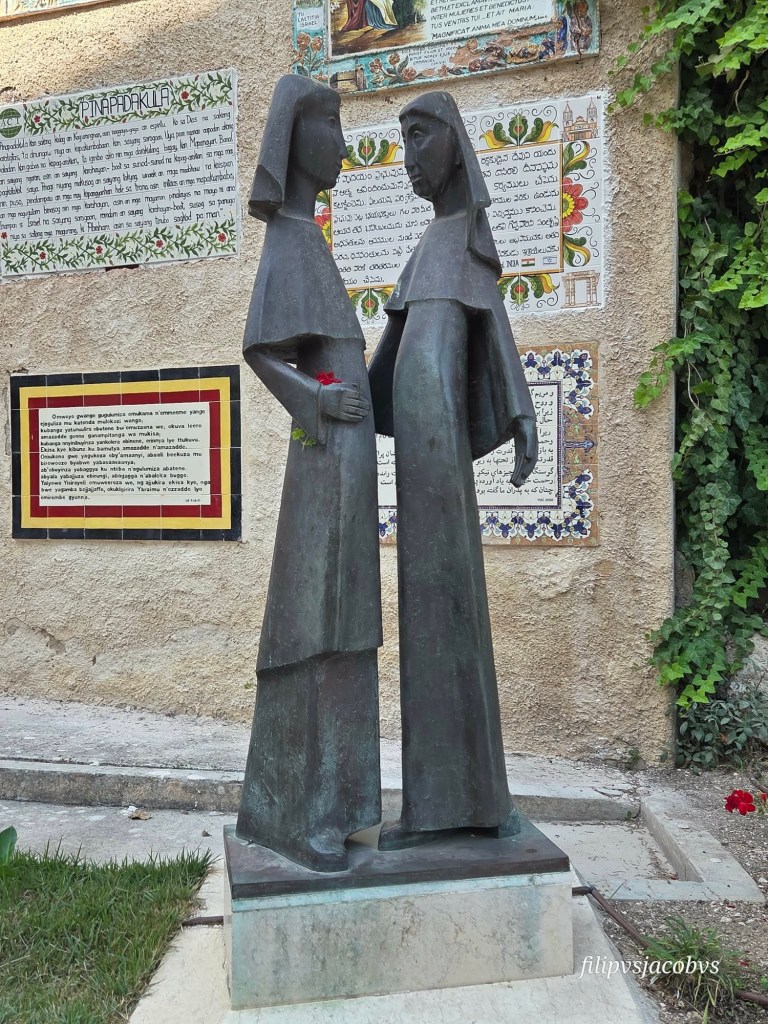
Photo by Ar. Philip Santiago, Church of the Visitation, Israel, 2024.

I was struck by how Elizabeth greeted Mary in her visitation with a question:

“And how does this happen to me that the mother of my Lord should come to me?” (Luke 1:43)

Actually, before Elizabeth asked that question at the Visitation, Mary was the first to ask the difficult question after the Annunciation to her by Archangel Gabriel, “How can this be, since I have no relations with a man?” (Lk.1:34).

In saying “yes” to God’s invitation at the Annunciation all the way to following Jesus to the Calvary and awaiting the coming of the Holy Spirit at Pentecost, Mary is the model disciple of the Lord, the “doer of the Word” in whom we see all that we can become through the power of God despite our human doubts and weaknesses. And many questions.

When Jesus was born, Mary must have so many questions but rather “kept all these things , reflecting on them in her heart” (Lk.2:19). Then when Jesus was thirteen years and got lost in Jerusalem after their pilgrimage, Mary asked anew a difficult question to him, “Son, why have you done this to us? Yur father and I have been looking for you with great anxiety” (Lk.2:48).

“The Finding of the Saviour in the Temple” painting by William Holman Hunt (1860), from en.wikipedia.org.

Mary asked the difficult questions always. And most likely, she had kept so many other questions in her heart especially when Jesus suffered, died and was buried. She was never afraid to ask questions to God because she believed, constantly seeking the truth who is her Son Jesus Christ.

On this solemnity of Mary’s assumption when we are reminded of the supreme truth of our own resurrection and assumption into heaven at the end of time when Christ comes again, we are likewise encouraged to keep asking the important questions we are often afraid to ask and confront in life like, would I make it to heaven? Or, the perennial question we ask if there is really God or if there is really heaven and hell and purgatory? 

See how the most essential questions in life that we ask albeit with fear or hesitations pertain to things of the soul, of eternity, of spirituality. These are questions that spring from our inner deeper self that indicate our origin who is God that even the greatest scientists throughout history admitted and respected like Albert Einstein.

Very often, the answers to these questions unfold in our hearts, in our lives, in the present moment. That is why Mary responded to Elizabeth’s question and praise with a song praising God for all his wondrous works she had experienced and realized in her life:

Photo by a friend in Washington. 28 July 2026.

And Mary said: “My soul proclaims the greatness of the Lord; my spirit rejoices in God my Savior… He has mercy on those who fear him in every generation. He has shown the strength of his arm, and has scattered the proud in their conceit. He has cast down the mighty from their thrones and has lifted up the lowly. He has filled the hungry with good things, and the rich he has sent away empty. He has come to the help of his servant Israel for he has remembered his promise of mercy, the promise he made tonour fathers, to Abraham and his children forever” (Luke 1:46-47, 50-55).

The Magnificat is the summary of the Christ Mary carried in her womb and heart throughout her life that she is referred to as the Ark of the New Covenant as seen by John in heaven in the first reading.

The Magnificat as a song of the Blessed Mother was borne out of long reflections and hard questionings about self and the world in the light of God’s works. Mary like Paul in the second reading experienced God’s saving power in Jesus because both were so open to the working of the Holy Spirit, searching deep within by constantly examining, asking the right questions.

That is why silence is important in every prayer period when we learn to completely trust God especially when our questions are very unsettling, even disturbing.

As a priest for 28 years and hospital chaplain these past five years, I have noticed older people along with those sick and dying spending a lot of their time asking about eternity. That’s why many of them go to confession so often. It must be difficult and amazing at the same time. Sometimes when I look into their eyes, there seems to be an intensity that they could pierce through dark clouds and thick curtains that maybe, just maybe, enable them to catch a glimpse of eternity that result in a remarkable peace within them that we too can feel.

It is when we ask the difficult, essential questions that we are able to arrive at the real truth about life and our very self that ultimately lead us to God and to heaven in Jesus Christ.

“The Assumption of the Virgin” painting by Italian Titian (1516-1518) from en.wikipedia.org.

The assumption of Mary is part of Christ’s gospel. And the good news is that it is a truth and reality we can arrive at here and now, not later when we die for God loves us so much as Paul tells us in the second reading.

In being the first and model disciple of Jesus, Mary is also the first to reap the fruits of Christ’s resurrection by being assumed into heaven body and soul, free of any pains and sorrows in her “death”.

We too rejoice with Mary in celebrating this Solemnity of her Assumption into heaven, hoping and trusting that eventually all our pains and sufferings shall pass away when we die, when Jesus comes again at the end of time to assume us body and soul into heaven in perfect union with God our Father in him, with him, and through him.

Before ending this reflection, we find it most opportune to remind everyone to stop the practice of keeping a little ash of their beloved’s cremated remains in their pendants or in their homes. This is contrary to our teaching on the resurrection of the dead, of the dogma of the Assumption of Mary. It is because of this assurance that we too like Mary shall be assumed into heaven body and soul that the remains of the dead shall be preserved intact in utmost respect and care according to the norms of the Church. Not the crazy beliefs propagated by movies and crematories primarily for profits. Most of all, exorcists have been reminding us too of the negative effects to the dead and to the living by keeping their ashes no matter how little they may be. God bless everyone!

Photo by author, St. Michael Retreat House, Antipolo City, 16 June 2026.

Every ending a beginning

Lord My Chef Sunday Recipe for the Soul, 16 November 2025
Thirty-Third Sunday in Ordinary Time, Cycle C
Malachi 3:19-20 >><}}}}*> 2 Thessalonians 3:7-12 ><}}}}*> Luke 21:5-19
Photo by author, Bosphrus Strait, Istanbul, Turkiye, 02 November 2025.

We are now in the penultimate Sunday of our church calendar that is why our readings remind us of the Lord’s Second Coming at the end of the world.

While some people were speaking about how the temple was adorned with costly stones and votive offerings, Jesus said, “All that you see here – the days will come when there will not be left a stone upon another stone that will not be thrown down.” Then they asked him, “Teacher, when will this happen? And what sign will there be when all these things are about to happen?” He answered, “See that you not be deceived, for many will come in my name, saying, ‘I am he,’ and ‘The time has come.’ Do not follow them. When you hear of wars and insurrections, do not be terrified; for such things must happen first, but it will not immediately be the end” (Luke 21:5-9).

Imagine the scene. See that tinge of humor of Jesus in dousing his disciples with cold water as they marveled at the beauty and magnificence of the Jerusalem Temple only to tell them all shall perish. It reminded me of our recent pilgrimage to the home of the Blessed Mother and St. John the Beloved in Ephesus, Turkiye recently.

Ephesus was a coastal city in Turkiye founded by the Greek colonists hundreds of years before the birth of Christ and was later annexed by the Romans into their empire. It was a very prosperous city with a huge amphitheater that could seat 24,000 people. During the time of early Christianity, Ephesus was already a major city that is why St. Paul founded a Christian community there whom he later sent a letter now part of the New Testament. It was also in that city where the Church held its Council of Ephesus in the fifth century that defined Mary as the Mother of God because Jesus remained true God and true Man in his conception and birth.

Photo by author, original marble stone floors of Ephesus.

But, everything is now in ruins after Ephesus was overran by barbarians in year 600 and struck by massive earthquakes through the following years that literally pushed it farther away from the sea. Almost abandoned except for some locals selling good to tourists and pilgrims who come to visit this lovely ancient city designated in 2015 as a UNESCO World Heritage Site.

Jerusalem suffered the same fate minus the earthquakes that have kept it inhabited for thousands of years when it fell into the hands of the Romans in year 70AD, then to the Moslems and other invaders until 1948 when the state of Israel declared independence from British Mandate.

Countries and cities come and go along with their civilizations due to varied reasons. It is the normal course of life. This is what Jesus was trying to tell his disciples and us today with the destruction of the Jerusalem Temple.

But of course, there was more.

Christ’s coming is not a spectacle like a show that the world is so addicted with; Christ’s coming is a presence felt and experienced day in, day out right in our hearts. It is a movement of grace upon grace within our very selves that often go unnoticed because we are so obsessed with physical things seen and heard. Jesus reminds us to see beyond, to have vision not just sight. To pray more, to feel more of God, of his truth and justice not only in ourselves but also in others by witnessing his gospel more than ever.

Earthquake survivor Jesiel Malinao sits beside the coffins of her two sons on Thursday, Oct. 2, 2025 after a strong earthquake on Tuesday caused a landslide that toppled their hillside homes in Bogo city, Cebu Province, Central Philippines. (AP Photo/Aaron Favila)

This Sunday is designated by the Church as World Day of the Poor who are the ones who suffer most during calamities and man-made disasters as well as conflicts that abound where the powerful play and manipulate peoples for their own selfish ends.

For the poor, every day seems an end – last meal, last breath, last hope. For the poor, living is more of survival because so many of us have not only forgotten them but have totally disregarded them. They are the ones often used and fooled by the powerful like the corrupt politicians with some masquerading as religious leaders like in the aftermath of the ghost-project scam. See how those involved are now playing victims, diverting attention and misleading many of the poor with their calls for transparency and good-governance. It is to them that the words of Jesus are directed today – “Do not be deceived… Do not follow them!”

Let us heed the calls of Abp. Soc Villegas of Lingayen-Dagupan for us to be guided by “wisdom, vigilance, and virtue” in these times when our nation is deeply in crisis in almost every aspect of life. Here we find in the warnings and reminders of Jesus that the end of time with its destruction is not something we have to resign ourselves with. We have to take a more active role to play in the course of history by making the right choices always.

Photo by author, Cantacuzino Castle, Romania, 06 November 2025.

And that is choosing Christ by being truthful, just, and charitable.

These are the calls of the Prophet Malachi and St. Paul in the first and second readings respectively today. For them, every day is the day of the Lord, a day of salvation, a day of thanksgiving. It is not a call for alarm nor cause us to fear but a call for active waiting for the Lord wherein we must remain responsible with our duties as followers of Christ, not falling into doubts and discouragement especially when things are getting rough and tough. These are precisely what the Psalms speak too this Sunday:

Let the sea and what fills it resound, the world and those who dwell in it; let the rivers clap their hands, the mountains shout with them for joy (Psalm 98:7-8).

To let the rivers clap their hands, the mountains shout with them for joy is for us to witness Christ, to give testimony to him and his gospel. Nothing is permanent in this world and life except God. As such, every ending is also a beginning in God. We are not only preparing for the end but also embarking on a new journey in Jesus we must persevere to follow especially in this time of our nation’s history to secure our lives and better future for the next generation.

Our liturgical calendar is about to end next Sunday with the Solemnity of Christ the King; like our Psalm, we embark this Sunday on a new journey in Jesus by witnessing his presence in this world so confused, so noisy, so dark. Amen. Have a blessed week ahead and keep cool! Fr. Nicanor F. Lalog II, Our Lady of Fatima University, Valenzuela City.

Photo by author, Bucharest, Romania, 05 November 2025.

The ever-relevant sign of Fatima

Lord My Chef Daily Recipe for the Soul, 13 October 2025
Monday, 108th Anniversary of Last Apparition at Fatima, Portugal
Romans 1:1-7 ><]]]]'> + ><]]]]'> + ><]]]]'> Luke 11:29-32

We celebrate today the 108th anniversary of the final apparition of the Blessed Virgin Mary in Fatima, Portugal that made it the most relevant proof in modern times of the existence of God and of his immense love for mankind through his Son Jesus Christ.

It was on this date, October 13, 1917 when the “Miracle of the Sun” happened at Fatima as the Virgin Mary appeared for the last time to Lucia Santos and her two younger cousins now Saints Francisco and his sister Jacinta Marto along with an estimated crowd of 70,000 made up of believers and unbelievers as well as skeptics and hecklers. They all witnessed the phenomenon that many verified with sworn accounts of how the Sun “danced” in the sky and then careened to Earth while emitting radiant colors that lasted for about ten minutes.

It was the sixth and last apparition of the Blessed Mother to the three children that began on May 13, 1917 and since then, devotion to Our Lady of Fatima grew which also boosted the praying of the Holy Rosary after the Blessed Virgin Mary introduced herself as the Lady of the Rosary. It was on that last apparition when the Blessed Mother told the children how World War I would soon end with a warning that “People must amend their lives and ask pardon for their sins. They must not offend our Lord any more, for He is already too much offended!”

Though the Fatima feast is officially set on May 13, many churches and devotees around the world still celebrate the October 13 apparition not only because of the dancing sun miracle but most of all of the ever-timely and relevant calls of the Blessed Mother for penance and conversion that echo the teachings of her Son Jesus Christ in today’s gospel:

While still more people gathered in the crowd, Jesus said to them, “This generation is an evil generation; it seeks a sign, but no sign will be given it, except the sign of Jonah… At the judgment the men of Nineveh will arise with this generation and condemn it, because at the preaching of Jonah they repented, and there is something greater than Jonah here” (Luke 11:29, 32).

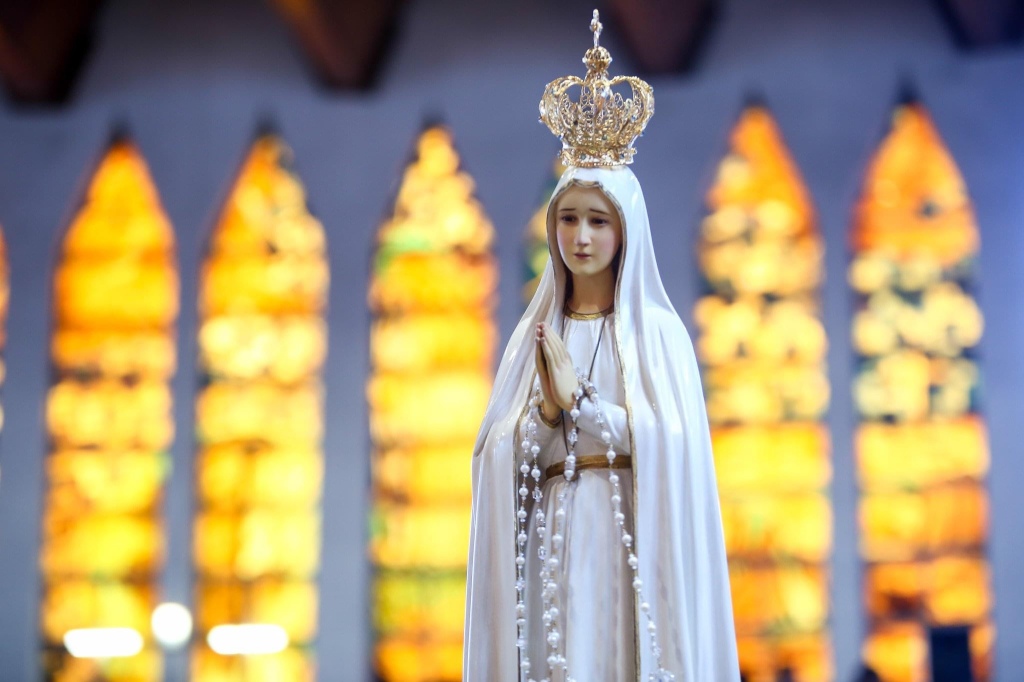
Procession of the National Pilgrim Image of Fatima at her National Shrine in Valenzuela, 13 May 2025. Photo credit to the owner.

With the recent calamities and corruption scandals that have been rocking our nation these past four months, the Fatima apparition of October 13, 1917 remains significant especially for us in the Philippines today for three reasons.

First, we have to see the last apparition of October 13, 1917 not as the final one but the start or beginning of the unfolding of more revelations and realizations for us. In fact, Sr. Lucia continued to received private visions while in the convent as a nun in 1925 through the 1930’s. During her last interview in 1957 while already a cloistered Carmelite nun, Sr. Lucia revealed how during that last apparition to them (her two cousins have died in 1919 and 1920 during the flu pandemic), the Blessed Virgin Mary looked very sad and never smiled to indicate the gravity and seriousness of her messages to them.

The Blessed Mother must be looking more sad than ever with us Filipinos since July this year with the wholesale corruption by DPWH officials in connivance with some former and current lawmakers that have caused so many people to suffer with perennial flood. Most especially because those involved in the worst corruption we have so far are Catholics and Christians! Imagine the pain of the Blessed Mother who is surely crying, saying, “mahiya naman kayo!”

One problem with the common perception of many people even up to now with the last apparition of Fatima is to equate it with the end of the world, of worldwide catastrophe that have instilled more of fear and even controversies that included doubts of the Vatican allegedly not fully revealing the Third Secret despite assurances from the visionary herself, Sr. Lucia who said before her death in 2005 that all Fatima Secrets have been fully revealed.

If we take the Fatima apparitions as a whole, we find in it more of messages of hope and joy for us in the Philippines and the world. The Blessed Mother appeared in Fatima not to scare us but to inspire us to turn away from sins, to be converted and be holy so that the world may truly find peace in Jesus her Son.

The last things do not necessarily mean destruction like when we say in Filipino it is the end or “wakas”, it usually means “wasak” or destruction; normally, when there is wakas and wasak, there is “bago” or new being built or established to replace the old one.

Therefore, the last apparition at Fatima in 1917 is also the signal of new beginnings, new undertaking, new opportunities, new hope in Jesus Christ who is the ultimate sign of God’s loving presence among us amid the trials and difficulties like these calamities and corruption in the country. It is not being simplistic but we just have to trust Jesus and his Mother Mary that we be sorry for our sins, stop doing what is sinful and evil, be converted and lead holy lives. Repentance leads to true wisdom because it is only in doing what is right when things would be right in order.

Photo by author, July 2023.

At the last apparition in Fatima 108 years ago, it is very interesting how two elements prevailed on that day: rains and the sun. And these are our second and third points of reflection on the sign of Fatima.

According to official accounts, rains have soaked wet the people and the whole of Cova da Iria in Fatima, Portugal for two days, October 12-13, 1917 before the Blessed Mother’s final apparition. How wonderful is the plentiful sign of rains, of water that signify the call for inner cleansing and purification of our hearts and person.

And when the sun “danced” later, the people were astonished how they and their clothes where dried along with the whole surroundings as if it had not rained the previous day and night after witnessing the spectacular display of colors and light!

May we see more of the light of Jesus in our lives so we may be cleansed and ready to work for another day of conversion and holiness just like St. Paul in the first reading today who reminds us to be witnesses of Christ:

… but established as Son of God in power according to the Spirit of holiness through resurrection from the dead, Jesus Christ our Lord. Through him we have received the grace of apostleship, to bring about the obedience of faith, for the sake of his name, among all the Bentiles, among whom are you also, who are called to belong to Jesus Christ (Romans 1:4-6).

As witnesses of Christ and pilgrims of hope, we are invited today more than ever in the light of the Blessed Mother’s last apparition at Fatima in 1917 to usher in new hopes for us to become better persons who build stronger families and more vibrant church communities.

At Fatima 108 years ago today, we are invited by the Blessed Mother to be focused more in revealing God’s will as experienced and prayed in the the Sacred Scriptures than taking sides in politics and going down to the worldly debates on abortion and divorce as well as gender issues beyond male and female.

How true indeed are the words of Jesus that “this generation is an evil generation seeking so many signs” to stretch its concepts of justice and equality, of rights and freedom without recognizing the need for humility and acceptance, responsibility and maturity as exemplified by the three children at Fatima. Let us make today the beginning of our conversion and transformation in Christ Jesus with the help of the Blessed Mother. Amen. Our Lady of Fatima, Pray for us. Fr. Nicanor F. lalog II, Our Lady of Fatima University, Valenzuela City (lordmychef@gmail.com)

From cbcpnews.net, 13 May 2022, at the Parish of the National Shrine of Our Lady of Fatima, Valenzuela City.

Begin with the End in sight

Lord My Chef Sunday Recipe for the Soul by Fr. Nicanor F. Lalog II
Nineteenth Sunday in Ordinary Time, Cycle C, 10 August 2025
Wisdom 18:6-9 ><}}}}*> Hebrews 11:1-2, 8-19 ><}}}}*> Luke 12:32-48
Our new College of Medicine Building with the lovely flowers of Banaba trees welcoming the new academic year this Monday, 11 August 2025.

One of the remarkable trends in management these past two decades is the emphasis on values-based approaches like The Seven Habits of Highly Effective People by the late Dr. Stephen Covey. Second in his list is the title of our reflection this Sunday, “Begin with the end in sight.”

Actually we mentioned that in our reflection last Sunday but we stressed the word “end” begins with a capital “E” to refer to things of God and eternal life as in the End of all in death. This is the theme of the Lord’s teaching today he presented in three parables with the last two calling us to be faithful stewards awaiting their Master’s return in the End while the first one expressing the summary of his lessons, “For where your treasure is, there also will your heart be” (Lk.12:34). But unlike most Sundays, we reflect today on the second reading from the Letter to the Hebrews that shows us Abraham’s faith journey as an expression of Christ’s teachings on setting our sights with the End.

Faith is the realization of what is hoped for and evidence of things not seen. Because of it the ancients were well attested. By faith Abraham obeyed when he was called to go out to a place that he was to receive as an inheritance; he went out, not knowing where he was to go (Hebrews 11:1-2, 8).

Photo by author, RISE Tower, Our Lady Fatima University, Valenzuela City, 06 August 2025.

We all believe in something, whether it is something good or something bad. However, what or who we believe in makes the difference because what or who we believe in determines how we live.

That is why Dr. Covey’s declaration is most true, especially when we talk of our End that is actually a Who – God. It is our faith in God who drives us in this life especially when it is dark and difficult, even painful so that we may achieve our End to be with him in eternity. The author of Hebrews found Abraham’s faith journey so remarkable as it enlightens too our own faith journey in God through Jesus Christ our High Priest as a context.

First, the author of Hebrews defined faith as “the realization of what is hoped for and evidence of things not seen.” Faith is more than trusting God in Jesus Christ. For the author of Hebrews, faith is more of knowing and understanding of what lies ahead though it cannot be seen. Faith here is more of having vision than sight, of seeing beyond things, so convinced of its existence even not seen like Noah who built an ark on God’s command even if there were no dark clouds nor rains visible at all. Faith for the author of Hebrews is like our Filipino expression “a…basta!” of having the conviction God created the universe even though no one saw the act of creation. It is something real that “only the heart can see” because it is also borne out of a deep relationship with God and with those we love. See now the three instances cited by the author of Hebrews in Abraham’s faith journey that are similar with our own experiences.

Photo by author, RISE Tower, Our Lady Fatima University, Valenzuela City, 06 August 2025.

“By faith he sojourned in the promised land as in a foreign country, dwelling in tents… for he was looking forward to the city with foundations, whose architect and maker is God” (Heb.11:9-10). Abraham was a “pilgrim” – a wayfarer – not only from his place of birth into the promised land but also on the journey from the present into the future and eternity. See how Abraham looked into the End at the start of his journey in God and with God walking on the path of what is to come.

All he had was faith in God. Surely there were times of darkness and distress along the way which the author of the Book of Wisdom in our first reading accurately described as “night of the passover” that reminds us of darkness hovering the path of God. Jesus reiterated this “night of passover” literally and figuratively speaking. Have faith in Christ whenever our journey gets tough and rough, when there are detours or when we actually get lost. God will find us to reach his city he made for us.

“By faith he received power to generate, even though he was past the normal age – and Sarah herself was sterile – for he thought that the one who made the promise was trustworthy” (Heb.11:1). We all know the story of Abraham and Sarah having their own son in old age, of the many twists and turns in their lives before Isaac was finally born and thus fulfilled God’s promise that Abraham became the father of all nations. In Matthew’s genealogy of Jesus Christ, Abraham is mentioned first as a testament of his faith in God that led to the birth of the Messiah.

Photo by author, RISE Tower, Our Lady Fatima University, Valenzuela City, 06 August 2025.

Many times we ask why God takes so long in fulfilling his promises to us. We wonder if God really called us to a certain vocation or profession or wanted this and that for us especially when in our prayers we are convinced of God’s will. Why does God keep us waiting?

Experience had taught us that more than a test of our faith, those waiting moments for God’s answer to our prayers were grace-filled moments of our own transformation into better persons so that we may value more his gifts to us, whether they are persons or things or moments. God is faithful. Remember the words of St. Paul, “God’s gifts and call are permanent and irrevocable” (Rom.11:29).

“By faith Abraham, when put to the test, offered up Isaac, and he who had received the promises was ready to offer his only son…He reasoned that God was able to raise even from the dead, and he received Isaac back as a symbol” (Heb.11:17, 19). This is the most moving and touching in the story of Abraham’s faith: he never doubted nor questioned God at all when he was asked to offer his son Isaac. Imagine how Abraham must have felt after waiting for so long for a son, then suddenly God asked him to offer him back Isaac?

See the unfolding of this scene in Genesis 22 with Abraham totally silent going up the mountain with Isaac who asked what shall they offer to God? Abraham simply assured him God will provide. Everything proceeded in silence until Abraham was to kill Isaac when an angel stopped him and told him how God was so pleased with his fidelity. This scene reminds me of the pain of many parents, especially mothers at the funeral of their son or daughter. It is the most difficult Mass for me to celebrate; normally, it is the children who bury their parents, not the other way around. When parents bury their children, no matter how young or old they may be, it is beyond words. I just try to believe more, to have more faith in God that he would bless and comfort the grieving parents.

Photo by author, RISE Tower, Our Lady Fatima University, Valenzuela City, 06 August 2025.

Abraham’s faith is a gift from God we too have all received and must deepen. It is easier said than done but we have to accept that nothing in this life is really ours to keep for all is God’s. And if ever God takes something from us, it is because he is giving us something even more than what we already have. That is why Jesus asks us in the gospel this Sunday to give up everything for him for he is our only End.

Jesus said to his disciples: “Do not be afraid any longer, little flock, for your Father is pleased to give you the kingdom. Sell your belongings and give alms. Provide money bags for yourselves that do not wear out, an inexhaustible treasure in heaven that no thief can reach nor moth destroy. For where your treasure is, there also will your heart be” (Luke 12:32-34).

This Sunday, Jesus invites us to examine where our treasure is for that is where our heart is, giving himself to be our treasure for he alone can lead us to our final End. Like Abraham, Jesus asks us to see beyond the present moment, to give up whatever we have, whether good or bad, people or things, even memories. It is very difficult and even painful but with faith in God, it could be our most liberating and grace-filled moment in life when we learn to forgive and be sorry, to be content, and finally start living by loving and be convinced we are loved because these are all we need in the End. Amen. A blessed week to everyone!

Photo by author, RISE Tower, Our Lady Fatima University, Valenzuela City, 06 August 2025.

Advent is going beyond, like a voice in the wilderness

The Lord Is My Chef Sunday Recipe for the Soul by Fr. Nicanor F. Lalog II
Second Sunday in Advent, Cycle C, 08 December 2024
Baruch 5:1-9 ><}}}}*> Philippians 1:4-6, 8-11 ><}}}}*> Luke 3:1-6
Photo courtesy of Mr. Jilson Tio, Archdiocesan Shrine of Nuestra Señora De Guia, Ermita, Manila, 28 November 2024.

Two weeks ago I officiated the golden wedding anniversary of a friend’s parents where I said the best wedding homily is actually the couple themselves still much in love, filled with joy after 50 years as husband and wife.

“May forever pa rin,” despite all the celebrity break ups we feast on social media and the many separations happening among some couples these days. How I wish that more young people are invited to wedding anniversaries so they would aspire for lasting relationships too.

Photo by author at the Archdiocesan Shrine of Nuestra Señora De Guia, Ermita, Manila, 28 November 2024.

Of course, it is never easy – that is why there is the Sacrament of Marriage where couples pray to God and promise Him to cooperate in His grace so that until death, they would remain together in faith, hope and love that would eventually bring them to eternity.

It is the reality not only of marriage but of life itself. God calls us to a particular vocation or state in life like marriage, priesthood and religious life, or single-blessedness in order to lead us to Him in eternity.

And that is the two-fold meaning of Advent too! We are preparing not only for the first coming of Jesus at Christmas but most of all to His Second Coming at the end of time (parousia). This is the second Sunday in Advent so beautifully presented by Luke.

In the fifteenth year of the reign of Tiberius Caesar, when Pontius Pilate was governor of Judea, and Herod was tetrarch of Galilee, and his brother Philip tetrarch of the region of Iturea and Trachonitis, and Lysanias was tetrarch of Abilene, during the high priesthood of Annas and Caiaphas, the word of God came to John the son of Zechariah in the desert (Luke 3:1-2).

Photo by author, Second Sunday Advent 2022, BED Chapel, Our Lady of Fatima University, Valenzuela City.

First we notice is Luke’s solemn account of how the Son of God Who is eternal entered through our own time that is temporal. If Luke were to write his gospel today, maybe he would simply change the names above into BBM and Sara Duterte, with Pope Francis and Cardinal Advincula representing the Church then spice it with some showbiz tidbits or whatever is trending in social media.

But, here also is the artistry of Luke when he segued to John the Baptist to direct our thoughts to the Second Coming of Christ without losing sight of the present moment, of the here and now.

John went throughout the whole region of the Jordan, proclaiming a baptism of repentance for the forgiveness of sins, as it is written in the book of the words of the prophet Isaiah: A voice of one crying out in the desert: “Prepare the way of the Lord, make straight his paths. Every valley shall be filled and every mountain and hill shall be made low. The winding roads shall be made straight, and the rough ways made smooth, and all flesh shall see the salvation of God” (Luke 3:3-6).

“St. John the Baptist Preaching in the Wilderness” by German painter Anton Raphael Mengs (1728-1779) from commons.wikimedia.org.

Though John is the main character in today’s gospel and next Sunday, Luke is actually focused on Jesus Christ who had come, would come again, and continues to come to us today. All four evangelists were clear about John as secondary only to Jesus as His precursor.

However, only Luke of the four evangelists cited the Prophet Isaiah extensively regarding John’s unique mission with Christ to stress this future aspect of Advent, skipping only that part “the glory of the Lord shall be revealed” by closing it at “all flesh shall see the salvation of God” in Isaiah 40:3-5.

Luke is teaching us that Advent is looking beyond Christ’s birth but also to His Easter and most of all, to His Second Coming now happening.

For Luke, to be like John in the wilderness is for us to be bold and daring in opening ourselves to God in Jesus Christ amid the turmoils of our time like wars and pandemic, calamities and upheavals. No matter how much pains and disappointments we have had this year that made us doubt God’s love and presence for us in Christ, let us dare anew like John in the wilderness to believe and live out His coming and presence.

In citing Isaiah 40:3-5, Luke is reminding us that we shall all see and experience God’s salvation in Jesus Christ today while awaiting His Parousia. Notice the similarity of Isaiah’s prophecy with that of Baruch’s in the first reading when “every lofty mountain be made low, and that age-old depths and gorges be filled to level ground, that Israel may advance to secure in the glory of God” (Bar. 5:7). Both prophets spoke of the future expectation expressed by John already unfolding in Christ who had come.

Photo by author, Fatima Avenua, Valoenzuela City, December 2023.

A friend texted me last week complaining if Christmas would happen at all in their family after a serious rift with their youngest brother. “Dinaraan-daanan lang po ako Father ng kapatid kong bata, para akong patay na.”

Being the eldest in the family, my friend asked his younger brother to shape up and fix his life (ayusin ang buhay) after taking a third partner. He had dumped his first wife after the birth of their son who turned out to be a special child; then, took a second partner and had a daughter whose godmother, his kumare is now his third partner. My friend had taken upon himself to rear his special nephew and niece while his brother does not care at all.

With that situation at home, my friend told me he could not feel Christmas at all despite the material things they have. After a few hours, I texted him back and told him no one can take away the joy of Christmas because that is Jesus in our hearts. Keep Jesus alive in your heart, I texted him, asking him to continue to still love his wayward brother, never losing that hope in Christ that someday, peace would be restored among them in the family. I ended my texts reminding him that Jesus was born during the darkest night of the year.

That’s the voice of John in the wilderness – when we dare to open to God amid our many pains and sufferings, proclaiming and living out His love in Jesus who had come, continues to come and would come again at the end of time. That’s preparing the way of the Lord even when it is all dark, taking small steps at a time as we could not see the next distant scene. In times like these, let St. Paul’s desire in the second reading be our Advent prayer, “that your love may increase ever more in knowledge and every kind of perception, to discern what is of value, so that you may be pure and blameless for the day of Christ” (Phil.1:9-10).

Photo by author, RISE Tower, Valenzuela City, 06 December 2022.

How lovely during this time of Advent when our days are getting shorter, dark earlier than usual because this is also the time sunsets are most awesome. Somewhere out there where the sun sets with skies redolent like embers of the dying day is the voice in the wilderness proclaiming to us Christ’s coming and presence even in the long dark night of waiting.

What do you long or desire most right now in your heart? Reawaken your hopes in Christ Jesus and be ready to be surprised as He shall straighten your path soon especially with your loved ones. Amen.

Advent: Reawakening our hopes amid a defiant history

The Lord Is My Chef Sunday Recipe for the Soul by Fr. Nicanor F. Lalog II
First Sunday of Advent, Cycle C, 01 December 2024
Jeremiah 33:14-16 ><}}}}*> 1 Thessalonians 3:12-4:2 ><}}}}*> Luke 21:25-28, 34-36
Photo by author, Advent 2018.

Blessed happy New Year, everyone! We officially start the new year in the Church on this first Sunday of Advent; that is why the Mass we have every January 1 is the Solemnity of Mary, Mother of God, not New Year as many believe.

This is the reason I insist on everyone to stop greeting “Happy New Year” after December 25 because Christmas is until Epiphany Sunday. And this is the problem with us every Christmas season – we have forgotten its very essence Jesus Christ, replacing Him with all the trimmings of this consumerist and materialistic world we live in.

Photo by author, Advent 2021 at BED Chapel, Our Lady of Fatima University, Valenzuela City.

The first Sunday of Advent is our new year, our new beginning in our journey in life in God through His Son Jesus Christ who had come, would come again, and continues to come daily in our lives. Beginning today until December 16, Advent invites us to focus on Christ’s Second Coming or Parousia at the end of time which nobody knows when except the Father in heaven; from December 17 to 24 and Christmas, we look back to the stories around Christ’s First Coming more than 2000 years ago. Between these two comings of Jesus is His coming in our daily living, in the here and now which St. Bernard of Clairvaux called Christ’s “Third Coming.”

There lies the tension in those three comings of Jesus Christ that have really taken so long that we get impatient or begin to doubt God especially with how world history has unfolded until now with wars as well as natural calamities. Just recently some parts of our country were devastated by a series of powerful typhoons while some parts of the world like Spain had its share of catastrophic flooding that claimed so many lives. Making things worst is how politics has rocked our country this week, trying to undermine our democracy as well as our sense of decency as a nation that had decayed during the past administration.

Photo by author, Dau, Mabalacat, Pampanga, November 2022.

Many are feeling disgusted everywhere in the world with how history is unfolding, wondering if life is going to get any better at all. Some have imitated Pilate in the gospel last Sunday, putting God on trial again, asking Jesus what He had done for all these upheavals and problems going on in history.

Like them, we are also tempted to ask, where is Jesus Christ? Or, the all-powerful and loving God our Father?

The days are coming, says the Lord, when I will fulfill the promise I made to the house of Israel and Judah. In those days, in that time, I will raise up for David a just shoot; he shall do what is right and just in the land. In those days Judah shall be safe and Jerusalem shall dwell secure, this is what they shall call her: “The Lord our justice” (Jeremiah 33:14-16).

Photo by author, Pulong Sampalok, DRT, Bulacan, 23 November 2024.

The Prophet Jeremiah sets the tone of Advent this Sunday, reawakening our hopes in God amid history’s defiance as seen in the many cycles of sufferings and calamities that continue to shake our lives.

Yes, the “days are coming” and indeed had come when God fulfilled His promise in sending us His Son Jesus Christ who redeemed us from our sins and renewed us in Him with fulfillment in life even while here despite the many trials and tribulations we go through.

The “days are coming” as foretold by Jeremiah long ago and most true these days because the promised Messiah Jesus is now with us, acting in subtle and and complex ways beyond our imaginations, always surprising us with how things turn out than what we believe or expected.

Yes, the “days are coming” – right now – as Jeremiah meant that day after Jerusalem had fallen that amid all the chaos around us, God is among us in Jesus Christ who works among visible realities we cannot see, always coming and going among us unnoticed. That time of great salvation is already among us, being accomplished now by Jesus in silence, in secret.

Hence, the need for us to be vigilant through prayers which Luke emphasized in his gospel account.

Jesus said to his disciples: “But when these signs begin to happen, stand erect and raise your heads because your redemption is at hand. Beware that your hearts do not become drowsy from carousing and drunkenness and the anxieties of daily life, and that day catch you by surprise… Be vigilant at all times and pray that you have the strength to escape the tribulations that are imminent and to stand before the Son of Man” (Luke 21:28, 34-35, 36).

Photo by author, San Fernando, Pampanga, November 2021.

On this new liturgical year designated as “Cycle C”, all our gospel readings on Sundays will be from Luke (Cycle A has Matthew and Cycle B, Mark; John is used partly in cycle B and for great feasts).

Of the four evangelists, Luke is the one who emphasized the importance of prayer in his gospel account wherein he always portrayed Jesus in prayer; hence, not surprisingly, he tells us today that “praying at all times” is being “vigilant at all times” too.

And this we have been told ever since as prayer has always been central in all our teachings. It is in prayer when we are one with God in Jesus. It is in prayer when our senses are heightened that we become open to God’s subtle movements in us and among us.

Everything begins in prayer, both in our personal prayers and as a community like in the Sunday Mass where Christ’s presence is unveiled, where we experience Him most in us and among us and in the world that we are then filled with hope in God despite the darkness and sufferings going on.

Recently, our University joined the annual Red Wednesday celebration of the Church when we remember our Christian brothers and sisters persecuted in various forms in many parts of the world in this modern time. I was overwhelmed at the sight of the great number of our students who joined us, many standing outside our chapel.

What touched me was after the dismissal, some students remained inside the chapel lit in red with flickering candles at the altar, still praying. That for me is the sign of that “little shoot” God promised Jeremiah who would come to bring justice and peace on earth.

Photo courtesy of The Tribune, official publication of Our Lady of Fatima University.

To keep watch in prayer (which we mean as a way of life not just mere recitation of formula prayers) while remaining upright and abounding in love as St. Paul instructed us in the second reading is to be open to Jesus Christ, ready to receive Him without fear amid the tumults in the world when He comes in His final glory.

Yes, the world is still plagued with so many imperfections, even darkness and evil that may dishearten us even make us doubt God in His goodness why these bad things are happening. Advent invites us to reawaken our hope in the salvation that had come, that still comes now, and will surely come in the fullness of the Day of the Lord when Jesus comes again.

Lord Jesus Christ,
fill us with fervent hope
in You amid the many darkness
and sufferings in life;
reawaken our hope amid
our hopelessness and be surprised
with Your loving coming and presence.
Amen.
Photo courtesy of The Tribune, official publication of Our Lady of Fatima University.