The Lord Is My Chef Breakfast Recipe for the Soul, Memorial of Our Lady of Fatima, 13 May 2020
Acts of the Apostles 1:12-14 <*(((>< 000+000 ><)))*> Luke 1:39-47
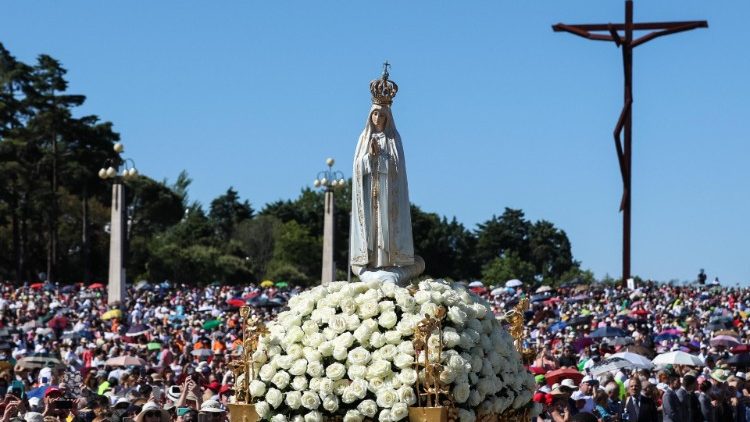
Our Lady of Fatima procession at the Fatima Shrine in Portugal, 2017. Photo from vaticannews.va.
O God our Father, today we come to you on this most trying time in modern history at the heels of the COVID-19 pandemic that has disrupted our lives – for better and for worse – to ask for your mercy and healing.
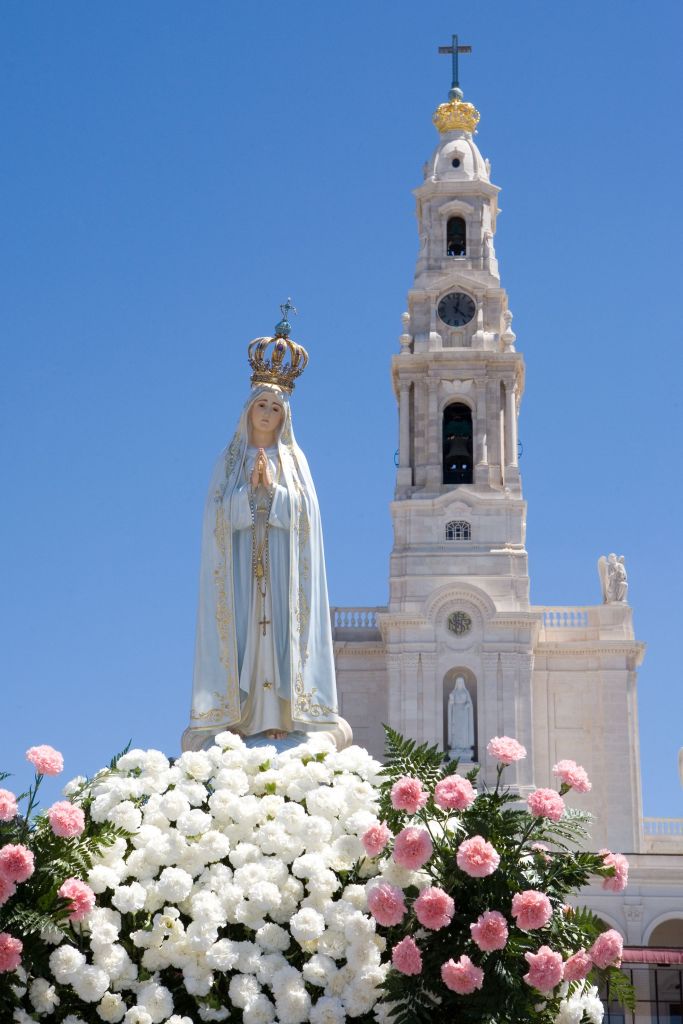
As we celebrate the Memorial of Our Lady of Fatima who had appeared in Portugal 103 years ago today, we are reminded by the Blessed Mother of your Son Jesus Christ that true blessedness is not being wealthy and powerful, of being well and strong but above all of believing in you, our God Almighty.
When Elizabeth heard Mary’s greeting, the infant leaped in her womb, and Elizabeth, filled with the Holy Spirit, cried out in a loud voice and said, “Most blessed are you among women, and blessed is the fruit of your womb… Blessed are you who believed that what was spoken to you by the Lord would be fulfilled.”
Luke 1:41-42, 45
COVID-19 has shown us that in this life, true blessedness is not found in money and things, nor in popularity and influence or other things that have become the benchmark of everything that is good in this life.
Our lady of Fatima Shrine in Fatima, Portugal. Photo from Pinterest.
In less than six months, the corona virus had shown us what the Lady of Fatima has always been telling us since 1917: to go back to you, God our Father through your Son Jesus Christ in the Holy Eucharist and Sacrament of Reconciliation.
Thank you in giving us all a Mother in the Blessed Virgin Mary who is the perfect image and model of discipleship in Christ:
-Mary was the first to believe in Jesus by receiving him in her womb;
-Mary was the first to share the Incarnate Word by visiting her cousin Elizabeth while six months pregnant with his precursor John;
– Mary was the first to believe in the saving work of Jesus when she interceded at a wedding in Cana;
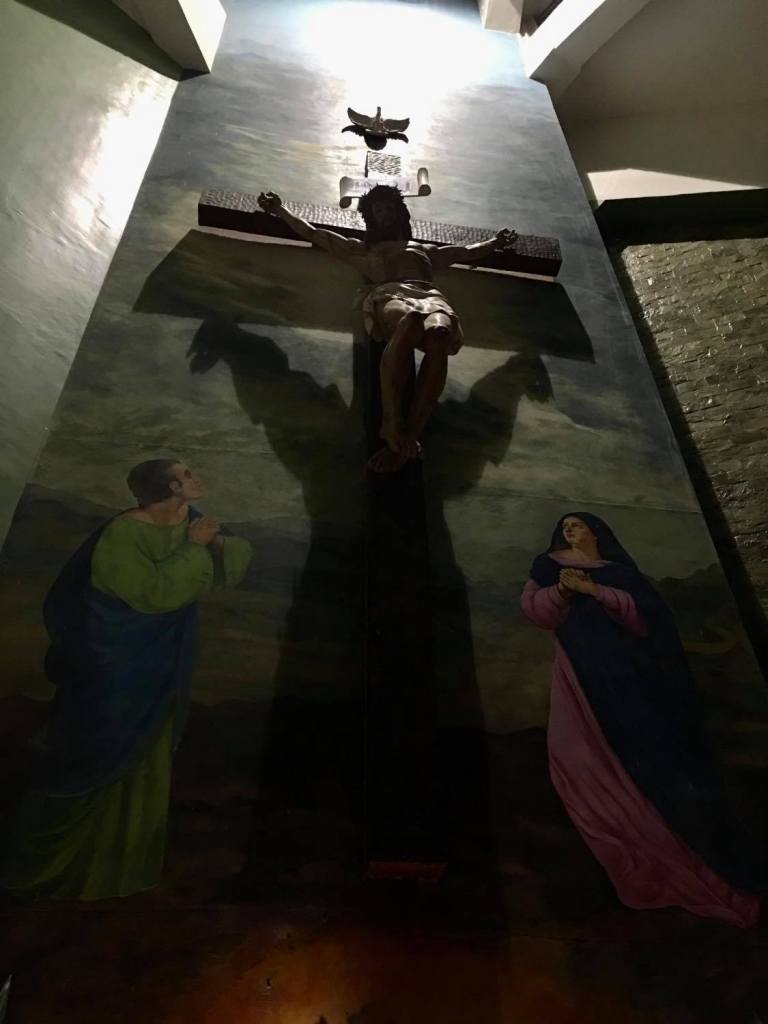
Mary was the first to believe in the Resurrection that she remained standing at the foot of the Cross; and,
Mary was the first to believe in the coming of the Holy Spirit that she accompanied the Apostles praying at Jerusalem on Pentecost day.
Like Mary, may we grow deeper in our faith, believe more in you than believe in the world or with our very selves.
Like Mary, may we bring unity to our family and community, church and nation, so we may help strengthening the faith of one another, in believing in you by submitting ourselves to your holy will.
Teach us, Lord, to be simple and humble so we may believe more in you. Amen.
Quiet Storm by Fr. Nicanor F. Lalog II, 03 May 2020
Photo by author, Parokya ni San Juan Apostol at Ebanghelista, Bagbaguin, Santa Maria, Bulacan. April 2020.
Against the advice of good friends, I went out to distribute Holy Communion in the streets to some parishioners who have participated in our Sunday Mass early this morning at Facebook Live.
I know the risks involved despite our best efforts in having all the precautionary measures but, what convinced me to go on with it is a beautiful Psalm so appropriate during this quarantine period.
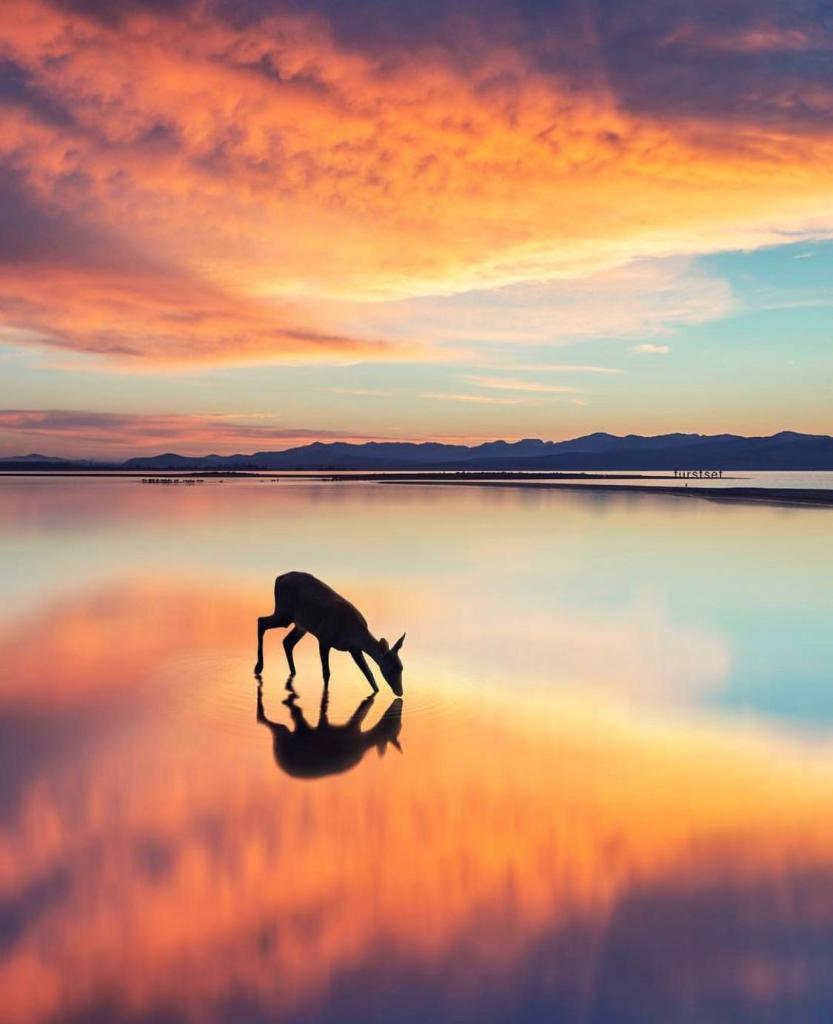
As the deer longs for streams of water, so my soul longs for you, O God.
My being thirsts for God, the living God. When can I go and see the face of God?
And when our quarantine period was extended for the second time before the end of Holy Week last month, I began praying again Psalm 42 every night for that is when I truly long for God so much, most of the time lamenting to him our situation, my condition of being alone in my rectory.
This is the first time I felt like this, so different from those so-called “desolation” or “dryness” because I could feel God present in my prayers but… he is not “fresh”.
Like the deer longing for streams of water, my soul longs for God too.
Not just like the water we buy from a filling station but exactly what the deer yearns for — fresh water that is refreshingly cool not only on your face but deep into your body when sipped amid the burbling sounds of the spring, babbling through rocks and branches of trees with the loamy aroma of earth adding a dash of freshness in you.
Admittedly, sometimes I wonder if I still know how to pray or if I still pray at all!
I can feel God present but he is like someone stacked there in my mind, in my memory, in my ideas shaped by my years of learning and praying.
What I am longing for is a God so alive, so true not only in me but also in another person.
And that is when I realized, most likely, my parishioners must be longing for God too in the same way — the God we all come to meet and celebrate with every Sunday in our little parish, among the people present who are so alive, so vibrant, so true, so touching.
Our empty church since March due to COVID-19.
Psalm 42 is believed to have been sang by David when he was prevented from coming to the tent of God either during the reign of King Saul who plotted to kill him or during the revolt of his own son Absalom when he was already the king of Israel.
Like David or the psalmist, I miss celebrating Mass with my parishioners.
And maybe it is safe to assume that two or three of my parishioners are also feeling the same way with me and David, saying these to the Lord:
My tears have been my food day and night, as they ask daily, “Where is your God?”
Those times I recall as I pour out my soul,
When I went in procession with the crowd, I went with them to the house of God,
Amid loud cries of thanksgiving, with the multitude keeping festival.
Psalm 42:4-5
If there is one very essential thing this pandemic has brought back to us in our very busy lives, it is most certainly God. And if ever this is one thing people need most in this time of corona virus, it is spiritual guidance and nourishment from God through his priests.
Of course, people can pray and talk to God straight as the Pope had reminded us before Holy Week.
But, human as we are, we always experience God and his love, his kindness, his mercy, his presence among other people who guide us and join us in our spiritual journey. They are special people like friends or relatives or pastors with whom they can be themselves, let off some steam, get some rays of light of hope and encouragement.
And that this is why I try to keep in touch with my parishioners in various ways in this time of corona: even I myself can feel so low and dark despite my prayers and very condition of living right here in the house of God who can still feel alone and desolate, even depressed.
If I – a priest – go through all these uncertainties and doubts this in this time of quarantine, how much more are the people, the beloved sheep of Jesus the Good Shepherd?
Why are you downcast, my soul; why do you groan within me?
Wait for God, whom I shall praise again, my savior and my God.
Psalm 42:6
Photo by Ms. Ria De Vera, 10 April 2020.
After our Mass this morning when we set out to distribute the Holy Communion, there was a little drizzle. It did not last long that I just wore a hat and left my umbrella in the rectory.
There were about 30 people who waited for us to receive Holy Communion, most of them along the main highway that stretched to about 2 kilometers. Some families gathered with a little altar at their front gate while a waited a couple waited in a gas station along our route.
In less than 20 minutes, we have completed our mission and as we headed back to the parish, the rains fell again, this time stronger than before.
My driver commented, “The weather cooperated with us, Father”1
I just nodded my head to him inside his tricycle but deep inside me, I felt joy because God answered my prayer, my lamentations for he was crying too, – for me and his people.
May this lamentation be an answer to your lamentations during this pandemic of COVID-19.
Continue with your lamentations to God our Father for this very act of crying out to him is the working of the Holy Spirit he had sent us through our Lord Christ Jesus. Amen.
Quiet Storm by Fr. Nicanor F. Lalog II, 29 April 2020
Photo by author, 2010.
This is again for my brother priests and fellow workers in Church communication: our extended “enhanced community quarantine” is a call for us to rediscover the contemplative spirit so essential in our communication apostolate. It is best that before we go in front of the camera, before we post anything at all, or even before we go out doing our social action, let us first have Jesus Christ in us.
After all, it is always Jesus and only Jesus we bring as priests in everything we say and do. Jesus is our life as priests and without him, our works mean nothing. Worst, it may be happening that it is not Jesus whom we are following when we fail to spend time with him in serious prayers that unknown to us, we are already replacing him by creating our own ministry apart from him.
Incidentally, we are celebrating today the Memorial of St. Catherine of Siena who is considered as one of the patron saints for those working in telecommunications and TV stations.
In one of her numerous “ecstatic” visions, it is said that when she was so sick in her room, she begged the Lord to give her a glimpse of the celebration of the Mass in their chapel. The Lord heard her prayer and thus, she became the first person in history to have celebrated Mass by “remote telecast”!
From Google.
Faith and technology
We have mentioned in our previous reflection that we now live our faith in a mass-mediated culture. Media is all around us. And there is always that intense temptation by the devil to put us on TV and the internet to be popular.
So, how do we interact with technology on a daily basis?
What are we posting on Facebook? Are we like the rest who are also hooked into TikTok with all the inanities that go with it?
How much time do we spend for social media and Netflix these days?
And how many hours do we spend before the Blessed Sacrament, excluding our Liturgy of the Hours and praying of the Holy Rosary?
From Google.
We are familiar with Marshall McLuhan’s dictum “the medium is the message”.
This we have seen in the past very evident in our ministry when some priests have transformed the South American telenovelas and later Koreanovelas into a gospel too that people felt like listening to reviews during the homily. And it had given some people the idea that every homily of the priest must say something about television shows! In fact, about three years ago, some priests have to be reminded by the CBCP during the Simbang Gabi to focus only on the Word of God and not on TV shows and jokes to get the attention of their congregation during Mass.
But let us not forget that later in his life, McLuhan added to his dictum that “the medium is the massage” to warn us that sooner or later, we can be eaten up by media that everything is reduced into a show – or a palabas in Filipino that means outward.
That is what a show is, a palabas which is empty or walang laman.
And shallow, mababaw.
That is the sorry state of our many social communication efforts in the Church when we have Masses that have become like entertainment shows, priests becoming entertainers, church buildings and decors that look like videoke bars evoking none of the sacred, and tarps and posters that are all hype without any evangelical meaning.
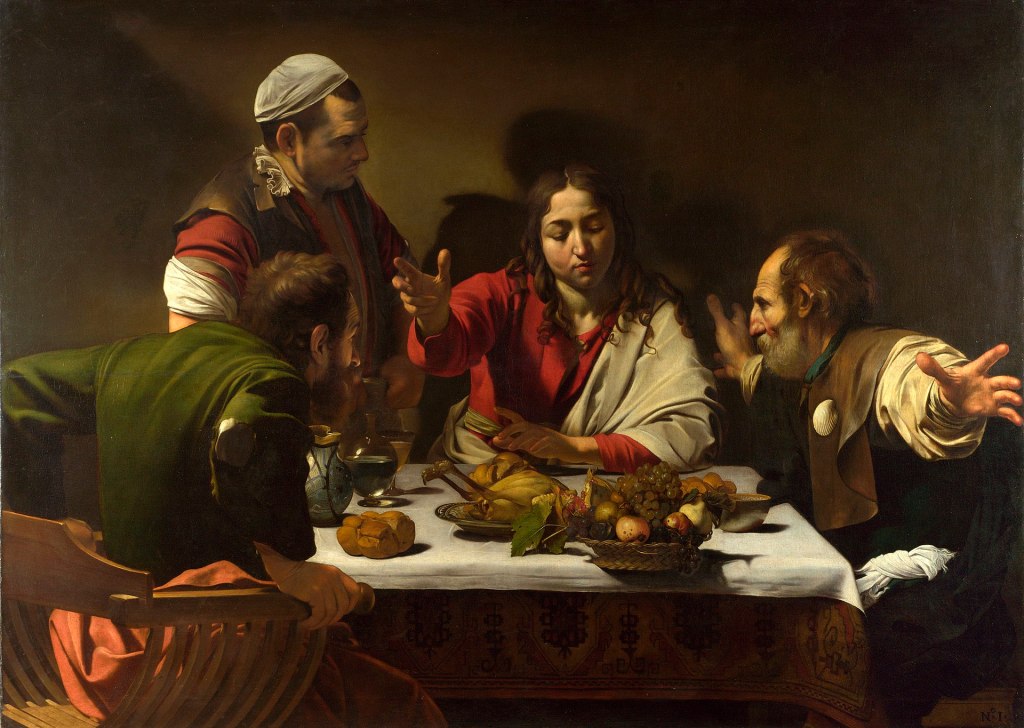
Observe also how our presentations and shows in our Catholic schools and parish halls have become mere repetitions of what are on television that have left many of us now stuck in Emmaus who could no longer find the way back to Jerusalem, even to Jesus because all we see are the fun and excitement, the glitz and the glamor of media.
And of our massaged ego.
Road to Emmaus from clarusonline.it
Keeping technology in its place in the Church
We are not saying modern communications is evil; the Church has always been clear that these modern means of communications are in fact a gift from God. Vatican II asserts that it is Church’s “birthright” to use and own these modern means of communication for evangelization (Inter Mirifica, 3)
Our challenge in the Church is to keep these modern technologies in its proper place.
A technological culture is not the most hospitable environment for religious belief, but neither is it necessarily hostile. If we are to find a way of expressing our faith in this technological culture and of speaking to and with the people formed by this culture we need to take time to consider how we, as individuals and as a faith community, interact with technology on a daily basis.
James Mcdonnell, Communicating the Gospel in a Technological Age: Rediscovering the Contemplative Spirit (1989)
In a story posted by the CBCP News two days ago, it reported the experience of Filipino priest Fr. Jun Villanueva who contracted the dreaded COVID-19 disease in New York City last March shortly after he had arrived to study there.
Assigned in a parish in the heart of the Big Apple, Fr. Villanueva tells how he spent his days of being “alone literally and emotionally” as “moments with God”. But, his turning point came after recovering from the corona virus when he began celebrating Mass alone:
“I really cried when I first celebrated Mass without churchgoers. There’s no one in the Church except Jesus,” he recalled. “Then I realized that the Mass is not a show but our union with Jesus, whether there are people or none,” he said. “I started to look at the situation from that perspective”.
Fr. Jun Villanueva, CBCP News, 27 April 2020
That is the first step needed to put technology in its proper place in the Church: that we bring back Jesus Christ whom we have banished in the name of our ministry and vocation. The more we think of putting so much “art” and other things to “enhance” our liturgies, then we banish Jesus Christ.
This is the other pandemic we have refused to stop in the Church: triumphalism, the overdoing of things for God that in the process we actually put more of ourselves in the ministry and liturgy than of the Holy.
Is there anyone or anything greater than the Lord?
Remember St. Theresa of Avila: Solo dios basta!
And, like our saints who guide us closer to God, the only way to have Jesus and bring him back in our lives and ministry, in the church as institution and building is through the contemplative spirit of the priests.
It is a good thing that the catch call these days is that the “return to normal” is actually a “return to basics” like washing of hands, covering of mouths when sneezing, and most of all, a return to God.
From Google.
The spirits of modernity characterized by constant changes and technological efficiency do not jibe so well with the demands of the Gospel of Jesus Christ who have always reminded us of guarding against the temptations of the material world.
Jesus tells us to practice poverty but the world tells us to be wealthy.
Jesus asks us to forget ourselves and follow him but the world tells us to be popular and follow the limelight.
Jesus tells us to go down and be humble but the world tells us to rise up and go higher!
The other day, Jesus reminded us in the gospel:
“Do not work for food that perishes but for the food that endures eternal life, which the Son of Man will give you. For on him the Father, God, has set his seal.”
John 6:27
Most of the time in the Church and in our lives as priests, we have to be “inefficient” like “waste time” doing nothing in front of the Blessed Sacrament; have less of everything like food, money and clothing; be silent to listen more than to speak and talk more.
The contemplative spirit is about poverty and going down while the world tells us to be wealthy and to rise and go upwards.
The contemplative spirit is to be silent and trusting always in the Lord rather than relying on our own powers and abilities.
Here is James McDonnell again on the need to rediscover the contemplative spirit in communicating the gospel in this modern time.
“The contemplative spirit is an attitude of mind and heart that enables us to focus on the essential, important things. It refuses to be hurried or rushed into premature rejection or acceptance of technology. If we Christians allow it to inform our use of communication technologies we shall learn to be realistic, but always hopeful, able to love and reverence our culture even as we strive, with God’s help, to transform it.”
Communicating the Gospel in a Technological Age: Rediscovering the Contemplative Spirit (1989)
Take heart, my dear brother priests: we are representatives of Jesus Christ, our Eternal Priest. We are not entertainers and pleasers of anyone but of God alone. We do not need followers and likers. And we have so many other things to do than TikTok and Facebook or Instagram.
Let us go back to Nazareth to be silent and hidden so we can return to Jerusalem to await for further instructions from the Lord. Amen.
Quiet Storm by Fr. Nicanor F. Lalog II, 23 April 2020
Detail of “The Temptation of Jesus According to St. Matthew” on the wall of St. Mark’s Cathedral in Venice, Italy. Photo from psephizo.com.
English journalist and satirist Thomas Malcolm Muggeridge (1903-1990) said in his book “Christ and the Media” (1978) that if Jesus Christ were still with us in this age, the devil would have surely tested him a fourth time in the wilderness with, “I will put you on TV“.
So true!
Muggeridge has been proven right especially in the last 40 years when television has become the new “altar” not only in homes but everywhere, including in our churches that has made the sacred so ordinary, almost profane with priests speaking and moving more like entertainers with the Mass becoming quite like a variety show, complete even with raffles and prizes!
That is why we priests have to restudy again and review Church teachings on social communication during this long quarantine period. And pray more intensely on our next moves after COVID-19.
Although the corona pandemic has given the much-needed push for our social communication ministry in the church, it is my firm belief that the post-COVID 19 scene can be misleading if not handled properly at this stage.
This early, we can see some abuses in the celebrations of the Holy Mass on TV as well as in other similar platforms like Facebook live.
But the most serious danger now becoming so clear and present are some of us priests totally “lost in media” who have become the center of attractions, pushing Jesus Christ out of the total picture.
Communication is sharing in the power of God
Communication is power. In the story of creation, God created everything by merely saying the words “Let there be…” and everything came into being. Our ability to communicate intelligibly unlike other creatures is a tremendous gift from God which is a sharing in his power to communicate.
This is explains the simple reason that when we love a person, we always talk; any lack of communication is a sign of a breakdown in the relationship like when husband and wife or lovers have “LQ”.
We have seen in recent years with the advent of smartphones how powerful can communication be that it can build or destroy anyone with a single “click”.
Or, how our ego is massaged when we are the first to break a news on Facebook or when our posts get viral or trending!
See how the most influential and highest paid people are always the ones on TV.
The seal of “Good Housekeeping” on every product had been replaced with “As Seen on TV!” as mark of good quality of anything being sold.
To succeed in any war campaign or coup d’etat, military handbooks now give top priority in first neutralizing TV and radio stations to ensure victory.
And, sadly also due to this power of TV, every political career is now launched first on television that is why we have more actors and actresses than solons and statesmen in the corridors of power.
How amazing that it is the fictional character Spider-Man, one of the top grossing film franchise in recent years, is the one who reminds us that “with great power comes great responsibility”.
In the Old Testament, people prided themselves in building the tower of Babel that reaches to heaven that God confused them with different languages causing its collapse. The reverse happened in the New Testament when during the Pentecost, God sent the Holy Spirit so people could understand each other despite their different languages and the Holy Church was built up.
When communication is seen in the right perspective, it becomes a spirituality because it is always a sharing in the power of God which is love.
“Communication is more than the expression of ideas and the indication of emotion. At its most profound level, it is the giving of self in love. Christ’s communication was, in fact, spirit and life. In the institution of the Holy Eucharist, Christ gave us the most perfect, most intimate form of communion between God and man possible in this life, and out of this, the deepest possible unity between men. further, Christ communicated to us his life-giving Spirit, who brings all men together in unity.
Pastoral Instruction on the Means of Social Communication (Communio et progressio), #11
Communication is spirituality, the sharing of Jesus Christ
Church communication, specifically the communication by every priest is communicating Jesus Christ, the eternal Word who became flesh.
Our mission as priests according to Vatican II as “man of the Word of the living God” (Presbyterorum Ordinis, 4) is to primarily share Jesus Christ.
My spiritual director and mentor, truly another father and dad to me, Rev. Fr. Franz-Josef Eilers, svd would always tell me….
“Priesthood is for the service of the Lord and a priest should reflect it. He is not to become a ‘star’ with the public but rather another Jesus figure in humble service of the Lord… The test for a good priest is the depth and power of his spiritual life and being with the Lord. Can you imagine saints like John Vianney and John XXIII as television stars? If the media would report about their life, it is ok; but they themselves should not appear as “star” but rather as servants of the Lord. And this is reflected in their spiritual life and not any ‘show’…”
Personal notes with Fr. Eilers
What a tragedy when we priests are more after the number of followers and likes, forgetting the fact that Jesus himself had only 12 followers with one betrayer among them!
What a tragedy when we priests, starting from the seminary, has always been speaking and working around “Galilee” without any moments of silence and hiddenness of Nazareth and of the desert and wilderness.
All the spiritual masters from the apostolic period down to this modern age of Nouwen and Merton, including the secular Pico Iyer have always emphasized silence and solitude or stillness in prayer before the world and the Lord to truly have impact in this world.
We are priests asked to be the mouth and arms and limbs and legs of Jesus Christ. We are not replacing but merely representing Jesus Christ for it is him who is going to change the world, not us. Our task is to be filled always with Jesus Christ, to be like Jesus Christ, to share always and only Jesus Christ.
Like St. John the Baptist, our attitude toward Jesus and our communication ministry must always be “He must increase; I must decrease” (Jn.3:30).
Then why all our pictures in every post, in every announcement?
If we firmly believe in Jesus, we do not need pomp and pageantry and all the gimiks and antics in our celebrations of the Mass or announcements of recollections or bible studies. People would always surely come for Jesus Christ who is more than anybody else.
The primacy of Christ in every Church communication
Long before Canadian philosopher and communication researcher Marshall McLuhan (1911-1980) came up with his dictum “the medium is the message”, there has always been the towering figure of St. Augustine in early Church communication process.
In the fourth book of his “Doctrina Cristiana” (Christian Doctrine), he noted that in Christian communication, the process always begins with the Message, Jesus Christ.
Hence, whereas we normally find the process as:
SENDER —> MESSAGE —-> RECEIVER ;
in Church communication, it is always:
MESSAGE (JESUS CHRIST) —> SENDER —> RECEIVER.
When there is a breakdown in this flow of communication, especially by a priest, there is already a problem. When it is the priest who is always in the limelight, always his photo hogging whatever communication platform it may be, or when the homily has become more to delight and tickle the senses, it is a sign of falling into the fourth temptation.
Sooner or later, it will not be surprising that during consecration, instead of experiencing and realizing Jesus saying “This is my Body will be given up for you”, what the priest may be revealing is that “This is my body. Be envious.”
Soon, Father will be endorsing products and services, entering into various contracts in the name of the Church, hanging out in the most expensive restaurants, rubbing elbows with the rich and famous, leaving Jesus behind among the poor and worst — alone in the Blessed Sacrament because Father is so busy with his “shootings” and media appearances.
And that is when he forgets being a priest, forgets Jesus Christ until it is too late, he had fallen into the trap of the devil as sex and financial scandals unfold, hurting the Church, hurting Jesus Christ, hurting himself and everybody else in the process.
Anybody can always be a good speaker and orator. But not everybody is called to speak for the Lord. Let us not waste it nor abuse it. Most of all, let us not disappoint the Lord who has called us not because we are good but because he is good!
May this quarantine period be another wilderness experience for us priests and communication ministers in the church so we may empty ourselves to be filled with Jesus Christ the Perfect Communicator we must share and proclaim. Amen.
Tonight is “Spy Wednesday” – the night traitors and betrayers are put on the spotlight because it was on this night after Palm Sunday when Judas Iscariot struck a deal with the chief priests to hand them over Jesus for 30 pieces of silver (Mt. 26:14-16).
The “Tenebrae” is celebrated in some churches when candles are gradually extinguished with the beating of drums and sounding of matraca to evoke silence and some fear among people as they leave in total darkness to signal the temporary victory of evil in the world for tomorrow we enter the Paschal Triduum of Holy Thursday, Good Friday and Easter Vigil of the Lord.
From Google.
Darkness generally evokes evil and sin, uncertainties and sufferings. But, at the same time, darkness preludes light!
That is why Jesus Christ was born during the darkest night of the year to bring us light of salvation.
Beginning tonight, especially tomorrow at his agony in the garden, we shall see Christ entering through darkness reaching its climax on Friday when he dies on the cross with the whole earth covered in darkness, rising on Easter in all his glory and majesty.
Our present situation in an extended Luzon-wide lockdown offers us this unique experience of darkness within and without where we can learn some important lessons from the Lord’s dark hours beginning tomorrow evening of his Last Supper.
St. John gives us a glimpse into how we must deal with life’s darkness that plagues us almost daily with his unique story of the Lord’s washing of his disciples’ feet on the night he was betrayed.
Before the feast of Passover, Jesus knew that his hour had come to pass from this world to the Father. He loved his own in the world and he loved them to the end. The devil had already induced Judas, son of Simon the Iscariot, to hand him over. So, during supper… he rose from supper and took off his outer garments. He took a towel and tied it around his waist. Then he poured water into a basin and began to wash the disciples’ feet and dry them with the towel around his waist. He came to Simon Peter…
John 13:1-2, 4-6
Photo from aleteia.org.
It is very interesting to reflect how Judas Iscariot and Simon Peter dealt with their own inner darkness on that night of Holy Thursday when Jesus was arrested.
Though Judas Iscariot and Simon Peter are poles apart in their personalities, they both give us some traits that are so characteristic also of our very selves when we are in darkness. In the end, we shall see how Jesus turned the darkness of Holy Thursday into becoming the very light of Easter.
Getting lost in darkness like Judas Iscariot
Right after explaining the meaning of his washing of their feet and exhorting them to do the same to one another, Jesus begins to speak of Judas Iscariot as his betrayer.
When he had said this, Jesus was deeply troubled and testified, “Amen, amen, I say to you, one of you will betray me …It is the one to whom I hand the morsel after I had dipped it.” So he dipped the morsel and handed it to Judas, son of Simon the Iscariot. After he took the morsel, Satan entered him… and left at once. And it was night.
John 13:21, 26-27, 30
Photo from desiringgod.org
The scene is very dramatic.
Imagine the darkness outside the streets of Jerusalem in the stillness of the night and the darkness inside the Upper Room where they were staying.
More darker than that was the darkness among the Apostles not understanding what Jesus was saying about his betrayer because they thought when Judas left, he was being told to buy more wine or give money to the poor!
Most of all, imagine the darkness within Judas.
To betray means to hand over to suffering someone dear to you.
That’s one darkness we always have within, of betraying Jesus, betraying our loved ones because we have found somebody else to love more than them. Satan had taken over Judas. The same thing happens to us when we sin, when we love someone more than those who truly love us or those we have vowed to love always.
And the darkest darkness of all is after handing over our loved ones, after dumping them for something or somebody else, we realize deep within the beautiful light of truth and love imprinted in our hearts by our betrayed loved ones – then doubt it too!
The flickering light of truth and love within is short lived that we immediately extinguish it, plunging us into total darkness of destruction like Judas when he hanged himself.
See how Judas went back to the chief priests because “he had sinned”, giving them back the 30 pieces of silver to regain Jesus.
Here we find the glow of Jesus, of his teachings and friendship within Judas still etched in his heart — the light of truth and love flickering within.
Any person along with their kindness and goodness like Jesus, our family and true friends can never be removed from one’s heart and person. They will always be there, sometimes spurting out in our unguarded moments because they are very true.
That is the darkest darkness of Judas – and of some of us – who think we can never be forgiven by God, that we are doomed, that there is no more hope and any chance at all.
See how the evangelist said it: “Judas left at once. And it was night.”
And that is getting lost in darkness permanently, eaten up by darkness within us because we refuse to believe in the reality of a loving and forgiving God who had come to plunge into the darkness of death to be one with us so we can be one in him. What a loss.
Groping in the dark into the light like Peter
Photo by author, Church of Gallicantu, Jerusalem where the cock crowed after Peter denied Jesus the third time, May 2017.
Of the Twelve, it is perhaps with Simon Peter we always find ourselves identified with: the eager beaver, almost a “bolero” type who is so good in speaking but many times cannot walk his talk.
“Master, are you going to wash my feet?” Jesus answered and said to him, “What I am doing, you do not understand now, but you will understand later.” Peter said to him, “You will never wash my feet.”
John 13:6-8
Here is Peter so typical of us: always assuming of knowing what is right, which is best, as if we have a monopoly of the light when in fact we are in darkness.
See how during the trial of Jesus before the priests, Peter denied him thrice, declaring he never knew Jesus while outside in the dark, completely in contrast with Jesus brilliantly answering every question and false accusation against him inside among his accusers!
Many times in our lives, it is so easy for us to speak on everything when we are in our comfort zones, safe and secured in our lives and career. But when left or thrown out into the harsh realities of life, we grope in the darkness of ignorance and incompetence, trials and difficulties.
How often we are like Peter refusing Jesus to wash our feet because we could not accept the Lord being so humble to do that simply because he is the Lord and Master who must never bow low before anyone.
And that is one darkness we refuse to let go now shaken and shattered by the pandemic lockdown! The people we used to look down upon are mostly now in the frontlines providing us with all the comforts we enjoy in this crisis like electricity, internet, security, food, and other basic services.
Bronze statue of the call of Peter by Jesus. Photo by author, May 2017.
We have always thought of the world, of peoples in hierarchy, in certain status where there are clear delineations and levels of importance, totally forgetting the lessons of Jesus of being like a child, of service and humility: “whoever wants to be great must be the least and servant of all.”
According to Matthew and Luke, Peter realized his sins – the darkness within him – of denying Jesus thrice after the cock crowed that he left the scene weeping bitterly, feeling so sorry. Eventually after Easter, Peter would meet Jesus again on the shores of the Lake of Tiberias, asking him thrice, “do you love me?”
Peter realized how dark his world has always been but in that instance when he declared his love that is so limited and weak did he finally see the light of Christ in his love and mercy!
Unlike Judas, Peter moved out of darkness and finally saw the light in the Risen Lord right in the very place where everything started when he was called to be a fisher of men, in his humanity as he was called by his original name, “Simon, son of Jonah, do you love me?”.
Human love is always imperfect and Jesus knows this perfectly well!
The best way to step out of darkness within us is to be like Simon — simply be your imperfect self, accepting one’s sins and weakness for that is when we can truly love Jesus who is the only one who can love us perfectly.
Overcoming darkness in, Jesus, with Jesus, through Jesus
Though the fourth gospel and the synoptic gospels of Matthew, Mark, and Luke differ in providing us with the transition from the Upper Room of the Last Supper into the agony in the garden, the four evangelists provide us with one clear message at how Jesus faced darkness: with prayer, of being one in the Father.
Even on the cross of widespread darkness, Jesus spoke only to pray to the Father.
Then Jesus came with them to a place called Gethsemane, and he said to his disciples, “Sit here while I go over there and pray.” He took along Peter and the two sons of Zebedee, and began to feel sorrow and distress.
Matthew 26:36-37
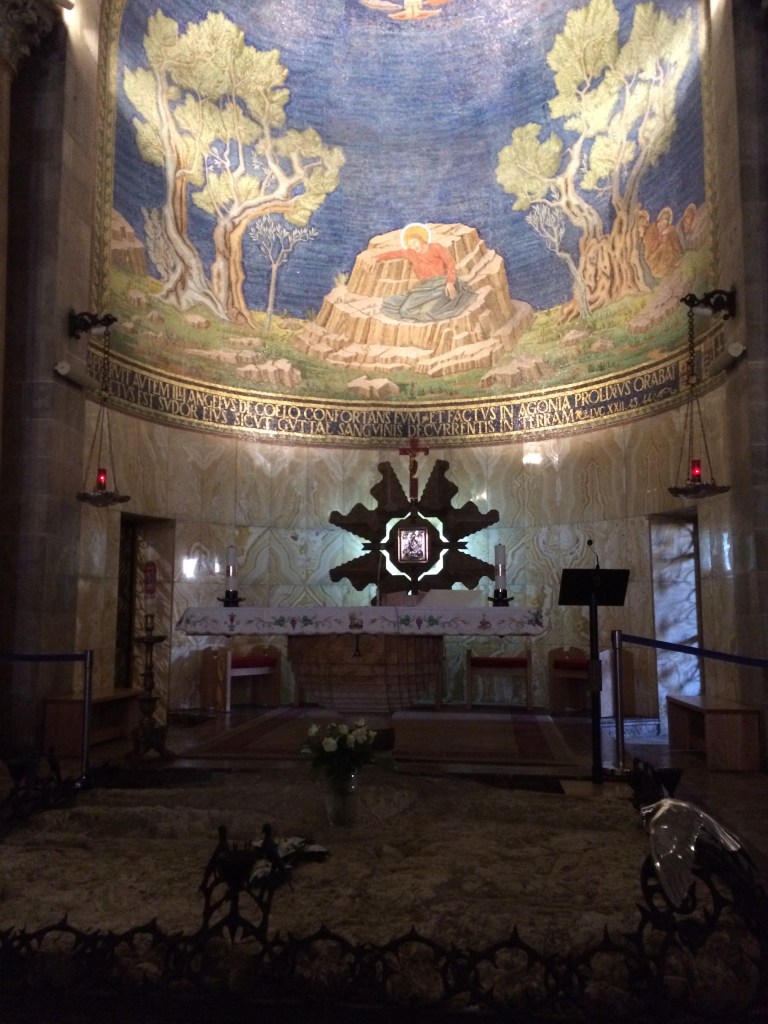
Photo by author, altar of the Church of All Nations beside the Garden of Gethsemane, May 2017. The church is always dimly lit to keep the sense of darkness during the Agony in the Garden of Jesus.
Before, darkness for man was seen more as a curse falling under the realm of evil and sin; but, with the coming of Jesus, darkness became a blessing, a prelude to the coming of light.
We have mentioned at the start of our reflection that Jesus was born during the darkest night of the year to show us he that is the light of the world, who had come to enlighten us in this widespread darkness, within us and outside us.
As the light of the world, Jesus was no stranger to darkness which he conquered and tamed in many instances like when they were caught in a storm at sea and in fact, when walked on water to join his disciples caught in another storm.
But most of all, Jesus had befriended darkness and made it a prelude to light.
How? By always praying during darkness. By prayer, it is more than reciting some prayers common during his time as a Jew but as a form of submission to the will of the Father. Jesus befriended darkness by setting aside, forgetting his very self to let the Father’s will be done.
Bass relief of agony in the garden on the wall of the Church of All Nations at Gethsemane. Photo by author, May 2019.
This he showed so well in two instances, first on Mount Tabor where he transfigured and second in Gethsemane before his arrest.
In both events, Jesus showed us the path to overcoming darkness is always through prayers, of being one in the Father.
It is in darkness when God is most closest to us because it is then when we get a glimpse of himself, of his love and mercy, of his own sufferings and pains, and of his glory.
This is something the three privileged disciples – Simon Peter, James and his brother John – did not realize while being with Jesus at both instances until after Easter. We are those three who always fall asleep, who could not keep with praying in Jesus, with Jesus, and through Jesus.
It was in the darkness of the night when Jesus spent most of his prayer periods, communing with the Father up in a mountain or a deserted place.
On Mount Tabor, Jesus showed his coming glory while in Gethsemane he showed his coming suffering and death. But whether in Gethsemane or on Mount Tabor, it is always Jesus we meet inviting us to share in his oneness with the Father, in his power in the Holy Spirit to overcome every darkness in life.
And the good news is he had already won for us!
Photo by Mr. Raffy Tima of GMA-7 News of Mt. Samat with the Memorial Cross across the Manila Bay following clear skies resulting from the lockdown imposed since March 17, 2020.
In these extended darker days of quarantine period, let us come to the Lord closer in prayer to. experience more of his Passion and Death, more of his darkness so we may see his coming glory when everything is finally cleared in this corona pandemic.
Prayer does not necessarily change things but primarily changes the person first. And that is when prayer changes everything when we become like Jesus in praying.
Jesus is asking us to leave everything behind, to forget one’s self anew to rediscover him in this darkness when we get out of our comfort zones to see the many sufferings he continues to endure with our brothers and sisters with lesser things in this life, with those in total darkness, with those groping in the dark.
Now more than ever, we have realized the beauty of poverty and simplicity, of persons than things.
And most especially of darkness itself becoming light for us in this tunnel.
May Jesus enlighten us and vanish all darkness in us so that soon, we shall celebrate together the joy of his coming again in this world darkened by sin. Amen.
From the rising to setting of the sun
My heart sings of the many blessings God brings in
every beginning and
ending of each day.
And so daily I pray
God will stay
so I may share
his light, his life, his love
to everyone I pray.
After my “private Mass” (Missa sine populo, i.e., Mass without people) in one of these lockdown days I have lost track counting.
Lawiswis ng Salita ni P. Nicanor F. Lalog, Parokya ni San Juan Apostol at Ebanghelista, Bagbaguin, Santa Maria, Bulacan
Martes, Ika-5 Linggo ng Kuwaresma, 31 Marso 2020
Bilang 21:4-9 ><)))*> +++ <*(((>< Juan 8:21-30
Ang eskultura ng ginawang ahas na tanso ni Moises sa tikin sa lugar kung saan mismo nangyari na ngayon nasa pangangalaga ng mga Paring Franciscano sa Jordan. Larawan kuha ng may-akda, Mayo 2019.
Batay sa salaysay ng aklat ng buhay
nainip mga Israelita sa paglalakbay sa ilang
nang sila ay dumaing, nagreklamo
kay Moises ng ganito:
"Kami ba'y inialis mo sa Egipto
upang patayin na ilang na ito?
Wala kaming makain ni mainom!
Sawa na kami sa walang kwentang pagkaing ito."
Bakit nga ba hindi na naubos
ating mga reklamo
lalo na kapag mayroong krisis
walang mintis yaring mga bibig
walang hanggang daing
tila hindi aabutin, napakamainipin
nakakasakit na ng damdamin
pati Diyos sinusubok, hinahamon natin?
Kung inyong mapapansin
yung talagang walang makain
hindi na makuhang dumaing
tanging isipin saan hahanapin
kanilang isasaing, lakas ay iipunin
sa pagbabaka-sakaling dinggin
dalanging tulong dumating
kanilang hahatiin at titipirin.
Ang masakit na kapansin-pansin
ngayong panahon ng COVID-19
marami sa mga daing ng daing
sa Facebook pinararating!
Akala mo walang makain
bakit nasa harapan ng computer screen?
Katulad nilang nagmamagaling
ibang natulungan may reklamo pa rin!
Magandang pagkakataon
kaloob nitong COVID-19 sa ating panahon
mabuksan puso at kalooban sa katotohanan
"Hindi lamang sa tinapay nabubuhay ang tao"
na kung uunahin natin si Kristo
makikilala natin bawat kapwa tao
ka-patid at ka-putol na dapat bahaginan
ano man mayroon ako.
Madalas sa maraming reklamo
puso ay sinarahan, pinanlalabuan ang isipan
bibig ang laging binubuksan, hindi mawalan ng laman
pinababayaan kaluluwa at kalooban
tiyan lamang nilalagyan
kaya walang kahulugan ni katuturan
ano mang karanasan hindi mapagyaman
kaunting hirap at tiisin, puro daing at hinaing.
Isaiah 55:10-11 +++ 0 +++ Matthew 6:7-15 03 March 2020
Photo by author, Pulilan bypass road in Bulacan, 25 February 2020
Slow me down Lord, especially this Lent, a season when you invite us to rely in you alone as our life and fulfillment.
Forgive us Lord for being so impatient, when we cannot wait because we want to rush everything simply because we always have so many plans in life; hence, we want total control that we refuse to trust others, especially you, our dearest, loving God.
We always want to rush you, to be quick in fulfilling your words. We refuse to trust in your words that never fail.
Thus says the Lord: “Just as from the heavens the rain and snow come down and do not return there till they have watered the earth, making it fertile and fruitful, giving seed to the one who sows and bread to the one who eats, so shall my word be that goes forth from my mouth; it shall not return to me void, but shall do my will, achieving the end for which I sent it.”
Isaiah 55:10-11
Teach us to purify our dispositions and attitudes to you this Season of Lent, Lord.
Teach us that attitude of giving our complete selves to you, O God our Father especially in calling out to you as Jesus had taught us in his Lord’s prayer.
When we say “Our Father” in praying, may we submit ourselves to your Divine will and design, O God, so we may learn to set aside out own plans and agenda so we may experience fully you power and grace. Amen.
40 Shades of Lent, Friday after Ash Wednesday, 28 February 2020
Isaiah 58:1-9 +++ 0 +++ Matthew 9:14-15
Have mercy on us, O God, have mercy… for we are still totally lost on the real meaning of fasting and abstinence. We have lost its spiritual meaning, focusing more on ourselves for vanity reasons like losing weight and looking good, totally forgetting fasting is all about you and others than us!
How unfortunate, dear God, that we no longer fast on Ash Wednesday and Good Friday but even on Sundays before receiving your Son Jesus in the Holy Communion by making all kinds of excuses with bold claims of having sacrificed so much in doing good deeds for you.
Thus says the Lord God: Cry out full-throated and unsparingly, lift up your voice like a trumpet blast. Tell my people their wickedness, and the house of Jacob their sins. They seek me day after day, and desire to know my ways, like a nation that has done what is just and not abandoned the law of their God. They ask me to declare what is due them, pleased to gain access to God. “Why do we fast, and you do not see it? Afflict ourselves, and you take no note of it?” Lo, on your fast day you carry out your own pursuits, and drive all your laborers. Yes, your fast ends in quarreling and fighting, striking with wicked claw. This, rather, is the fasting that I wish: releasing those bound unjustly, untying the thongs of the yoke; setting free the oppressed, breaking every yoke; sharing your bread with the hungry, sheltering the oppressed and the homeless; clothing the naked when you see them, and not turning your back on your own.”
Isaiah 58:1-4, 6-7
Make us realize that fasting is not punishing ourselves, of denying ourselves with goods and pleasures of the world that leave us empty, wanting for more but never fulfilled deep inside.
Fasting is actually rewarding ourselves with you, O God, our only wealth and treasure, our only fulfillment.
Help us create an empty space within ourselves through fasting and abstinence so that your Son Jesus may dwell and reign in our hearts, saying from within us, “Here I am!” (Is. 58:9).Amen.
40 Shades of Lent, Thursday after Ash Wednesday, 27 February 2020
Deuteronomy 30:15-20 +++ 0 +++ Luke 9:22-25
As we step forward into the second day of Lent, O Lord, you remind us today of your call to conversion which is actually a call to love and a call to life.
Forgive us, O Lord, for those times we have turned away from you in sins, thinking that is the path to life, the path to freedom, the path to fulfillment – only to find out later it is the path to destruction and death.
Moses said to the people: “Today I have set before you life and prosperity, death and doom. If you obey the commandments of the Lord, your God, which I enjoin on you today, loving him, and walking in his ways, and keeping his commandments, statutes and decrees, you will live and grow numerous, and the Lord, your God, will bless you in the land you are entering to occupy. I have set before you life and death, the blessing and the curse. Choose life, then, that you and your descendants may live, by loving the Lord, your God, heeding his voice, and holding fast to him.”
Deuteronomy 30:15-16, 19-20
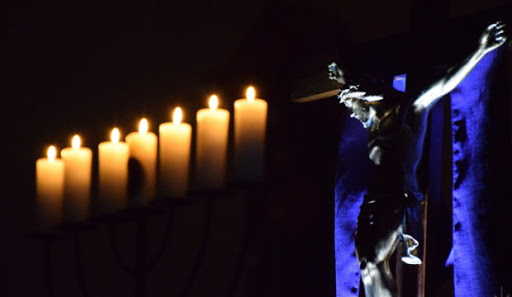
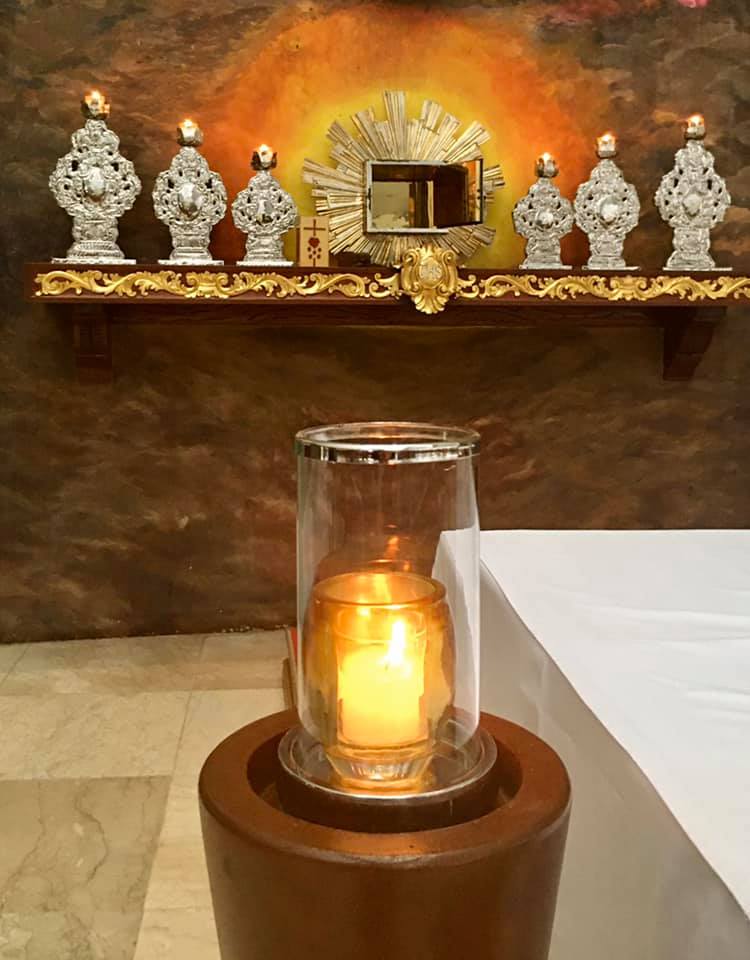
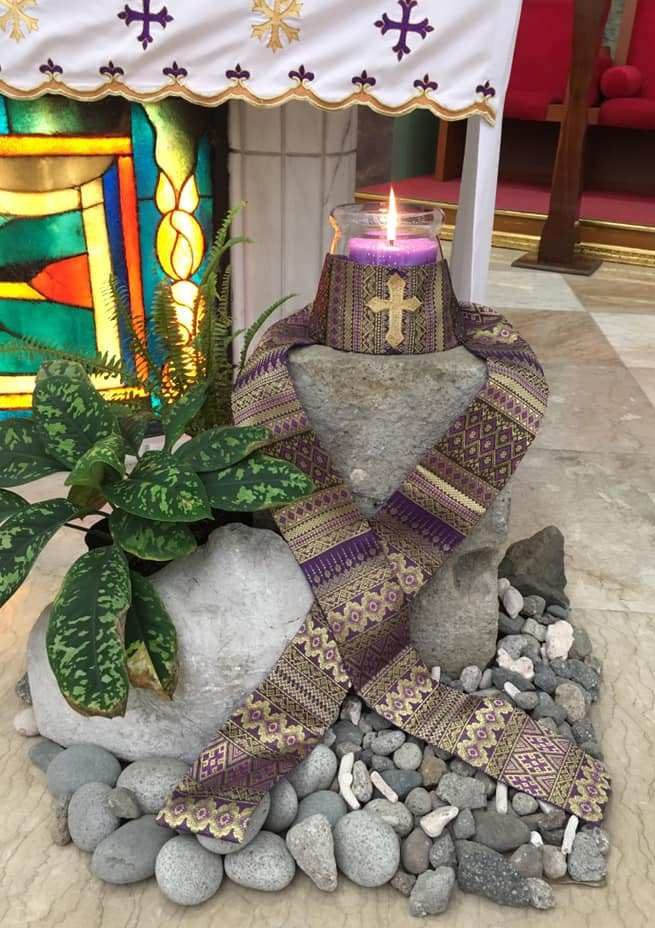
Photo by author, our Parish altar candle, Lent 2019.
Help us, Jesus, “to deny ourselves, take up our crosses daily, and follow you” (Lk.9:23) in the path of conversion and fidelity to your everlasting covenant.
Make us realize that Lent is more than a season we yearly celebrate but a reality of life itself, a life so blessed in your coming to be one with us in our sufferings and struggles.
Give us the strength, dear Jesus, to renew your covenant with us, to always choose God, choose life.
May we also share your love and mercy, understanding and patience, kindness and compassion to our fellow pilgrims in this journey of life so that together in the end, we may all enter into the house of the Father in heaven. Amen.

















 lordmychef.com