The Lord Is My Chef Breakfast Recipe for the Soul by Fr. Nicanor F. Lalog II
Tuesday, Week XXII, Year II in Ordinary Time, 01 September 2020
1 Corinthians 2:10-16 >><)))*> || >><)))*> || >><)))*> Luke 4:31-37
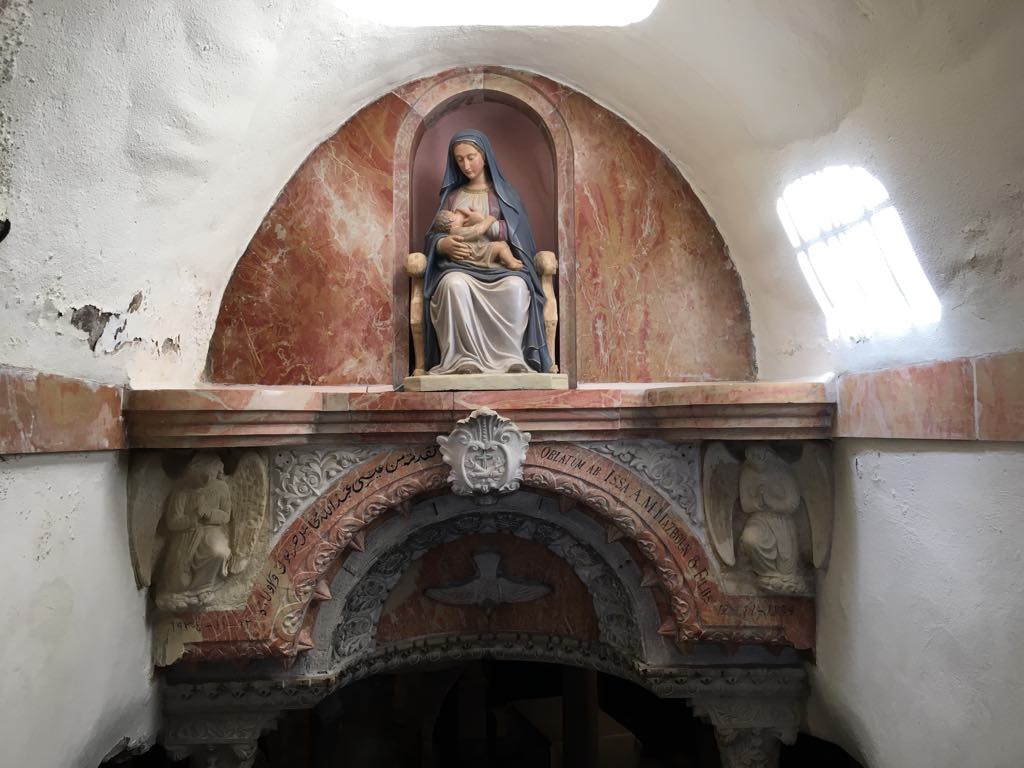
Photo by author, Chapel of Holy Family, Sacred Heart Novitiate, Novaliches, May 2017.
Lord Jesus, let me be focused on you alone, on your suffering and death for my sins, on your love for me, on your dying on the Cross for me. Breathe in me your Holy Spirit so I rely on you alone to have your “mind”.
Brothers and sisters: The Spirit scrutinizes everything, even the depths of God. Among men, who knows what pertains to the man except his spirit that is within? similarly, no one knows what pertains to God except the Spirit of God… The one who is spiritual, however, can judge everything but is not subject to judgment by anyone. For “who has known the mind of the Lord, so as to counsel him?” But we have the mind of Christ.
1 Corinthians 2:10-11, 15-16
What is this “mind of Christ”, O dear Jesus, that astonished the people of Capernaum at your preaching because you spoke with authority that even the unclean spirit of the possessed man rightly recognized you?
So many times, we fail to experience and manifest your mind because we have been so preoccupied with our very selves, so confident in our wild thoughts about you despite our claims that you are beyond human comprehension.
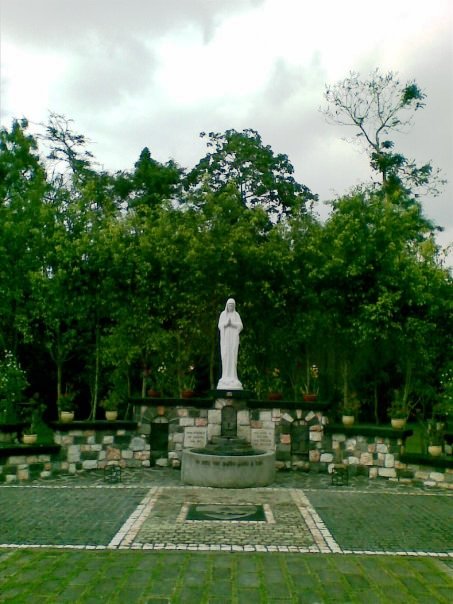
Photo by author, inside our parish at sunrise, 2019.
Yes, many of us are so conceited in knowing you so well, Lord, preaching all about health and wealth, the good life minus your Cross and sufferings that have sadly continued to mislead so many people today like during the time of Paul at Corinth.
Refresh your mind of Christ in us, Jesus by instilling in our hearts and minds that everything is grace from the Father, that whatever gift we have received from him is perfected when we are one with you in your suffering and death on the Cross.
That is the mind of Christ, dear Jesus: a beautiful mind so faithful and trusting in the Father who makes everything possibly good and wonderful, even the most painful experiences or darkest moments we ever had.
Keep us attuned with your Spirit so we may always follow the depths of God and be one in him through you, Lord Jesus. Amen.
Maybe you have been asked so many times with the question, which do you prefer to hear first, the good news or the bad news? Usually we say it all depends to our mood and temperament or to the gravity of the situation. Sometimes, we ask for the bad news first so we can suffer earlier and enjoy the good news later. Or, we ask for the good news first to soften the impact of the bad news.
Our gospel this Sunday is still set in the pagan city of Caesarea Philippi and we heard Jesus giving his disciples – including us – with a strong dosage of “bad news” after hearing last week the good news that he is “the Christ, the Son of the living God.”
Jesus began to show his disciples that he must go to Jerusalem and suffer greatly from the elders, the chief priests, and the scribes, and be killed and on the third day be raised. Then Peter took Jesus aside and began to rebuke him, “God forbid, Lord! No such thing shall ever happen to you.” He turned and said to Peter, “Get behind me, Satan! You are obstacle to me. You are thinking not as God does, but as human beings do.” Then Jesus said to his disciples, “Whoever wishes to come after me must deny himself, take up his cross, and follow me. For whoever wishes to save his life will lose it, but whoever loses his life for my sake will find it.”
Matthew 16:21-25
Our gospel today seems to be a very big, bad news for everyone, with things getting worst before getting any better which the Lord had promised to be only in the end that nobody knows when!
See how Jesus started by saying he would “suffer greatly at the hands of elders, the chief priests, and the scribes and be killed and on the third day be raised again.” Not only that: he now calls Peter as “Satan” from being the Rock last Sunday after giving the right answer as to who he is.
Like Peter, we would probably say the same thing to Jesus why make suffering and death central to life that is meant to enjoy?
Like Peter, the Lord is inviting us today to focus more on the good news than on the bad news of suffering and death which for him – the Paschal mystery we call – is actually the best of good news!
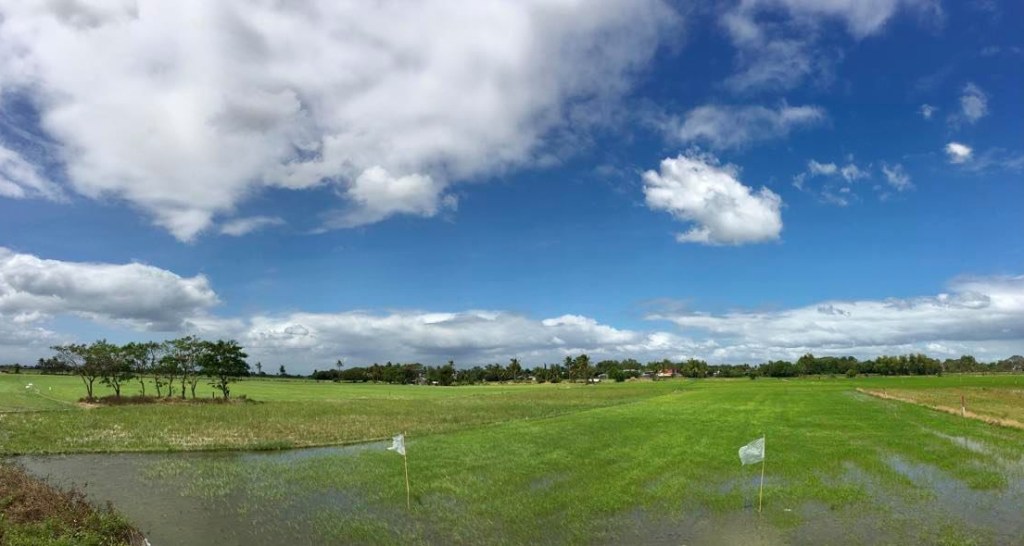
Photo by author, altar flowers in our parish, January 2020.
Jesus Christ’s pasch is the best of good news!
What we have heard as “bad news” from the Lord is his first prediction of his coming pasch or Passion, Death and Resurrection. He would be announcing this prediction of his pasch two more times as they near Jerusalem.
From the He brew word pesach that means to pass over, it connotes suffering and death into new life. It came from the Exodus experience of the Chosen People from Egypt into the Promised Land during the time of Moses, taking its fullest meaning in Jesus Christ, the Son of God who became human like us in everything except sin, “passing over” from eternity to temporal, from Passion and Death to Resurrection.
Authentic discipleship does not require us to seek suffering; no, God is not sadistic as some people with twisted minds would say. However, being faithful to Jesus, witnessing his gospel values bring enough of these sufferings and deaths but on a different level and meaning. We realize that life is a daily exodus, a passing over from darkness into light, from ignorance into wisdom, from sickness into health, from death into new life.
Like the prophet Jeremiah in the first reading, we discover that the more we follow God, the more sufferings we encounter in life but at the same time, we cannot let go of him because his attraction is so powerful! There is something so deep within, so profound and fulfilling in us we realize that living in the ways of God, in the gospel values of Christ can we truly find lasting joy and peace – even if we have to die in our very selves in the process.
You duped me, O Lord, and I let myself be duped; you were too strong for me, and you triumphed. all the day I am an object of laughter; everyone mocks me… But then it becomes like fire burning in my heart, imprisoned in my bones; I grow weary holding it in, I cannot endure it.
Jeremiah 20:7, 9
Photo by author, Gaudete Sunday in our parish, December 2019.
Thinking in God’s ways
Today Jesus is assuring us that there is no such thing as “good news, bad news” with him. The good news/bad news question is really a non-question to disciples of Christ because whatever suffering and death we embrace in him is a sharing in his very life.
Hence, Jesus Christ’s good news is in fact the bestest news we can ever have. Always.
The key is to think as God does, not as human beings do as Jesus pointed out to Peter.
Three things I wish to share with you about thinking in God’s ways:
First is to accept and embrace pains and sufferings not for their own sake but as a way to cleanse our selves to greater glory. As we have said, God is not a sadist; we need to be cleansed like every thing in order to bring out the best in us like diamonds or any precious stone or any material.
Polishing and honing always mean “subtractions” with so many shaving and cutting of the rough edges to bring out the beauty and sharpness of a thing.
Man’s ways has always been to avoid every pain and suffering. No wonder, the most prescribed medicine worldwide is said to be the pain killer. But, experience has taught us this is not true and cannot be the norm of life. Like every gym enthusiast would tell you, “no pain, no gain”. Pain and suffering is part of life and the good news is, Christ has made it holy for us.
Second is to be silent in order to be able to listen to every sound and thus, heighten our sensitivities not only with our true selves but also with God and with others. In this age of social media and instant communications, silent has become a rare commodity. It is always easier to speak even without thinking much than be silent. That is the way of the world: speak out loud, make noises, and let everyone hear you — until they get tired of you.
Photo by author, our parish ceiling at sunset, 25 August 2020.
Third is the most precious in God’s ways of thinking — the way of hiddenness. This is God’s most evident way of making himself felt, experienced, and yes, seen by being hidden and invisible.
Last Thursday we celebrated the memorial of St. Monica, the mother of St. Augustine who narrated the story of how she got sick at Ostia in Italy with his brother hurrying to get back home to Tagaste in Africa so that when she dies, she would be buried there. St. Monica “reproached him with a glance because he had entertained such earthly thoughts”; then, she looked at St. Augustine and told him to bury her anywhere, asking one thing only from him: that he remembers her always in his celebration of the Holy Mass.
So many times, we are so concerned with our popularity that whatever we do has to be made known to everyone to see specially by those so-called “followers” with their “likes” that even up to death, some would spend a fortune for lavish funerals and even mauseleoum.
That’s the way of the world of everybody making a statement, of being known as present, always seen. In the movie “The Devil’s Advocate”, Al Pacino played the role of satan who said it so well at the end after tempting Keanu Reeves, “vanity…vanity is my most favorite sin.”
See the life of Jesus Christ: more than half was spend in hiddenness and silence. He worked only for three years characterized by so many instances of silence and hiddenness too and yet, his impact continues to this day and hereafter.
Beginning with last Sunday after asking us who do we say he is, Jesus is inviting us to follow him in his Passion and Death to be one in his Resurrection. This is also the call by St. Paul in the second reading:
I urge you, brothers and sisters, by the mercies of God, to offer your bodies as a living sacrifice, holy and pleasing to God, your spiritual worship. Do not conform yourselves to this age but be transformed by the renewal of your mind, that you may discern what is the will of God, what is good and pleasing and perfect.
Romans 12:1-2
Jesus is not asking too much from us, no need for any fanfares on our part; simply come to him with our true self, no matter how sinful and incomplete we are. Remember, all is good news with him and you never lose in him. Amen.
A blessed week to everyone!
Photo by author, parish ceiling at sunset, 25 August 2020.
While praying on your words today, O Lord, thoughts of the beach came through my mind. I do not know why; maybe this is the only year when I would have not gone to a beach that I miss so much.
But, as my former spiritual director during our 30-day retreat, the late Fr. Arthur Shea, SJ, used to assure me, “the most difficult prayer is always the most meritorious”.
Indeed, sweet Jesus!
Like your prophet Nahum in the first reading looking forward to the defeat of Nineveh, I remembered those days in the past when I felt so fearful on many occasions whether I can overcome the many trials and challenges that have come my way.
See, upon the mountains there advances the bearer of good news, announcing peace! Celebrate your feasts, O Judah, fulfill your vows! For nevermore shall you be invaded by the scoundrel; he is completely destroyed. The Lord will restore the vine of Jacob, the pride of Israel, though ravagers have ravaged them and ruined the tendrils.
Nahum 2:1, 3
Like Judah, I have won and prevailed in my many battles in life in your power, Lord, when I entrusted myself to you totally.
When I look back in my life, it is so true that it is in giving that we receive, it is in losing when we have, and it is dying when we truly live. That is the lesson of the waves at the beach that keep on coming to shore, as if trying to take it to the sea.
Photo by Mr. Jim Marpa, 2019.
How I wish I could be like the sea, always moving, always light without anything except water unlike the shore that is so adamant as if it would never budge in.
But in reality, it is the sea that always prevails because water is always willing to give up itself to follow the form of the shore, to take the shape of every container where it is poured while the shore through time, its sand and rocks eventually give into the waves to get lost in the sea.
Jesus said to his disciples, “Whoever wishes to come after me must deny himself, take up his cross, and follow me. For whoever wishes to save his life will lose it, but whoever loses his life for my sake will find it.
Matthew 16:24-25
Dearest Jesus Christ, teach me to give up myself to you completely. Teach me to learn to get lost to you in order to find myself, to find fulfillment in life.
This COVID-19 pandemic reminds us today in this age of abundance and affluence that still — the key to authentic living is in giving up, in having less.
As they always say, “something’s gotta to give”. Amen.
The Lord Is My Chef Sunday Recipe for the Soul by Fr. Nicanor F. Lalog II
Week XVIII, Cycle A in Ordinary Time, 02 August 2020
Isaiah 55:1-3 >><}}}*> Romans 8:35, 37-39 >><}}}*> Matthew 14:13-21
Remember our reflection last Sunday? Of how parables teach us that “less is always more” because to have the kingdom of God – Jesus Christ himself – we have to learn to appreciate the little things in life?
Beginning this Sunday until August 16, our gospels will start telling us who is Jesus Christ by showing us his powers and abilities that are exactly opposite the way we see and understand them. This new series of stories are so relevant to us in this time of pandemic, giving us wonderful insights into God’s ways of responding to our human situations.
St. Matthew now leads us with Jesus to the wilderness after teaching us in parables to experience his power in transforming us like the five loaves and two fish to feed more than five thousand people.
Multi-layered story of the multiplication of bread
All four evangelists have recorded this story of Jesus Christ’s multiplication of the loaves of bread with their particular focus and stress, showing us that it truly happened and was a major event in the Lord’s ministry.
Very unique with St. Matthew’s version of this miracle story – which has not one but two! – is his economy of words in narrating it like a straight news as if it were a developing story or a “breaking news” unfolding before us, calling us to follow its updates and details due to its multi-layered meanings.
When Jesus heard of John the Baptist, he withdrew in a boat to a deserted place by himself. The crowds heard of this and followed him on foot from their towns. When he disembarked and saw the vast crowd, his heart was moved with pity for them, and he cured their sick. When it was evening, the disciples approached him and said, “This is a deserted place and it is already late; dismiss the crowds so they can go to the villages and buy food for themselves.” Jesus said to them, “There is no need for them to go away; give them some food yourselves.” But they said to him, “Five loaves and two fish are all we have here.” Then he said, “Bring them here to me,” and he ordered the crowds to sit down on the grass. Taking the five loaves and the two fish, and looking up to heaven, he said the blessing, broke the loaves, and gave them to the disciples, who in turn gave them to the crowds. They all ate and were satisfied, and they picked up the fragments left over — twelve wicker baskets full. Those who ate were about five thousand men, not counting women and children.
Matthew 14:13-21
Photo from iStock/Studio-Annika.
The consolation of Jesus.
Our situation in this time of the corona pandemic is so similar with that of Jesus. With the increasing number of COVID-19 cases, it has finally hit us hard, so close to home with news of those we know getting infected and worst, dying from this disease.
Like Jesus upon hearing the death of John the Baptist, we are all saddened that we wish to withdraw away from everyone.
We want to mourn but there are more people in need of our presence and help in this time of pandemic like the countless medical frontliners and health workers who must be so tired – even sick, physically and emotionally – by now with the growing number of COVID-19 patients and yet have chosen to remain in their posts.
And there are still the other casualties of this pandemic like those who have lost their jobs, those evicted from their rented apartments, those stranded and separated from their loved ones, those begging for food, and those afflicted with other sickness going through dialysis and physical therapy.
Jesus knows so well the “wilderness” we are all going through and he is right here with us, one with us in our sufferings, in our fears and anxieties, and in our exhaustion.
To be one with us is consolation, from the Latin “con” or with + “solare” or alone, to be one with somebody feeling alone.
Jesus did not remove our pains and sufferings, even our death; he joined us to be one with us in these that he can call us to “Come to me, all you who labor and are burdened, and I will give your rest. Take my yoke upon you… For my yoke is easy and my burden light” (Mt.11:28-30, 14th Sunday, 05 Jul 2020).
Compassion of Jesus.
Still with Christ’s reaction of being “moved with pity” at the sight of the crowds who have followed him to the wilderness, we find something more deeper with his being one with us, in consoling us that he had forgotten all about himself, his tired body that he went on to heal the sick among them.
To be moved with pity is more than a feeling of the senses but a response of his total person.
You respond for help, you reply to a call.
Ever wondered why we have the “responsorial psalm” after the first reading in the Mass? Because those words from the Psalms express our total assent and commitment to God, involving our total self like body, mind, heart and soul.
Photo by Dra. Mai B. Dela Peña, Carmel Monastery, Israel, 2016.
God cannot suffer because he is perfect.
That is why he became human like us in Jesus Christ to be one with our suffering and death so that we would one with him in his glorious Resurrection.
In the wilderness, Jesus stayed with the people, not allowing them to leave as suggested by the Twelve because he was moved with pity with the crowd because he wanted to suffer with them.
That is compassion, literally means to “suffer with” from cum + patior. Here in the wilderness, Jesus showed his compassion for the people which will reach its highest point in giving himself on the Cross on Good Friday.
Have we “responded” to God’s call to serve, to a call of duty, and to a plea for help from the poor? Have we truly given ourselves to somebody without ever thinking our own comfort or rewards? Or, are we running away from his Cross?
What a shame in this time of pandemic there are some among us who rejoice at the losses of others like the Twelve who wanted the crowd to be sent home because they were afraid of responsibilities, of taking care of the suffering people.
Consolation and compassion are the two most needed from each of us in this time of crisis.
Our scarcity mentality, the God of plenty.
We now come to the miracle of the feeding of five thousand. According to the late Fr. Henri Nouwen, this story is an example of our “scarcity mentality” when we think of not having enough, of finding what we have as too little, always looking for more; hence, our tendency to hoard everything.
The Twelve were thinking more of themselves, afraid they could go hungry with the five loaves of bread and two fish they have. They were so afraid of difficulties ahead of them in their situation where to find and how to feed those great number of people.
They were focused on what was lacking than on what they have, and who was with them, Jesus Christ! They were hungry for food in the stomach than for food to the soul unlike the crowds who have followed Jesus.
Worst of all, the Twelve got “mad” upon seeing the crowds who have followed them to the wilderness when in fact, it was Jesus who needed most to rest to mourn John’s death!
But through all these, Jesus patiently bore the people’s woes and the Twelve’s selfishness to teach them all in a very nice way something so essential in our response to every human suffering and extreme situation: opening and entrusting our selves totally to God.
And that was actually the greatest miracle that happened that day.
In doing it, Jesus simply asked the Twelve what they have, never asking how much they have or its condition. Just whatever they have to give everything to Jesus like those five loaves and two fish that he took, and while looking up to heaven, blessed and broke the loaves, and gave them to the Twelve to distribute to the crowd.
And everyone was satisfied with a lot of left overs too!
Matthew nor any of the other Evangelists ever explained how it happened because it does not really matter at all. What is most important is what are we willing to give up to Jesus so he can transform us into better persons.
That is what we continue to do this day in every celebration of the Holy Eucharist- whatever we have, even not the best or the worst and littlest we have, when given to Jesus becomes holy and multiplied!
The power of God is immense, without doubt. But, in this miracle of the feeding of five thousand, Jesus is showing us that his power is not meant to satisfy our material or bodily needs but our deepest desires that lead to our fulfillment in him as prophesied by Isaiah in the first reading.
Why spend your money for what is not bread; your wages for what fails to satisfy? Heed me, and you shall eat well, you shall delight in rich fare. Come to me heedfully, listen, that you may have life.
Isaiah 55:2-3
Amid the pandemic worsened by our government officials’ inanities, irresponsibilities, and sheer lack of compassion with us in this wilderness, the Lord assures us today that he is with us for “nothing can separate us from the love of Christ” (Second Reading) if we are willing to give him all that we have.
It is our spiritual transformation first that leads us to our material blessings. We can all have it if we are willing to give everything to Jesus and believe in him always. What do you have for miracles to happen?
A blessed August ahead for you!Amen.
Photo by Dra. Mai B. Dela Peña, Carmel, Israel, 2016.
The Lord Is My Chef Breakfast Recipe for the Soul by Fr. Nicanor F. Lalog II
Tuesday, Week XVII, Year II in Ordinary Time, 28 July 2020
Jeremiah 14:17-22 >>><)))*> >><)))*> ><)))*> Matthew 13:36-43
God our merciful Father, today we pray for our countrymen blinded by the many evils happening in our land today. For those who continue to defend the cycle of murders and killings to weed us out of criminals and addicts, for those who defend the blasphemies uttered against you and jokes against everyone, for those who continue to deny something is terribly wrong among our leaders.
We pray for them all, Lord. Open their eyes and their ears to the many sufferings around us: the cries of mothers losing a child, the pains of fathers losing their jobs, the frustrations of young people in finding a job, and the alienation of a nation lost in a circus where clowns are running the government.
Like your Prophet Jeremiah whom you have asked to tell your people in Judah and Israel how their sins have caused all their miseries and sufferings, enlighten us more to wake up our nation to the truth we have turned away from you.
Let my eyes stream with tears day and night, without rest, over the great destruction which overwhelms the virgin daughter of my people, over her incurable wound. If I walk into the field, look! Those slain by the sword; if I enter the city, look! Those consumed by hunger. Why have you struck us a blow that cannot be healed? We wait for peace, to no avail; for a time of healing, but terror comes instead. We recognize, O Lord, our wickedness, the guilt of our fathers; that we have sinned against you. Is it not you alone, O Lord, our God, to whom we look?
Jeremiah 14:17-18, 19-20, 22
Show us the way, the path back to you, O Lord.
We have become the weeds among the wheat, trying to ruin everything.
We have become callous and numb with our sins, too, that others cannot believe our calls for conversion and renewal.
Renew us, O Lord, so we may listen more to your words that will guide us to recovery and conversion. Amen.
Photo by author, Sonnen Berg Mountain View, Davao City, August 2018.
The Lord Is My Chef Sunday Recipe for the Soul by Fr. Nicanor F. Lalog II
Week XVII, Cycle A in Ordinary Time, 26 July 2020
1 Kings 3:5,7-12 >><}}}*> Romans 8:28-30 >><}}}*> Matthew 13:44-52
Photo by author, 2020.
The other Sunday during our Mass, I saw a man wearing a black t-shirt with these signs:
– = +
Of course, it means “Less is more” because a minus (-) is equal (=) to an addition or a plus (+)!
That is also the meaning of the Cross of Jesus Christ wherein it is in giving that we receive, in dying that we live, in losing that we gain more of everything because the cross is a plus sign.
This Sunday, that is essentially the lesson Jesus is telling us on this final installment of his parables wherein we have to lose everything in order to have him, the kingdom of God.
See how the three parables present us with one situation: to get the treasure in a field, its finder has to bury it again, sell all he has to buy the field where he had found the treasure; a trader searching for fine pearls sells everything he has to acquire a pearl of great price he had found; and lastly, not all fish caught in a net thrown in the sea are good to be sold with bad ones that must be thrown.
These parables are reminding us today of the need to exercise our freedom properly by making wise choices in life. Freedom is not the ability to do whatever we want but the ability to choose always what is good.
In every situation in life, we always have to make a choice; it is never true that we have no choice left to make. Choosing not to make a choice is actually choosing what is wrong, what is bad, and what is not good for us and for others.
We are always made by the choices we make in life. And that is why the parables are teaching us to choose wisely like King Solomon in the first reading.
Photo by author, February 2020.
Choosing wisely
The Lord appeared to Solomon in a dream at night. God said, “Ask something of me and I will give it to you.” Solomon answered: “O Lord, my God, you have made me, your servant, king to succeed my father David; but I am a mere youth, not knowing at all how to act. Give your servant, therefore, an understanding heart to judge your people and to distinguish right from wrong.” The Lord was pleased that Solomon made this request. So God said to him: “Because you have asked for this — not for a long life for yourself, nor for riches, nor for the life of your enemies, but for understanding so that you may know what is right — I do as you requested. I give you a heart so wise and understanding that there has never been anyone like you up to now, and after you there will come no one to equal you.”
1 Kings 3:5,7,9, 11-12
Here we go back again to that basic reality of a parable which is a simple story of every day life filled with profound meanings. It is something we take for granted because it is so ordinary like the seed forgetting its great potentials in the future.
Many times in life we get distracted like today when we have a plethora of products and services available that we cannot focus on what is really essential and important. Our decisions are clouded even erratic because we are so distracted with the wide array of choices to make, from food to eat to clothes to wear, movies or series to watch on Netflix or cable TV as well as music to listen from thousands of titles in our playlists.
And in our distraction, many times we miss our priorities in life, especially God and our loved ones.
Then, we end up sad and miserable, way too far from what God had envisioned for us since the beginning which is to live in joy in him.
For those he foreknew he also predestined to be conformed to the image of his Son, so that he might be the firstborn among many brothers and sisters. And those he predestined he also called; and those he called he also justified; and those he justified he also glorified.
Romans 8:29-30
St. Paul is reminding and assuring us in these short passages we heard from his letter today that God called us to be saved and glorified in Jesus Christ not by chance but by purpose. He willed it, he wanted it so because he loves us so much, assuring us all of future glory in him in eternity.
The key to experiencing that joy from God is to always abide in him like King Solomon of choosing what is good, letting go of everything that will separate us from him like sin and evil. For God’s plan and grace to operate and materialize, we need to cooperate with him like being a good soil that produces fruitful wheat.
Photo by Mr. Jim Marpa, 2018.
Our Christian life of joy
Like the Twelve inside the house listening to Jesus explained and narrated more parables, the Lord is also asking us today the same question:
“Do you understand all these things?”
Matthew 13:51
To “understand all these things” is not about human intelligence like being smart or brilliant but of holy wisdom or spiritual intelligence characterized by humility and simplicity before God and others.
To “understand all these things” and be like “every scribe… or the head of a household who brings from his storeroom both the new and the old” (Mt.13:52) is to be one in Jesus Christ, a person learned in the ways of God, who knows how to prioritize things, always making things relevant in the present even if it is an old lesson.
To be truly joyful in life is to just have Jesus, only Jesus and always Jesus.
It is easier said than done but we must try even little by little, slowly by learning more to give of our very selves to others.
It is difficult to imitate the main characters in the parables today – the finder of treasure, the pearl merchant, and the fisherman – when we always think of having more than having what is most valuable and important.
Have we noticed during this pandemic that whenever we would count or take tabs of everything we share, we feel sad and even grouchy because we feel we have lost a lot? And if we get too much in return, we cannot rejoice because we somehow feel guilty?
True joy comes when we are able to be generous, of giving without counting the costs, without thinking of what would be left for me because my only concern is what else can I give the other persons so that my joy can be complete when I see them like me – happy, contented, and peaceful with a simple smile or delighted by a hot bowl of soup or a hearty breakfast.
And that’s that greatest parable of Jesus of all that we need to understand and embrace: the less we have of created things, the more we have of the Creator, of himself who is the kingdom of God.
Then, that is heaven.
A blessed Sunday to everyone!
Photo by Dr. Mylene A. Santos at Infanta, Quezon, July 2020.
The Lord Is My Chef Breakfast Recipe for the Soul by Fr. Nicanor F. Lalog II
Saturday, Feast of St. James the Greater, Apostle, 25 July 2020
2 Corinthians 4:7-15 ><}}}*> >><}}}*> >>><}}}*> Matthew 20:20-28
Facade of “Santiago de Compostela” in Spain in honor of St. James the Greater. Photo courtesy of Fr. Gener Garcia during their “El Camino de Santiago de Compostela”, May 09 to June 05, 2019.
Glory and praise to you, Lord Jesus Christ who had called and given us the Apostles as foundations of your Holy Church as we celebrate today the feast of St. James the Greater, the first bishop of Jerusalem and the first among the Twelve to die a martyr.
In him, O Lord, you gave us an image of hope in you, of how we can grow in holiness in you.
Through St. James the Greater, you have shown us your kindness in joining us in our earthly pilgrimage, slowly making us realize how we must adhere to you more closely to finally make it to our final destination in your kingdom in heaven.
Jesus said in reply, “You do not know what you are asking. Can you drink the chalice that I am going to drink?” They said to him, “We can.” He replied, “My chalice you will indeed drink, but to sit at my right and at my left, this is not mine to give but is for those for whom it has been prepared by my Father.”
Matthew 20:22-23
Your kindness is very evident, sweet Jesus.
I really wonder how you felt when the mother of James and John asked you that her sons be seated “one at your right and the other at your left in your kingdom” (Mt.20:21).
You were so kind to simply tell her and her sons, “You do not know what you are asking.”
Photo by Fr. Gener Garcia, image of Santiago de Compostela in Spain, 2019.
So many times, Lord, like St. James, we ask so many things from you, even demanding from you in exchange of what we believe as too great we have given you. You perfectly know so well that we do not know what we are asking at all. You know how we are blinded by fame and honor, power and wealth – things that do not matter at all in your kingdom.
You are so gentle in reminding us about the deeper realities of life, of discipleship by simplifying your demands, “Can you drink the chalice that I am going to drink?” to which we are often so naive, even oblivious for good reasons. Primarily because, we really do not know what we are asking.
And that’s when you are kindest of all, sweet Jesus: like with St. James and his brother St. John, you invite us “to drink the chalice you are drinking” by assuring us it can be done, that it is very possible, that in fact, that is the greatest honor of being with you, to drink from your chalice – without letting us know right away what it meant! St. John eventually realized and wholly accepted what you meant of drinking in your chalice when he became the first to share in your passion and death during the persecution by King Herod Agrippa (Acts 12:1-1).
Slowly, you make us realize too what is to drink in your chalice as we continue life’s journey with you, most especially into our inner self where we eventually find and rest in you when the goings get tough and rough.
It is total kindness on your part Lord to show us the beauty of sharing a meal with you, of sharing in your mission, of sharing in your life and most especially of sharing in your death that we make it with you to your kingdom.
Like St. James the Greater, continue to be kind with us, Lord, accompanying us in this journey.
In the same manner, make us kind to one another too like St. James the Greater who offered his life for the early church, for being the first to drink from your chalice. Amen.
Photo by Fr. Gener Garcia, marker along the “El Camino de Santiago de Compostela”, 2019.
The Lord Is My Chef Sunday Recipe for the Soul by Fr. Nicanor F. Lalog II
Week XVI, Cycle A in Ordinary Time, 19 July 2020
Wisdom 12:13, 16-19 >><}}}*> Romans 8:26-27 >><}}}*> Matthew 13:24-43
Our Lord Jesus Christ invites us today to join him into a different kind of journey that would take us deep into God’s mystery in our very selves through the parables he has started to tell us last Sunday.
Recall, dear readers, that parables constitute the heart of the Lord’s preaching.
We have defined these as simple stories with deep realities that must be cracked open through prayers and reflections to get its meaning. From the French para bolein that literally means “along the path”, a parable is likewise a bridge that leads us into something unknown to us before.
In itself, a parable is a journey calling us to walk through it into our inner selves to discover the many inner beauties that lie within us but we take for granted. Ultimately, as we discover these giftedness within us, we then uncover God dwelling within us.
This is the reason why Jesus would always tell his audience after narrating his parables that “Whoever has ears ought to hear” (Mt.13:43) to insist on them to go deeper inside themselves for their meaning.
And that is when we are transformed, when our lives are changed into true disciples of Jesus Christ.
Greatness in littleness
First thing we notice in the three parables of Jesus today is his insistence on the coming of the kingdom of heaven or kingdom of God through him as the mysterious seed.
This kingdom of heaven is used interchangeably with “kingdom of God” that Jesus would always speak of in his entire ministry until his crucifixion is not according to our understanding of a kingdom: it is not about a territorial domain or the exercise of power over subjects using force.
St. John Paul the Second expressed it beautifully by declaring the person of Jesus Christ himself is the kingdom of God. No wonder, Christ would always liken himself and the kingdom of God with the seed being sown.
It is always good. It is for everyone as the sower scatters the seeds everywhere. And it is always small like Jesus who was born like any infant so fragile and even poor like most of us. He is like the seed we take for granted from which comes forth all kinds of plants like trees, big and small.
Flowers of a mustard plant from which seeds are taken. Photo by author, Israel, 2017.
Or most specially, like those seeds that turn into crops of wheat and shrubs like the mustard with leaves and branches where birds may dwell that describe the first two parables today.
Jesus then added a third parable of the yeast mixed into flour that leavened the dough into a bread.
Like him our Lord, we his disciples are also like the small seeds packed with great possibilities in God.
In all these three parables today, there is that element of smallness, of littleness that remind us how everything that is great always starts small.
When we come to think of this, we realize how we embarked on this great mission of making Jesus Christ known: it started like a small spark within us, perhaps from a single word we have heard or read, a simple inspiration by God through the most ordinary persons and situation.
Not only in things regarding our spiritual lives but even our personal lives when we recall those humble beginnings of our family and of our business.
Like a little seed or yeast, they just grew!
Now we are surprised, even amazed, how we have changed, how we have grown. Of how we are now reaping the fruits of our labors and sacrifices.
Most of all, how we have known and experienced Jesus Christ who fulfills our lives.
Weeds among the wheat
But not all days are bright and sunny. There are dark clouds that hover above us bringing storms and heavy rains that lead into floodings. A lot often in life, the darkest nights turn out to be the longest nights too.
And this is the meaning of Christ’s main parable for today.
Jesus proposed another parable to the crowds, saying: “The kingdom of heaven may be likened to a man who sowed good seeds in his field. While everyone was asleep his enemy came and sowed weeds all through the wheat, and then went off. When the crop grew and bore fruit, the weeds appeared as well. The slave of the householder came to him and said, ‘Master, did you not sow good seed in your field? Where have the weeds come from?’ He answered, ‘An enemy has done this.’ His slaves said to him, ‘Do you want us to go and pull them up?’ He replied, ‘No, if you pull up the weeds you might uproot the wheat along with them. Let them grow together until harvest; then at harvest time I will say to the harvesters, ‘First collect the weeds and tie them in bundles for burning; but gather the wheat into my barn.'”
During my prayer periods this past week, I have been filled with anger and disappointments at how things are going on in our country and even in my personal life. It pains me so much why at this time of the pandemic when we have to go through all these bad things.
Last Friday morning before our daily Mass, we discovered the glasses shattered in our windows near the office door and at the side door of the church. There were scratches outside indicating attempts to unlock the doors inside and steal from the church.
After the Mass, I grew more angry as we inspected the damages, thinking so negatively harsh against whoever tried to burglarize us.
By night time during prayers, I remembered Victor Hugo’s Les Miserables where Valjean was caught by the police stealing silver from the good bishop who had welcomed him into his rectory with food and accommodations. Instead of pinning him down for his crime, the bishop told the police he had given Valjean the silver found in his bag, even chastising him he had left behind the other silver candlesticks he had asked to take!
The wheatfield owner in our parable and the good bishop of Les Miserables are both the merciful God mentioned by the author of the Book of Wisdom in our first reading today:
But though you are master of might, you judge with clemency, and with much lenience you govern us; for power, whenever you will, attends you. And you taught your people, by these deeds, that those who are just must be kind; and you gave your children good ground for hope that you would permit repentance for their sins.
Wisdom 12:18-19
Think of our parents and elders, our mentors or those we look up to for their wisdom gifted with wonderful insights in life called perspicacity which means “a penetrating discernment… a clarity of vision or intellect which provides a deep understanding and insight.”
Being perspicacious or having perspicacity like the wheatfield owner or the good bishop of Les Miserable means having a deeper wisdom that one can keenly see and understand things beyond ordinary perception following a long process of silent reflections in life.
Many times, our sights can be limited that we do not see the other repercussions and even ramifications of our decisions on certain situations. There are times we think only of finding solutions, of winning the battle but not the war.
It is also along this line that Jesus added the third parable: the yeast is mixed with the flour to leaven the dough.
We are like the yeast who have to mix with others, including the evil ones to become bread that will feed the world.
We are the wheat, the mustard seed, the yeast thrown into the world to make a difference in Christ! We are not the ones who will change the world but Jesus Christ, the mysterious seed, the yeast in the dough who grows and effects the changes in us and among us.
Parables as inner journey in Christ Jesus
With Jesus living and nurturing within us, that is when we become fruitful like the wheat and mustard plant or leavened bread that we are able to feed more people who would eventually become bearers his in the future. That is how the kingdom of heaven comes into this world, when God is seen and felt by everyone through us
This we achieve in prayers as St. Paul reminds us in the second reading. It is not just reciting our basic prayers as Christians including the novenas we love to collect and follow through. The kind of prayer that St. Paul speaks here is a prayer guided by God’s Holy Spirit who perfectly knows God’s will.
Photo by Dr. Mylene A. Santos of kids she’s teaching on the values of health, education and nature at Katmon Harbor Nature Sanctuary, Infanta, Quezon.
Brothers and sisters: The Spirit comes to the aid of our weakness for we do not know how to pray as we ought, but the Spirit himself intercedes with inexpressible groanings.
Romans 8:26
In this time of too much weeds among the wheat, of so many evil and sins prevailing over us, we can feel frustrated at times that make it so difficult for us to pray.
Sometimes, the evil and sins, or the plain sufferings we go through in our own family, in our community or at work and in school can be so overwhelming that we feel our prayers are useless, that God is not listening at all to us.
Then we stop praying, we stop journeying within even with weeds among the wheat. How can the flour be leavened if the yeast is not mixed with the dough to become bread or cake.
Remain in the Lord!
Pulling out the weeds will not solve the problem; worst, it may endanger us all too in the process that we become like our enemies in the end. Never lose hope in God who knows very well of the presence and source of weeds. Sometimes, these pains and sufferings from evils we go through from others may actually lead us to our being fruitful!
Evil and sins are a parable in themselves that can teach us so well in life if we handle them with prayers.
Photo by Dr. Mylene A. Santos, Infanta, Quezon, May 2020.
Praying in the Holy Spirit is when we spend time with Jesus to reflect and crack open his words that come to us in the Sacred Scriptures and ordinary events in daily life through long hours of silent meditation and contemplation.
The more we dive into God’s mysteries in the parables he sends us in daily living, the more we see the beauty and wonder of life because our horizons are widened and get clearer.
Praying into our parables in life is like looking into a telescope or binoculars that enable us to see something distant within reach.
The Lord Is My Chef Breakfast Recipe for the Soul by Fr. Nicanor F. Lalog II
Thursday, Memorial of Our Lady of Mount Carmel, 16 July 2020
Isaiah 26:7-9, 11, 16-19 >><)))*> + <*(((><< Matthew 11:28-30
Photo by author, Our Lady of Mt. Carmel of the Holy Family, Guiguinto, Bulacan, 08 December 2019.
Your words today, O God our Father, are very comforting and consoling, so reassuring of your love and mercy for us sinners, giving us new life in you as we celebrate the memorial of Our Lady of Mount Carmel.
Like the Israelites living in exile because of their own making when they turned away from you in sins worshiping false gods, we also admit our sinfulness and failures in standing up for what is true and just, in being faithful to you.
Help us to rise again, heavenly Father, breathe into us your life-giving Spirit specially at this time we feel so down and crushed not only by COVID-19 pandemic but by public officials concerned only with their well-being and whims forgetting the people they are supposed to serve.
We conceived and writhed in pain, giving birth to wind. Salvation we have not achieved for the earth, the inhabitants of the world cannot bring it forth. But your dead shall live, their corpses shall rise; awake and sing, you who lie in the dust. For your dew is a dew of light, and the land of shades gives birth.
Isaiah 26:18-19
If there is anything we would want to have these days, it is rest, O Lord.
A lightening of our load and burdens.
But why another yoke, Jesus?
Forgive us Jesus when we feel negative with yoke because they always portray to us images of slavery and oppression. Open our eyes, Lord, as we come closer to you to take your yoke because you not only help us carry our burdens but most of all, your yoke gives us direction in our path back to the Father.
May your Blessed Mother of Mount Carmel help us to hold on to God in this hour of darkness in our lives as individuals and as a nation. Amen.
Photo by author, Our Lady of Mount Carmel of the Holy Family, Guiguinto, Bulacan, November 2019.
The Lord Is My Chef Breakfast Recipe for the Soul by Fr. Nicanor F. Lalog II
Monday, Memorial of St. Maria Goretti, Virgin and Martyr, 06 July 2020
Hosea 2:16, 17-18, 21-22 >><)))*> >><)))*> >><)))*> Matthew 9:18-26
Photo by author, procession cross, 2019.
Today, O God our loving Father, your words have invited me to reflect about “separations” — something we are always afraid of, sometimes beyond our control, but one thing for sure, many times needed in life.
Usually, we dread separations because it means being detached, being away from people we love or, situations we are familiar with.
Like with death, the ultimate separation in this life.
While Jesus was speaking, an official came forward, knelt down before him, and said, “My daughter has just died. But come, lay your hand on her, and she will live.” Jesus rose and followed him, and so did his disciples.
Matthew 9:18-19
Death as a separation is most painful when committed in cold blood, like the martyrdom of the young St. Maria Goretti who was only 12 years old when an older neighbor stabbed her to death in their home near Ancona, Italy after she had refused to give in to his sexual advances in 1902.
Death as a separation is painful and sad because it is “the end” in our running story, when we lose somebody so special, so close to us with whom we have special plans and dreams to be together but suddenly gone.
Sickness and diseases also separate us from others.
Often, people regard sickness as a kind of slow death. And here lies its agonizing pain when due to some medical conditions we are separated from others, unable to fully interact and relate with them even if they are near us. Its worst part is how we can only look from afar at the activities and things going on among our brothers and sisters because we are bedridden, stuck on a wheelchair, disabled, or sometimes deep inside us cannot fully integrate because of the sickness within like bleeding or some form of cancer or deafness.
A woman suffering hemorrhages for twelve years came up behind him and touched the tassel on his cloak. She said to herself, “If only I can touch his cloak, I shall be cured.”
Matthew 9:20-21
Thank you for sending us your Son Jesus Christ who have not only come to lead us to life eternal but also to heal our sickness and mediate in bridging the gaps among us and within us.
By giving himself on the Cross, Jesus has made us whole again, brought us together in unity both in time and eternity for nothing can now separate us from you and from others through his immense love poured upon his death.
Photo by author, Petra in Jordan, 2019.
Give us the grace, O Lord of heaven and earth, to seek and follow your voice always, that sometimes, we on our own separate from our daily routines, from others to be one with you in the desert so we may know you more, love you more and follow you more.
Thus says the Lord: I will allure her; I will lead her into the desert and speak to her heart. She shall respond there as in the days of her youth, when she came up from the land of Egypt. I will espouse you in fidelity, and you shall know the Lord.
Hosea 2:16, 17, 22
There are still other forms of separations we experience in life, both good and bad.
Grant us the grace of courage, dear God our Father, to face every separation in life we experience, whether good or bad, permanent or temporary, our choice or imposed upon us — always trusting in the uniting power of your Son Jesus Christ in the Holy Spirit. Amen.