The Lord Is My Chef Breakfast Recipe for the Soul by Fr. Nicanor F. Lalog II
Wednesday, Week XIV, Year II in Ordinary Time, 08 July 2020
Hosea 10:1-3, 7-8, 12 <*(((><< >><)))*> Matthew 10:1-7
Photo by Dr. Mai B. Dela Peña, statues of the Twelve Apostles on the facade of the Church of our Lady of Montserrat in Spain, 2019.
How beautiful are your words today, dearest God our Father. You never fail to surprise me with your deep personal involvement with us all that you can capture exactly what is inside us without any doubt at all.
After praising Israel’s great achievements that have brought them material prosperity, you remain impartial and fair in pronouncing your judgement:
Israel is a luxuriant vine whose fruit matches its growth. The more abundant his fruit, the more altars he built. The more productive his land, the more sacred pillars he set up. Their heart is false, and now they pay for their guilt. God shall break down their altars and destroy destroy their sacred pillars.
Hosea 10:1-2
Indeed, only you can read our hearts, our inmost beings.
How many times have we been deceived by outward appearances like material prosperity in life, thinking these are the crowing glory of one’s great efforts in balancing prayer and work only to be rejected by God for their hard headedness and pride?
A heart that is false is also a heart that has turned away from you, O God; sometimes, these are not evident right away because a heart can always fake outside what is inside.
A heart that takes pride in its grand designs and visions is a heart that is false. Most of all, a heart that refuses to look into the pains and hurts of others, their shortcomings and sins, is a heart that is false because it denies humanity, its being a human flesh tormented by love amidst pains and sufferings. A heart that is false is a heart that refuses to see other hearts with many hurts because it believes more with its self than with God’s love and mercy.
A heart that is false is a heart that has refused to grow and outgrow its previously held convictions and beliefs, more intent in looking at its own heart than into Christ’s meek and humble heart, eventually betraying Jesus and loved ones.
Incline our hearts into the Father’s loving heart, dear Jesus, and give us a heart that is both true and humble, accepting our many limitations, full of hope in becoming a better person in you like your Apostles who started out like us all with imperfect hearts. Amen.
The Lord Is My Chef Sunday Recipe for the Soul by Fr. Nicanor F. Lalog II
XIIIth Sunday in Ordinary Time, Year A, 28 June 2020
2 Kings 4:8-11, 14-16 >><)))*>Romans 6:3-4, 8-11 >><)))*> Matthew 10:37-42
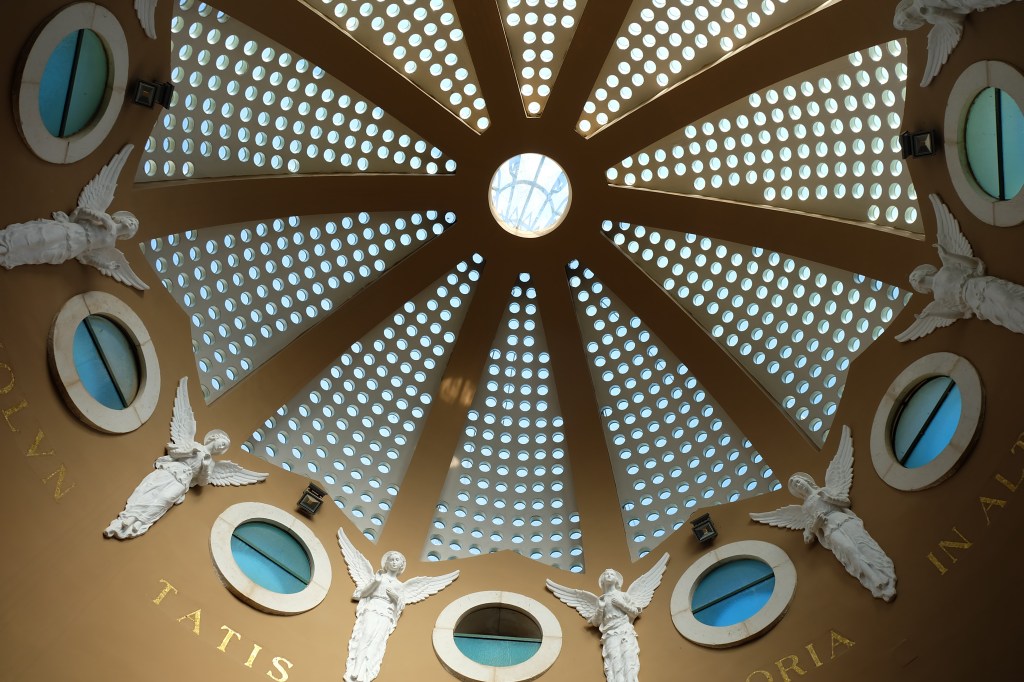
Photo by author, Dome of the Chapel of Nativity at Shepherd’s Field, Bethlehem, the Holy Land, May 2019.
Jesus continues his lessons to us his disciples being sent to look for the “lost sheep of Israel”, to be not afraid for he is with us in this journey and mission. But, it is not enough that we have Jesus on our side and be present among us: we have to allow Jesus to take possession of us completely!
From having no fear because Jesus is here, Christ now deepens his presence by inviting us to be possessed by him, to be in communion with him.
Jesus said to his disciples: “Whoever loves father and mother more than me is not worthy of me, and whoever loves son or daughter more than me is not worthy of me; and whoever does not take up his cross and follow after me is not worthy of me. Whoever finds his life will lose it, and whoever loses his life for my sake will find it.”
Matthew 10:37-39
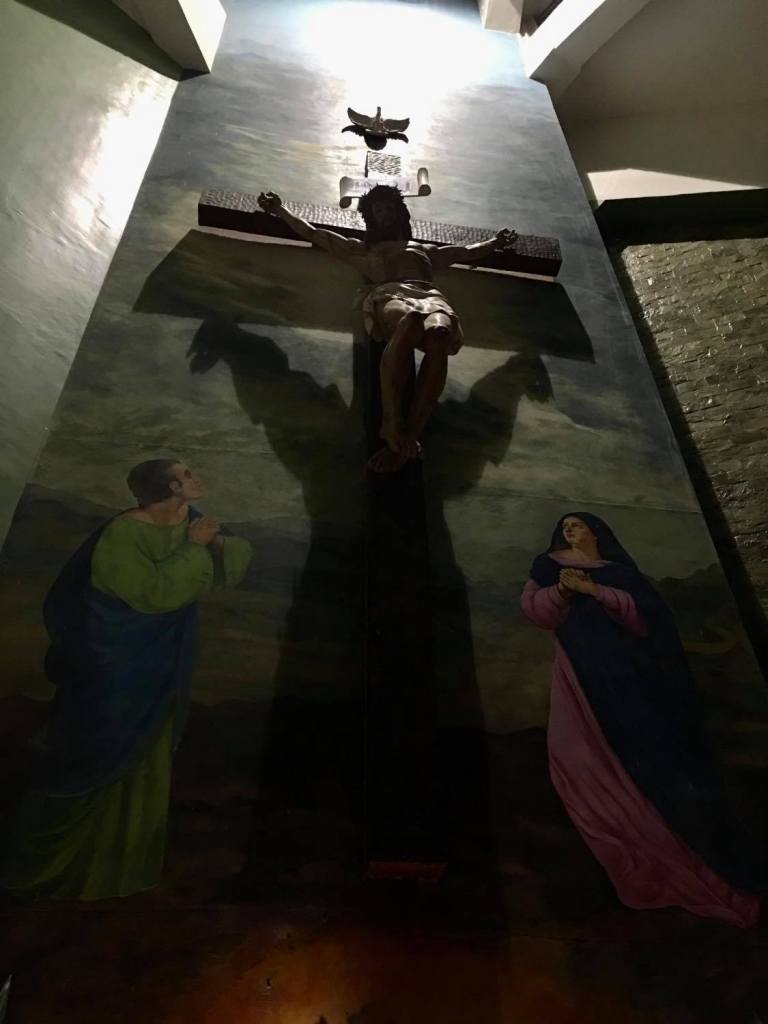
Photo by author, processional Cross at the altar, 2019.
The Mystery of the Cross
Discipleship in Jesus Christ is more than a total allegiance to him who is neither a demanding nor exacting Lord and Master for he does not arbitrarily impose himself upon us.
Nothing like that of subservience but something more lofty because it is wrapped in a mystery — a mystery of love freely given and shared to us by God even if we do not deserve it all. Remember the mystery of the Blessed Trinity four Sundays ago (June 07)?
Ever since, God has never imposed himself upon us, that we should love him back in return for he does not really need our love. He gave us the gift of freedom so that we may love him freely for he never imposes on us.
And here lies the beauty of discipleship, of this relationship we have with God that is based solely on love expressed to us in the most personal manner by giving us his Son Jesus Christ who suffered and died on the Cross but rose again on Easter. This we were reminded by the Solemnities of the Body and Blood of Jesus and of his Sacred Heart last June 14 and 19 respectively.
Now you see my dear readers the clearer picture of our liturgical celebrations expressing our concrete experiences of being loved by God in Jesus Christ most especially during times of trials and sufferings like in this COVID-19 pandemic.
It is Christ who made the initiative to be one with us in our pains and sufferings; God did not remove our crosses in life but made them holy in his Son Jesus Christ so that every time we go through life’s many difficulties, we share in the Lord’s Passion, Death, and Resurrection.
That is why, we are invited to take and carry our cross every day for it is through the Cross we are saved. It is not enough to simply believe in the person of Jesus but we need to accept and embrace his Cross because it is through which he had won our salvation by dying on it and rising again.
This is easier said than done. It is so difficult to love Jesus more than our loved ones like family and friends. And it is most difficult to love the Lord more than our selves, when we have to let go of our plans and agenda.
Letting go and letting God in itself is already crucifying — but that is when this mystery of Christ’s love and of his Cross deepens further when we lose ourselves in him!
Celebrating Mass without te congregation during the ECQ, March-April 2020.
Possessed by Christ
To be possessed by Jesus is to receive God and his gift of salvation through the mystery of Christ and his Cross. Like our Christian life, proclaiming the gospel carries with it the sign of the Cross of Christ.
We are not asked to reenact or reproduce his Crucifixion nor is Jesus asking us to be suicidal or go against our natural aspirations and dreams.
To be possessed by Jesus means we continue to take care of ourselves without neglecting the needs of others.
To be possessed by Jesus means being generous to others in the same manner Jesus has always been generous to us.
To be possessed by Jesus means to realize that every act of self-giving is really an act of receiving!
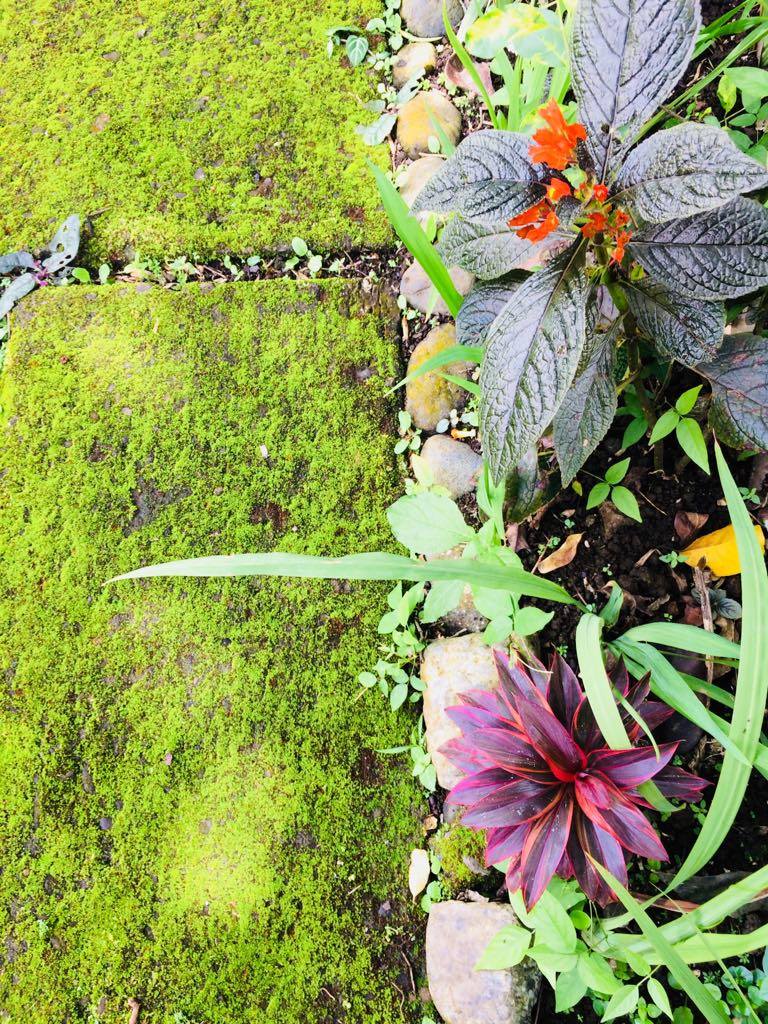
Photo by author, Malagos Park, Davao City, 2018.
That is the paradox of the Cross, of discipleship in Christ: “Whoever finds his life will lose it, and whoever loses his life for my sake will find it” (Mt.10:40).
And that is also where the mystery of Christ’s love deepens because whatever we give is not really ours but Christ’s.
Every time we give love, it is the love of Jesus.
When we are kind and generous with others, it is the kindness and generosity of Jesus we give and share.
When we are patient and understanding to others, it is still the patience and understanding of Jesus in us.
Even if we give and share material things like money, food, clothing… whatever good we share and give are all from Jesus not from us.
And the more we give, the more we receive!
Have you noticed especially during this pandemic how the generous among us are now more blessed?
Wonder no more because you have allowed yourself to be possessed by Jesus Christ!
This is what the woman at Shumen had realized after welcoming the Prophet Elisha into her home in our first reading. She even gave him a room to stay every time he comes for his mission while the Lord provided all her needs, even rewarded her with a son as promised by Elisha.
When we allow Jesus to take over us, when we enter into communion in him and with him in his very life, we become more free to love, we strengthen our relationships with others, we wander less and worry less in life; most of all, we feel lightened in our burdens with the presence of Jesus giving us fullness of life in him.
This is the grace I hope we have seen from this quarantine period, especially those two months of lockdown when were freed from our usual grind and busyness with more time to be silent and still, to pray and reflect on our relationships with God and with others. It was a difficult and very trying period that had given in return a lot of opportunities to others.
Photo by author, Marcos Highway, 2019.
Dead to sin, alive to God
Brothers and sisters: We know that Christ, raised from the dead, dies no more; death no longer has power over him. As to his death, he died to sin once and for all; as to his life, he lives for God. Consequently, you too must think of yourselves as dead to sin and living for God in Christ Jesus.
Romans 6:9-11
It has been four months since houses of worship were ordered closed to help stop the spread of the corona virus. Somehow, the lockdown had made us realize the importance of receiving the Sacraments especially the Holy Eucharist.
But, sacraments are not everything for we have the bigger roles of putting into practice its reality of being the saving presence of Jesus Christ.
Now that lowly life is beginning to go back to its usual grind especially the traffic, soon we might forget again the more important things in life like God and our relationships in our family and friends that it is hoped we have rediscovered during the quarantine period.
That is why I strongly feel the government must now allow Churches to open so the people may experience again God in the sacraments and in our rites and rituals lest they get busy again with so many things only to miss finding anew the meaning of our lives found in silence and stillness before the Cross of Christ.
It is my hope that in this quarantine period, may we find through the Cross of Jesus that when we learn to submit and surrender to him, that is when we truly become free; and, when we lose and give away our lives to him, that is when we gain fullness of life in him. Amen.
A blessed week and a more abundant July to everyone!
The Lord Is My Chef Sunday Recipe for the Soul by Fr. Nicanor F. Lalog II
Solemnity of the Most Holy Body and Blood of Jesus Christ, Cycle A, 14 June 2020
Deuteronomy 8:2-3, 14-16 )))+((( 1 Corinthians 10:16-17 )))+((( John 6:51-58
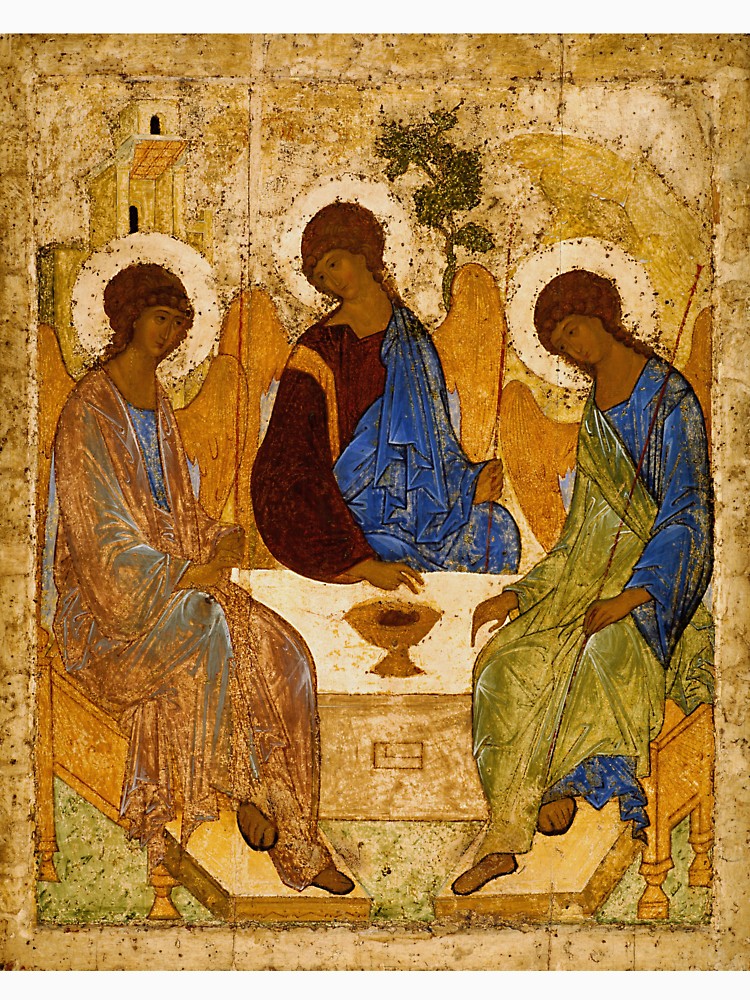
An icon of the Holy Trinity by Russian painter Anton Rublev. Photo from wikipedia.
Above is the beautiful 15th century icon of the Blessed Trinity by Russian painter Anton Rublev. It was based on the Genesis story of God (chapter 18) visiting Abraham at Mamre like angels sharing a meal while in deep conversations, indicating their relationships.
The icon masterfully portrays God as a Trinity of Persons relating with one another in love symbolized by the Eucharistic meal they share.
Most interesting like in most icons is how in this painting the viewer gets involved with the dialogue of the Trinity, thus, becoming the fourth person in the icon present with the Father, the Son and the Holy Spirit like Abraham at Mamre!
I am presenting this icon to you my dear readers and followers to show you the amazing flow of our liturgy these two Sundays as we resumed Ordinary Time on the Monday after Pentecost last month: From the highest truth in our teachings of One God in Three Persons last Sunday, today we have this Solemnity of the Most Holy Body and Blood of Christ to remind us and experience anew that this God we worship and adore is present among us, relating with us in the most personal manner.
Change in name, change of emphasis
Originally known as Corpus Christi or Body of Christ, today’s solemnity was renamed following Vatican II’s reform of the liturgy to give more emphasis on the celebration of the Holy Eucharist that the Preface used before the Consecration is that of Holy Thursday.
Holy Hour in our Parish, Sacred Heart Novena 2020
In the old tradition, focus was more on the Blessed Sacrament – of Jesus Christ reserved in the tabernacle and presented to the faithful for adoration as the Body of Christ, that is, Corpus Christi.
However, when Vatican II changed its name into the “Solemnity of the Most Holy Body and Blood of Jesus Christ”, there was something deeper than the change of name.
The new name challenges us to see the deeper reality of the Holy Eucharist: more than spending time praying before the Blessed Sacrament – though it is good – we are demanded as followers of Jesus Christ to be present like him with others.
Without disregarding the importance of the Blessed Sacrament that have seen a renewed interest among people in this time of corona while churches are closed, Vatican II’s shift in emphasis dares to challenge us disciples of Christ to emulate him in allowing ourselves to be broken for others, to be poured out, offered and shared especially in this time of crisis.
It is in our being broken like the Body of Christ, and poured out like his Blood do we really live the paschal mystery.
Jesus said to the Jewish crowds: “I am the living bread that came down from heaven; whoever eats this bread will live forever; and the bread that I will give is my flesh for the life of the world.” The Jews quarreled among themselves, saying, “How can this man give us his flesh to eat?” Jesus said to them, “Amen, amen, I say to you, unless you eat the flesh of the Son of Man and drink his blood, you do not have life within you.”
Our gospel today is not from the Last Supper as we might expect; instead, it is taken from the “Bread of Life discourse” found only in St. John’s gospel which took place after Jesus had fed more than 5000 people in the wilderness from just five loaves of bread and two pieces of fish.
It was a very decisive moment in the ministry of Jesus as far as St. John was concerned; in fact, he refused to call the feeding of 5000 as a “miracle” but as a “sign” that Jesus is the Christ, the awaited Messiah.
Here, we have Jesus speaking clearly, no matter how difficult it may be for his listeners and even for us.
And we wonder, why he spoke that way?
Even today in the Holy Mass, considering the mixed crowd we have in every celebration, the priest is obliged to speak clearly and distinctly the words of Christ at the Last Supper similar to his bread of life discourse, “Take this, all of you and eat it. This is my Body which will be given up for you.”
Jesus always speaks the truth, he always tells us what is true and he never misleads us.
Unlike us when we say something and mean another thing. We always have to speak in ways that has to be deciphered because we really do not mean what we say. Or we are afraid of saying something else because we prefer to please people than stand by what is true.
But not the Lord! From that day until now, Jesus says the same thing and means always the same, that he is always with us, in us, and among us.
And he has proven then and now, time and time again most especially in our personal lives, that indeed Jesus was sent down from heaven as the “living bread” because he is the “life of the world”.
More than the bread from heaven called manna sent by God to the Israelites during their journey in the wilderness into the Promised Land (first reading), Jesus is the bread who sustains us in our new “exodus” and journey into the Father’s house, into fulfillment.
Photo by Mr. Raffy Tima of GMA-7 News of the plight of stranded people opting to wait at an underpass nearest the airport in their desire to get home
Life an Exodus with Jesus leading us
This pandemic and life under quarantine is an exodus in itself calling us to go back to God, to rely solely in him for he alone can save us. That is why he gave us his only Son, Jesus Christ who in turn gave himself totally, Body and Blood to sustain us in this journey or exodus.
Every exodus is always painful but filled with grace because God is most present with us.
That is why we join Masses on television or the internet while others dare to go to churches for the actual celebration of Mass to receive Holy Communion.
We are convinced that Jesus is sustaining us, nourishing us, raising us, helping us, inspiring us in this time of crisis.
And that is why the more we need to pray and even celebrate the Mass because the more we need Jesus Christ as food and drink in this difficult journey.
We can all feel the stress and pressures of the difficulties and uncertainties of this time. Making things worst than the financial and physical sufferings we all go through are the psychological burdens we silently bear that unfortunately others do not seem to think of or even realize.
Mang Dodong who was held for 30 days for not having a quarantine pass while buying fish in Navotas. Photo from GMA News TV.
How sad when others think only of themselves of getting tired, of being hurt, of being misunderstood that they do not care at all with the feelings and well being of those around them like our callous politicians and officials in government and the police.
Sometimes, watching the news can be so depressing when we see all the troubles and sufferings our brothers and sisters have to go through like those stranded in Metro Manila, those separated from their loved ones, those subjected to discrimination because of the COVID-19, those living alone, those who have lost family members and friends, those who have lost many opportunities in life.
But at the same time, the more we are challenged by these sufferings of our people to be like Jesus, to be the living bread, to share with them Jesus who is our very life.
Let us heed the call of St. Paul in the second reading to be one with our brothers and sisters in Jesus Christ in their brokenness, in their sufferings by being present to them in love and kindness, in being more understanding.
We are the Body and Blood of Jesus Christ, his very presence in this world that continues to disregard him, that until now tries to live without him.
May we not fall into that temptation and sin that is largely the reason behind this pandemic: modern man has forgotten that no matter what is our situation in life, we remain poor before God who alone can fulfill our deepest desires and longings.
Despite the many difficulties we face especially with the continued closure of houses of worship, let us continue to work and find creative means in sharing Jesus Christ with others, in coming to him and receiving him in the Holy Communion.
Only Jesus can help us through this pandemic.
In fact, he was the first to die on the Cross by giving us his Body and Blood so that we may live and share his gift of life with others.
A blessed week ahead of you!
Photo by our parish choir member Gelo Nicolas Carpio, our Church at sunset last Sunday.
Quiet Storm by Fr. Nicanor F. Lalog II, 11 June 2020
Painting by Raphael (1515) of St. Paul preaching at Areopagus in Athens, Greece. From wikipedia.
With houses of worship still closed despite the opening of most business establishments, here is the final installment of reflection in our series on how the life and teachings of St. Paul may help us in our ministry during this time of COVID-19 amid a perceived government “persecution” of the Catholic Church.
There is no doubt that like during his time, St. Paul would be using modern means of communication to preach the Gospel of Jesus Christ especially in this most trying time of our history, using the internet as the new “Areopagus” with social media in particular.
Then Paul stood up at the Areopagus and said: “You Athenians, I see that in every respect you are very religious. For as I walked around looking carefully at your shrines, I even discovered an altar inscribed, ‘To An Unknown God.’ What therefore you unknowingly worship, I proclaim to you. The God who made the world and all that is in it…”
Acts of the Apostles 17:22-24
Social Communication
Perhaps before we go into our reflection, it is imperative especially for bishops and priests to be reminded anew of some important terms in communications; this is more than about names or nomenclature because for as long these terms of communications are not clear with us, all our evangelization efforts would be askewed as it is now showing with an explosion of online Masses and other religious celebrations.
First priority is to stop using the words “mass media” and even “social media” in our church communications because these are very limited in scope and context.
It is important to note that in the 2000-year history of the Church, it was only in Vatican II that we have issued a conciliar document on communication wherein the Fathers also introduced the term social communication as a new name for communications in the Church.
How sad that there are still bishops and priests using the terms “mass media” or “media” and lately “social media” when more than 50 years ago the Church through the inspiration of the Holy Spirit coined social communication to refer to “the communication of and in human society including all the ways and means used in this process” (Fr. Franz-Josef Eilers, svd, 2009 BISCOM-FABC, Bangkok).
Social communication is a very prophetic term because it is theological and rooted in God who is communication himself, sharing with us his power to communicate so we may also communicate with him and with others. Most of all, God continues to communicate with us and from that lies our task as a Church to communicate him to the world.
This is the reason why we have to keep on using this term “social communication” in our Church communications to keep us Christocentric, meaning, every communication in the Church and by the Church has Jesus as Message.
And that is essentially the kind of communication process followed by St. Paul the Apostle. In fact, reviewing his letters and the various accounts about him would show us that early, this great apostle has been into social communication, specifically “pastoral communication” that is an emerging field in Church communications whose realities have long been espoused by St. Paul himself.
Pastoral Communication
Pastoral communication is anchored on Jesus Christ, the “Good Shepherd” who sets himself as the norm and standard of our Church communications.
Jesus said, “I am the good shepherd. A good shepherd lays down his life for the sheep… I am the good shepherd, and I know mine and mine know me, just as the Father knows me and I know the Father; and I will lay down my life for the sheep.”
St. Paul has always been very clear with this in all his communications that towards the end of his life, he had beautifully written his disciple this wonderful piece:
Beloved: I charge you in the presence of God and of Christ Jesus, who will judge the living and the dead, and by his appearing and his kingly power: proclaim the word; per persistent whether it is convenient or inconvenient… For I am already being poured out like a libation, and the time of my departure is at hand. I have competed well; I have finished the race; I have kept the faith.”
2 Timothy 4:1-2, 6-7
Communicating Jesus Christ is always about self-sacrifice, about giving of one’s self like our Lord and Master. In whatever form of communication we use, it is always a call to “enflesh” the Word. In short, communication is spirituality that indicates the kind of relationship we have with God. How we reflect that relationship with God in words and in deeds, in our clothings and everything is communication.
Like St. Paul, he was able to offer himself wholly to God as reflected in his writings and preaching because he was more concerned with the needs of the flock and not with his own needs.
And this is where I sadly feel our bishops sorely absent and silent except for just two, Lingayen-Dagupan’s Archbishop Soc Villegas and Manila’s Apostolic Administrator Bishop Broderick Pabillo.
Where are the other bishops?
Business establishments are almost all opening, even dine-in restaurants and yet, until now for no valid reason, the government continues to ban religious mass gatherings except for maximum of ten persons in areas under GCQ.
When are the bishops and priests going to speak out against this and open the churches so people may be spiritually nourished?
What an auspicious time for the clergy and hierarchy to speak against this continued closure of churches as we are on the eve of our 500th year of Christianization when under serious persecution. Has the Church grown timid in the face of an unfriendly government?
Worst are some priests who seem to follow more the secular world in their digital presence but empty of Jesus Christ, concerned only with popularity measured in number of likes and shares as well as followers.
Many of us have become more of personalities than as priests and ministers, unconsciously trying to be more popular than the Lord himself that we no longer have sacrifice of the Mass but a variety show, complete with sound effects and digital characters, some wit dance numbers and raffles!
When God is displaced, then our love is misplaced, then, we lose all communications too.
Communication is more than the expression of ideas and the indication of emotion. At its most profound level it is the giving of self in love. Christ’s communication was, in fact, spirit and life. In the institution of the Holy Eucharist, Christ gave us the most perfect and most intimate form of communion between God and man possible in this life, and, out of this, the deepest possible unity between men. Further, Christ communicated to us His life-giving Spirit, who brings all men together in unity. The Church is Christ’s Mystical Body, the hidden completion of Christ Glorified who “fills the whole creation”. As a result we move, within the Church and with the help of the word and the sacraments, towards the hope of that last unity where “God will be all in all”.
Communio et Progressio # 11
From Google.
Problem with online Masses and religion
Every communication presupposes presence. That is essentially the meaning of God’s “I AM” in the burning bush to Moses and the “I AM” declarations by Jesus in the New Testament, especially in the fourth gospel where we find him saying “I am the good shepherd”.
Even St. Paul in his letters always began with his standard salutations like “I, Paul…” to indicate his very presence among his “parishioners”.
However, in the digital media, presence is not so essential and can even be faked both ways, either by being “taped” or “replayed” by viewers.
And there lies the great danger of online Masses and other celebrations: whether we like or not, online religious celebrations give the impressions on people that God is a “consummable”, a product or a show that can be had when most convenient to us like video on demand or the streamed shows of Netflix.
That is why we have to open churches soon to stop these online Masses except for those in the Cathedrals and in existence long before COVID-19 that cater to the needs of the sick and elderly in their homes.
Pope Francis has always been clear with this, stressing that these online Masses and religious celebrations are very temporary due to the extraordinary situation brought about by the pandemic.
From Pinterest/Aleteia.
Imagine the problem at Corinth that reached St. Paul’s attention, prompting him to write them another letter to reprimand them but at the same time to encourage them to mend their ways. It was a problem of abusing the Eucharist when St. Paul was no longer with them.
It is the same thing happening in many of our online Masses that have become variety shows to impress viewers. Long before we got into this lockdown, many priests have crossed the boundaries without knowing they have made fools of themselves as they rely more on “likes”, on being viral or trending, dishing out shallow reflections covered with cute song numbers, litany of greetings on air, and so many other inanities that Jesus is lost in the process.
Unfortunately, many laypeople are now also having their own digital preaching or evangelization with their own “productions” taking their cue from their showbiz pastors.
If St. Paul were with us today, he would surely write again to express his dismay at the people seeking more of entertainment than having Jesus Christ.
“But I am afraid that, as the serpent deceived Eve by his cunning, your thoughts may be corrupted from a sincere and pure commitment to Christ. For I think that I am not in any way inferior to these “superapostles”. Even if I am untrained in speaking, I am not so in knowledge; in every way we have made this plain to you in all things.
2 Corinthians 11:3, 5-6
Church communication is Jesus Christ and his Cross as St. Paul reminds us in his writings (1Cor.15:1-3); it is never about techniques or gadgets.
Though we need to be present online, the cutting edge of real communication remains in pastoral communication that means being present with others who need us most including those without internet access, witnessing to the values of Jesus in relating with people, bringing people together into a communion and helping them find answers in their search for meaning and directions in life, in making the right choices and in living their convictions and faith.
What we are speaking of are real people, persons and lives that matter so much, more precious than goods and commodities.
Let us not fall into the trappings of this “media revolution” that made one futurologist describe our contemporary society as
Technologically Intoxicated Zone defined by the complicated and often paradoxical relationship between technology and our search for meaning.
John Naisbitt
According to Naisbitt and other experts, while people prefer quick fixes online of everything, from religion to nutrition, while at the same time fearing and worshipping technology that had blurred the distinction of what is real and fake, the more they live their lives distanced and distracted — something we are already seeing even before the coming of social distancing!
To communicate in the Church at this time is to imitate St. Paul: be present for and with the people wherein we help them find their way to God by being their companions and “co-journeyers” in life, witnessing to them the Cross of Jesus Christ with our very lives as an offering and sacrifice, not as a commodity or a show to be “liked” on Facebook and Instagram.
And, lest we forget, it is God whom people must follow and worship, not us.
So be imitators of God, as beloved children, and live in love, as Christ loved us and handed himself over for us as a sacrificial offering to God for a fragrant aroma.
Ephesians 5:1-2
Pope Francis praying before an empty St. Peter’s Square last March 27, 2020 at the height of COVID-19 in Italy.
Quiet Storm by Fr. Nicanor F. Lalog II, 08 June 2020
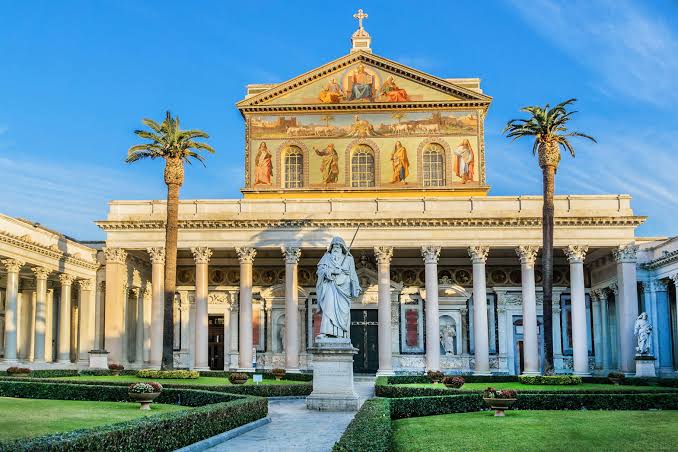
Basilica of St. Paul Outside-the-Walls, Rome, Italy. Photo from Google.
My earliest memory of St. Paul was not really so good; it was even scary.
It was summer of 1972 when we settled in our new house in my mother’s hometown of Bocaue in Bulacan. I was so skinny then (believe me, I can prove this with my pictures) and shy when my mother brought me to apply for Grade 1 at the only Catholic school there known as “SPCB” or St. Paul College Bocaue.
A male, dark teacher wearing those dark glasses like Leopoldo Salcedo clad in a barong interviewed me (the late Mr. Martin De Guzman, aka, Bagyo for typhoon). I cannot recall what he had asked me which I could not answer that made him say I cannot enroll in their school; but my mother angrily told me not to listen to him and, angrier told me to always speak louder.
That’s when I saw the statue of St. Paul at the window of the registrar’s office, eyes so intense while resting his right hand on a sword in front of him with the other hand clutching a bible with the Latin words, “Caritas Christi urget nos” – the love of Christ impels us (2 Cor. 5:14).
I stayed at SPCB for seven years and formed me into who I am today, making me so proud of being a Paulinian. Until now, that image of St. Paul with a sword is etched in my mind reminding me of how he fought so hard for Jesus Christ and his Body, the Church.
The Apostle Paul
Sometimes called the “Thirteenth Apostle”, St. Paul always stressed in his writings and teachings that he was personally called by the Risen Lord to be his Apostle sent to preach the gospel to everyone. That is why Jesus is so central in his life, declaring “whatever gains I had, these I have come to consider a loss because of Christ” (Phil.3:7), desiring only “omnia omnibus” — that is, to “become all things to all men” (1 Cor. 9:22) without any reserve.
As we have mentioned in our earlier reflection, St. Paul’s sole focus in his ministry and very life was the person of Jesus Christ: everything in our lives, especially us priests, is marked essentially by our encounter and communion with the Lord and his Word.
It is only in the light of Christ that we measure every other value in our lives and ministry.
Red Wednesday Mass and prayers in our parish for the Church persecuted last November 2019.
Even in this highly diversified and pluralistic society, while we join hands in promoting and working for a more humane and inclusive society, the more we must stand up for Jesus Christ like St. Paul as quoted by St. Luke while addressing the presbyters of the Church at Ephesus with these words:
“I served the Lord with all humility and with the tears and trials that came to me because of the plots of the Jews, and I did not at all shrink from telling you what was for your benefit, or from teaching you in public or in your homes. I earnestly bore for both Jews and Greeks to repentance before God and to faith in our Lord Jesus Christ… for I did not shrink from proclaiming to you the entire plan of God.”
Acts of the Apostles 20:19-21,27
I am so struck with that word “shrink” that St. Paul used twice to stress his dedication, fervor, and conviction in being centered in Jesus Christ alone. In what aspect did he not “shrink”? Did he raise arms and fought back against his detractors? Did he align with other forces to pursue his mission?
No! St. Paul did not shrink in proclaiming Jesus Christ by fighting back with force or with harsh words but by being more like our Lord and Master — more loving and understanding, more patient and more persevering, yet more intense in insisting the Gospel.
He did not shrink by running away from his detractors or diluting the gospel message by pleasing some powerful people or accommodating prevailing thoughts and culture. As we have mentioned in our previous reflection, St. Paul saw opportunities for the gospel in the midst of the hostile environment he lived during his time.
Despite all the pains and scars he had gone through, one can still find the light of Christ shining in this great apostle who bore everything filled with joy and pride without any complaint.
We are afflicted in every way, but not constrained; perplexed, but not driven to despair; persecuted, but not abandoned; struck down, but not destroyed; always carrying about in the body the dying of Jesus, so that in the life of Jesus may also be manifested in our body. For we who live are constantly being given up to death for the sake of Jesus, so that the life of Jesus may be manifested in our mortal flesh.
2 Corinthians 4:8-11
Standing for Christ and his Church
From 2006 to 2018, I was so blessed to have worked at our Church-run Radio Veritas as a co-host in a morning program once a week and as a host of another show on Saturdays. Aside from bishops and priests, we interviewed experts and advocates in a lot of various topics affecting our faithful in particular and our society in general.
So many times I felt something so wrong when we have to interview whom we considered as “allies” or “kakampi” in some of our advocacies because I have found no single person fully believing in our Church teachings even if some of the issues they fight for jibe with ours.
Can we really ally ourselves with lawmakers and cause-oriented groups fighting capital punishment which we strongly support and yet support artificial means of contraception for population control? Can we align with those fighting repressive laws like this anti-terror bill and yet support same-sex marriage and divorce?
And please, spare us with those labels on these people that they insist on putting on with us priests and bishops: let us keep in mind we are only for Christ, no progressives or liberals, conservatives or whatever.
We are neither lobbyists nor cause-oriented advocates pushing for something because we only stand for Jesus Christ and his Word at the Cross. There can be no any instance of partisan politics or traces of strange bedfellows whatsoever because we are either for or against Jesus Christ:
Jesus said: “Whoever is not with me is against me, and whoever does not gather with me scatters.”
Matthew 12:30
Here lies one of the greatness of St. Paul who never shrunk to other forces except Christ.
St. Paul statue at Malolos Cathedral by renowned ecclesiastical artist Mr. Willy Layug. Photo by Mr. Lorenzo Atienza, June 2019.
What a tragedy especially in our country that no amount of explanations can remove from the thoughts of ordinary people that priests and bishops do not even dabble their hands in partisan politics when it is so glaring they are beholden to these modern charlatans.
What moral ascendancy is left of our being pastors when after speaking against corruption and ineptitude in the government we turn to solicit from the same politicians and bureaucrats not only for parish projects and charities but even for our personal needs like vacations and trips abroad?
How can we reconcile all these immediate reactions by bishops and priests against the anti-terror bill urgently passed by Congress last week when not even a whimper was ever heard from them for the longest time to open our churches to serve the spiritual needs of the people?
Let me clarify like in my previous reflection that I am not saying we must be quiet about social issues; my point is, it must always be primary the Church as the Body of Christ that is primary in all our concerns.
This was very clear with St. Paul because it is the first reality he faced when he was called by Christ:
On his journey, as he was nearing Damascus, a light from the sky suddenly flashed around him. He fell to the ground and heard a voice saying to him, “Saul, Saul, why are you persecuting me?” He said, “Who are you, sir?” The reply came, “I am Jesus, whom you are persecuting.”
Acts of the Apostles 9:3-5
Next to our Lord, it is the Church that St. Paul had considered so much in his activities as subject of his thoughts and reflections. For him, adherence to the Church was directly caused by Jesus Christ himself, not by any chance or moments of realization and conversion.
And see the words of the Lord to him: “I am Jesus, whom you are persecuting.”
He was the first to speak of the Church as the Body of Christ, illustrating for us in his many Letters our being “one in Christ” (Gal.3:28) deeply rooted in the Holy Eucharist, “Because there is one bread, we who are many are one body” (1 Cor.10:17).
Pope Francis blessing the world at an empty St. Peter’s Square last March 27 when COVID-19 was ravaging the whole of Italy and many parts of the world. Photo from Vatican News.
Until now our churches remain closed in many parts of the only Christian nation in this part of the world. It behooves us priests and bishops to first fight and insist, without shrinking, the opening of our houses of worship to allow the people to experience Jesus Christ anew in this pandemic.
Most of all, may the people feel and realize at the resumption of our public Masses that God is truly in us and with us because of our deep communion in our Lord Jesus Christ and with one another when we celebrate the Sacrament of our unity, the Holy Eucharist.
Our final installment of the series this Thursday, “St. Paul in time of COVID-19: Communicating Jesus Christ”.
The Lord Is My Chef Breakfast Recipe for the Soul, Mary, Mother of the Church, 01 June 2020
Genesis 3:9-15.20 ><)))*> ><)))*> ><)))*> John 19:25-34
Mary Mother of the Church. From Google.
Dearest Lord Jesus Christ:
Today is a very crucial period in our life as a Church here in the country moving into transition from Enhanced Community Quarantine to the lower case of General Community Quarantine. Some businesses and industries are slowly being allowed to open and operate.
Except our churches.
Today our Church leaders are meeting with the government to continue their talks for the opening of our churches to allow the faithful to celebrate the Holy Mass as a community.
We pray for the Holy Spirit to enlighten the minds and hearts of our officials in their meeting to see the importance of spiritual nourishment in this time of the COVID-19 pandemic.
We pray for the intercession of the Blessed Virgin Mary your Mother and our Mother too whom you have entrusted to your beloved disciple to care for us your Body here on earth.
Thank you very much Lord Jesus in giving us Mary your Mother to be our Mother too.
On this first day of the resumption of Ordinary Time, a day after Pentecost Sunday when we celebrated the coming of the Holy Spirit to launch the Church, we also offer this day in honor of the Blessed Virgin Mary as Mother of the Church.
Indeed, inasmuch as she had stayed by your side at the foot of the Cross, Mary has always been with us in our journey as your Mystical Body here on earth. She has always been home for us, taking care of us, looking after us, and reminding us of our mission in you.
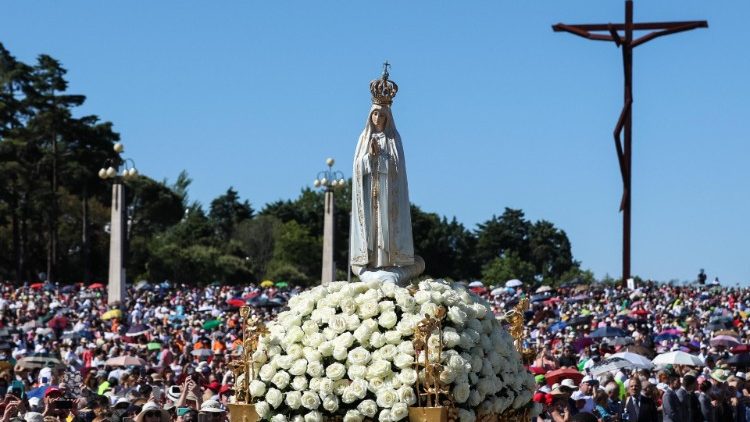
Our Lady of Fatima in Portugal.
It is so unfortunate that we have always taken her granted.
Worst, some people have maligned and derided her important role in cooperating with all your plans for the Church.
May her charity and fidelity to you, Lord, inspire us to work further for the mission of the Church to make you present in the world now in pandemic, seeking the best ways to pick up the pieces and start anew their lives.
May the world be ready now to listen to the teachings of Mary your Mother to return to you and turn away from sins and evil. Amen.
The Lord Is My Chef Breakfast Recipe for the Soul, Thursday, Easter Week IV, 07 May 2020
Acts of the Apostles 13:13-25 <*(((>< ++0++ ><)))*> John 13:16-20
Photo by author, February 2020.
Thank you, O Lord, for the gift of remembering, of not simply recalling the past but even the joy or pain of experiencing them again. Most of all, of learning their lessons that have made us what we are today.
In this time of quarantine when we have so many time spent in remembering our past, our family and friends, may we also remember your saving grace to us like St. Paul at the synagogue of Antioch in Pisidia.
Help us to remember – that is, to make you a part of the present again of which re + member is all about.
May we never live like what we have done before this pandemic began when we thought we can lead our lives without you.
As we remember your goodness, your coming to us in your Son Jesus Christ who suffered and died like us, may we keep in mind that everything is in your hand, in your power and control. Not ours.
Grant, O Lord, that in re + membering your saving action to us, your great love for each one of us, may we continue to lovingly serve one another in your name. Amen.
Mosaic of “Washing of Feet of the Apostles”, photo from Google.
Quiet Storm by Fr. Nicanor F. Lalog II, 03 May 2020
Photo by author, Parokya ni San Juan Apostol at Ebanghelista, Bagbaguin, Santa Maria, Bulacan. April 2020.
Against the advice of good friends, I went out to distribute Holy Communion in the streets to some parishioners who have participated in our Sunday Mass early this morning at Facebook Live.
I know the risks involved despite our best efforts in having all the precautionary measures but, what convinced me to go on with it is a beautiful Psalm so appropriate during this quarantine period.
As the deer longs for streams of water, so my soul longs for you, O God.
My being thirsts for God, the living God. When can I go and see the face of God?
And when our quarantine period was extended for the second time before the end of Holy Week last month, I began praying again Psalm 42 every night for that is when I truly long for God so much, most of the time lamenting to him our situation, my condition of being alone in my rectory.
This is the first time I felt like this, so different from those so-called “desolation” or “dryness” because I could feel God present in my prayers but… he is not “fresh”.
Like the deer longing for streams of water, my soul longs for God too.
Not just like the water we buy from a filling station but exactly what the deer yearns for — fresh water that is refreshingly cool not only on your face but deep into your body when sipped amid the burbling sounds of the spring, babbling through rocks and branches of trees with the loamy aroma of earth adding a dash of freshness in you.
Admittedly, sometimes I wonder if I still know how to pray or if I still pray at all!
I can feel God present but he is like someone stacked there in my mind, in my memory, in my ideas shaped by my years of learning and praying.
What I am longing for is a God so alive, so true not only in me but also in another person.
And that is when I realized, most likely, my parishioners must be longing for God too in the same way — the God we all come to meet and celebrate with every Sunday in our little parish, among the people present who are so alive, so vibrant, so true, so touching.
Our empty church since March due to COVID-19.
Psalm 42 is believed to have been sang by David when he was prevented from coming to the tent of God either during the reign of King Saul who plotted to kill him or during the revolt of his own son Absalom when he was already the king of Israel.
Like David or the psalmist, I miss celebrating Mass with my parishioners.
And maybe it is safe to assume that two or three of my parishioners are also feeling the same way with me and David, saying these to the Lord:
My tears have been my food day and night, as they ask daily, “Where is your God?”
Those times I recall as I pour out my soul,
When I went in procession with the crowd, I went with them to the house of God,
Amid loud cries of thanksgiving, with the multitude keeping festival.
Psalm 42:4-5
If there is one very essential thing this pandemic has brought back to us in our very busy lives, it is most certainly God. And if ever this is one thing people need most in this time of corona virus, it is spiritual guidance and nourishment from God through his priests.
Of course, people can pray and talk to God straight as the Pope had reminded us before Holy Week.
But, human as we are, we always experience God and his love, his kindness, his mercy, his presence among other people who guide us and join us in our spiritual journey. They are special people like friends or relatives or pastors with whom they can be themselves, let off some steam, get some rays of light of hope and encouragement.
And that this is why I try to keep in touch with my parishioners in various ways in this time of corona: even I myself can feel so low and dark despite my prayers and very condition of living right here in the house of God who can still feel alone and desolate, even depressed.
If I – a priest – go through all these uncertainties and doubts this in this time of quarantine, how much more are the people, the beloved sheep of Jesus the Good Shepherd?
Why are you downcast, my soul; why do you groan within me?
Wait for God, whom I shall praise again, my savior and my God.
Psalm 42:6
Photo by Ms. Ria De Vera, 10 April 2020.
After our Mass this morning when we set out to distribute the Holy Communion, there was a little drizzle. It did not last long that I just wore a hat and left my umbrella in the rectory.
There were about 30 people who waited for us to receive Holy Communion, most of them along the main highway that stretched to about 2 kilometers. Some families gathered with a little altar at their front gate while a waited a couple waited in a gas station along our route.
In less than 20 minutes, we have completed our mission and as we headed back to the parish, the rains fell again, this time stronger than before.
My driver commented, “The weather cooperated with us, Father”1
I just nodded my head to him inside his tricycle but deep inside me, I felt joy because God answered my prayer, my lamentations for he was crying too, – for me and his people.
May this lamentation be an answer to your lamentations during this pandemic of COVID-19.
Continue with your lamentations to God our Father for this very act of crying out to him is the working of the Holy Spirit he had sent us through our Lord Christ Jesus. Amen.
Sana ay huwag ninyong masamain
itong aking puna at pansin
sa marami nating kababayan
ngayong panahon ng COVID-19
palaging daing walang makain
ating sinasambit
saan mang bahagi ng mundo sumapit
kapag tayo ay nagigipit.
Hindi naman sa kung ano pa man
pagkain lamang ba ang sadya nating kailangan
na siyang laging pinahahalagahan
kaya naman kadalasan ito ang sanhi
ng ating mga alitan at di pagkakaunawaan?
Anong sakit mapakinggan, malaman na
nag-aagawan, pinag-aawayan
ay pagkain lamang?
Larawan mula sa Google.
Sa Banal na Kasulatan ating matutunghayan
habilin ng Diyos sa ating unang magulang
maari nilang kainin mga munting butil
pati na rin mga bunga ng punong kahoy sa hardin
huwag na huwag lamang nilang kakanin
mahigpit Niyang bilin
bunga ng puno ng karunungan
dahil magiging sanhi ng ikasasawi natin.
Hindi napigilan kanilang tinikman
pinagbabawal na bunga kaya lumuwa mga mata
sa katotohanang lumantad sa kanila na di nakaya
kaya't dating kapwa hubad ay nagdamit na!
Nang pumarito si Jesu-Kristo upang tubusin ang tao
unang tukso na kanyang pinagdaanan sa ilang
sa gitna ng kanyang kagutuman
ay gawing tinapay mga bato upang busugin Kanyang tiyan.
Hindi nalito si Kristo nang sagurtin niya ang diyablo
na hindi lamang sa tinapay nabubuhay ang tao
kungdi sa bawat salitang namumutawi sa bibig ng Diyos;
kaya noong gabing ipagkanulo siya habang kumakain sila,
nangunsap Siya sa mga alagad Niya
habang hawak-hawak ang tinapay na pinaghati-hati
"Tanggapin ninyong lahat ito at kanin
ito ang aking katawan na ihahandog para sa inyo."
Mula noon hanggang ngayon
nakikilala, naaalala natin ang Panginoon
sa hapag ng kanyang piging, sa mesa ng Misa
nang kanyang inangat katayuan at kahulugan
nitong pangkaraniwang gawain natin na kumain:
hindi lamang upang busugin mga tiyan at laman natin
kungdi upang punuin din kamalayan at kaluluwa natin
ng diwa ng piging na mismo tayo ay maging pagkain din!
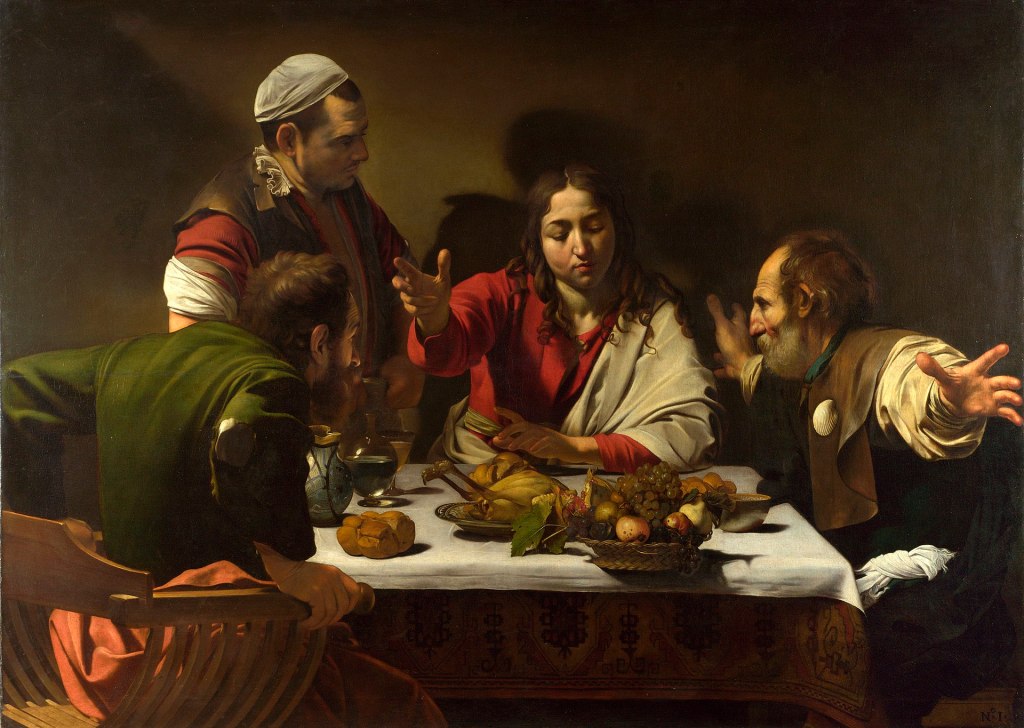
Larawan ng “Supper at Emmaus” ni Caravaggio mula sa Google.
Nakikila pag-uugali ng tao
kapag nakita paano siyang kumain
sapagkat doon lamang sa mesa ng piging
nawawala mga pagkukunwari natin
nabubunyag tunay nating saloobin
kaya naman sa bawat pagdiriwang natin
palaging mayroon pagkain upang
magkasalu-salo, magkaniig at magkaisa mga kumakain.
Alalahanin si Hudas noong Huling Hapunan
lumisan na kaagad dahil siya ay tumiwalag
di lamang sa hapag kungdi sa kaisahan at
pakikipag-kaibigan kay Jesus at mga kasamahan;
iyon din ang sinasaad sa bawat piging ng mga
dumadalo at hindi dumarating
mga kumakain at nanginginain
kay daming pagkain ngunit makasarili pa rin!
Sa tuwing tayo ay kumakain
laging alalahanin kaisa palagi natin
Diyos na bukal ng lahat ng pagpapala sa atin:
huwag mangangamba o mag-aalinlangan
kung sakali mang tayo ay gutumin
sapagkat hindi iyan ikamamatay natin
kungdi pagkabunsol sa labis na pagkain
lahat-lahat ay inaangkin.
Ang tunay na sarap ng pagkain
nalalasap pa rin
maski tapos nang kumain
kapag nabusog di lamang tiyan
kungdi puso at kalooban;
mga alitan nahuhugasan sa inuman
mapanghahawakan pagsasamahan at pagkakapatiran
upang huwag masabi ninuman na wala silang makain!
Quiet Storm by Fr. Nicanor F. Lalog II, 29 April 2020
Photo by author, 2010.
This is again for my brother priests and fellow workers in Church communication: our extended “enhanced community quarantine” is a call for us to rediscover the contemplative spirit so essential in our communication apostolate. It is best that before we go in front of the camera, before we post anything at all, or even before we go out doing our social action, let us first have Jesus Christ in us.
After all, it is always Jesus and only Jesus we bring as priests in everything we say and do. Jesus is our life as priests and without him, our works mean nothing. Worst, it may be happening that it is not Jesus whom we are following when we fail to spend time with him in serious prayers that unknown to us, we are already replacing him by creating our own ministry apart from him.
Incidentally, we are celebrating today the Memorial of St. Catherine of Siena who is considered as one of the patron saints for those working in telecommunications and TV stations.
In one of her numerous “ecstatic” visions, it is said that when she was so sick in her room, she begged the Lord to give her a glimpse of the celebration of the Mass in their chapel. The Lord heard her prayer and thus, she became the first person in history to have celebrated Mass by “remote telecast”!
From Google.
Faith and technology
We have mentioned in our previous reflection that we now live our faith in a mass-mediated culture. Media is all around us. And there is always that intense temptation by the devil to put us on TV and the internet to be popular.
So, how do we interact with technology on a daily basis?
What are we posting on Facebook? Are we like the rest who are also hooked into TikTok with all the inanities that go with it?
How much time do we spend for social media and Netflix these days?
And how many hours do we spend before the Blessed Sacrament, excluding our Liturgy of the Hours and praying of the Holy Rosary?
From Google.
We are familiar with Marshall McLuhan’s dictum “the medium is the message”.
This we have seen in the past very evident in our ministry when some priests have transformed the South American telenovelas and later Koreanovelas into a gospel too that people felt like listening to reviews during the homily. And it had given some people the idea that every homily of the priest must say something about television shows! In fact, about three years ago, some priests have to be reminded by the CBCP during the Simbang Gabi to focus only on the Word of God and not on TV shows and jokes to get the attention of their congregation during Mass.
But let us not forget that later in his life, McLuhan added to his dictum that “the medium is the massage” to warn us that sooner or later, we can be eaten up by media that everything is reduced into a show – or a palabas in Filipino that means outward.
That is what a show is, a palabas which is empty or walang laman.
And shallow, mababaw.
That is the sorry state of our many social communication efforts in the Church when we have Masses that have become like entertainment shows, priests becoming entertainers, church buildings and decors that look like videoke bars evoking none of the sacred, and tarps and posters that are all hype without any evangelical meaning.
Observe also how our presentations and shows in our Catholic schools and parish halls have become mere repetitions of what are on television that have left many of us now stuck in Emmaus who could no longer find the way back to Jerusalem, even to Jesus because all we see are the fun and excitement, the glitz and the glamor of media.
And of our massaged ego.
Road to Emmaus from clarusonline.it
Keeping technology in its place in the Church
We are not saying modern communications is evil; the Church has always been clear that these modern means of communications are in fact a gift from God. Vatican II asserts that it is Church’s “birthright” to use and own these modern means of communication for evangelization (Inter Mirifica, 3)
Our challenge in the Church is to keep these modern technologies in its proper place.
A technological culture is not the most hospitable environment for religious belief, but neither is it necessarily hostile. If we are to find a way of expressing our faith in this technological culture and of speaking to and with the people formed by this culture we need to take time to consider how we, as individuals and as a faith community, interact with technology on a daily basis.
James Mcdonnell, Communicating the Gospel in a Technological Age: Rediscovering the Contemplative Spirit (1989)
In a story posted by the CBCP News two days ago, it reported the experience of Filipino priest Fr. Jun Villanueva who contracted the dreaded COVID-19 disease in New York City last March shortly after he had arrived to study there.
Assigned in a parish in the heart of the Big Apple, Fr. Villanueva tells how he spent his days of being “alone literally and emotionally” as “moments with God”. But, his turning point came after recovering from the corona virus when he began celebrating Mass alone:
“I really cried when I first celebrated Mass without churchgoers. There’s no one in the Church except Jesus,” he recalled. “Then I realized that the Mass is not a show but our union with Jesus, whether there are people or none,” he said. “I started to look at the situation from that perspective”.
Fr. Jun Villanueva, CBCP News, 27 April 2020
That is the first step needed to put technology in its proper place in the Church: that we bring back Jesus Christ whom we have banished in the name of our ministry and vocation. The more we think of putting so much “art” and other things to “enhance” our liturgies, then we banish Jesus Christ.
This is the other pandemic we have refused to stop in the Church: triumphalism, the overdoing of things for God that in the process we actually put more of ourselves in the ministry and liturgy than of the Holy.
Is there anyone or anything greater than the Lord?
Remember St. Theresa of Avila: Solo dios basta!
And, like our saints who guide us closer to God, the only way to have Jesus and bring him back in our lives and ministry, in the church as institution and building is through the contemplative spirit of the priests.
It is a good thing that the catch call these days is that the “return to normal” is actually a “return to basics” like washing of hands, covering of mouths when sneezing, and most of all, a return to God.
From Google.
The spirits of modernity characterized by constant changes and technological efficiency do not jibe so well with the demands of the Gospel of Jesus Christ who have always reminded us of guarding against the temptations of the material world.
Jesus tells us to practice poverty but the world tells us to be wealthy.
Jesus asks us to forget ourselves and follow him but the world tells us to be popular and follow the limelight.
Jesus tells us to go down and be humble but the world tells us to rise up and go higher!
The other day, Jesus reminded us in the gospel:
“Do not work for food that perishes but for the food that endures eternal life, which the Son of Man will give you. For on him the Father, God, has set his seal.”
John 6:27
Most of the time in the Church and in our lives as priests, we have to be “inefficient” like “waste time” doing nothing in front of the Blessed Sacrament; have less of everything like food, money and clothing; be silent to listen more than to speak and talk more.
The contemplative spirit is about poverty and going down while the world tells us to be wealthy and to rise and go upwards.
The contemplative spirit is to be silent and trusting always in the Lord rather than relying on our own powers and abilities.
Here is James McDonnell again on the need to rediscover the contemplative spirit in communicating the gospel in this modern time.
“The contemplative spirit is an attitude of mind and heart that enables us to focus on the essential, important things. It refuses to be hurried or rushed into premature rejection or acceptance of technology. If we Christians allow it to inform our use of communication technologies we shall learn to be realistic, but always hopeful, able to love and reverence our culture even as we strive, with God’s help, to transform it.”
Communicating the Gospel in a Technological Age: Rediscovering the Contemplative Spirit (1989)
Take heart, my dear brother priests: we are representatives of Jesus Christ, our Eternal Priest. We are not entertainers and pleasers of anyone but of God alone. We do not need followers and likers. And we have so many other things to do than TikTok and Facebook or Instagram.
Let us go back to Nazareth to be silent and hidden so we can return to Jerusalem to await for further instructions from the Lord. Amen.




















 lordmychef.com