The Lord Is My Chef Breakfast Recipe for the Soul by Fr. Nicanor F. Lalog II
Wednesday, Memorial of the Dedication of St. Mary Major in Rome, 05 August 2020
Jeremiah 31:1-7 <*(((><< | + | >><)))*> Matthew 15:21-28
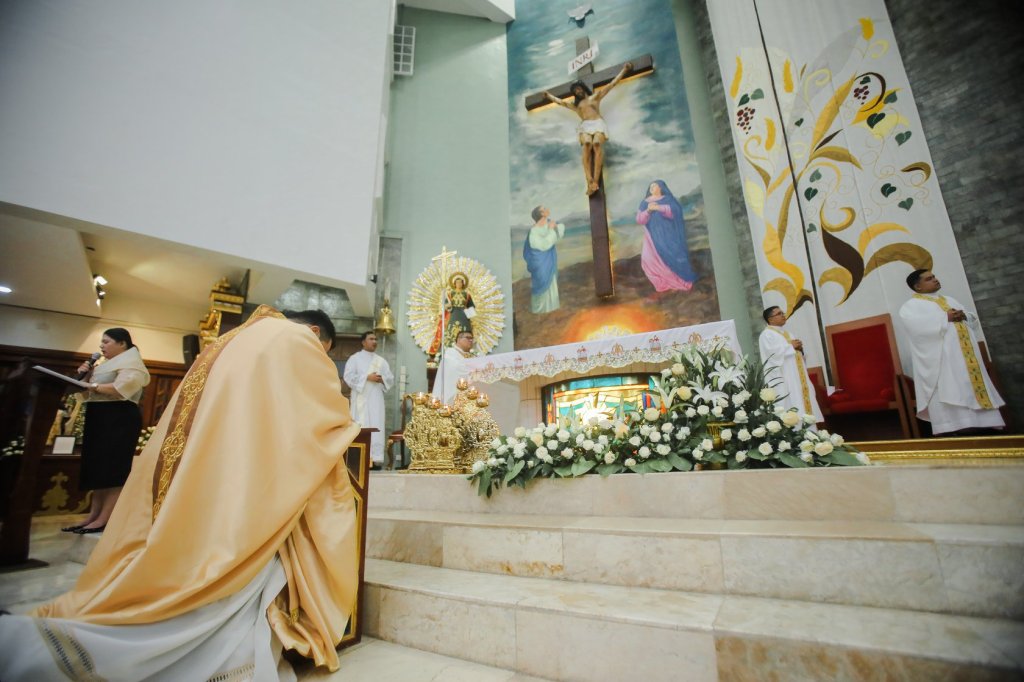
Photo by Arch. Philip Santiago, St. Mary Major in Rome, 2018.
O God our almighty Father, in all eternity you have planned what is best for each of us and we thank you so much for that for your great wisdom matched with your immense love for us.
Unfortunately, we always run away from you, discarding your plans for our own personal plans that most often do not work because these are based on what we want, what we like and not of what is really best for us.
Help us to seek your plans for us, Lord, by remaining in you, trusting you because you know what is best for us being our Maker.
Open our selves to you to redeem us from our disgrace and infirmities by seeking your plans in rebuilding our lives like your so-called “remnants of Israel” in the first reading – the few who have remained faithful to you despite the turning away from you of majority of Israelites who chose to worship false gods in the time of Jeremiah.
And ironically, to be like that Canaanite woman at the region of Tyre and Sidon – though a pagan – who remained faithful to you waiting for the Christ to come by holding on to your plans, hoping in your plans, and finally realizing your plans of healing and salvation in Jesus!
Grant us the perseverance and love to seek, believe in your plans for us like the Blessed Virgin Mary as we celebrate today the Memorial of the Dedication of St. Mary Major in Rome, one of our four Major Churches and first Marian shrine in the whole Christendom.
How lovely it is, O God, that you literally laid out your plans for this Basilica when the Virgin Mary appeared in a dream to a faithful Christian couple as well as Pope Liberius in the year 358 to build a church in her honor on the site where snow would fall on the night of August 4-5.
And you did make snow to fall on that night, forcing Pope Liberius to trace the outlines of the church on the snow where the first basilica was built!
But, it was only the beginning of the unfolding of your plans: the Basilica of St. Mary Major was completed a century later after the Council of Ephesus in 431 where Mary was declared the Mother of God, thus clarifying all doubts on the divinity of your Son Jesus Christ who had come to save us.
May we pause for some moments of silence today to pray and seek your plans for us specially in this time of the pandemic. We pray harder for our leaders in government for humility and honesty in seeking you, O God, to draw a specific plan that is clear and workable to contain the spread of the COVID-19 virus.
This we ask in Jesus Christ’s name, in the power of the Holy Spirit with Mary our Mother. Amen.
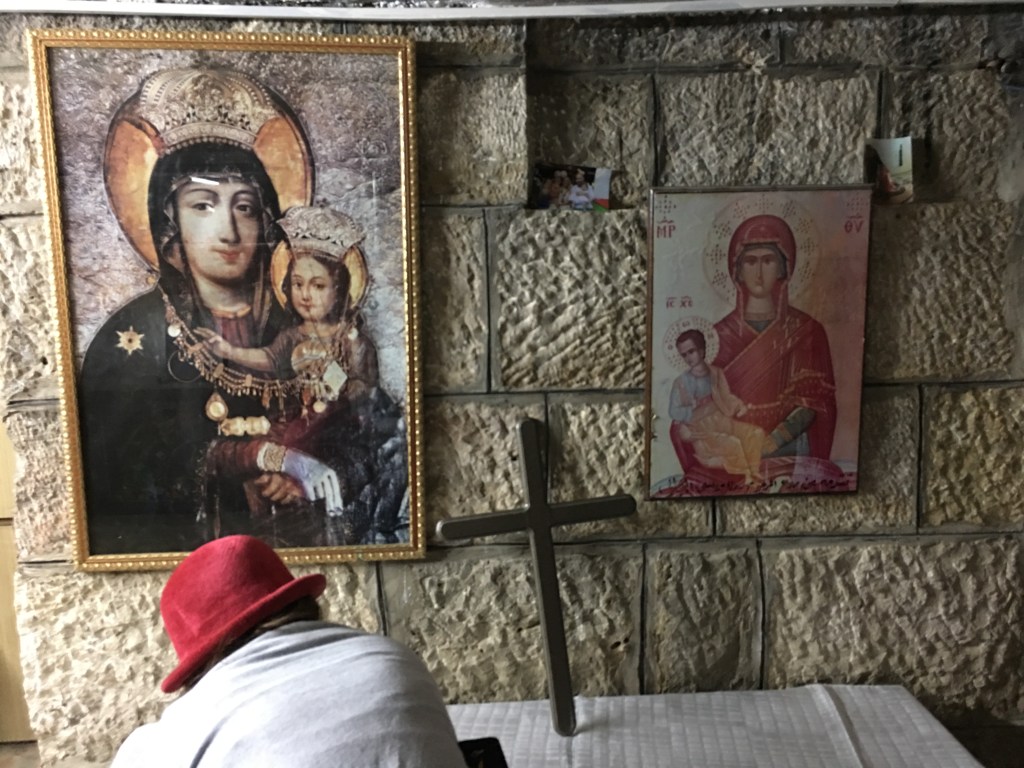
Photo by author of a pilgrim writing a petition to the Blessed Mother in a Marian shrine in Madaba, Jordan, 2019.
The Lord Is My Chef Sunday Music by Fr. Nick F. Lalog II, 02 August 2020
Photo from iStock/StudioAnnika
Our Sunday music for today is specially for all the doctors, nurses, and everyone serving in hospitals since this pandemic began. You are exactly like Jesus Christ in the gospel today who went to a deserted place to rest but upon seeing the crowds who have followed him, “his heart was moved with pity for them, and he cured their sick” (Mt.14:14).
Thank you, dearest doctors and nurses and everyone serving in our hospitals for keeping the love alive, forgetting your selves and loved ones just to answer the call of duty like our Lord who was also so tired preaching with a heart aching for the death of John the Baptist (https://lordmychef.com/2020/08/01/human-situation-divine-response-multiplying-our-blessings/).
And this is the reason we have jazz artist Tom Scott’s 1991 hit “Keeping This Love Alive” as our featured music this Sunday: with the excellent vocals by David Pack, the song tells us how amid so many trials and tests, a man keeps on coming back to the woman he loves so much.
I don't know why my faith gets so low
I'm helpless to control my fears
I turn to you and somehow I know
No matter how far I fall
You will answer my call,
becauseI keep coming back to you

Heal me one more time
I keep coming back to you
You're the reason why (the reason why)
The reason I (the reason I)
I've got to keep this love alive (alive, alive, alive)
Oh, gotta keep this love alive (alive)
Ultimately, it is the love of Jesus Christ that we have experienced that we keep this love alive – in our family and circle of friends, in our community and nation. It is his love that sustains us, enabling us to believe more and hope more.
Thank you dearest doctors, nurses and everyone serving in our hospitals around the world to care for the sick.
The Lord Is My Chef Sunday Recipe for the Soul by Fr. Nicanor F. Lalog II
Week XVIII, Cycle A in Ordinary Time, 02 August 2020
Isaiah 55:1-3 >><}}}*> Romans 8:35, 37-39 >><}}}*> Matthew 14:13-21
Remember our reflection last Sunday? Of how parables teach us that “less is always more” because to have the kingdom of God – Jesus Christ himself – we have to learn to appreciate the little things in life?
Beginning this Sunday until August 16, our gospels will start telling us who is Jesus Christ by showing us his powers and abilities that are exactly opposite the way we see and understand them. This new series of stories are so relevant to us in this time of pandemic, giving us wonderful insights into God’s ways of responding to our human situations.
St. Matthew now leads us with Jesus to the wilderness after teaching us in parables to experience his power in transforming us like the five loaves and two fish to feed more than five thousand people.
Multi-layered story of the multiplication of bread
All four evangelists have recorded this story of Jesus Christ’s multiplication of the loaves of bread with their particular focus and stress, showing us that it truly happened and was a major event in the Lord’s ministry.
Very unique with St. Matthew’s version of this miracle story – which has not one but two! – is his economy of words in narrating it like a straight news as if it were a developing story or a “breaking news” unfolding before us, calling us to follow its updates and details due to its multi-layered meanings.
When Jesus heard of John the Baptist, he withdrew in a boat to a deserted place by himself. The crowds heard of this and followed him on foot from their towns. When he disembarked and saw the vast crowd, his heart was moved with pity for them, and he cured their sick. When it was evening, the disciples approached him and said, “This is a deserted place and it is already late; dismiss the crowds so they can go to the villages and buy food for themselves.” Jesus said to them, “There is no need for them to go away; give them some food yourselves.” But they said to him, “Five loaves and two fish are all we have here.” Then he said, “Bring them here to me,” and he ordered the crowds to sit down on the grass. Taking the five loaves and the two fish, and looking up to heaven, he said the blessing, broke the loaves, and gave them to the disciples, who in turn gave them to the crowds. They all ate and were satisfied, and they picked up the fragments left over — twelve wicker baskets full. Those who ate were about five thousand men, not counting women and children.
Matthew 14:13-21
Photo from iStock/Studio-Annika.
The consolation of Jesus.
Our situation in this time of the corona pandemic is so similar with that of Jesus. With the increasing number of COVID-19 cases, it has finally hit us hard, so close to home with news of those we know getting infected and worst, dying from this disease.
Like Jesus upon hearing the death of John the Baptist, we are all saddened that we wish to withdraw away from everyone.
We want to mourn but there are more people in need of our presence and help in this time of pandemic like the countless medical frontliners and health workers who must be so tired – even sick, physically and emotionally – by now with the growing number of COVID-19 patients and yet have chosen to remain in their posts.
And there are still the other casualties of this pandemic like those who have lost their jobs, those evicted from their rented apartments, those stranded and separated from their loved ones, those begging for food, and those afflicted with other sickness going through dialysis and physical therapy.
Jesus knows so well the “wilderness” we are all going through and he is right here with us, one with us in our sufferings, in our fears and anxieties, and in our exhaustion.
To be one with us is consolation, from the Latin “con” or with + “solare” or alone, to be one with somebody feeling alone.
Jesus did not remove our pains and sufferings, even our death; he joined us to be one with us in these that he can call us to “Come to me, all you who labor and are burdened, and I will give your rest. Take my yoke upon you… For my yoke is easy and my burden light” (Mt.11:28-30, 14th Sunday, 05 Jul 2020).
Compassion of Jesus.
Still with Christ’s reaction of being “moved with pity” at the sight of the crowds who have followed him to the wilderness, we find something more deeper with his being one with us, in consoling us that he had forgotten all about himself, his tired body that he went on to heal the sick among them.
To be moved with pity is more than a feeling of the senses but a response of his total person.
You respond for help, you reply to a call.
Ever wondered why we have the “responsorial psalm” after the first reading in the Mass? Because those words from the Psalms express our total assent and commitment to God, involving our total self like body, mind, heart and soul.
Photo by Dra. Mai B. Dela Peña, Carmel Monastery, Israel, 2016.
God cannot suffer because he is perfect.
That is why he became human like us in Jesus Christ to be one with our suffering and death so that we would one with him in his glorious Resurrection.
In the wilderness, Jesus stayed with the people, not allowing them to leave as suggested by the Twelve because he was moved with pity with the crowd because he wanted to suffer with them.
That is compassion, literally means to “suffer with” from cum + patior. Here in the wilderness, Jesus showed his compassion for the people which will reach its highest point in giving himself on the Cross on Good Friday.
Have we “responded” to God’s call to serve, to a call of duty, and to a plea for help from the poor? Have we truly given ourselves to somebody without ever thinking our own comfort or rewards? Or, are we running away from his Cross?
What a shame in this time of pandemic there are some among us who rejoice at the losses of others like the Twelve who wanted the crowd to be sent home because they were afraid of responsibilities, of taking care of the suffering people.
Consolation and compassion are the two most needed from each of us in this time of crisis.
Our scarcity mentality, the God of plenty.
We now come to the miracle of the feeding of five thousand. According to the late Fr. Henri Nouwen, this story is an example of our “scarcity mentality” when we think of not having enough, of finding what we have as too little, always looking for more; hence, our tendency to hoard everything.
The Twelve were thinking more of themselves, afraid they could go hungry with the five loaves of bread and two fish they have. They were so afraid of difficulties ahead of them in their situation where to find and how to feed those great number of people.
They were focused on what was lacking than on what they have, and who was with them, Jesus Christ! They were hungry for food in the stomach than for food to the soul unlike the crowds who have followed Jesus.
Worst of all, the Twelve got “mad” upon seeing the crowds who have followed them to the wilderness when in fact, it was Jesus who needed most to rest to mourn John’s death!
But through all these, Jesus patiently bore the people’s woes and the Twelve’s selfishness to teach them all in a very nice way something so essential in our response to every human suffering and extreme situation: opening and entrusting our selves totally to God.
And that was actually the greatest miracle that happened that day.
In doing it, Jesus simply asked the Twelve what they have, never asking how much they have or its condition. Just whatever they have to give everything to Jesus like those five loaves and two fish that he took, and while looking up to heaven, blessed and broke the loaves, and gave them to the Twelve to distribute to the crowd.
And everyone was satisfied with a lot of left overs too!
Matthew nor any of the other Evangelists ever explained how it happened because it does not really matter at all. What is most important is what are we willing to give up to Jesus so he can transform us into better persons.
That is what we continue to do this day in every celebration of the Holy Eucharist- whatever we have, even not the best or the worst and littlest we have, when given to Jesus becomes holy and multiplied!
The power of God is immense, without doubt. But, in this miracle of the feeding of five thousand, Jesus is showing us that his power is not meant to satisfy our material or bodily needs but our deepest desires that lead to our fulfillment in him as prophesied by Isaiah in the first reading.
Why spend your money for what is not bread; your wages for what fails to satisfy? Heed me, and you shall eat well, you shall delight in rich fare. Come to me heedfully, listen, that you may have life.
Isaiah 55:2-3
Amid the pandemic worsened by our government officials’ inanities, irresponsibilities, and sheer lack of compassion with us in this wilderness, the Lord assures us today that he is with us for “nothing can separate us from the love of Christ” (Second Reading) if we are willing to give him all that we have.
It is our spiritual transformation first that leads us to our material blessings. We can all have it if we are willing to give everything to Jesus and believe in him always. What do you have for miracles to happen?
A blessed August ahead for you!Amen.
Photo by Dra. Mai B. Dela Peña, Carmel, Israel, 2016.
The Lord Is My Chef Breakfast Recipe for the Soul by Fr. Nicanor F. Lalog II
Thursday, Memorial of St. Peter Chrysologus, Bishop and Doctor of the Church, 30 July 2020
Jeremiah 18:1-6 ><)))*> >><)))*> >>><)))*> Matthew 13:47-53
Photo by author, Third Sunday of Lent, 15 March 2020.
How amazing O God on this day as we celebrate the Memorial of St. Peter Chrysologus who spoke eloquently of the Incarnation of your Son in one of his homilies, your Prophet Jeremiah today also spoke something of our being clay in the potter’s hand.
He who made man without generation from pure clay made man again and was born from a pure body. The hand that assumed clay to make our flesh deigned to assume a body for our salvation. That the Creator is in his creature and God is in the flesh brings dignity to man without dishonor to him who made him.
Why then, man, are you so worthless in your own eyes and yet so precious to God? Why render yourself such dishonor when you are honored by him? Why do you ask how you were created and do not seek to know why you were made?
St. Peter Chrysologus in his sermon on the sacrament of Christ’s incarnation, Office of Readings
Thank you, dear God, for this enlightenment from St. Peter Chrysologus also known as the “man of golden speech” for reminding us the great honor of being created by you… from worthless clay!
Help us to reflect more on why you have created us than ask how we were created, and transformed like in the potter’s hand.
Then the word of the Lord came to me: Can I not do to you, house of Israel, as this potter has done? says the Lord. Indeed, like clay in the hand of the potter, so are you in my hand, house of Israel.
Jeremiah 18:5-6
Teach us, sweet Jesus, to be pliant and docile to the Father who continues to form us like clay in the potter’s hand — that no matter how painful life can sometimes be, even difficult, may we also see and appreciate the Father’s wonderful plans for our transformation in the future.
Help us to go through the pains of growing up and maturity so that when judgment day comes, may we all turn out to be good fish to be collected than bad ones that are thrown according to your parable of the net. Amen.
The Lord Is My Chef Breakfast Recipe for the Soul by fr. Nicanor F. Lalog II
Monday, Week XVII, Year II in Ordinary Time, 27 July 2020
Jeremiah 13:1-11 >><)))*> >>><)))*> >><)))*> Matthew 13:31-35
Photo from Google.
What a great way to start our last week of work and studies in July with your sense of humor, O God! Your words are so witty and funny but with a strong punch. Hard-hitting, so biting. And so revealing.
For, as close as the loincloth clings to a man’s loins, so I had made the whole house of Israel and the whole house of Judah cling to me, says the Lord; to be my people, my renown, my praise, my beauty. But they did not listen.
Jeremiah 13:11
You really got me, Lord.
What can I say?
Our underwear, that is, the loincloth of Jeremiah’s time, is our most intimate clothing, always in contact with our very selves, in that part of our body that we always guard and keep to ourselves.
But, what happens when we “dirty” ourselves with sins, when we put on all those filth in ourselves, we also feel the same way inside, no matter how clean and crisp our clothes are but when deep down our loincloth – underwear – is rotted and good for nothing?
We can always hide it from others and they will never know the kind of underwear we have but we cannot deceive ourselves of how dirty we are with sins and evil.
And so far from you, O God.
Forgive us when you are supposed to be the closest to us, the one we are always in contact with but we have totally disregarded because of our many sins, when we thought we can always have our own ways without you, denying the fact it simply cannot be for indeed, you have made us to be that closest to you.
Forgive us in your Son and our Lord Jesus Christ. Renew us inside, cleanse us and refresh us to be in close contact with you again, O God.
Help us to remain good and clean inside like the little mustard seed so we may grow to have leafy branches for birds to come and dwell in us.
In your mercy, cleanse us of our sins and be our yeast to mix with us again to leaven into a dough to make your kingdom come here on earth. Amen.
The Lord Is My Chef Breakfast Recipe for the Soul by Fr. Nicanor F. Lalog II
Saturday, Feast of St. James the Greater, Apostle, 25 July 2020
2 Corinthians 4:7-15 ><}}}*> >><}}}*> >>><}}}*> Matthew 20:20-28
Facade of “Santiago de Compostela” in Spain in honor of St. James the Greater. Photo courtesy of Fr. Gener Garcia during their “El Camino de Santiago de Compostela”, May 09 to June 05, 2019.
Glory and praise to you, Lord Jesus Christ who had called and given us the Apostles as foundations of your Holy Church as we celebrate today the feast of St. James the Greater, the first bishop of Jerusalem and the first among the Twelve to die a martyr.
In him, O Lord, you gave us an image of hope in you, of how we can grow in holiness in you.
Through St. James the Greater, you have shown us your kindness in joining us in our earthly pilgrimage, slowly making us realize how we must adhere to you more closely to finally make it to our final destination in your kingdom in heaven.
Jesus said in reply, “You do not know what you are asking. Can you drink the chalice that I am going to drink?” They said to him, “We can.” He replied, “My chalice you will indeed drink, but to sit at my right and at my left, this is not mine to give but is for those for whom it has been prepared by my Father.”
Matthew 20:22-23
Your kindness is very evident, sweet Jesus.
I really wonder how you felt when the mother of James and John asked you that her sons be seated “one at your right and the other at your left in your kingdom” (Mt.20:21).
You were so kind to simply tell her and her sons, “You do not know what you are asking.”
Photo by Fr. Gener Garcia, image of Santiago de Compostela in Spain, 2019.
So many times, Lord, like St. James, we ask so many things from you, even demanding from you in exchange of what we believe as too great we have given you. You perfectly know so well that we do not know what we are asking at all. You know how we are blinded by fame and honor, power and wealth – things that do not matter at all in your kingdom.
You are so gentle in reminding us about the deeper realities of life, of discipleship by simplifying your demands, “Can you drink the chalice that I am going to drink?” to which we are often so naive, even oblivious for good reasons. Primarily because, we really do not know what we are asking.
And that’s when you are kindest of all, sweet Jesus: like with St. James and his brother St. John, you invite us “to drink the chalice you are drinking” by assuring us it can be done, that it is very possible, that in fact, that is the greatest honor of being with you, to drink from your chalice – without letting us know right away what it meant! St. John eventually realized and wholly accepted what you meant of drinking in your chalice when he became the first to share in your passion and death during the persecution by King Herod Agrippa (Acts 12:1-1).
Slowly, you make us realize too what is to drink in your chalice as we continue life’s journey with you, most especially into our inner self where we eventually find and rest in you when the goings get tough and rough.
It is total kindness on your part Lord to show us the beauty of sharing a meal with you, of sharing in your mission, of sharing in your life and most especially of sharing in your death that we make it with you to your kingdom.
Like St. James the Greater, continue to be kind with us, Lord, accompanying us in this journey.
In the same manner, make us kind to one another too like St. James the Greater who offered his life for the early church, for being the first to drink from your chalice. Amen.
Photo by Fr. Gener Garcia, marker along the “El Camino de Santiago de Compostela”, 2019.
Photo by author of the new bypass road that cuts through vast ricefields from Baliwag to Pulilan, January 2020. And we ask anew, what price of development and, for whom?
We are all familiar with the expression that “familiarity breeds contempt” and sad to say, it has always been true to us even with our relationship with you, God our loving and merciful Father in heaven.
Day in, day out we pray, or simply mumble prayers.
We pray more of security latch, just in case something bad happens to us.
But to be one with one, nah….
Besides, even if we do not pray, there is always somebody praying for us. We believe so.
Everywhere we see churches and your images to remind us of your presence and existence, of your love and goodness to us.
But, we take you for granted. You have become so ordinary to us that sometimes, we look for something extraordinary.
Unknown to us, that is when we stop believing in you and when we also stop living in you.
Be amazed at this, O heavens, and shudder with sheer horror, says the Lord. Two evils have my people done: they have forsaken me, the source of living waters; they have dug themselves cisterns, broken cisterns, that hold no water.
Jeremiah 2:12-13
Through your Son Jesus Christ who preached using parables, open our eyes and our ears, our hearts and our very being to begin seeing anew from the ordinary and usual things the deeper realities of your presence and love.
Familiarity need not breed contempt among us and in you.
Let familiarity remind us of your consistency in relating with us, Lord.
Let familiarity lead us to the natural flow of life rooted in you, God, so that we may discover daily the many wonders and beauty of this life; that, despite the seeming cycle and repetition even routine, we may find its deeper meaning right in our hearts where you dwell. Amen.
Van Gogh’s “The Sower” from commons.wikimedia.org.
The Lord Is My Chef Breakfast Recipe for the Soul by Fr. Nicanor F. Lalog II
Wednesday, Feast of St. Mary Magdalene, 22 July 2020
2 Corinthians 5:14-17 >><}}}*> >><}}}*> >><}}}*> John 20:1-2, 11-18
Painting by Giotto of the Risen Lord Jesus Christ appearing to St. Mary Magdalene from commons.wikimedia.org.
Dearest Lord Jesus Christ:
Today as I prayed on the feast of your beloved Saint Mary Magdalene, my sights were focused on your beautiful exchange of names on that Easter morning at your tomb.
It is so lovely and so deep, and very personal for all of us whom you love so much despite our many sins like St. Mary Magdalene.
When she had said this, she turned around and saw Jesus there, but did not know it was Jesus. Jesus said to her, “Woman, why are you weeping? Whom are you looking for?” She thought it was the gardener and said to him, “Sir, if you carried him away, tell me where you laid him, and I will take him.” Jesus said to her, “Mary!” She turned and said to him in Hebrew, “Rabbouni,” which means Teacher.
John 20:14-16
You called her by her name, “Mary” and she called you by your title “Rabbouni” – what a beautiful scene of two people loving each other so deeply, so truly! You – humbly and lovingly accepting the sinner, and she – submitting herself to you as disciple.
You have expelled seven demons from her, you have known her so well even her darkest secrets and sins, and despite all these knowledge, Lord Jesus, the more you have loved her that you called her by the sweetest word she could ever hear in her life, “Mary”.
The same with us, sweet Jesus: every day you call us by our names, each one of us as a person, an individual, a somebody not just a someone. You love us so much in spite and despite of everything. We are not just a number or a statistic to you but a person with whom you relate personally.
From Google.
Help us to realize this specially when darkness surrounds us, when self-doubts and mistrust abound in us without realizing your deep trust in us, in our ability to rise again in you and follow you.
Teach me to trust you more and love you more like St. Mary Magdalene, to give and offer my self to you totally as yours, calling you “Rabbouni” or Teacher and Master.
Let me give up whatever I still keep to myself, whatever I refuse to surrender so that I may enjoy the intimacy you offer me as a friend, a beloved, and a family in the Father.
What a joy indeed to be like St. Mary Magdalene, fully known and fully loved by you, dear Jesus.
May I learn to know and love others too like you so I may proclaim you to them. Amen.
The Lord Is My Chef Breakfast Recipe for the Soul by Fr. Nicanor F. Lalog II
Tuesday, Week XIV, Year II in Ordinary Time, 07 July 2020
Hosea 8:4-7, 11-13 >><)))*> <*(((><< Matthew 9:32-38
Photo by author, 2019.
Forgive us, O Lord, for the many times we have played gods, knowing too much when in fact we know nothing at all. So often, we never consult you and rely more in our limited understanding and perception of things that in the end lead to more woes and problems for us.
Thus says the Lord: They make kings in Israel, but not by my authority; they established princes, but without my approval. With their silver and gold they made idols for themselves, to their own destruction. Cast away your calf, O Samaria! my wrath is kindled against them. How long will they be unable to attain innocence in Israel? The work of an artisan no god at all; destined for the flames — such is the calf of Samaria! When they sow the wind, they shall reap the whirlwind; the stalk of grain that forms no ear can yield no flour; even if it could, strangers would swallow it.
Hosea 8:4-7
When will we ever learn, Lord?
We always have our own golden calf to worship, turning away from you, the only true God, fount of all life and meaning, grace and fulfillment. We keep doing things according to our plans, each of us desiring to outdo each other, turning away from you.
How sad that whenever you try to intervene and save us or bring us back into the right course of life, we see you more as coming from the devil. Forgive us, Lord, in making it so difficult even for you to be in the right place in our lives for we are so full of ourselves.
And that is really how it is with us: we always feel so troubled and abandoned, like sheep without a shepherd but would never admit it, replacing persons with material things not realizing that life is meant to be lived with people not with things.
Create in us an awareness of your presence, of your love so we may be more attuned with you and the people around us. Amen.
Photo by author of plants growing on rocks at the Holy Land, 2019.
The Lord Is My Chef Sunday Music by Fr. Nick F. Lalog II, 05 July 2020
At that time Jesus exclaimed: “Come to me, all you who labor and are burdened, and I will give you rest. Take my yoke upon you and learn from me, for I am meek and humble of heart; and you will find rest for your selves. For my yoke is easy, and my burden is light.”
Matthew 11:28-30
If there is anything we all wish this first Sunday of July 2020, it must be rest from all the worries and burdens in this time of the corona. We all want something that would be lighter in this second half of the heaviest year we have ever had in decades or even a generation.
Being light does not mean being worry-free, no problems nor sufferings. Dr. M. Scott Peck insists in his book Road Less Travelled that “life is difficult” – the sooner we realize and accept this, the better for us (see our homily, https://lordmychef.com/2020/07/04/we-are-disciples-of-a-meek-and-humble-lord/).
Being light is having a companion to share with our burdens and woes in life because having these all by ourselves is so difficult and impossible. Most of the time, our problems need not be solved at all but simply be accepted and shared with someone who loves us, cares for us, and believes in us.
Jesus Christ is that only companion par excellence we can have for he is meek and humble of heart.
Van Morrison’s lovely ballad Someone Like You released in 1987 captures this essential desire among us all to seek and forge many relationships.
I've been searching a long time
Someone exactly like you
I've been traveling all around the world
Waiting for you to come through

Someone like you makes it all worth while
Someone like you keeps me satisfied
Someone exactly like you
Though the song has become a staple in many weddings and in many romantic movies covered by various artists, Someone Like You sounds more like a spiritual song longing for God through our loved ones for he is always faithful and loving to us despite our many weaknesses and sins.
I've been doin' some soul searching
To find out where you're at
I've been up and down the highway
In all kinds of foreign lands

Someone like you makes it all worth while
Someone like you keeps me satisfied
Someone…
May Van Morrison’s song bring you closer to God through your loved ones as we continue to hurdle the many obstacles and trials ahead in this time of COVID-19.