The Lord Is My Chef Sunday Music by Fr. Nick F. Lalog II, 16 August 2020
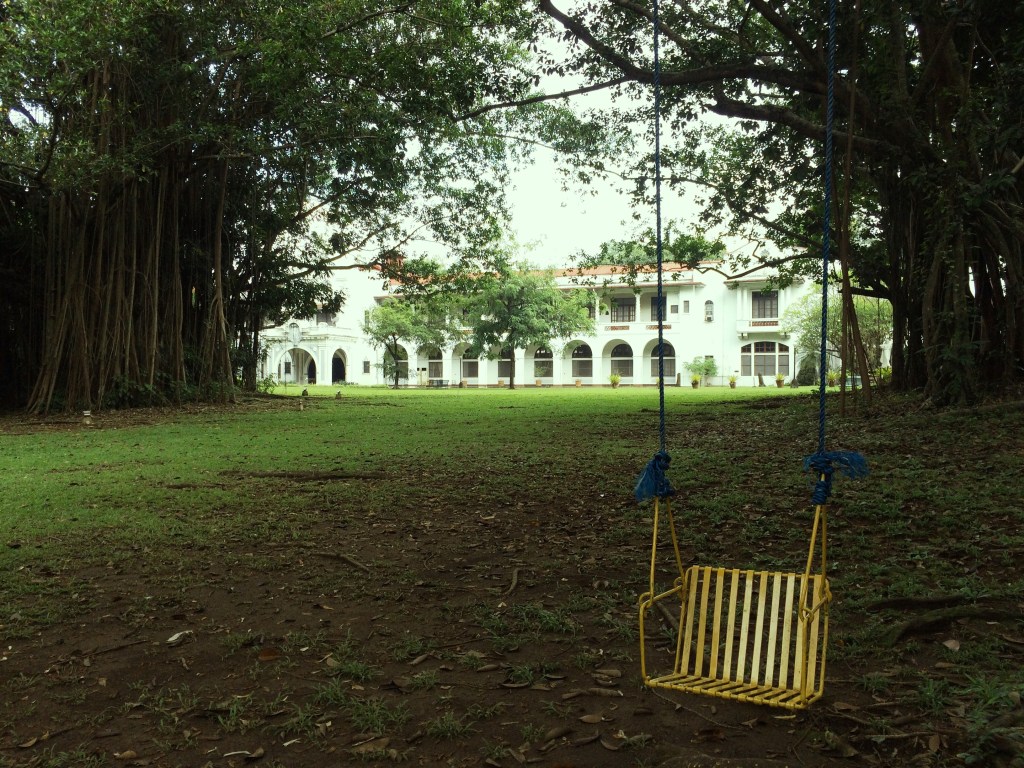
Our parish on a lazy afternoon before the pandemic in January 2020. Photo by Mr. Angelo Carpio.
Our Sunday gospel today is so touching at how great is the love of Jesus Christ for us who knows no boundaries when he “withdrew to the region of Tyre and Sidon” to heal the daughter of a Canaanite woman “tormented by a demon” (Mt.15:21, 28).
Two Sundays ago we heard how Jesus fed more than 5000 people who have followed him to a deserted place from just five loaves of bread and two pieces of fish; last week, he walked on water to rescue his disciples in a boat caught in a violent storm at the middle of the lake at night.
Very clear in all his actions is the immense love of Jesus Christ for everyone, doing everything in love and for love.
And that is why we have Rock n’ Roll’s dynamic duo, Daryl Hall and John Oates singing their eighth #1 hit released in 2003 “Do It For Love” from their sixteenth studio album of the same title.
I have always considered Hall and Oates as my topmost favorite musicians standing side by side with the equally great tandem of Walter Becker (+) and Donald Fagen of Steely Dan fame.
Smooth and sophisticated with their characteristic Phillysound, Hall and Oates’ Do It for Love tells of how a man would go to great lengths to express his love for his beloved.
I would fly ten thousand miles In the pouring rain Just to see your face
I’d bare my soul to a total stranger Just to say your name And I’m not ashamed Just to love you into every morning
I would change my name And run away I won’t do it for money I won’t do it for pride
I won’t do it to please somebody else If it don’t feel right But I’ll do it for you And at least I’ll try
I don’t need any other reason Than I feel it deep inside I’ll Do It For Love
I have used it so many times in counseling single and married men having problems with their girlfriend and wife; and so far, it seems to have always worked with most of them still together and happily married!
Try it yourself this Sunday… with a lot of prayers and honest-to-goodness soul searching, miracles may still happen!
The Lord Is My Chef Sunday Recipe for the Soul by Fr. Nicanor F. Lalog II
Week XX, Cycle A in Ordinary Time, 16 August 2020
Isaiah 56:1, 6-7 >><}}}*> Romans 11:13-15, 29-32 >><}}}*> Matthew 15:21-28
Twilight at our parish by Ms. Ria De Vera, 12 August 2020.
For the third Sunday in a row, Jesus reveals a very wonderful side of him who goes out of his way to meet us and comfort us in the most difficult situations and places we are into. It is something we need so much in these days of Moderate Enhanced Community Quarantine (MECQ) seen right away in the opening of today’s gospel.
At that time, Jesus withdrew to the region of Tyre and Sidon. And behold, a Canaanite woman of that district came and called out, “Have pity on me, Lord, Son of David! My daughter is tormented by a demon.” But Jesus did not say a word in answer to her.
Matthew 15:21-23
Jesus goes out of his way to meet everyone
Israel is a very small country but always leaves a big impact on everyone who goes on a pilgrimage there. There is that sense of awe in every sacred site that until now continues to “speak” and evoke among pilgrims the presence and holiness of God and his saints.
Like what we have mentioned last Sunday, the proxemics or the non verbal communication of the places Jesus have visited convey to us deeper meanings than just mere sites. And that is more true during the time of Christ like the setting of this Sunday’s gospel, the region of Tyre and Sidon.
Now part of Lebanon found south of its capital city Beirut that was devastated by powerful explosions two weeks ago, Tyre and Sidon were gentile or pagan cities during the time of Jesus with a considerable Jewish population.
His going there shows us his fidelity to his mission of “searching for the lost sheep of the house of Israel” that partly explains to us why he never bothered to give the slightest hint of recognition to the Canaanite woman who had sought his help for her daughter “tormented by a demon”.
Photo by author, the Holy Land, May 2019.
And despite the lack of any explanation again by St. Matthew on the attitude by Jesus “snubbing” the pagan woman, we can safely assume that Christ surely knew that by going to Tyre and Sidon, gentiles would seek his healing as news of his fame had spread beyond Galilee at that time.
Here we find the great love and concern of Jesus for everyone, specially the rejected and marginalized in the society.
His “withdrawing to the region of Tyre and Sidon” was in itself a revelation of his universal love, a love without borders reaching out to those lost and feeling alone in life, those rejected, those discriminated for their color and beliefs, status and gender, sickness and diseases like AIDS and lately, COVID-19!
Inclusive Jesus, exclusive human
At the beginning of chapter 11 of St. Paul’s Letter to the Romans from which our second reading is taken today, the great Apostle starts by asking “has God rejected his people?” St. Paul emphatically said “no”, explaining at length the plan of God in Jesus Christ to save all peoples not just the Jews, beautifully telling us,
For the gifts and the call of God are (permanent and) irrevocable.
Romans 11:29
St. Paul’s reflections on God being “inclusive” as against our being so “exclusive” in sending us Jesus Christ to bring us all together as one sheds us some light on that extraordinary incident in the region of Tyre and Sidon involving the Canaanite woman.
Again, I invite you my dear reader to reflect on the many layers of meaning found in this episode so special like the feeding of more than five thousand people the other Sunday and Jesus walking on water last week.
First, notice the silence of Jesus. Keep in mind when the Lord is silent, it does not mean he is out or does not care at all to our needs and pleas. When there is silence – specially a deafening one – the problem is never with God but with us people.
And, true enough! See how the disciples asked Jesus to “Send her away, for she keeps calling out after us” (Mt.15:23) — exactly the way we deal sometimes with those begging our help and attention, seeing them as a nuisance to be sent away? What a shame!
From Google.
Now, we go to the climax of this episode with the woman coming to Jesus, “paying him homage” for the healing of her daughter tormented by a demon. It was a scene similar with St. John’s wedding at Cana where the Blessed Mother also approached Jesus with a request when wine ran out during the feast.
In both episodes we find Jesus being a snub – suplado, as we say.
Most of all, in both scenes we find the remarkable faith in Jesus by his Mother at Cana believing he can do something to spare the newly wed couple of embarrassment from running out of wine while this Canaanite woman felt so sure only Jesus can cure her daughter.
See how she addressed Jesus like his disciples with not just “Lord” but also with the title “Son of David” to indicate her faith in him as the Messiah.
And it did not stop there as she engaged Jesus into a dialogue — indicating intimacy and trust, depth and communion that we refer in Filipino as “matalik na ugnayan” or “matalik na usapan”.
Sometimes in life, Jesus seems to have that longing for some “lambing” from us that he tries to be “pakipot” or hard to get in order to be intimate with us. Please take these Filipino traits positively to get what I mean from this unique scene of Jesus and the Canaanite woman in Tyre and Sidon.
Jesus said in reply, “It is not right to take the food of the children and throw it to the dogs.” She said, “Please, Lord, for even the dogs eat the scraps that fall from the table of their masters.” Then Jesus said to her in reply, “O woman, great is your faith! Let it be done for you as you wish.” And the woman’s daughter was healed from that hour.
Matthew 15:26-28
Photo by author, Church of All Nations beside the Garden of Gethsemane in the Holy Land, May 2019.
Brothers and sisters all in one God as Father
St. Matthew recorded this episode not to scandalize and shock us with those words coming from the Lord, referring to the Canaanite woman as one of the “dogs” that was the term used to designate pagans at that time.
For St. Matthew who was writing for Christians of Jewish origins, the episode was a reminder that the people of Israel were indeed the “children” of God to whom the coming Messiah and salvation – like bread or food – were first promised. St. Paul spent a great deal of explaining of this in his letter specially to the Romans .
Rigthly then, theirs was the “food” not right to be thrown to the “dogs” but, that fact does not exclude the “dogs” from partaking later from the leftover food of the children, as if telling Jesus, today we satisfy ourselves with crumbs, tomorrow we shall have bread!
The Canaanite woman clearly knew where to place herself before the Lord, proving to him her deep faith and amazing knowledge of God’s goodness and plans for everyone. For that, she was highly praised by Jesus for her faith. The only other person also praised by Jesus in having a tremendous faith in him was the centurion – another pagan – who begged the Lord for the remote healing of his servant.
Last Sunday afternoon I read the story of how a nurse was driven out of her boarding house after she tested positive for COVID-19 virus. The poor lady had nowhere to go to spend the night after being denied of any assistance by barangay officials, even by her own family in Batangas! Good enough, somebody reported her to the Philippine National Red Cross that sent an ambulance to take care of the nurse who was found crying by herself at the gutter of a street in Pasay City.
What a very sad and tragic reality happening among us these days of the pandemic.
Where is our love and concern for everyone, especially the weak and the sick, those in our own versions of Tyre and Sidon where no one would dare to go except Jesus, perhaps like the dorms and residences of our medical frontliners who are so tired and sick physically, emotionally, and spiritually during this pandemic?
In these past three weeks we have reflected how Jesus lovingly joined us, staying with us in the wilderness, in the storms of the dark sea, even at the pagan territories where nobody would ever want to go.
This Sunday, Jesus is inviting us to break all barriers and borders between us that separate us from each other. Let us animate our community with Christ’s love and mercy for us all amid our many differences so that slowly we fulfill Isaiah’s prophecy in the first reading that someday the house of the Lord shall be called “a house of prayer for all peoples” (Is.56:7). Amen.
A blessed and safe new week to you! And please do not forget to pray ten Hail Mary’s every 12-noon for national healing and end of the pandemic until September 15, 2020.
The Lord Is My Chef Breakfast Recipe for the Soul by Fr. Nicanor F. Lalog II
Thursday, Memorial of Sts. Pontian and Hippolytus, Martyrs, 13 August 2020
Ezekiel 12:1-12 >><)))*> |+| >><)))*> |+| >><)))*> Matthew 18:21-19:1
Photo by author, Mt. St. Paul Spirituality Center, La Trinidad, Benguet, 2018.
Praise and glory to you, our merciful Father always waiting for us to come home to you. Thank you for being patient with us who always rebel against you, turning away from you to be on our own.
Sadly, whenever we rebel, it is not you whom we hurt and inflict pain with but those dearest to us like our family and friends who truly love us. We are like the people of Jerusalem who have become callous and indifferent, cold and distant from you, O God, who truly cared for them.
The word of the Lord came to me: Son of man, you live in the midst of a rebellious house; they have eyes to see but do not see, and ears to hear but do not hear, for they are a rebellious house.
Ezekiel 12:1-12
So many times, loving Father, we have become like that debtor in Christ’s parable whose debts were written off by his master and yet could not do the same to a fellow debtor who owed him with a lesser amount.
Both that debtor in the gospel and the rebellious house of Israel in the first reading share the same sin and evil attitude of refusing to recognize your goodness and mercy you have given them that we are equally guilty of today.
So many times in our lives, Lord, this same attitude of being rebellious and unmerciful are the main reasons that destroy our many relationships because we have separated ourselves from others.
Teach us through Jesus Christ to always live grateful to your abounding love and kindness, mercy and forgiveness to us, Father, so we may always share these same blessings with others.
Touch our hearts like you have moved the first anti-pope, St. Hippolytus who sought forgiveness from the Pope he had earlier rebelled against, St. Pontian after they were both sent to hard labor on the island of Sardinia during the persecution by Maximus Thrax.
What a beautiful twist of fate that you still brought them together, Lord to share in witnessing to your truth and mercy.
We pray today for those who have rebelled against you, O God, uttering all kinds of blasphemies against your most Holy Name not realizing that the more they rebel against you, the more they have become distant from us the people they are supposed to serve.
Open their eyes and their ears so they may see and hear the sufferings of the people in this time of pandemic. Amen.
The Lord Is My Chef Sunday Music by Fr. Nick F. Lalog II, 09 August 2020
Photo by Fr. Gener Garcia, “El camino de santiago de compostela” in Spain, 2019.
Don’t you feel it is like a Good Friday on this gloomy and rainy Sunday in August? Problems and trials continue to come our way this year 2020 that we are like the Apostles together in a boat in the middle of the sea caught in a violent storm at night with Jesus nowhere in sight!
But, we know the rest of the story, of how Jesus rescued the Twelve by walking on water, calmed the storm upon joining them in their boat until they reached the shore.
Sometimes in life, we need to get away from our “comfort zones” and cross to the other side of the lake or sea like in our gospel especially when life becomes so artificial that we need to experience it in its “rawness” from deep within our souls until we desire and meet God anew wherever we may be (https://lordmychef.com/2020/08/08/meeting-jesus/).
And because of the storms that continue to rage in us and among us in this ghost month of August, we offer you with inspiring songs from two lovely female artists that we hope will uplift you and soothe your tired body and soul.
First in our double header is Ms. Pauline Wilson’s 1997 solo version of their 1979 classic “Follow Your Road” when she was the lead singer of their Hawaii-based jazz fusion band called the Seawind.
So enticingly warm, Follow Your Road teems with a lot of Christian teachings that have strongly influenced Ms. Wilson and partners who are also into Gospel music. The song invites us to reflect on our lives in order to find its meaning and direction – exactly what Jesus has been telling us to follow him especially when we are into storms and darkness in our lives.
We are all but travelers living in a foreign land Just trying to find our way – best as we can Looking for an answer, trying to find some light And though we have journeyed far, it’s not quite far enough.
Have you wondered where your road will lead you? Maybe to a song that needs singing, or a summer rain Or it might be you’re afraid to go, afraid to go But you’ve got to follow your road, or you’ll never know
Uploaded by caddxprt, 17 September 2008.
Our second song on this rainy Sunday is from another Gospel singer Ms. Oleta Adams who was nominated to the Grammy Award as Best Female Pop Vocal Performance the following year after releasing “Get Here If You Can” in 1990.
Ms. Adams first caught the world’s attention in 1989 when she was invited by Curt Smith and Roland Orzabal of Tears for Fears to join them as singer and pianist for their 1989 “Seeds of Love” album from which came the hit single “Woman in Chains” with her singing a duet with Orzabal.
Get Here If You Can is a song putting to the test the love and fidelity of the song’s lover.
Faith, like love, is always an encounter, especially with the Lord Jesus Christ.
The experience of Peter sinking in water as he approached Jesus is a lesson in being focused with our love and faith in Christ despite the heavy storms and darkness that come into our lives.
There are hills and mountains between us Always something to get over If I had my way, surely you would be closer I need you closer
Lawiswis ng Salita ni P. Nicanor F. Lalog II, Ika-06 ng Agosto 2020
Larawan kuha ni Ezra Acayan ng Getty Images, Marso 2020.
Sa ating pananalangin,
turo ng Panginoong Hesus sa atin,
bago pa man kayo humiling,
batid na ito ng Diyos nating mahabagin;
at kung kayo ay mananalangin, wika Niya,
inyong sabihin:  Ama namin...
Gayong batid pala ng Diyos kailangan natin,
tanong ng iba, bakit tayo mananalangin pa sa Kanya?
At ito ang hindi nalalaman ng karamihan
mahalagang katotohanang dapat tandaan:
sa pananalangin ang pinakamahalaga ay
mabatid natin ibig ng Diyos mula sa atin!
Kaya naman sa tagal nitong COVID-19
sa dami ng ating panalangin, tiyak noon pa man din
alam na ng Diyos kailangan upang wakasan
pandemyang malagim na bumabalot sa atin
kumitil at nagpatigil sa takbo ng buhay natin
dulot sa lahat ay hirap maging sa iba ay hilahil.
Marahil kailangan na nating baguhin
ating panalangin sa panahong ito ng COVID-19
sapagkat wala sa gamot at medisina
sa mga botelya at siringgilya ang sa atin magpapagaling
kungdi sa pagpapanibago nitong puso at kalooban natin
na siyang laging ibig naman ng Diyos mula sa atin.
Sa gitna nitong quarantine nabuking
masasamang pag-uugali maging mga gawi natin
na sa gitna ng kagipitan at kahirapan
marami pa rin ang nagsamantala
naging sakim at makasarili
ibig ang lahat ay kamkamin, kabigin at angkinin.
Pandaraya at panggugulang, hindi patas sa mga patakaran
marami sa pamahalaan at katungkulan naghari-harian
mga inaakalang kalaban hinigpitan
malayang pamamahayag pinigilan
mga karapatan at dangal ng mamamayan
niyurakan at tinapakan, lalo na mga walang pinanghahawakan.
Larawan kuha ni Bb. Anne Ramos, Marso 2020.
Kaya aking bayan
ating pag-isipan at pagnilayan
batid ng Diyos ating pangangailangan
ngunit hindi Niya ito kaagad pagbibigyan
dahil tanging paraan sa pagsugpo sa salot na ito
naroroon sa ating mga puso, wala sa nguso.
Harapin natin hindi ang COVID-19
kungdi ating sarili at pag-uugali na dapat gamutin
sa mga sakit na naglalayo sa Diyos at kapwa natin;
karunungang kinakailangan ibinigay na ng Diyos
noon pa man upang solusyunan virus mula Wuhan
tangi Niyang kahilingan mamuhay tayo sa kabutihan at katuwiran.
Mahigit limang buwan na tayong nagdarasal
ugali at asal nati'y makapal pa rin sa kasamaan
kaya marahil lalo pang magtatagal
pagdurusa sa pandemyang ito na nag-ugat
 buhat sa puso ng tao na kung di magbabago
uulit at uulit sa iba't ibang anyo.
The Lord Is My Chef Sunday Recipe for the Soul by Fr. Nicanor F. Lalog II
Week XVIII, Cycle A in Ordinary Time, 02 August 2020
Isaiah 55:1-3 >><}}}*> Romans 8:35, 37-39 >><}}}*> Matthew 14:13-21
Remember our reflection last Sunday? Of how parables teach us that “less is always more” because to have the kingdom of God – Jesus Christ himself – we have to learn to appreciate the little things in life?
Beginning this Sunday until August 16, our gospels will start telling us who is Jesus Christ by showing us his powers and abilities that are exactly opposite the way we see and understand them. This new series of stories are so relevant to us in this time of pandemic, giving us wonderful insights into God’s ways of responding to our human situations.
St. Matthew now leads us with Jesus to the wilderness after teaching us in parables to experience his power in transforming us like the five loaves and two fish to feed more than five thousand people.
Multi-layered story of the multiplication of bread
All four evangelists have recorded this story of Jesus Christ’s multiplication of the loaves of bread with their particular focus and stress, showing us that it truly happened and was a major event in the Lord’s ministry.
Very unique with St. Matthew’s version of this miracle story – which has not one but two! – is his economy of words in narrating it like a straight news as if it were a developing story or a “breaking news” unfolding before us, calling us to follow its updates and details due to its multi-layered meanings.
When Jesus heard of John the Baptist, he withdrew in a boat to a deserted place by himself. The crowds heard of this and followed him on foot from their towns. When he disembarked and saw the vast crowd, his heart was moved with pity for them, and he cured their sick. When it was evening, the disciples approached him and said, “This is a deserted place and it is already late; dismiss the crowds so they can go to the villages and buy food for themselves.” Jesus said to them, “There is no need for them to go away; give them some food yourselves.” But they said to him, “Five loaves and two fish are all we have here.” Then he said, “Bring them here to me,” and he ordered the crowds to sit down on the grass. Taking the five loaves and the two fish, and looking up to heaven, he said the blessing, broke the loaves, and gave them to the disciples, who in turn gave them to the crowds. They all ate and were satisfied, and they picked up the fragments left over — twelve wicker baskets full. Those who ate were about five thousand men, not counting women and children.
Matthew 14:13-21
Photo from iStock/Studio-Annika.
The consolation of Jesus.
Our situation in this time of the corona pandemic is so similar with that of Jesus. With the increasing number of COVID-19 cases, it has finally hit us hard, so close to home with news of those we know getting infected and worst, dying from this disease.
Like Jesus upon hearing the death of John the Baptist, we are all saddened that we wish to withdraw away from everyone.
We want to mourn but there are more people in need of our presence and help in this time of pandemic like the countless medical frontliners and health workers who must be so tired – even sick, physically and emotionally – by now with the growing number of COVID-19 patients and yet have chosen to remain in their posts.
And there are still the other casualties of this pandemic like those who have lost their jobs, those evicted from their rented apartments, those stranded and separated from their loved ones, those begging for food, and those afflicted with other sickness going through dialysis and physical therapy.
Jesus knows so well the “wilderness” we are all going through and he is right here with us, one with us in our sufferings, in our fears and anxieties, and in our exhaustion.
To be one with us is consolation, from the Latin “con” or with + “solare” or alone, to be one with somebody feeling alone.
Jesus did not remove our pains and sufferings, even our death; he joined us to be one with us in these that he can call us to “Come to me, all you who labor and are burdened, and I will give your rest. Take my yoke upon you… For my yoke is easy and my burden light” (Mt.11:28-30, 14th Sunday, 05 Jul 2020).
Compassion of Jesus.
Still with Christ’s reaction of being “moved with pity” at the sight of the crowds who have followed him to the wilderness, we find something more deeper with his being one with us, in consoling us that he had forgotten all about himself, his tired body that he went on to heal the sick among them.
To be moved with pity is more than a feeling of the senses but a response of his total person.
You respond for help, you reply to a call.
Ever wondered why we have the “responsorial psalm” after the first reading in the Mass? Because those words from the Psalms express our total assent and commitment to God, involving our total self like body, mind, heart and soul.
Photo by Dra. Mai B. Dela Peña, Carmel Monastery, Israel, 2016.
God cannot suffer because he is perfect.
That is why he became human like us in Jesus Christ to be one with our suffering and death so that we would one with him in his glorious Resurrection.
In the wilderness, Jesus stayed with the people, not allowing them to leave as suggested by the Twelve because he was moved with pity with the crowd because he wanted to suffer with them.
That is compassion, literally means to “suffer with” from cum + patior. Here in the wilderness, Jesus showed his compassion for the people which will reach its highest point in giving himself on the Cross on Good Friday.
Have we “responded” to God’s call to serve, to a call of duty, and to a plea for help from the poor? Have we truly given ourselves to somebody without ever thinking our own comfort or rewards? Or, are we running away from his Cross?
What a shame in this time of pandemic there are some among us who rejoice at the losses of others like the Twelve who wanted the crowd to be sent home because they were afraid of responsibilities, of taking care of the suffering people.
Consolation and compassion are the two most needed from each of us in this time of crisis.
Our scarcity mentality, the God of plenty.
We now come to the miracle of the feeding of five thousand. According to the late Fr. Henri Nouwen, this story is an example of our “scarcity mentality” when we think of not having enough, of finding what we have as too little, always looking for more; hence, our tendency to hoard everything.
The Twelve were thinking more of themselves, afraid they could go hungry with the five loaves of bread and two fish they have. They were so afraid of difficulties ahead of them in their situation where to find and how to feed those great number of people.
They were focused on what was lacking than on what they have, and who was with them, Jesus Christ! They were hungry for food in the stomach than for food to the soul unlike the crowds who have followed Jesus.
Worst of all, the Twelve got “mad” upon seeing the crowds who have followed them to the wilderness when in fact, it was Jesus who needed most to rest to mourn John’s death!
But through all these, Jesus patiently bore the people’s woes and the Twelve’s selfishness to teach them all in a very nice way something so essential in our response to every human suffering and extreme situation: opening and entrusting our selves totally to God.
And that was actually the greatest miracle that happened that day.
In doing it, Jesus simply asked the Twelve what they have, never asking how much they have or its condition. Just whatever they have to give everything to Jesus like those five loaves and two fish that he took, and while looking up to heaven, blessed and broke the loaves, and gave them to the Twelve to distribute to the crowd.
And everyone was satisfied with a lot of left overs too!
Matthew nor any of the other Evangelists ever explained how it happened because it does not really matter at all. What is most important is what are we willing to give up to Jesus so he can transform us into better persons.
That is what we continue to do this day in every celebration of the Holy Eucharist- whatever we have, even not the best or the worst and littlest we have, when given to Jesus becomes holy and multiplied!
The power of God is immense, without doubt. But, in this miracle of the feeding of five thousand, Jesus is showing us that his power is not meant to satisfy our material or bodily needs but our deepest desires that lead to our fulfillment in him as prophesied by Isaiah in the first reading.
Why spend your money for what is not bread; your wages for what fails to satisfy? Heed me, and you shall eat well, you shall delight in rich fare. Come to me heedfully, listen, that you may have life.
Isaiah 55:2-3
Amid the pandemic worsened by our government officials’ inanities, irresponsibilities, and sheer lack of compassion with us in this wilderness, the Lord assures us today that he is with us for “nothing can separate us from the love of Christ” (Second Reading) if we are willing to give him all that we have.
It is our spiritual transformation first that leads us to our material blessings. We can all have it if we are willing to give everything to Jesus and believe in him always. What do you have for miracles to happen?
A blessed August ahead for you!Amen.
Photo by Dra. Mai B. Dela Peña, Carmel, Israel, 2016.
The Lord Is My Chef Breakfast Recipe for the Soul by Fr. Nicanor F. Lalog II
Wednesday, Memorial of St. Martha, 29 July 2020
1 John 4:7-16 >><}}}*> ))+(( <*{{{><< John 11:19-27
Photo by author, Sacred Heart Novitiate, Novaliches, Quezon City, 2018.
Thank you very much Lord Jesus Christ is sending us holy women like St. Martha whose Memorial we celebrate today. Seven days ago we celebrated the feast of her younger sister St. Mary Magdalene.
How nice of you coming to visit families, even calling brothers and sisters as your disciples like St. Peter and St. Andrew, St. James the Greater and St. John, and now, St. Martha and her siblings St. Mary and St. Lazarus.
What a beautiful reminder for us today so busy with other people like friends and clients and everybody else except family: that you always come first in the family, among husband and wife, parents and. children, and siblings.
Most of all, in the life of St. Martha, you remind us of the need to be present in you and with you every time you come for a visit.
Jesus said to her, “Your brother will rise.” Martha said to him, “I know he will rise, in the resurrection on the last day.” Jesus told her, “I am the resurrection and the life; whoever believes in me, even if he dies, will live, and anyone who lives and believes in me will never die. Do you believe this?” She said to him, “Yes, Lord. I have come to believe that you are the Christ, the Son of God, the one who is coming into the world.”
John 11:23-27
Many times, Lord Jesus, you come to us to be present with us but we are always absent from you like St. Martha.
Like her, so often we are working for you, doing for you, so busy because of you without realizing you prefer us to be doing your work by first being present in you.
There are times, we overthink of your words and of your thoughts we forget the present moment like when you told St. Martha that her brother Lazarus would rise again: we believe in our minds than in our hearts that we look more into the future than in the present moment when our departed loved ones can be truly present with us in you.
As we keep ourselves preoccupied with so many tasks here on earth, teach us also, sweet Jesus like St. Martha that in the resurrection of the dead, we shall all be present in you and with you as the one serving us all in the heavenly banquet. May we choose wisely what is most important like her sister St. Mary. Amen.
Quiet Storm by Fr. Nicanor F. Lalog II, 28 July 2020
Photo by Mr. Raffy Tima of GMA-7 News, March 2020
Experts have been telling us since the start of this COVID-19 pandemic that our lives would no longer be the same like before 2020. Even if a new vaccine and more effective treatment are discovered to fight this disease, life on this planet is definitely changed.
But, for better or for worse?
That is the most important challenge of this pandemic next to finding a vaccine and cure or treatment against it: that we seize this unique opportunity from COVID-19 to “reset” or “refresh” the world so we can all start anew by correcting the mistakes and excesses of the past to finally kickoff a true and meaningful growth and development among peoples, especially the poor and marginalized.
Photo from TurboSquid.com
This we can start – or restart – by immediately deleting from our vocabulary and consciousness that word we have been erroneously using since summer, “new normal”.
New normal is abnormal because norms or standards like morality always remain.
Washing of hands frequently, covering one’s mouth and nose when sneezing and coughing, not spitting everywhere are not new normal. Cleanliness has always been the norm since the beginning that we have that saying always true, “Cleanliness is next to Godliness”.
Praying every day, individually and as a family especially the Holy Rosary is not a new normal. Connecting with the Divine has always been the norm of man since the beginning even before Jesus Christ came to the world.
More than half a century ago, the late Fr. Patrick Peyton has been saying, “The family that prays together, stays together; and the world at prayer is a world at peace.” Praying has always been the norm in our lives.
Normal or norms do not change because they are the standard measure. Even before COVID-19 came, normal temperature has always been 37 degrees Celsius, 12-inches make a foot, and so on and so forth.
So, please forget this abnormality of referring to our new way of living as “new normal” because it is not new at all.
Worst, this usage of the term “new normal” courtesy of the media, politicians, and policy makers is a dangerous indication of unconsciously or subconsciously perpetuating our excesses of the past that the Wuhan virus have rightly exposed: too much greed especially among capitalists, materialism and consumerism, and individualism.
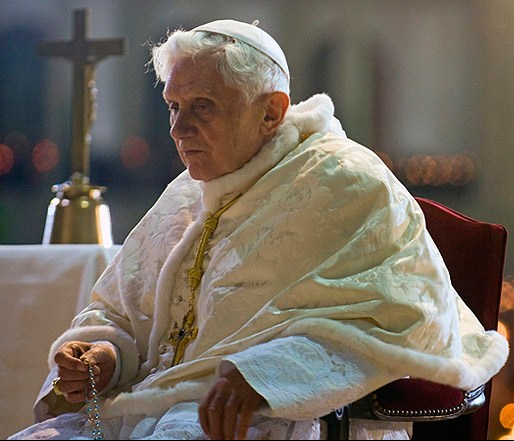
From vaticannews.va
Pope emeritus Benedict XVI had long been speaking against these by describing it as “dictatorship of relativism”.
Acceptance of this term or concept that was actually coined at the aftermath of the 2007 financial crisis indicates that we are miserably not learning the lessons of this global crisis.
Our sights remain myopic, even blinded in looking at this pandemic without realizing at all how this was spawned by our own excesses and sins. Long before we have been told to maintain physical or social distancing to stop spread of the new corona virus, we have long been distant from one another. We have been spending more time with our computers and smartphones, trying to connect with friends and everyone in various social media platforms unmindful of the persons seated near us. “Table for one” in restaurants is fast becoming the order of the day than the exception to the rule.
My point is, accepting everything now as the new normal is also accepting wholesale the new ordering of things going on that continues to neglect the weakest and poorest among us. We are only perpetuating an error and worst an evil among us that we have refused to examine closely in the past.
This “new normal” is a conditioning concept that pushes the marginalized and disadvantaged people deeper into misery as the daily news tells us. Unconsciously to many of us, “new normal” is an excuse even a justification for the continued poverty and slavery of the weak and disadvantaged.
What a shame that while so many countries are suffering from COVID-19 like ours, Beijing is flexing its muscles around the world economically and militarily – right in our seas!- as if they are not bothered at all by this virus that came from their own province of Wuhan.
A very interesting read I have found last month was written by Nigerian Chime Asonye who rightly claims that “the new normal” “should not be the lens through which we examine our changed world”.
The ‘new normal’ discourse sanitizes the idea that our present is okay because normal is regular. Yes, there may be public health challenges, but these are issues that can be managed. We accept life under the omnipresent threat of disease as ordinary. But what exactly is normal about this pandemic? It is not normal for society en masse to be isolated, but if this is normal, then we are supposed to have control of the situation. Even if we feel loss or despair, we are expected to get used to it — accepting that this morbid reality is now standard.
COVID-19 can serve both as a catharsis to our past excesses and a watershed for a brighter future.
The old system, or what people refer to as “normal” before in the world had erroneously set is not working, plainly wrong and abusive; why continue or import it into this coming new period?
As the pandemic rages on it gives us a chance to reimagine the world by tracing history, not forgetting it.
We should revel in the discomfort of the current moment to generate a ‘new paradigm’, not a ‘new normal’. Feeling unsettled, destabilized and alone can help us empathize with individuals who have faced systematic exclusions long-ignored by society even before the rise of COVID-19 — thus stimulating urgent action to improve their condition. For these communities, things have never been ‘normal’.
COVIDS-19 is definitely not a punishment from God but a result of man playing God.
And like in the past, whether in world history or in our own lives when things go wrong even worst, God ensures to make ways that anything bad happening to us would always lead to something good.
Photo by author, Christmas 2019 in our Parish.
See how providential in the sense that microscopic viruses are reminding us that true power is not in being big but in being small, not in being strong but being weak — the very example of God to us when he became human like us more than 2000 years ago.
Unfortunately, his lessons remain unheeded up to our time even among us in the Church.
It is a most welcomed change in the midst of this pandemic that the Vatican last week issued new guidelines through the Congregation for the Clergy (directed to us priests) for the world’s parishes that can help us respond adequately to the challenges of this crisis (http://press.vatican.va/content/salastampa/en/bollettino/pubblico/2020/07/20/200720a.html).
But, that will require another blog.
For the meantime, please stop using that abnormal term “new normal”.
The Lord Is My Chef Breakfast Recipe for the Soul by Fr. Nicanor F. Lalog II
Tuesday, Week XVII, Year II in Ordinary Time, 28 July 2020
Jeremiah 14:17-22 >>><)))*> >><)))*> ><)))*> Matthew 13:36-43
God our merciful Father, today we pray for our countrymen blinded by the many evils happening in our land today. For those who continue to defend the cycle of murders and killings to weed us out of criminals and addicts, for those who defend the blasphemies uttered against you and jokes against everyone, for those who continue to deny something is terribly wrong among our leaders.
We pray for them all, Lord. Open their eyes and their ears to the many sufferings around us: the cries of mothers losing a child, the pains of fathers losing their jobs, the frustrations of young people in finding a job, and the alienation of a nation lost in a circus where clowns are running the government.
Like your Prophet Jeremiah whom you have asked to tell your people in Judah and Israel how their sins have caused all their miseries and sufferings, enlighten us more to wake up our nation to the truth we have turned away from you.
Let my eyes stream with tears day and night, without rest, over the great destruction which overwhelms the virgin daughter of my people, over her incurable wound. If I walk into the field, look! Those slain by the sword; if I enter the city, look! Those consumed by hunger. Why have you struck us a blow that cannot be healed? We wait for peace, to no avail; for a time of healing, but terror comes instead. We recognize, O Lord, our wickedness, the guilt of our fathers; that we have sinned against you. Is it not you alone, O Lord, our God, to whom we look?
Jeremiah 14:17-18, 19-20, 22
Show us the way, the path back to you, O Lord.
We have become the weeds among the wheat, trying to ruin everything.
We have become callous and numb with our sins, too, that others cannot believe our calls for conversion and renewal.
Renew us, O Lord, so we may listen more to your words that will guide us to recovery and conversion. Amen.
Photo by author, Sonnen Berg Mountain View, Davao City, August 2018.
The Lord Is My Chef Breakfast Recipe for the Soul by Fr. Nicanor F. Lalog II
Wednesday, Feast of St. Mary Magdalene, 22 July 2020
2 Corinthians 5:14-17 >><}}}*> >><}}}*> >><}}}*> John 20:1-2, 11-18
Painting by Giotto of the Risen Lord Jesus Christ appearing to St. Mary Magdalene from commons.wikimedia.org.
Dearest Lord Jesus Christ:
Today as I prayed on the feast of your beloved Saint Mary Magdalene, my sights were focused on your beautiful exchange of names on that Easter morning at your tomb.
It is so lovely and so deep, and very personal for all of us whom you love so much despite our many sins like St. Mary Magdalene.
When she had said this, she turned around and saw Jesus there, but did not know it was Jesus. Jesus said to her, “Woman, why are you weeping? Whom are you looking for?” She thought it was the gardener and said to him, “Sir, if you carried him away, tell me where you laid him, and I will take him.” Jesus said to her, “Mary!” She turned and said to him in Hebrew, “Rabbouni,” which means Teacher.
John 20:14-16
You called her by her name, “Mary” and she called you by your title “Rabbouni” – what a beautiful scene of two people loving each other so deeply, so truly! You – humbly and lovingly accepting the sinner, and she – submitting herself to you as disciple.
You have expelled seven demons from her, you have known her so well even her darkest secrets and sins, and despite all these knowledge, Lord Jesus, the more you have loved her that you called her by the sweetest word she could ever hear in her life, “Mary”.
The same with us, sweet Jesus: every day you call us by our names, each one of us as a person, an individual, a somebody not just a someone. You love us so much in spite and despite of everything. We are not just a number or a statistic to you but a person with whom you relate personally.
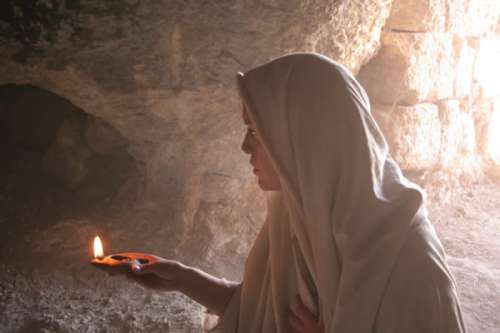
From Google.
Help us to realize this specially when darkness surrounds us, when self-doubts and mistrust abound in us without realizing your deep trust in us, in our ability to rise again in you and follow you.
Teach me to trust you more and love you more like St. Mary Magdalene, to give and offer my self to you totally as yours, calling you “Rabbouni” or Teacher and Master.
Let me give up whatever I still keep to myself, whatever I refuse to surrender so that I may enjoy the intimacy you offer me as a friend, a beloved, and a family in the Father.
What a joy indeed to be like St. Mary Magdalene, fully known and fully loved by you, dear Jesus.
May I learn to know and love others too like you so I may proclaim you to them. Amen.












 lordmychef.com