Almighty God and Father, on this Memorial of the Queenship of Mary our Blessed Mother, we join her in that most beautiful song of praise to you, “My soul proclaims the greatness of the Lord, my spirit rejoices in God my savior” (Lk.1:47).
Remind us always, O Lord, specially in this time when we exaggerate everything that unlike the royalties of the world, Mary is our Queen not because of power and wealth nor of fame and popularity but precisely due to her humility and weakness before you.
In this time when we are so fond of “triumphalism”, when we overdo even our devotions and prayers to praise and glorify you, remind us O Lord it is not your way as shown to us by the Blessed Mother Mary.
Let us keep in our minds and hearts that Mary, along with all the saints, are venerated because of their obedience to you, fulfilling your will at all times, making you present among us in our weaknesses and helplessness.
We pray for more simplicity and humility, above all, sincerity in our devotions to Mary and the saints that lead to more authentic faith in you alone who is our God Most Holy.
Like Mary our Queen, may we always say “yes” to you O God our “King of kings”. Amen.
The Lord Is My Chef Breakfast Recipe for the Soul by Fr. Nicanor F. Lalog II
Tuesday, Week XX, Year II in Ordinary Time, 18 August 2020
Ezekiel 28:1-10 <*(((><< || + || >><)))*> Matthew 19:23-30
Photo by author, Petra in Jordan, May 2019.
Then Peter said to Jesus in reply, “We have given up everything and followed you. What will there be for us?” Jesus said to them, “Amen, I say to you that you who have followed me… And everyone who has given up houses or brothers or sisters or father or mother or children or lands for the sake of my name will receive a hundred times more, and will inherit eternal life.”
Matthew 19:27-28, 29
“We have given up everything and followed you, Lord. What will there be for us?”
Oh! how often we tell this to you, Lord Jesus, as if we have given so much for the sake of your kingdom.
Sometimes, it is not really a question we ask but a reminder to you of our “goodness” and “benevolence” with others, of how good we have been when in fact whatever we give and share are all from you.
Forgive us, O Lord, when most specially in the midst of pains and sufferings, we ask you “What will there be for us?” in order to remind you of our rewards, or entitlement as if you forget them or that there is such a thing at all with you.
Photo by author, 2019.
We are sorry Lord in counting the costs and most of all, in demanding so many in return.
“What will there be for us?” is often the question we ask when we doubt your generosity and fidelity to your promises to us.
Like Ezekiel in the first reading, remind us O Lord to keep in mind not to be “haughty of heart”, that “we are not god despite our many achievements brought about by our intelligence or beauty” (Ezekiel 28:1-7).
Dearest Jesus, you have given us with so much and we have given so little; teach us to give more of ourselves, more of our time, more of our treasures, and most of all, more of you to others. Amen.
The Lord Is My Chef Sunday Recipe for the Soul by Fr. Nicanor F. Lalog II
Week XX, Cycle A in Ordinary Time, 16 August 2020
Isaiah 56:1, 6-7 >><}}}*> Romans 11:13-15, 29-32 >><}}}*> Matthew 15:21-28
Twilight at our parish by Ms. Ria De Vera, 12 August 2020.
For the third Sunday in a row, Jesus reveals a very wonderful side of him who goes out of his way to meet us and comfort us in the most difficult situations and places we are into. It is something we need so much in these days of Moderate Enhanced Community Quarantine (MECQ) seen right away in the opening of today’s gospel.
At that time, Jesus withdrew to the region of Tyre and Sidon. And behold, a Canaanite woman of that district came and called out, “Have pity on me, Lord, Son of David! My daughter is tormented by a demon.” But Jesus did not say a word in answer to her.
Matthew 15:21-23
Jesus goes out of his way to meet everyone
Israel is a very small country but always leaves a big impact on everyone who goes on a pilgrimage there. There is that sense of awe in every sacred site that until now continues to “speak” and evoke among pilgrims the presence and holiness of God and his saints.
Like what we have mentioned last Sunday, the proxemics or the non verbal communication of the places Jesus have visited convey to us deeper meanings than just mere sites. And that is more true during the time of Christ like the setting of this Sunday’s gospel, the region of Tyre and Sidon.
Now part of Lebanon found south of its capital city Beirut that was devastated by powerful explosions two weeks ago, Tyre and Sidon were gentile or pagan cities during the time of Jesus with a considerable Jewish population.
His going there shows us his fidelity to his mission of “searching for the lost sheep of the house of Israel” that partly explains to us why he never bothered to give the slightest hint of recognition to the Canaanite woman who had sought his help for her daughter “tormented by a demon”.
Photo by author, the Holy Land, May 2019.
And despite the lack of any explanation again by St. Matthew on the attitude by Jesus “snubbing” the pagan woman, we can safely assume that Christ surely knew that by going to Tyre and Sidon, gentiles would seek his healing as news of his fame had spread beyond Galilee at that time.
Here we find the great love and concern of Jesus for everyone, specially the rejected and marginalized in the society.
His “withdrawing to the region of Tyre and Sidon” was in itself a revelation of his universal love, a love without borders reaching out to those lost and feeling alone in life, those rejected, those discriminated for their color and beliefs, status and gender, sickness and diseases like AIDS and lately, COVID-19!
Inclusive Jesus, exclusive human
At the beginning of chapter 11 of St. Paul’s Letter to the Romans from which our second reading is taken today, the great Apostle starts by asking “has God rejected his people?” St. Paul emphatically said “no”, explaining at length the plan of God in Jesus Christ to save all peoples not just the Jews, beautifully telling us,
For the gifts and the call of God are (permanent and) irrevocable.
Romans 11:29
St. Paul’s reflections on God being “inclusive” as against our being so “exclusive” in sending us Jesus Christ to bring us all together as one sheds us some light on that extraordinary incident in the region of Tyre and Sidon involving the Canaanite woman.
Again, I invite you my dear reader to reflect on the many layers of meaning found in this episode so special like the feeding of more than five thousand people the other Sunday and Jesus walking on water last week.
First, notice the silence of Jesus. Keep in mind when the Lord is silent, it does not mean he is out or does not care at all to our needs and pleas. When there is silence – specially a deafening one – the problem is never with God but with us people.
And, true enough! See how the disciples asked Jesus to “Send her away, for she keeps calling out after us” (Mt.15:23) — exactly the way we deal sometimes with those begging our help and attention, seeing them as a nuisance to be sent away? What a shame!
From Google.
Now, we go to the climax of this episode with the woman coming to Jesus, “paying him homage” for the healing of her daughter tormented by a demon. It was a scene similar with St. John’s wedding at Cana where the Blessed Mother also approached Jesus with a request when wine ran out during the feast.
In both episodes we find Jesus being a snub – suplado, as we say.
Most of all, in both scenes we find the remarkable faith in Jesus by his Mother at Cana believing he can do something to spare the newly wed couple of embarrassment from running out of wine while this Canaanite woman felt so sure only Jesus can cure her daughter.
See how she addressed Jesus like his disciples with not just “Lord” but also with the title “Son of David” to indicate her faith in him as the Messiah.
And it did not stop there as she engaged Jesus into a dialogue — indicating intimacy and trust, depth and communion that we refer in Filipino as “matalik na ugnayan” or “matalik na usapan”.
Sometimes in life, Jesus seems to have that longing for some “lambing” from us that he tries to be “pakipot” or hard to get in order to be intimate with us. Please take these Filipino traits positively to get what I mean from this unique scene of Jesus and the Canaanite woman in Tyre and Sidon.
Jesus said in reply, “It is not right to take the food of the children and throw it to the dogs.” She said, “Please, Lord, for even the dogs eat the scraps that fall from the table of their masters.” Then Jesus said to her in reply, “O woman, great is your faith! Let it be done for you as you wish.” And the woman’s daughter was healed from that hour.
Matthew 15:26-28
Photo by author, Church of All Nations beside the Garden of Gethsemane in the Holy Land, May 2019.
Brothers and sisters all in one God as Father
St. Matthew recorded this episode not to scandalize and shock us with those words coming from the Lord, referring to the Canaanite woman as one of the “dogs” that was the term used to designate pagans at that time.
For St. Matthew who was writing for Christians of Jewish origins, the episode was a reminder that the people of Israel were indeed the “children” of God to whom the coming Messiah and salvation – like bread or food – were first promised. St. Paul spent a great deal of explaining of this in his letter specially to the Romans .
Rigthly then, theirs was the “food” not right to be thrown to the “dogs” but, that fact does not exclude the “dogs” from partaking later from the leftover food of the children, as if telling Jesus, today we satisfy ourselves with crumbs, tomorrow we shall have bread!
The Canaanite woman clearly knew where to place herself before the Lord, proving to him her deep faith and amazing knowledge of God’s goodness and plans for everyone. For that, she was highly praised by Jesus for her faith. The only other person also praised by Jesus in having a tremendous faith in him was the centurion – another pagan – who begged the Lord for the remote healing of his servant.
Last Sunday afternoon I read the story of how a nurse was driven out of her boarding house after she tested positive for COVID-19 virus. The poor lady had nowhere to go to spend the night after being denied of any assistance by barangay officials, even by her own family in Batangas! Good enough, somebody reported her to the Philippine National Red Cross that sent an ambulance to take care of the nurse who was found crying by herself at the gutter of a street in Pasay City.
What a very sad and tragic reality happening among us these days of the pandemic.
Where is our love and concern for everyone, especially the weak and the sick, those in our own versions of Tyre and Sidon where no one would dare to go except Jesus, perhaps like the dorms and residences of our medical frontliners who are so tired and sick physically, emotionally, and spiritually during this pandemic?
In these past three weeks we have reflected how Jesus lovingly joined us, staying with us in the wilderness, in the storms of the dark sea, even at the pagan territories where nobody would ever want to go.
This Sunday, Jesus is inviting us to break all barriers and borders between us that separate us from each other. Let us animate our community with Christ’s love and mercy for us all amid our many differences so that slowly we fulfill Isaiah’s prophecy in the first reading that someday the house of the Lord shall be called “a house of prayer for all peoples” (Is.56:7). Amen.
A blessed and safe new week to you! And please do not forget to pray ten Hail Mary’s every 12-noon for national healing and end of the pandemic until September 15, 2020.
Photo by author, the Assumption Sabbath Place in Baguio City, 2018.
God our merciful Father, on this Solemnity of the Assumption of the Blessed Virgin Mary, we start the praying of ten Hail Mary’s daily at noon until the 15th of next month for collective “healing” and the end of COVID-19 pandemic.
Through the Blessed Mother of your Son our Lord Jesus Christ, we pray for firm faith, vibrant hope, and unceasing love for you and for others as we go into the sixth month of our quarantine to help stop the spread of the corona virus.
But it seems, until now, O God, many of us still do not get the full meaning of this quarantine period with most of us pinning our hopes for a magic cure that would come to end these sufferings and resume our previous way of life.
Help us see, O God, the process of quarantine, of purification you want us to go through not as a punishment but as a lesson to learn and remember that will prevent us from all the excesses that have burdened us down lately, preventing us to rise like the Virgin Mary.
On this great feast of Mary’s Assumption into heaven, teach us how we may all rise up to your presence, win over COVID-19 not just with a vaccine or physical remedy and cure to the disease but on how we must change our ways of life, our attitudes and dispositions.
How wonderful, O God, to hear the story anew of Mary and Elizabeth who trusted you so much in the coming of our Savior as they both emerged from their own kind of “quarantine” period in this gospel scene of the Visitation.
May we realize like Elizabeth during this quarantine period that true blessedness is in believing “what was spoken by the Lord would be fulfilled” (Lk.1:45), that we entrust all our hopes in you, O God, not to mere humans who make a lot of promises only to be broken. May we open ourselves like Elizabeth who went into seclusion upon conceiving St. John the Baptist that you always come in the simplest yet wondrous ways of life. Keep within us that sense of wonder and awe, Lord.
“The Assumption of the Virgin” by Italian Renaissance painter Titian completed in 1518 for the main altar of Frari church in Venice. Photo from wikidata.org.
Teach us like Mary to always proclaim your greatness as we rejoice in Jesus our Savior in our very lives of humility and simplicity, obedience and surrender to your will. May our lives be a song of praise to your wondrous deeds, O Lord, like Mary that is centered and focused on you.
Cleanse us of our sins, especially of greed and conceit that have led to this pandemic.
How sad that until now, we still don’t get it.
May this crisis remind us that we are all in a temporary journey here on earth – like in a quarantine – that our final resting place and destination in the end of everything is in you, O God, like Mary whom you gifted with the Assumption of her body and soul into heaven ahead of us all.
Lawiswis ng Salita ni P. Nicanor F. Lalog II, Ika-11 ng Agosto 2020
Larawan kuha ni Bb. Anne Ramos, Abril 2020
Habang tumatagal itong quarantine
lalong ipinakikita hindi COVID-19
ang kalaban natin kungdi ating sarili din;
matagal nang sakit na hindi kayang gamutin
nakaugat nang malalim sa katauhan natin
kawalan ng disiplina kay hirap sugpuin.
Sa gitna ng kawalan ng maaasahan
sa pamahalaang abala sa kapalaluan
ayaw pakinggan mga paraan ng nakakaalam
disiplina nating mga mamamayan
ang pinaka-mabisang sanggalang
laban sa virus na galing sa Wuhan.
Tingnan, pag-aralan, at tularan
pamamaraan ng mga bansa kung saan
paglaganap ng COVID-19 ay nalabanan
laging matatagpuan dalawang bagay magkasabay:
mahusay at magaling na pamahalaan
disiplinadong mga mamamayan.
Masunurin ang turing sa taong may disiplina
na nagmula sa wikang Griyego na discipulos,
taga-sunod o alagad; sa wikang Latin,
dalawang kataga ang pinagsama
"ob audire" na ibig sabihin "makinig na maigi"
kaya sa Inggles "obedient" ang isang masunurin.

Ang taong may disiplina
 masunurin sa tuwina
laging nakikinig sa mga sasabihin
upang kanyang tuparin
mga ipinagbibilin
 ano mang atas na kanyang gawain.
Kung ating lilimihin lalim
ng kahulugan ng disiplina
ito rin ang siyang dahilan
upang ating matutuhan
kahalagahan ng pagtitiyaga
at paghihintay na atin nang tinalikuran.
Pagkaraan ng mahigit limang buwan
lahat na lamang sa atin ay dinaraan
sa paspasan, pag-aagawan, at pagdarayaan
kaya hanggang ngayon wala tayong patunguhan;
kung bawat mamamayan mayroong disiplina
baka sakali tinablan ng kahihiyan mga kinauukulan
wala na silang dahilan sa kanilang kapabayaan
dahil sila unang nagkulang sa disiplinang kinakailangan
hindi nila tayo maaring sisihin
nagkulang sa pagsugpo sa COVID-19.
The Lord Is My Chef Sunday Recipe for the Soul by Fr. Nicanor F. Lalog II
Week XIX, Cycle A in Ordinary Time, 09 August 2020
1 Kings 19:9, 11-13 >><}}}*> Romans 9:1-5 >><}}}*> Matthew 14:22-33
Photo by Mr. Raffy Tima of GMA-7 News, Batanes, 2018.
I have always loved the sea and lately my thoughts have always been about the beach as I miss it so much after COVID-19 had robbed us of our summer vacation.
In ancient time, the sea evoked fear because it was largely unknown that even in the bible, it is the symbol of evil and its powers over man. That is why our gospel today is very significant when Jesus walked on water to show God’s greater power over evil and sin.
And like our gospel last week, our story today tells us a lot more about Jesus walking on water in the midst of a storm to reveal himself and most of all, his desire to meet us his disciples.
Place and location as non-verbal communication of one’s presence
Every meeting and encounter presupposes locations or places, a locus; but, everything is “levelled up” or elevated in Jesus in whom things do not remain in the physical level.
Proxemics is the non-verbal communication that refers to places and location, its nearness and orientation. How we arrange our furnitures, designate the rooms and sections in our homes, offices, schools and every building we stay and gather communicate and reveal who we are.
For example, Catholic homes are easily identified in having a grotto at the garden, an altar of the Sacred Heart or any saint at the sala, and the Last Supper painting in the dining hall.
But for Jesus, a place or a location is more than the physical site because in him, proxemics takes on a deeper dimension and higher meaning when we meet him in situations and places. That is why after feeding the more than five thousand people last week, he ordered the Twelve to cross the Sea of Galilee (which is actually a lake) ahead of him while he dismissed the crowds.
After doing so, he went up on the mountain by himself to pray. When it was evening he was there alone. Meanwhile the boat, already a few miles offshore, was being tossed about by the waves, for the wind was against it. during the fourth watch of the night, he came toward them, walking on the sea. When the disciples saw him walking on the sea they were terrified. “It is a ghost,” they said, and they cried out in fear. At once Jesus spoke to them, “Take courage, it is I; do not be afraid.”
Matthew 14:23-27
Photo by author, Sea of Galilee at Capernaum where Jesus used to preach, May 2019.
Crossing to Jesus, crossing with Jesus
I love that scene very much, of Jesus getting his disciples into the boat to precede him to the other side of the lake while he dismissed the crowds. Again, St. Matthew never bothered to tell us why Jesus sent the Twelve ahead of him as he stayed behind, dismissing the crowds and later praying alone at night atop the mountain.
Let us now reflect the proxemics or non-verbal communication of our gospel scene this Sunday.
We need to cross to the other side to meet Jesus.
To meet Jesus Christ, we always have to “cross to the other side” by leaving our “comfort zones”.
More than going to the other side of the lake physically, we have to move over to unchartered areas of life, be bold and daring to try new things, new situations in order to mature and find fulfillment by meeting Jesus Christ.
And sometimes, we really have to literally cross the sea or get to the other side of the country or the world to find our self and meet Christ.
Fifteen years ago I went on vacation to Toronto for some soul-searching as I went through a burn-out. While serving at St. Clement Parish, I met many Filipinos serving as lectors, choir members, catechists and volunteers.
Graph shared by sugarindustryfoundationinc.org.ph.
They would always confess to me with both a sense of pride and little shame that they never went to Mass regularly when in the Philippines and now in Canada, they were amazed at how God had brought them there to be involved in parish activities and be closer to Jesus than ever!
As I listened to their stories, I realized the many sacrifices and hardships they have to endure in that vast and cold country with no one to turn to except God. If given the chance, many of them admitted they would return to the Philippines for there is no place like home!
Though I have found so many things I have been searching for in my initial three months of stay there on top of other opportunities given me, I still felt empty. That raging storm within continued. As I prayed and reflected guided by an old, Polish priest who claimed to have been the student of St. John Paul II, I saw myself more, eventually leading me to God anew who refreshed my vocation that I finally decided to go back home after six months of my supposed to be one year leave.
Sometimes in life, we need to get away from our comfort zone, cross to the other side, especially when life becomes so artificial. Jesus invites us to go ahead and cross to the other side of the lake or sea to experience life at its “raw” so we can feel again our souls within and desire him anew until we finally meet him wherever we may be in the world.
It is when we are at the other side of the sea in the midst of a storm when Jesus comes, immediately answering our cries for help – At once Jesus spoke to them, “Take courage; it is I” – because when we are reduced to emptiness and nothingness, then our faith kickstarts again. Faith, like love, is always an encounter with God.
Try going to the other side, leave your comfort zone to meet Jesus and finally have meaning and direction in life!
Silence is the presence of God.
In the first reading we have heard that beautiful story of Elijah meeting God at the mouth of a cave — not in the strong and heavy wind nor earthquake nor fire like Moses before him.
After the fire, there was a tiny whispering sound. When he heard this, Elijah hid his face in his cloak and went and stood at the entrance of the cave.
1 Kings 19:12-13
Silence is the place of the presence of God because silence is his language too. Wherever there is silence, we can surely find and meet God there.
That is why Jesus wants us to cross to the other side, to be silent and listen to him.
Photo by author, crossing the Lake of Galilee, May 2019.
In his silence, God teaches us that except for sin, he never considers everything as being finished; everything is a “work-in-progress” even if he seems to be silent that some think he must be absent or even dead.
The world thrives in noise, loud talks, and screams with each voice trying to dominate another resulting in cacophony of sounds. Shakespeare’s Hamlet said it well when he told Polonius what he was reading were “Words, words, words” — nonsense!
Some people like those in power think that the more words they say, the more meaningful their thoughts and ideas become. Worst, they thought that using foul and filthy language make them so natural and credible, not realizing the more they look stupid with their crazy thoughts and ideas not even clowns and comedians would ever attempt to imitate.
But when our words come from deep silence, they come with power and meaning, touching everyone’s heart and inner core.
That is when silence becomes fullness, not emptiness or mere lack of noise and sound.
Like when our medical frontliners and medical experts spoke with one voice last week airing their thoughts about the pandemic — we were all moved and reawakened to realize how we have been going about with our lives almost forgetting them these past five months!
What a tragedy at how our officials in government and Congress reacted negatively, feeling hurt deep inside with the painful truth of how they have been irresponsible from the beginning. Sapul!
Pico Iyer wrote in a TIME magazine essay 30 years ago that “silence is the domain of trust”.
True. The most trustful people are the most silent; those who speak a lot trust no one and most likely, cannot be trusted too.
Jesus invites us to cross to the other side to be silent and learn to trust him. It is only then when we can meet him. In silence.
Photo by Mr. Raffy Tima of GMA-7 News, Manila Bay with Mt. Samat’s Cross at the background, April 2020.
Jesus meets us in darkness.
Jesus asks us to cross to the other side of the lake or sea like his disciples in order to meet us in darkness. This is a paradox because Jesus is the light of the world.
But, note the most notable moments in his life happened in darkness: he was born on the darkest night of the year, he died when darkness covered the whole city of Jerusalem, and he rose from the dead when it was still dark on the first day of the week.
Jesus had overcome darkness! So, what happened to Peter in this episode after being called by Jesus to walk on water too?
Jesus said, “Come.” Peter got out of the boat and began to walk on the water toward Jesus. But when he saw how strong the wind was he became frightened; and, beginning to sink, he cried out, “Lord, save me!”
Matthew 14:29-30
Imagine how everything was going so well with Peter doing another crossing while crossing the lake! But when he saw how strong the wind was he became frightened; and, beginning to sink, he cried out, “Lord, save me!”
Jesus calls us into the dark so that we only look for him and upon finding him, focus on him alone. Peter saw the strong wind, not the stronger and powerful Jesus walking on water, that fear overtook him.
That’s the whole point of St. Paul in our second reading today: he was telling the Romans how some people in Israel trusted more in their physical descent from Abraham than in God’s promise of salvation fulfilled in Jesus they have refused to see and recognize as the Christ (Rom.9:1-5).
When in the dark, be silent and still for Jesus is near! Keep your sights at him, not on anything else. Problem in darkness is not God but us who follow other lights or have become delusional.
Photo by Mr. Jim Marpa, 2019.
That is the tragedy we are into as a nation while crossing to the other side of the sea of pandemic in just one boat when our officials see only themselves as always being right. Worst, they all want to be on the stage with all the lights on them as they speak and sing in cacophony like psychopaths.
All the more we must hold on tight, trust and focus in Jesus who is “now here”, not “nowhere” for he will never allow us to perish.
Let us trust Jesus overcoming all these evil, leading us to the shore. Amen.
A blessed rainy Sunday to you and your loved ones!
As we close this very dismal week of soaring number of COVID-19 patients and plunging economy now officially in recession, we pray to you God our Father for the grace of discipline, of being your follower in the truest sense of the word.
Give us discipline… and discipline us, O God, to set our lives and our country back in order.
We have no one to turn to at this stage: our leaders are blaming us, blaming everyone except themselves for all the mess our country is into.
Like your prophet Habakkuk in the first reading, we also wonder at your silence over all these people leading us in government who seem to be more like clowns in a circus.
Too poor are your eyes to look upon evil, and the sight of misery you cannot endure. Why, then, do you gaze on the faithless in silence while the wicked man devours one more just than himself? You have made man like the fish of the sea, like creeping things without ruler.
Habakkuk 1:13-14
Thank you, O God, in sending us saints who are models of discipline in prayer and virtues like St. Dominic De Guzman whose Memorial we celebrate today.
St. Dominic by Fra Angelico from Google.com.
Before he could be the “hound of the Lord” (Domini canes) bringing onto the world that torch of light plunged into darkness, St. Dominic first nurtured in himself that unique discipline of waiting for you in prayers.
And after founding the Order of Preachers, he was so well-disciplined in life centered only in Jesus Christ our Lord and Savior:
Dominic possessed such great integrity and was so strongly motivated by divine love, that without a doubt he proved to be a bearer of honor and grace. He was a man of great equanimity, except when moved to compassion and mercy… Wherever he went he showed himself in word and deed to be a man of the Gospel. During the day no one was more community-minded or pleasant toward his brothers and associates. During the night hours no one was more persistent in every kind of vigil and supplication.
From the Office of Readings on the Memorial of St. Dominic
So often, we ask or – complain to you – Lord Jesus like your disciples in the gospel today why we cannot imitate and do your works? And you readily said, it is because of our “little faith” (Mt.17:20).
Very true, Lord, because after gifting us with faith, we have failed to deepen and nurture it in prayer achieved in a life of discipline that makes us patient in waiting for you.
Then the Lord answered me and said: For the vision still has its time, presses on to fulfillment, and will not disappoint; if it delays, wait for it, it will surely come, it will not be late. The rash man has no integrity; but the just man, because of his faith, shall live.
Habakkuk 2:3-4
Please Lord Jesus, help us discipline our selves in this most trying crisis we have ever faced in recent history, that instead of fighting, we may truly follow your ways. Amen.
St. Dominic De Guzman, pray for us! Amen.
Photo by author, Dominican Hills, Baguio City, January 2019.
While praying on your words today, O Lord, thoughts of the beach came through my mind. I do not know why; maybe this is the only year when I would have not gone to a beach that I miss so much.
But, as my former spiritual director during our 30-day retreat, the late Fr. Arthur Shea, SJ, used to assure me, “the most difficult prayer is always the most meritorious”.
Indeed, sweet Jesus!
Like your prophet Nahum in the first reading looking forward to the defeat of Nineveh, I remembered those days in the past when I felt so fearful on many occasions whether I can overcome the many trials and challenges that have come my way.
See, upon the mountains there advances the bearer of good news, announcing peace! Celebrate your feasts, O Judah, fulfill your vows! For nevermore shall you be invaded by the scoundrel; he is completely destroyed. The Lord will restore the vine of Jacob, the pride of Israel, though ravagers have ravaged them and ruined the tendrils.
Nahum 2:1, 3
Like Judah, I have won and prevailed in my many battles in life in your power, Lord, when I entrusted myself to you totally.
When I look back in my life, it is so true that it is in giving that we receive, it is in losing when we have, and it is dying when we truly live. That is the lesson of the waves at the beach that keep on coming to shore, as if trying to take it to the sea.
Photo by Mr. Jim Marpa, 2019.
How I wish I could be like the sea, always moving, always light without anything except water unlike the shore that is so adamant as if it would never budge in.
But in reality, it is the sea that always prevails because water is always willing to give up itself to follow the form of the shore, to take the shape of every container where it is poured while the shore through time, its sand and rocks eventually give into the waves to get lost in the sea.
Jesus said to his disciples, “Whoever wishes to come after me must deny himself, take up his cross, and follow me. For whoever wishes to save his life will lose it, but whoever loses his life for my sake will find it.
Matthew 16:24-25
Dearest Jesus Christ, teach me to give up myself to you completely. Teach me to learn to get lost to you in order to find myself, to find fulfillment in life.
This COVID-19 pandemic reminds us today in this age of abundance and affluence that still — the key to authentic living is in giving up, in having less.
As they always say, “something’s gotta to give”. Amen.
Praise and glory to you, O Lord, and thank you very much for the gift of vocation to the priesthood.
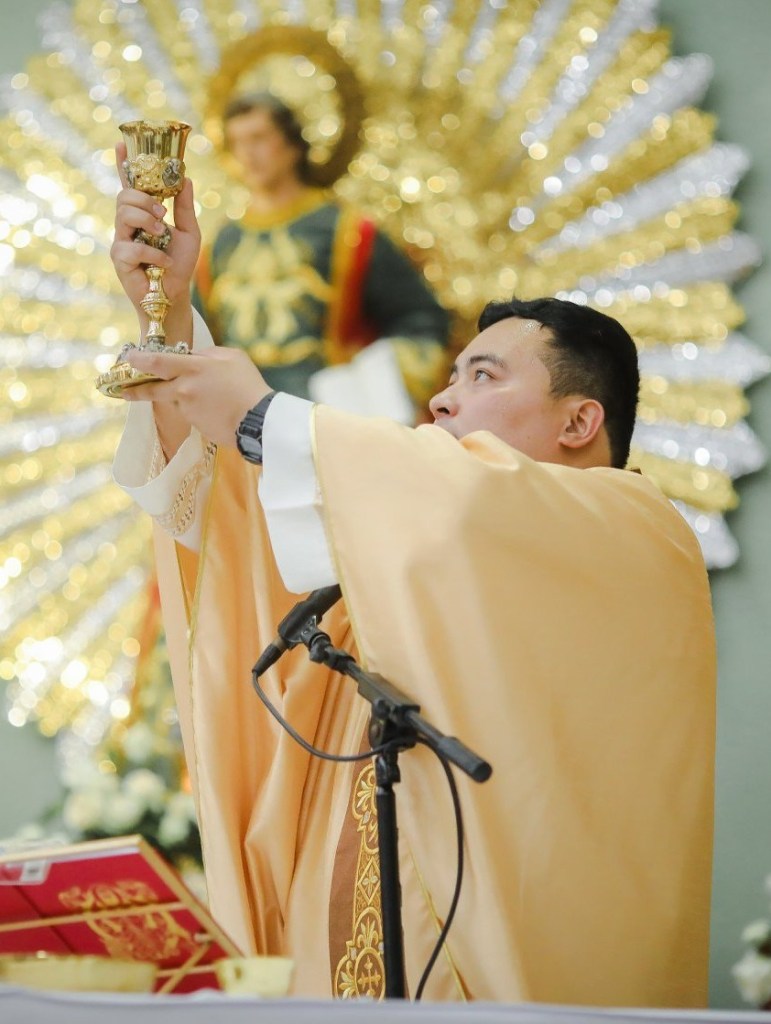
Thank you very much for a wonderful patron Saint for us all whose feast we are celebrating today, St. John Baptiste Marie Vianney, the Curé of Ars in France.
How wonderful that we celebrate his feast this year on the first day of our return to Modified Enhanced Community Quarantine (MECQ) when public Masses are suspended in our province and other places due to the alarming spread of COVID-19 virus.
Yes, it is wonderful. Beautiful.
At first during last summer’s lockdown when we celebrated Mass without people, I felt sad; but today, I feel happy because I am totally yours, Lord Jesus. Somehow, this pandemic is teaching us priests most specially that life is a constant return to quarantine, to be alone with you always, dear Jesus!
Most specially, to remind us priests that the Holy Mass is never a show, never about us but always YOU, Jesus.
Like the prophet Jeremiah in the first reading, every priest like St. John Vianney is a reminder to the people that in life, there are always pains and sufferings. And most of the time, it is because of our sins and wrong choices in life, of turning away from God.
However, these sufferings like our pandemic and St. John’s French Revolution are all temporary.
Like Jeremiah, we priests are most of all reminders of God’s permanent love and mercy to everyone as exemplified by St. John in his life and ministry of hearing confessions for long hours each day!
Thus says the Lord: See! I will restore the tents of Jacob, his dwellings I will pity; city shall be rebuilt upon the hill, and palace restored as it was. From them will resound songs of praise, the laughter of happy men. I will make them not few, but many; they will not be tiny, for I will glorify them.
Jeremiah 30:18-19
As I reviewed anew the life of your humble and holy pastor St. John Vianney, I realized how our present situation is similar with his time: a period of sufferings after the French Revolution when priests were looked down upon, even maligned and hunted.
Yet, St. John persevered in his vocation, reminding us “The priesthood is the love of the heart of Jesus.”
May we your priests be reminders of your love and mercy, courage and faith in the face of adversaries like when you boldly spoke against the Pharisees and scribes, reminding your disciples…
Let them alone; they are blind guides of the blind. If a blind man leads a blind man, both will fall into the pit.
Matthew 15:14
St. John Baptiste Marie Vianney, pray for us your brother priests! Amen.
Photo from Primera Missa Solemne by Fr. RA Valmadrid, December 2019.
Quiet Storm by Fr. Nicanor F. Lalog II, 25 July 2020
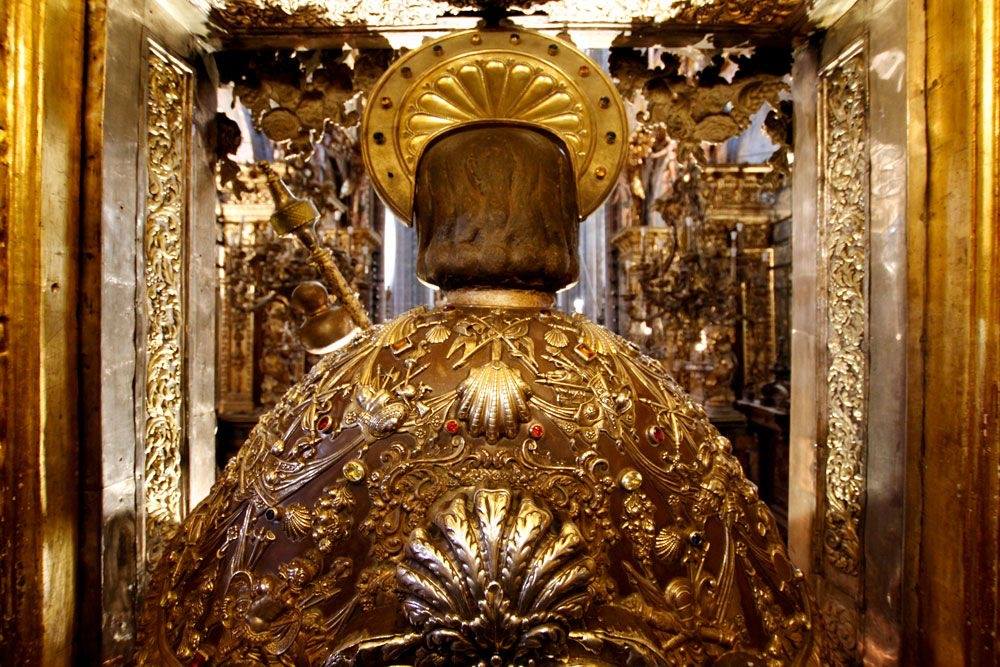
Santiago de Compostela in Spain is one of the world’s oldest and most popular pilgrim sites where the body of the Apostle St. James the Greater whose feast we are celebrating today is believed to be buried in its beautiful cathedral.
I have not been there yet and despite COVID-19’s disruption of air travel expected to last until 2022, my hope remains that someday in God’s time I may finally do the “el camino de Santiago de Compostela” (the way of Saint James of Compostela), too.
But, with or without the el camino de Santiago de Compostela, this great Apostle from the very beginning had always been in a journey in himself into the kingdom of God – Jesus Christ – by showing us the way of transformation into a true disciple of the Lord.
He is called the Greater not because he is holier than the other St. James called “the Lesser”, son of Alpheus, but to simply indicate the different importance they received in the writings of the New Testament. In the gospel of Mark, he comes in second in the list after Peter while in the gospels of Matthew and Luke, he is ranked third after the brothers Peter and Andrew; he again comes in third in the Acts of the Apostles after St. Peter and his brother St. John.
It is from this book where we also learn St. James the Greater as the first bishop of the original Christian community in Jerusalem that during the persecution by King Herod Agrippa in 40 AD, he also became the first Apostle to be martyred (Acts 12:1-2).
His martyr’s death thus fulfilled Christ’s words to him that he would indeed “drink from his chalice” to be with him in his Kingdom, a journey that essentially began within this great apostle after leaving everything behind to follow Jesus.
The journey within self to Jesus Christ
St. James the Greater and his brother St. John the Evangelist and believed to be the same beloved disciple came from a middle class family with both parents still alive and most likely, very supportive of them as attested by some little anecdotes in the gospel accounts.
Money was never an issue for them because their father Zebedee could hire workers to work in their fishing business. He must have sighed with a great relief when James and John immediately left him after being called by Jesus to be his disciples.
Marker along the “el camino de Santiago de Compostela”.
Finally, his sons have found some directions in life following Jesus who was getting known then in Galilee as a powerful and credible Teacher unlike the Pharisees and scribes.
Jesus nicknamed James and John as Boanerges for “Sons of thunder” (Mk.3:17) due to their temperament like when they proposed that they send fire to burn a Samaritan town that have refused them passage during their journey to Jerusalem (Lk.9:54).
They have seen and experienced the tremendous powers of Jesus not only in preaching but most especially in calming the storms, walking on sea, exorcising evil spirits, healing all kinds of sickness, and even raising to life some who have died.
Most of all, St. James the Greater was privileged to witness along with his brother and St. Peter the Transfiguration of Jesus Christ on Mount Tabor, seeing all the glory of Christ conversing with Moses and Elijah. It was after this major event that their most controversial episode would occur when their mother came to ask Jesus that James and John be seated “one at your right and the other at your left, in your Kingdom” (Mt.20:21).
The other ten Apostles “grew indignant” of the brothers James and John for being so ambitious but Jesus summoned them and explained things which all of them would heed except for one:
“You know that the rulers of the Gentiles lord it over them, and the great ones make their authority over them felt. But it shall not be also among you. Rather, whoever wishes to be great among you shall be your servant; whoever wishes to be first among you shall be your slave. Just so, the Son of Man did not come to be served but to serve and to give is life as a ransom for many.”
Matthew 20:25-28
This took place shortly before Palm Sunday when Jesus entered Jerusalem.
A few days later on the evening of Holy Thursday, Jesus again brought St. James the Greater with his brother St. John and St. Peter to accompany him pray at Gethsemane where Judas Iscariot eventually betrayed him to his enemies.
A pilgrim hugging from the back the statue of Santiago de Compostela after completing his el camino.
Here we find St. James the Greater being present to two major stops in Jesus Christ’s journey to the Calvary: first, on Mount Tabor for his Transfiguration and second, at Gethsemane for his agony in the garden. In both events in the life of our Lord, St. James the Greater was a privileged witness, first of his coming glory and then of his passion and death.
It would only be after Easter and the Pentecost when all these major stops in his personal journey with Christ when everything would become clear to him and the other Apostles.
All along their journey from the shores of Galilee to Jerusalem, St. James the Greater remained by the side of Jesus Christ, probably unaware of another journey with the Lord taking place right inside his heart to truly be a part of his Kingdom by sharing in his Passion, Death, and Resurrection.
For his faithful adherence to Jesus from Galilee to Jerusalem, St. James the Greater again had the rare privilege like at Mount Tabor and Gethsemane in being the first to die as a martyr proclaiming the Gospel of Christ which is the meaning of the expression of “drinking from the chalice” of the Lord.
Sometimes in life, we just have to make “sakay” as my generation used to say, “sakay lang ng sakay” or “ride on, man, ride on” without really knowing where our trip would lead us. St. James just made “sakay” without knowing Jesus was already fulfilling his wish of “drinking from his chalice”.
Photo by Fr. Gener Garcia, sculpture of a pilgrim’s feet at Santiago de Compostela museum, 2019.
St. James the Greater was truly great not because of the distances in miles or kilometers he had covered with Jesus from Galilee to Jerusalem and all the way to Compostela in Spain; we honor him today because of that great journey he had undertaken within him, in his heart to remain always at the side of Christ even if had to smoothen his many rough edges as a person, and cleanse his heart as a sinner like us.
That is the most important journey we are all taking in this life, the journey within us.
The longest journey in life is the distance between the heart and the mind.
Former UN Sec.Gen Dag Hammarskjold in “Markings”
My friend Fr. Gener Garcia last year went to Santiago de Compostela to follow the el camino with our kababayan Bishop Bart Santos of Iba, Zambales and Fr. Jaypee Avila assigned as a chaplain for OFW’s in Milan, Italy.
He is so generous to share with us his photos of their pilgrimage as well as his experiences and realizations in life. According to him, on the four sides of the sculpture of the pilgrim’s feet in front of the museum of Santiago de Compostela is the following quotation:
Marker along the el camino de Santiago de Compostela.
Camino recto, camino erguido, camino buscando un sentido. Camino porque tengo un objetivo, y no parare hasta alcanzar mi destino.
(I walk straight, I walk upright, I walk looking for meaning. I walk with a purpose and I won’t stop until I meet my destiny.)
The pilgrim’s journey is the same one you and I are on. Know your goals and understand your challenges. Face them head-on, tackle them with intention, and never give up.
Do you know what your purpose in life is? What would you say if someone ask you what your destiny was?










 lordmychef.com