The Lord Is My Chef Breakfast Recipe for Soul by Fr. Nicanor F. Lalog II
Thursday, Memorial of St. Francis Xavier, Missionary, 03 December 2020
Isaiah 26:1-6     >><}}}*>  >><}}}*>  >><}}}*>     Matthew 7:21, 24-27
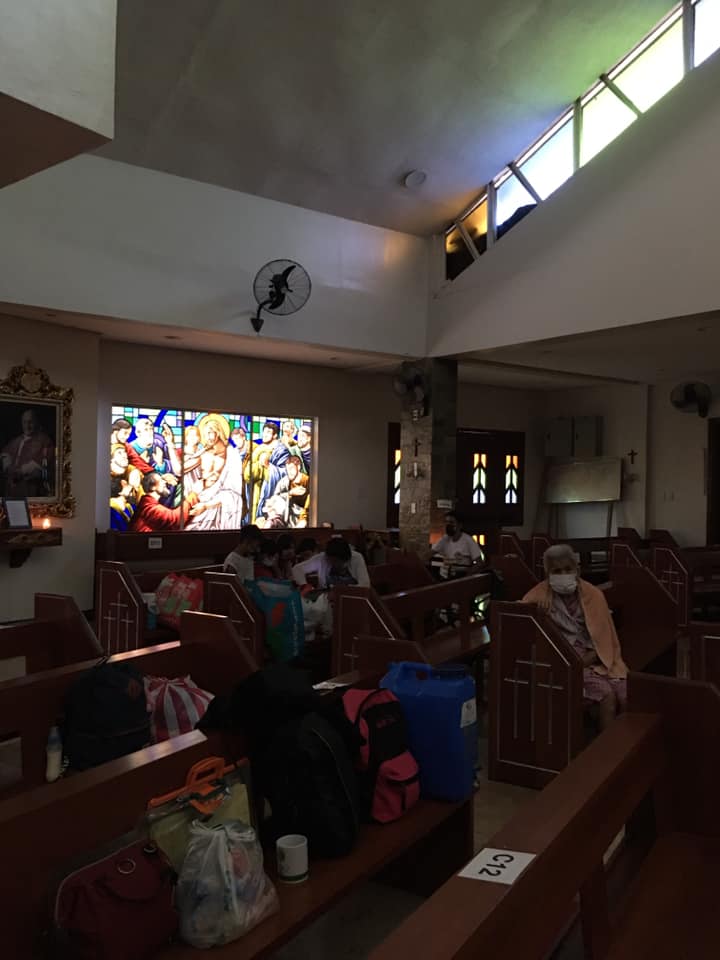
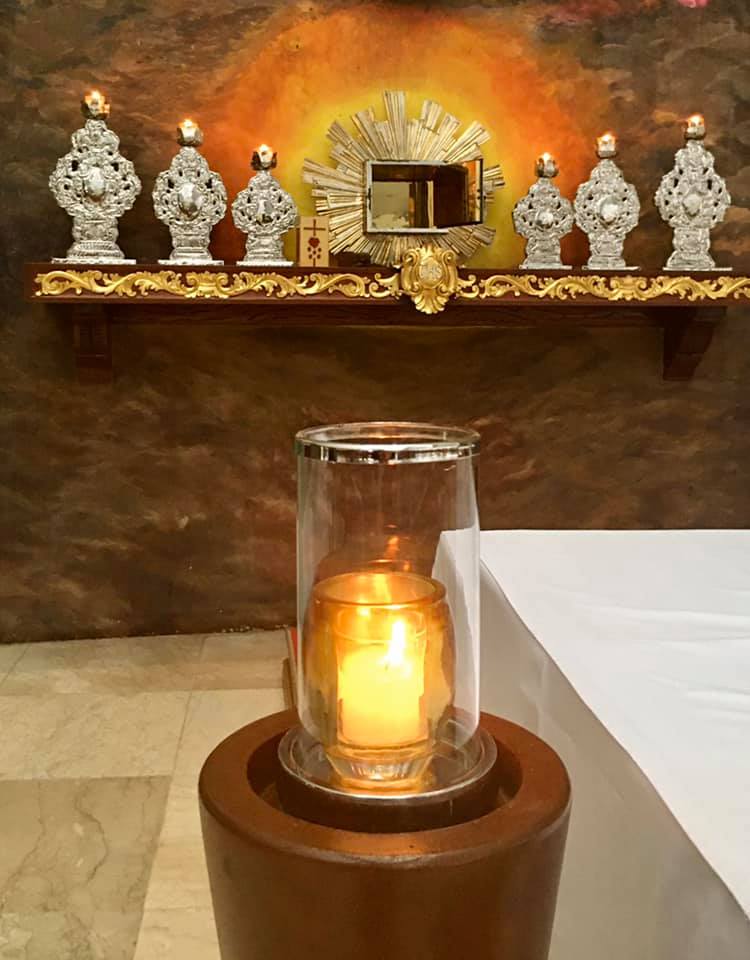
Photo by Mr. Red Santiago of his son while praying in our Parish, November 2019.
Thank you very much, God our loving Father in continuing to keep us, in gathering us together as family, as friends, as a community despite our many sins and failures, most especially in the midst of these trying times.
Like the remnants of Israel thrown into exile in the first reading, you have gathered us in Jesus Christ as our “strong wall and rampart” (Is.26:1), protecting us, blessing us, befriending us.
Let us not make same old mistake again like your chosen people thrown into Babylonian exile who worshipped you only with lips:
Jesus said to his disciples: “Not everyone who says to me, ‘Lord, Lord,’ will enter the kingdom of heaven, but only the one who does the will of my father in heaven.”
Matthew 7:21
In this Season of Advent, let us rediscover you anew, Jesus, our Lord and Savior. Help us renew our friendship in you by cultivating a prayer life that is consistent because friends always communicate, they always listen and speak to each other.
Sorry, Lord, for ignoring your words for so long, listening more to empty words of media than to your words that are performative or life-changing as Pope emeritus Benedict XVI used to say.
Most of all, friends not only talk and listen — they love each other.
Teach me to be truly wise, dear Jesus, to love more in deeds than in words.
Teach me to have my life founded on you, rooted in your love like St. Francis Xavier whose memorial we celebrate today for having accomplished so much against all odds because of his love for you and for people scattered in the Far East, hungry for your words.
Fill my heart with your love so that like St. Francis Xavier, I may be “stirred to meditate on spiritual realities, to listen actively to what God is saying to me… that I may forget my own desires, my own human affairs and give myself over entirely to God’s will and choice that my heart would cry out: Lord I am here! Send me anywhere you like!” (adapted from a letter by St. Francis Xavier to St. Ignatius).
The Lord Is My Chef Breakfast Recipe for the Soul by Fr. Nicanor F. Lalog II
Monday, Feast of St. Andrew the Apostle, 30 November 2020
Romans 10:9-18     >><)))*>  +  >><)))*>  +  >><)))*>     Matthew 4:18-22
Photo by author (May 2019), shore of Galilee at Capernaum where Jesus called the brothers Peter and Andrew to come and follow him.
Praise and glory to you, Lord Jesus Christ, on this second day of Advent you have given us the feast of St. Andrew the Apostle known as the “protoclete” or protokletos, the first to be called to follow you because he was also the first to entertain be “disturbed” by you.
Grant us this grace of being disturbed, of being moved within in a positive manner to seek out the truth like St. Andrew.
The moment he first saw you when John the Baptist identified you as the “Lamb of God who takes away the sins of the world,” he was there, moved in his heart and so disturbed that he asked you, “Rabbi, where are you staying?” And when you invited him and his companion to “come and see,” he believed you are the Messiah (Jn.1:35-41)!
I wonder what did he see in you, in your home, Lord Jesus that convinced him right away you are the Christ? What disturbed him?
Then in the wilderness as you tested Philip and asked him where you could buy food to feed more than 5000 people, Andrew again felt his heart so disturbed with the situation they were into that he was moved to bring to you a boy with five loaves of bread and two pieces of fish but at the same time, sincerely admitted to you how disturbed he was when he asked you, “what good are these for so many?”
You never answered his question, dear Jesus, but Andrew remained with you and the crow until the great miracle happened when everyone was fed and satisfied with so many leftovers (Jn.6:1-15)!
St. Andrew must have been more disturbed than ever with what he had seen and experienced that he came to follow you more closely like his brother Peter!
For one believes with the heart and so is justified, and one confesses with the mouth and so is saved.
Romans 10:10
St. Andrew always believed in his heart, always allowed his heart to be disturbed with your words, with your presence, with your feelings.
And he never kept to himself those stirrings in his heart, always asking you or voicing out what he felt or thought no matter how crazy or even stupid they may be!
It was because of this openness with himself to you with his inquiries that you were made known as the Christ that eventually in his death, he chose to be crucified in the most different manner because he had truly owned your cross!
Give me that same grace, dear Jesus, to be honest in recognizing the inner stirrings in my heart no matter how crazy they may be, always telling these to you as part of carrying my cross. Like St. Andrew, may I have the courage to lovingly, faithfully and sincerely embrace your cross by expressing to you always whatever disturbs me that in the process you are more revealed in me and to others. Amen.
Quiet Storm by Fr. Nicanor F. Lalog II, 22 November 2020
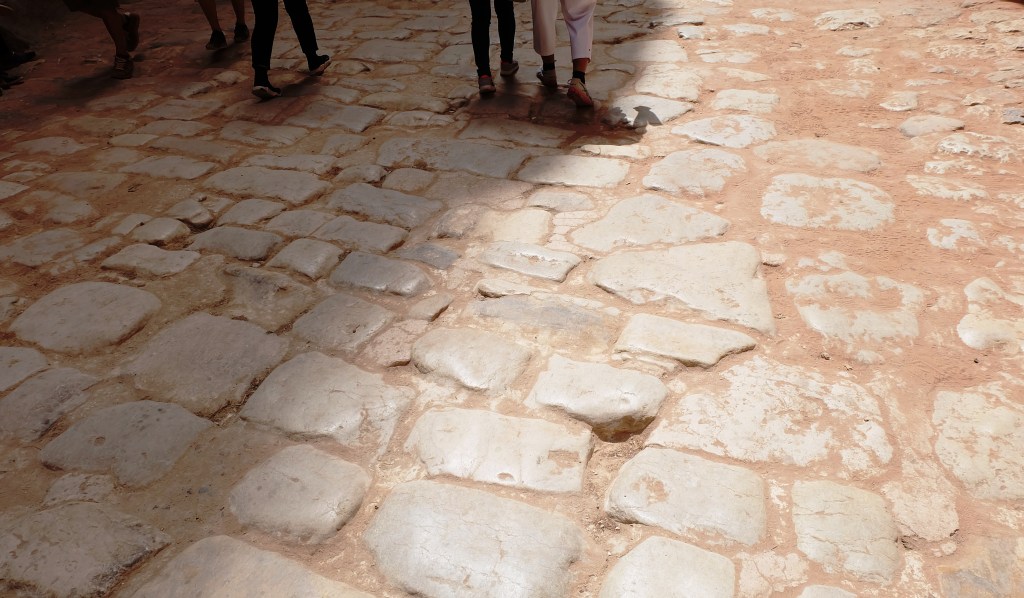
Photo by author, Petra at Jordan, May 2019.
"As Jesus approached Jericho
a blind man was sitting by the roadside begging"
So many times I see myself in him
blinded by sins
and false securities
preferring to remain
at the safe side
at home with my comfort zone;
but soon
I get tired of begging
of being blind
deciding to leave the roadside
to finally meet Jesus,
asking him to restore my sight.
O what a scene to behold
of the beautiful journey
that unfolds
only if I go
to the middle of the road
to be with the Lord!
Photo by author, a sycamore tree in Jericho, May 2019.
"At that time Jesus came to Jericho;
but Zacchaeus was short in stature"
So often in life
Jesus truly intends to pass
through wherever we are
only to test
if we would dare
to rise above our selves
to see and meet him there;
the key is to admit reality
that we are always short
in moral standing
but never in humility
if we can truly
forgo everything
then we see its beauty
when from the middle of the road
the Lord looks up to us
calling us to come down
for he had come to be with us!
Photo by Mr. Roland Atienza, 12 June 2019.
This is the most lovely
thing I have heard
the Lord said:
"Those whom I love,
I reprove and chastise.
Be earnest, therefore, and repent.
Behold, I stand at the door
and knock.  If anyone hears my voice
and opens the door, then I will
enter his house and dine with him,
and he be with me."
The Lord always comes,
bidden and unbidden,
but, are we open to meet him,
willing to leave
the roadside, climb a tree
if needed or turn the knob
to see and meet him?
Yes, Jesus is always passing by,
do not let yourself be left behind.
The Lord Is My Chef Sunday Recipe for the Soul by Fr. Nicanor F. Lalog II
Solemnity of Jesus, King of the Universe, 22 November 2020
Ezekiel 14:11-12, 15-17  >><)))*>  1Corinthians 15:20-26, 28  >><)))*>  Matthew 25:31-46
Photo by author, Chapel of the Graduate School of Theology, ICMAS, Guiguinto, Bulacan, 11 November 2020.
We Filipinos have a saying – sometimes taken as a riddle (bugtong) – that goes, “Utos ng hari, hindi mababali” that literally means the command of the king is unbreakable, always absolute.
Kings exist primarily to unite and help the people especially the weak, the suffering, and the voiceless; hence, kings are portrayed with strong bodies as well as sound minds to render justice. But, as we all know, power corrupts people that once kings like politicians have tasted the sweet elixir of authority and fame, everyone and everything is forgotten except one’s self interests.
And that has always been how kingship is seen based on power and supremacy, always imposing and domineering, insisting in their “power trips” that lead to divisions among peoples even nations that eventually, instead of serving others, they become the ones being served.
Exactly the opposite with the kingship of Jesus Christ that is not based on human power and authority but on the loving service of others, especially the weak and the marginalized. It was a radical move, of moving back to the very roots of kingship by God himself as prophesied by Ezekiel in the first reading. No wonder in Israel, kingship is closely seen in the imagery of shepherding.
Thus says the Lord God: I myself will look after and tend my sheep. As a shepherd tends his flock when he finds himself among his scattered sheep, so I will tend my sheep. I will rescue them… I will pasture them… I will give them rest… The lost I will seek out, the strayed I will bring back, the injured I will bind up, the sick I will heal…
Ezekiel 34: 11-12, 16
This is the essence of our celebration today of the Solemnity of Christ the King: Jesus is in the other and within us, the Emmanuel or “God-is-with-us” that the greatest honor we can give him as our King is to lovingly serve him in one another. See our many images in art of him suffering and dying than regal as a king because Jesus is truly one with us in our most difficult and trying times. That is why he is the only one truly a king!
“Ecce Homo” by Murillo, from wikipediacommons.com.
Christ the King grounds us to God and others again
When Pope Pius XI instituted this feast in 1925, the world was going through a lot of changes in every sphere of human life – for better and for worst – following the many advances in science and technology as well as in thoughts and ideas.
This continues to this day in our own age with its own twists that are more pernicious with everyone trying to reign supreme as kings and queens in life no longer with a scepter that was like a “magic wand” to get everything done but with the cellphones that can either build or destroy anyone with the slightest touch of ones’s fingers!
How sad that as the world had shrunken into a global community interconnected by modern means of communications invented to bring us all together, we have actually grown more apart from each other, polarizing us even further with every color of the rainbow signifying so many groups, agenda, and beliefs.
Worst of all, with these modern means of communications, we have become more focused with gadgets and things than with persons.
What an irony that we can be so close with those miles apart from us yet we hardly notice nor even recognize the persons seated next to us. Long before COVID-19, we have always been socially distant from each other, have always failed to appreciate or even look at the warmth and beauty of the human face now covered with a mask because we have always been “washing our hands”, escaping from our responsibilities as our brothers and sisters’ keepers.
See how in our readings this Sunday Jesus Christ is reminding us to go back to our solid grounding in God who dwells in each one of us.
Jesus said to his disciples: “When the Son of Man comes in his glory, and all the angels with him, he will sit upon his glorious throne, and all the nations will be assembled before him. And he will separate them from one another, as a shepherd separates the sheep from the goats.
Matthew 25:31-32
Photo by John Bonding, Architecture&Design Magazine, 25 May 2019 via Facebook.
I have always loved this photo above that speaks perfectly well of our situation today, of how most of us are missing so much in life when everything is “media-ted” that we no longer touch ground as if we are “floating on air” with everything reduced to a mere show or “palabas” that must be caught, kept, and shared in Instagrams instead of being enjoyed in our collective memories.
More tragic is the fact how most of these are often fake and not true at all, leaving many of us empty, even alienated that have resulted in many instances of depressions and suicides.
What an irony when everybody is claiming to be their own king or queen and master, of being free from religions and God, the more they have become unfree and empty! The more our egos and self-interests reign, the more chaotic we have become with peace and fulfillment most elusive.
When Jesus is our only King reigning in our hearts and relationships, that is when we find fulfillment in our lives as we discover our rootedness in God and interconnectedness with others.
When Jesus spoke of separating the goats and the sheep, we are reminded of how these animals can sometimes be indistinguishable — exactly like when we fail to recognize our loved ones and persons nearest to us.
And true enough, even Jesus has become indistinguishable among us right in our homes and most of all, among the suffering people like the hungry and thirsty, the strangers and homeless, the sick, the poor we have stripped not only of their clothings but also of their dignity as persons, and those imprisoned.
Recall what Jesus told Pilate at his trial, “You say I am a king. For this I was born and for this I came into the world to testify to the truth…” (Jn.18:37) that “God is love, and whoever remains in love remains in God and God in him” (1Jn.4:16).
All this comes to full circle today as Jesus tells us, “Amen, I say to you, whatever you did for one of these least brothers of mine, you did for me” (Mt.25:40) and “what you did not do for one of these least ones, you did not do for me” (Mt.25:45).
Jesus will surely come again
As we have reflected these past two Sundays, Jesus is coming again at the end of time to judge us if we have been faithful and loving to him through others. He himself assures us of his return as he declared “When the Son of Man comes in his glory” and not the conditional “If the Son of Man comes”.
The key is not to know the when and how but to be vigilant, of being awake, always finding Jesus our king with the least among us which is the truest sense of kingship — never imposed on others but always recognized and imitated. In Filipino, “sinusunod, sinusundan at tinutularan; hindi nasusunod”.
St. Paul reminds us anew in the second reading how Jesus Christ’s death on the Cross had decisively won over sin and death; but, he is coming again to fully establish his kingship when he vanishes sin and death completely to pave the way for new heaven and new earth.
When he comes again, will anyone recognize him among the poor and suffering like the hungry and thirsty, the sick and imprisoned, the strangers and homeless, and the naked? May we all have the eyes of a child who sees God in everyone and everything! Amen.
A blessed Sunday to you all!
Photo by a parishioner of his son, Red Santiago, praying in our parish, November 2019.
Lawiswis ng Salita ni P. Nicanor F. Lalog II, Ika-20 ng Nobyembre 2020
Larawan kuha ng may-akda, 2019.
Labing-tatlong taon na akong pari nang ako ay maging kura paroko sa unang pagkakataon dito sa Parokya ni San Juan Apostol at Ebanghelista sa Bagbaguin, Santa Maria, Bulacan noong 2011. Dapat sana’y anim na taon lamang ang aking panunungkulan nguni’t dahil sa maraming pangayari na ang pinakahuli ay COVID-19, halos abutin na ako ng sampung taon dito hanggang sa paglilipatan sa 2021.
Wala akong pinagsisihan at pinanghihinayangan sapagkat tunay napagyaman ang aking pagkatao at pagkapari sa parokyang ito sa loob ng siyam na taon. At maipagmamalaki ko na maganda at mabuti ang parokyang ito sapagka’t kumbinsido ako na bawat parokya bilang bayan ng Diyos ay biyaya ng Diyos.
Unang aral sa parokya:
pangalawa sa Diyos ay mahalin
at pagmalasakitan ng mga tao kanilang parokya.
Wala akong mga karanasan at kaalaman sa buhay parokya bilang pari nang dumating dito nguni’t unti-unti sa pananalangin at pagninilay, aking natutuhan ang maraming bagay. Una na rito ang tungkulin ng mga tao pangalawa sa pag-ibig at katapatan sa Diyos ay ang pagmamahal at malasakit sa kanilang parokya na kinabibilangan.
Ang mga pari ay dumarating at umaalis, palipat-lipat ng mga parokya nguni’t ang mga tao ang naiiwan at nananatili sa kanilang parokya. Kaya dapat lamang sila ang higit na bigyan pahalagahan sa ano mang usapin ukol sa kanilang katipunan bilang mga alagad ng Panginoon.
Kaya naman tungkuling din naming mga kura paroko na unang ituro sa mga tao ang pagmamahal at pagmamalasakit nila sa kailang sariling parokya, lalo’t higit sa kanilang patron at mga kaugalian kung ang mga ito naman ay tunay na naunawaan at nasa katuwiran.
Isinasaad sa Vatican II lalo’t higit sa “Gaudium et Spes” ang pangangalaga sa kalinangan ng bawat lunan sapagkat doon nangungusap at naramdaman ng mga tao ang pagparito ng Panginoong Hesu-Kristo.
Malaking trahedya kapag nakalimutan ang mayamang kasaysayan at mga tradisyon ng isang bayan alang-alang sa mga kung anu-anong naiisipang gimik at kaartehan gaya ng sari-saring debosyon na umuusbong na wala namang pinag-ugatan sa karanasan ng mga tao.
Maliwanag wala doon ang Panginoong Diyos na palaging nagpapakilala sa isang pamayanan, hindi lamang sa iilan lalo na kung ito ang nagiging sanhi ng pagkakawatak-watak sa halip na kaisahan.
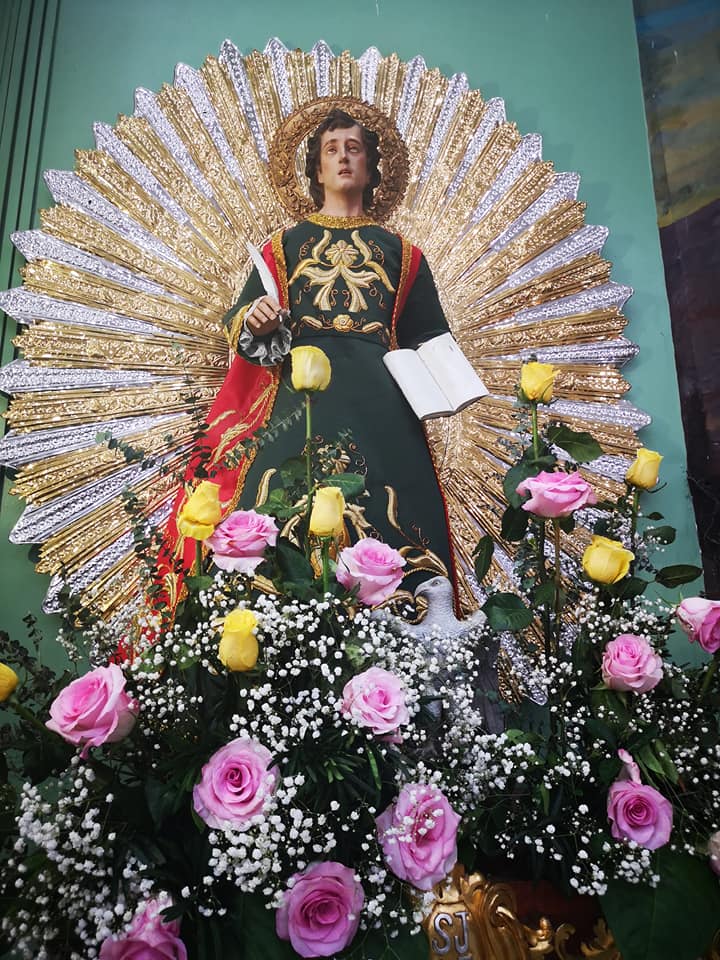
Larawan kuha ng may-akda, Marso 2020.
Ang ating Patron ng Parokya,
gabay sa buhay dito sa lupa
hanggang sa kabila.
Isang bagay na nagpatingkad nito sa akin ang sariling karanasan ng aking Lola Cedeng na tiyahin ng aking Ina. Siya ang kauna-unahang may-sakit na aking dinasalan at pinahiran ng Banal na Langis matapos mag-comatose ilang linggo pagkaraan ng aking ordenasyon noong Abril 1998.
Akala noon ng aking Ina at kanyang mga kapatid ay magtutuluy-tuloy na sa kamatayan ang Lola Cedeng kaya dagli nilang inihanda lahat ng gagamitin sa libing – damit, kabaong, sementeryo nguni’t gaya ng kasabihan, humahaba pa raw ang buhay ng may sakit kapag pinaghahandaan kanyang kamatayan.
Pagkaraan nga ng isang linggo ay nagkamalay ang Lola Cedeng at tumagal pa ang buhay ng limang taon!
Dagli ko siyang dinalaw at ang unang hiniling niya sa akin ay ipanalangin siya kay San Martin ng Tours, ang patron namin sa bayan ng Bukawe (dalawa lang kaming bayan sa Pilipinas na ang patron ay si San Martin ng Tours;Taal sa Batangas ang isa pa na mas nauna).
At ito ang dahilan ng kanyang kahilingan: isinaysay sa akin ni Lola Cedeng kung paano sa kanyang NDE o “near death experience” habang naglalakad sa madilim na kalsada nang kanyang makita na dumarating si San Martin ng Tours nakasakay ng kabayo.
Sinabi raw sa kanya ni San Martin, “Cedeng… bumalik ka na sa Bunlo (ang aming baranggay). Nagkamali lamang at hindi mo pa oras,” aniya.
Pagkasabi daw niyon ay kaagad tumalikod si San Martin at umalis habang siya naman daw ay natigilan, iniisip paano siya nakilala ni San Martin?
Maya maya daw ay bumalik si San Martin at tinanong niya, “Hindi po ba kayo si San Martin ng Tours? Paano po ninyo ako nakilala at nalaman aking pangalan at tirahan?”
“Paanong hindi kita makikilala Cedeng,” paliwanag daw sa kanya ni San Martin, “hindi ba’t palagi kang nagsisimba sa Bukawe tuwing pista ng Mahal na Krus sa Wawa at sa akin tuwing Nobyembre onse? Sigue, umuwi ka na.”
Noon din daw ay natuwa ang aking Lola Cedeng, tumalikod at nagulat na lamang siya paano siya napunta sa Mt. Carmel Hospital!
Larawan mula sa Facebook ng Parokya ni San Martin ng Tours, Bocaue, Bulacan.
Naniniwala ako sa kuwento ng aking Lola Cedeng dahil pagkalipas ng limang taon, pagkaraan ng kanyang kaarawan noong ika-29 ng Hunyo 2003 bago sumapit ang Pista ng Krus sa Wawa noong ika-03 ng Hulyo ng taong iyon, siya ay aking dinalaw at mismong sa harap ko nalagutan ng hininga at pumanaw.
Habang hinihintay ko aking mga tiyo at tiya na tumawag ng duktor, kaagad ako nag-alay ng Misa sa tabi niya.
Pagkaraan pa ng ilang panahon mula noon nang aking mapagtanto mga kahulugan niyon, na kung paano si San Martin ng Tours ang gumabay sa aking Lola Cedeng habang nabubuhay, siya marahil din ang umalalay sa isang Bukaweñong tunay patungo sa buhay na walang hanggan.
Iyan ang kahalagahan ng mga Patron natin sa parokya. Sila ang ating mga tagapamagitan sa Diyos. Sila ang ating mga gabay at patnubay sa buhay hanggang kamatayan.
Kung saan marubdob ang pagmamahal at malasakit sa patron ng parokya, palaging buhay ang pananampalataya. Sino mang pari mapunta roon sa kabila ng kanilang maraming kapintasan maging kakulangan, palaging buhay ang parokya sapagkat sila’y nakasandig sa Diyos at hindi sa kung sinu-sinong tao lamang.
Gayon din naman, wala sa mga gusaling bato at kung anu-anong gawain matatagpuan ang buhay ng parokya kungdi sa buhay na pamimintuho sa patron nila na nagbubuklod sa kanila bilang isang bayan ng Diyos, mga alagad ni Kristo na nagmamahal at nagmamalasakit sa bawat isa.
Sa panahong ito ng pandemya, nawa higit nating makita wala sa karangyaan at luho ng simbahan at mga pagdiriwang ang diwa ng parokya kungdi sa pagiging payak at bukas palagi sa galaw ng Banal na Espiritu patungo sa higit na makabuluhang katipunan ng mga alagad ni Kristo. Amen.
Lawiswis ng Salita ni P. Nicanor F. Lalog II, Ika-20 ng Nobyembre 2020
“Ecce Homo” ni Murillo, mula sa wikipediacommons.com.
"Utos ng hari
hindi mababali!"
Iyan ang kasabihang
ating kinalakhan
tumutukoy sa kapangyarihan
ng sino mang naghahari
o naghahari-harian
sa lansangan o tahanan
tanggapan at paaralan
maging sa simbahan
kung saan ang pari ---
O kay laking sawi!---
para ding hari...
Bawat utos,
ano man magustuhan
hindi maaring ipagpaliban,
ipagpipilitan upang makamtan;
parurusahan sino man
lumiban sa utos
na batas ang katumbas!
Nguni't
ito nga ba ang tamang gawi
ng sino mang hari
na ituring kanyang pag-aari
parang mga aliping nagapi
kanyang nasasakupan
at pinaghaharian?
Masdan
 mga salitang binitiwan
ng Hari ng mga hari
at ating Dakilang Pari:
"Ito ang dahilan
kung bakit ako ipinanganak
at naparito sa sanlibutan:
upang magsalita
ng katotohanan"
na "ang Diyos ay pag-ibig"
naparito "upang maglingkod
hindi upang paglingkuran".
Iyan sana ating tandaan
katangian
ni Kristo Hesus
Hari ng sanlibutan
SINUSUNOD
hindi NASUSUNOD,
 sinusundan, tinutularan
sa kanyang kabutihan.
Kaya kung si Hesus
nga ang ating Hari
Siya ang ating tularan
sa pagmamahal at kabutihan
huwag sirain yaring kaisahan sa sangkatauhan
dahil ano man gawin o ipagkait sa maliliit
siyang Kanyang pagsusulit sa pagbabalik!
The Lord Is My Chef Sunday Recipe for the Soul by Fr. Nicanor F. Lalog II
Week XXXII-A in Ordinary Time, 08 November 2020
Wisdom 6:12-16   ><)))*>   1 Thessalonians 4:13-18   >><)))*>   Matthew 25:1-13
Photo from MediaNews Group/The Mercury News via Getty Images, 10 September 2020 during the widespread California forest fires.
Beginning this Sunday until the Solemnity of Christ the King three weeks from now, we hear from the gospel Jesus speaking of his Second Coming at the end of time to render judgement to everyone.
It is during this time as we come to close the liturgical year and begin the new one with the Advent Season four weeks before Christmas when the Church reminds us in our Sunday Masses the true meaning of Christ’s Second Coming that have disturbed so many people for 2000 years.
Throughout history, it has spawned many doomsday and apocalyptic scenarios among peoples everywhere, particularly religious fanatics and cult followers with disastrous aftermaths like bloodbaths and murders despite their being anchored in a religious belief in God.
Lately there is a growing trend among some people of preparing for the final end of the world without any belief in God but more based on “science” and pop cultures but still with some degree of violence too.
And between these two extremes of awaiting the end of time with and without God, we find a majority who do not seem to care at all!
Everything comes to an end in order to begin anew.
Last Sunday in our reflection on All Saints Day we have mentioned the tension of the here and not yet, of Jesus being here now and still coming again at the end of time we call parousia which we proclaim in every Mass after the consecration.
This tension was a big deal during the time of the early Church with many believers including the Apostles believing they would witness the return of Jesus in their lifetime; but, when many of them started to die without the Second Coming happening, they began to question and reflect on the nature of parousia. They wondered what will happen with those who have died already and those left behind still alive when Christ comes again?
We do not want you to be unaware, brothers and sisters, about those who have fallen asleep, so that you may not grieve like the rest, who have no hope. For if we believe that Jesus died and rose, so too will God, through Jesus, bring with him those who have fallen asleep… we who are still alive, who are left until the coming of the Lord, will surely not precede those who have fallen asleep… will be caught up together with them in the clouds to meet the Lord in the air. Thus we shall always be with the Lord. Therefore, console one another with these words.
1 Thessalonians 4:13-14
From St. Paul’s reflections developed what we call escathology, that branch of theology dealing with the end of time and everything related with it like general and particular judgements, death and resurrection, parousia or Second Coming of Christ at the end of time.
It was St. Paul who insisted the centrality of Christ’s resurrection upon which is also hinged the resurrection of the dead and of his parousia (1Cor.15:14) which we call as mystery of our faith. For him, Christ’s resurrection is the beginning of the resurrection of the dead, the beginning of the end time; therefore, the end is something we shall not fear but in fact be excited with because it is the final victory of God over sin and death. Yes, Christ had definitively won over death at the cross but it is on his Second Coming when death and sin are final vanished to give way to new heaven and new earth.
Everything will come to an end not to simply terminate all but in order to bring forth new beginnings! And the key is authentic living in every here and now.
From a post at Facebook, 2018.
Live in the present, not future; focus on life, not on dates.
It is sad when many among us Catholics specially those who celebrate Mass every Sunday acclaiming “Christ will come again” are the ones so afraid of end time, always asking for the blessing of their candles in the belief that these would save them from days of darkness.
Wrong! What will truly save us on judgement day is our firm faith in Jesus Christ, not blessed candles. Most of all, what will truly save us on judgement day is to live daily as authentic Christians witnessing the gospel values of Jesus Christ our Savior and Judge.
In today’s parable of the ten virgins awaiting the arrival of the groom, the Lord wants to instill among us the need to focus on the present moment of our lives not on any particular time or date because nobody knows when he would come like the groom in a wedding.
Jesus told his disciples this parable: “The kingdom of heaven will be like ten virgins who took their lamps and went out to meet the bridegroom. Five of them were foolish and five were wise. The foolish ones, when taking their lamps, brought no oil with them, but the wise brought flasks of oil with their lamps.
Matthew 25:1-4
We are all the virgins awaiting the coming of the groom for the wedding. We all came from God and we are designed to return to him in the end for eternal life. Here I find the late Stephen Covey so real in teaching us to always begin with the end in sight which is heaven. In one of his writings, he said “We are not human beings on a spiritual journey; we are spiritual beings on a human journey.”
In 2012, we were shocked when we heard news how he fell from a bicycle in an apparent accident and a few days later, he died. In an instant I have felt how this layman who strongly advocated the infusion of values into business and management is after all a saint, perhaps now in heaven.
His seven habits of highly successful people are all anchored in meaningful, authentic living in the present. That is being wise, of bringing extra oil of charity and kindness and goodness in life while actively waiting the coming of the groom, the coming of our death and end. Habit is something that is good we always do; its opposite is vice. (Stop saying bad habits.)
Life is keeping our lamps burning even if it produces little light than be extinguished and be plunged to total darkness. Nobody is perfect; we all have our lapses in life that is always in darkness. Like those virgins in the parable, wise and foolish alike, we feel drowsy and fall asleep.
Photo by author, Holy Thursday Mass, 2020.
Since the bridegroom was long delayed, they all became drowsy and fell asleep.
Matthew 25:5
Therefore, all the more we need to be wise, not foolish. Being wise is always seeking and following the will of God who is Wisdom himself.
In the first reading, we are told how Wisdom as the personification of God himself can always be had by anyone sincerely searching for him.
Resplendent and unfading is wisdom, and she is readily perceived by those who love her, and found by those who seek her. She hastens to make herself known in anticipation of their desire; whoever watches for her at dawn shall not be disappointed, for he shall find her sitting by his gate.
Wisdom 6:12-14
To seek and obtain wisdom is to have pure or clean hearts that try to seek what is good, free of carnal desires and worldly allurements. Again, the need to have even the faintest light than be in total darkness.
So often, many things in our lives are decisively won – or lost – in a spur of the moment, in single crucial moments when everything comes to the fore. Woe not to those caught asleep but not ready or prepared, ill-equipped for the demand of the moment.
At midnight, there was a cry, ‘Behold, the bridegroom! Come out to meet him!’ Then all those virgins got up and trimmed their lamps. The foolish ones said to the wise, ‘Give us some of your oil, for our lamps are going out.’ But the wise ones replied, ‘No, for there may be not enough for us and you. /go instead to the merchants and buy some for yourselves.’ While they went off to buy it, the bridegroom came and those who were ready went into the wedding feast with him. Then the door was locked.
Matthew 25:6-10
Photo by author, Baguio Cathedral, January 2018.
See how in the parable where everything was similar and the same: ten virgins with lamps becoming drowsy and falling asleep in the night waiting for the groom. Everything changes at midnight with the announcement of the arrival of the groom where the wise virgins were clearly distinguished from the foolish. The wise had extra oil and came into the wedding with the groom, leaving behind the foolish who had to buy for oil in the dead of the night only to return with doors locked, leaving them outside.
This is life in a nutshell: being ready when opportunity strikes is not based on luck but hard work.
And that is the saddest and difficult part we always take for granted: life is often decided on short, instant moments that in a snap of a finger can decide our rising or downfall.
This pandemic is an eye opener for everyone that caught so many of us unprepared.
Any extra oil kept in this time of the corona has proven so wise for some who have adjusted so well in the situation, coping and even managing so well amid the crisis.
What is so disappointing, even appalling are the foolish who chose to wallow in their follies, whining and blaming everyone for the troubles and mess without admitting their own shortcomings.
Let us heed the Lord’s call to “stay awake, for you know neither the day nor the hour” (Mt.25;13) by living authentically as his disciples in every here and now. Amen.
The Lord Is My Chef Breakfast Recipe for the Soul by Fr. Nicanor F. Lalog II
Tuesday, Memorial of St. Martin de Porres, Religious, 03 November 2020
Philippians 2:5-11  +++ ||| +++   Luke 14:15-24
Photo by author, Chapel of the Holy Family, Sacred Heart Center for Spirituality, Novaliches, 2018.
Brothers and sisters: Have among yourselves the same attitude that is also yours in Christ Jesus. Who, though he was in the form of God, did not regard equality with God something to be grasped.
Philippians 2:5-6
God our Father, I feel too small, even ashamed before you today as I prayed on your words through St. Paul; it is not just a very tall order but the sad part is the fact that we have all known it all along since our catechism days in school or the parish but rarely put into practice.
We admit it is the fundamental rule of Christian life, to be like Jesus Christ your Son who had come to show us the way back to you is by emptying one’s self for others, to be one with others especially in their pains and sufferings, of being the last, being the servant of all, being like a child.
Unfortunately, we always find it so difficult to learn.
Partly because we lack the very attitude of Jesus Christ we must first imitate according to St. Paul.
And that is the attitude of being small, being the least.
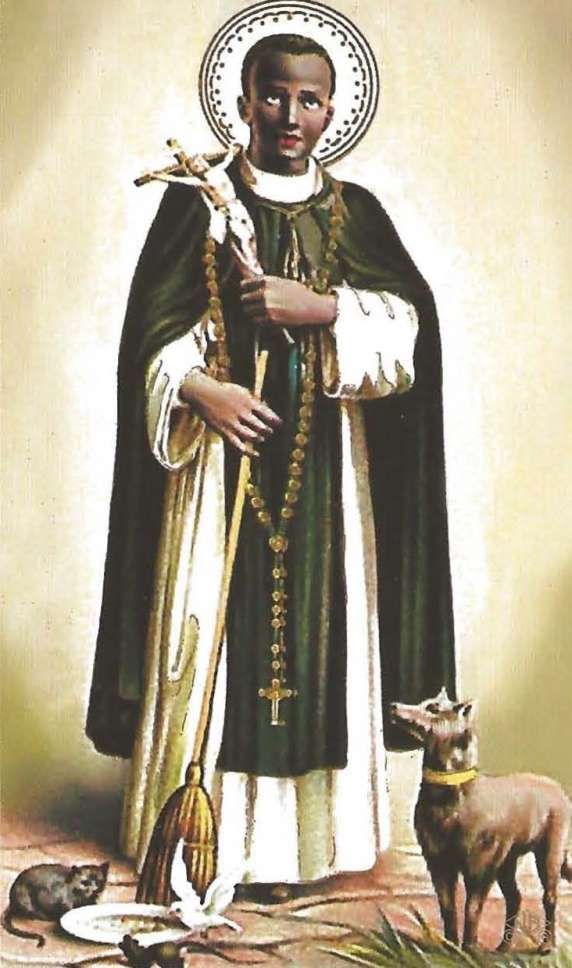
Exactly like St. Martin de Porres:
From Pinterest.com
Such was his humility that he loved them even more than himself and considered them to be better and more righteous that he was. He did not blame others for their shortcomings. Certain that he deserved more severe punishment for his sins than others did, he would overlook their worst offenses. He was tireless in his efforts to reform the criminal, and he would sit up with the sick to bring them comfort. for the poor he would provide food, clothing and medicine.
Homily by St. Pope John XXIII at the Canonization of Saint Martin de Porres in 1962
So often, our attitude is like with those invited by the king to his great dinner: feeling great, feeling so important with themselves that they find no need to be with others that they all turned down the invitation.
Sometimes our arrogance and high regard for ourselves miserably fail us in being like Jesus; hence, we continue to be divided into factions because no one would give way for others that lead to peace and harmony.
Teach us Lord to change that attitude of greatness in us with an attitude of smallness, of leaving a space for others in our lives so we can all work together as one community of believers in you like St. Martin de Porres and all the other saints. Amen.
The Lord Is My Chef Breakfast Recipe for the Soul by Fr. Nicanor F. Lalog II
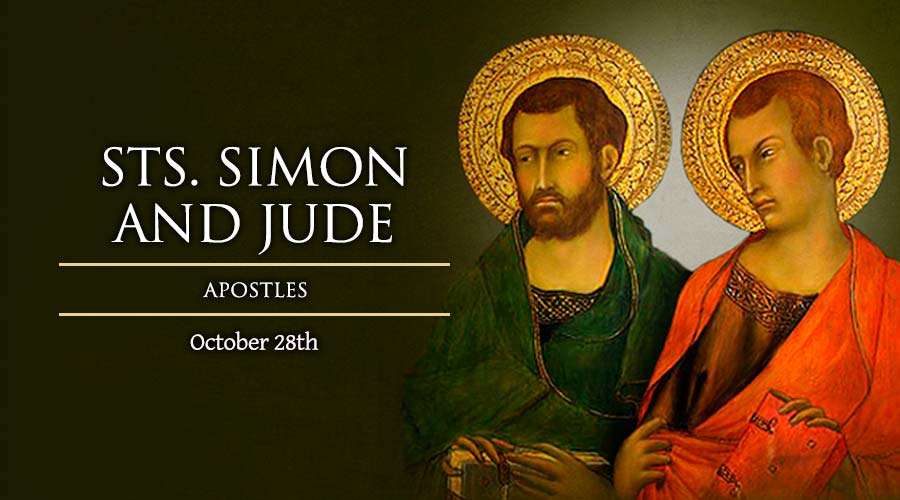
Wednesday, Feasts of Saints Simon and Jude, Apostles, 28 October 2020
Ephesians 2:19-22   >><)))*> + <*(((><<  ||  >><)))*> + <*(((><<   Luke 6:12-16
Photo by author, Malolos Cathedral, August 2020.
Dearest Lord Jesus:
What did you pray for on the night before you named your Twelve Apostles?
Jesus went up the mountain to pray, and he spent the night in prayer to God. When day came, he called his disciples to himself, and from them he chose Twelve, whom he also named Apostles:
Luke 6:12-13
What an amazing sight, a scene to behold you, Jesus who is true God and true man, praying to the Father, spending the night just to name the Twelve Apostles! Most likely, you prayed for them individually so they may be strong in their commitment to you. What an honor!
And the most beautiful part in every call you make specially with the Twelve Apostles is how you have chosen them from their so diverse backgrounds and temperaments to prove that what interests you most Lord Jesus are people or persons, not labels or backgrounds.
Remind us always, dear Jesus of this reality, of how you value each of us that you have called us to be your followers as Christians.
Open our eyes and our hearts to always have the zeal and passion of St. Simon.
His two nicknames given by Luke as a “Zealot” belonging to Zealots Party demanding the ouster from Israel of the occupying Romans and that by Mark as “Cananean” from the Hebrew verb qana for “to be jealous, ardent” both mean being filled with passion for his Jewish identity for God, his People Israel and Torah or the Laws.
In choosing Simon as an Apostle, may we be reminded of always having room in the Church for all charisms and human qualities of all peoples who find their communion in our Lord Jesus Christ.
Likewise, we pray to be like Jude Thaddeus who stood firmly by his faith in you, Lord Jesus in writing a short letter to remind the early Church of keeping their Christian identity, of not being deceived by some preachers who sowed confusion and division with their thoughts and ideas.
Pray for us, dear Jesus in this modern time when we who are in the Church who are lacking in passion and drive to make you known not only in words but also in deeds.
Pray for us, still Lord Jesus in this modern age that we may have the strength, clarity, and courage in defending and upholding our Christian identity amidst the many contradictions of the world in which we live in.
May St. Simon and St. Jude help us rediscover the beauty of our Christian faith and live it faithfully, witnessing to its beauty and truth. Amen.
The Lord Is My Chef Breakfast Recipe for the Soul by Fr. Nicanor F. Lalog II
Tuesday, Week XXIX, Year II in Ordinary Time, 20 October 2020
Ephesians 2:12-22     >><)))*> + >><)))*>  +  >><)))*>     Luke 12:35-38
Photo by Dr. Mylene A. Santos, MD in Quezon, 2020.
Glory and thanksgiving to you, God our Father, through your Son our Lord Jesus Christ in the power of the Holy Spirit for reconciling us all in you, making us one despite our many differences.
How lovely to the ears, to our being the words of St. Paul today, Lord Jesus, assuring us of our citizenship in heaven through the salvation you have brought us all, regardless of our color, race, status or even religion!
So then you are no longer strangers and sojourners, but you are fellow citizens with the holy ones and members of the household of God, built upon the foundation of the Apostles and prophets, with Christ Jesus himself as the capstone. Through him the whole structure is held together and grows into a temple sacred in the Lord; in him you also are being built together into a dwelling place of God in the Spirit.
Ephesians 2:19-22
Help us, O Lord, to embody and manifest this unity of peoples in you in the Church, your Mystical Body here on earth.
Heal us of our many divisions and make us truly Catholic by helping everyone enter into communion with you through one another.
Keep us on guard for your return, Jesus, by “girding our loins and lighting our lamps” (Lk.12:35) ready to welcome you with our good works each day, leading others closer to you.
Let us start by going back to you in prayers and silent meditations that many have forgotten or taken for granted in this 24/7 world saturated by media with all the cacophony of sounds and blinding visuals that have blurred our vision of who we really are as citizens of heaven, beloved children of God our Father in heaven.
Help us find our way back home to the Father in heaven here on earth by finding our way back home to our true selves and to our brothers and sisters in you, dear Jesus. Amen.