We are disciples of a meek and humble Lord

The Lord Is My Chef Sunday Recipe for the Soul by Fr. Nicanor F. Lalog II
XIVth Sunday in Ordinary Time, Cycle A, 05 July 2020
Zechariah 9:9-10 >><)))*> Romans 8:9, 11-13 >><)))*> Matthew 11:25-30
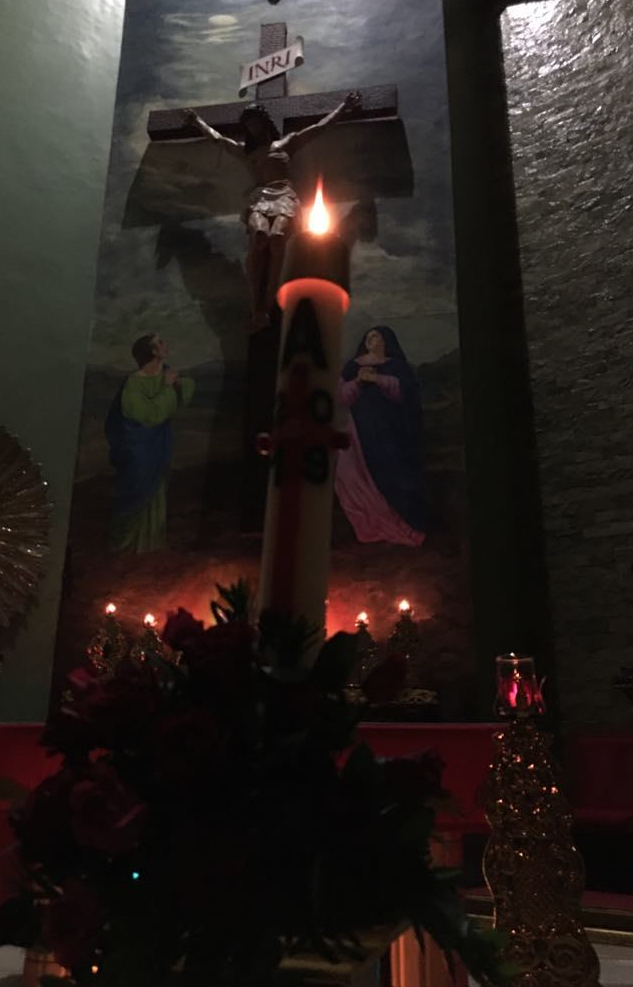
From Google.

We now come to the conclusion of our series of teachings of Jesus about discipleship that began two Sundays ago when he asked us not to be afraid and to be “possessed” or overtaken by him to fulfill our mission of proclaiming his good news of salvation.

And so, we now ask, “Why should we follow Jesus and be his disciples, forgetting our very selves and still carry our cross? Have we not suffered enough especially in this pandemic?”

His answer: because unlike other lord and master, Jesus is the only one who is meek and humble of heart, full of compassion to everyone!

He is the only one truly with us in our pains and cries because before all these trials have come to us, Jesus was there first to suffer and die for us on the Cross so we can share in the grace and peace of his Resurrection, calling us with these comforting words….

“Come to me, all you who labor and are burdened, and I will give you rest. Take my yoke upon you and learn from me, for I am meek and humble of heart; and you will find rest for your selves. For my yoke is easy, and my burden is light.”

Matthew 11:28-30

Our desire for everything “lite” and easy

If there is anything that we all want at this time is a rest, a break from the heavy burdens 2020 has brought upon us all as individuals and as a nation, not only in the country but the whole world.

We all want things to be “light” and easy like before COVID-19.

The world has long been offering us everything that is “light” (also spelled as “lite”), claiming it to be the key to a healthy and fulfilling life that many products are labelled as lite — from cooking oil to mayonnaise, cheese and ice cream, soda and even brandy, beer, and cigarettes!

But they are all lies!

We still get fat and even sickly with those lite products because being light does not necessarily mean removing or taking away things that are heavy and “toxic” or difficult. Being light does not mean free from responsibilities and duties, or not having a cross and sufferings in life.

Life is difficult as M. Scott Peck insists in The Road Less Travelled, telling us that the sooner we accept this reality, the better we are in life.

It is the truth Jesus Christ has long been telling us, so timely to be reminded again this first Sunday of the second half of 2020 as we continue to hurdle more difficulties ahead in fighting COVID-19 as well as in dealing with a hosts of other problems it had created in the many aspects of our lives.

Today, the Lord is telling us that to be light in life, we have to come to him, be his disciple by taking his yoke and learning from him.

We all know from experience that anything becomes light, especially a burden and a problem, when shared with someone who loves us, someone who cares for us, someone who believes in us. Many times, our problems and burdens need not be solved at all; they simply have to be shared with any one willing to accompany us.

Being light in life is having a companion to share with our burdens and woes because having these all by ourselves is indeed so difficult and impossible. That is the literal meaning of the Latin origin of the word companion – cum panis – someone you break bread with in a journey.

Jesus Christ is that only companion par excellence we can have for he is meek and humble of heart

Photo by Ezra Acayan of Getty Images, Baclaran Church, February 2020.

The gentle mastery of Jesus Christ

In the past two Sundays, Jesus spoke about ourselves and our dispositions to become his disciples. This Sunday, he speaks about himself as our Lord and Master, describing himself as “meek and humble of heart”.

Earlier at the start of his preaching in his Sermon on the Mount, Jesus spoke of true blessedness in the Beatitudes that actually gave us an image of himself as the Blessed One. Each beatitude speaks of Jesus Christ being poor in spirit, being meek, being merciful, being clean of heart, being a peacemaker, and being persecuted.

See that the third beatitude is how he also described himself today in the gospel, “Blessed are the meek for they shall inherit the land” (Mt. 5:5).

Very interesting is the fact that in his Sermon on the Mount when he preached the Beatitudes, Jesus was presenting himself to the people as the “new Moses” who gave them the Ten Commandments of God at Mount Sinai. As the most towering figure among the Jews, Moses is also described as “very meek, more than all men that were on the face of the earth” (Numbers 12:3)!

Meekness of Jesus: focusing more on persons than letters of the law

In calling us to come to him to take his yoke and learn from him for he is meek and humble of heart, Jesus is telling us that indeed, he is the new Moses in whom pure goodness is found. And even more surpassing than Moses because Jesus himself is the Law and its fulfillment. Unlike in Moses wherein the people focused more on the letters of the laws, Jesus our Lord insists more on the person, always reminding us that “Sabbath was created for man, not man for sabbath.”

But the most beautiful key in understanding the meekness of Jesus is found in our first reading which we also hear proclaimed on Palm Sunday:

Thus says the Lord: Rejoice heartily, O daughter Zion, shout for joy, O daughter Jerusalem! See, your king shall come to you; a just savior is he, meek, and riding on an ass, on a colt, the foal of an ass. He shall banish the chariot from Ephraim, and the horse from Jerusalem.

Zechariah 9:9-10a
Photo from Google of an ass considered as the dumbest creature on earth.

Unlike the proud masters and rulers of the world, Jesus our Lord and King entered Jerusalem riding on an ass in fulfillment of this part of the Old Testament.

Here we find Jesus as the exact opposite of the kings and rulers of the world whose kingship does not depend on political and military might, no exercise of brute force and power characterized by the chariots and horses of his time.

Meekness of Jesus: oneness with us his people

In this beautiful imagery of Jesus riding an ass considered as the dumbest creature on earth we find Christ’s inmost being of humility and meekness before God and men. No display of arrogance and shameless feelings of entitlements like our officials in the government and military. Most of all, Jesus riding on an ass illustrates his oneness with us all because the ass is the means of transportation of the poor, of the common tao.

Here is the meekness and humility of Jesus Christ — his being one with us in our brokenness and poverty, pains and hurts. You can really experience him especially in this time of the corona when everything seems to be getting worst than better, when everybody is trying to make ends meet amid the economic crisis with Jesus never abandoning us in our darkest moments of uncertainties, fears, hunger, and sadness.

At the rate things are going, we have nobody else to turn to at this time but Jesus our Lord. We have to muster all our faith in him, deepen ourselves in prayer because we cannot rely on our officials who cannot even get a clear data on COVID-19 infections nor even a sound plan in addressing this pandemic despite the longest days of lockdown in the world and loans from abroad.

And we all feel so hopeless, disgruntled and so disgusted especially with the public officials and those from congress and the police who are oblivious to our sufferings and hardships in this time of the corona as they shamelessly flaunt their privileges and exception to the rules.

How can we heal as one when in the first place they are not one with us?

Discipleship in Christ is life in the Holy Spirit

Despite all the irresponsibilities and inanities of the government, we choose to be like our Lord and Master Jesus Christ in bearing all pains and hardships in his holy name, always hoping that this experience can lead us to more meaningful lives as citizens of the republic.

We choose the path of non-violence despite the government’s militaristic response to the crisis aggravated by the legislative’s dangerous foray into more draconian measures to silence critics of the administration.

It is so tempting to fight back and forget all about meekness and humility but that is not the way of Jesus Christ.

In the second reading, St. Paul reminds us of the fundamental choice that lies before every disciple of the Lord: to live in solidarity with Christ empowered by his Spirit, or to live in solidarity with the old humanity enslaved to sin.

May we choose Jesus because he alone is meek and humble of heart, in him alone can we find rest because his yoke is easy and his burden light. Amen.

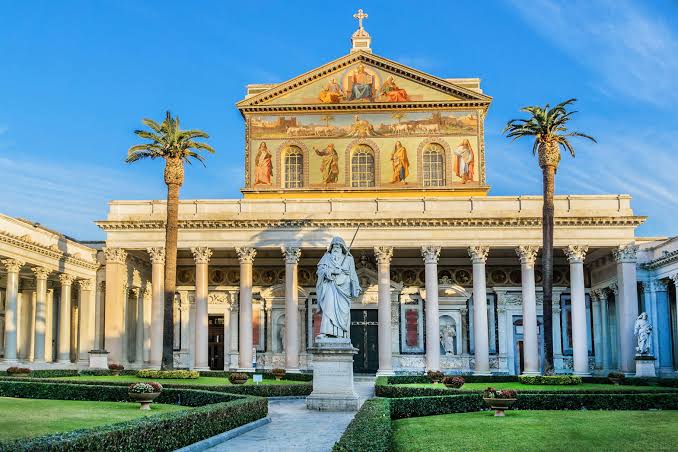
Photo by Mr. Angelo Nicolas Carpio, 2020.

St. Paul in time of Covid-19: fighting with the sword of Christ

Quiet Storm by Fr. Nicanor F. Lalog II, 08 June 2020
Basilica of St. Paul Outside-the-Walls, Rome, Italy. Photo from Google.

My earliest memory of St. Paul was not really so good; it was even scary.

It was summer of 1972 when we settled in our new house in my mother’s hometown of Bocaue in Bulacan. I was so skinny then (believe me, I can prove this with my pictures) and shy when my mother brought me to apply for Grade 1 at the only Catholic school there known as “SPCB” or St. Paul College Bocaue.

A male, dark teacher wearing those dark glasses like Leopoldo Salcedo clad in a barong interviewed me (the late Mr. Martin De Guzman, aka, Bagyo for typhoon). I cannot recall what he had asked me which I could not answer that made him say I cannot enroll in their school; but my mother angrily told me not to listen to him and, angrier told me to always speak louder.

That’s when I saw the statue of St. Paul at the window of the registrar’s office, eyes so intense while resting his right hand on a sword in front of him with the other hand clutching a bible with the Latin words, “Caritas Christi urget nos” – the love of Christ impels us (2 Cor. 5:14).

I stayed at SPCB for seven years and formed me into who I am today, making me so proud of being a Paulinian. Until now, that image of St. Paul with a sword is etched in my mind reminding me of how he fought so hard for Jesus Christ and his Body, the Church.

The Apostle Paul

Sometimes called the “Thirteenth Apostle”, St. Paul always stressed in his writings and teachings that he was personally called by the Risen Lord to be his Apostle sent to preach the gospel to everyone. That is why Jesus is so central in his life, declaring “whatever gains I had, these I have come to consider a loss because of Christ” (Phil.3:7), desiring only “omnia omnibus” — that is, to “become all things to all men” (1 Cor. 9:22) without any reserve.

As we have mentioned in our earlier reflection, St. Paul’s sole focus in his ministry and very life was the person of Jesus Christ: everything in our lives, especially us priests, is marked essentially by our encounter and communion with the Lord and his Word.

It is only in the light of Christ that we measure every other value in our lives and ministry.

Red Wednesday Mass and prayers in our parish for the Church persecuted last November 2019.

Even in this highly diversified and pluralistic society, while we join hands in promoting and working for a more humane and inclusive society, the more we must stand up for Jesus Christ like St. Paul as quoted by St. Luke while addressing the presbyters of the Church at Ephesus with these words:

“I served the Lord with all humility and with the tears and trials that came to me because of the plots of the Jews, and I did not at all shrink from telling you what was for your benefit, or from teaching you in public or in your homes. I earnestly bore for both Jews and Greeks to repentance before God and to faith in our Lord Jesus Christ… for I did not shrink from proclaiming to you the entire plan of God.”

Acts of the Apostles 20:19-21,27

I am so struck with that word “shrink” that St. Paul used twice to stress his dedication, fervor, and conviction in being centered in Jesus Christ alone. In what aspect did he not “shrink”? Did he raise arms and fought back against his detractors? Did he align with other forces to pursue his mission?

No! St. Paul did not shrink in proclaiming Jesus Christ by fighting back with force or with harsh words but by being more like our Lord and Master — more loving and understanding, more patient and more persevering, yet more intense in insisting the Gospel.

He did not shrink by running away from his detractors or diluting the gospel message by pleasing some powerful people or accommodating prevailing thoughts and culture. As we have mentioned in our previous reflection, St. Paul saw opportunities for the gospel in the midst of the hostile environment he lived during his time.

Despite all the pains and scars he had gone through, one can still find the light of Christ shining in this great apostle who bore everything filled with joy and pride without any complaint.

We are afflicted in every way, but not constrained; perplexed, but not driven to despair; persecuted, but not abandoned; struck down, but not destroyed; always carrying about in the body the dying of Jesus, so that in the life of Jesus may also be manifested in our body. For we who live are constantly being given up to death for the sake of Jesus, so that the life of Jesus may be manifested in our mortal flesh.

2 Corinthians 4:8-11

Standing for Christ and his Church

From 2006 to 2018, I was so blessed to have worked at our Church-run Radio Veritas as a co-host in a morning program once a week and as a host of another show on Saturdays. Aside from bishops and priests, we interviewed experts and advocates in a lot of various topics affecting our faithful in particular and our society in general.

So many times I felt something so wrong when we have to interview whom we considered as “allies” or “kakampi” in some of our advocacies because I have found no single person fully believing in our Church teachings even if some of the issues they fight for jibe with ours.

Can we really ally ourselves with lawmakers and cause-oriented groups fighting capital punishment which we strongly support and yet support artificial means of contraception for population control? Can we align with those fighting repressive laws like this anti-terror bill and yet support same-sex marriage and divorce?

And please, spare us with those labels on these people that they insist on putting on with us priests and bishops: let us keep in mind we are only for Christ, no progressives or liberals, conservatives or whatever.

We are neither lobbyists nor cause-oriented advocates pushing for something because we only stand for Jesus Christ and his Word at the Cross. There can be no any instance of partisan politics or traces of strange bedfellows whatsoever because we are either for or against Jesus Christ:

Jesus said: “Whoever is not with me is against me, and whoever does not gather with me scatters.”

Matthew 12:30

Here lies one of the greatness of St. Paul who never shrunk to other forces except Christ.

St. Paul statue at Malolos Cathedral by renowned ecclesiastical artist Mr. Willy Layug. Photo by Mr. Lorenzo Atienza, June 2019.

What a tragedy especially in our country that no amount of explanations can remove from the thoughts of ordinary people that priests and bishops do not even dabble their hands in partisan politics when it is so glaring they are beholden to these modern charlatans.

What moral ascendancy is left of our being pastors when after speaking against corruption and ineptitude in the government we turn to solicit from the same politicians and bureaucrats not only for parish projects and charities but even for our personal needs like vacations and trips abroad?

How can we reconcile all these immediate reactions by bishops and priests against the anti-terror bill urgently passed by Congress last week when not even a whimper was ever heard from them for the longest time to open our churches to serve the spiritual needs of the people?

Let me clarify like in my previous reflection that I am not saying we must be quiet about social issues; my point is, it must always be primary the Church as the Body of Christ that is primary in all our concerns.

This was very clear with St. Paul because it is the first reality he faced when he was called by Christ:

On his journey, as he was nearing Damascus, a light from the sky suddenly flashed around him. He fell to the ground and heard a voice saying to him, “Saul, Saul, why are you persecuting me?” He said, “Who are you, sir?” The reply came, “I am Jesus, whom you are persecuting.”

Acts of the Apostles 9:3-5

Next to our Lord, it is the Church that St. Paul had considered so much in his activities as subject of his thoughts and reflections. For him, adherence to the Church was directly caused by Jesus Christ himself, not by any chance or moments of realization and conversion.

And see the words of the Lord to him: “I am Jesus, whom you are persecuting.”

He was the first to speak of the Church as the Body of Christ, illustrating for us in his many Letters our being “one in Christ” (Gal.3:28) deeply rooted in the Holy Eucharist, “Because there is one bread, we who are many are one body” (1 Cor.10:17).

Pope Francis blessing the world at an empty St. Peter’s Square last March 27 when COVID-19 was ravaging the whole of Italy and many parts of the world. Photo from Vatican News.

Until now our churches remain closed in many parts of the only Christian nation in this part of the world. It behooves us priests and bishops to first fight and insist, without shrinking, the opening of our houses of worship to allow the people to experience Jesus Christ anew in this pandemic.

Most of all, may the people feel and realize at the resumption of our public Masses that God is truly in us and with us because of our deep communion in our Lord Jesus Christ and with one another when we celebrate the Sacrament of our unity, the Holy Eucharist.

Our final installment of the series this Thursday, “St. Paul in time of COVID-19: Communicating Jesus Christ”.

Mission of healing

The Lord Is My Chef Sunday Recipe, Solemnity of the Pentecost-A, 31 May 2020

Acts of the Apostles 2:1-11 <*(((>< 1 Corinthians 12:3-7, 12-13 ><)))*> John 20:19-23

Pope Francis praying at an empty St. Peter’s Square 27 March 2020. Photo from cruxnow.com.

As I prayed over the readings this coming Pentecost Sunday, my thoughts kept going back to those powerful images when Pope Francis prayed at an empty St. Peter’s Square at the Vatican last March 27 when COVID-19 was ravaging the whole Italy with so many deaths.

Now more than ever, the Church badly needs the Pentecost – a new Pentecost that will heal and rebirth the world so wounded and altered by the corona pandemic this year 2020.

On the evening of that first day of the week, when the doors were locked, where the disciples were, for fear of the Jews, Jesus came and stood in their midst and said to them, “Peace be with you.” When he had said this, he showed them his hands and his side. The disciples rejoiced when they saw the Lord.

John 20:19-20
Modern rendition of the Pentecost. From Google.

Holy Spirit, breath of life and cause of unity

The Pentecost is not just an event remembered in the past but a reality that happens daily when the Holy Spirit comes and is received by those attuned with its life and mission which is to bring peace through unity and healing.

Promised by Jesus Christ to his followers as their Advocate and Counsellor, the Holy Spirit descended on them during the feast of Pentecost in Jerusalem when Jews from all parts of the world gathered to remember the 50 days after their Passover in Egypt at the time of Moses.

It was the perfect setting for the Christian Pentecost – this time 50 days after Easter – to celebrate the new unity of mankind in Jesus he established on Holy Thursday evening at his Last Supper. Inasmuch as the Jews went home at that time to be one with their fellow believers in Jerusalem, on that day from the holy city comes forth the new solidarity of peoples in Jesus led by his followers gathered that day in the Upper Room.

Hence, the tradition of considering Pentecost Sunday as the birthday of the Church, too.

Though we have heard two different versions of its coming, what matters most is the Person of the Holy Spirit as the breath of life and the cause of unity among the followers of Christ.

In the first reading, Luke gives us an artistic presentation of the coming of the Holy Spirit showing the unity of the peoples: first of the followers of Jesus and later with the Jews gathered in Jerusalem on that day for their feast of Pentecost. Whereas the apostles were at first presented as timid and lacking in understanding, the Holy Spirit emboldened them on that day to go out and proclaim the gospel of Jesus Christ. Led by Peter, they were filled with life and wisdom and courage, converting thousands of people on Pentecost day despite their speaking in different languages, exactly the opposite at the Tower of Babel in the Old Testament.

In the gospel, John gives us the theological grounding of Pentecost when we find Jesus appearing to his disciples hiding from the Jews on the evening of Easter at the Upper Room where he breathed on them the Holy Spirit that filled them with joy upon seeing him risen and alive.

The scene was reminiscent of the many stories in the Old Testament of the “breath of God” giving life to the first human beings in the story of creation, the “breathing on” by Elijah on the nostrils of the widow’s dead son back to life (1Kgs.17:21), and the promise of God to Ezekiel to restore to life the many dry bones in their graves in the time to come (Ezek. 37:1-14).

These stories now take on deeper meanings in Jesus Christ its fulfillment. And not only were the disciples breathed on with new life in Christ but also the whole creation was renewed in the coming of the Holy Spirit that we pray, “Come Holy Spirit, fill the hearts of your faithful and you shall renew the face of the earth”.

Perennial Pentecost for peace and healing

Pentecost is an event that continues to happen daily especially when we are gathered as the body of believers of Jesus Christ tasked to realize its fulfillment. This coming of the Holy Spirit is not a one-shot deal that happened only in the past in Jerusalem more than 2000 years ago — it is something we as followers of the Risen Lord must always wait and make happen every day so as to continually bring life and renewal to this world especially at this time of the corona pandemic.

In giving us the Holy Spirit, Jesus not only renewed our lives as his disciples united in him but also conferred his own power without restrictions to accomplish our mission.

Jesus said to them again, “Peace be with you. As the Father has sent me, so I send you.” And when he had said this, he breathed on them and said to them, “Receive the Holy Spirit. Whose sins you forgive are forgiven them, and whose sins you retain are retained.”

John 20:21-23
The Chair of St. Peter at St. Peter’s Basilica in Rome with the stained glass of the Holy Spirit above. Photo from dreamstime.com.

At the Vatican inside the great St. Peter’s Basilica is a beautiful stained glass of the Holy Spirit in the form of a dove rising above as background to the Chair of St. Peter ( Feast is February 22) at the sanctuary area.

Pope Emeritus Benedict XVI described this beautiful work of art:

“It seems to me that a deep analysis of the essence of the Church lies hidden here, is contained here… It unites the Church with creation as a whole. It signifies through the dove of the Holy Spirit that God is the actual source of all light. But it tells us something else: the Church herself is in essence, so to speak, a window, a place of contact between the other-worldly mystery of God and our world, the place where the world is permeable to the radiance of his light… The Church is the place of encounter where God meets us and we find God. It is her task to open up the world closing in on itself, to give it the light without which it would be unlivable.”

Images of Hope, pp.29-31

Here we find part of our mission in collaboration with the Holy Spirit is the the healing of the world that can be achieved only through peace. See how Jesus had to repeat twice his gift of peace to his disciples because it is his greatest gift to us following his Resurrection.

Life thrives and blooms most where there is peace, where there are disciples of the Lord willing to work for it with love and patience.

But the peace from Jesus Christ always has a price that we must be willing to pay to achieve it.

See that after his first greeting of peace, Jesus showed his wounds — he was the first to pay the price for peace with his own life.

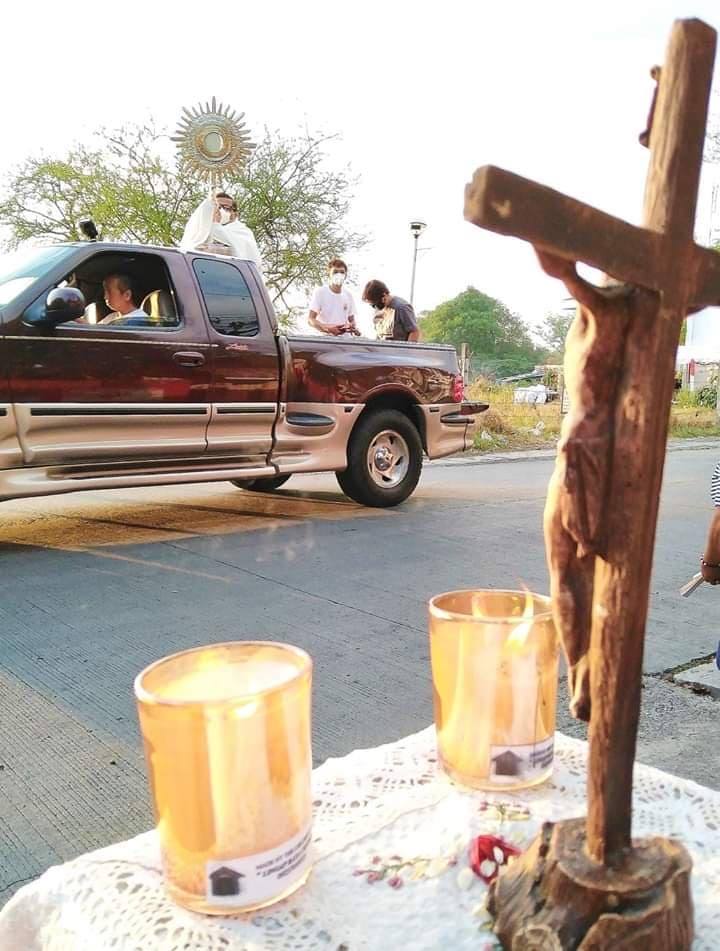
Bringing around our Parish the Blessed Sacrament during the lockdown, March-May 2020.

This is the meaning of the many sacrifices and sufferings we all have to go through in this quarantine period expected to continue until 2021: if we want to get out of this pandemic, aside from the need for a vaccine and medication, we all need to change our ways to make sure this will not happen again.

It is always easy to join so many advocacies and rallies calling for every kind of change in the society and the world but nothing had ever happened because whenever we come home, we do not change our own ways of living! Sayang (what a waste) were all the inspiration and energies of the Holy Spirit for our many causes that have not taken roots right in our hearts.

All the apostles of the Lord paid the price of peace with their own lives that led to the healing not only of individuals and families but even of nations and the world.

The second time Jesus offered his gift of peace, he breathed the Holy Spirit on his apostles and commissioned them to forgive all sins.

Peace is the fruit of love according to Vatican II.

As such, peace from the Holy Spirit leads to healing when there is dialogue, prayer and repentance, that lead to justice, love, and forgiveness. Peace and healing need hard work that is why they are fruits. They never come on a silver platter.

On Monday, most of the quarantine levels in the country are downgraded because it is hoped we have somehow controlled the spread of COVID-19.

As we eagerly await more freedom and mobility in this time of pandemic, what have we achieved during these three months of quarantine, said to be the longest in the world?

Have we resolved our family differences? Have we rediscovered our family members, getting more close than ever, more kind, more understanding?

How sad that all we can share as our quarantine stories are all about food and other pursuits we have undertaken forgetting the unity and life of our family and community.

How sad when we in the Church have all been preoccupied with the new communication media but failed at all to make any impact or dent in the lives of our faithful because we have not shared Jesus Christ at all, when all our “live streaming” and vlogs are powered by likes and followers, not by the Holy Spirit.

Pope Francis blessing the people last March 27 in an empty St. Peter’s Square during the height of COVID-19 in Italy that became the new epicenter of pandemic next to China. Photo from Vatican Media Office.

Jesus never takes back his gift of peace, his gift of healing, his gift of the Holy Spirit. He promised to never leave us orphans. Let us not leave the Holy Spirit behind and stop believing in our selves.

That’s the way we have been in the world and even in the Church.

That is why – to a large extent – we have this corona pandemic.

A blessed week to everyone.

Christ’s ascension, our mission

The Lord Is My Chef Sunday Recipe, Solemnity of the Ascension of the Lord, 24 May 2020

Acts of the Apostles 1:1-11 ><)))*> Ephesians 4:1-13 ><)))*> Matthew 28:16-20

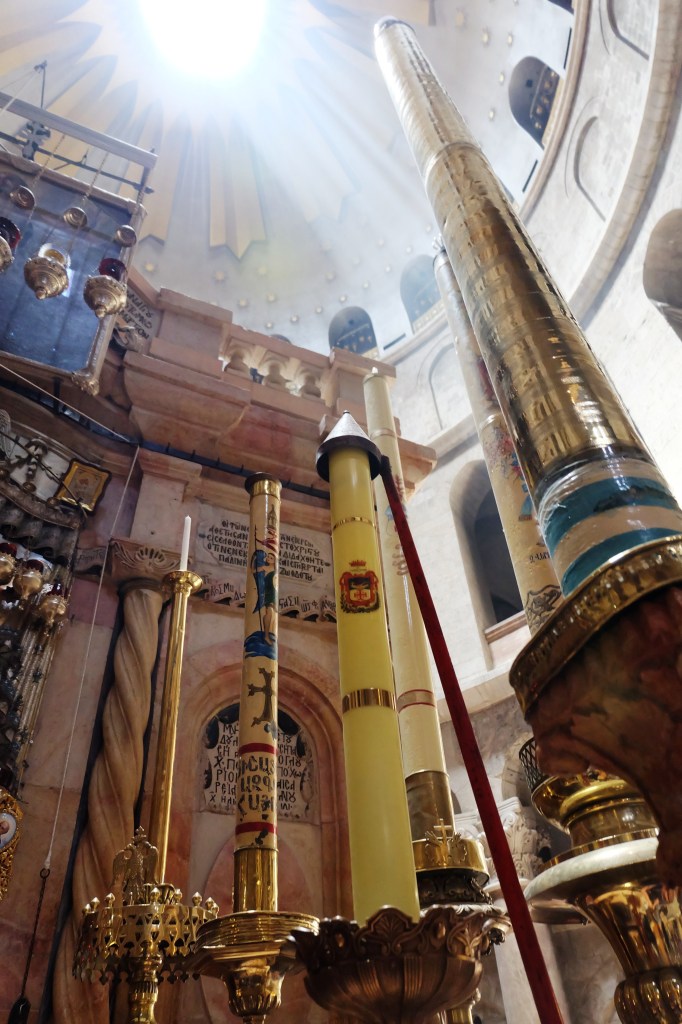
Paschal candles at the entrance to the burial site of Jesus inside the Church of the Holy Sepulchre in Jerusalem. Photo by author, May 2017.

We are now at the penultimate Sunday of the Easter Season with the Solemnity of the Ascension of Jesus into heaven. Next Sunday we close the season with Pentecost and begin the Ordinary Time following Monday.

But, with our situation expected to last until 2021 when we shall have a vaccine against COVID-19, it still feels like Lent for many of us who now feel the economic and psychological impact of this pandemic.

More than ever before, we are challenged today to give testimony to Christ’s Resurrection so we can grasp the meaning and beauty of our celebration today.

The Ascension of Jesus is not about his movement or change of residence from earth into heaven or some remote part of the deep space to start his “working from home”: the Ascension of Jesus is the “leveling up” of the relationship of Christ with his disciples who include us all today.

Then Jesus approached and said to them, “All power in heaven and on earth has been given to me. Go, therefore, and make disciples of all nations, baptizing them in the name of the Father, and of the Son, and of the Holy Spirit, teaching them to observe all that I have commanded you. And behold, I am with you always, until the end of the age.”

Matthew 28:18-20
Dome of the Chapel of the Ascension beside a mosque outside Jerusalem. Photo by author, May 2019.

Giving testimony to the Risen Christ

Notice how our gospel today does not speak much about Jesus Christ’s ascension or his being taken up to heaven unlike with Luke both in his gospel account and Book of Acts of the Apostles.

With Matthew, it is very clear that with Jesus Christ’s departure comes the mission to give testimony to him who is risen from the dead. Every disciple’s testimony is essentially his/her mission to proclaim to the world that Jesus is alive, that he is Life itself.

Like during his Ascension on a hill outside Jerusalem, Jesus is calling us all today to gather again around him, to seek those who are lost and forgotten in order to bring them all together in Christ especially at this time when people suffer more from the neglect and double-standards of this government than from COVID-19 itself.

Where is God?

We are about to end two great seasons in our liturgical calendar but it seems that we are stuck in the Holy Week. We wonder what have happened to us in this pandemic when every scene we see, every situation we are into are unbelievable, something we see only in movies. And this one’s for real!

For those of us who have not lived through wars like our parents, the atrocities of Martial Law like others, or great catastrophes like the Baguio earthquake of 1990 and the recent “Yolanda” in Samar and Leyte, when the only sufferings we can “brag” are “Ondoy” and EDSA traffic, we now live life in the most uncertain way. In between the temporary escapes and respites offered by Netflix and social media platforms, we go through a lot of self-doubts, sometimes with fits of depression or sadness and loneliness especially when the day ends and darkness begins to envelop us.

For the first time, many of us have truly experienced of not having that much in life, whether they are family and friends, or money and things.

Window inside the Chapel of Ascension, May 2017.

This is the call of the Solemnity of the Ascension of the Lord: that we gather ourselves anew, our families and friends, our memories, most of all, our faith and hope in God whom we have always taken for granted all these years.

This is the great challenge of our time as Christians: how can we be like the Apostles and other followers of Jesus along with his Mother the Blessed Virgin Mary be filled with joy at his departure, bearing all the pains and sufferings of persecution in this time of the corona virus?

Can we gather ourselves anew – not only our family and friends but our very selves to proclaim in our lives, in our presence, in our social media posts, in everything that Jesus Christ is risen, that he is with us always?

Brothers and sisters: May the God of our Lord Jesus Christ, the Father of glory, may give you a Spirit of wisdom and revelation resulting in knowledge of him. May the eyes of your hearts be enlightened, that you may know what is the hope that belongs to his call, what are the riches of glory in his inheritance among the holy ones, and what is the surpassing greatness of his power for us who believe, in accord with the exercise of his great might….

Ephesians 1:17-19

Opening our hearts

I have always loved that part of St. Paul’s letter to the Ephesians, imploring God that the eyes of our hearts may be enlightened, that we may be opened to the truths and realities of Jesus Christ truly alive in our midst.

Giving testimony that Jesus Christ is risen, that he is alive, that he is Life itself needs an open heart.

Our minds will never be enough to capture, to understand and process everything about the Resurrection of Jesus Christ because it is something beyond history, beyond logic. We are sure it had truly happened, leaving imprints in the hearts and persons of all of Christ’s followers, from his first witnesses like the apostles down to us in our own time. What we need are listening hearts, seeing hearts… hearts that are open to the realities of God dwelling in us.

You must have followed the news last week about Mang Dodong of Caloocan City who was detained for more than ten days in Navotas where he was caught buying fish without a quarantine pass.

We were all saddened and affected by the news because it was at that same time when the President had pardoned and retained in position a police general who had violated quarantine rules he had vowed to implement. In fact, so severely in many instances including with Mang Dodong!

Good news is how so many people helped him pay his bail to be set free. That’s the risen Jesus working in our own time!

Fish vendor Joseph Jimeda, aka, Mang Dodong in his detention cell in Navotas. Photo from GMA News.

The path of love towards Easter and Ascension

What really makes this quarantine period too difficult and painful is not COVID-19 itself but the incompetence and injustice of this government personified by officials who are mostly arrogant, inconsistent, liars, and closed from the realities of life. They are so blinded by material things that they see businesses like malls as more essential than houses of worship that remain closed up to this day (unfortunately, even our bishops are so silent about it except for a few of them).

Sometimes, I feel we are not doing enough as witnesses and disciples of Christ, that we must be bolder and more adamant in insisting what is right, what is just with various social media platforms offering us venues for expressing our views.

But, as I prayed more about the pandemic in the light of our Risen Lord Jesus Christ, the more I see him present in his seeming absence by being silent amidst all these threats of the pandemic worsened by the government’s irresponsibilities, insensitivities, and injustice.

The very site where Jesus is believed to have stood during his ascension now encased in glass inside the Chapel of the Ascension. Photo by ator, May 2017.

To give testimony to the Risen Lord, to make disciples of all nations, and to teach everyone all he had commanded us to observe need not use force. Like Jesus and the Father, we need to remain gentle and patient despite the violence prevailing around us.

See how God patiently waited for the fullness of time before sending us his Son; and when Jesus was born, notice also the many trials he went through from Bethlehem to Egypt and back to Nazareth, reaching its highest point in his Passion and Death on the Cross on Good Friday.

Then came Easter Sunday and now, his Ascension.

Everything happened in silence, so gently and gradually, mostly with only a few people present.

That has always been the way of God from the Old Testament to the New Testament and right into our own time: no use of external powers and violent forces, only freedom to offer and elicit love that conquers all.

Today we are also celebrating the 54th World Communication Sunday, the only feast mandated by Vatican II for us to realize the importance of modern means of communications in proclaiming the good news of Jesus Christ.

For this year, Pope Francis has chosen the topic of the human story, of how our individual story is woven into our collective stories as a family, nation, and church. And the good news is, according to the Pope, all these stories of ours are made part of God’s story of love, the greatest story of all, the story that renews us.

Yes, we all have dark stories in this time of pandemic. Or even in childhood or the past. But, if we look into our hearts in prayer and in faith, we find Jesus there, loving us, keeping us, guiding us. Most of all, authenticating his resurrection in us, in our own life!

There are more beautiful stories we can tell during this pandemic that enable others to see the Risen Lord among us. Let us entrust ourselves to Jesus, to keep our hearts open as he authenticates our many experiences of witnessing to his Resurrection like he did to all others ahead of us.

Be assured we are on the right path in him. Amen.

Pilgrims waiting to enter the Chapel of the Ascension in the Holy Land, May 2019.

Tensions lead to life and joy

The Lord Is My Chef Breakfast Recipe for the Soul, Friday, Easter Week-VI, 22 May 2020

Acts of the Apostles 18:9-18 <*(((>< + 0 + ><)))*> John 16:20-23

Photo by Ms. Ria De Vera, Sunrise along Halili Ave. in front of our Parish, 21 May 2020.

Your words today, dear Jesus, are very mysterious, so difficult to understand but so delightful to dwell on, or chew — as St. Ignatius of Loyola reminded us in his “Spiritual Exercises”.

There are many tensions present in your words today, Lord.

And that is where I have found you — in the many tensions that come into our lives!

So often, we find the word “tensions” so negative as they lead to wars and troubles of all sorts. But in deeper reflection, tensions are like frictions that without them, we can never experience life at its fullest.

The beauty of every sunrise and sunset is due to the tensions between light and darkness.

Tensions often occur between good things, never between good and evil. Tensions help us purify our intentions, clarify our priorities because tensions lead us to deeper discernment of your plans and will for us.

In the first reading, there was the tension among St. Paul and the Jews about your good news of salvation. The division resulted into more conversions and baptisms that made Corinth so dear to St. Paul.

Photo by author, altar of our Parish at sunrise, 2019.

But what is most beautiful about tensions is found in the gospel, of how joy is borne out of pain and sufferings like a woman in the pangs of childbirth:

Jesus said to his disciples: “Amen, amen, I say to you, you will weep and mourn, while the world rejoices; you will grieve, but your grief will become joy. When a woman is in labor, she is in anguish because her hour has arrived; but when she had given birth to a child, she no longer remembers the pain because of her joy that a child has been born into the world. so you also are now in anguish. But I will see you again, and your hearts will rejoice, and no one will take your joy away from you.”

John 16:20-22

Lord Jesus Christ, there are so many tensions in our lives these days since the start of quarantine period due to the pandemic.

Help us first identify the tensions in our lives these days.

Some of these tensions are between the need for us to pray more and immerse ourselves with those in need; the tension of going out to help and staying indoor to plan for our actions.

Send us your Holy Spirit, Jesus, to enlighten our minds and our hearts so we may identify the tensions we encounter that lead to life and joy in you. Amen.
Prayer in darkness

The Lord Is My Chef Breakfast Recipe for the Soul, Wednesday, Easter Week-IV, 06 May 2020

Acts of the Apostles 12:24-13:5 ><)))*> + ><)))*> + ><)))*> John 12:44-50

Photo by icon0.com on Pexels.com

Our lamentations continue, O Lord, as our nation is plunged into deeper and disturbing darkness. How can all kinds of darkness fall upon us in this administration? First, they found death as solution to many problems. And then came all their lies and fake news.

Not to mention their diplomatic ties with a godless government that has been dishonest from the very beginning regarding this pandemic.

They themselves have chosen to be in darkness at the very start of the COVID-19 pandemic who would rather pass blame and wash hands for every confusion in implementing the quarantine.

And, now comes their most serious attack to light, in shutting down a beacon of light of news and information.

The more we cry out to you, O dear Jesus, please come to us now. Quickly. And save us!

Jesus cried out and said, “Whoever believes in me believes not only in me but also in the one who sent me, and whoever sees me sees the one who sent me. I came into the world as light, so that everyone who believes in me might not remain in darkness.”

John 12:44-46

We pray for those in government, in this administration who’s leader had blasphemed your Most Holy Name not only once or twice for the grace of enlightenment and decency from the Holy Spirit.

We pray like your early church for the Holy Spirit to set aside just one or two good souls in this government – if there are still any – to be sent to bring enlightenment to this administration who thrives on lies and malice along with their minions and supporters.

Have mercy on us, Lord, have mercy.

Hear our cries and our pleas, O Lord of justice.

Show us your path of holiness amid this time of darkness and evil. Amen.
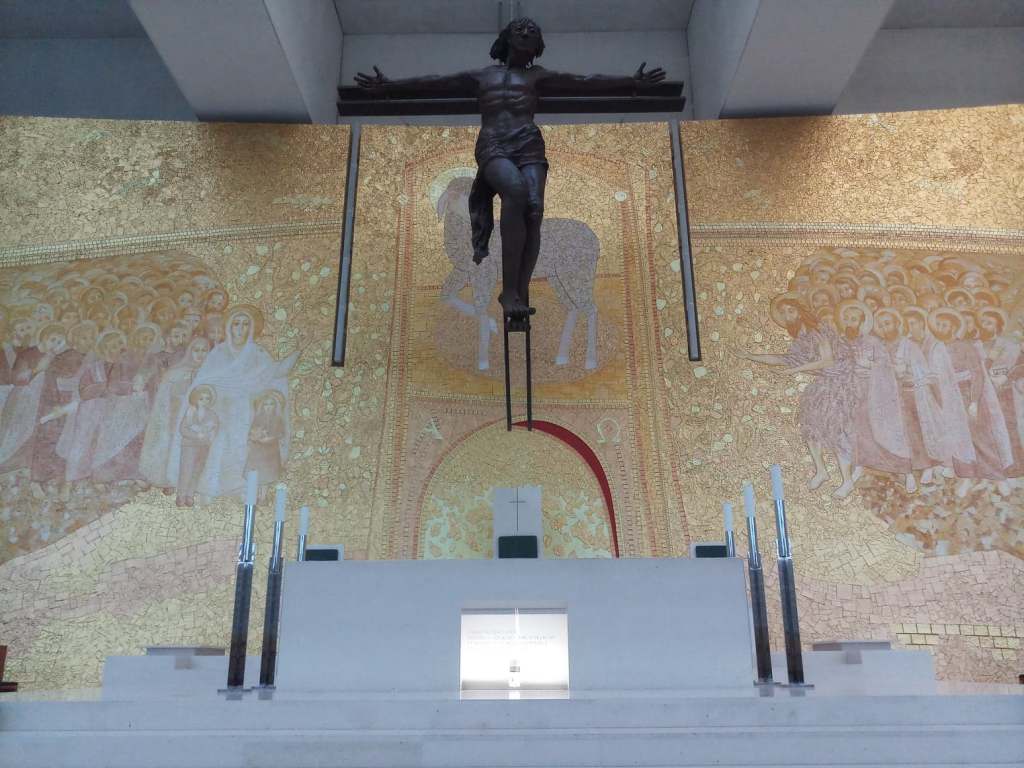
Photo from the Varistarian of UST.

When darkness becomes light

The Lord Is My Chef Breakfast Recipe, Holy Wednesday, 08 April 2020

Photo by icon0.com on Pexels.com

Tonight is “Spy Wednesday” – the night traitors and betrayers are put on the spotlight because it was on this night after Palm Sunday when Judas Iscariot struck a deal with the chief priests to hand them over Jesus for 30 pieces of silver (Mt. 26:14-16).

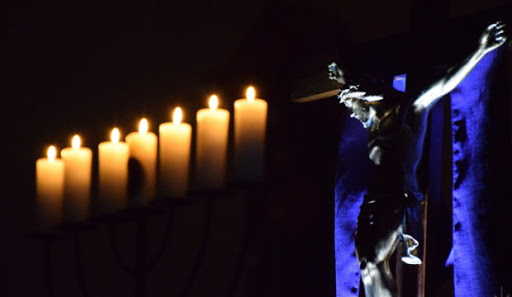
The “Tenebrae” is celebrated in some churches when candles are gradually extinguished with the beating of drums and sounding of matraca to evoke silence and some fear among people as they leave in total darkness to signal the temporary victory of evil in the world for tomorrow we enter the Paschal Triduum of Holy Thursday, Good Friday and Easter Vigil of the Lord.

From Google.

Darkness generally evokes evil and sin, uncertainties and sufferings. But, at the same time, darkness preludes light!

That is why Jesus Christ was born during the darkest night of the year to bring us light of salvation.

Beginning tonight, especially tomorrow at his agony in the garden, we shall see Christ entering through darkness reaching its climax on Friday when he dies on the cross with the whole earth covered in darkness, rising on Easter in all his glory and majesty.

Our present situation in an extended Luzon-wide lockdown offers us this unique experience of darkness within and without where we can learn some important lessons from the Lord’s dark hours beginning tomorrow evening of his Last Supper.

St. John gives us a glimpse into how we must deal with life’s darkness that plagues us almost daily with his unique story of the Lord’s washing of his disciples’ feet on the night he was betrayed.

Before the feast of Passover, Jesus knew that his hour had come to pass from this world to the Father. He loved his own in the world and he loved them to the end. The devil had already induced Judas, son of Simon the Iscariot, to hand him over. So, during supper… he rose from supper and took off his outer garments. He took a towel and tied it around his waist. Then he poured water into a basin and began to wash the disciples’ feet and dry them with the towel around his waist. He came to Simon Peter…

John 13:1-2, 4-6
Photo from aleteia.org.

It is very interesting to reflect how Judas Iscariot and Simon Peter dealt with their own inner darkness on that night of Holy Thursday when Jesus was arrested.

Though Judas Iscariot and Simon Peter are poles apart in their personalities, they both give us some traits that are so characteristic also of our very selves when we are in darkness. In the end, we shall see how Jesus turned the darkness of Holy Thursday into becoming the very light of Easter.

Getting lost in darkness like Judas Iscariot

Right after explaining the meaning of his washing of their feet and exhorting them to do the same to one another, Jesus begins to speak of Judas Iscariot as his betrayer.

When he had said this, Jesus was deeply troubled and testified, “Amen, amen, I say to you, one of you will betray me …It is the one to whom I hand the morsel after I had dipped it.” So he dipped the morsel and handed it to Judas, son of Simon the Iscariot. After he took the morsel, Satan entered him… and left at once. And it was night.

John 13:21, 26-27, 30
Photo from desiringgod.org

The scene is very dramatic.

Imagine the darkness outside the streets of Jerusalem in the stillness of the night and the darkness inside the Upper Room where they were staying.

More darker than that was the darkness among the Apostles not understanding what Jesus was saying about his betrayer because they thought when Judas left, he was being told to buy more wine or give money to the poor!

Most of all, imagine the darkness within Judas.

To betray means to hand over to suffering someone dear to you.

That’s one darkness we always have within, of betraying Jesus, betraying our loved ones because we have found somebody else to love more than them. Satan had taken over Judas. The same thing happens to us when we sin, when we love someone more than those who truly love us or those we have vowed to love always.

And the darkest darkness of all is after handing over our loved ones, after dumping them for something or somebody else, we realize deep within the beautiful light of truth and love imprinted in our hearts by our betrayed loved ones – then doubt it too!

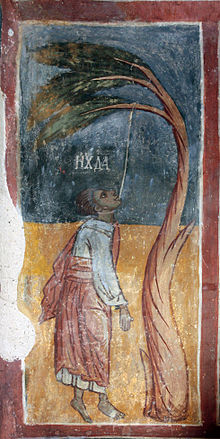
The flickering light of truth and love within is short lived that we immediately extinguish it, plunging us into total darkness of destruction like Judas when he hanged himself.

See how Judas went back to the chief priests because “he had sinned”, giving them back the 30 pieces of silver to regain Jesus.

Here we find the glow of Jesus, of his teachings and friendship within Judas still etched in his heart — the light of truth and love flickering within.

Any person along with their kindness and goodness like Jesus, our family and true friends can never be removed from one’s heart and person. They will always be there, sometimes spurting out in our unguarded moments because they are very true.

That is the darkest darkness of Judas – and of some of us – who think we can never be forgiven by God, that we are doomed, that there is no more hope and any chance at all.

See how the evangelist said it: “Judas left at once. And it was night.”

And that is getting lost in darkness permanently, eaten up by darkness within us because we refuse to believe in the reality of a loving and forgiving God who had come to plunge into the darkness of death to be one with us so we can be one in him. What a loss.

Groping in the dark into the light like Peter

Photo by author, Church of Gallicantu, Jerusalem where the cock crowed after Peter denied Jesus the third time, May 2017.

Of the Twelve, it is perhaps with Simon Peter we always find ourselves identified with: the eager beaver, almost a “bolero” type who is so good in speaking but many times cannot walk his talk.

“Master, are you going to wash my feet?” Jesus answered and said to him, “What I am doing, you do not understand now, but you will understand later.” Peter said to him, “You will never wash my feet.”

John 13:6-8

Here is Peter so typical of us: always assuming of knowing what is right, which is best, as if we have a monopoly of the light when in fact we are in darkness.

See how during the trial of Jesus before the priests, Peter denied him thrice, declaring he never knew Jesus while outside in the dark, completely in contrast with Jesus brilliantly answering every question and false accusation against him inside among his accusers!

Many times in our lives, it is so easy for us to speak on everything when we are in our comfort zones, safe and secured in our lives and career. But when left or thrown out into the harsh realities of life, we grope in the darkness of ignorance and incompetence, trials and difficulties.

How often we are like Peter refusing Jesus to wash our feet because we could not accept the Lord being so humble to do that simply because he is the Lord and Master who must never bow low before anyone.

And that is one darkness we refuse to let go now shaken and shattered by the pandemic lockdown! The people we used to look down upon are mostly now in the frontlines providing us with all the comforts we enjoy in this crisis like electricity, internet, security, food, and other basic services.


Bronze statue of the call of Peter by Jesus. Photo by author, May 2017.

We have always thought of the world, of peoples in hierarchy, in certain status where there are clear delineations and levels of importance, totally forgetting the lessons of Jesus of being like a child, of service and humility: “whoever wants to be great must be the least and servant of all.”

According to Matthew and Luke, Peter realized his sins – the darkness within him – of denying Jesus thrice after the cock crowed that he left the scene weeping bitterly, feeling so sorry. Eventually after Easter, Peter would meet Jesus again on the shores of the Lake of Tiberias, asking him thrice, “do you love me?”

Peter realized how dark his world has always been but in that instance when he declared his love that is so limited and weak did he finally see the light of Christ in his love and mercy!

Unlike Judas, Peter moved out of darkness and finally saw the light in the Risen Lord right in the very place where everything started when he was called to be a fisher of men, in his humanity as he was called by his original name, “Simon, son of Jonah, do you love me?”.

Human love is always imperfect and Jesus knows this perfectly well!

The best way to step out of darkness within us is to be like Simon — simply be your imperfect self, accepting one’s sins and weakness for that is when we can truly love Jesus who is the only one who can love us perfectly.

Overcoming darkness in, Jesus, with Jesus, through Jesus

Though the fourth gospel and the synoptic gospels of Matthew, Mark, and Luke differ in providing us with the transition from the Upper Room of the Last Supper into the agony in the garden, the four evangelists provide us with one clear message at how Jesus faced darkness: with prayer, of being one in the Father.

Even on the cross of widespread darkness, Jesus spoke only to pray to the Father.

Then Jesus came with them to a place called Gethsemane, and he said to his disciples, “Sit here while I go over there and pray.” He took along Peter and the two sons of Zebedee, and began to feel sorrow and distress.

Matthew 26:36-37
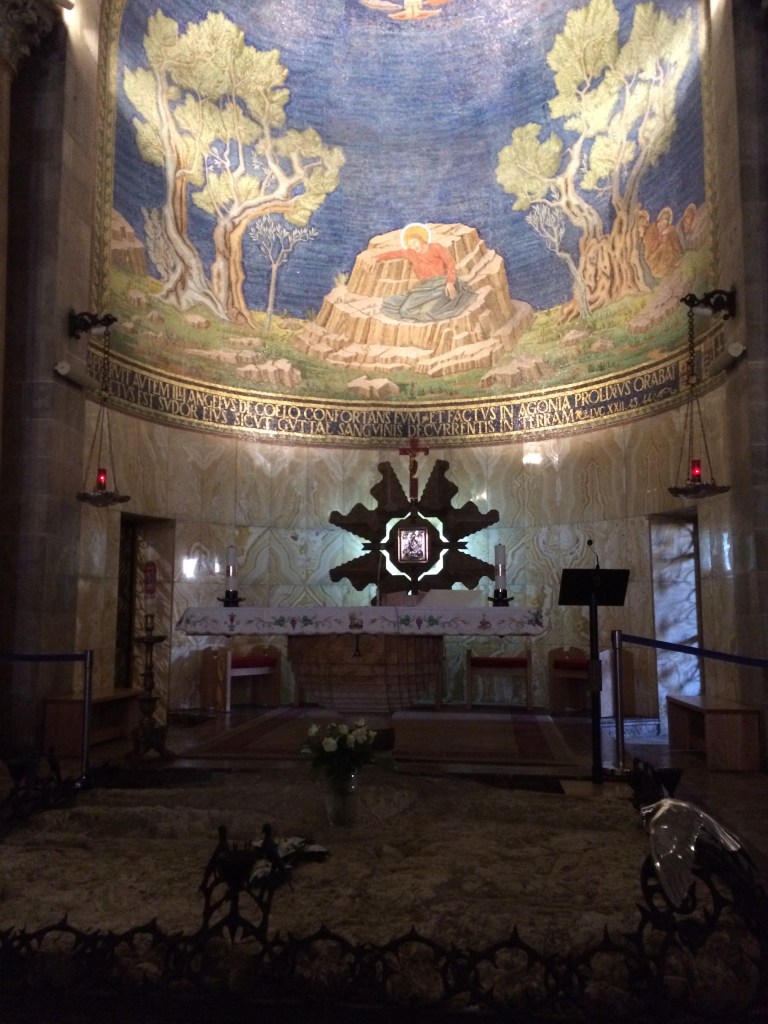
Photo by author, altar of the Church of All Nations beside the Garden of Gethsemane, May 2017. The church is always dimly lit to keep the sense of darkness during the Agony in the Garden of Jesus.

Before, darkness for man was seen more as a curse falling under the realm of evil and sin; but, with the coming of Jesus, darkness became a blessing, a prelude to the coming of light.

We have mentioned at the start of our reflection that Jesus was born during the darkest night of the year to show us he that is the light of the world, who had come to enlighten us in this widespread darkness, within us and outside us.

As the light of the world, Jesus was no stranger to darkness which he conquered and tamed in many instances like when they were caught in a storm at sea and in fact, when walked on water to join his disciples caught in another storm.

But most of all, Jesus had befriended darkness and made it a prelude to light.

How? By always praying during darkness. By prayer, it is more than reciting some prayers common during his time as a Jew but as a form of submission to the will of the Father. Jesus befriended darkness by setting aside, forgetting his very self to let the Father’s will be done.

Bass relief of agony in the garden on the wall of the Church of All Nations at Gethsemane. Photo by author, May 2019.

This he showed so well in two instances, first on Mount Tabor where he transfigured and second in Gethsemane before his arrest.

In both events, Jesus showed us the path to overcoming darkness is always through prayers, of being one in the Father.

It is in darkness when God is most closest to us because it is then when we get a glimpse of himself, of his love and mercy, of his own sufferings and pains, and of his glory.

This is something the three privileged disciples – Simon Peter, James and his brother John – did not realize while being with Jesus at both instances until after Easter. We are those three who always fall asleep, who could not keep with praying in Jesus, with Jesus, and through Jesus.

It was in the darkness of the night when Jesus spent most of his prayer periods, communing with the Father up in a mountain or a deserted place.

On Mount Tabor, Jesus showed his coming glory while in Gethsemane he showed his coming suffering and death. But whether in Gethsemane or on Mount Tabor, it is always Jesus we meet inviting us to share in his oneness with the Father, in his power in the Holy Spirit to overcome every darkness in life.

And the good news is he had already won for us!

Photo by Mr. Raffy Tima of GMA-7 News of Mt. Samat with the Memorial Cross across the Manila Bay following clear skies resulting from the lockdown imposed since March 17, 2020.

In these extended darker days of quarantine period, let us come to the Lord closer in prayer to. experience more of his Passion and Death, more of his darkness so we may see his coming glory when everything is finally cleared in this corona pandemic.

Prayer does not necessarily change things but primarily changes the person first. And that is when prayer changes everything when we become like Jesus in praying.

Jesus is asking us to leave everything behind, to forget one’s self anew to rediscover him in this darkness when we get out of our comfort zones to see the many sufferings he continues to endure with our brothers and sisters with lesser things in this life, with those in total darkness, with those groping in the dark.

Now more than ever, we have realized the beauty of poverty and simplicity, of persons than things.

And most especially of darkness itself becoming light for us in this tunnel.

May Jesus enlighten us and vanish all darkness in us so that soon, we shall celebrate together the joy of his coming again in this world darkened by sin. Amen.

A blessed and prayerful Paschal Triduum to you.

Huwag matakot tulad ni San Jose

Lawiswis ng Salita ni P. Nicanor F. Lalog II, Ika-19 ng Marso 2020
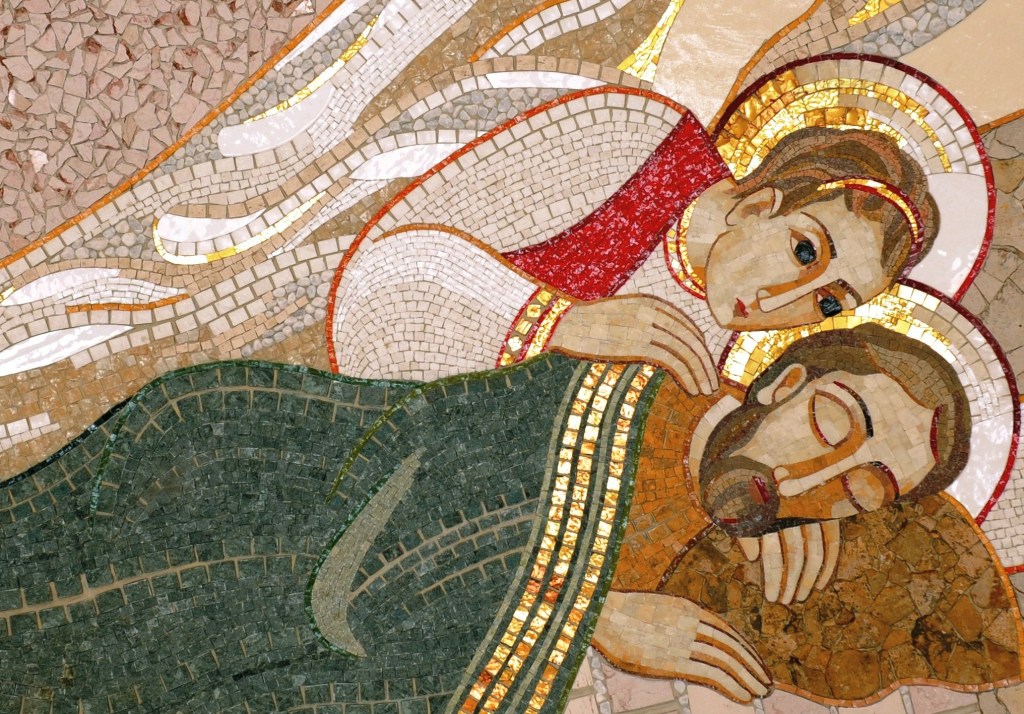
Larawan ng mosaic ng panaginip ni San Jose mula sa clarusonline.it
"Huwag kang matakot, Jose
na tuluyang pakasalan si Maria",
mga salita na atin ding kinakailangan
sa panahong ito ng pagsubok at kagipitan.
Ating tularan si San Jose
huwaran ng kabanalan 
lalo ng mga kalalakihan 
at ama ng tahanan.
Kaya naman katulad niya,
manalangin tayo na huwag matakot
magsama-sama muli sa tahanan
mabuo muli pamilyang ating pinabayaan.
Huwag matakot 
mag-usap muli mag-asawa
di lamang makapakinig
kungdi muling magkaniig.
Huwag matakot
mga anak lumapit sa magulang,
magtapat ng saloobin
ihinga mga hinaing.
Gayon din mga magkakapatid
huwag matakot magkalapit-lapit
madalas kulang na sa malasakit
palaging mayroong hinanakit.
Larawan mula zenit.org, figurine ng “Let Mom Rest”.
Huwag matakot
tingnan din pangangailangan
ng mga maliliit sa lipunan
mga may-sakit, nag-iisa at aba.
Sila palagi nating
kinakalimutan at pinababayaan
higit ngayong nangangailangan
ng tulong at kaibigan.
Huwag matakot
ipadama pagmamahal
kapwa ay igalang
itigil na mga kabastusan.
Huwag matakot
humingi ng tawad
gayon din ng magpatawad
tunay na sukatan ng pagmamahalan.
Larawan kuha ng may-akda, dating gawaan ni San Jose sa kanilang tahanan sa Nazareth, Israel (Mayo 2017).
O aming San Jose
taong matuwid at banal
kami man ay ipinalangin
maging matapang tulad mo.
Huwag kaming matakot
lumuhod at manalangin muli
sa Diyos upang kanyang kalooban
aming malaman, masundan, at mapanindigan.
Higit sa lahat
katulad mo kami ay gumising
sa pagkakahimbing ng pagkamakasarili namin
upang si Kristo ay muling dumating!  Amen. 
Larawan kuha ng may-akda, kapilya ni San Jose sa Nazareth, Israel (Mayo 2017).

Love: Morality of Christianity

The Lord Is My Chef Sunday Recipe for the Soul, Week VII-A, 23 February 2020

Leviticus 19:1-2, 17-18 ><)))*> 1 Corinthians 3:16-23 ><)))*> Matthew 5:38-48

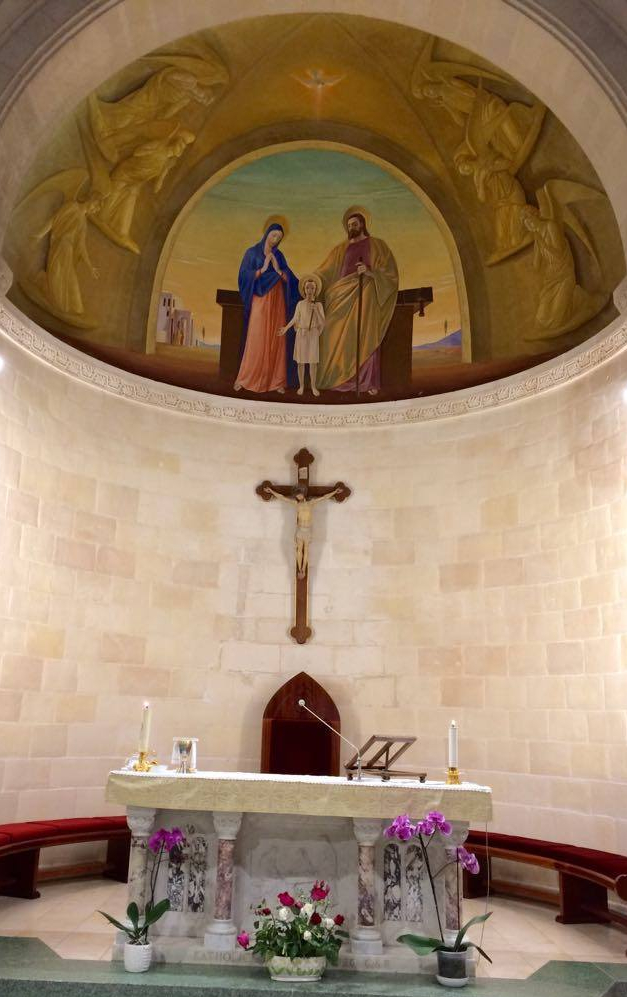
Altar of the modern Minor Basilica of the Holy Trinity at Fatima, Portugal. Photo by Arch. Philip Santiago, 2017.

Jesus concludes his Sermon on the Mount this Sunday just in time for the start of Lent this coming Ash Wednesday. He taught us last Sunday that righteousness is not only measured by acts but most of all by the purity of the heart’s intentions that we call “education of the heart”.

Today Christ comes to the demands of charity and love, the fullness of the Laws in himself.

Jesus said to his disciples: “You have heard that it was said, An eye for an eye and a tooth for a tooth. But I say to you, offer no resistance to one who is evil. When someone strikes you on your right cheek, turn the other one as well… You have heard that it was said, You shall love your neighbor and hate your enemy. But I say to you, love your enemies, and pray for those who persecute you, that you may be children of your heavenly Father..”

Matthew 5:38-39, 43-45

See again the Lord’s pattern in his preaching like last Sunday: a recall of the laws to show his adherence to them contrary to claims of his enemies, and then his infusion of his teaching that perfects the laws: “You have heard… But I say to you…”

Jesus focuses only on two laws today, that of revenge or “lex talionis” (from Latin talio for the word such) and that of hate for enemy which needs some clarifications.

Nowhere do we find in the Laws of Israel “to love your neighbor and hate your enemy”. Experts say Jesus must be citing a popular saying of his time in this part of his teaching. Besides, the Aramiac spoken by the Lord does not connote the harsh meaning we have today for the word “hate”. In short, Jesus is correcting here the norm among Jews of his time to “just love those who love us”.

This is why he adds this beautiful explanation with the most unique conclusion of all.

“For if you love those who love you, what recompense will you have? Do not the tax collectors do the same? And if you greet your brothers only, what is unusual about that? Do not the pagans do the same? So be perfect, just as your heavenly Father is perfect.”

Matthew 5:46-48
Photo by Lorenzo Atienza, 12 June 2019, Malolos Cathedral.

A fraternity of humanity in the Father

Here we find a beautiful dimension of Jesus Christ’s assertion last week that he had come to fulfill the Laws: more than having a broader approach to the spirit of the laws, education of the heart leads us to see everyone as a brother and a sister.

No one is different. Every one is a family – a kin! which is the root of the word “kind”.

Being kind is more than being good as we say in Filipino, mabait or mabuti.

Being kind is treating the other person as a kin, a relative or family; someone who is not different from us. When we say “he is kind to me”, it means more than being good to me but treating me as a family, a brother or a sister – not as “another” or “iba sa akin” as we say in Filipino.

Photo by author, Mt. St. Paul, Baguio City, 03 February 2020.

This is the essence of our “Year of Inter-religious Dialogue, Ecumenism, and Indigenous Peoples” in preparation next year of our 500 years of Christianity in the country.

Everybody is included in that celebration as we reach out to peoples of other faith and beliefs as well as to the indigenous peoples whose forefathers were actually the first settlers of the country.

This is very important in any dialogue and relationship and partnerships including marriage: there must always be the acceptance of everyone in equal footing with same dignity as a person. It is from here we start that fullness of the Laws in Christ in love.
Human holiness as a reflection of God’s holiness in love

Love can only happen where there is equality and fairness. Love demands we are first of all at equal footing with each other. This is why Jesus became human like us: the Son of God became human to stand on equal footing with us that we cannot argue that he is greater because he is truly human, too, going through everything we have gone through except sin.

When he said that we offer our other cheek, to give our cloak, and go for another mile, he is not referring to criminal or penal codes but more into our humanity, that spirit of universal brotherhood so that even our oppressors and enemies come to realize within them that we are one, that we should be caring for one another, not hating and hurting each other.

Loving our enemies does not mean we let evil continue; loving our enemies means continuing to “love” perpetrators of evils until they realize we are brothers and sisters, keeping each other, caring for each other.

Loving our enemies is making them realize that there are nobody else here on earth for them except us – why fight and perish?

Yes, these are easier said than done. And admittedly, I must confess it is the most difficult part of the gospel, of being a Christ-ian. But it is something Jesus is asking us in the most personal manner.

From Google.

Let it be clear that Jesus is not asking us to behave with naiveté that we give in to injustice, evil, and violence but that we always be peacemakers, the blessed ones he said in his Beatitudes. In our fight for justice and peace, we fight with the moral persuasions of love which is the morality of Christ.

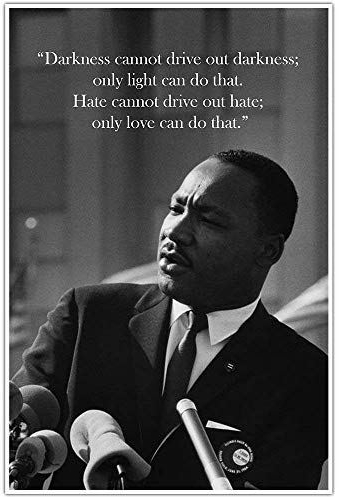
The American civil rights leader Rev. Martin Luther King, Jr. had shown in our modern time that the Lord’s teachings are doable: we just have to be convinced and must truly believe in Jesus.

“Love is the most durable power in the world. This creative force is the most potent instrument available in mankind’s quest for peace and security.”

Rev. Martin Luther King, Jr.

When we love truly in Jesus Christ, asserting what is true, what good, what is just, we make God truly present in the world. When that happens, the more we allow him to do his works of changing us within, of transforming us within. It is in our imperfect love that we make God present, the perfect I Am.

The Lord said to Moses, “Speak to the whole Israelite community and tell them: Be holy, for I, the Lord your God, am holy. Take no revenge and cherish no grudge against your people. You shall love your neighbor as yourself. I am the Lord.”

Leviticus 19:1-2, 18
Photo by Dra. Mai B. Dela Peña, Santorini in Greece, 2016.

Hubris, our greatest temptation and sin

The Season of Lent is fast approaching us, set to start with Ash Wednesday this week. It is a season characterized by barrenness: no Gloria and Alleluias, no flowers, no decorations, no images to make us turn back to God again, our Lord and Master alone.

St. Paul reminds us today in our second reading that we are “God’s temple… that there is no need to boast of anyone including one’s self” (1Cor. 3:16, 21). Instead of embracing or holding on to anyone including one’s self, we have to embrace the scandal of the cross of Christ, that is, power in weakness, wisdom in what the world considers folly.

For the ancient Greeks as depicted in their epics, the greatest temptation and sin of man is hubris – the arrogant presumption that he is god, that he can do everything, he can have everything that he defies the gods.

Hubris is the sin of pride that has led everyone from Adam and Eve to all the powerful men and women of history into their downfall. It is absolute power crumbling absolutely, always tragically.

In his Sermon on the Mount where we heard many of the Lord’s teachings this whole month of February, Jesus shows us the path away from hubris, his path of love and holiness in the Father. Let us heed his calls, give his teachings a try and a chance to be fulfilled in us.

A very lovely and loving Sunday to you!

Spiritual decluttering and tidying

The Lord Is My Chef Breakfast Recipe for the Soul

Wednesday, Week V, Year II, 12 February 2020

1 Kings 10:1-10 ><)))*> 0 <*(((>< Mark 7:14-23

Photo by author, Baguio Cathedral, January 2019.

Thank you for coming to us, Lord Jesus Christ, to save us, to cleanse us of our sins. What a tremendous grace and gift from you who are sinless to own up and wash away our sins!

Long before Mari Kondo had come advocating decluttering and tidying our homes, you were there first, O Lord, spiritually cleansing us, our inner selves in order to experience your peace and wisdom like King Solomon.

What must have impressed the Queen of Sheba in meeting King Solomon was more of his inner peace and stability, sincerity and honesty in answering all her questions: he was not hiding anything negative inside himself as he exuded with positive vibrations.

Precisely what Jesus was telling the people of his time and us today:

“Hear me, all of you, and understand. Nothing that enters one from outside can defile that person; but the things that come out from within are what defile… From within the man, from his heart, come evil thoughts, unchastity, theft, murder, adultery, greed, malice, deceit, licentiousness, envy, blasphemy, arrogance, folly. All these evils come from within and they defile.”

Mark 7:14-15, 21-23
From Google.

Cleanse our hearts, our inner selves, Lord Jesus Christ.

Please do some spiritual “Mari Kondo-ing” into our souls to discard all filth and negative vibes we have been senselessly keeping, even nurturing, holding on in the hope of avenging for the wrongs done against us.

Cleanse us inside, Lord, so we may be filled with your light of reason and sparks of joy. Amen.