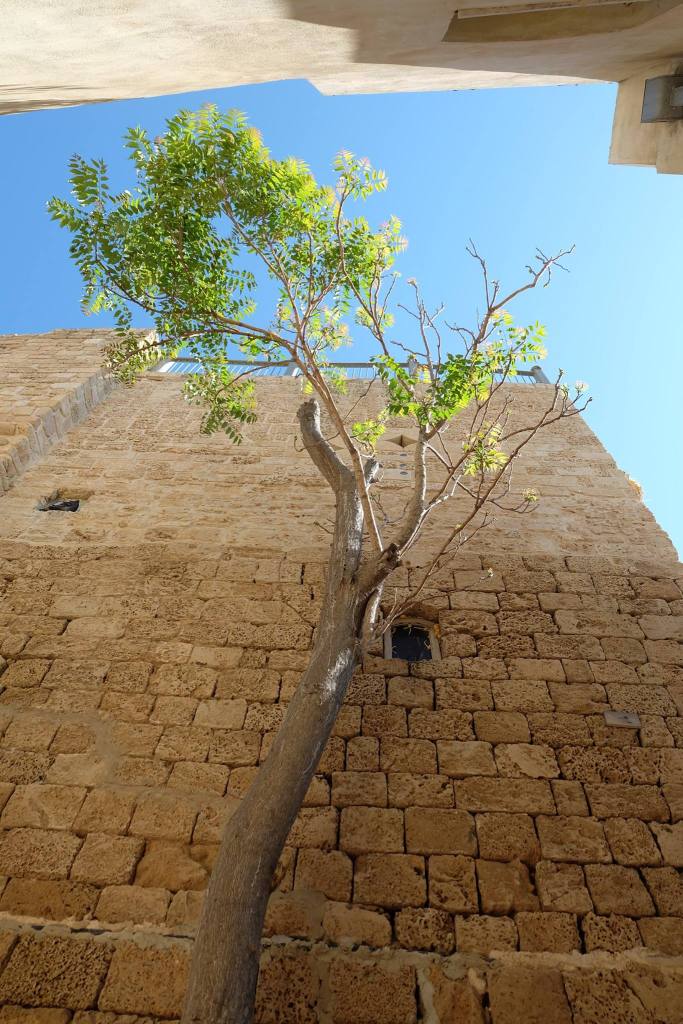
Jesus in the gospel today makes his first prediction of his coming pasch or Passion, Death and Resurrection but it was such a terrible “bad news” for Peter that he
… took Jesus aside and began to rebuke him, “God forbid, Lord! No such thing shall ever happen to you.” He turned and said to Peter, “Get behind me, Satan! You are obstacle to me. You are thinking not as God does, but as human beings do.”
Matthew 16:22-23
With Jesus, there is no such thing as “good news, bad news” because all is good news with him. The good news/bad news question is really a non-question to disciples of Christ because whatever suffering we go through and embrace in him is a sharing in his very life. The key is to think as God does, not as a human beings do as Jesus told Peter (https://lordmychef.com/2020/08/29/when-good-news-bad-news-do-not-matter-at-all/).
And that means avoiding being so vain.
That is why we have Carly Simon singing to us this Sunday her 1972 classic “You’re so Vain” that have left our generation guessing who was she referring to in this superb music and poetry. (Personally, I think there is something “genetic” about this guessing game on whomever Ms. Simon was referring to: it was a non-issue among us males even when I have gone working in a radio station for six years. It has been the women who have kept on raising the issue on who could be that man so vain Ms. Simon was narrating in her number one song. And even if Ms. Simon had already identified him as Warren Beatty 40 years after, I still do not care because the song is so good, filled with gospel values too.)
How many times in our being so vain have we refused to embrace pain and sufferings in life, preferring noise than silence, and popularity than hiddenness that are some of the ways of God taught us by Jesus Christ?
Oh, you had me several years ago When I was still quite naive When you said that we made such a pretty pair And that you would never leave But you gave away the things you loved And one of them was me I had some dreams, they were clouds in my coffee Clouds in my coffee, and
You’re so vain You probably think this song is about you You’re so vain (you’re so vain) I’ll bet you think this song is about you Don’t you? Don’t you? Don’t you?
About ten years ago, Al Pacino played the role of Satan in the movie “The Devil’s Advocate” where at the end after tempting the gullible small-town lawyer Keanu Reeves, he proclaimed “vanity… vanity is my most favorite sin.”
This Sunday, Jesus is telling us all is good news with him, no bad news and you can never lose in him. Just come to him with our true self, no matter how sinful and incomplete we are. A blessed week to everyone and happy listening!
Maybe you have been asked so many times with the question, which do you prefer to hear first, the good news or the bad news? Usually we say it all depends to our mood and temperament or to the gravity of the situation. Sometimes, we ask for the bad news first so we can suffer earlier and enjoy the good news later. Or, we ask for the good news first to soften the impact of the bad news.
Our gospel this Sunday is still set in the pagan city of Caesarea Philippi and we heard Jesus giving his disciples – including us – with a strong dosage of “bad news” after hearing last week the good news that he is “the Christ, the Son of the living God.”
Jesus began to show his disciples that he must go to Jerusalem and suffer greatly from the elders, the chief priests, and the scribes, and be killed and on the third day be raised. Then Peter took Jesus aside and began to rebuke him, “God forbid, Lord! No such thing shall ever happen to you.” He turned and said to Peter, “Get behind me, Satan! You are obstacle to me. You are thinking not as God does, but as human beings do.” Then Jesus said to his disciples, “Whoever wishes to come after me must deny himself, take up his cross, and follow me. For whoever wishes to save his life will lose it, but whoever loses his life for my sake will find it.”
Matthew 16:21-25
Our gospel today seems to be a very big, bad news for everyone, with things getting worst before getting any better which the Lord had promised to be only in the end that nobody knows when!
See how Jesus started by saying he would “suffer greatly at the hands of elders, the chief priests, and the scribes and be killed and on the third day be raised again.” Not only that: he now calls Peter as “Satan” from being the Rock last Sunday after giving the right answer as to who he is.
Like Peter, we would probably say the same thing to Jesus why make suffering and death central to life that is meant to enjoy?
Like Peter, the Lord is inviting us today to focus more on the good news than on the bad news of suffering and death which for him – the Paschal mystery we call – is actually the best of good news!
Photo by author, altar flowers in our parish, January 2020.
Jesus Christ’s pasch is the best of good news!
What we have heard as “bad news” from the Lord is his first prediction of his coming pasch or Passion, Death and Resurrection. He would be announcing this prediction of his pasch two more times as they near Jerusalem.
From the He brew word pesach that means to pass over, it connotes suffering and death into new life. It came from the Exodus experience of the Chosen People from Egypt into the Promised Land during the time of Moses, taking its fullest meaning in Jesus Christ, the Son of God who became human like us in everything except sin, “passing over” from eternity to temporal, from Passion and Death to Resurrection.
Authentic discipleship does not require us to seek suffering; no, God is not sadistic as some people with twisted minds would say. However, being faithful to Jesus, witnessing his gospel values bring enough of these sufferings and deaths but on a different level and meaning. We realize that life is a daily exodus, a passing over from darkness into light, from ignorance into wisdom, from sickness into health, from death into new life.
Like the prophet Jeremiah in the first reading, we discover that the more we follow God, the more sufferings we encounter in life but at the same time, we cannot let go of him because his attraction is so powerful! There is something so deep within, so profound and fulfilling in us we realize that living in the ways of God, in the gospel values of Christ can we truly find lasting joy and peace – even if we have to die in our very selves in the process.
You duped me, O Lord, and I let myself be duped; you were too strong for me, and you triumphed. all the day I am an object of laughter; everyone mocks me… But then it becomes like fire burning in my heart, imprisoned in my bones; I grow weary holding it in, I cannot endure it.
Jeremiah 20:7, 9
Photo by author, Gaudete Sunday in our parish, December 2019.
Thinking in God’s ways
Today Jesus is assuring us that there is no such thing as “good news, bad news” with him. The good news/bad news question is really a non-question to disciples of Christ because whatever suffering and death we embrace in him is a sharing in his very life.
Hence, Jesus Christ’s good news is in fact the bestest news we can ever have. Always.
The key is to think as God does, not as human beings do as Jesus pointed out to Peter.
Three things I wish to share with you about thinking in God’s ways:
First is to accept and embrace pains and sufferings not for their own sake but as a way to cleanse our selves to greater glory. As we have said, God is not a sadist; we need to be cleansed like every thing in order to bring out the best in us like diamonds or any precious stone or any material.
Polishing and honing always mean “subtractions” with so many shaving and cutting of the rough edges to bring out the beauty and sharpness of a thing.
Man’s ways has always been to avoid every pain and suffering. No wonder, the most prescribed medicine worldwide is said to be the pain killer. But, experience has taught us this is not true and cannot be the norm of life. Like every gym enthusiast would tell you, “no pain, no gain”. Pain and suffering is part of life and the good news is, Christ has made it holy for us.
Second is to be silent in order to be able to listen to every sound and thus, heighten our sensitivities not only with our true selves but also with God and with others. In this age of social media and instant communications, silent has become a rare commodity. It is always easier to speak even without thinking much than be silent. That is the way of the world: speak out loud, make noises, and let everyone hear you — until they get tired of you.
Photo by author, our parish ceiling at sunset, 25 August 2020.
Third is the most precious in God’s ways of thinking — the way of hiddenness. This is God’s most evident way of making himself felt, experienced, and yes, seen by being hidden and invisible.
Last Thursday we celebrated the memorial of St. Monica, the mother of St. Augustine who narrated the story of how she got sick at Ostia in Italy with his brother hurrying to get back home to Tagaste in Africa so that when she dies, she would be buried there. St. Monica “reproached him with a glance because he had entertained such earthly thoughts”; then, she looked at St. Augustine and told him to bury her anywhere, asking one thing only from him: that he remembers her always in his celebration of the Holy Mass.
So many times, we are so concerned with our popularity that whatever we do has to be made known to everyone to see specially by those so-called “followers” with their “likes” that even up to death, some would spend a fortune for lavish funerals and even mauseleoum.
That’s the way of the world of everybody making a statement, of being known as present, always seen. In the movie “The Devil’s Advocate”, Al Pacino played the role of satan who said it so well at the end after tempting Keanu Reeves, “vanity…vanity is my most favorite sin.”
See the life of Jesus Christ: more than half was spend in hiddenness and silence. He worked only for three years characterized by so many instances of silence and hiddenness too and yet, his impact continues to this day and hereafter.
Beginning with last Sunday after asking us who do we say he is, Jesus is inviting us to follow him in his Passion and Death to be one in his Resurrection. This is also the call by St. Paul in the second reading:
I urge you, brothers and sisters, by the mercies of God, to offer your bodies as a living sacrifice, holy and pleasing to God, your spiritual worship. Do not conform yourselves to this age but be transformed by the renewal of your mind, that you may discern what is the will of God, what is good and pleasing and perfect.
Romans 12:1-2
Jesus is not asking too much from us, no need for any fanfares on our part; simply come to him with our true self, no matter how sinful and incomplete we are. Remember, all is good news with him and you never lose in him. Amen.
A blessed week to everyone!
Photo by author, parish ceiling at sunset, 25 August 2020.
Photo by author, Mirador Hills, Baguio City, January 2018.
Dearest Lord Jesus:
Peace!
Peace was your promise to your Apostles on your last supper on Holy Thursday; thus, Peace was your greeting to them on that Easter evening when you visited them while locked and hiding in fear at the Upper Room.
You have warned us during your last supper that your peace is so different from the peace of the world because it is a peace borne out of love – even of dying for another – a peace that comes from sacrifice and suffering, a peace that comes only from our communion in you like your great Apostle Paul:
May the Lord of peace himself give you peace at all times and in every way. The Lord be with all of you. This greetings is in my own hand, Paul’s. This is the sign in every letter; this is how I write. The grace of our Lord Jesus Christ be with all of you.
2 Thessalonians 3:16-18
In all his letters of which the ones addressed to the Thessalonians were the very first, Paul right away made known his “identification” in all his letters with your peace, Lord.
It was not just a call sign or an I.D. of Paul; it was evidently his prayer and his life as seen in his preaching and experiences marked with many sufferings and sacrifices on his part for his love to you and your people.
How sad in our time, the expression and greetings as well as concept of peace have all degenerated to mere fad, almost like a joke that has become so mechanical among so many people wishing for peace without really praying and working hard for it.
Remind us, O Lord, that peace in the world happens first in our hearts; that the things going on outside us as are all reflections of what is within us. Give us the grace to sincerely pray and work for peace in you that we may always have your peace in our hearts and share it with others.
May we not fall into the same mistakes and sins of the Pharisees and scribes of your time – hypocrisy!
Jesus said, “Woe to you, scribes and Pharisees, you hypocrites. You are like whitewashed tombs, which appear beautiful on the outside but inside are full of dead men’s bones ands every kind of filth. Woe to you, scribes and Pharisees. You build the tombs of the prophets and adorn the memorials of the righteous, and you say, ‘If we had lived in the days of our ancestors, we would not have joined them in shedding the prophets’ blood.’ Thus you bear witness against yourselves that you are the children of those who murdered the prophets; now fill up what your ancestors measured out!”
Matthew 23:27, 29-32
In this time of pandemic, O Lord, with so many other problems we are all facing in our selves and families, there are so many hyprocrites among us pretending to work for peace. Enlighten them, O Lord. Or better, banish them for they make a mockery of your greatest gift at Easter which is peace. Amen.
The Lord Is My Chef Breakfast Recipe for the Soul by Fr. Nicanor F. Lalog II
Monday, Feast of St. Bartholomew, Apostle, 24 August 2020
Revelation 21:9-14 >><}}}*> |+| >><}}}*> |+| >><}}}*> John 1:45-51
Photo by author, Subic, 2018.
Glory and praise to you, Lord Jesus, the “Word who became flesh and dwelt among us” to reveal the Father’s immense love for us all. He was not contented in just telling the prophets of Old Testament how he loved us that He came and lived with us in you, Lord Jesus!
And that is why we also rejoice on this Feast of St. Bartholomew, a.k.a. Nathanael, who was introduced to you by another Apostle you have called earlier:
Philip found Nathanael and told him, “We have found the one about whom Moses wrote in the law, and also the prophets, Jesus, son of Joseph, from Nazareth.” But Nathanael said to him, “Can anything good come from Nazareth?” Philip said to him, “Come and see.” Jesus saw Nathanael coming toward him and said of him, “Here is a true child of Israel. There is no duplicity in him.” Nathanael said to him, “How did you know me?” Jesus answered and said to him, “Before Philip called you, I saw you under the fig tree.” Nathanael answered him, “Rabbi, you are the Son of God; you are the King of Israel.”
John 1:45-49
O dear Jesus, like St. Peter in the gospel yesterday and now St. Bartholomew, you are telling us anew to never be contented with mere words, with the “what” of who you really are, that we must always “come and see you” in order to experience your very person and truly know you.
I really wonder O Lord what your words meant that before Philip called Nathanael-Batholomew, you have seen him under the fig tree; however, I am so convinced that in your words, Nathanael-Bartholomew must have felt something deep inside him that he threw himself totally to you as your Apostle.
Most of all, teach me to remain simple and hidden in you, Jesus that like St. Bartholomew, despite the scarcity of stories and information about him except this little anecdote from the fourth Gospel, he remained faithful to you until his death by flaying reportedly in India.
May we imitate St. Bartholomew who had shown us that more than words, what matters is our oneness in you, Jesus, without any need for us doing sensational deeds, earning thousands of “likes” and “followers” in social media because only you, Lord, remains extraordinary above all. Amen.
The Lord Is My Chef Sunday Music by Fr. Nick F. Lalog II, 23 August 2020
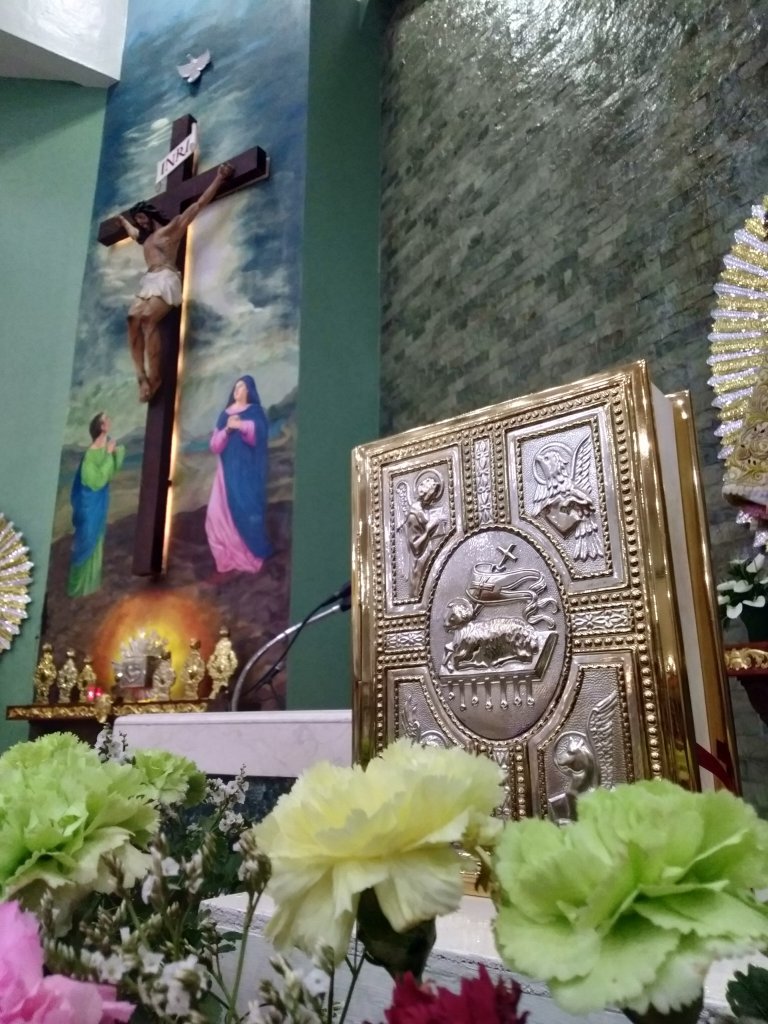
Photo by author, Gospel book (Evangelare), January 2020.
Jesus is asking us today in the gospel like his disciples at Caesarea Philippi, “who do you say that I am?” (Mt.16:15). As we have mentioned in our Sunday reflection, things we say of another person can come from two perspectives, the “what” and the “how”.
“What” we say of a person usually comes from common knowledge, the basics like name and address that sometimes not so reliable as we have not actually and personally known. But, to say of a person based on “how” we have known him/her is deeper because it comes from our personal relationship with some degree of intimacy (https://lordmychef.com/2020/08/22/it-is-not-what-we-say-who-jesus-is-but-how-we-say-who-he-is/).
To know another person is always to enter into a relationship that leads to a deeper friendship.
That is why for this Sunday we offer you this almost surreal, dream-like 1981 music by Gary Wright, “Really Wanna Know You” that spent 17 weeks on Billboard’s Hot 100, reaching highest spot of #16.
Really Wanna Know You speaks of that spiritual thing we experience when we meet someone who seems so special, creating some sparks in us that leads us to something deeper than mere acquaintance. Notice how the sounds of electronic keyboards with the blending voices create that strange, beautiful, and out-of-ordinary feelings like attraction or simply being drawn to the other person.
I don't mind being lonely
But I do mind if not being loved
Maybe you're feeling the same way too
You're ready to hold some one

I really want to know you
I really want to show you the way I feel
I really want to know you
I really want to show you the way I feel

Something about you is telling me
We're coming from the very same place
It's only just a notion I have
(But) I see it written over your face

I really want to know you
I really want to show you the way I feel
I really want to know you
I really want to show you the way I feel
And the good news is that Jesus feels the same way to us, always the first to reach out to us because he feels something so special with each one of us.
Take that chance and meet Jesus in prayers, in the Scriptures, and in others who love and care for us.
After showing us some glimpses of the person of the Lord these past three weeks, St. Matthew now leads us into the middle of his gospel where Jesus takes a U-turn in his ministry by revealing himself to the Twelve as he heads back to Jerusalem to fulfill his mission.
Jesus went into the region of Caesarea Philippi, he asked his disciples, “Who do people say that the Son of Man is?” They replied, “Some say John the Baptist, others Elijah, still others Jeremiah or one of the prophets.” He said to them, “But who do you say that I am?” Simon Peter said in reply, “You are the Christ, the Son of the living God.” Jesus said to him in reply, “Blessed are you, Simon son of Jonah. For flesh and blood has not revealed this to you, but my heavenly Father.” Then he strictly ordered the disciples to tell no one that he was the Christ.
Matthew 16:13-17, 20
St. Matthew told us last Sunday how Jesus withdrew to the region of Tyre and Sidon where he had healed the daughter of a Canaanite woman tormented by a demon. From there, they headed north to Caesarea Philippi, a pagan major city at that time.
It was a perfect setting for our gospel this Sunday – just like our present milieu that challenges us not only to be identified as a Christian but also to make a stand for Jesus as his true disciple at a time when faith and morals are disregarded, economics takes precedence over spirituality.
Who do people say I am: “what” I know of Jesus
The two questions posed by Jesus to his disciples while at Caesarea Phillip – and to us today – may sound very similar and even simple but are actually distinctly different and even worlds apart from each other.
Photo by Mr. Jim Marpa, 2019.
His first question “Who do people say that the Son of Man is?” is straightforward, seems to demand not much critical thinking and introspection. A plain question with a plain answer like the usual news we hear and read called “straight reporting” in journalism that tells us the essential “who, what, where, and when” of the story.
So many times, we face this question without even being asked at all!
Through our words and actions we reveal “who do you say the Son of Man is?” in how we pray, what we pray for, the things we post on social media, especially those electronic chain letters that if you say “Amen” you will get money. And so many other things when we try to show everyone we know Jesus without really thinking and reflecting well. No wonder, people get so many wrong impressions about who Jesus is: “some say he is John the Baptist, others Elijah, still others Jeremiah” or one of those prophets of wealth and health who make life easier!
Telling who Jesus Christ from “what” we know and believe can always be dangerous and misleading because it is all in our heads that could often be wrong. Telling who Jesus Christ from “what” we know and believe cannot be so reliable because it is always mechanical, by the book, not actual and most of all, not real.
It is always easy to speak highly of Jesus from “what” we know and believe like those many preachers with fire and brimstone or modern apostles, a.k.a. vloggers complete with their “shock” preaching and antics and gimmicks who end up more popular with thousands of followers and likes. And wealthy, too! Jesus Christ? Forgotten and stuck in Facebook, the bible, and tabernacle.
But who do you say I am: “how” I know Jesus
On the other hand, the Lord’s second question is direct and personal, probing our heart and soul, asking not just for answer from our lips but from our total self: “But who do you say that I am?”
See the words of the Lord after Simon had answered he is the Christ, the Son of the living God:
Jesus said to him in reply, “Blessed are you, Simon son of Jonah. For flesh and blood has not revealed this to you, but my heavenly Father.”
Matthew 16:17
More than a play of words, here we find a deeper dimension of saying who Jesus Christ is: not just telling the what but most of all, the how that reveals more than what we know in our minds but how we have experienced Jesus, of how we have been living in him!
Photo by author, house at Jaffa (Jopa), Israel where Peter met some gentiles according to Book of Acts, May 2017.
For us to say who is Jesus Christ is always a how because it is a story of our relationship with him, it is a how we have grown deeper, how we have journeyed in him and with him.
It is the ability to see beyond structures and persons, excesses and sins, faults and misgivings because despite shortcomings, it is how we see Jesus as the foundation of our lives and of our Church.
See the ways of other religious sects, their pastors and members who spend so much time bashing us Catholics, insisting on the what of Jesus and the bible, never the how they live.
No wonder, they can raise their hands in prayers and still clap their hands while the President in maligning us Catholic priests and bishops in their gatherings.
To speak of who is Jesus is more than to tell what we know about him but how we have known him, how we have been since knowing him!
Anyone who can say who Jesus is from his how is always blessed like Simon because our answer is always the fruit of our life in Christ. We all become like Simon, another Peter or Rock whose very life and existence rests on Jesus our Lord. Despite our weaknesses and sinfulness, we are still blessed and entrusted with the keys of heaven because we have allowed Jesus to be our foundation of life. There is a process, a history always. Hence, it is a telling of the how.
In the first reading, we find God dismissing the master of the palace named Shebna to be replaced by Eliakim due to his infidelity. That is the meaning of the whole prophecy by Isaiah, of how the Lord will someday entrust his people to a trustworthy steward, someone who does not only know what God is but one who has truly known and experienced God.
Saying who God is, always a revelation from him
It is interesting that in the Jewish thought, to know another person is not knowing the what but of having a relationship or some degree of intimacy. Again, it speaks of the how we have been saying.
St. Paul shows us in the most beautiful manner in his many writings this saying of who Jesus is with his how, his very personal experience of the Lord in his life that has continued and deepened until his death. See the beautiful hymn he had composed for our second reading today:
Oh, the depth of the riches and wisdom and knowledge of God! How inscrutable are his judgments and how unsearchable his ways! For from him and through him and for him are all things. To him be glory forever. Amen.
Romans 11:33, 36
Like St. Peter, we find here St. Paul so blessed despite his sins and sinfulness, of how he had experienced Christ not just a name or a man like any what he had known in his mind.
No one can ever write such great poetry with profound thoughts without any deep relationship with God. Whatever we know of God is always a revelation from him, too. When we speak of who God is, it is always borne out of how we have been relating with him our Lord which is called “spirituality”; it is deeper than religiosity or being religious that is always at the level of the head and more of our ego than of the reality of God.
Sometimes, we do not even have to speak and say who Jesus Christ is.
We simply have to live out that relationship we have in him and people would know who Jesus is. No need for elaborate and spectacular showmanships we have in our many rites and rituals, even in our liturgies now so maligned with our triumphalism.
Lest we forget, Jesus saved the world by suffering and dying on the Cross, not with activities and debates which would be his topic next Sunday. God bless everyone!
The Lord Is My Chef Breakfast Recipe for the Soul by Fr. Nicanor F. Lalog II
Monday, Week XX, Year II in Ordinary Time, 17 August 2020
Ezekiel 24:15-23 >><)))*> || + || <*(((><< Matthew 19:16-22
Photo by author, sunrise at Camp John Hay, Baguio City, 2017.
The young man said to him (Jesus), “All of these I have observed. What do I still lack?” Jesus said to him, “If you wish to be perfect, go, sell what you have and give to the poor, and you will have treasure in heaven. Then come, follow me.” When the young man heard this statement, he went away sad, for he had many possessions.
Matthew 19:20-22
The young man’s question to you, Jesus, still echoes in me: “What do I still lack?” A question that reverberates in me on many occasions for different reasons. So many times, Lord, I felt the answer lies on something that my hands can simply grab or hold to take and be not lacking anymore.
What do I still lack? A question I automatically ask because I have always felt I have the answers, I can always work for it and have whatever I lack.
When tragedy and failures strike, I ask the same question, what do I still lack? What have I missed? What went wrong?
It is a question I have always felt as a problem needing solutions, of something missing that must be filled to be no more lacking.
But today, Lord, I felt the emptiness of the young man too.
It is not just lacking of something but more of a longing for you. It is an emptiness of the heart and soul that nothing can ever fill because “What do I lack” is not a problem to be solved but a situation, a condition to be with you always, Lord.
That is why, sometimes, you have to “take away the delight of our eyes” (Ez.24:16), Lord, so we may see what we lack ––YOU!Amen.
The Lord Is My Chef Sunday Music by Fr. Nick F. Lalog II, 16 August 2020
Our parish on a lazy afternoon before the pandemic in January 2020. Photo by Mr. Angelo Carpio.
Our Sunday gospel today is so touching at how great is the love of Jesus Christ for us who knows no boundaries when he “withdrew to the region of Tyre and Sidon” to heal the daughter of a Canaanite woman “tormented by a demon” (Mt.15:21, 28).
Two Sundays ago we heard how Jesus fed more than 5000 people who have followed him to a deserted place from just five loaves of bread and two pieces of fish; last week, he walked on water to rescue his disciples in a boat caught in a violent storm at the middle of the lake at night.
Very clear in all his actions is the immense love of Jesus Christ for everyone, doing everything in love and for love.
And that is why we have Rock n’ Roll’s dynamic duo, Daryl Hall and John Oates singing their eighth #1 hit released in 2003 “Do It For Love” from their sixteenth studio album of the same title.
I have always considered Hall and Oates as my topmost favorite musicians standing side by side with the equally great tandem of Walter Becker (+) and Donald Fagen of Steely Dan fame.
Smooth and sophisticated with their characteristic Phillysound, Hall and Oates’ Do It for Love tells of how a man would go to great lengths to express his love for his beloved.
I would fly ten thousand miles In the pouring rain Just to see your face
I’d bare my soul to a total stranger Just to say your name And I’m not ashamed Just to love you into every morning
I would change my name And run away I won’t do it for money I won’t do it for pride
I won’t do it to please somebody else If it don’t feel right But I’ll do it for you And at least I’ll try
I don’t need any other reason Than I feel it deep inside I’ll Do It For Love
I have used it so many times in counseling single and married men having problems with their girlfriend and wife; and so far, it seems to have always worked with most of them still together and happily married!
Try it yourself this Sunday… with a lot of prayers and honest-to-goodness soul searching, miracles may still happen!
The Lord Is My Chef Sunday Recipe for the Soul by Fr. Nicanor F. Lalog II
Week XX, Cycle A in Ordinary Time, 16 August 2020
Isaiah 56:1, 6-7 >><}}}*> Romans 11:13-15, 29-32 >><}}}*> Matthew 15:21-28
Twilight at our parish by Ms. Ria De Vera, 12 August 2020.
For the third Sunday in a row, Jesus reveals a very wonderful side of him who goes out of his way to meet us and comfort us in the most difficult situations and places we are into. It is something we need so much in these days of Moderate Enhanced Community Quarantine (MECQ) seen right away in the opening of today’s gospel.
At that time, Jesus withdrew to the region of Tyre and Sidon. And behold, a Canaanite woman of that district came and called out, “Have pity on me, Lord, Son of David! My daughter is tormented by a demon.” But Jesus did not say a word in answer to her.
Matthew 15:21-23
Jesus goes out of his way to meet everyone
Israel is a very small country but always leaves a big impact on everyone who goes on a pilgrimage there. There is that sense of awe in every sacred site that until now continues to “speak” and evoke among pilgrims the presence and holiness of God and his saints.
Like what we have mentioned last Sunday, the proxemics or the non verbal communication of the places Jesus have visited convey to us deeper meanings than just mere sites. And that is more true during the time of Christ like the setting of this Sunday’s gospel, the region of Tyre and Sidon.
Now part of Lebanon found south of its capital city Beirut that was devastated by powerful explosions two weeks ago, Tyre and Sidon were gentile or pagan cities during the time of Jesus with a considerable Jewish population.
His going there shows us his fidelity to his mission of “searching for the lost sheep of the house of Israel” that partly explains to us why he never bothered to give the slightest hint of recognition to the Canaanite woman who had sought his help for her daughter “tormented by a demon”.
Photo by author, the Holy Land, May 2019.
And despite the lack of any explanation again by St. Matthew on the attitude by Jesus “snubbing” the pagan woman, we can safely assume that Christ surely knew that by going to Tyre and Sidon, gentiles would seek his healing as news of his fame had spread beyond Galilee at that time.
Here we find the great love and concern of Jesus for everyone, specially the rejected and marginalized in the society.
His “withdrawing to the region of Tyre and Sidon” was in itself a revelation of his universal love, a love without borders reaching out to those lost and feeling alone in life, those rejected, those discriminated for their color and beliefs, status and gender, sickness and diseases like AIDS and lately, COVID-19!
Inclusive Jesus, exclusive human
At the beginning of chapter 11 of St. Paul’s Letter to the Romans from which our second reading is taken today, the great Apostle starts by asking “has God rejected his people?” St. Paul emphatically said “no”, explaining at length the plan of God in Jesus Christ to save all peoples not just the Jews, beautifully telling us,
For the gifts and the call of God are (permanent and) irrevocable.
Romans 11:29
St. Paul’s reflections on God being “inclusive” as against our being so “exclusive” in sending us Jesus Christ to bring us all together as one sheds us some light on that extraordinary incident in the region of Tyre and Sidon involving the Canaanite woman.
Again, I invite you my dear reader to reflect on the many layers of meaning found in this episode so special like the feeding of more than five thousand people the other Sunday and Jesus walking on water last week.
First, notice the silence of Jesus. Keep in mind when the Lord is silent, it does not mean he is out or does not care at all to our needs and pleas. When there is silence – specially a deafening one – the problem is never with God but with us people.
And, true enough! See how the disciples asked Jesus to “Send her away, for she keeps calling out after us” (Mt.15:23) — exactly the way we deal sometimes with those begging our help and attention, seeing them as a nuisance to be sent away? What a shame!
From Google.
Now, we go to the climax of this episode with the woman coming to Jesus, “paying him homage” for the healing of her daughter tormented by a demon. It was a scene similar with St. John’s wedding at Cana where the Blessed Mother also approached Jesus with a request when wine ran out during the feast.
In both episodes we find Jesus being a snub – suplado, as we say.
Most of all, in both scenes we find the remarkable faith in Jesus by his Mother at Cana believing he can do something to spare the newly wed couple of embarrassment from running out of wine while this Canaanite woman felt so sure only Jesus can cure her daughter.
See how she addressed Jesus like his disciples with not just “Lord” but also with the title “Son of David” to indicate her faith in him as the Messiah.
And it did not stop there as she engaged Jesus into a dialogue — indicating intimacy and trust, depth and communion that we refer in Filipino as “matalik na ugnayan” or “matalik na usapan”.
Sometimes in life, Jesus seems to have that longing for some “lambing” from us that he tries to be “pakipot” or hard to get in order to be intimate with us. Please take these Filipino traits positively to get what I mean from this unique scene of Jesus and the Canaanite woman in Tyre and Sidon.
Jesus said in reply, “It is not right to take the food of the children and throw it to the dogs.” She said, “Please, Lord, for even the dogs eat the scraps that fall from the table of their masters.” Then Jesus said to her in reply, “O woman, great is your faith! Let it be done for you as you wish.” And the woman’s daughter was healed from that hour.
Matthew 15:26-28
Photo by author, Church of All Nations beside the Garden of Gethsemane in the Holy Land, May 2019.
Brothers and sisters all in one God as Father
St. Matthew recorded this episode not to scandalize and shock us with those words coming from the Lord, referring to the Canaanite woman as one of the “dogs” that was the term used to designate pagans at that time.
For St. Matthew who was writing for Christians of Jewish origins, the episode was a reminder that the people of Israel were indeed the “children” of God to whom the coming Messiah and salvation – like bread or food – were first promised. St. Paul spent a great deal of explaining of this in his letter specially to the Romans .
Rigthly then, theirs was the “food” not right to be thrown to the “dogs” but, that fact does not exclude the “dogs” from partaking later from the leftover food of the children, as if telling Jesus, today we satisfy ourselves with crumbs, tomorrow we shall have bread!
The Canaanite woman clearly knew where to place herself before the Lord, proving to him her deep faith and amazing knowledge of God’s goodness and plans for everyone. For that, she was highly praised by Jesus for her faith. The only other person also praised by Jesus in having a tremendous faith in him was the centurion – another pagan – who begged the Lord for the remote healing of his servant.
Last Sunday afternoon I read the story of how a nurse was driven out of her boarding house after she tested positive for COVID-19 virus. The poor lady had nowhere to go to spend the night after being denied of any assistance by barangay officials, even by her own family in Batangas! Good enough, somebody reported her to the Philippine National Red Cross that sent an ambulance to take care of the nurse who was found crying by herself at the gutter of a street in Pasay City.
What a very sad and tragic reality happening among us these days of the pandemic.
Where is our love and concern for everyone, especially the weak and the sick, those in our own versions of Tyre and Sidon where no one would dare to go except Jesus, perhaps like the dorms and residences of our medical frontliners who are so tired and sick physically, emotionally, and spiritually during this pandemic?
In these past three weeks we have reflected how Jesus lovingly joined us, staying with us in the wilderness, in the storms of the dark sea, even at the pagan territories where nobody would ever want to go.
This Sunday, Jesus is inviting us to break all barriers and borders between us that separate us from each other. Let us animate our community with Christ’s love and mercy for us all amid our many differences so that slowly we fulfill Isaiah’s prophecy in the first reading that someday the house of the Lord shall be called “a house of prayer for all peoples” (Is.56:7). Amen.
A blessed and safe new week to you! And please do not forget to pray ten Hail Mary’s every 12-noon for national healing and end of the pandemic until September 15, 2020.
“The most resplendent manifestation of God’s glory is the salvation of souls, whom Christ redeemed by shedding his blood. To work for the salvation and sanctification of as many souls as possible, therefore, is the preeminent purpose of the apostolic life.”
From the Letters of Maximilian Mary Kolbe, Office of Readings
Praise and thanksgiving to you our loving Father for a holy saint in our modern time, St. Maximilian Mary Kolbe whose memorial we celebrate today. His offering of his life in place of another prisoner at Auschwitz in 1941 was a fitting cap for his life of dedication in proclaiming the Gospel of Jesus Christ in words and in deeds.
Though there are no more gas chambers unlike during the time of St. Maximilian Mary Kolbe, the killing of so many people in various forms and methods continue to this day — right on our streets, in abortion clinics, in prisons, even in our homes and in social media where we spread toxins of lies that mislead and destroy many lives.
Inspire us like St. Maximilian Mary Kolbe to work for the sanctification of the world by sharing more of your love and kindness, mercy and forgiveness to everyone especially the weak and vulnerable to abuses and worldly influences.
Like this modern saint who lived during the harshest conditions of World War II, may we strive to make you present in the world where despite the ease and comforts of modern life, many of us are still lost and alone, feeling angry, empty, and confused.
Through our lives, may we fill the world with your presence and holiness by reminding people to return to your original plan of harmony and unity in your love as Jesus told the Pharisees in the gospel today:
Jesus said to them, “Because of the hardness of your hearts Moses allowed you to divorce your wives, but from the beginning it was not so.”
Matthew 19:8
Most of all, to make the world holy anew, grant us courage to stand for what is true and good, to remain standing at the side of your Son’s Cross for indeed, as St. Maximilian Mary Kolbe had taught us in one of his writings, “The deadliest poison of our time is indifference.”Amen.