Bayan ng Diyos, Biyaya ng Diyos

Lawiswis ng Salita ni P. Nicanor F. Lalog II, Ika-20 ng Nobyembre 2020
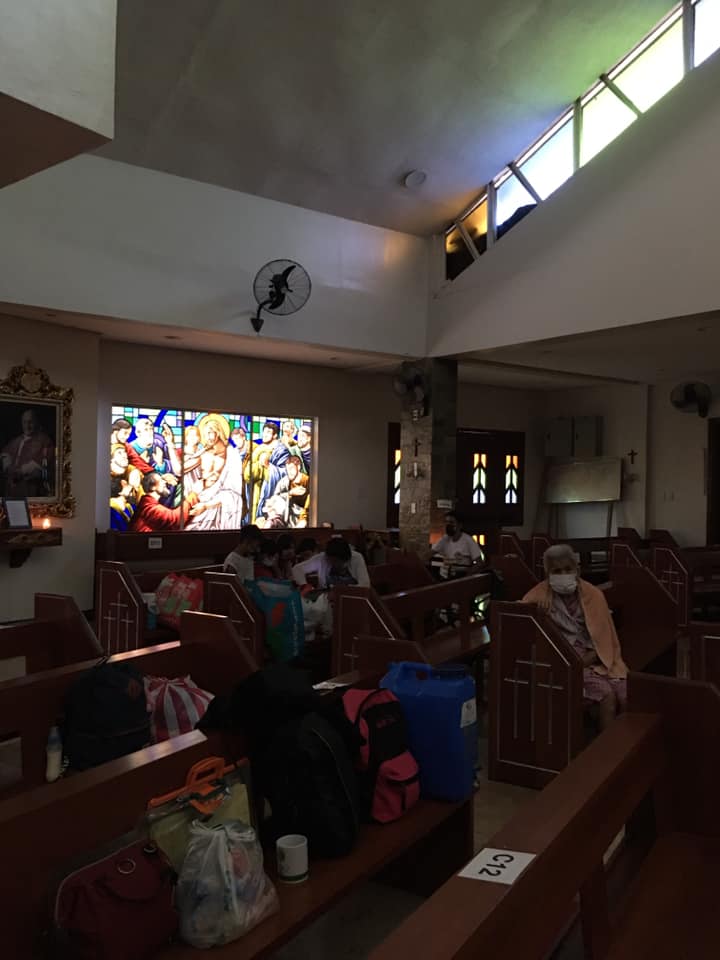
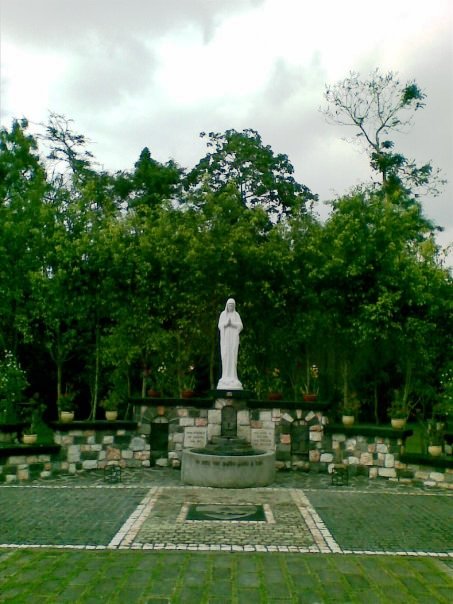
Larawan kuha ng may-akda, 2019.

Labing-tatlong taon na akong pari nang ako ay maging kura paroko sa unang pagkakataon dito sa Parokya ni San Juan Apostol at Ebanghelista sa Bagbaguin, Santa Maria, Bulacan noong 2011. Dapat sana’y anim na taon lamang ang aking panunungkulan nguni’t dahil sa maraming pangayari na ang pinakahuli ay COVID-19, halos abutin na ako ng sampung taon dito hanggang sa paglilipatan sa 2021.

Wala akong pinagsisihan at pinanghihinayangan sapagkat tunay napagyaman ang aking pagkatao at pagkapari sa parokyang ito sa loob ng siyam na taon. At maipagmamalaki ko na maganda at mabuti ang parokyang ito sapagka’t kumbinsido ako na bawat parokya bilang bayan ng Diyos ay biyaya ng Diyos.


Unang aral sa parokya:
pangalawa sa Diyos ay mahalin
at pagmalasakitan ng mga tao kanilang parokya.

Wala akong mga karanasan at kaalaman sa buhay parokya bilang pari nang dumating dito nguni’t unti-unti sa pananalangin at pagninilay, aking natutuhan ang maraming bagay. Una na rito ang tungkulin ng mga tao pangalawa sa pag-ibig at katapatan sa Diyos ay ang pagmamahal at malasakit sa kanilang parokya na kinabibilangan.

Ang mga pari ay dumarating at umaalis, palipat-lipat ng mga parokya nguni’t ang mga tao ang naiiwan at nananatili sa kanilang parokya. Kaya dapat lamang sila ang higit na bigyan pahalagahan sa ano mang usapin ukol sa kanilang katipunan bilang mga alagad ng Panginoon.

Kaya naman tungkuling din naming mga kura paroko na unang ituro sa mga tao ang pagmamahal at pagmamalasakit nila sa kailang sariling parokya, lalo’t higit sa kanilang patron at mga kaugalian kung ang mga ito naman ay tunay na naunawaan at nasa katuwiran.

Isinasaad sa Vatican II lalo’t higit sa “Gaudium et Spes” ang pangangalaga sa kalinangan ng bawat lunan sapagkat doon nangungusap at naramdaman ng mga tao ang pagparito ng Panginoong Hesu-Kristo.

Malaking trahedya kapag nakalimutan ang mayamang kasaysayan at mga tradisyon ng isang bayan alang-alang sa mga kung anu-anong naiisipang gimik at kaartehan gaya ng sari-saring debosyon na umuusbong na wala namang pinag-ugatan sa karanasan ng mga tao.

Maliwanag wala doon ang Panginoong Diyos na palaging nagpapakilala sa isang pamayanan, hindi lamang sa iilan lalo na kung ito ang nagiging sanhi ng pagkakawatak-watak sa halip na kaisahan.

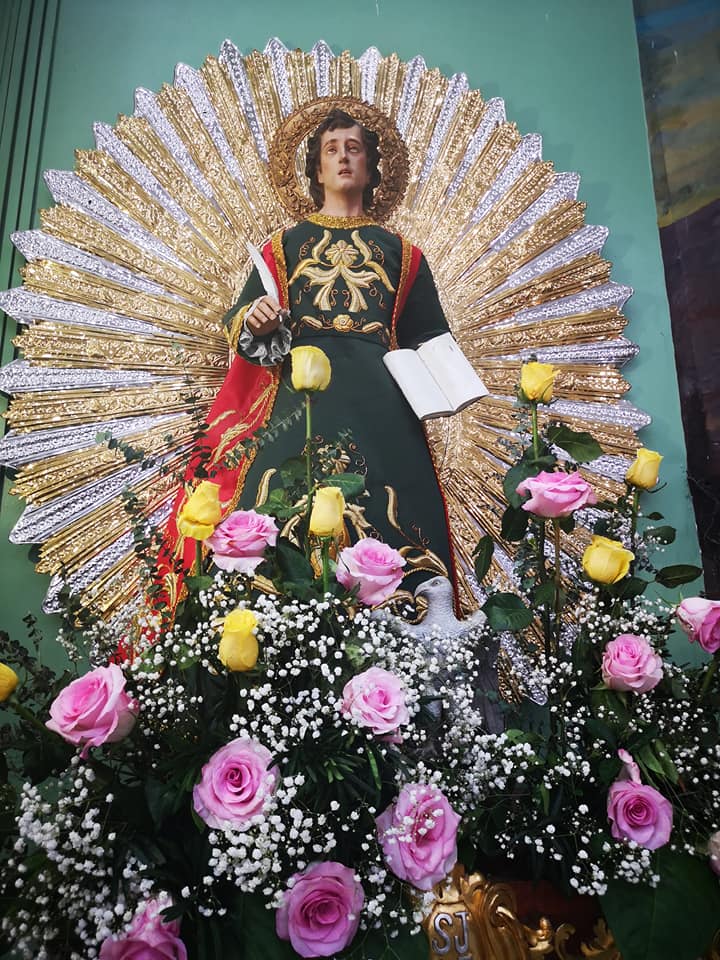
Larawan kuha ng may-akda, Marso 2020.

Ang ating Patron ng Parokya,
gabay sa buhay dito sa lupa
hanggang sa kabila.

Isang bagay na nagpatingkad nito sa akin ang sariling karanasan ng aking Lola Cedeng na tiyahin ng aking Ina. Siya ang kauna-unahang may-sakit na aking dinasalan at pinahiran ng Banal na Langis matapos mag-comatose ilang linggo pagkaraan ng aking ordenasyon noong Abril 1998.

Akala noon ng aking Ina at kanyang mga kapatid ay magtutuluy-tuloy na sa kamatayan ang Lola Cedeng kaya dagli nilang inihanda lahat ng gagamitin sa libing – damit, kabaong, sementeryo nguni’t gaya ng kasabihan, humahaba pa raw ang buhay ng may sakit kapag pinaghahandaan kanyang kamatayan.

Pagkaraan nga ng isang linggo ay nagkamalay ang Lola Cedeng at tumagal pa ang buhay ng limang taon!

Dagli ko siyang dinalaw at ang unang hiniling niya sa akin ay ipanalangin siya kay San Martin ng Tours, ang patron namin sa bayan ng Bukawe (dalawa lang kaming bayan sa Pilipinas na ang patron ay si San Martin ng Tours;Taal sa Batangas ang isa pa na mas nauna).

At ito ang dahilan ng kanyang kahilingan: isinaysay sa akin ni Lola Cedeng kung paano sa kanyang NDE o “near death experience” habang naglalakad sa madilim na kalsada nang kanyang makita na dumarating si San Martin ng Tours nakasakay ng kabayo.

Sinabi raw sa kanya ni San Martin, “Cedeng… bumalik ka na sa Bunlo (ang aming baranggay). Nagkamali lamang at hindi mo pa oras,” aniya.

Pagkasabi daw niyon ay kaagad tumalikod si San Martin at umalis habang siya naman daw ay natigilan, iniisip paano siya nakilala ni San Martin?

Maya maya daw ay bumalik si San Martin at tinanong niya, “Hindi po ba kayo si San Martin ng Tours? Paano po ninyo ako nakilala at nalaman aking pangalan at tirahan?”

“Paanong hindi kita makikilala Cedeng,” paliwanag daw sa kanya ni San Martin, “hindi ba’t palagi kang nagsisimba sa Bukawe tuwing pista ng Mahal na Krus sa Wawa at sa akin tuwing Nobyembre onse? Sigue, umuwi ka na.”

Noon din daw ay natuwa ang aking Lola Cedeng, tumalikod at nagulat na lamang siya paano siya napunta sa Mt. Carmel Hospital!

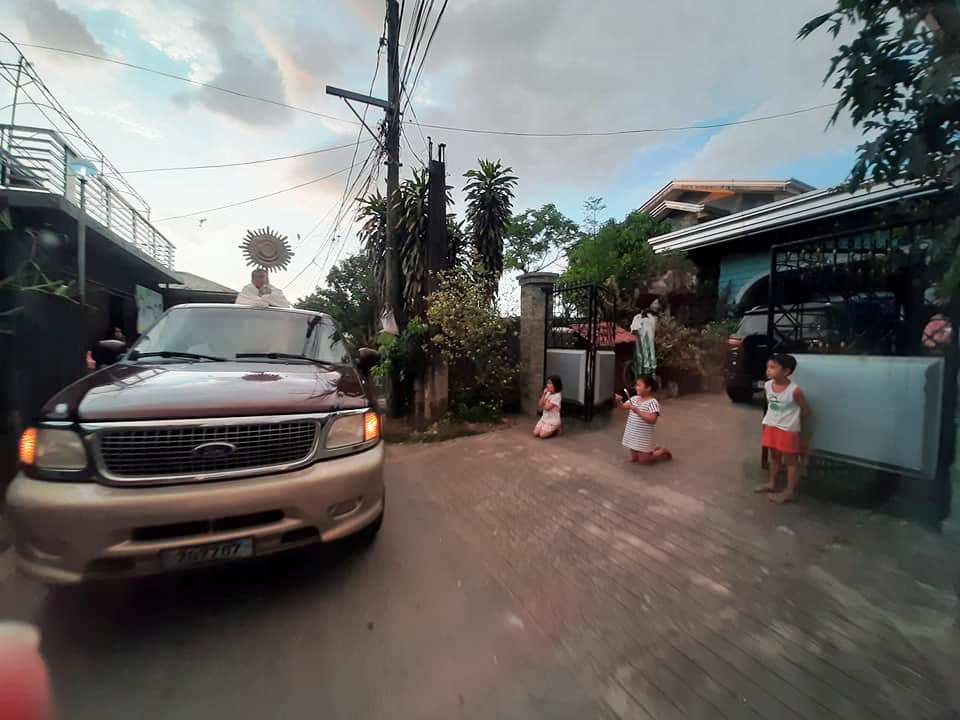
Larawan mula sa Facebook ng Parokya ni San Martin ng Tours, Bocaue, Bulacan.

Naniniwala ako sa kuwento ng aking Lola Cedeng dahil pagkalipas ng limang taon, pagkaraan ng kanyang kaarawan noong ika-29 ng Hunyo 2003 bago sumapit ang Pista ng Krus sa Wawa noong ika-03 ng Hulyo ng taong iyon, siya ay aking dinalaw at mismong sa harap ko nalagutan ng hininga at pumanaw.

Habang hinihintay ko aking mga tiyo at tiya na tumawag ng duktor, kaagad ako nag-alay ng Misa sa tabi niya.

Pagkaraan pa ng ilang panahon mula noon nang aking mapagtanto mga kahulugan niyon, na kung paano si San Martin ng Tours ang gumabay sa aking Lola Cedeng habang nabubuhay, siya marahil din ang umalalay sa isang Bukaweñong tunay patungo sa buhay na walang hanggan.

Iyan ang kahalagahan ng mga Patron natin sa parokya. Sila ang ating mga tagapamagitan sa Diyos. Sila ang ating mga gabay at patnubay sa buhay hanggang kamatayan.

Kung saan marubdob ang pagmamahal at malasakit sa patron ng parokya, palaging buhay ang pananampalataya. Sino mang pari mapunta roon sa kabila ng kanilang maraming kapintasan maging kakulangan, palaging buhay ang parokya sapagkat sila’y nakasandig sa Diyos at hindi sa kung sinu-sinong tao lamang.

Gayon din naman, wala sa mga gusaling bato at kung anu-anong gawain matatagpuan ang buhay ng parokya kungdi sa buhay na pamimintuho sa patron nila na nagbubuklod sa kanila bilang isang bayan ng Diyos, mga alagad ni Kristo na nagmamahal at nagmamalasakit sa bawat isa.

Sa panahong ito ng pandemya, nawa higit nating makita wala sa karangyaan at luho ng simbahan at mga pagdiriwang ang diwa ng parokya kungdi sa pagiging payak at bukas palagi sa galaw ng Banal na Espiritu patungo sa higit na makabuluhang katipunan ng mga alagad ni Kristo. Amen.

Befriending the Cross of Christ

The Lord Is My Chef Breakfast Recipe for the Soul by Fr. Nicanor F. Lalog II
First Friday, Week XXXI, Year II in Ordinary Time, 06 November 2020
Philippians 3:17-4:1     >><)))*>  +  <*(((><<     Luke 16:1-8
Photo by Ms. Ria De Vera, August 2020.

Sometimes I wonder if we are still in a pandemic, God. It seems we have slowly gone back to our old ways or, even worst as we seem to have totally forgotten you. We have become so used with the new situations we prefer to call as “new normal” as if the norms or standards of what is just and moral, right and true change at all.

Have we become an enemy of your Son’s Cross?

Join with others in being imitators of me, brothers and sisters, and observe those who thus conduct themselves according to the model you have in us. For many, as I have often told you and now tell you even in tears, conduct themselves as enemies of the cross of Christ. Their end is destruction. Their God is their stomach; their glory is in their “shame”. Their minds are occupied with earthly things. But our citizenship is in heaven, and from it we also await a savior, the Lord Jesus Christ.

Philippians 3:17-20

Our loving Father, I am not asking for a return to our situation during the lockdowns of summer with growing number of COVID infections; I am not praying for more crosses to bear as if the ones we now have are not enough. Just help us befriend your Son’s Cross again, to forget ourselves and follow him instead of following more the social media that has become our new god.

How prophetic were the words of St. Paul to the Philippians, Lord! They are all happening especially in social media that has become everyone’s new religion that seemingly binds but actually divides us as a nation, as your children.

From The Facebook Facade – owning30.com

Everybody wants to be in social media, doing all the crazy stuff to be popular by being viral and trending with many followers to boast without realizing what St. Paul referred to as “their glory is their ‘shame'” when we are filled with our ego – or selfies -that we forget you in others.

Many are beginning to accept the lies being peddled in social media like abortion and euthanasia, genetic engineering, same sex marriage or unions, and homosexual relationships that end in destruction.

Facebook and Instagram have become the altars of those who have made their “stomach as their God” flaunting their food in social media, insensitive to the plight of many going hungry these days.

Wake us up to the reality in Jesus of how our “minds are occupied with earthly things” these days that even you our God we have made into a commodity whom we can have when we want like any product or the Netflix when celebrating online Masses.

Help us realize like the steward in the parable that life is about the giving of self in love for others like Jesus – of befriending your Cross – not wealth nor fame. Amen.

Photo by Mr. Marc Angelo Nicolas Carpio, January 2020.

Let God work in us

The Lord Is My Chef Breakfast Recipe for the Soul by Fr. Nicanor F. Lalog II
Wednesday, Memorial of St. Charles Borromeo, Bishop, 04 November 2020
Philippians 2:12-18     >><)))*>  >><)))*>  ><)))*>     Luke 14:25-33
Photo by Ms. Ria De Vera, sunrise at our Parish during COVID-19 lockdown, May 2020.

Thank you dear God our Father for the timely reminders by St. Paul to us during these last two months of 2020, the most difficult year for us in 50 years. But it is not all that bad, Lord, specially at how it had redirected many of us back to you.

For God is the one who, for his good purpose, works in you both to desire and to work. Do everything without grumbling or questioning, that you may be blameless and innocent, children of God without blemish in the midst of a crooked and perverse generation, among whom you shine like lights in the world.

Philippians 2:13-15

For so long, we have been driving our lives on our own, unmindful of your teachings and ways, O Lord.

We have come to trust and rely more Google for information than knowledge, Waze for directions and destinations than journey, Facebook and Twitter for lifestyle and trends than life itself.

We always grumble or question you and your presence and your voice if ever our social media activities are disrupted.

Oh God…! Just as when we thought we have life with all the technologies and amenities of modern life, the more we have become empty, lost and divided as a people.

Let us go back to you, God, through Jesus Christ.

Help us see anew in this COVID-19 pandemic that without you at the center of our lives and endeavors, nothing good can truly happen with us despite modern technologies.

Like the man building a tower or the king waging a war in the parable of Jesus today, may we humbly accept the truth that after everything is considered in all our plans, it will always be lacking in depth and meaning without God in every consideration because you always know what is really best for us.

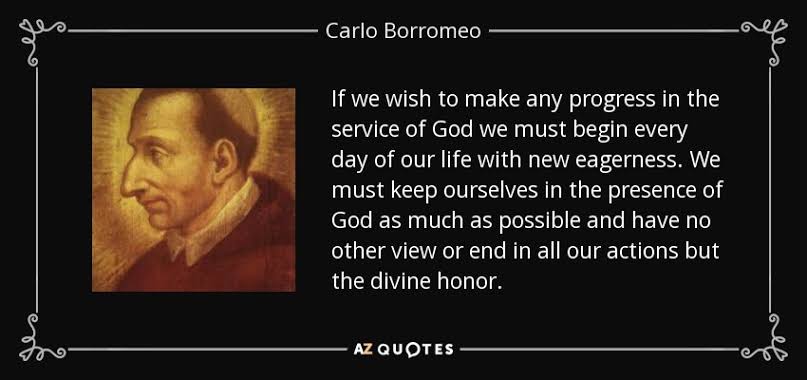
Like St. Charles Borromeo who had lived at a time when the Church had lost more than half of Europe to Protestants, he championed the calls to return to God and to go back to the basics like reforming our clergy and reinforcing catechism.

Through the prayers and inspiration by St. Charles Borromeo, may we let God working in us anew for us to have a better new year, better lives. Amen.

The test of love

The Lord Is My Chef Sunday Recipe for the Soul by Fr. Nicanor F. Lalog II
Week XXX-A in Ordinary Time, 25 October 2020
Exodus 22:20-26  |+++|   1 Thessalonians 1:5-10   |+++|   Matthew 22:34-40
Nuns bringing relief goods during the lockdown due to COVID-19 last summer. Photo from Facebook.

Our gospel this Sunday is a very usual scene happening daily in our modern world when we keep on testing Jesus Christ like the Pharisees for so many things about life we feel we know better than even God.

We keep on “pushing the lines” to avoid crossing them lest we break the laws and commandments when our hearts are clearly bent more on the legalisms than their spirit and sense.

How unfortunate that until now, when we would rather see the small parts than the whole that we keep on breaking down everything specially laws as if they are entities unto themselves, forgetting that each part leads to greater good.

Such is the essence of the one law of love, love of God is always love of neighbor and vice versa. They cannot be separated, like a face with two cheeks.

But more important than understanding the nature of the law of love which is the inseparability of love of God and love of others is passing its final test of loving.

I have always loved this actual photo of a banana vendor during the lockdown who kept his prices low as part of his effort in alleviating the sufferings due to COVID-19 pandemic. Photo from Smart, March 2020.

We keep on testing Jesus
who has passed every test we have
subjected him into...
Can we pass his test of love, too?

As we come to close our liturgical calendar in the coming weeks, our Sunday gospel today challenges us to examine our very selves too if like Jesus, can we pass the test of love?

When the Pharisees heard that Jesus had silenced the Sadducees, they gathered together, and one of them, a scholar of the law, tested him by asking, “Teacher, which commandment in the law is the greatest?”

Matthew 22:34-36

The scholar’s question to Jesus was partly a result of the confusion among people of his time when their experts and scholars of the Laws broke down into minute details and parts the Decalogue that eventually ended having over 600 precepts including those rituals of cleansing of things Jesus and his disciples were often accused of disregarding whenever they came to gatherings.

The sad thing is that instead of simplifying them so the people may find more the spirit of the Laws than its legalisms, the Jewish leaders “did not lift a finger” about it for selfish motives.

And now they were using it to test Jesus which we sadly continue in our present time.

While it is true that evil exists in lawlessness or when we live lawlessly, God’s law is directly opposed to a legalistic understanding that must be seen always in the light of faith.

This is perhaps the main point of Pope Francis in his recent statement proposing for “civil coexistence law” (convivencia civil) that will protect homosexual people from mistreatment and social rejection even from among their own family circles. The Pope is not calling for same sex civil union nor same sex marriage. We have to go beyond the legalese and legalisms of laws to see the Holy Father’s genuine concern and love for people with homosexual tendencies he had longed to bring back to the fold.

We cannot separate law and love if either is to bring deepened relationships and unity among peoples that are in fact the goals of both law and love. Law and love always take into consideration the other person often forgotten when we have an excess of our very selves.

In the first reading, we are reminded how the laws themselves are manifestations of God’s love for his people, of laws coming directly from him without any hint whatsoever of the distant lawgiver we have always seen and experienced among men.

See how he admonished everyone to be kind with everybody specially aliens for after all, we are all immigrants and travelers of this earth whom he takes care of. In declaring “I am compassionate” (Ex.22:26), God assures everyone of his oneness with us, that to love him is to love others, to hurt others is hurting him too! The very same thing Jesus is telling us today!

He said to him, “You shall love the Lord, your God, with all your heart, with all your soul, and with all your mind. This is the greatest and the first commandment. The second is like it: You shall love your neighbor as yourself. The whole law and the prophets depend on these two commandments.”

Matthew 22:37-40

Jesus easily passed the “test” by the Pharisees at that instant and would prove it more decisively and concretely on the Cross when he gives himself up to the Father for our salvation as the supreme sign of love that is true.

His answer takes us all to the very foundation of all the laws we have which is loving God with one’s total self expressed in loving others as we love our selves. Here we find Jesus doing away with our legalisms that focus on the letters and individual laws and commandments, summing them all in love.

Again, following the background and personality of Pope Francis, here we find his love in action being bogged down by legalisms and limitations of the language.

What does he really mean with convivencia civil or civil coexistence law minus any romantic meanings in adherence to our moral laws?

I do not know but in my heart, I could feel the love and compassion of this Pope for homosexuals we have long ostracized from the Church and even society, making fun of them, forgetting their feelings and well-being and persons. It might still take some time before the Pope’s idea is realized even in the Church. What we need at the moment is openness to the leading of the Holy Spirit to finally find those words and terms to encapsulate the love and compassion Pope Francis has for them.

That is the problem with love — always beyond words. One has just to do it, to just “love, love, and love” as Leo Buscaglia would always say.

In the second reading, St. Paul reminds us how the world continues to frown upon us Christians striving to live the life Christ had called us to. We can see the continuing biases in the society even in social media against us Christians standing for what is just, moral and true. It is in this context where we are challenged to be true witnesses of the love of Jesus Christ that the credibility of his gospel is proven daily as the only path towards peace and harmony.

Jesus passed the tests of his enemies about his love for God and love for us; all the past Popes have proven too their complete love for God and for others in their lives of holiness. Pope Francis has striven while still in Argentina to witness this immense love of Jesus for the marginalized. Instead of wasting our energies debating about his recent statements despite his being passed the same test of love, let us now examine ourselves how are we faring in this test of love too?

And loving and lovely week ahead of everyone in Jesus!

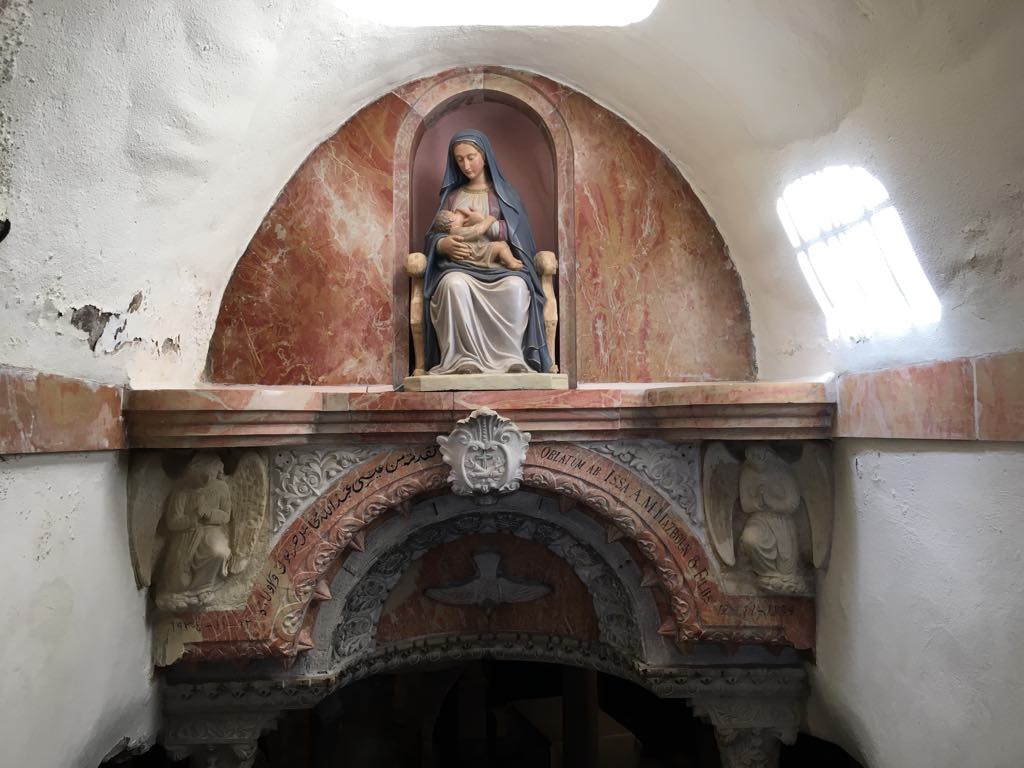
Photo by author, 2019.

Mary in the hiddenness of God

Quiet Storm by Fr. Nicanor F. Lalog II, 10 September 2020
Chapel of the Milk Grotto in Bethlehem where the Holy Family hid before fleeing to Egypt to escape Herod’s murder of innocent babies. According to tradition, a drop of milk from the Virgin Mary fell on the floor of the cave that turned color of the stones to white.

We have just celebrated the Feast of the Birth of the Blessed Virgin Mary, the most perfect example of one who had experienced God’s hiddenness in her life, teaching us with some important lessons in rediscovering and keeping God’s hiddenness specially in this age of social media when everything is shown and has to be seen.

We have mentioned in our previous blog that hiddenness is different from being invisible that simply means “not visible”; hiddenness is more than not being seen per se but that feeling with certainty that God is present though hiding because he wants to surprise us. If God were not hidden, we would have not found him at all. And the more God is hidden, the more we are able to see him and experience him too as seen in the life of Mary (https://lordmychef.com/2020/09/04/the-hiddenness-of-god/).

The hiddenness of Mary.

Simplicity and humility of Mary as venue for the perfect setting of God’s coming in Jesus Christ. Consider her origins: her town of Nazareth in the province of Galilee was definitely outside the more popular city of Jerusalem that was the place to be at that time. Most of all, it is the only town in the New Testament never mentioned in the Old Testament nor by the prophets for lack of any significance in the coming of the Messiah.

Nazareth was largely unknown with some hint of notoriety as expressed by Nathanael (aka, Apostle Bartholomew) when he expressed disbelief to Philip who told him they have found the Christ, Jesus of Nazareth, by saying “Can anything good come from Nazareth?” (John 1:46)

Photo by author of chapel at the grotto believed where Mary received the good news of bearing Jesus Christ in her womb underneath the Basilica of the Annunciation at Nazareth, Israel (2019).

But that is how God works in his hiddenness, coming to us in the most ordinary places and circumstances, even least expected like Mary who was definitely not “in” if we go by today’s popular standard of “who’s in and who’s out?”

In fact, she was so “outside” the circle of influence of their time with her being promdi as we say these days, without any illustrious lineage to be proud of like her spouse Joseph who was from the royal Davidic line or her cousin Elizabeth from the priestly branch of Aaron, the brother of Moses whose husband, Zechariah belonged to another priestly clan in Israel.

Yet, God chose Mary to be the Mother of Jesus Christ because of her hiddenness expressed in her simplicity and humility. It is a far cry from our extreme “Marianism” when we almost worship Mary forgetting Jesus Christ her Son and our Savior! Worst still is the growing trend of “triumphalism” in many parishes racing for the so-called “episcopal” and “canonical” coronation of their various images of the Virgin Mary that come in all kinds of names and titles that has come to look more of a fad than authentic Marian devotion.

Without any intentions of denigrating the role and stature of the Blessed Virgin Mary in our faith as well as her proper place in the life of the Church defined by Vatican II’s Lumen Gentium, I dare ask the following questions:

Photo by author, a replica of Our Lady of the Poor of Banneux, Belgium at Girlstown, Cavite (2009).

Is her coronation in heaven as Queen of heaven and earth not enough?

Why the need for these lavish spectacles for the coronation of the most simplest and humblest woman to have lived on earth?

It is a clear case of triumphalism – that exaggeration or overdoing our worship and rituals – especially if the Marian image is less than 200 years old without widespread devotions like the ones at Sto. Domingo (Quezon City) and Manaoag (Pangasinan).

I do not think the Blessed Mother would favor this considering her simplicity and solidarity with the poor and marginalized peoples seen in her many apparitions.

See the quaint and charming simplicity of Mary at Fatima in Portugal (1917) and lately at Banneux in Liege, Belgium (1933) where she identified herself as “Lady of the Poor”.

Note how the Virgin Mary reads “the signs of the times” in her apparitions and appearances when during the 1500’s at the height of European royalties and expeditions, she was always portrayed as victorious in regal clothes; but since Fatima in the 20th century as the world sank into the excesses of Industrial Revolution and affluence, Mary appeared simple, always in solidarity with the poor and suffering.

It is a cue we are sorely missing and sad to say, instead of renewing the world as St. Paul had asked us, we have allowed ourselves with the Mother of God to be transformed into the ways of the world by immersing in its showbiz frenzies, focusing on the material aspects like expensive clothes and jewelries.

Second example of Mary’s hiddenness is her oneness with Jesus Christ. She was never on her own, always seen in Jesus, with Jesus her Son and Lord. She believed in him so much, making him the focus at the wedding feast at Cana as well as at the foot of the Cross where she expressed in the most strongest terms her solidarity with the Savior of the world.

This has always been insisted by the Church since Vatican II regarding our devotions to Mary that must always be in relation with Jesus and his mission — never on her own.

Photo by author, 2019.

In all her apparitions, the Blessed Mother has always been consistent with her messages of conversion and return to God through her Son Jesus Christ, the frequent reception of the Sacraments of the Eucharist and Confession or Reconciliation.

Mary’s Christocentricity is best seen in her oneness with him in pains and sufferings like in the Pieta and the Mater Dolorosa where Jesus is the one standing out, not her. Nor anybody else.

When Mary, or anybody else for that matter goes on one’s own, Jesus is no longer hidden but removed from the scene. Then his Cross disappears and all that is seen is Mary in all her “beauty and glory” that are empty, very secular because these attributes come precisely from her communion in Jesus!

Perhaps, this pandemic is teaching us today to review our Marian devotions and processions that have become more of a show and a spectacle for Instagram than for deepening of our faith.

I pray that the Cofradia that holds the annual December 8 processions at Intramuros would take a rest this year until 2022 to discern their noble efforts before that have degenerated to pomp and pageantry among “devotees” specially camareros and camareras trying to outshine and outclass each other with some participation at the sidelights of their pastors and sacristans.

Keeping the hiddenness of God while we remain hidden in contemplation.

Of all the qualities of Mary we all must imitate to help people rediscover God’s hiddenness is her being hidden in prayer and contemplation.

St. John Paul II noted in Rosarium Virginis Mariae when he launched the Luminous Mysteries in 2002 that although the scriptures are silent about where was Mary during the other significant moments of the life of Jesus, especially at the institution of the Holy Eucharist, it was most likely that Mary was also present deep in prayer.

This we find clearly at the Pentecost when the Holy Spirit descended upon the apostles and the Blessed Virgin Mary while they were praying at the Upper Room in Jerusalem (Acts 1:13-14).

Modern rendition of the Pentecost with Mary among the other disciples of Jesus. From Google.

Pope emeritus Benedict XVI shares with us his profound insight in his second Jesus of Nazareth book series (Birth of Jesus) how after the annunciation of the the birth of Christ to Mary, the angel left her totally without ever coming back to warn or instruct her unlike with Joseph. After saying “Yes” to the plan of God to be the Mother of Jesus, Mary immersed herself deep in prayers and contemplation, becoming hidden herself in God.

Since then, she never doubted Jesus her Son as the Christ, nurturing her faith with prayers beautifully expressed by St. Luke in saying how “Mary treasured things in her heart” when facing difficult situations like during his birth and his finding at the temple. It is not surprising that in the contemplation by St. Ignatius of Loyola, the Risen Lord must have first appeared to his Mother upon rising from the dead because she was the first to believe totally in him (which became the basis of our tradition of the Salubong).

Mary has always been present in the hiddenness of Christ from his coming in the darkness of the night on a manger in Bethlehem, to his hidden years in Nazareth, to his ministry when he would always retreat to a deserted place to pray, to his Crucifixion and death and burial on Good Friday and finally, in the darkness of Easter.

In this age of social media where everyone and everything has to be seen and shown with nothing hidden anymore even without qualms and shame at all, part of our mission and ministry as priests and religious is to lead people back to God’s hiddenness like the Virgin Mary so they may realize anew that the best things in this life are not always seen.

To fulfill this is for us first of all to imitate God like Mary — be hidden!

How unfortunate that instead of leading the people back to God’s hiddenness, we priests and religious have in fact joined the secular world, imitating the “influencers” like bloggers and vloggers that instead of focusing on God who is hidden, we are concerned with our selves and all the “porma” for the sake of number of “likes” and “followers” we have in our posts.

The more we try so hard to make God visible in our ministry by imitating the styles and gimicks of some media personalities that make our liturgy look like a variety show complete with song and dance numbers with our altars heavily decorated like a studio set with giant tarpaulins like in EDSA, that is when we remove God totally – not only his hiddenness – from the scene and inverse proportionately, the more we priests and pastors become more popular than the Lord himself.

“The Assumption of the Virgin” by Italian Renaissance painter Titian completed in 1518 for the main altar of Frari church in Venice. Photo from wikidata.org.

And that is how cults begin, with or without Jesus. It is very sad, even tragic and ironic because we have removed God himself – even Mary! – by unconsciously making ourselves the center of attention like pop icons and idols.

Mary had shown us the most perfect example of discipleship which is more of Jesus, less of self.

Can we not post without using our own pictures – no matter how profound our thoughts are – so the people may see the hiddenness of God in a photo of a lovely flower or a magnificent sunset? Unless you are a bishop or the Pope himself, having your photo published specially in the news is part of the information process about the person in focus. It is totally different in Church communications which is all about God and his message of love, not us.

The quarantine period invites us in the Church to appreciate and share this wonderful hiddenness of God by first becoming incognito, unknown and hidden from others, preferring to be at the background or “behind the camera” as we follow God in his hiddenness until we go to that great beyond of totally hidden from everybody except God.

Do not worry. We have Mary in every step along the way. Amen.

When good news/bad news do not matter at all

The Lord Is My Chef Sunday Recipe for the Soul by Fr. Nicanor F. Lalog II
Week XXII, Cycle A in Ordinary Time, 30 August 2020
Jeremiah 20:7-9 >><}}}*>| + | >><}}}*> Romans 12:1-2 >><}}}*>| + | >><}}}*> Matthew 16:21-27
Photo by author, Caesarea Philippi, May 2019

Maybe you have been asked so many times with the question, which do you prefer to hear first, the good news or the bad news? Usually we say it all depends to our mood and temperament or to the gravity of the situation. Sometimes, we ask for the bad news first so we can suffer earlier and enjoy the good news later. Or, we ask for the good news first to soften the impact of the bad news.

Our gospel this Sunday is still set in the pagan city of Caesarea Philippi and we heard Jesus giving his disciples – including us – with a strong dosage of “bad news” after hearing last week the good news that he is “the Christ, the Son of the living God.”

Jesus began to show his disciples that he must go to Jerusalem and suffer greatly from the elders, the chief priests, and the scribes, and be killed and on the third day be raised. Then Peter took Jesus aside and began to rebuke him, “God forbid, Lord! No such thing shall ever happen to you.” He turned and said to Peter, “Get behind me, Satan! You are obstacle to me. You are thinking not as God does, but as human beings do.” Then Jesus said to his disciples, “Whoever wishes to come after me must deny himself, take up his cross, and follow me. For whoever wishes to save his life will lose it, but whoever loses his life for my sake will find it.”

Matthew 16:21-25

Our gospel today seems to be a very big, bad news for everyone, with things getting worst before getting any better which the Lord had promised to be only in the end that nobody knows when!

See how Jesus started by saying he would “suffer greatly at the hands of elders, the chief priests, and the scribes and be killed and on the third day be raised again.” Not only that: he now calls Peter as “Satan” from being the Rock last Sunday after giving the right answer as to who he is.

Like Peter, we would probably say the same thing to Jesus why make suffering and death central to life that is meant to enjoy?

Like Peter, the Lord is inviting us today to focus more on the good news than on the bad news of suffering and death which for him – the Paschal mystery we call – is actually the best of good news!

Photo by author, altar flowers in our parish, January 2020.

Jesus Christ’s pasch is the best of good news!

What we have heard as “bad news” from the Lord is his first prediction of his coming pasch or Passion, Death and Resurrection. He would be announcing this prediction of his pasch two more times as they near Jerusalem.

From the He brew word pesach that means to pass over, it connotes suffering and death into new life. It came from the Exodus experience of the Chosen People from Egypt into the Promised Land during the time of Moses, taking its fullest meaning in Jesus Christ, the Son of God who became human like us in everything except sin, “passing over” from eternity to temporal, from Passion and Death to Resurrection.

Authentic discipleship does not require us to seek suffering; no, God is not sadistic as some people with twisted minds would say. However, being faithful to Jesus, witnessing his gospel values bring enough of these sufferings and deaths but on a different level and meaning. We realize that life is a daily exodus, a passing over from darkness into light, from ignorance into wisdom, from sickness into health, from death into new life.

Like the prophet Jeremiah in the first reading, we discover that the more we follow God, the more sufferings we encounter in life but at the same time, we cannot let go of him because his attraction is so powerful! There is something so deep within, so profound and fulfilling in us we realize that living in the ways of God, in the gospel values of Christ can we truly find lasting joy and peace – even if we have to die in our very selves in the process.

You duped me, O Lord, and I let myself be duped; you were too strong for me, and you triumphed. all the day I am an object of laughter; everyone mocks me… But then it becomes like fire burning in my heart, imprisoned in my bones; I grow weary holding it in, I cannot endure it.

Jeremiah 20:7, 9
Photo by author, Gaudete Sunday in our parish, December 2019.

Thinking in God’s ways

Today Jesus is assuring us that there is no such thing as “good news, bad news” with him. The good news/bad news question is really a non-question to disciples of Christ because whatever suffering and death we embrace in him is a sharing in his very life.

Hence, Jesus Christ’s good news is in fact the bestest news we can ever have. Always.

The key is to think as God does, not as human beings do as Jesus pointed out to Peter.

Three things I wish to share with you about thinking in God’s ways:

First is to accept and embrace pains and sufferings not for their own sake but as a way to cleanse our selves to greater glory. As we have said, God is not a sadist; we need to be cleansed like every thing in order to bring out the best in us like diamonds or any precious stone or any material.

Polishing and honing always mean “subtractions” with so many shaving and cutting of the rough edges to bring out the beauty and sharpness of a thing.

Man’s ways has always been to avoid every pain and suffering. No wonder, the most prescribed medicine worldwide is said to be the pain killer. But, experience has taught us this is not true and cannot be the norm of life. Like every gym enthusiast would tell you, “no pain, no gain”. Pain and suffering is part of life and the good news is, Christ has made it holy for us.

Second is to be silent in order to be able to listen to every sound and thus, heighten our sensitivities not only with our true selves but also with God and with others. In this age of social media and instant communications, silent has become a rare commodity. It is always easier to speak even without thinking much than be silent. That is the way of the world: speak out loud, make noises, and let everyone hear you — until they get tired of you.

Photo by author, our parish ceiling at sunset, 25 August 2020.

Third is the most precious in God’s ways of thinking — the way of hiddenness. This is God’s most evident way of making himself felt, experienced, and yes, seen by being hidden and invisible.

Last Thursday we celebrated the memorial of St. Monica, the mother of St. Augustine who narrated the story of how she got sick at Ostia in Italy with his brother hurrying to get back home to Tagaste in Africa so that when she dies, she would be buried there. St. Monica “reproached him with a glance because he had entertained such earthly thoughts”; then, she looked at St. Augustine and told him to bury her anywhere, asking one thing only from him: that he remembers her always in his celebration of the Holy Mass.

So many times, we are so concerned with our popularity that whatever we do has to be made known to everyone to see specially by those so-called “followers” with their “likes” that even up to death, some would spend a fortune for lavish funerals and even mauseleoum.

That’s the way of the world of everybody making a statement, of being known as present, always seen. In the movie “The Devil’s Advocate”, Al Pacino played the role of satan who said it so well at the end after tempting Keanu Reeves, “vanity…vanity is my most favorite sin.”

See the life of Jesus Christ: more than half was spend in hiddenness and silence. He worked only for three years characterized by so many instances of silence and hiddenness too and yet, his impact continues to this day and hereafter.

Beginning with last Sunday after asking us who do we say he is, Jesus is inviting us to follow him in his Passion and Death to be one in his Resurrection. This is also the call by St. Paul in the second reading:

I urge you, brothers and sisters, by the mercies of God, to offer your bodies as a living sacrifice, holy and pleasing to God, your spiritual worship. Do not conform yourselves to this age but be transformed by the renewal of your mind, that you may discern what is the will of God, what is good and pleasing and perfect.

Romans 12:1-2

Jesus is not asking too much from us, no need for any fanfares on our part; simply come to him with our true self, no matter how sinful and incomplete we are. Remember, all is good news with him and you never lose in him. Amen.

A blessed week to everyone!

Photo by author, parish ceiling at sunset, 25 August 2020.

Republikula ng Pilipinas

Lawiswis Ng Salita ni P. Nicanor F. Lalog II, Ika-24 ng Agosto 2020
Larawan kuha ng may-akda sa Pulilan, Bulacan, Enero 2020.
Ang sabi nila
buhay ay parang isang pelikula
tayong lahat ang bida at artista;
kaya lalo nang malaking pelikula
at tiyak patok sa takilya
pelikula ng ating republika!
Siyempre, lahat ay pabida
gusto umeksena
hindi lang sa Palasyo at Kongreso
pati na rin sa mga paseo basta matao.
Ang nakakatawa pero bumebenta
lalo na sa mga tanga 
mga artista nagpipilit sa pulitika
mga pulitiko umaarte, nagpapabebe!
Dating pelikula ng ating republika
makasaysayan at makahulugan
maituturing na isang sining
nababanaagan maningning na liwanag
 katulad din ng pinilakang tabing
kapupulutan ng mga ginintuang aral
mga talastasan at eksena 
mula sa mga aninong gumagalaw;
nang magdeklara ng Martial Law
nagsimula rin ang kasalaulaan
ng pamahalaan maging sa sinehan
kung saan mga hubad na katawan 
 pinagpipistahan, kunwari'y film festival
ang totoo ay karnabal.
Nagwakas din at nagsara ang tabing
ng malagim na yugto ng kasaysayan natin
bagong simula ang dokyu ng EDSA
kinalaunan naging trahedya
pelikula ng republika, naging telenovela at komedya
nang maupo tunay na artista ng masa, 
nagreyna sa media at chika
puro artista, kaya dumagsa na rin sila
naging zarzuela pelikula ng ating republika
naglabo-labo at moro-moro, gumulo nang gumulo
kaya heto tayo horror na nakakatakot 
nakapangingilabot kadiliman 
at kasamaang bumabalot parang bangungot
hugot sa isang eksena ng pelikula na sana'y matapos na.
Ngunit kung titingnan
mga pelikulang horror walang laman
puro kabobohan at katangahan
dinaraan lang sa gulatan 
hanggang maging katatawanan.
Hindi ba't ganyang-ganyan 
ating lipunan at pamahalaan
isang malaking pelikulang katatakutan
na puro kabalastugan at kahangalan?
Kaya aking payong kaibigan, 
sa susunod na halalan
tanggihan, huwag nang pagbigyan 
mga artista sa pulitika, 
mga pulitiko na payaso!
Photo by Pixabay on Pexels.com

Basta may panlasa at pang-amoy, ayos na!

Lawiswis ng Salita ni P. Nicanor F. Lalog II, Ika-21 ng Agosto 2020
Larawan kuha ni G. Jim Marpa, 2019.
Ngayong panahon ng COVID-19
sumagi sa akin mga turo ng dalawang pari
na napakalapit at mabuti sa akin:
Una ay si Padre Nanding 
malimit sabihin sa akin
"Pinakamasarap makasama
tao na mayroong panlasa";
"iyong iba," aniya, 
"pakanin mo ng buong baka,
hindi pa rin masaya!"
Ikalawang paring butihin
ay si Padre Johann 
madalas ako paalalahanan
"Biyaya ng Diyos ang ganang kumain
dahil ibig sabihin
wala kang sakit na dapat intindihin
di tulad ng ibang hindi makakain."
Nakatutuwang isipin at malayin
kung paanong noong panahon natin
mga mumunting butil ng pagkain
pinahahalagahan upang huwag sayangin;
ngayon naman ating alalahanin
itong ating panlasa at ganang kumain
mga biyayang hindi napapansin;
magdildil ka man ng asin o 
maalat man o maasim ulam na inihain
huwag nang punahin o laitin 
sapagkat iyong nalalasap pa rin
ang pagkain at walang COVID-19!
Sa hapag ng pagkain
mga samahan at ugnayan natin
nabubuo, tumatatag at tumitibay
kaya sa ating buhay
masarap kasabay
sa paglalakbay
mayroong panlasa
at maganang kumain,
basta huwag lang sasairin
at uubusin ang sinaing 
baka iba hindi na makakain
dahil ikaw pala ay sakim!
Photo by Pixabay on Pexels.com
Ito naman ang habilin na galing sa akin:
basta nakaka-amoy ng masarap na lutuin
maski hindi sa iyo ang pagkain
matuwa ka na rin, wala ka pang COVID-19;
gayun din naman, 
iyo nang kalimutan hindi man kagandahan 
 ilong na ngayon ay natatakpan
makaamoy man ng alimuong
makalanghap man ng masansang
at masamang hangin ay mabuti pa rin:
nakakahinga ka ng malalim
wala kang COVID-19!
Larawan kuha ni G. Jim Marpa, 2019.

Aral ng COVID 19, VI: disiplina ang gamot sa sakit natin

Lawiswis ng Salita ni P. Nicanor F. Lalog II, Ika-11 ng Agosto 2020
Larawan kuha ni Bb. Anne Ramos, Abril 2020
Habang tumatagal itong quarantine 
lalong ipinakikita hindi COVID-19
ang kalaban natin kungdi ating sarili din;
matagal nang sakit na hindi kayang gamutin
nakaugat nang malalim sa katauhan natin
kawalan ng disiplina kay hirap sugpuin.
Sa gitna ng kawalan ng maaasahan
sa pamahalaang abala sa kapalaluan
ayaw pakinggan mga paraan ng nakakaalam
disiplina nating mga mamamayan
ang pinaka-mabisang sanggalang
laban sa virus na galing sa Wuhan.
Tingnan, pag-aralan, at tularan
pamamaraan ng mga bansa kung saan
paglaganap ng COVID-19 ay nalabanan
laging matatagpuan dalawang bagay magkasabay:
mahusay at magaling na pamahalaan
disiplinadong mga mamamayan.
Masunurin ang turing sa taong may disiplina
na nagmula sa wikang Griyego na discipulos,
taga-sunod o alagad; sa wikang Latin, 
dalawang kataga ang pinagsama
"ob audire" na ibig sabihin "makinig na maigi"
kaya sa Inggles "obedient" ang isang masunurin.

Ang taong may disiplina
 masunurin sa tuwina
laging nakikinig sa mga sasabihin
upang kanyang tuparin 
mga ipinagbibilin
 ano mang atas na kanyang gawain.
Kung ating lilimihin lalim
ng kahulugan ng disiplina
ito rin ang siyang dahilan
upang ating matutuhan
kahalagahan ng pagtitiyaga
at paghihintay na atin nang tinalikuran.
Pagkaraan ng mahigit limang buwan
lahat na lamang sa atin ay dinaraan 
sa paspasan, pag-aagawan, at pagdarayaan
kaya hanggang ngayon wala tayong patunguhan;
kung bawat mamamayan mayroong disiplina
baka sakali tinablan ng kahihiyan mga kinauukulan
wala na silang dahilan sa kanilang kapabayaan 
dahil sila unang nagkulang sa disiplinang kinakailangan
hindi nila tayo maaring sisihin 
nagkulang sa pagsugpo sa COVID-19.
Larawan kuha ni Bb. Anne Ramos, Marso 2020.

Aral ng COVID-19, V: ang dapat dasalin, pagbabago natin

Lawiswis ng Salita ni P. Nicanor F. Lalog II, Ika-06 ng Agosto 2020
Larawan kuha ni Ezra Acayan ng Getty Images, Marso 2020.
Sa ating pananalangin,
turo ng Panginoong Hesus sa atin,
bago pa man kayo humiling,
batid na ito ng Diyos nating mahabagin;
at kung kayo ay mananalangin, wika Niya,
inyong sabihin:  Ama namin...
Gayong batid pala ng Diyos kailangan natin,
tanong ng iba, bakit tayo mananalangin pa sa Kanya?
At ito ang hindi nalalaman ng karamihan
mahalagang katotohanang dapat tandaan:
sa pananalangin ang pinakamahalaga ay
mabatid natin ibig ng Diyos mula sa atin!
Kaya naman sa tagal nitong COVID-19
sa dami ng ating panalangin, tiyak noon pa man din
alam na ng Diyos kailangan upang wakasan
pandemyang malagim na bumabalot sa atin
kumitil at nagpatigil sa takbo ng buhay natin
dulot sa lahat ay hirap maging sa iba ay hilahil.
Marahil kailangan na nating baguhin
ating panalangin sa panahong ito ng COVID-19
sapagkat wala sa gamot at medisina
sa mga botelya at siringgilya ang sa atin magpapagaling
kungdi sa pagpapanibago nitong puso at kalooban natin
na siyang laging ibig naman ng Diyos mula sa atin.
Sa gitna nitong quarantine nabuking
masasamang pag-uugali maging mga gawi natin
na sa gitna ng kagipitan at kahirapan
marami pa rin ang nagsamantala
naging sakim at makasarili
ibig ang lahat ay kamkamin, kabigin at angkinin.
Pandaraya at panggugulang, hindi patas sa mga patakaran
marami sa pamahalaan at katungkulan naghari-harian
mga inaakalang kalaban hinigpitan
malayang pamamahayag pinigilan
mga karapatan at dangal ng mamamayan
niyurakan at tinapakan, lalo na mga walang pinanghahawakan.
Larawan kuha ni Bb. Anne Ramos, Marso 2020.
Kaya aking bayan 
ating pag-isipan at pagnilayan
batid ng Diyos ating pangangailangan
ngunit hindi Niya ito kaagad pagbibigyan
dahil tanging paraan sa pagsugpo sa salot na ito
naroroon sa ating mga puso, wala sa nguso.
Harapin natin hindi ang COVID-19
kungdi ating sarili at pag-uugali na dapat gamutin
sa mga sakit na naglalayo sa Diyos at kapwa natin;
karunungang kinakailangan ibinigay na ng Diyos
noon pa man upang solusyunan virus mula Wuhan
tangi Niyang kahilingan mamuhay tayo sa kabutihan at katuwiran.
Mahigit limang buwan na tayong nagdarasal
ugali at asal nati'y makapal pa rin sa kasamaan
kaya marahil lalo pang magtatagal 
pagdurusa sa pandemyang ito na nag-ugat 
 buhat sa puso ng tao na kung di magbabago
uulit at uulit sa iba't ibang anyo.