Journeying into God in parables

The Lord Is My Chef Sunday Recipe for the Soul by Fr. Nicanor F. Lalog II
Week XVI, Cycle A in Ordinary Time, 19 July 2020
Wisdom 12:13, 16-19 >><}}}*> Romans 8:26-27 >><}}}*> Matthew 13:24-43

Our Lord Jesus Christ invites us today to join him into a different kind of journey that would take us deep into God’s mystery in our very selves through the parables he has started to tell us last Sunday.

Recall, dear readers, that parables constitute the heart of the Lord’s preaching.

We have defined these as simple stories with deep realities that must be cracked open through prayers and reflections to get its meaning. From the French para bolein that literally means “along the path”, a parable is likewise a bridge that leads us into something unknown to us before.

In itself, a parable is a journey calling us to walk through it into our inner selves to discover the many inner beauties that lie within us but we take for granted. Ultimately, as we discover these giftedness within us, we then uncover God dwelling within us.

This is the reason why Jesus would always tell his audience after narrating his parables that “Whoever has ears ought to hear” (Mt.13:43) to insist on them to go deeper inside themselves for their meaning.

And that is when we are transformed, when our lives are changed into true disciples of Jesus Christ.

Greatness in littleness

First thing we notice in the three parables of Jesus today is his insistence on the coming of the kingdom of heaven or kingdom of God through him as the mysterious seed.

This kingdom of heaven is used interchangeably with “kingdom of God” that Jesus would always speak of in his entire ministry until his crucifixion is not according to our understanding of a kingdom: it is not about a territorial domain or the exercise of power over subjects using force.

St. John Paul the Second expressed it beautifully by declaring the person of Jesus Christ himself is the kingdom of God. No wonder, Christ would always liken himself and the kingdom of God with the seed being sown.

It is always good. It is for everyone as the sower scatters the seeds everywhere. And it is always small like Jesus who was born like any infant so fragile and even poor like most of us. He is like the seed we take for granted from which comes forth all kinds of plants like trees, big and small.
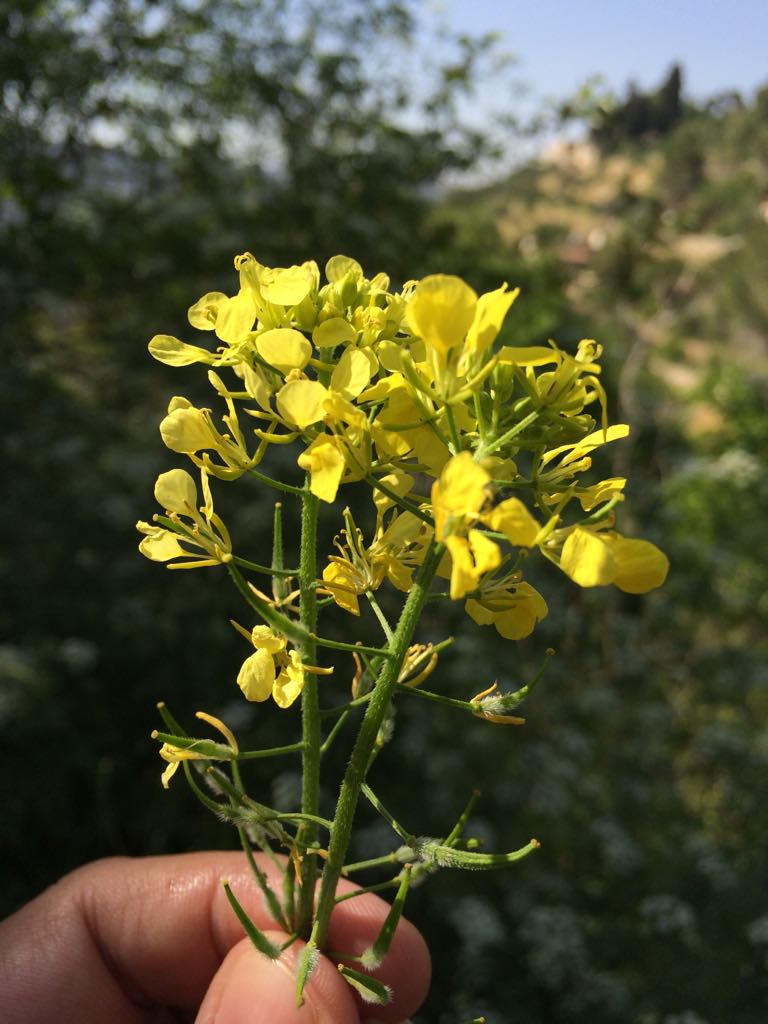
Flowers of a mustard plant from which seeds are taken. Photo by author, Israel, 2017.

Or most specially, like those seeds that turn into crops of wheat and shrubs like the mustard with leaves and branches where birds may dwell that describe the first two parables today.

Jesus then added a third parable of the yeast mixed into flour that leavened the dough into a bread.

Like him our Lord, we his disciples are also like the small seeds packed with great possibilities in God.

In all these three parables today, there is that element of smallness, of littleness that remind us how everything that is great always starts small.

When we come to think of this, we realize how we embarked on this great mission of making Jesus Christ known: it started like a small spark within us, perhaps from a single word we have heard or read, a simple inspiration by God through the most ordinary persons and situation.

Not only in things regarding our spiritual lives but even our personal lives when we recall those humble beginnings of our family and of our business.

Like a little seed or yeast, they just grew!

Now we are surprised, even amazed, how we have changed, how we have grown. Of how we are now reaping the fruits of our labors and sacrifices.

Most of all, how we have known and experienced Jesus Christ who fulfills our lives.

Weeds among the wheat

But not all days are bright and sunny. There are dark clouds that hover above us bringing storms and heavy rains that lead into floodings. A lot often in life, the darkest nights turn out to be the longest nights too.

And this is the meaning of Christ’s main parable for today.

Jesus proposed another parable to the crowds, saying: “The kingdom of heaven may be likened to a man who sowed good seeds in his field. While everyone was asleep his enemy came and sowed weeds all through the wheat, and then went off. When the crop grew and bore fruit, the weeds appeared as well. The slave of the householder came to him and said, ‘Master, did you not sow good seed in your field? Where have the weeds come from?’ He answered, ‘An enemy has done this.’ His slaves said to him, ‘Do you want us to go and pull them up?’ He replied, ‘No, if you pull up the weeds you might uproot the wheat along with them. Let them grow together until harvest; then at harvest time I will say to the harvesters, ‘First collect the weeds and tie them in bundles for burning; but gather the wheat into my barn.'”

Matthew 13:24-30
Photo by Onnye on Pexels.com

During my prayer periods this past week, I have been filled with anger and disappointments at how things are going on in our country and even in my personal life. It pains me so much why at this time of the pandemic when we have to go through all these bad things.

Last Friday morning before our daily Mass, we discovered the glasses shattered in our windows near the office door and at the side door of the church. There were scratches outside indicating attempts to unlock the doors inside and steal from the church.

After the Mass, I grew more angry as we inspected the damages, thinking so negatively harsh against whoever tried to burglarize us.

By night time during prayers, I remembered Victor Hugo’s Les Miserables where Valjean was caught by the police stealing silver from the good bishop who had welcomed him into his rectory with food and accommodations. Instead of pinning him down for his crime, the bishop told the police he had given Valjean the silver found in his bag, even chastising him he had left behind the other silver candlesticks he had asked to take!

The wheatfield owner in our parable and the good bishop of Les Miserables are both the merciful God mentioned by the author of the Book of Wisdom in our first reading today:

But though you are master of might, you judge with clemency, and with much lenience you govern us; for power, whenever you will, attends you. And you taught your people, by these deeds, that those who are just must be kind; and you gave your children good ground for hope that you would permit repentance for their sins.

Wisdom 12:18-19

Think of our parents and elders, our mentors or those we look up to for their wisdom gifted with wonderful insights in life called perspicacity which means “a penetrating discernment… a clarity of vision or intellect which provides a deep understanding and insight.”

Being perspicacious or having perspicacity like the wheatfield owner or the good bishop of Les Miserable means having a deeper wisdom that one can keenly see and understand things beyond ordinary perception following a long process of silent reflections in life.

Many times, our sights can be limited that we do not see the other repercussions and even ramifications of our decisions on certain situations. There are times we think only of finding solutions, of winning the battle but not the war.

Photo by Life Of Pix on Pexels.com

It is also along this line that Jesus added the third parable: the yeast is mixed with the flour to leaven the dough.

We are like the yeast who have to mix with others, including the evil ones to become bread that will feed the world.

We are the wheat, the mustard seed, the yeast thrown into the world to make a difference in Christ! We are not the ones who will change the world but Jesus Christ, the mysterious seed, the yeast in the dough who grows and effects the changes in us and among us.

Parables as inner journey in Christ Jesus

With Jesus living and nurturing within us, that is when we become fruitful like the wheat and mustard plant or leavened bread that we are able to feed more people who would eventually become bearers his in the future. That is how the kingdom of heaven comes into this world, when God is seen and felt by everyone through us

This we achieve in prayers as St. Paul reminds us in the second reading. It is not just reciting our basic prayers as Christians including the novenas we love to collect and follow through. The kind of prayer that St. Paul speaks here is a prayer guided by God’s Holy Spirit who perfectly knows God’s will.

Photo by Dr. Mylene A. Santos of kids she’s teaching on the values of health, education and nature at Katmon Harbor Nature Sanctuary, Infanta, Quezon.

Brothers and sisters: The Spirit comes to the aid of our weakness for we do not know how to pray as we ought, but the Spirit himself intercedes with inexpressible groanings.

Romans 8:26

In this time of too much weeds among the wheat, of so many evil and sins prevailing over us, we can feel frustrated at times that make it so difficult for us to pray.

Sometimes, the evil and sins, or the plain sufferings we go through in our own family, in our community or at work and in school can be so overwhelming that we feel our prayers are useless, that God is not listening at all to us.

Then we stop praying, we stop journeying within even with weeds among the wheat. How can the flour be leavened if the yeast is not mixed with the dough to become bread or cake.

Remain in the Lord!

Pulling out the weeds will not solve the problem; worst, it may endanger us all too in the process that we become like our enemies in the end. Never lose hope in God who knows very well of the presence and source of weeds. Sometimes, these pains and sufferings from evils we go through from others may actually lead us to our being fruitful!

Evil and sins are a parable in themselves that can teach us so well in life if we handle them with prayers.

Photo by Dr. Mylene A. Santos, Infanta, Quezon, May 2020.

Praying in the Holy Spirit is when we spend time with Jesus to reflect and crack open his words that come to us in the Sacred Scriptures and ordinary events in daily life through long hours of silent meditation and contemplation.

The more we dive into God’s mysteries in the parables he sends us in daily living, the more we see the beauty and wonder of life because our horizons are widened and get clearer.

Praying into our parables in life is like looking into a telescope or binoculars that enable us to see something distant within reach.

Like God himself.

And salvation as well as fulfillment in Christ.

Amen.

A blessed new week ahead of you!
Listening to God, Speaking for God

The Lord Is My Chef Breakfast Recipe for the Soul by Fr. Nicanor F. Lalog II
Thursday, Week XIII, Year II in Ordinary Time, 02 July 2020
Amos 7:10-17 >><)))*> >><)))*> >><)))*> Matthew 9:1-8
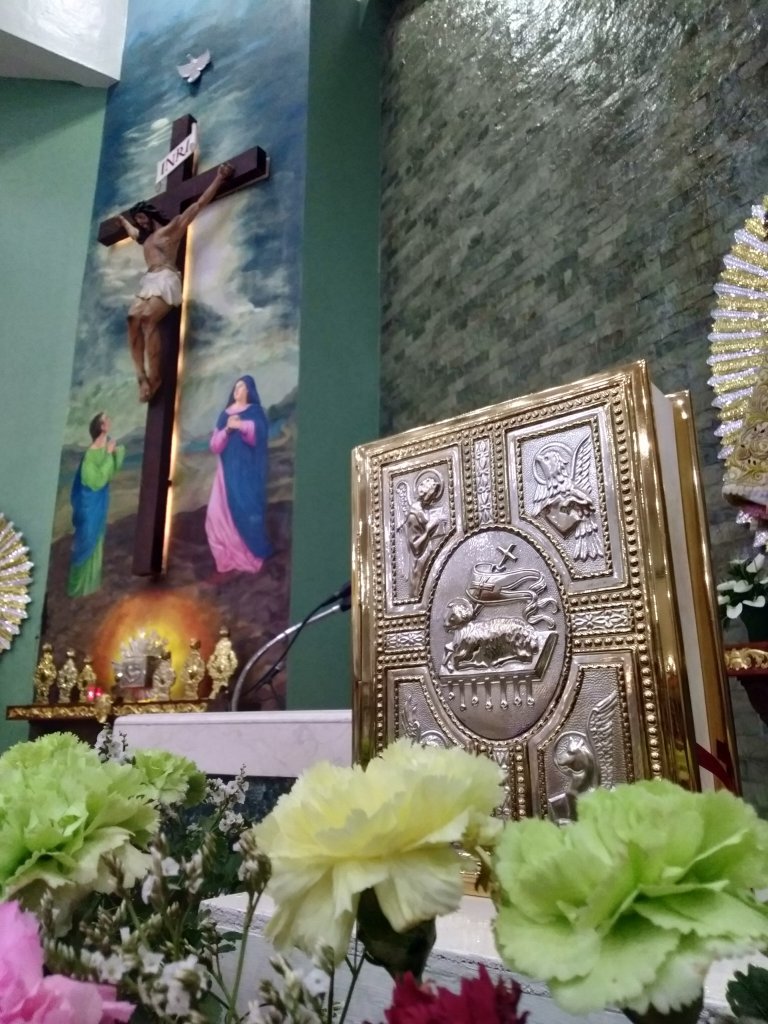
Photo by author, Bible Sunday, January 2020.

Again, O God our loving Father, we pray that you send us prophets especially in this time of so many “spokespersons” who do not know how to listen, like Amaziah the priest at Bethel and the scribes in Capernaum.

Like many of our public figures and even some of us priests who speak a lot in public these days, we all claim to be speaking the truth, speaking for you.

But to speak is always a gift from you, a sharing in your power that whatever you speak happens like in creation and in Jesus Christ, the Word who became flesh presented today in the gospel healing a paralytic by simply speaking the words of forgiveness and then telling him to rise and walk.

How funny that in your words today, dear God, are two groups of people claiming to be speaking for you and yet too far from your words and realities, Amaziah and the scribes; and on the other hand, another group, that of Amos and Jesus, claiming nothing for themselves but doing everything in your name.

Teach to be like Amos and Jesus your Son, to speak and do only your Holy Will.

Amos perfectly explained the giftedness of being your prophet:

Amos answered Amaziah, “I was no prophet, nor have i belonged to a company of prophets; I was a shepherd and a dresser of sycamores. The Lord took me from following the flock, and said to me, ‘Go, prophesy to my people Israel.'”

Amos 7:14-15

Make us realize, Lord, that to speak for you, we must first listen to your voice, wait and listen to your words.

To be your prophet or spokesman is to never harbor evil thoughts on others.

And most of all, like Amos and Matthew, to be your prophet means to leave everything behind especially fame and honor in order to follow you — even to the Cross! Amen.

Let Christ possess us

The Lord Is My Chef Sunday Recipe for the Soul by Fr. Nicanor F. Lalog II
XIIIth Sunday in Ordinary Time, Year A, 28 June 2020
2 Kings 4:8-11, 14-16 >><)))*> Romans 6:3-4, 8-11 >><)))*> Matthew 10:37-42
Photo by author, Dome of the Chapel of Nativity at Shepherd’s Field, Bethlehem, the Holy Land, May 2019.

Jesus continues his lessons to us his disciples being sent to look for the “lost sheep of Israel”, to be not afraid for he is with us in this journey and mission. But, it is not enough that we have Jesus on our side and be present among us: we have to allow Jesus to take possession of us completely!

From having no fear because Jesus is here, Christ now deepens his presence by inviting us to be possessed by him, to be in communion with him.

Jesus said to his disciples: “Whoever loves father and mother more than me is not worthy of me, and whoever loves son or daughter more than me is not worthy of me; and whoever does not take up his cross and follow after me is not worthy of me. Whoever finds his life will lose it, and whoever loses his life for my sake will find it.”

Matthew 10:37-39
Photo by author, processional Cross at the altar, 2019.

The Mystery of the Cross

Discipleship in Jesus Christ is more than a total allegiance to him who is neither a demanding nor exacting Lord and Master for he does not arbitrarily impose himself upon us.

Nothing like that of subservience but something more lofty because it is wrapped in a mystery — a mystery of love freely given and shared to us by God even if we do not deserve it all. Remember the mystery of the Blessed Trinity four Sundays ago (June 07)?

Ever since, God has never imposed himself upon us, that we should love him back in return for he does not really need our love. He gave us the gift of freedom so that we may love him freely for he never imposes on us.

And here lies the beauty of discipleship, of this relationship we have with God that is based solely on love expressed to us in the most personal manner by giving us his Son Jesus Christ who suffered and died on the Cross but rose again on Easter. This we were reminded by the Solemnities of the Body and Blood of Jesus and of his Sacred Heart last June 14 and 19 respectively.

Now you see my dear readers the clearer picture of our liturgical celebrations expressing our concrete experiences of being loved by God in Jesus Christ most especially during times of trials and sufferings like in this COVID-19 pandemic.

It is Christ who made the initiative to be one with us in our pains and sufferings; God did not remove our crosses in life but made them holy in his Son Jesus Christ so that every time we go through life’s many difficulties, we share in the Lord’s Passion, Death, and Resurrection.

That is why, we are invited to take and carry our cross every day for it is through the Cross we are saved. It is not enough to simply believe in the person of Jesus but we need to accept and embrace his Cross because it is through which he had won our salvation by dying on it and rising again.

This is easier said than done. It is so difficult to love Jesus more than our loved ones like family and friends. And it is most difficult to love the Lord more than our selves, when we have to let go of our plans and agenda.

Letting go and letting God in itself is already crucifying — but that is when this mystery of Christ’s love and of his Cross deepens further when we lose ourselves in him!

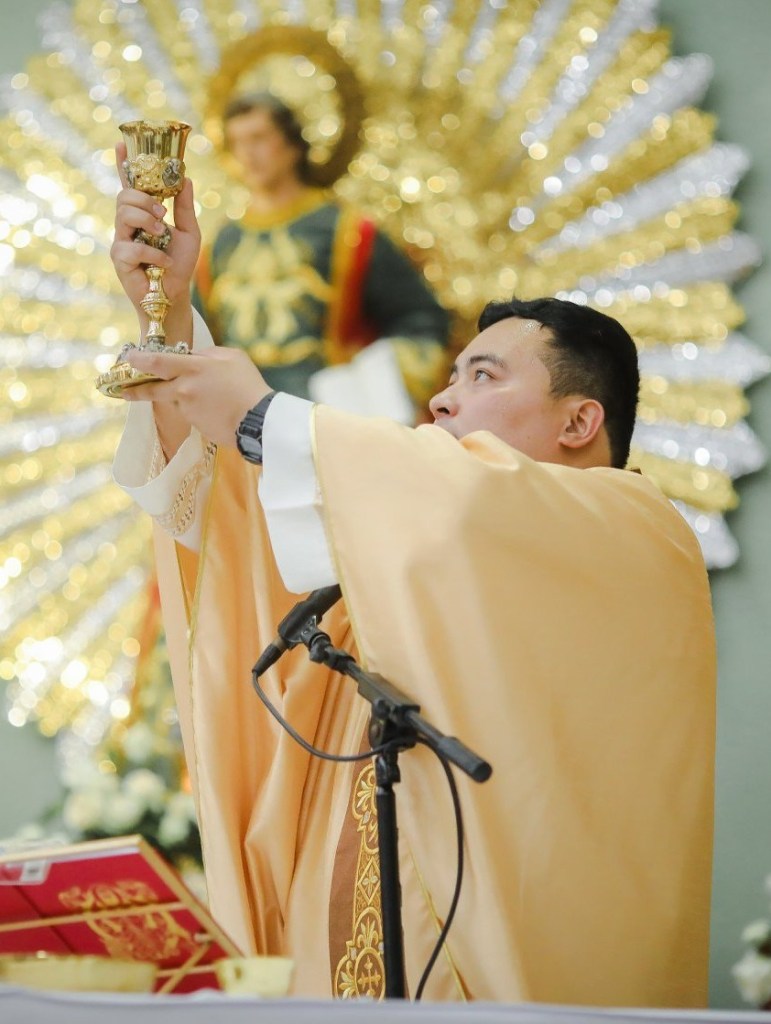
Celebrating Mass without te congregation during the ECQ, March-April 2020.

Possessed by Christ

To be possessed by Jesus is to receive God and his gift of salvation through the mystery of Christ and his Cross. Like our Christian life, proclaiming the gospel carries with it the sign of the Cross of Christ.

We are not asked to reenact or reproduce his Crucifixion nor is Jesus asking us to be suicidal or go against our natural aspirations and dreams.

To be possessed by Jesus means we continue to take care of ourselves without neglecting the needs of others.

To be possessed by Jesus means being generous to others in the same manner Jesus has always been generous to us.

To be possessed by Jesus means to realize that every act of self-giving is really an act of receiving!

Photo by author, Malagos Park, Davao City, 2018.

That is the paradox of the Cross, of discipleship in Christ: “Whoever finds his life will lose it, and whoever loses his life for my sake will find it” (Mt.10:40).

And that is also where the mystery of Christ’s love deepens because whatever we give is not really ours but Christ’s.

Every time we give love, it is the love of Jesus.

When we are kind and generous with others, it is the kindness and generosity of Jesus we give and share.

When we are patient and understanding to others, it is still the patience and understanding of Jesus in us.

Even if we give and share material things like money, food, clothing… whatever good we share and give are all from Jesus not from us.

And the more we give, the more we receive!

Have you noticed especially during this pandemic how the generous among us are now more blessed?

Wonder no more because you have allowed yourself to be possessed by Jesus Christ!

This is what the woman at Shumen had realized after welcoming the Prophet Elisha into her home in our first reading. She even gave him a room to stay every time he comes for his mission while the Lord provided all her needs, even rewarded her with a son as promised by Elisha.

When we allow Jesus to take over us, when we enter into communion in him and with him in his very life, we become more free to love, we strengthen our relationships with others, we wander less and worry less in life; most of all, we feel lightened in our burdens with the presence of Jesus giving us fullness of life in him.

This is the grace I hope we have seen from this quarantine period, especially those two months of lockdown when were freed from our usual grind and busyness with more time to be silent and still, to pray and reflect on our relationships with God and with others. It was a difficult and very trying period that had given in return a lot of opportunities to others.

Photo by author, Marcos Highway, 2019.

Dead to sin, alive to God

Brothers and sisters: We know that Christ, raised from the dead, dies no more; death no longer has power over him. As to his death, he died to sin once and for all; as to his life, he lives for God. Consequently, you too must think of yourselves as dead to sin and living for God in Christ Jesus.

Romans 6:9-11

It has been four months since houses of worship were ordered closed to help stop the spread of the corona virus. Somehow, the lockdown had made us realize the importance of receiving the Sacraments especially the Holy Eucharist.

But, sacraments are not everything for we have the bigger roles of putting into practice its reality of being the saving presence of Jesus Christ.

Now that lowly life is beginning to go back to its usual grind especially the traffic, soon we might forget again the more important things in life like God and our relationships in our family and friends that it is hoped we have rediscovered during the quarantine period.

That is why I strongly feel the government must now allow Churches to open so the people may experience again God in the sacraments and in our rites and rituals lest they get busy again with so many things only to miss finding anew the meaning of our lives found in silence and stillness before the Cross of Christ.

It is my hope that in this quarantine period, may we find through the Cross of Jesus that when we learn to submit and surrender to him, that is when we truly become free; and, when we lose and give away our lives to him, that is when we gain fullness of life in him. Amen.

A blessed week and a more abundant July to everyone!

St. Paul in time of Covid-19: need to be focused more on Jesus

Quiet Storm by Fr. Nicanor F. Lalog II, 05 June 2020
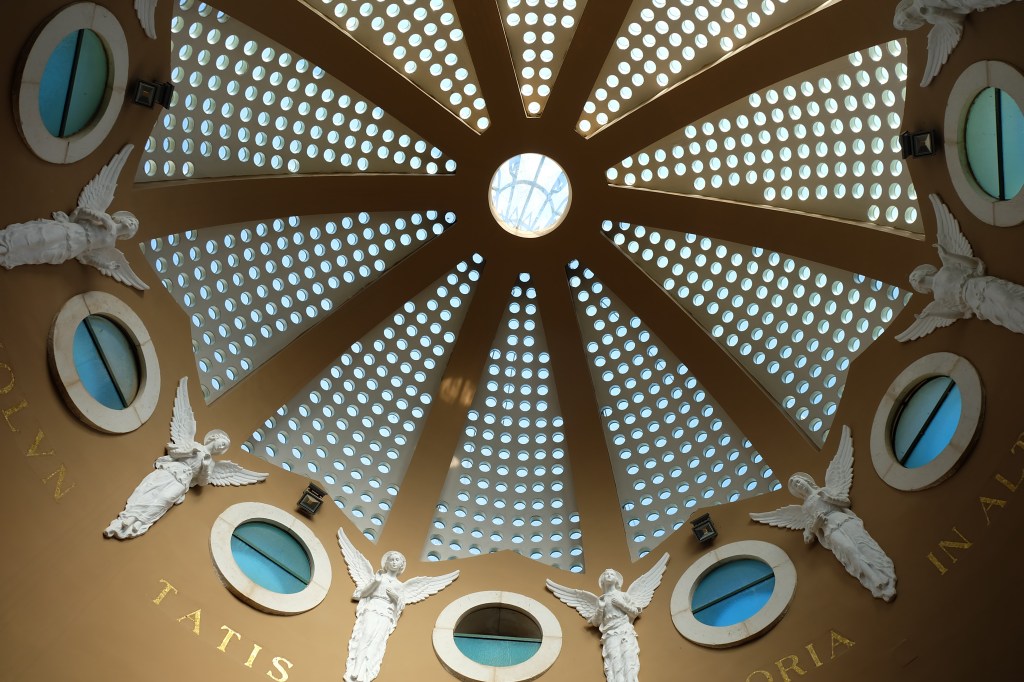
Ceiling of the main altar and dome of the Malolos Cathedral, 12 June 2019. Photo by Mr. Lorenzo Atienza.

The COVID-19 pandemic is the most severe test the Roman Catholic Church in the Philippines has ever faced, striking on the final year of her preparations for the quincentenary of the coming of Christianity in the country.

Making things worst is the “unfriendly” Administration whose policies contradict almost every known Church teaching, from the most basic GMRC and decency to the sanctity of human life.

In this three-part series of reflections, I wish to share with you my brother priests and lay partners in our ministry some lessons I have found in the life and teachings of St. Paul the Apostle that is centered on the person of Jesus Christ.

He never gave specific instructions and answers in dealing with the many issues and problems that confronted the early Church that may help us in the present generation; but, he had taught us to be always centered on Christ, measuring everything in him and his Cross.

Now I am reminding you, brothers, of the gospel I preached to you… Through it you are also being saved… For I handed on to you as of first importance what I also received: the Christ died for our sins in accordance with the scriptures.

1 Corinthians 15:1-3
A sculpture of St. Paul the Apostle upon the entrance to the Malolos Cathedral by the renowned ecclesiastical artist Mr. Willy Layug. Photo by Mr. Lorenzo Atienza, 12 June 2019.

The gospel thrives most in hostile environment

St. Paul lived in a time very similar with ours when great developments and changes were overtaking the world with the usual problems of poverty and inequalities due to growing materialism, and persecution of the Church.

Instead of seeing them as problems, St. Paul saw them as opportunities to spread the Gospel because his sole focus was the Lord Jesus himself and his Cross.

In fact, all who want to live religiously in Christ Jesus will be persecuted. But wicked people and charlatans will go from bad to worse, deceivers and deceived. But you remain faithful to what you have learned and believed…

2 Timothy 3:12-14

When the former Mayor of Davao City assumed the presidency and started lashing out us priests and bishops with his profanities and vitriol including blasphemies against God and Pope Francis, we all expressed our indignation and opposition.

And rightly so! – even in fighting for Kian and those fallen by tokhang as well as the victims of injustice and fake news.

As days moved into months and years, with more vulgarities and lies dished out by the man at Malacañang, there also appeared some silver linings over Pasig River but many of us in the clergy have refused to see and admit— that some of his accusations are true. Although these are more of the exception than the rule, there are indeed some priests leading inauthentic lives far from their vows of poverty and celibacy with others pretending to be shepherds of souls who do not smell like their sheep because they are more keen in amassing wealth and gaining fame and popularity.

Worst of all are those who have sold their souls to politicians for some petty favors and a taste of power, of being seen with the rich and famous.

I am not putting down our priests. There are more good and holy priests working faithfully and silently not only in our country but everywhere in the world.

What I am trying to say since our “persecution” by the present Administration began, this is a wake-up call for us priests to shape up and regain our bearings in Christ.

Actually, it had been coming since the previous Administration, too. For the longest time we have been lording it over the people with our abuses and excesses hiding in the excuse as “alter Christus” but, now the changing times have finally caught on us, demanding more transparency and honesty on our part.

Like with the experience of St. Paul, these situations of “persecution” with a pandemic are calls for our conversion in Christ anew, something that Pope Emeritus Benedict XVI has been insisting that we priests go back to Jesus, especially in the Blessed Sacrament.

Photo by Mr. Lorenzo Atienza, ordination to the diaconate at the Malolos Cathedral, 12 June 2019.

Like St.Paul, priests are first a witness of Jesus Christ

This time of crisis due to COVID-19 and the continued “persecution” by an unfriendly administration that has continued to keep our churches closed for no sane reason at all can be a grace-filled moment for us if we allow Jesus Christ to shine in us by bringing hope and inspiration to our people saddled with so much burdens due to COVID-19 and the government’s inconsistencies in managing the pandemic.

It is here where we are most expected by the people to be at the forefront but – unfortunately – we have been silent in asserting our religious freedom to worship within the rules and protocols to prevent the spread of COVID-19.

Only Bishop Pabillo of Manila had spoken against the “laughable policy” of allowing only five and ten people inside the church in areas under ECQ and GCQ, respectively.

Making matters worst was how the CBCP issued its statement reminding us priests and bishops to follow the directives and guidelines set by the Inter-Agency Task Force (IATF) on Emerging Infectious Diseases regarding the celebration of the Mass! Instead of supporting the lone voice championing our rights to celebrate Mass in public, the CBCP just repeated the same situation when Jesus saw the crowd who have followed him to the wilderness, “sheep confused and lost without a shepherd” (Mt.9:36).

How sad we have given up the fight so easily to have our churches opened in the transition from ECQ to GCQ.

More sad now are the bishops and priests again in the news – filled with fire and courage – speaking out loudly against the anti-terror bill recently passed by Congress.

No problem fighting oppressive measures by any administration but to miss out that same fervor and zeal for our own rights and duties to provide the essential spiritual nourishment of our people at this time is something disturbing, something St. Paul would not allow to happen.

Yes, it is part of our priesthood to fight for people’s rights but always in the light of Jesus Christ.

St. John Paul II had shown us in recent history what it is when while still a priest and later as bishop in Poland, he spoke only of the words of God in the scriptures and fruits of his prayer that he was able to tore down the Iron Curtain his homeland and eventually throughout Europe.

St. Paul never played partisan politics like our Lord Jesus Christ, considering how they have lived at a time rife with occasions to be politicized. He never missed addressing social issues in the light of the gospel as he wrote one of his friends – presumably rich and influential – regarding a slave named Onesimus:

To Philemon, our beloved and co-worker… Perhaps this is why he was away from you for a while, that you might have him back forever, no longer as a slave but more than a slave, a brother, beloved especially to me, but even more so to you, as a man and in the Lord.

Philemon 1, 15-16

How sad when we priests speak of so many things like current events and other trends without giving the people the Word of God.

It is even a scandal when we priests are more busy with social advocacies forgetting we are first of all a “man of the Word” according to Vatican II.

Let us not forget St. Paul’s reminder that though we are in the world, we are not of the world:

Do not conform yourself to this age but be transformed by the renewal of your mind, that you may discern what is the will of God, what is good and pleasing and perfect.

Romans 12:2

The gospel of Christ thrives most in hostile environment and situations but that does not mean going out like activists with clenched fists and raised voices walking the streets. We are not going to change the world; Jesus will — if we can proclaim him in words and in deeds.

The other week as we neared the conclusion of the Easter Season, one of the first readings on weekdays touched me so much, wondering if we priests can also say with all sincerity St. Paul’s words at Miletus when he spoke to the presbyters of the Church of Ephesus before sailing to Jerusalem for his trial:

So be vigilant and remember that for three years, night and day, I unceasingly admonished each of you with tears… I have never wanted anyone’s silver or gold or clothing. You know well that these very hands have served my needs and my companions. In every way I have shown you that by hard work of that sort we must help the weak, and keep in mind the words of the Lord Jesus…

Acts of the Apostles 20:31, 33-35

According to St. Luke, after those words, the people wept loudly as they threw their arms around St. Paul and kissed him. He was so loved by the people because of Jesus Christ, not of his very self.

Surely, like Jesus, St. Paul stretched out his arms and hands more to pray over people after hearing their confessions and problems, spent longer hours praying in silence or writing his letters to the various churches he founded, strengthening and inspiring them in Christ than be out on the streets seething with anger against any despot and regime.

On Monday our second part in the series, Fighting our detractors like St. Paul in time of COVID-19.

St. Paul saying goodbye to Ephesians at Miletus on his way to Jerusalem to face trial.

When words are not enough

The Lord Is My Chef Breakfast Recipe for the Soul by Fr. Nicanor F. Lalog II
Thursday, Week XIX in Ordinary Time, Year II, 04 June 2020
2 Timothy 2:8-15 ><)))*> ><)))*> ><)))*> Mark 12:28-34
Photo by Mr. Raffy Tima of GMA-7 News, 02 June 2020

Remind people of these things and charge them before God to stop disputing about words. This serves no useful purpose since it harms those who listen.

2 Timothy 2:14

Dear God:

For today I just wanted to be silent before you in prayer.

But, you spoke a lot in that silence. Or, did I?

You know very well, Lord, how we have been silent since the start of this quarantine period due to COVID-19 pandemic. We bore everything in silence as much as possible, giving our government officials and lawmakers a chance to redeem themselves.

After all, we are in this mess because of their refusal to listen what others have been saying for the safety of the country, speaking of diplomacy and friendships among the originators of COVID-19, not knowing two of them have been infected with corona while here visiting. One eventually became the first fatality of COVID-19 outside China.

Photo by author, our altar decor with a snake on first week of Lent, 2020.

Those in government have always been doing all the talking that has always been non-sense and rubbish. They thought that the more words they used, the more things get clearer.

That is the problem, Lord: those in government like many of us your people are not aware that your silence always precedes your speaking; that your words are full of power, full of life, the fullness of meaning because every word comes from silence.

We humans, especially our elected officials, are all speaking out of noise and void, not from silence which is fullness.

We keep on talking in the hope and belief that the more we talk, the more our words become meaningful.

Lately, it is the opposite that is happening: the more our government officials speak, the more their words become empty while their tongues get sharper like swords, inflicting more pain and causing more shame.

They speak of lies after lies after lies hoping they become true if repeatedly said but the more they are lost.

They speak so tough, complete with warning against violators of quarantine rules but they are the ones who fall into their own pit, becoming like dogs eating what they have spit.

They speak of opening shops and offices, but they are closed to the plight of the commuters.

Worst and most unkind of all, they speak shamelessly of blaming the people for all their woes in this time of pandemic quarantine while they were busy silencing us the people, closing ABS-CBN and just this week, surreptitiously passing the anti-terror bill that silences all critics of this administration mired in profanities, lies, and insincerity.

They make so many laws, using so many words, and yet not a single word proved to be good like the scribe who asked Jesus:

“Which is the first of all the commandments?”

Mark 12:28
Photo by Mr. Raffy Tima of GMA-7 News, commuters at start of lockdown, March 2020.

Lord God of power and might, you are the only we have always count on for our protection and salvation.

You know what is in our hearts and you know very well what we are willing to do if you just say so.

For the sake of peace in our country, let our leaders eat their words or at least, keep their mouths shut to stop all their shows and start to listen, accept and love.

Thank you, Lord.

Will be more silent next time as you speak more.

Amen.

When darkness becomes light

The Lord Is My Chef Breakfast Recipe, Holy Wednesday, 08 April 2020

Photo by icon0.com on Pexels.com

Tonight is “Spy Wednesday” – the night traitors and betrayers are put on the spotlight because it was on this night after Palm Sunday when Judas Iscariot struck a deal with the chief priests to hand them over Jesus for 30 pieces of silver (Mt. 26:14-16).

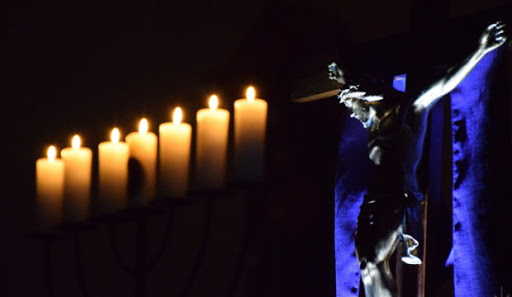
The “Tenebrae” is celebrated in some churches when candles are gradually extinguished with the beating of drums and sounding of matraca to evoke silence and some fear among people as they leave in total darkness to signal the temporary victory of evil in the world for tomorrow we enter the Paschal Triduum of Holy Thursday, Good Friday and Easter Vigil of the Lord.

From Google.

Darkness generally evokes evil and sin, uncertainties and sufferings. But, at the same time, darkness preludes light!

That is why Jesus Christ was born during the darkest night of the year to bring us light of salvation.

Beginning tonight, especially tomorrow at his agony in the garden, we shall see Christ entering through darkness reaching its climax on Friday when he dies on the cross with the whole earth covered in darkness, rising on Easter in all his glory and majesty.

Our present situation in an extended Luzon-wide lockdown offers us this unique experience of darkness within and without where we can learn some important lessons from the Lord’s dark hours beginning tomorrow evening of his Last Supper.

St. John gives us a glimpse into how we must deal with life’s darkness that plagues us almost daily with his unique story of the Lord’s washing of his disciples’ feet on the night he was betrayed.

Before the feast of Passover, Jesus knew that his hour had come to pass from this world to the Father. He loved his own in the world and he loved them to the end. The devil had already induced Judas, son of Simon the Iscariot, to hand him over. So, during supper… he rose from supper and took off his outer garments. He took a towel and tied it around his waist. Then he poured water into a basin and began to wash the disciples’ feet and dry them with the towel around his waist. He came to Simon Peter…

John 13:1-2, 4-6
Photo from aleteia.org.

It is very interesting to reflect how Judas Iscariot and Simon Peter dealt with their own inner darkness on that night of Holy Thursday when Jesus was arrested.

Though Judas Iscariot and Simon Peter are poles apart in their personalities, they both give us some traits that are so characteristic also of our very selves when we are in darkness. In the end, we shall see how Jesus turned the darkness of Holy Thursday into becoming the very light of Easter.

Getting lost in darkness like Judas Iscariot

Right after explaining the meaning of his washing of their feet and exhorting them to do the same to one another, Jesus begins to speak of Judas Iscariot as his betrayer.

When he had said this, Jesus was deeply troubled and testified, “Amen, amen, I say to you, one of you will betray me …It is the one to whom I hand the morsel after I had dipped it.” So he dipped the morsel and handed it to Judas, son of Simon the Iscariot. After he took the morsel, Satan entered him… and left at once. And it was night.

John 13:21, 26-27, 30
Photo from desiringgod.org

The scene is very dramatic.

Imagine the darkness outside the streets of Jerusalem in the stillness of the night and the darkness inside the Upper Room where they were staying.

More darker than that was the darkness among the Apostles not understanding what Jesus was saying about his betrayer because they thought when Judas left, he was being told to buy more wine or give money to the poor!

Most of all, imagine the darkness within Judas.

To betray means to hand over to suffering someone dear to you.

That’s one darkness we always have within, of betraying Jesus, betraying our loved ones because we have found somebody else to love more than them. Satan had taken over Judas. The same thing happens to us when we sin, when we love someone more than those who truly love us or those we have vowed to love always.

And the darkest darkness of all is after handing over our loved ones, after dumping them for something or somebody else, we realize deep within the beautiful light of truth and love imprinted in our hearts by our betrayed loved ones – then doubt it too!

The flickering light of truth and love within is short lived that we immediately extinguish it, plunging us into total darkness of destruction like Judas when he hanged himself.

See how Judas went back to the chief priests because “he had sinned”, giving them back the 30 pieces of silver to regain Jesus.

Here we find the glow of Jesus, of his teachings and friendship within Judas still etched in his heart — the light of truth and love flickering within.

Any person along with their kindness and goodness like Jesus, our family and true friends can never be removed from one’s heart and person. They will always be there, sometimes spurting out in our unguarded moments because they are very true.

That is the darkest darkness of Judas – and of some of us – who think we can never be forgiven by God, that we are doomed, that there is no more hope and any chance at all.

See how the evangelist said it: “Judas left at once. And it was night.”

And that is getting lost in darkness permanently, eaten up by darkness within us because we refuse to believe in the reality of a loving and forgiving God who had come to plunge into the darkness of death to be one with us so we can be one in him. What a loss.

Groping in the dark into the light like Peter

Photo by author, Church of Gallicantu, Jerusalem where the cock crowed after Peter denied Jesus the third time, May 2017.

Of the Twelve, it is perhaps with Simon Peter we always find ourselves identified with: the eager beaver, almost a “bolero” type who is so good in speaking but many times cannot walk his talk.

“Master, are you going to wash my feet?” Jesus answered and said to him, “What I am doing, you do not understand now, but you will understand later.” Peter said to him, “You will never wash my feet.”

John 13:6-8

Here is Peter so typical of us: always assuming of knowing what is right, which is best, as if we have a monopoly of the light when in fact we are in darkness.

See how during the trial of Jesus before the priests, Peter denied him thrice, declaring he never knew Jesus while outside in the dark, completely in contrast with Jesus brilliantly answering every question and false accusation against him inside among his accusers!

Many times in our lives, it is so easy for us to speak on everything when we are in our comfort zones, safe and secured in our lives and career. But when left or thrown out into the harsh realities of life, we grope in the darkness of ignorance and incompetence, trials and difficulties.

How often we are like Peter refusing Jesus to wash our feet because we could not accept the Lord being so humble to do that simply because he is the Lord and Master who must never bow low before anyone.

And that is one darkness we refuse to let go now shaken and shattered by the pandemic lockdown! The people we used to look down upon are mostly now in the frontlines providing us with all the comforts we enjoy in this crisis like electricity, internet, security, food, and other basic services.


Bronze statue of the call of Peter by Jesus. Photo by author, May 2017.

We have always thought of the world, of peoples in hierarchy, in certain status where there are clear delineations and levels of importance, totally forgetting the lessons of Jesus of being like a child, of service and humility: “whoever wants to be great must be the least and servant of all.”

According to Matthew and Luke, Peter realized his sins – the darkness within him – of denying Jesus thrice after the cock crowed that he left the scene weeping bitterly, feeling so sorry. Eventually after Easter, Peter would meet Jesus again on the shores of the Lake of Tiberias, asking him thrice, “do you love me?”

Peter realized how dark his world has always been but in that instance when he declared his love that is so limited and weak did he finally see the light of Christ in his love and mercy!

Unlike Judas, Peter moved out of darkness and finally saw the light in the Risen Lord right in the very place where everything started when he was called to be a fisher of men, in his humanity as he was called by his original name, “Simon, son of Jonah, do you love me?”.

Human love is always imperfect and Jesus knows this perfectly well!

The best way to step out of darkness within us is to be like Simon — simply be your imperfect self, accepting one’s sins and weakness for that is when we can truly love Jesus who is the only one who can love us perfectly.

Overcoming darkness in, Jesus, with Jesus, through Jesus

Though the fourth gospel and the synoptic gospels of Matthew, Mark, and Luke differ in providing us with the transition from the Upper Room of the Last Supper into the agony in the garden, the four evangelists provide us with one clear message at how Jesus faced darkness: with prayer, of being one in the Father.

Even on the cross of widespread darkness, Jesus spoke only to pray to the Father.

Then Jesus came with them to a place called Gethsemane, and he said to his disciples, “Sit here while I go over there and pray.” He took along Peter and the two sons of Zebedee, and began to feel sorrow and distress.

Matthew 26:36-37
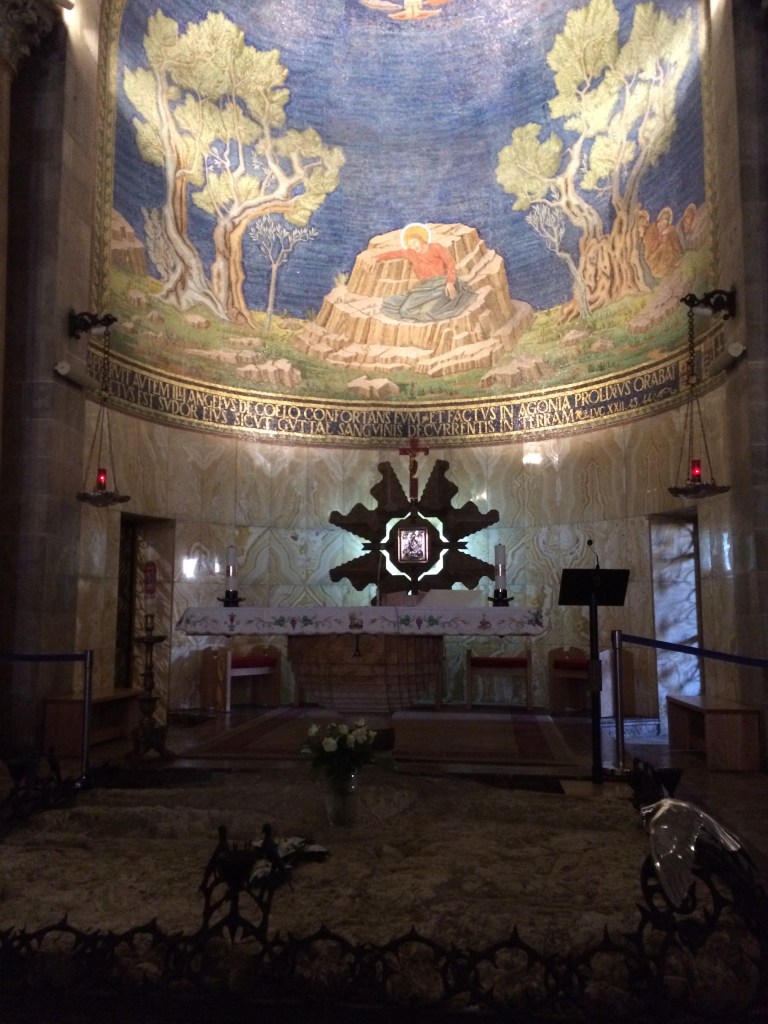
Photo by author, altar of the Church of All Nations beside the Garden of Gethsemane, May 2017. The church is always dimly lit to keep the sense of darkness during the Agony in the Garden of Jesus.

Before, darkness for man was seen more as a curse falling under the realm of evil and sin; but, with the coming of Jesus, darkness became a blessing, a prelude to the coming of light.

We have mentioned at the start of our reflection that Jesus was born during the darkest night of the year to show us he that is the light of the world, who had come to enlighten us in this widespread darkness, within us and outside us.

As the light of the world, Jesus was no stranger to darkness which he conquered and tamed in many instances like when they were caught in a storm at sea and in fact, when walked on water to join his disciples caught in another storm.

But most of all, Jesus had befriended darkness and made it a prelude to light.

How? By always praying during darkness. By prayer, it is more than reciting some prayers common during his time as a Jew but as a form of submission to the will of the Father. Jesus befriended darkness by setting aside, forgetting his very self to let the Father’s will be done.

Bass relief of agony in the garden on the wall of the Church of All Nations at Gethsemane. Photo by author, May 2019.

This he showed so well in two instances, first on Mount Tabor where he transfigured and second in Gethsemane before his arrest.

In both events, Jesus showed us the path to overcoming darkness is always through prayers, of being one in the Father.

It is in darkness when God is most closest to us because it is then when we get a glimpse of himself, of his love and mercy, of his own sufferings and pains, and of his glory.

This is something the three privileged disciples – Simon Peter, James and his brother John – did not realize while being with Jesus at both instances until after Easter. We are those three who always fall asleep, who could not keep with praying in Jesus, with Jesus, and through Jesus.

It was in the darkness of the night when Jesus spent most of his prayer periods, communing with the Father up in a mountain or a deserted place.

On Mount Tabor, Jesus showed his coming glory while in Gethsemane he showed his coming suffering and death. But whether in Gethsemane or on Mount Tabor, it is always Jesus we meet inviting us to share in his oneness with the Father, in his power in the Holy Spirit to overcome every darkness in life.

And the good news is he had already won for us!

Photo by Mr. Raffy Tima of GMA-7 News of Mt. Samat with the Memorial Cross across the Manila Bay following clear skies resulting from the lockdown imposed since March 17, 2020.

In these extended darker days of quarantine period, let us come to the Lord closer in prayer to. experience more of his Passion and Death, more of his darkness so we may see his coming glory when everything is finally cleared in this corona pandemic.

Prayer does not necessarily change things but primarily changes the person first. And that is when prayer changes everything when we become like Jesus in praying.

Jesus is asking us to leave everything behind, to forget one’s self anew to rediscover him in this darkness when we get out of our comfort zones to see the many sufferings he continues to endure with our brothers and sisters with lesser things in this life, with those in total darkness, with those groping in the dark.

Now more than ever, we have realized the beauty of poverty and simplicity, of persons than things.

And most especially of darkness itself becoming light for us in this tunnel.

May Jesus enlighten us and vanish all darkness in us so that soon, we shall celebrate together the joy of his coming again in this world darkened by sin. Amen.

A blessed and prayerful Paschal Triduum to you.

Hosanna in the time of corona

The Lord Is My Chef Recipe for the Solemnity of Palm Sunday of the Lord’s Passion, 05 April 2020

Isaiah 50:4-7 >>+<< Philippians 2:6-11 >>+<< Matthew 26:14-27:66

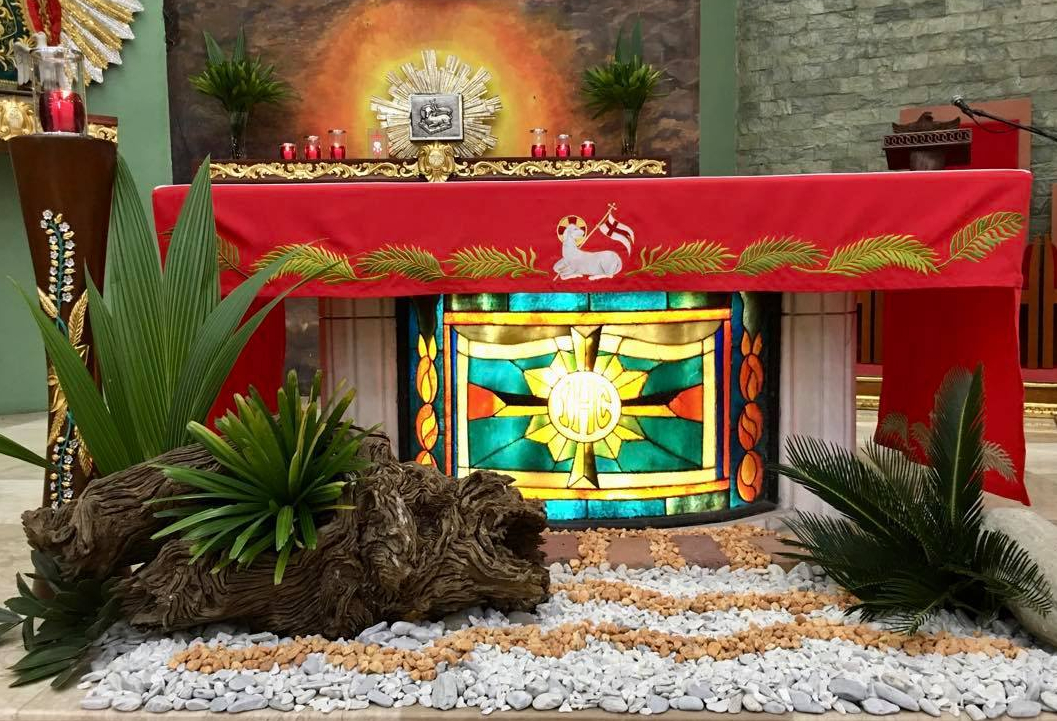
Photo by author, altar of Parokya ni San Juan Apostol at Ebanghelista, Bagbaguin, Sta. Maria, Bulacan, Palm Sunday 2020.

“Hosanna!” is the song of the day and despite the ongoing lockdown now entering its penultimate week, we have every reason to praise God this Solemnity of Palm Sunday in the Lord’s Passion.

Let us continue to sing “hosanna” even if our churches are closed due to threats of COVID-19 because even with all the difficulties arising from this enhanced community quarantine, it also gives us much needed time and space to reflect on the meaning of our Holy Week celebrations.

Let us make this Holy Week holy indeed so we may discover God anew in our sacred celebrations and right in our very hearts in this time of the corona pandemic.

The “ascent” to Jerusalem

Photo by author, ancient city of Jerusalem from the Church of Dominus Flevit (The Lord Wept) where Jesus came from towards the holy city via the eastern gate as prophesied in the Old Testament, May 2019.

Geographically speaking, to go to Jerusalem is to go up, to ascend to higher level as it rises to 754 meters above sea level (2,474 feet) compared with Galilee from where Jesus spent his three years of ministry which is just 209 meters (686 feet) above sea level.

Jesus Christ’s “trip to Jerusalem” was both literally and figuratively speaking an “ascent” in all aspects: he went up to Jerusalem to offer himself on the Cross to replace temple worship so people can finally worship in “truth and spirit” as he had told the Samaritan woman at Jacob’s well three Sundays ago.

More than the outward sign of ascending Jerusalem is the inner sign of Christ’s ascent in his outpouring of love for the Father and us.

That is the beautiful imagery of his triumphant entrance to Jerusalem which will reach its climax on Good Friday capped by the glorious Easter.

Every day, Jesus invites us to welcome him and most of all to join him in his ascent to Jerusalem, to the Father by forgetting one’s self, taking our crosses, and following the Lord in giving of self in love.

Now is the perfect time to sing “hosanna” – to welcome and follow Jesus in our inner ascent when everything and everyone is “down” due to COVID-19. The only way to rise again from this misery of the corona pandemic is to ascent in Jesus, with Jesus, and through Jesus.

For so long, we have been following the upward path of “social mobility” measured in income and material things without considering the emotional and spiritual imbalances that result in these worldly pursuits. In our rat race for higher productivity, more money and less costs, we have become distant from persons especially family. Now, we have to practice social distance not only to stop spread of virus but most of all, to realize anew that above all is always the human person.

And the best route to encounter each person is in Jesus Christ who leads us from Jerusalem to the Cross and into Easter; hence, the liturgies this Holy Week are the oldest and simplest we have in the Church so that we can truly sing “hosanna” and focus only to Jesus ever present to us.

Death and Love

Photo by author, parish altar, Lent 2019.

Now playing at Netflix is the fourth part of its hit series “Money Heist”. I had the chance to watch its first episode that opened with a scene of the professor escaping police in the forest with a narration by “Tokyo” trying to control the situation in the bank they have taken over. She said, “His (the professor) heart held two words that should not be together: love and death.”

Perfect sound bite for Palm Sunday of the Lord’s Passion – “two words that should not be together: love and death” when in fact, its opposite is the exact reality! For love to be very true, it must be willing to suffer and die as the Lord Jesus Christ had shown us more than 2000 years ago.

Love and death are always together! That is why we have a Holy Week leading to Easter!

It is a basic reality we have always tried to negate and escape that have only left us more empty and lost within. The undeniable sign of love is when we are able to love somebody more than our very self – and that includes willing to die for the beloved!

We can never ascend, never arise for as long as we have too much of self, like the characters opposite our Lord Jesus Christ this Holy Week.

One of the Twelve, who was called Judas Iscariot, went to the chief priests, and said, “What are you willing to give me if I hand him over to you?” They paid him thirty pieces of silver, and from that time on he looked for an opportunity to hand him over.

Matthew 26:14-16

Selflessness and silence of Jesus, Selfishness of man

Palm Sunday in our parish 2020.

One distinct characteristic of Jesus throughout his life that is most especially clear from Palm Sunday to Good Friday is his selflessness and silence in the face of too much pressure and suffering.

Rather than being a sign of weakness, it is Jesus Christ’s shining moment of mastery and control as we have noted last Sunday when he cried in meeting Martha and Mary at the tomb of Lazarus who had been dead for four days.

This becomes more evident starting this Sunday reaching its highest point on Good Friday to be capped by his glorious Resurrection on Easter.

See how during his entrance and ascent into Jerusalem, Jesus was silent. Because he knew what was going to happen! He was even looking forward into it.

His entrance into Jerusalem to assert his being the Christ by offering himself on the Cross is the culmination of what St. Luke had noted in his account early on at Caesarea Philippi that “when the days of his going up to heaven was nearing completion, Jesus resolutely journeyed to Jerusalem.”

Despite the dangers and the certainty of death, Jesus did not balk nor even thought of backing out. He resolutely went into his death because of his immense love for us and the Father. He never cracked under pressure!

Even during his trials first before the Sanhedrin and before Pontius Pilate, there was the mastery and surety of Jesus very evident in his silence. He was totally composed, wholly entrusting himself in total obedience to the Father in heaven.

How about us these days of lockdown in the face of the growing threats of COVID-19?

What a shame that our officials and their families finally revealed their true colors as the modern Judas Iscariots seeking VIP treatment for COVID-19 testing! So afraid of dying because love they have none whatsoever for the country and the people but for themselves alone.

From a Facebook post of my friend .

Like Judas, they think only of themselves, keeping their loot of more than 30 pieces of silver, looking for the opportune time to betray us again, totally quiet in the comfort of their homes when thousands are facing hunger and uncertainties.

They are the modern Pontius Pilates who mumble in public, who could not make a definitive stand on anything at all, more at home in accusing and blaming others for the confusions and lack of order, always washing their hands, without guts to humbly accept lack of foresight despite the grave dangers that did not happen overnight.

Most of all, look inside ourselves too for those moments we think more of “what we can have” than “what we can give or do” in these trying times? Do we hoard and panic buy? Do we cower in fear by hiding it with our anger and demands for assistance and relief goods?

Above is a nice guide I found on my friend’s Facebook, indicating three zones to show where are in the midst of COVID-19 pandemic. It can be very useful too in indicating where we can meet Jesus in ascending and entering Jerusalem to fulfill his mission and our mission too.

Entering Jerusalem, entering Jesus

My daily Mass attendees since the lockdown.

When the Luzon lockdown started last March 18, I cried on my first Mass: it was simply unbelievable – until now – for me celebrating Mass without people because a Mass always presupposes people and community to celebrate Christ’s presence!

But now, everybody is gone.

Except me. And the birds who keep constant company for me.

Every morning after pealing our bell as I celebrate Mass alone, I bow before the giant crucifix looming above our altar and look on the metal engraving of the Lamb of God on the cover of our Tabernacle where the Blessed Sacrament of Jesus is kept.

This week as I looked more often onto the lamb during prayer periods, I felt it to be looking at me too. That’s when I realized how the lamb perfectly signifies Jesus Christ entering Jerusalem, the “Suffering Servant” of God prophesied by Isaiah in the first reading today. But what struck me most is the song’s latter part not included in our first reading, referring to Jesus Christ:

Though he was harshly treated, he submitted and opened not his mouth; Like a lamb led to the slaughter or a sheep before the shearers, he was silent and opened not his mouth.

Isaiah 53:7

That lamb is indeed Jesus Christ, coming to us day in, day out in the Holy Eucharist we priests continue to celebrate even if our churches are closed. Every day especially in the Mass, Jesus invites us to ascend with him to the Father, little by little with our selfless acts of charity and kindness to others.

Looking into that lamb of our Tabernacle, I see the eyes of Jesu telling me how much he loves me, how much he has forgiven me from my sins despite his knowing me through and through.

And that is Jesus Christ: always silent, gazing with his eyes full of love, full of knowledge about us and what’s going to happen next, inviting us to join him, to come with him to ascend to our higher selves especially in this time of crisis. All despite his knowing our sins because he sees us too with eyes full of mercy!

These my dear readers are more enough reasons to sing “hosanna” today despite the many difficulties and uncertainties around us because Jesus is with us and will never leave us especially when we reach the cross. Amen.

A blessed holy week to you!

Our tabernacle, Palm Sunday 2020.

Let truth set us free

40 Shades of Lent, Wednesday, Week-V, 01 April 2020

Daniel 3:14-20, 91-92, 95 ><)))*> +++ <*(((>< John 8:31-42

After my “daily Mass without congregation”, 31 March 2020. Photo by author.

O God our loving Father, thank you very much for this brand new day you have given us. Thank you for another day to be better, to be safer, and most of all, to be more faithful , truthful, and loving to you.

Grant us the same courage you have given the three young men cast into the hot furnace after refusing to worship the pagan idol of their pagan captors.

King Nebuchadnezzar said: “Is it true, Shadrach, Meshach, and Abednego, that you will not serve my god, or worship the golden statue that I set up? Who is the God that can deliver you out of my hands?” Shadrach, Meshach, and Abednego answered King Nebuchadnezzar, “There is no need for us to defend ourselves before you in this matter… But even if our God will not save us from the white-hot furnace, know, O king, that we will not serve your god or worship your golden statue which you set up.”

Daniel 3:14, 16, 18

O dear Lord, people are wondering why we still pray, why we celebrate the Mass even our churches are closed, and why or what are we doing when we bring the Blessed Sacrament around our parish.

Many are asking where is our God in all these sickness and deaths caused by COVID-19.

Many are like King Nebuchadnezzar trying to put down the Church founded by your Son Jesus Christ, wondering what we are doing in the midst of this pandemic.

Merciful Father, you know us very well as your children.

Give us the perseverance and fidelity to keep on doing what we have always been doing in hiddenness without much pomp and pageantry and other public relation stunts.

Let our silent works for you and in you continue so that people may know you truly exist, you are among us even if you do not give tangible signs of your presence or proofs of your power.

Let us remain in your Son Jesus Christ so we may always know and follow and most of all, stand by him who is Truth himself because “the truth will set us free” (Jn.8:32). Amen.

Photo by Ms. Ria De Vera, kids kneeling before the Blessed Sacrament we have “motorcaded” around our parish last March 22 and 29, 2020.

Our prophetic mission in Christ

The Lord Is My Chef Breakfast Recipe for the Soul

First Friday, Week IV, Year II, 07 February 2020

Sirach 47:2-11 ><)))*> 0 <*(((>< Mark 6:14-29

Photo from catholicworldreport.com, “The Beheading of St. John the Baptist” (1869) by Pierre Puvis de Chevannes.

Your gospel today, O Lord, is so appropriate and timely: while we were busy, albeit foolishly discussing the novel coronavirus in every fora, a technical committee in the House of Representatives has approved three measures seeking to legalize divorce in the country.

We do not know what have really happened but it is so sad that no one among the Catholic and Christian lawmakers there made a solid stand against these measures like St. John the Baptist who was imprisoned on account of his objection to Herod’s taking of his brother’s wife Herodias.

So many times, Lord, we are so afraid and worried of what others might say against us when we make a stand for what is right and just, for what is proper and decent, for what is right and good, for what is your will.

Worst, O Lord, many of us are like Herodias who have prostituted our very selves in the service of the worldly allures of sex, fame, and wealth, choosing to be silent with all the many immoralities going on in government, in the society, and even in the church!

Give us the same courage, Lord, you have given your precursor St. John the Baptist to be prophets in this modern age, to be a voice in the wilderness, making a stand for what is holy, true, and just.

Like David, may we always seek your ways, ask for your grace to do your will against the giants and monsters of this world who ram into us every modern thought and idea that disregard the sanctity of life, the value of every person, as well as the sanctity of marriage.

Let us not be silent anymore with the growing impunity of many in their arrogant display of authority, throwing their weight around us with their cuss words and fallacious arguments that dignify their truncated egos and pride for the sake of progress and modernity. Amen.

Thinking kindly of others

The Lord Is My Chef Breakfast Recipe for the Soul

Tuesday, Week 1, Year 2, 14 January 2020

1 Samuel 1:9-20 ><)))*> ><)))*> ><)))*> Mark 1:21-28

Inside our church from the altar table. Photo by author, November 2019.

Hanna replied to Eli, “Think kindly of your maidservant,” and she left..

1 Samuel 1:18

While praying over your words, O Lord, of that scene at the temple when Eli mistook Hannah to being drunk while praying intensely to you for a child, it reminded me of Taal Volcano’s restive behavior, of her spewing ashes and causing tremors.

But despite all these, Taal remains lovely and magnificent.

Sometimes, Lord, that is what exactly we need in life: to think kindly of others always.

The people were astonished at his teaching, for he taught them as one having authority and not as the scribes. All were amazed and asked one another, “What is this? A new teaching with authority. He commands even the unclean spirits and they obey him.”

Mark 1:22, 27

Purify our thoughts, Lord, to always think kindly of others.

To always have that disposition for silence and being non-judgmental with others to always listen to them and be open to their thoughts and feelings as well.

Like you, Lord Jesus Christ, enable us to share in the power of your words, to speak with authority by entering into that daily union with you in silence and prayers.

May we learn also from the gentle Taal: to be still and silent, to speak only when necessary so that everyone listens intently to her inner rumblings when she finally “speaks”.

We continue to pray for those severely affected by Taal’s eruptions, most especially that they may remain kind with people and nature alike in this trying moments of a major calamity.

We pray for businessmen to have a heart, to think kindly of those affected by Taal’s eruptions and stop jacking up prices of much needed goods. Amen.

From inqirer.net