Sad Jesus

Quiet Storm by Fr. Nicanor F. Lalog II, 19 August 2024
“Christ and Rich Young Ruler” by Heinrich Hofmann from en.wikipedia.org.

The volcanic smog from Taal that has shrouded the south since early Monday morning inspired me tonight to share with you this short reflection from the gospel:

Jesus said to him,”If you wish to be perfect, go, sell what you have and give to the poor, and you will have treasure in heaven. Then come, follow me.” When the young man heard this statement, he went away sad, for he had many possessions (Matthew 19:21-22).

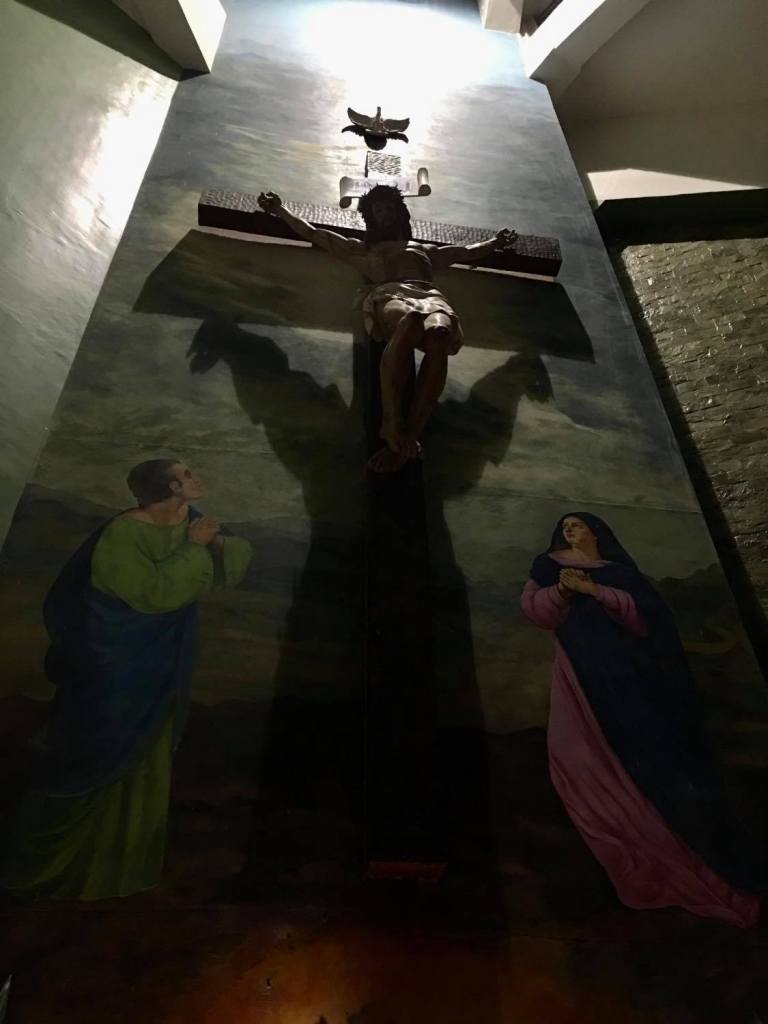
I have been trying to imagine not only the sad face of the young man but most of all, the sadness of Jesus. Most often, the first image of a sad Jesus who comes to our mind is when he was in His Passion and Crucifixion.

That’s understandable.

Try imagining, reflecting Jesus sad when we are sad like at the death of His friend Lazarus. The beloved disciple tells us in his gospel account that upon seeing the sisters Mary and Marta, Jesus became more sad not only with the death of a good friend.

If there is one thing we can always be sure of, Jesus shares our feelings too! When we are sad, Jesus must be most sad too. And how unfair when we fail to see the sadness too of Jesus as if we suffer or grieve alone. Perhaps, it is a part of our pa-victim syndrome, of us being on the distaff side always of the story. Let us not forget Jesus because failing to experience and realize the sadness of Christ means we are still filled with pride, so self-centered and most likely, after overcoming our sadness, we would still keep our “possessions”. What a tragedy that has become a vicious circle with us priests.

Photo by author, Chapel of the Angel of Peace, 25 June 2024.

When is Jesus sad?

As we begin our retreat tonight here in Tagaytay, I feel Jesus saddest when we His priests are sad in celebrating the Mass and other sacraments, in doing our ministry. Jesus cries so hard in shame when we priests are not only sad but also angry, even insolently ministering to the people especially when they are poor.

How easy it is for us priests to readily identify with the young man being sad even with our admission or confession of having many possessions. That’s very easy, like saying sorry from the nose. But, are we ready to let go of our attachments so we become joyful in Christ again as seen in the way we celebrate especially the Mass?

When we priests are sad in our ministry, people are more sad that makes Jesus most sad of all! In the first place, no one – nobody – among the people must be saddened by priests or by the Church as an institution. Priesthood is the joy of Jesus Christ!

It is a grave contradiction that we ever be that rich young man in the gospel portrayed as sad due to many possessions. Its deepest pain and cut is found in the very reason of this sadness: Jesus is most sad when we priests are sad because He knows very well we are no longer His.
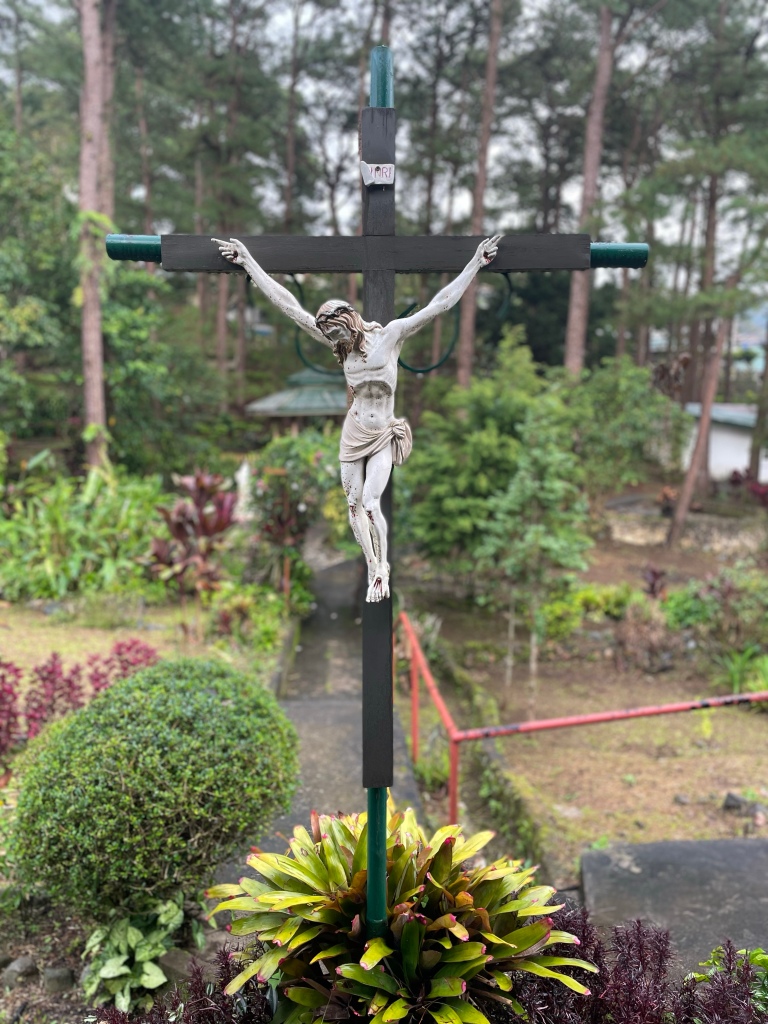
Photo by author, St. Scholastica Spiritual Center, Baguio City, August 2023.

This kind of sadness which is so negative (because we can be sad too like everyone) starts subtly when we priests are inconvenienced, when we have to sacrifice and suffer, forgetting that it is the life we have freely embraced in the first place. Some priests presumed we can suspend for a while our commitments and vows, and simply be human, whatever that means. So, they stop praying, stop sacrificing, stop living out the vows of poverty, obedience and celibacy.

As priests sink deeper into sadness, they find themselves already trapped in a festering evil and sin, becoming angry and lazy, making so many alibis and excuses from celebrating the Mass especially funerals for poor parishioners.

When there is the confluence of sloth and anger, then it becomes a point of no return because sadness detaches us priests from Jesus and His people. That is the saddest part of this sadness, of priests living in their make-believe world of vanities and all kinds of possessions. Worst part of this is how the sad priests are totally oblivious to the fact they have infected with their sadness the people they were sent to help liberated from burdens and miseries. That is when people come to the Mass and sacraments because they just have to fulfill an obligation to God that is most sad because God sent priests to bring joy, not sadness.
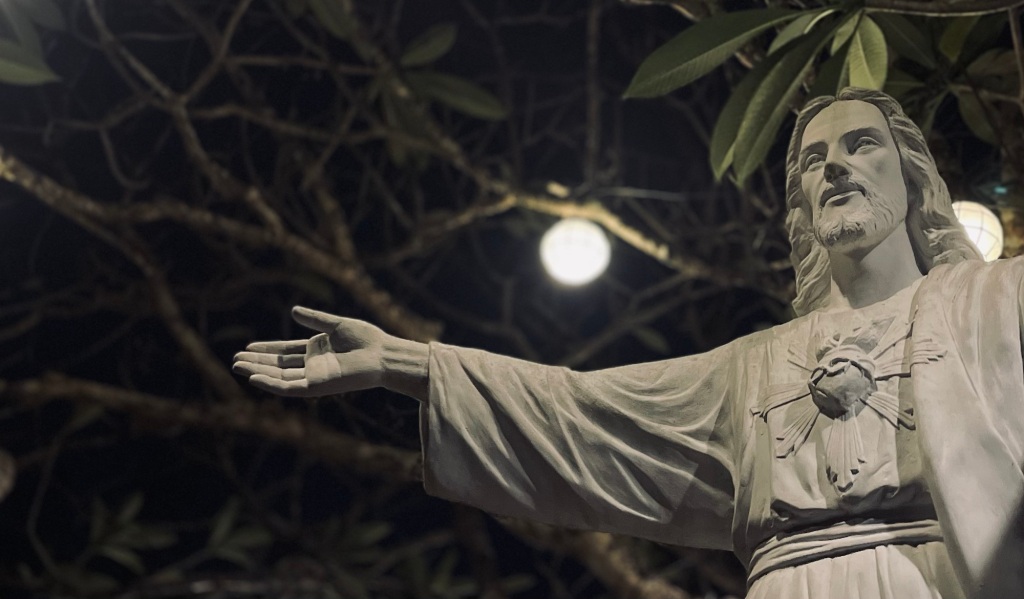
If a priest is making you sad, pray hard for that priest. You are not alone. Priests are sad when their brother-priests are sad in the ministry too.

But, Jesus is most sad when His priest is sad. Pray hard for His priests especially those who seem to enjoy and laugh with the “good life” but sadly empty inside. A priest is supposed to be a leaven to the people, someone who would help others to rise and grow. And glow in Jesus. Let us pray:

Lord Jesus Christ,
our Eternal Priest,
sorry for making you sad;
most of all,
for being sad because
of my many possessions;
help me find my way back
to you to be filled anew with
your joy.
Amen.


Our Lady of Sorrows: absorbed in sorrow, absorbed by glory

The Lord Is My Chef Daily Recipe for the Soul by Fr. Nicanor F. Lalog II
Friday, Memorial of Our Lady of Sorrows, 15 September 2023
1 Timothy 1:1-2, 12-14   ><}}}*> + ><}}}*> + ><}}}*>   John 19:25-27
Lady of Sorrows from a triptych by the Master of the Stauffenberg Altarpiece, Alsace c. 1455; photo from fraangelicoinstitute.com.
What a joy for us,
sinful children of the Father
to be your children too,
O Blessed Virgin Mary
through your Son
our Lord Jesus Christ!

Standing by the cross of Jesus were his mother and his mother’s sister, Mary the wife of Clopas, and Mary of Magdala. When Jesus saw his mother and the disciple there whom he loved, he said to his mother, “Woman, behold, your son.” Then he said to the disciple, “Behold, your mother.” And from that hour the disciple took her into his home.

John 19:25-27
More than the tears and sorrow
 on your face portrayed in arts,
O Sorrowful Mother, 
all I see and experience
in you is a disciple
 so absorbed in prayer,
so united and close
 with our Lord Jesus;
yours is a different kind
of sadness
that I feel when I look
at your images
as our Lady of Sorrows:
no pity but dignity,
no dramatics nor theatrics
but purely
noble simplicity.
How sad,
dear Mother and Lady of Sorrows
 that many of us disciples
 of your Son Jesus
have forgotten this very
important aspect of discipleship
you have shown us,
a life centered on prayer
that is more than reciting prayers
but residing in Christ,
of being absorbed in his
Passion and Death
so that like you,
we may be absorbed by
his glorious Resurrection!
Indeed,
 dear Lady of Sorrows,
as St. Paul tells us today,
"the grace of our Lord has been
abundant, along with the faith
and love that are
in Christ" (1 Tim.1:14);
pray for us your children
and fellow disciples
to be first absorbed in prayers
because before everything
else came,
there was Jesus
who first came
calling us
to be one in him,
with him,
and through him
like you
absorbed by his glory
in heaven.
Amen.

The companionship of Christ

The Lord Is My Chef Sunday Recipe for the Soul by Fr. Nicanor F. Lalog II
Third Sunday in Easter, 22 April 2023
Acts 2:14, 22-33 ><)))*> 1 Peter 1:17-21 ><)))*> Luke 24:13-35
The Road to Emmaus” painting by American Daniel Bonnell from fineartamerica.com.

As I have been telling you, the beauty and joy of Easter is in its “nothingness” like the empty tomb of Jesus and its “darkness” found in the setting of the Lord’s appearances. We have found these in the past two Sundays when Jesus appeared to the Twelve “on the evening of the third day” and “eight days later” amid locked doors.

This Sunday is very different. It is the story of two disciples going back home to Emmaus whom St. Luke did not identify except the one named Cleopas. There is still the setting of darkness as it happened at sunset to early evening while news of the empty tomb was still trending amid reports Jesus had appeared to some women but still nowhere to be seen. But this time, darkness is more evident inside the two disciples walking away from Jerusalem – sad, disappointed and frustrated, forlorn.

Now that very day two of them were going to a village seven miles from Jerusalem called Emmaus, and they were conversing about all the things that had occurred. And it happened that while they were conversing and debating, Jesus himself drew near and walked with them, but their eyes were prevented from recognizing him. He asked them, “What are you discussing as you walk along?” They stopped, looking downcast.

Luke 24:13-17
From https://www.clarusonline.it/2017/04/29/i-discepoli-di-emmaus-andata-e-ritorno/

Did you feel the sadness of the two disciples? Today, Jesus assures us of his companionship especially when we are in a “perfect storm”, when everyone and everything are against us, when it is all darkness within us, when we are at our lowest low awaiting for the next worst thing that could happen to us.

It is during these times we think of quitting, of just going home, going back where we have been before, abandoning everything because it seems better to start all over again as everyone/everything have been lost. There need not be tragedies in life for these to happen. Many times it could be when we are in the midst of grave sins or even with our most common sins repeated over and over like venial sins. We feel discouraged, even depressed we could not see any sense at all in going back to God in prayers and the sacraments especially the Holy Eucharist. Those moments we tell ourselves and everyone, “para que?” or “para saan pa?” that we would go back to God, our Jerusalem.

Like the two disciples, we have become so nega that as we walk to the opposite direction in life, we fail to notice Jesus accompanying us, making sakay (ride on) with our trip, just listening to our woes and complaints, stories of sins and failures, pains and hurts, disappointments and frustrations.

Here we find Jesus our only true friend who allows us to be our truest self, even our worst self. He walks with us not only in darkness but in the opposite direction, waiting for the prefect timing to gently bring us back to the right path to Jerusalem. And sometimes, he does it with a splash of humor like when he told the two disciples “Oh, how foolish you are! How slow of heart to believe all that prophets spoke!” (Jn. 21:25).

Many times, we fail to bring back to God and to the right path our lost family and friends because we lack the compassion and gentleness of Jesus. Very often, fail because we react than act like Jesus who’s companionship and compassion opened the hearts of the two disciples: it was only after they have unloaded their burdens when Jesus loaded them or filled them with his words and eventually with his very presence at the breaking of the bread.

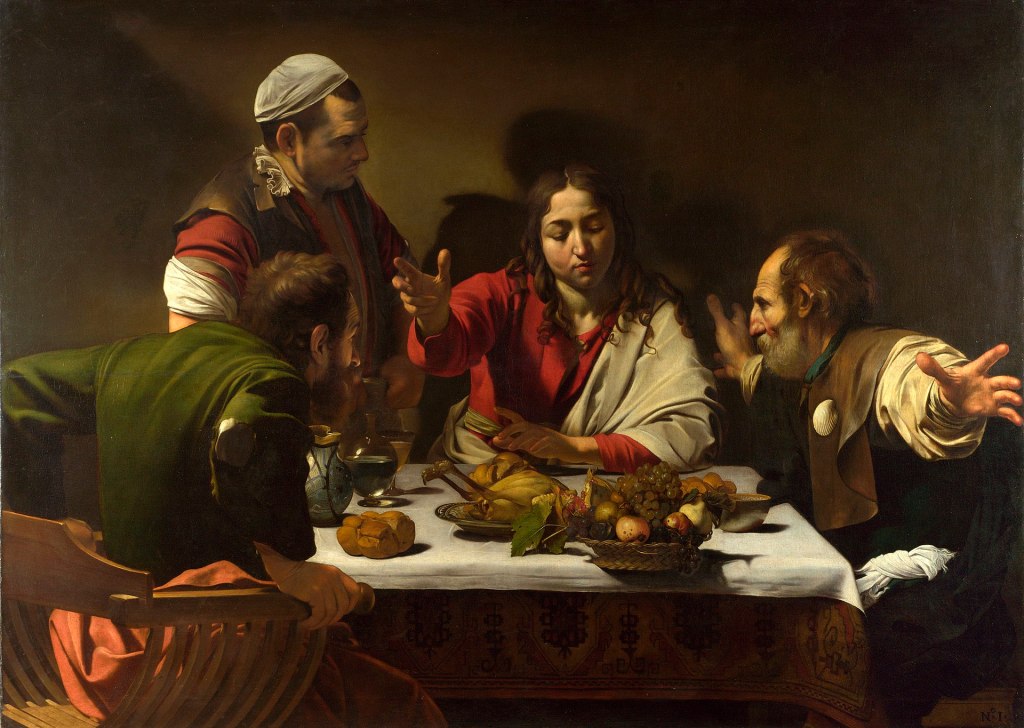
“Supper at Emmaus” by renowned painter Caravaggio from en.wikipedia.org. See the emotion depicted by Caravaggio with his trademark of masterful play of light and shadows. At the center is the Risen Lord blessing the bread that caught the two disciples who are seated in disbelief, one outstretching his arms and the others pushing back in his chair. The third character in the painting is the innkeeper unaware of the significance of the gesture of Jesus. It was at this instance that the two disciples recognized Christ as the traveling man with them to Emmaus.

Human transformation happens only in Christ, with Christ and through Christ in the Eucharist where we also experience a reversal of roles in our relationships with God and with others. Notice how the attitudes and perspectives of the two disciples changed when Jesus broke the bread. Remember it was the two disciples who invited Jesus inside to stay because it was getting dark, hosting a meal for him as their guest but that changed at the table: the two disciples ended up as guests of Jesus who merely joined them in their journey!

And it happened that, while he was with them at table, he took bread, said the blessing, broke it, and gave it to them. With that their eyes were opened and they recognized him, but he vanished from their sight. Then they said to each other, “Were not our hearts burning within us while he spoke to us on the way and opened the scriptures to us?” So they set out at once and returned to Jerusalem where they found gathered together the eleven and those with them who were saying, “The Lord has truly been raised and has appeared to Simon!” Then the two recounted what had taken place on the way and how he was made known to them in the breaking of the bread.

John 21:30-35

One thing I have found in life these past 25 years as a priest is that we can only realize and understand, even see the clearer and bigger picture of our life later after so many years of series of trials and tribulations, joys and celebrations. And often, what we see is the Lord, the companionship of Jesus Christ even in those times we were in sin and away from him. St. Peter said it so well in the second reading that we are in a “sojourning, realizing that you were ransomed from your futile conduct with the precious blood of Christ” (1 Pt. 1:17, 18, 19).

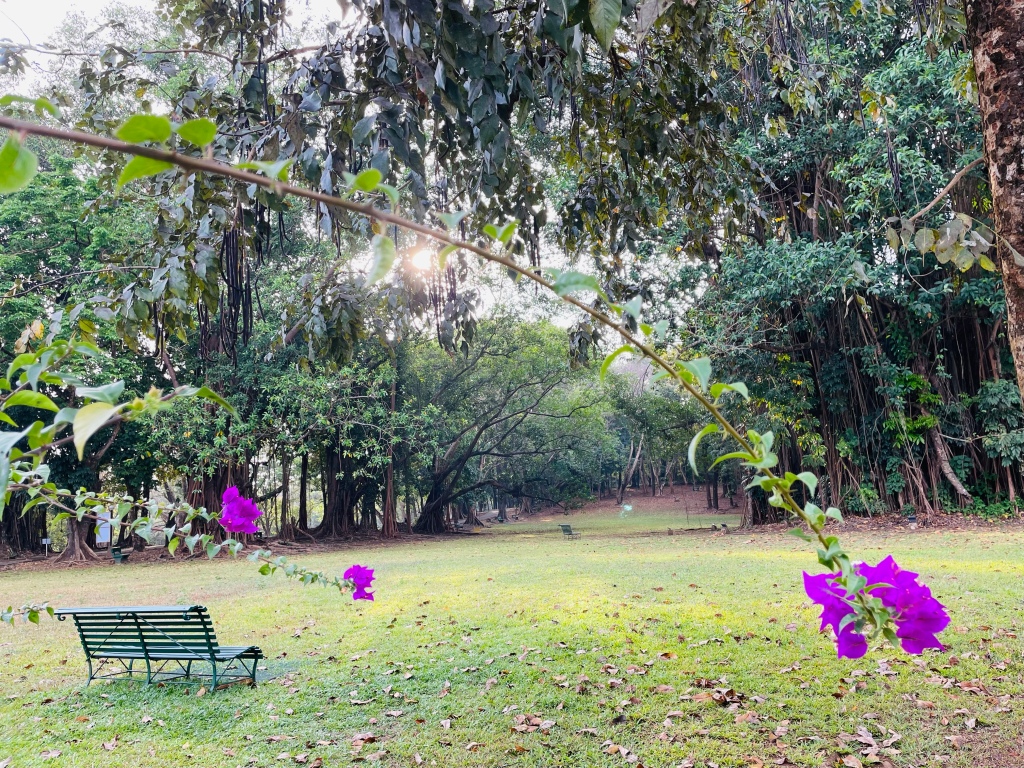
Photo by author, Sacred Heart Novitiate, Novaliches, QC, 20 March 2023.

Many times in life we feel as if we are really the captain of our ship, we direct everything, we control everything but it is actually Jesus. There is always Christ our companion in this journey of life, our true host and we are his guests who shared himself with us on the Cross so we can share in the mystery and victory of his Resurrection. In being one with us in our brokenness, Jesus immediately vanishes the moment we recognize him so we may keep on following him by changing course and direction in our lives.

In this time when people have lost interests in the Church, the Sacraments especially the Holy Eucharist, and the Scriptures along with prayers and devotions, we who are inside the church especially us priests are reminded of this important truth by Jesus, that he is the one in command, he is our host. We only share him in our co-journeyers in life, he is the one who opens our eyes, the one who effects transformation and changes within us. Not us.

Are we one with Jesus, especially in the Eucharist we manipulate so much with our many rituals and acts not necessary? See that the more we manipulate the Mass and other devotions, the more Christ disappears and persons especially priests become the focus.

In Emmaus, Jesus walked with the two disciples going the opposite direction to lead them back and never the other way around as it happens when we priests and volunteers are the ones who mislead people away from Jesus with our lack of warmth and charity for people like the unchurched.

Jesus is truest in the Eucharist when we touch people literally with our hands, when we get our hands dirty in taking care of the sick and needy, when we are truly present with them especially in their griefs, emptiness and sinfulness. That is when they experience, not just know that Jesus is real and true in the Eucharist when they first experience him in us his disciples, in our companionship and compassion with those suffering.

Nobody is perfect. As St. Peter had noted in the first reading, we are all responsible for the suffering and death of Jesus with our sinfulness; however, God’s love for us is far greater than our sins so that in our darkness and emptiness, we are able to see and have fulfillment in Jesus his Son. Amen. Have a blessed week!
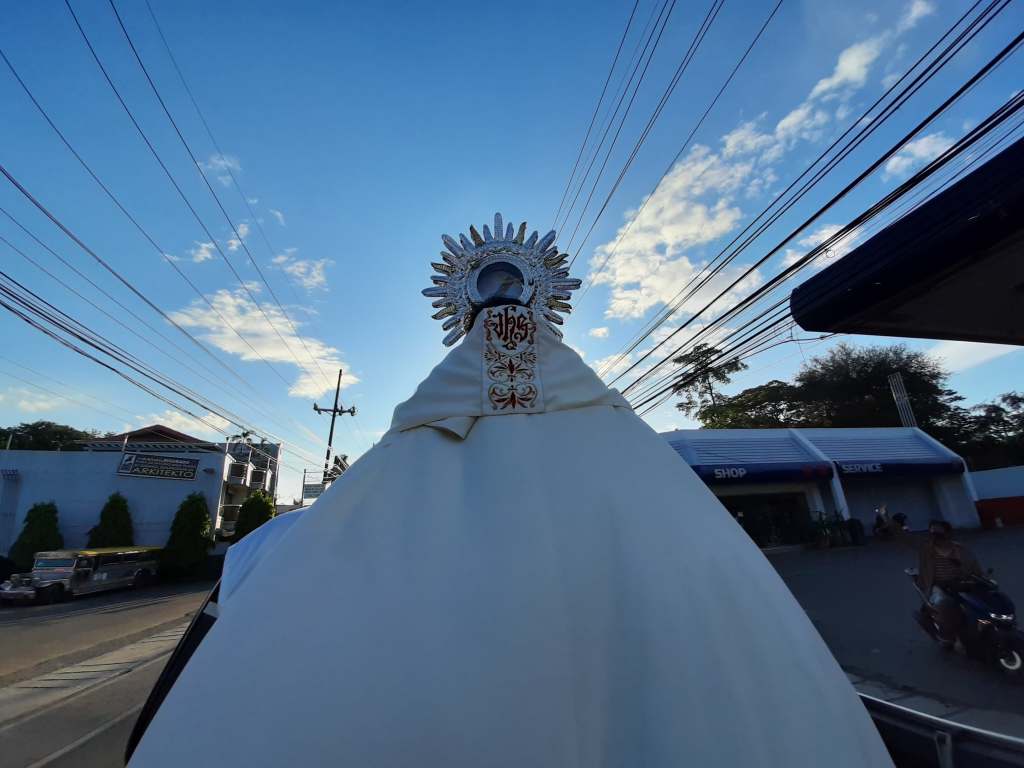
Photo by author, Sacred Heart Novitiate, Novaliches, QC, 20 March 2023.

The joy of Easter: Jesus comes in our weeping

Photo by author, morning sun at Sacred Heart Novitiate, Novaliches, Quezon City, 20 March 2023.
One with the Psalmist today, 
O dear Jesus Christ, 
I also proclaim that indeed
"The earth is full of the goodness of the Lord"
(Psalm 33:5)
because even in our sadness,
right in our weeping and in
our crying, 
that is where and when you come!

Jesus said to Magdalene, “Woman, why are you weeping? Whom are you looking for?” She thought it was the gardener and said to him, “Sir, if you carried him away, tell me where you laid him, and I will take him.” Jesus said to her, “Mary!” She turned and said to him in Hebrew, “Rabbouni,” which means Teacher.

John 20:15-16
Like Magdalene,
there are times we are overtaken
by our grief and sadness over our
many disappointments and failures,
losses and defeats like deaths 
that we could not see 
your loving presence,
your consoling comfort
O Lord Jesus Christ.
Like the listeners of Peter on that
day of Pentecost, "cut us to the heart"
(Acts 2:37), lay bare before us this
glaring truth of your Resurrection, Jesus,
of your victory over death and darkness,
over sin and sickness
that we may be more open to accept and
embrace your loving presence
with us and in us during the most
trying times of life like death of a loved one
or a sudden shift in our lives.
Amen.
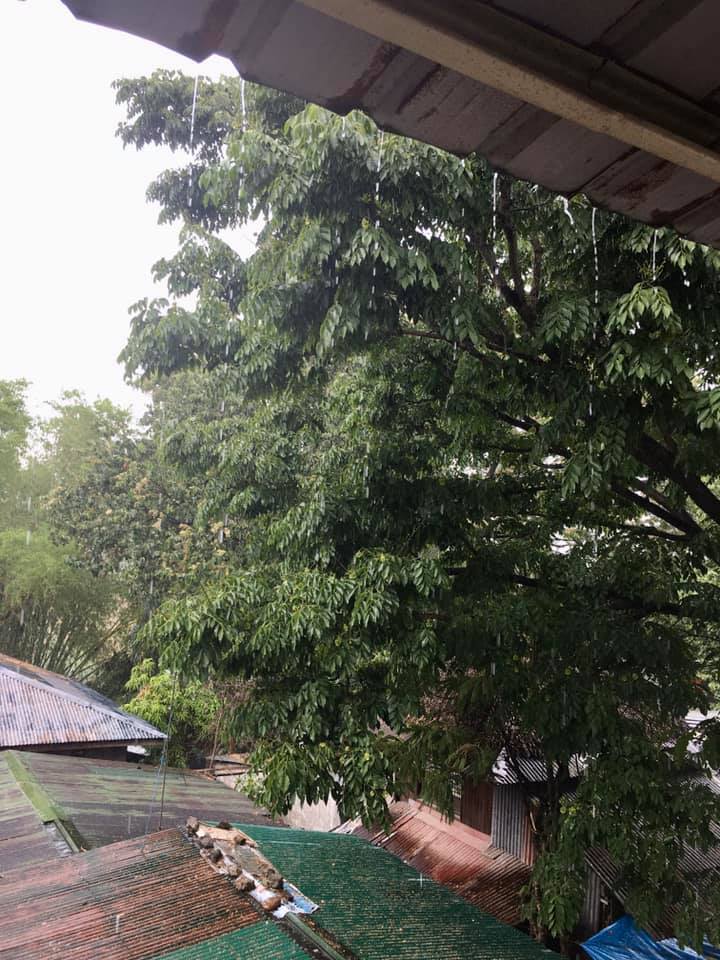
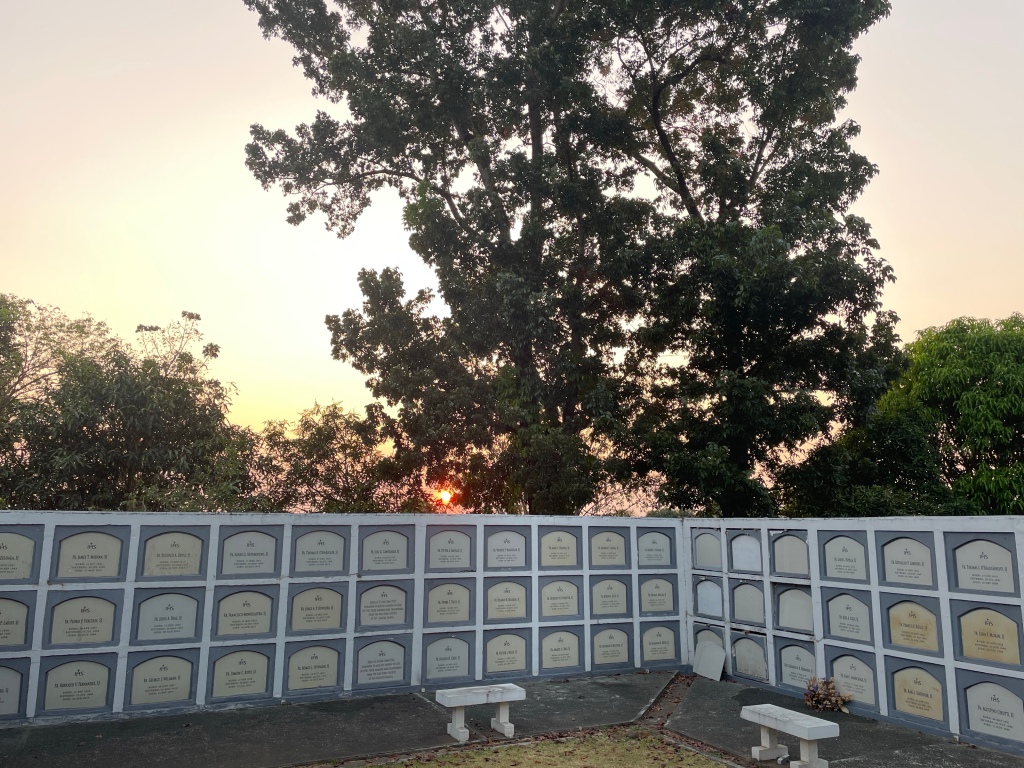
Photo by author, Jesuit Cemetery, Sacred Heart Novitiate, Novaliches, Quezon City, 20 March 2023.

Ulan

Lawiswis ng Salita ni P. Nicanor F. Lalog II, Ika-13 ng Hulyo 2022
Larawan kuha ng may-akda, 2016.
Itong ulan
ay kay buting paalala
sa atin ng kalikasan  
na kailanma'y hindi tayo nalilimutan
ng Panginoong Maykapal
sa ating mga pangangailangan;
dinidiligan nanunuyot na kapaligiran
maging ating katauhan, minsa'y
nagwiwilig lamang upang maibsan 
ang alinsangan at kung tag-ulan, 
bumubuhos upang lubluban 
labis nating karumihan!
Larawan kuha ng may-akda, 2020.
Itong ulan
maraming kahulugan
kadalasa'y pagpapala at
biyaya, tubig mula sa kalangitan
bagaman kung minsan
ay parang sumpa o parusa
tila mga patak ng luha 
tayo ay binabaha ng hirap
at hilahil, nalulunod sa pighati
at kalungkutan na tila walang katapusan.
Larawan mula Pixabay sa Pexels.com.
Itong ulan
mayroong taglay na katangian
wala sa ibang kalikasan
ang mangusap at magparamdam
dampian buong katawan tulad
ng isa pang kapwa nilalang
upang maranasan kalinisan at
kadalisayan nitong buhay
luntiang mga dahon, damdaming naaantig 
ng magkasabay na lamig at halumigmig!
Larawan kuha ni Peter Fazekas sa Pexels.com.

Panaghoy sa Adbiento

Lawiswis ng Salita ni P. Nicanor F. Lalog II, Ika-03 ng Disyembre 2020
Larawan kuha ng may-akda, oras ng pagninilay sa kapilya ng mga teologo, ICMAS, Oktubre 2020.
O Diyos na mahabagin
Ako sana’y Iyong dinggin
Sabi mo ikaw ay darating
Bakit parang ako’y
Iyong iniwan, nakabinbin?
Katulad ng mang-aawit 
araw gabi ako tumatangis
ninanamnam mga salita mong matamis
sa paglipas pumapait dahil 
sa mga butil ng luhang walang tigil.
Kay dilim ng aking paningin
sana mga ito ay pangitain
sa isang panaginip
na ibig ko nang magising
sana ikaw Panginoon aking kapiling.
Larawan kuha ng may-akda, takip-silim sa Silang, Cavite noong 20 Setyembre 2020.
Ano pa nga ba dapat kong gawin
upang huwag maging mainipin
sinasarili mga daing at hinaing 
sa Iyo lamang sinasabi
waring ako'y napakagaling.
Pumarito ka na, Panginoon
iyong madaliin; punitin yaring tabing
ako’y iyong dukwangin
at sagipin mula sa mga ngipin
at pangil pinalalala nitong Covid-19!
Kung minsan mas mainam pa rin
pananahimik at pakikinig
sa panaghoy at alalahanin 
ng sino mang mayroong tiisin
dahil maging ang Panginoon, nananahimik din.
Larawan kuha ng may-akda, takip-silim sa likod ng parokya, Hulyo 2020.
Sana aming mapagtantong totoo
sa gitna ng lahat ng ito
narito ka Panginoong Jesu-Kristo
naunang dumating, upang lahat
ay tiisin at batahin para sa amin.
Kung tutuusin lila ang kulay
nitong Adbiento upang ilahad
pag-aagawan ng liwanag at kadiliman
tanda ng Iyong pagdating,
nagkukubli ng tahimik doon sa sulok na madilim.
Itulot po Ninyo, Panginoon
na huwag kaming mainipin
manatiling gising at matiyagang manalangin
mamunga ng mabubuting gawain
upang sa pagtingin, ikaw masilayan namin! 
Larawan kuha ng may-akda, tabernakulo ng parokya, Panahon ng Adbiento 2020.

The gift of tears

Quiet Storm by Fr. Nicanor F. Lalog II, 22 September 2020
Photo by Ms. Ria De Vera of our parish church, August 2020.

Lately I have been watching old movies that I wonder why I still cry even if I have seen them more than twice before at the cinema and cable TV. It seems that my being born with “mababa ang luha” (easy to cry) is getting more “mababa” as I get old.

Tears are a gift from God, the most beautiful prayer we can ever express courtesy of the Holy Spirit because when we run out of words for our pains and sadness or when we are overjoyed, he makes us cry to heal and comfort us or complete our joys, assuring us of his loving presence.

That is the reason why we call “home” in Tagalog as “tahanan”: home is where we “stop crying”, that is, “tahan na” because that is where we find all the support we need in times of crisis. Indeed, home is where the heart is.

True to its function, tears cleanse us physically, emotionally and spiritually. I have read two decades ago that researchers at a university in the US have found the chemical composition of our tears differ if we cry because of pain and sadness or due to joy and laughter.

Is it not wonderful and amazing how we take for granted crying and tears without realizing its chemical process within that can transform our very selves?

Photo from Reuters.com, July 2020.
Tears and crying mark our life's coming to full circle.

When I was five years old, I saw the picture of a newborn baby crying in the Book Section of the Reader’s Digest. I asked my mom why the baby was crying. In her usual motherly way of explaining things, she told me that if the baby cries upon birth, it means he/she is alive; if the baby does not cry, he/she is dead.

Kapag umiyak, buhay; walang iyak, patay.

My young mind easily absorbed her words that would remain to be one of the most profound lessons I had ever learned about life at a very young age. As I grew up watching TV and movies, I would always sigh with relief whenever I heard the sounds “uha-uha” because the story would surely be nice and not tragic.

Imagine the great inverse that happens with crying and tears to signal the coming to the outside world of life of another human, of how we have to cry to be alive from then on until we die when it becomes our family and friends’ turn to cry and shed tears for us when we are gone.

But there is something more deeper than this great inverse on crying in life and death I had learned only in 2013 through my best friend Gil, a classmate in our minor seminary.

It was late February of that year on the 40th day of the death of his youngest sister Claire when he was diagnosed with cancer. We could not believe the news because Gil was the most health conscious in our “band of brothers” from high school who never smoked, rarely ate meat, and was active in sports like golf and badminton. Unlike most of us, he was never overweight, looked so healthy in our mid-40’s.

Imagine the hurt within him that every time we would visit him, he would cry not really in pain but more on the why of getting cancer. We tried visiting him as often as we can to cheer him up and lift his spirits specially after his surgery when his chemotherapy sessions began.

By September on that same year, we all had to rush and visit him at Makati Med one Sunday afternoon when informed by his Ate Lily that doctors have given up on him. His cancer cells were “ferocious” and nothing could be done anymore except to wait for the inevitable.

That was when I noticed the greater inverse about crying when Gil had finally accepted his condition and life direction, that was when he was most joyous and peaceful too while we were the ones so sad and worried, crying. How our roles were reversed with Gil now telling us to stop crying – tahan na – which we used to tell him months earlier! (Gil died peacefully the following Sunday, 22 September 2013.)

“Mater Dolorosa” as “Blue Madonna” (1616) by Carlo Dolci. Photo from Wikimedia Commons.

I noticed it happening so many times with some friends and parishioners I have come to love in my ministry, those I have pastorally cared for some time after being diagnosed with serious conditions like cancer.

Yes, I have cried despite holding my tears for them while administering the Holy Viaticum and Anointing of Oil. The patients in turn would just glance at me, so dignified and calm like Mary our Lady of Sorrows as if trying to comfort me with their sweet thank you.

As I prayed on those experiences, I realized how life comes to full circle through our crying and tears.

I believe that patients cry when they start undergoing treatment of their sickness due to fears and uncertainty of what would happen next to them; later as they come to terms with their condition, they stop crying because they already knew where they were going, of what was coming next.

We who would be left behind cry and begin to shed tears at thoughts of their dying because admittedly, we are actually the ones more uncertain of where we are going to or how our lives would go through when our loved ones are gone.

That is the greatest pain we feel in the death of a beloved when we grapple with the realities of the many uncertainties of life without them.

And that is why we need to love as much as we can our family and friends while still alive. This quarantine period of the pandemic are grace-filled moments to shower them with our love and presence we have taken for granted for so long as we pursued many things in our lives.

Photo by Dr. Mylene A. Santos, MD at Infanta, Quezon, April 2020.
Tears and crying lead us to heaven.

Death and sickness, like life, become a blessing if we are filled with gratitude not regrets because we have truly loved. When a beloved is gone and we begin to cry, the tears wash away our pains of losing them, cleansing us within to leave us with all the beautiful memories and love we have shared. Then, every remembering becomes truly a re-membering, making a lost loved one a member of the present again.

When we cry, tears polish the love we have shared with everybody until later when our time comes, our visions are also cleared of what is going to happen next, of where we are going. Crying becomes wonderful and truly a grace after all not only in sharing and being one with the grief and pain of another in the present but sooner or later, in having a glimpse of the life after.

In the Gospel of John (11:1-44), we find the story of the raising of Lazarus whom Jesus loved so much that he wept – not just cried – at his death. Jesus raised him up back to life, his final miracle – or “seventh sign” according to John – to show he is the Christ before his own Resurrection at Easter after his “final hour” of Crucifixion on Good Friday.

From then on, Christ sanctified crying and tears to enable us to see beyond pains and hurts, even death especially if you have truly loved.

Sometimes in life, it is always good to let those tears flow, like love even if it is painful, to have a good cry and real cleansing inside. A blessed day to you!

Prayer in darkness

The Lord Is My Chef Breakfast Recipe for the Soul, Wednesday, Easter Week-IV, 06 May 2020

Acts of the Apostles 12:24-13:5 ><)))*> + ><)))*> + ><)))*> John 12:44-50

Photo by icon0.com on Pexels.com

Our lamentations continue, O Lord, as our nation is plunged into deeper and disturbing darkness. How can all kinds of darkness fall upon us in this administration? First, they found death as solution to many problems. And then came all their lies and fake news.

Not to mention their diplomatic ties with a godless government that has been dishonest from the very beginning regarding this pandemic.

They themselves have chosen to be in darkness at the very start of the COVID-19 pandemic who would rather pass blame and wash hands for every confusion in implementing the quarantine.

And, now comes their most serious attack to light, in shutting down a beacon of light of news and information.

The more we cry out to you, O dear Jesus, please come to us now. Quickly. And save us!

Jesus cried out and said, “Whoever believes in me believes not only in me but also in the one who sent me, and whoever sees me sees the one who sent me. I came into the world as light, so that everyone who believes in me might not remain in darkness.”

John 12:44-46

We pray for those in government, in this administration who’s leader had blasphemed your Most Holy Name not only once or twice for the grace of enlightenment and decency from the Holy Spirit.

We pray like your early church for the Holy Spirit to set aside just one or two good souls in this government – if there are still any – to be sent to bring enlightenment to this administration who thrives on lies and malice along with their minions and supporters.

Have mercy on us, Lord, have mercy.

Hear our cries and our pleas, O Lord of justice.

Show us your path of holiness amid this time of darkness and evil. Amen.

Photo from the Varistarian of UST.

Lamenting in time of quarantine

Quiet Storm by Fr. Nicanor F. Lalog II, 03 May 2020
Photo by author, Parokya ni San Juan Apostol at Ebanghelista, Bagbaguin, Santa Maria, Bulacan. April 2020.

Against the advice of good friends, I went out to distribute Holy Communion in the streets to some parishioners who have participated in our Sunday Mass early this morning at Facebook Live.

I know the risks involved despite our best efforts in having all the precautionary measures but, what convinced me to go on with it is a beautiful Psalm so appropriate during this quarantine period.

As the deer longs for streams of water, so my soul longs for you, O God.

My being thirsts for God, the living God. When can I go and see the face of God?

Psalm 42:2-3
Photo from Reddit.

Sometime in March, I had some blues when I came across a reflection in one of the blogs I follow that soothed me like a gentle caress from God himself that I began praying Psalm 42 again (https://prodigalthought.net/2020/03/02/lament-in-silence/#comments).

And when our quarantine period was extended for the second time before the end of Holy Week last month, I began praying again Psalm 42 every night for that is when I truly long for God so much, most of the time lamenting to him our situation, my condition of being alone in my rectory.

This is the first time I felt like this, so different from those so-called “desolation” or “dryness” because I could feel God present in my prayers but… he is not “fresh”.

Photo by Pixabay on Pexels.com

Like the deer longing for streams of water, my soul longs for God too.

Not just like the water we buy from a filling station but exactly what the deer yearns for — fresh water that is refreshingly cool not only on your face but deep into your body when sipped amid the burbling sounds of the spring, babbling through rocks and branches of trees with the loamy aroma of earth adding a dash of freshness in you.

Admittedly, sometimes I wonder if I still know how to pray or if I still pray at all!

I can feel God present but he is like someone stacked there in my mind, in my memory, in my ideas shaped by my years of learning and praying.

What I am longing for is a God so alive, so true not only in me but also in another person.

And that is when I realized, most likely, my parishioners must be longing for God too in the same way — the God we all come to meet and celebrate with every Sunday in our little parish, among the people present who are so alive, so vibrant, so true, so touching.

Our empty church since March due to COVID-19.

Psalm 42 is believed to have been sang by David when he was prevented from coming to the tent of God either during the reign of King Saul who plotted to kill him or during the revolt of his own son Absalom when he was already the king of Israel.

Like David or the psalmist, I miss celebrating Mass with my parishioners.

And maybe it is safe to assume that two or three of my parishioners are also feeling the same way with me and David, saying these to the Lord:

My tears have been my food day and night, as they ask daily, “Where is your God?”

Those times I recall as I pour out my soul,

When I went in procession with the crowd, I went with them to the house of God,

Amid loud cries of thanksgiving, with the multitude keeping festival.

Psalm 42:4-5

If there is one very essential thing this pandemic has brought back to us in our very busy lives, it is most certainly God. And if ever this is one thing people need most in this time of corona virus, it is spiritual guidance and nourishment from God through his priests.

Of course, people can pray and talk to God straight as the Pope had reminded us before Holy Week.

But, human as we are, we always experience God and his love, his kindness, his mercy, his presence among other people who guide us and join us in our spiritual journey. They are special people like friends or relatives or pastors with whom they can be themselves, let off some steam, get some rays of light of hope and encouragement.

And that this is why I try to keep in touch with my parishioners in various ways in this time of corona: even I myself can feel so low and dark despite my prayers and very condition of living right here in the house of God who can still feel alone and desolate, even depressed.

If I – a priest – go through all these uncertainties and doubts this in this time of quarantine, how much more are the people, the beloved sheep of Jesus the Good Shepherd?

Why are you downcast, my soul; why do you groan within me?

Wait for God, whom I shall praise again, my savior and my God.

Psalm 42:6
Photo by Ms. Ria De Vera, 10 April 2020.

After our Mass this morning when we set out to distribute the Holy Communion, there was a little drizzle. It did not last long that I just wore a hat and left my umbrella in the rectory.

There were about 30 people who waited for us to receive Holy Communion, most of them along the main highway that stretched to about 2 kilometers. Some families gathered with a little altar at their front gate while a waited a couple waited in a gas station along our route.

In less than 20 minutes, we have completed our mission and as we headed back to the parish, the rains fell again, this time stronger than before.

My driver commented, “The weather cooperated with us, Father”1

I just nodded my head to him inside his tricycle but deep inside me, I felt joy because God answered my prayer, my lamentations for he was crying too, – for me and his people.

May this lamentation be an answer to your lamentations during this pandemic of COVID-19.

Continue with your lamentations to God our Father for this very act of crying out to him is the working of the Holy Spirit he had sent us through our Lord Christ Jesus. Amen.
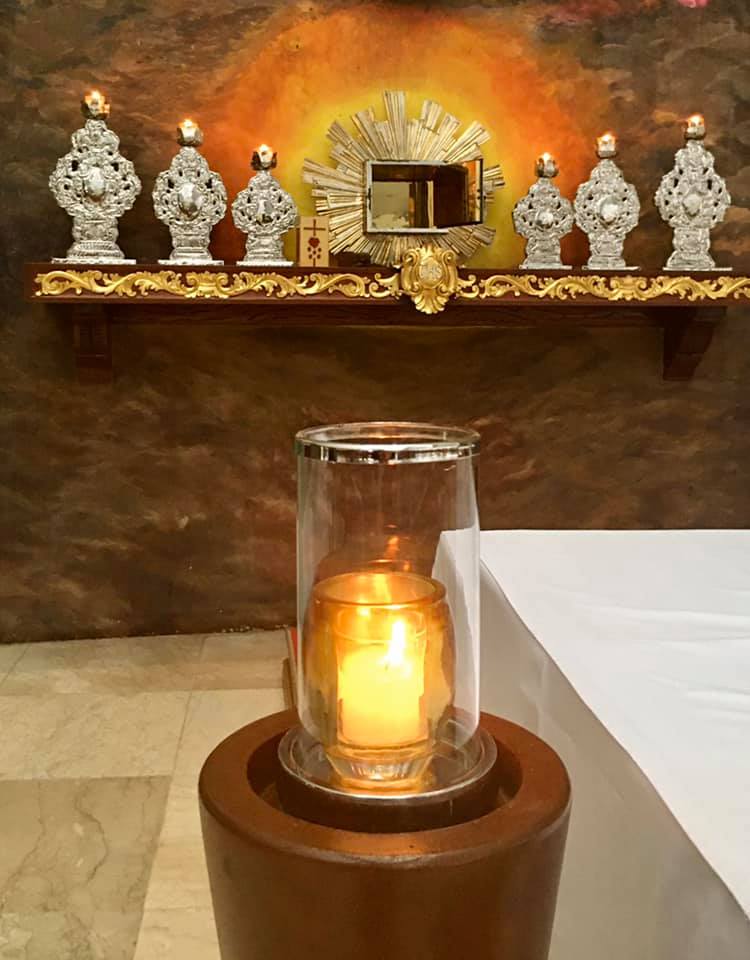
Photo by Ms. Ria De Vera, 26 April 2020.

Mas malungkot si Hesus

Lawiswis Ng Salita ni P. Nicanor F. Lalog II, Huwebes Santo, Ika-09 ng Abril 2020

Ulan katanghalian ng Huwebes Santo, ika-09 ng Abril 2020. Kuha ng may-akda.
Mula pa pagkabata
ipinamulat na ng aking ama at ina
na tuwing Semana Santa
bawal ang magsaya
dahil Panginoong Hesus ay
nagpakasakit para tayo ay sumapit
sa langit na dating ipinagkait.
Kaya nga sa aking pagdarasal
iisang tanong sa akin ang bumabalong: 
sino nga ba mas malungkot 
ngayong Huwebes Santo 
habang sarado mga simbahan
tigil mga tao sa tahanan 
dahil sa lockdown?
Katanghalian habang nagninilay
bumuhos malakas na ulan
bagama't sasandali lamang
sa aking pakiramdam sinagot
aking katanungan:
higit na malungkot 
sa ating katayuan si Hesus ating kaibigan.
Larawan kuha ni G. Jay Javier, Quiapo, Maynila, ika-09 ng Enero 2020.
Batid natin mga pangyayari
pagkaraan nilang maghapunan
hinugasan ni Hesus paa ng mga kaibigan
ngunit anong saklap ng kapalaran
isa sa kanila Hudas ang pangalan
pinagkatiwalaan upang maging ingat yaman
pagmamahal at kapatiran, sinuklian ng kataksilan. 
Hanggang ngayon sa ating panahon 
nauulit ang masaklap na kapalaran
na sa kabila ng kanyang kabutihan
nagagawa pa rin natin siyang talikuran;
alalahanin at balikan, salitang binitiwan
ni Hesus sa Huling Hapunan
nang tanggihan ni Simon paa niya ay hugasan.
Ang sabi ng Panginoon kay Simon
paalala sa ating mga makasalanan
huwag kalilimutan binyag na ating tinanggap
na siyang tinutukoy niya:
"maliban sa mga paa,
hindi na kailangan hugasan ang naligo na
dahil malinis na kayo ngunit hindi ang lahat" aniya.
Tuwing nagkakasala tayo
naghuhudas din tayo:
nakapaligo at nahugasan na sa kasalanan
ngunit ulit-ulit narurumihan 
si Kristo ay iniiwan, tinatalikuran 
sa tuwing tumatanggi tayo
sa pagmamahalan at pagkakapatiran.
Larawan kuha ng may-akda bago magsimula Misa ng Huwebes Santo 2020.
Hindi nga natin malilimutan
kalungkutan sa pagdiriwang
nitong Semana Santa sa panahon ng corona:
walang tao sa Misa 
walang paghuhugas ng mga paa
walang bihilya
walang Visita Iglesia.


Ngunit itong ating mga kalungkutan
wala sa kalingkingan ng kalungkutan ni Hesus:
mas malungkot si Hesus para sa mga frontliners
nahaharap sa maraming panganib;
mas malungkot si Hesus para sa mga maysakit
at sa mga namamatay sa panahong ito;
mas nalulungkot si Hesus sa mga kinakapos, naghihikahos.
Mas malungkot si Hesus 
ngayong Semana Santa
sa mga mag-asawa nagkakasawaan na 
o marahil ay naghiwalay na;
mas malungkot si Hesus 
sa mga magkakapatid na kanya-kanya
magkakaibigan na nagkalimutan na.
Mas malungkot si Hesus
sa mga gumagawa ng kasamaan
may tinatagong relasyon
mga addiction at bisyo na hindi matalikuran;
mas malungkot si Hesus sa mga naliligaw 
nawawala at lalo sa mga bigo at sugatan
pati na rin mga kinalimutan ng lipunan. 
Pinakamalungkot si Hesus ngayon
dahil tuwing tayo ay nasasaktan
higit ang kanyang sakit nadarama
kaya kung tunay na siya ay ating kaisa
sa mga pagdurusa at kalungkutan niya
atin sanang makita at madama
sakit at hinagpis ng iba
na sana'y ating masamahan, aliwin, at patatagin
upang sa gayon sama-sama tayong bumangon
sa Pasko ng Pagkabuhay ng Panginoon.
Kuha ng stained glass sa likod ng aming simbahan ng pagkabuhay ni Hesus kasama mga alagad.