
Lord My Chef Daily Recipe by Fr. Nicanor F. Lalog II
Tuesday, Memorial of Our Lady of Sorrows, 15 September 2026
Hebrews 5:7-9     <*{{{{><  +  ><}}}}*>     John 19:25-27

A day after the Feast of the Exaltation of the Cross, we celebrate the Memorial of our Lady of Sorrows or Mater Dolorosa, the grieving Mother Mary at the foot of the Cross of Jesus Christ.
For a better appreciation of the scene, I recalled the one particular detail provided by Matthew, Mark, and Luke at how the area was enveloped in darkness from noon to three in the afternoon situating it in John’s most unique element of the Crucifixion:
Standing by the cross of Jesus were his mother and his mother’s sister, Mary the wife of Clopas, and Mary Magdalene. When Jesus saw his mother and the disciple there whom he loved, he said to his mother, “Woman, behold your son.” Then he said to the disciple, “Behold, your mother.” And from that hour the disciple took her into his home (John 19:25-27).
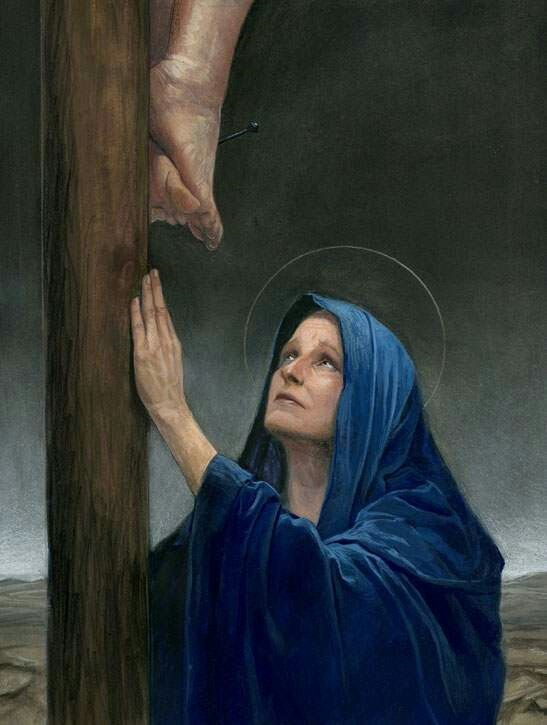
As I prayed over this scene, the expression “good grief” came to my mind.
Good grief is an expression so similar with the second Beatitude of Christ taught at his sermon on the mount, “Blessed are those who mourn (grieve), for they will be comforted” (Mt.5:4).
What is blessed with mourning or good with grief when you have lost a loved one or in pain and suffering? Or, when things are not going well with one’s self and life?
As we reel from the recent monsoon rains or habagat, grieving cleanses out eyes and whole body system like the rains that wash away all dirt and trash in the surroundings. Though grief and storms inconvenience, even immobilize us for some time, overall crying and rains enable us to reassess our priorities and directions in life like the painful lessons the floods have taught us, if we have indeed learned.
There at the Cross, John noticed and presented us this most moving scene before the death of Jesus to show us the new reorientation also in our lives as disciples led by the first and model disciple of all, Mary with the beloved disciple. Clearly here we find a new direction in their lives and eventually in the life of the Church Jesus had founded.
Grief is good and blessed because it leads us to God, to self, and to others as both Mother Mary and the beloved disciple exemplified in their lives.
Grief is the default browser of faith, enabling us to hold on to God when everything and everyone slip from our grasps, when we realize God looming over us despite the darkness that envelops us like during the Crucifixion. Imagine the tremendous faith the Blessed Virgin Mary and the beloved disciple both have during that most crucial moment when they were the only ones who have remained with Jesus while all the other disciples have gone hiding in fear.
In the many artistic depictions of the Crucifixion, we can find that like Mary and the beloved disciple, we are are most human when in the face of grief because that is when we accept and affirm our weakness as a person – whether we are the one grieving or comforting someone grieving. Grief is good because that is when God calls us most to be his very presence in the darkest hours of sufferings and pain.

In my 28 years as a priest, I have comforted and grieved with so many people, family and friends, even strangers. And it seems that of all the things I have said and done as a priest and an individual, it was those moments of grieving with those who have lost a loved one or going through difficulties are what people most remembered of me because I have realized too with the deaths of my dad and mom, grieving is the pathway to home – to ourselves, to our beloved and to God. John tells us how since that day on the beloved disciple took Mary into “his home.”
Our Filipino word for home literally came from crying and grieving – tahanan which is from “tahan na” or stop crying. We stop crying or tahan in our own home, tahanan because that is where we feel loved and cared, safe and accepted no matter what.
During funerals, I tell people to simply grieve and please, do not ask anybody to stop crying or tahan. When we allow those in pain to cry and grieve, eventually in the process they stop when they finally find a reason to moving on and start living.
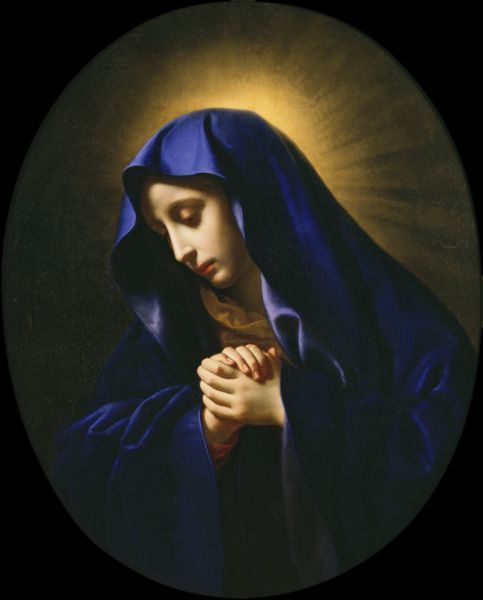
It is here where we find too the goodness in the good grief of the Blessed Virgin Mary, our Lady of Sorrows: she was deeply in pain minus the theatrics of some during funerals. It was purely good grief for Mary because at that most crucial moment, she must be lovingly praying.
That is the beautiful reminder to us of this memorial of Mater Dolorosa: the more we must handle life with prayer in order to believe more and love more when everything is dark and even dead. At the Crucifixion, we find the words of the author of the Letter to the Hebrews so fulfilled and true not only in Jesus but also with those who stood with him like his Mother Mary and beloved disciple:
In the days when he was in the flesh, he offered prayers and supplications with loud cries and tears to the one who was able to save him from death, and he was heard because of his reverence. Son though he was, he learned obedience from what he suffered; and when he was made perfect, he became the source of eternal salvation for all who obey him (Hebrews 5:7-9).
Amid all the hardships and difficulties many of us are facing these days of rains and floods, of corruption among our officials and leaders as if we are again standing at the foot of the Cross of Jesus Christ, it is a most opportune time of “good grief” for us to stand for what is true and good, fair and just, honorable and honest. Like our Lady of Sorrows the Blessed Virgin Mary, let us draw out faith and strength and courage from Jesus Christ who had won over death and sin on the Cross. Amen.


