The Lord Is My Chef Breakfast Recipe for the Soul by Fr. Nicanor F. Lalog IIMonday, Week XXIII, Year II, 07 September 20201 Corinthians 5:1-8 /// Luke 6:6-11
Photo by Mr. Chester Ocampo, 2019.
Forgive us, loving and merciful Father, for the many times we have chosen to be silent in the face of ongoing evil around us, when we unknowingly conspire in silence against you, against life, against justice.
Both our readings today speak about this deafening silence among us in many situations when we are so afraid to speak for what is good and true.
On a certain sabbath Jesus went into the synagogue and taught, and there was a man there whose right hand was withered. The scribes and the Pharisees watched him closely to see if he would cure on the sabbath so that they might discover a reason to accuse him. But he realized their intentions and said to the man with the withered hand, “Come up and stand before us.” And he rose and stood there. Then Jesus said to them, “I ask you, is it lawful to do good on the sabbath rather than to do evil, to save life rather than to destroy it?”
Luke 6:6-9
Worst than our silence in standing for life and dignity of persons is our “unwitting support” for evil and sin so as not to disturb our family and community.
Brothers and sisters: It is widely reported that there is immorality among you, and immorality of a kind not found even among pagans — a man living with is father’s wife. And you are inflated with pride. Should you not rather have been sorrowful? The one who did this deed should be expelled from your midst.
1 Corinthians 5:1-2
How true is the saying that “the only thing necessary for evil to triumph is for good men and women to do nothing” (attributed to both Edmund Burke and John F. Kennedy).
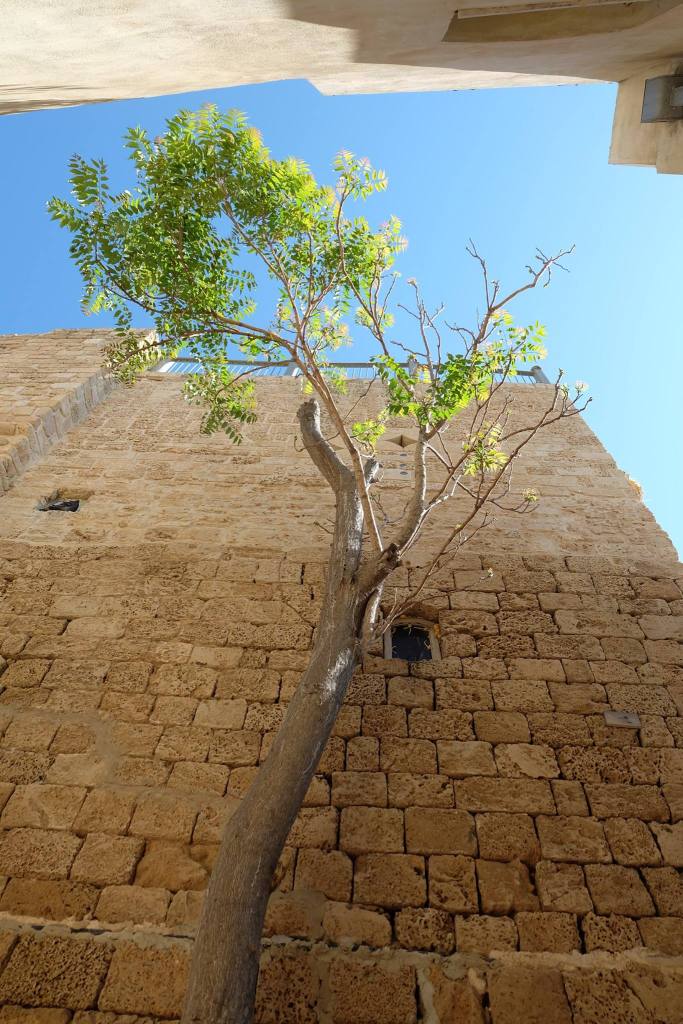
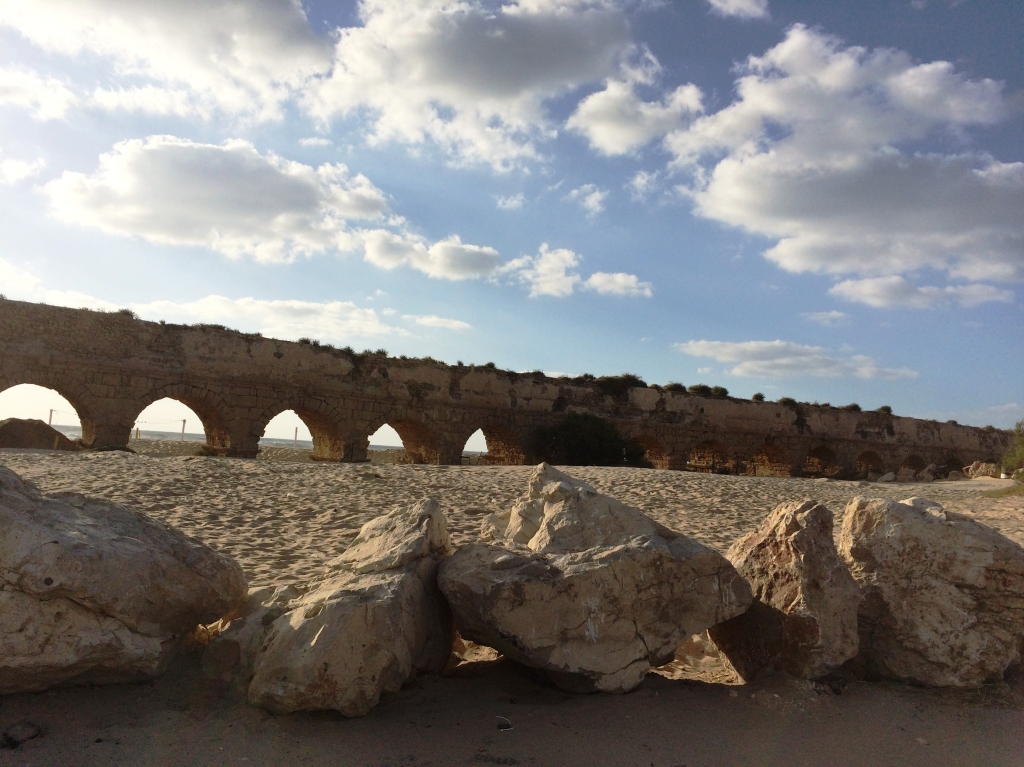
Photo by author, Jaffa, Israel, May 2017.
Forgive us, Lord Jesus.
Strengthen us inside, make our will and our hearts strong to stand for your Gospel specially when friends and families are the ones doing what is wrong and sinful.
Strengthen our firm resolve to be consistent in living our new life in you, Jesus, that is free from what others would say about us and free to be our true selves freed from sin, free to love and be faithful to you and for others.
Enlighten our minds and our hearts with your Holy Spirit on the actions we must take and words we must say to win them back to you.
Most of all, purify our intentions that we do this out of love for you and our beloved going astray. Amen.
Quiet Storm by Fr. Nicanor F. Lalog II, 04 September 2020
Photo by author, sunset at the Lake of Galilee (Tiberias) in Israel, May 2017.
August has always been a “ghost month” for me since elementary school. Long before I have heard these stories and words of caution against many things in the month of August, I have always dreaded this month when days are grindingly slow.
Specially this year 2020 when the whole month of August felt like the season of Lent when everything was dry and empty, even literally speaking in our churches when the five Sundays of August were like five Good Fridays.
But, for the first time in many years during this pandemic, amid the dryness and emptiness of August 2020, I felt and “found” God anew in his most unique and wonderful characteristic — his hiddenness.
Hiddenness is different from being invisible that simply means “not visible”.
Hiddenness is something both simple and complicated but beautiful and wonderful when we find God in his hiddenness.
Hiddenness of God means more than not being seen per se; it is that feeling with certainty that he is present but, just hiding somewhere. In fact, if God were not hidden, we would have not found him at all!
And the more God is hidden, the more we are able to see him and experience him!
Photo by author, April 2020.
Remember when we were kids and could not find the things that our mother had asked us to get from somewhere in the sala or kitchen or her tocador? She would threaten us with the classic line my generation have all heard and memorized, “Pag hindi mo nakita yan, makikita mo sa akin!”
It is one of our funniest memories of childhood! I am sorry for my English-speaking readers but there is no appropriate translation for this because it is very cultural and even spiritual in nature. Literally translated, it says that if you do not find what you are looking for, you would find it with me. Crazy and insane, is it not?!
I told you, hiddenness of God is both simple and complex but whenever we remember those “sweet, maternal threats”, we laugh and shrug off the experience as we were dead serious then searching for whatever thing mom had asked us because deep in us we knew too well, it must be somewhere there. Sabi kasi ni Inay! (Mom said so!)
That is how it is with God too! We know for sure he is around, he is present. But in hiding because that is how loving God is, like moms and some lovers with surprises for us his beloved.
The Prophet Jeremiah experienced it so well when he wrote:
You duped me, O Lord, and I let myself be duped; you were too strong for me, and you triumphed. All the day I am an object of laughter, everyone mocks me. Whenever I speak, I must cry out, violence and outrage is my message; the word of the Lord has brought me derision and reproach all the day. I say to myself, I will not mention him, I will speak in his name no more. But then it becomes like fire burning in my heart, imprisoned in my bones; I grow weary holding itin, I cannot endure it.
Jeremiah 20:7-9
No one can understand this without having experienced such intense kind of love of God or of another person that even if we are pained, we just cannot walk away or leave. More so with God, the most intense lover of all!
At the very center of Jeremiah’s torment is the invincible power of attraction of God. This is also the reason human love – whether for another a friend or a spouse, for the Church or any institution – must always be based on the love of Christ who told us to “love one another as I have loved you.” If our love remains in the human level, it can never go deeper or higher making it so sublime, so true, so pure.
That is how God is in his hiddenness who is like a lover who never stops looking for us, calling us, luring us, even seducing us to come to him, search him and once found, we may dwell in his great love; hence, even if we do not “see” him, we keep on following him as we also find him in his hiddenness!
Hiddenness of God, mystery and gift of Easter
This hiddenness of God is both the gift and mystery of Jesus Christ’s Resurrection. It is a gift because in his hiddenness, God has become closest to us more than ever while at the same time, a mystery because it is in his very hiddenness that we truly find and discover God.
Remember the two disciples going home to Emmaus on Easter afternoon who was accompanied by Jesus while traveling? They did not recognize him but as they talked, their “hearts were burning” as he explained the Scriptures. Then joining them at their meal at sundown upon reaching Emmaus, Jesus took the bread, blessed it and broke it — and the disciples’ eyes were opened, recognizing him as the Lord who immediately disappeared! The two then rushed back to Jerusalem to announce to the other disciples that Jesus had indeed risen.
That is the beauty of hiddenness, its giftedness and mystery that we find God even our beloved who had died or not physically present with us but deep within, we are certain of their presence as being so true and so real.
Hiddenness is a deeper level of relationship coming from one’s heart and soul not dependent on physical presence. This is the reason why upon appearing to Mary Magdalene on Easter morning, Jesus asked her not to touch him because from then on, knowing and relating with the Lord need not be physical and corporeal as he used to relate with them before his Death and Resurrection.
All these we must have experienced like when after a friend or a relative had died, that is when we felt growing closer with the person than when he/she was still alive and physically present with us. Or, when we were feeling low and down, we experienced sometimes so amazed at how we have felt the presence even the scent of our deceased loved ones comforting us, assuring us that all would be better.
This quarantine period invites us to experience and discover God anew in his hiddenness through prayers and silence so we can reflect on the many lessons this pandemic is teaching us today. In the darkness and emptiness of this pandemic are grace-filled moments with God hidden in our poverty and sadness, sickness and even deaths around us.
Photo by author, Christmas 2018.
Some people have already asked me about what or how would our Simbang Gabi and Christmas celebrations be. They are sad and worried that it must be a very bleak Christmas for everyone with so many out of work.
But, despite this gloom, I tell them that Christmas 2020 would be one – if not the most meaningful Christmas we shall ever have despite forecasts that there would be less of everything, materially speaking.
So often in life, when we have so much material things, that is when we fail to find and experience God.
Recall that in Bethlehem more that 2000 years ago when Jesus Christ was born, God came to us hidden in a stable, on a manger in the darkness of the night.
And do not forget, too, that Christmas is not a date but an event, the very person of Jesus Christ, the all-powerful God who came to us hidden in a child, who upon becoming an adult, was crucified and died. These are sad and down moments for us but for God, it is his hiddenness, his presence. Let us go and find him again for he continues to come to us in hiddenness. Amen.
Lawiswis ng Salita ni P. Nicanor F. Lalog II, 04 Setyembre 2020Unang Biyernes ng Setyembre, Ika-XXII Linggo sa Karaniwang Panahon1 Corinto 3:18-23 /// Lukas 5:33-39
Larawan kuha ni G. Angelo N. Carpio, Hunyo 2020.
O Kamahal-Mahalang Puso ni Hesus,
tulungan Mo kami na Ika'y matularan sa pakikinig sa kapwa.
Nawa aming mapalampas ano man ang hindi mabuting sinasabi
laban sa amin at sa halip ay aming pagyamanin aming karanasan
at palalimin aming katauhan.
Katulad ni San Pablo sa kanyang sulat sa mga taga-Corinto,
“Walang anuman sa akin ang ako’y hatulan ninyo
o ng alinmang hukuman ng tao;
ni ako ma’y di humahatol sa aking sarili.
Walang bumabagabag sa aking budhi,
ngunit hindi nangangahulugang ako’y walang kasalanan.
Ang Panginoon ang humahatol sa akin." (1Cor.4:3-4)
Siya namang tunay, Panginoon!
Palaging mayroong masasabi makakating labi
laban sa amin palagi ano mang buti aming mga gawi.
Bakit nga po ba sa gitna nitong pandemya
laganap hindi lamang sakit kungdi galit at pagmamalupit
masasakit na pananalita ng ilan naming kapwa?
Tulungan mo kami, O Hesus
 na dalisayin aming puso at kalooban,
maging bukas sa mga pagkakataon na magbago
gaya ng Iyong turo sa Ebanghelyo:
“Walang pumipiraso sa bagong damit
upang itagpi sa luma.
Kapag ginawa ito, masisira ang bagong damit
at ang tagping bago ay hindi babagay sa damit na luma." (Lk.5:36)
Lagi naming panghawakan
na higit na mahalaga ang Iyong sinasabi Panginoon
kaysa sinasabi ng tao dahil Ikaw pa rin sa kahuli-hulihan
ang sa amin ay hahatol at papataw ng kapasyahan
kaya nawa Ikaw ang aming pakinggan
hindi pinagsasabi sa amin ay kumakalaban.
Amen.
One of the best ads during the lockdown last summer from Smart.
What a wonderful lesson we have today from St. Paul about your wisdom, O God our Father that is found in the scandal of the Cross of your Son Jesus Christ!
Brothers and sisters: Let no one deceive himself. If anyone among you considers himself wise in this stage, let him become a fool so as to become wise. For the wisdom of this world is foolishness in the eyes of God, for it is written: God catches the wise in their own ruses, and again: The Lord knows the thoughts of the wise, that they are vain.
1 Corinthians 3:18-20
This we have realized at the start of this pandemic when everything in the world stopped and forever changed because of microscopic COVID-19 virus, affecting even the most advanced countries of the world.
Most of all, everybody – rich and poor alike – suffered greatly from this virus, teaching us to value persons more when people we took for granted for so long have become our “saviors” during this prolonged quarantine periods like vendors and delivery personnel, our househelpers, and others we used to look down upon who continued to serve us with food and other needs.
Not to be forgotten too are the members of neglected sectors of our society, specially those in the medical and healthcare system and the agriculture who showed us the importance of human and natural resources over imports and technology as well as entertainment.
What a great lesson about wisdom of God and foolishness of man in this modern time!
One thing very clear, O Lord, that to be a fool for you is first of all to let go of our foolish pride and be humble before you and others.
It is the only way we can let you do your work of changing us and the world when we learn to let go of our foolish pride like St. Peter in today’s gospel when he as an experienced fisherman heeded your command to cast his nets into the deep even though you are the carpenter’s son.
When we review the lives of all saints, they are all men and women of exceptional humility before you, Lord; like St. Gregory the Great who focused more on you that he was able to reform our liturgy, set up schools and monasteries, sent missionaries to England, and instill holiness among the clergy in his “Pastoral Instructions.”
Help us to believe more in you than in ourselves so that you may do your work in us and through us. May we value your Cross, Lord Jesus, considered as foolish in this sophisticated age yet has continued to prove that it is the only path to our transformation as persons and nations. Amen.
Photo by author, XVth Station of the Cross, the Resurrection, Mount St. Paul, La Trinidad, Benguet, February 2020.
Photo by author, CICM Retreat House, Taytay, Rizal, 2007.
Praise and glory to you, O God our loving Father! Please, keep us open to your coming in Jesus Christ. Surprise us always with your simplicity, silence, and hiddenness.
You know how we are always attracted with people’s credentials and titles, outward appearances, and great talents in speaking and explaining things that we get carried away, leaving you behind.
I came to you in weakness and fear and much trembling, and my message and my proclamation were not with persuasive words of wisdom, but with a demonstration of spirit and power, so that your faith might rest not on human wisdom but on the power of God.
1 Corinthians 2:3-5
Let us come to you and meet you in Jesus by forgetting our self, taking our cross and following him in his passion and death.
Sometimes we forget your simple invitation to come to you with our sinful selves minus our pretensions and masks because all you want is our total selves. You do not ask for our perfections but imperfections, nor for our virtues and talents but for our lacking and sins.
And through this all, Lord, you give us life and freedom, fulfillment in you in our hearing:
Photo by Fr. Gerry Pascual at Yvoire, France, 2018
Jesus unrolled the scroll and found the passage where it was written: The spirit of the Lord is upon me, because he has anointed me to bring glad tidings to the poor. He has sent me to proclaim liberty to captives and recovery of sight to the blind, to let the oppressed go free, and to proclaim a year acceptable to the Lord. Rolling up the scroll, he handed it back to the attendant and sat down, and the eyes of all in the synagogue looked intently at him. He said to them, “Today this Scripture passage is fulfilled in your hearing.”
Luke 4:17-21
Come, Lord Jesus, you are most welcomed in me. Amen.
Maybe you have been asked so many times with the question, which do you prefer to hear first, the good news or the bad news? Usually we say it all depends to our mood and temperament or to the gravity of the situation. Sometimes, we ask for the bad news first so we can suffer earlier and enjoy the good news later. Or, we ask for the good news first to soften the impact of the bad news.
Our gospel this Sunday is still set in the pagan city of Caesarea Philippi and we heard Jesus giving his disciples – including us – with a strong dosage of “bad news” after hearing last week the good news that he is “the Christ, the Son of the living God.”
Jesus began to show his disciples that he must go to Jerusalem and suffer greatly from the elders, the chief priests, and the scribes, and be killed and on the third day be raised. Then Peter took Jesus aside and began to rebuke him, “God forbid, Lord! No such thing shall ever happen to you.” He turned and said to Peter, “Get behind me, Satan! You are obstacle to me. You are thinking not as God does, but as human beings do.” Then Jesus said to his disciples, “Whoever wishes to come after me must deny himself, take up his cross, and follow me. For whoever wishes to save his life will lose it, but whoever loses his life for my sake will find it.”
Matthew 16:21-25
Our gospel today seems to be a very big, bad news for everyone, with things getting worst before getting any better which the Lord had promised to be only in the end that nobody knows when!
See how Jesus started by saying he would “suffer greatly at the hands of elders, the chief priests, and the scribes and be killed and on the third day be raised again.” Not only that: he now calls Peter as “Satan” from being the Rock last Sunday after giving the right answer as to who he is.
Like Peter, we would probably say the same thing to Jesus why make suffering and death central to life that is meant to enjoy?
Like Peter, the Lord is inviting us today to focus more on the good news than on the bad news of suffering and death which for him – the Paschal mystery we call – is actually the best of good news!
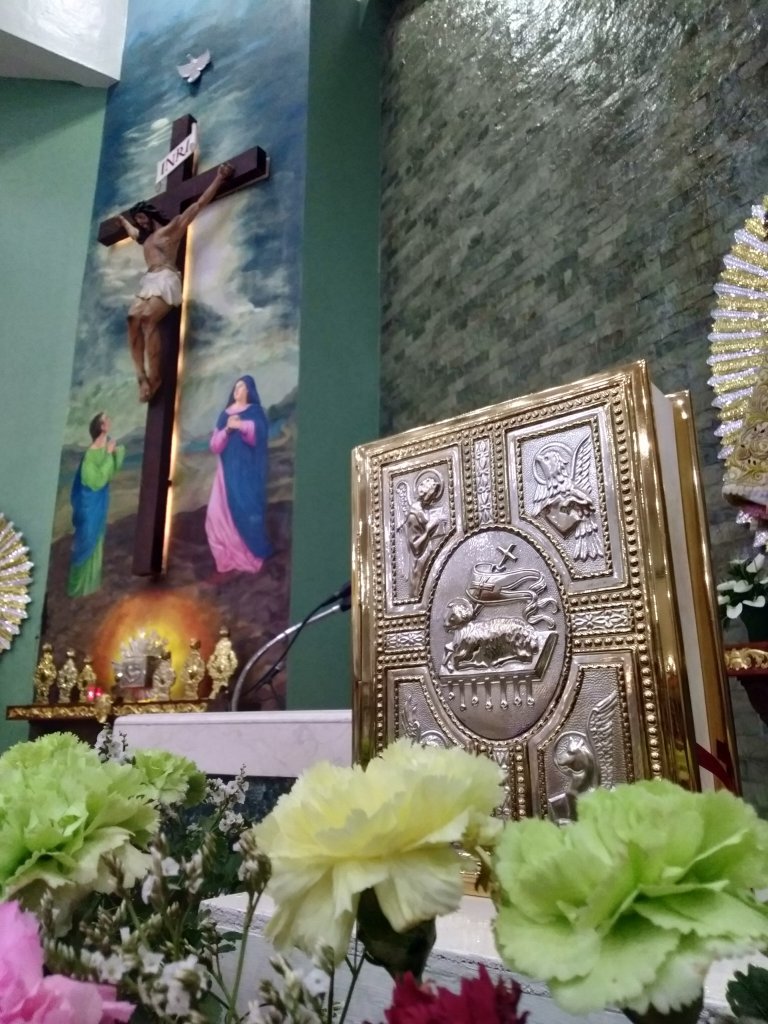
Photo by author, altar flowers in our parish, January 2020.
Jesus Christ’s pasch is the best of good news!
What we have heard as “bad news” from the Lord is his first prediction of his coming pasch or Passion, Death and Resurrection. He would be announcing this prediction of his pasch two more times as they near Jerusalem.
From the He brew word pesach that means to pass over, it connotes suffering and death into new life. It came from the Exodus experience of the Chosen People from Egypt into the Promised Land during the time of Moses, taking its fullest meaning in Jesus Christ, the Son of God who became human like us in everything except sin, “passing over” from eternity to temporal, from Passion and Death to Resurrection.
Authentic discipleship does not require us to seek suffering; no, God is not sadistic as some people with twisted minds would say. However, being faithful to Jesus, witnessing his gospel values bring enough of these sufferings and deaths but on a different level and meaning. We realize that life is a daily exodus, a passing over from darkness into light, from ignorance into wisdom, from sickness into health, from death into new life.
Like the prophet Jeremiah in the first reading, we discover that the more we follow God, the more sufferings we encounter in life but at the same time, we cannot let go of him because his attraction is so powerful! There is something so deep within, so profound and fulfilling in us we realize that living in the ways of God, in the gospel values of Christ can we truly find lasting joy and peace – even if we have to die in our very selves in the process.
You duped me, O Lord, and I let myself be duped; you were too strong for me, and you triumphed. all the day I am an object of laughter; everyone mocks me… But then it becomes like fire burning in my heart, imprisoned in my bones; I grow weary holding it in, I cannot endure it.
Jeremiah 20:7, 9
Photo by author, Gaudete Sunday in our parish, December 2019.
Thinking in God’s ways
Today Jesus is assuring us that there is no such thing as “good news, bad news” with him. The good news/bad news question is really a non-question to disciples of Christ because whatever suffering and death we embrace in him is a sharing in his very life.
Hence, Jesus Christ’s good news is in fact the bestest news we can ever have. Always.
The key is to think as God does, not as human beings do as Jesus pointed out to Peter.
Three things I wish to share with you about thinking in God’s ways:
First is to accept and embrace pains and sufferings not for their own sake but as a way to cleanse our selves to greater glory. As we have said, God is not a sadist; we need to be cleansed like every thing in order to bring out the best in us like diamonds or any precious stone or any material.
Polishing and honing always mean “subtractions” with so many shaving and cutting of the rough edges to bring out the beauty and sharpness of a thing.
Man’s ways has always been to avoid every pain and suffering. No wonder, the most prescribed medicine worldwide is said to be the pain killer. But, experience has taught us this is not true and cannot be the norm of life. Like every gym enthusiast would tell you, “no pain, no gain”. Pain and suffering is part of life and the good news is, Christ has made it holy for us.
Second is to be silent in order to be able to listen to every sound and thus, heighten our sensitivities not only with our true selves but also with God and with others. In this age of social media and instant communications, silent has become a rare commodity. It is always easier to speak even without thinking much than be silent. That is the way of the world: speak out loud, make noises, and let everyone hear you — until they get tired of you.
Photo by author, our parish ceiling at sunset, 25 August 2020.
Third is the most precious in God’s ways of thinking — the way of hiddenness. This is God’s most evident way of making himself felt, experienced, and yes, seen by being hidden and invisible.
Last Thursday we celebrated the memorial of St. Monica, the mother of St. Augustine who narrated the story of how she got sick at Ostia in Italy with his brother hurrying to get back home to Tagaste in Africa so that when she dies, she would be buried there. St. Monica “reproached him with a glance because he had entertained such earthly thoughts”; then, she looked at St. Augustine and told him to bury her anywhere, asking one thing only from him: that he remembers her always in his celebration of the Holy Mass.
So many times, we are so concerned with our popularity that whatever we do has to be made known to everyone to see specially by those so-called “followers” with their “likes” that even up to death, some would spend a fortune for lavish funerals and even mauseleoum.
That’s the way of the world of everybody making a statement, of being known as present, always seen. In the movie “The Devil’s Advocate”, Al Pacino played the role of satan who said it so well at the end after tempting Keanu Reeves, “vanity…vanity is my most favorite sin.”
See the life of Jesus Christ: more than half was spend in hiddenness and silence. He worked only for three years characterized by so many instances of silence and hiddenness too and yet, his impact continues to this day and hereafter.
Beginning with last Sunday after asking us who do we say he is, Jesus is inviting us to follow him in his Passion and Death to be one in his Resurrection. This is also the call by St. Paul in the second reading:
I urge you, brothers and sisters, by the mercies of God, to offer your bodies as a living sacrifice, holy and pleasing to God, your spiritual worship. Do not conform yourselves to this age but be transformed by the renewal of your mind, that you may discern what is the will of God, what is good and pleasing and perfect.
Romans 12:1-2
Jesus is not asking too much from us, no need for any fanfares on our part; simply come to him with our true self, no matter how sinful and incomplete we are. Remember, all is good news with him and you never lose in him. Amen.
A blessed week to everyone!
Photo by author, parish ceiling at sunset, 25 August 2020.
Lawiswis Ng Salita ni P. Nicanor F. Lalog II, Ika-24 ng Agosto 2020
Larawan kuha ng may-akda sa Pulilan, Bulacan, Enero 2020.
Ang sabi nila
buhay ay parang isang pelikula
tayong lahat ang bida at artista;
kaya lalo nang malaking pelikula
at tiyak patok sa takilya
pelikula ng ating republika!
Siyempre, lahat ay pabida
gusto umeksena
hindi lang sa Palasyo at Kongreso
pati na rin sa mga paseo basta matao.
Ang nakakatawa pero bumebenta
lalo na sa mga tanga
mga artista nagpipilit sa pulitika
mga pulitiko umaarte, nagpapabebe!
Dating pelikula ng ating republika
makasaysayan at makahulugan
maituturing na isang sining
nababanaagan maningning na liwanag
 katulad din ng pinilakang tabing
kapupulutan ng mga ginintuang aral
mga talastasan at eksena
mula sa mga aninong gumagalaw;
nang magdeklara ng Martial Law
nagsimula rin ang kasalaulaan
ng pamahalaan maging sa sinehan
kung saan mga hubad na katawan
 pinagpipistahan, kunwari'y film festival
ang totoo ay karnabal.
Nagwakas din at nagsara ang tabing
ng malagim na yugto ng kasaysayan natin
bagong simula ang dokyu ng EDSA
kinalaunan naging trahedya
pelikula ng republika, naging telenovela at komedya
nang maupo tunay na artista ng masa,
nagreyna sa media at chika
puro artista, kaya dumagsa na rin sila
naging zarzuela pelikula ng ating republika
naglabo-labo at moro-moro, gumulo nang gumulo
kaya heto tayo horror na nakakatakot
nakapangingilabot kadiliman
at kasamaang bumabalot parang bangungot
hugot sa isang eksena ng pelikula na sana'y matapos na.
Ngunit kung titingnan
mga pelikulang horror walang laman
puro kabobohan at katangahan
dinaraan lang sa gulatan
hanggang maging katatawanan.
Hindi ba't ganyang-ganyan
ating lipunan at pamahalaan
isang malaking pelikulang katatakutan
na puro kabalastugan at kahangalan?
Kaya aking payong kaibigan,
sa susunod na halalan
tanggihan, huwag nang pagbigyan
mga artista sa pulitika,
mga pulitiko na payaso!
The Lord Is My Chef Sunday Music by Fr. Nick F. Lalog II, 23 August 2020
Photo by author, Gospel book (Evangelare), January 2020.
Jesus is asking us today in the gospel like his disciples at Caesarea Philippi, “who do you say that I am?” (Mt.16:15). As we have mentioned in our Sunday reflection, things we say of another person can come from two perspectives, the “what” and the “how”.
“What” we say of a person usually comes from common knowledge, the basics like name and address that sometimes not so reliable as we have not actually and personally known. But, to say of a person based on “how” we have known him/her is deeper because it comes from our personal relationship with some degree of intimacy (https://lordmychef.com/2020/08/22/it-is-not-what-we-say-who-jesus-is-but-how-we-say-who-he-is/).
To know another person is always to enter into a relationship that leads to a deeper friendship.
That is why for this Sunday we offer you this almost surreal, dream-like 1981 music by Gary Wright, “Really Wanna Know You” that spent 17 weeks on Billboard’s Hot 100, reaching highest spot of #16.
Really Wanna Know You speaks of that spiritual thing we experience when we meet someone who seems so special, creating some sparks in us that leads us to something deeper than mere acquaintance. Notice how the sounds of electronic keyboards with the blending voices create that strange, beautiful, and out-of-ordinary feelings like attraction or simply being drawn to the other person.
I don't mind being lonely
But I do mind if not being loved
Maybe you're feeling the same way too
You're ready to hold some one

I really want to know you
I really want to show you the way I feel
I really want to know you
I really want to show you the way I feel

Something about you is telling me
We're coming from the very same place
It's only just a notion I have
(But) I see it written over your face

I really want to know you
I really want to show you the way I feel
I really want to know you
I really want to show you the way I feel
And the good news is that Jesus feels the same way to us, always the first to reach out to us because he feels something so special with each one of us.
Take that chance and meet Jesus in prayers, in the Scriptures, and in others who love and care for us.
After showing us some glimpses of the person of the Lord these past three weeks, St. Matthew now leads us into the middle of his gospel where Jesus takes a U-turn in his ministry by revealing himself to the Twelve as he heads back to Jerusalem to fulfill his mission.
Jesus went into the region of Caesarea Philippi, he asked his disciples, “Who do people say that the Son of Man is?” They replied, “Some say John the Baptist, others Elijah, still others Jeremiah or one of the prophets.” He said to them, “But who do you say that I am?” Simon Peter said in reply, “You are the Christ, the Son of the living God.” Jesus said to him in reply, “Blessed are you, Simon son of Jonah. For flesh and blood has not revealed this to you, but my heavenly Father.” Then he strictly ordered the disciples to tell no one that he was the Christ.
Matthew 16:13-17, 20
St. Matthew told us last Sunday how Jesus withdrew to the region of Tyre and Sidon where he had healed the daughter of a Canaanite woman tormented by a demon. From there, they headed north to Caesarea Philippi, a pagan major city at that time.
It was a perfect setting for our gospel this Sunday – just like our present milieu that challenges us not only to be identified as a Christian but also to make a stand for Jesus as his true disciple at a time when faith and morals are disregarded, economics takes precedence over spirituality.
Who do people say I am: “what” I know of Jesus
The two questions posed by Jesus to his disciples while at Caesarea Phillip – and to us today – may sound very similar and even simple but are actually distinctly different and even worlds apart from each other.
Photo by Mr. Jim Marpa, 2019.
His first question “Who do people say that the Son of Man is?” is straightforward, seems to demand not much critical thinking and introspection. A plain question with a plain answer like the usual news we hear and read called “straight reporting” in journalism that tells us the essential “who, what, where, and when” of the story.
So many times, we face this question without even being asked at all!
Through our words and actions we reveal “who do you say the Son of Man is?” in how we pray, what we pray for, the things we post on social media, especially those electronic chain letters that if you say “Amen” you will get money. And so many other things when we try to show everyone we know Jesus without really thinking and reflecting well. No wonder, people get so many wrong impressions about who Jesus is: “some say he is John the Baptist, others Elijah, still others Jeremiah” or one of those prophets of wealth and health who make life easier!
Telling who Jesus Christ from “what” we know and believe can always be dangerous and misleading because it is all in our heads that could often be wrong. Telling who Jesus Christ from “what” we know and believe cannot be so reliable because it is always mechanical, by the book, not actual and most of all, not real.
It is always easy to speak highly of Jesus from “what” we know and believe like those many preachers with fire and brimstone or modern apostles, a.k.a. vloggers complete with their “shock” preaching and antics and gimmicks who end up more popular with thousands of followers and likes. And wealthy, too! Jesus Christ? Forgotten and stuck in Facebook, the bible, and tabernacle.
But who do you say I am: “how” I know Jesus
On the other hand, the Lord’s second question is direct and personal, probing our heart and soul, asking not just for answer from our lips but from our total self: “But who do you say that I am?”
See the words of the Lord after Simon had answered he is the Christ, the Son of the living God:
Jesus said to him in reply, “Blessed are you, Simon son of Jonah. For flesh and blood has not revealed this to you, but my heavenly Father.”
Matthew 16:17
More than a play of words, here we find a deeper dimension of saying who Jesus Christ is: not just telling the what but most of all, the how that reveals more than what we know in our minds but how we have experienced Jesus, of how we have been living in him!
Photo by author, house at Jaffa (Jopa), Israel where Peter met some gentiles according to Book of Acts, May 2017.
For us to say who is Jesus Christ is always a how because it is a story of our relationship with him, it is a how we have grown deeper, how we have journeyed in him and with him.
It is the ability to see beyond structures and persons, excesses and sins, faults and misgivings because despite shortcomings, it is how we see Jesus as the foundation of our lives and of our Church.
See the ways of other religious sects, their pastors and members who spend so much time bashing us Catholics, insisting on the what of Jesus and the bible, never the how they live.
No wonder, they can raise their hands in prayers and still clap their hands while the President in maligning us Catholic priests and bishops in their gatherings.
To speak of who is Jesus is more than to tell what we know about him but how we have known him, how we have been since knowing him!
Anyone who can say who Jesus is from his how is always blessed like Simon because our answer is always the fruit of our life in Christ. We all become like Simon, another Peter or Rock whose very life and existence rests on Jesus our Lord. Despite our weaknesses and sinfulness, we are still blessed and entrusted with the keys of heaven because we have allowed Jesus to be our foundation of life. There is a process, a history always. Hence, it is a telling of the how.
In the first reading, we find God dismissing the master of the palace named Shebna to be replaced by Eliakim due to his infidelity. That is the meaning of the whole prophecy by Isaiah, of how the Lord will someday entrust his people to a trustworthy steward, someone who does not only know what God is but one who has truly known and experienced God.
Saying who God is, always a revelation from him
It is interesting that in the Jewish thought, to know another person is not knowing the what but of having a relationship or some degree of intimacy. Again, it speaks of the how we have been saying.
St. Paul shows us in the most beautiful manner in his many writings this saying of who Jesus is with his how, his very personal experience of the Lord in his life that has continued and deepened until his death. See the beautiful hymn he had composed for our second reading today:
Oh, the depth of the riches and wisdom and knowledge of God! How inscrutable are his judgments and how unsearchable his ways! For from him and through him and for him are all things. To him be glory forever. Amen.
Romans 11:33, 36
Like St. Peter, we find here St. Paul so blessed despite his sins and sinfulness, of how he had experienced Christ not just a name or a man like any what he had known in his mind.
No one can ever write such great poetry with profound thoughts without any deep relationship with God. Whatever we know of God is always a revelation from him, too. When we speak of who God is, it is always borne out of how we have been relating with him our Lord which is called “spirituality”; it is deeper than religiosity or being religious that is always at the level of the head and more of our ego than of the reality of God.
Sometimes, we do not even have to speak and say who Jesus Christ is.
We simply have to live out that relationship we have in him and people would know who Jesus is. No need for elaborate and spectacular showmanships we have in our many rites and rituals, even in our liturgies now so maligned with our triumphalism.
Lest we forget, Jesus saved the world by suffering and dying on the Cross, not with activities and debates which would be his topic next Sunday. God bless everyone!
Lawiswis ng Salita ni P. Nicanor F. Lalog II, Ika-21 ng Agosto 2020
Larawan kuha ni G. Jim Marpa, 2019.
Ngayong panahon ng COVID-19
sumagi sa akin mga turo ng dalawang pari
na napakalapit at mabuti sa akin:
Una ay si Padre Nanding
malimit sabihin sa akin
"Pinakamasarap makasama
tao na mayroong panlasa";
"iyong iba," aniya,
"pakanin mo ng buong baka,
hindi pa rin masaya!"
Ikalawang paring butihin
ay si Padre Johann
madalas ako paalalahanan
"Biyaya ng Diyos ang ganang kumain
dahil ibig sabihin
wala kang sakit na dapat intindihin
di tulad ng ibang hindi makakain."
Nakatutuwang isipin at malayin
kung paanong noong panahon natin
mga mumunting butil ng pagkain
pinahahalagahan upang huwag sayangin;
ngayon naman ating alalahanin
itong ating panlasa at ganang kumain
mga biyayang hindi napapansin;
magdildil ka man ng asin o
maalat man o maasim ulam na inihain
huwag nang punahin o laitin
sapagkat iyong nalalasap pa rin
ang pagkain at walang COVID-19!
Sa hapag ng pagkain
mga samahan at ugnayan natin
nabubuo, tumatatag at tumitibay
kaya sa ating buhay
masarap kasabay
sa paglalakbay
mayroong panlasa
at maganang kumain,
basta huwag lang sasairin
at uubusin ang sinaing
baka iba hindi na makakain
dahil ikaw pala ay sakim!
Ito naman ang habilin na galing sa akin:
basta nakaka-amoy ng masarap na lutuin
maski hindi sa iyo ang pagkain
matuwa ka na rin, wala ka pang COVID-19;
gayun din naman,
iyo nang kalimutan hindi man kagandahan
 ilong na ngayon ay natatakpan
makaamoy man ng alimuong
makalanghap man ng masansang
at masamang hangin ay mabuti pa rin:
nakakahinga ka ng malalim
wala kang COVID-19!











 lordmychef.com