Lawiswis ng Salita ni P. Nicanor F. Lalog II, Ika-30 ng Hulyo, 2020
Hindi normal sa gitna nitong pandemya
mayroong mga nagpapasasa sa kayamanan
at luho sa katawan habang karamihan
naghihikahos at pilit idinaraos bawat araw
maski mamalimos dahil kabuhayan nila ay naubos.
Hindi normal sa gitna nitong pandemya
nakukuha ng iba na matuwa at magsaya
kapag mga kumpanya ay naipasara o nagsara
gayong ito ang panahon kay hirap kumita
di nila alintana pighati at dalamhati ng masawi.
Hindi normal sa gitna nitong pandemya
sariling kapakanan inaatupag ng mga congressman
lahat ng panggugulang at kabalastugan
naiisipan habang buong bayan nahihirapan
ni walang masakyan sa pupuntahan at uuwian.
Hindi normal sa gitna nitong pandemya
na daanin sa biro at masasakit na salita
patutsada laban sa kapwa maging maralita
na bantad sa banta ng gutom at kamatayan
simula umaga hanggang makatulugan na lang..
Hindi normal sa gitna nitong pandemya
kawalan ng katarungan kung saan
ang mga makapangyarihan di kakitaan ng
kabutihan at pagka-uliran sa pagsunod sa mga
patakaran habang mga nasasakupan pinarurusahan.
Hindi normal kahit walang pandemya
ano pa mang katuwiran sabihin ninuman
ito ang panahon ng new normal dahil hindi
kailanman nababago ang normal
na siyang pamantayan ng kalakaran.
Kaya inyo nang tigilan
pagturing sa umiiral na takbo ng buhay
sa gitna ng pandemya bilang "new normal"
dahil ang karamihan kailanman
ay hindi pa man naranasan tinuturing nating
normal na pamumuhay;
sa tuwing ating ginigiit itong "new normal"
lalo nang nababaon, nagigipit at naiipit mga maliliit.
Baguhin mga pananaw at kaisipan
ng umiiral na sitwasyon upang mapabuti
kalagayan ng mga kinalimutan ng lipunan
ngayon natagpuan kanilang dangal at kahalagahan.
Huwag nating hintaying dumating ang panahon
masahol pa sa sinapit natin ngayon
na kung kailan sadyang kakalusin ang salop
na ating napuno ng kalabisan
ng kawalan natin ng pakialam sa mga maling umiiral
sa ating lipunan at pamahalaan, simbahan at pamayanan
lalot higit sa ating tahanan at puso't kalooban.
*Mga larawan sa itaas ay mula kay G. Raffy Tima ng GMA-7 News maliban sa una at huling larawan na mula sa GMA News.
Quiet Storm by Fr. Nicanor F. Lalog II, 28 July 2020
Photo by Mr. Raffy Tima of GMA-7 News, March 2020
Experts have been telling us since the start of this COVID-19 pandemic that our lives would no longer be the same like before 2020. Even if a new vaccine and more effective treatment are discovered to fight this disease, life on this planet is definitely changed.
But, for better or for worse?
That is the most important challenge of this pandemic next to finding a vaccine and cure or treatment against it: that we seize this unique opportunity from COVID-19 to “reset” or “refresh” the world so we can all start anew by correcting the mistakes and excesses of the past to finally kickoff a true and meaningful growth and development among peoples, especially the poor and marginalized.
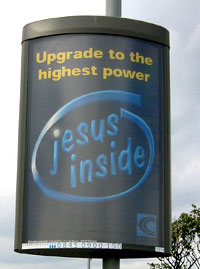
Photo from TurboSquid.com
This we can start – or restart – by immediately deleting from our vocabulary and consciousness that word we have been erroneously using since summer, “new normal”.
New normal is abnormal because norms or standards like morality always remain.
Washing of hands frequently, covering one’s mouth and nose when sneezing and coughing, not spitting everywhere are not new normal. Cleanliness has always been the norm since the beginning that we have that saying always true, “Cleanliness is next to Godliness”.
Praying every day, individually and as a family especially the Holy Rosary is not a new normal. Connecting with the Divine has always been the norm of man since the beginning even before Jesus Christ came to the world.
More than half a century ago, the late Fr. Patrick Peyton has been saying, “The family that prays together, stays together; and the world at prayer is a world at peace.” Praying has always been the norm in our lives.
Normal or norms do not change because they are the standard measure. Even before COVID-19 came, normal temperature has always been 37 degrees Celsius, 12-inches make a foot, and so on and so forth.
So, please forget this abnormality of referring to our new way of living as “new normal” because it is not new at all.
Worst, this usage of the term “new normal” courtesy of the media, politicians, and policy makers is a dangerous indication of unconsciously or subconsciously perpetuating our excesses of the past that the Wuhan virus have rightly exposed: too much greed especially among capitalists, materialism and consumerism, and individualism.
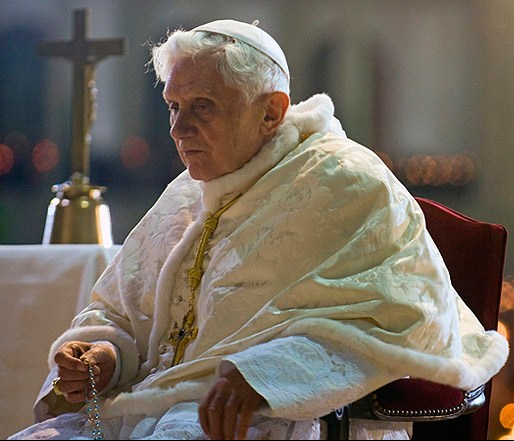
From vaticannews.va
Pope emeritus Benedict XVI had long been speaking against these by describing it as “dictatorship of relativism”.
Acceptance of this term or concept that was actually coined at the aftermath of the 2007 financial crisis indicates that we are miserably not learning the lessons of this global crisis.
Our sights remain myopic, even blinded in looking at this pandemic without realizing at all how this was spawned by our own excesses and sins. Long before we have been told to maintain physical or social distancing to stop spread of the new corona virus, we have long been distant from one another. We have been spending more time with our computers and smartphones, trying to connect with friends and everyone in various social media platforms unmindful of the persons seated near us. “Table for one” in restaurants is fast becoming the order of the day than the exception to the rule.
My point is, accepting everything now as the new normal is also accepting wholesale the new ordering of things going on that continues to neglect the weakest and poorest among us. We are only perpetuating an error and worst an evil among us that we have refused to examine closely in the past.
This “new normal” is a conditioning concept that pushes the marginalized and disadvantaged people deeper into misery as the daily news tells us. Unconsciously to many of us, “new normal” is an excuse even a justification for the continued poverty and slavery of the weak and disadvantaged.
What a shame that while so many countries are suffering from COVID-19 like ours, Beijing is flexing its muscles around the world economically and militarily – right in our seas!- as if they are not bothered at all by this virus that came from their own province of Wuhan.
A very interesting read I have found last month was written by Nigerian Chime Asonye who rightly claims that “the new normal” “should not be the lens through which we examine our changed world”.
The ‘new normal’ discourse sanitizes the idea that our present is okay because normal is regular. Yes, there may be public health challenges, but these are issues that can be managed. We accept life under the omnipresent threat of disease as ordinary. But what exactly is normal about this pandemic? It is not normal for society en masse to be isolated, but if this is normal, then we are supposed to have control of the situation. Even if we feel loss or despair, we are expected to get used to it — accepting that this morbid reality is now standard.
COVID-19 can serve both as a catharsis to our past excesses and a watershed for a brighter future.
The old system, or what people refer to as “normal” before in the world had erroneously set is not working, plainly wrong and abusive; why continue or import it into this coming new period?
As the pandemic rages on it gives us a chance to reimagine the world by tracing history, not forgetting it.
We should revel in the discomfort of the current moment to generate a ‘new paradigm’, not a ‘new normal’. Feeling unsettled, destabilized and alone can help us empathize with individuals who have faced systematic exclusions long-ignored by society even before the rise of COVID-19 — thus stimulating urgent action to improve their condition. For these communities, things have never been ‘normal’.
COVIDS-19 is definitely not a punishment from God but a result of man playing God.
And like in the past, whether in world history or in our own lives when things go wrong even worst, God ensures to make ways that anything bad happening to us would always lead to something good.
Photo by author, Christmas 2019 in our Parish.
See how providential in the sense that microscopic viruses are reminding us that true power is not in being big but in being small, not in being strong but being weak — the very example of God to us when he became human like us more than 2000 years ago.
Unfortunately, his lessons remain unheeded up to our time even among us in the Church.
It is a most welcomed change in the midst of this pandemic that the Vatican last week issued new guidelines through the Congregation for the Clergy (directed to us priests) for the world’s parishes that can help us respond adequately to the challenges of this crisis (http://press.vatican.va/content/salastampa/en/bollettino/pubblico/2020/07/20/200720a.html).
But, that will require another blog.
For the meantime, please stop using that abnormal term “new normal”.
The Lord Is My Chef Breakfast Recipe for the Soul by Fr. Nicanor F. Lalog II
Wednesday, Week XIII, Year II in Ordinary Time, 01 July 2020
Amos 5:14-15, 21-24 <*(((><< <*(((><< >><)))*> >><)))*> Matthew 8:28-34
Photo by Mr. Raffy Tima of GMA7 News, Taal eruption, January 2020.
Praise and glory to you O God our loving Father for this brand new month of July! It is our hope this month will be kinder and more gentle with us than June. It is our hope that this July, we can all come closer to you doing what is good, what is right.
Seek good and not evil, that you may live. Then truly will the Lord, the God of hosts, be with you as you claim! I hate, I spurn your feasts, says the Lord, I take no pleasure in your solemnities… Away with your noisy songs! I will not listen to the melodies of your harps. But if you would offer me burnt offerings, then let justice surge like water, and goodness like an unfailing stream.
Amos 5:14, 21, 23-24
Most of all, through your Son Jesus Christ our Lord, it is our hope O merciful Father that beginning today we start to reject and shake off evil from our lives, from our very selves.
We have not only sinned, O sweet Jesus; worst part of our sinfulness is how we have accepted sin and evil as a way of life, as a part of life itself with our usual excuses and arguments “wala nang magagawa, nariyan na yan, hayaan na lang” (there’s nothing that can be done, just accept it).
We have got so used to immoralities and lies that we simply accept them as facts of life.
Like those people at Gadarenes where two demoniacs have terrorized them for some time that “no one could travel by that road” (Mt.8:28).
But when you came, Lord Jesus and drove the demons into entering the herd of swine that jumped and drowned into the sea, the whole town came out to meet you and begged you to leave their district!
Instead of being thankful, they begged you to leave, Lord, because you have disturbed their lives so used to the demons. They have failed to see how two people were finally healed and exorcised. Most of all, they have refused to accept the new order in their place.
What a silly turn of events that continues to happen day when people have grown so used to evil and sin, refusing changes and conversion.
How sad that whenever we make a stand for what is right and good, what is true and just, we are the ones made to suffer, even persecuted for bringing order because we have disturbed the evil that people have been used to.
We pray for those who continue to fight injustice and immoralities in our communities, in our church that they may always be guided and strengthened by the Holy Spirit.
And we pray for those among us who have lost the sense of sinfulness, of living with sin and evil and yet continue to worship and praise you O God. Amen.
Quiet Storm by Fr. Nicanor F. Lalog II, 11 June 2020
Painting by Raphael (1515) of St. Paul preaching at Areopagus in Athens, Greece. From wikipedia.
With houses of worship still closed despite the opening of most business establishments, here is the final installment of reflection in our series on how the life and teachings of St. Paul may help us in our ministry during this time of COVID-19 amid a perceived government “persecution” of the Catholic Church.
There is no doubt that like during his time, St. Paul would be using modern means of communication to preach the Gospel of Jesus Christ especially in this most trying time of our history, using the internet as the new “Areopagus” with social media in particular.
Then Paul stood up at the Areopagus and said: “You Athenians, I see that in every respect you are very religious. For as I walked around looking carefully at your shrines, I even discovered an altar inscribed, ‘To An Unknown God.’ What therefore you unknowingly worship, I proclaim to you. The God who made the world and all that is in it…”
Acts of the Apostles 17:22-24
Social Communication
Perhaps before we go into our reflection, it is imperative especially for bishops and priests to be reminded anew of some important terms in communications; this is more than about names or nomenclature because for as long these terms of communications are not clear with us, all our evangelization efforts would be askewed as it is now showing with an explosion of online Masses and other religious celebrations.
First priority is to stop using the words “mass media” and even “social media” in our church communications because these are very limited in scope and context.
It is important to note that in the 2000-year history of the Church, it was only in Vatican II that we have issued a conciliar document on communication wherein the Fathers also introduced the term social communication as a new name for communications in the Church.
How sad that there are still bishops and priests using the terms “mass media” or “media” and lately “social media” when more than 50 years ago the Church through the inspiration of the Holy Spirit coined social communication to refer to “the communication of and in human society including all the ways and means used in this process” (Fr. Franz-Josef Eilers, svd, 2009 BISCOM-FABC, Bangkok).
Social communication is a very prophetic term because it is theological and rooted in God who is communication himself, sharing with us his power to communicate so we may also communicate with him and with others. Most of all, God continues to communicate with us and from that lies our task as a Church to communicate him to the world.
This is the reason why we have to keep on using this term “social communication” in our Church communications to keep us Christocentric, meaning, every communication in the Church and by the Church has Jesus as Message.
And that is essentially the kind of communication process followed by St. Paul the Apostle. In fact, reviewing his letters and the various accounts about him would show us that early, this great apostle has been into social communication, specifically “pastoral communication” that is an emerging field in Church communications whose realities have long been espoused by St. Paul himself.
Pastoral Communication
Pastoral communication is anchored on Jesus Christ, the “Good Shepherd” who sets himself as the norm and standard of our Church communications.
Jesus said, “I am the good shepherd. A good shepherd lays down his life for the sheep… I am the good shepherd, and I know mine and mine know me, just as the Father knows me and I know the Father; and I will lay down my life for the sheep.”
St. Paul has always been very clear with this in all his communications that towards the end of his life, he had beautifully written his disciple this wonderful piece:
Beloved: I charge you in the presence of God and of Christ Jesus, who will judge the living and the dead, and by his appearing and his kingly power: proclaim the word; per persistent whether it is convenient or inconvenient… For I am already being poured out like a libation, and the time of my departure is at hand. I have competed well; I have finished the race; I have kept the faith.”
2 Timothy 4:1-2, 6-7
Communicating Jesus Christ is always about self-sacrifice, about giving of one’s self like our Lord and Master. In whatever form of communication we use, it is always a call to “enflesh” the Word. In short, communication is spirituality that indicates the kind of relationship we have with God. How we reflect that relationship with God in words and in deeds, in our clothings and everything is communication.
Like St. Paul, he was able to offer himself wholly to God as reflected in his writings and preaching because he was more concerned with the needs of the flock and not with his own needs.
And this is where I sadly feel our bishops sorely absent and silent except for just two, Lingayen-Dagupan’s Archbishop Soc Villegas and Manila’s Apostolic Administrator Bishop Broderick Pabillo.
Where are the other bishops?
Business establishments are almost all opening, even dine-in restaurants and yet, until now for no valid reason, the government continues to ban religious mass gatherings except for maximum of ten persons in areas under GCQ.
When are the bishops and priests going to speak out against this and open the churches so people may be spiritually nourished?
What an auspicious time for the clergy and hierarchy to speak against this continued closure of churches as we are on the eve of our 500th year of Christianization when under serious persecution. Has the Church grown timid in the face of an unfriendly government?
Worst are some priests who seem to follow more the secular world in their digital presence but empty of Jesus Christ, concerned only with popularity measured in number of likes and shares as well as followers.
Many of us have become more of personalities than as priests and ministers, unconsciously trying to be more popular than the Lord himself that we no longer have sacrifice of the Mass but a variety show, complete with sound effects and digital characters, some wit dance numbers and raffles!
When God is displaced, then our love is misplaced, then, we lose all communications too.
Communication is more than the expression of ideas and the indication of emotion. At its most profound level it is the giving of self in love. Christ’s communication was, in fact, spirit and life. In the institution of the Holy Eucharist, Christ gave us the most perfect and most intimate form of communion between God and man possible in this life, and, out of this, the deepest possible unity between men. Further, Christ communicated to us His life-giving Spirit, who brings all men together in unity. The Church is Christ’s Mystical Body, the hidden completion of Christ Glorified who “fills the whole creation”. As a result we move, within the Church and with the help of the word and the sacraments, towards the hope of that last unity where “God will be all in all”.
Communio et Progressio # 11
From Google.
Problem with online Masses and religion
Every communication presupposes presence. That is essentially the meaning of God’s “I AM” in the burning bush to Moses and the “I AM” declarations by Jesus in the New Testament, especially in the fourth gospel where we find him saying “I am the good shepherd”.
Even St. Paul in his letters always began with his standard salutations like “I, Paul…” to indicate his very presence among his “parishioners”.
However, in the digital media, presence is not so essential and can even be faked both ways, either by being “taped” or “replayed” by viewers.
And there lies the great danger of online Masses and other celebrations: whether we like or not, online religious celebrations give the impressions on people that God is a “consummable”, a product or a show that can be had when most convenient to us like video on demand or the streamed shows of Netflix.
That is why we have to open churches soon to stop these online Masses except for those in the Cathedrals and in existence long before COVID-19 that cater to the needs of the sick and elderly in their homes.
Pope Francis has always been clear with this, stressing that these online Masses and religious celebrations are very temporary due to the extraordinary situation brought about by the pandemic.
From Pinterest/Aleteia.
Imagine the problem at Corinth that reached St. Paul’s attention, prompting him to write them another letter to reprimand them but at the same time to encourage them to mend their ways. It was a problem of abusing the Eucharist when St. Paul was no longer with them.
It is the same thing happening in many of our online Masses that have become variety shows to impress viewers. Long before we got into this lockdown, many priests have crossed the boundaries without knowing they have made fools of themselves as they rely more on “likes”, on being viral or trending, dishing out shallow reflections covered with cute song numbers, litany of greetings on air, and so many other inanities that Jesus is lost in the process.
Unfortunately, many laypeople are now also having their own digital preaching or evangelization with their own “productions” taking their cue from their showbiz pastors.
If St. Paul were with us today, he would surely write again to express his dismay at the people seeking more of entertainment than having Jesus Christ.
“But I am afraid that, as the serpent deceived Eve by his cunning, your thoughts may be corrupted from a sincere and pure commitment to Christ. For I think that I am not in any way inferior to these “superapostles”. Even if I am untrained in speaking, I am not so in knowledge; in every way we have made this plain to you in all things.
2 Corinthians 11:3, 5-6
Church communication is Jesus Christ and his Cross as St. Paul reminds us in his writings (1Cor.15:1-3); it is never about techniques or gadgets.
Though we need to be present online, the cutting edge of real communication remains in pastoral communication that means being present with others who need us most including those without internet access, witnessing to the values of Jesus in relating with people, bringing people together into a communion and helping them find answers in their search for meaning and directions in life, in making the right choices and in living their convictions and faith.
What we are speaking of are real people, persons and lives that matter so much, more precious than goods and commodities.
Let us not fall into the trappings of this “media revolution” that made one futurologist describe our contemporary society as
Technologically Intoxicated Zone defined by the complicated and often paradoxical relationship between technology and our search for meaning.
John Naisbitt
According to Naisbitt and other experts, while people prefer quick fixes online of everything, from religion to nutrition, while at the same time fearing and worshipping technology that had blurred the distinction of what is real and fake, the more they live their lives distanced and distracted — something we are already seeing even before the coming of social distancing!
To communicate in the Church at this time is to imitate St. Paul: be present for and with the people wherein we help them find their way to God by being their companions and “co-journeyers” in life, witnessing to them the Cross of Jesus Christ with our very lives as an offering and sacrifice, not as a commodity or a show to be “liked” on Facebook and Instagram.
And, lest we forget, it is God whom people must follow and worship, not us.
So be imitators of God, as beloved children, and live in love, as Christ loved us and handed himself over for us as a sacrificial offering to God for a fragrant aroma.
Ephesians 5:1-2
Pope Francis praying before an empty St. Peter’s Square last March 27, 2020 at the height of COVID-19 in Italy.
Lawiswis ng Salita ni P. Nicanor F. Lalog II, Ika-03 ng Hunyo 2020
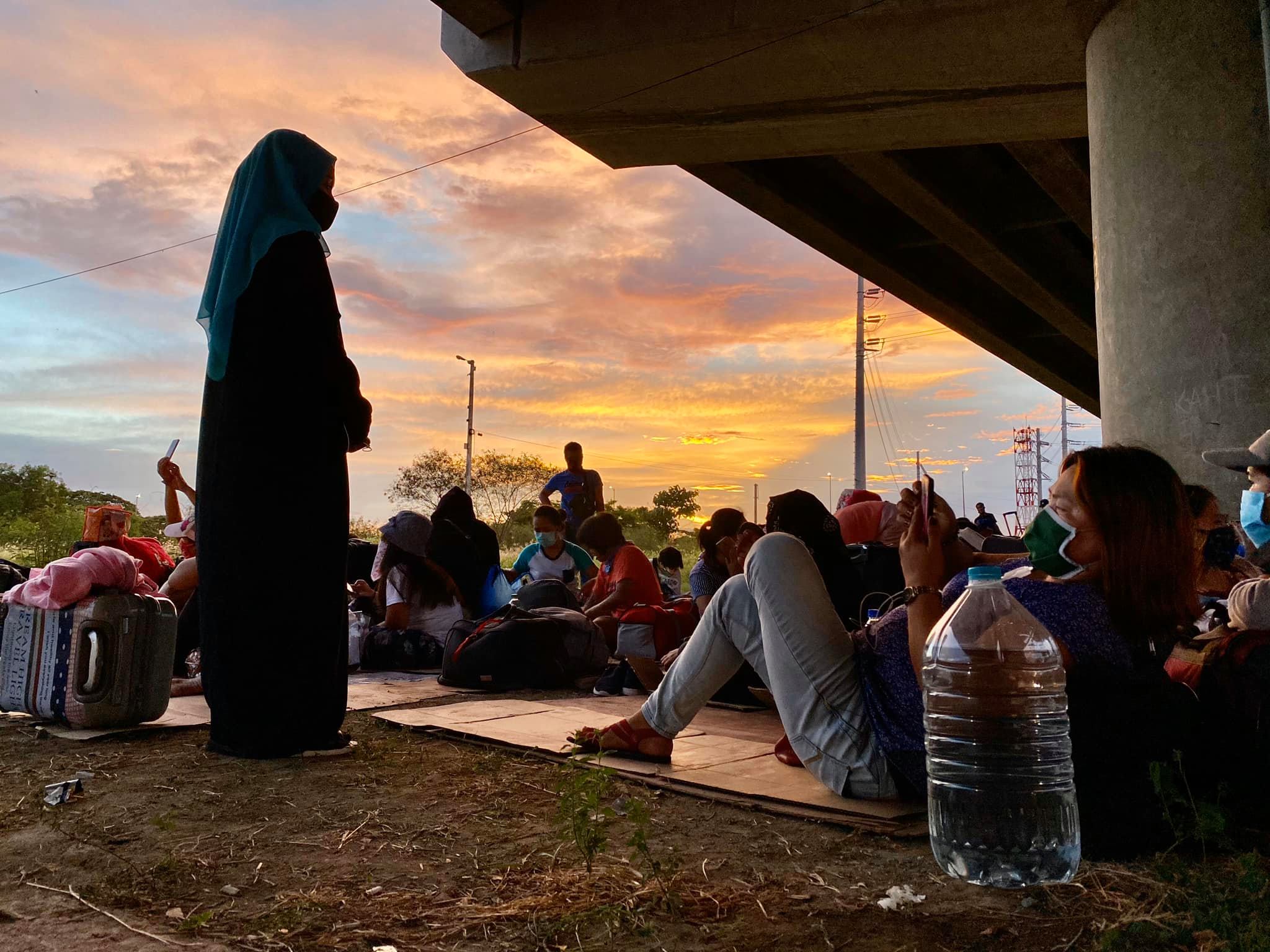
Larawan kuha ni G. Raffy Tima ng GMA-7News, 02 Hunyo 2020.
Nakapanlulumo, napakasakit
dibdib ko'y nagsisikip
sa sobrang hirap at pasakit
sinapit marami nating kapatid
dahil sa makitid na pag-iisip
nitong mga namumuno sa atin;
Niluwagan ang quarantine
mga mall at tanggapan pinabuksan
upang ekonomiya ay buhayin,
pananalapi ay paikutin.
Bukod tanging pinahalagahan
kayamanang napawalan sa lockdown
kanilang tingin nasa salaping kikitain
sadyang tinalikuran pampublikong sasakyan,
hirap ng mga mamamayan, wala silang pakialam.
Ni hindi sila naantig sa mga tanawin
at nang makarating na sa kanilang pandinig
napakaraming daing at hinaing
sa halip na unawain,
mga sisi at kasalanan sa kanila pa ibinaling!
Ano nga bang katauhan mayroon
mga namumuno na puro mga damuho?
Mga manhid at hindi na naaantig
sa pintig ng pulso ng bayan?
Hindi man nila naranasan
at marahil kailanma'y di pagdaraanan
mga hirap na tinitiis ng karamihang mamamayan
wala ba silang kamalayan ng malaking
kaibhan ng hirap at kaginhawahan?
O marahil naisangla na kanilang mga kaluluwa?
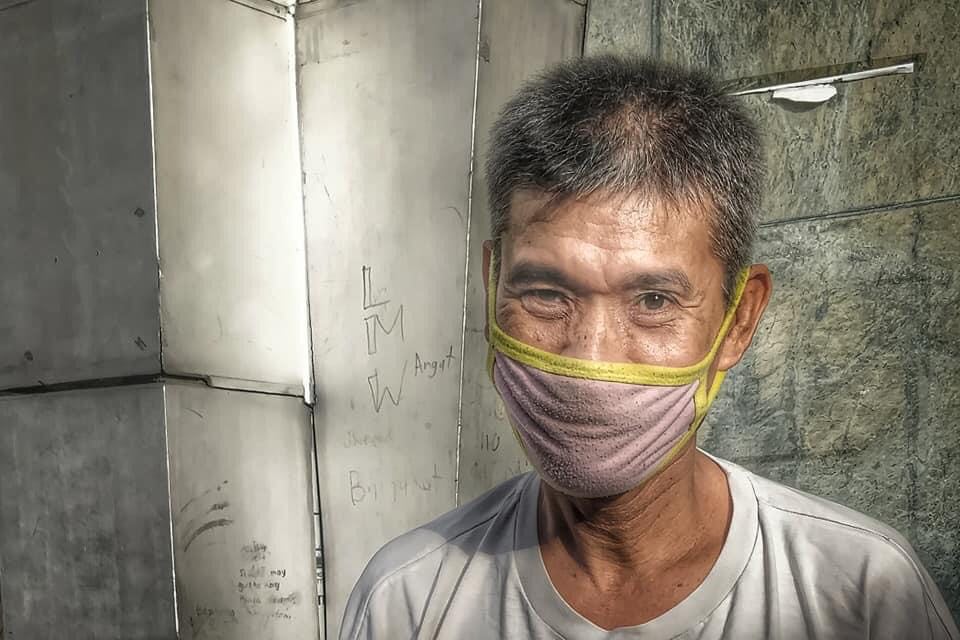
Larawan kuha ni G. Raffy Tima ng GMA-7 News, 02 Hunyo 2020.
Noong Linggo ng hapon,
dalawang kabataang dalaga nagsimba
kaya ako'y nagalak nang makita silang kasama;
pagkaraan ng Ama Namin, nahilo at nagdilim
paningin ng isa hanggang himatayin.
Nang aking tanungin baka siya ay gutom
o mayroong iniindang karamdaman,
aking nalaman dalawang kilometro
kanilang nilakad sa kainitan
makapagdiwang lamang sila muli sa Simbahan
na hanggang ngayon ayaw pabuksan
sa kabila ng kahalagahan ng espiritwal na pangangailangan.
Kaya nga napakalaking kahangalan
itong ating nasasaksihan sa gitna ng ating kahirapan
mga pinuno at upisyal kay raming pinag-aralan,
makapangyarihan at karamihan ay nakaririwasa
ngunit katauha'y nakalublob sa pusali ng kapalaluan;
mga batas dapat nilang ipatupad, kanilang niyurakan
walang iningatan kungdi kanilang pangalan;
mga tindahan at tanggapan pinabuksan,
wala namang mga pampublikong sasakyan,
malamang sila'y nagkahawahan sa katangahan
o mayroong ibang pinangingilagan at kinatatakutan
maliban sa mabangis na virus mula sa Wuhan?
Sana'y dumating ang panahon
muling maalala ng mga damuhong namumuno ngayon
mayroong Diyos sa atin ay hahatol
dahil siya lamang ang Panginoon at Hukom.
Hindi na ako nagtataka
ekonomiya kanilang pinahahalagahan
kapwa tao'y kinalilimutan, tinatalikuran
mga bahay-dalanginan ayaw nilang mabuksan
dahil walang pitak sa kanilang kalooban
Diyos na makapangyarihan
kaya naman mukha Niya ay hindi nila mabanaagan
lalo na sa mga kapwa na aba at nahihirapan.
Larawan kuha ni G. Raffy Tima ng GMA-7 News, 02 Hunyo 2020.
The Lord Is My Chef Sunday Recipe, Solemnity of the Pentecost-A, 31 May 2020
Acts of the Apostles 2:1-11 <*(((>< 1 Corinthians 12:3-7, 12-13 ><)))*> John 20:19-23
Pope Francis praying at an empty St. Peter’s Square 27 March 2020. Photo from cruxnow.com.
As I prayed over the readings this coming Pentecost Sunday, my thoughts kept going back to those powerful images when Pope Francis prayed at an empty St. Peter’s Square at the Vatican last March 27 when COVID-19 was ravaging the whole Italy with so many deaths.
Now more than ever, the Church badly needs the Pentecost – a new Pentecost that will heal and rebirth the world so wounded and altered by the corona pandemic this year 2020.
On the evening of that first day of the week, when the doors were locked, where the disciples were, for fear of the Jews, Jesus came and stood in their midst and said to them, “Peace be with you.” When he had said this, he showed them his hands and his side. The disciples rejoiced when they saw the Lord.
John 20:19-20
Modern rendition of the Pentecost. From Google.
Holy Spirit, breath of life and cause of unity
The Pentecost is not just an event remembered in the past but a reality that happens daily when the Holy Spirit comes and is received by those attuned with its life and mission which is to bring peace through unity and healing.
Promised by Jesus Christ to his followers as their Advocate and Counsellor, the Holy Spirit descended on them during the feast of Pentecost in Jerusalem when Jews from all parts of the world gathered to remember the 50 days after their Passover in Egypt at the time of Moses.
It was the perfect setting for the Christian Pentecost – this time 50 days after Easter – to celebrate the new unity of mankind in Jesus he established on Holy Thursday evening at his Last Supper. Inasmuch as the Jews went home at that time to be one with their fellow believers in Jerusalem, on that day from the holy city comes forth the new solidarity of peoples in Jesus led by his followers gathered that day in the Upper Room.
Hence, the tradition of considering Pentecost Sunday as the birthday of the Church, too.
Though we have heard two different versions of its coming, what matters most is the Person of the Holy Spirit as the breath of life and the cause of unity among the followers of Christ.
In the first reading, Luke gives us an artistic presentation of the coming of the Holy Spirit showing the unity of the peoples: first of the followers of Jesus and later with the Jews gathered in Jerusalem on that day for their feast of Pentecost. Whereas the apostles were at first presented as timid and lacking in understanding, the Holy Spirit emboldened them on that day to go out and proclaim the gospel of Jesus Christ. Led by Peter, they were filled with life and wisdom and courage, converting thousands of people on Pentecost day despite their speaking in different languages, exactly the opposite at the Tower of Babel in the Old Testament.
In the gospel, John gives us the theological grounding of Pentecost when we find Jesus appearing to his disciples hiding from the Jews on the evening of Easter at the Upper Room where he breathed on them the Holy Spirit that filled them with joy upon seeing him risen and alive.
The scene was reminiscent of the many stories in the Old Testament of the “breath of God” giving life to the first human beings in the story of creation, the “breathing on” by Elijah on the nostrils of the widow’s dead son back to life (1Kgs.17:21), and the promise of God to Ezekiel to restore to life the many dry bones in their graves in the time to come (Ezek. 37:1-14).
These stories now take on deeper meanings in Jesus Christ its fulfillment. And not only were the disciples breathed on with new life in Christ but also the whole creation was renewed in the coming of the Holy Spirit that we pray, “Come Holy Spirit, fill the hearts of your faithful and you shall renew the face of the earth”.
Perennial Pentecost for peace and healing
Pentecost is an event that continues to happen daily especially when we are gathered as the body of believers of Jesus Christ tasked to realize its fulfillment. This coming of the Holy Spirit is not a one-shot deal that happened only in the past in Jerusalem more than 2000 years ago — it is something we as followers of the Risen Lord must always wait and make happen every day so as to continually bring life and renewal to this world especially at this time of the corona pandemic.
In giving us the Holy Spirit, Jesus not only renewed our lives as his disciples united in him but also conferred his own power without restrictions to accomplish our mission.
Jesus said to them again, “Peace be with you. As the Father has sent me, so I send you.” And when he had said this, he breathed on them and said to them, “Receive the Holy Spirit. Whose sins you forgive are forgiven them, and whose sins you retain are retained.”
John 20:21-23
The Chair of St. Peter at St. Peter’s Basilica in Rome with the stained glass of the Holy Spirit above. Photo from dreamstime.com.
At the Vatican inside the great St. Peter’s Basilica is a beautiful stained glass of the Holy Spirit in the form of a dove rising above as background to the Chair of St. Peter ( Feast is February 22) at the sanctuary area.
Pope Emeritus Benedict XVI described this beautiful work of art:
“It seems to me that a deep analysis of the essence of the Church lies hidden here, is contained here… It unites the Church with creation as a whole. It signifies through the dove of the Holy Spirit that God is the actual source of all light. But it tells us something else: the Church herself is in essence, so to speak, a window, a place of contact between the other-worldly mystery of God and our world, the place where the world is permeable to the radiance of his light… The Church is the place of encounter where God meets us and we find God. It is her task to open up the world closing in on itself, to give it the light without which it would be unlivable.”
Images of Hope, pp.29-31
Here we find part of our mission in collaboration with the Holy Spirit is the the healing of the world that can be achieved only through peace. See how Jesus had to repeat twice his gift of peace to his disciples because it is his greatest gift to us following his Resurrection.
Life thrives and blooms most where there is peace, where there are disciples of the Lord willing to work for it with love and patience.
But the peace from Jesus Christ always has a price that we must be willing to pay to achieve it.
See that after his first greeting of peace, Jesus showed his wounds — he was the first to pay the price for peace with his own life.
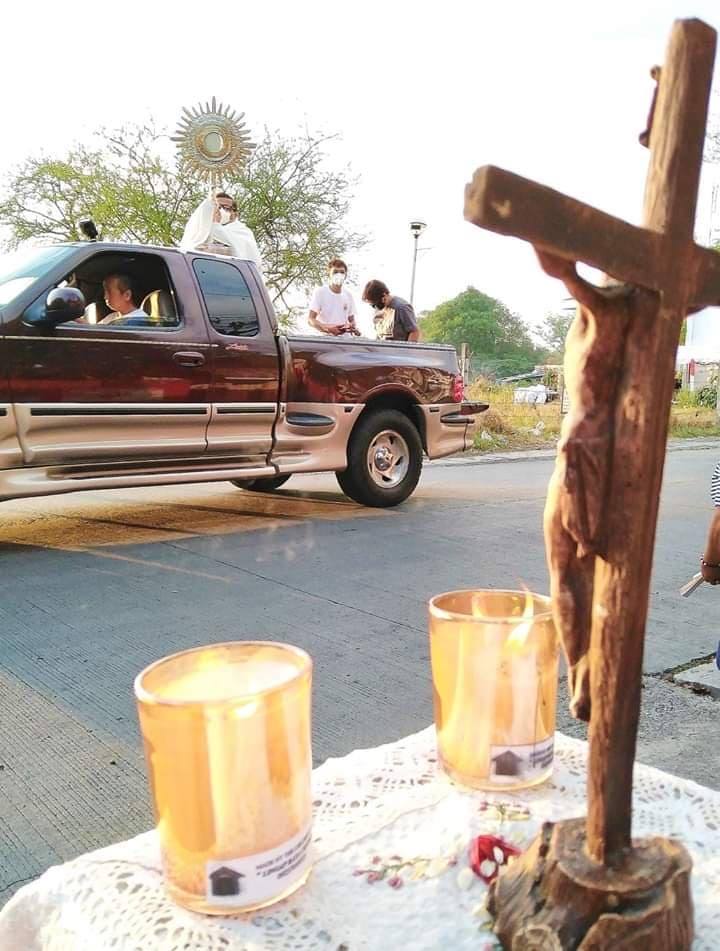
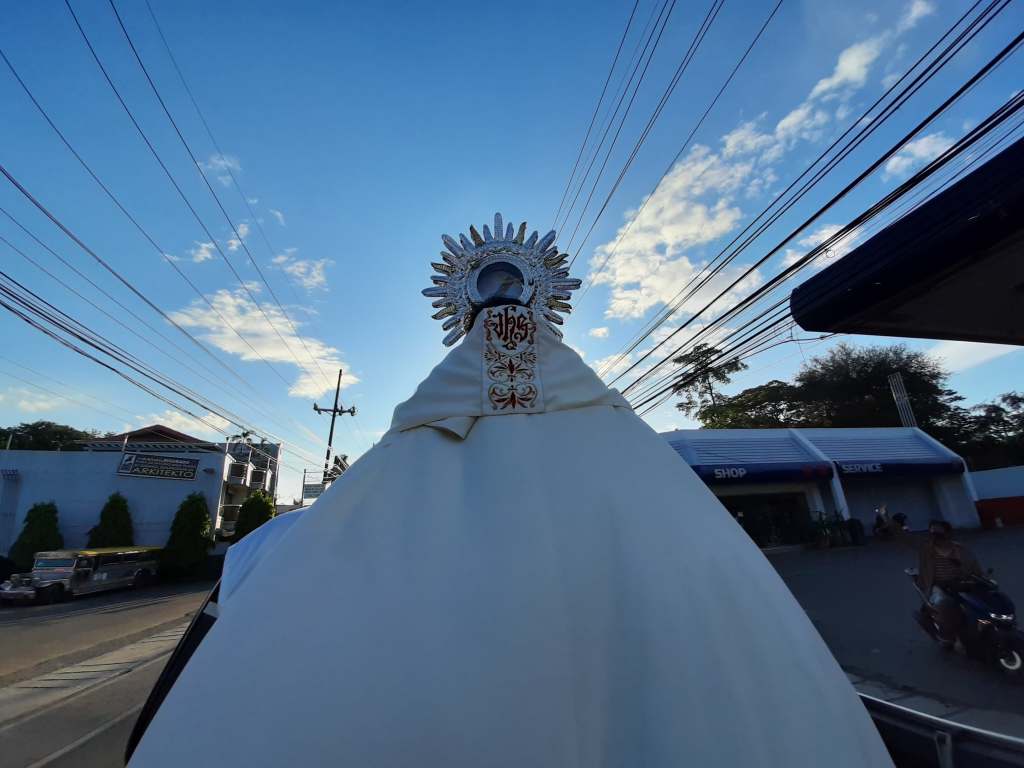
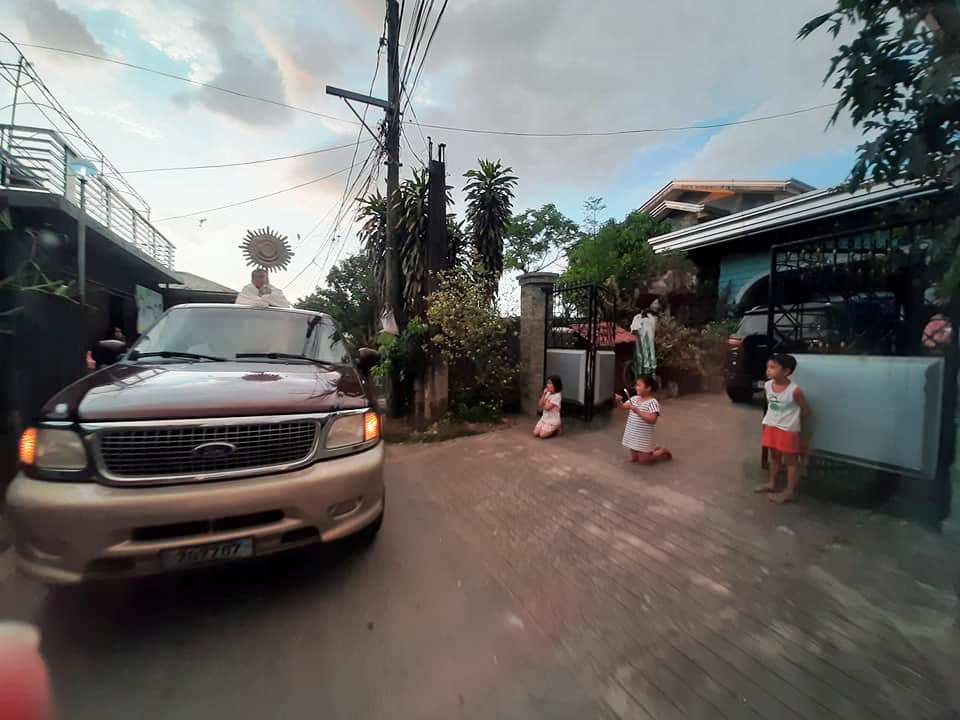
Bringing around our Parish the Blessed Sacrament during the lockdown, March-May 2020.
This is the meaning of the many sacrifices and sufferings we all have to go through in this quarantine period expected to continue until 2021: if we want to get out of this pandemic, aside from the need for a vaccine and medication, we all need to change our ways to make sure this will not happen again.
It is always easy to join so many advocacies and rallies calling for every kind of change in the society and the world but nothing had ever happened because whenever we come home, we do not change our own ways of living! Sayang (what a waste) were all the inspiration and energies of the Holy Spirit for our many causes that have not taken roots right in our hearts.
All the apostles of the Lord paid the price of peace with their own lives that led to the healing not only of individuals and families but even of nations and the world.
The second time Jesus offered his gift of peace, he breathed the Holy Spirit on his apostles and commissioned them to forgive all sins.
Peace is the fruit of love according to Vatican II.
As such, peace from the Holy Spirit leads to healing when there is dialogue, prayer and repentance, that lead to justice, love, and forgiveness. Peace and healing need hard work that is why they are fruits. They never come on a silver platter.
On Monday, most of the quarantine levels in the country are downgraded because it is hoped we have somehow controlled the spread of COVID-19.
As we eagerly await more freedom and mobility in this time of pandemic, what have we achieved during these three months of quarantine, said to be the longest in the world?
Have we resolved our family differences? Have we rediscovered our family members, getting more close than ever, more kind, more understanding?
How sad that all we can share as our quarantine stories are all about food and other pursuits we have undertaken forgetting the unity and life of our family and community.
How sad when we in the Church have all been preoccupied with the new communication media but failed at all to make any impact or dent in the lives of our faithful because we have not shared Jesus Christ at all, when all our “live streaming” and vlogs are powered by likes and followers, not by the Holy Spirit.
Pope Francis blessing the people last March 27 in an empty St. Peter’s Square during the height of COVID-19 in Italy that became the new epicenter of pandemic next to China. Photo from Vatican Media Office.
Jesus never takes back his gift of peace, his gift of healing, his gift of the Holy Spirit. He promised to never leave us orphans. Let us not leave the Holy Spirit behind and stop believing in our selves.
That’s the way we have been in the world and even in the Church.
That is why – to a large extent – we have this corona pandemic.
Mula nang mag-quarantine
palagi nating hiling
sana'y maibalik dating takbo
nitong buhay natin.
Kung tutuusin bahagi ng sarili natin
ano mang luma laging kinagigiliwan
basta mayroong kinalaman sa nakaraan:
lumang tugtugin at awitin,
naninilaw na mga liham, nalimot na nilalaman;
mga kupas at sepia na larawan,
sinaunang estilo at disenyo
ng mga gamit at damit, bahay at gusali;
lumang radyo, lumang kotse
antik at klasik kung ituring
tibay at husay walang kapantay.
Mga bakas ng kahapon
ayaw nating itapon
bagkus tinitipon, kinakahon
sa isang sulok ng bawat ngayon
upang kung may pagkakataon,
mga ito ay malingon
baka sakaling makabangon
at humakbang pasulong.
Madalas sa atin mga kahapon
tila palaging umaayon sa bawat ngayon
dahil alam na natin nangyari noon:
mga kinalabasan at hinantungan
ng ating pagsasapalaran
hatid man ay tuwa o luha
mga iyon atin nang nalampasan.
Madali at masarap balikan nakaraan
dahil alam na natin ang nagdaan
habang sa bawat ngayon at kinabukasan
tayo ay laging kinakabahan
dahil wala tayong panghawakan
maliban pakikibaka at sapalaran
gaya noong nakaraan
nang tayo ay pumailanglang
sa walang katiyakan.
Kaya nga huwag kabahan
sa kasalukuyan maging kinabukasan;
mahalaga ating matandaan
matutuhan mga aral, kabuluhan, at kahulugan
ng kasaysayan upang itong kasalukuyan
malampasan, mapagtagumpayan!
The Lord Is My Chef Breakfast Recipe for the Soul, Wednesday, Easter Week-VI, 20 May 2020
Acts of the Apostles 17:15, 22-18:1 ><)))*> + <*(((>< John 16:12-15
From Facebook, 18 May 2020.
As I prayed over the readings for today, dear Jesus, I felt the great similarity of the time of St. Paul in Athens and of the world in this time of the corona virus that made me wonder what would your apostle tell the people of today who have made the malls as their new temples of worship.
Or, what would St. Paul tell those in government who see businesses as most essential needs, totally disregarding the need to open houses of worship where people can find spiritual nourishment?
What would St. Paul tell us your priests and Bishops who have suddenly become less assertive in pushing for the opening of churches so people may celebrate and receive the sacraments so essential in this time of crisis?
Lord Jesus, you know how like St. Paul we have always stressed to the people that
“The God who made the world and all that is in it, the Lord of heaven and earth, does not dwell in sanctuaries made by human hands, nor is he served by human hands because he needs anything. Rather it is he who gives to everyone life and breath and everything.”
Acts of the Apostles 17:24-25
…. and yet, they continue to consider you anything spiritual as non-essential?
Tell us Lord what we must do these days so we may reach the modern pagans and Athenians of this age who have turned to worship to other gods aside from you, O Lord.
May we probe more the reasons why like the Athenians at that time people today still “scoff and leave” when they hear about you, your Resurrection and other spiritual things.
Is it because we would rather massage ourselves with our own thoughts about you and the Divine that seem so magical and more delightful like Hollywood?
How sad that until now, we cannot accept and believe you truly love us so much that you rose again from the dead to bring us back to life too!
Dear Jesus, teach us to be patient and be opened to the Holy Spirit who enables us to understand slowly in your own time at our own pace the realities and truth of your Resurrection.
May the Holy Spirit open us to more imaginative ways like St. Paul in preaching you to the modern pagans and Athenians of today. Amen.
St. Bernardine of Sienna, pray for us!
The “IHS” Christogram: the ancient way of writing the name “Jesus Christ” with the first three letters of his name in Greek substituting the sigma with “S” in Latin. It was St. Bernardine of Sienna who popularized reverence to the Holy Name of Jesus, encouraging Christians to put the letters “IHS” on their doors. Later St.Ignatius of Loyola adopted the Christogram to symbolize his newly founded Society of Jesus that eventually became a part of our Christian art and tradition.
Lawiswis ng Salita ni P. Nicanor F. Lalog II, Ika-05 ng Mayo 2020
Madalas batikos sa atin
ano nga ba saysay nitong mga
debosyon at pananalanging
ginagawa natin?
Maaalis nga ba ng pananalangin
itong COVID-19?
Maraming mabibigo
at marahil magugulat
sa aking sasabihin:
hindi aalisin ng mga panalangin
itong COVID-19
o ano mang salot dumating sa atin.
Dapat nating tantuin
itong panalangin hindi binabago
kalagayan o sitwasyon natin;
hindi nito pipigilin ano mang
kalamidad at sakit na maaring dumapo sa atin
maging kamatayan di nito kayang pigilan.
Pangunahing kabutihan ng panalangin
ay pag-isahin sarili natin
sa Diyos na nagmamahal sa atin
na sa tuwina'y sinasabi
magagandang layunin para sa atin
na ni hindi natin pinapansin.
Sa pananalangin mahalaga mawala sarili natin upang sumaatin ang Diyos. Larawan kuha ni Bb. JJ JImeno ng GMA-7 News, 2019.
Higit na mahalaga sa pananalangin
mapakinggan ang Diyos sa Kanyang sasabihin
hindi ang ibig natin sa Kanya ay sabihin;
ani Jesus, bago pa man tayo humiling
batid na ng Diyos mabuti para sa atin
kaya "Ama namin" ang panalanging tinuro Niya sa atin.
Ang tunay na pananalangin
ay kilanling kapatid na dapat mahalin
bawat kapwa ng sino mang nananalangin;
ito ang binabago ng panalangin -
ang pag-uugali at katauhan natin
na siyang magpapanibago sa sitwasyon natin.
Ano mang panalangin
walang mararating
kung hindi naman nababago
puso at kalooban habang ugali
at asal malayo sa dinarasal
dahil bibig at labi lamang ang umuusal.
Sa mga nangyayari
kahit marami ang nagdarasal
tila magtatagal pa itong COVID-19
hanggat hindi natin mapananaigan
hangad nating sariling kapakanan
sa halip na ang Diyos ang tularan at paglingkuran.
Sana ay huwag ninyong masamain
itong aking puna at pansin
sa marami nating kababayan
ngayong panahon ng COVID-19
palaging daing walang makain
ating sinasambit
saan mang bahagi ng mundo sumapit
kapag tayo ay nagigipit.
Hindi naman sa kung ano pa man
pagkain lamang ba ang sadya nating kailangan
na siyang laging pinahahalagahan
kaya naman kadalasan ito ang sanhi
ng ating mga alitan at di pagkakaunawaan?
Anong sakit mapakinggan, malaman na
nag-aagawan, pinag-aawayan
ay pagkain lamang?
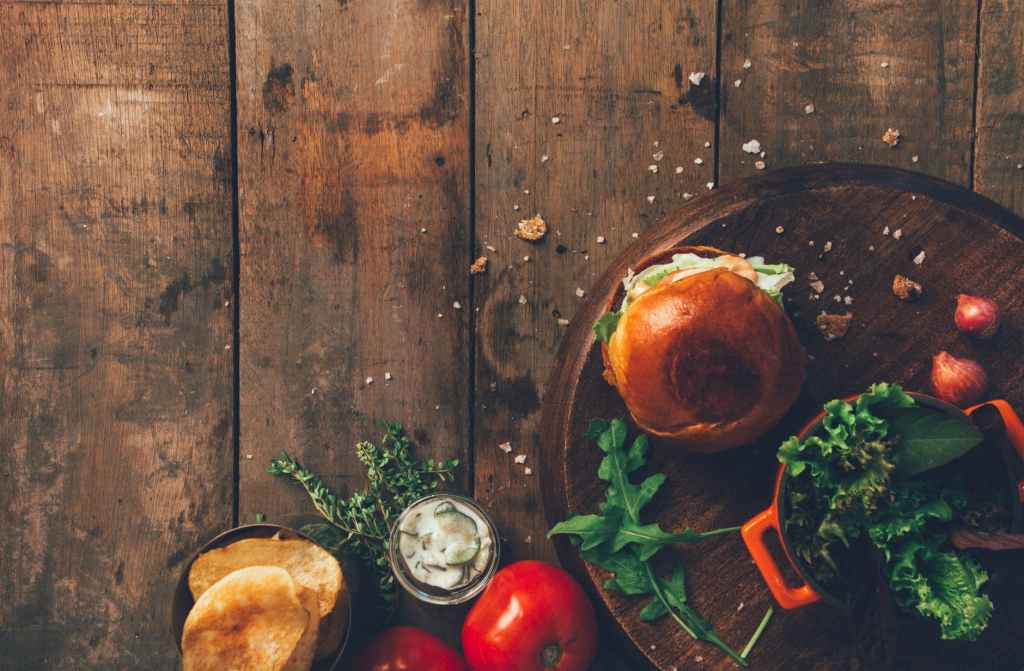
Larawan mula sa Google.
Sa Banal na Kasulatan ating matutunghayan
habilin ng Diyos sa ating unang magulang
maari nilang kainin mga munting butil
pati na rin mga bunga ng punong kahoy sa hardin
huwag na huwag lamang nilang kakanin
mahigpit Niyang bilin
bunga ng puno ng karunungan
dahil magiging sanhi ng ikasasawi natin.
Hindi napigilan kanilang tinikman
pinagbabawal na bunga kaya lumuwa mga mata
sa katotohanang lumantad sa kanila na di nakaya
kaya't dating kapwa hubad ay nagdamit na!
Nang pumarito si Jesu-Kristo upang tubusin ang tao
unang tukso na kanyang pinagdaanan sa ilang
sa gitna ng kanyang kagutuman
ay gawing tinapay mga bato upang busugin Kanyang tiyan.
Hindi nalito si Kristo nang sagurtin niya ang diyablo
na hindi lamang sa tinapay nabubuhay ang tao
kungdi sa bawat salitang namumutawi sa bibig ng Diyos;
kaya noong gabing ipagkanulo siya habang kumakain sila,
nangunsap Siya sa mga alagad Niya
habang hawak-hawak ang tinapay na pinaghati-hati
"Tanggapin ninyong lahat ito at kanin
ito ang aking katawan na ihahandog para sa inyo."
Mula noon hanggang ngayon
nakikilala, naaalala natin ang Panginoon
sa hapag ng kanyang piging, sa mesa ng Misa
nang kanyang inangat katayuan at kahulugan
nitong pangkaraniwang gawain natin na kumain:
hindi lamang upang busugin mga tiyan at laman natin
kungdi upang punuin din kamalayan at kaluluwa natin
ng diwa ng piging na mismo tayo ay maging pagkain din!
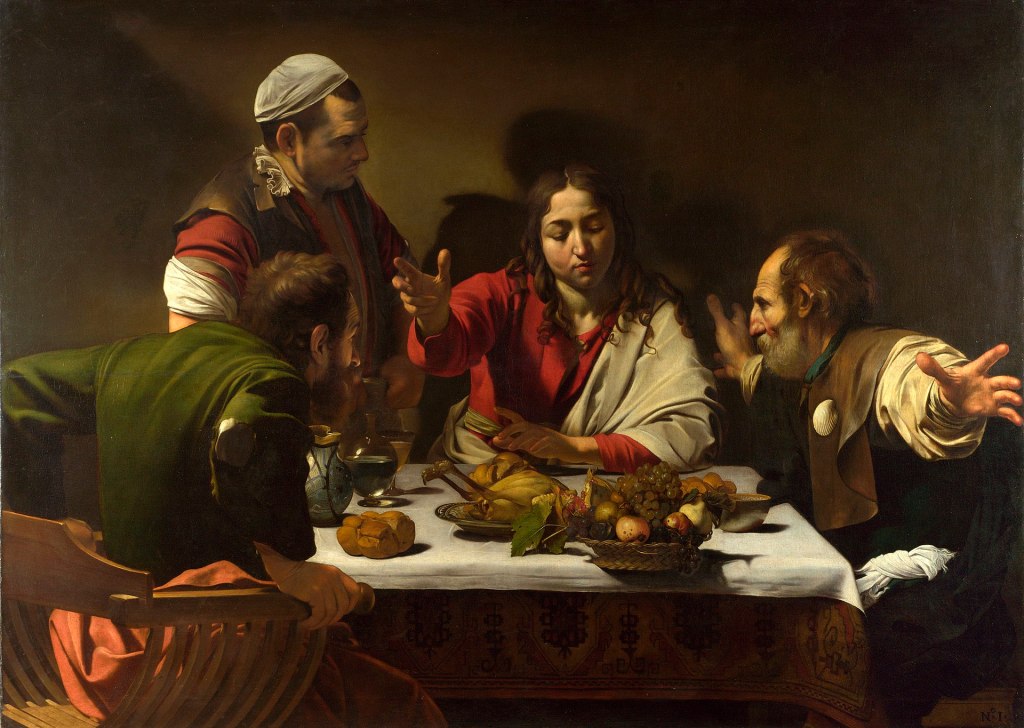
Larawan ng “Supper at Emmaus” ni Caravaggio mula sa Google.
Nakikila pag-uugali ng tao
kapag nakita paano siyang kumain
sapagkat doon lamang sa mesa ng piging
nawawala mga pagkukunwari natin
nabubunyag tunay nating saloobin
kaya naman sa bawat pagdiriwang natin
palaging mayroon pagkain upang
magkasalu-salo, magkaniig at magkaisa mga kumakain.
Alalahanin si Hudas noong Huling Hapunan
lumisan na kaagad dahil siya ay tumiwalag
di lamang sa hapag kungdi sa kaisahan at
pakikipag-kaibigan kay Jesus at mga kasamahan;
iyon din ang sinasaad sa bawat piging ng mga
dumadalo at hindi dumarating
mga kumakain at nanginginain
kay daming pagkain ngunit makasarili pa rin!
Sa tuwing tayo ay kumakain
laging alalahanin kaisa palagi natin
Diyos na bukal ng lahat ng pagpapala sa atin:
huwag mangangamba o mag-aalinlangan
kung sakali mang tayo ay gutumin
sapagkat hindi iyan ikamamatay natin
kungdi pagkabunsol sa labis na pagkain
lahat-lahat ay inaangkin.
Ang tunay na sarap ng pagkain
nalalasap pa rin
maski tapos nang kumain
kapag nabusog di lamang tiyan
kungdi puso at kalooban;
mga alitan nahuhugasan sa inuman
mapanghahawakan pagsasamahan at pagkakapatiran
upang huwag masabi ninuman na wala silang makain!




















 lordmychef.com