Lawiswis ng Salita ni P. Nicanor F. Lalog II, Ika-24 ng Agosto 2020
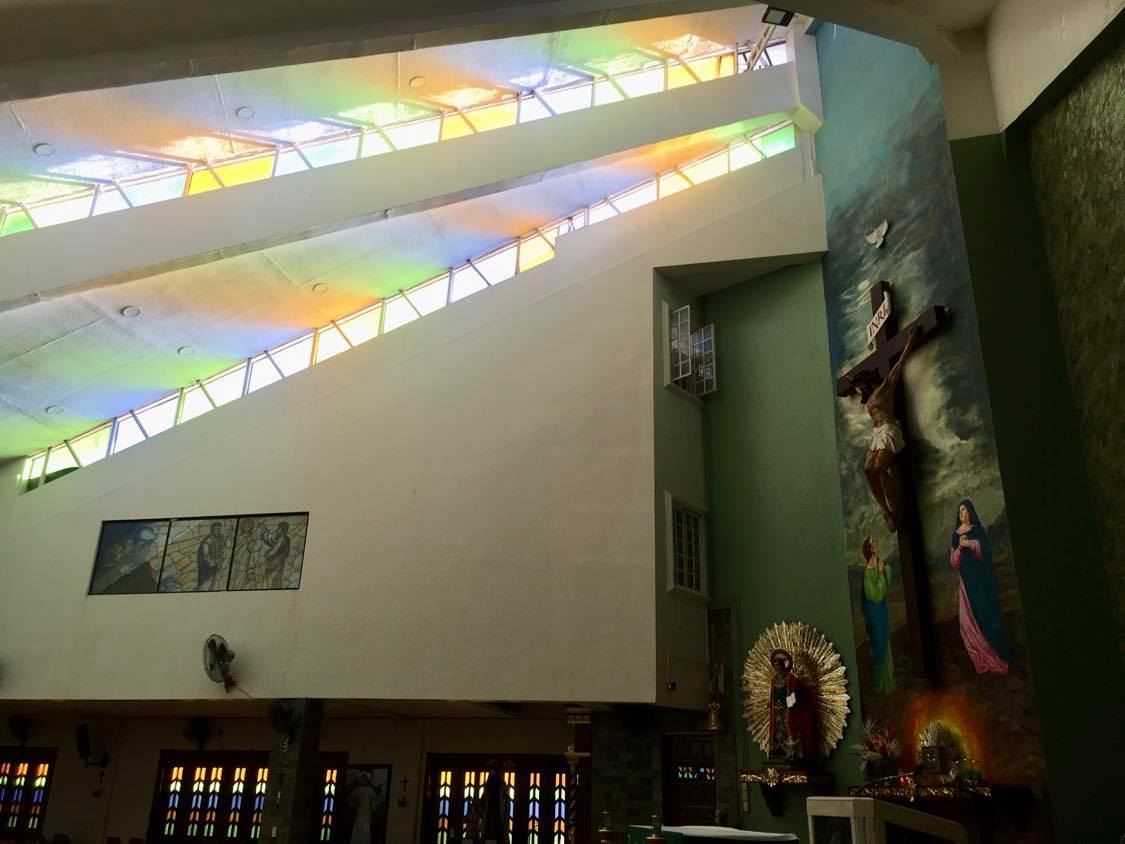
Larawan kuha ni Bb. Ria De Vera, takipsilim sa aming parokya, 13 Agosto 2020.
Maraming salamat po,
O Panginoon,
sa lumipas na maghapon;
nawa bukas sa aking pagbangon
Dakilang Ngalan Mo
ang unang mamutawi sa aking mga labi,
ngiti at galak sa aking puso
maibahagi upang iyong pagkandili
lalo sa mga namimighati
nawa ay mapawi.
Amen.
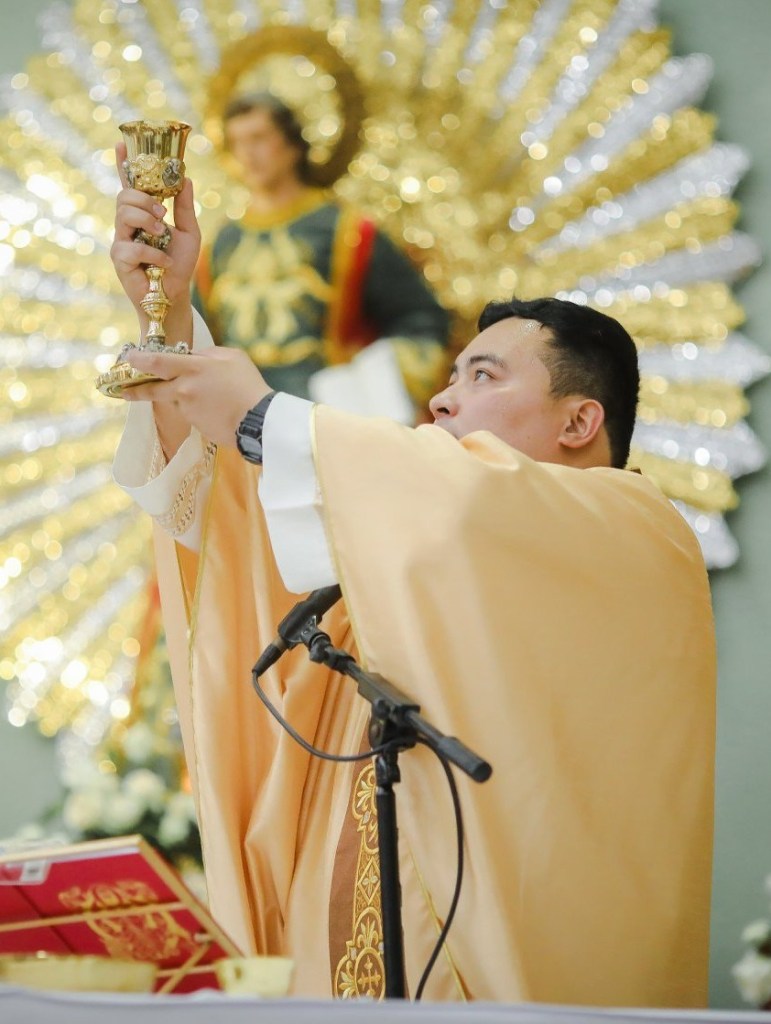
*Mga larawan kuha ng may-akda, takipsilim sa loob ng aming parokya, 24 Agosto 2020.
The Lord Is My Chef Breakfast Recipe for the Soul by Fr. Nicanor F. Lalog II
Wednesday, Memorials of St. John Eudes & St. Ezechiel Moreno, Priests, 19 August 2020
Ezekiel 34:1-11 >><)))*> ||| >><)))*> ||| >><)))*> Matthew 20:1-16
Photo by author, Pulilan, Bulacan, February 2020.
As we go through more difficulties and sufferings during this time of pandemic, your words today dear God speak so well of what we need most – a true shepherd who will care for the lost and injured sheep.
Yes, you have fulfilled, O God, your promise a long time ago to Ezekiel that you yourself will come by sending us your Son Jesus Christ to look after and tend your sheep after the shepherds of Israel have miserably failed in their duties and responsibilities.
Unfortunately, there are still so many shepherds today in government even in Church who continue to pasture themselves!
Woe to the shepherds of Israel who has been pasturing themselves! Should not shepherds, rather, pasture sheep? You have fed off their milk, worn their wool, and slaughtered the fatlings, but the sheep you have not pastured. You did not strengthen the weak nor heal the sick nor bind up the injured. You did not bring back the strayed nor seek the lost, but you lorded it over them harshly and brutally. As I live, says the Lord God, because my sheep have been given over to pillage, and because my sheep have become food for every wild beast, for lack of a shepherd; I swear I am coming against these shepherds.
Ezekiel 34:2-4, 8, 10
Teach us, O Lord, through the examples of two great shepherds of souls whose feast we celebrate today: St. John Eudes who was one of the early pioneers in propagating devotion to your most Sacred Heart and St. Ezechiel Moreno who served for 15 years in the Philippines and later in South America where innumerable cancer cures were attributed to him.
St. John Eudes and St. Ezechiel Moreno showed in their lives of faithful and loving apostolate for the poor that shepherding is always a gift, never to be counted or equated nor even be seen in terms of wages and pay like in the gospel.
Remind us sweet Jesus in the midst of this pandemic when we are called to be good shepherds like you, may we always see your call and mission to us as gifts freely given not as tasks or work to be compensated by material things because you believe in us.
May we always go the extra mile in answering your call, O Lord, which is in itself a tremendous gift we must cherish for we are not even worthy at all to receive. Amen.
“The most resplendent manifestation of God’s glory is the salvation of souls, whom Christ redeemed by shedding his blood. To work for the salvation and sanctification of as many souls as possible, therefore, is the preeminent purpose of the apostolic life.”
From the Letters of Maximilian Mary Kolbe, Office of Readings
Praise and thanksgiving to you our loving Father for a holy saint in our modern time, St. Maximilian Mary Kolbe whose memorial we celebrate today. His offering of his life in place of another prisoner at Auschwitz in 1941 was a fitting cap for his life of dedication in proclaiming the Gospel of Jesus Christ in words and in deeds.
Though there are no more gas chambers unlike during the time of St. Maximilian Mary Kolbe, the killing of so many people in various forms and methods continue to this day — right on our streets, in abortion clinics, in prisons, even in our homes and in social media where we spread toxins of lies that mislead and destroy many lives.
Inspire us like St. Maximilian Mary Kolbe to work for the sanctification of the world by sharing more of your love and kindness, mercy and forgiveness to everyone especially the weak and vulnerable to abuses and worldly influences.
Like this modern saint who lived during the harshest conditions of World War II, may we strive to make you present in the world where despite the ease and comforts of modern life, many of us are still lost and alone, feeling angry, empty, and confused.
Through our lives, may we fill the world with your presence and holiness by reminding people to return to your original plan of harmony and unity in your love as Jesus told the Pharisees in the gospel today:
Jesus said to them, “Because of the hardness of your hearts Moses allowed you to divorce your wives, but from the beginning it was not so.”
Matthew 19:8
Most of all, to make the world holy anew, grant us courage to stand for what is true and good, to remain standing at the side of your Son’s Cross for indeed, as St. Maximilian Mary Kolbe had taught us in one of his writings, “The deadliest poison of our time is indifference.”Amen.
The Lord Is My Chef Breakfast Recipe for the Soul by Fr. Nicanor F. Lalog II
Thursday, Memorial of Sts. Pontian and Hippolytus, Martyrs, 13 August 2020
Ezekiel 12:1-12 >><)))*> |+| >><)))*> |+| >><)))*> Matthew 18:21-19:1
Photo by author, Mt. St. Paul Spirituality Center, La Trinidad, Benguet, 2018.
Praise and glory to you, our merciful Father always waiting for us to come home to you. Thank you for being patient with us who always rebel against you, turning away from you to be on our own.
Sadly, whenever we rebel, it is not you whom we hurt and inflict pain with but those dearest to us like our family and friends who truly love us. We are like the people of Jerusalem who have become callous and indifferent, cold and distant from you, O God, who truly cared for them.
The word of the Lord came to me: Son of man, you live in the midst of a rebellious house; they have eyes to see but do not see, and ears to hear but do not hear, for they are a rebellious house.
Ezekiel 12:1-12
So many times, loving Father, we have become like that debtor in Christ’s parable whose debts were written off by his master and yet could not do the same to a fellow debtor who owed him with a lesser amount.
Both that debtor in the gospel and the rebellious house of Israel in the first reading share the same sin and evil attitude of refusing to recognize your goodness and mercy you have given them that we are equally guilty of today.
So many times in our lives, Lord, this same attitude of being rebellious and unmerciful are the main reasons that destroy our many relationships because we have separated ourselves from others.
Teach us through Jesus Christ to always live grateful to your abounding love and kindness, mercy and forgiveness to us, Father, so we may always share these same blessings with others.
Touch our hearts like you have moved the first anti-pope, St. Hippolytus who sought forgiveness from the Pope he had earlier rebelled against, St. Pontian after they were both sent to hard labor on the island of Sardinia during the persecution by Maximus Thrax.
What a beautiful twist of fate that you still brought them together, Lord to share in witnessing to your truth and mercy.
We pray today for those who have rebelled against you, O God, uttering all kinds of blasphemies against your most Holy Name not realizing that the more they rebel against you, the more they have become distant from us the people they are supposed to serve.
Open their eyes and their ears so they may see and hear the sufferings of the people in this time of pandemic. Amen.
Photo by Ms. Ria De Vera, sunrise at lockdown in our Parish, March 2020.
Almost daily in my prayers I give you praise, O God, without really bothering myself to dwell on what is the meaning of your glory, of that scene from the first reading that says:
Then the glory of the Lord left the threshold of the temple and rested upon the cherubim… They stood at the entrance of the eastern gate of the Lord’s house, and the glory of the God of Israel was up above them. Then the cherubim lifted up their wings, and the wheels went along with them, while up above them was the glory of the God of Israel.
Ezekiel 10:18, 19b-20
It is so difficult to imagine of your glory, O God, when I am in dirt and sin.
Your glory is your purity.
Cleanse us, merciful Father of our many sins and iniquities that have darkened the world and our very lives with evil and sin.
At the same time, teach us to be like you in Christ Jesus, full of mercy and forgiveness for those who sin because every time we are able to bring back a sinner to you, the more we see and experience your glory.
Most of all, keep on purifying us so that our gathering together becomes your indwelling, fulfilling Christ’s words
Photo by author, sunset in our parish church, April 2020.
“For where two or three are gathered together in my name, there I am in the midst of them.”
Matthew 18:20
Lord Jesus, more sinister than all the dirt of sin and evil in us and around us today is our refusal to stand against the immoralities going on.
Worst, O Lord, is our attitude of always “moving the lines” when some people cross the boundary between what is right and wrong, good and evil, decent and indecent.
Forgive us and bring us back to your path, Lord, when truth and morality have suddenly become relative for us without realizing how these have muddled our relationships with you and with others, hiding your glory among us. Amen.
The Lord Is My Chef Sunday Music by Fr. Nick F. Lalog II, 09 August 2020
Photo by Fr. Gener Garcia, “El camino de santiago de compostela” in Spain, 2019.
Don’t you feel it is like a Good Friday on this gloomy and rainy Sunday in August? Problems and trials continue to come our way this year 2020 that we are like the Apostles together in a boat in the middle of the sea caught in a violent storm at night with Jesus nowhere in sight!
But, we know the rest of the story, of how Jesus rescued the Twelve by walking on water, calmed the storm upon joining them in their boat until they reached the shore.
Sometimes in life, we need to get away from our “comfort zones” and cross to the other side of the lake or sea like in our gospel especially when life becomes so artificial that we need to experience it in its “rawness” from deep within our souls until we desire and meet God anew wherever we may be (https://lordmychef.com/2020/08/08/meeting-jesus/).
And because of the storms that continue to rage in us and among us in this ghost month of August, we offer you with inspiring songs from two lovely female artists that we hope will uplift you and soothe your tired body and soul.
First in our double header is Ms. Pauline Wilson’s 1997 solo version of their 1979 classic “Follow Your Road” when she was the lead singer of their Hawaii-based jazz fusion band called the Seawind.
So enticingly warm, Follow Your Road teems with a lot of Christian teachings that have strongly influenced Ms. Wilson and partners who are also into Gospel music. The song invites us to reflect on our lives in order to find its meaning and direction – exactly what Jesus has been telling us to follow him especially when we are into storms and darkness in our lives.
We are all but travelers living in a foreign land Just trying to find our way – best as we can Looking for an answer, trying to find some light And though we have journeyed far, it’s not quite far enough.
Have you wondered where your road will lead you? Maybe to a song that needs singing, or a summer rain Or it might be you’re afraid to go, afraid to go But you’ve got to follow your road, or you’ll never know
Uploaded by caddxprt, 17 September 2008.
Our second song on this rainy Sunday is from another Gospel singer Ms. Oleta Adams who was nominated to the Grammy Award as Best Female Pop Vocal Performance the following year after releasing “Get Here If You Can” in 1990.
Ms. Adams first caught the world’s attention in 1989 when she was invited by Curt Smith and Roland Orzabal of Tears for Fears to join them as singer and pianist for their 1989 “Seeds of Love” album from which came the hit single “Woman in Chains” with her singing a duet with Orzabal.
Get Here If You Can is a song putting to the test the love and fidelity of the song’s lover.
Faith, like love, is always an encounter, especially with the Lord Jesus Christ.
The experience of Peter sinking in water as he approached Jesus is a lesson in being focused with our love and faith in Christ despite the heavy storms and darkness that come into our lives.
There are hills and mountains between us Always something to get over If I had my way, surely you would be closer I need you closer
The Lord Is My Chef Sunday Recipe for the Soul by Fr. Nicanor F. Lalog II
Week XIX, Cycle A in Ordinary Time, 09 August 2020
1 Kings 19:9, 11-13 >><}}}*> Romans 9:1-5 >><}}}*> Matthew 14:22-33
Photo by Mr. Raffy Tima of GMA-7 News, Batanes, 2018.
I have always loved the sea and lately my thoughts have always been about the beach as I miss it so much after COVID-19 had robbed us of our summer vacation.
In ancient time, the sea evoked fear because it was largely unknown that even in the bible, it is the symbol of evil and its powers over man. That is why our gospel today is very significant when Jesus walked on water to show God’s greater power over evil and sin.
And like our gospel last week, our story today tells us a lot more about Jesus walking on water in the midst of a storm to reveal himself and most of all, his desire to meet us his disciples.
Place and location as non-verbal communication of one’s presence
Every meeting and encounter presupposes locations or places, a locus; but, everything is “levelled up” or elevated in Jesus in whom things do not remain in the physical level.
Proxemics is the non-verbal communication that refers to places and location, its nearness and orientation. How we arrange our furnitures, designate the rooms and sections in our homes, offices, schools and every building we stay and gather communicate and reveal who we are.
For example, Catholic homes are easily identified in having a grotto at the garden, an altar of the Sacred Heart or any saint at the sala, and the Last Supper painting in the dining hall.
But for Jesus, a place or a location is more than the physical site because in him, proxemics takes on a deeper dimension and higher meaning when we meet him in situations and places. That is why after feeding the more than five thousand people last week, he ordered the Twelve to cross the Sea of Galilee (which is actually a lake) ahead of him while he dismissed the crowds.
After doing so, he went up on the mountain by himself to pray. When it was evening he was there alone. Meanwhile the boat, already a few miles offshore, was being tossed about by the waves, for the wind was against it. during the fourth watch of the night, he came toward them, walking on the sea. When the disciples saw him walking on the sea they were terrified. “It is a ghost,” they said, and they cried out in fear. At once Jesus spoke to them, “Take courage, it is I; do not be afraid.”
Matthew 14:23-27
Photo by author, Sea of Galilee at Capernaum where Jesus used to preach, May 2019.
Crossing to Jesus, crossing with Jesus
I love that scene very much, of Jesus getting his disciples into the boat to precede him to the other side of the lake while he dismissed the crowds. Again, St. Matthew never bothered to tell us why Jesus sent the Twelve ahead of him as he stayed behind, dismissing the crowds and later praying alone at night atop the mountain.
Let us now reflect the proxemics or non-verbal communication of our gospel scene this Sunday.
We need to cross to the other side to meet Jesus.
To meet Jesus Christ, we always have to “cross to the other side” by leaving our “comfort zones”.
More than going to the other side of the lake physically, we have to move over to unchartered areas of life, be bold and daring to try new things, new situations in order to mature and find fulfillment by meeting Jesus Christ.
And sometimes, we really have to literally cross the sea or get to the other side of the country or the world to find our self and meet Christ.
Fifteen years ago I went on vacation to Toronto for some soul-searching as I went through a burn-out. While serving at St. Clement Parish, I met many Filipinos serving as lectors, choir members, catechists and volunteers.
Graph shared by sugarindustryfoundationinc.org.ph.
They would always confess to me with both a sense of pride and little shame that they never went to Mass regularly when in the Philippines and now in Canada, they were amazed at how God had brought them there to be involved in parish activities and be closer to Jesus than ever!
As I listened to their stories, I realized the many sacrifices and hardships they have to endure in that vast and cold country with no one to turn to except God. If given the chance, many of them admitted they would return to the Philippines for there is no place like home!
Though I have found so many things I have been searching for in my initial three months of stay there on top of other opportunities given me, I still felt empty. That raging storm within continued. As I prayed and reflected guided by an old, Polish priest who claimed to have been the student of St. John Paul II, I saw myself more, eventually leading me to God anew who refreshed my vocation that I finally decided to go back home after six months of my supposed to be one year leave.
Sometimes in life, we need to get away from our comfort zone, cross to the other side, especially when life becomes so artificial. Jesus invites us to go ahead and cross to the other side of the lake or sea to experience life at its “raw” so we can feel again our souls within and desire him anew until we finally meet him wherever we may be in the world.
It is when we are at the other side of the sea in the midst of a storm when Jesus comes, immediately answering our cries for help – At once Jesus spoke to them, “Take courage; it is I” – because when we are reduced to emptiness and nothingness, then our faith kickstarts again. Faith, like love, is always an encounter with God.
Try going to the other side, leave your comfort zone to meet Jesus and finally have meaning and direction in life!
Silence is the presence of God.
In the first reading we have heard that beautiful story of Elijah meeting God at the mouth of a cave — not in the strong and heavy wind nor earthquake nor fire like Moses before him.
After the fire, there was a tiny whispering sound. When he heard this, Elijah hid his face in his cloak and went and stood at the entrance of the cave.
1 Kings 19:12-13
Silence is the place of the presence of God because silence is his language too. Wherever there is silence, we can surely find and meet God there.
That is why Jesus wants us to cross to the other side, to be silent and listen to him.
Photo by author, crossing the Lake of Galilee, May 2019.
In his silence, God teaches us that except for sin, he never considers everything as being finished; everything is a “work-in-progress” even if he seems to be silent that some think he must be absent or even dead.
The world thrives in noise, loud talks, and screams with each voice trying to dominate another resulting in cacophony of sounds. Shakespeare’s Hamlet said it well when he told Polonius what he was reading were “Words, words, words” — nonsense!
Some people like those in power think that the more words they say, the more meaningful their thoughts and ideas become. Worst, they thought that using foul and filthy language make them so natural and credible, not realizing the more they look stupid with their crazy thoughts and ideas not even clowns and comedians would ever attempt to imitate.
But when our words come from deep silence, they come with power and meaning, touching everyone’s heart and inner core.
That is when silence becomes fullness, not emptiness or mere lack of noise and sound.
Like when our medical frontliners and medical experts spoke with one voice last week airing their thoughts about the pandemic — we were all moved and reawakened to realize how we have been going about with our lives almost forgetting them these past five months!
What a tragedy at how our officials in government and Congress reacted negatively, feeling hurt deep inside with the painful truth of how they have been irresponsible from the beginning. Sapul!
Pico Iyer wrote in a TIME magazine essay 30 years ago that “silence is the domain of trust”.
True. The most trustful people are the most silent; those who speak a lot trust no one and most likely, cannot be trusted too.
Jesus invites us to cross to the other side to be silent and learn to trust him. It is only then when we can meet him. In silence.
Photo by Mr. Raffy Tima of GMA-7 News, Manila Bay with Mt. Samat’s Cross at the background, April 2020.
Jesus meets us in darkness.
Jesus asks us to cross to the other side of the lake or sea like his disciples in order to meet us in darkness. This is a paradox because Jesus is the light of the world.
But, note the most notable moments in his life happened in darkness: he was born on the darkest night of the year, he died when darkness covered the whole city of Jerusalem, and he rose from the dead when it was still dark on the first day of the week.
Jesus had overcome darkness! So, what happened to Peter in this episode after being called by Jesus to walk on water too?
Jesus said, “Come.” Peter got out of the boat and began to walk on the water toward Jesus. But when he saw how strong the wind was he became frightened; and, beginning to sink, he cried out, “Lord, save me!”
Matthew 14:29-30
Imagine how everything was going so well with Peter doing another crossing while crossing the lake! But when he saw how strong the wind was he became frightened; and, beginning to sink, he cried out, “Lord, save me!”
Jesus calls us into the dark so that we only look for him and upon finding him, focus on him alone. Peter saw the strong wind, not the stronger and powerful Jesus walking on water, that fear overtook him.
That’s the whole point of St. Paul in our second reading today: he was telling the Romans how some people in Israel trusted more in their physical descent from Abraham than in God’s promise of salvation fulfilled in Jesus they have refused to see and recognize as the Christ (Rom.9:1-5).
When in the dark, be silent and still for Jesus is near! Keep your sights at him, not on anything else. Problem in darkness is not God but us who follow other lights or have become delusional.
Photo by Mr. Jim Marpa, 2019.
That is the tragedy we are into as a nation while crossing to the other side of the sea of pandemic in just one boat when our officials see only themselves as always being right. Worst, they all want to be on the stage with all the lights on them as they speak and sing in cacophony like psychopaths.
All the more we must hold on tight, trust and focus in Jesus who is “now here”, not “nowhere” for he will never allow us to perish.
Let us trust Jesus overcoming all these evil, leading us to the shore. Amen.
A blessed rainy Sunday to you and your loved ones!
Praise and glory to you, O Lord, and thank you very much for the gift of vocation to the priesthood.
Thank you very much for a wonderful patron Saint for us all whose feast we are celebrating today, St. John Baptiste Marie Vianney, the Curé of Ars in France.
How wonderful that we celebrate his feast this year on the first day of our return to Modified Enhanced Community Quarantine (MECQ) when public Masses are suspended in our province and other places due to the alarming spread of COVID-19 virus.
Yes, it is wonderful. Beautiful.
At first during last summer’s lockdown when we celebrated Mass without people, I felt sad; but today, I feel happy because I am totally yours, Lord Jesus. Somehow, this pandemic is teaching us priests most specially that life is a constant return to quarantine, to be alone with you always, dear Jesus!
Most specially, to remind us priests that the Holy Mass is never a show, never about us but always YOU, Jesus.
Like the prophet Jeremiah in the first reading, every priest like St. John Vianney is a reminder to the people that in life, there are always pains and sufferings. And most of the time, it is because of our sins and wrong choices in life, of turning away from God.
However, these sufferings like our pandemic and St. John’s French Revolution are all temporary.
Like Jeremiah, we priests are most of all reminders of God’s permanent love and mercy to everyone as exemplified by St. John in his life and ministry of hearing confessions for long hours each day!
Thus says the Lord: See! I will restore the tents of Jacob, his dwellings I will pity; city shall be rebuilt upon the hill, and palace restored as it was. From them will resound songs of praise, the laughter of happy men. I will make them not few, but many; they will not be tiny, for I will glorify them.
Jeremiah 30:18-19
As I reviewed anew the life of your humble and holy pastor St. John Vianney, I realized how our present situation is similar with his time: a period of sufferings after the French Revolution when priests were looked down upon, even maligned and hunted.
Yet, St. John persevered in his vocation, reminding us “The priesthood is the love of the heart of Jesus.”
May we your priests be reminders of your love and mercy, courage and faith in the face of adversaries like when you boldly spoke against the Pharisees and scribes, reminding your disciples…
Let them alone; they are blind guides of the blind. If a blind man leads a blind man, both will fall into the pit.
Matthew 15:14
St. John Baptiste Marie Vianney, pray for us your brother priests! Amen.
Photo from Primera Missa Solemne by Fr. RA Valmadrid, December 2019.
The Lord Is My Chef Breakfast Recipe for the Soul by Fr. Nicanor F. Lalog II
Monday, Week XVIII, Year II in Ordinary Time, 03 August 2020
Jeremiah 28:1-17 >>><)))*> >><)))*> ><)))*> Matthew 14:22-36
Photo by Mr. Raffy Tima of GMA-7 News before a storm in Batanes, 2018.
God our Father, we come to you again fervently asking for your guidance and protection as the threats of COVID-19 infections are getting closer to home. More and more are getting sick and we could feel them so strongly for they are no longer statistics we read and see in news but persons we know very well in our home and community.
Thank you very much that finally, our government leaders have listened to the calls of medical experts to go on at least two weeks of quarantine to reassess our response to the pandemic.
In this quarantine period, we pray that we learn to value again silence and hiddenness that we have taken for granted in our 24-hour world of media and noise.
So many times, we have taken for granted things that are not seen, that are invisible and hidden, that we ourselves also hide in evil and sin, convincing ourselves nobody would know or “see” it.
And so, we try deceiving others with our false claims of knowledge and competencies like Hananiah and other false prophets among us who give false hopes to people who are eventually misled from you and from one another.
To the prophet Hananiah the prophet Jeremiah said: Hear this, Hananiah! The Lord has not sent you, and you have raised false confidence in this people. For this, says the Lord, I will dispatch you from the face of the earth; this very year you shall die, because you have preached rebellion against the Lord.
Jeremiah 28:15-16
In this time of modified enhanced community quarantine again, teach us O Lord Jesus to deepen our faith in you so that we may remain focused on you alone in moments of storms when it is so difficult to recognize you, when it is easier to “see” and “believe” the powers of the unseen winds like Simon Peter in today’s gospel.
Let us befriend your holy silence and stillness again, sweet Jesus, because in you, the most significant are always the most hidden too. Amen.
The Lord Is My Chef Sunday Recipe for the Soul by Fr. Nicanor F. Lalog II
Week XVIII, Cycle A in Ordinary Time, 02 August 2020
Isaiah 55:1-3 >><}}}*> Romans 8:35, 37-39 >><}}}*> Matthew 14:13-21
Remember our reflection last Sunday? Of how parables teach us that “less is always more” because to have the kingdom of God – Jesus Christ himself – we have to learn to appreciate the little things in life?
Beginning this Sunday until August 16, our gospels will start telling us who is Jesus Christ by showing us his powers and abilities that are exactly opposite the way we see and understand them. This new series of stories are so relevant to us in this time of pandemic, giving us wonderful insights into God’s ways of responding to our human situations.
St. Matthew now leads us with Jesus to the wilderness after teaching us in parables to experience his power in transforming us like the five loaves and two fish to feed more than five thousand people.
Multi-layered story of the multiplication of bread
All four evangelists have recorded this story of Jesus Christ’s multiplication of the loaves of bread with their particular focus and stress, showing us that it truly happened and was a major event in the Lord’s ministry.
Very unique with St. Matthew’s version of this miracle story – which has not one but two! – is his economy of words in narrating it like a straight news as if it were a developing story or a “breaking news” unfolding before us, calling us to follow its updates and details due to its multi-layered meanings.
When Jesus heard of John the Baptist, he withdrew in a boat to a deserted place by himself. The crowds heard of this and followed him on foot from their towns. When he disembarked and saw the vast crowd, his heart was moved with pity for them, and he cured their sick. When it was evening, the disciples approached him and said, “This is a deserted place and it is already late; dismiss the crowds so they can go to the villages and buy food for themselves.” Jesus said to them, “There is no need for them to go away; give them some food yourselves.” But they said to him, “Five loaves and two fish are all we have here.” Then he said, “Bring them here to me,” and he ordered the crowds to sit down on the grass. Taking the five loaves and the two fish, and looking up to heaven, he said the blessing, broke the loaves, and gave them to the disciples, who in turn gave them to the crowds. They all ate and were satisfied, and they picked up the fragments left over — twelve wicker baskets full. Those who ate were about five thousand men, not counting women and children.
Matthew 14:13-21
Photo from iStock/Studio-Annika.
The consolation of Jesus.
Our situation in this time of the corona pandemic is so similar with that of Jesus. With the increasing number of COVID-19 cases, it has finally hit us hard, so close to home with news of those we know getting infected and worst, dying from this disease.
Like Jesus upon hearing the death of John the Baptist, we are all saddened that we wish to withdraw away from everyone.
We want to mourn but there are more people in need of our presence and help in this time of pandemic like the countless medical frontliners and health workers who must be so tired – even sick, physically and emotionally – by now with the growing number of COVID-19 patients and yet have chosen to remain in their posts.
And there are still the other casualties of this pandemic like those who have lost their jobs, those evicted from their rented apartments, those stranded and separated from their loved ones, those begging for food, and those afflicted with other sickness going through dialysis and physical therapy.
Jesus knows so well the “wilderness” we are all going through and he is right here with us, one with us in our sufferings, in our fears and anxieties, and in our exhaustion.
To be one with us is consolation, from the Latin “con” or with + “solare” or alone, to be one with somebody feeling alone.
Jesus did not remove our pains and sufferings, even our death; he joined us to be one with us in these that he can call us to “Come to me, all you who labor and are burdened, and I will give your rest. Take my yoke upon you… For my yoke is easy and my burden light” (Mt.11:28-30, 14th Sunday, 05 Jul 2020).
Compassion of Jesus.
Still with Christ’s reaction of being “moved with pity” at the sight of the crowds who have followed him to the wilderness, we find something more deeper with his being one with us, in consoling us that he had forgotten all about himself, his tired body that he went on to heal the sick among them.
To be moved with pity is more than a feeling of the senses but a response of his total person.
You respond for help, you reply to a call.
Ever wondered why we have the “responsorial psalm” after the first reading in the Mass? Because those words from the Psalms express our total assent and commitment to God, involving our total self like body, mind, heart and soul.
Photo by Dra. Mai B. Dela Peña, Carmel Monastery, Israel, 2016.
God cannot suffer because he is perfect.
That is why he became human like us in Jesus Christ to be one with our suffering and death so that we would one with him in his glorious Resurrection.
In the wilderness, Jesus stayed with the people, not allowing them to leave as suggested by the Twelve because he was moved with pity with the crowd because he wanted to suffer with them.
That is compassion, literally means to “suffer with” from cum + patior. Here in the wilderness, Jesus showed his compassion for the people which will reach its highest point in giving himself on the Cross on Good Friday.
Have we “responded” to God’s call to serve, to a call of duty, and to a plea for help from the poor? Have we truly given ourselves to somebody without ever thinking our own comfort or rewards? Or, are we running away from his Cross?
What a shame in this time of pandemic there are some among us who rejoice at the losses of others like the Twelve who wanted the crowd to be sent home because they were afraid of responsibilities, of taking care of the suffering people.
Consolation and compassion are the two most needed from each of us in this time of crisis.
Our scarcity mentality, the God of plenty.
We now come to the miracle of the feeding of five thousand. According to the late Fr. Henri Nouwen, this story is an example of our “scarcity mentality” when we think of not having enough, of finding what we have as too little, always looking for more; hence, our tendency to hoard everything.
The Twelve were thinking more of themselves, afraid they could go hungry with the five loaves of bread and two fish they have. They were so afraid of difficulties ahead of them in their situation where to find and how to feed those great number of people.
They were focused on what was lacking than on what they have, and who was with them, Jesus Christ! They were hungry for food in the stomach than for food to the soul unlike the crowds who have followed Jesus.
Worst of all, the Twelve got “mad” upon seeing the crowds who have followed them to the wilderness when in fact, it was Jesus who needed most to rest to mourn John’s death!
But through all these, Jesus patiently bore the people’s woes and the Twelve’s selfishness to teach them all in a very nice way something so essential in our response to every human suffering and extreme situation: opening and entrusting our selves totally to God.
And that was actually the greatest miracle that happened that day.
In doing it, Jesus simply asked the Twelve what they have, never asking how much they have or its condition. Just whatever they have to give everything to Jesus like those five loaves and two fish that he took, and while looking up to heaven, blessed and broke the loaves, and gave them to the Twelve to distribute to the crowd.
And everyone was satisfied with a lot of left overs too!
Matthew nor any of the other Evangelists ever explained how it happened because it does not really matter at all. What is most important is what are we willing to give up to Jesus so he can transform us into better persons.
That is what we continue to do this day in every celebration of the Holy Eucharist- whatever we have, even not the best or the worst and littlest we have, when given to Jesus becomes holy and multiplied!
The power of God is immense, without doubt. But, in this miracle of the feeding of five thousand, Jesus is showing us that his power is not meant to satisfy our material or bodily needs but our deepest desires that lead to our fulfillment in him as prophesied by Isaiah in the first reading.
Why spend your money for what is not bread; your wages for what fails to satisfy? Heed me, and you shall eat well, you shall delight in rich fare. Come to me heedfully, listen, that you may have life.
Isaiah 55:2-3
Amid the pandemic worsened by our government officials’ inanities, irresponsibilities, and sheer lack of compassion with us in this wilderness, the Lord assures us today that he is with us for “nothing can separate us from the love of Christ” (Second Reading) if we are willing to give him all that we have.
It is our spiritual transformation first that leads us to our material blessings. We can all have it if we are willing to give everything to Jesus and believe in him always. What do you have for miracles to happen?
A blessed August ahead for you!Amen.
Photo by Dra. Mai B. Dela Peña, Carmel, Israel, 2016.













 lordmychef.com