Beauty and blessedness at sunrise

Quiet Storm by Fr. Nick F. Lalog II, 05 May 2022
Photo by author, sunrise at the Lake of Tiberias (Galilee) in Israel, May 2019.

Our gospel last Sunday spoke of the Risen Lord’s third appearance to his disciples at the Lake of Tiberias. No one, except the beloved disciple recognized Jesus standing at the shore after he had told them to cast their net to the right side of the boat that led to their plentiful catch of fish.

When it was already dawn, Jesus was standing on the shore; but the disciples did not realize that it was Jesus. Jesus said to them, “Children, have you caught anything to eat?” They answered him, “No.” So he said to them, “Cast the net over the right side of the boat and you will find something.” So they cast it, and were not able to pull it in because of the number of fish. So the disciple whom Jesus loved said to Peter, “It is the Lord.” When Simon Peter heard that it was the Lord, he tucked in his garment, for he was lightly clad, and jumped into the sea.

John 21:4-7
Photo by author, sunrise at Lake of Tiberias, May 2017.

I love the way it is narrated. What a wonderful interplay of realities, of John the beloved recognizing Jesus standing at the shore upon seeing the many fish caught in their net!

The story speaks of the beauty of every sunrise many of us seem to take for granted, of how so many of us miss the beautiful sight and silence of the morning. It is a story of every new day filled not only with promises but in itself a blessing we can surely experience when we first recognize Christ present in us.

That is perhaps one problem with us who always prefer spectacular sights and events to find God.

Unlike sunset, sunrise does not have radiant displays of colors and shades. It is very simple which is the lesson of Easter to us, of how our great God comes to us in the simplest moments of life. Recall too that Jesus was born in the middle of the darkest night of the year when everyone was asleep and rose from the dead very, very early in the morning that no one had seen! And here lies one of the wonderful mysteries in life – the hiddenness of God!
It is in God’s hiddenness that we can find him not because he is hiding but inviting us to be hidden in him too. That is the beauty of sunrise when you have to wake up early to see the beauty of life unfolding, awaiting something we are totally unaware of what is going to happen next. It is easier to wait for the sunset because you have been up and going the whole day; you just have to stop and pause for a while to await the sun going down.

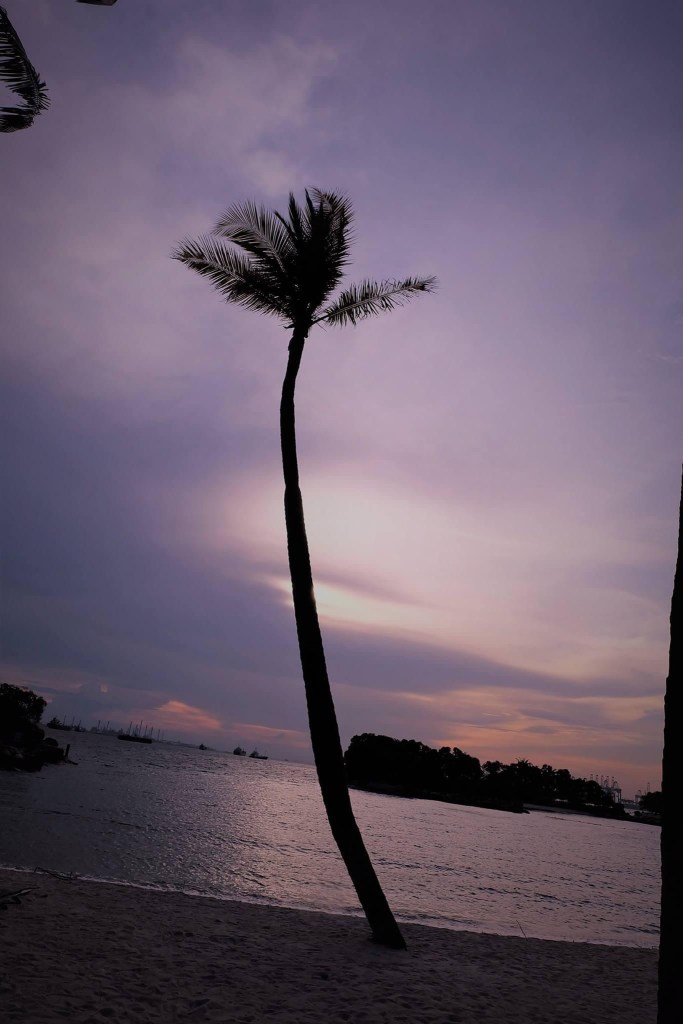
Photo by Ms. Jo Villafuerte, sunrise at Atok, Benguet, September 2019.

Sunrise is different. It is like awaiting a total stranger, compared with sunset after we have befriended the the day about to end.

Every morning when we wake up, we do not know what is in store for us. Some people are excited, others are not while the rest simply got the blues or too lazy to work and study that they would rather sleep more.

Maybe that is why sunrise is more subdued with its hues and shades. Like God, sunrise is so kind, very accommodating with everyone, no spectacular display of colors so that one could buy his own time on whether to go out and move or snuggle more in bed, alone or with somebody else.

Like a beloved someone or God himself, sunrise looks soft and calm, reassuring everyone the day ahead would be just fine for us all.

Its light is so gentle, though bursting filled with life but never insistent to the eyes, so gentle. This we feel in our favorite word and activity every morning – breakfast – which came from the literal “breaking of fast” the night before by the monks in the monasteries. We can feel this gentleness of sunrise in that Christian hymn Morning Has Broken, whether you sing it or listen to Cat Steven’s cover or to its original Gaelic Scottish tune. And along this line, we find sunrise as the sweetest breaking of all in Angela Bofil’s 1981 love song Break It To Me Gently.

Photo by author, sunrise at Camp John Hay, Baguio City, November 2018.

Sometimes, sunrise can be a bit wild, bursting with light that can penetrate one’s soul with its light traveling so fast, eager to cover the whole surrounding with the good news of life coming.

Think of the Beatles’ 1969 Here Comes the Sun with its lovely guitar introduction, assuring everyone, especially your beloved “little darling” that “it’s all right” with “smiles returning to the faces.”

Photo by author, sunrise at Bolinao, Pangasinan, 20 April 2022.

That is the most beautiful part of catching the sunrise when all is silent with you all alone, listening to Jesus whispering, “Little darling, it’s all right” because whatever had happened yesterday, with all your sins and mistakes, are all forgotten and forgiven. Today is a new beginning, like what he told Peter in last Sunday’s gospel when he asked him thrice, “Simon, son of John, do you love me?”

Photo by author, sunrise at Bolinao, Pangasinan, 20 April 2022.

Peter was distressed that Jesus had said to him a third time, “Do you love me?” and he said to him, “Lord, you know everything; you know that I love you.” Jesus said to him, “Feed my sheep… And when he had said this, he said to him, “Follow me.”John 21:17, 19

John 21:17, 19

It is said that whatever one feels in describing the sunrise is one’s perception of love – warm and refreshing, joyful and so alive, filled with hopes and raring to go.

Sunrise is beautiful because it is when we experience closest with our truest self, with those most faithful and loving to us, and most of all, with God, our very root and being. Every morning is the fulfillment of Zechariah’s prophecy of each of us becoming a John the Baptist whose name means “graciousness of God.” This we pray every morning in the Benedictus (cf. Lk.1:68-79):

In the tender compassion of our God
the dawn from on high shall break upon us, 
to shine on those who dwell in darkness and the
     shadow of death,
and to guide our feet into the way of peace.

May you be blessed every morning, every day of the week. Amen.

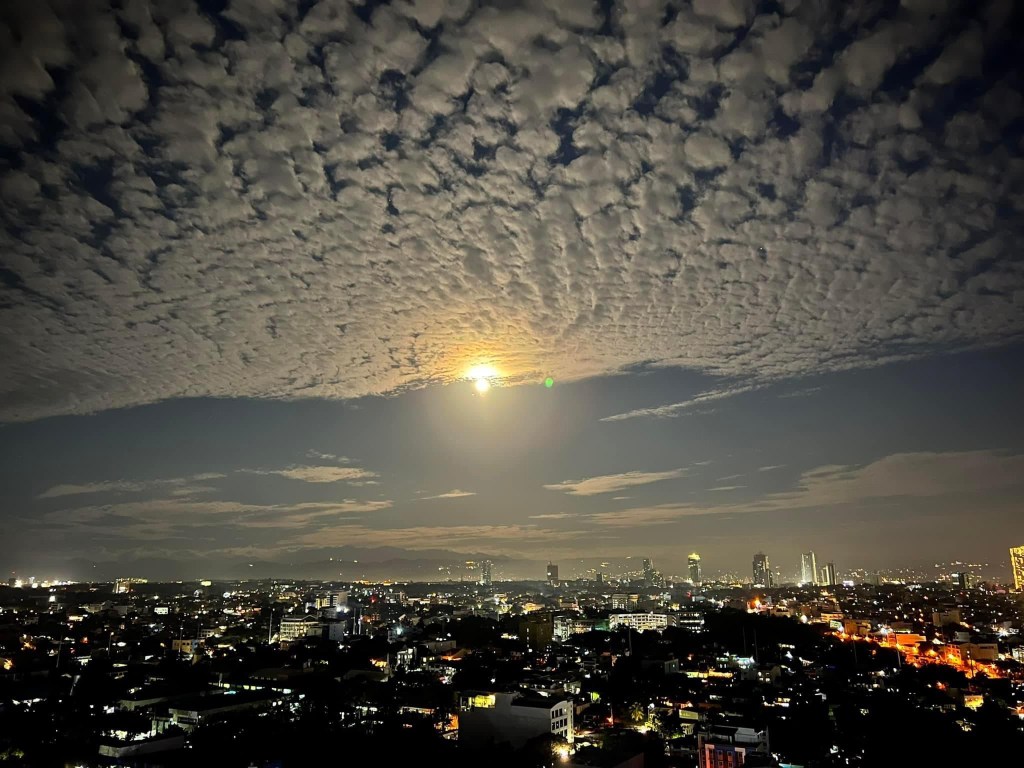
Photo by Ms. Jing Rey Henderson, sunrise at Dumaguete City, Negros Oriental, 27 April 2022.

He touches me

Quiet Storm by Fr. Nick F. Lalog II, 26 April 2022
From Google.

The word “touch” is a very touching one, connoting so many meanings while at the same time gives us a “feel” of what it really is. Its literal and figurative senses always go together with the most touching reaching deep down inside us that are also the gentlest and simplest.

We are touched by words and gestures, by sights and sounds, and literally speaking, we are touched most when touched by another person. Experts claim that a five second touch is equivalent to about 300 words of encouragement so that for us to be emotionally well, we need at least three hugs a day.

Photo by author, Mirador Jesuit Villa and Retreat House, Baguio City, January 2019.

Reflecting on the very few stories of the Easter appearances by Jesus to his disciples, we find how the gospel writers did not need to write so much details to convince us that the Lord had risen for it is not the number nor length of his appearances that matter but its inexpressible intensity. Especially in the fourth gospel, we notice – and we are touched, too like the disciples – the deep intensity of Christ’s appearances that resulted only in silence and adoration among them.

And that is one very true characteristic of Jesus – he touches us. Always. Even if we can not touch him nor see him. There is always that joy of Easter bursting forth within us in moments of prayers, of intimate conversations with loved ones and friends, or upon seeing a beautiful sight or experiencing nature.

It is Jesus Christ who touches us most that is why we believe in him even if we cannot explain how it all happened. It has always been like that since he rose from the dead. In fact, I doubt Thomas really touched Jesus when they met on the eighth day because he was so “touched” upon seeing the Risen Lord that he said, “My Lord and my God”, the most intense expression of faith in the bible!

See that nothing is said if Thomas indeed touched the wounds of Jesus for he was caught up in the experience and sight of the Risen Lord.

Then he said to Thomas, “Put your finger here and see my hands, and bring your hand and put it into my side, and do not be unbelieving, but believe.” Thomas answered and said to him, “My Lord and my God!”

John 20:27-28
“The Incredulity of Saint Thomas”, a painting by Caravaggio from commons.wikimedia.org.

Like Thomas, Jesus touches us in the most personal and unique manner that deep inside us we also cry with intensity “my Lord and my God” to him. Though we can enumerate many reasons and persons who have led us into believing in Jesus, we also admit at the same time that there is no specifically single reason nor person for our faith in God except our very selves, of our personal conviction that transcends all proofs and logic because, we were so touched.

The gospels teem with so many stories of Jesus touching especially the sick when healing them and surprisingly, as we reflect on these stories, we too are touched, even by the Lord. And our perspectives and lives eventually change because we have experienced Jesus.

The same is very true with the many people we have known and met, the few perhaps we have befriended and loved: so many things in our lives have turned for the best simply because we were touched, literally and figuratively speaking.

When I was still teaching in our all-girls’ school in Malolos City, I used to remind my students in high school to never be fooled by a man’s looks and “porma”, to always look for a man who really loves you, respects you, and touches you as a person, as a woman. And they would always ask me how can they determine that? My usual response was they would “feel” that because a man or any person with integrity would always “touch” you.

Then I would play to them Lisa Stansfield’s 2004 He Touches Me:

He don’t bring me anything but love
If you offered me the stars I would decline
I don’t need ’em I got mine
I don’t know where to start
But I know what’s in my heart
So keep your silver and your gold 
’cause I got my man to have and hold

As our lives gradually return to some semblance of normalcy following the decrease in cases of COVID-19, it would be nice that we try to remember and recall those many experiences we have had since the start of the pandemic in 2020, the people who touched us.

One beautiful lesson this pandemic had taught us is that even if we practice social distancing, we can still be emotionally close with one another in so many ways and means. And even if we still have to maintain that social distance as minimum health protocol in this pandemic, there are so many occasions for us to touch one another to express our love and concern, our gratitude and apologies to any one who have touched us.

From QuotesGram.com.

It is about time that we touch base with them again, and this time, let us get in touch with one another in the most meaningful and loving way, with intensity, so that no matter what happens next, we may have that deep sense of joy and fulfillment of being truly human, of having experienced “the warmth of a loving face” as Camus expressed in The Plague.

Everyone is drained and exhausted by COVID-19, with many still out of touch following their many losses during the pandemic – loved ones, career, studies, goals and plans in life that were disrupted, permanently or temporarily.

Let us help each other to regain composure and directions in life by being kind with everyone. Most of all, let us touch one another with our simplest gestures of a smile or a wave of hand that here is another person – also struggling, also trying to pick up the pieces of life, moving on to start anew. Many times, the simplest things have the most lasting impact on us because they are also the most touching. And that is because, with our kindness, that is also when people feel being touched and loved by God most.

I hope you were touched… a blessed day ahead of you!

Photo by author, Puerto del Sol, Bolinao, Pangasinan, 19 April 2022.

Holiness is being true

Quiet Storm by Fr. Nicanor F. Lalog II
Holy Wednesday, 13 April 2022
Isaiah 50:4-9   +   Matthew 26:14-25
Photo by author, St. John the Baptist Parish, Calumpit, Bulacan, 31 March 2022.

It’s Holy Wednesday, also known as Spy Wednesday, the night Judas Iscariot agreed to betray Jesus Christ to the chief priests in exchange of 30 pieces of silver (Mt.26:14-15). Tonight is the night of traitors, of betrayers, of those not true to us!

This is the reason why in most parishes after the Mass tonight, there is the ritual of tenebrae or gradual turning off of lights and extinguishing of candles in the church to show how momentarily darkness and evil prevailed in the world when Judas sold Jesus for 30 pieces of silver.

Photo from saopedroesaopaolo.com.br.

To betray literally means to hand over a loved one to pain and sufferings like when a husband is unfaithful to his wife, when we spill the secrets of our friends, when we answer back our parents or refuse to obey them, when children waste their money on their vices and other non-essential things instead of studying their lessons while their mother or father is toiling day and night abroad as an OFW.

Betrayal is so painful and most unkind because we exchange or “sell” our loved ones like commodities for someone or something less in value; imagine the pain a betrayer inflicts on the someone who gave everything, with all the love and care only to be “traded” for lesser value? It is said that during the time of Jesus, a slave can be bought for 30 pieces of silver; how foolish Judas must have been in exchanging Jesus who loved and cared for him for a slave! And that is what we are too when we betray God and our loved ones – fools to replace someone so precious for anything else!

Betrayal is rebelling against a loving God, a beloved one, turning our back from them who are most true to us. And that is the short of it: betrayal is not being true.

Holiness is being true; holiness and truth always go together.

The word true is from the Anglo-Saxon treowe or tree. For them, truth is like a tree that evokes a sense of firmness, of being rooted in the ground. When our words and actions are not firm, shaky and always changing, flimsy or “pabago-bago” as we say in Filipino, then it must not be true. It must be a lie and not true at all because it is always changing or shifting.


Photo by author, St. Paul Spirituality Center, La Trinidad, Benguet, 2019.

Truth is always firm, does not change and remains true forever. It may be concealed or covered by lies for sometime but sooner or later, truth will always come out. It cannot be deleted. That is why the Greeks referred to truth as aletheia or phusis, the blooming of a flower that cannot be hidden and would always manifest or show. Jesus himself assured us that “nothing that is hidden will not be revealed; nor anything secret that will not be known and come to light” (Lk.8:17).

Closely linked with the word true is trust which also came from treowe: the Anglo-Saxons saw in the tree not only firmness but also rootedness or connectedness. The firmer the tree, the deeper are its roots. And that is what a true person is – always trustworthy, someone who can be trusted, someone who values relationships or ties and links. Traitors betray their loved ones because they do not value their relationships; a true person is always trustworthy because he values his relationships. A true and trustworthy person is one who would always listen to God and others, not insisting on his own plans and agenda like the Suffering Servant of God.

The Lord God has given me a well-trained tongue, that I might know how to speak to the weary a word that will rouse them. Morning after morning he opens my ear that I may hear, and I have not rebelled, have not turned back. I gave my back to those who beat me, my cheeks to those who plucked my beard; my face I did not shield from buffets and spitting.

Isaiah 50:4-6
Photo from Pinterest.

Remember the scene of the scourging at the pillar in the film The Passion of the Christ (2004)? Biblical experts say that gory scene was very true as it was the most painful aspect of the Lord’s passion next to the crucifixion; every time the knuckles would hit the body of Jesus, a piece of his flesh is torn off. Pilate ordered Jesus to be flogged in the belief that people might pity him when seen so tortured and bruised, perhaps agree to let him go freely.

But it did not happen as the people shouted more for his crucifixion.

And that is what happens when we betray our loved ones, including Jesus: the more we become indecisive in life like Pilate, the more we also betray them because we could not stand for what is true. That is also when we hurt them more and ourselves in the process too.

So often, traitors are not aware of their betrayals, believing in their wrongful and misplaced convictions, forgetting the people who love them most. Many times, we absolutize the truth, forgetting that only God is absolute. Most of all, that truth is a Person, Jesus Christ who said “I am the way, the truth and the life” (Jn.16:6). Being true, being holy is always directed to a person, not just a conviction.

So be careful by being true always with one’s self, with others and with God.

What makes you forget the truth and be untrue to others?


Lord Jesus Christ,
teach me to be true and holy
not only to you but most especially
to the people you give me,
those who love me truly and dearly;
make me like a tree,
firm and reliable, 
dependable and trustworthy,
most of all, deeply rooted in you
through then people I love and care and serve.
Amen.

Photo by Mr. Raffy Tima of GMA7-News, January 2022.

Pang-intindi o pagiging kapwa?

Lawiswis ng Salita ni P. Nicanor F. Lalog II, ika-21 ng Pebrero 2022
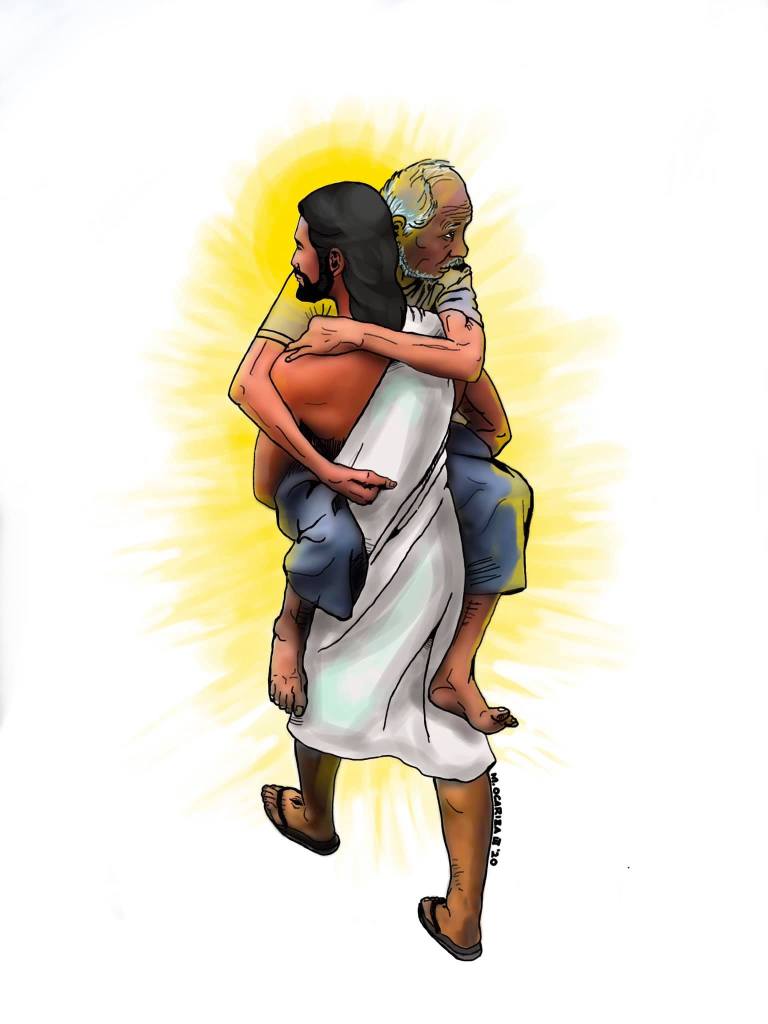
Mula sa Facebook post ni P. Marc Ocariza, Abril 2020.
Kay daming nangyayari 
palaging panawagan sa isa't-isa
ay pang-unawa at pang-intindi
ngunit hindi sasapat at laging kapos
ating kaisipan upang isang tao
ay lubusang makilala at maunawaan.
Kapag mayroong may-sakit
mayroong nagigipit
ano ba ang ating nasasambit?
Mag-usisa at magsalita
huwag lang walang masabi
sa akalang makapagpapabuti?
Kamakailan sa mga talakayan
mainit pinag-uusapan
respeto daw ang kailangan;
tama din naman
at nararapat lang
igalang bawat nilalang.
Ngunit paano na lang
kung sa ating pag-respeto
at pag-galang mayroong
ibang nalalapastangan
o nasasaktan at natatapakan,
sasapat ba itong panawagan?
Sa ating kasalukuyan, 
marahil higit nating kailangan
kilalaning kapwa-tao isa't-isa
na katulad ko, higit sa respeto,
pang-unawa at pang-intindi
mayakap at matanggap kay Kristo. 
Larawan guhit ni P. Marc Ocariza, Abril 2020.

Salamin, sabihin sa akin

Lawiswis Ng Salita ni P. Nicanor F. Lalog II, Ika-14 ng Pebrero 2022
Larawan kuha ni Jenna Hamra sa Pexels.com
Salamin, 
salamin sa dingding
sabihin sa akin at
ipakita rin
mga puwing 
na hindi ko pansin
ni ayaw kilalanin
ni tanggapin!
Ayoko sanang sabihin
ngunit ito binubulong
ng aking damdamin:
paano nga ba tayo humantong
at ganito ating narating
sa tuwing halalan darating
nagpapanting mga tainga natin
sa mga usaping alam na natin?
Paulit-ulit pinag-uusapan
walang kinahihinatnan
pagkatapos ng halalan
kaya paulit-ulit na lamang
walang katapusang 
mga pangakong binibitiwan
nakakalimutan, pinababayaan
pasan ng taong-bayan, di maibsan.
Tingnan nga natin
at suriin ang sarili
kung atin ding sinasalamin
magagandang adhikain
o mga paratang at
pambabatikos natin
dahil kung tutuusin
ang pamahalaan ay larawan natin.
Larawan kuha ni STANLEY NGUMA sa Pexels.com
Galit tayo sa mga sinungaling
dahil tunay nga sila'y magnanakaw rin;
nguni't paanong naaatim
ng marami sa atin araw-araw
magsinungaling sa kapwa
lalo na't nagtitiwala sa atin
maging Panginoong Diyos
pinagtataksilan natin?
Paanong diringgin
panawagan ng nagmamalinis
gayong batid kanilang
mga bahid na dungis
kaban ng simbahan
pinakialaman
para sa sariling kaluguran
maging kahalayan?
Sila ba'y naparusahan
marahil ni hindi pinagsabihan
at ang masaklap
hinayaan na lamang
alang-alang sa habag
at awa, palaging katwiran
kapatawaran
ng mga kasalanan.
Katapatan sa pangakong
sinumpaan, hindi rin mapangatawanan
kunwa'y maraming kaabalahanan
 ang totoo'y puro kababalaghan
maraming pinupuntahan
kasama'y mayayaman
mga aba at walang-wala
kanila ring iniiwan.
Larawan kuha ng may-akda, 2020.
Totoo na malaki ang papel ng Simbahan
na ginagampanan tuwing halalan
ngunit huwag sanang makalimutan
sa araw-araw na katapatan ang tunay na labanan
kung saan mga alagad at pastol ng kawan
magsilbing huwaran sa paglilingkod
kaisa ang bayan ng Diyos
sa karukhaan, kagutuman at kapighatian.
Salamin, salamin sa dingding
kami ba'y marunong pang manalangin?
Bakit tila hindi dinggin ating mga panalangin
gayong mabuti ating layunin?
Diyos pa ba pinagtitiwalaan,
pinananaligan natin o baka naman
lumalabis mga salita natin
habang salat mabubuting gawa natin?
Salamin, salamin sa dingding
kung kami ay magising
maging kasing ingay ng batingaw
katapatan namin sa araw-araw
na gampanin, hindi katiting
pinagaganda lang ng kuliling
lalo na kung mayroong nakatingin
para lang mapansin.
Ang dapat nating ipanalangin
hindi lamang ang halalang darating
kungdi makatotohanang pagsusuri
at pag-amin sa mga kasalanan natin;
pagkaraan ng limang-daang taon
pagkakanya-kanyang dinatnan ni Magellan
umiiral pa rin habang mga puna at pansin 
nina Rizal at GomBurZa nananatiling pangarap pa rin.
Larawan mula sa commons.wikimedia.org

Musings on Simeon’s Canticle

Quiet Storm by Fr. Nicanor F. Lalog II, 02 February 2022, Feast of the Presentation of the Lord
“Simeon’s Moment” by American illustrator Ron DiCianni. From http://www.tapestryproductions.com

Strictly speaking, today’s Feast of the Presentation of the Lord should be the closing of the Christmas season. It is the 40th day since the birth of Jesus when Mary had completed her days of purification to leave Bethlehem and offer her child with Joseph in the temple in accordance with their law that “every male that opens the womb shall be consecrated to the Lord” (Lk.2:23).

And like Christmas, we find in the Lord’s presentation his Cross looming tall, enlightening us how Jesus and his Cross, joy and suffering, life and death cannot be separated. In Simeon’s Canticle, we find that life’s many contradictions make living wonderful and meaningful, too! (See our Sunday homily, https://lordmychef.com/2022/01/29/living-loving-amid-contradictions/).


He (Simeon) came in the Spirit into the temple; and when the parents brought in the child Jesus to perform the custom of the law in regard to him, he took him in his arms and blessed God, saying: “Now, Master you may let your servant go in peace, according to your word, for my eyes have seen your salvation, which you prepared in sight of all the peoples, a light for revelation to the Gentiles, and glory for your people Israel.”

Luke 2:27-32
Photo by Mr. Raffy Tima of GMA-7 News, March 2020.

Coming to terms with death is coming to terms with life.”

First thing we realize in this beautiful canticle of Simeon is the true meaning of joy in finding Jesus wherein we learn to befriend death as we come to terms with life and living. It is difficult to explain but evidently, it was pure joy that led Simeon bursting into a song.

St. Paul had a similar experience while in prison which he tried to explain to the Philippians when he wrote, “For to me life is Christ, and death is gain. If I go on living in the flesh, that means fruitful labor for me. And I do not know which I shall choose. I am caught between the two. I long to depart this life and be with Christ, for that is far better. Yet that I remain in the flesh is more necessary for your benefit” (Phil.1:21-24).

Those who have cared and lost a loved one to cancer or any terminal illness have experienced Simeon’s canticle. Remember when our loved ones have finally accepted their fate, when they suddenly become more emotionally stable and even joyful in their dispositions? Unlike before when they were first diagnosed with their illness, they were so afraid, always crying but as they came to embrace the reality, they cried less with a strong sense of courage while we are the ones crying more and most stressed out?

That is because the dying must have seen their direction, their final destination in life.

Like Simeon, they have seen God in the light of Jesus Christ while we who are to be left behind cry more not only due of the pain and sadness of separation but because we do not know where we are going, where we are heading to once our loved ones die. Feel the courage and confidence of Simeon boldly telling God to take him at that instance because he had found “the way, the truth and the life”, Jesus Christ!

Too often, we Filipinos take it as a joke, perhaps laughing to dismiss the topic or cope with the reality that to see God means to die like when we say “gusto nang makita si Lord”. But, that is the truth that Simeon is telling us in today’s gospel which is more “felt” in our own language, “Kunin mo na, Panginoon, ang iyong abang alipin, Ayon sa iyong pangako, Yamang nakita na ng aking mga mata ang iyong pagliligtas” (Lk.2:29-30). Imagine Simeon like the teenagers telling God to take him “now na!”?

Here we find at the presentation of the Lord in the temple how Simeon realized that coming to terms with death is coming to terms with life.

Photo by Ms. Nikki A. Vergara, 2020.

“Coming in the Spirit is living in the presence of God.”

Second thing we find in Simeon’s Canticle is the preeminence of the Holy Spirit in his life. We can never experience and find Jesus without being attuned first with the Holy Spirit who animates us and opens us to Christ’s coming.

Imagine the great crowds of people at the temple on that day, of couples trying to fulfill the law of Moses of purification and presentation of their first-born sons to God. How did Simeon know Joseph and Mary were the parents of Jesus? How was he able to accurately spot and find Jesus is the Messiah amid the many male children being offered on that day at the temple?

“To come in the Spirit” like Simeon is more than being faithful to God; it is having a good and pure heart that is ready to believe and act openly with courage, always looking forward at the fulfillment of what we believe. Coming in the Spirit is being at the right place at the right time when we make things happen than wait, exactly how Luke portrayed Simeon and Anna who both lived in the presence of God! Coming in the Spirit in living in the present moment in God.

Photo by Pixabay on Pexels.com

“Principle and foundation of life”

Thirdly, we cannot see Christ nor live in the Spirit unless we humbly submit ourselves to God, our Lord and Master. Seeing Christ and living in the Spirit presuppose humility before God – we his creatures, he our Lord and Master.

Most of all, God our origin and our end too!

It is the principle and foundation of life as St. Ignatius of Loyola stressed in his Spiritual Exercises, “El hombre es criado para alabar, hacer reverencia y servir a Dios nuestro Señor, y mediante esto, salvar su anima”, that is, “Man is created to praise and serve God his Lord and Master and by doing this save his soul”.

There is something so beautiful and lovely, so touching in the opening verse of Simeon’s canticle that underscores firmly this basic truth we have always forgotten since the fall of Adam and Eve: “Now, Master you may let your servant go in peace, according to your word, for my eyes have seen your salvation, which you have prepared in sight of all the peoples” (Lk.2:29-31). Every time we sin, we act like Adam and Eve, playing gods, desiring to be like God.

Also known as Nunc Dimittis, Simeon’s canticle echoes the fiat of Mary to God during the Annunciation, expressing his fidelity and humility, his total submission to God. Most of all, it summarizes both the Magnificat of the Blessed Mother and the Benedictus of Zechariah, making Simeon’s Nunc Dimittis the finale in Luke’s Christmas “concert” on the birth of the Messiah.

This is the reason why we sing or recite Nunc dimittis at the end of our Night Prayer called Compline from the Latin completorium for “completion of the waking day”. It is the perfect prayer to close each day as we prepare for the coming brand new day to meet Jesus again, hoping we may be enlightened us in our life’s mission.

Or, if ever we do not wake up the following day, we thank God all the more in making us meet Jesus the past day, eager to finally sing to him our praises in eternity. Amen.

Photo by Mr. Raffy Tima of GMA-7 News, 18 January 2022.

Panatilihin ang Alab sa Diyos

Lawiswis ng Salita ni P. Nicanor F. Lalog II
Miyerkules, Paggunita kina San Timoteo at San Tito, mga Obispo, 26 Enero 2022
2 Timoteo 1:1-8   ><}}}}*> + ><}}}}*> + ><}}}}*>   Lucas 10:1-9
Larawan kuha ni Irina Anastasiu sa Pexels.com

Tatlong taon bago nagsimula ang pandemya noong 2017, naanyayahan ako na pangunahan ang pananalangin sa “retirement ceremony” ng kaibigan na dati ring kasamahan sa trabaho. 

Nakatutuwa pala na makita at makausap muli mga dating kasamahan maging mga naging “bossing” namin na dati’y aming iniilagan dahil baka kami masabon.  Ganoon pala ang magka-edad, ang pumalo sa 50 anyos pataas, pare-pareho kaming nakasalamin at malalabo mga mata, mapuputi ang mga buhok at bago kumain, umiinom ng iba’t ibang mga gamot. 

At ang mga usapan, puro “noong araw”!

Kaya naman hindi maiwasan magkumparahan sa bagong henerasyon at isang nakatatanda na retiree dati naming boss ang nagsabi, “bakit kaya mga bata ngayon maski 40 anyos na, bata pa rin?”            

Napagnilay ako ng katanungang iyon at habang nagkakasiyahan kami sa mga alaala ng aming kabataan, naalala ko ang mga kuwentuhan namin noon kasi ay bihirang-bihira mapag-usapan ang Diyos at mga tungkol sa Kanya gaya ng pagsisimba at mga paksang espiritwal maliban lamang na ako ay kanilang tatanungin lalo na kapag nasa lamayan.

Kaya nawika ko sa aking sarili “marahil kaya bata pa rin mga bata ngayon maski 40 anyos na” dahil nagkulang kaming nakatatanda, ang mga magulang at mga lolo at lola ngayon sa pagdiriin ng pangangaral at pagsasabuhay ng pananampalataya. 

Pansinin po natin si San Pablo paano niya itinuring sina San Timoteo at San Tito bilang kanyang mga anak habang ipinagdiinan ang kanilang pagkamulat sa pananampalataya:  “Hindi ko malilimutan ang tapat mong pananampalataya, katulad ng pananampalataya ng iyong Lola Loida at ni Eunice na iyong ina.  Natitiyak kong taglay mo pa ngayon ang pananampalatayang iyon. Dahil dito, ipinaalala ko sa iyo na maging masigasig ka sa pagtupad sa tungkuling tinanggap mo sa Diyos nang ipatong ko ang aking mga kamay sa ulo mo. Sapagkat hindi espiritu ng kaduwagan ang ibinigay sa atin ng Diyos kundi Espiritu ng kapangyarihan, pag-ibig, at pagpipigil ng sarili” (1Tim.1:5-7).

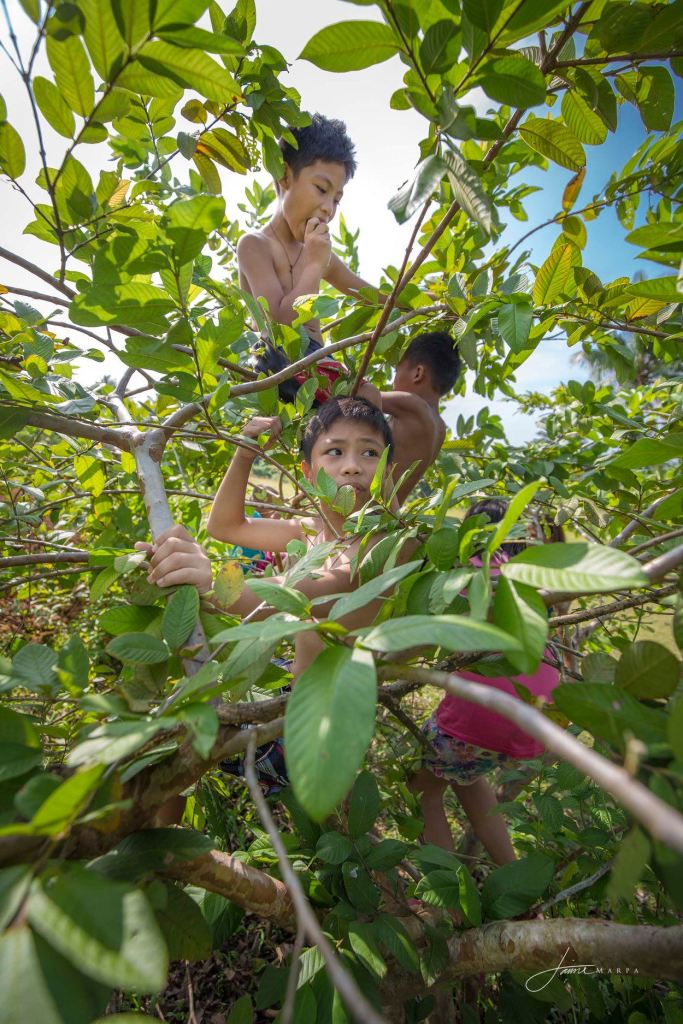
Larawan kuha ni G. Jim Marpa, 2017.

Hindi ba nakakahiyang isipin na sa ngayon, ang mag-igib at maglinis ng bahay ay pawang mga “reality games” na lang sa telebisyon gayong ganito ang ating buhay noon? 

Hindi ba nakakabahala na parang malaking balita ngayon yung makarinig ng mga tao na nagsusumakit sa pagsisikap na maging mabuti at marangal sa buhay at gawain?

Bakit mangha-mangha mga tao ngayon sa mga kuwento ng pagmamalasakitan ng pamilya at magkakaibigan gayong dapat naman ganoon talaga tayo sa buhay?

Hindi kaya masyadong na-spoil mga henerasyon ngayon, lahat ng kanilang hilig ay ibinigay ng mga magulang at lolo at lola di alintana masamang epekto sa gawi at pag-uugali ng mga bata?  At dahil nga “napanis” o na-spoil ang mga bata, pati ang disiplina ng buhay espiritwal gaya ng pagdarasal at pagsisimba ay napabayaan. 

Opo, disiplina ang pagdarasal at pagsisimba. Kapag pinabayaan mga ito at nawala sa mga tao, wala na tayong igagalang na kapwa o lugar man lamang at pagkakataon dahil maski Diyos at simbahan hindi na kayang igalang pa. 

Nananatili hanggang ngayon lalo sa ating nakatatanda at di lamang sa mga bata ang misyon ni Hesus kaya siya humirang pa ng pitumpu’t dalawang mga alagad na kanyang sinugo na mauna sa kanya (Luc.10:1-9).

Larawan kuha ni G. Jim Marpa, 2019.

Tayo ang mga iyon sa panahong ito, tayong mga nakatatanda na dapat puno ng alab para sa Panginoon at Kanyang mabuting balita na hatid sa lahat na sa panahong ito ay litong-lito maski na sagana sa mga bagay na materyal.

Tayo ang inaasahan ni Hesus na gagabay sa maraming naliligaw ng landas, lalo na mga kabataan na ibig siluin at lapain ng mga nagkalat na “asong-gubat” sa gitna ng saganang anihin.

Tayo ang mga makabagong San Timoteo at San Tito, dalawang banal na nagparubdob ng alab para sa Diyos sa pagpapahayag nila noon sa salita at gawa na “Nalalapit na ang paghahari ng Diyos sa inyo” (Luc. 10:9) dahil sila rin mismong dalawa ay naranasan ang sigasig sa pananampalataya ng kanilang mga magulang at ninuno noon.  Amen. 

Thoughts on homesickness

Quiet Storm by Fr. Nick F. Lalog II, 24 January 2022
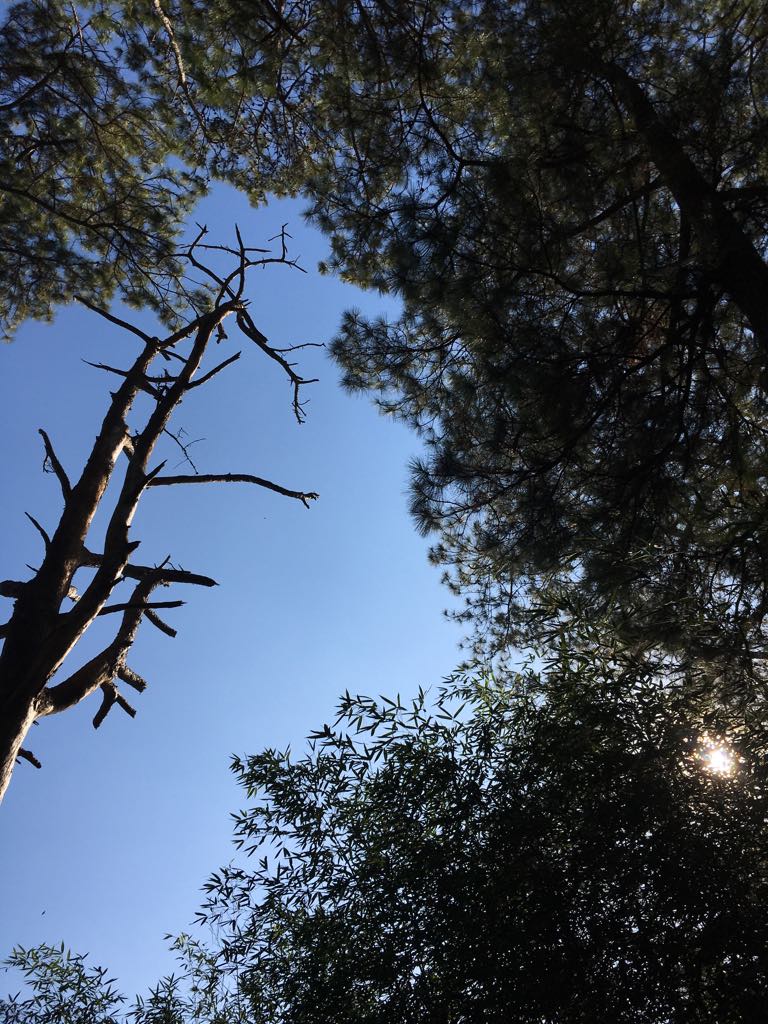
Photo by author, sunrise at Camp John Hay, Baguio City, 2018.

I have always taken homesickness lightly, dismissing it as a simple feeling we all go through once in a while when we leave home for various reasons. Maybe that is due to my entering the seminary in high school, aged 13-16, when I left my family for three years.

Everything changed when I went on vacation to the US in 2003. For the first time in my life, I felt so homesick after extending my two-month vacation to almost five months! That was when I realized the painful truth of homesickness: it is not really that you wanted to come home but more of longing for your loved ones from home, wishing they are with you having a great time at Times Square or enjoying the views from Washington’s Monument or devouring those giant oysters at New Orleans.

Homesickness is not really missing home as a place but home as family, as persons. One writer had said it so well that “homesickness is not really about the places but the faces we miss”!

It is having that feeling while in the midst of all those sights and sounds and tastes, you wish your loved ones are with you too, doubling the fun and adventures you are having. It is wanting to go home and take everybody out to your vacation or location.

But, lately I found out there is something else deeper with the faces and company we miss when we feel homesick; it is also the time and moments lost and gone in the past you try to bring back into the present. Not just of other persons but your very self – including all your dreams and pursuits or desires that got sidelined for so many reasons, valid or not. It is not really about having regrets in life but somehow, homesickness is a feeling best described by our Filipino word panghihinayang. Or, sayang.

It is a case of wasted presence, of taking persons and things for granted.

Thanks to the COVID pandemic. Aside from the virus, we are all afflicted with homesickness, of missing our loved ones whom we cannot visit or stay with due to the corona virus. And, whether we had mild or severe symptoms, homesickness was strongest – and strangest – when we were in isolation or quarantine due to infection.

Basta, all we strongly felt was to see our family and friends because we love them.

Photo by author, Sonnen Berg, Davao City, 2019.

Homesickness depends – for better or for worst – on the kind of presence we have spent with our loved ones.

If we have always been intense – and truthful – in our relationships with family and friends, homesickness becomes a soothing balm that relaxes us after a very tiring day or week specially when in isolation or quarantine. You know that kind of feeling within of assured contentment that you love and you are loved by other persons you do not see often or not even communicate with frequently. That is because when you were together, the presence you have spent with each other was so intense and pure that it had created an invisible bond between or among you that you do not seem apart from each other at all.

There is that wonderful feeling of remembering, of suddenly experiencing the warmth and loving face of your beloved. It happens briefly like a blink of an eye that seemed eternal. That’s because of the love you have.

Problem happens when our occasions of being present with one another is superficial or shallow, when we were physically present with another but emotionally and spiritually detached. That is when the hairline difference between homesickness and regrets occurs. We become homesick, trying to go back not only in place but in time to meet the persons including our old self now all gone. Our former rector, Fr. Memeng Salonga used to tell us in high school seminary that it is not really time that is passing by but you who are passing by. One cannot bring back time that had passed, specially the chances and opportunities it had for you if you do not use it wisely.

That’s the painful truth with homesickness when you miss so much how you have missed and let go of the time and moments you have to be truly present with someone and with your very self. And we say sayang.

Photo by author, Israel, 2017.

Recently I was exchanging text messages with a former student. We last met five years ago and both promised to meet again to work on a project and just simply have another great time together over some bottles of beer.

It never happened because we were both busy. Last Friday, he told me how he had COVID last year, the Delta surge. None of his connections could even get him into the ER of any hospital in the city. It was an eye-opener for him, indeed a second life as he survived COVID with a lot of faith and prayers. And love of family.

As I told him of my plans of slowing down in life and retiring early, he texted, “The way I see it po, it can also be wanting to really live. And not function like a machine.” (See why I love talking to him?)

Exactly! Sad, but true.

That has always been the challenge of life, of authentic living – when we become truly free to live and love and be faithful to God expressed in our kindness and service to one another. Of living in the present, in the here and now, in the “today” of Jesus Christ.

Homesickness does not need to be a sickness if we are always “present”.

Then all we have are memories, persons and events we remember and make present again as part of the here and now.

We hope the experts are proven right that the Omicron could be the beginning of the end of the pandemic. And if ever they are wrong, still, may we all be present, be a gift to everyone, and be home in every today God gives us.

From Facebook by Fragments of My Mind, 22 January 2022.

To rest – magpahinga -is to be filled with God

The Quiet Storm by Fr. Nick F. Lalog II, 19 January 2022
Photo by author, 31 December 2021 Ubihan Island, Meycauayan, Bulacan.

It is my fifth day in home quarantine after contracting COVID-19 with mild symptoms of colds and coughs last Saturday. From the bottom of my heart, thank you everyone for your love and concern, prayers and gifts like food and fruits you have been sending.

But, no thanks at all to those who told me that God simply wanted me to have much needed rest that is why I got sick.

Whoa!!!

And to those planning to tell me or anyone else afflicted with Omicron, please STOP!

With another week to spend in home quarantine, I feel compelled asking everyone to PLEASE DO NOT EVER SAY GOD WANTS US SICK SO THAT WE CAN HAVE OUR MUCH-NEEDED REST.

It is not true.

It is not uplifting because it is simply stupid and insane. Nothing bad can ever come from God, like sickness or accidents or disasters. Or pandemic. Always remember 1 John 4:16, “God is love”.

However, God continues to work in silence even in the midst of our troubles, doing his very best that even the worst scenarios in our lives would still turn out well and good in the end to proclaim his love and mercy for us.

Photo by author, 31 December 2021 Ubihan Island, Meycauayan, Bulacan.

A few years ago I concelebrated in the funeral Mass for the two brothers of a priest shot multiple times by a neighbor with an Armalite right at the gate of their home. How I wanted to walk out from the Mass to tore my garments when the homilist said with his matching “drama” of tears and breaking voice that it was the will of God: “Ipagpasa-Diyos natin ang lahat… kalooban niya ang pangyayaring ito ngunit siya ang nakaaalam ng higit na mabuti”!

OMG!

So kawawa our God…. and most kawawa are we!

How can a priest claim God willed the brutal slaying of those two brothers?

When Ondoy flooded vast areas of Metro Manila and nearby provinces in 2009, “acts of God” became the most notorious phrase to simply describe a disaster never imagined.

It is neither spirituality nor even Christianity when God is always made the reason and – scapegoat – for anything that happens to our lives. May the Good Lord have mercy on us!

Photo by author, Singapore, 2018.

Now with another surge in COVID due to the highly transmissible Omicron variant, the “spiritualists” and “pseudo-theologians” among us are busy spinning those blasphemous threads of God simply wanting the sick to have much needed rest and “me-time” too.

Totally untrue.

God could have just sent us with tickets to Boracay or El Nido or anywhere to go on vacation to rest, instead of sending us the COVID pandemic!

When we are sick, that is when we have a dis-ease. We are not at ease, there is dis-order in our body functions. And we remedy that with medications and a lot of rest which is part of recovery and healing.

But we do not need to be sick in order to rest.

In fact, we need to always rest so that we do not get sick.

That is the lesson of this pandemic. What we can do is to continue praying and help those who are sick instead of “theologizing” or “spiritualizing” them with such insane ideas.


In the Old Testament, God gave the third commandment to “Keep holy the sabbath day” (Ex.20:8 and Dt. 5:12), instructing us for all time to always rest – in God.

Here we find the beauty of our Filipino language: to rest is “magpahinga” from the root “hinga/hininga” or breathe/breath. Literally speaking, to rest in Filipino which is “magpa-hinga” is to be “breathed on by God”.

Photo by author, November 2021.

In the story of creation, we find how the “Lord God formed man out of the clay of the ground and blew into his nostrils the breath of life, and so man became a living being” (Ge. 2:7).

In our Filipino Bible, it is translated as “hiningahan”. This beautiful scene was repeated by Jesus on the evening of Easter when he came to visit his disciples at the Upper Room in Jerusalem, “And when he had said this, he breathed on them and said to them, ‘Receive the Holy Spirit'” (Jn.20:22).

In its simplest sense, to rest essentially means to reconnect with God, to be breathed on by God to be one with him again who is our source and final end.

To rest – magpahinga – is to be filled with God anew. A rested person is always a renewed creation!

This is one of the many important lessons this pandemic has taught us, of the need for us to go back to God and be one with him again in Jesus Christ through one another along with Mother Nature. This we do by taking a rest, a pause and conscious stop from the daily grinds of life so we can see clearly again ourselves and one another in God and in his creation.


This COVID came because we have not only abused Earth but also our very selves. This pandemic is definitely not from God but he is using it to remind us of his loving presence. And most especially of his healing that can truly last and end this pandemic if go back to him.

Experts say the Omicron variant is the beginning of the end of COVID.

But, just before it finally ends, may this also be the start of our renewed relationships with God and with our very selves as we rediscover the essence and meaning of rest.

So, take a rest and stop saying God makes us fall sick in order to rest; God created rest so we do not get sick.

Have a restful moment with the Lord and your loved ones to be well and healthy!

Photo by Mr. Raffy Tima of GMA7-News, 18 January 2022.

Life directions and freedom

The Quiet Storm by Fr. Nick F. Lalog II, 10 January 2022
Photo by author, Ubihan Island, Meycauayan, 31 December 2021.

It is said that “life is a journey” but I have found through the years that as a journey, life is more of a direction than a destination. It is always easy to plot our life destination but upon reaching them, what do we do next?

If life is a journey that is more on destination, all we will be doing in life is keep on thinking of new places to visit and new goals to achieve until we ran out of destinations and we have nowhere else to go!

That is why life is more of a direction.

It does not mean we stop making plans or setting goals to reach; we just learn to be more open with the directions life is leading us into.

So often it can happen that while pursuing a goal or reaching a destination, we find many things and meet persons along the way who make us change directions in life for something better we never knew existed before.

Sometimes we discover while at the middle of a journey the many directions we have been seeing or noticing earlier that suddenly later make sense, opening new routes for us to take to something more fulfilling or clearer and better.

As we become open for directions in life, the more we become free to be our true selves, free to pursue what is best than be fixated and even held hostage by a previous goal or destination we have set before which we find no longer viable.

It is like using those travel apps Waze and Google Maps that give us the pertinent information like traffic conditions that help us choose the best routes to reach a specific destination.

However, as we travel, we find the apps taking us to longer routes or may even be misleading us because the data available are obsolete or the internet signal is unreliable. And so, we disregard the apps and try to find our way to our destination through directions provided by actual people and signages we check on the streets. Recall how the apps would continue to “speak” and even insist us to turn left or right as it is bent on reaching the destination. Travel apps are concerned merely with the place to reach, totally “unaware” of the person traveling.

That’s the problem with journeying more on destination when we forget persons that we miss the fun and adventures along the way.

When we journey more on directions, we are more concerned with persons and people that we experience fun and adventures, learning new things about peoples we meet or travel with as well as places we pass through on the way to our destination.

Sometimes, we have to scrap everything as the new directions lead us to more interesting places to visit.

In that way, we grow and mature as persons because we have become more free to be ourselves, more free to follow our inner voices within our hearts that lead us to far and exciting new places. In the process, we also discover our true friends and companions in life!

Ultimately, when we are free to follow directions than simply reach destinations, the more we also discover God – the most wonderful journey in life because ultimately he is our only destination and end.

God as a direction demands us a deepening of our faith, hope and love in him whose “invisible hands” guide us to persons and places and situations that seem to be unrelated at first but as we journey, we discover their many linkages, like tiny pieces of a mosaic creating a wonderful picture bigger than us.

God as a direction leads us to more freedom to discover life itself. That is the beauty of every new year: those twelve months of the calendar have no specific destinations but give us directions to follow by being sensitive to where God is leading us. It is totally senseless and useless to consult fortune-tellers for their fearless forecasts of what is going to happen for that will only make you “unfree” to seek and follow new directions in life. Besides, only God knows what will happen and that is why we follow his directions.

Above all, remember that the discovery of God is not the end of a journey but the beginning of a new one in him, with him, and through him. The journey never stops in Christ Jesus to God our Father in heaven. So, have life and be free to follow new directions from God this new year!

Keep traveling in Christ this 2022. Who knows, we might meet once or twice along the way. Amen.