Being clothed with Jesus

The Lord Is My Chef Sunday Recipe for the Soul by Fr. Nicanor F. Lalog II
Week XXVIII-A in Ordinary Time, 11 October 2020
Isaiah 25:6-10     ><)))*>     Philippians 4:12-14, 19-20     >><)))*>     Matthew 22:1-14
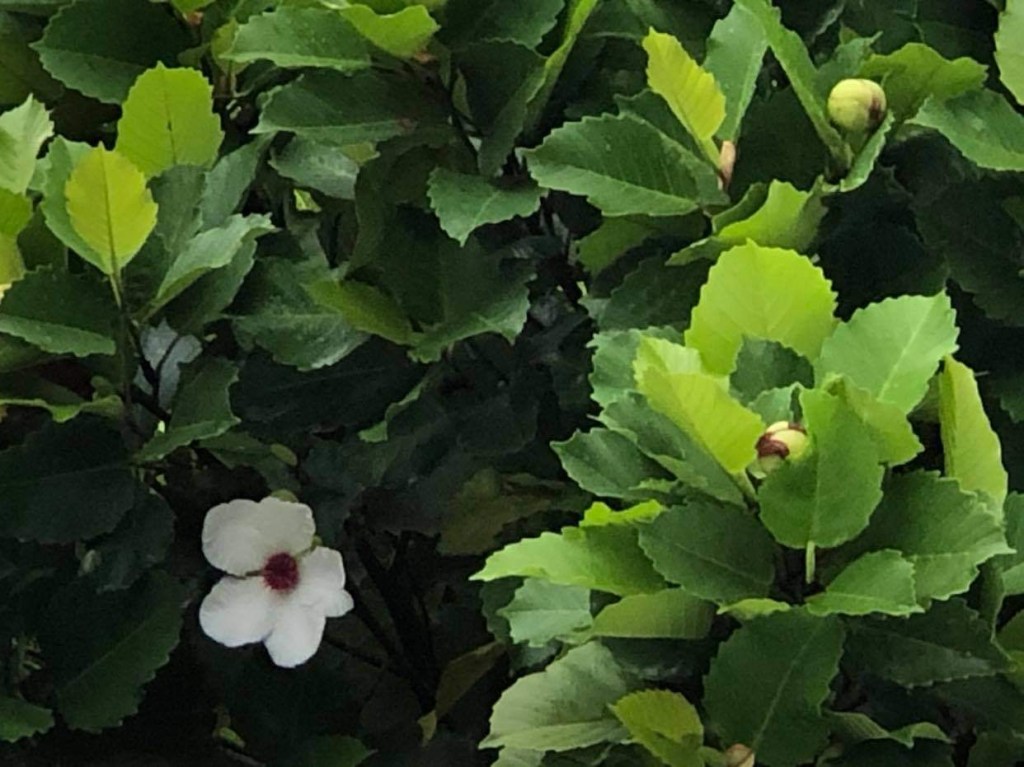
Photo by author, Our Lady of Mount Carmel of the Holy Family, Guiguinto, Bulacan (2018).

As we end the series of teachings in parables by Jesus directed to the chief priests and elders of the people, St. Paul concludes his Letter to the Philippians in our second reading with words so moving for a man awaiting trial and sure death, giving us a glimpse at how this great Apostle of the Lord looked at the most ordinary things in life.

Brothers and sisters: I know how to live in humble circumstances; I know also how to live in abundance. In every circumstance and in all things I have learned the secret of being well fed and of going hungry, of living in abundance and of being in need. I can do all things in him who strengthens me.

Philippians 4:12-14

Wow! Here we find St. Paul at his best and finest, with his mastery of language at the service of his innermost thoughts and feelings, indicating his transformation from the many hardships and difficulties he had gone through as an Apostle and suffered as a prisoner.

Like St. Paul, there are times we experience that perfect balance in life called equilibrium when we are able to bridge the distance between our mind and our heart with Jesus at the center amid so many trials and difficulties.

Most of all, we see in this short passage how St. Paul accepted both living in need and in abundance with calmness and composure because of Jesus Christ who strengthened him!

What an encouragement for us all in this time of pandemic to remind us of learning to adjust to situations, that true peace within comes not from abundance or scarcity of material goods but of letting go and letting God in our lives. St. Paul witnessed to us the centrality of the Lord’s teaching of denying ourselves, taking our cross and following Jesus.

Most of all, in St. Paul we find what is to be clothed in Christ or “to put on Jesus Christ” (Rom.13:14) by accepting God’s invitation to salvation through his Son as the parable of the wedding feast tells us in our gospel this Sunday.

Jesus again in reply spoke to the chief priests and elders of the people in parables, saying, “The kingdom of heaven may be likened to a king who gave a wedding feast for his son. He dispatched his servants to summon the invited guests to the feast, but they refused to come. A second time he sent other servants… Some ignored the invitation and went away, one to his farm, another to his business. The rest laid hold of his servants, mistreated them, and killed them. The king was enraged and sent his troops, destroyed those murderers, and burned their city.

Matthew 22:1-4, 5-7

Do not ignore God’s invitation; carpe diem (seize the moment).


Photo by Angelo N. Carpio, January 2020.

Jesus continues to direct his parables to the chief priests and elders of the people not really to shame them and expose their sinister plots against him but more in the hope of converting them, of giving them the chance of getting into God’s kingdom in heaven.

That is how great is his love for everyone, especially the sinful even if they would not admit it — just like us!

Keep in mind that Christ speaks always in the present and this parable is also meant for us who feel “entitled” in may ways like the chief priests and elders at that time. Interestingly, today’s parable to a large extent has to be taken in the context of the Sunday Mass, the prefiguration of the wedding feast in heaven to which we are all invited.

But how can we get to the wedding feast in heaven if we feel so sure like the chief priests and elders that we refuse to accept God’s invitation?

The Eucharist is the summit of our Christian life where we receive Jesus Christ in words proclaimed, in his Body and Blood, and among the people gathered. Every day Jesus is inviting us to partake in his Sacred Meal to be nourished and get our bearings in life through him like St. Paul.

See how before the pandemic, people refused to celebrate Mass and other Sacraments; but, when quarantine measures were implemented with the suspension of public Masses, everybody wanted to go to churches and receive the Sacraments, specially Holy Communion and Baptism, as well as Confession and Anointing of the Sick!

Photo from Shutterstock/Aleteia.

After seven months of pandemic, many of us have learned to adjust to the new situation but sadly, many have gone back to totally ignoring the Sunday Mass. Worst is at how some have considered online Masses as “video-on-demand” making Jesus Christ a “commodity” anyone can have when most convenient. Pope Francis had reminded us last summer that online Masses are not the norm but a response to the pandemic. Nonetheless, we still have to dispose ourselves properly when celebrating with online Masses like in actual live Mass in a Church and strive to be punctual and avoid doing other things during the online celebration.

In giving us these modern means of communications, God continues to invite us to come to him and gather in his name as a family in our homes for the Sunday online Masses and other liturgical activities that nourish our souls so essential in these trying times. Like the king in the parable today who had to invite guests thrice to his son’s wedding feast, God gives us all the opportunities and chances to celebrate in his gift of salvation through Jesus in the Eucharist which is the summit of Christian life.

May we not miss every opportunity!

When I was assigned to our diocesan schools during my first ten years in priesthood, I used to tell my students that God’s mercy and forgiveness are unlimited but there are acts that can have irreversible consequences like getting involved in a murder, getting pregnant outside marriage, or being caught in a video scam. I would tell them that God will surely forgive you and give you many chances in life while people like your family and friends including those you may have hurt may also forgive and accept you; however, you cannot escape the consequences of those acts that will surely limit your freedom and change forever your situations in life. Bottomline is, do not let yourself be missed out in accepting God’s invitation to his feast of life and salvation by following the path of holiness that beings in the Holy Mass.

The first reading from the Prophet Isaiah directs our attention to “that day” when God would save us and welcome us into heaven symbolized by the feast or banquet with great food and drinks. The good news is we are all invited to his feast, assured with a seat and it would only be our fault to not make it there, either by refusing it or not getting dressed properly.


Being properly dressed is always a sign of maturity.


Photo by Ezra Acayan/Getty Images, 09 February 2020, Baclaran Church.

“The servants went out into the streets and gathered all they found, good and bad alike, and the hall was filled with guests. But when the king came in to meet the guests he saw a man there not dressed in a wedding garment. The king said to him, ‘My friend, how is it that you came in here without a wedding garment?’ But he was reduced to silence. Then the king said to his attendants, ‘Bind his hands and feet, and cast him into the darkness outside, where there will be wailing and grinding of teeth.’ Many are invited, but few are chosen.”

As is often the case in his parables, Jesus pulled a surprise when he added another parable to this parable of the wedding feast that could have easily ended in the annihilation of those who rejected the king’s two earlier invitations.

God is the king who was so good that he never tired of inviting guests thrice to the wedding feast of his son, and this time he opened it to everyone! And here lies the clincher: though everyone is invited, guests were expected to come in proper attire.

We have learned at a very young age of getting properly dressed in an occasion. In fact, dressing properly is a sign of maturity. Some people especially in this age always claim what matters is the inside of the person not the outside appearance like clothes; but, they forget that the outside also indicates what is inside of us!

Clothes speak a lot of who we are and what we are that even St. Paul used several times the metaphors of clothes like “putting on the Lord Jesus” or being “clothed in Christ” as we have cited earlier.

See how the king went to meet the guests not just for pleasantries but for inspection that immediately his eyes caught the man not dressed in a wedding garment. The king was even courteous addressing the man as “my friend” when asked why he came not in a wedding garment.

Try to imagine the scene with that man “reduced to silence” meaning, he was guilty of not putting on a wedding garment even if he knew that was the occasion he was going to. He had been remiss of his duties and obligations, just like the wicked tenants last week or the merciless servant last month.


"Many are invited, but few are chosen" (Matthew 22:14) 

St. Matthew never failed to remind us these past weeks that our faith has no value if not translated into actions, if it does not bear fruits. Today, he reminds us to be properly dressed to become a part of the wedding feast of the Lord, of the need to be clothed in holiness, in charity, and kindness with others.

Moreover, with just barely two months to go before we end the liturgical year to usher in Advent in preparation for Christmas, Jesus tells us today to never feel so sure, even “safely assured” of getting into heaven like the chief priests and elders of his time that even if we celebrate Sunday Masses weekly, online or actual, nothing is final yet in this life until we all get into the hall of the wedding feast in heaven when we are judged for our good deeds.

For the meantime, let us not miss joining the “rehearsals” for that feast – the Sunday Mass we celebrate weekly when he invites everyone to come. Be sure to be properly dressed for the occasion, literally and figuratively speaking. Amen.

A blessed week to everyone!

Photo by author at Silang, Cavite, 22 September 2020.

The gift of tears

Quiet Storm by Fr. Nicanor F. Lalog II, 22 September 2020
Photo by Ms. Ria De Vera of our parish church, August 2020.

Lately I have been watching old movies that I wonder why I still cry even if I have seen them more than twice before at the cinema and cable TV. It seems that my being born with “mababa ang luha” (easy to cry) is getting more “mababa” as I get old.

Tears are a gift from God, the most beautiful prayer we can ever express courtesy of the Holy Spirit because when we run out of words for our pains and sadness or when we are overjoyed, he makes us cry to heal and comfort us or complete our joys, assuring us of his loving presence.

That is the reason why we call “home” in Tagalog as “tahanan”: home is where we “stop crying”, that is, “tahan na” because that is where we find all the support we need in times of crisis. Indeed, home is where the heart is.

True to its function, tears cleanse us physically, emotionally and spiritually. I have read two decades ago that researchers at a university in the US have found the chemical composition of our tears differ if we cry because of pain and sadness or due to joy and laughter.

Is it not wonderful and amazing how we take for granted crying and tears without realizing its chemical process within that can transform our very selves?

Photo from Reuters.com, July 2020.
Tears and crying mark our life's coming to full circle.

When I was five years old, I saw the picture of a newborn baby crying in the Book Section of the Reader’s Digest. I asked my mom why the baby was crying. In her usual motherly way of explaining things, she told me that if the baby cries upon birth, it means he/she is alive; if the baby does not cry, he/she is dead.

“Kapag umiyak, buhay; walang iyak, patay.“

My young mind easily absorbed her words that would remain to be one of the most profound lessons I had ever learned about life at a very young age. As I grew up watching TV and movies, I would always sigh with relief whenever I heard the sounds “uha-uha” because the story would surely be nice and not tragic.

Imagine the great inverse that happens with crying and tears to signal the coming to the outside world of life of another human, of how we have to cry to be alive from then on until we die when it becomes our family and friends’ turn to cry and shed tears for us when we are gone.

But there is something more deeper than this great inverse on crying in life and death I had learned only in 2013 through my best friend Gil, a classmate in our minor seminary.

It was late February of that year on the 40th day of the death of his youngest sister Claire when he was diagnosed with cancer. We could not believe the news because Gil was the most health conscious in our “band of brothers” from high school who never smoked, rarely ate meat, and was active in sports like golf and badminton. Unlike most of us, he was never overweight, looked so healthy in our mid-40’s.

Imagine the hurt within him that every time we would visit him, he would cry not really in pain but more on the why of getting cancer. We tried visiting him as often as we can to cheer him up and lift his spirits specially after his surgery when his chemotherapy sessions began.

By September on that same year, we all had to rush and visit him at Makati Med one Sunday afternoon when informed by his Ate Lily that doctors have given up on him. His cancer cells were “ferocious” and nothing could be done anymore except to wait for the inevitable.

That was when I noticed the greater inverse about crying when Gil had finally accepted his condition and life direction, that was when he was most joyous and peaceful too while we were the ones so sad and worried, crying. How our roles were reversed with Gil now telling us to stop crying – tahan na – which we used to tell him months earlier! (Gil died peacefully the following Sunday, 22 September 2013.)

“Mater Dolorosa” as “Blue Madonna” (1616) by Carlo Dolci. Photo from Wikimedia Commons.

I noticed it happening so many times with some friends and parishioners I have come to love in my ministry, those I have pastorally cared for some time after being diagnosed with serious conditions like cancer.

Yes, I have cried despite holding my tears for them while administering the Holy Viaticum and Anointing of Oil. The patients in turn would just glance at me, so dignified and calm like Mary our Lady of Sorrows as if trying to comfort me with their sweet thank you.

As I prayed on those experiences, I realized how life comes to full circle through our crying and tears.

I believe that patients cry when they start undergoing treatment of their sickness due to fears and uncertainty of what would happen next to them; later as they come to terms with their condition, they stop crying because they already knew where they were going, of what was coming next.

We who would be left behind cry and begin to shed tears at thoughts of their dying because admittedly, we are actually the ones more uncertain of where we are going to or how our lives would go through when our loved ones are gone.

That is the greatest pain we feel in the death of a beloved when we grapple with the realities of the many uncertainties of life without them.

And that is why we need to love as much as we can our family and friends while still alive. This quarantine period of the pandemic are grace-filled moments to shower them with our love and presence we have taken for granted for so long as we pursued many things in our lives.

Photo by Dr. Mylene A. Santos, MD at Infanta, Quezon, April 2020.
Tears and crying lead us to heaven.

Death and sickness, like life, become a blessing if we are filled with gratitude not regrets because we have truly loved. When a beloved is gone and we begin to cry, the tears wash away our pains of losing them, cleansing us within to leave us with all the beautiful memories and love we have shared. Then, every remembering becomes truly a re-membering, making a lost loved one a member of the present again.

When we cry, tears polish the love we have shared with everybody until later when our time comes, our visions are also cleared of what is going to happen next, of where we are going. Crying becomes wonderful and truly a grace after all not only in sharing and being one with the grief and pain of another in the present but sooner or later, in having a glimpse of the life after.

In the Gospel of John (11:1-44), we find the story of the raising of Lazarus whom Jesus loved so much that he wept – not just cried – at his death. Jesus raised him up back to life, his final miracle – or “seventh sign” according to John – to show he is the Christ before his own Resurrection at Easter after his “final hour” of Crucifixion on Good Friday.

From then on, Christ sanctified crying and tears to enable us to see beyond pains and hurts, even death especially if you have truly loved.

Sometimes in life, it is always good to let those tears flow, like love even if it is painful, to have a good cry and real cleansing inside. A blessed day to you!

Quarantine to heaven

The Lord Is My Chef Breakfast Recipe for the Soul by Fr. Nicanor F. Lalog II
Saturday, Solemnity of the Assumption of Mary, 15 August 2020
Revelation 11:19; 12:1-6, 10 >><}}}*> 1 Corinthians 15:20-27 >><}}}*> Luke 1:39-56
Photo by author, the Assumption Sabbath Place in Baguio City, 2018.

God our merciful Father, on this Solemnity of the Assumption of the Blessed Virgin Mary, we start the praying of ten Hail Mary’s daily at noon until the 15th of next month for collective “healing” and the end of COVID-19 pandemic.

Through the Blessed Mother of your Son our Lord Jesus Christ, we pray for firm faith, vibrant hope, and unceasing love for you and for others as we go into the sixth month of our quarantine to help stop the spread of the corona virus.

But it seems, until now, O God, many of us still do not get the full meaning of this quarantine period with most of us pinning our hopes for a magic cure that would come to end these sufferings and resume our previous way of life.

Help us see, O God, the process of quarantine, of purification you want us to go through not as a punishment but as a lesson to learn and remember that will prevent us from all the excesses that have burdened us down lately, preventing us to rise like the Virgin Mary.

On this great feast of Mary’s Assumption into heaven, teach us how we may all rise up to your presence, win over COVID-19 not just with a vaccine or physical remedy and cure to the disease but on how we must change our ways of life, our attitudes and dispositions.

How wonderful, O God, to hear the story anew of Mary and Elizabeth who trusted you so much in the coming of our Savior as they both emerged from their own kind of “quarantine” period in this gospel scene of the Visitation.

May we realize like Elizabeth during this quarantine period that true blessedness is in believing “what was spoken by the Lord would be fulfilled” (Lk.1:45), that we entrust all our hopes in you, O God, not to mere humans who make a lot of promises only to be broken. May we open ourselves like Elizabeth who went into seclusion upon conceiving St. John the Baptist that you always come in the simplest yet wondrous ways of life. Keep within us that sense of wonder and awe, Lord.

“The Assumption of the Virgin” by Italian Renaissance painter Titian completed in 1518 for the main altar of Frari church in Venice. Photo from wikidata.org.

Teach us like Mary to always proclaim your greatness as we rejoice in Jesus our Savior in our very lives of humility and simplicity, obedience and surrender to your will. May our lives be a song of praise to your wondrous deeds, O Lord, like Mary that is centered and focused on you.

Cleanse us of our sins, especially of greed and conceit that have led to this pandemic.

How sad that until now, we still don’t get it.

May this crisis remind us that we are all in a temporary journey here on earth – like in a quarantine – that our final resting place and destination in the end of everything is in you, O God, like Mary whom you gifted with the Assumption of her body and soul into heaven ahead of us all.

May we all strive for the same gift. Amen.

Journeying in Christ

Quiet Storm by Fr. Nicanor F. Lalog II, 25 July 2020

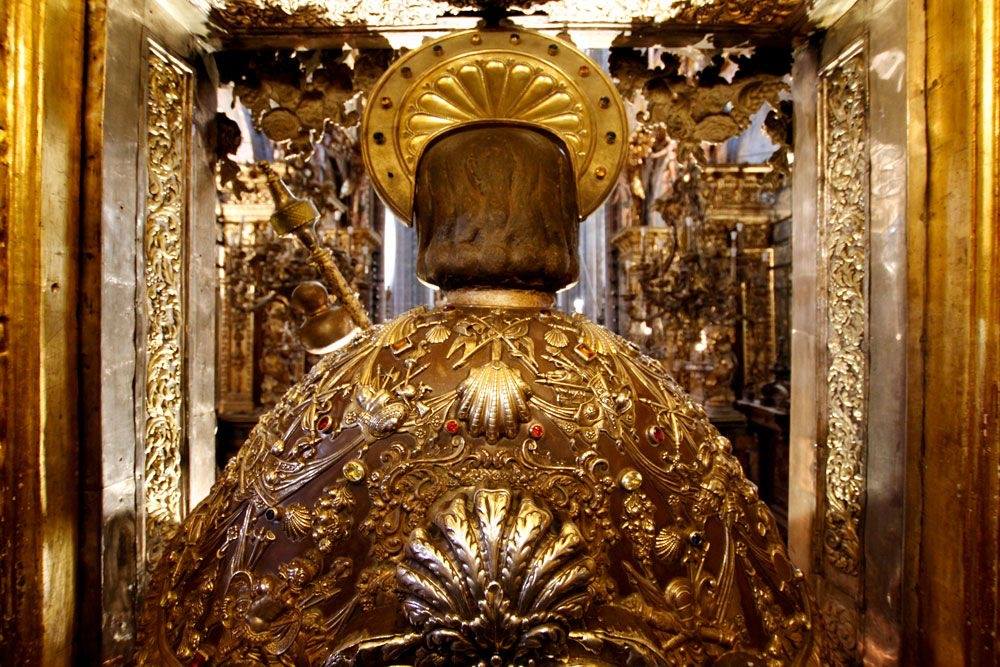
Santiago de Compostela in Spain is one of the world’s oldest and most popular pilgrim sites where the body of the Apostle St. James the Greater whose feast we are celebrating today is believed to be buried in its beautiful cathedral.

I have not been there yet and despite COVID-19’s disruption of air travel expected to last until 2022, my hope remains that someday in God’s time I may finally do the “el camino de Santiago de Compostela” (the way of Saint James of Compostela), too.

But, with or without the el camino de Santiago de Compostela, this great Apostle from the very beginning had always been in a journey in himself into the kingdom of God – Jesus Christ – by showing us the way of transformation into a true disciple of the Lord.

He is called the Greater not because he is holier than the other St. James called “the Lesser”, son of Alpheus, but to simply indicate the different importance they received in the writings of the New Testament. In the gospel of Mark, he comes in second in the list after Peter while in the gospels of Matthew and Luke, he is ranked third after the brothers Peter and Andrew; he again comes in third in the Acts of the Apostles after St. Peter and his brother St. John.

It is from this book where we also learn St. James the Greater as the first bishop of the original Christian community in Jerusalem that during the persecution by King Herod Agrippa in 40 AD, he also became the first Apostle to be martyred (Acts 12:1-2).

His martyr’s death thus fulfilled Christ’s words to him that he would indeed “drink from his chalice” to be with him in his Kingdom, a journey that essentially began within this great apostle after leaving everything behind to follow Jesus.

The journey within self to Jesus Christ

St. James the Greater and his brother St. John the Evangelist and believed to be the same beloved disciple came from a middle class family with both parents still alive and most likely, very supportive of them as attested by some little anecdotes in the gospel accounts.

Money was never an issue for them because their father Zebedee could hire workers to work in their fishing business. He must have sighed with a great relief when James and John immediately left him after being called by Jesus to be his disciples.

Marker along the “el camino de Santiago de Compostela”.

Finally, his sons have found some directions in life following Jesus who was getting known then in Galilee as a powerful and credible Teacher unlike the Pharisees and scribes.

Jesus nicknamed James and John as Boanerges for “Sons of thunder” (Mk.3:17) due to their temperament like when they proposed that they send fire to burn a Samaritan town that have refused them passage during their journey to Jerusalem (Lk.9:54).

They have seen and experienced the tremendous powers of Jesus not only in preaching but most especially in calming the storms, walking on sea, exorcising evil spirits, healing all kinds of sickness, and even raising to life some who have died.

Most of all, St. James the Greater was privileged to witness along with his brother and St. Peter the Transfiguration of Jesus Christ on Mount Tabor, seeing all the glory of Christ conversing with Moses and Elijah. It was after this major event that their most controversial episode would occur when their mother came to ask Jesus that James and John be seated “one at your right and the other at your left, in your Kingdom” (Mt.20:21).

The other ten Apostles “grew indignant” of the brothers James and John for being so ambitious but Jesus summoned them and explained things which all of them would heed except for one:

“You know that the rulers of the Gentiles lord it over them, and the great ones make their authority over them felt. But it shall not be also among you. Rather, whoever wishes to be great among you shall be your servant; whoever wishes to be first among you shall be your slave. Just so, the Son of Man did not come to be served but to serve and to give is life as a ransom for many.”

Matthew 20:25-28

This took place shortly before Palm Sunday when Jesus entered Jerusalem.

A few days later on the evening of Holy Thursday, Jesus again brought St. James the Greater with his brother St. John and St. Peter to accompany him pray at Gethsemane where Judas Iscariot eventually betrayed him to his enemies.

A pilgrim hugging from the back the statue of Santiago de Compostela after completing his el camino.

Here we find St. James the Greater being present to two major stops in Jesus Christ’s journey to the Calvary: first, on Mount Tabor for his Transfiguration and second, at Gethsemane for his agony in the garden. In both events in the life of our Lord, St. James the Greater was a privileged witness, first of his coming glory and then of his passion and death.

It would only be after Easter and the Pentecost when all these major stops in his personal journey with Christ when everything would become clear to him and the other Apostles.

All along their journey from the shores of Galilee to Jerusalem, St. James the Greater remained by the side of Jesus Christ, probably unaware of another journey with the Lord taking place right inside his heart to truly be a part of his Kingdom by sharing in his Passion, Death, and Resurrection.

For his faithful adherence to Jesus from Galilee to Jerusalem, St. James the Greater again had the rare privilege like at Mount Tabor and Gethsemane in being the first to die as a martyr proclaiming the Gospel of Christ which is the meaning of the expression of “drinking from the chalice” of the Lord.

Sometimes in life, we just have to make “sakay” as my generation used to say, “sakay lang ng sakay” or “ride on, man, ride on” without really knowing where our trip would lead us. St. James just made “sakay” without knowing Jesus was already fulfilling his wish of “drinking from his chalice”.

Photo by Fr. Gener Garcia, sculpture of a pilgrim’s feet at Santiago de Compostela museum, 2019.

St. James the Greater was truly great not because of the distances in miles or kilometers he had covered with Jesus from Galilee to Jerusalem and all the way to Compostela in Spain; we honor him today because of that great journey he had undertaken within him, in his heart to remain always at the side of Christ even if had to smoothen his many rough edges as a person, and cleanse his heart as a sinner like us.

That is the most important journey we are all taking in this life, the journey within us.

The longest journey in life is the distance between the heart and the mind.

Former UN Sec.Gen Dag Hammarskjold in “Markings”

My friend Fr. Gener Garcia last year went to Santiago de Compostela to follow the el camino with our kababayan Bishop Bart Santos of Iba, Zambales and Fr. Jaypee Avila assigned as a chaplain for OFW’s in Milan, Italy.

He is so generous to share with us his photos of their pilgrimage as well as his experiences and realizations in life. According to him, on the four sides of the sculpture of the pilgrim’s feet in front of the museum of Santiago de Compostela is the following quotation:

Marker along the el camino de Santiago de Compostela.

Camino recto, camino erguido, camino buscando un sentido. Camino porque tengo un objetivo, y no parare hasta alcanzar mi destino.

(I walk straight, I walk upright, I walk looking for meaning. I walk with a purpose and I won’t stop until I meet my destiny.)

The pilgrim’s journey is the same one you and I are on. Know your goals and understand your challenges. Face them head-on, tackle them with intention, and never give up.

Do you know what your purpose in life is? What would you say if someone ask you what your destiny was?

Santiago de Compostela Museum of Pilgrims

Have a blessed Saturday everyone!
*All photos by Fr. Gener Garcia, 2019.

What’s up on the mountain?

The Lord Is My Chef Breakfast Recipe for the Soul by Fr. Nicanor F. Lalog II
Monday, Week X, Year II of Ordinary Time, 08 June 2020
1 Kings 17:7-16 <*(((>< + ><)))*> Matthew 5:1-12
Mount Sinai range at sunrise, May 2019. Photo by author.

Your words today Lord brought memories of childhood when I would always look up to the mountains, wondering what is up there or how wonderful it must be up there.

As I grew up, that fascination with the mountains remained until I had the chance to climb some of them and learned one very valuable lesson: it is so nice to be up on the mountain but always difficult.

One has to pour in a lot of planning and preparations, most of all, more sacrifices.

There is always that inverse proportionality when it can take so much efforts to ascend, always painstaking while every descent is always less than half the time and energy.

Most of all, every ascent to the mountain calls for trust, a great deal of trust in you, Lord, because anything can happen. In fact, one has to always expect the unexpected when ascending a mountain.

But rewards are so great and the feeling is always liberating and free.

Mt. St. Paul Spirituality Center, La Trinidad, Benguet, 2018 photo by author.

Teach me, Lord, to be like your Prophet Elijah, to always dare to climb mountains, to rely on your providence for water to drink and food to eat because more than these is the nourishment you provide for the soul and being of anyone willing to come near you.

Like your disciples and the crowd who followed you, Jesus, bless me with courage and trust to follow you up every mountain, listening and following your teachings.

When Jesus saw the crowds, he went up the mountain, and after he had sat down, his disciples came to him. He began to teach them, saying: “Blessed are the poor in spirit, for theirs is the Kingdom of heaven.”

Matthew 5:1-4

How blessed indeed, O Lord, to be high up on the mountain with you for heaven is no longer that far, so reachable with you — especially when beside your holy Cross. Amen.

Our sense of belonging

The Lord Is My Chef Breakfast Recipe for the Soul, Monday, Easter Week-IV, 04 May 2020

Acts of the Apostles 11:1-18 ><)))*> ooo+ooo <*(((>< John 10:11-18

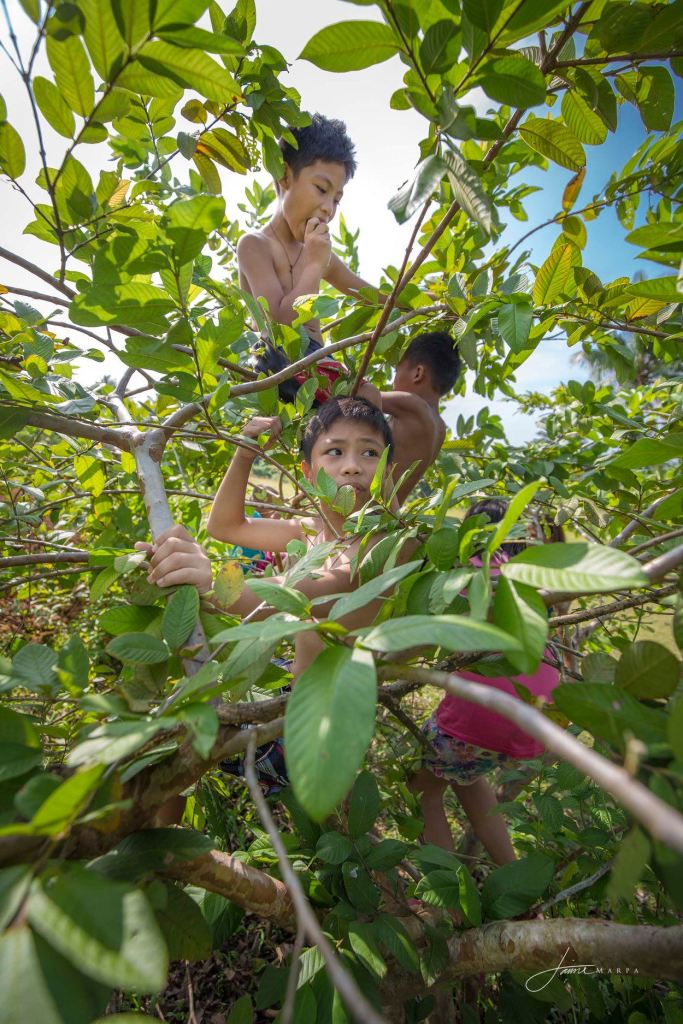
Photo by Mr. Jim Marpa, 2019.

One good thing about this COVID-19, O Lord, is how it is teaching us today that we all belong to each other, that we all belong to you, our loving and merciful God.

How wonderful that in the midst of quarantine, the many brothers and sisters we have looked down or taken for granted for so long a time are finally telling us, showing us that in this life, we do not need boundaries or walls but bridges to link us all as one.

We belong to just one flock with one Shepherd, Jesus Christ.

In him alone can we rely and trust because he is the only one who is “the way and the truth and the life.”

Even him tells us in today’s gospel that there are still other sheep who do not belong to our fold of whom he must also look after and guide (Jn.10:16) because ultimately, we all go to one destination in life which is eternity in you, O God, our Father Almighty.

Help us realize like Peter in the first reading that the key is to be inclusive than exclusive. May we see that more than the many superficialities of our color, beliefs, and gender is your Son’s Easter gift of divinity you have shared with us.

May we focus more on our similarities than differences so that we may work and live harmoniously as one big community to never allow this calamity to befall us again. Amen.

From Google.

Jesus our Gate

The Lord Is My Chef Sunday Recipe, Easter Week IV-A, 03 May 2020

Acts of the Apostles 2:14, 36-41 ><)))*> 1 Peter 2:20-25 ><)))*> John 10:1-10

Entrance to the Sepulchre Church in Jerusalem where Jesus was crucified, buried, and rose again. Photo by author, May 2017.

Starting this Sunday, we stop hearing stories of the appearances of the Risen Lord as we go back to the days before his Passion, Death, and Resurrection to reflect further on his words and teachings.

In fact, it is the same path taken by his followers after Easter when they recounted everything Jesus had done and told them as they slowly understood their meanings later in the coming of the Holy Spirt at Pentecost.

Also today is “Good Shepherd Sunday” when every year on this fourth Sunday of Easter the gospel is taken from John 10 which is about Christ’s “Good Shepherd” discourse that actually begins with him declaring he is the gate or the door for the sheep.

So Jesus said again, “Amen, amen, I say to you, I am the gate for the sheep. All who came before me are thieves and robbers, but the sheep did not listen to them. I am the gate. Whoever enters through me will be saved, and will come in and go out and find pasture. A thief comes only to steal and slaughter and destroy; I came so that they might have life and have it more abundantly.”

John 10:7-10
Photo from Google.

Entering Jesus our Gate who truly owns the sheep

Let us start our reflection today by recalling our Sunday gospel on the Fourth Week of Lent last March 22 which is about the healing of the man born blind on a sabbath day.

The healing stirred the people and the temple officials led by the Pharisees whom Jesus had hinted as being the ones truly blind who could not see God’s coming in him. As expected, the Pharisees dismissed Christ’s accusations, claiming themselves to be “clean” unlike the man born blind.

Our gospel today is the scene that immediately follows that where Jesus now speaks of himself as the gate where shepherds enter through to tend their sheep. According to the author of the gospel, Jesus was using a figure of speech in referring to himself as the gate for the sheep.

Unfortunately, the Pharisees did not understand Christ’s figure of speech, refusing to be referred to as “thieves and robbers” that Jesus had to use the emphatic “Amen, amen” to declare he is in fact the gate for the sheep.

Photo by Pixabay on Pexels.com

To clearly understand his being the gate for the sheep, let us fast-forward to his last Easter appearance to Simon Peter and companions by the lake after a night of fishing when they caught nothing until Jesus told them to cast the net on the right side found in John chapter 21.

After their breakfast by the lake, Jesus asked Peter thrice, “do you love me?” and each time he would say yes, the Lord would always tell him to feed his sheep.

It was after that third query as Peter assured him of his love that Jesus told him, “Follow me” (Jn. 21:19).

Here we find the essential truth before anyone can follow Jesus, one has to love him first above all like Simon Peter!

It is only in loving Jesus can anyone truly care for his sheep who “belongs” only to Christ and nobody else.

And this is what we should pray for today as World Day of Prayer for Vocations: not only for more men and women to answer the call to priesthood and religious life but most of all, that we in the ministry love Jesus more than our vocation!

When priests and religious love more their vocation, that is when they become thieves, stealing the sheep from Jesus, claiming them to be theirs that lead to so many abuses in the church, in the liturgy, and in the ministry.

Jesus is the gate for the sheep because first of all the flock belongs to him!

And that is only when we can truly realize too why Jesus is the gate for the sheep.

Photo by Lorenzo Atienza, Malolos Cathedral, June 2019.

How to enter Jesus our Gate

Jesus is the gate who leads his sheep to greener pastures because he is “the way and the truth and the life” (Jn.14:6). And his way is no other than the way of the Cross, of being with him in his daily suffering and death so we can be with him in his resurrection!

One of my favorite scenes of the Crucifixion is when Jesus told Dimas – the good thief who stole heaven – “today you shall be with me in Paradise” (Lk.23:43).

From Google.

See my dear reader that Jesus did not tell Dimas that he would be with him in Paradise later when they die or on Easter when he rises from death.

Jesus was very clear in telling him that “today you shall be with me in Paradise”.

The today is the here and now of heaven in Jesus Christ present to us, present with us, present in us.

Jesus never promised Paradise to anyone when he was freely walking around, neither thirsty nor hungry to show us that every time we go through trials and difficulties, sufferings and pains, that is when we enter Paradise in him our Gate.

When a person suffers a long illness, he/she has already started entering Paradise long before his/her death. That is the unique grace of sickness, of suffering with Jesus and suffering in Jesus which St. Peter tells us in the second reading today:

Beloved: If you are patient when you suffer for doing what is good, this is a grace before God.

1 Peter 2:20

Yes, we are all into great suffering in this time of the corona virus without any clear sign yet when would this finally end.

This in itself is a clear presence of Jesus among us as our Gate: let us “follow in his footsteps” (1Pt. 2:21) to “save ourselves from this corrupt generation” (Acts 2:40) where so many shepherds in government even in the church unconsciously claiming theirs are the sheep, leading them to darkness and misery.

May we all first love the Caller, Jesus Christ our Gate and Good Shepherd, than see more our call or vocation in life that deludes us into owning his flock. Amen.

A blessed Sunday to you!

Looking up to heaven, looking down within us for God

The Lord Is My Chef Breakfast Recipe for the Soul, Friday, Easter Week-II, 24 April 2020

Acts of the Apostles 5:34-42 ><)))*> + 0 + <*(((>< John 6:1-15

Photo by Ms. Jo Villafuerte, Atok, Benguet, September 2019.

Praise and glory to you, O God our loving Father in heaven!

I have been taught since childhood that you dwell up in the sky and that is why like all the others, I always point up to you whenever we refer to your dwelling place, O God.

And I am certain, too, that you are indeed up there that every time we wake up, every time we feel happy or troubled, we always glance upwards like praying to you, calling to you, and looking for you.

Indeed, Gamaliel was absolutely correct when he cautioned his fellow Pharisees in the first reading to remind us too of this certainty:

“Fellow children of Israel, be careful what you are about to do to these men… But if it comes from God, you will not be able to destroy them; you may even find yourselves fighting against God.”

Acts 5:35, 39

Give us the gift of discernment of your Holy Will, Father, that we may always know what to do, that we may always decide according to your plan.

As we look up to you in the sky where believe heaven is, the more we also look down inside ourselves and everyone to find you among us in your Son Jesus Christ.

Yes, loving Father, you have sent us Jesus so that as we look up to you in the heavens, the more we shall search and probe our hearts, our lives, our situations, and our brothers and sisters to find you dwelling among us in Christ like there in the wilderness when he fed more than 5000 people.

Jesus went across the Sea of Galilee. A large crowd followed him, because they saw the signs he was performing on the sick. Jesus went up on the mountain, there he sat down with his disciples. The Jewish feast of Passover was near. When Jesus raised his eyes and saw that a large crowds was coming to him, he said to Philip, “Where can we buy enough food for them?” He said this to test him because he himself knew what he was going to do.

John 6:1-6

What a lovely scene repeated to us daily, especially in this time of the quarantine!

Jesus raising his eyes, seeing a large crowd hungry, sick, afraid… and then talking to us where to find bread in order to test us — because he always knows what he is going to do….

If we could all be like that little boy who looked into himself, into what he had, no matter how little they may be like the five barley loaves of bread and two pieces of fish….

O Lord, keep us looking for you first within us, into whatever we have, and unto others so we may let you do your work in us to feed and heal the people locked in this quarantine.

Give us the grace, Lord, to always search and find you and follow you not only up in the heavens most especially down deep in our hearts, in the face of the people we meet, in our situation in this time of the corona virus.

It is in finding you in our hearts, on the face of one another, and in the situation we are into when we truly dwell in your house, O Lord. Amen.

Sunrise at the Sea of Galilee, Israel. Photo by author, May 2017.

Kaarawan sa gitna ng COVID-19 lockdown

Lawiswis ng Salita ni P. Nicanor F. Lalog II, Ika-23 ng Marso 2020
Larawan kuha ni Bb. Ria De Vera, Parokya ni San Juan Apostol at Ebanghelista, Bagbaguin, Santa Maria, Bulacan (22 Marso 2020).
Kahapon aking ipinagdiwang
ika-limamput-limang taon
ng kapanganakan sa 
gitna nitong lockdown.
Wala akong inaasahang pagdiriwang
o ano mang kasiyahan maski walang lockdown
dahil hindi ko naman nakagisnan 
mga gayong handaan sa aking kaarawan.
Mula kabataan lagi akong nagka-countdown
kinagabihan ng bisperas ng aking kaarawan
at saka mananalangin, magpapasalamat
sa Poong Maykapal sa buhay niyang kaloob.
Subalit aaminin ko rin
napakalungkot sa akin 
na dahil sa COVID-19 
walang nakapiling sa misa at pananalangin.
Larawan kuha ni Bb. Ria De Vera, Parokya ni San Juan Apostol at Ebanghelista, Bagbaguin, Santa Maria, Bulacan (22 Marso 2020).
Matapos Banal na Oras namin
Banal na Sakramento inilibot sa parokya namin
noon ko nadama lambing at pagmamahal
ng Panginoon Hesus tumawag sa akin.
Habang tangan kanyang sisidlan
aking binubulong mga panalangin
sa kawan kanyang pinagkatiwala sa akin
nawa maligtas sa sakit sanhi nitong COVID-19.
Pagkagaling Purok ng Fatima
ibig ko sanang maglakad sa Balutan
ngunit biglang pumatak mga ulan
anong ganda ng aking nasilayan!
Mahiwagang bahag-hari
tumambad sa aming harapan
busilak ng magagandang kulay
naghatid ng aliw at katuwaan.
Larawan kuha ni Bb. Anne Ramos, Parokya ni San Juan Apostol at Ebanghelista, Bagbaguin, Santa Maria, Bulacan (22 Marso 2020).
Sa aking pagyuko, 
bumukal sa aking puso 
kakaibang katuwaan naramdaman 
sadyang napaka hirap ilarawan. 
Alam ninyo yung karanasan
minsan-minsan wala tayong alinlangan 
sa isang iglap ating nalalaman katotohanan
ngunit kulang, walang sasapat na salita man lamang?  
Tila baga sa aki'y nawika
waring nagpapaalala Panginoong Maylikha
tipan kanyang iniwan pagkaraan
ng delubyo at ulan:
Higit pa sa makulay na bahag-hari sa kalangitan
kahawig na larawan iniwan, katiyakang hindi tayo pababayaan
ating mamamasdan sa simbahan at tahanan 
Krus pinagpakuan ni Hesus, sa atin nagtawid sa kaligtasan!
Parokya ni San Juan Apostol at Ebanghelista, 2019.

That “Eureka!” moment of life – and death

The Lord Is My Chef Recipe for the Soul

Homily at the Funeral of Archimedes Lazaro (ICS ’97), 18 February 2020

Wisdom of Solomon 3:1-9 ><)))*> 0 <*(((>< Luke 7:11-17

Photo by Pixabay on Pexels.com

Soon afterward Jesus journeyed to a city called Nain, and his disciples and a large crowd accompanied him. As he drew near to the gate of the city, a man who had died was being carried out, the only son of his mother, and she was a widow. A large crowd from the city was with her. When the Lord saw her, he was moved with pity for her and said to her, “Do not weep.” He stepped forward and touched the coffin; at this the bearers halted, and he said, “Young man, I tell you, arise!” The dead man sat up and began to speak, and Jesus gave him to his mother. Fear seized them all, and they glorified God, exclaiming, “A great prophet has arisen in our midst,” and “God has visited his people.”

Luke 7:11-16

Today, we are like at the city of Nain. Traffic is so heavy outside as many of us – family and friends, former classmates, colleagues at work from all over and neighbors – gather to pray and pay our last respects for Archie.

Celebrating a funeral Mass for a young person is always difficult for me. Like Jesus, I feel so sad for their parents. Normally, it is the children who bury their parents. It must be so painful for parents burying a son or a daughter. That is why in our gospel, Jesus was “moved with pity” with the widow of Nain.

But today, amid the pains and sorrows with the sudden death of Archie last week at a very young age, we actually celebrate life in Jesus Christ.

Photo by author of the hills of Galilee from the Walls of Jerusalem, May 2017.

Jesus comes to visit us always

Like in that scene at Nain, we remember and celebrate the life of Archie who had come to visit us even for a short time.

I love that part of the gospel where the people at Nain exclaimed at how “God has visited his people” when Jesus raised the dead young man.

Jesus continues to visit us everyday through one another like Archie.

Despite his many sins and imperfections, Archie made us experience Jesus Christ’s love and friendship, warmth and kindness, especially to his two sons, family, and friends.

Surely, Jesus must have visited Archie, too, during those dark moments of his life.

And the good news is, Archie visited Jesus so often especially these last two years when he started to pick up the pieces of his life.

Last time I saw Archie was last November when he came to celebrate Mass in our Parish. And I have heard how he had sought spiritual guidance from Fr. Carl, driving that far to Paco every month as he renewed his relationship with Christ, trying to follow anew the Lord he had served since elementary as a sacristan and later as a seminarian in our high school seminary.

It is Jesus who first finds us always

Photo by author at Mt. St. Paul Spirituality Center, Baguio, 04 February 2020.

We all know Archie’s tocayo is one of ancient Greece’s great scientist and inventor, Archimedes.

It is said that he discovered the principle of buoyancy – the “Archimedes’ principle” – while taking a bath.

When Archimedes sat onto his bathtub, he observed that “when a body is submerged in a fluid, it experiences an apparent loss in weight that is equal to the weight of fluid displaced by the immersed body.”

Archimedes was so ecstatic with his accidental discovery that he jumped naked from his bathtub out to the streets, shouting “eureka!” or “I have found” the solution to a problem he was trying to solve at that time.

Archimedes had not only enriched the field of mathematics and sciences with his discoveries but also the English language with the word “eureka” or “eureka moment”: when somebody discovers something very significant in business and economics, the sciences especially medicine, and practically in every field and subject.

Most especially in life.

Photo by author, Mt. St. Paul Spirituality Center, Baguio, 04 February 2020.

Archie had the same eureka moment in life: he had found Jesus Christ again that he went back to Mass and Confessions.

He had found meaning in life again after losing hope and directions.

Most of all, Archie had found love again.

Like his namesake of ancient Greece, Archie is now exclaiming “eureka” ecstatically into heaven – naked – with nothing but the love and mercy of Jesus Christ who first found him and brought him back to life a few years ago.

Today as we bring the remains of Archie into his final resting place, we thank God who never stops looking for us, finding us so that we can find him again and finally rest in him.

Today it is Jesus who is most ecstatic of all because he is the first to have found Archie and that is why, he had called him back to him, never to get lost again.

But the souls of the just are in the hand of God, and no torment shall touch them. They seemed, in the view of the foolish, to be dead; and their passing away was thought an affliction and their going forth from us, utter destruction. But they are in peace. In the time of their visitation they shall shine.

Wisdom of Solomon 3:1-3, 7

Amen.