The Lord Is My Chef Sunday Music by Fr. Nick F. Lalog II, 15 August 2021
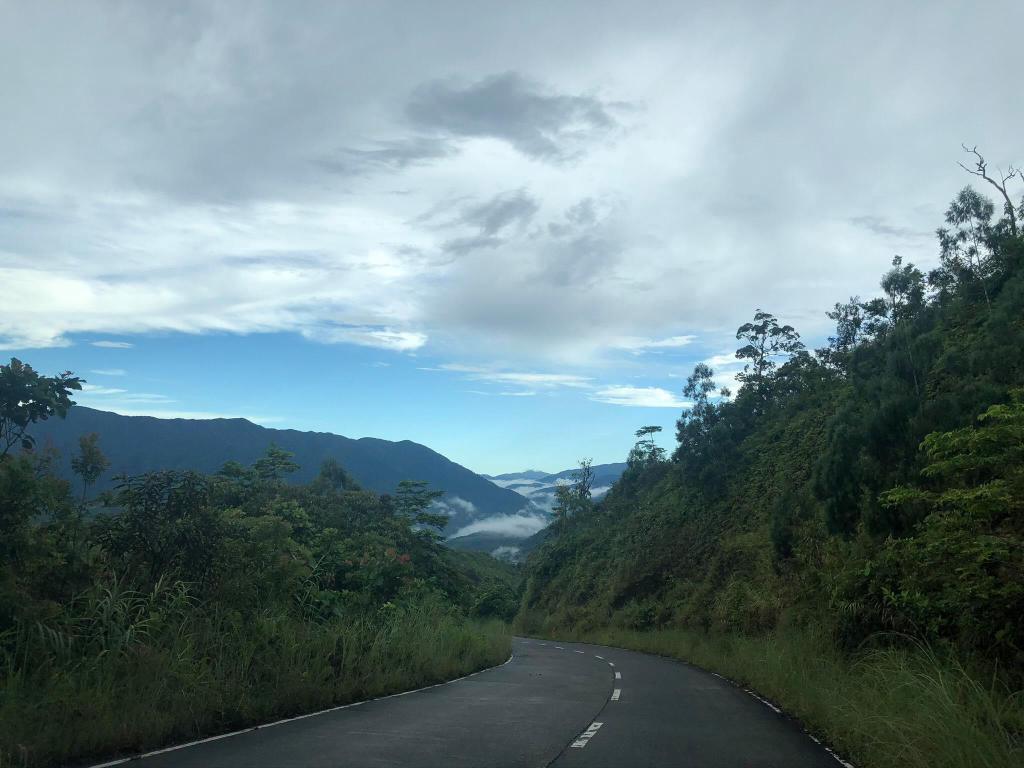
Photo by Mr. Vigie Ongleo, 05 August 2021, Singapore.
We continue this Sunday our Original Pilipino Music (OPM) featuring the genius and warmth of the late Bodjie Dasig in his playful yet meaningful early hit from the 1980’s called “Ale, Nasa Langit Na Ba Ako?” (Ma’am, Am I In Heaven?).
We find it perfectly matched with our celebration today of the Solemnity of the Assumption of the Blessed Virgin Mary that teaches us at the close of her life here on earth, Mary was taken body and soul to the glory of heaven (https://lordmychef.com/2021/08/14/mary-mirror-of-gods-greatness/). The same glory awaits us all in the end of time if we try to imitate the Blessed Virgin Mary in her faith, charity and unity with Christ Jesus her Son.
It is a very timely celebration giving us hope and inspiration in persevering in faith and charity as we enter our second week of lockdown with COVID-19 infections reaching record levels since the start of this pandemic last year.
And that is why we find Ale, Nasa Langit Na Ba Ako? so perfect on this cloudy and gloomy Sunday to uplift our sagging spirits, reminding us how after all the pains and darkness of life, there awaits us the glory of heaven which starts here on earth.
We were in college in the early 80’s when this song was first played on the airwaves in some select radio stations only.
Written by the late Bodjie Dasig (+2018) who also wrote the popular Sana Dalawa ang Puso Ko (I Wish I Have Two Hearts), Ale narrates the experience of a man who saw a pretty woman while driving in Cubao, causing him to get into an accident that he ended in a hospital. Upon waking up, he saw his nurse so lovely that he thought he was already in heaven!
When he was discharged from the hospital, he asked the nurse to marry him but unfortunately, she turned out to be happily married. The man was so dismayed that he did not notice the flight of stairs and fell, banging his head on the floor that he ended up being confined in the hospital again.
When he woke up in his new hospital room, he saw another lovely nurse but this time before asking if he was in heaven, he first asked if the nurse is married.
We do not know whatever happened to the man in the song but Ale tells us the common notion how a beautiful woman can always signify heaven and bliss in life. Of course, such beauty refers to more than the physical features of a woman for true beauty lies deep within the heart, mind and soul of anyone.
In her life of faith, charity, and communion in her Son Jesus Christ, the Blessed Virgin Mary is undoubtedly a woman of great beauty mirroring the greatness and goodness of God that she became the first to be assumed into heaven body and soul among humankind.
May we continue to persevere in life’s challenges to share God’s loving presence in this world filled with pains and sufferings, trials and difficulties.
We hope this song brings you some smiles and good vibes!
*We have no intentions of infringing on the copyrights of this song except to share its beauty and joy with others.
The Lord Is My Chef Sunday Recipe for the Soul by Fr. Nicanor F. Lalog II
Solemnity of the Assumption of the Blessed Virgin Mary, 15 August 2021
Revelation 11:19-12:1-6,10 ><}}}*> 1 Corinthians 15:20-27 ><}}}*> Luke 1:39-56
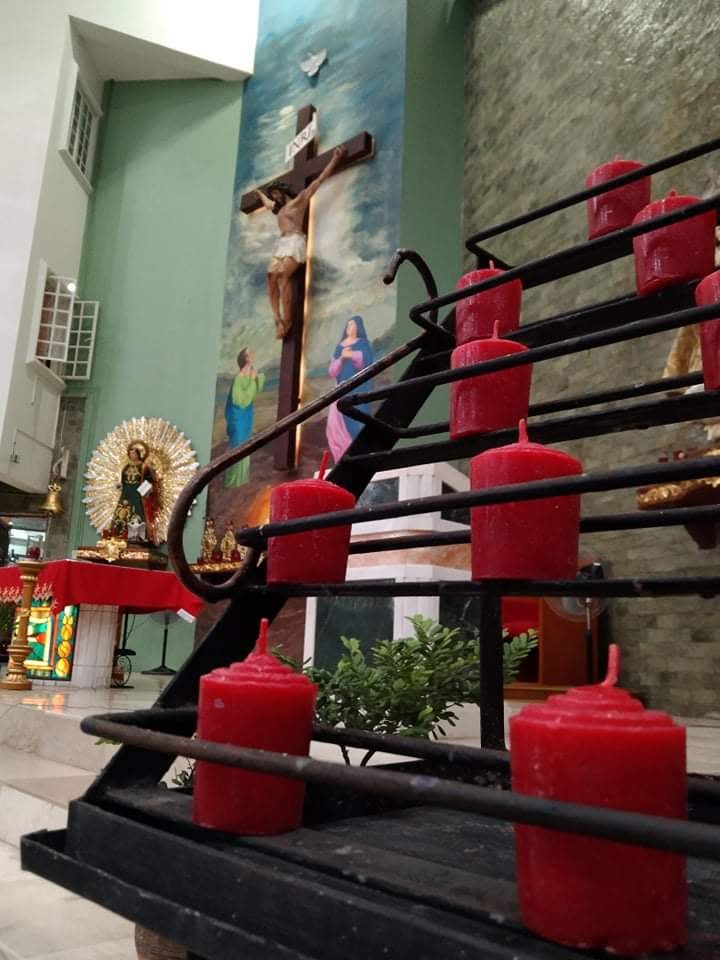
Photo by author, December 2020.
We take a break this Sunday from our readings in the bread of life discourse in John’s gospel to celebrate on this date the Solemnity of the Assumption of the Blessed Virgin Mary following Pope Pius XII’s dogma in 1950 that at the close of her earthly life, Mary was taken up body and soul into the glory of heaven.
Without telling the manner or the circumstances of time and place of the Assumption, its dogma forms part of the deposit of our faith received from the Apostles as attested by its long line of traditions since the Pentecost. It is so important that its celebration supersedes the liturgy of any Sunday because it invites us all to see in Mary raised to heaven the image of the Church and of all the faithful on our way to eternal glory with God.
It is a very timely celebration while we are in the midst of another lockdown due to a surge in COVID-19 cases, giving us hope and inspiration to persevere in all these difficulties and trials to become better disciples of Jesus like his beloved Mother.
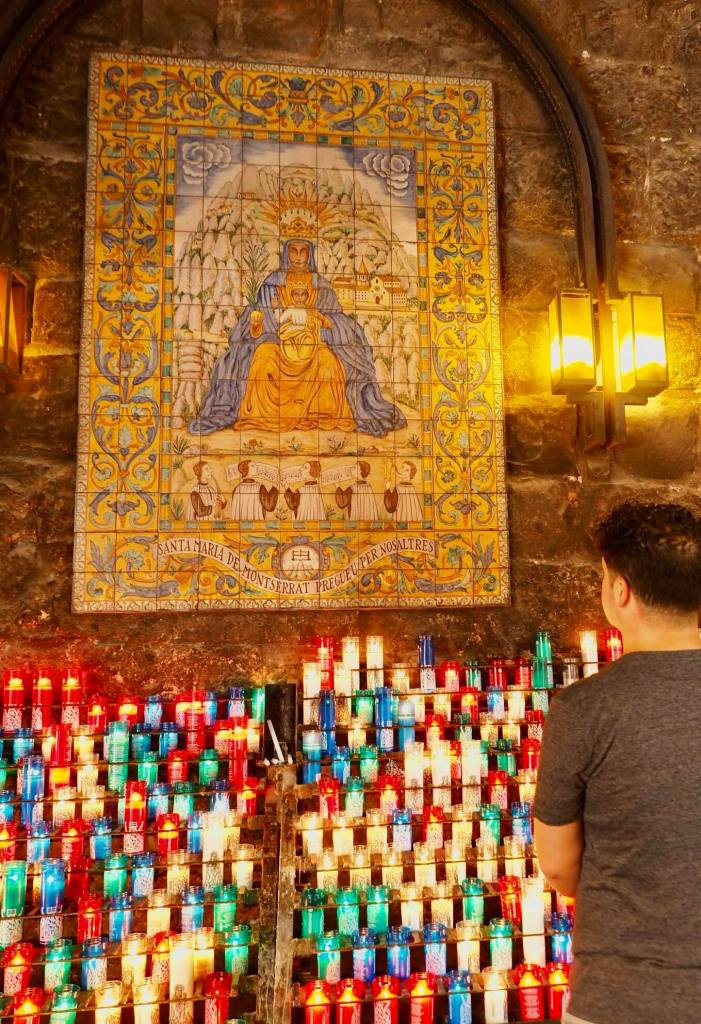
Photo by author at the Assumption Sabbath, Baguio City, 2019.
Mary, a type of the Church
Our first reading today presents us with two images of a woman that seem to contradict each other with scenes that anti-climactic, flowing in the reverse mode. It could have been better as in most cases that the first scene depicting the woman in all glory should have been last instead of the woman in childbirth pains and dangers that comes in second. Is it not the sorrowful always comes first leading to glory?
A great sign appeared in the sky, a woman clothed with the sun, with the moon under her feet, and on her head a crown of twelve stars. She was with child and wailed aloud in pain as she labored to give birth. Then another sign appeared in the sky; it was a huge red dragon, with seven heads and ten horns, and on its heads were seven diadems.
Revelation 12:1-3
It is easy to see the Blessed Virgin Mary in that woman depicted in John’s vision especially if we continue reading on to find the title and authority attributed to her child as our Savior Jesus Christ. But modern biblical studies go deeper than that simplistic view: the scenes speak more of the birth of Christ among us his disciples. It is “painful” because it takes place amid many evil and sins like persecutions and temptations symbolized by the red dragon; but, amid all these, Jesus remains among us, leading us, protecting us, and blessing us. Hence, the woman in this passage becomes a symbol of the Church in the glory of God following Christ’s Resurrection while at the same time in the midst of many earthly battles.
Of course, no other woman can best fit that image than Mary who gave birth to Jesus, who has always been in the most intimate relationship with her son as disciple among all humankind. And because of her role in relationship to her Son, to us his disciples also his Body as community, Mary is the image or type of the Church still giving painful birth to believers like in this time of the pandemic while we are already assured of glory in heaven as children of God. Vatican II perfectly expressed it in declaring:
“By reason of the gift and role of divine maternity, by which she is united with her Son, the Redeemer, and with His singular graces and functions, the Blessed Virgin is also intimately united with the Church. As St. Ambrose taught, the Mother of God is a type of the Church in the order of faith, charity and perfect union with Christ.”
Lumen Gentium #63
With that, Mary has also become the mirror of God’s greatness in all time, the very reason we venerate her as first among the saints and angels because it is also the same call of holiness to us all as children of the Father and disciples of Christ. It is in this framework that we celebrate her Assumption, especially when we profess every Sunday: “I believe in the Holy Spirit, the holy Catholic Church, the communion of saints, the forgiveness of sins, the resurrection of body and life everlasting. Amen.”
Photo by author, Nazareth, 2019.
Greatness of God, lowliness of Mary
As we have mentioned at the start, the dogma of the Assumption of Mary does not go into details how it took place. What matters most is the fact of the Assumption of Mary, body and soul. Like with her Immaculate Conception, there are no direct nor explicit biblical references to her Assumption; however, from the collective meditations and contemplations in the Church, we find vast and rich sources in reflecting the beauty and wonder of the Blessed Mother’s unique place in our salvation history.
For the Mass of the day of the Solemnity, we contemplate on Mary’s canticle called Magnificat which she sang after being praised by her cousin Elizabeth during the Visitation.
And Mary said:
"My soul proclaims
the greatness of the Lord;
my spirit rejoices in God my savior.
For he has looked upon his lowly servant.
From this day all generation will call me
blessed:  the Almighty has done
great things for me, and holy is his Name."
(Luke 1:46-49)
It was the first proclamation of the gospel of salvation in Jesus Christ whom Mary first received and shared first with her cousin Elizabeth in a town in Judah. See how in the Visitation Elizabeth praised and admired Mary, becoming the first to call her “blessed among women” because “she believed the word spoken to her by the Lord would be fulfilled” (Lk.1:45). Instead of giving back her praise and admiration to Elizabeth who was pregnant with John the Baptist at that time despite her old age and being barren, Mary sang praises to God like the other great women in the Old Testament after experiencing God’s extraordinary acts in their personal lives and in Israel’s history.
Though we may never have the same personal experiences of the Blessed Virgin Mary, as members of the Church she represents, we can always look through her Magnificat the extent we have also become the mirror of the greatness of God especially at this time when everybody seems to doubt his loving presence in this time of the pandemic.
 It is the reason why we also sing the Magnificat
during our evening prayers in the Church because
before we can ever praise God for his kindness and majesty,
we must first allow him to work in us by being lowly before him like Mary.
See how the Magnificat sings of the depths of Mary’s soul and her faith, of her perfect obedience to the word of God and the mission entrusted to her. Very clear in its lyrical expression, the focus and center is God, not Mary. It is the reason why we also sing the Magnificat during our evening prayers in the Church because before we can ever praise God for his kindness and majesty, we must first allow him to work in us by being lowly before him like Mary.
Have we truly been God’s lowly servant like Mary, allowing God to work his great wonders through us?
Three things I wish to share with you on Mary’s lowliness that enabled God to work his wonders through her:
First is her openness to the word of God like in the Annunciation of the birth of Jesus. Mary had a prayer life, a discipline of making time with God, setting her self aside for the Lord. Prayer is always the start of every relationship with God. That is when we truly become humble to lose control of ourselves, to forget our selves and let God in the Holy Spirit dwell into us. Even in the darkest moments of our lives, there will always be that glimmer of hope because the Holy Spirit enlightens us in our paths.
Second is Mary’s saying “YES” to God. She does not merely listen to God; she says “be it done unto me according to your word.” From the very start, Mary never doubted God in his wisdom and plans that she always said yes. One most beautiful expression by the evangelists of Mary saying yes to God is whenever Mary would “treasure in her heart” words of Jesus and of others.
But Mary’s greatest yes happened at the Cross, in her sharing in the Paschal Mystery of her Son Jesus Christ, being the only other disciple who remained with the Lord until his death. No wonder, it was to her based on tradition that the Risen Lord first appeared on Easter.
Third is Mary’s fidelity to God, her yes was not just a one-shot deal but an everyday yes to Jesus even after he had ascended into heaven. The Acts of the Apostles tells us explicitly how Mary was among the disciples present inside the upper room at Jerusalem when the Holy Spirit came on the day of Pentecost. Throughout the ages in her numerous apparitions, Mary said yes to God delivering Jesus Christ’s call for us to penance and conversion, to prayers and the Holy Eucharist especially at Fatima in Portugal.
“The Assumption of the Virgin” by Italian Renaissance painter Titian completed in 1518 for the main altar of Frari church in Venice. Photo from wikidata.org.
Mary went through many hardships and difficulties in her life and in the history of Israel, coming from an obscure town that was a butt of jokes of their time like when Nathanael asked Philip who claimed to have found Jesus Christ, “Can there any good thing come out of Nazareth? (Jn.1:45)”.
In this time of the pandemic, the vision of John in the first reading becomes more real when people refuse to recognize the spiritual dimension of COVID-19, of the need to be converted and to again nurture that relationship with God following decades of affluence and materialism. Like Mary, let us be humble to accept we are not the masters of this world nor of our own life but God almighty.
We are called to persevere with Mary, to be strong in our faith and charity that God will never forsake us so we can be present among the poor and marginalized including those spirits weakened by the prolonged quarantines.
With Mary, let us believe the words of St. Paul how all will come to life again – body and soul like Mary – in the final end of time that begins right now, right here in the midst of all these trials and sufferings. Amen.
The Lord Is My Chef Breakfast Recipe for the Soul by Fr. Nicanor F. Lalog II
Wednesday, Week XVII, Year I in Ordinary Time, 28 July 2021
Exodus 34:29-35   ><]]]]*> + ><]]]]*> + ><]]]]*>   Matthew 13:44-46
Photo by author, Church of Dominus Flevit overlooking Jerusalem, 2017.
How lovely are your words today,
God our loving Father
leading us the way closer to you
through your Son Jesus Christ!
So many times, you lead us to
many detours in life, to many
coming and going in order to
savor your loving presence.
How can we not appreciate
and be awed like your people
in the wilderness who witnessed
your immense majesty
on the face of Moses you met
frequently inside your tent
putting on and off the veil
that eventually played a role in our faith.
As Moses came down from Mount Sinai
with the two tablets of the commandments
in his hands, he did not know that the skin
of his face had become radiant
while he conversed with the Lord.
Whenever Moses entered
the presence of the Lord to converse
with him, he removed the veil until
he came out again.  On coming out,
he would tell the children of Israel all
that had been commanded.  Then the
children of Israel would see that the skin
of Moses' face was radiant; so he would
put again the veil over his face until
he went in to converse with the Lord.
(Exodus 34:29, 34-35)
In your eternal wisdom, dear Father,
you eventually removed that veil
in the coming of your Son Jesus Christ
so we can go nearer to you than ever
to be one with you in him
through him, and with him
 by going through the same process
of going in and going out.
Jesus said to his disciples:
"The Kingdom of heaven
is like a treasure buried in a field,
which a person finds
and hides again,
and out of joy goes and sells
all that he has and buys the field.
Again, the Kingdom of heaven
is like a merchant
searching for fine pearls.
When he finds a pearl of great price,
he goes and sells all that he has
and buys it."
(Matthew 13:44-46)
We pray, O Lord, we remain focused
in you alone, learning to adapt,
 willing to let go whatever we hold so that
 even if we do not see you face to face
like your beloved disciple in the empty tomb
 that Easter morn, we may still believe
 even if we only see the veil that covered your face,
wrapped neatly into one place. Amen.
The Lord Is My Chef Sunday Music by Fr. Nick F. Lalog II, 16 May 2021
Photo by author at NLEX-Pampanga area, January 2020.
Happy Ascension Sunday!
After so many tries at other songs that speak of “heaven” in relation with our celebration today, I finally settled on The Cure’s “Just Like Heaven” as our featured Sunday music because first of all, they are one of my favorite bands.
Secondly, unlike the other songs that speak of heaven, The Cure’s Just Like Heaven is so unique: music is cool and crisp that is soothing and relaxing like most romantic songs. It speaks joyfully of the beautiful love between two people so in love with each other that turned out to be only a dream — because the reality is that they have parted ways!
“Show me, show me, show me how you do that trick The one that makes me scream” she said “The one that makes me laugh” she said And threw her arms around my neck
Show me how you do it And I promise you I promise that I’ll run away with you I’ll run away with you
Spinning on that dizzy edge I kissed her face and kissed her head And dreamed of all the different ways I had To make her glow Why are you so far away, she said Why won’t you ever know that I’m in love with you That I’m in love with you
And so, you ask, where is heaven?
Remember our reflection last week about love that despite the pains and hurts of every break up and “LQ” is always the fact that we still love. The man in the song is still so in love that he keeps on dreaming her.
Here lies the deciding factor in our choosing Just Like Heaven for this Sunday’s music: The Cure’s lead singer and composer Robert Smith claims it is his most favorite song in all their music. He admitted in some interviews that composing Just Like Heaven was so different than the rest that he could not repeat. No wonder, a year after writing and recording this song in 1987, Smith married his girlfriend Mary Poole and since then, have lived together — just like heaven! (Mary is the woman who kissed Smith in this music video before waking up from is dream.)
For me, this song captures the meaning of the Lord’s Ascension: it is entering into a higher level of relationships with God through others in Jesus Christ that we have to work for. Heaven does not come on a silver platter; it is both a grace from God we have to strive for as The Cure imply in “Just Like Heaven” (https://lordmychef.com/2021/05/15/levelling-up-in-jesus/).
Have a blessed week and hope you work to deepen your relationships with more love and kindness, and doubling more of forgiving!
The Lord Is My Chef Breakfast Recipe for the Soul by Fr. Nicanor F. Lalog II
Wednesday, Advent Week I, 02 December 2020
Isaiah 25:6-10     >><)))*>   +   <*(((><<     Matthew 15:29-37
Photo by Dr. Mylene A. Santos, MD, Katmon Harbor Nature Sanctuary, Quezon, March 2020.
O God our loving Father, as we eagerly await the coming Christmas break to finally come home and be with our loved ones, may we also pray and reflect the greatest homecoming of all when your Son Jesus Christ returns to bring us back to you in heaven, our truest home.
How interesting that Jesus must come again to finally bring us home to you; yes, he had already come and always comes to us but unfortunately, we rarely come home to you. We insist on going somewhere or to someone else who just leave us empty and disappointed.
Home is where the heart is and that is you, Father, in heaven. May we constantly search you and dwell in you while still in this world; destroy the “veil that veils all peoples, the web that is woven over all nations” (Is.25:7) that mislead and imprison us with false hopes in superficial relationships and materialistic briberies of the world.
Sometimes we have to go hungry and thirsty to realize the more essential things in life like you, dear God and the people who truly care for us and love us like our immediate family and friends.
Like the crowd who have followed Jesus in the wilderness for three days with nothing to eat: they experienced advent, the coming of God when Jesus fed them after they were first disposed to desire the longings of their soul than of their bodies. It was only then when Jesus fed them through the miraculous multiplication of the loaves of bread for the second time.
May the darkness and gloom that envelop us this season of Advent like the pandemic and other personal crises dispose us to desiring you alone, God our Father, so we may finally enter your heavenly banquet with “rich food and choice wines” (Is.25:6). Amen.
The Lord Is My Chef Breakfast Recipe for the Soul by Fr. Nicanor F. Lalog II
Thursday, Week XXXIV, Year II in Ordinary Time, 26 November 2020
Revelation 18:1-2, 21-23; 19:1-3, 9     >>>  +   <<<     Luke 21:20-28
Praise and glory to you, Lord Jesus Christ for your words today that offer us with clear images about true freedom that leads to fullness of life. So often, many among us are greatly misled by the belief that true freedom is breaking free from sufferings and God and morals, of having absolute freedom to do everything.
That has always been one of the fundamental tenets of pagans of ancient Rome you have banished for being a “cage”, an imprisonment!
“Fallen, fallen is Babylon the great. She has become a haunt for demons. She is a cage for every unclean spirit, a cage for every unclean bird, a cage for every unclean and disgusting beast.”
Revelation 18:2, 21
True freedom is choosing what is true and good, trying to bear all pains and sufferings that purify us into better persons, that free us from impurities to enter into your heavenly banquet of eternal life.
Then the angel said to me, “Write this: Blessed are those who have been called to the wedding feast of the Lamb.”
Revelation 19:9
Life continues to bear down upon us these days, Lord, especially the poor who are left with almost nothing in this life; worst, with nothing else but their dignity as persons, there are times they are being forced to give it up for a price.
Give us the grace of perseverance, to withstand all pressures by holding on to you, clinging to your merciful love that amid all the trials and sufferings going on, we may “stand erect and raise our heads because our redemption is at hand” (Lk.21:28).
Let us not be ashamed of being faithful to you, Jesus, for you alone can lead us to true freedom as a person. Amen.
Photo by Ms. Ria De Vera, Christ the King celebrations in the parish, 22 November 2020.
The Lord Is My Chef Sunday Music, 01 November 2020
Photo by Mr. Jim Marpa, Bohol, 2019.
I have lined up some songs with “heaven” in their titles or lyrics for this Sunday’s celebration of All Saints’ Day and tomorrow’s All Souls’ Day; but, during prayers and reflections, I kept on hearing Sting singing in my head King of Pain which is my most favorite among his long list of great music.
Our celebrations this November first and second are a mixture of joy and mourning, of heaven and sufferings, of life and death. As we remember today those already in heaven and tomorrow pray for those awaiting entrance into heaven, we also remember on these twin dates the death of loved ones.
No matter how much we may extoll the redemptive nature of death not as an end but a beginning of eternal life, we cannot miss the sadness and pain it brings to everyone that is always for a lifetime.
And that is what hope is all about: hope does not remove sadness or pain. When we hope of getting into heaven with our departed loved ones, no matter how blissful heaven may be, we always have to deal with the hurts of losing a parent or a spouse, a sibling or a friend.
To hope means to firmly believe that when things get worst, even unto death, there is Life itself, God remaining in the end, loving us, taking us to his presence in heaven to live life in its fullness in him.
To hope means to face new beginnings in this life amid the pains we have in our hearts from deaths and separations, believing that someday, if not in this life, everything would be whole and perfect again.
That is why I find King of Pain more apt for All Saints’ Day and All Souls’ Day.
Written by Sting in 1982 at the Goldeneye Estate in Jamaica where Ian Fleming wrote his first James Bond novels, King of Pain expresses the inner torments he was going through as an individual at that time — his recent divorce from his first wife and growing misunderstanding with his other two colleagues, Andrew Summers and Stewart Copeland. They eventually parted ways after the release of the Synchronicity album from which King of Pain came in 1983.
The beat, the music and the lyrics seem to be dark and melancholic at first but as you get the feel of the entire song sung by Sting, then you realize it is actually about a man struggling with sadness or even depression, of a man filled with hopes until you realize it is speaking about you as king of pain.
Aren’t we all the king of pain in one or the other?
And as we bear all the pains, we keep on forging on with life, we never resign but keep hoping even for a piece of heaven, of the sun to celebrate life each day until we make it to the Other Side like our departed loved ones.
The Lord Is My Chef Sunday Recipe for the Soul by Fr. Nicanor F. Lalog II
Solemnity of All Saints, 01 November 2020
Revelation 7:2-4, 9-14   |+|   1 John 3:1-3   |+|   Matthew 5:1-12
“Mary and the Saints” painting by Duccio di Buonoinsegna (1308-1311) from en.wikipedia.org.
Let me begin our reflection on this All Saints’ Day with a joke from the “Language Nerds” on how the past, the present and the future came and appeared in a bar. Everybody was tense.
Our celebrations today and tomorrow deal with “verb tenses” – the past, the present, and the future that somehow converge in the here and now of Jesus Christ our Lord. We call it the tension of the already here but not yet, like God and heaven – both already here but not yet.
All Saints’ Day and All Souls’ Day are two Catholic celebrations so unique and distinctive of our faith that bring to the fore the beautiful tensions of the “here and not yet”, of that convergence of the temporal and eternal in our present lives.
It is something like our Filipino delicacies of tuyo (dried fish) and balut (fermented duck egg): when you smell the aroma of the frying tuyo by your neighbor, you could taste it but if you want to really experience its delight, you have to go to your neighbor and join their meal. Or the balut: is it an egg or a duckling?
In a similar manner, we find in our Gospel today that proverbial question of which came first, the egg or the chicken? Are we blessed because we followed the Beatitudes first or, are we blessed first that we can practice the Beatitudes of Christ?
When Jesus saw the crowds, he went up the mountain, and after he had sat down, his disciples came to him. He began to teach them, saying: “Blessed are the poor in spirit, for theirs is the kingdom of heaven. Blessed are they who mourn, for they will be comforted. Blessed are the meek, for they will inherit the land. Blessed are they who hunger and thirst for righteousness, for they will be satisfied. Blessed are the merciful, for they will be sown mercy. Blessed are the clean of heart, for they will see God. Blessed are….
When Jesus preached his sermon on the mount to launch his ministry, he first presented himself — that he is the Christ, the Anointed or Blessed One because he is in fact the Beatitudes: he is the poor in spirit, the merciful and meek, the one with a clean heart.
Inasmuch as the Beatitudes tell us who is Jesus Christ, the Beatitudes also challenge us followers of Jesus to imitate and follow him in being poor in spirit, merciful, and clean of heart.
At first glance, we notice that blessedness seems like a reward given by Jesus after we have imitated him like being blessed after being insulted and persecuted in his name, working for peace and hungering and thirsting for righteousness.
However, the very fact we are able to bear all these sufferings to live the Beatitudes means that we are already blessed.
And that is the truth: in Christ’s Passion, Death, and Resurrection, we have all been blessed by God that we are able to live as his beloved children, now living in his “kingdom of heaven” right here on earth.
Beloved: See what love the Father has bestowed on us that we may be called the children of God. Yet so we are… we are God’s children now; what we shall be has not yet been revealed. We do know that when it is revealed we shall be like him, for we shall see him as he is. Everyone who has this hope based on him makes himself pure, as he is pure.
1 John 3:1, 2-3
Blessedness is who we are as children of God unless we choose to live otherwise.
Blessedness is God’s gift to us that enables us to live according to his will and plans, projecting us further into the future to finally be with him in all eternity in heaven. When we try to live the Beatitudes of Jesus, of going against the tide and flow of the world where power and wealth, popularity and fame are the means life is measured, then that becomes our gift to God.
And that is when we enter into heaven and become saints like what we celebrate today.
According to St. John Paul II, the good news of life is that we all share in the life of God — and that is why we are all blessed.
Our sharing in the life of God makes us blessed.
The difference that we have with the saints is just the tenses: they are now celebrating at present the fullness of their blessedness, of being present before God in all eternity in heaven because they have so well accomplished while living here on earth the works of the Beatitudes of Christ in the past. They have overcome all tests and trials in the past and now having the rewards of full blessedness.
We, on the other hand, though already sharing in the blessed life of God here on earth in the present, still have to face and endure many other trials in the future to perfect ourselves in Christ until we get a final glimpse of him in the afterlife.
Photo by Dr. Mai B. Dela Peña, MD, at Spain, 2018.
Blessedness is a relationship with God.
It is now clear with us that saints are like us who are blessed because we share in the life of God. However, saints enjoy the fullness of this blessedness of being in the very presence of God as a “reward” or a result of their striving with God’s grace to live out the Beatitudes.
Saints now enjoy the eternal presence of God, the fullness of blessedness and fullness of their relationship in God and with God, from earth into heaven.
This is the reason we have a feast for all the saints or those who have gone ahead of us and tried to lead holy lives, living out their blessedness that they now enjoy the eternal presence of God in heaven. They need not be declared by the Church as saints whoever gets into heaven in the presence of God is a saint.
We who are still living here on earth, though blessed as we share in the life of God, cannot be considered as saints yet because we still have to go through a lot of purifications, of tasks in loving.
Again, we see that tension of the here and not yet in this aspect of being saints, of blessedness: heaven is eternal union with God (hell is eternal separation from God); blessedness and heaven are both our relationships with God.
Therefore, the challenge of our blessedness here on earth as seen in the Beatitudes of Jesus is how we maintain and keep that intimate relationship with God that every choice we make is always a choice for life, of choosing to love than hate, to forgive than revenge, to understand and let go.
In the first reading, John tells us of his vision of heaven with great multitude of “saints” or holy men and women “wearing white robes holding palm branches in their hands”. The Lord told him,
“These are the ones who have survived the time of great distress; they have washed their robes and made them white in the blood of the Lamb.”
Revelation 7:14
Although we are extolling in this solemnity all the unnamed saints now in heaven, this is still a feast celebrating the goodness of God, of his immense love for us in blessing us in Jesus Christ who enables us to do good in the power of the Holy Spirit.
As we remember all the Saints, we celebrate also this sharing of God’s life in us for us to be blessed, assuring us of being saints someday!
We are challenged today to live out this blessedness freely given to us by God by being more loving with others specially in this time of COVID-19 as well as when two super typhoons are threatening to slam into some parts of our country this week.
A short note about cemeteries
Sometimes, non-Catholics laugh at us every November first when we troop to the cemeteries to be with our departed loved ones instead of November 2. Despite the closure of cemeteries this week due to COVID-19, many have earlier visited their loved ones in cemeteries while the rest among us would surely do the same once the ban is lifted.
Is there something wrong? NONE. Except for those who just go to cemeteries to drink and have fun without praying and celebrating Mass in their parishes. But there is nothing wrong with our tradition of visiting cemeteries on November first.
In fact, it is a vibrant display of our faith in God because every time we visit the dead on All Saints’ Day, we also presume they are already saints, already in heaven.
Most of all, our coming to the cemeteries on All Saints’ Day is an expression of our hope in heaven while still here on earth.
The cemetery reminds us of hope in the future. In the past when we buried our dead, the cemetery has become the place of our mourning; but, every November first, the cemetery reminds us it is the place of hope where sadness is not really removed but where we find strength and faith that like our departed loved ones, we shall overcome all trials and sufferings here on earth to be one with them in the presence of God in heaven.
That is the good news of All Saints’ Day and All Souls’ Day: we are so blessed by God in Jesus Christ who had opened our access into heaven not only in the future when we die but even now as we mourn – and celebrate the memory of our dead, we already have a taste of eternal life.
May we live out this blessedness God has given us. Amen.
The Lord Is My Chef Breakfast Recipe for the Soul by Fr. Nicanor F. Lalog II
Tuesday, Week XXIX, Year II in Ordinary Time, 20 October 2020
Ephesians 2:12-22     >><)))*> + >><)))*>  +  >><)))*>     Luke 12:35-38
Photo by Dr. Mylene A. Santos, MD in Quezon, 2020.
Glory and thanksgiving to you, God our Father, through your Son our Lord Jesus Christ in the power of the Holy Spirit for reconciling us all in you, making us one despite our many differences.
How lovely to the ears, to our being the words of St. Paul today, Lord Jesus, assuring us of our citizenship in heaven through the salvation you have brought us all, regardless of our color, race, status or even religion!
So then you are no longer strangers and sojourners, but you are fellow citizens with the holy ones and members of the household of God, built upon the foundation of the Apostles and prophets, with Christ Jesus himself as the capstone. Through him the whole structure is held together and grows into a temple sacred in the Lord; in him you also are being built together into a dwelling place of God in the Spirit.
Ephesians 2:19-22
Help us, O Lord, to embody and manifest this unity of peoples in you in the Church, your Mystical Body here on earth.
Heal us of our many divisions and make us truly Catholic by helping everyone enter into communion with you through one another.
Keep us on guard for your return, Jesus, by “girding our loins and lighting our lamps” (Lk.12:35) ready to welcome you with our good works each day, leading others closer to you.
Let us start by going back to you in prayers and silent meditations that many have forgotten or taken for granted in this 24/7 world saturated by media with all the cacophony of sounds and blinding visuals that have blurred our vision of who we really are as citizens of heaven, beloved children of God our Father in heaven.
Help us find our way back home to the Father in heaven here on earth by finding our way back home to our true selves and to our brothers and sisters in you, dear Jesus. Amen.
The Lord Is My Chef Breakfast Recipe for the Soul by Fr. Nicanor F. Lalog II
Monday, Week XXIX, Year II in Ordinary Time, 19 October 2020
Ephesians 2:1-10     >><)))*>   +   <*(((><<     Luke 12:13-21
Photo by Mr. Jim Marpa, 2018.
As we begin our work this Monday, guide us O God our Father to discover anew this great gift of life in you. May we see ourselves the way you see us – beloved and forgiven children made in your own image and likeness — your handiwork as St. Paul beautifully expressed!
For by grace you have been saved through faith, and this is not from you; it is the gift of God; it is not from works, so no one may boast. For we are his handiwork, created in Christ Jesus for good works that God has prepared in advance, that we should live in them.
Ephesians 2:8-10
Let us value this unique blessing from you, dear Lord; in your power and supremacy, you could have just let us vanished and be forgotten. Yet, you chose to redeem us in your Son Jesus Christ, giving us countless opportunities to rise again, to bloom, and to be healed.
Make our hearts whole in you, undivided in pride, complacency and selfishness unlike that man in the parable whom we imitate most often, busy storing treasures for ourselves that we forget real wealth is found in what matters to you our God (Lk. 12:21).
Wake us up from this insanity of amassing too much of everything, not realizing that in the process, the more we have, the more we are actually empty and lost because all these things perish.
Only you, O God, suffices. Make us aspire and desire more of you so your glory and majesty may be seen in us. Amen.