When good news/bad news do not matter at all

The Lord Is My Chef Sunday Recipe for the Soul by Fr. Nicanor F. Lalog II
Week XXII, Cycle A in Ordinary Time, 30 August 2020
Jeremiah 20:7-9 >><}}}*>| + | >><}}}*> Romans 12:1-2 >><}}}*>| + | >><}}}*> Matthew 16:21-27
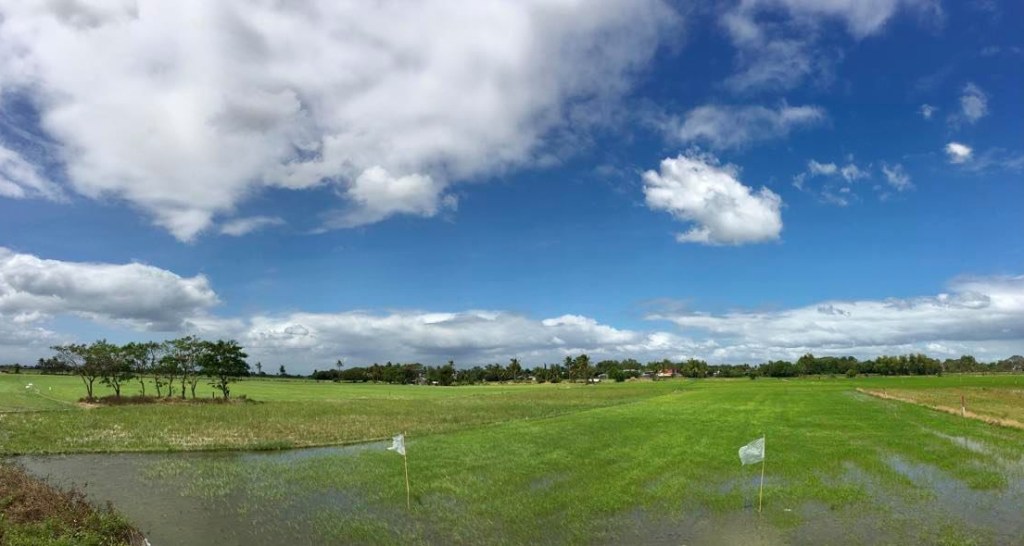
Photo by author, Caesarea Philippi, May 2019

Maybe you have been asked so many times with the question, which do you prefer to hear first, the good news or the bad news? Usually we say it all depends to our mood and temperament or to the gravity of the situation. Sometimes, we ask for the bad news first so we can suffer earlier and enjoy the good news later. Or, we ask for the good news first to soften the impact of the bad news.

Our gospel this Sunday is still set in the pagan city of Caesarea Philippi and we heard Jesus giving his disciples – including us – with a strong dosage of “bad news” after hearing last week the good news that he is “the Christ, the Son of the living God.”

Jesus began to show his disciples that he must go to Jerusalem and suffer greatly from the elders, the chief priests, and the scribes, and be killed and on the third day be raised. Then Peter took Jesus aside and began to rebuke him, “God forbid, Lord! No such thing shall ever happen to you.” He turned and said to Peter, “Get behind me, Satan! You are obstacle to me. You are thinking not as God does, but as human beings do.” Then Jesus said to his disciples, “Whoever wishes to come after me must deny himself, take up his cross, and follow me. For whoever wishes to save his life will lose it, but whoever loses his life for my sake will find it.”

Matthew 16:21-25

Our gospel today seems to be a very big, bad news for everyone, with things getting worst before getting any better which the Lord had promised to be only in the end that nobody knows when!

See how Jesus started by saying he would “suffer greatly at the hands of elders, the chief priests, and the scribes and be killed and on the third day be raised again.” Not only that: he now calls Peter as “Satan” from being the Rock last Sunday after giving the right answer as to who he is.

Like Peter, we would probably say the same thing to Jesus why make suffering and death central to life that is meant to enjoy?

Like Peter, the Lord is inviting us today to focus more on the good news than on the bad news of suffering and death which for him – the Paschal mystery we call – is actually the best of good news!

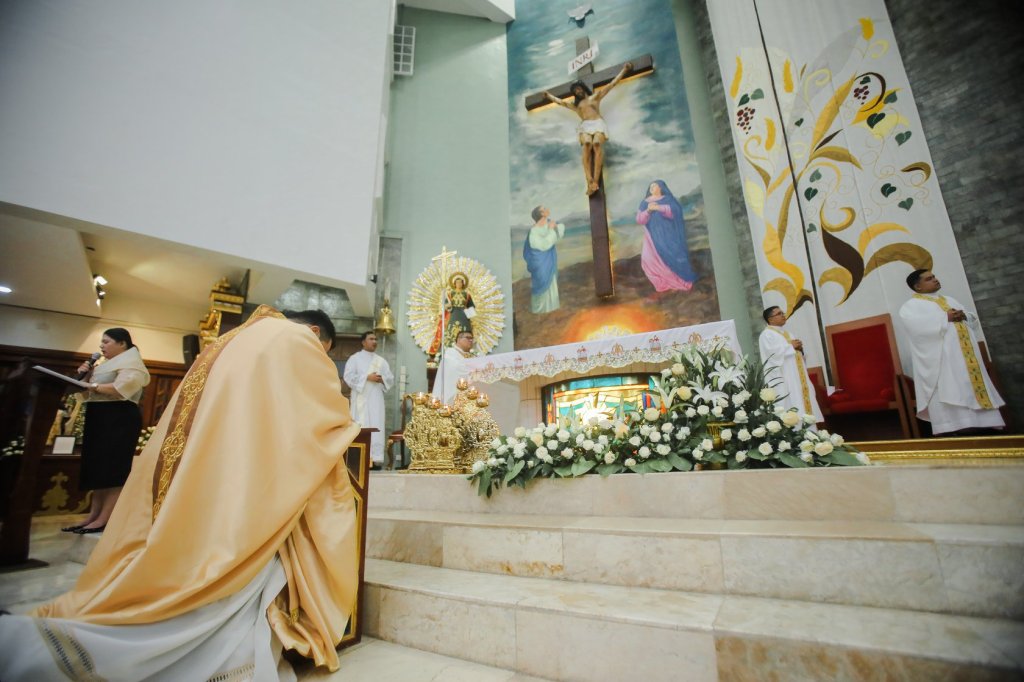
Photo by author, altar flowers in our parish, January 2020.

Jesus Christ’s pasch is the best of good news!

What we have heard as “bad news” from the Lord is his first prediction of his coming pasch or Passion, Death and Resurrection. He would be announcing this prediction of his pasch two more times as they near Jerusalem.

From the He brew word pesach that means to pass over, it connotes suffering and death into new life. It came from the Exodus experience of the Chosen People from Egypt into the Promised Land during the time of Moses, taking its fullest meaning in Jesus Christ, the Son of God who became human like us in everything except sin, “passing over” from eternity to temporal, from Passion and Death to Resurrection.

Authentic discipleship does not require us to seek suffering; no, God is not sadistic as some people with twisted minds would say. However, being faithful to Jesus, witnessing his gospel values bring enough of these sufferings and deaths but on a different level and meaning. We realize that life is a daily exodus, a passing over from darkness into light, from ignorance into wisdom, from sickness into health, from death into new life.

Like the prophet Jeremiah in the first reading, we discover that the more we follow God, the more sufferings we encounter in life but at the same time, we cannot let go of him because his attraction is so powerful! There is something so deep within, so profound and fulfilling in us we realize that living in the ways of God, in the gospel values of Christ can we truly find lasting joy and peace – even if we have to die in our very selves in the process.

You duped me, O Lord, and I let myself be duped; you were too strong for me, and you triumphed. all the day I am an object of laughter; everyone mocks me… But then it becomes like fire burning in my heart, imprisoned in my bones; I grow weary holding it in, I cannot endure it.

Jeremiah 20:7, 9
Photo by author, Gaudete Sunday in our parish, December 2019.

Thinking in God’s ways

Today Jesus is assuring us that there is no such thing as “good news, bad news” with him. The good news/bad news question is really a non-question to disciples of Christ because whatever suffering and death we embrace in him is a sharing in his very life.

Hence, Jesus Christ’s good news is in fact the bestest news we can ever have. Always.

The key is to think as God does, not as human beings do as Jesus pointed out to Peter.

Three things I wish to share with you about thinking in God’s ways:

First is to accept and embrace pains and sufferings not for their own sake but as a way to cleanse our selves to greater glory. As we have said, God is not a sadist; we need to be cleansed like every thing in order to bring out the best in us like diamonds or any precious stone or any material.

Polishing and honing always mean “subtractions” with so many shaving and cutting of the rough edges to bring out the beauty and sharpness of a thing.

Man’s ways has always been to avoid every pain and suffering. No wonder, the most prescribed medicine worldwide is said to be the pain killer. But, experience has taught us this is not true and cannot be the norm of life. Like every gym enthusiast would tell you, “no pain, no gain”. Pain and suffering is part of life and the good news is, Christ has made it holy for us.

Second is to be silent in order to be able to listen to every sound and thus, heighten our sensitivities not only with our true selves but also with God and with others. In this age of social media and instant communications, silent has become a rare commodity. It is always easier to speak even without thinking much than be silent. That is the way of the world: speak out loud, make noises, and let everyone hear you — until they get tired of you.

Photo by author, our parish ceiling at sunset, 25 August 2020.

Third is the most precious in God’s ways of thinking — the way of hiddenness. This is God’s most evident way of making himself felt, experienced, and yes, seen by being hidden and invisible.

Last Thursday we celebrated the memorial of St. Monica, the mother of St. Augustine who narrated the story of how she got sick at Ostia in Italy with his brother hurrying to get back home to Tagaste in Africa so that when she dies, she would be buried there. St. Monica “reproached him with a glance because he had entertained such earthly thoughts”; then, she looked at St. Augustine and told him to bury her anywhere, asking one thing only from him: that he remembers her always in his celebration of the Holy Mass.

So many times, we are so concerned with our popularity that whatever we do has to be made known to everyone to see specially by those so-called “followers” with their “likes” that even up to death, some would spend a fortune for lavish funerals and even mauseleoum.

That’s the way of the world of everybody making a statement, of being known as present, always seen. In the movie “The Devil’s Advocate”, Al Pacino played the role of satan who said it so well at the end after tempting Keanu Reeves, “vanity…vanity is my most favorite sin.”

See the life of Jesus Christ: more than half was spend in hiddenness and silence. He worked only for three years characterized by so many instances of silence and hiddenness too and yet, his impact continues to this day and hereafter.

Beginning with last Sunday after asking us who do we say he is, Jesus is inviting us to follow him in his Passion and Death to be one in his Resurrection. This is also the call by St. Paul in the second reading:

I urge you, brothers and sisters, by the mercies of God, to offer your bodies as a living sacrifice, holy and pleasing to God, your spiritual worship. Do not conform yourselves to this age but be transformed by the renewal of your mind, that you may discern what is the will of God, what is good and pleasing and perfect.

Romans 12:1-2

Jesus is not asking too much from us, no need for any fanfares on our part; simply come to him with our true self, no matter how sinful and incomplete we are. Remember, all is good news with him and you never lose in him. Amen.

A blessed week to everyone!

Photo by author, parish ceiling at sunset, 25 August 2020.

Of wages and gifts

The Lord Is My Chef Breakfast Recipe for the Soul by Fr. Nicanor F. Lalog II
Wednesday, Memorials of St. John Eudes & St. Ezechiel Moreno, Priests, 19 August 2020
Ezekiel 34:1-11 >><)))*> ||| >><)))*> ||| >><)))*> Matthew 20:1-16
Photo by author, Pulilan, Bulacan, February 2020.

As we go through more difficulties and sufferings during this time of pandemic, your words today dear God speak so well of what we need most – a true shepherd who will care for the lost and injured sheep.

Yes, you have fulfilled, O God, your promise a long time ago to Ezekiel that you yourself will come by sending us your Son Jesus Christ to look after and tend your sheep after the shepherds of Israel have miserably failed in their duties and responsibilities.

Unfortunately, there are still so many shepherds today in government even in Church who continue to pasture themselves!

Woe to the shepherds of Israel who has been pasturing themselves! Should not shepherds, rather, pasture sheep? You have fed off their milk, worn their wool, and slaughtered the fatlings, but the sheep you have not pastured. You did not strengthen the weak nor heal the sick nor bind up the injured. You did not bring back the strayed nor seek the lost, but you lorded it over them harshly and brutally. As I live, says the Lord God, because my sheep have been given over to pillage, and because my sheep have become food for every wild beast, for lack of a shepherd; I swear I am coming against these shepherds.

Ezekiel 34:2-4, 8, 10

Teach us, O Lord, through the examples of two great shepherds of souls whose feast we celebrate today: St. John Eudes who was one of the early pioneers in propagating devotion to your most Sacred Heart and St. Ezechiel Moreno who served for 15 years in the Philippines and later in South America where innumerable cancer cures were attributed to him.

St. John Eudes and St. Ezechiel Moreno showed in their lives of faithful and loving apostolate for the poor that shepherding is always a gift, never to be counted or equated nor even be seen in terms of wages and pay like in the gospel.

Remind us sweet Jesus in the midst of this pandemic when we are called to be good shepherds like you, may we always see your call and mission to us as gifts freely given not as tasks or work to be compensated by material things because you believe in us.

May we always go the extra mile in answering your call, O Lord, which is in itself a tremendous gift we must cherish for we are not even worthy at all to receive. Amen.

From Google.

Love without borders

The Lord Is My Chef Sunday Recipe for the Soul by Fr. Nicanor F. Lalog II
Week XX, Cycle A in Ordinary Time, 16 August 2020
Isaiah 56:1, 6-7 >><}}}*> Romans 11:13-15, 29-32 >><}}}*> Matthew 15:21-28
Twilight at our parish by Ms. Ria De Vera, 12 August 2020.

For the third Sunday in a row, Jesus reveals a very wonderful side of him who goes out of his way to meet us and comfort us in the most difficult situations and places we are into. It is something we need so much in these days of Moderate Enhanced Community Quarantine (MECQ) seen right away in the opening of today’s gospel.

At that time, Jesus withdrew to the region of Tyre and Sidon. And behold, a Canaanite woman of that district came and called out, “Have pity on me, Lord, Son of David! My daughter is tormented by a demon.” But Jesus did not say a word in answer to her.

Matthew 15:21-23

Jesus goes out of his way to meet everyone

Israel is a very small country but always leaves a big impact on everyone who goes on a pilgrimage there. There is that sense of awe in every sacred site that until now continues to “speak” and evoke among pilgrims the presence and holiness of God and his saints.

Like what we have mentioned last Sunday, the proxemics or the non verbal communication of the places Jesus have visited convey to us deeper meanings than just mere sites. And that is more true during the time of Christ like the setting of this Sunday’s gospel, the region of Tyre and Sidon.

Now part of Lebanon found south of its capital city Beirut that was devastated by powerful explosions two weeks ago, Tyre and Sidon were gentile or pagan cities during the time of Jesus with a considerable Jewish population.

His going there shows us his fidelity to his mission of “searching for the lost sheep of the house of Israel” that partly explains to us why he never bothered to give the slightest hint of recognition to the Canaanite woman who had sought his help for her daughter “tormented by a demon”.

Photo by author, the Holy Land, May 2019.

And despite the lack of any explanation again by St. Matthew on the attitude by Jesus “snubbing” the pagan woman, we can safely assume that Christ surely knew that by going to Tyre and Sidon, gentiles would seek his healing as news of his fame had spread beyond Galilee at that time.

Here we find the great love and concern of Jesus for everyone, specially the rejected and marginalized in the society.

His “withdrawing to the region of Tyre and Sidon” was in itself a revelation of his universal love, a love without borders reaching out to those lost and feeling alone in life, those rejected, those discriminated for their color and beliefs, status and gender, sickness and diseases like AIDS and lately, COVID-19!

Inclusive Jesus, exclusive human

At the beginning of chapter 11 of St. Paul’s Letter to the Romans from which our second reading is taken today, the great Apostle starts by asking “has God rejected his people?” St. Paul emphatically said “no”, explaining at length the plan of God in Jesus Christ to save all peoples not just the Jews, beautifully telling us,

For the gifts and the call of God are (permanent and) irrevocable.

Romans 11:29

St. Paul’s reflections on God being “inclusive” as against our being so “exclusive” in sending us Jesus Christ to bring us all together as one sheds us some light on that extraordinary incident in the region of Tyre and Sidon involving the Canaanite woman.

Again, I invite you my dear reader to reflect on the many layers of meaning found in this episode so special like the feeding of more than five thousand people the other Sunday and Jesus walking on water last week.

First, notice the silence of Jesus. Keep in mind when the Lord is silent, it does not mean he is out or does not care at all to our needs and pleas. When there is silence – specially a deafening one – the problem is never with God but with us people.

And, true enough! See how the disciples asked Jesus to “Send her away, for she keeps calling out after us” (Mt.15:23) — exactly the way we deal sometimes with those begging our help and attention, seeing them as a nuisance to be sent away? What a shame!

From Google.

Now, we go to the climax of this episode with the woman coming to Jesus, “paying him homage” for the healing of her daughter tormented by a demon. It was a scene similar with St. John’s wedding at Cana where the Blessed Mother also approached Jesus with a request when wine ran out during the feast.

In both episodes we find Jesus being a snub – suplado, as we say.

Most of all, in both scenes we find the remarkable faith in Jesus by his Mother at Cana believing he can do something to spare the newly wed couple of embarrassment from running out of wine while this Canaanite woman felt so sure only Jesus can cure her daughter.

See how she addressed Jesus like his disciples with not just “Lord” but also with the title “Son of David” to indicate her faith in him as the Messiah.

And it did not stop there as she engaged Jesus into a dialogue — indicating intimacy and trust, depth and communion that we refer in Filipino as “matalik na ugnayan” or “matalik na usapan”.

Sometimes in life, Jesus seems to have that longing for some “lambing” from us that he tries to be “pakipot” or hard to get in order to be intimate with us. Please take these Filipino traits positively to get what I mean from this unique scene of Jesus and the Canaanite woman in Tyre and Sidon.

Jesus said in reply, “It is not right to take the food of the children and throw it to the dogs.” She said, “Please, Lord, for even the dogs eat the scraps that fall from the table of their masters.” Then Jesus said to her in reply, “O woman, great is your faith! Let it be done for you as you wish.” And the woman’s daughter was healed from that hour.

Matthew 15:26-28
Photo by author, Church of All Nations beside the Garden of Gethsemane in the Holy Land, May 2019.

Brothers and sisters all in one God as Father

St. Matthew recorded this episode not to scandalize and shock us with those words coming from the Lord, referring to the Canaanite woman as one of the “dogs” that was the term used to designate pagans at that time.

For St. Matthew who was writing for Christians of Jewish origins, the episode was a reminder that the people of Israel were indeed the “children” of God to whom the coming Messiah and salvation – like bread or food – were first promised. St. Paul spent a great deal of explaining of this in his letter specially to the Romans .

Rigthly then, theirs was the “food” not right to be thrown to the “dogs” but, that fact does not exclude the “dogs” from partaking later from the leftover food of the children, as if telling Jesus, today we satisfy ourselves with crumbs, tomorrow we shall have bread!

The Canaanite woman clearly knew where to place herself before the Lord, proving to him her deep faith and amazing knowledge of God’s goodness and plans for everyone. For that, she was highly praised by Jesus for her faith. The only other person also praised by Jesus in having a tremendous faith in him was the centurion – another pagan – who begged the Lord for the remote healing of his servant.

Last Sunday afternoon I read the story of how a nurse was driven out of her boarding house after she tested positive for COVID-19 virus. The poor lady had nowhere to go to spend the night after being denied of any assistance by barangay officials, even by her own family in Batangas! Good enough, somebody reported her to the Philippine National Red Cross that sent an ambulance to take care of the nurse who was found crying by herself at the gutter of a street in Pasay City.

What a very sad and tragic reality happening among us these days of the pandemic.

Where is our love and concern for everyone, especially the weak and the sick, those in our own versions of Tyre and Sidon where no one would dare to go except Jesus, perhaps like the dorms and residences of our medical frontliners who are so tired and sick physically, emotionally, and spiritually during this pandemic?

In these past three weeks we have reflected how Jesus lovingly joined us, staying with us in the wilderness, in the storms of the dark sea, even at the pagan territories where nobody would ever want to go.

This Sunday, Jesus is inviting us to break all barriers and borders between us that separate us from each other. Let us animate our community with Christ’s love and mercy for us all amid our many differences so that slowly we fulfill Isaiah’s prophecy in the first reading that someday the house of the Lord shall be called “a house of prayer for all peoples” (Is.56:7). Amen.

A blessed and safe new week to you! And please do not forget to pray ten Hail Mary’s every 12-noon for national healing and end of the pandemic until September 15, 2020.

Quarantine to heaven

The Lord Is My Chef Breakfast Recipe for the Soul by Fr. Nicanor F. Lalog II
Saturday, Solemnity of the Assumption of Mary, 15 August 2020
Revelation 11:19; 12:1-6, 10 >><}}}*> 1 Corinthians 15:20-27 >><}}}*> Luke 1:39-56
Photo by author, the Assumption Sabbath Place in Baguio City, 2018.

God our merciful Father, on this Solemnity of the Assumption of the Blessed Virgin Mary, we start the praying of ten Hail Mary’s daily at noon until the 15th of next month for collective “healing” and the end of COVID-19 pandemic.

Through the Blessed Mother of your Son our Lord Jesus Christ, we pray for firm faith, vibrant hope, and unceasing love for you and for others as we go into the sixth month of our quarantine to help stop the spread of the corona virus.

But it seems, until now, O God, many of us still do not get the full meaning of this quarantine period with most of us pinning our hopes for a magic cure that would come to end these sufferings and resume our previous way of life.

Help us see, O God, the process of quarantine, of purification you want us to go through not as a punishment but as a lesson to learn and remember that will prevent us from all the excesses that have burdened us down lately, preventing us to rise like the Virgin Mary.

On this great feast of Mary’s Assumption into heaven, teach us how we may all rise up to your presence, win over COVID-19 not just with a vaccine or physical remedy and cure to the disease but on how we must change our ways of life, our attitudes and dispositions.

How wonderful, O God, to hear the story anew of Mary and Elizabeth who trusted you so much in the coming of our Savior as they both emerged from their own kind of “quarantine” period in this gospel scene of the Visitation.

May we realize like Elizabeth during this quarantine period that true blessedness is in believing “what was spoken by the Lord would be fulfilled” (Lk.1:45), that we entrust all our hopes in you, O God, not to mere humans who make a lot of promises only to be broken. May we open ourselves like Elizabeth who went into seclusion upon conceiving St. John the Baptist that you always come in the simplest yet wondrous ways of life. Keep within us that sense of wonder and awe, Lord.

“The Assumption of the Virgin” by Italian Renaissance painter Titian completed in 1518 for the main altar of Frari church in Venice. Photo from wikidata.org.

Teach us like Mary to always proclaim your greatness as we rejoice in Jesus our Savior in our very lives of humility and simplicity, obedience and surrender to your will. May our lives be a song of praise to your wondrous deeds, O Lord, like Mary that is centered and focused on you.

Cleanse us of our sins, especially of greed and conceit that have led to this pandemic.

How sad that until now, we still don’t get it.

May this crisis remind us that we are all in a temporary journey here on earth – like in a quarantine – that our final resting place and destination in the end of everything is in you, O God, like Mary whom you gifted with the Assumption of her body and soul into heaven ahead of us all.

May we all strive for the same gift. Amen.

Praying for holiness in the world

The Lord Is My Chef Breakfast Recipe for the Soul by Fr. Nicanor F. Lalog II
Friday, Memorial of St. Maximilian Mary Kolbe, Priest and Martyr, 14 August 2020
Ezekiel 16:1-15, 60, 63 >><)))*> || + || <*(((><< Matthew 19:3-12
From companionsofstanthony.org

“The most resplendent manifestation of God’s glory is the salvation of souls, whom Christ redeemed by shedding his blood. To work for the salvation and sanctification of as many souls as possible, therefore, is the preeminent purpose of the apostolic life.”

From the Letters of Maximilian Mary Kolbe, Office of Readings

Praise and thanksgiving to you our loving Father for a holy saint in our modern time, St. Maximilian Mary Kolbe whose memorial we celebrate today. His offering of his life in place of another prisoner at Auschwitz in 1941 was a fitting cap for his life of dedication in proclaiming the Gospel of Jesus Christ in words and in deeds.

Though there are no more gas chambers unlike during the time of St. Maximilian Mary Kolbe, the killing of so many people in various forms and methods continue to this day — right on our streets, in abortion clinics, in prisons, even in our homes and in social media where we spread toxins of lies that mislead and destroy many lives.

Inspire us like St. Maximilian Mary Kolbe to work for the sanctification of the world by sharing more of your love and kindness, mercy and forgiveness to everyone especially the weak and vulnerable to abuses and worldly influences.

Like this modern saint who lived during the harshest conditions of World War II, may we strive to make you present in the world where despite the ease and comforts of modern life, many of us are still lost and alone, feeling angry, empty, and confused.

Through our lives, may we fill the world with your presence and holiness by reminding people to return to your original plan of harmony and unity in your love as Jesus told the Pharisees in the gospel today:

Jesus said to them, “Because of the hardness of your hearts Moses allowed you to divorce your wives, but from the beginning it was not so.”

Matthew 19:8

Most of all, to make the world holy anew, grant us courage to stand for what is true and good, to remain standing at the side of your Son’s Cross for indeed, as St. Maximilian Mary Kolbe had taught us in one of his writings, “The deadliest poison of our time is indifference.” Amen.

Photo of Auschwitz from Google.

Understanding the parables is giving up everything for Jesus

The Lord Is My Chef Sunday Recipe for the Soul by Fr. Nicanor F. Lalog II
Week XVII, Cycle A in Ordinary Time, 26 July 2020
1 Kings 3:5,7-12 >><}}}*> Romans 8:28-30 >><}}}*> Matthew 13:44-52
Photo by author, 2020.

The other Sunday during our Mass, I saw a man wearing a black t-shirt with these signs:

– = +

Of course, it means “Less is more” because a minus (-) is equal (=) to an addition or a plus (+)!

That is also the meaning of the Cross of Jesus Christ wherein it is in giving that we receive, in dying that we live, in losing that we gain more of everything because the cross is a plus sign.

This Sunday, that is essentially the lesson Jesus is telling us on this final installment of his parables wherein we have to lose everything in order to have him, the kingdom of God.

See how the three parables present us with one situation: to get the treasure in a field, its finder has to bury it again, sell all he has to buy the field where he had found the treasure; a trader searching for fine pearls sells everything he has to acquire a pearl of great price he had found; and lastly, not all fish caught in a net thrown in the sea are good to be sold with bad ones that must be thrown.

These parables are reminding us today of the need to exercise our freedom properly by making wise choices in life. Freedom is not the ability to do whatever we want but the ability to choose always what is good.

In every situation in life, we always have to make a choice; it is never true that we have no choice left to make. Choosing not to make a choice is actually choosing what is wrong, what is bad, and what is not good for us and for others.

We are always made by the choices we make in life. And that is why the parables are teaching us to choose wisely like King Solomon in the first reading.

Photo by author, February 2020.

Choosing wisely

The Lord appeared to Solomon in a dream at night. God said, “Ask something of me and I will give it to you.” Solomon answered: “O Lord, my God, you have made me, your servant, king to succeed my father David; but I am a mere youth, not knowing at all how to act. Give your servant, therefore, an understanding heart to judge your people and to distinguish right from wrong.” The Lord was pleased that Solomon made this request. So God said to him: “Because you have asked for this — not for a long life for yourself, nor for riches, nor for the life of your enemies, but for understanding so that you may know what is right — I do as you requested. I give you a heart so wise and understanding that there has never been anyone like you up to now, and after you there will come no one to equal you.”

1 Kings 3:5,7,9, 11-12

Here we go back again to that basic reality of a parable which is a simple story of every day life filled with profound meanings. It is something we take for granted because it is so ordinary like the seed forgetting its great potentials in the future.

Many times in life we get distracted like today when we have a plethora of products and services available that we cannot focus on what is really essential and important. Our decisions are clouded even erratic because we are so distracted with the wide array of choices to make, from food to eat to clothes to wear, movies or series to watch on Netflix or cable TV as well as music to listen from thousands of titles in our playlists.

And in our distraction, many times we miss our priorities in life, especially God and our loved ones.

Then, we end up sad and miserable, way too far from what God had envisioned for us since the beginning which is to live in joy in him.

For those he foreknew he also predestined to be conformed to the image of his Son, so that he might be the firstborn among many brothers and sisters. And those he predestined he also called; and those he called he also justified; and those he justified he also glorified.

Romans 8:29-30

St. Paul is reminding and assuring us in these short passages we heard from his letter today that God called us to be saved and glorified in Jesus Christ not by chance but by purpose. He willed it, he wanted it so because he loves us so much, assuring us all of future glory in him in eternity.

The key to experiencing that joy from God is to always abide in him like King Solomon of choosing what is good, letting go of everything that will separate us from him like sin and evil. For God’s plan and grace to operate and materialize, we need to cooperate with him like being a good soil that produces fruitful wheat.

Photo by Mr. Jim Marpa, 2018.

Our Christian life of joy

Like the Twelve inside the house listening to Jesus explained and narrated more parables, the Lord is also asking us today the same question:

“Do you understand all these things?”

Matthew 13:51

To “understand all these things” is not about human intelligence like being smart or brilliant but of holy wisdom or spiritual intelligence characterized by humility and simplicity before God and others.

To “understand all these things” and be like “every scribe… or the head of a household who brings from his storeroom both the new and the old” (Mt.13:52) is to be one in Jesus Christ, a person learned in the ways of God, who knows how to prioritize things, always making things relevant in the present even if it is an old lesson.

To be truly joyful in life is to just have Jesus, only Jesus and always Jesus.

It is easier said than done but we must try even little by little, slowly by learning more to give of our very selves to others.

It is difficult to imitate the main characters in the parables today – the finder of treasure, the pearl merchant, and the fisherman – when we always think of having more than having what is most valuable and important.

Have we noticed during this pandemic that whenever we would count or take tabs of everything we share, we feel sad and even grouchy because we feel we have lost a lot? And if we get too much in return, we cannot rejoice because we somehow feel guilty?

True joy comes when we are able to be generous, of giving without counting the costs, without thinking of what would be left for me because my only concern is what else can I give the other persons so that my joy can be complete when I see them like me – happy, contented, and peaceful with a simple smile or delighted by a hot bowl of soup or a hearty breakfast.

And that’s that greatest parable of Jesus of all that we need to understand and embrace: the less we have of created things, the more we have of the Creator, of himself who is the kingdom of God.

Then, that is heaven.

A blessed Sunday to everyone!

Photo by Dr. Mylene A. Santos at Infanta, Quezon, July 2020.

Jesus is both the Sower and the seed – and so must we!


The Lord Is My Chef Sunday Recipe for the Soul by Fr. Nicanor F. Lalog II
Week XV, Cycle A in Ordinary Time, 12 July 2020
Isaiah 55:10-11 >><}}}*> Romans 8:18-23 >><}}}*> Matthew 13:1-23
“The Sower” painting by Van Gogh, photo from Wikimedia Commons.

Parables constitute the heart of Jesus Christ’s preaching. From the French para bolein which means “along the path”, parables are simple stories with deep realities that must be cracked open through prayers and reflections to uncover its meaning.

In fact, every parable by Jesus is a word of God that is like a seed that must be received, planted, and nurtured so we may eventually see and experience what is within it who is God himself!

On that day, Jesus went out of the house and sat down by the sea. Such large crowds gathered around him that he got into a boat and sat down, and the whole crowd stood along the shore. And he spoke to them at length in parables, saying: “A sower went out to sow. As he sowed, some seed fell on the path, and birds came and ate it up. Some fell on rocky ground, where it had little soil. It sprang up at once because the soil was not deep, and when the sun rose it was scorched, and it withered for lack of roots. Some seed fell among thorns, and the thorns grew up and choked it. But some seed fell on rich soil, and produced fruit, a hundred or sixty or thirtyfold. Whoever has ears ought to hear.”

Matthew 13:1-9
Photo by Onnye on Pexels.com

Jesus, the mysterious seed

Beginning today until the last Sunday of this month of July we shall hear different parables by Jesus taken from this 13th chapter of the gospel according to St. Matthew.

It is very interesting that as Jesus now begins to preach in parables, we also notice his usual usage of this image of the seed, especially of the mustard seed to stress to us what we have mentioned earlier about the significance of parables as simple things with deeper realities. Every seed is so small, easy to overlook and taken for granted. Yet, we all know how every seed is also the presence of what is to come in the future, of something so big and huge that we can never imagine.

That is how Jesus would always portray the Kingdom of God, which is himself, his very person who is always taken for granted but full of mysteries that later in the fourth gospel he would reveal a deeper reality of this seed akin his Cross:

“Truly, truly, I say to you, unless a grain of wheat falls into the earth and dies, it remains alone; but if it dies, it bears much fruit.”

John 12:24

That is the mystery of the seed, the mystery of Christ: something so ordinary we take for granted with immense possibilities when given up, when it dies. In this parable of the sower, Jesus shows us a hint of this profound truth about himself as a mysterious seed, someone who must be broken to die in order to grow and bear fruit.

If we read the full text of today’s gospel, we find Jesus explaining the meaning of this parable and we discover that he himself is both the sower and the seed: he goes out everyday to bring us the good news of salvation, providing us with seeds we must plant so we can have food in the future.

Every seed Jesus sows in us is always good as the first reading assures us.

Thus says the Lord: Just as from the heavens the rain and snow come down and do not return there till they have watered the earth, making it fertile and fruitful… so shall my word; my word shall not return to me void.”

Isaiah 55:10-11

Most of the time, we reflect on this parable on the importance of the soil on which the seed is sown.

This Sunday, let us reflect on what kind of a seed are we, of how we waste or put into good the enormous potentials packed in each of us by God.

Photo by Dids on Pexels.com

“A sower went out to sow. As he sowed, some seed fell on the path, and birds came and ate it up.“

Jesus the sower does not make distinctions on different kinds of soil; he just scatters the seeds freely. His words concern everyone.

Unfortunately, there are some of us who do not care at all, as hardened as the path or pavement.

These are the people who has no plans in life, no directions, spending their lives watching days pass without knowing that they are really the ones passing by.

Sometimes, they just go wherever the winds would lead them while once in a while, they step out of themselves a little to join friends or peers wherever they may be going. Eventually they leave when the journey gets farther.

They are literally wasting their lives.

“Some fell on rocky ground, where it had little soil. It sprang up at once because the soil was not deep, and when the sun rose it was scorched, and it withered for lack of roots.“

They are the “spur of the moment” type who eventually end up as what we call ningas-cogon (a kind of local grass when dried is highly combustible; quick to start fire but quick to extinguish too).

Beware of them who are at the beginning very enthusiastic in every project and endeavor but when the goings get tough and difficult, they are the first to leave.

No roots, no foundations in life. Easy to give up. Just as hard as those seeds on the pavement.

Photo by author at Petra, Jordan, May 2019.

“Some seed fell among thorns, and the thorns grew up and choked it.”

These are the people who thrived a little but eventually the “thorns of the world” choked them that they eventually dried and died.

They are the kind of people we lament and sometimes grieve, wondering what have happened within them that their hearts have suddenly turned away from God and others with their noble causes we used to share with them at the beginning.

Oh, they are well represented in Congress, especially the party-list representatives of various advocacies for the marginalized and less privileged who eventually come out with their true colors and ugly features. Some of them simply stopped thinking and feeling the other persons, blinded with power and wealth selling off their souls completely to any golden calf willing to pay them.

The modern Judas Iscariots.

“But some seed fell on rich soil, and produced fruit, a hundred or sixty or thirtyfold.“

Photo by Ms. Jo Villafuerte, flower farm at Atok, Benguet, 2019.

We now come to the better seeds (because all are good seeds, remember?).

They are the ones who fell on rich soil and produced fruit because they were the ones who willingly gave themselves up to the Sower. They are the ones who let go and let God, those who let themselves “die” and fell on the ground to give way to new life.

They are fruitful, not successful; the former relied on the powers of God, patiently bearing all pains and sufferings while the latter relied on their own powers, own intelligence and even connections that on the surface may seem to have the upper hand but totally empty inside.

The fruitful seeds are those willing to fall and be broken by God according to his divine plan. Many times, what is fruitful to God may be failures to us humans. Being fruitful is not about results and accumulations we have made but what have we become.

Fruitful people are focused on with the future glory to revealed by God through our pains and sufferings as St. Paul reminds us in the second reading today.

Let us not put into waste this good seed sown in us by Jesus Christ, allow it to be cracked open and broken to let the new life within us spring forth and lead us to becoming fruitful. Amen.

A blessed week ahead to everyone!

The “heart is false”

The Lord Is My Chef Breakfast Recipe for the Soul by Fr. Nicanor F. Lalog II
Wednesday, Week XIV, Year II in Ordinary Time, 08 July 2020
Hosea 10:1-3, 7-8, 12 <*(((><< >><)))*> Matthew 10:1-7
Photo by Dr. Mai B. Dela Peña, statues of the Twelve Apostles on the facade of the Church of our Lady of Montserrat in Spain, 2019.

How beautiful are your words today, dearest God our Father. You never fail to surprise me with your deep personal involvement with us all that you can capture exactly what is inside us without any doubt at all.

After praising Israel’s great achievements that have brought them material prosperity, you remain impartial and fair in pronouncing your judgement:

Israel is a luxuriant vine whose fruit matches its growth. The more abundant his fruit, the more altars he built. The more productive his land, the more sacred pillars he set up. Their heart is false, and now they pay for their guilt. God shall break down their altars and destroy destroy their sacred pillars.

Hosea 10:1-2

Indeed, only you can read our hearts, our inmost beings.

How many times have we been deceived by outward appearances like material prosperity in life, thinking these are the crowing glory of one’s great efforts in balancing prayer and work only to be rejected by God for their hard headedness and pride?

A heart that is false is also a heart that has turned away from you, O God; sometimes, these are not evident right away because a heart can always fake outside what is inside.

A heart that takes pride in its grand designs and visions is a heart that is false. Most of all, a heart that refuses to look into the pains and hurts of others, their shortcomings and sins, is a heart that is false because it denies humanity, its being a human flesh tormented by love amidst pains and sufferings. A heart that is false is a heart that refuses to see other hearts with many hurts because it believes more with its self than with God’s love and mercy.

A heart that is false is a heart that has refused to grow and outgrow its previously held convictions and beliefs, more intent in looking at its own heart than into Christ’s meek and humble heart, eventually betraying Jesus and loved ones.

Incline our hearts into the Father’s loving heart, dear Jesus, and give us a heart that is both true and humble, accepting our many limitations, full of hope in becoming a better person in you like your Apostles who started out like us all with imperfect hearts. Amen.

Photo by author, Davao City, 2018.

“Someone Like You” by Van Morrison (1987)

The Lord Is My Chef Sunday Music by Fr. Nick F. Lalog II, 05 July 2020

At that time Jesus exclaimed: “Come to me, all you who labor and are burdened, and I will give you rest. Take my yoke upon you and learn from me, for I am meek and humble of heart; and you will find rest for your selves. For my yoke is easy, and my burden is light.”

Matthew 11:28-30

If there is anything we all wish this first Sunday of July 2020, it must be rest from all the worries and burdens in this time of the corona. We all want something that would be lighter in this second half of the heaviest year we have ever had in decades or even a generation.

Being light does not mean being worry-free, no problems nor sufferings. Dr. M. Scott Peck insists in his book Road Less Travelled that “life is difficult” – the sooner we realize and accept this, the better for us (see our homily, https://lordmychef.com/2020/07/04/we-are-disciples-of-a-meek-and-humble-lord/).

Being light is having a companion to share with our burdens and woes in life because having these all by ourselves is so difficult and impossible. Most of the time, our problems need not be solved at all but simply be accepted and shared with someone who loves us, cares for us, and believes in us.

Jesus Christ is that only companion par excellence we can have for he is meek and humble of heart.

Van Morrison’s lovely ballad Someone Like You released in 1987 captures this essential desire among us all to seek and forge many relationships.

I've been searching a long time
Someone exactly like you
I've been traveling all around the world
Waiting for you to come through

Someone like you makes it all worth while
Someone like you keeps me satisfied
Someone exactly like you

Though the song has become a staple in many weddings and in many romantic movies covered by various artists, Someone Like You sounds more like a spiritual song longing for God through our loved ones for he is always faithful and loving to us despite our many weaknesses and sins.

I've been doin' some soul searching
To find out where you're at
I've been up and down the highway
In all kinds of foreign lands

Someone like you makes it all worth while
Someone like you keeps me satisfied
Someone…

May Van Morrison’s song bring you closer to God through your loved ones as we continue to hurdle the many obstacles and trials ahead in this time of COVID-19.

Have a blessed Sunday and brand new week ahead!

Video uploaded at YouTube by Megan Smith.

We are disciples of a meek and humble Lord

The Lord Is My Chef Sunday Recipe for the Soul by Fr. Nicanor F. Lalog II
XIVth Sunday in Ordinary Time, Cycle A, 05 July 2020
Zechariah 9:9-10 >><)))*> Romans 8:9, 11-13 >><)))*> Matthew 11:25-30
From Google.

We now come to the conclusion of our series of teachings of Jesus about discipleship that began two Sundays ago when he asked us not to be afraid and to be “possessed” or overtaken by him to fulfill our mission of proclaiming his good news of salvation.

And so, we now ask, “Why should we follow Jesus and be his disciples, forgetting our very selves and still carry our cross? Have we not suffered enough especially in this pandemic?”

His answer: because unlike other lord and master, Jesus is the only one who is meek and humble of heart, full of compassion to everyone!

He is the only one truly with us in our pains and cries because before all these trials have come to us, Jesus was there first to suffer and die for us on the Cross so we can share in the grace and peace of his Resurrection, calling us with these comforting words….

“Come to me, all you who labor and are burdened, and I will give you rest. Take my yoke upon you and learn from me, for I am meek and humble of heart; and you will find rest for your selves. For my yoke is easy, and my burden is light.”

Matthew 11:28-30

Our desire for everything “lite” and easy

If there is anything that we all want at this time is a rest, a break from the heavy burdens 2020 has brought upon us all as individuals and as a nation, not only in the country but the whole world.

We all want things to be “light” and easy like before COVID-19.

The world has long been offering us everything that is “light” (also spelled as “lite”), claiming it to be the key to a healthy and fulfilling life that many products are labelled as lite — from cooking oil to mayonnaise, cheese and ice cream, soda and even brandy, beer, and cigarettes!

But they are all lies!

We still get fat and even sickly with those lite products because being light does not necessarily mean removing or taking away things that are heavy and “toxic” or difficult. Being light does not mean free from responsibilities and duties, or not having a cross and sufferings in life.

Life is difficult as M. Scott Peck insists in The Road Less Travelled, telling us that the sooner we accept this reality, the better we are in life.

It is the truth Jesus Christ has long been telling us, so timely to be reminded again this first Sunday of the second half of 2020 as we continue to hurdle more difficulties ahead in fighting COVID-19 as well as in dealing with a hosts of other problems it had created in the many aspects of our lives.

Today, the Lord is telling us that to be light in life, we have to come to him, be his disciple by taking his yoke and learning from him.

We all know from experience that anything becomes light, especially a burden and a problem, when shared with someone who loves us, someone who cares for us, someone who believes in us. Many times, our problems and burdens need not be solved at all; they simply have to be shared with any one willing to accompany us.

Being light in life is having a companion to share with our burdens and woes because having these all by ourselves is indeed so difficult and impossible. That is the literal meaning of the Latin origin of the word companion – cum panis – someone you break bread with in a journey.

Jesus Christ is that only companion par excellence we can have for he is meek and humble of heart

Photo by Ezra Acayan of Getty Images, Baclaran Church, February 2020.

The gentle mastery of Jesus Christ

In the past two Sundays, Jesus spoke about ourselves and our dispositions to become his disciples. This Sunday, he speaks about himself as our Lord and Master, describing himself as “meek and humble of heart”.

Earlier at the start of his preaching in his Sermon on the Mount, Jesus spoke of true blessedness in the Beatitudes that actually gave us an image of himself as the Blessed One. Each beatitude speaks of Jesus Christ being poor in spirit, being meek, being merciful, being clean of heart, being a peacemaker, and being persecuted.

See that the third beatitude is how he also described himself today in the gospel, “Blessed are the meek for they shall inherit the land” (Mt. 5:5).

Very interesting is the fact that in his Sermon on the Mount when he preached the Beatitudes, Jesus was presenting himself to the people as the “new Moses” who gave them the Ten Commandments of God at Mount Sinai. As the most towering figure among the Jews, Moses is also described as “very meek, more than all men that were on the face of the earth” (Numbers 12:3)!

Meekness of Jesus: focusing more on persons than letters of the law

In calling us to come to him to take his yoke and learn from him for he is meek and humble of heart, Jesus is telling us that indeed, he is the new Moses in whom pure goodness is found. And even more surpassing than Moses because Jesus himself is the Law and its fulfillment. Unlike in Moses wherein the people focused more on the letters of the laws, Jesus our Lord insists more on the person, always reminding us that “Sabbath was created for man, not man for sabbath.”

But the most beautiful key in understanding the meekness of Jesus is found in our first reading which we also hear proclaimed on Palm Sunday:

Thus says the Lord: Rejoice heartily, O daughter Zion, shout for joy, O daughter Jerusalem! See, your king shall come to you; a just savior is he, meek, and riding on an ass, on a colt, the foal of an ass. He shall banish the chariot from Ephraim, and the horse from Jerusalem.

Zechariah 9:9-10a
Photo from Google of an ass considered as the dumbest creature on earth.

Unlike the proud masters and rulers of the world, Jesus our Lord and King entered Jerusalem riding on an ass in fulfillment of this part of the Old Testament.

Here we find Jesus as the exact opposite of the kings and rulers of the world whose kingship does not depend on political and military might, no exercise of brute force and power characterized by the chariots and horses of his time.

Meekness of Jesus: oneness with us his people

In this beautiful imagery of Jesus riding an ass considered as the dumbest creature on earth we find Christ’s inmost being of humility and meekness before God and men. No display of arrogance and shameless feelings of entitlements like our officials in the government and military. Most of all, Jesus riding on an ass illustrates his oneness with us all because the ass is the means of transportation of the poor, of the common tao.

Here is the meekness and humility of Jesus Christ — his being one with us in our brokenness and poverty, pains and hurts. You can really experience him especially in this time of the corona when everything seems to be getting worst than better, when everybody is trying to make ends meet amid the economic crisis with Jesus never abandoning us in our darkest moments of uncertainties, fears, hunger, and sadness.

At the rate things are going, we have nobody else to turn to at this time but Jesus our Lord. We have to muster all our faith in him, deepen ourselves in prayer because we cannot rely on our officials who cannot even get a clear data on COVID-19 infections nor even a sound plan in addressing this pandemic despite the longest days of lockdown in the world and loans from abroad.

And we all feel so hopeless, disgruntled and so disgusted especially with the public officials and those from congress and the police who are oblivious to our sufferings and hardships in this time of the corona as they shamelessly flaunt their privileges and exception to the rules.

How can we heal as one when in the first place they are not one with us?

Discipleship in Christ is life in the Holy Spirit

Despite all the irresponsibilities and inanities of the government, we choose to be like our Lord and Master Jesus Christ in bearing all pains and hardships in his holy name, always hoping that this experience can lead us to more meaningful lives as citizens of the republic.

We choose the path of non-violence despite the government’s militaristic response to the crisis aggravated by the legislative’s dangerous foray into more draconian measures to silence critics of the administration.

It is so tempting to fight back and forget all about meekness and humility but that is not the way of Jesus Christ.

In the second reading, St. Paul reminds us of the fundamental choice that lies before every disciple of the Lord: to live in solidarity with Christ empowered by his Spirit, or to live in solidarity with the old humanity enslaved to sin.

May we choose Jesus because he alone is meek and humble of heart, in him alone can we find rest because his yoke is easy and his burden light. Amen.

Photo by Mr. Angelo Nicolas Carpio, 2020.