The hiddenness of God

Quiet Storm by Fr. Nicanor F. Lalog II, 04 September 2020
Photo by author, sunset at the Lake of Galilee (Tiberias) in Israel, May 2017.

August has always been a “ghost month” for me since elementary school. Long before I have heard these stories and words of caution against many things in the month of August, I have always dreaded this month when days are grindingly slow.

Specially this year 2020 when the whole month of August felt like the season of Lent when everything was dry and empty, even literally speaking in our churches when the five Sundays of August were like five Good Fridays.

But, for the first time in many years during this pandemic, amid the dryness and emptiness of August 2020, I felt and “found” God anew in his most unique and wonderful characteristic — his hiddenness.

Hiddenness is different from being invisible that simply means “not visible”.

Hiddenness is something both simple and complicated but beautiful and wonderful when we find God in his hiddenness.

Hiddenness of God means more than not being seen per se; it is that feeling with certainty that he is present but, just hiding somewhere. In fact, if God were not hidden, we would have not found him at all!

And the more God is hidden, the more we are able to see him and experience him!
Photo by author, April 2020.

Remember when we were kids and could not find the things that our mother had asked us to get from somewhere in the sala or kitchen or her tocador? She would threaten us with the classic line my generation have all heard and memorized, “Pag hindi mo nakita yan, makikita mo sa akin!”

It is one of our funniest memories of childhood! I am sorry for my English-speaking readers but there is no appropriate translation for this because it is very cultural and even spiritual in nature. Literally translated, it says that if you do not find what you are looking for, you would find it with me. Crazy and insane, is it not?!

I told you, hiddenness of God is both simple and complex but whenever we remember those “sweet, maternal threats”, we laugh and shrug off the experience as we were dead serious then searching for whatever thing mom had asked us because deep in us we knew too well, it must be somewhere there. Sabi kasi ni Inay! (Mom said so!)

That is how it is with God too! We know for sure he is around, he is present. But in hiding because that is how loving God is, like moms and some lovers with surprises for us his beloved.

The Prophet Jeremiah experienced it so well when he wrote:

You duped me, O Lord, and I let myself be duped; you were too strong for me, and you triumphed. All the day I am an object of laughter, everyone mocks me. Whenever I speak, I must cry out, violence and outrage is my message; the word of the Lord has brought me derision and reproach all the day. I say to myself, I will not mention him, I will speak in his name no more. But then it becomes like fire burning in my heart, imprisoned in my bones; I grow weary holding itin, I cannot endure it.

Jeremiah 20:7-9

No one can understand this without having experienced such intense kind of love of God or of another person that even if we are pained, we just cannot walk away or leave. More so with God, the most intense lover of all!

At the very center of Jeremiah’s torment is the invincible power of attraction of God. This is also the reason human love – whether for another a friend or a spouse, for the Church or any institution – must always be based on the love of Christ who told us to “love one another as I have loved you.” If our love remains in the human level, it can never go deeper or higher making it so sublime, so true, so pure.

That is how God is in his hiddenness who is like a lover who never stops looking for us, calling us, luring us, even seducing us to come to him, search him and once found, we may dwell in his great love; hence, even if we do not “see” him, we keep on following him as we also find him in his hiddenness!

Hiddenness of God, mystery and gift of Easter

This hiddenness of God is both the gift and mystery of Jesus Christ’s Resurrection. It is a gift because in his hiddenness, God has become closest to us more than ever while at the same time, a mystery because it is in his very hiddenness that we truly find and discover God.

Remember the two disciples going home to Emmaus on Easter afternoon who was accompanied by Jesus while traveling? They did not recognize him but as they talked, their “hearts were burning” as he explained the Scriptures. Then joining them at their meal at sundown upon reaching Emmaus, Jesus took the bread, blessed it and broke it — and the disciples’ eyes were opened, recognizing him as the Lord who immediately disappeared! The two then rushed back to Jerusalem to announce to the other disciples that Jesus had indeed risen.

That is the beauty of hiddenness, its giftedness and mystery that we find God even our beloved who had died or not physically present with us but deep within, we are certain of their presence as being so true and so real.

Hiddenness is a deeper level of relationship coming from one’s heart and soul not dependent on physical presence. This is the reason why upon appearing to Mary Magdalene on Easter morning, Jesus asked her not to touch him because from then on, knowing and relating with the Lord need not be physical and corporeal as he used to relate with them before his Death and Resurrection.

All these we must have experienced like when after a friend or a relative had died, that is when we felt growing closer with the person than when he/she was still alive and physically present with us. Or, when we were feeling low and down, we experienced sometimes so amazed at how we have felt the presence even the scent of our deceased loved ones comforting us, assuring us that all would be better.

This quarantine period invites us to experience and discover God anew in his hiddenness through prayers and silence so we can reflect on the many lessons this pandemic is teaching us today. In the darkness and emptiness of this pandemic are grace-filled moments with God hidden in our poverty and sadness, sickness and even deaths around us.

Photo by author, Christmas 2018.

Some people have already asked me about what or how would our Simbang Gabi and Christmas celebrations be. They are sad and worried that it must be a very bleak Christmas for everyone with so many out of work.

But, despite this gloom, I tell them that Christmas 2020 would be one – if not the most meaningful Christmas we shall ever have despite forecasts that there would be less of everything, materially speaking.

So often in life, when we have so much material things, that is when we fail to find and experience God.

Recall that in Bethlehem more that 2000 years ago when Jesus Christ was born, God came to us hidden in a stable, on a manger in the darkness of the night.

And do not forget, too, that Christmas is not a date but an event, the very person of Jesus Christ, the all-powerful God who came to us hidden in a child, who upon becoming an adult, was crucified and died. These are sad and down moments for us but for God, it is his hiddenness, his presence. Let us go and find him again for he continues to come to us in hiddenness. Amen.

When good news/bad news do not matter at all

The Lord Is My Chef Sunday Recipe for the Soul by Fr. Nicanor F. Lalog II
Week XXII, Cycle A in Ordinary Time, 30 August 2020
Jeremiah 20:7-9 >><}}}*>| + | >><}}}*> Romans 12:1-2 >><}}}*>| + | >><}}}*> Matthew 16:21-27
Photo by author, Caesarea Philippi, May 2019

Maybe you have been asked so many times with the question, which do you prefer to hear first, the good news or the bad news? Usually we say it all depends to our mood and temperament or to the gravity of the situation. Sometimes, we ask for the bad news first so we can suffer earlier and enjoy the good news later. Or, we ask for the good news first to soften the impact of the bad news.

Our gospel this Sunday is still set in the pagan city of Caesarea Philippi and we heard Jesus giving his disciples – including us – with a strong dosage of “bad news” after hearing last week the good news that he is “the Christ, the Son of the living God.”

Jesus began to show his disciples that he must go to Jerusalem and suffer greatly from the elders, the chief priests, and the scribes, and be killed and on the third day be raised. Then Peter took Jesus aside and began to rebuke him, “God forbid, Lord! No such thing shall ever happen to you.” He turned and said to Peter, “Get behind me, Satan! You are obstacle to me. You are thinking not as God does, but as human beings do.” Then Jesus said to his disciples, “Whoever wishes to come after me must deny himself, take up his cross, and follow me. For whoever wishes to save his life will lose it, but whoever loses his life for my sake will find it.”

Matthew 16:21-25

Our gospel today seems to be a very big, bad news for everyone, with things getting worst before getting any better which the Lord had promised to be only in the end that nobody knows when!

See how Jesus started by saying he would “suffer greatly at the hands of elders, the chief priests, and the scribes and be killed and on the third day be raised again.” Not only that: he now calls Peter as “Satan” from being the Rock last Sunday after giving the right answer as to who he is.

Like Peter, we would probably say the same thing to Jesus why make suffering and death central to life that is meant to enjoy?

Like Peter, the Lord is inviting us today to focus more on the good news than on the bad news of suffering and death which for him – the Paschal mystery we call – is actually the best of good news!

Photo by author, altar flowers in our parish, January 2020.

Jesus Christ’s pasch is the best of good news!

What we have heard as “bad news” from the Lord is his first prediction of his coming pasch or Passion, Death and Resurrection. He would be announcing this prediction of his pasch two more times as they near Jerusalem.

From the He brew word pesach that means to pass over, it connotes suffering and death into new life. It came from the Exodus experience of the Chosen People from Egypt into the Promised Land during the time of Moses, taking its fullest meaning in Jesus Christ, the Son of God who became human like us in everything except sin, “passing over” from eternity to temporal, from Passion and Death to Resurrection.

Authentic discipleship does not require us to seek suffering; no, God is not sadistic as some people with twisted minds would say. However, being faithful to Jesus, witnessing his gospel values bring enough of these sufferings and deaths but on a different level and meaning. We realize that life is a daily exodus, a passing over from darkness into light, from ignorance into wisdom, from sickness into health, from death into new life.

Like the prophet Jeremiah in the first reading, we discover that the more we follow God, the more sufferings we encounter in life but at the same time, we cannot let go of him because his attraction is so powerful! There is something so deep within, so profound and fulfilling in us we realize that living in the ways of God, in the gospel values of Christ can we truly find lasting joy and peace – even if we have to die in our very selves in the process.

You duped me, O Lord, and I let myself be duped; you were too strong for me, and you triumphed. all the day I am an object of laughter; everyone mocks me… But then it becomes like fire burning in my heart, imprisoned in my bones; I grow weary holding it in, I cannot endure it.

Jeremiah 20:7, 9
Photo by author, Gaudete Sunday in our parish, December 2019.

Thinking in God’s ways

Today Jesus is assuring us that there is no such thing as “good news, bad news” with him. The good news/bad news question is really a non-question to disciples of Christ because whatever suffering and death we embrace in him is a sharing in his very life.

Hence, Jesus Christ’s good news is in fact the bestest news we can ever have. Always.

The key is to think as God does, not as human beings do as Jesus pointed out to Peter.

Three things I wish to share with you about thinking in God’s ways:

First is to accept and embrace pains and sufferings not for their own sake but as a way to cleanse our selves to greater glory. As we have said, God is not a sadist; we need to be cleansed like every thing in order to bring out the best in us like diamonds or any precious stone or any material.

Polishing and honing always mean “subtractions” with so many shaving and cutting of the rough edges to bring out the beauty and sharpness of a thing.

Man’s ways has always been to avoid every pain and suffering. No wonder, the most prescribed medicine worldwide is said to be the pain killer. But, experience has taught us this is not true and cannot be the norm of life. Like every gym enthusiast would tell you, “no pain, no gain”. Pain and suffering is part of life and the good news is, Christ has made it holy for us.

Second is to be silent in order to be able to listen to every sound and thus, heighten our sensitivities not only with our true selves but also with God and with others. In this age of social media and instant communications, silent has become a rare commodity. It is always easier to speak even without thinking much than be silent. That is the way of the world: speak out loud, make noises, and let everyone hear you — until they get tired of you.

Photo by author, our parish ceiling at sunset, 25 August 2020.

Third is the most precious in God’s ways of thinking — the way of hiddenness. This is God’s most evident way of making himself felt, experienced, and yes, seen by being hidden and invisible.

Last Thursday we celebrated the memorial of St. Monica, the mother of St. Augustine who narrated the story of how she got sick at Ostia in Italy with his brother hurrying to get back home to Tagaste in Africa so that when she dies, she would be buried there. St. Monica “reproached him with a glance because he had entertained such earthly thoughts”; then, she looked at St. Augustine and told him to bury her anywhere, asking one thing only from him: that he remembers her always in his celebration of the Holy Mass.

So many times, we are so concerned with our popularity that whatever we do has to be made known to everyone to see specially by those so-called “followers” with their “likes” that even up to death, some would spend a fortune for lavish funerals and even mauseleoum.

That’s the way of the world of everybody making a statement, of being known as present, always seen. In the movie “The Devil’s Advocate”, Al Pacino played the role of satan who said it so well at the end after tempting Keanu Reeves, “vanity…vanity is my most favorite sin.”

See the life of Jesus Christ: more than half was spend in hiddenness and silence. He worked only for three years characterized by so many instances of silence and hiddenness too and yet, his impact continues to this day and hereafter.

Beginning with last Sunday after asking us who do we say he is, Jesus is inviting us to follow him in his Passion and Death to be one in his Resurrection. This is also the call by St. Paul in the second reading:

I urge you, brothers and sisters, by the mercies of God, to offer your bodies as a living sacrifice, holy and pleasing to God, your spiritual worship. Do not conform yourselves to this age but be transformed by the renewal of your mind, that you may discern what is the will of God, what is good and pleasing and perfect.

Romans 12:1-2

Jesus is not asking too much from us, no need for any fanfares on our part; simply come to him with our true self, no matter how sinful and incomplete we are. Remember, all is good news with him and you never lose in him. Amen.

A blessed week to everyone!

Photo by author, parish ceiling at sunset, 25 August 2020.

God never fails in finding us

The Lord Is My Chef Breakfast Recipe for the Soul by Fr. Nicanor F. Lalog II
Friday, Memorial of St. Augustine, Doctor of the Church, 28 August 2020
1 Cortinthians 1:17-25 <*(((><< ||+|| >><)))*> Matthew 25:1-13
Philippe de Champaigne’s painting “Saint Augustine” (1645-1650) from wikimedia.org.

Whenever I look back in my life, Lord, the more I realize the truth that it is YOU who finds us when we are lost. Even before we searched for you, you have been asking us to come home to you. In fact, to look for you is a grace in itself because that is when you have finally found us!

Late have I loved you, O Beauty ever ancient, ever new, late have I loved you! You were within me, but I was outside, and it was there that I searched for you. In my unloveliness I plunged into the lovely things which you created. You were with me, but I was not with you… You called, you shouted, and you broke through my deafness. You flashed, you shone, and you dispelled my blindness… You touched me, and I burned for your peace.

From the Confessions of St. Augustine

Thank you dearest Jesus in giving us the great St. Augustine, another version of St. Paul who started so wrong in life but ended right on your side.

Please be patient with us, Lord, specially in those times we feel so wise, thinking we know everything, that we can direct our own lives without you.

Open our hearts and our minds that we may heed the words of St. Paul like St. Augustine:

For Jews demand signs and Greeks look for wisdom, but we proclaim Christ crucified, a stumbling block to Jews and foolishness to Gentiles, but to those who are called, Jews and Greeks alike, Christ is the power of God and the wisdom of God. For the foolishness of God is wiser than human wisdom, and the weakness of God is stronger than human strength.

1 Corinthians 1:22-25

We pray, O Jesus, for the gift of wisdom like the wise virgins of your parable that even in the darkness of our lives, our hearts may always be aflame with your love. Amen.

Photo by author inside our parish at sunset, 25 August 2020.

“What do I still lack?”

The Lord Is My Chef Breakfast Recipe for the Soul by Fr. Nicanor F. Lalog II
Monday, Week XX, Year II in Ordinary Time, 17 August 2020
Ezekiel 24:15-23 >><)))*> || + || <*(((><< Matthew 19:16-22
Photo by author, sunrise at Camp John Hay, Baguio City, 2017.

The young man said to him (Jesus), “All of these I have observed. What do I still lack?” Jesus said to him, “If you wish to be perfect, go, sell what you have and give to the poor, and you will have treasure in heaven. Then come, follow me.” When the young man heard this statement, he went away sad, for he had many possessions.

Matthew 19:20-22

The young man’s question to you, Jesus, still echoes in me: “What do I still lack?” A question that reverberates in me on many occasions for different reasons. So many times, Lord, I felt the answer lies on something that my hands can simply grab or hold to take and be not lacking anymore.

What do I still lack? A question I automatically ask because I have always felt I have the answers, I can always work for it and have whatever I lack.

When tragedy and failures strike, I ask the same question, what do I still lack? What have I missed? What went wrong?

It is a question I have always felt as a problem needing solutions, of something missing that must be filled to be no more lacking.

But today, Lord, I felt the emptiness of the young man too.

It is not just lacking of something but more of a longing for you. It is an emptiness of the heart and soul that nothing can ever fill because “What do I lack” is not a problem to be solved but a situation, a condition to be with you always, Lord.

That is why, sometimes, you have to “take away the delight of our eyes” (Ez.24:16), Lord, so we may see what we lack ––YOU! Amen.

Photo by author, Palm Sunday 2020.

Eat, pray, live, and love

The Lord Is My Chef Breakfast Recipe for the Soul by Fr. Nicanor F. Lalog II
Tuesday, Memorial of St. Clare, Virgin, 11 August 2020
Ezekiel 2:8-3:4 >><)))*> ||| >><)))*> ||| >><)))*> Matthew 18:1-5, 10, 12-14
Photo by Mr. Jim Marpa, 2019.

O God our Father, we praise and thank you in sending us your Son Jesus Christ to show us how in the most ordinary and essential aspect of our lives – eating – we can either be far away from you or very near you.

Yes, O Lord! Just like in the movies, eat, pray, live, and love.

How wonderful it is to think that it was in eating the forbidden fruit at Eden that we have fallen from your grace while it is in partaking in the Supper of the Lord in the Eucharist that we have become blessed to be one in you, sharing in your holiness.

Help us to sink deeper into the inner reality of “eating” that leads us to praying, living and loving.

Like your prophet, may we realize that the key in understanding fully your words is in immersing ourselves into them like eating when we savor the aroma of food, biting and chewing in pieces to let its taste cover our palate, digesting it into our whole body system to nourish our lives.

Son of man, he then said to me, feed your belly and fill your stomach with this scroll I am giving you. I ate it, and it was as sweet as honey in my mouth. He said: Son of man, go now to the house of Israel, and speak my words to them.

Ezekiel 3:3-4

So many times in life, O Lord, we complain at how difficult are your laws and teachings, your words without ever trying them.

Open our selves like Ezekiel and your saints, specially St. Clare who left everything behind after being inspired by your words through St. Francis of Assisi to be poor and spend life praying to you.

Leaving the world in exchange of a life in poverty and simplicity, of prayer and witnessing, her life was sustained by your words that eventually nourished countless souls in search of you and meaning in life.

If we can just plunge ourselves into your words and eat them like real food, digest their meaning to savor its sweetness and wonderful taste like St. Clare and other saints, then we would no longer be so concerned with things of this world like in knowing who is the greatest among us.

Give us the simplicity of children who delight in the most ordinary food offered them, enjoying life with the sense of awe and surprise of your presence. Amen.

Photo by Mr. Jim Marpa, 2019.

Two songs for a rainy Sunday in August 2020

The Lord Is My Chef Sunday Music by Fr. Nick F. Lalog II, 09 August 2020
Photo by Fr. Gener Garcia, “El camino de santiago de compostela” in Spain, 2019.

Don’t you feel it is like a Good Friday on this gloomy and rainy Sunday in August? Problems and trials continue to come our way this year 2020 that we are like the Apostles together in a boat in the middle of the sea caught in a violent storm at night with Jesus nowhere in sight!

But, we know the rest of the story, of how Jesus rescued the Twelve by walking on water, calmed the storm upon joining them in their boat until they reached the shore.

Sometimes in life, we need to get away from our “comfort zones” and cross to the other side of the lake or sea like in our gospel especially when life becomes so artificial that we need to experience it in its “rawness” from deep within our souls until we desire and meet God anew wherever we may be (https://lordmychef.com/2020/08/08/meeting-jesus/).

And because of the storms that continue to rage in us and among us in this ghost month of August, we offer you with inspiring songs from two lovely female artists that we hope will uplift you and soothe your tired body and soul.

First in our double header is Ms. Pauline Wilson’s 1997 solo version of their 1979 classic “Follow Your Road” when she was the lead singer of their Hawaii-based jazz fusion band called the Seawind.

So enticingly warm, Follow Your Road teems with a lot of Christian teachings that have strongly influenced Ms. Wilson and partners who are also into Gospel music. The song invites us to reflect on our lives in order to find its meaning and direction – exactly what Jesus has been telling us to follow him especially when we are into storms and darkness in our lives.

We are all but travelers living in a foreign land
Just trying to find our way – best as we can
Looking for an answer, trying to find some light
And though we have journeyed far, it’s not quite far enough.
Have you wondered where your road will lead you?
Maybe to a song that needs singing, or a summer rain
Or it might be you’re afraid to go, afraid to go
But you’ve got to follow your road, or you’ll never know
Uploaded by caddxprt, 17 September 2008.

Our second song on this rainy Sunday is from another Gospel singer Ms. Oleta Adams who was nominated to the Grammy Award as Best Female Pop Vocal Performance the following year after releasing “Get Here If You Can” in 1990.

Ms. Adams first caught the world’s attention in 1989 when she was invited by Curt Smith and Roland Orzabal of Tears for Fears to join them as singer and pianist for their 1989 “Seeds of Love” album from which came the hit single “Woman in Chains” with her singing a duet with Orzabal.

Get Here If You Can is a song putting to the test the love and fidelity of the song’s lover.

Faith, like love, is always an encounter, especially with the Lord Jesus Christ.

The experience of Peter sinking in water as he approached Jesus is a lesson in being focused with our love and faith in Christ despite the heavy storms and darkness that come into our lives.

There are hills and mountains between us
Always something to get over
If I had my way, surely you would be closer
I need you closer

Stay safe and have a blessed new week!

Uploaded by Official Oleta Adams, 2004.

“Something’s gotta give”

The Lord Is My Chef Breakfast Recipe for the Soul by Fr. Nicanor F. Lalog II
First Friday, Week XVIII, Year II in Ordinary Time, 07 August 2020
Nahum 2:1, 3, 3:1-3, 6-7 >><)))*> || + || <*(((><< Matthew 16:24-28
Photo by Mr. Raffy Tima, Batanes, 2018.

While praying on your words today, O Lord, thoughts of the beach came through my mind. I do not know why; maybe this is the only year when I would have not gone to a beach that I miss so much.

But, as my former spiritual director during our 30-day retreat, the late Fr. Arthur Shea, SJ, used to assure me, “the most difficult prayer is always the most meritorious”.

Indeed, sweet Jesus!

Like your prophet Nahum in the first reading looking forward to the defeat of Nineveh, I remembered those days in the past when I felt so fearful on many occasions whether I can overcome the many trials and challenges that have come my way.

See, upon the mountains there advances the bearer of good news, announcing peace! Celebrate your feasts, O Judah, fulfill your vows! For nevermore shall you be invaded by the scoundrel; he is completely destroyed. The Lord will restore the vine of Jacob, the pride of Israel, though ravagers have ravaged them and ruined the tendrils.

Nahum 2:1, 3

Like Judah, I have won and prevailed in my many battles in life in your power, Lord, when I entrusted myself to you totally.

When I look back in my life, it is so true that it is in giving that we receive, it is in losing when we have, and it is dying when we truly live. That is the lesson of the waves at the beach that keep on coming to shore, as if trying to take it to the sea.

Photo by Mr. Jim Marpa, 2019.

How I wish I could be like the sea, always moving, always light without anything except water unlike the shore that is so adamant as if it would never budge in.

But in reality, it is the sea that always prevails because water is always willing to give up itself to follow the form of the shore, to take the shape of every container where it is poured while the shore through time, its sand and rocks eventually give into the waves to get lost in the sea.

Jesus said to his disciples, “Whoever wishes to come after me must deny himself, take up his cross, and follow me. For whoever wishes to save his life will lose it, but whoever loses his life for my sake will find it.

Matthew 16:24-25

Dearest Jesus Christ, teach me to give up myself to you completely. Teach me to learn to get lost to you in order to find myself, to find fulfillment in life.

This COVID-19 pandemic reminds us today in this age of abundance and affluence that still — the key to authentic living is in giving up, in having less.

As they always say, “something’s gotta to give”. Amen.

Journeying in Christ

Quiet Storm by Fr. Nicanor F. Lalog II, 25 July 2020

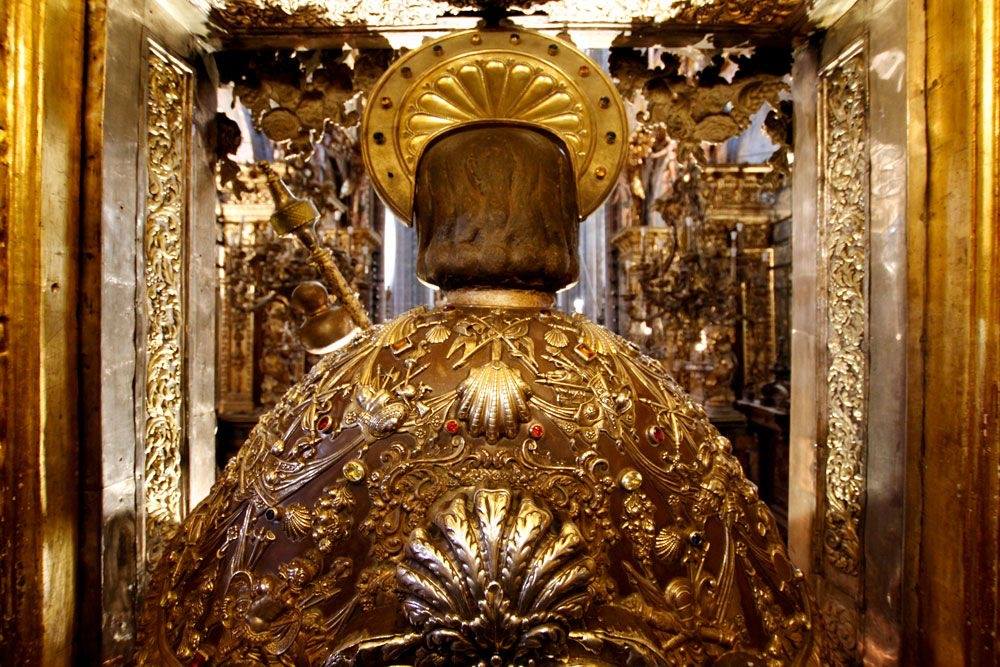
Santiago de Compostela in Spain is one of the world’s oldest and most popular pilgrim sites where the body of the Apostle St. James the Greater whose feast we are celebrating today is believed to be buried in its beautiful cathedral.

I have not been there yet and despite COVID-19’s disruption of air travel expected to last until 2022, my hope remains that someday in God’s time I may finally do the “el camino de Santiago de Compostela” (the way of Saint James of Compostela), too.

But, with or without the el camino de Santiago de Compostela, this great Apostle from the very beginning had always been in a journey in himself into the kingdom of God – Jesus Christ – by showing us the way of transformation into a true disciple of the Lord.

He is called the Greater not because he is holier than the other St. James called “the Lesser”, son of Alpheus, but to simply indicate the different importance they received in the writings of the New Testament. In the gospel of Mark, he comes in second in the list after Peter while in the gospels of Matthew and Luke, he is ranked third after the brothers Peter and Andrew; he again comes in third in the Acts of the Apostles after St. Peter and his brother St. John.

It is from this book where we also learn St. James the Greater as the first bishop of the original Christian community in Jerusalem that during the persecution by King Herod Agrippa in 40 AD, he also became the first Apostle to be martyred (Acts 12:1-2).

His martyr’s death thus fulfilled Christ’s words to him that he would indeed “drink from his chalice” to be with him in his Kingdom, a journey that essentially began within this great apostle after leaving everything behind to follow Jesus.

The journey within self to Jesus Christ

St. James the Greater and his brother St. John the Evangelist and believed to be the same beloved disciple came from a middle class family with both parents still alive and most likely, very supportive of them as attested by some little anecdotes in the gospel accounts.

Money was never an issue for them because their father Zebedee could hire workers to work in their fishing business. He must have sighed with a great relief when James and John immediately left him after being called by Jesus to be his disciples.

Marker along the “el camino de Santiago de Compostela”.

Finally, his sons have found some directions in life following Jesus who was getting known then in Galilee as a powerful and credible Teacher unlike the Pharisees and scribes.

Jesus nicknamed James and John as Boanerges for “Sons of thunder” (Mk.3:17) due to their temperament like when they proposed that they send fire to burn a Samaritan town that have refused them passage during their journey to Jerusalem (Lk.9:54).

They have seen and experienced the tremendous powers of Jesus not only in preaching but most especially in calming the storms, walking on sea, exorcising evil spirits, healing all kinds of sickness, and even raising to life some who have died.

Most of all, St. James the Greater was privileged to witness along with his brother and St. Peter the Transfiguration of Jesus Christ on Mount Tabor, seeing all the glory of Christ conversing with Moses and Elijah. It was after this major event that their most controversial episode would occur when their mother came to ask Jesus that James and John be seated “one at your right and the other at your left, in your Kingdom” (Mt.20:21).

The other ten Apostles “grew indignant” of the brothers James and John for being so ambitious but Jesus summoned them and explained things which all of them would heed except for one:

“You know that the rulers of the Gentiles lord it over them, and the great ones make their authority over them felt. But it shall not be also among you. Rather, whoever wishes to be great among you shall be your servant; whoever wishes to be first among you shall be your slave. Just so, the Son of Man did not come to be served but to serve and to give is life as a ransom for many.”

Matthew 20:25-28

This took place shortly before Palm Sunday when Jesus entered Jerusalem.

A few days later on the evening of Holy Thursday, Jesus again brought St. James the Greater with his brother St. John and St. Peter to accompany him pray at Gethsemane where Judas Iscariot eventually betrayed him to his enemies.

A pilgrim hugging from the back the statue of Santiago de Compostela after completing his el camino.

Here we find St. James the Greater being present to two major stops in Jesus Christ’s journey to the Calvary: first, on Mount Tabor for his Transfiguration and second, at Gethsemane for his agony in the garden. In both events in the life of our Lord, St. James the Greater was a privileged witness, first of his coming glory and then of his passion and death.

It would only be after Easter and the Pentecost when all these major stops in his personal journey with Christ when everything would become clear to him and the other Apostles.

All along their journey from the shores of Galilee to Jerusalem, St. James the Greater remained by the side of Jesus Christ, probably unaware of another journey with the Lord taking place right inside his heart to truly be a part of his Kingdom by sharing in his Passion, Death, and Resurrection.

For his faithful adherence to Jesus from Galilee to Jerusalem, St. James the Greater again had the rare privilege like at Mount Tabor and Gethsemane in being the first to die as a martyr proclaiming the Gospel of Christ which is the meaning of the expression of “drinking from the chalice” of the Lord.

Sometimes in life, we just have to make “sakay” as my generation used to say, “sakay lang ng sakay” or “ride on, man, ride on” without really knowing where our trip would lead us. St. James just made “sakay” without knowing Jesus was already fulfilling his wish of “drinking from his chalice”.

Photo by Fr. Gener Garcia, sculpture of a pilgrim’s feet at Santiago de Compostela museum, 2019.

St. James the Greater was truly great not because of the distances in miles or kilometers he had covered with Jesus from Galilee to Jerusalem and all the way to Compostela in Spain; we honor him today because of that great journey he had undertaken within him, in his heart to remain always at the side of Christ even if had to smoothen his many rough edges as a person, and cleanse his heart as a sinner like us.

That is the most important journey we are all taking in this life, the journey within us.

The longest journey in life is the distance between the heart and the mind.

Former UN Sec.Gen Dag Hammarskjold in “Markings”

My friend Fr. Gener Garcia last year went to Santiago de Compostela to follow the el camino with our kababayan Bishop Bart Santos of Iba, Zambales and Fr. Jaypee Avila assigned as a chaplain for OFW’s in Milan, Italy.

He is so generous to share with us his photos of their pilgrimage as well as his experiences and realizations in life. According to him, on the four sides of the sculpture of the pilgrim’s feet in front of the museum of Santiago de Compostela is the following quotation:

Marker along the el camino de Santiago de Compostela.

Camino recto, camino erguido, camino buscando un sentido. Camino porque tengo un objetivo, y no parare hasta alcanzar mi destino.

(I walk straight, I walk upright, I walk looking for meaning. I walk with a purpose and I won’t stop until I meet my destiny.)

The pilgrim’s journey is the same one you and I are on. Know your goals and understand your challenges. Face them head-on, tackle them with intention, and never give up.

Do you know what your purpose in life is? What would you say if someone ask you what your destiny was?

Santiago de Compostela Museum of Pilgrims

Have a blessed Saturday everyone!

*All photos by Fr. Gener Garcia, 2019.

“You Gotta Be” by Des’ree (1994)

The Lord Is My Chef Sunday Music by Fr. Nick F. Lalog II, 12 July 2020
Van Gogh’s “The Sower” from Wikimedia Commons.

It is a very lovely Sunday with Jesus Christ continuing to shower us with his good seeds to make us fruitful despite the many setbacks we may have had lately due to the COVID-19 pandemic and sad turn of events.

His parable of the sower proclaimed today in all churches throughout the world reminds us that inasmuch as we have to be a good kind of soil, we need to examine the kind of seeds we have become.

Seeds are so small that we often take for granted, like our very lives and most especially God.

But, Jesus reminds us too of how every seed is the presence of what is to come in the future, of something so big and huge that we can never imagine (https://lordmychef.com/2020/07/11/jesus-is-both-the-sower-and-the-seed-and-so-must-we/).

In a sense, Jesus is telling us today what Des’ree sang in 1994, “You Gotta Be”…..

Listen as your day unfolds
Challenge what the future holds
Try and keep your head up to the sky
Lovers, they may cause you tears
Go ahead release your fears
Stand up and be counted
Don’t be ashamed to cry
You gotta be
You gotta be bad, you gotta be bold
You gotta be wiser, you gotta be hard
You gotta be tough, you gotta be stronger
You gotta be cool, you gotta be calm
You gotta stay together
All I know, all I know, love will save the day

You Gotta Be was first released as a single in 1994 and instantly became a hit worldwide staying on top of almost every chart in the US, Europe and Australia. Music is warmly smooth, at the same time infectious with a sort of hypnotic effect from its sophisticated upbeat set in the cool and soothing voice of Des’ree who also wrote its lyrics.

I have used the song in my classes in our school for girls a decade ago and in many recollections and retreats to young people as it presents to us this great mystery of life packed in a seed that must fall and die to give way to new life and eventually bear fruit.

You gotta hear and feel it to appreciate this wonderful music that sounds like Jesus Christ’s parable of the sower.

I have uploaded the video with lyrics so you can follow and sing. And dance if you wish. Have a blessed day!

Video uploaded by
MyFavMusic123

Let Christ possess us

The Lord Is My Chef Sunday Recipe for the Soul by Fr. Nicanor F. Lalog II
XIIIth Sunday in Ordinary Time, Year A, 28 June 2020
2 Kings 4:8-11, 14-16 >><)))*> Romans 6:3-4, 8-11 >><)))*> Matthew 10:37-42
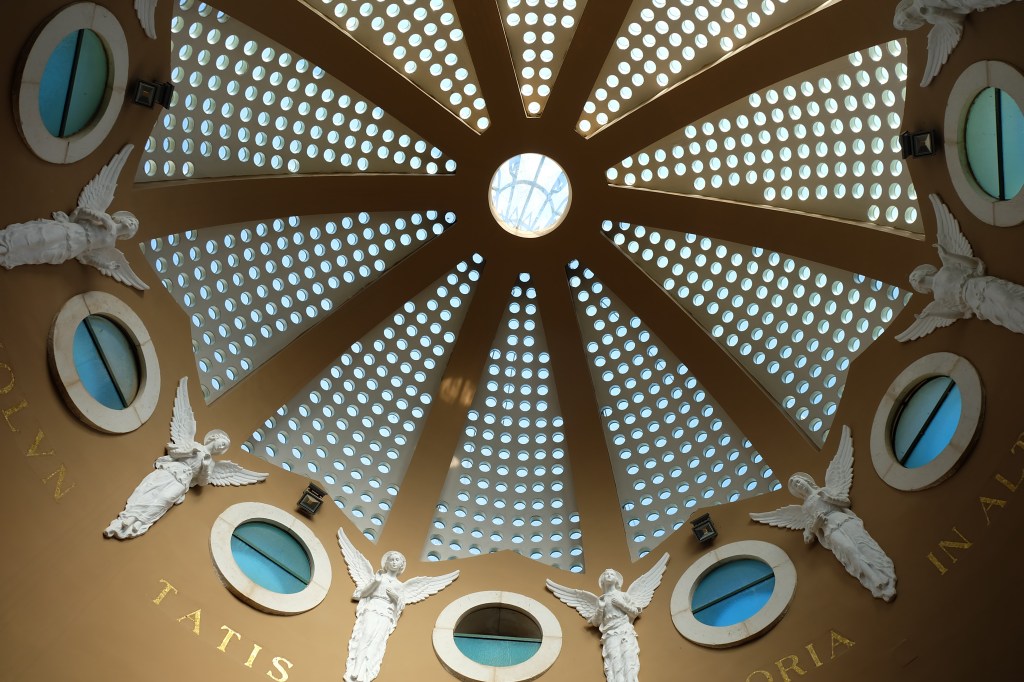
Photo by author, Dome of the Chapel of Nativity at Shepherd’s Field, Bethlehem, the Holy Land, May 2019.

Jesus continues his lessons to us his disciples being sent to look for the “lost sheep of Israel”, to be not afraid for he is with us in this journey and mission. But, it is not enough that we have Jesus on our side and be present among us: we have to allow Jesus to take possession of us completely!

From having no fear because Jesus is here, Christ now deepens his presence by inviting us to be possessed by him, to be in communion with him.

Jesus said to his disciples: “Whoever loves father and mother more than me is not worthy of me, and whoever loves son or daughter more than me is not worthy of me; and whoever does not take up his cross and follow after me is not worthy of me. Whoever finds his life will lose it, and whoever loses his life for my sake will find it.”

Matthew 10:37-39
Photo by author, processional Cross at the altar, 2019.

The Mystery of the Cross

Discipleship in Jesus Christ is more than a total allegiance to him who is neither a demanding nor exacting Lord and Master for he does not arbitrarily impose himself upon us.

Nothing like that of subservience but something more lofty because it is wrapped in a mystery — a mystery of love freely given and shared to us by God even if we do not deserve it all. Remember the mystery of the Blessed Trinity four Sundays ago (June 07)?

Ever since, God has never imposed himself upon us, that we should love him back in return for he does not really need our love. He gave us the gift of freedom so that we may love him freely for he never imposes on us.

And here lies the beauty of discipleship, of this relationship we have with God that is based solely on love expressed to us in the most personal manner by giving us his Son Jesus Christ who suffered and died on the Cross but rose again on Easter. This we were reminded by the Solemnities of the Body and Blood of Jesus and of his Sacred Heart last June 14 and 19 respectively.

Now you see my dear readers the clearer picture of our liturgical celebrations expressing our concrete experiences of being loved by God in Jesus Christ most especially during times of trials and sufferings like in this COVID-19 pandemic.

It is Christ who made the initiative to be one with us in our pains and sufferings; God did not remove our crosses in life but made them holy in his Son Jesus Christ so that every time we go through life’s many difficulties, we share in the Lord’s Passion, Death, and Resurrection.

That is why, we are invited to take and carry our cross every day for it is through the Cross we are saved. It is not enough to simply believe in the person of Jesus but we need to accept and embrace his Cross because it is through which he had won our salvation by dying on it and rising again.

This is easier said than done. It is so difficult to love Jesus more than our loved ones like family and friends. And it is most difficult to love the Lord more than our selves, when we have to let go of our plans and agenda.

Letting go and letting God in itself is already crucifying — but that is when this mystery of Christ’s love and of his Cross deepens further when we lose ourselves in him!

Celebrating Mass without te congregation during the ECQ, March-April 2020.

Possessed by Christ

To be possessed by Jesus is to receive God and his gift of salvation through the mystery of Christ and his Cross. Like our Christian life, proclaiming the gospel carries with it the sign of the Cross of Christ.

We are not asked to reenact or reproduce his Crucifixion nor is Jesus asking us to be suicidal or go against our natural aspirations and dreams.

To be possessed by Jesus means we continue to take care of ourselves without neglecting the needs of others.

To be possessed by Jesus means being generous to others in the same manner Jesus has always been generous to us.

To be possessed by Jesus means to realize that every act of self-giving is really an act of receiving!

Photo by author, Malagos Park, Davao City, 2018.

That is the paradox of the Cross, of discipleship in Christ: “Whoever finds his life will lose it, and whoever loses his life for my sake will find it” (Mt.10:40).

And that is also where the mystery of Christ’s love deepens because whatever we give is not really ours but Christ’s.

Every time we give love, it is the love of Jesus.

When we are kind and generous with others, it is the kindness and generosity of Jesus we give and share.

When we are patient and understanding to others, it is still the patience and understanding of Jesus in us.

Even if we give and share material things like money, food, clothing… whatever good we share and give are all from Jesus not from us.

And the more we give, the more we receive!

Have you noticed especially during this pandemic how the generous among us are now more blessed?

Wonder no more because you have allowed yourself to be possessed by Jesus Christ!

This is what the woman at Shumen had realized after welcoming the Prophet Elisha into her home in our first reading. She even gave him a room to stay every time he comes for his mission while the Lord provided all her needs, even rewarded her with a son as promised by Elisha.

When we allow Jesus to take over us, when we enter into communion in him and with him in his very life, we become more free to love, we strengthen our relationships with others, we wander less and worry less in life; most of all, we feel lightened in our burdens with the presence of Jesus giving us fullness of life in him.

This is the grace I hope we have seen from this quarantine period, especially those two months of lockdown when were freed from our usual grind and busyness with more time to be silent and still, to pray and reflect on our relationships with God and with others. It was a difficult and very trying period that had given in return a lot of opportunities to others.

Photo by author, Marcos Highway, 2019.

Dead to sin, alive to God

Brothers and sisters: We know that Christ, raised from the dead, dies no more; death no longer has power over him. As to his death, he died to sin once and for all; as to his life, he lives for God. Consequently, you too must think of yourselves as dead to sin and living for God in Christ Jesus.

Romans 6:9-11

It has been four months since houses of worship were ordered closed to help stop the spread of the corona virus. Somehow, the lockdown had made us realize the importance of receiving the Sacraments especially the Holy Eucharist.

But, sacraments are not everything for we have the bigger roles of putting into practice its reality of being the saving presence of Jesus Christ.

Now that lowly life is beginning to go back to its usual grind especially the traffic, soon we might forget again the more important things in life like God and our relationships in our family and friends that it is hoped we have rediscovered during the quarantine period.

That is why I strongly feel the government must now allow Churches to open so the people may experience again God in the sacraments and in our rites and rituals lest they get busy again with so many things only to miss finding anew the meaning of our lives found in silence and stillness before the Cross of Christ.

It is my hope that in this quarantine period, may we find through the Cross of Jesus that when we learn to submit and surrender to him, that is when we truly become free; and, when we lose and give away our lives to him, that is when we gain fullness of life in him. Amen.

A blessed week and a more abundant July to everyone!