The Lord Is My Chef Breakfast Recipe for the Soul by Fr. Nicanor F. Lalog II
Wednesday, Week XVII, Year I in Ordinary Time, 28 July 2021
Exodus 34:29-35   ><]]]]*> + ><]]]]*> + ><]]]]*>   Matthew 13:44-46
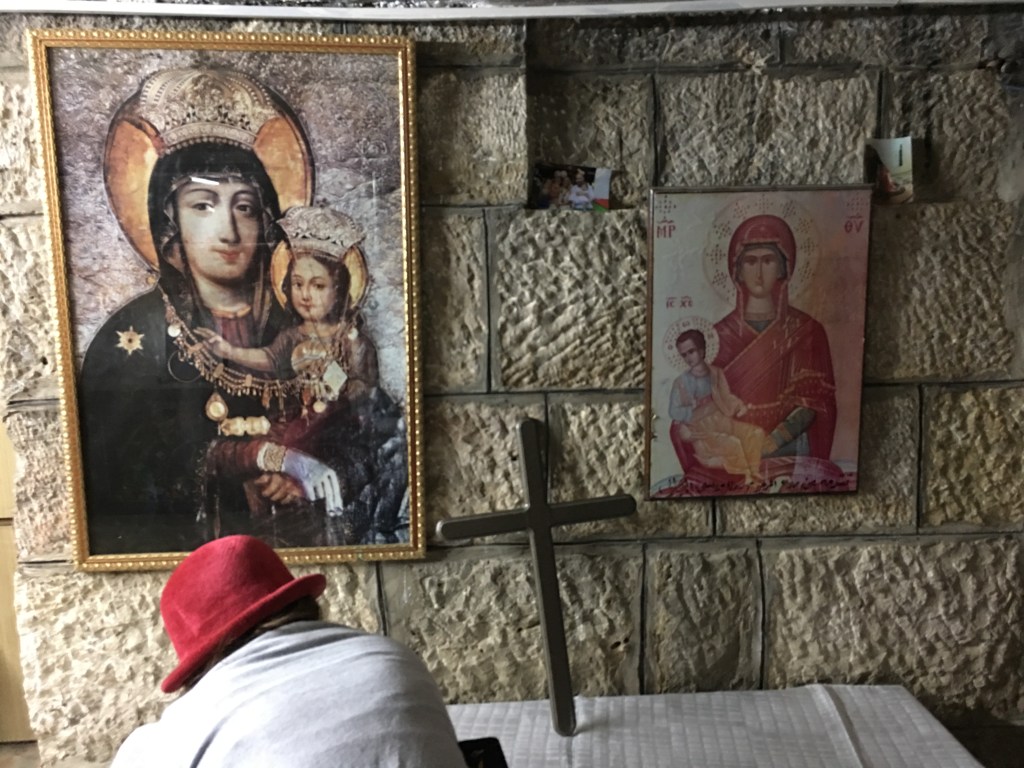
Photo by author, Church of Dominus Flevit overlooking Jerusalem, 2017.
How lovely are your words today,
God our loving Father
leading us the way closer to you
through your Son Jesus Christ!
So many times, you lead us to
many detours in life, to many
coming and going in order to
savor your loving presence.
How can we not appreciate
and be awed like your people
in the wilderness who witnessed
your immense majesty
on the face of Moses you met
frequently inside your tent
putting on and off the veil
that eventually played a role in our faith.
As Moses came down from Mount Sinai
with the two tablets of the commandments
in his hands, he did not know that the skin
of his face had become radiant
while he conversed with the Lord.
Whenever Moses entered
the presence of the Lord to converse
with him, he removed the veil until
he came out again.  On coming out,
he would tell the children of Israel all
that had been commanded.  Then the
children of Israel would see that the skin
of Moses' face was radiant; so he would
put again the veil over his face until
he went in to converse with the Lord.
(Exodus 34:29, 34-35)
In your eternal wisdom, dear Father,
you eventually removed that veil
in the coming of your Son Jesus Christ
so we can go nearer to you than ever
to be one with you in him
through him, and with him
 by going through the same process
of going in and going out.
Jesus said to his disciples:
"The Kingdom of heaven
is like a treasure buried in a field,
which a person finds
and hides again,
and out of joy goes and sells
all that he has and buys the field.
Again, the Kingdom of heaven
is like a merchant
searching for fine pearls.
When he finds a pearl of great price,
he goes and sells all that he has
and buys it."
(Matthew 13:44-46)
We pray, O Lord, we remain focused
in you alone, learning to adapt,
 willing to let go whatever we hold so that
 even if we do not see you face to face
like your beloved disciple in the empty tomb
 that Easter morn, we may still believe
 even if we only see the veil that covered your face,
wrapped neatly into one place. Amen.
The Lord Is My Chef Sunday Recipe for the Soul by Fr. Nicanor F. Lalog II
Solemnity of the Pentecost, 23 May 2021
Acts 2:1-11  ><}}}*>  Galatians 5:16-25  ><}}}*>  John 15:26-27.16:12-15
Photo by Ms. Jo Villafuerte at Atok, Benguet, 2019.
Today we bring to completion our celebration of the Lord’s Paschal Mystery – his Passion, Death, and Resurrection, Ascension and Coming of the Holy Spirit to his disciples. Although this mystery is one single reality, we have stretched its celebration over a period of 50 days (hence, Pentecost) or more than seven weeks because it will never be enough to fully grasp its whole meaning for it is a continuing reality and mystery in our midst just like the Ascension last week.
Note the upward movement of the Ascension that calls us to “level up” our relationships with God and one another in Christ; today, the downward movement of the coming of the Holy Spirit calls us to being small in order for us to be broken and shared with others. Whenever there is a downward push, what happens usually is a breaking down into smaller parts to fuse with the larger whole like a mix.
...our greatness is in our sharing ourselves with others...
It is in our becoming small to participate in the whole
that we truly become great -
whether in the Church or a community,
in our personal relationships...
Jesus had taught us in his life and example especially on the Cross that our greatness is in our sharing ourselves with others like him. It is in our becoming small to participate in the whole that we truly become great – whether in the Church or a community, in our personal relationships like family and circle of friends and most especially in the union of man and woman as husband and wife in marriage.
That is why the Pentecost is called the birthday of the Church when the disciples after being filled with the Holy Spirit came out in the open to proclaim the Gospel of salvation in Jesus Christ. It was actually more of a “coming out party” of the Church that was established by Christ during his Last Supper.
See that since the very beginning, the Church started as a catholic – a whole – at the Last Supper of the Lord when he also instituted the Holy Eucharist that has become the sign of our unity from then on that enabled the disciples to recognize him at Easter at the breaking of bread.
Jesus promised them at the Last Supper how things would get clear to them when the Holy Spirit comes.
"When the Advocate comes whom I will send you
from the Father, the Spirit of truth that proceeds
from the Father, he will testify to me.  And you
also testify... I have much more to tell you,
but you cannot bear it now.  But when he comes,
the Spirit of truth, he will guide you to all truth."
(John 15:26-27. 16:12-13)
Believing in the Holy Spirit, Believing in the Church
Every Sunday in the Mass we profess our faith, declaring “I believe in the Holy Spirit, the Holy Catholic Church” but, do we really understand its meaning? To believe in God is to believe in the Holy Catholic Church, to forget one’s own agenda in life, to submit ones self to her teachings from Christ our Lord and Master.
It is a declaration of the mystery and reality of the Pentecost, reminding us that becoming Christian means receiving and embracing the whole Church!
This is the beautiful meaning of the account by St. Luke at the first reading of the coming of the Holy Spirit on Pentecost at Jerusalem when all barriers – physical, emotional, intellectual, spiritual – were broken as the disciples went around speaking in various languages to proclaim the truth of Jesus Christ.
When the time of Pentecost was fulfilled,
they were all in one place together.
And suddenly there came from the sky a noise
like a strong driving wind, and it filled the entire house
in which they were.  Then there appeared to them
tongues of fire, which parted and came to rest
on each one of them.  And they were all filled
with the Holy Spirit and began to speak in different tongues,
as the Spirit enabled them to proclaim.
(Acts 1:1-4)
Here we find the disciples of Jesus and their converts on that day of Pentecost allowing themselves to be taken up into the Church!
And how did this happen? St. Luke tells us “Then there appeared to them tongues of fire, which parted and came to rest on each one of them.” Each one was parted, was broken down from their sins and selfishness that they became open for each other, trying to understand and accept each one as brother and sister in Christ.
It was a reversal of the story of Babel in Genesis when people were so arrogant and proud building a tower that reaches to heaven who were punished to speak in different languages that led to their confusion and quarrel until they all perished along with their ambitious plan.
Pentecost was different. There were different languages, different peoples with different backgrounds yet they were united and understood each other because everybody tried to become small, to mix into the whole and thus becoming a part of the Church on that day.
Unless we are willing to be parted by the Holy Spirit’s “tongues of fire” and “strong driving wind” like a storm, we can never be filled with God and his holiness to experience his peace and his joy.
It is a lifelong process and that is why Pentecost is a daily reality, happening to us especially when we sometimes have to be shaken by so many events and circumstances that come our way.
In the second reading, we heard St. Paul reminding the Galatians, including us, to “live by the Spirit and not gratify the desire of the flesh” (Gal.5:16). At that time, some missionaries sowed confusion among the Galatians, telling them to follow Jewish practices and Mosaic prescriptions to be fully Christians like circumcision. The issue had long been settled at the Council of Jerusalem but some Jewish converts persisted.
Here, St. Paul teaches us a valuable lesson in resolving conflicts and confusions in daily life in the light of Jesus Christ, of salvation, of the Church. For St. Paul, we always have to ask the Holy Spirit in guiding us in everything, no matter how secular and mundane it may be to find the theological and spiritual implications of our experiences.
What he told the Galatians remains true to our days, that freedom is not the ability to do whatever we want but to choose and do what is good. Every person has that tendency to sin, an imperfection in the “flesh” that is always in contradiction with the “spirit”.
As we have mentioned earlier, our greatness lies in our ability to share and give ourselves to others by dying to our sins and selfish motives, precisely what St. Paul is telling us:
Now the works of the flesh are obvious: immorality, impurity, licentiousness, idolatry, sorcery, hatred, rivalry, jealousy, outbursts of fury, acts of selfishness, dissensions, factions, occasions of envy, drinking bouts, orgies, and the like.
Galatians 5:19-21
These are the things that the Holy Spirit “part” in us when it comes to us daily especially in our prayers and in the celebrations of the sacraments like the Holy Eucharist. Through the power of the Holy Spirit, we are unified as a person, we become whole and integrated that we see the value and importance of being one with God and with others. It is not longer the rituals that become the law guiding us but the interior law of love of Jesus Christ that enables us to get out of our selfishness to give ourselves in loving service to others.
When we live in the power of the Holy Spirit guided by this interior law of love, that is when we become truly free and experience the gifts and fruits mentioned by St. Paul like peace and joy.
In our world today marred by sin and so many divisions happening in our society and even in the Church, in our communities and right even in our families and personal relationships, let us pray today to the Holy Spirit to come to us, break down within us the many walls we have and lead us to surrender ourselves to God to be led by his hand in continuing the mission of love and mercy of our Lord Jesus Christ. Amen.
A blessed week ahead of everyone!
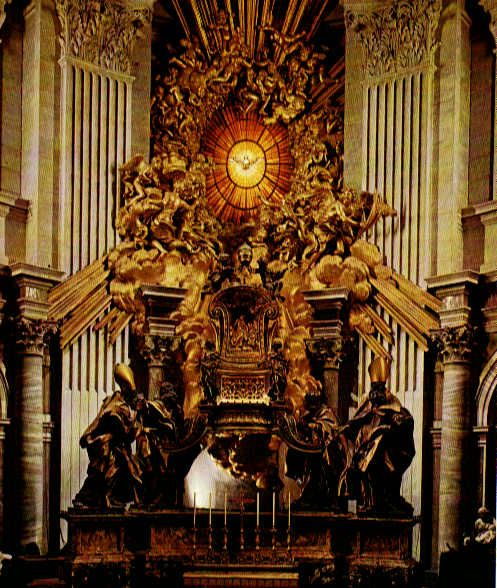
Photo of the stained glass with the Holy Spirit bringing light into the altar of St. Peter’s Basilica in Rome. Photo from wikipediacommons.org.
The Lord Is My Chef Breakfast Recipe for the Soul by Fr. Nicanor F. Lalog II
Wednesday in the Fifth Week of Easter, 05 May 2021
Acts 15:1-6  ><)))'> + <'(((><   John 15:1-8
Photo by author, Mount St. Paul Center for Spirituality, La Trinidad, Benguet, January 2020.
Jesus said to his disciples:
"I am the true vine, and my Father
is the vine grower.  He takes away every branch
that does not bear fruit, and everyone that does
he prunes so that it bears more fruit.
You are already pruned
because of the word that I spoke to you."
(John 15:1-3)
Thank you very much, Lord Jesus Christ, for finding me, taking me, and making me a branch of you our true vine. Most of all, thank you that I have been “pruned” because of the word you spoke to me.
But, what does it really mean to be pruned?
Yes, it has been a very, very long and tedious journey with you, Lord Jesus. And just maybe, I have grown and been fruitful after all those years in having identified with you closely and with your values and ideals. However, it is not enough.
I know… the pruning never stops until it is only you who is seen in me as I fade from the scene.
I could feel my need for more pruning, Lord, especially at times when I still insist on myself, on what I believe, on what I see as most important for you and for others.
Like those early Jewish converts to Christianity, particularly those who belonged to the party of Pharisees insisting that Gentile converts must be circumcised and observe other prescriptions of the Mosaic law (Acts 15:5).
There are still many things to be pruned in me, a lot of trimmings here and there that need to be cut off and removed until the “me” in me is totally gone, and only you remain.
Preparing for a Mass by the shore of Lake Tiberias in Capernaum, 2017.
Pruning is painful, Lord, but as time goes by, as the Father prunes me unknowingly in daily prayers and striving to be patient and better person, perhaps it is slowly bearing fruit as I begin to see you more clearly in my life.
And all the more the pruning must continue until everything becomes new in me!
Keep me open to you, dear Jesus, like the Apostles and the presbyters who met together to see about the issues raised by the Jewish converts to Christianity in the first reading.
Let me be open to other possibilities of meeting you, of sharing you, of working in you and with you by denying some of my natural appetites and tendencies.
Give me the grace to gladly and willingly give up whatever I hold on and keep that is contrary to you so that in the end, You are are my only joy and consolation, O dear Jesus. Amen.
40 Shades of Lent by Fr. Nicanor F. Lalog II
Ash Wednesday, 17 February 2021
Joel 2:12-18   >><)))*>  2Corinthians 5:20-6:2  >><)))*>  Matthew 6:1-6, 16-18
Photo by author, chapel at Franciscan Monastery at Mt. Nebo in Jordan overlooking the Promised Land or Holy Land, May 2019.
Today we begin our annual Lenten pilgrimage with Ash Wednesday in the very different situation and conditions of the COVID-19 pandemic now in its first full year. Although this may be the most unusual, both unreal and surreal Lent since the end of Second World War, this could also be our most real Lent so far.
Being real means getting into the very core of our very selves, focusing on the more essential that are invisible to the eyes. Since the popularity of social media and smart phones, life has become more of a big show than of living that we care more of lifestyles than life itself.
All three readings today invite us to get real, to confront our true selves, stop all pretensions by letting go of our many excuses and alibis. No more ifs and buts. Just our bare selves before God for tomorrow or later may be too late. St. Paul’s words perfectly express the challenge and beauty of Lent 2021:
Brothers and sisters: We are ambassadors for Christ, as if God were appealing through us. We implore you on behalf of Christ, be reconciled to God. Behold, now is a very acceptable time; behold, now is the day of salvation.
2 Corinthians 5:20, 6:2
Lent is a journey into inner self
to reach out to God through others.
The forty days of Lent are a journey characterized by three important acts so central not only to Christianity but also to the other two great faiths of the world, Judaism and Islam. These are fasting, prayer and alms giving. Through these acts, we journey back into our very selves in order to reach out to God through others.
And we start by cleansing our very selves through the putting of dry ashes on the crown of our head instead of the more usual imposition on forehead to prevent the spread of COVID-19.
The use of ashes as an outward sign of our inner cleansing beautifully tells us of its being natural cleansing agents long before the invention of chemical solutions. As such, being closest to earth, ashes remind us so well of our mortality, “for dust thou art and unto dust shall you return”!
However, though we are all marked for death as the ashes signify, they are blessed at the start of today’s Mass to remind us too that we die in Jesus Christ because ultimately, we return to God who is our true origin and end.
Hence, the need to cleanse our very selves by emptying ourselves of all the dirt and filth of sin inside that have marred our image and likeness in God. More than the outward appearance of putting ashes on our heads to signify cleansing is its internal significance of cleansing within by self- emptying through fasting.
In fasting, we cleanse our inner selves by denying ourselves not only of food but also of the usual things that fill us especially in this age of affluence and consumerism. Not only of material things but anything that make us forget God and others, that make us forget that we are mere mortals, weak and imperfect.
By fasting, we empty ourselves of our pride to be filled with Christ’s humility, justice, and love so we realize the world does not revolve around us. That we do not need so many “likes” and “followers” like in social media that inflate our ego but still leave us empty and lost.
And now is the perfect time, as St. Paul reminds us.
When we look back in this past year, so many of our relatives and friends have died, some alone, due to COVID-19 and other illnesses. The pandemic had grimly reminded us of life’s fragility and the need to be more loving always because we’ll never know if we can still be with everyone.
Fasting reminds us who and what are most essential in this life like God, life, and loved ones. Not likes or followers, luxuries, money, fame, or food.
In Tagalog, the word for meat is “laman”; to fast and go without meat literally means “walang laman” which also means “empty”!
When we fast and become empty, then we create space for God and for others.
That is why it is easier to pray and be one with God in meditation and contemplation when our stomach and senses are empty because we become more sensitive to his presence in Jesus. Silence in itself is a kind of fasting, the very key to any form of prayer.
Who needs to look gloomy when fasting when we are filled with the most wonderful and essential in this life who is God as Jesus tells us in the gospel, “When you fast, do not look gloomy like the hypocrites” (Mt.6:16).
In the same manner, whatever we save in our fasting, whatever we deny ourselves, we give and share with others in alms giving. Try opening your Facebook. What fills up your page? Your selfies? Your me-time? Your work and errands? Whatever fills your FB page, most often it always gratifies you for better and for worse. And yes, of course, they all indicate how glamorous and fabulous is your life.
This Lent 2021, so many people have lost their jobs. So many are struggling to make ends meet. Others’ sufferings have become more unbearable not only with financial difficulties but simply due to difficult conditions traveling to undergo chemotherapy or dialysis.
Life has been so unreal, even surreal for all of us since last year. And God is the one most sad of all in what we have been going through in this pandemic. But he cannot do anything for us because we still rely so much with our very selves, with our science and technology that all feed on to our pride and selfishness. Every day we hear of news of all kinds of abuses and lack of kindness going on, even among states and governments in the allocation of vaccines.
The pandemic is not purely medical and biological in nature but something spiritual.
Now, more than ever, is the Prophet Joel’s call more true:
Even now, says the Lord, return to me with your whole heart, with fasting, and weeping, and mourning. Rend your hearts, not your garments, and return to the Lord, your God. For gracious and merciful is he, slow to anger, rich in kindness, and relenting in punishment.
Joel 2:12-13
If there is anyone who wishes this pandemic to end so we can see and be near with each other without any fear of getting sick, of dying, that must be God. Like St. Paul, let us implore everyone to be reconciled with God right in our hearts by taking our fasting, praying, and alms giving seriously. Amen.
The Lord Is My Chef Breakfast Recipe for the Soul by Fr. Nicanor F. Lalog II
Monday, Memorial of St. Clement, Pope and Martyr, 23 November 2020
Revelation 14:1-3, 4-5     >><)))*>  >><)))*>  >><)))*>     Luke 21:1-4
Photo by Red Santiago, his youngest son at prayer in our Parish, 21 November 2019.
Two things have struck me today, Lord, in your words: first is how St. John could say “No one could learn this hymn except the hundred and forty-four thousand who had been ransomed from the earth” (Rev. 14:3) when he heard them singing before you in his vision of heaven; and second, how did you know that the “poor widow put in more than all the rest” (Lk.21:3) into the treasury?
Of course, you are the Son of God, Jesus, who knows everything and can read everything in our hearts but, aside from that fact, one thing that truly best describes you is how you can give up anything even your very self for us, completely trusting the Father like a child.
In the gospel, you must have seen how the poor widow thought more of God, more of the temple, more of those in need than her self that she gave two small coins’ offerings worth a fortune for her. She was willing to let go of everything she has for God because she trusted him so much!
May we keep in our minds and in our hearts that it is when we are able to give up what is most precious in us that we truly love because that is also when we truly have faith in you that whatever we lovingly surrender is never lost but gained in eternal life like the 144,000 souls singing the new hymn for the Lamb in heaven seen by your beloved disciple.
As we close the current liturgical year this week, teach us, Lord Jesus, to learn more of these things from you so we can prepare ourselves for your daily coming especially this coming Season of Advent leading to Christmas.
Like St. Clement, may we entrust everything to God’s providence and care our whole lives. Amen.
The Lord Is My Chef Breakfast Recipe for the Soul by Fr. Nicanor F. Lalog II
Friday, Week XXXIII, Year II in Ordinary Time, 20 November 2020
Revelation 10:8-11    >><)))*> + >><)))*> + >><)))*>     Luke 19:45-48
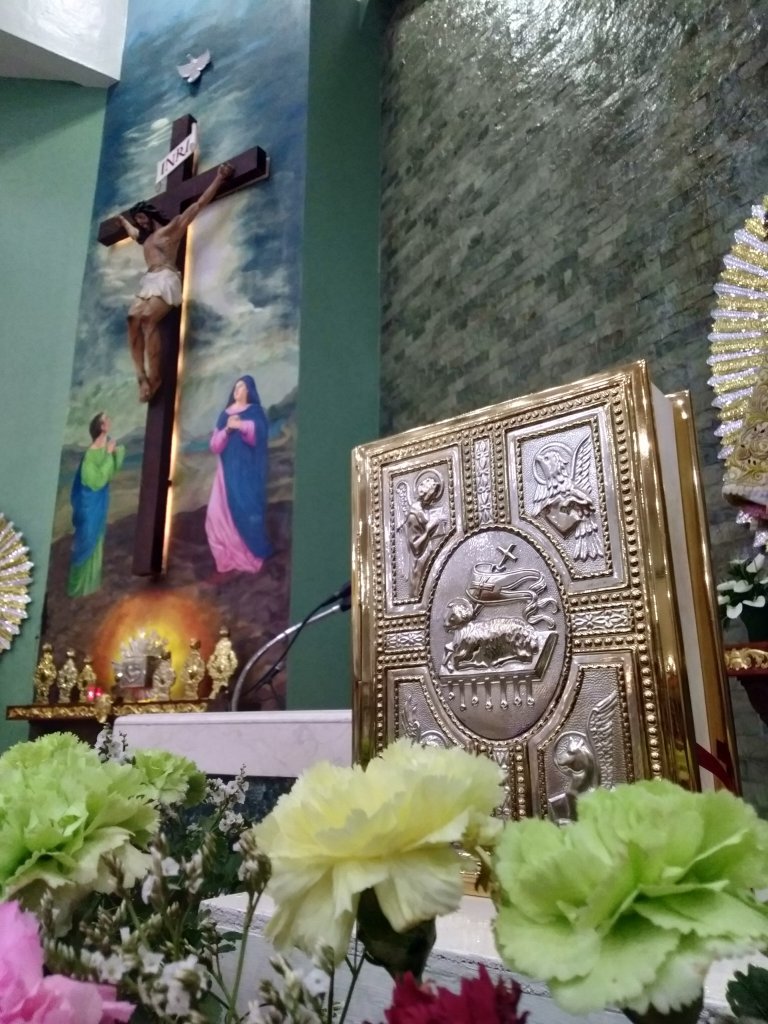
Photo by author, National Bible Sunday, 26 January 2020.
Praise and glory to you, Lord Jesus that through this pandemic, you continue to bless us, teaching us valuable lessons we have taken for granted for so long. For the past eight months, we have been doing many quarantine measures to cleanse us and keep us COVID free and healthy, reminding us of the truth of that “cleanliness is next to Godliness”.
Today’s gospel reminds us so well of this need to cleanse ourselves first before we can cleanse people and institutions.
Jesus entered the temple area and proceeded to drive out those who were selling things, saying to them, “It is written, My house shall be a house of prayer, but you have made it a den of thieves.” And every day he was teaching in the temple area. The chief priests, the scribes, and the leaders of the people, meanwhile, were seeking to put him to death, but they could find no way to accomplish their purpose because all the people were hanging on his words.
Luke 19:45-48
People were “hanging on your words”, Lord Jesus, because they could feel power and authority in them for you are the Word who became flesh and dwelt among us.
Purify us, Jesus, like you so that our words may be filled with you.
Let your words not remain sweet only on our lips as experienced by St. John when he ate the small scroll given by the angel to him; let your words disturb us, turn our stomach sour (Rev.10:10) to cleanse us first inside, emptying us of our pride so you can fill us with your Holy Spirit to proclaim your good news of salvation.
May we desire more of being disturbed by your words than being pleased with its beauty that is superficial and can be misleading.
Most of all, may we keep in mind that it is you, dear Jesus, who must increase, who must be known not us in sharing and proclaiming your words. Amen.
The Lord Is My Chef Breakfast Recipe for the Soul by Fr. Nicanor F. Lalog II
Thursday, Memorial of St. Monica, Married Woman, 27 August 2020
1 Corinthians 1:1-9 >><)))*> || + || <*(((><< Matthew 24:42-51
Photo by author of a pilgrim writing petitions to the Blessed Mother at a Madaba Church in Jordan, May 2019
This prayer, O Lord, is specially offered for all mothers as we celebrate today the Memorial of St. Monica, the mother of St. Augustine, one of the great Saints of the Church.
Thank you, dear God our Father for St. Monica and all the other mothers who have offered their whole lives forming and transforming their children to reflect your image and likeness of holiness.
Truly, the gift of motherhood is one of your greatest grace ever bestowed to the human race for because of mothers, countless men and women selflessly work for peace and development.
This selflessness of mothers, in working hard for the success of their children, is the nobility of motherhood which is also a call for everyone exemplified by St. Paul in our first reading today:
I give thank to my God always on your account for the grace of God bestowed on you in Christ Jesus, that in him you were enriched in every way, with all the discourse and all knowledge, as the testimony to Christ was confirmed among you, so that you are not lacking in any spiritual gift as you await for the revelation of our Lord Jesus Christ.
1 Corinthians 1:4-7
What a beautiful trait of every mother like St. Monica to imitate St. Paul’s joy, thanking God for the maturity of their children, to see their sons and daughters growing deeper in faith, hope, and love.
So many mothers can forgo their own career, forget their own well-being for the sake of their children. So often, they hide their tears when they are deeply aching from our many sins and lack of concern even respect for them because they do not want us to go out of focus with our goals in life.
To your question, dear Jesus, “Who, then, is the faithful and prudent servant, whom the master has put in charge of his household to distribute to them their food at the proper time?” (Mt.24:45) — there is no other most faithful servant true to your calling except our mothers, Lord!
Photo from Google.
Bless all mothers today and always, Lord; lighten their burdens, be their joy in moments of sadness, clarify always their minds and their hearts so that every decision and action they take may always be through the leading of your Holy Spirit like in the experience of St. Monica.
Strengthen their faith especially of mothers who have lost their spouse or children to COVID-19 and other sickness and accidents; fill them with hope in you when things are getting so rough and tough for them especially at this time of the pandemic.
Many mothers are also suffering not only from COVID-19 but also other sickness during this pandemic. Heal them, dear Jesus.
Keep them healthy not only in body but also in mind, heart and soul so that they may continue to lead and enlighten their families in moments of darkness and trials.
Most of all, like St. Monica, fulfill their dreams and prayers for their children.
Likewise, dear Jesus, we remember and pray today for the souls of all the mothers who have gone ahead of us, now with St. Monica whose only request on her death to her sons was to bury her anywhere by including her always in St. Augustine’s celebration of the Eucharist. Amen.
St. Monica, pray for us especially for all the mothers to be like you!
The Lord Is My Chef Breakfast Recipe for the Soul by Fr. Nicanor F. Lalog II
Tuesday, Week XX, Year II in Ordinary Time, 18 August 2020
Ezekiel 28:1-10 <*(((><< || + || >><)))*> Matthew 19:23-30
Photo by author, Petra in Jordan, May 2019.
Then Peter said to Jesus in reply, “We have given up everything and followed you. What will there be for us?” Jesus said to them, “Amen, I say to you that you who have followed me… And everyone who has given up houses or brothers or sisters or father or mother or children or lands for the sake of my name will receive a hundred times more, and will inherit eternal life.”
Matthew 19:27-28, 29
“We have given up everything and followed you, Lord. What will there be for us?”
Oh! how often we tell this to you, Lord Jesus, as if we have given so much for the sake of your kingdom.
Sometimes, it is not really a question we ask but a reminder to you of our “goodness” and “benevolence” with others, of how good we have been when in fact whatever we give and share are all from you.
Forgive us, O Lord, when most specially in the midst of pains and sufferings, we ask you “What will there be for us?” in order to remind you of our rewards, or entitlement as if you forget them or that there is such a thing at all with you.
Photo by author, 2019.
We are sorry Lord in counting the costs and most of all, in demanding so many in return.
“What will there be for us?” is often the question we ask when we doubt your generosity and fidelity to your promises to us.
Like Ezekiel in the first reading, remind us O Lord to keep in mind not to be “haughty of heart”, that “we are not god despite our many achievements brought about by our intelligence or beauty” (Ezekiel 28:1-7).
Dearest Jesus, you have given us with so much and we have given so little; teach us to give more of ourselves, more of our time, more of our treasures, and most of all, more of you to others. Amen.
The Lord Is My Chef Breakfast Recipe for the Soul by Fr. Nicanor F. Lalog II
Monday, Week XX, Year II in Ordinary Time, 17 August 2020
Ezekiel 24:15-23 >><)))*> || + || <*(((><< Matthew 19:16-22
Photo by author, sunrise at Camp John Hay, Baguio City, 2017.
The young man said to him (Jesus), “All of these I have observed. What do I still lack?” Jesus said to him, “If you wish to be perfect, go, sell what you have and give to the poor, and you will have treasure in heaven. Then come, follow me.” When the young man heard this statement, he went away sad, for he had many possessions.
Matthew 19:20-22
The young man’s question to you, Jesus, still echoes in me: “What do I still lack?” A question that reverberates in me on many occasions for different reasons. So many times, Lord, I felt the answer lies on something that my hands can simply grab or hold to take and be not lacking anymore.
What do I still lack? A question I automatically ask because I have always felt I have the answers, I can always work for it and have whatever I lack.
When tragedy and failures strike, I ask the same question, what do I still lack? What have I missed? What went wrong?
It is a question I have always felt as a problem needing solutions, of something missing that must be filled to be no more lacking.
But today, Lord, I felt the emptiness of the young man too.
It is not just lacking of something but more of a longing for you. It is an emptiness of the heart and soul that nothing can ever fill because “What do I lack” is not a problem to be solved but a situation, a condition to be with you always, Lord.
That is why, sometimes, you have to “take away the delight of our eyes” (Ez.24:16), Lord, so we may see what we lack ––YOU!Amen.
The Lord Is My Chef Sunday Recipe for the Soul by Fr. Nicanor F. Lalog II
Week XVIII, Cycle A in Ordinary Time, 02 August 2020
Isaiah 55:1-3 >><}}}*> Romans 8:35, 37-39 >><}}}*> Matthew 14:13-21
Remember our reflection last Sunday? Of how parables teach us that “less is always more” because to have the kingdom of God – Jesus Christ himself – we have to learn to appreciate the little things in life?
Beginning this Sunday until August 16, our gospels will start telling us who is Jesus Christ by showing us his powers and abilities that are exactly opposite the way we see and understand them. This new series of stories are so relevant to us in this time of pandemic, giving us wonderful insights into God’s ways of responding to our human situations.
St. Matthew now leads us with Jesus to the wilderness after teaching us in parables to experience his power in transforming us like the five loaves and two fish to feed more than five thousand people.
Multi-layered story of the multiplication of bread
All four evangelists have recorded this story of Jesus Christ’s multiplication of the loaves of bread with their particular focus and stress, showing us that it truly happened and was a major event in the Lord’s ministry.
Very unique with St. Matthew’s version of this miracle story – which has not one but two! – is his economy of words in narrating it like a straight news as if it were a developing story or a “breaking news” unfolding before us, calling us to follow its updates and details due to its multi-layered meanings.
When Jesus heard of John the Baptist, he withdrew in a boat to a deserted place by himself. The crowds heard of this and followed him on foot from their towns. When he disembarked and saw the vast crowd, his heart was moved with pity for them, and he cured their sick. When it was evening, the disciples approached him and said, “This is a deserted place and it is already late; dismiss the crowds so they can go to the villages and buy food for themselves.” Jesus said to them, “There is no need for them to go away; give them some food yourselves.” But they said to him, “Five loaves and two fish are all we have here.” Then he said, “Bring them here to me,” and he ordered the crowds to sit down on the grass. Taking the five loaves and the two fish, and looking up to heaven, he said the blessing, broke the loaves, and gave them to the disciples, who in turn gave them to the crowds. They all ate and were satisfied, and they picked up the fragments left over — twelve wicker baskets full. Those who ate were about five thousand men, not counting women and children.
Matthew 14:13-21
Photo from iStock/Studio-Annika.
The consolation of Jesus.
Our situation in this time of the corona pandemic is so similar with that of Jesus. With the increasing number of COVID-19 cases, it has finally hit us hard, so close to home with news of those we know getting infected and worst, dying from this disease.
Like Jesus upon hearing the death of John the Baptist, we are all saddened that we wish to withdraw away from everyone.
We want to mourn but there are more people in need of our presence and help in this time of pandemic like the countless medical frontliners and health workers who must be so tired – even sick, physically and emotionally – by now with the growing number of COVID-19 patients and yet have chosen to remain in their posts.
And there are still the other casualties of this pandemic like those who have lost their jobs, those evicted from their rented apartments, those stranded and separated from their loved ones, those begging for food, and those afflicted with other sickness going through dialysis and physical therapy.
Jesus knows so well the “wilderness” we are all going through and he is right here with us, one with us in our sufferings, in our fears and anxieties, and in our exhaustion.
To be one with us is consolation, from the Latin “con” or with + “solare” or alone, to be one with somebody feeling alone.
Jesus did not remove our pains and sufferings, even our death; he joined us to be one with us in these that he can call us to “Come to me, all you who labor and are burdened, and I will give your rest. Take my yoke upon you… For my yoke is easy and my burden light” (Mt.11:28-30, 14th Sunday, 05 Jul 2020).
Compassion of Jesus.
Still with Christ’s reaction of being “moved with pity” at the sight of the crowds who have followed him to the wilderness, we find something more deeper with his being one with us, in consoling us that he had forgotten all about himself, his tired body that he went on to heal the sick among them.
To be moved with pity is more than a feeling of the senses but a response of his total person.
You respond for help, you reply to a call.
Ever wondered why we have the “responsorial psalm” after the first reading in the Mass? Because those words from the Psalms express our total assent and commitment to God, involving our total self like body, mind, heart and soul.
Photo by Dra. Mai B. Dela Peña, Carmel Monastery, Israel, 2016.
God cannot suffer because he is perfect.
That is why he became human like us in Jesus Christ to be one with our suffering and death so that we would one with him in his glorious Resurrection.
In the wilderness, Jesus stayed with the people, not allowing them to leave as suggested by the Twelve because he was moved with pity with the crowd because he wanted to suffer with them.
That is compassion, literally means to “suffer with” from cum + patior. Here in the wilderness, Jesus showed his compassion for the people which will reach its highest point in giving himself on the Cross on Good Friday.
Have we “responded” to God’s call to serve, to a call of duty, and to a plea for help from the poor? Have we truly given ourselves to somebody without ever thinking our own comfort or rewards? Or, are we running away from his Cross?
What a shame in this time of pandemic there are some among us who rejoice at the losses of others like the Twelve who wanted the crowd to be sent home because they were afraid of responsibilities, of taking care of the suffering people.
Consolation and compassion are the two most needed from each of us in this time of crisis.
Our scarcity mentality, the God of plenty.
We now come to the miracle of the feeding of five thousand. According to the late Fr. Henri Nouwen, this story is an example of our “scarcity mentality” when we think of not having enough, of finding what we have as too little, always looking for more; hence, our tendency to hoard everything.
The Twelve were thinking more of themselves, afraid they could go hungry with the five loaves of bread and two fish they have. They were so afraid of difficulties ahead of them in their situation where to find and how to feed those great number of people.
They were focused on what was lacking than on what they have, and who was with them, Jesus Christ! They were hungry for food in the stomach than for food to the soul unlike the crowds who have followed Jesus.
Worst of all, the Twelve got “mad” upon seeing the crowds who have followed them to the wilderness when in fact, it was Jesus who needed most to rest to mourn John’s death!
But through all these, Jesus patiently bore the people’s woes and the Twelve’s selfishness to teach them all in a very nice way something so essential in our response to every human suffering and extreme situation: opening and entrusting our selves totally to God.
And that was actually the greatest miracle that happened that day.
In doing it, Jesus simply asked the Twelve what they have, never asking how much they have or its condition. Just whatever they have to give everything to Jesus like those five loaves and two fish that he took, and while looking up to heaven, blessed and broke the loaves, and gave them to the Twelve to distribute to the crowd.
And everyone was satisfied with a lot of left overs too!
Matthew nor any of the other Evangelists ever explained how it happened because it does not really matter at all. What is most important is what are we willing to give up to Jesus so he can transform us into better persons.
That is what we continue to do this day in every celebration of the Holy Eucharist- whatever we have, even not the best or the worst and littlest we have, when given to Jesus becomes holy and multiplied!
The power of God is immense, without doubt. But, in this miracle of the feeding of five thousand, Jesus is showing us that his power is not meant to satisfy our material or bodily needs but our deepest desires that lead to our fulfillment in him as prophesied by Isaiah in the first reading.
Why spend your money for what is not bread; your wages for what fails to satisfy? Heed me, and you shall eat well, you shall delight in rich fare. Come to me heedfully, listen, that you may have life.
Isaiah 55:2-3
Amid the pandemic worsened by our government officials’ inanities, irresponsibilities, and sheer lack of compassion with us in this wilderness, the Lord assures us today that he is with us for “nothing can separate us from the love of Christ” (Second Reading) if we are willing to give him all that we have.
It is our spiritual transformation first that leads us to our material blessings. We can all have it if we are willing to give everything to Jesus and believe in him always. What do you have for miracles to happen?
A blessed August ahead for you!Amen.
Photo by Dra. Mai B. Dela Peña, Carmel, Israel, 2016.